Chapter 08 - Public Finance
Prelims Syllabus
Chapter 10 - Taxation System in India
Introduction
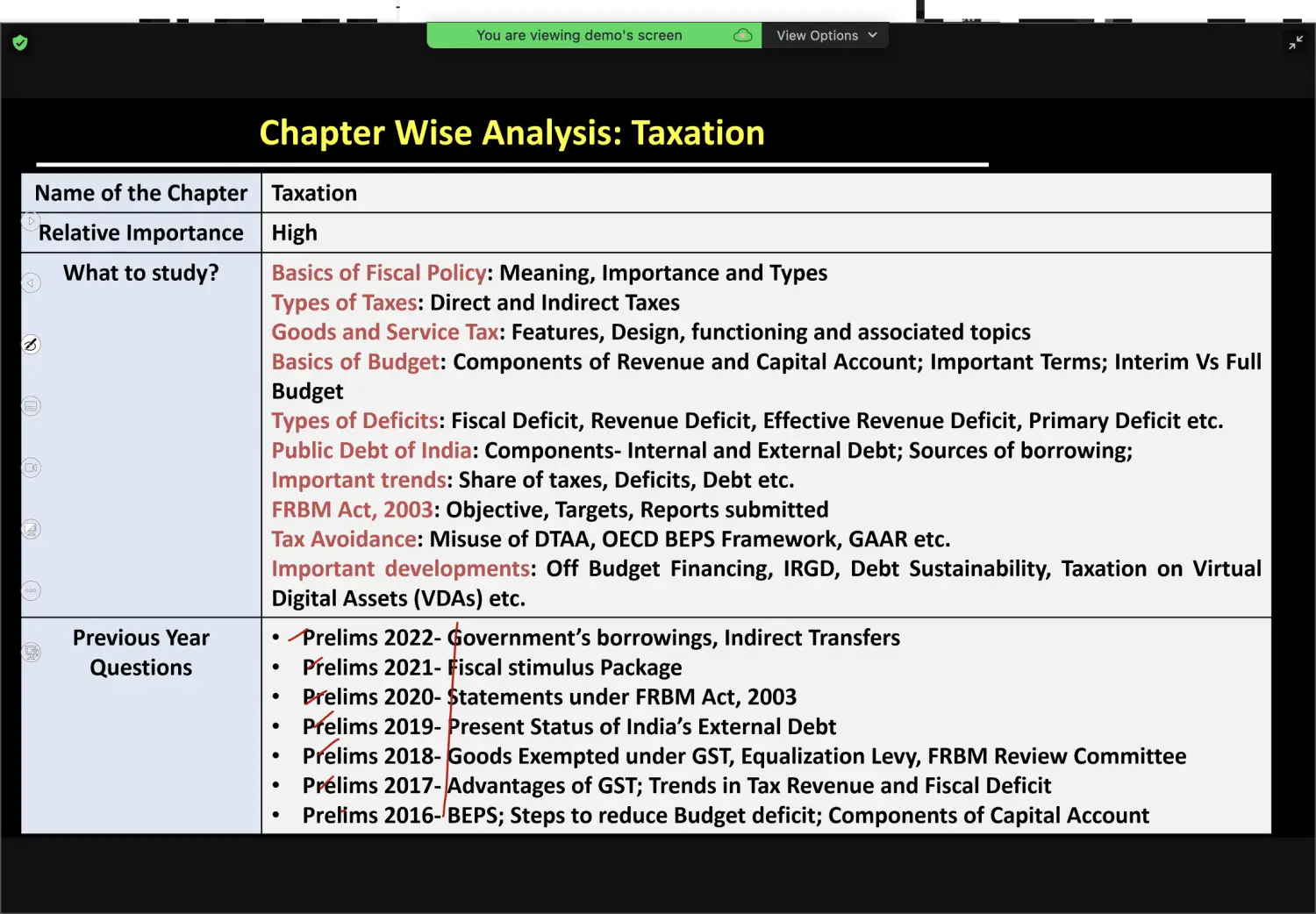
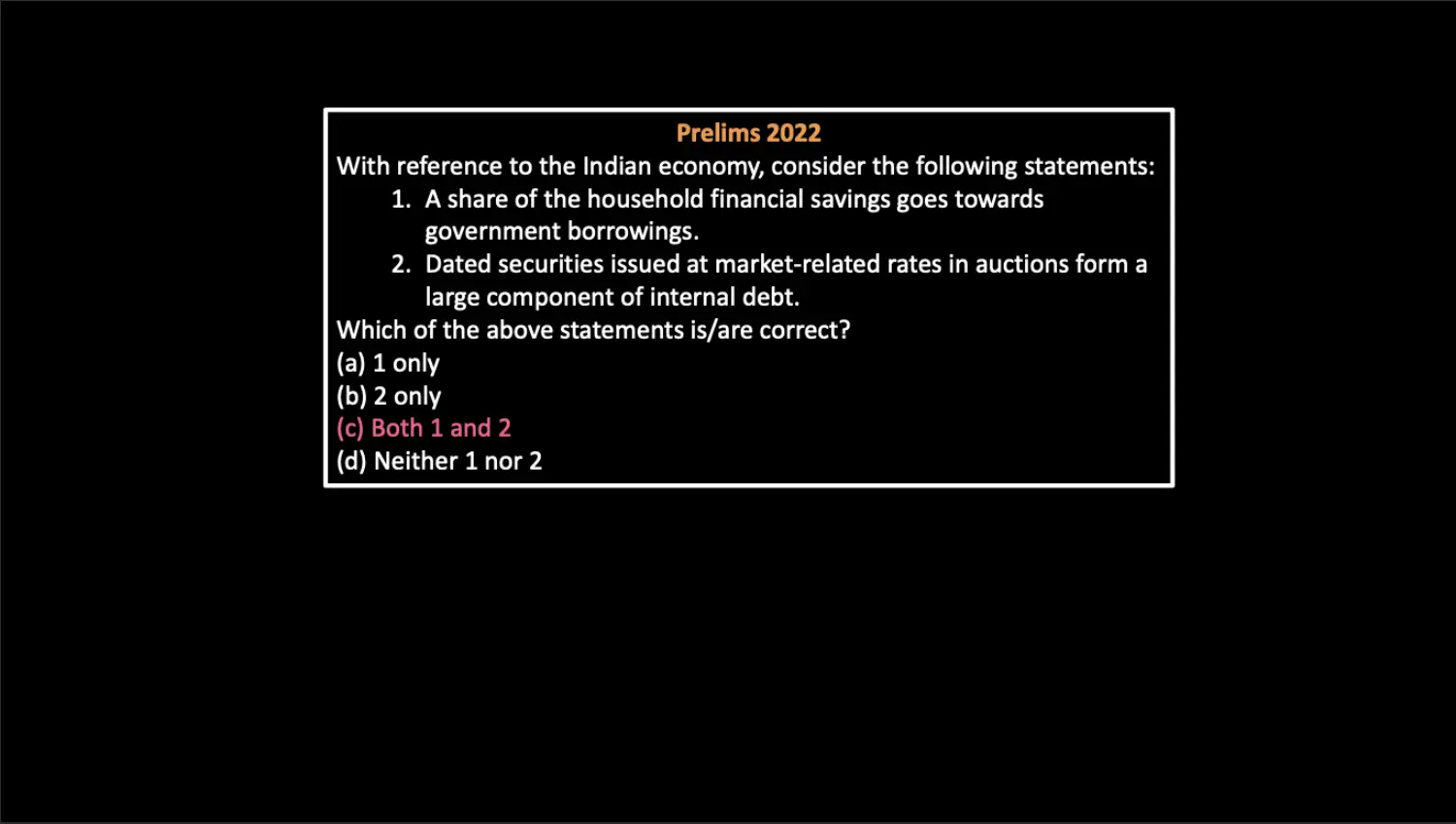
PYQP
State Governments can Impose Cess on Taxes 👇
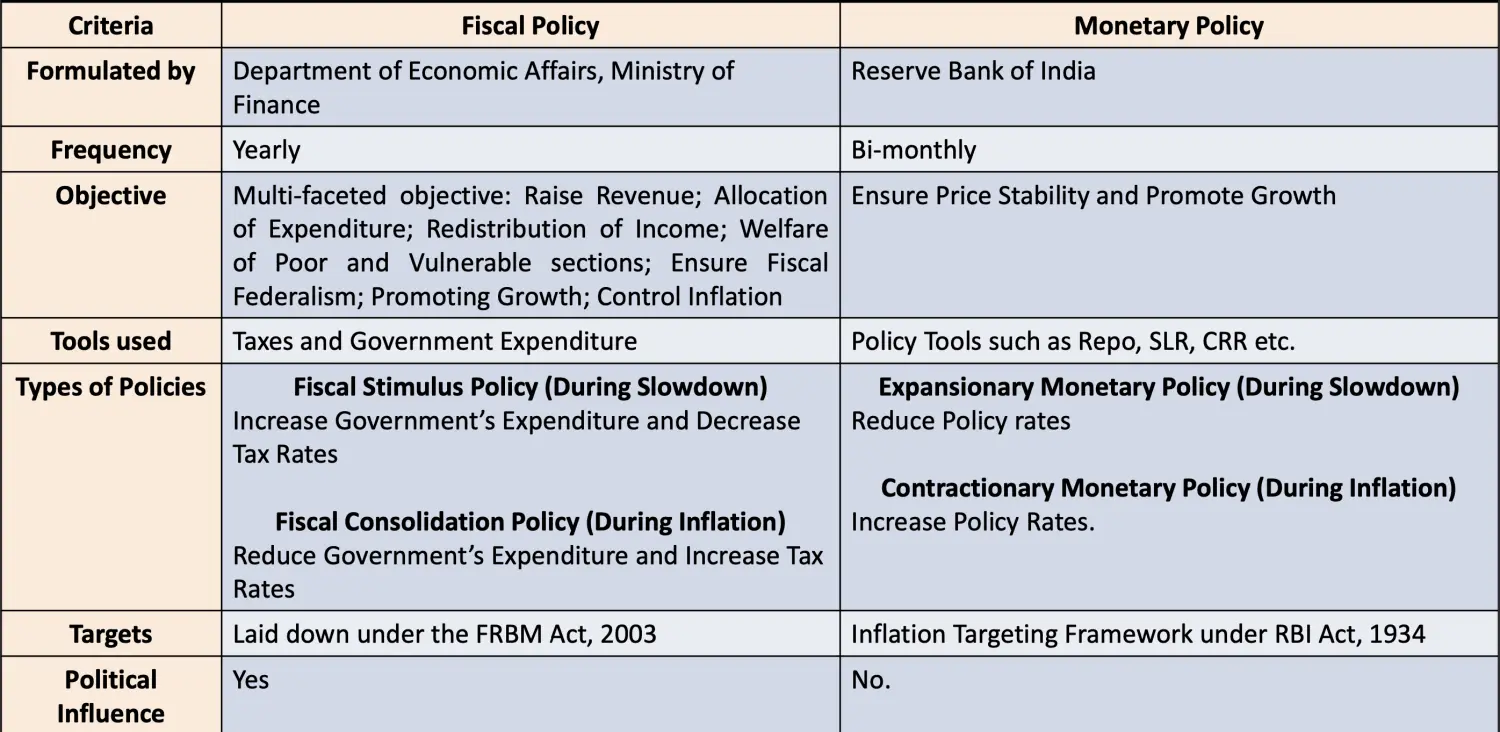
Difference Between Fiscal Policy & Monetary Policy
Fiscal Federalism - Allocation of Grants by Centre to State
Increase Tax Rates (Direct Taxes)
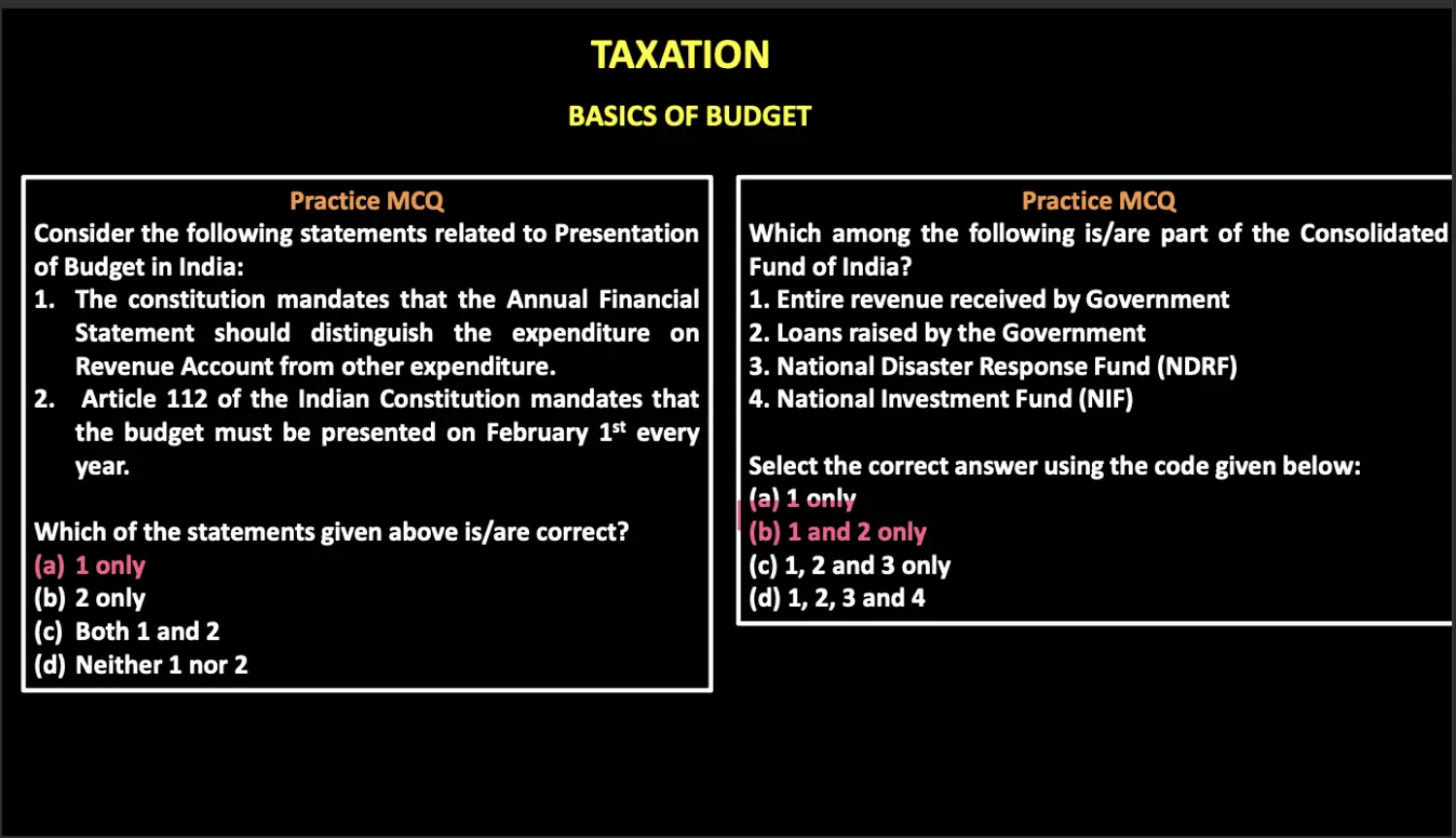
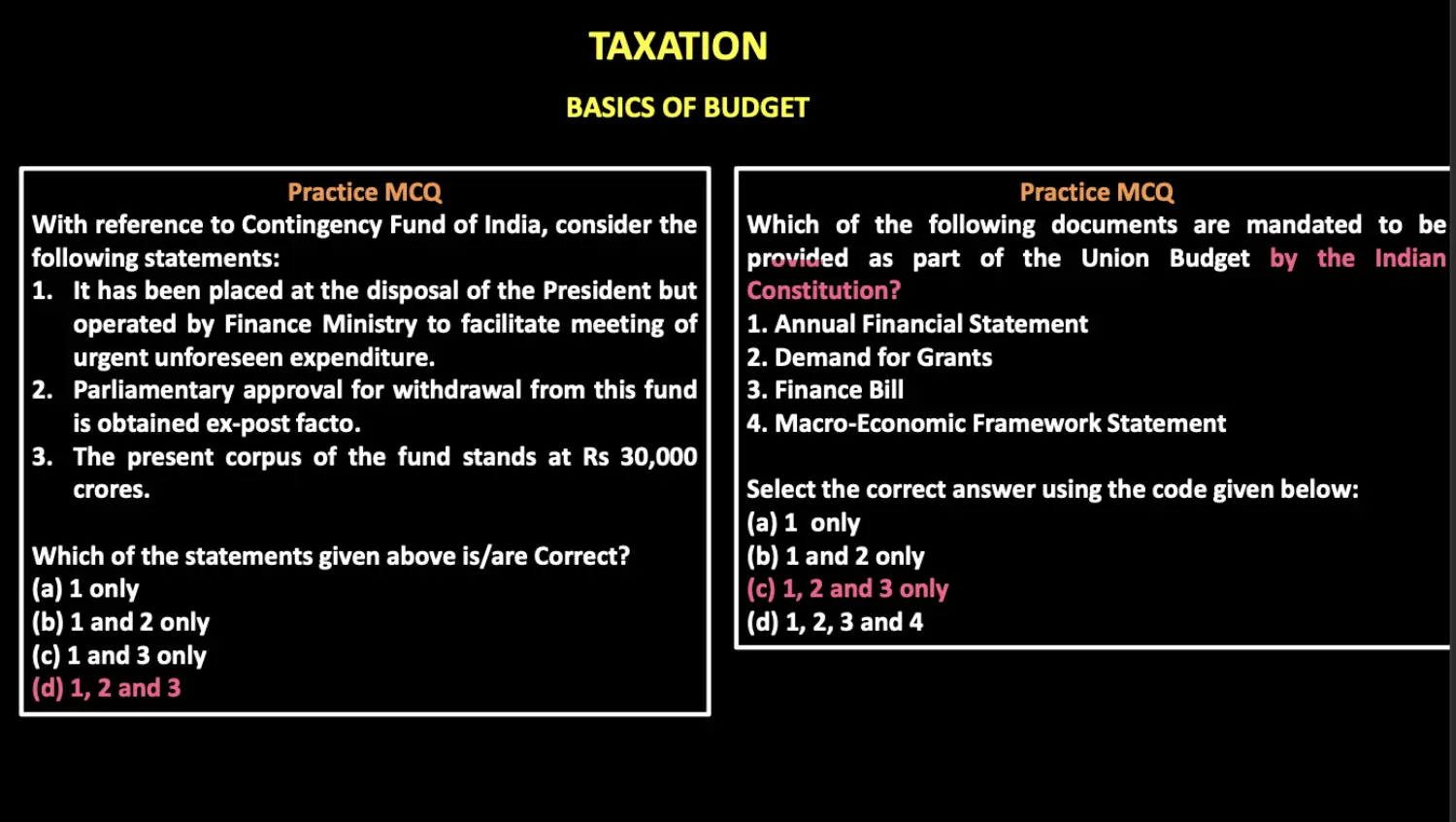
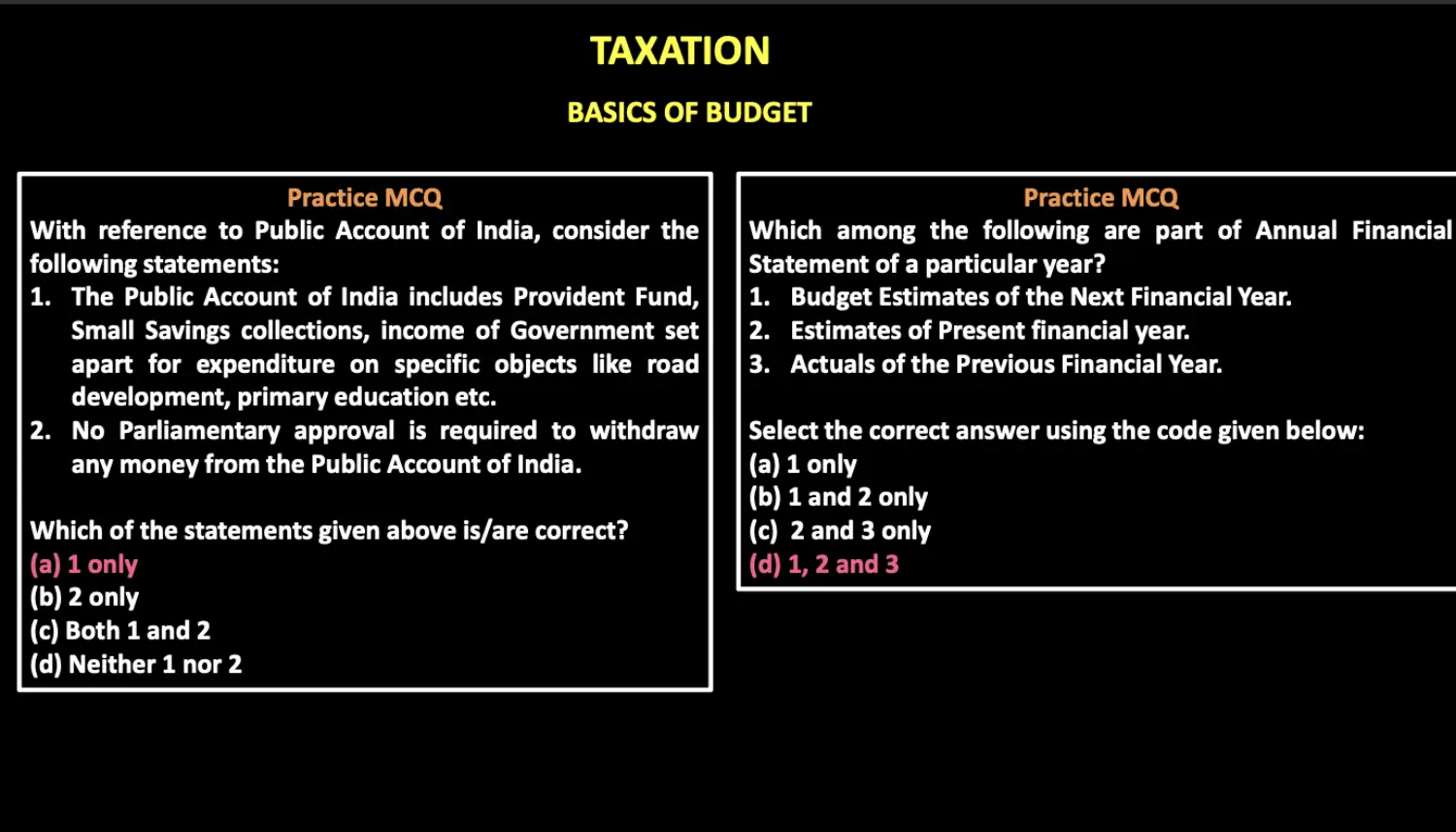
Art 112 Provides for Presentation of Annual Financial Statement ( Budget ) Comprises of
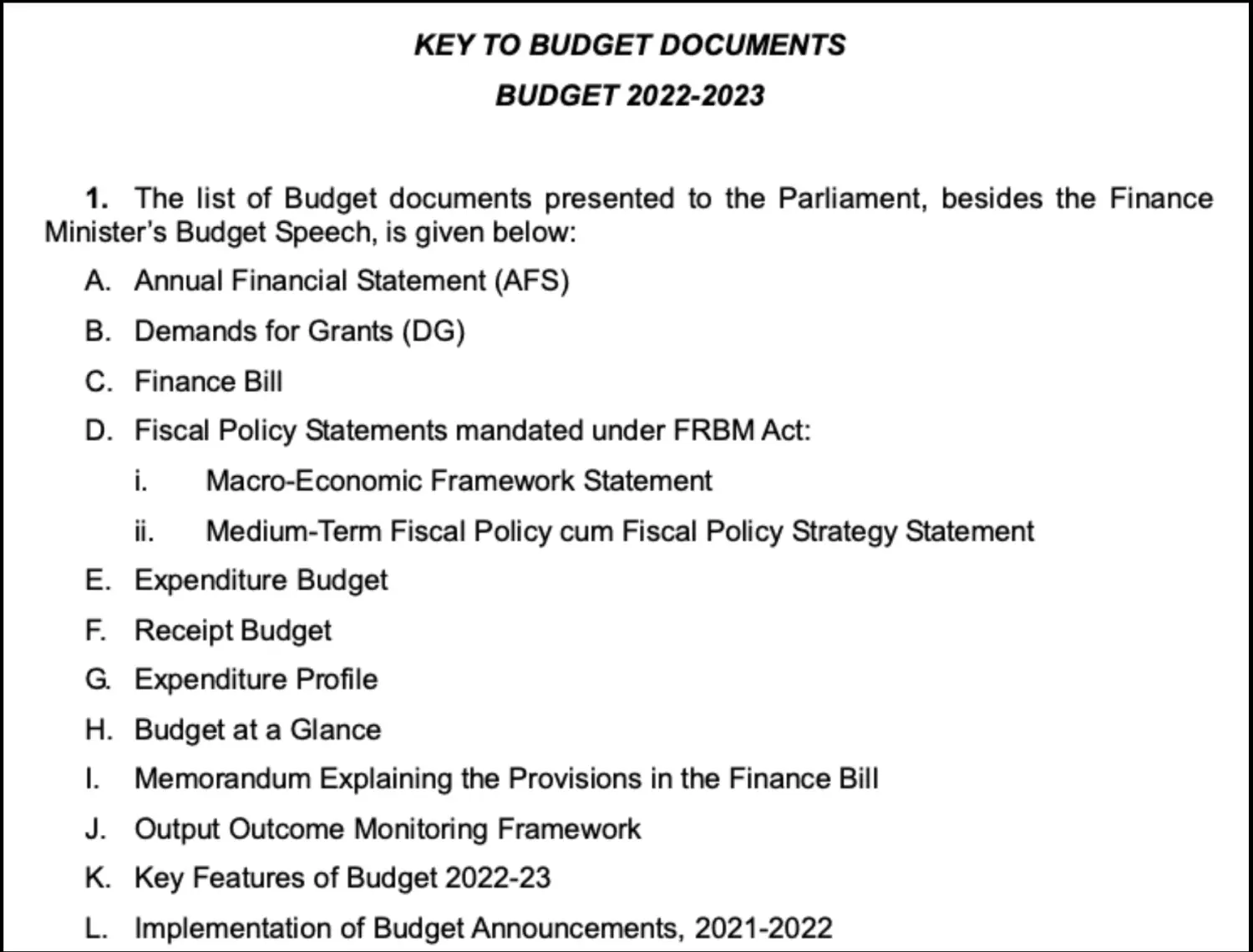
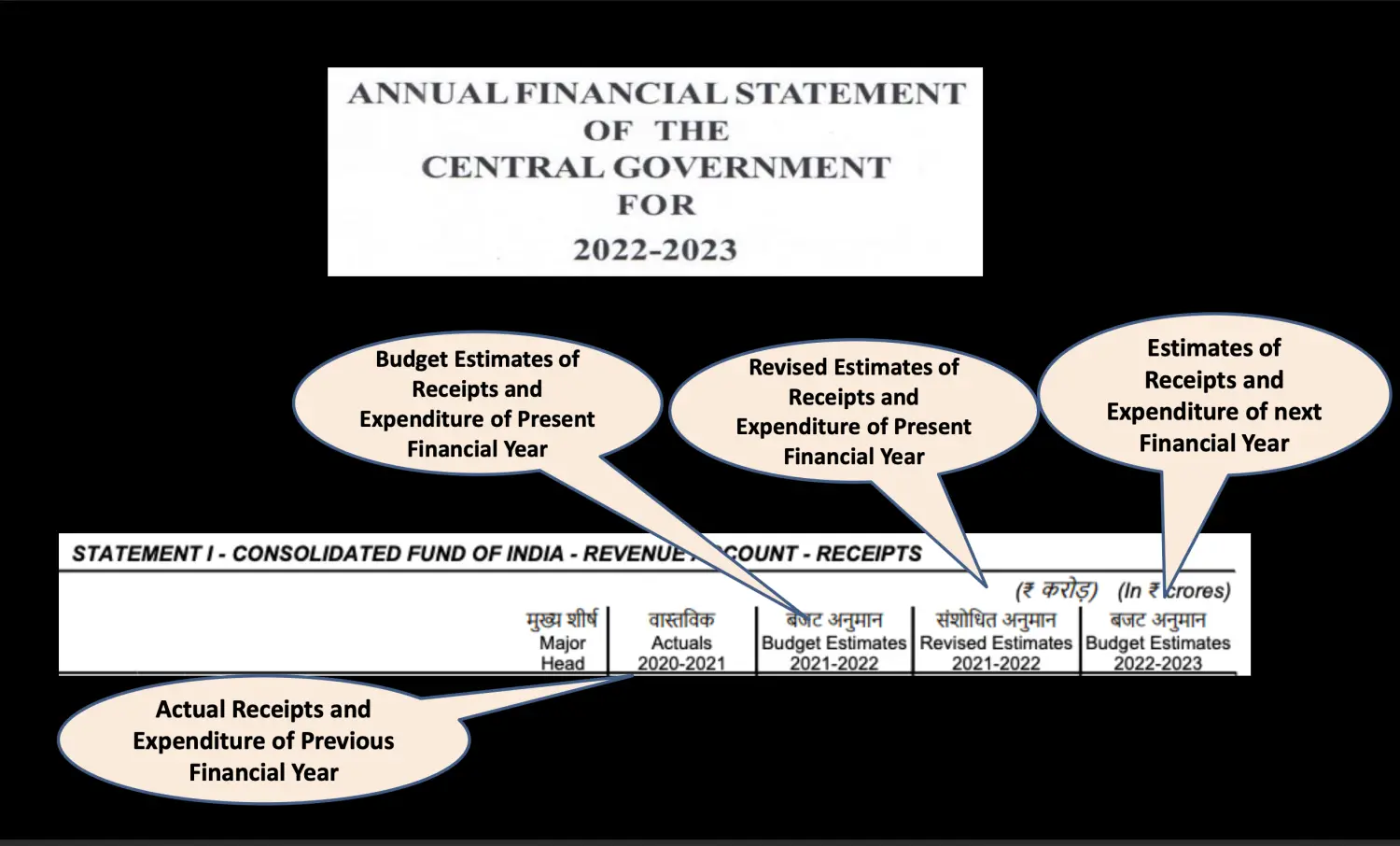
- AFS is of 3 Years
- Finance Bill - Legal Changes by Govt is Part of Finance Bill for Taxation of Crypto & Introduction of CBDC
- A B C - mandated under constitution
- D under FRBM
- E to L - As Per Convention
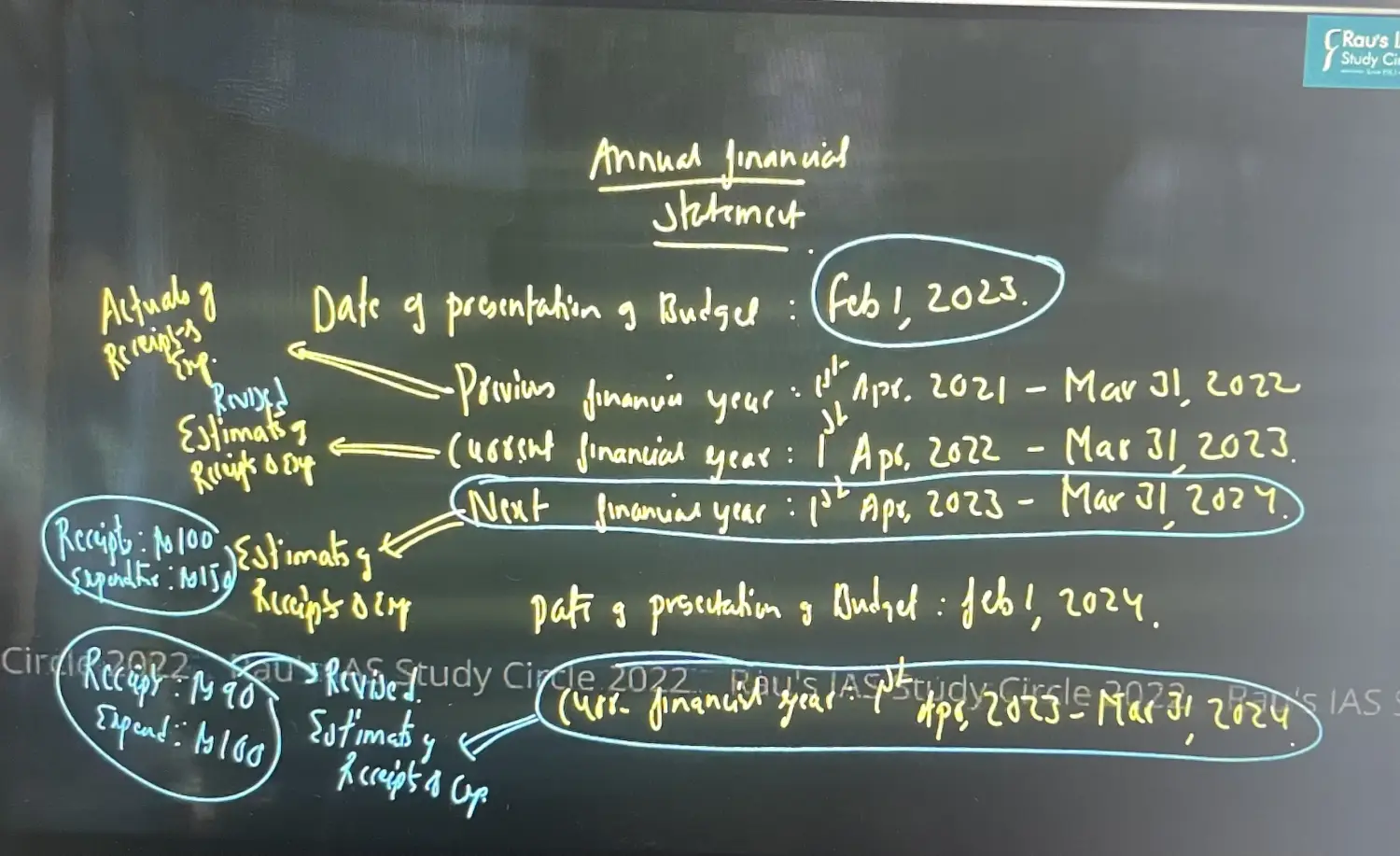
Annual Financial Statement
Date of Presentation of Budget : Feb 1, 2023
Previous Financial Year : 1st Apr 2021 - 31 Mar 2022
Current Financial YEar : 1 Ap 2022 - 31 Mar 2024
The Three Funds of India
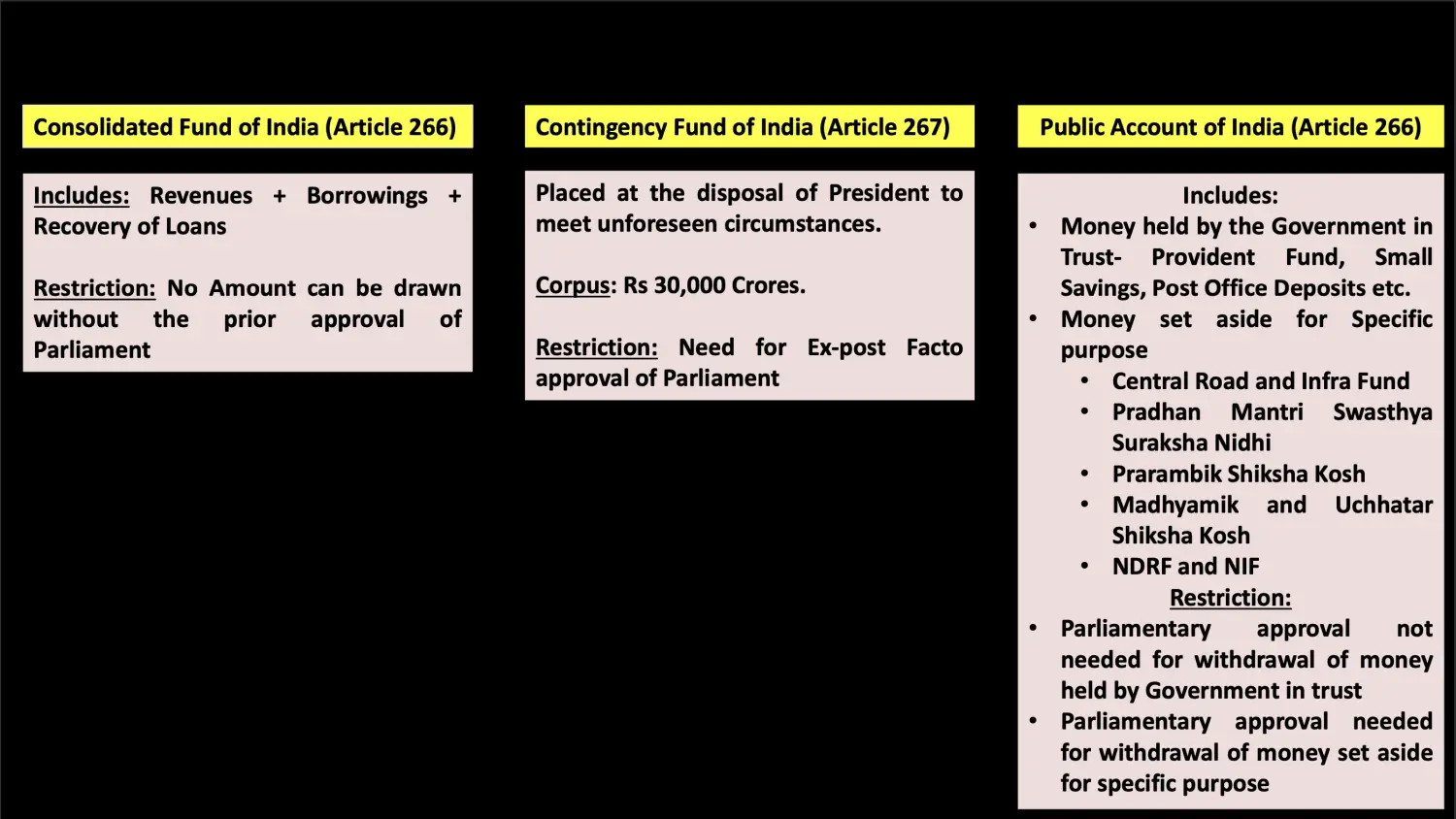
CFI → Ex Post Facto Approval Needed ; Finance Secretary Operates CFI for President
Cess First Goes to CFI and then with Parliamentary Approval goes to Public Account of India to withdraw Parliament Approval is Needed
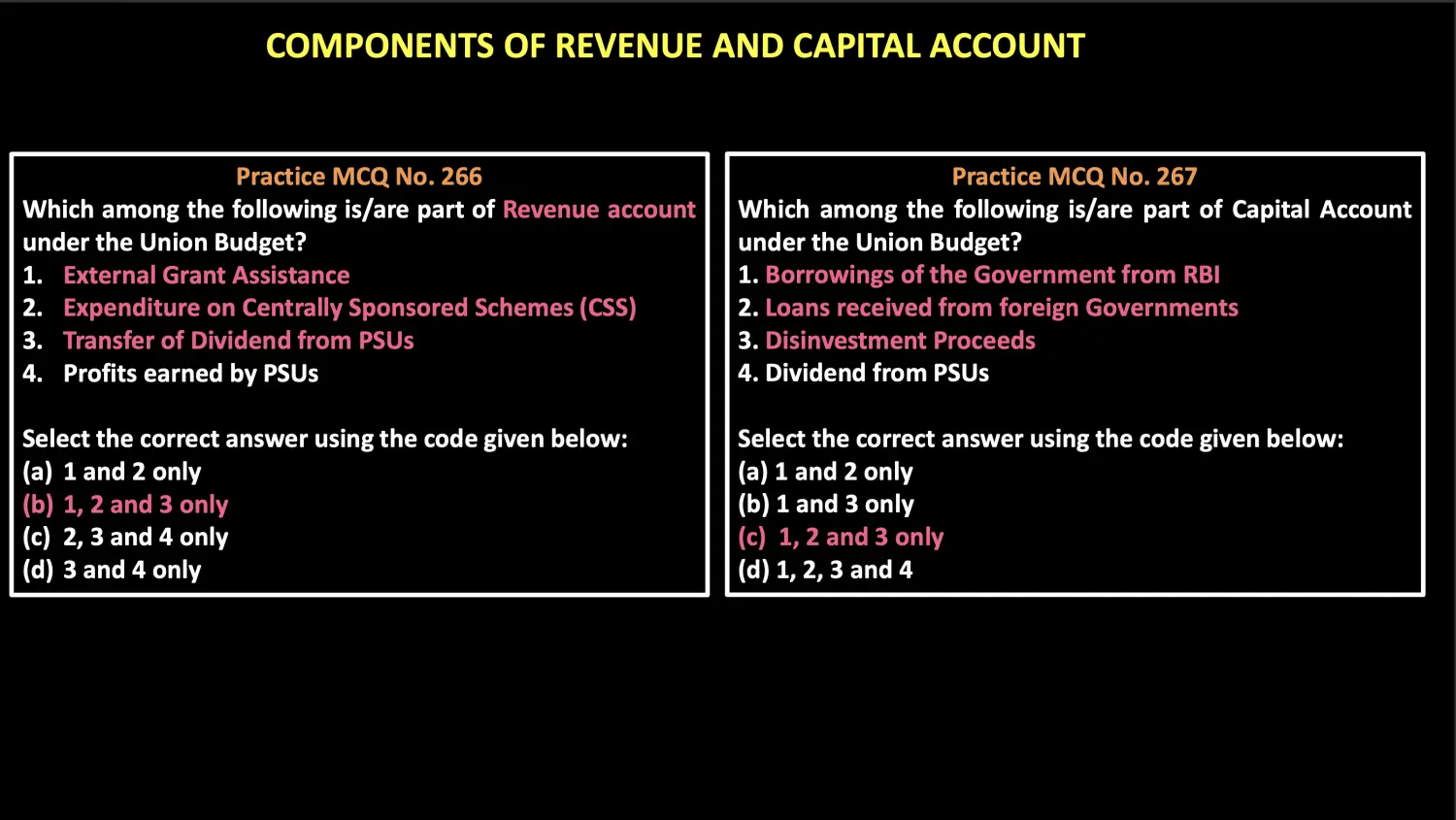
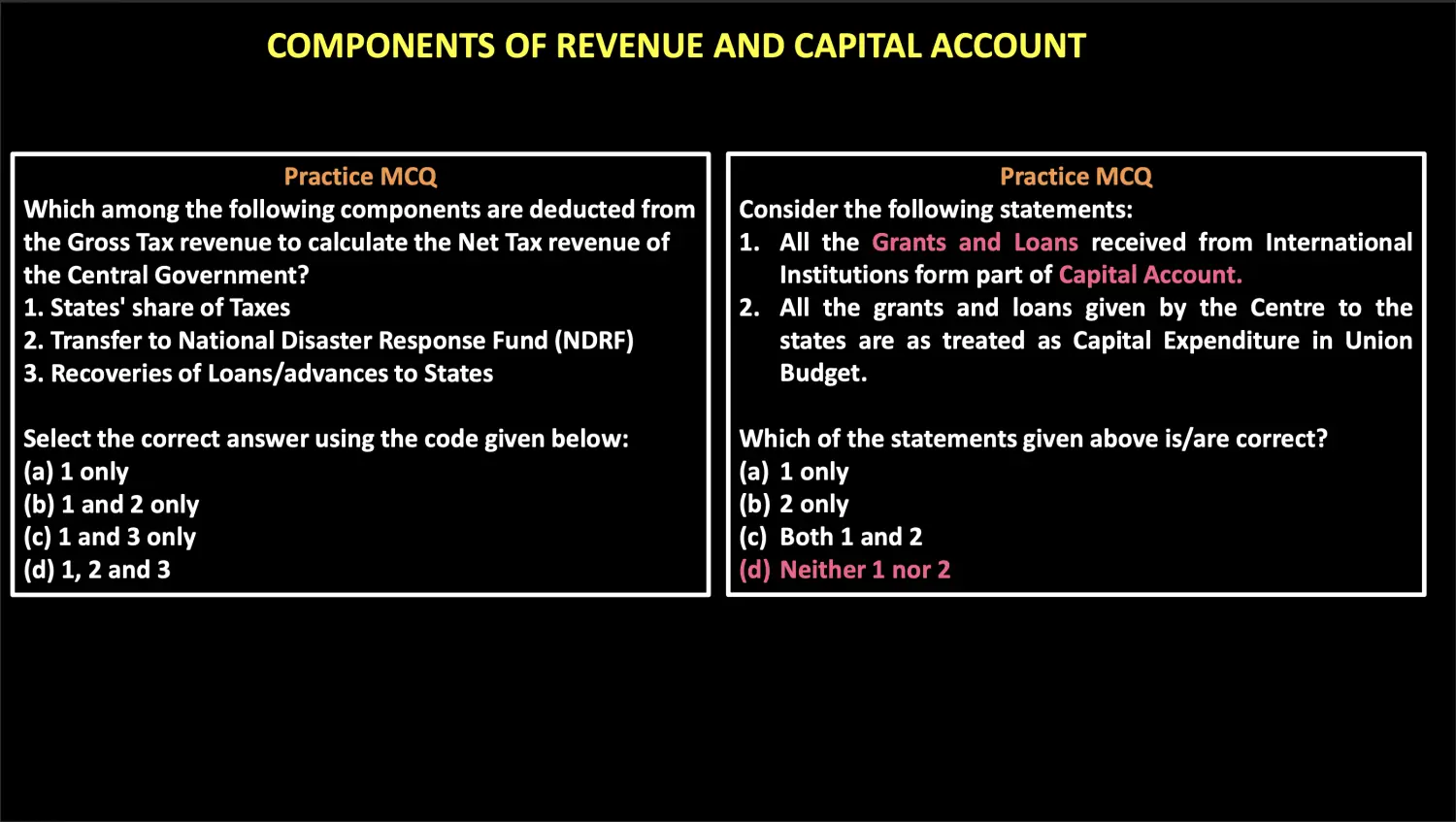
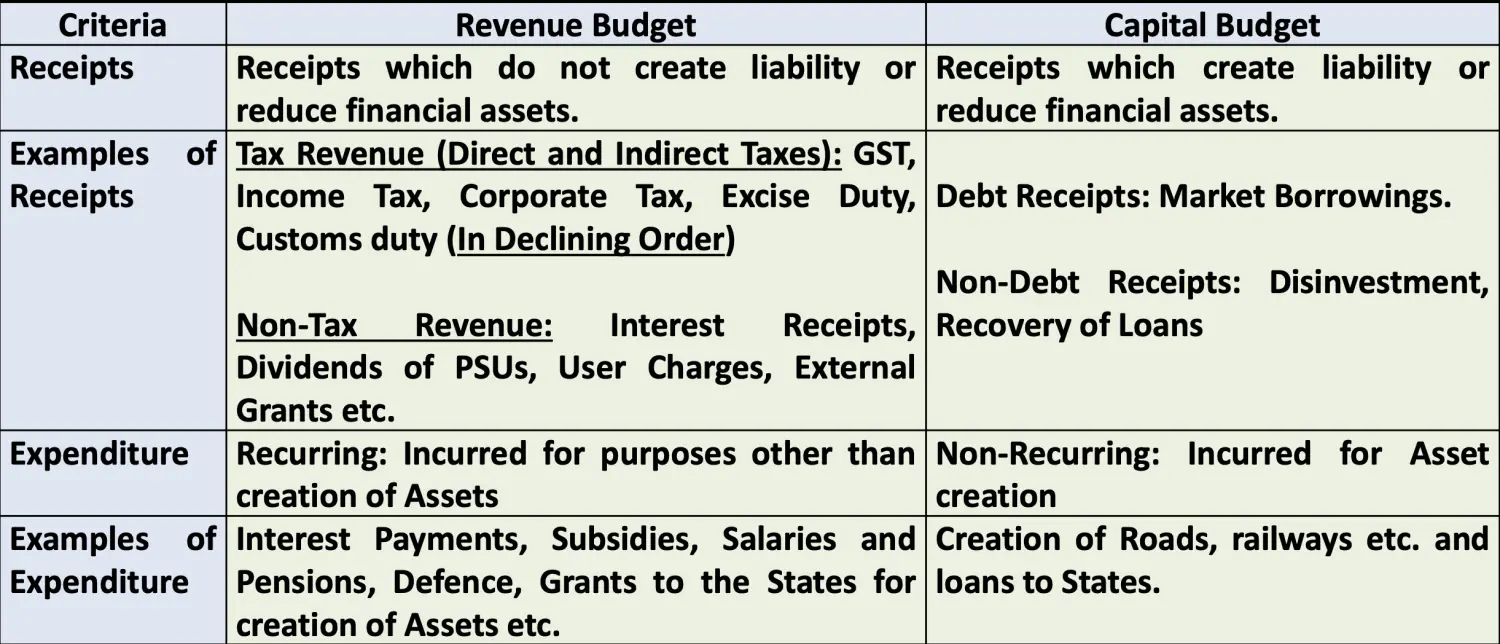
Revenue and Capital Accounts Details
Understand the Logic, Don't Mug Up
- Revenue Account (Recurring)
- Revenue Receipts
- Example: Tax - Yearly
- Receipts which do no Lead to Liability of Govt or does not Lead to Decrease in the Assets of the Govt
- Revenue Expenditure
- Example: Salaries & Pensions of Officials - Monthly
- Expenditure which Govt Incurs for Maintenance Related Expenses
- Revenue Receipts
- Capital Account (Non Recurring - One Time)
- Capital Receipts
- Example: Borrowing of Govt
- Those Receipts of Gvpt which leads to Increase in Liability of Govt or Receipts which Govt Gets by Selling its Assets
- Capital Expenditure
- Example: Construction of Roads and Railways
- Mostly one time Expenditure, Expenditure in Creation of Assets
- Capital Receipts
- Revenue Account (Recurring)
Revenue and Capital Budget (Receipts and Expenditure) *
The Logic to Understand it
- Recurring (Revenue) Hai Ya Non Recurring/One Time (Capital)
- Assets Dissolve (Capital) Ho Raha ya Ban Raha Hai (Capital)
- Capital Gain (Capital) hai Ya Liability Hai (Capital) Ya Grant/Gift (Revenue)
- Think in Terms of Stock and Flow - Kitna Paisa aa raha hai and Kitna Jaa raha hai
- Hindi main Samjho
- Receipts - Aa Raha Hai
- Expenditure - Jaa Raha Hai
- Short Forms Used
- RE - Revenue Expenditure
- RR - Revenue Receipts
- CE - Capital Expenditure
- CR - Capital Receipts
Exercise of Finding What is What Kind of Head
| Individual | Government | | --- | --- | | Earn Salary - RR | Tax - RR | | Pay Rent - RE | User Charges - RR | | Take Loans - CR | Fees for UPSC Application - RR | | Interest Payment - RE | Case: Central Govt has given loans to State Govt
For Central Govt it will be a Capital Expenditure
For State Govt it will be Capital Receipt
For State Government Interest Payment - RE
For Central Government Interest Received will be - RR
For Central Government Recovers Loan - CR
For State Government Pays back the Loan - CE | | Repay Loans - CE | Dividend of PSU - RR
PSU Declare Dividend Every Year
Profits not Transferred to Government by PSU is NOT Accounted for in the Budget | | Getting Gift / Donation - RR
It is NOT Liable to Pay it Back. If Govt takes Loan it is CR but if it takes a Grant it is RR | Grant from World Bank - RR | | Give Loans - CE | Loan from IMF/RBI - CR | | Interest Receipts - RR | PM Kisan Scheme - RE | | Recovery of Loan - CR | Food Subsidy - RE | | Pay Traffic Fines - CE | Salaries - RE | | NA | Interest Payment - RE | | NA | Insurance Premium - RE |
Special Case of Defence
- According to our Logic
- RE - For Salaries
- CE - To Buy New Aircrafts and Equipments
- But According to Proportion of Expense for Defence. Most is Recurring.
- Hence Defence is Always considered to be a part of Revenue Expenditure
- According to our Logic
Special Case of Grants received by the Government
Generally Grants are One time and not recurring but as they are not a liability to the govt and the govt dont have to pay it back it is considered to be a Revenue Receipt
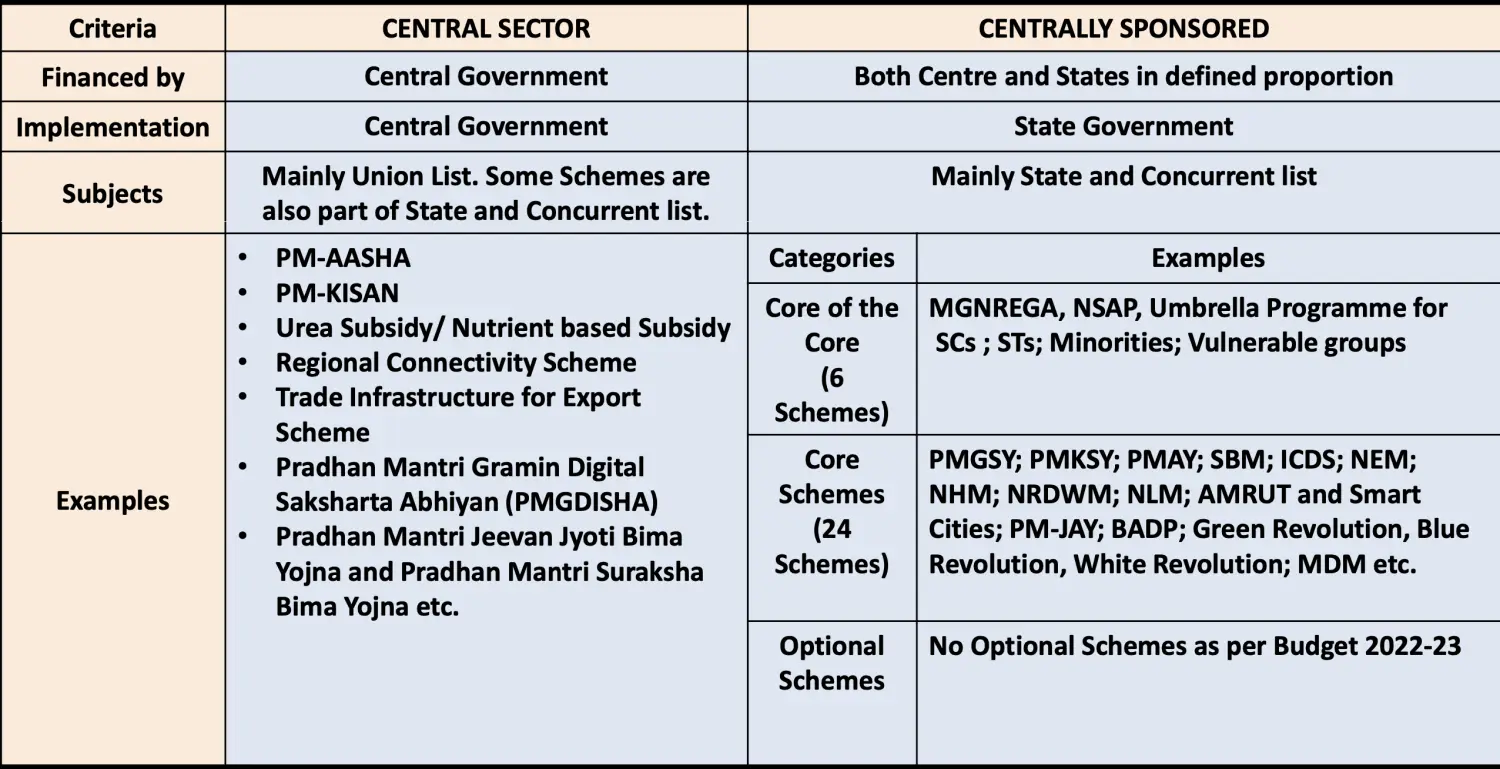
Special Case of Centrally Sponsored Schemes (CSS)
- Example: MGNREGA, Ayushman Bharat, PM Awas Yojana
- Here Centre and State Share the Expense in some Proportion
- Here Centre Transfers Money to the States for CSS
- Now this money is generally/mostly used for Creation of Asset like
- Creation of Road - Under Gram Sadak Yojana
- Creation of House - Awas Yojana
- Creation of Village Asset - MGNREGA
- Ayushman Bharat has 2 Components
- Insurance of 5 Lac
- Conversion of PHC into Health & Wellness Centre
- in all the above 4 cases most of the money is used in creation of assets
- So here there may be confusion, that it will be Revenue or Capital head expense by Centre Govt
- But Because Central Government Pays the State / Transfers Money to the States for Implementation of CSS. Hence for Central Govt is a Revenue Expenditure
- States Receiving this from Central Government will be considered as Revenue Expenditure
- Generally CSS or Schemes are considered to be Revenue Expenditure
- Note : Centrally Sponsored Scheme and Central Sector Scheme are Different. Above Case is for Centrally Sponsored Scheme
Summarised Class PPT - for Government Receipts and Expenditure
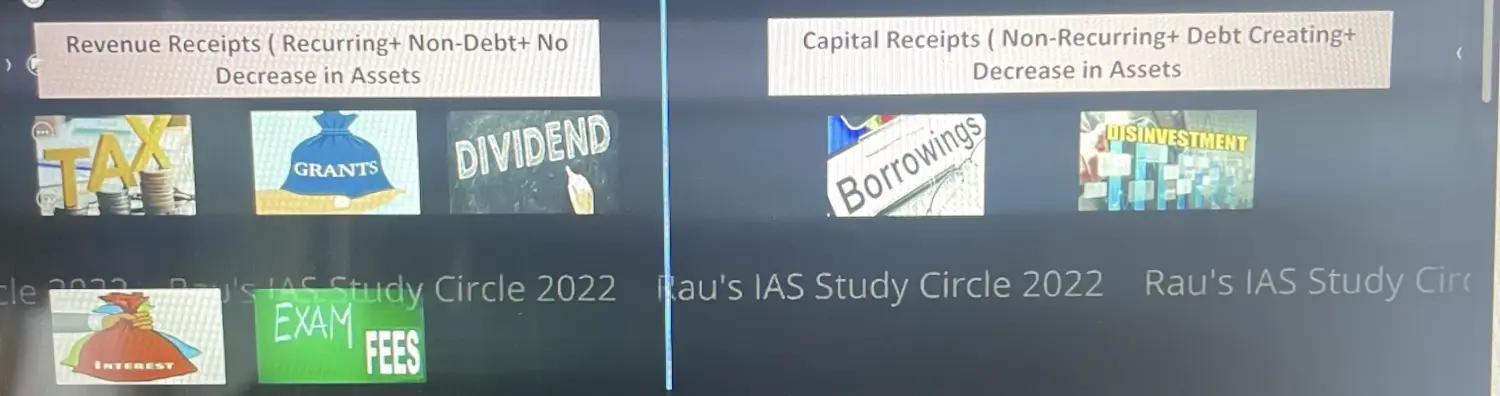
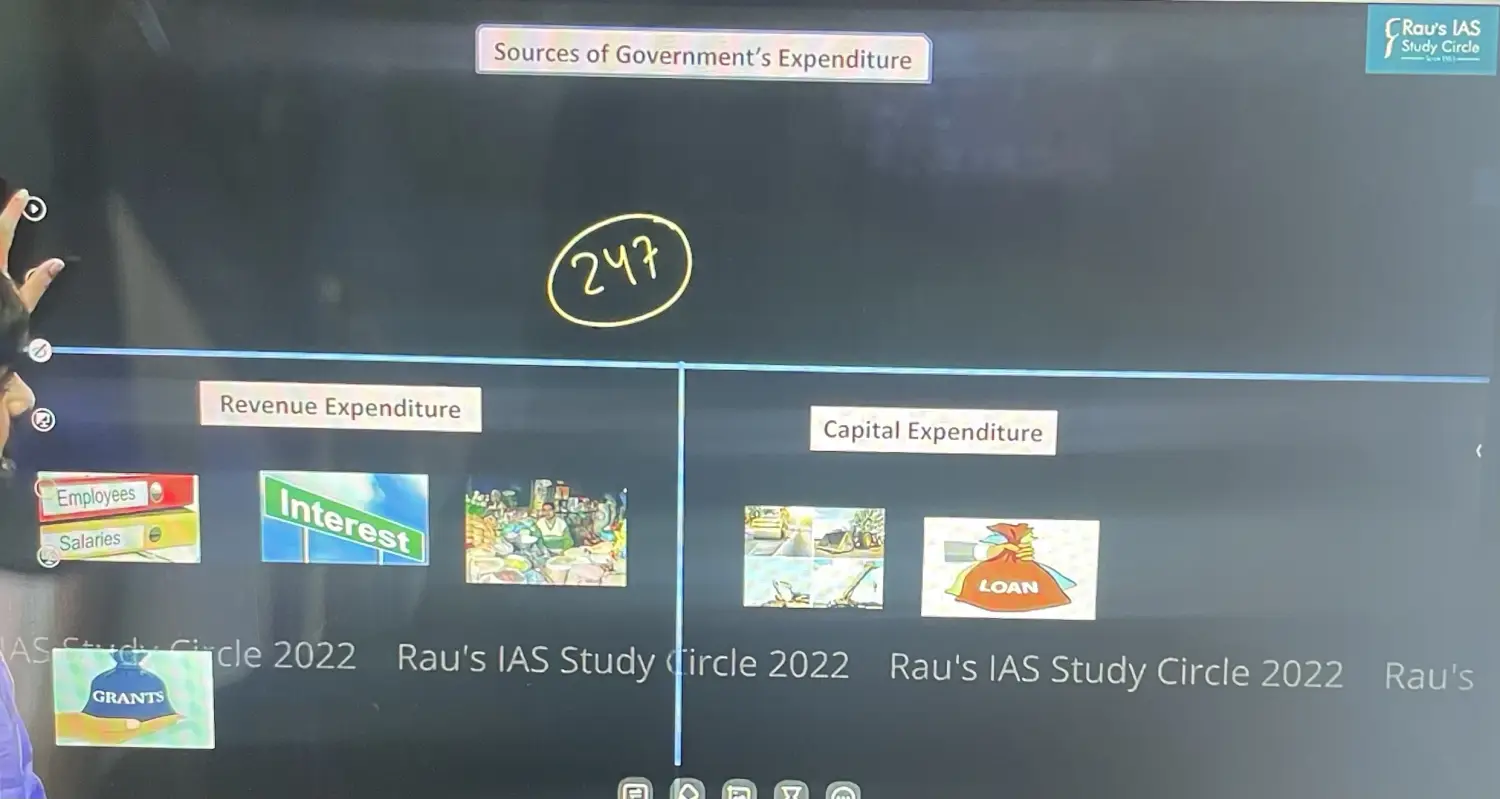
Components of Revenue & Capital Budget - Mains Question in 2021
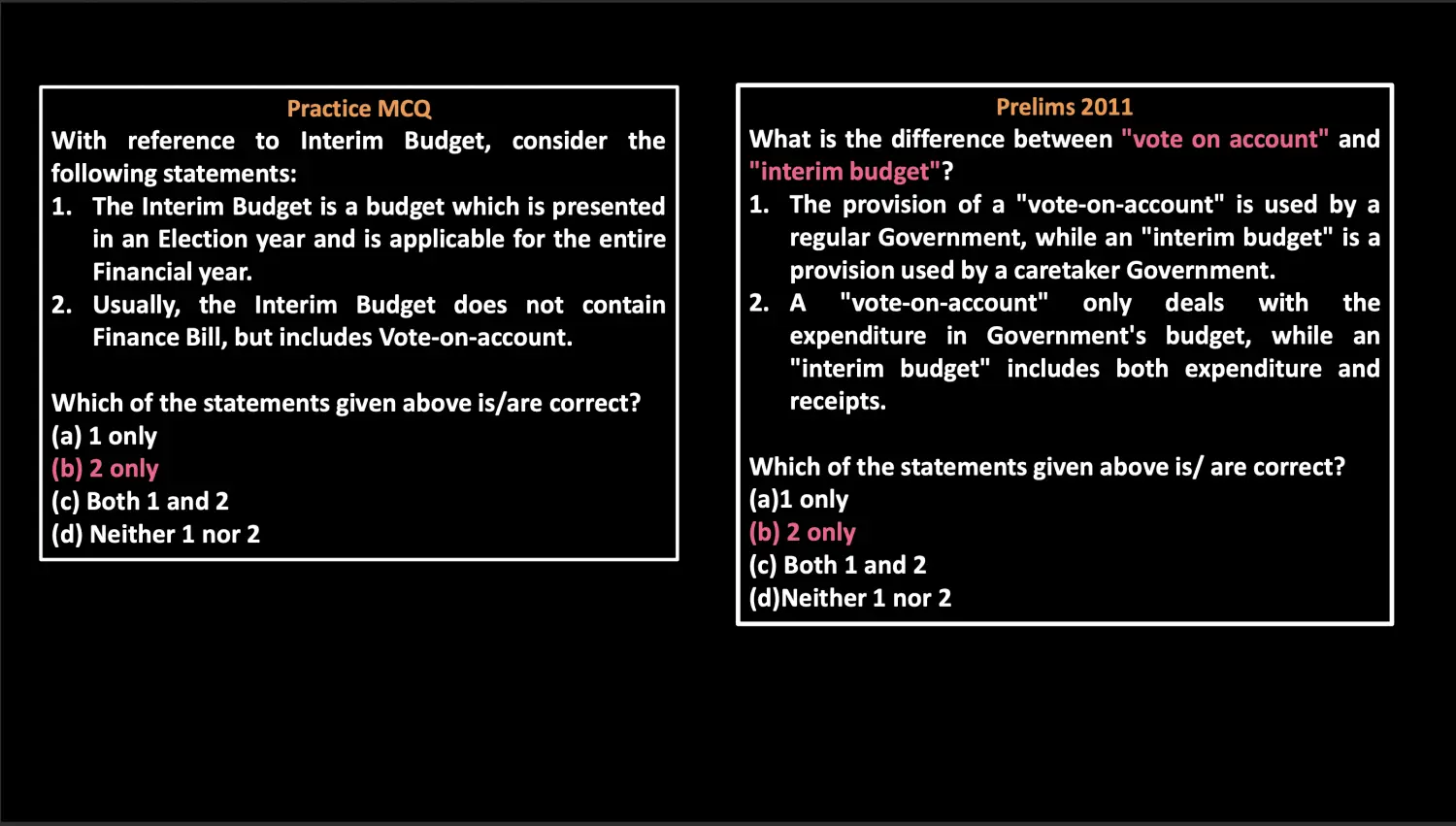
Difference Between Union Budget & Interim Budget
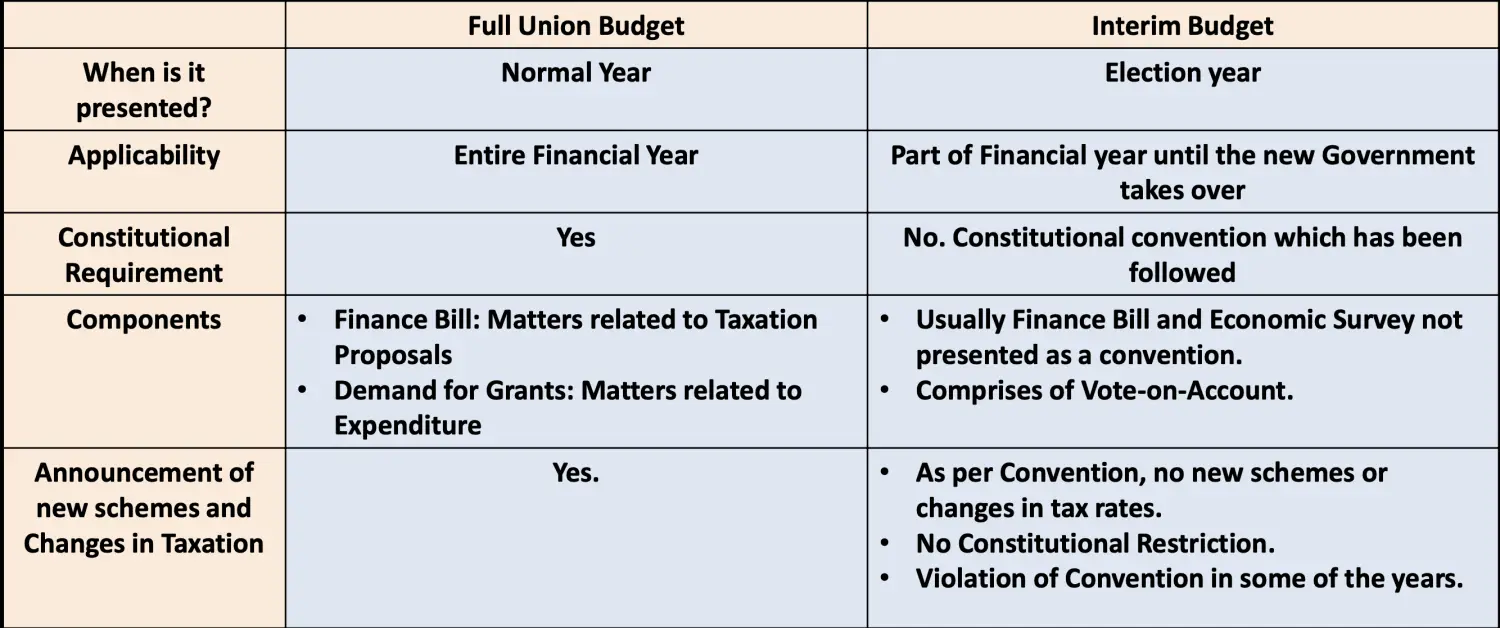
Full Union Budget - Finance Bills, Demands for Grants, Eco Survey, Appropriation Bill
Interim Budget -Generally No Eco Survey, Vote on Account (Now Obsolete for Normal Years), Finance Bills (convention Not Introduced)
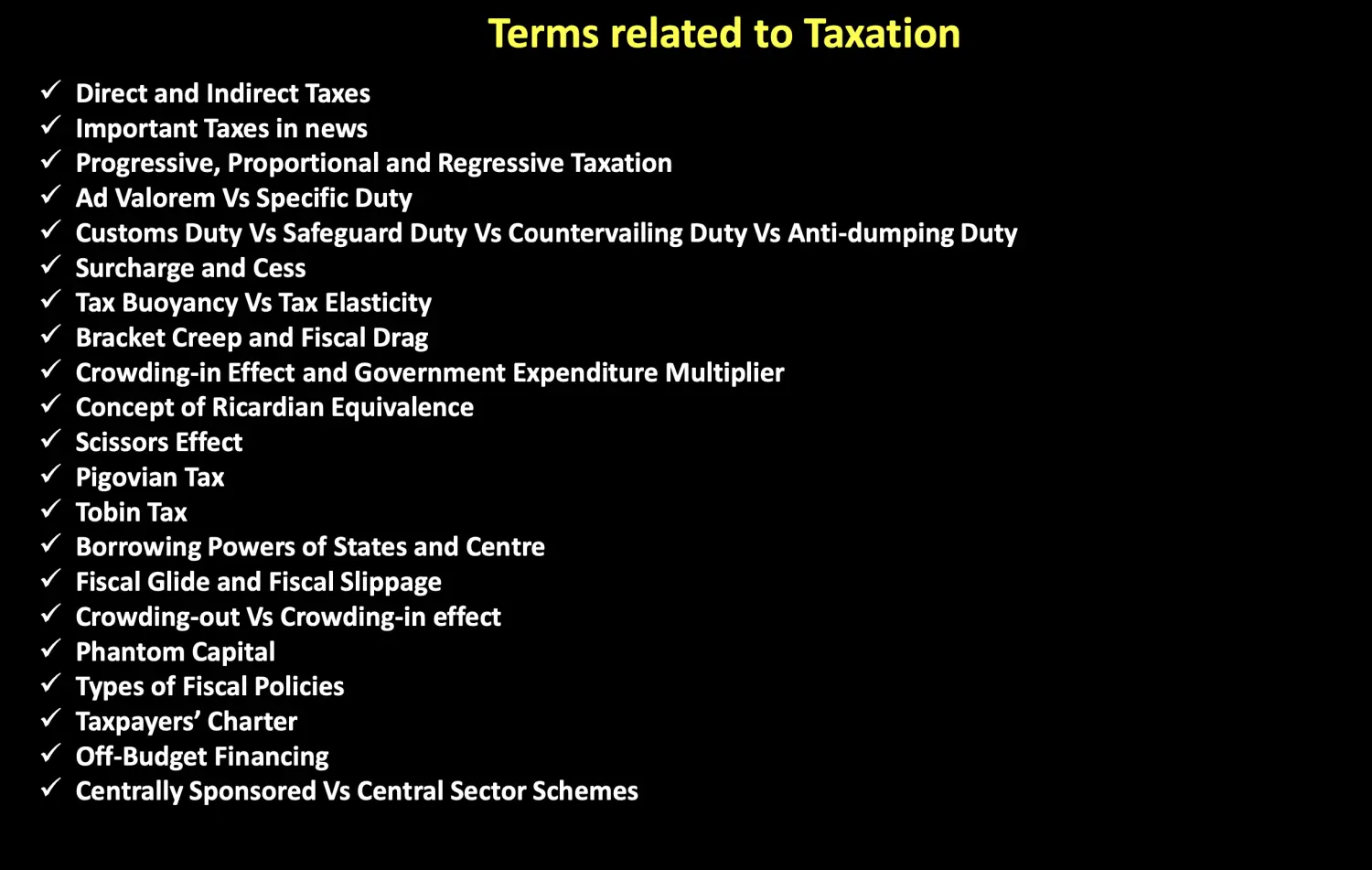
List of All the Terms
Tax Incidence
On whom are we imposing Tax
On a Person - Income, Assets, Profit
On Goods & Services - Buying and Selling
Tax Burden
Ultimately who ends up paying the Tax
Duty and Tax
- Tax on Duty imposed on Goods
- Tax is on Everything
- Duty is a Subset of Tax
Types of Taxes in India - on the basis of who can Levy it
GST : Concurrent Tax
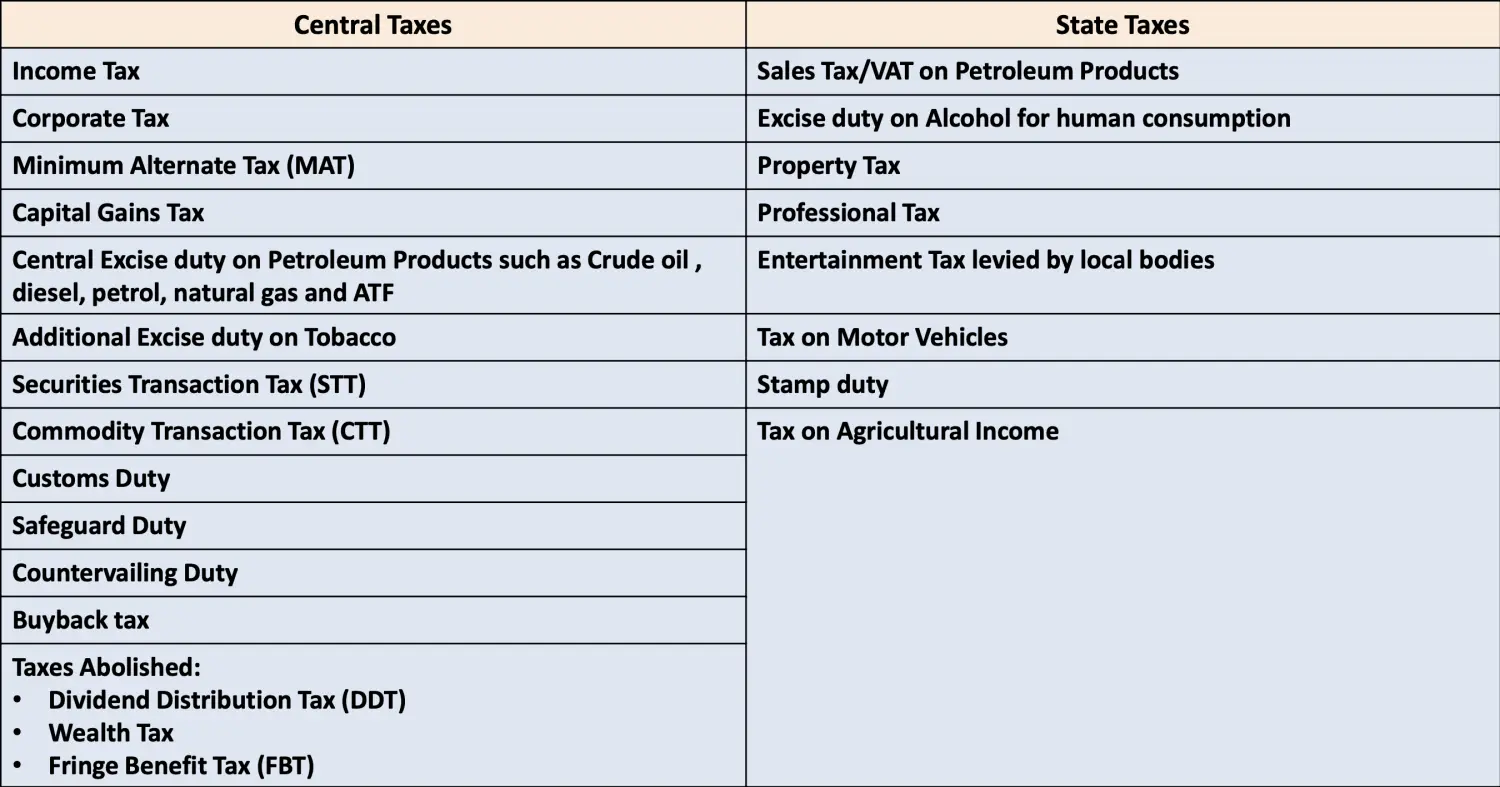
Corporate Tax
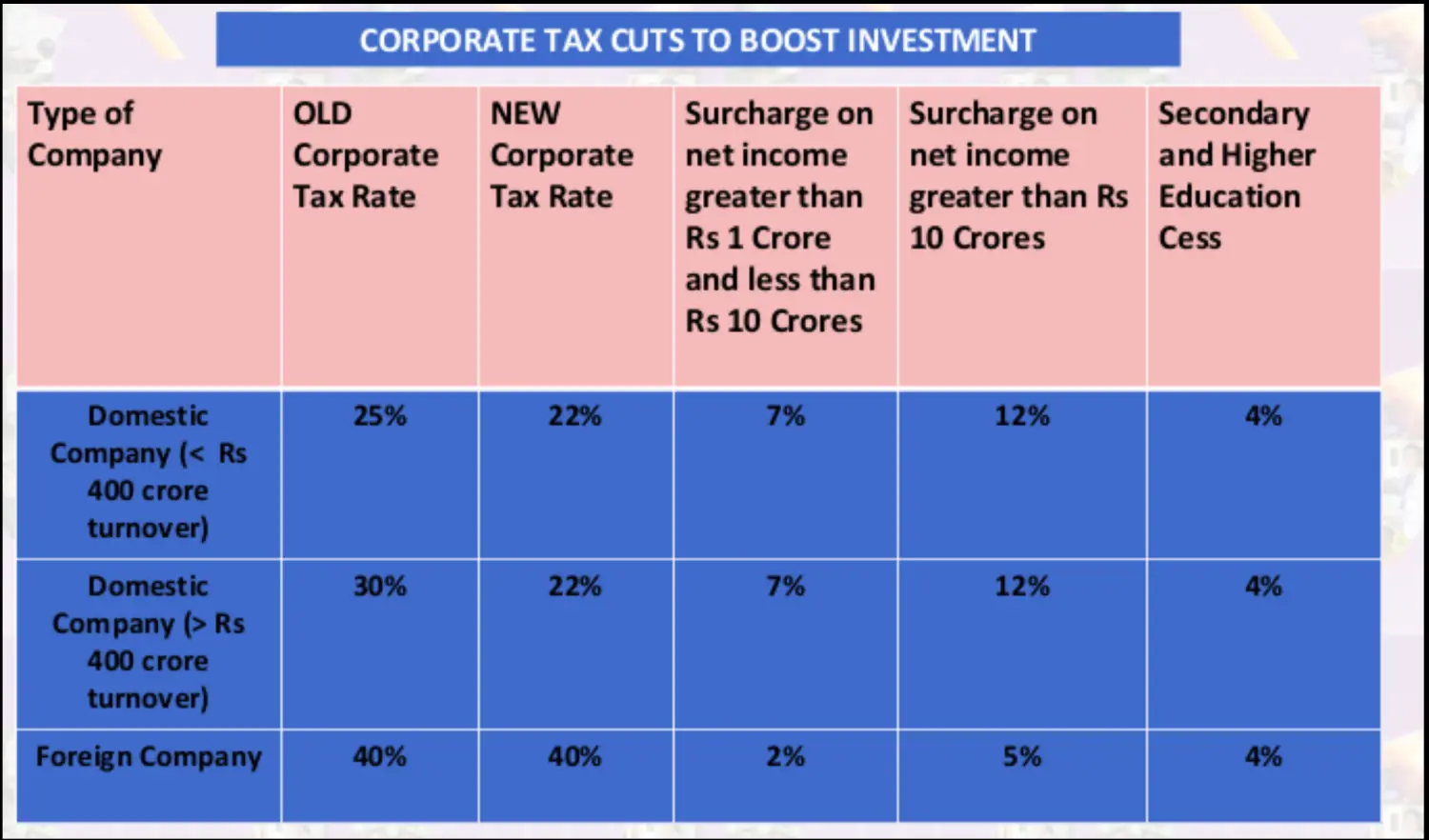
Remember the Reduction
Minimum Alternate Tax (MAT)
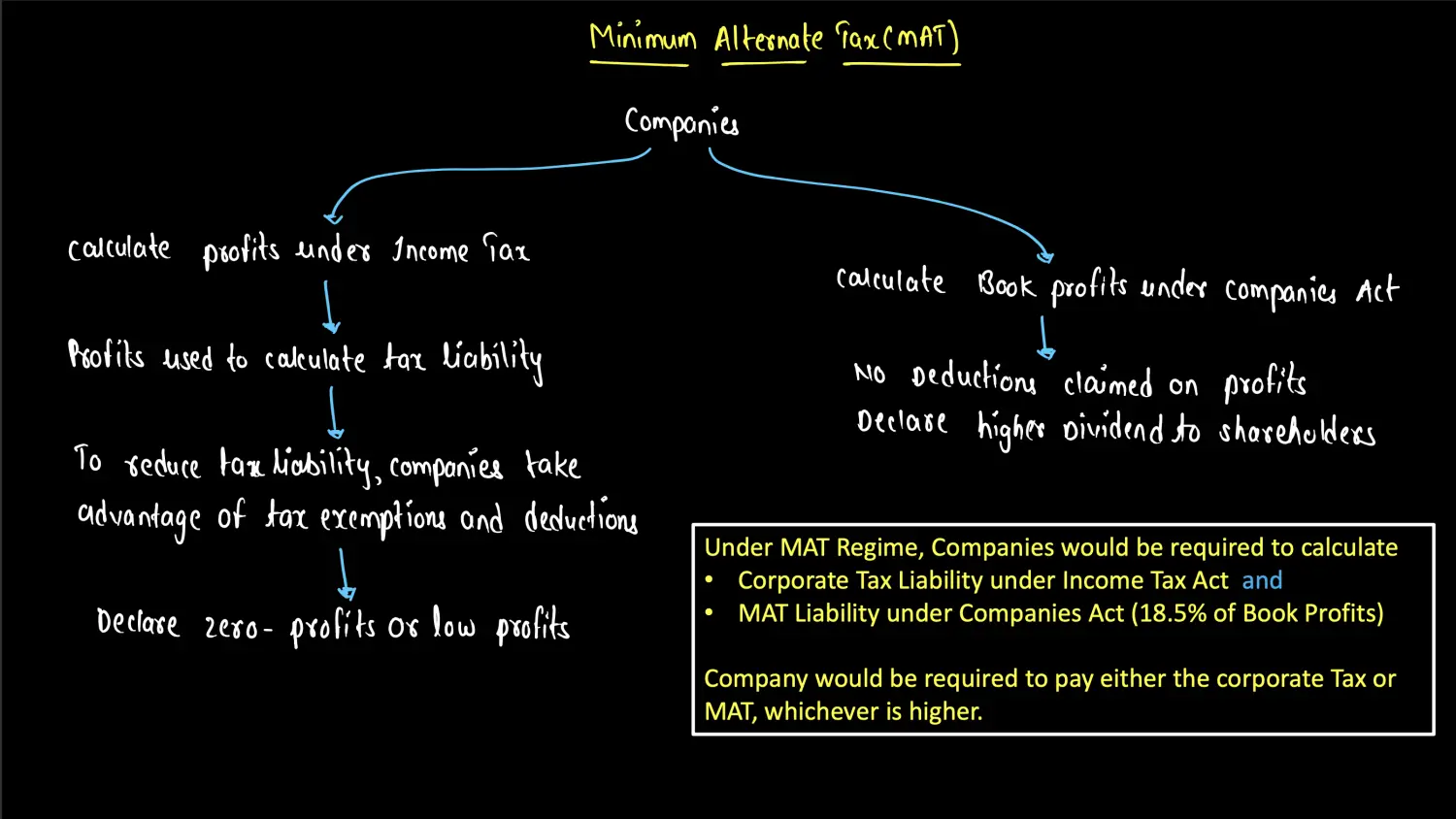
Companies Act Calculations - For the Benefit of Shareholders
Income Tax - Companies Tries to Reduce Overall Tax Liability
Hence Companies Try to take benefit of Tax Exemptions like If company is located in SEZ or Backward Area, By Investing more in R&D
Some Companies Hence → Either Zero or Very Low Tax
Hence Govt came up with MAT → MAT Liability is calculated on Books Profit calculated under Companies Act
Tax Finally Payable by Corporate is → MAT Liability or IT Act Corporate Tax ( Whichever is Higher)
Dividend Distribution Tax (DDT) - Abolished in Union Budget 2020-21
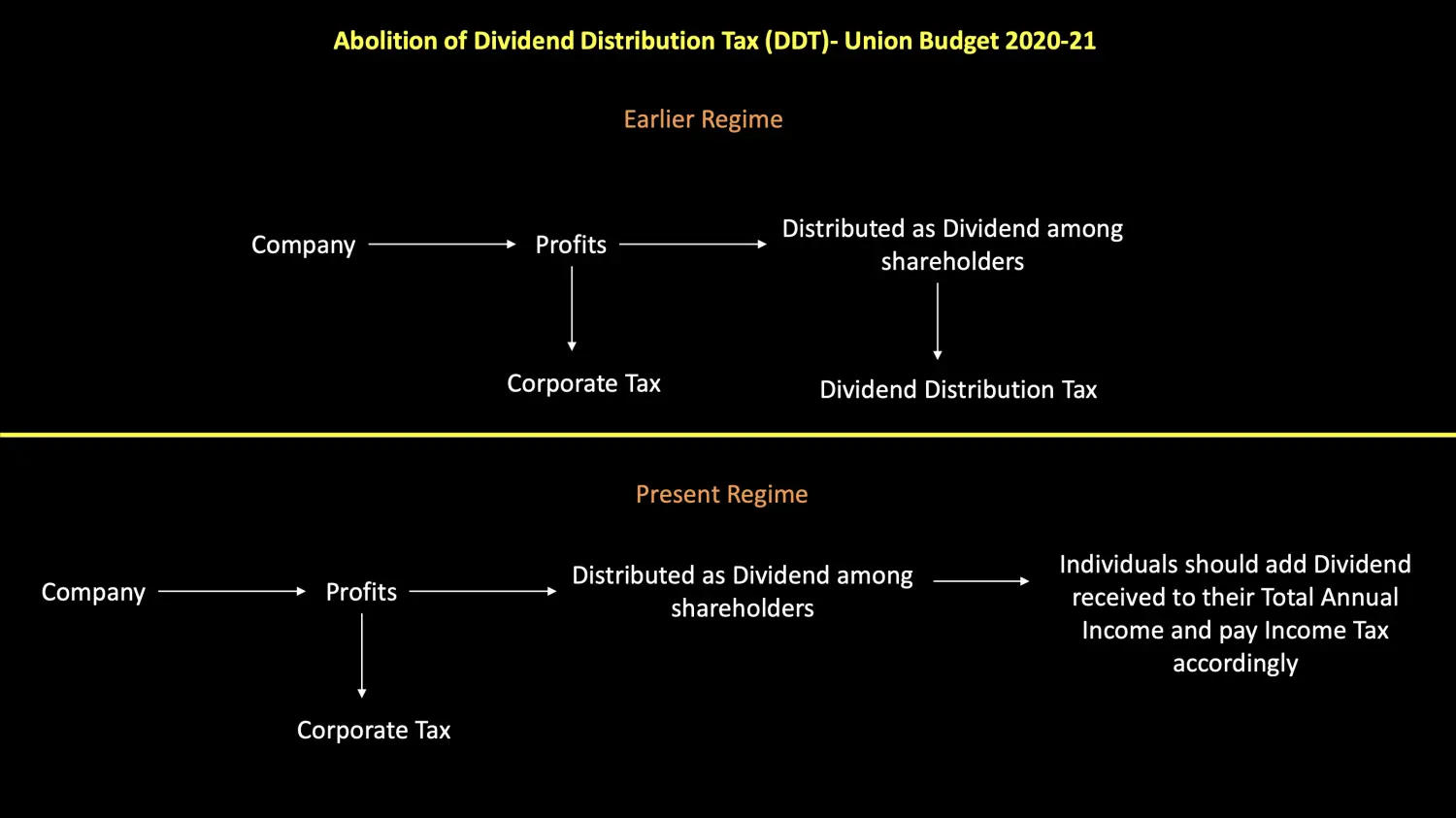
DDT Earlier Led to Double Taxation
Buy Back Tax of Union Budget 2019-20
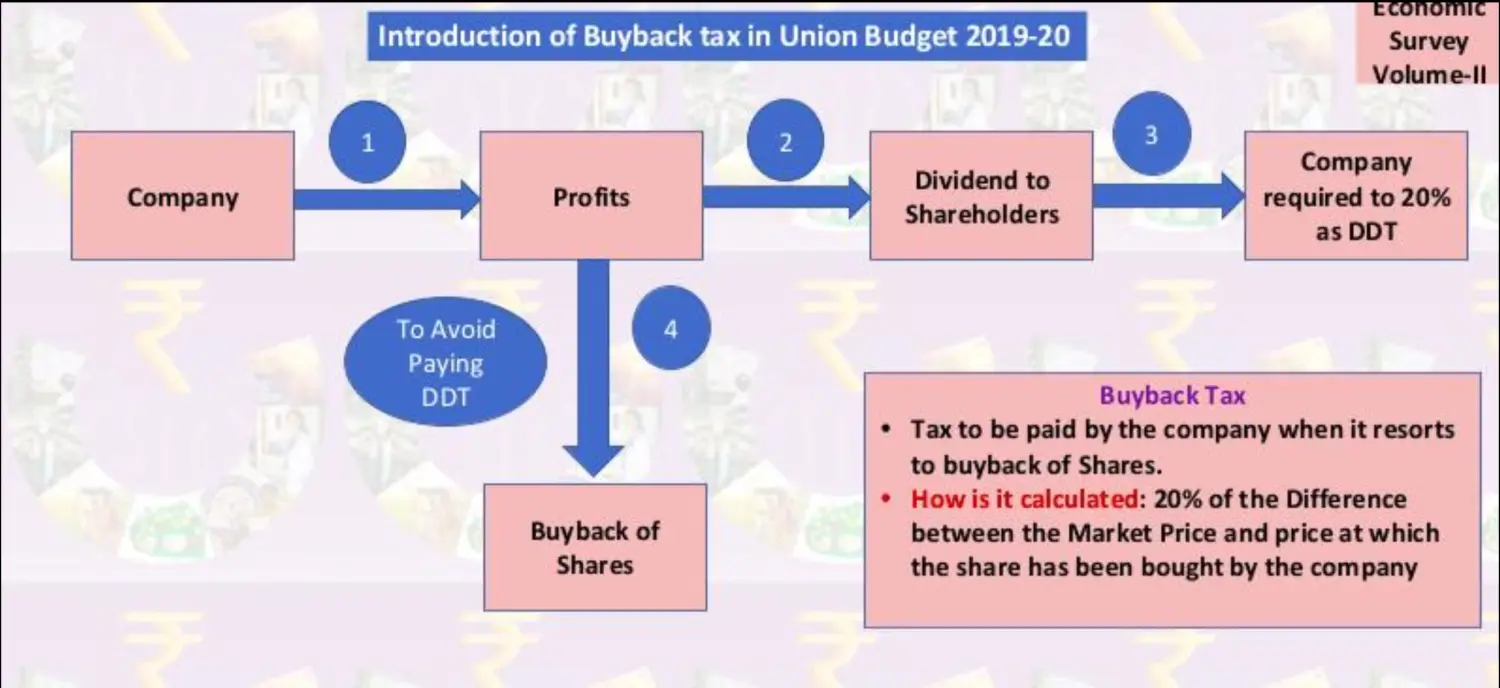
To Avoid Paying DDT, Companies used to Buy Back the Share at a Premium
Here, Premium would be equal to the profit
and now the Shareholders would RePurchase the Shares
Hence, Govt came up with Buy Back Tax
Equalisation Levy
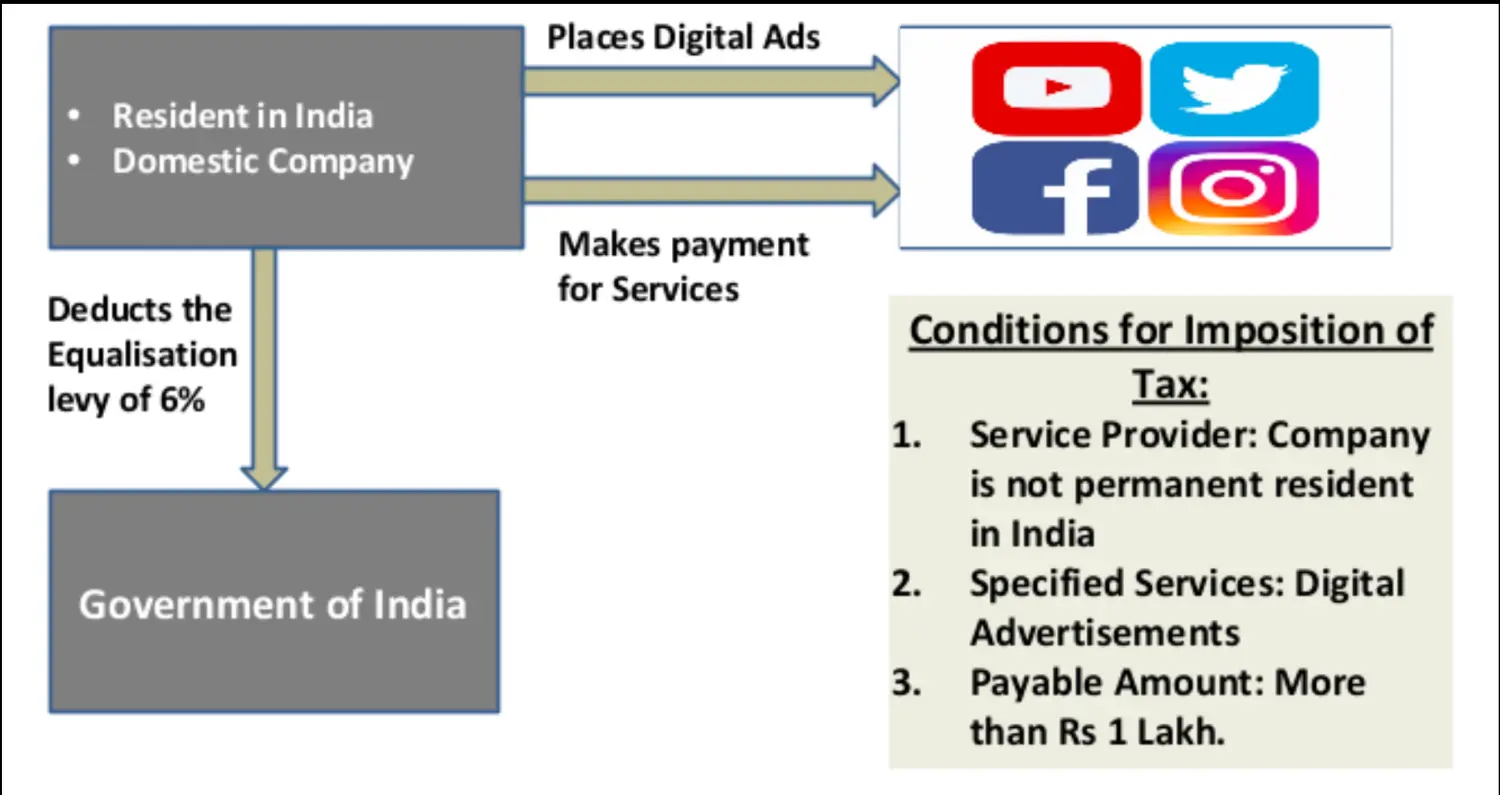
OECD Framework - BEPS Framework (Base Erosion and Profit Shifting)
There are Two Types of Companies in India - Based on where the Company is actually is Registered
- Example Flipkart HQ at BLR is Registered in Singapore
- Domestic Companies - Registered in India (Owner Might be Indian or Foreigner)
- Foreign Companies - Registered outside India (Owner Might be Indian or Foreigner)
- Permanent Establishment in India
- No Permanent Establishment in India
Criteria for declaring Permanent Establishment is (Universal Norm, Not Specific to India)
(Registered and HQ is not Uncommon)
- Should be Physically Present in India
- in the Form of Branch, Office or Factory
- Should have Fixed Place of Doing Business in India
Exception: If a Company which carries out Subsidiary or Non Core Functions in India. It will NOT be considered as a Permanent Establishment
Example of Amazon
Core Activity of Amazon is to provide platform for bring together buyers and seller
Physical Delivery of Goods and Customer Service is non core activity
Amazon has servers is in Ireland and Ireland is Tax Haven Countries
Example of Foxconn and Winston
They are apple manufacturers in India. Their Core Activity is of Manufacturing Mobile Equipments
Example of Google
Core Activity is of Giving Search Engine
Non Core Activity is of Google Ads
Google has servers is in Ireland and Ireland is Tax Haven Countries
Equalisation Levy is only applicable to companies which are considered to not have permanent establishment
World has come up with Global Minimum Tax for Such Companies
Equalisation Levy is a Direct Tax as Burden is Directly on the Foreign Company with No Permanent Establishement in India
Old and New Regime of Equalisation Levy
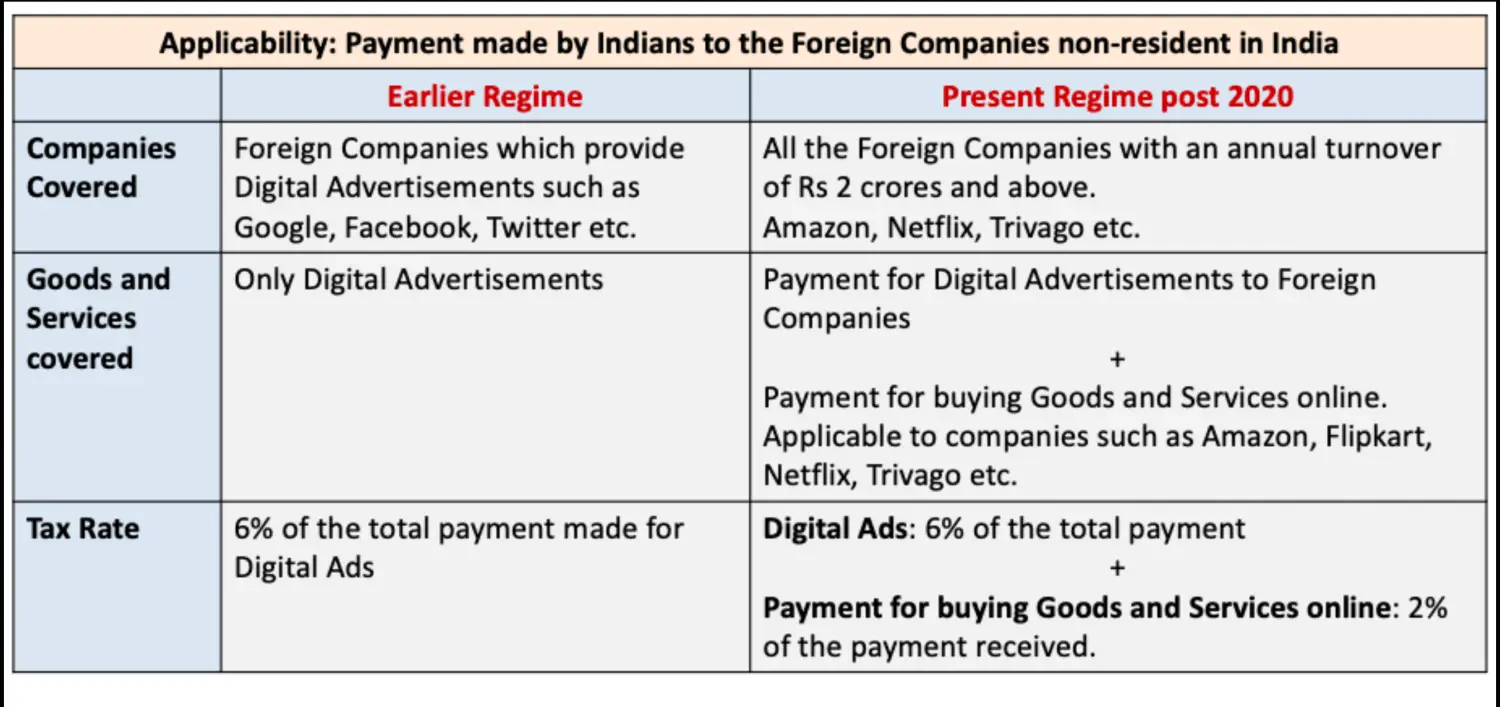
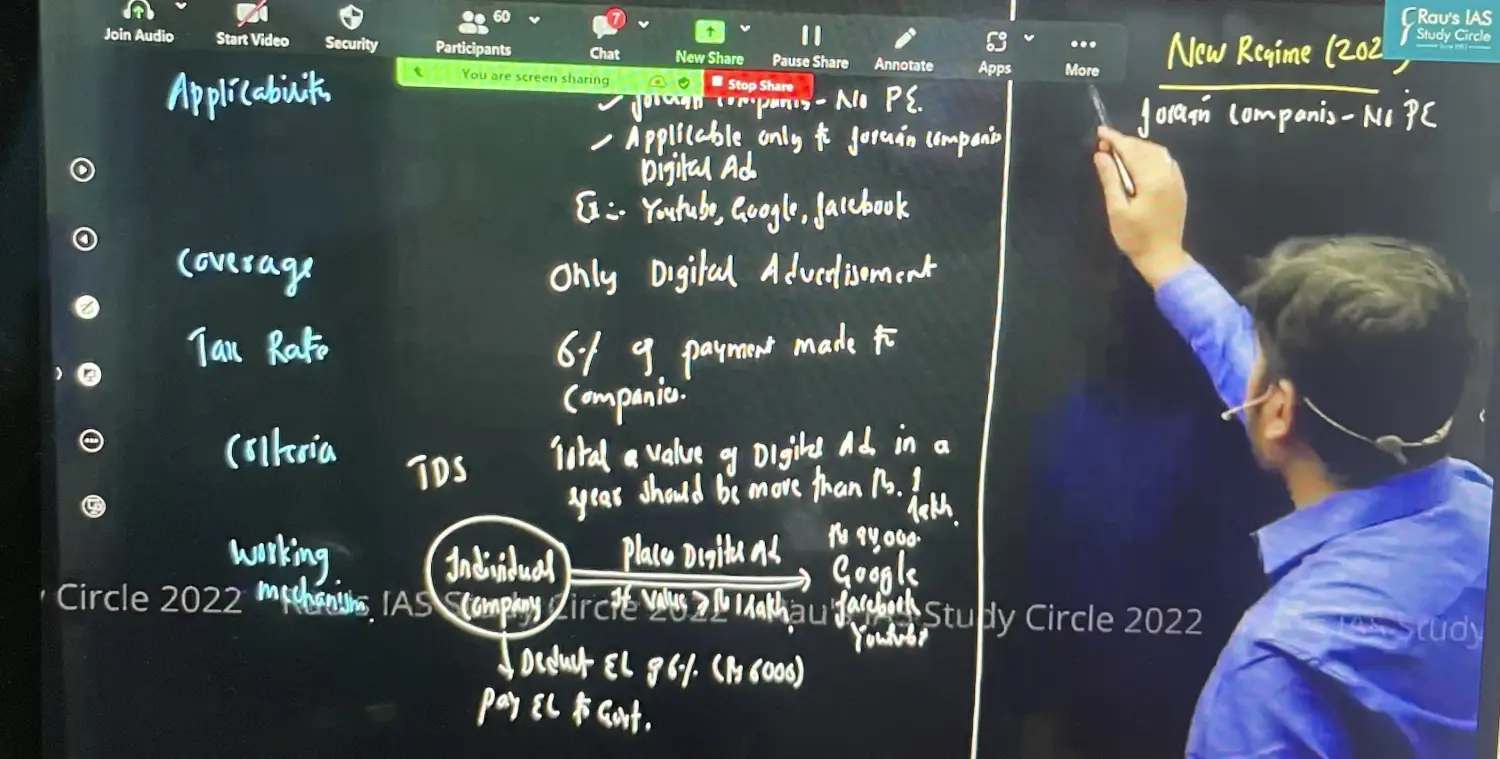
Here All Foreign Companies means - All Foreign Companies with No Permanent Establishment
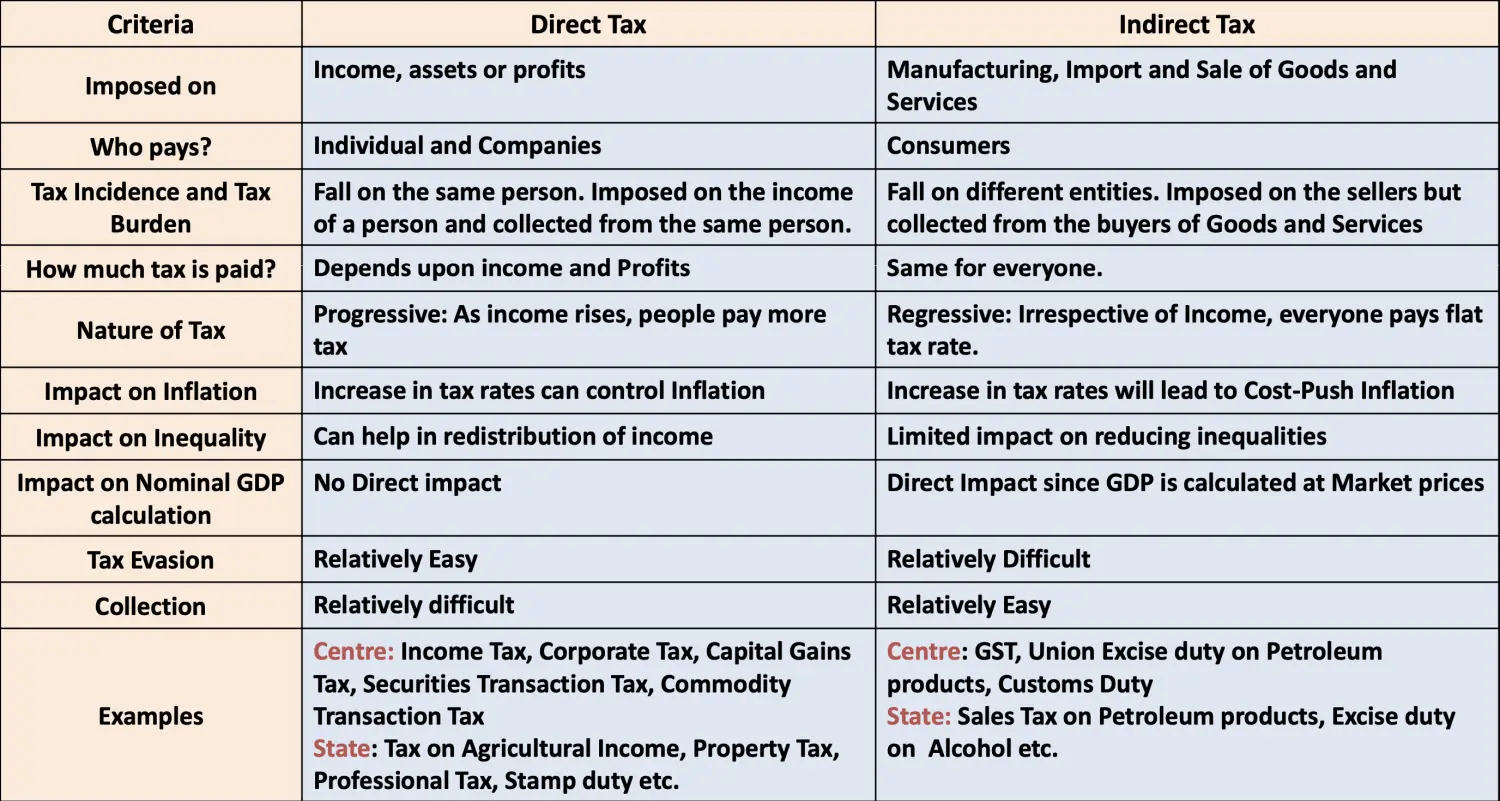
- Direct and Indirect Tax
Example
Taxes on Goods are 99.99% times are Indirect Tax
- Stamp Duty - Direct Tx
- Sales Tax - Indirect Tax
- STT - Securities Transaction Tax - Direct Tax
- Capital Gains Tax - Direct Tax
- GST is Indirect Tax
Direct Tax
Tax Incidence and Tax Burden is Same
Indirect Tax
Tax Incidence and Tax Burden is Different
Difference Between Direct and Indirect Tax
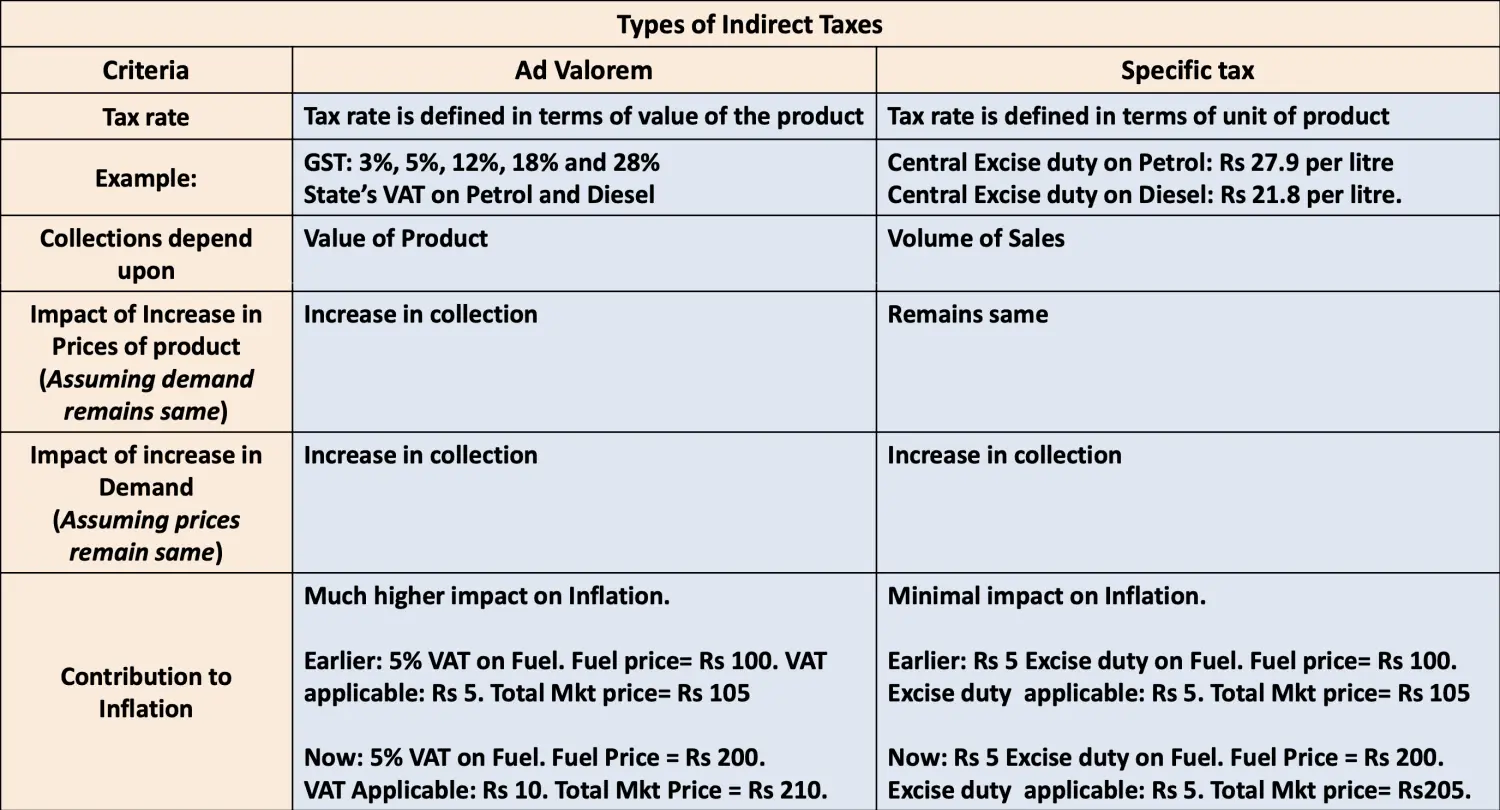
Types of Indirect Taxes
Components of Different Central Taxes in Petrol and Diesel
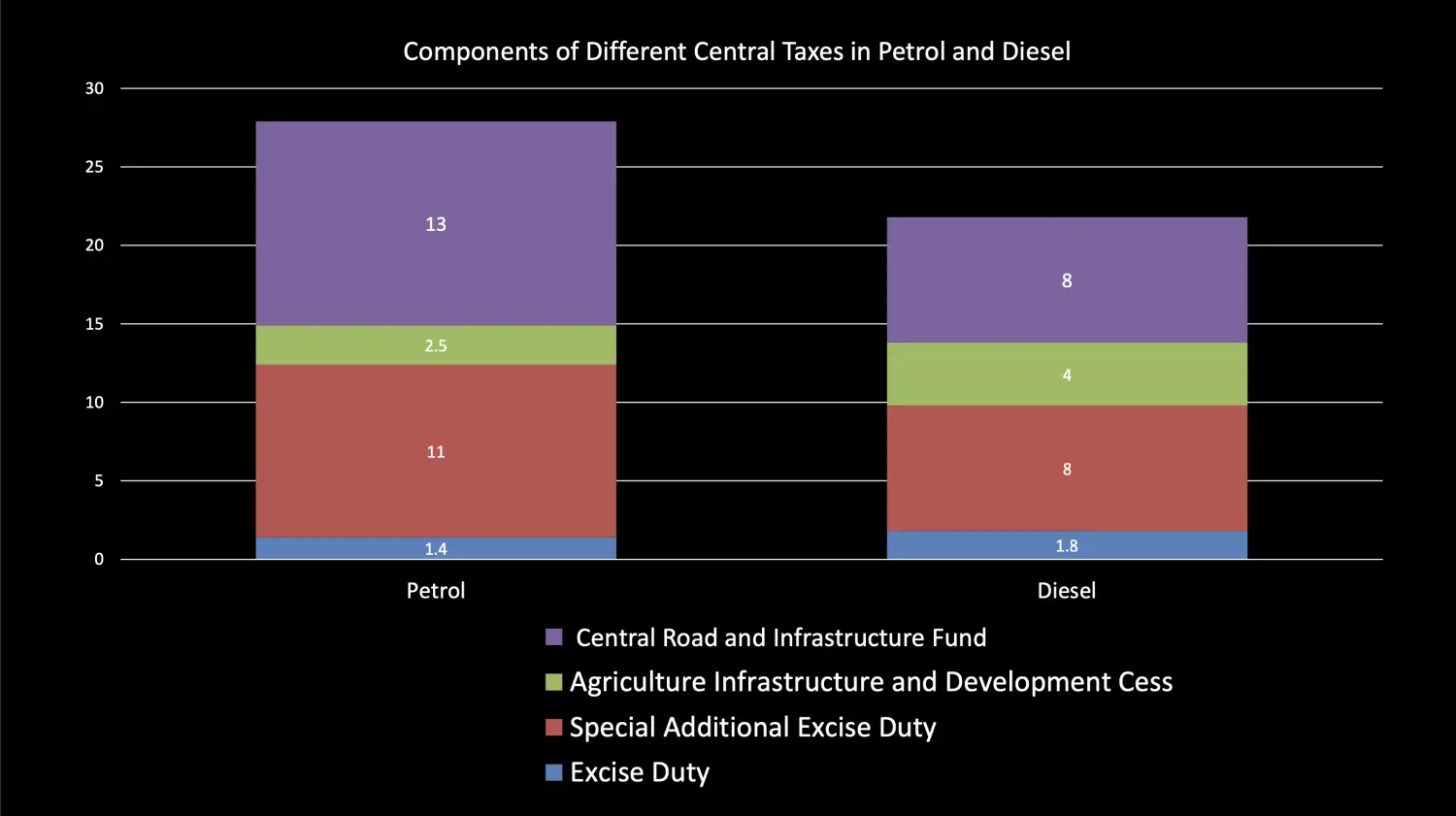
Apart from Excise Duty all other are NOT shared by Centres with States
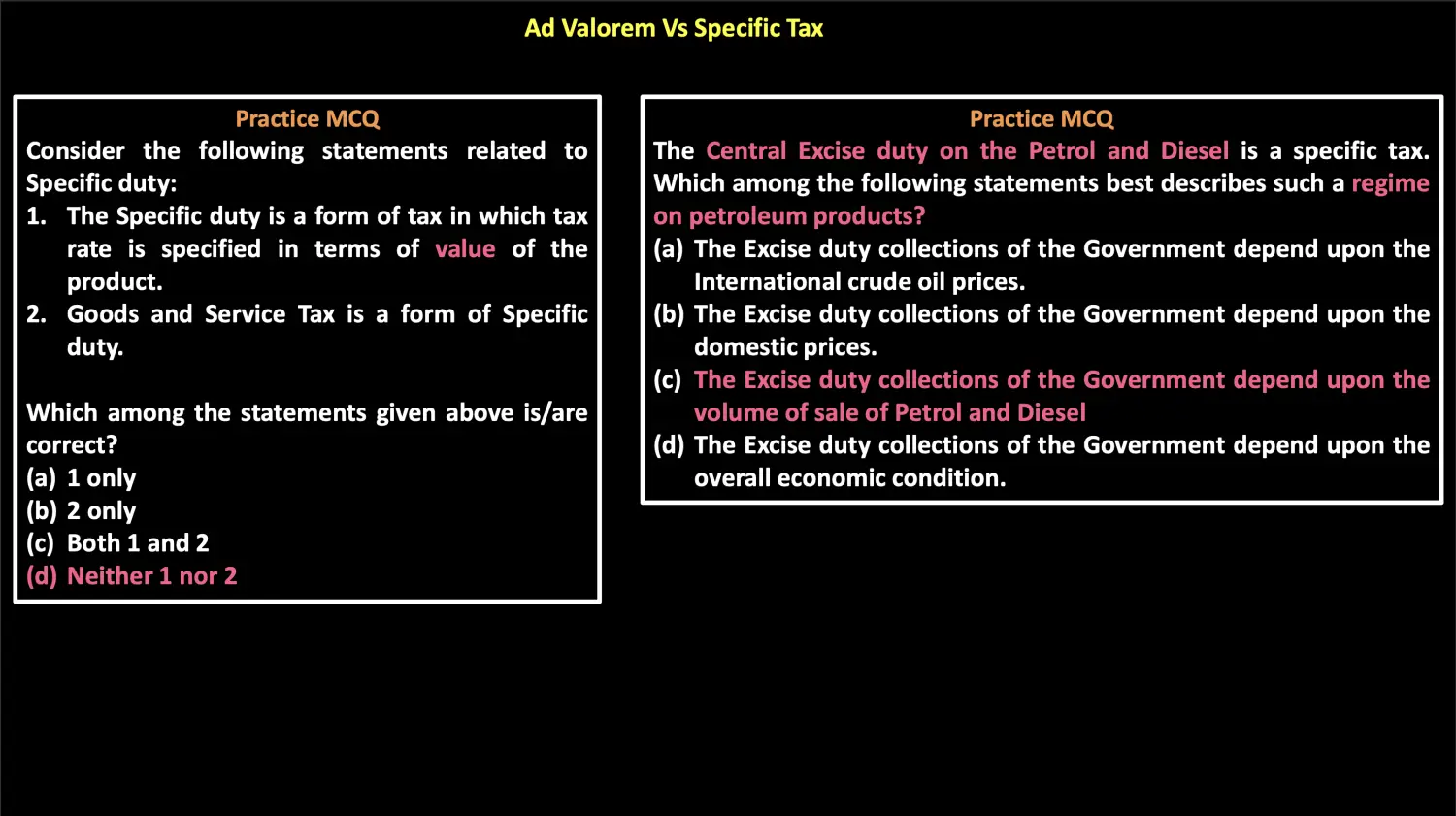
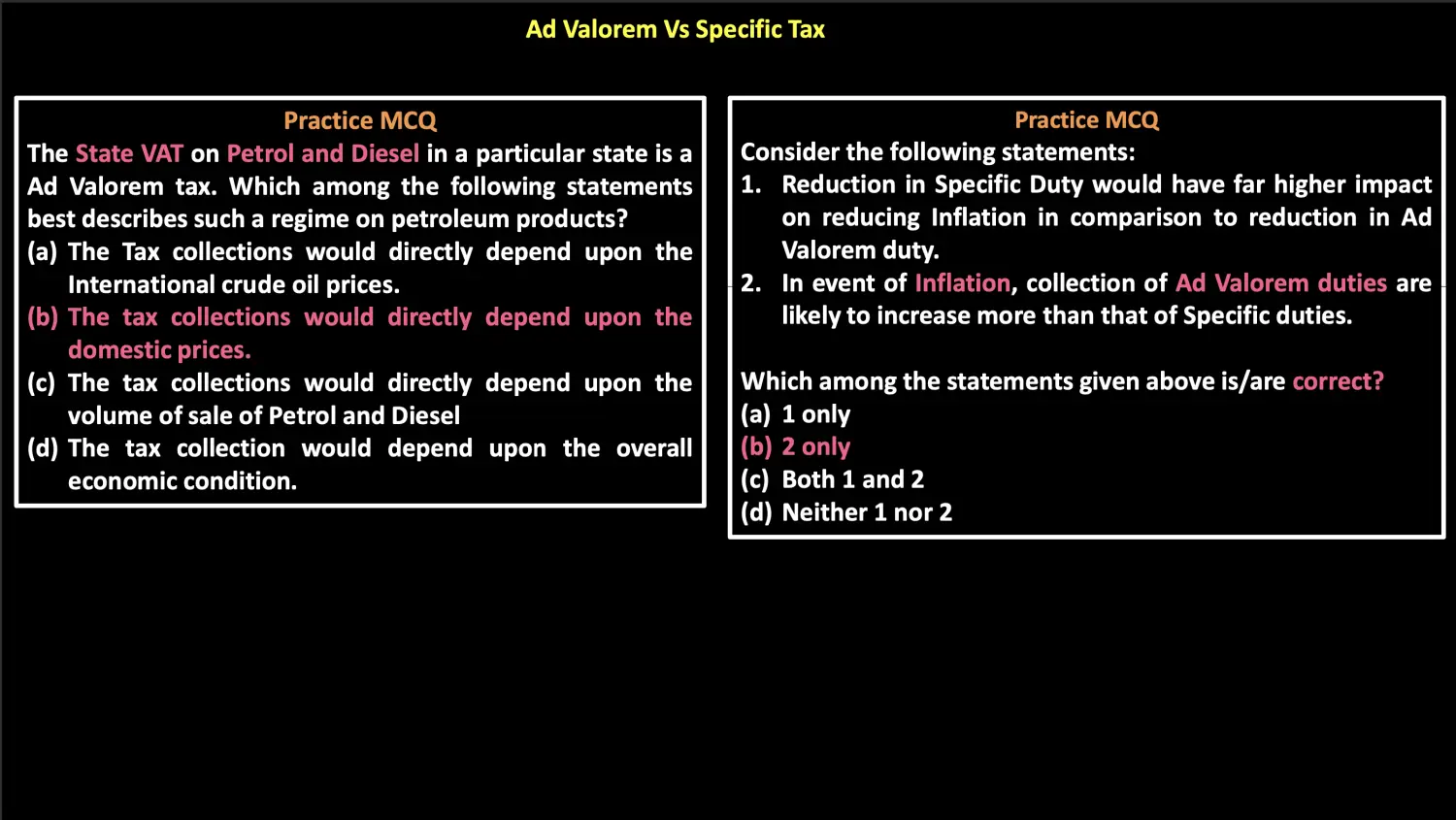
State Tax is Ad Valorem i.e depending upon Value
Central Excise is a Specific Tax Depending upon Volume
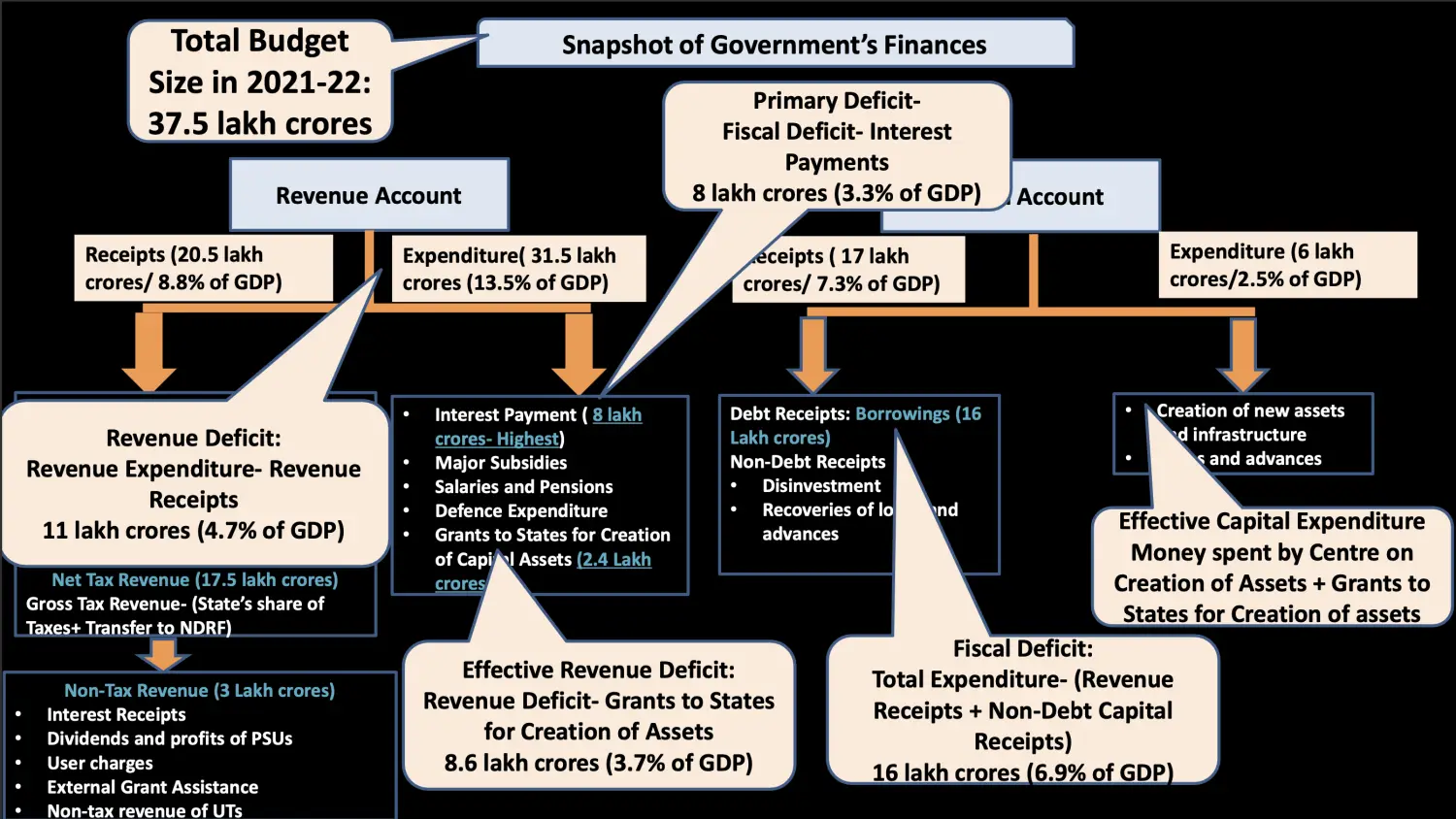
Government Finances - A Snapshot
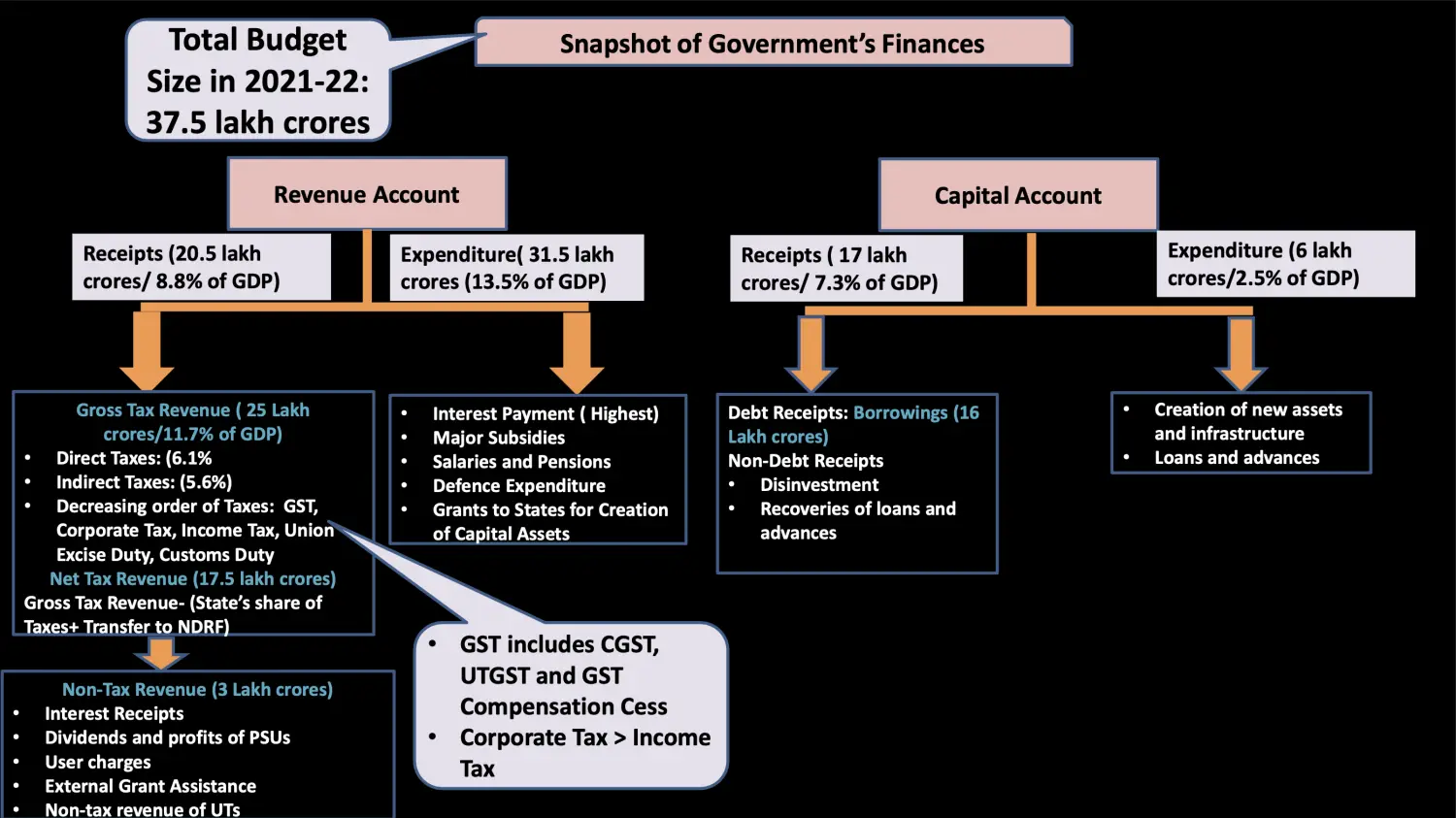
Here Total Receipts = Total Expenditure
Then from where does the Fiscal Deficit Emerge → Because we are Including the Borrowings of Govt in the Capital Receipts
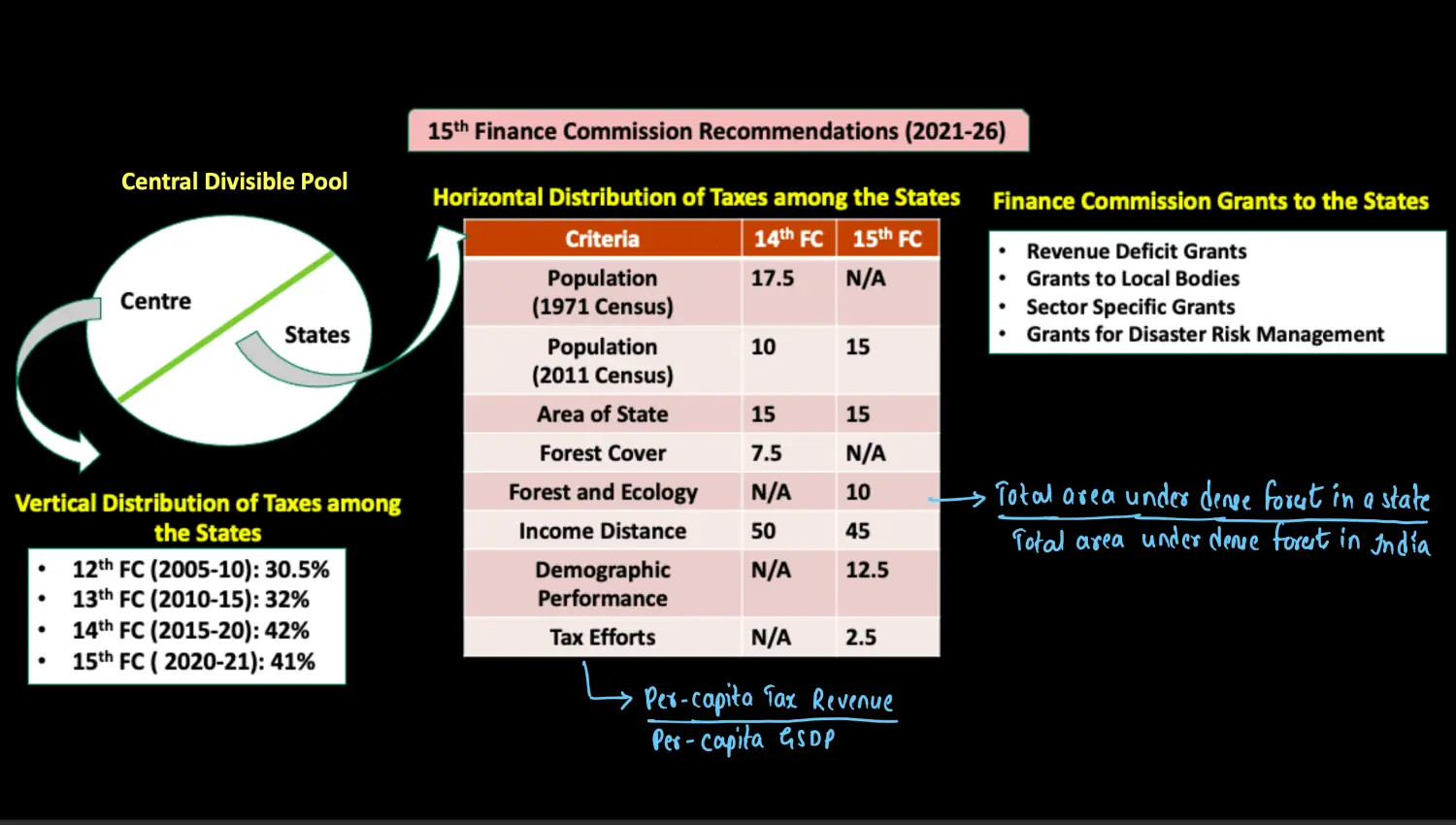
States Share of Taxes is 41%
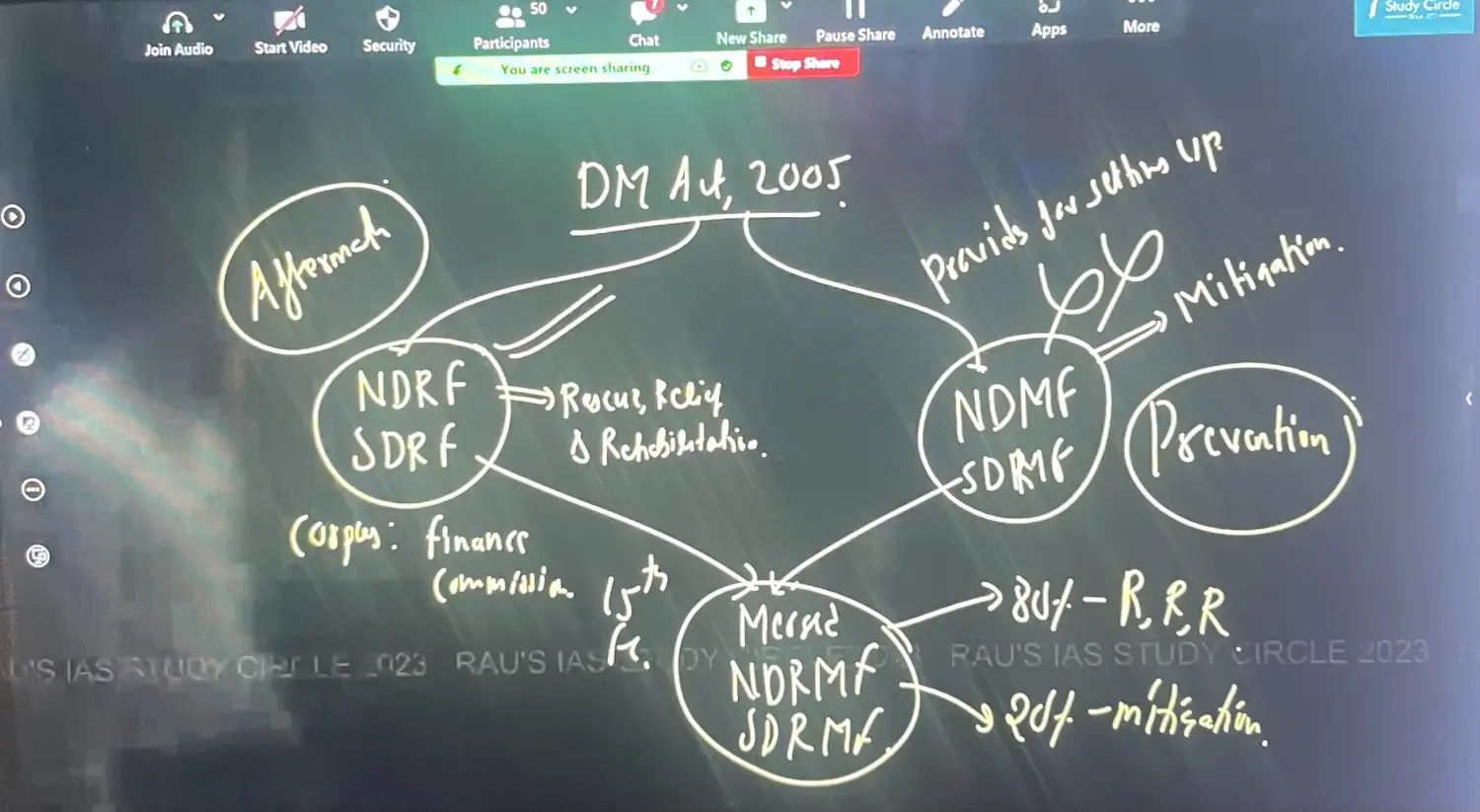
NDRF maintained in Public Accounts in India
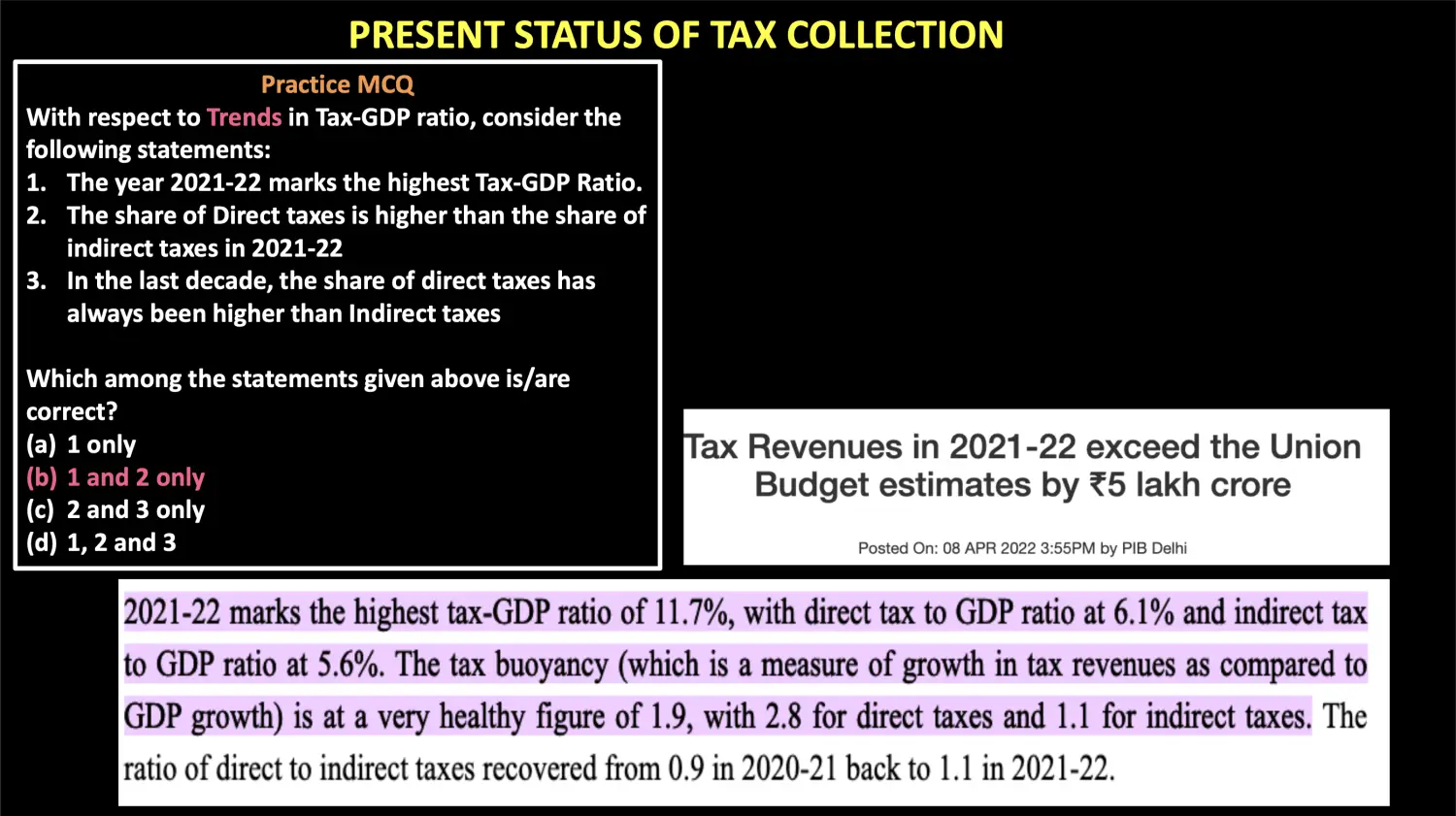
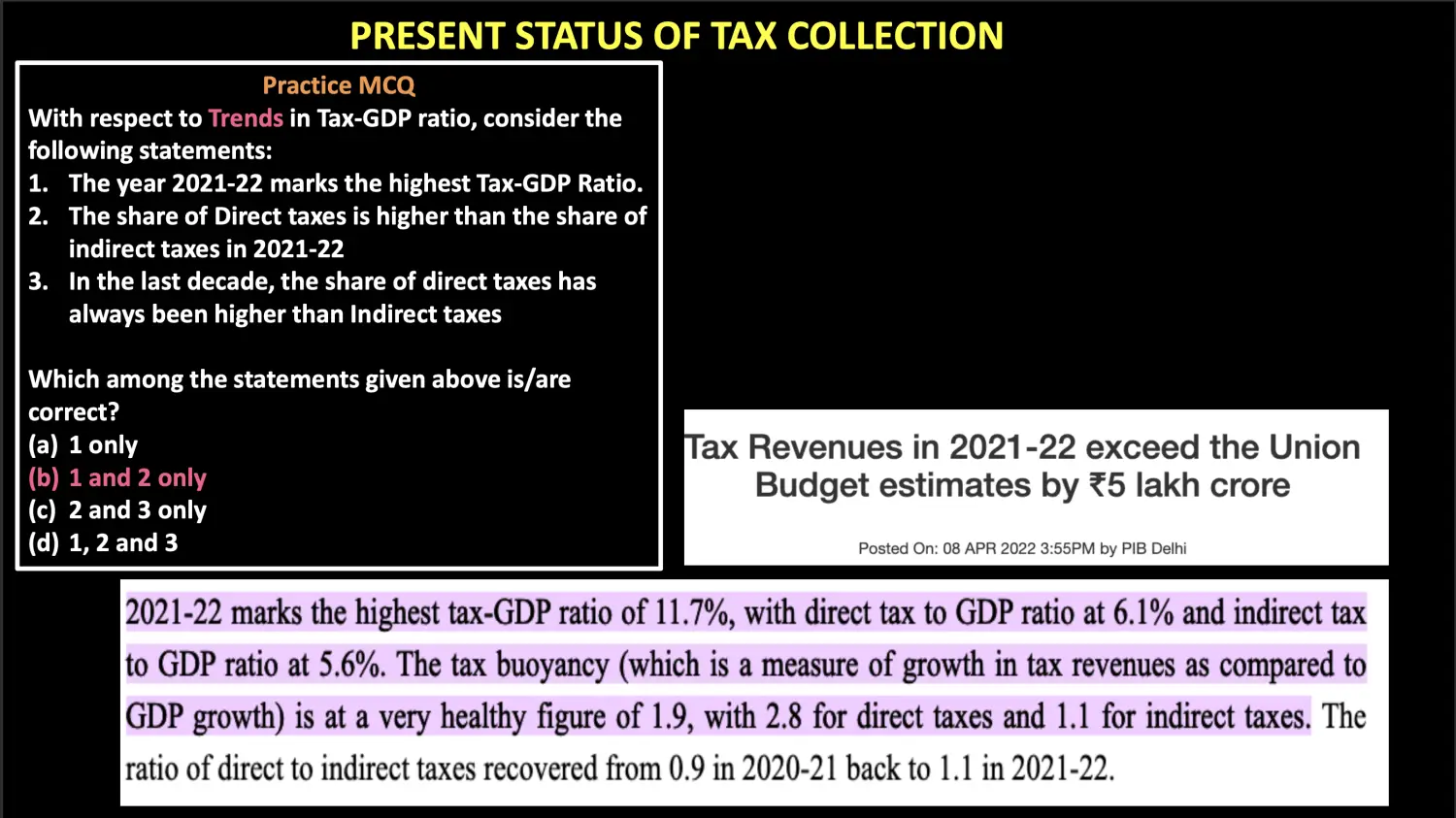
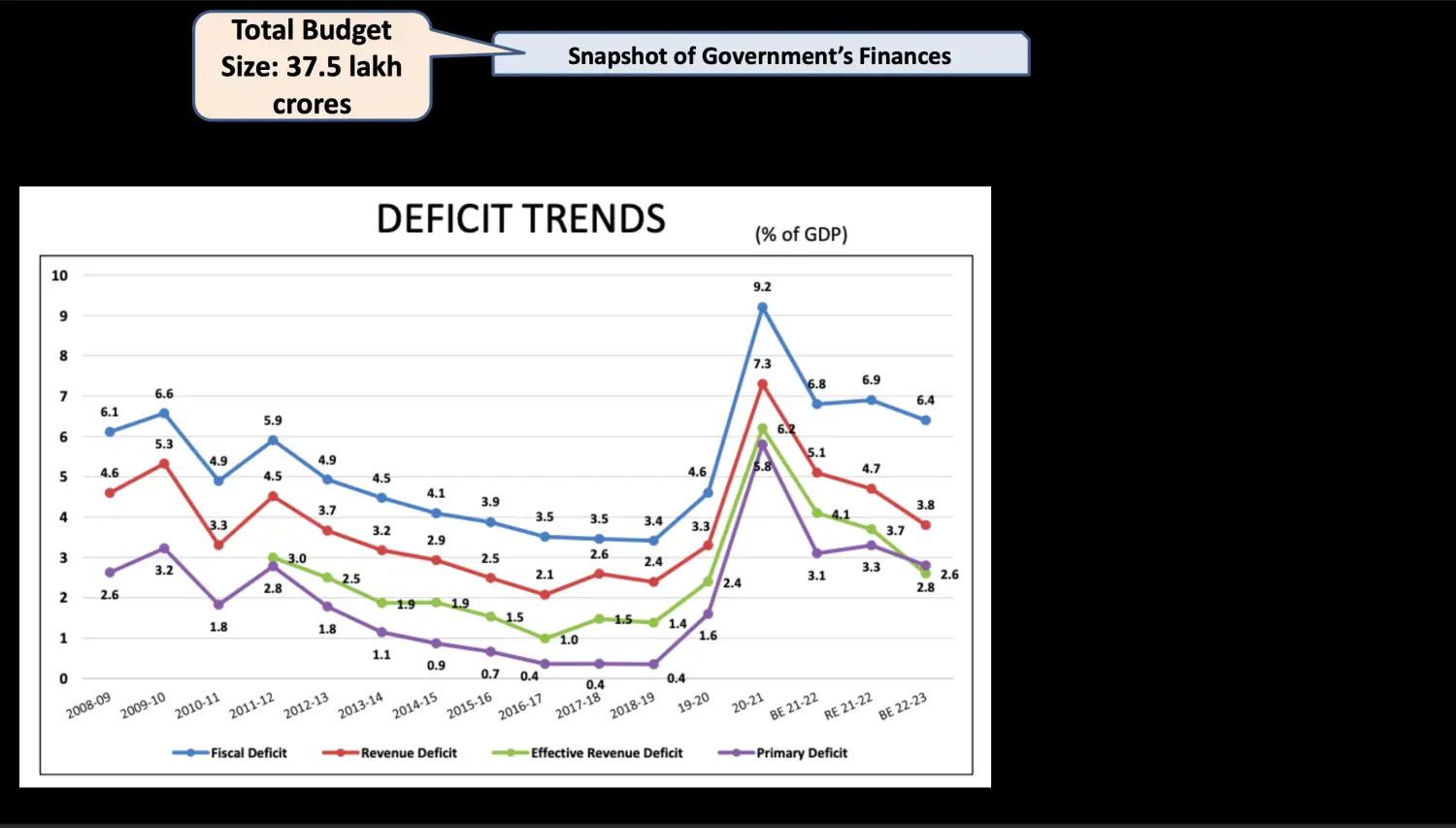
Important Trends in Government Finances *
💡 Anything expressed in terms of GDP is in Terms of Nominal GDPAnything talked about GDP like its Growth and Stuff is in terms of Real GDP
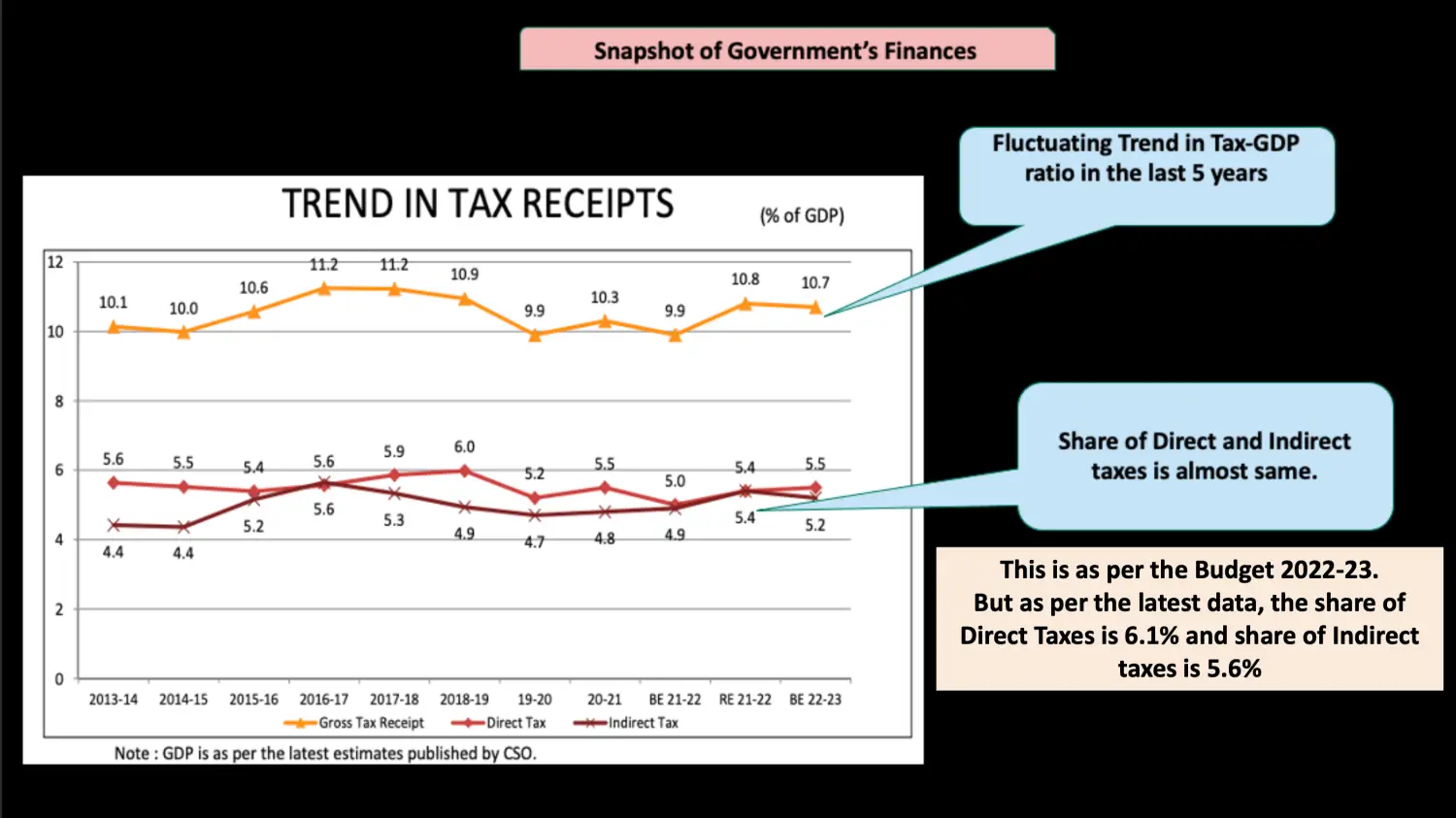
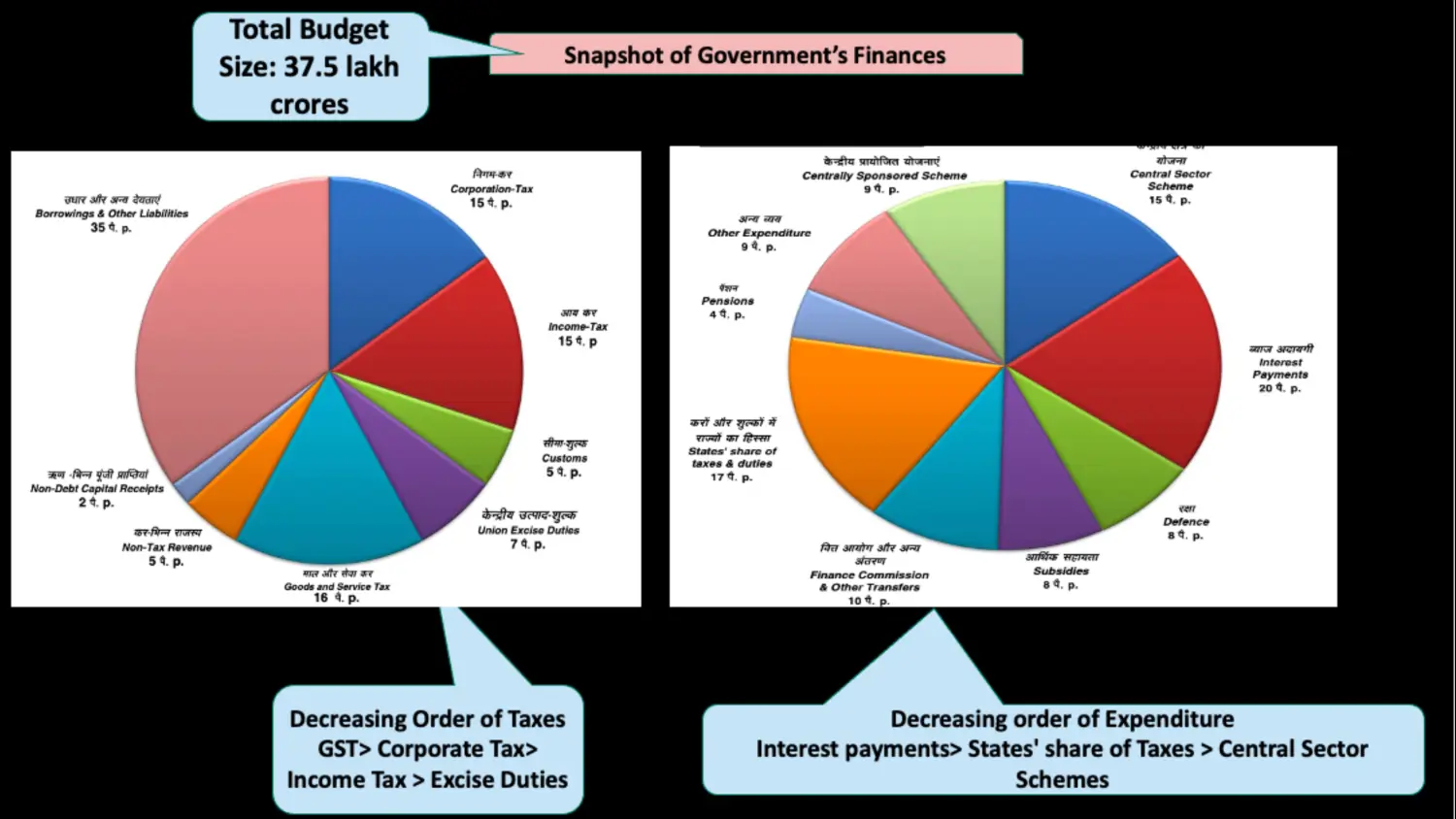
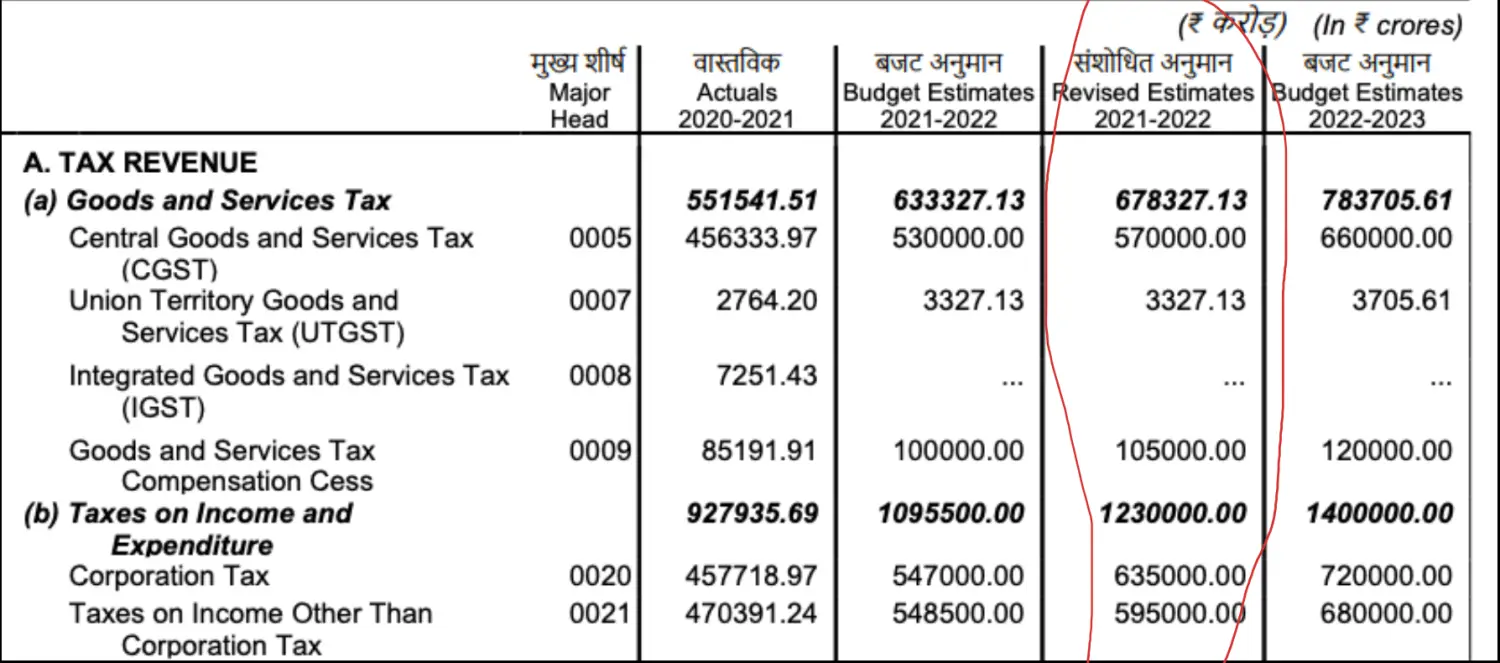
⬆️ Highest → Corporate Tax > Income Tax > CGST
Kindly Note : Government's INterest Payment is More than States Share of Taxes
Types of Import Duties
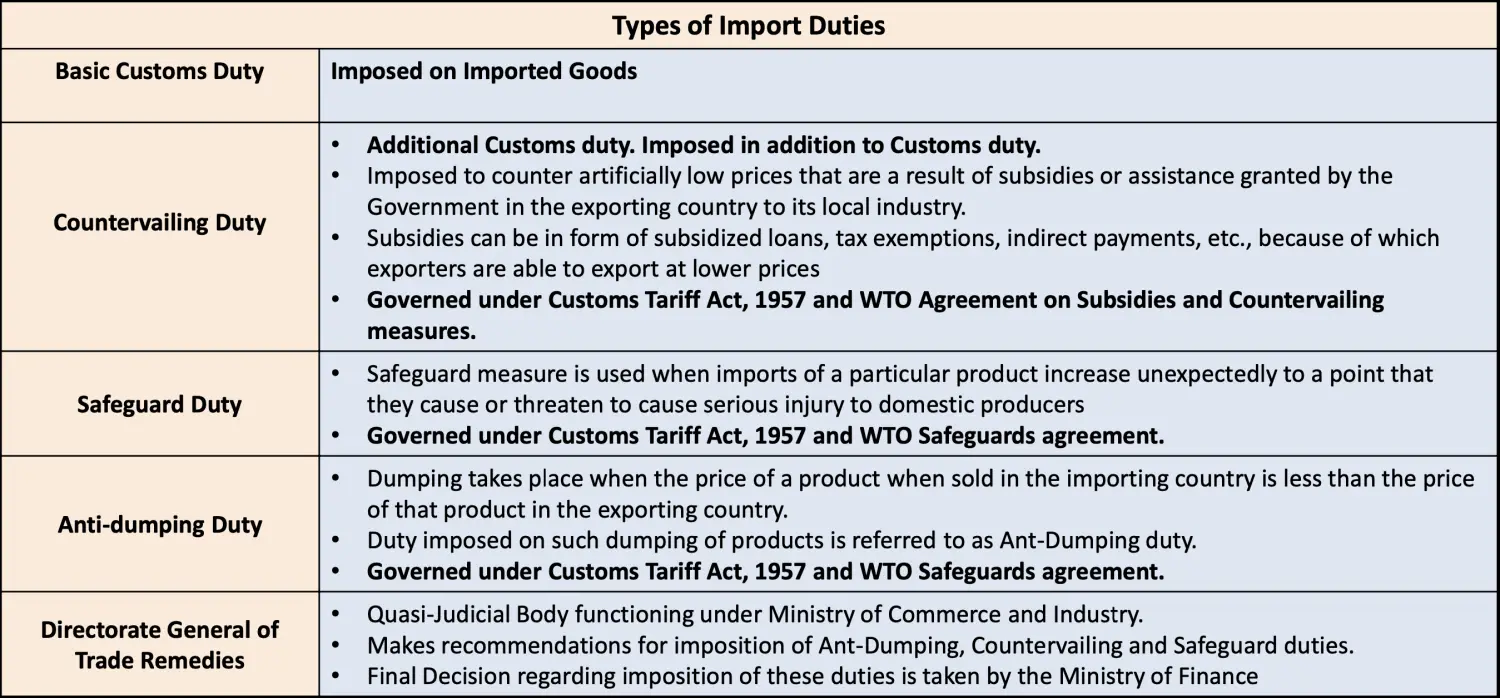
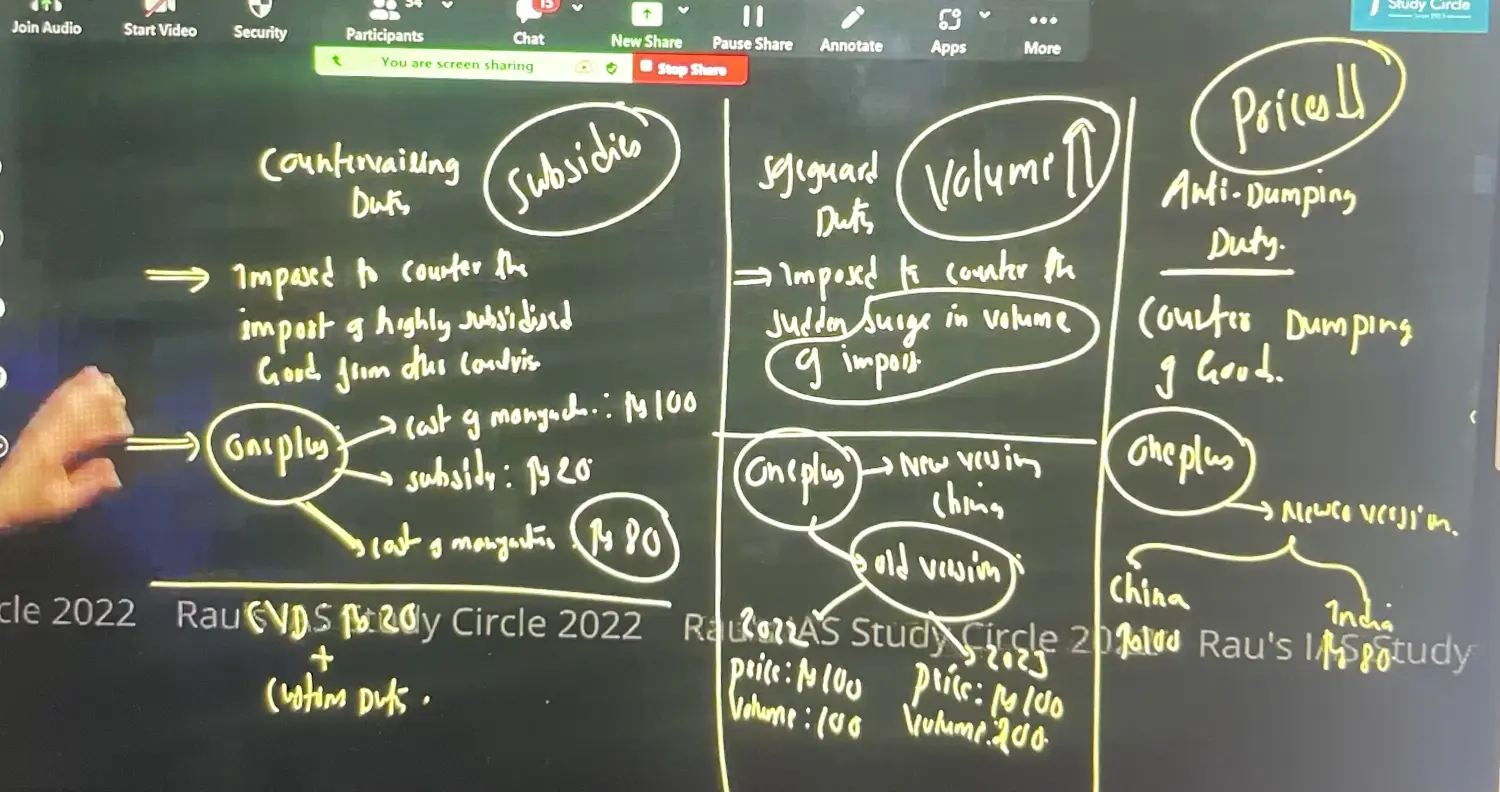
Example of Countervailing : One Plus with Chinese Subsidy Final Cost Becomes 80
Safeguard Duty : Sudden Surge in Volume of Imports
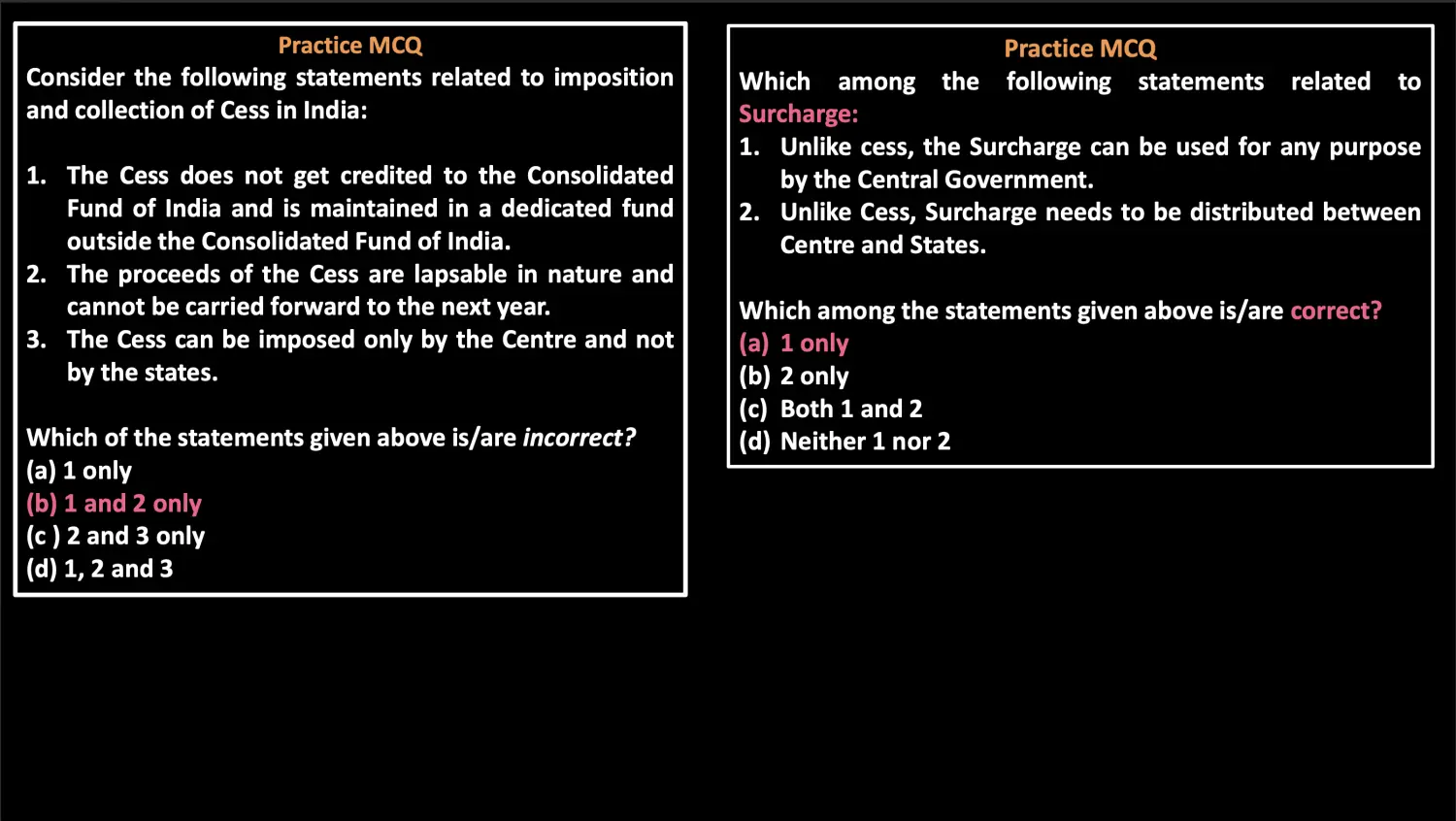
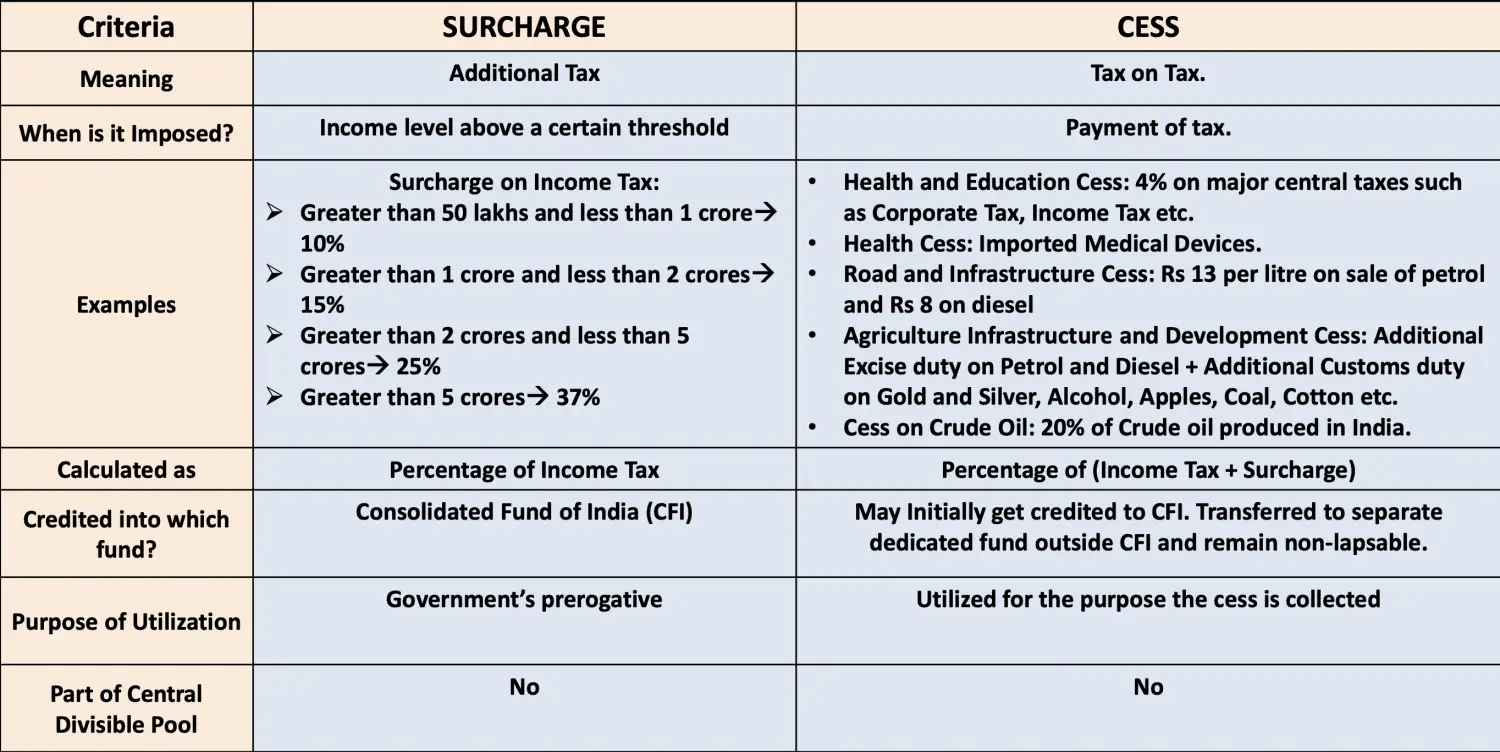
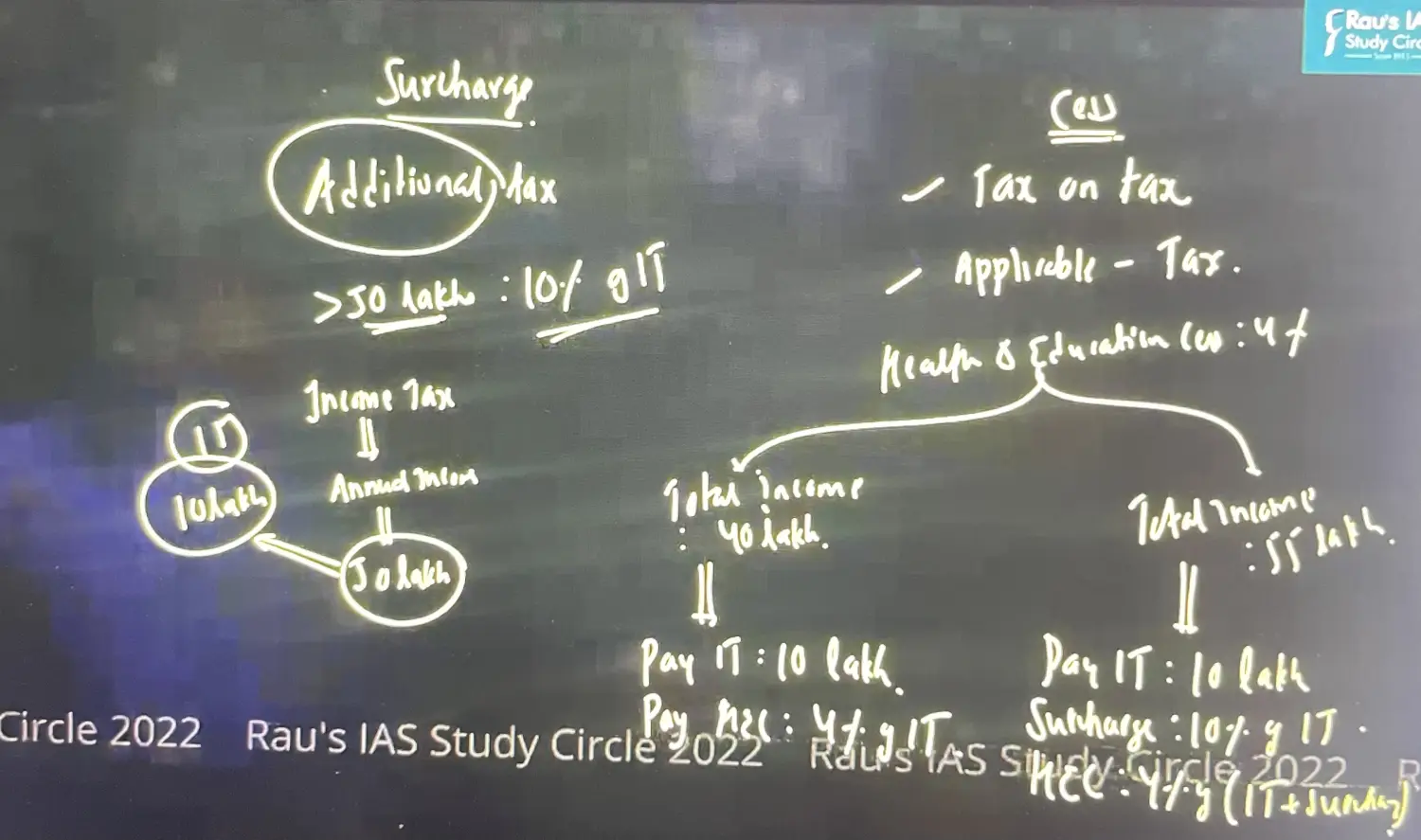
Concept of Surcharge and Cess
Progressive, Regressive & Proportional Taxes

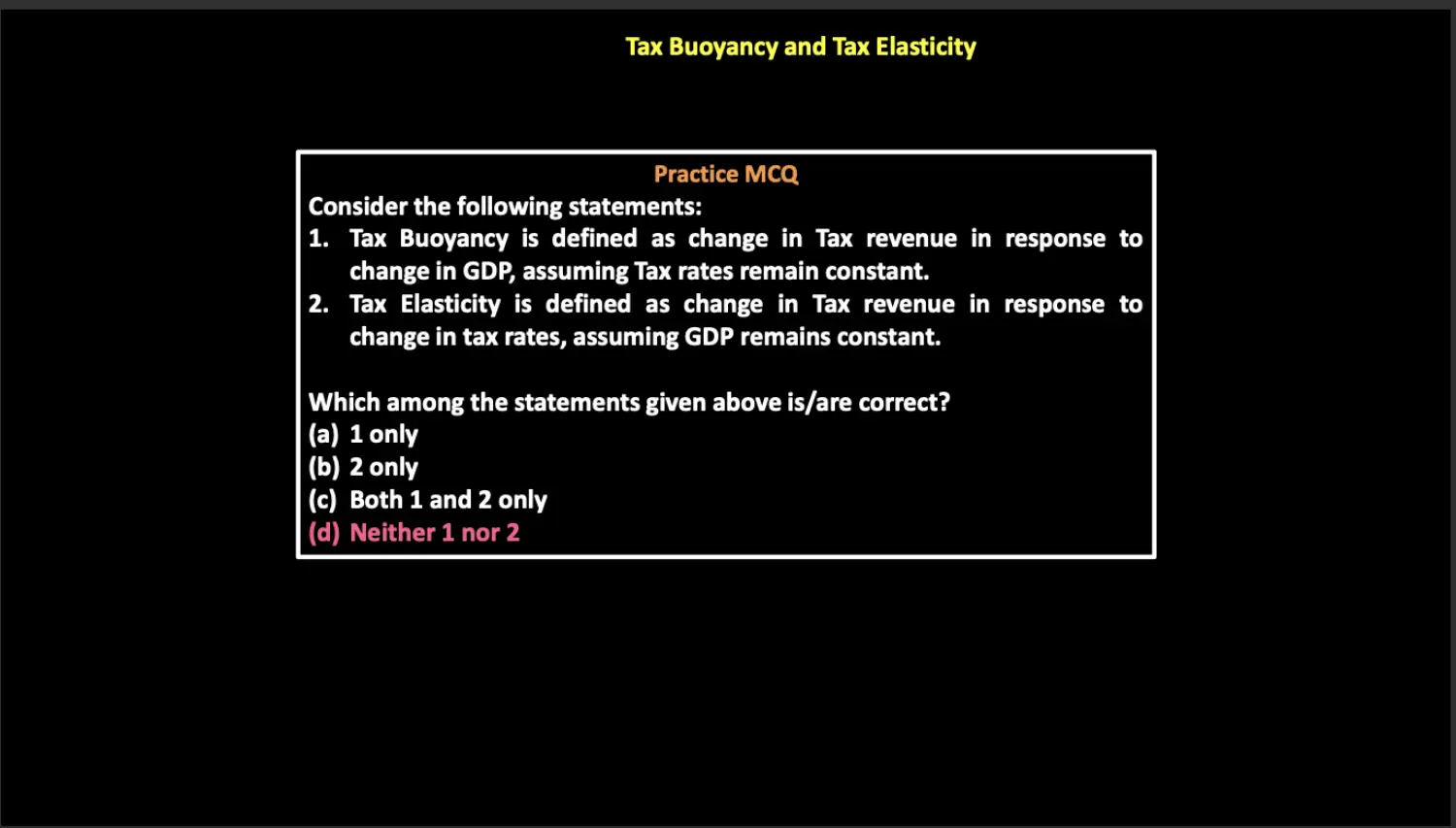
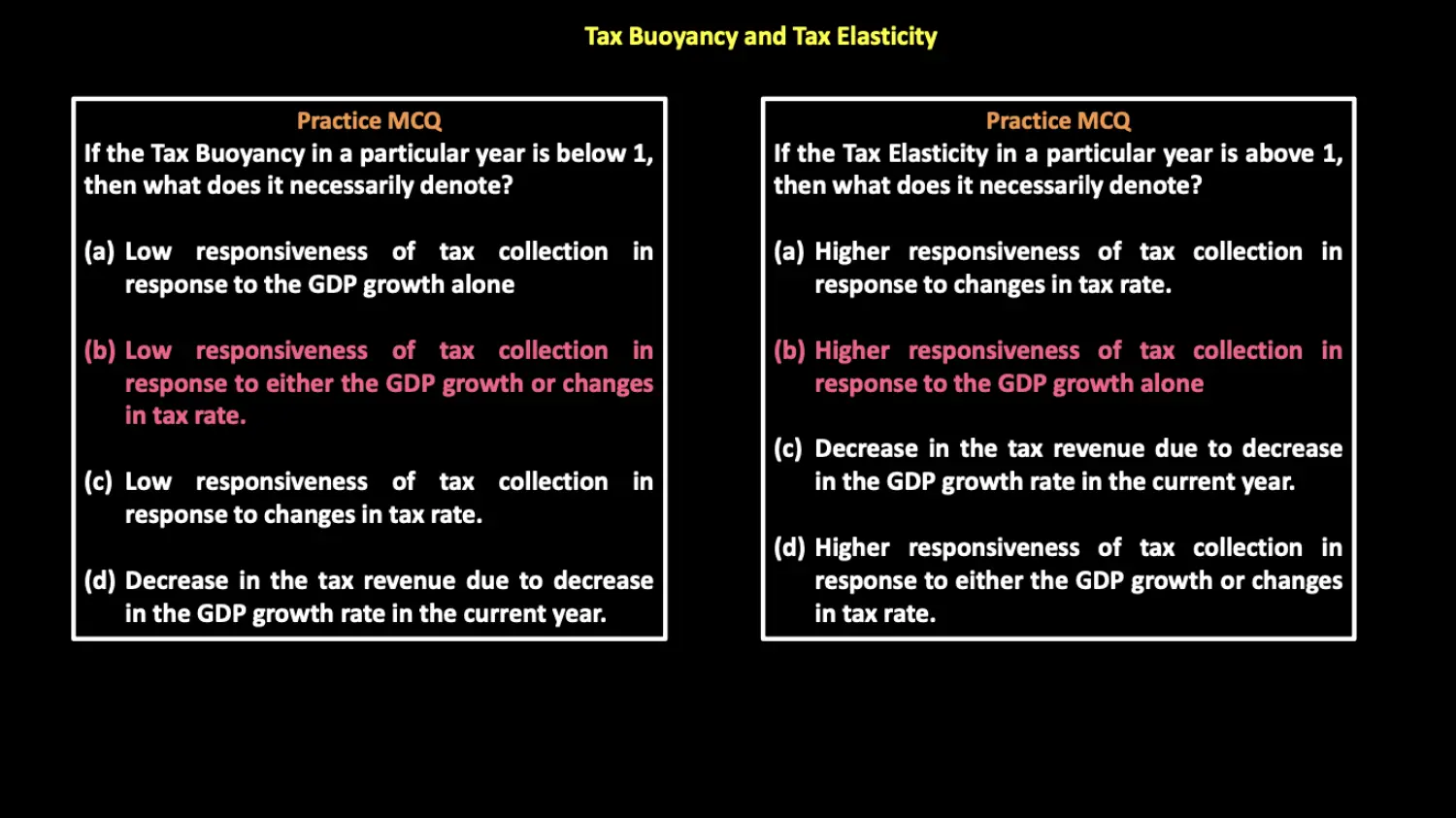
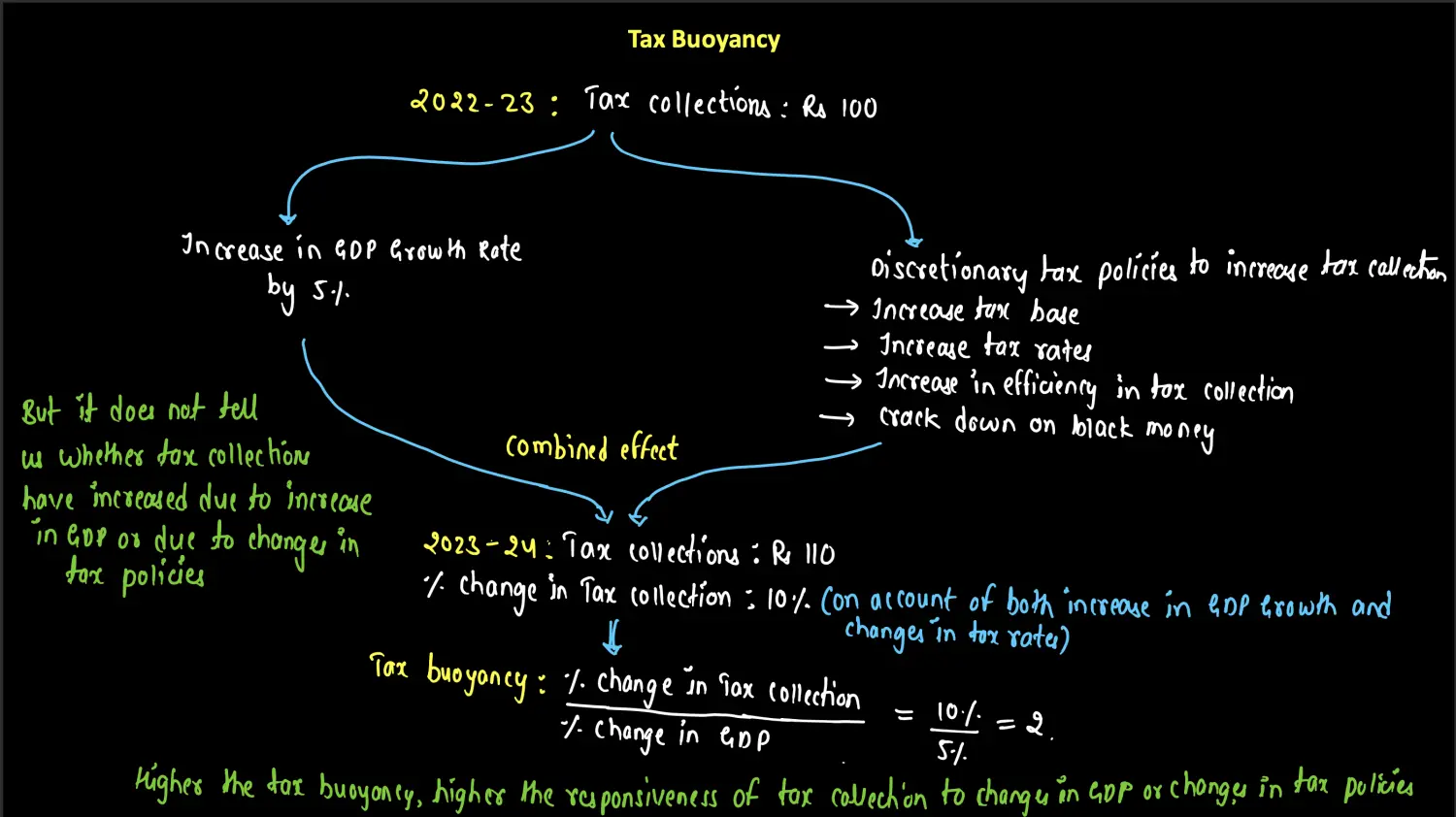
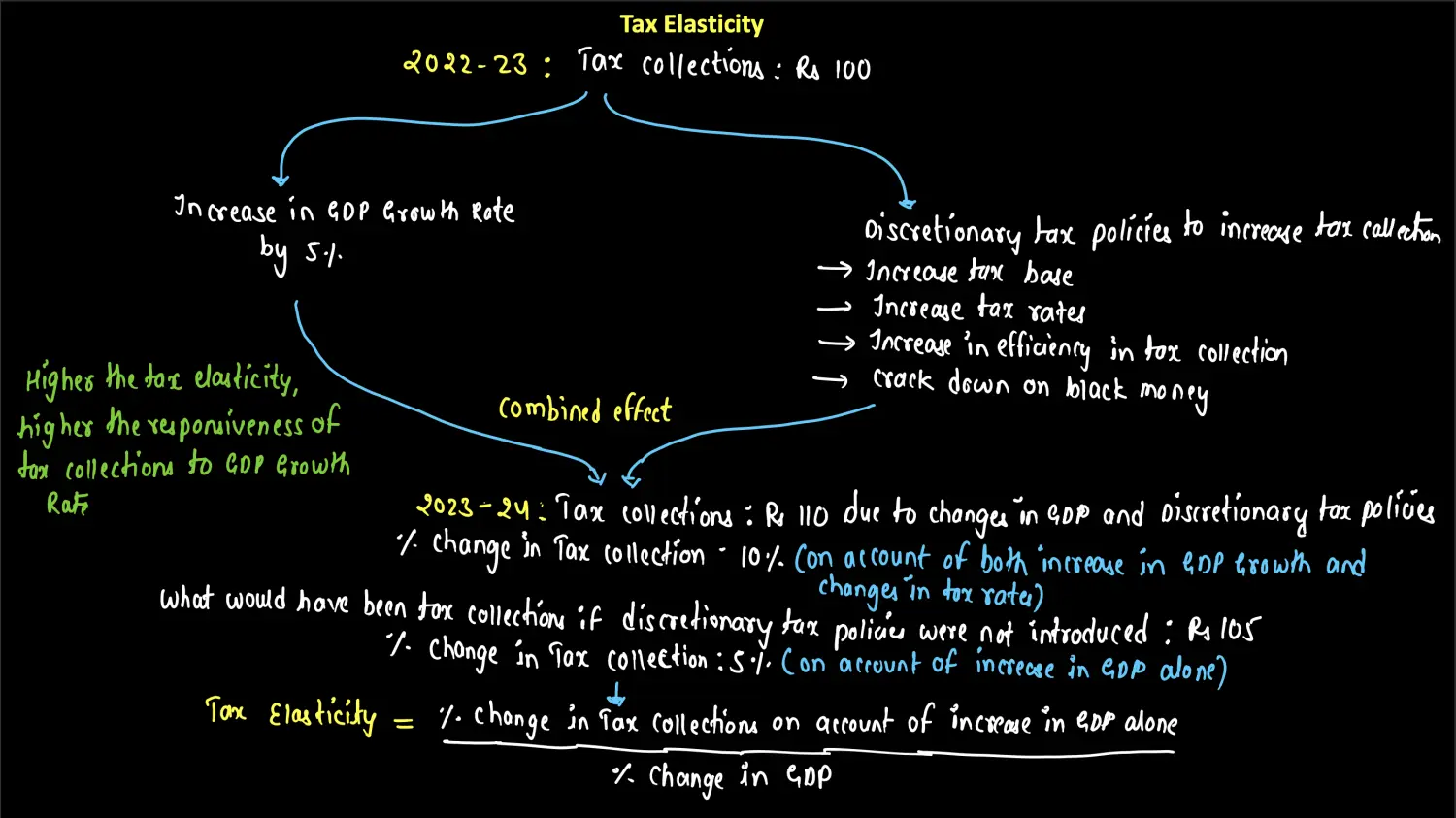
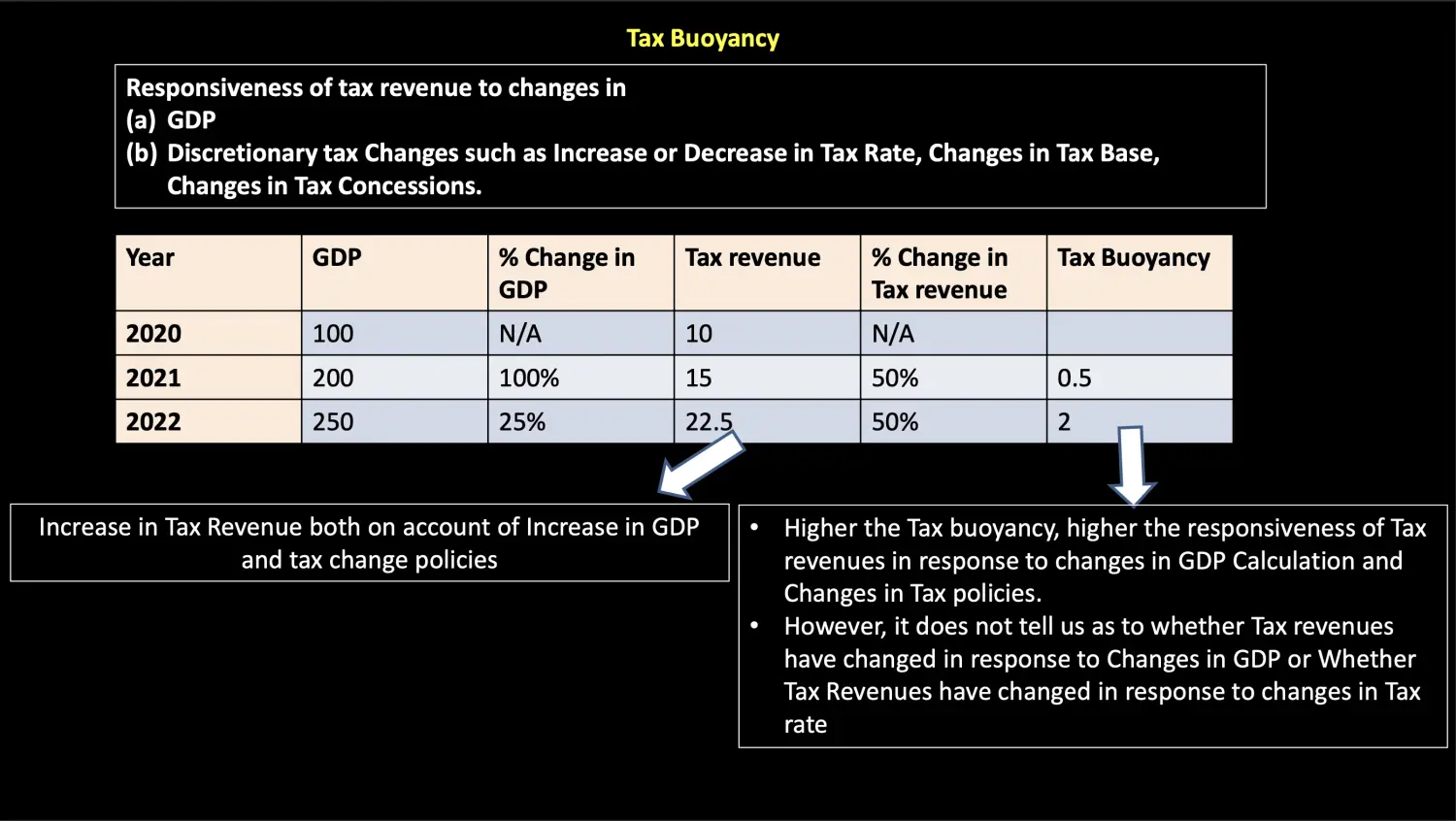
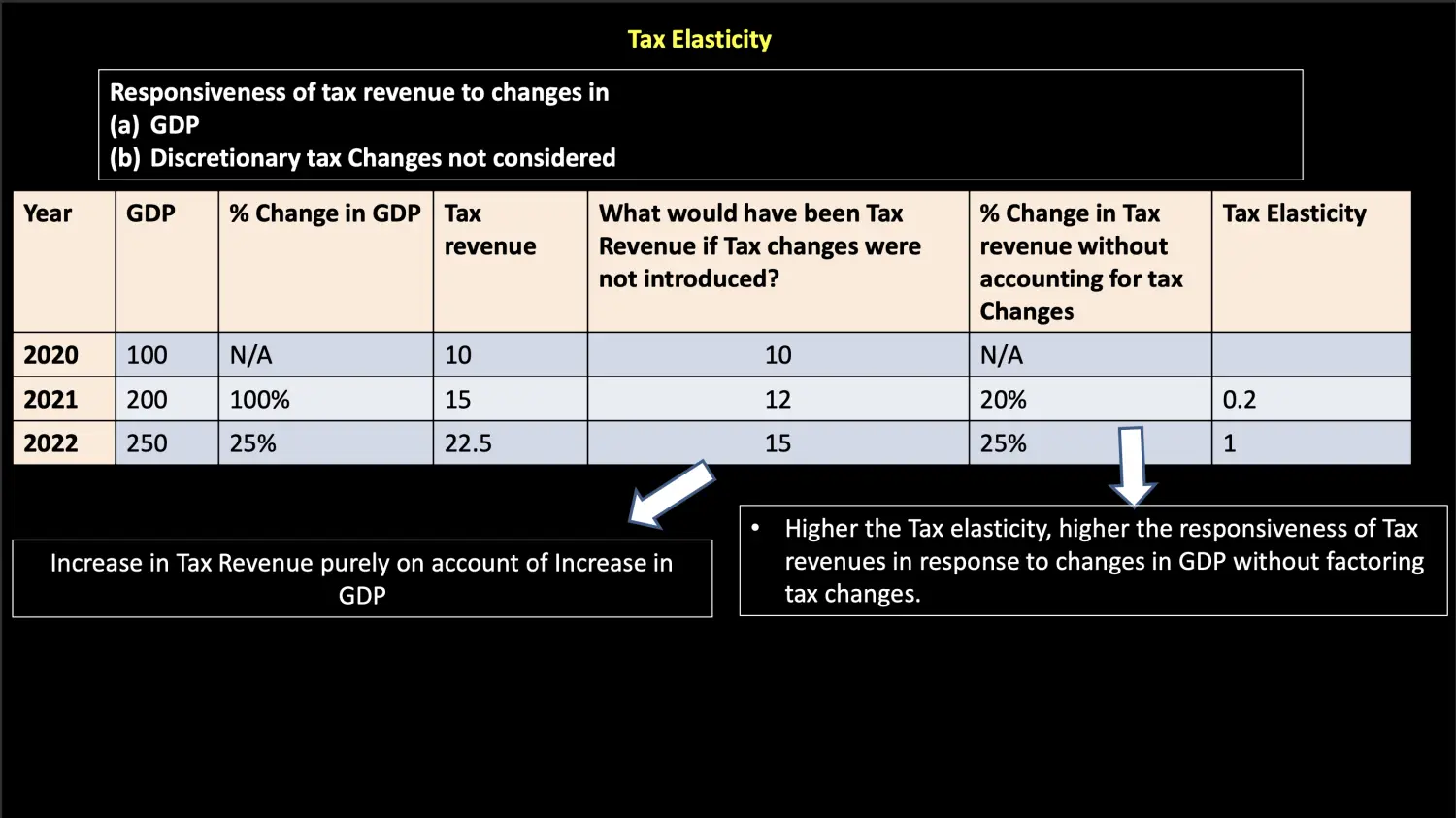
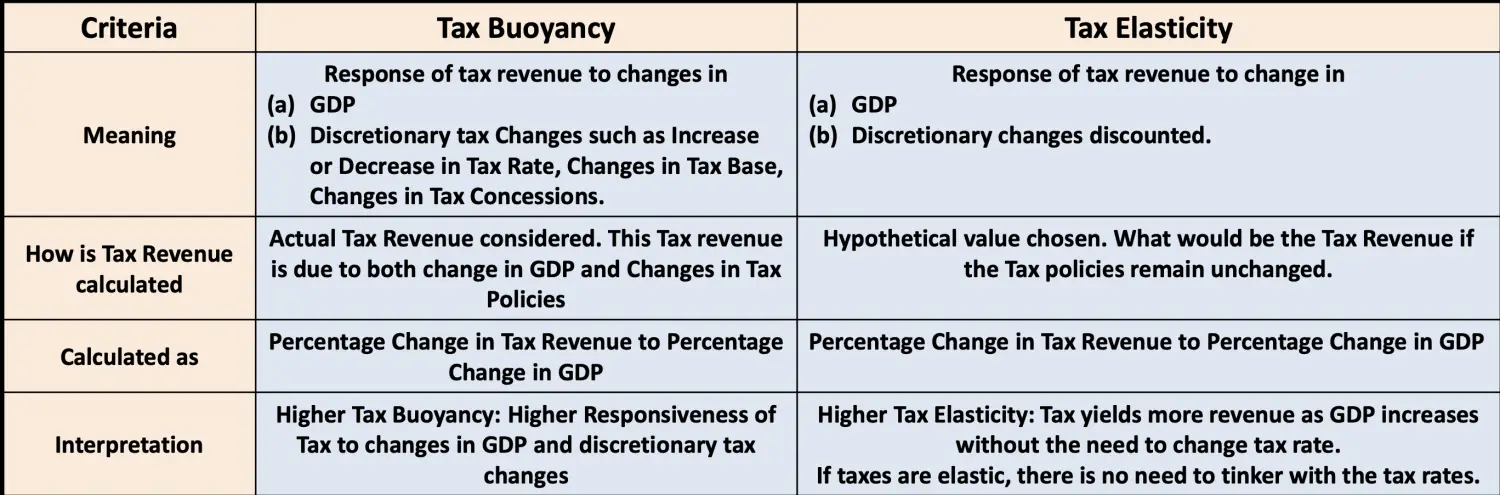
Tax Buoyancy & Tax Elasticity
Elasticity - More of a Theoretical Concept
Buoyancy - More of a Practical Concept
Bracket Creep and Fiscal Drag
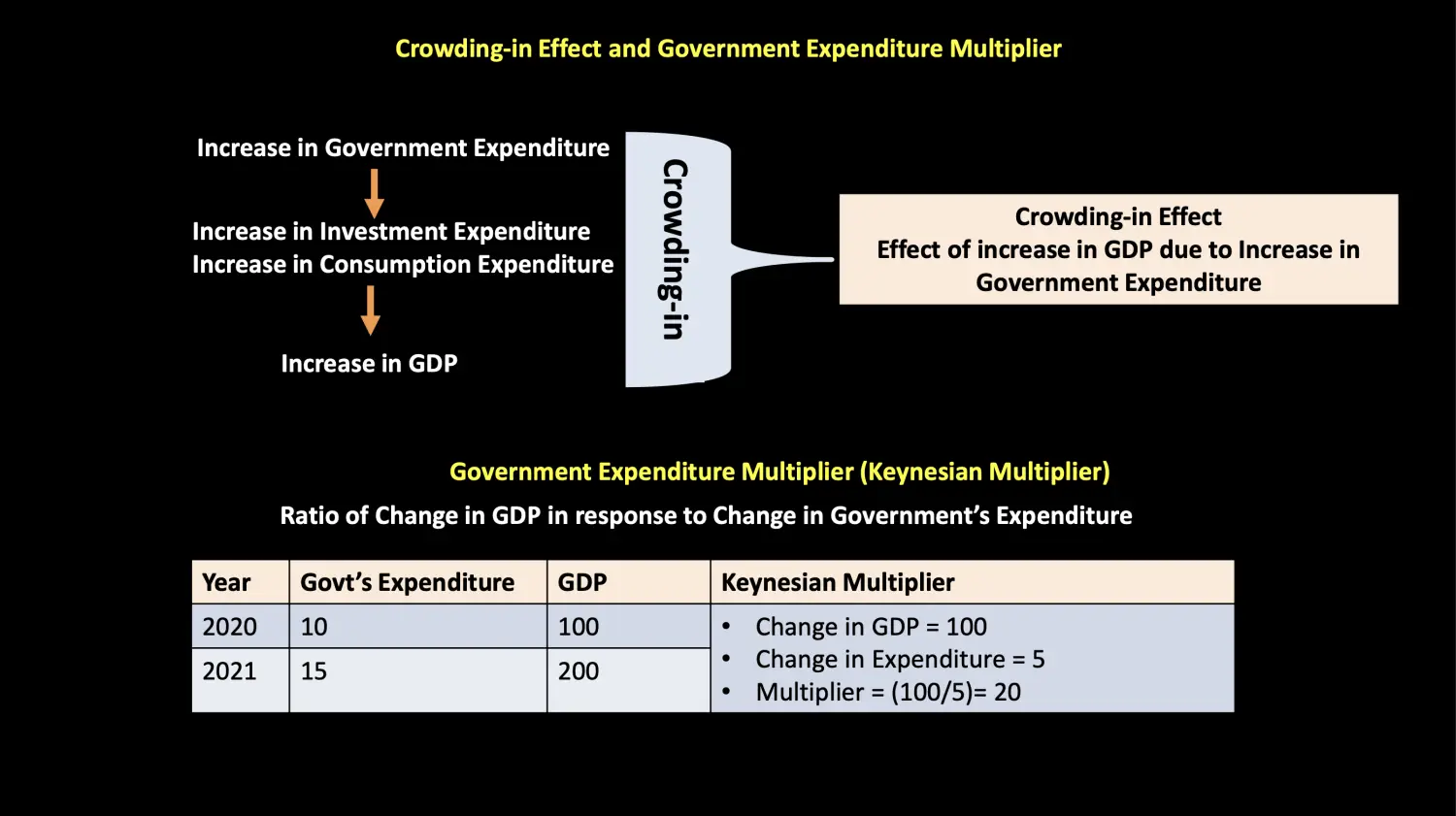
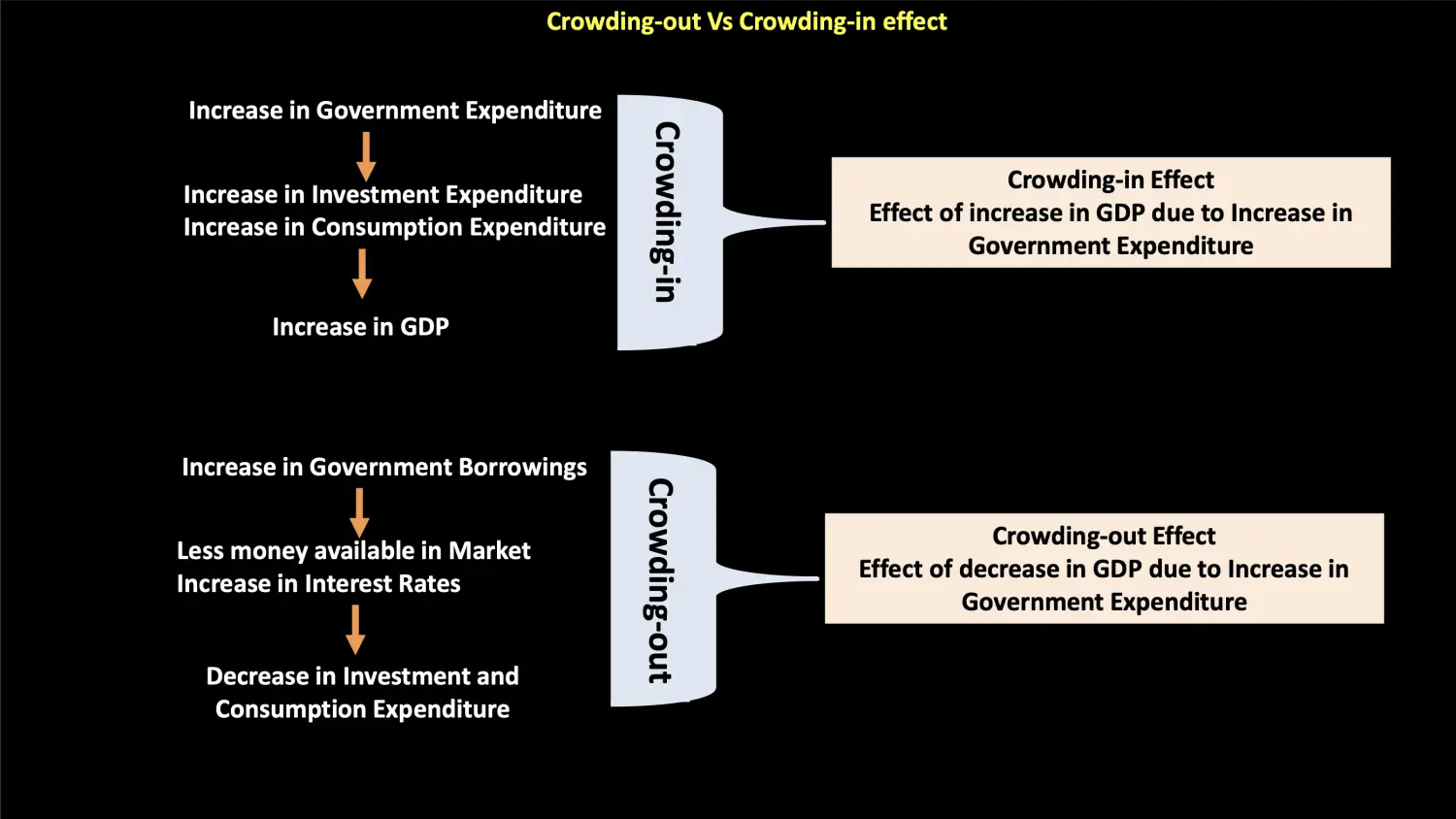
Crowding In and Crowding Out Effect
- Pump Priming by Means of Atma Nirbhar Bharat
- Local Multiplier Effect is different from Money Multiplier → Every One Rupee which govt spends in Economy, especially on Creation of Assets, the Output Increases by 2.5 Times → It is also called Government Expenditure Multiplier
- Money Multiplier → M0/M3 → 5 to 6 Times
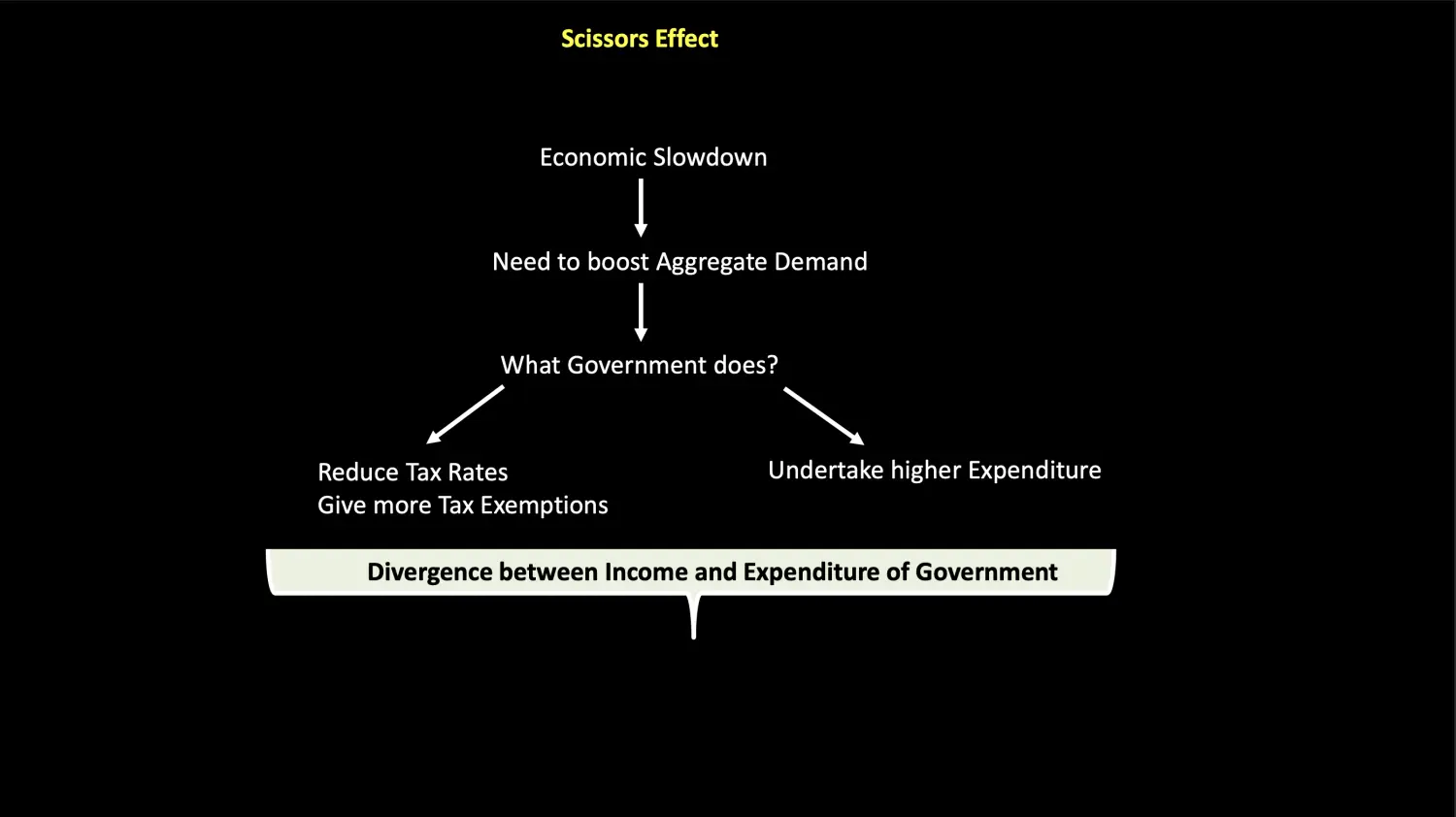
Scissors Effect
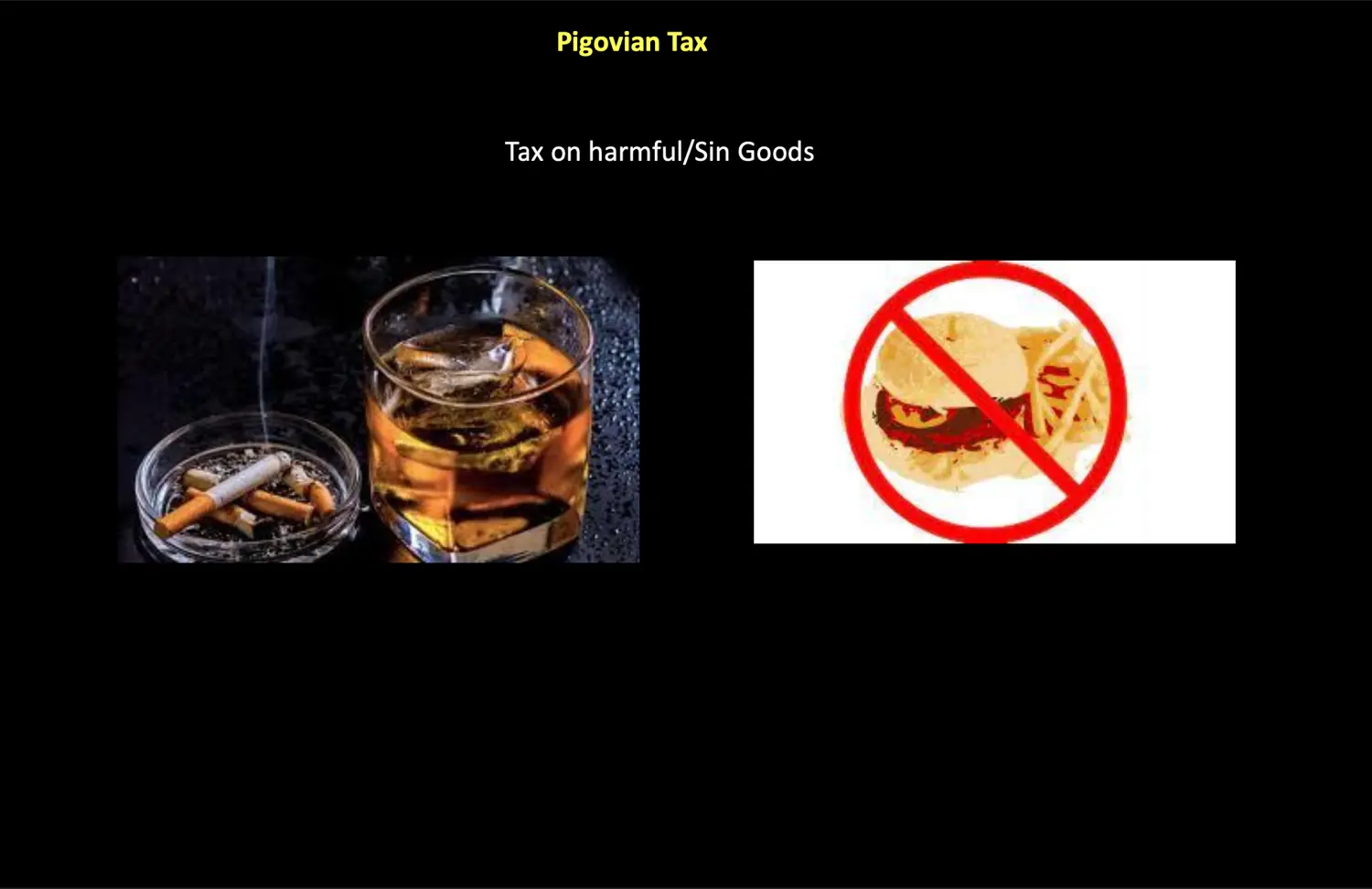
Pigouvian Tax
Tax on Harmful Goods like Cigarettes, Alcohol or Fast Food
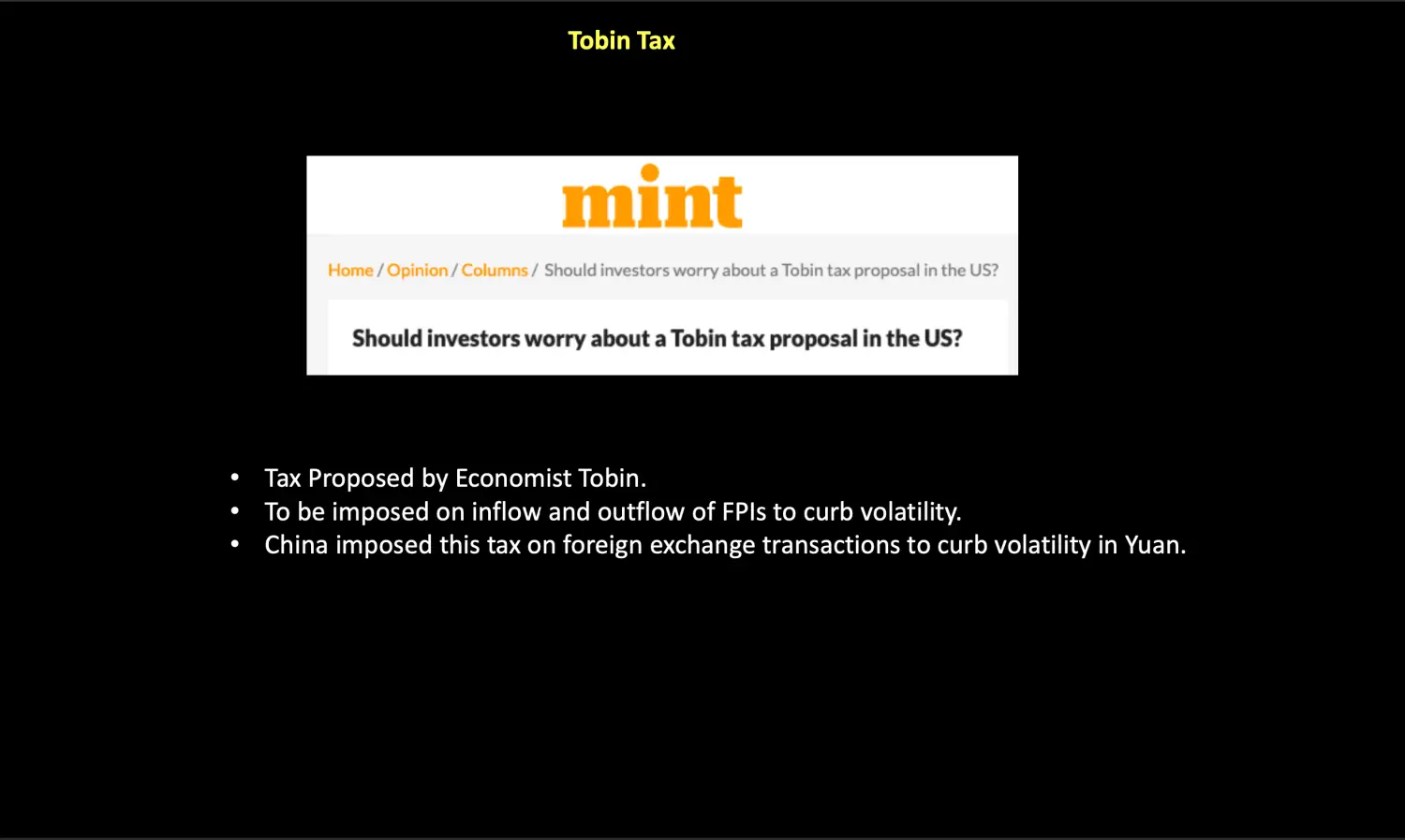
Tobin Tax
Not Applicable in India as of Now
Benefit → Check Volatility and Source of Income for Govt
Disadvantage → Reduced & Discouraged FPI
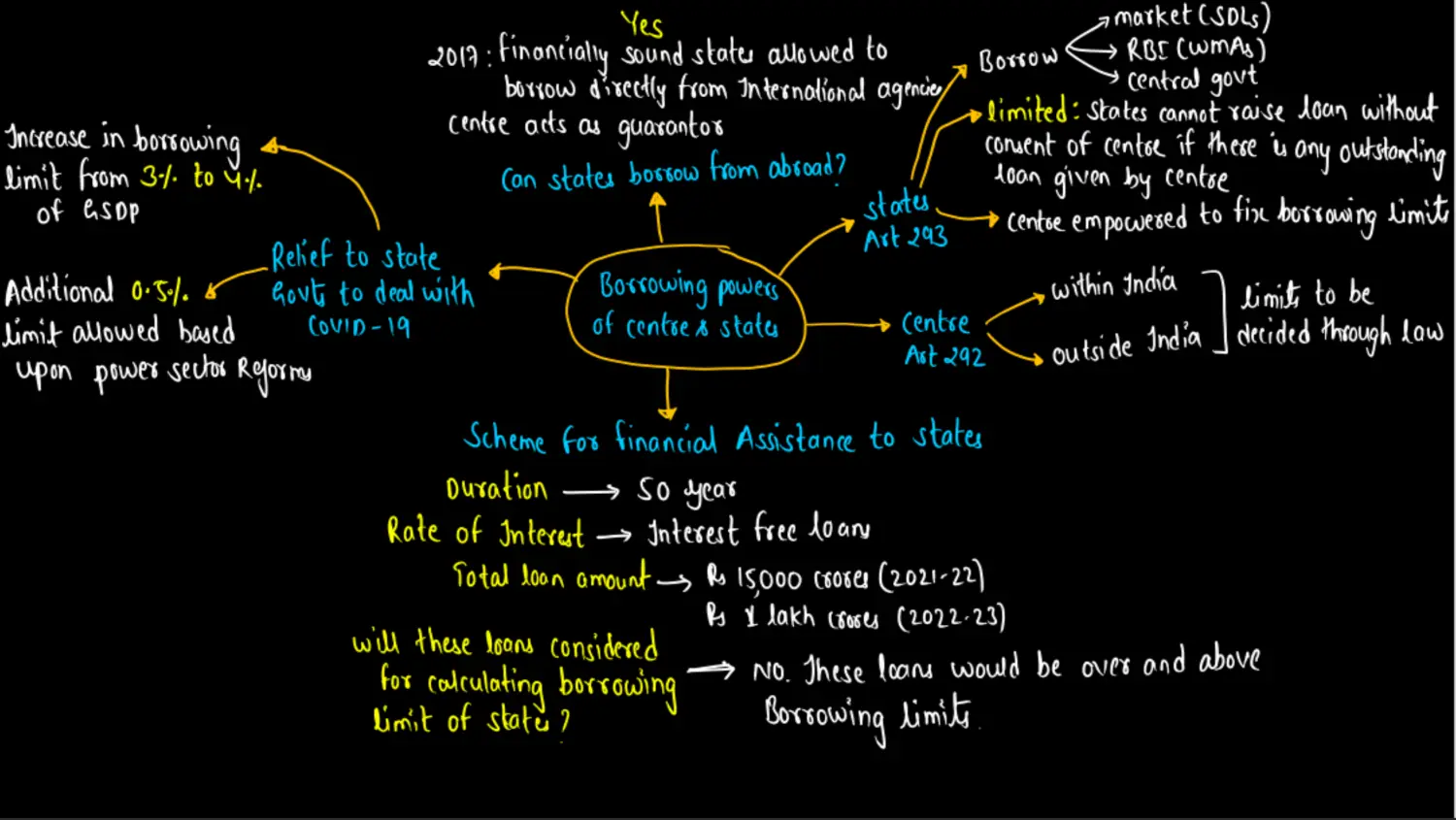
Borrowing Powers of Centre and State - from Budget Video
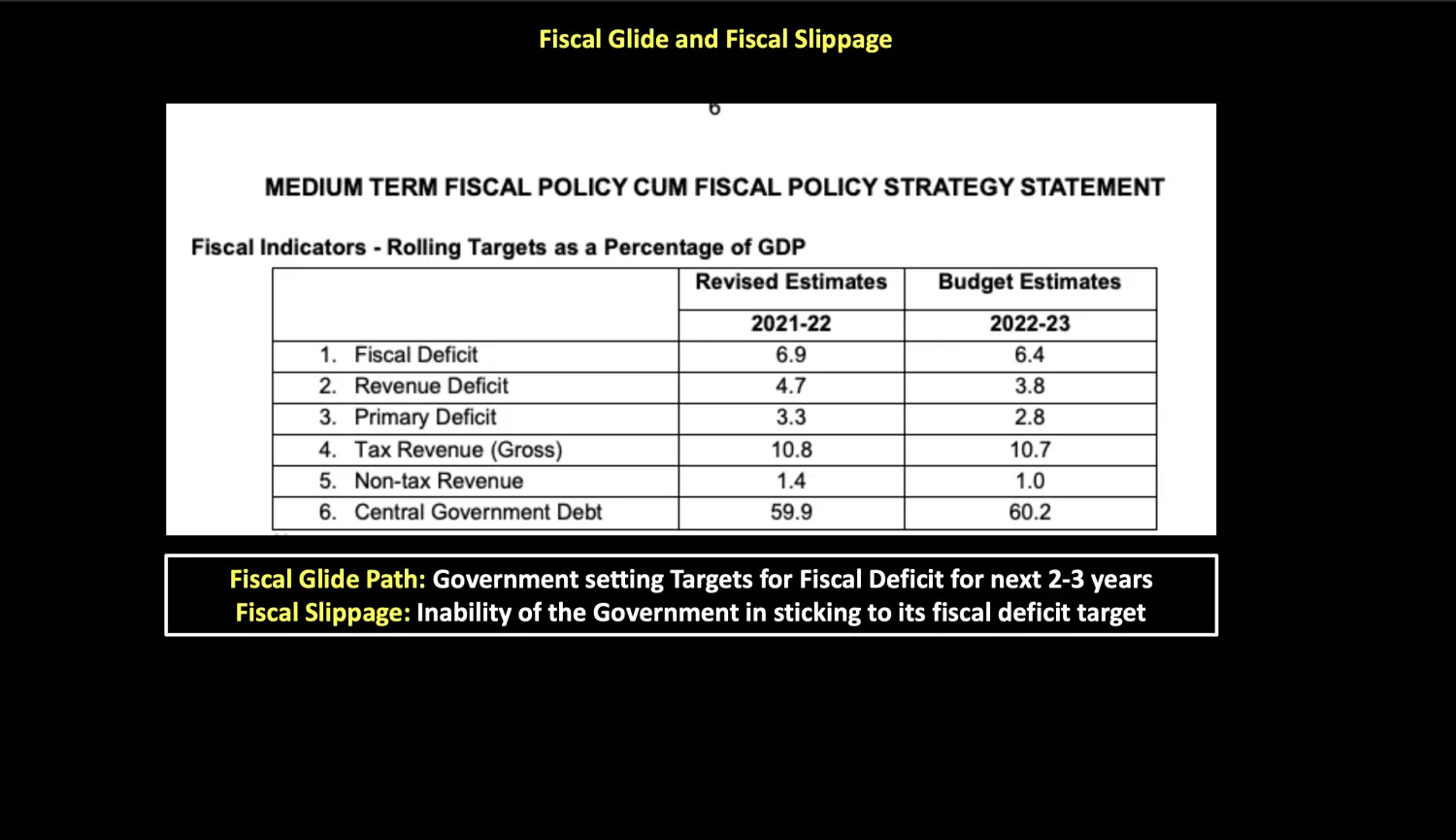
Fiscal Glide & Fiscal Slippage
Phantom Capital
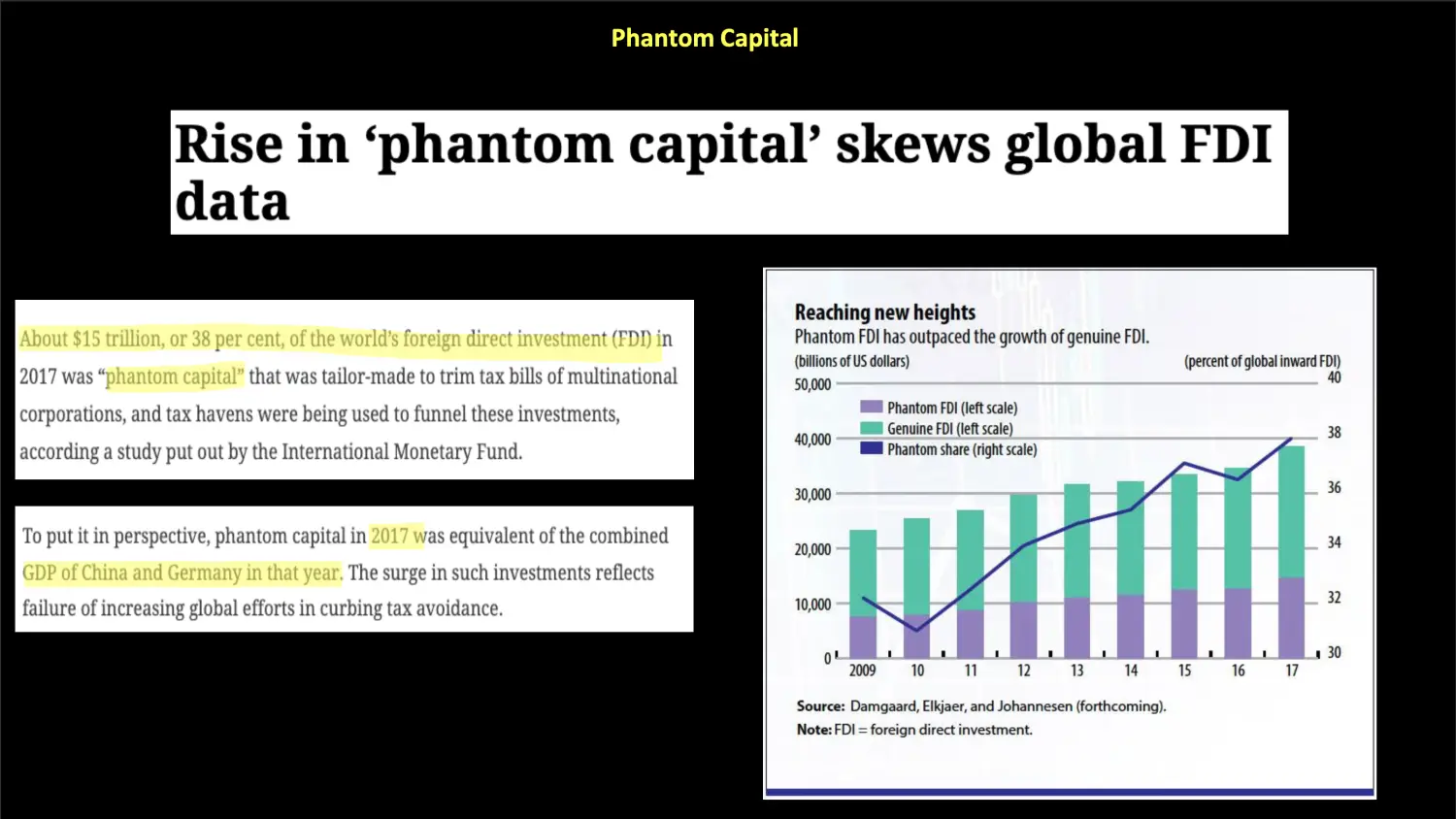
Phantom Capital was Introduced by IMF
It is Investment Received by a country from Tax Haven Countries
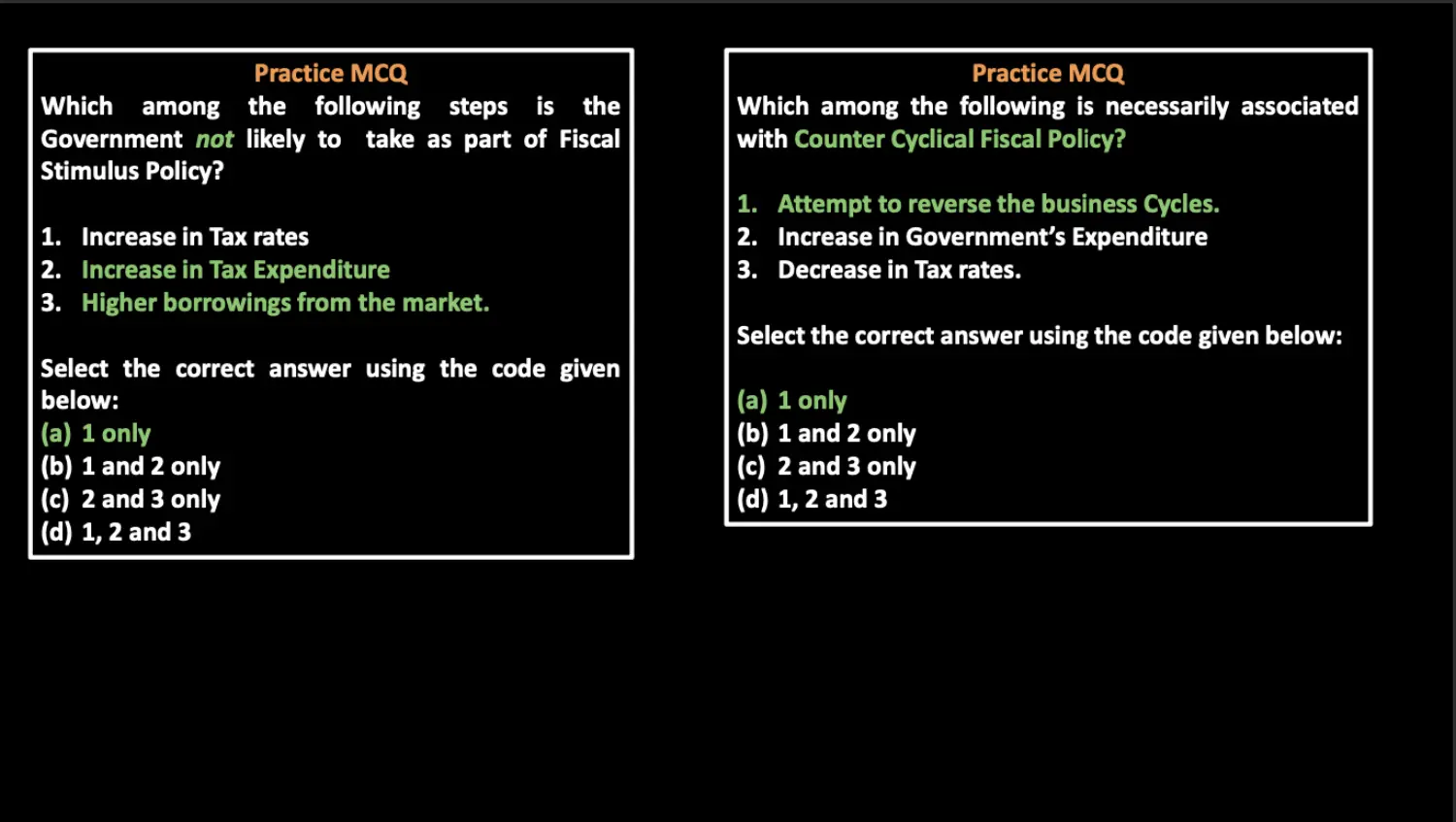
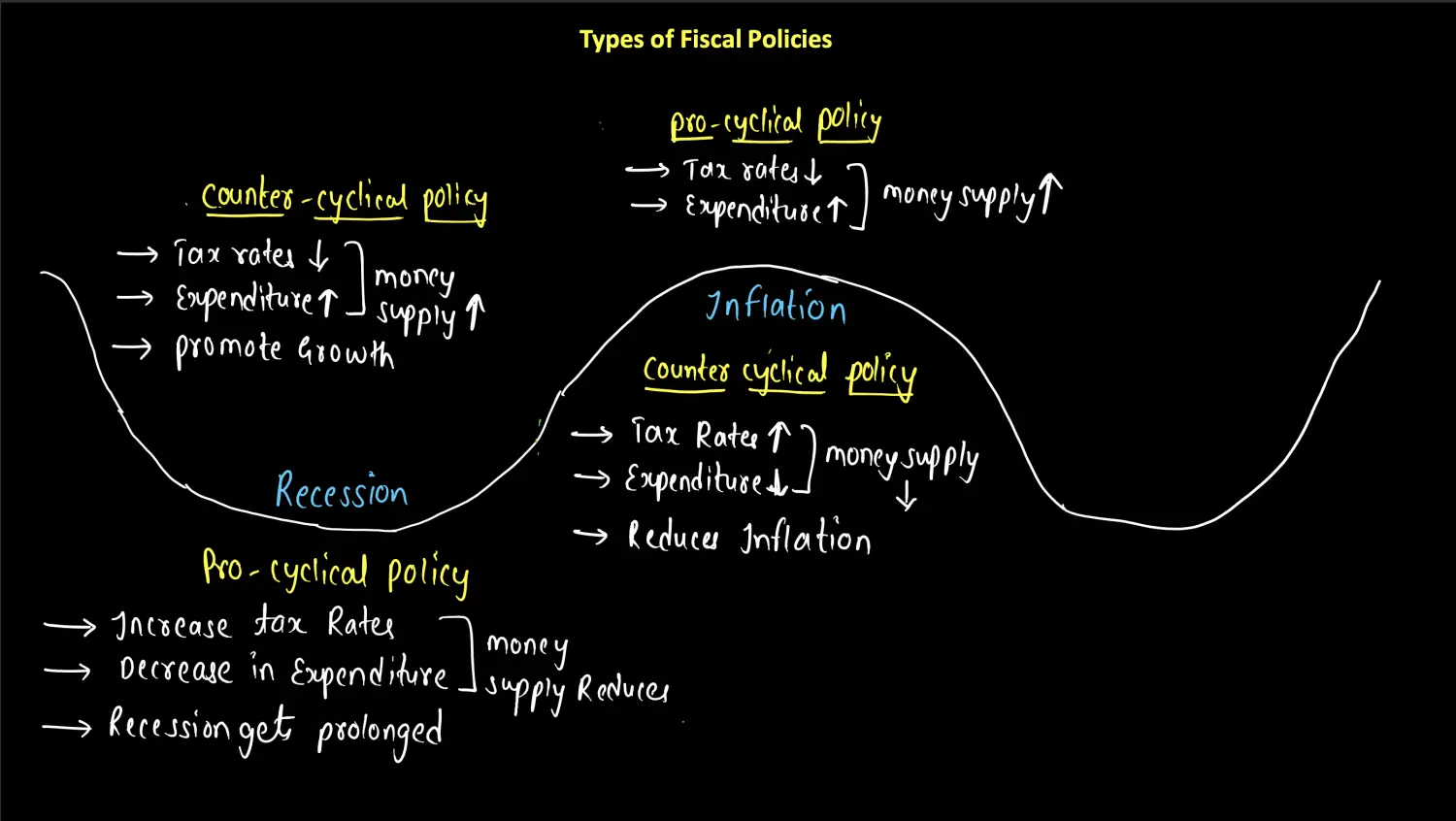
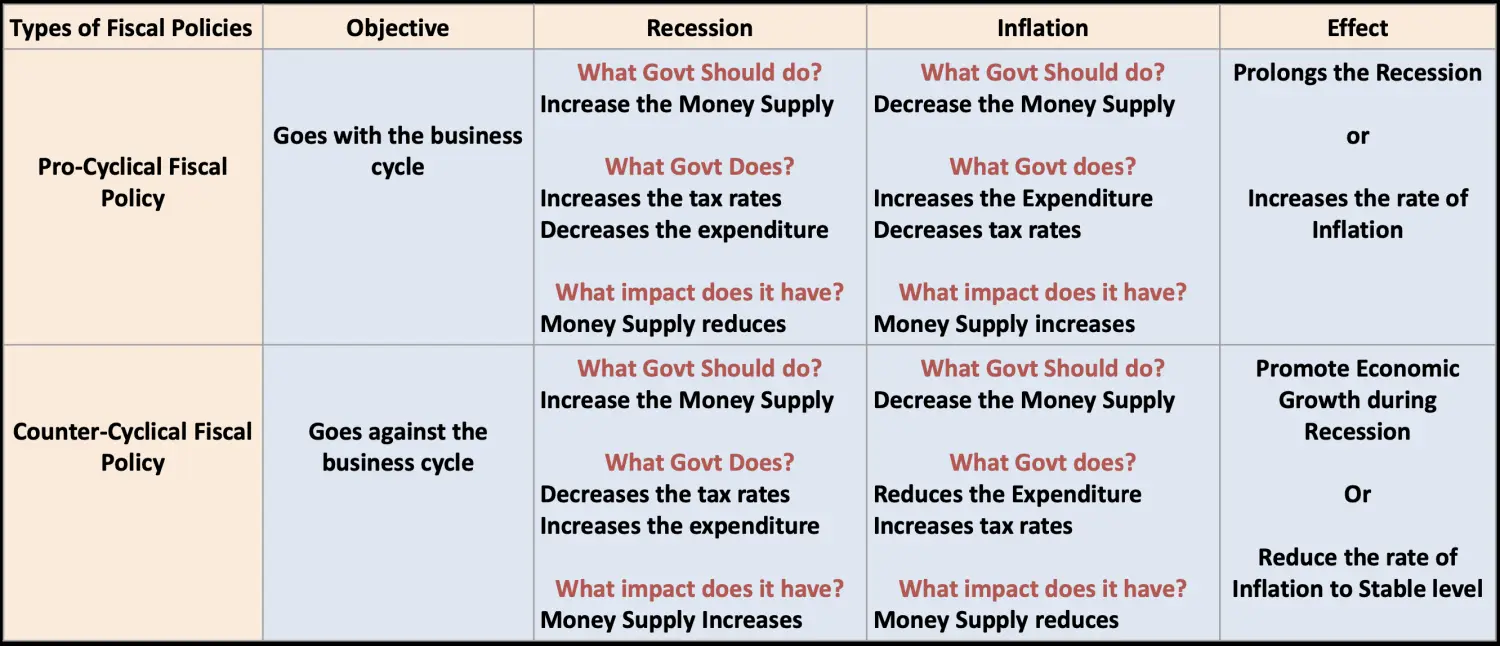
Types of Fiscal Policies
Pro Cyclical Recession : To Maintain Fiscal Deficit according to the FRBM Act
Pro Cyclical Inflation : Generally in Election Year declaring populist policies
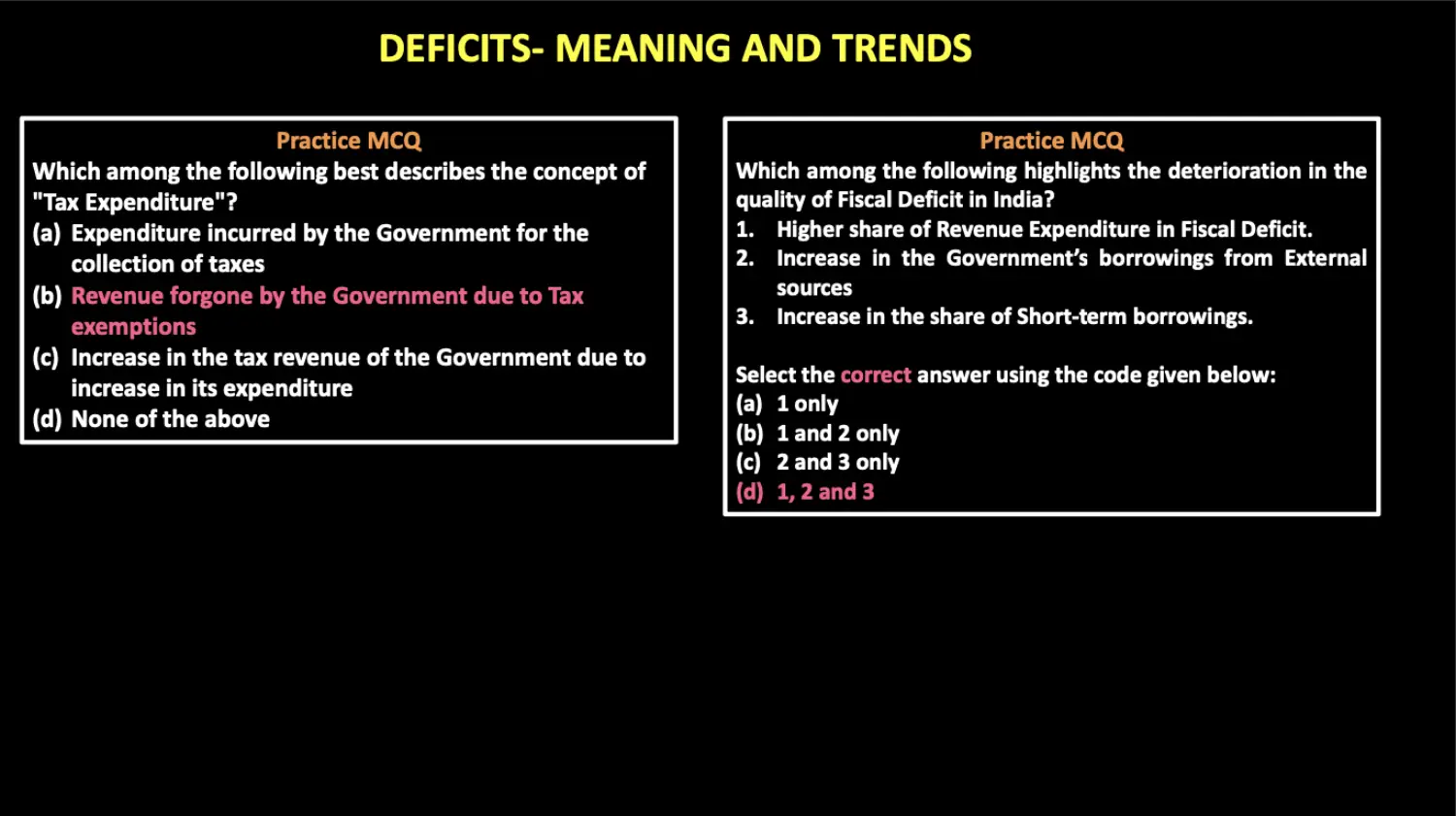
Tax Expenditure: Amount of Revenue Lost by the Government due to Tax Exemptions
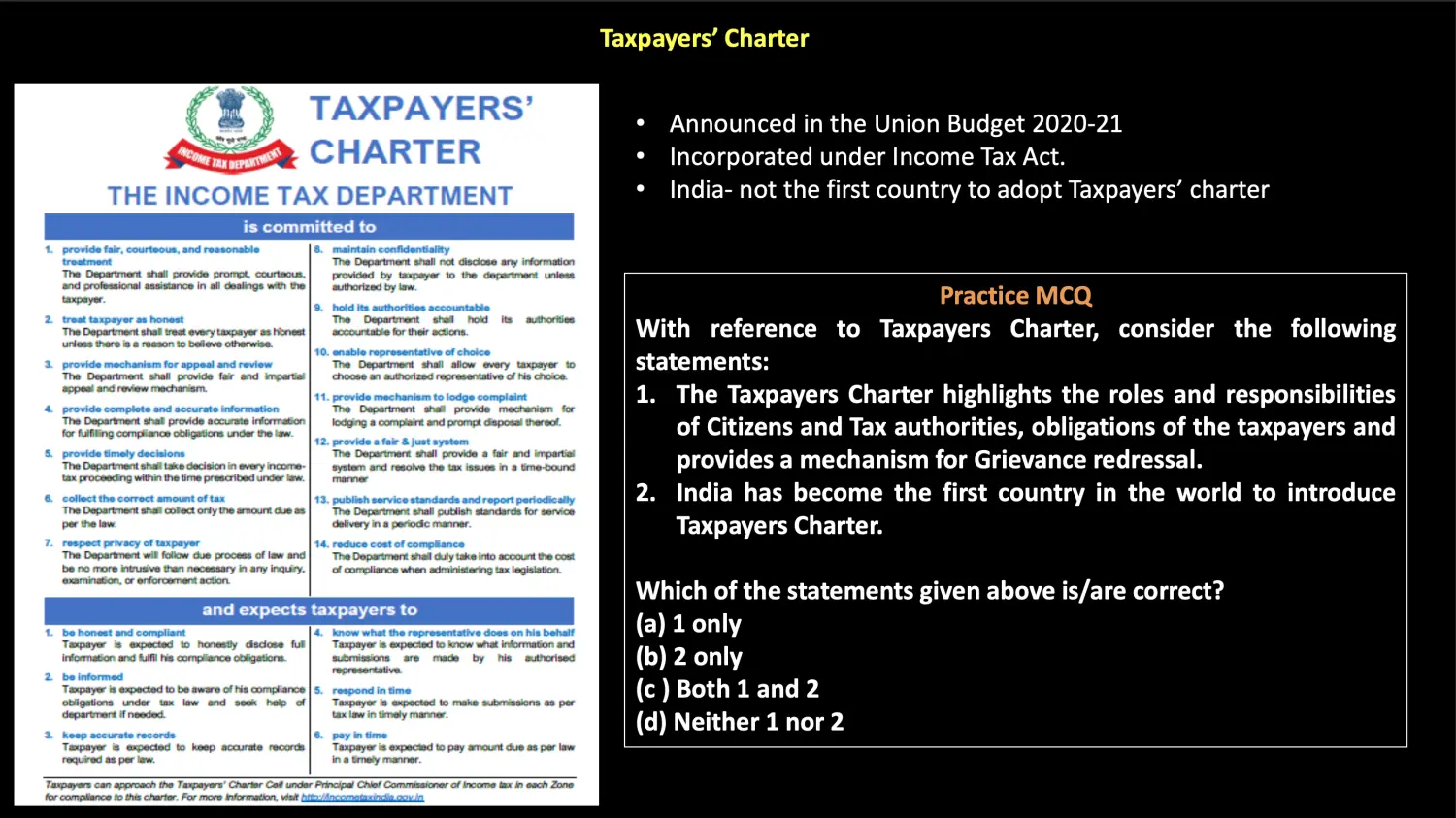
Concept of Taxpayers Charter
Charter is Legally Binding
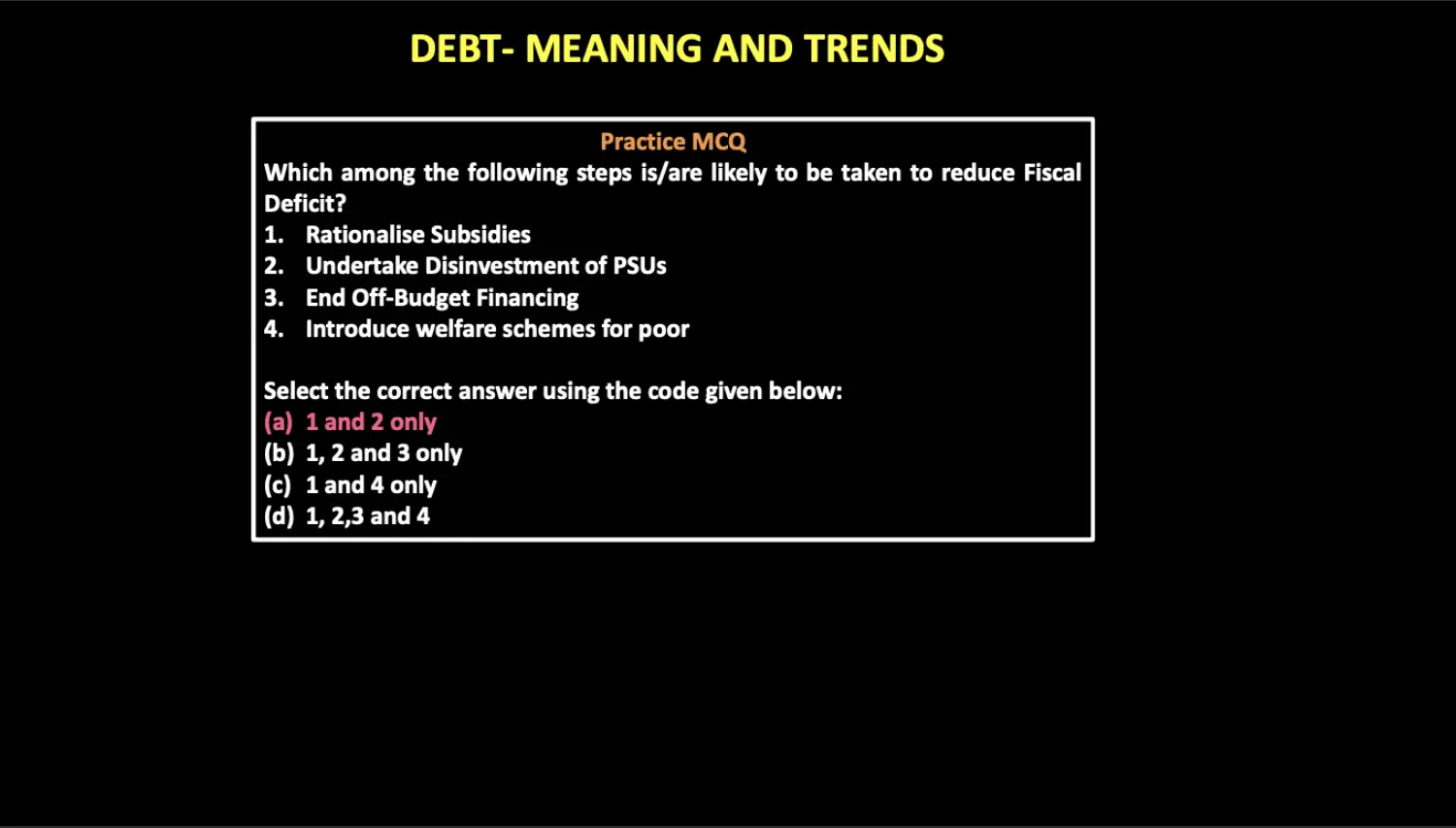
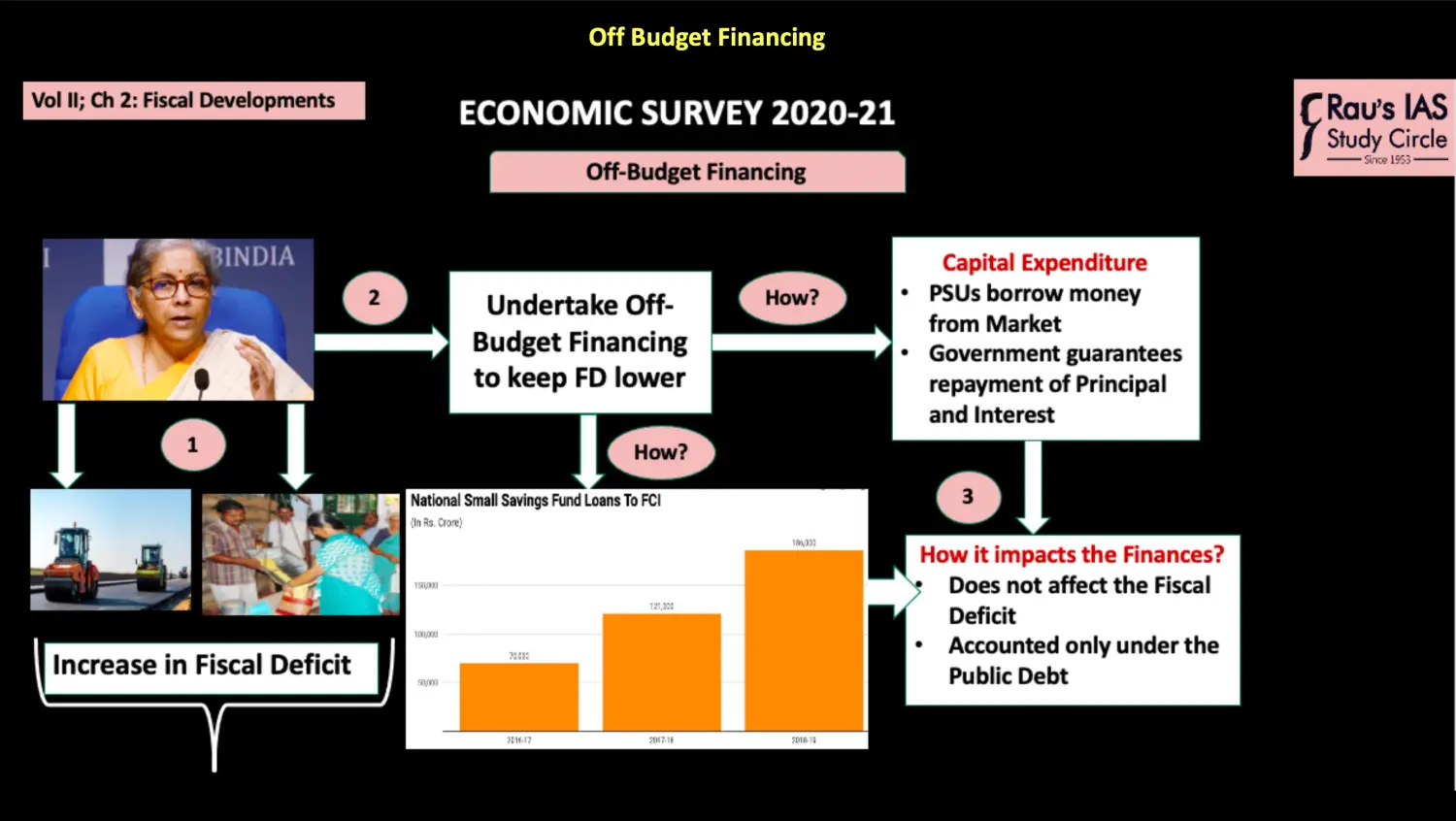
Off Budget Financing
IRFC - Indian Railway Finance Corporation
Part of Public Debt because Government is Giving Guarantees
Guarantee is given on the Guarantee of making it a Liability of Consolidated Fund of India
FRBM - 3% of Nominal GDP Always
Govt can undertake Off Budget Financing for Revenue Expenditure
By Money from National Small Saving Fund (NSSF) for Food Corporation of India (FCI)
Off Budget Financing for FCI has been cancelled from Budget 21-22
Finance Secretary estimated that at about 1.0% to 1.5% of GDP. Hence, if we say 3% is the Fiscal Deficit then, actual is at about 4 to 4.5%
Problems
- Increased Liability - Accounting Adventure
- Parliamentary Accountability is Reduced - Finance Minister also tells the extent of Off Budget Financing
- Hidden Liability
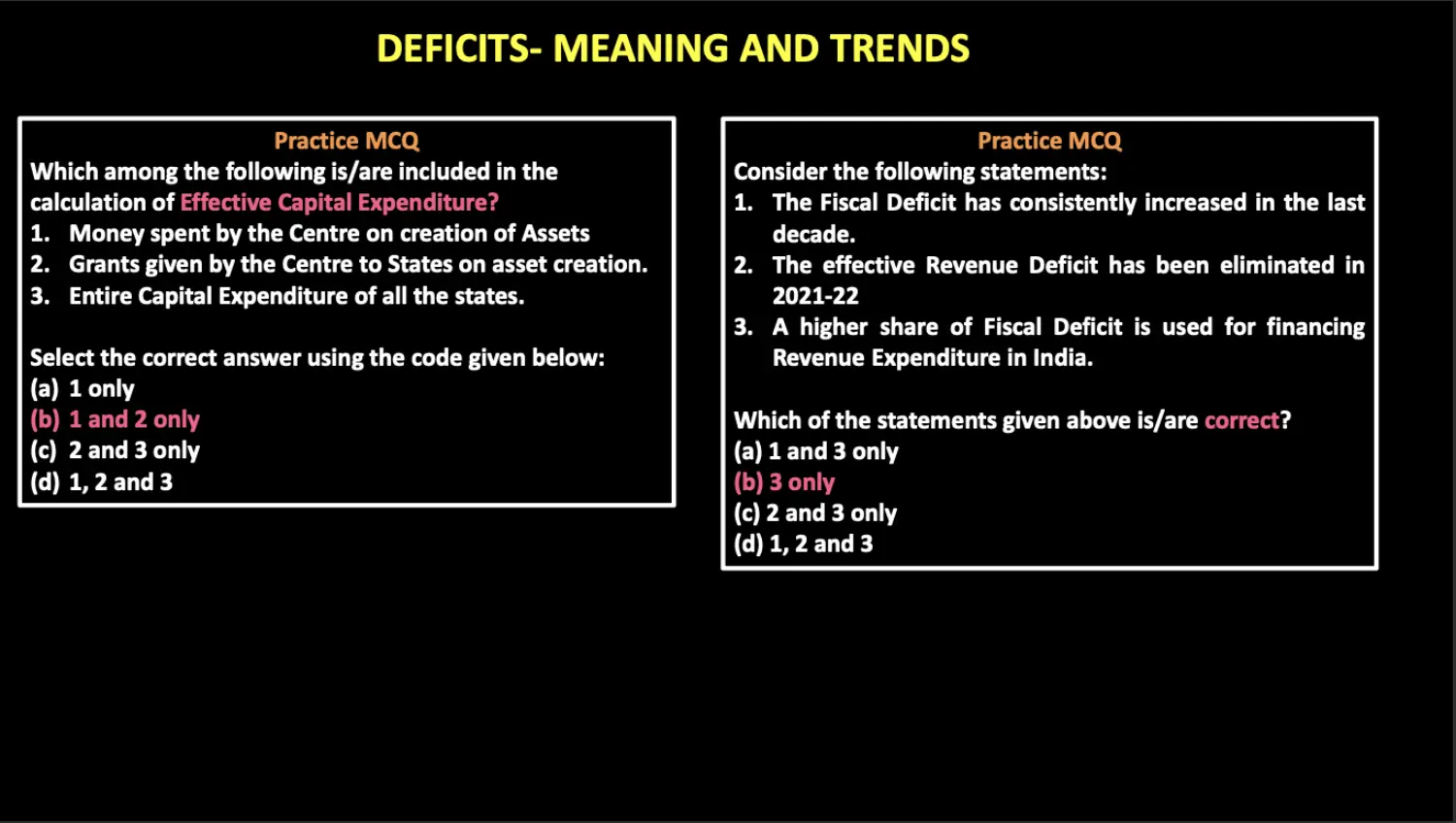
Why Do we maintain Fiscal Deficit ? Why can’t we make it equal to zero ?
- Basic Expenditure Borrowing is of 37 Lac Crore cannot be reduced. Here 20 Lac Crore is collected by Govt
- If we borrow today, we can harness the demographic dividend and using this money we can propel and increase the GDP for future
- Capital Expenditure should be greater than Revenue Expenditure
Centrally Sponsored Schemes and Central Sector Scheme
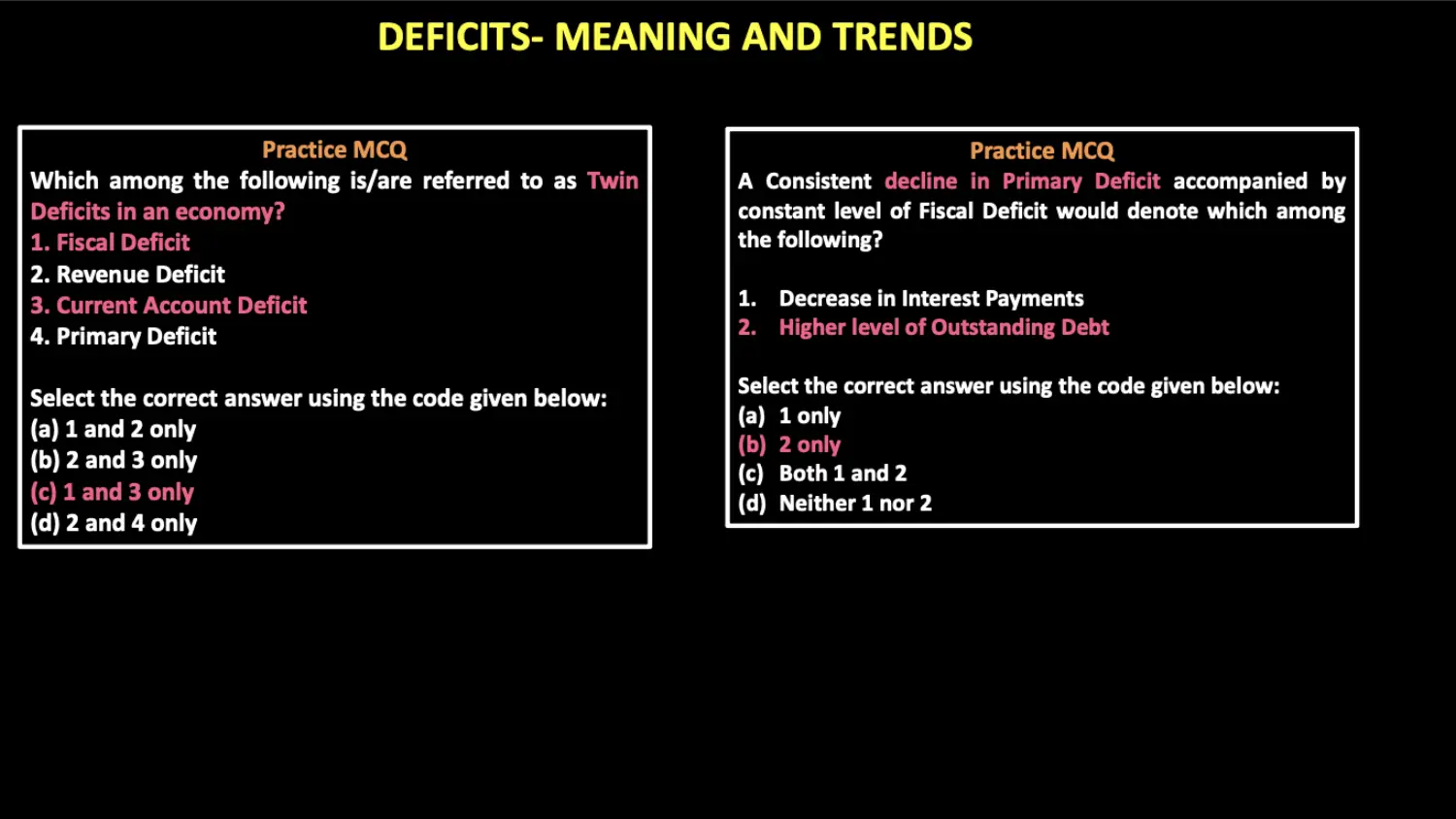
Types of Deficit in India *
By Default it is always wrt to Gross Fiscal Deficit
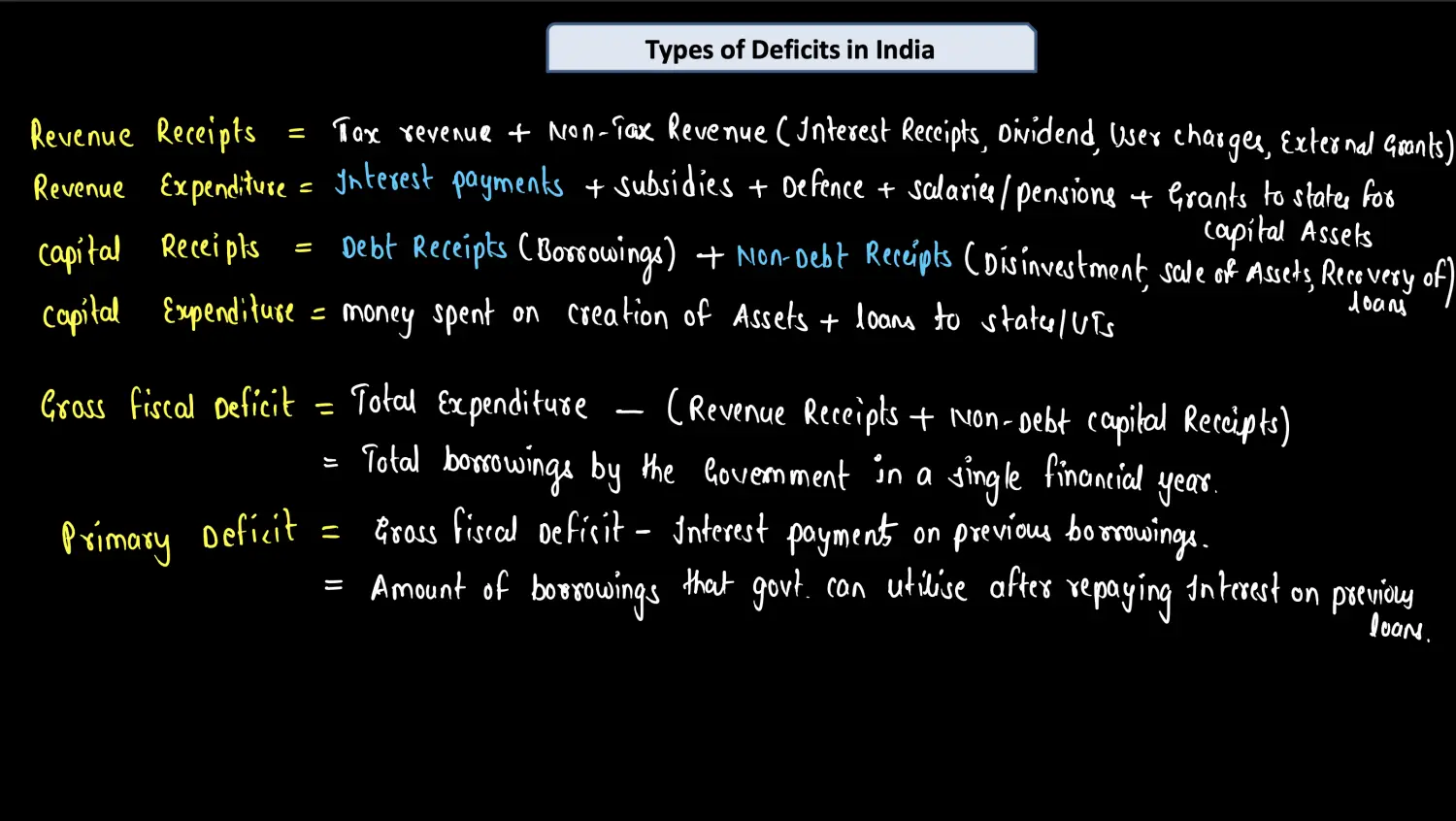
Gross Fiscal Deficit (Fiscal Deficit)
Total Borrowing of Government → expressed in terms of Nominal GDP
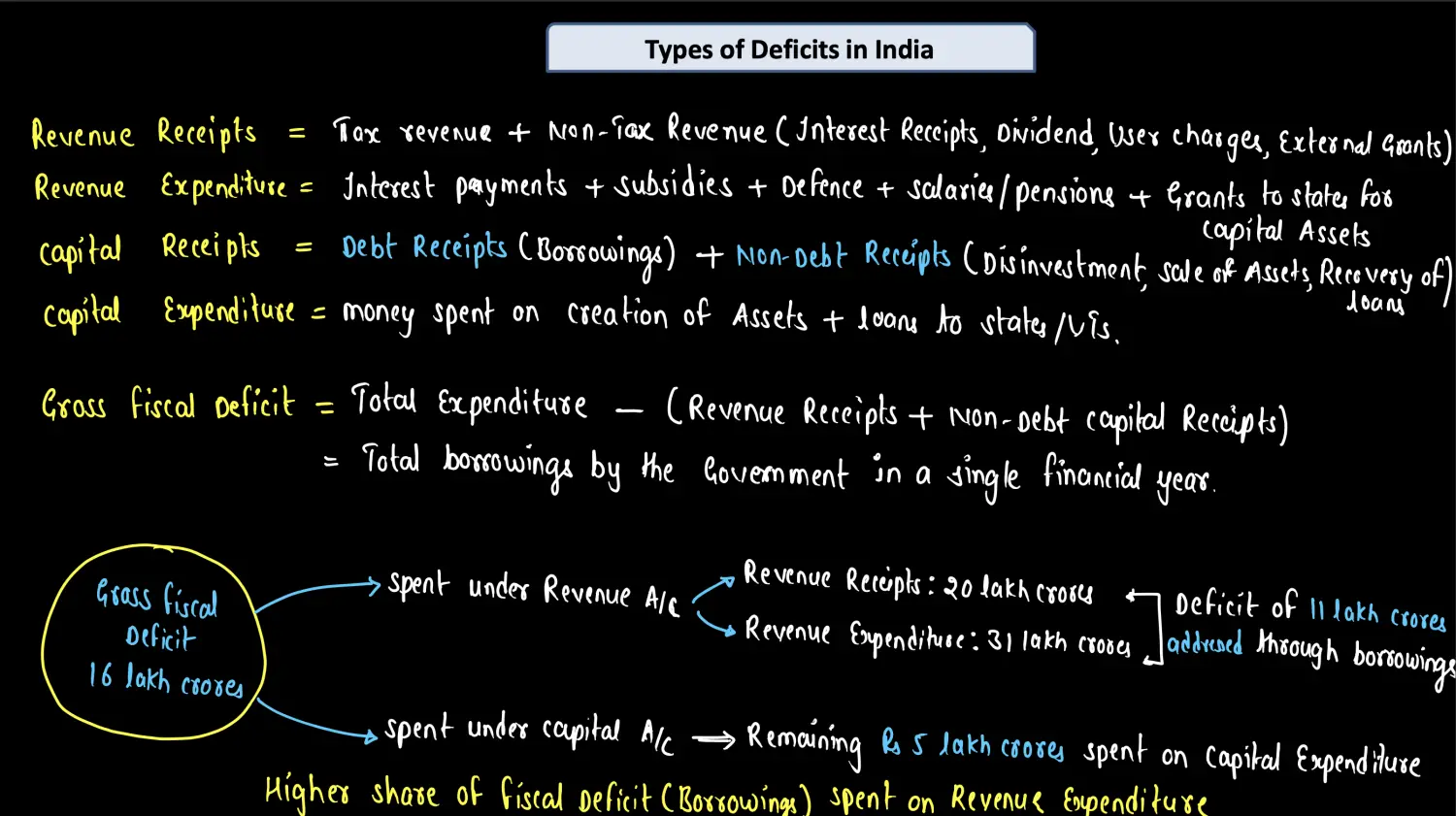
Hence, Quality of Fiscal Deficit in India is Poor
Higher Quality of Fiscal Deficit in India is
- Higher Share of FD - Capital Expenditure → This is Poor
- Higher Share of Internal Borrowing - This is Good
- Government Should have Higher Share of Long Term Loans - This is Good
Poor Quality of Fiscal Deficit in India is
- HIgher Share of FD in Revenue Exp
- Higher Share of External Borrowing
- Higher Share of Short Term Loans
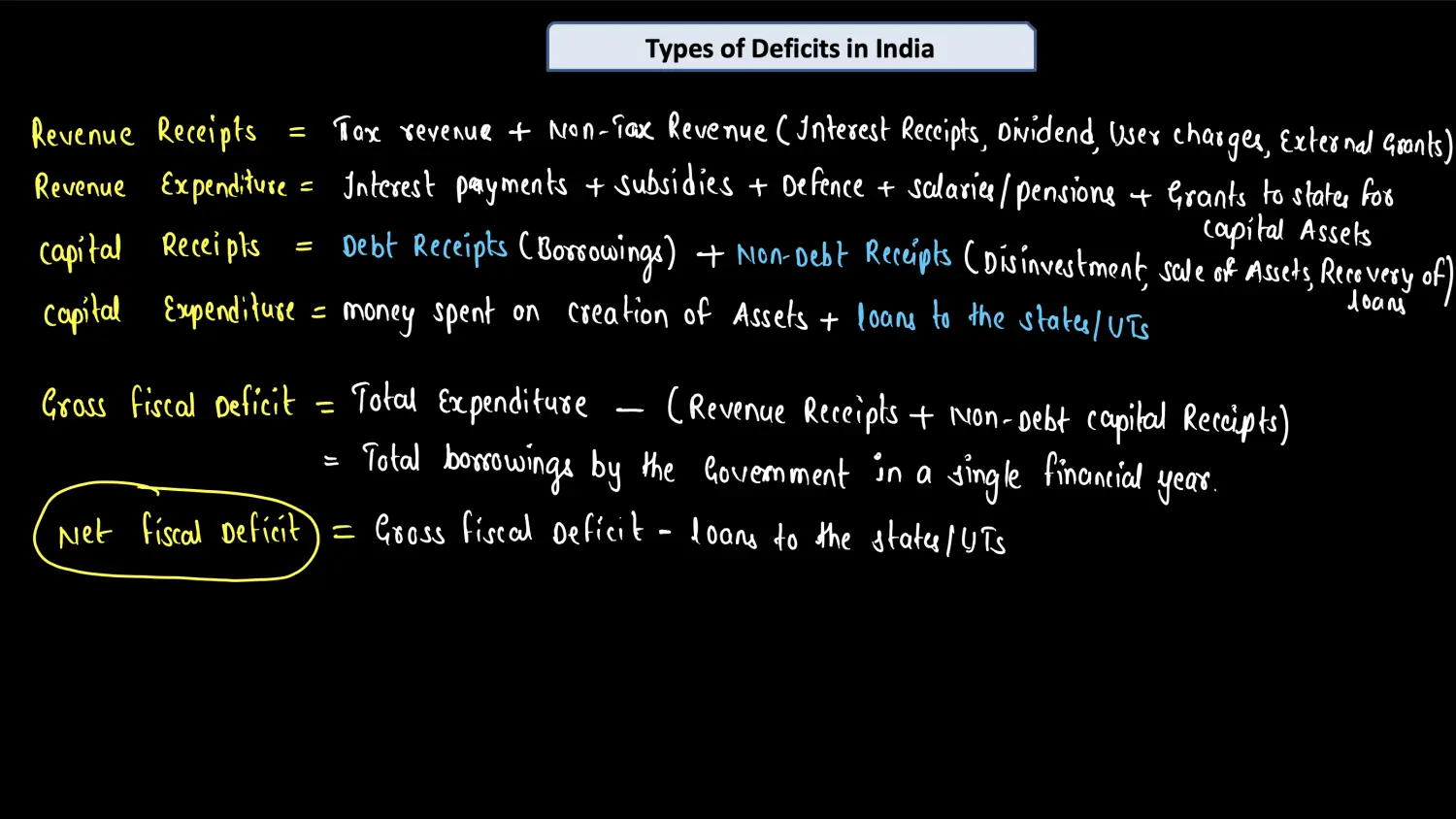
Net Fiscal Deficit
Revenue Deficit
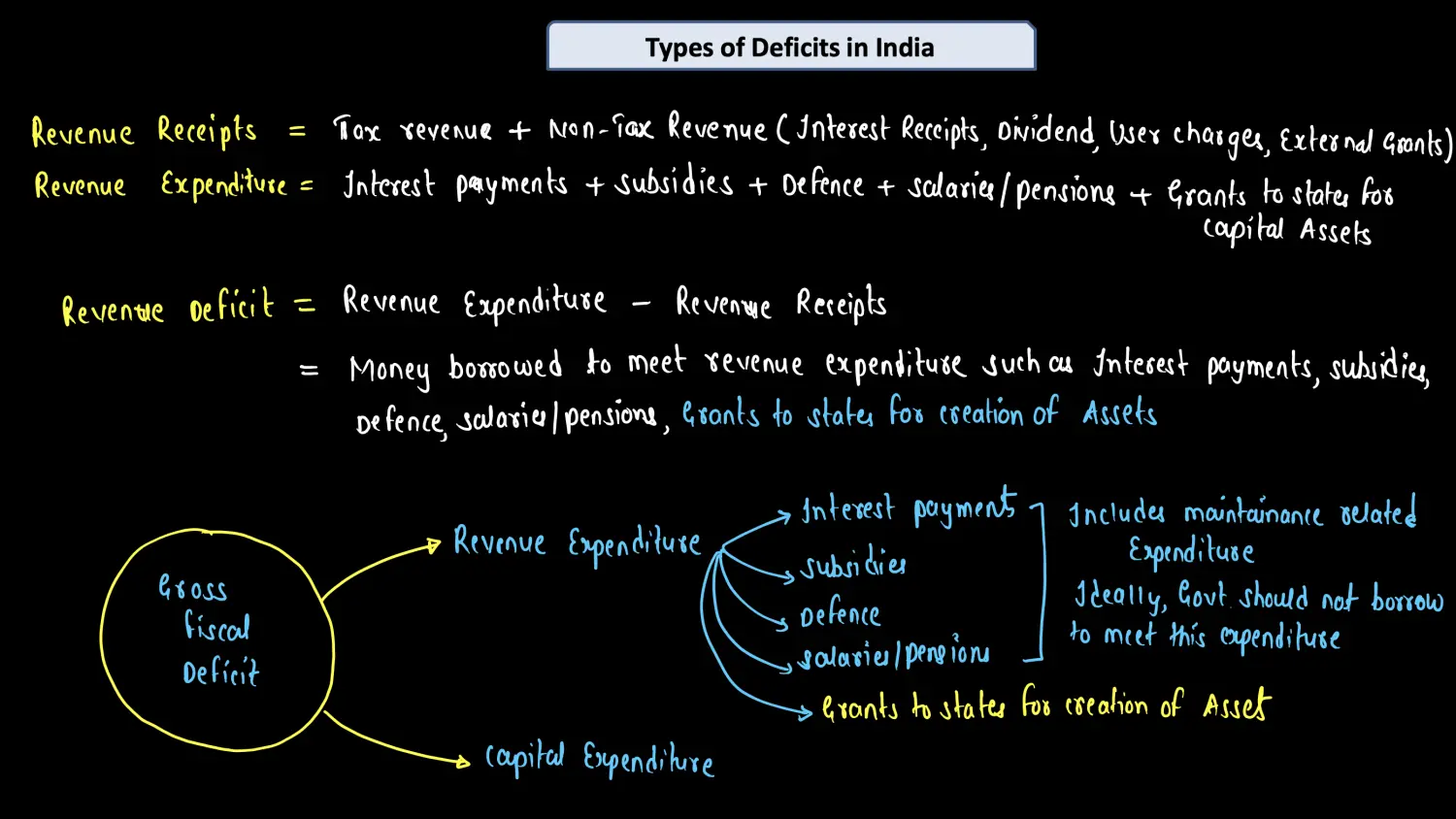
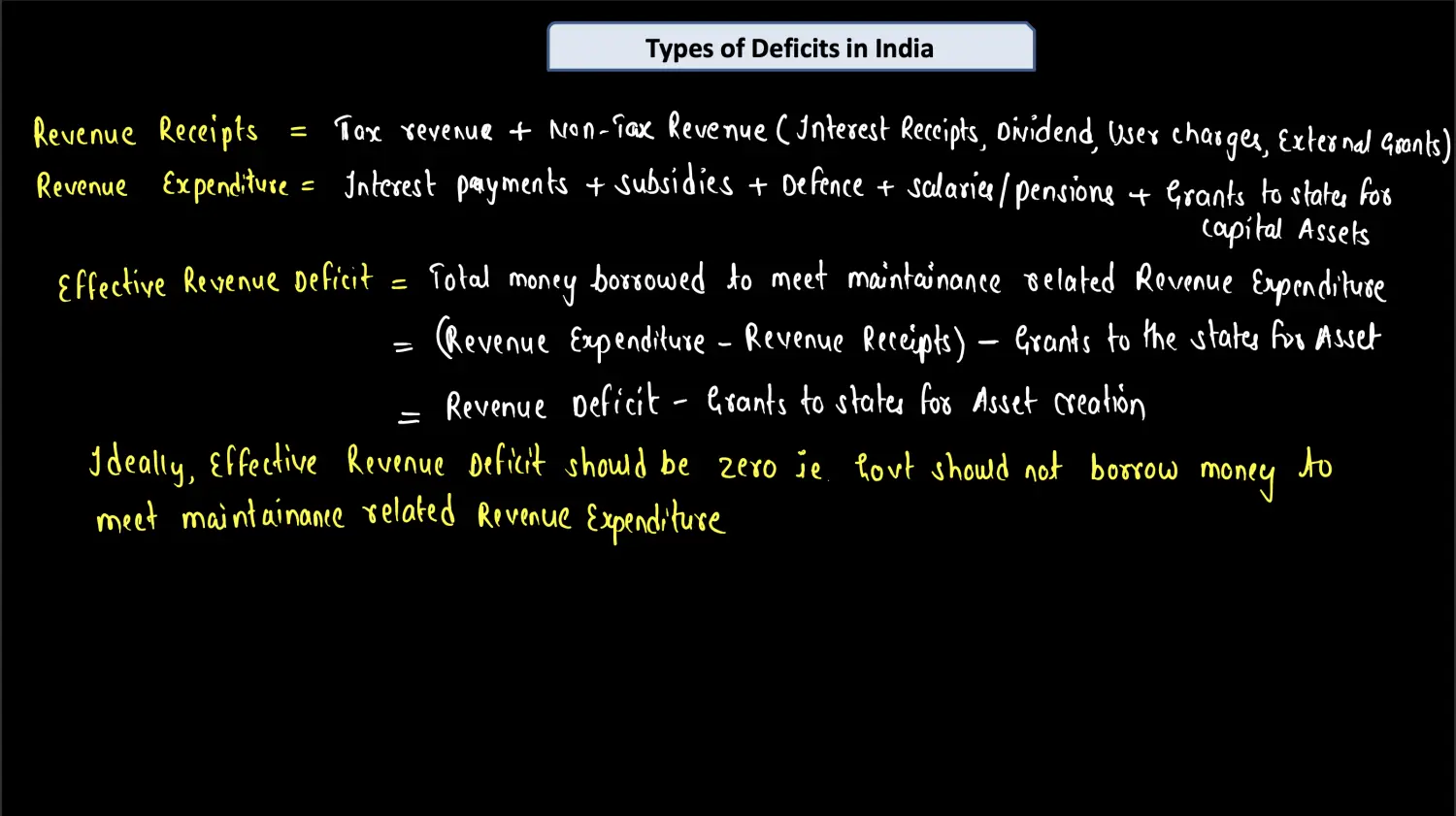
Effective Revenue Deficit
ERD should be Targeted to be equal to Zero so that we don’t borrow for revenue expenditure
FRBM only limits Gross Fiscal Deficit to 3% of Nominal GDP
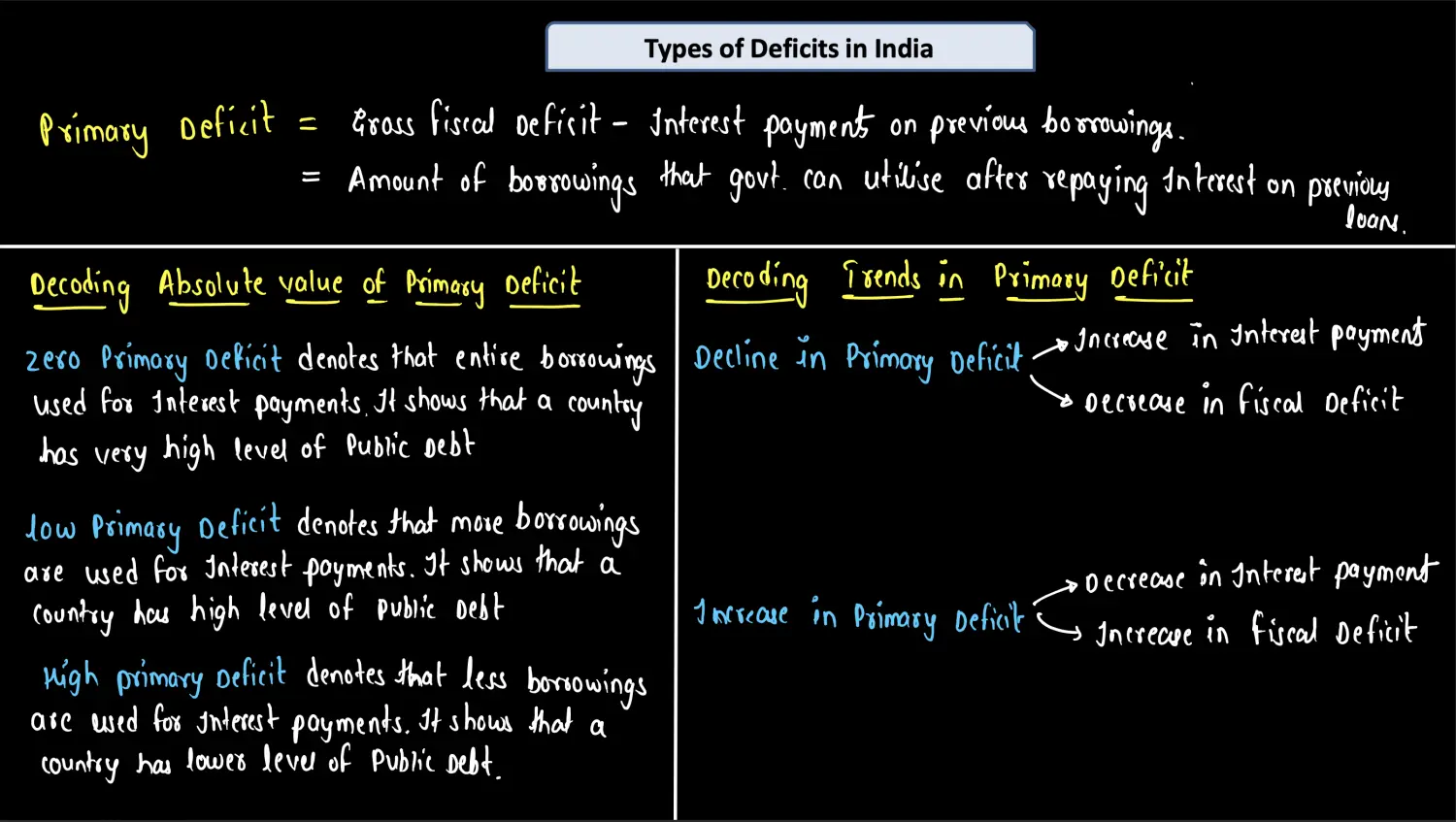
Primary Deficit
Primary Deficit should be Higher → Denoting that we have less Interest Obligations
Summary of Deficits in India
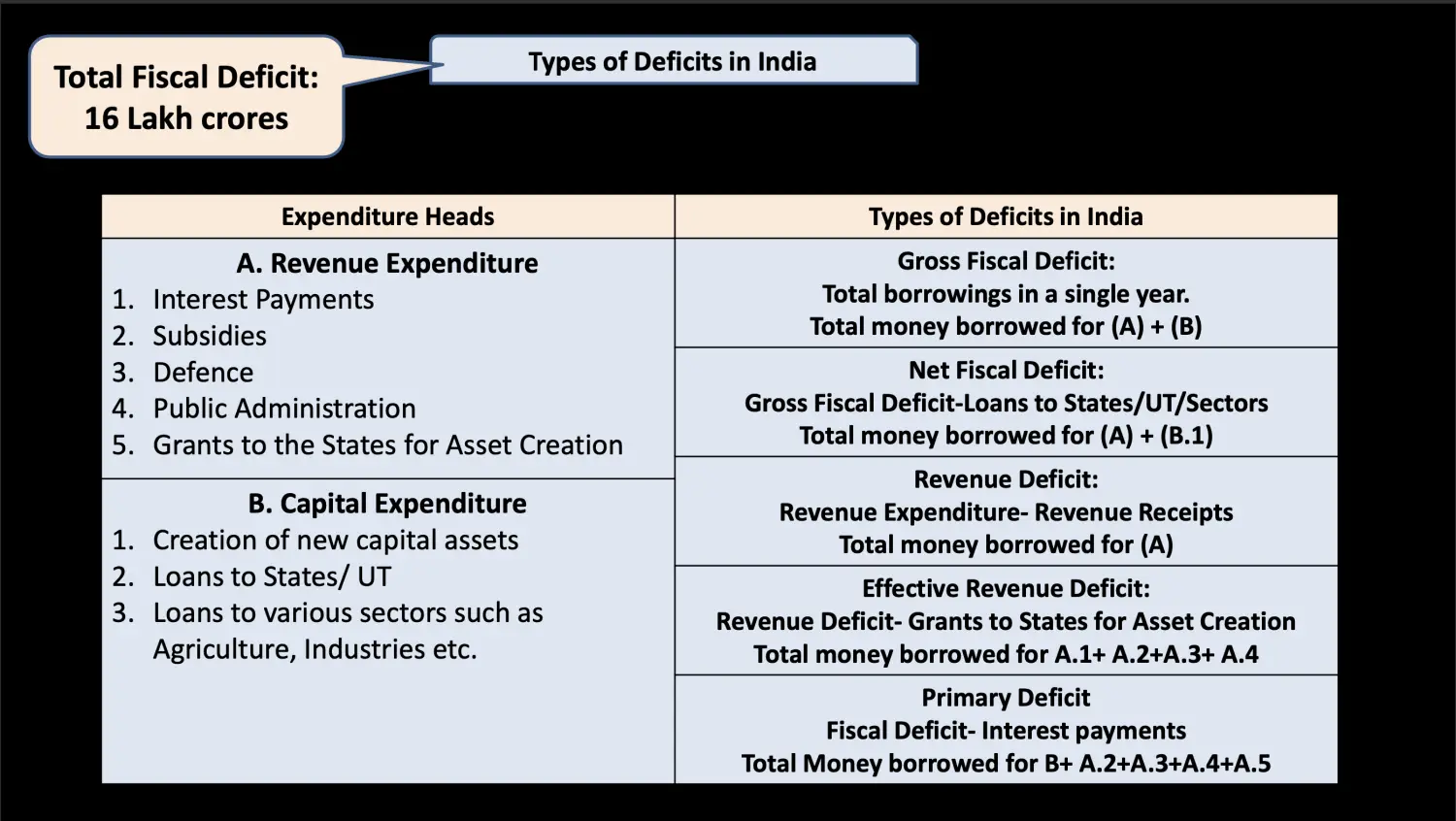
Snapshots of Governments Finances
There is NO Trend in Fiscal Deficit 👇
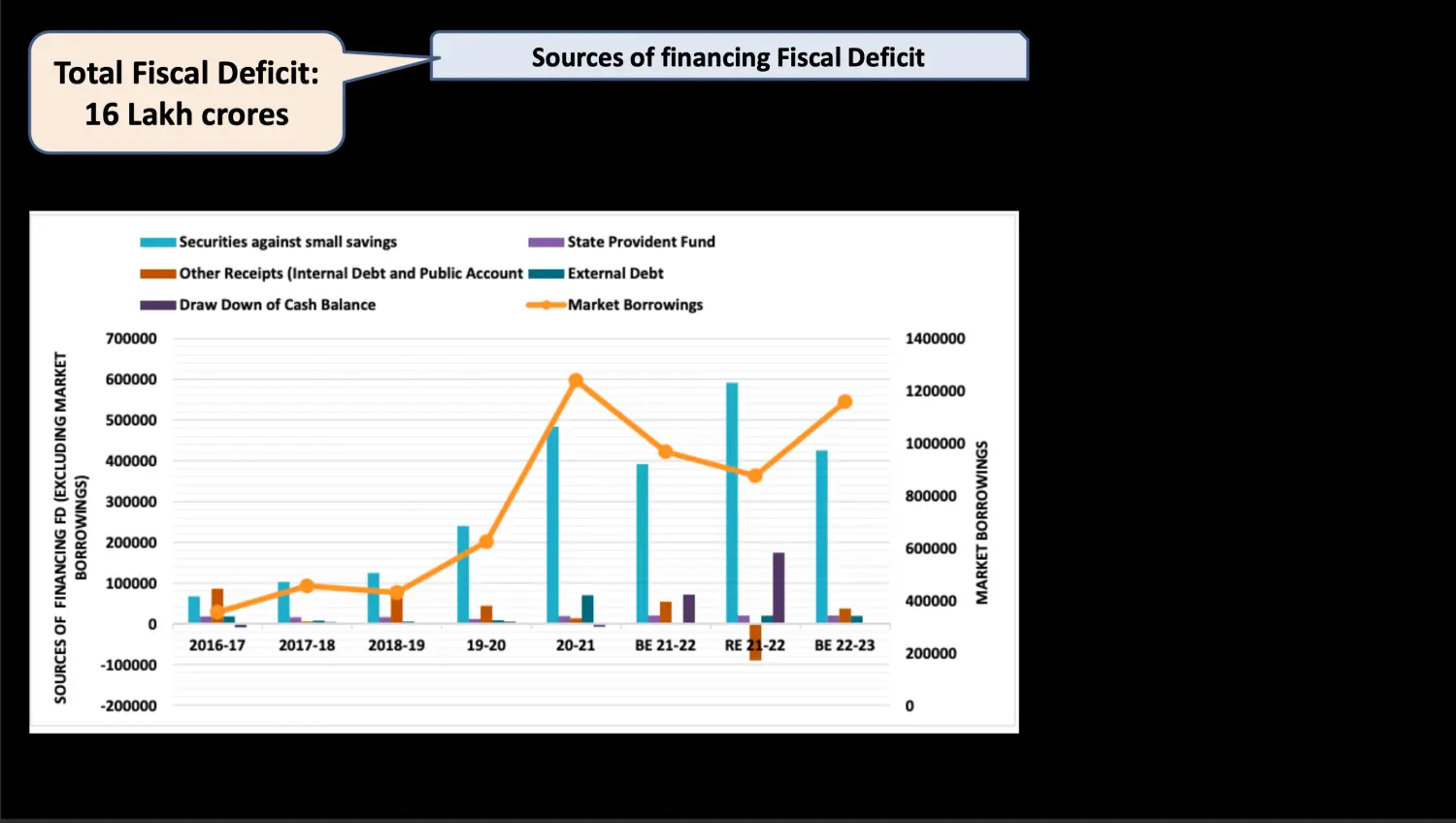
Sources of Financing Fiscal Deficit
Securities Against Small Savings - National Small Saving Funds - Investing in G Secs (Some money from National Small Saving Funds)
Debt Status of Central Government
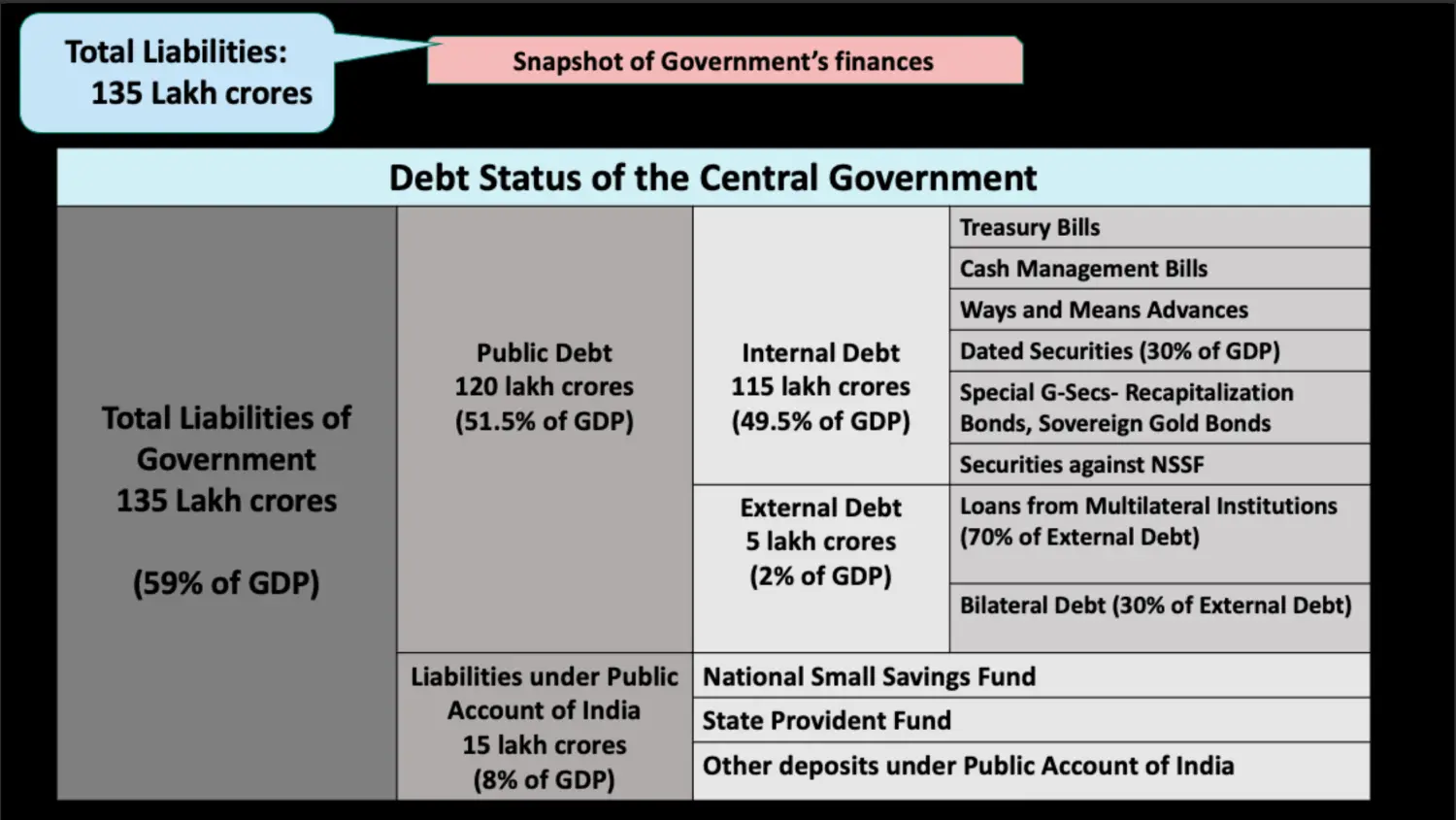
Note : Public Account of India is NOT a part of Public Debt
Trends in Centres Debt to GDP Ratio
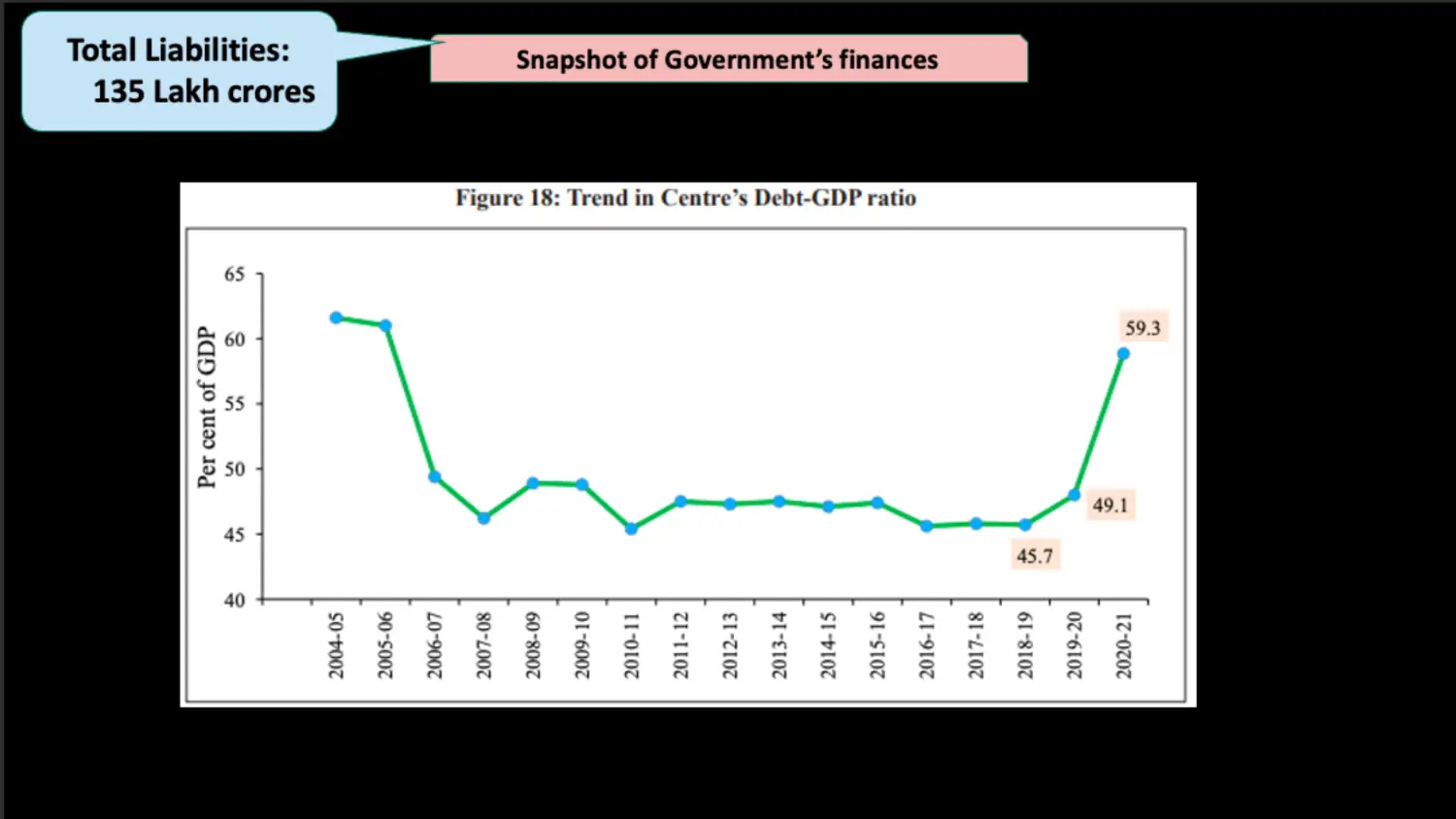
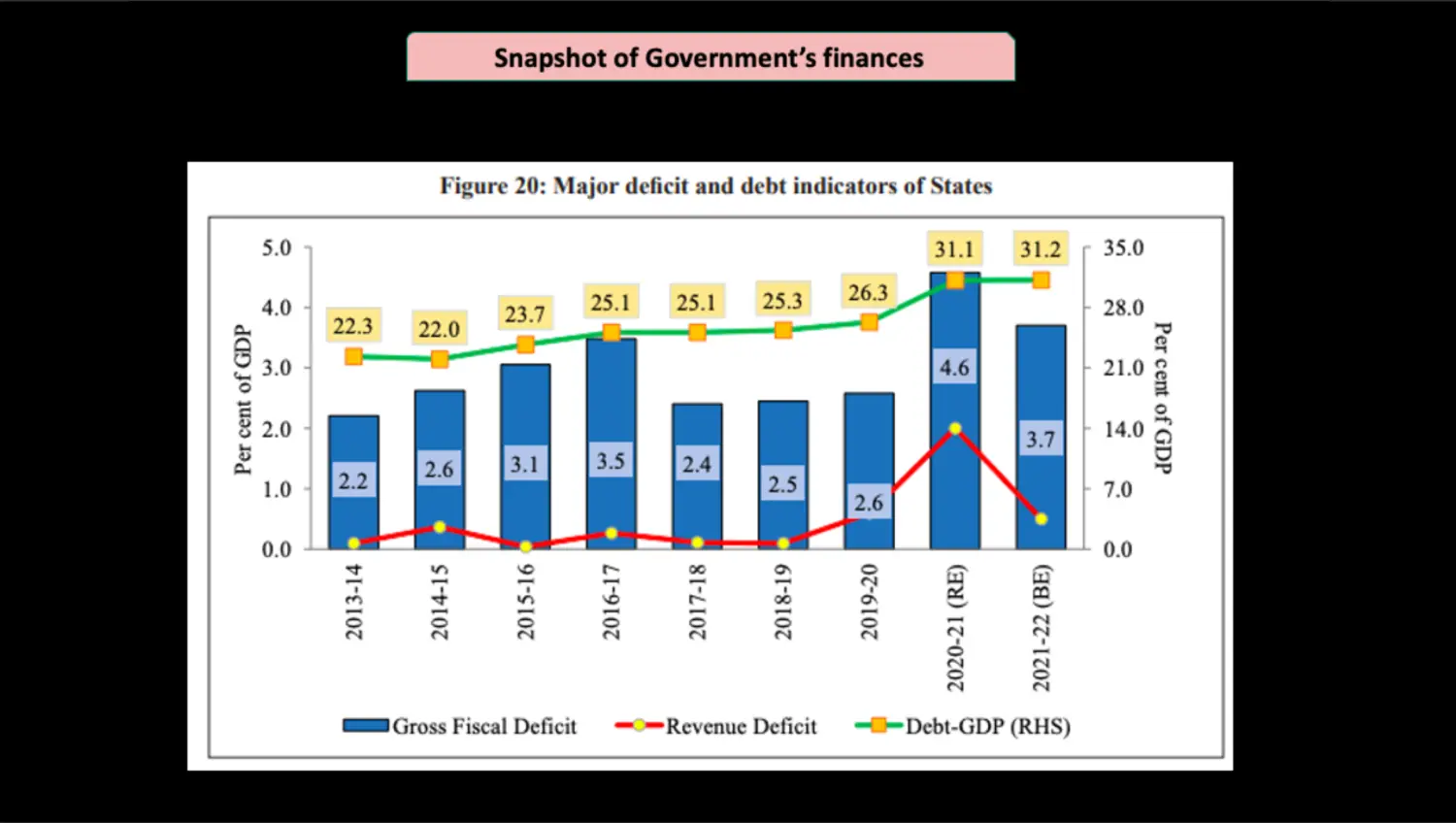
Japan - 250% && US - 110% && India - 91.2%
It is not good but it is good as and wrt US and Japan
Debt to GDP Ratio is different from Capital to GDP Ratio
Debt → Loans of Centre and State
Capital → Loans of Centre and State and Private Entities
RE - Revised Estimates
BE - Budget Estimates
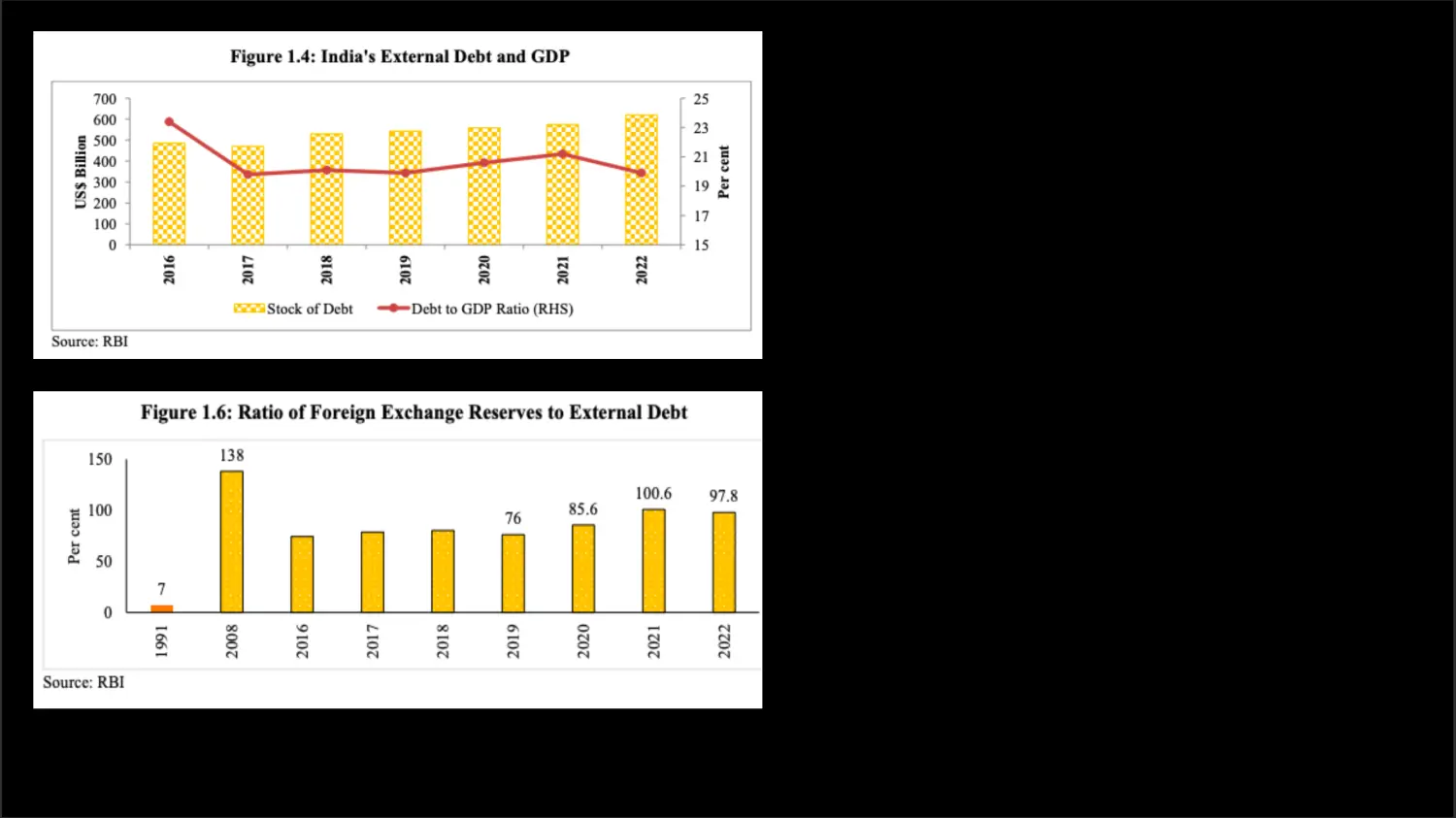
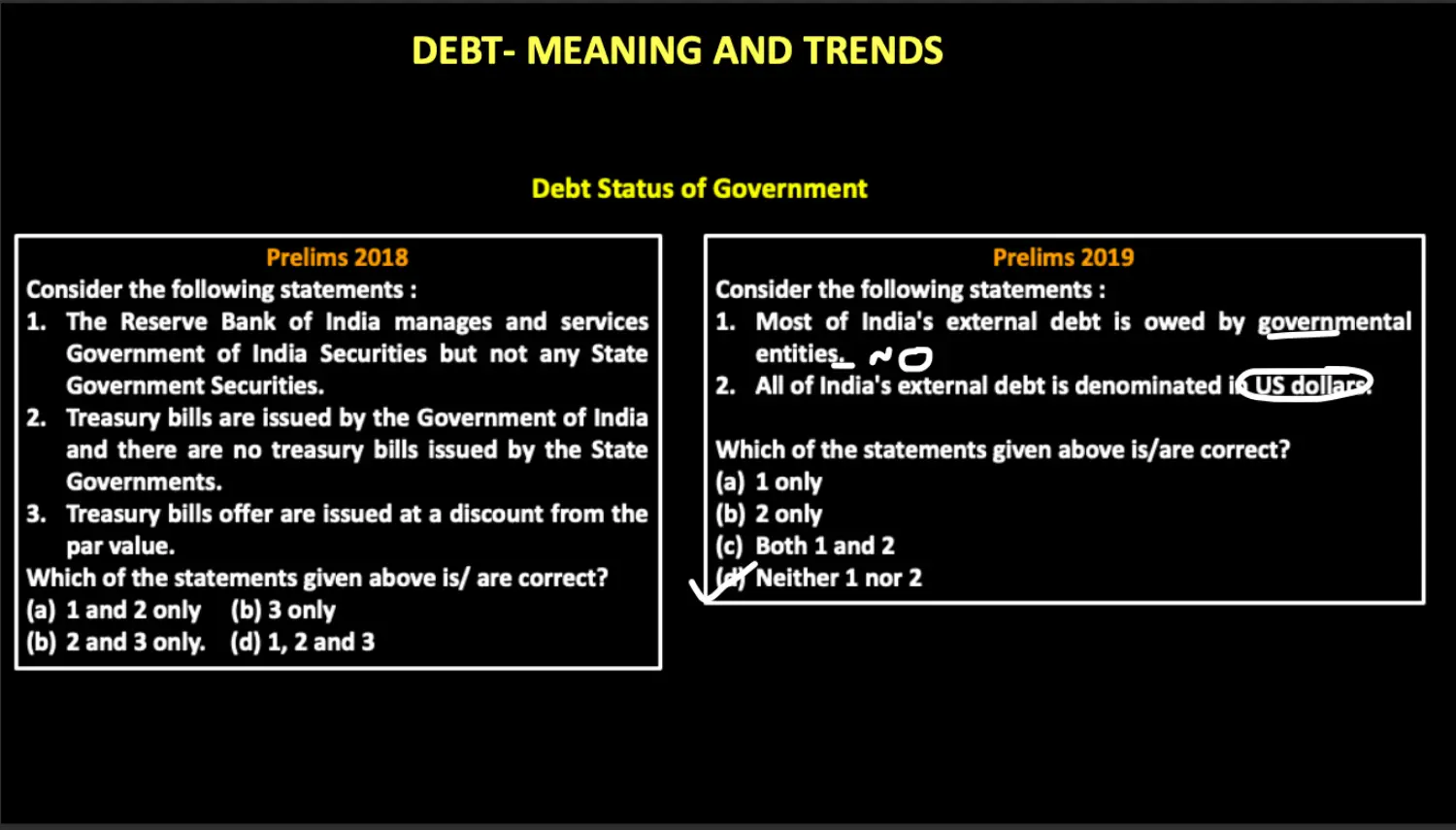
External Debt → Govt Debt (2%) && Private Debt (18%)
Scenario of External Debt of India
Only Govt Borrowings are called as Sovereign Bonds
Money borrowed by PSU from Foreign is NOT Sovereign Debt
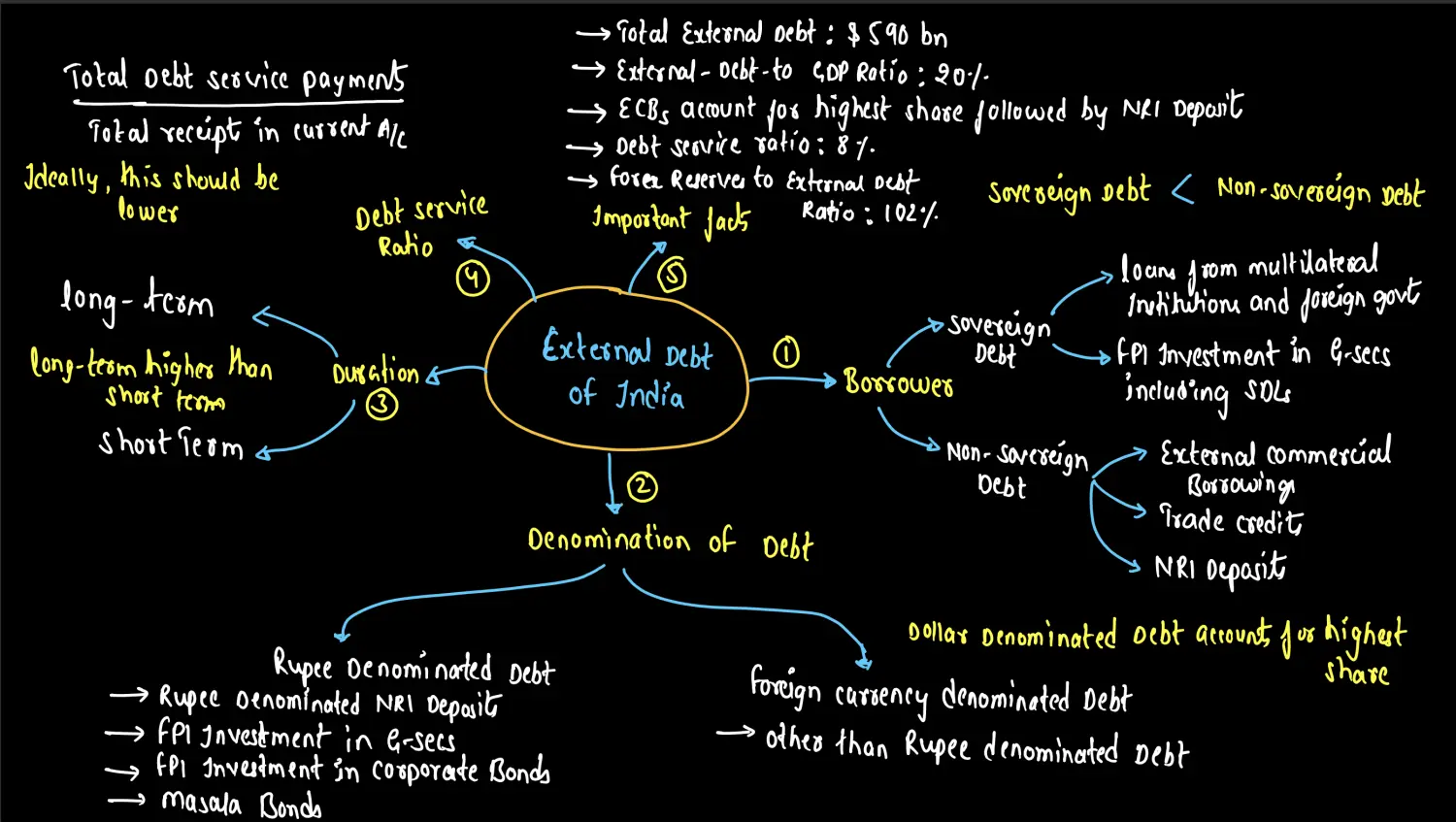
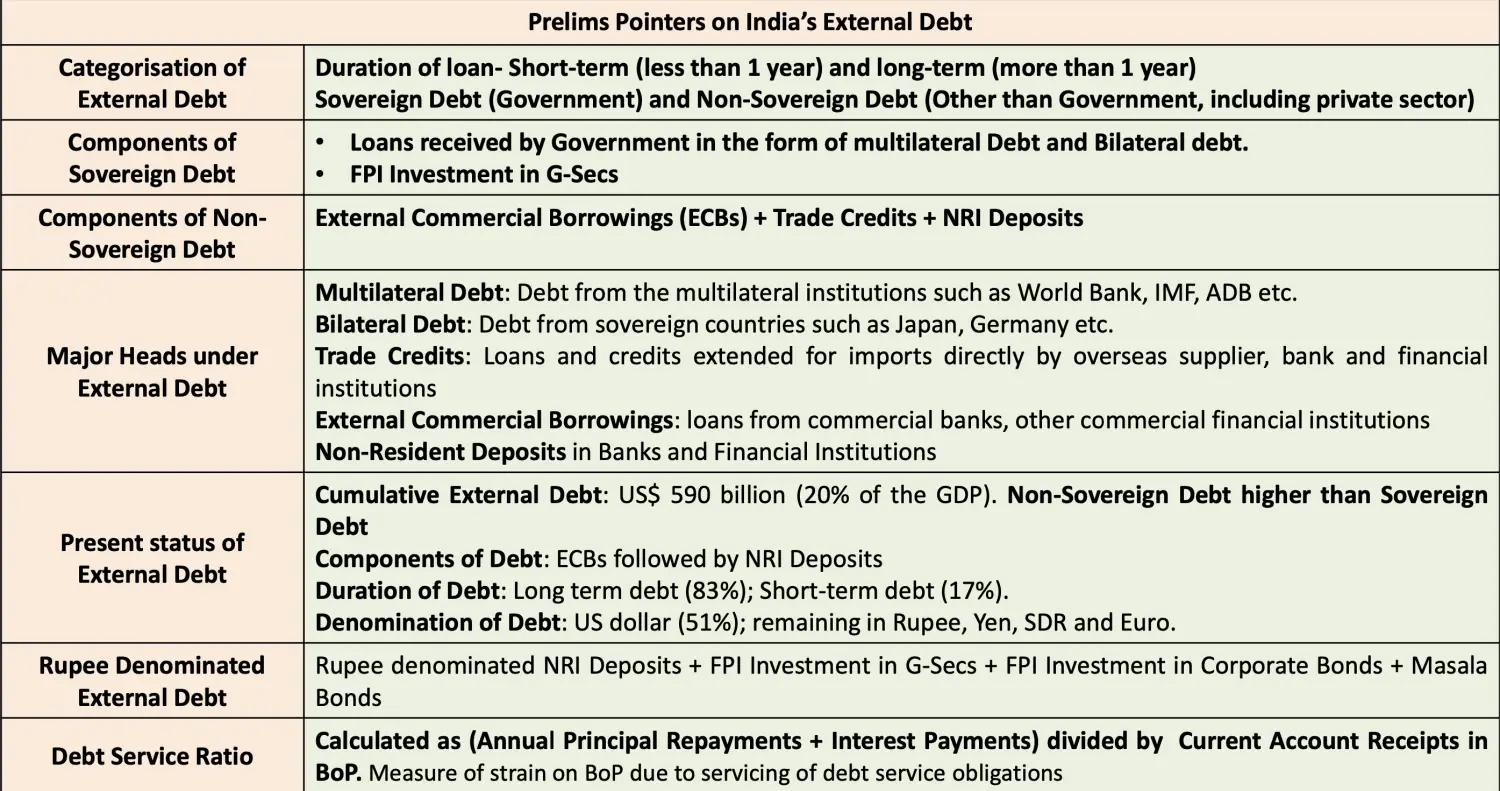
Debt Service Ratio
What is a Current A/C of a Country
The current account balance of payments is a record of a country's international transactions with the rest of the world. The current account includes all the transactions (other than those in financial items) that involve economic values and occur between resident and non-resident entities.
Servicing of Debt Includes
- Repayment of Interest
- Repayment of Principal Amount
Debt Service Ratio - Money Spent of Servicing External Debt / Current A/C Receipts ( Money from Exports Received in India)
if DSR is 8% → 8% of my receipts of current account should be paid as interest
DSR should be Less
DSR in case of Sri Lanka is very high
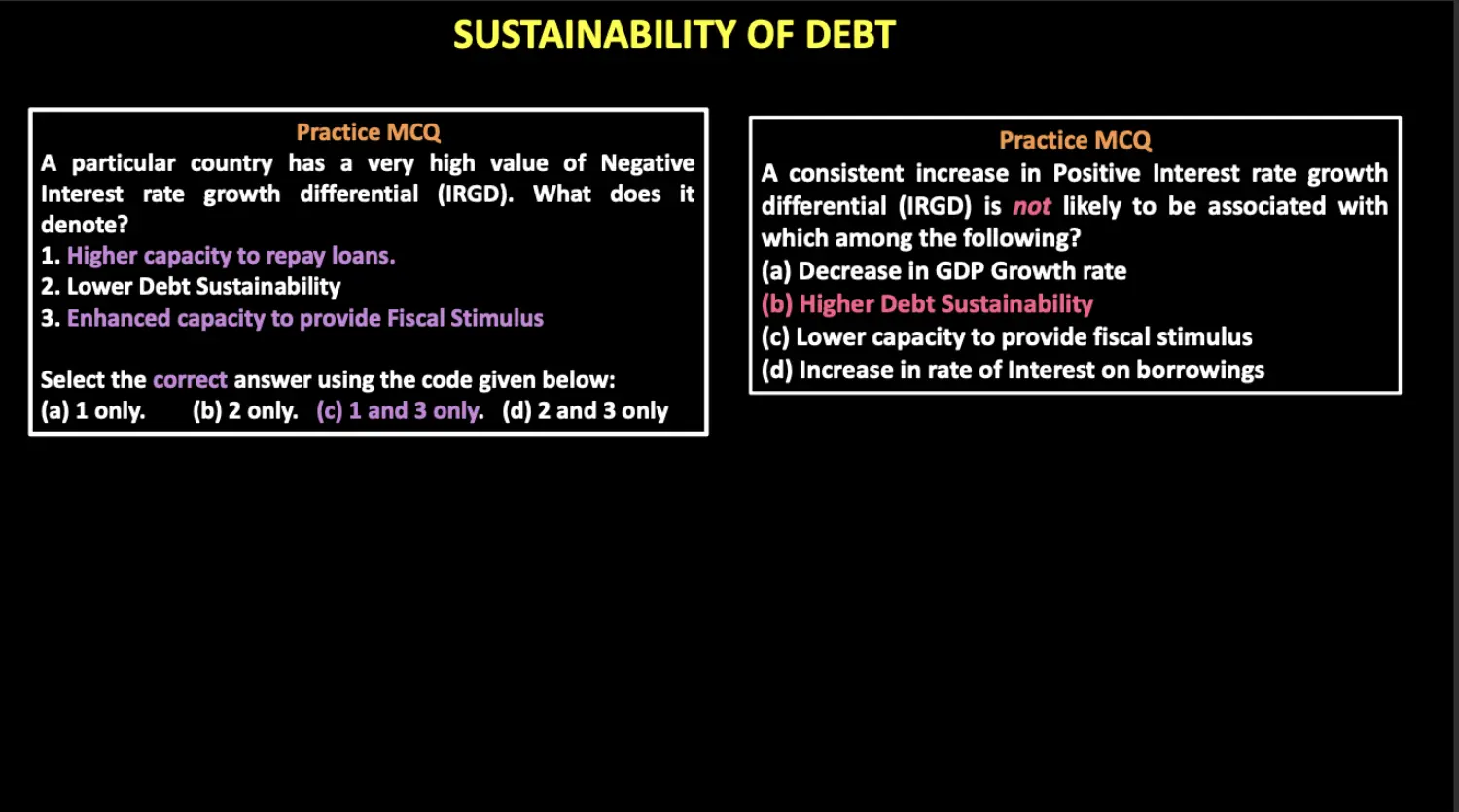
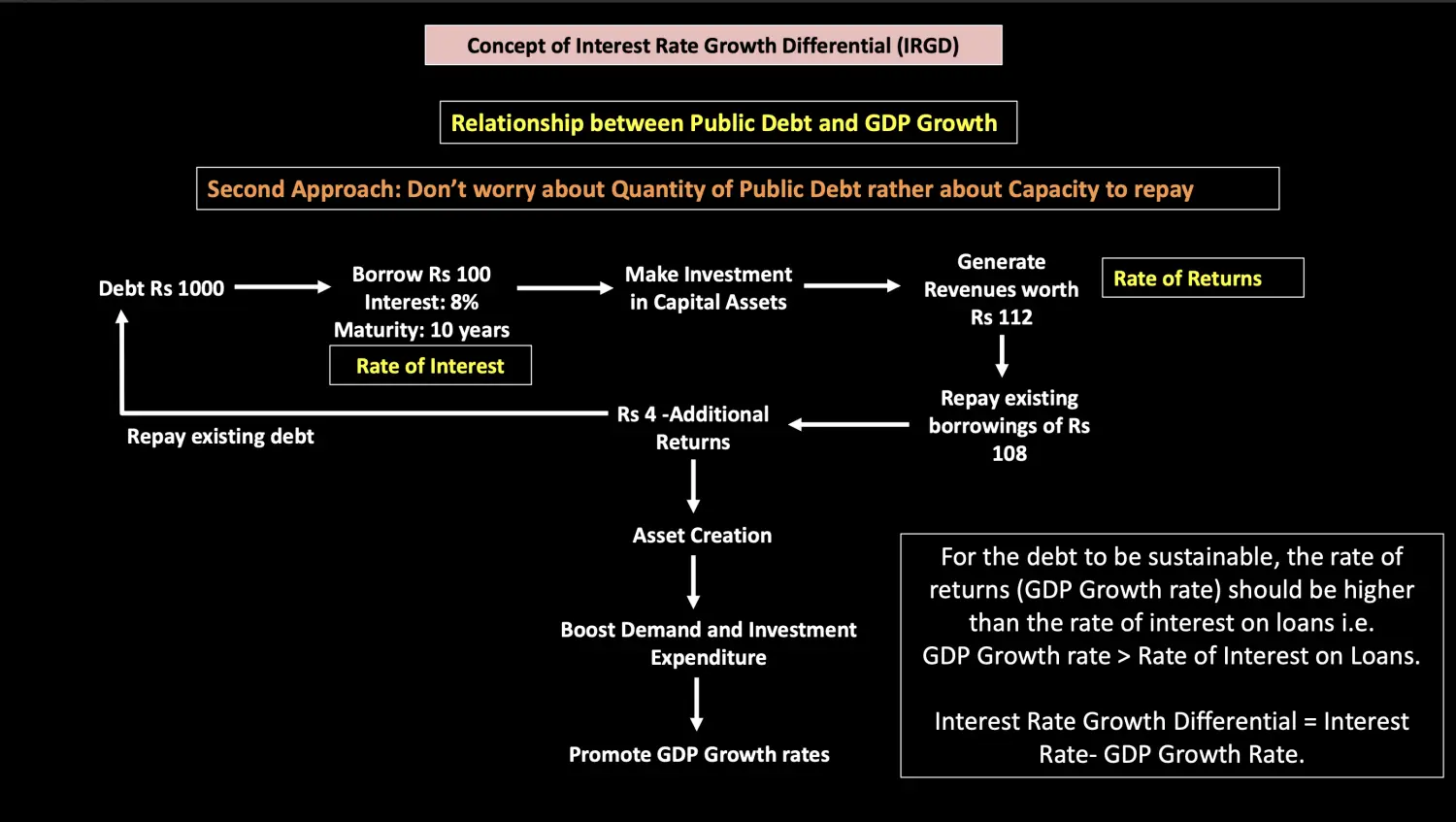
Concept of Interest Rate Growth Differential (IRGD)
IRGD is used to understand the Repaying Capacity of a Country and its ability to Service Debt
👇Old 👇
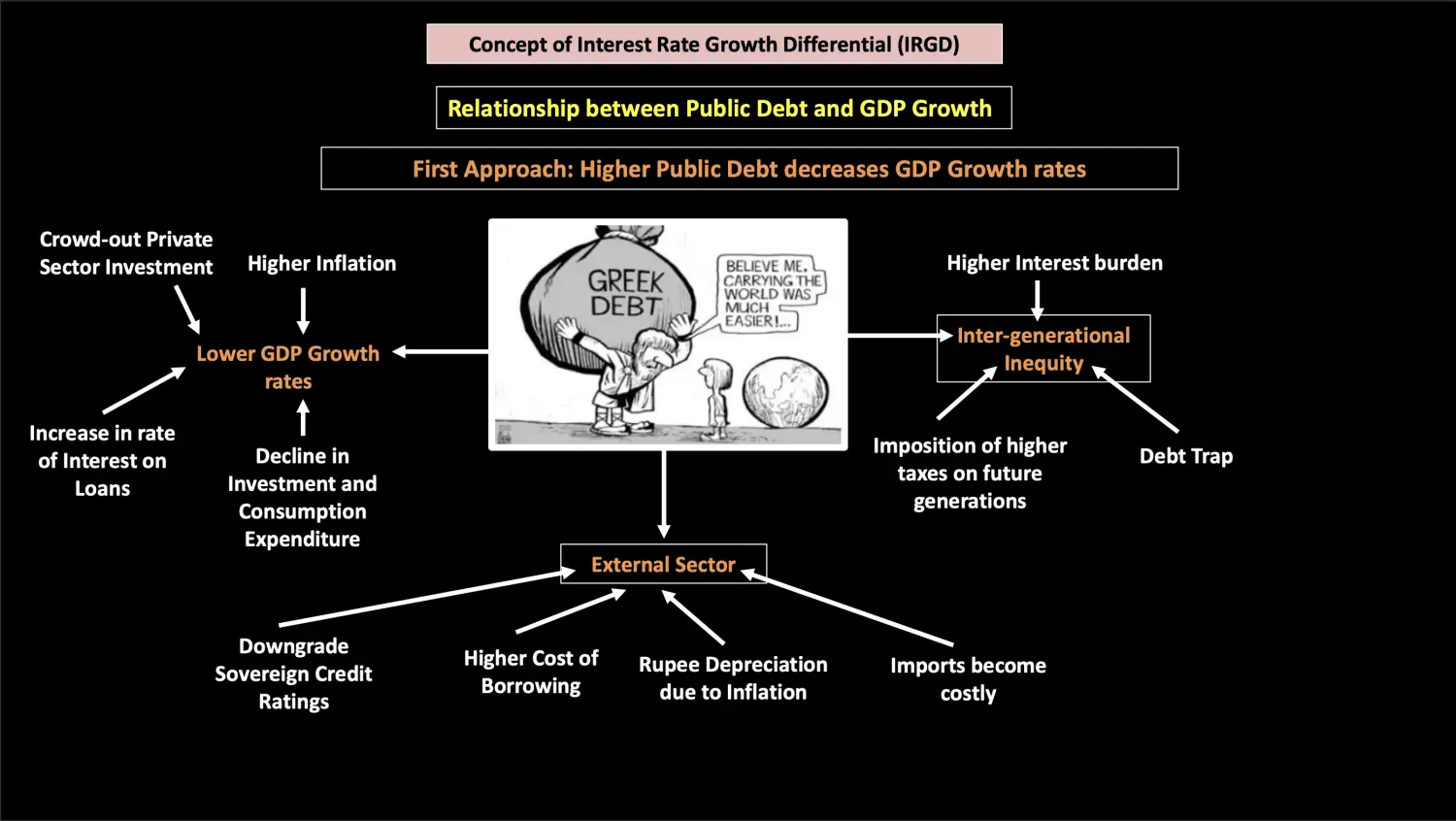
Here GDP Growth Rate should be Higher than the Interest Rate 👇👇👇
Here the IRGD is Interest Rate - GDP Growth Rate. Hence it should be Negative. Higher the Negative Value of IRGD
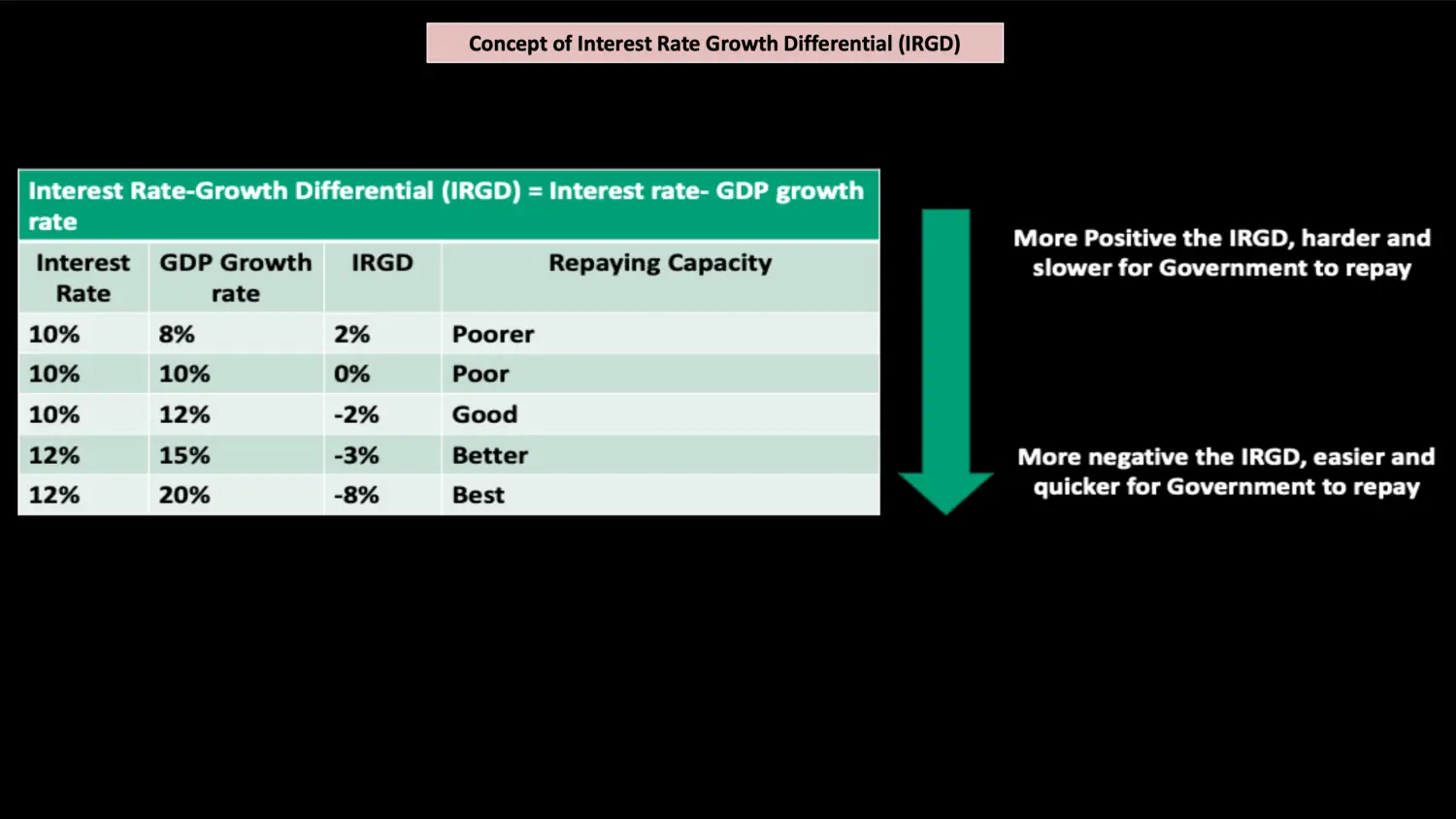
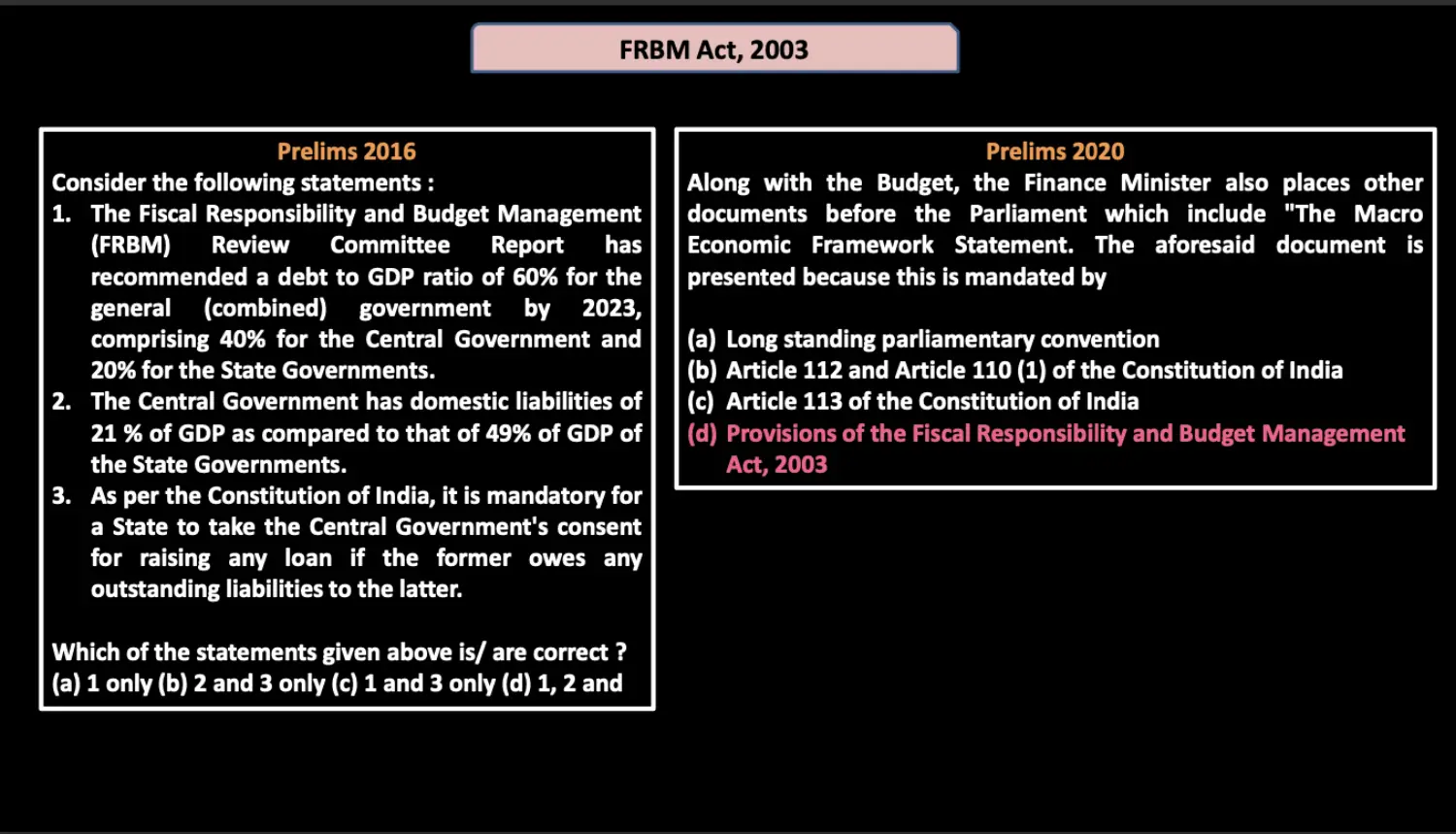
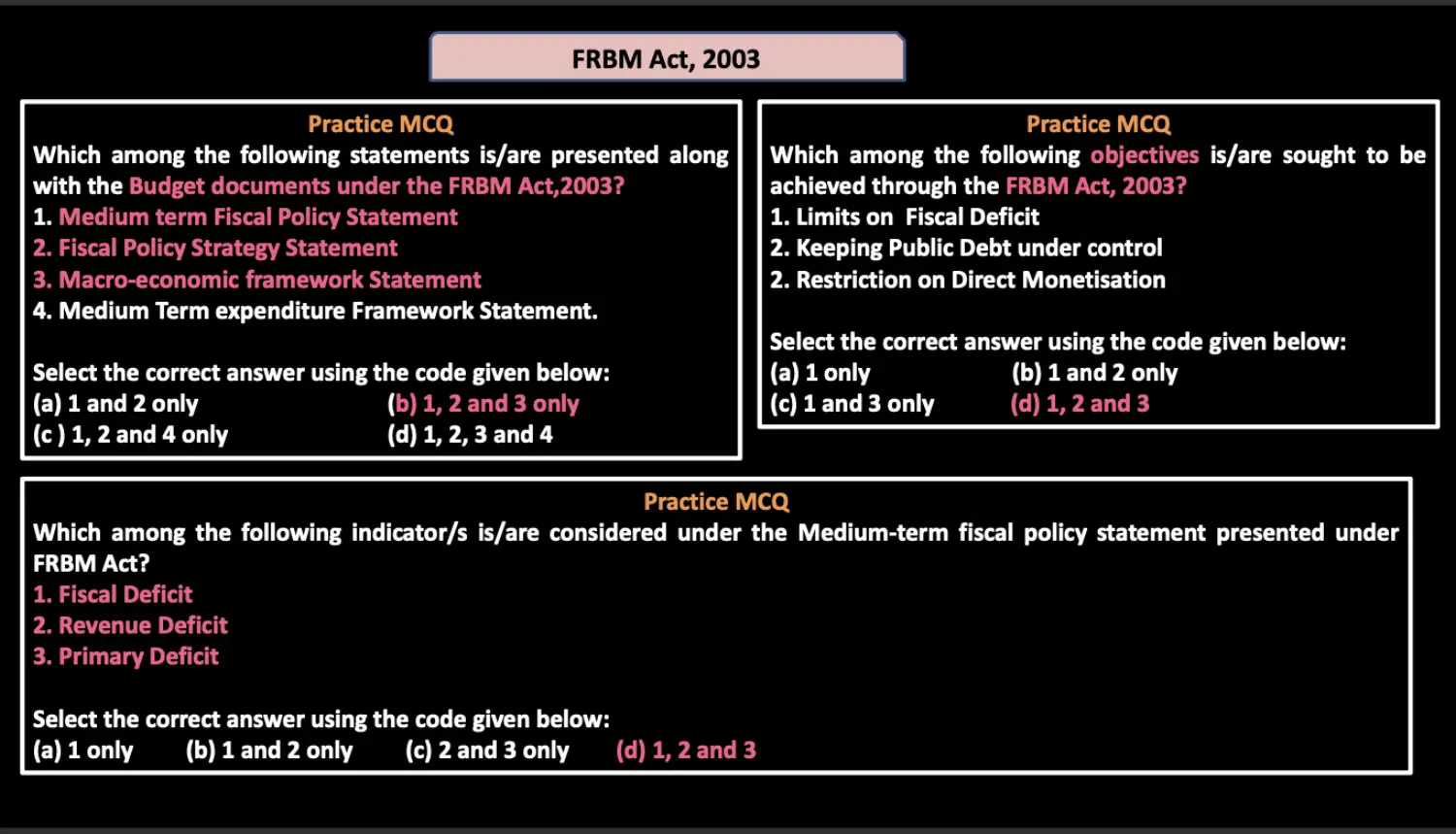
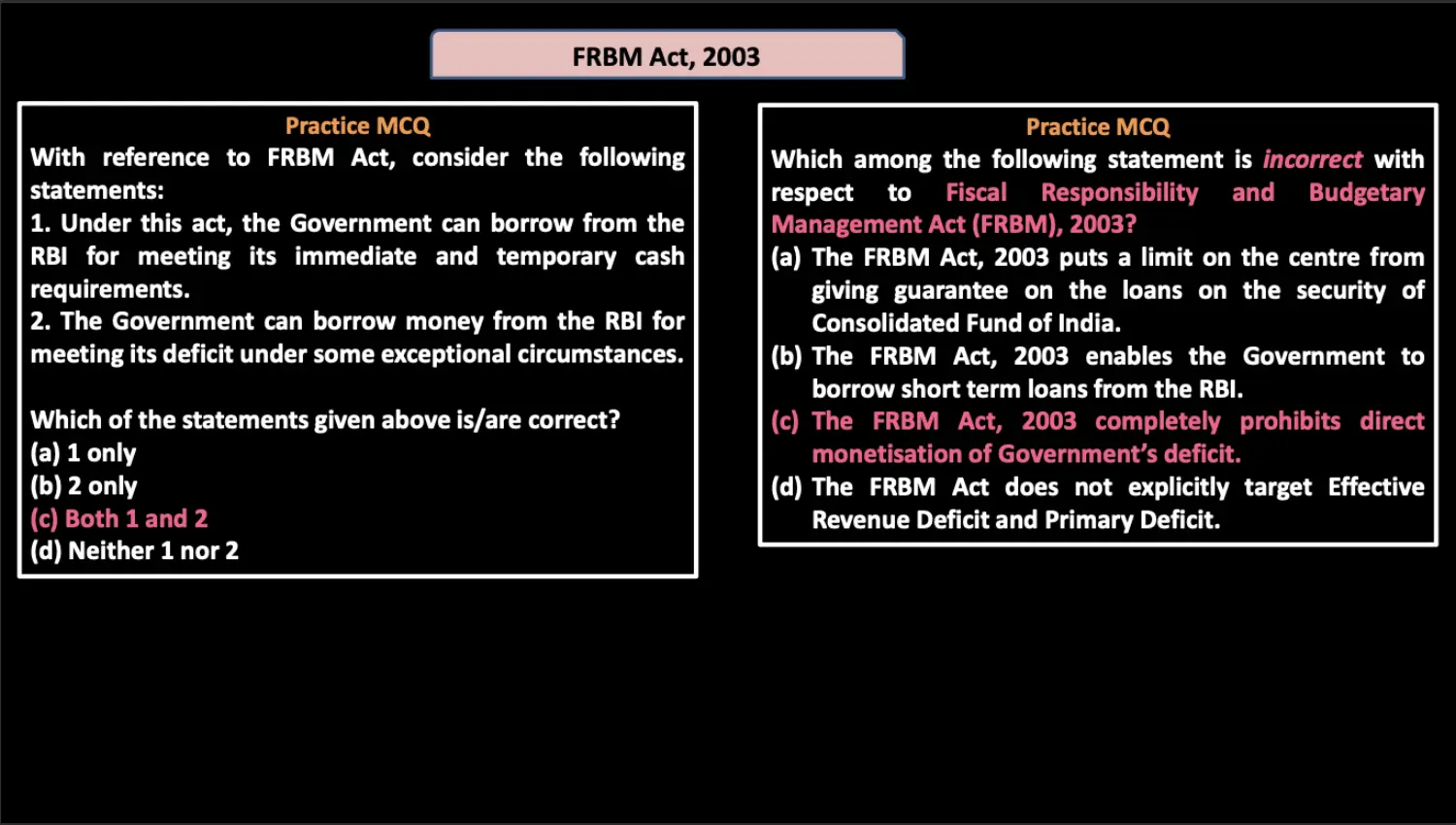
FRBM Act, 2003
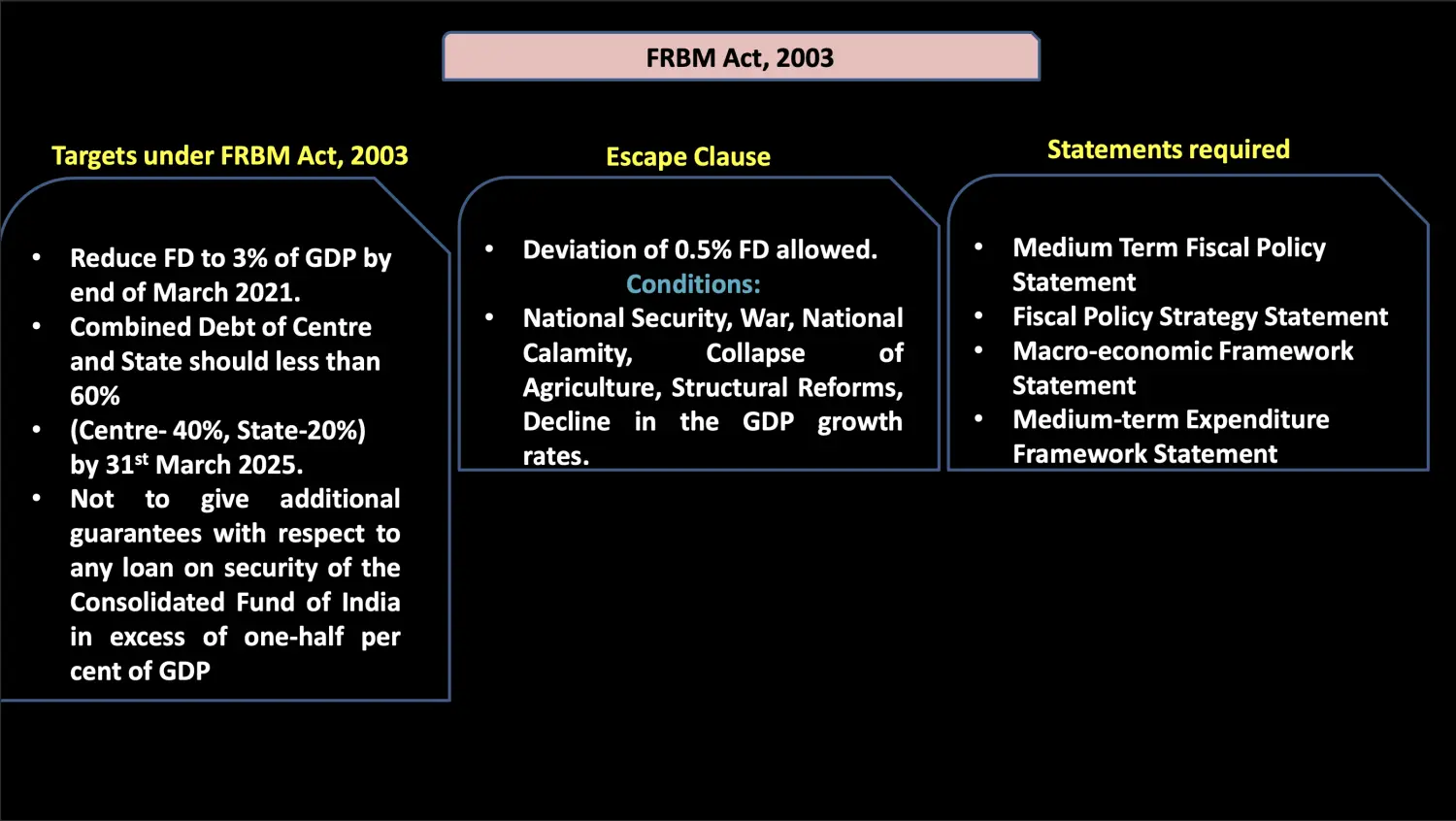
Off Budget Financing should not be More than 0.5% of Nominal GDP
Presented in Budget
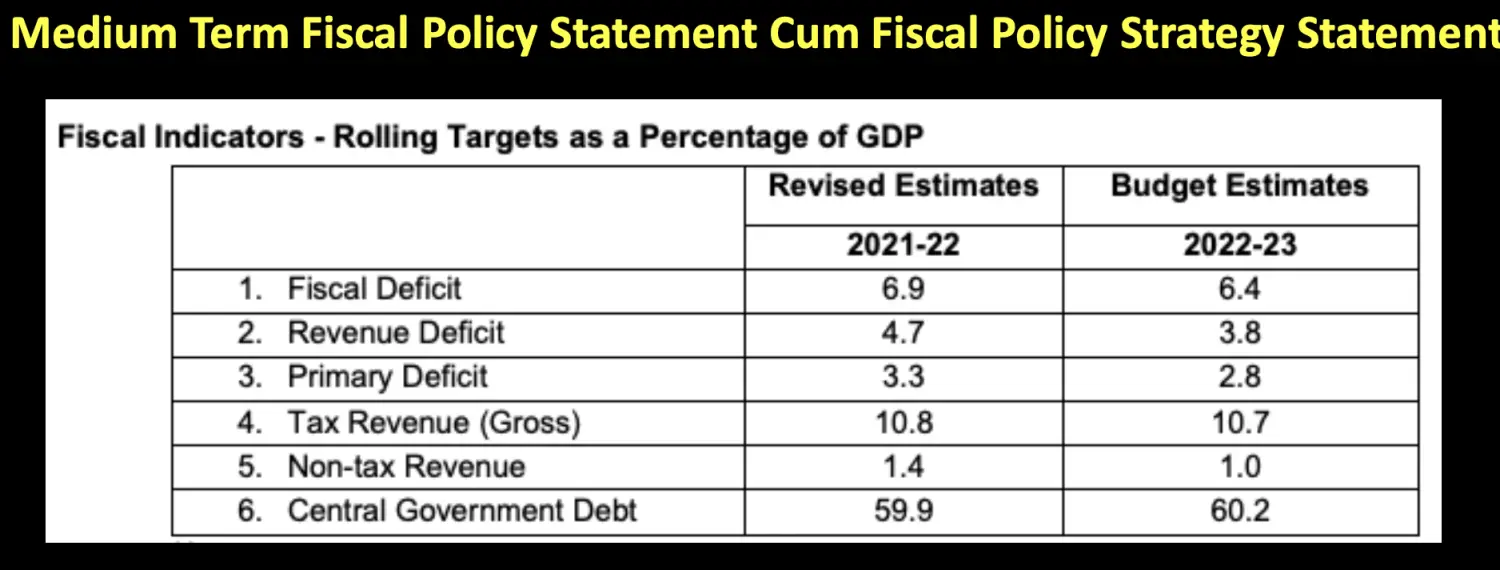
Budget - Medium Term Fiscal Policy Statement & Fiscal Policy Strategy Statement (HOW)
Macro Economic Framework Statement
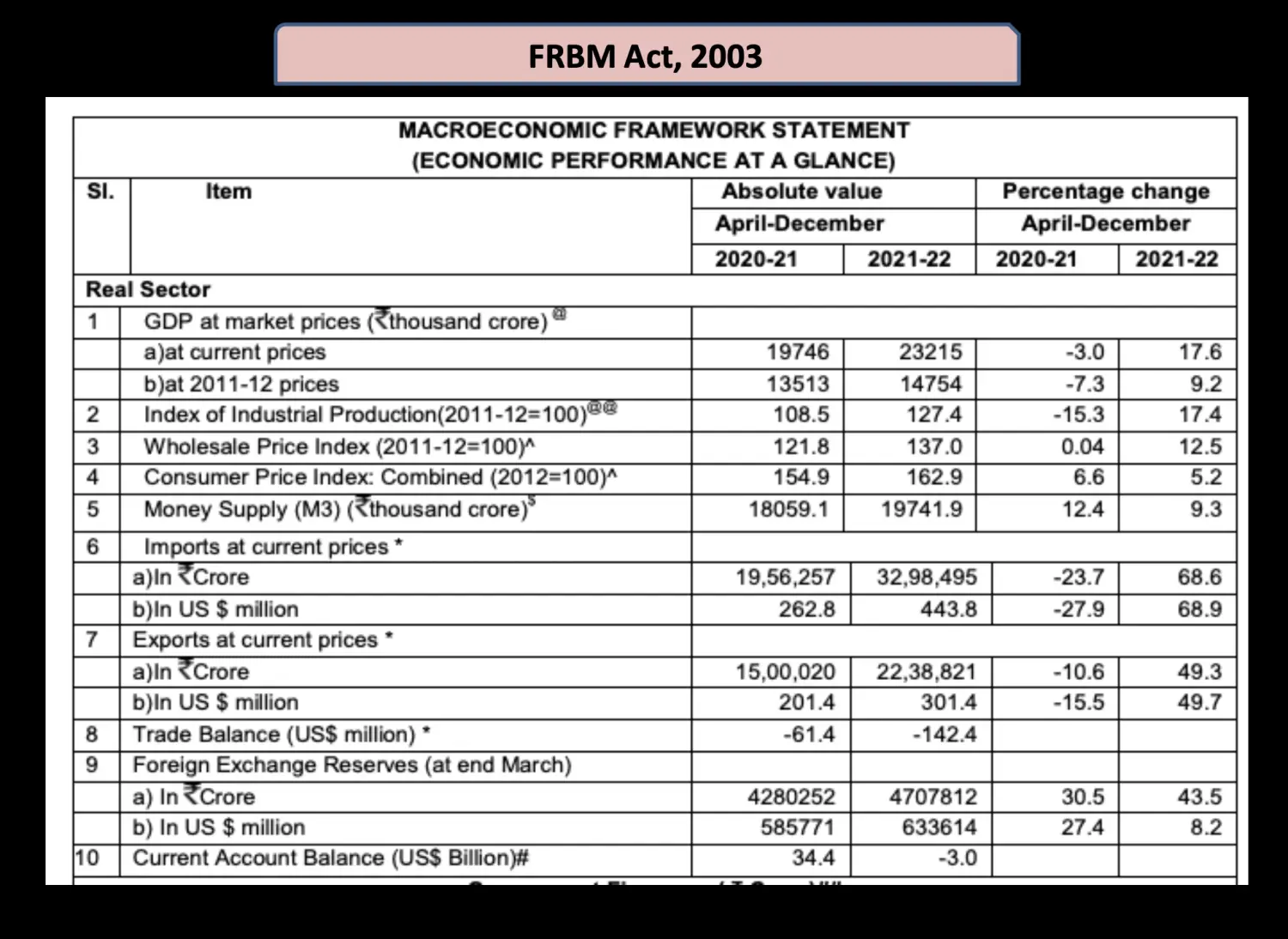
GDP Nominal: Fiscal Deficit Expression
GDP Real: GDP Growth Rate
Present in First Session after Budget
- Medium Term Expenditure Framework Statement
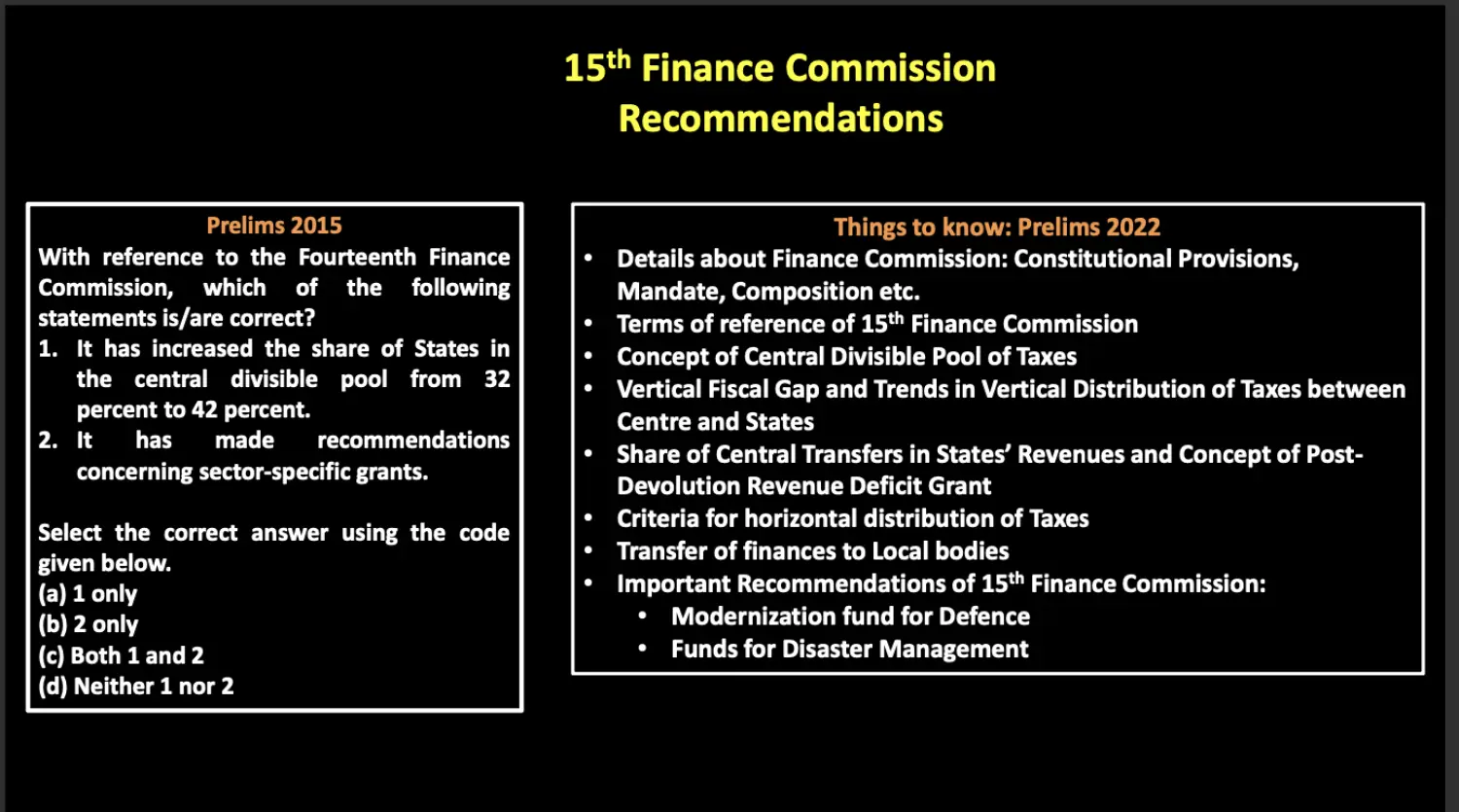
Finance Commission Recommendation
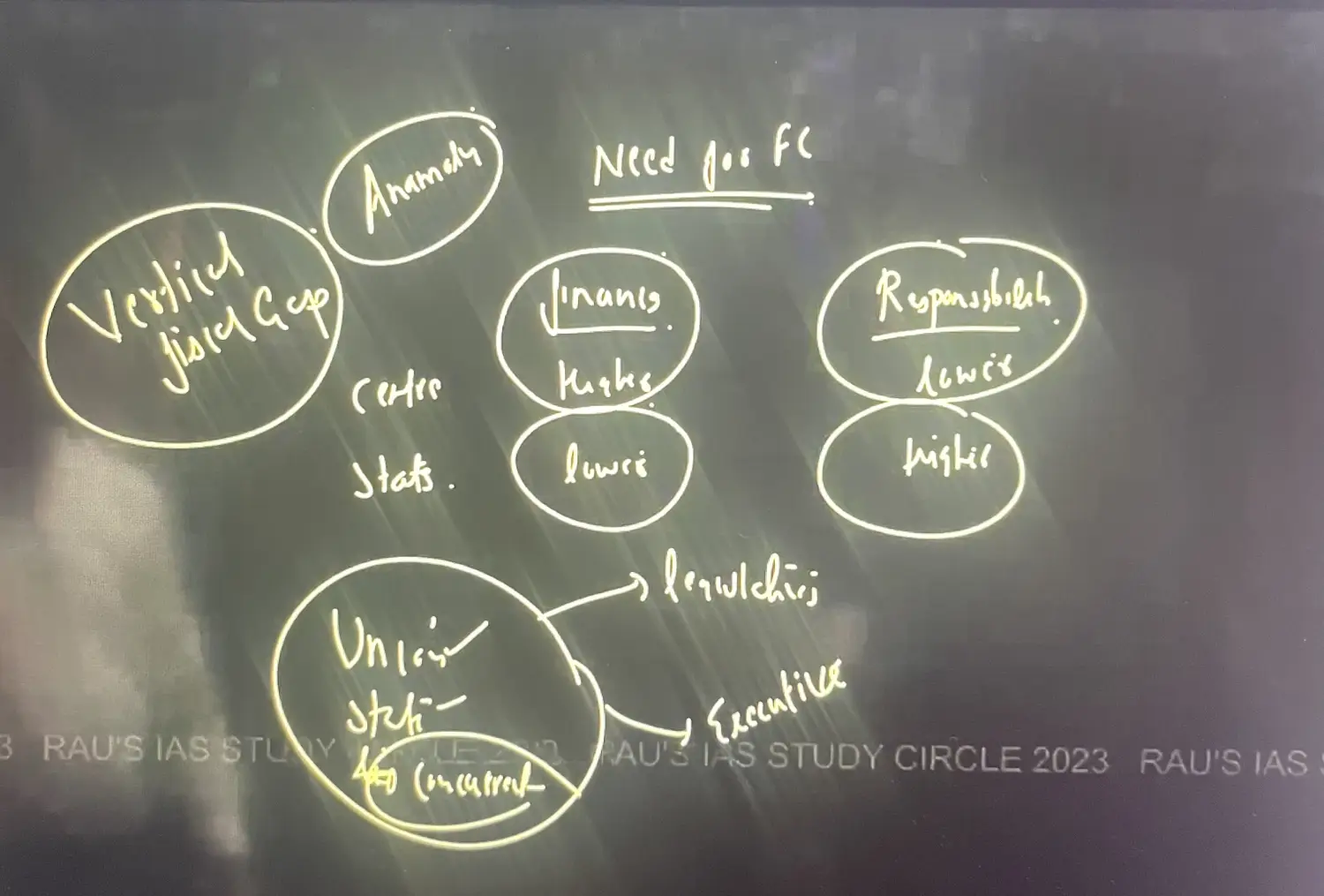
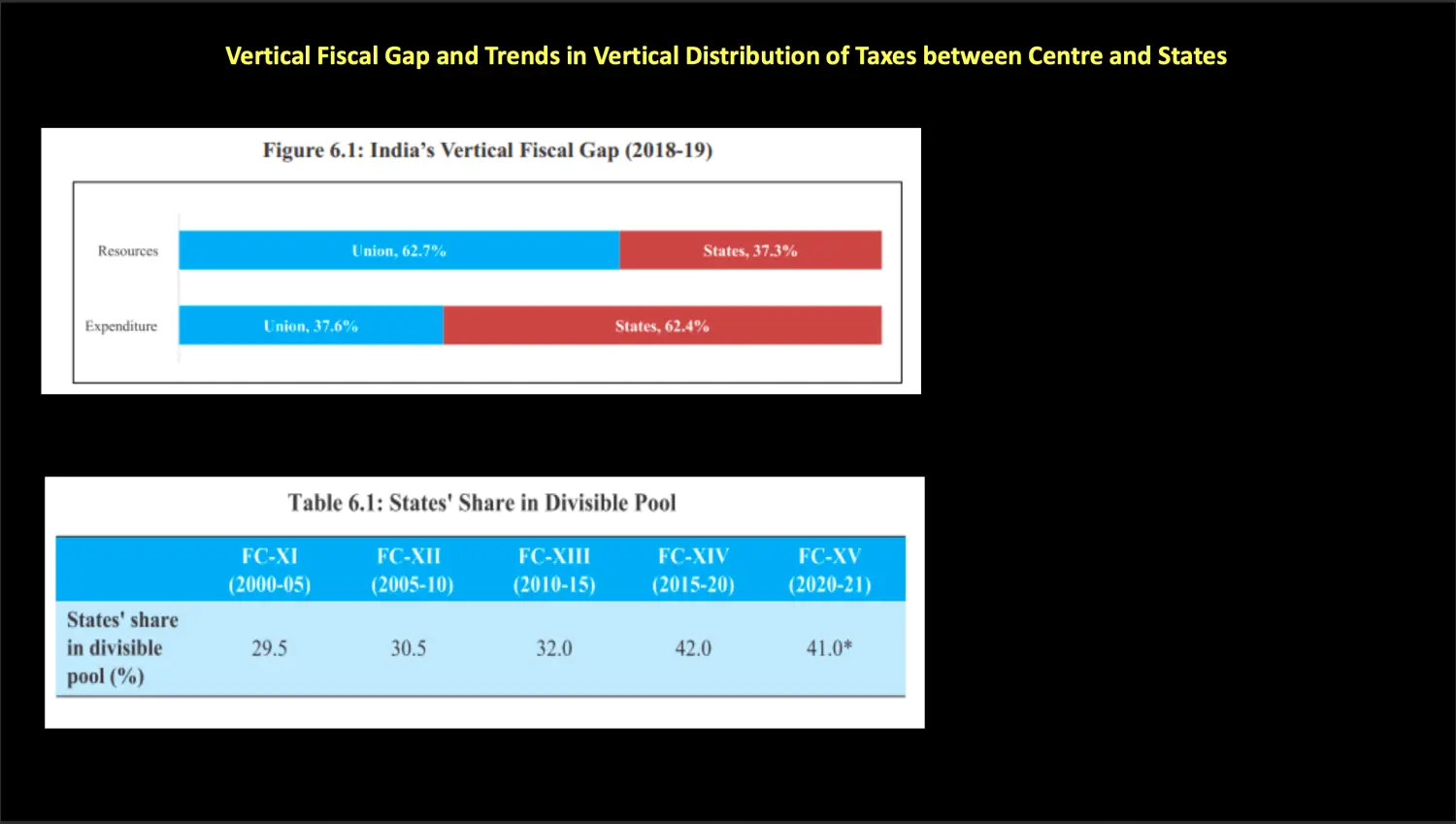
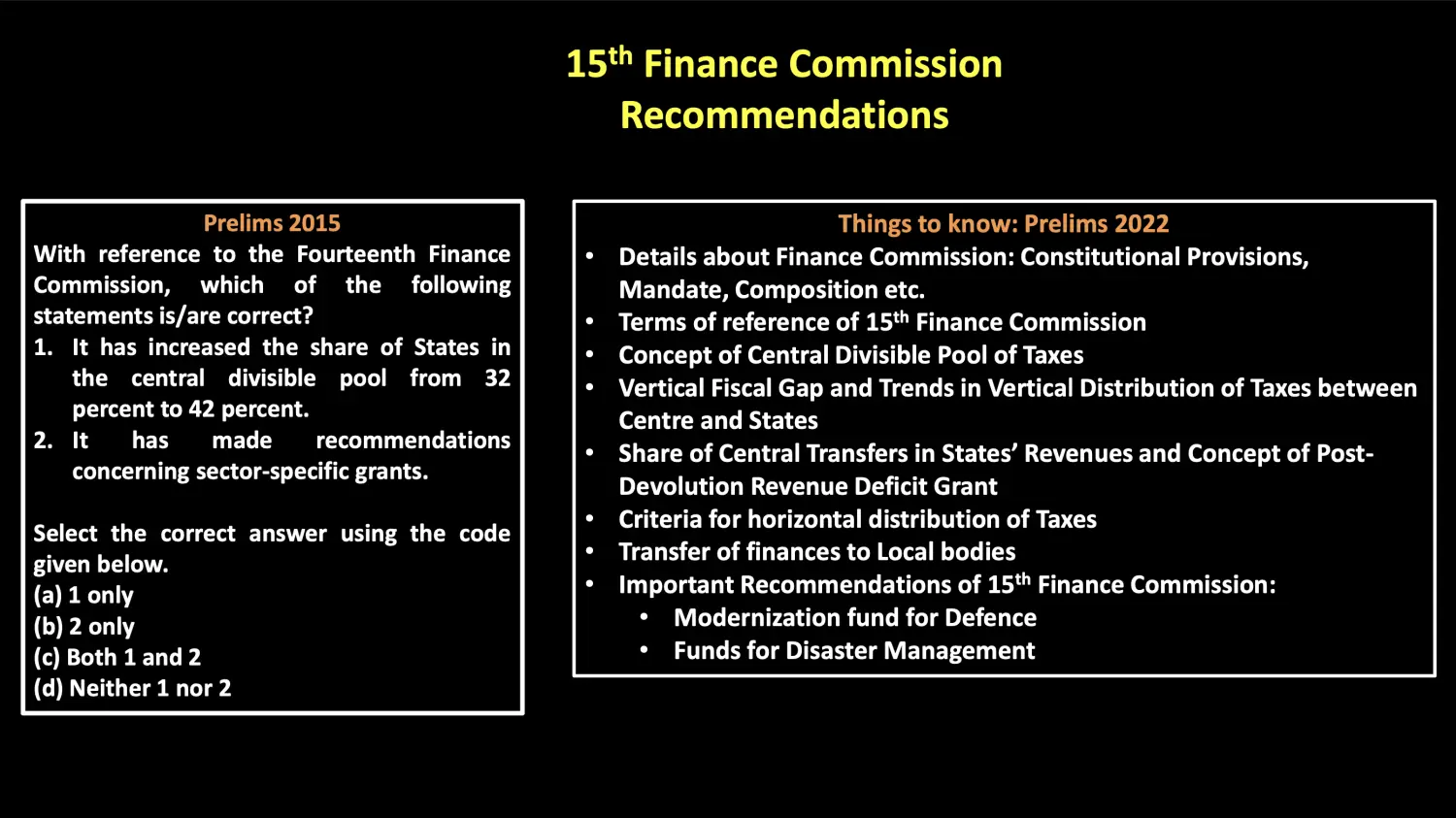
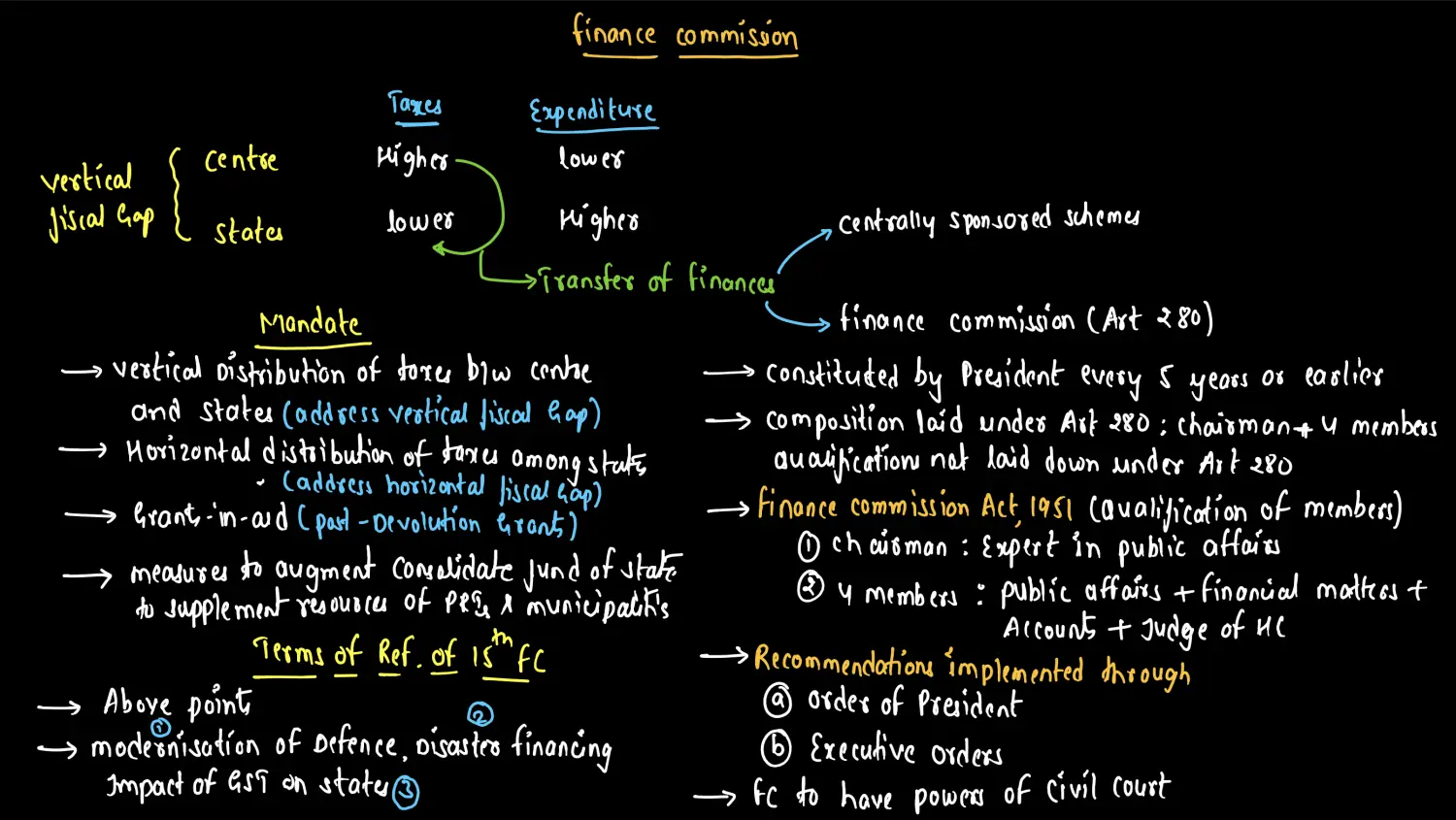
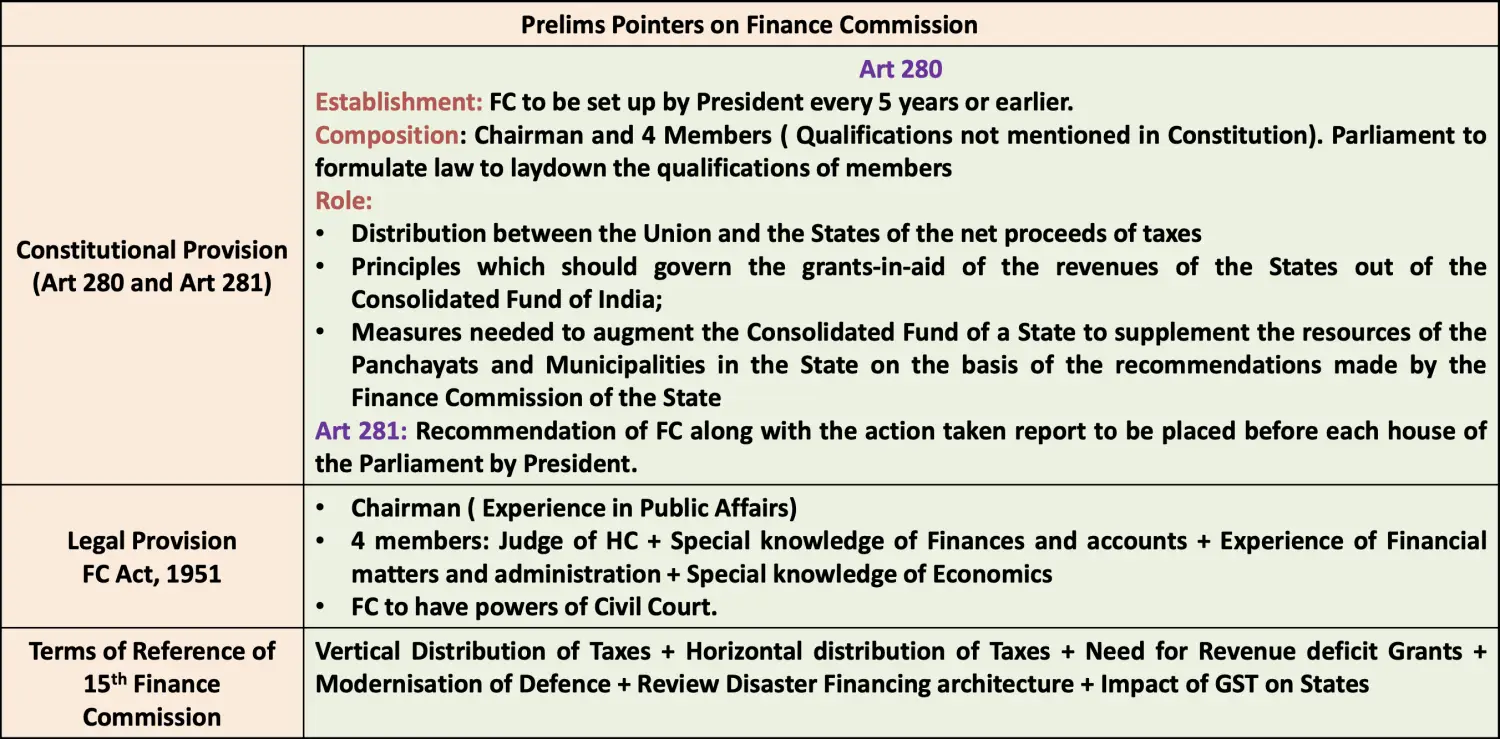
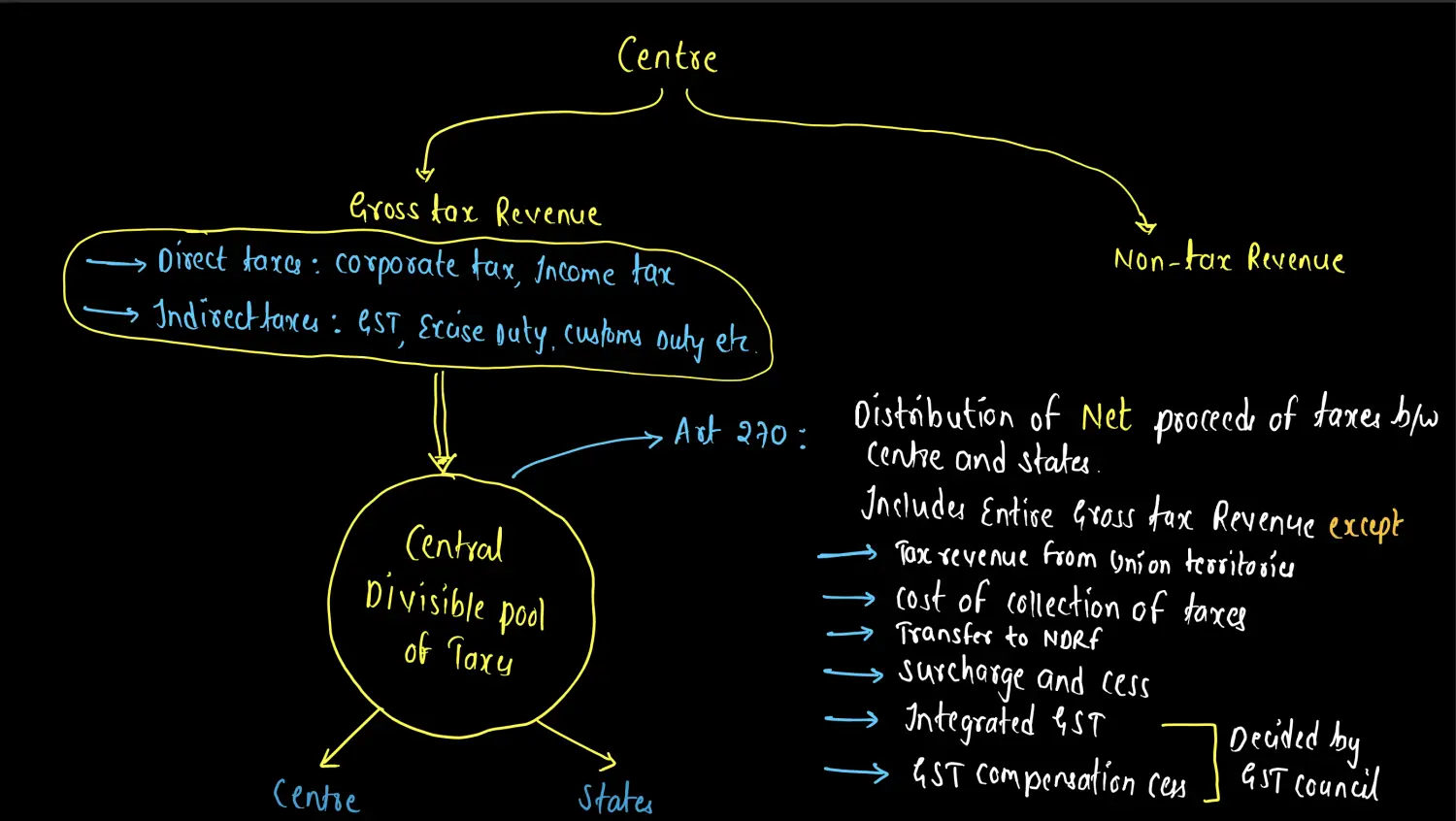
CGST is a Part of Central Divisible Pool
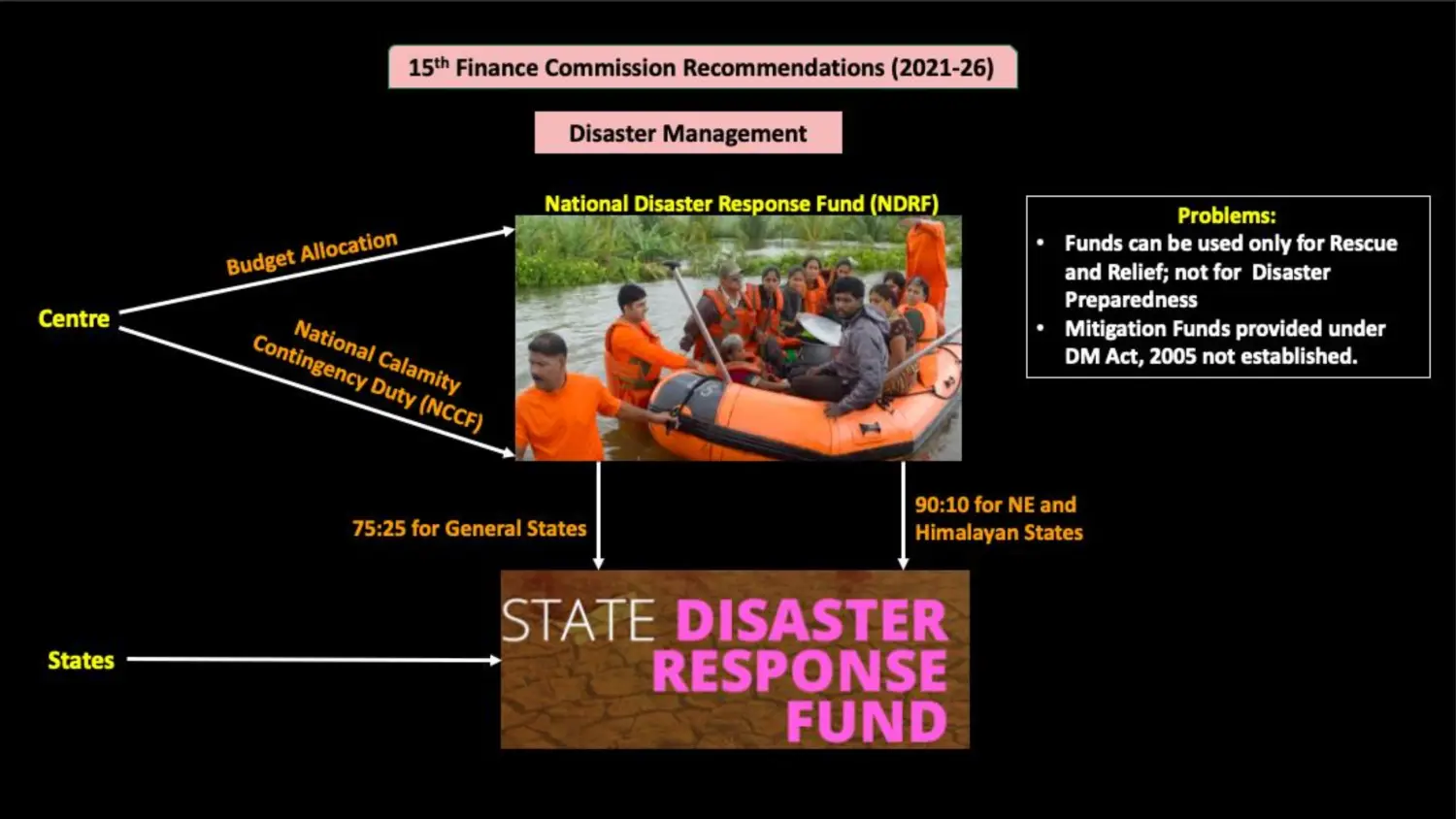
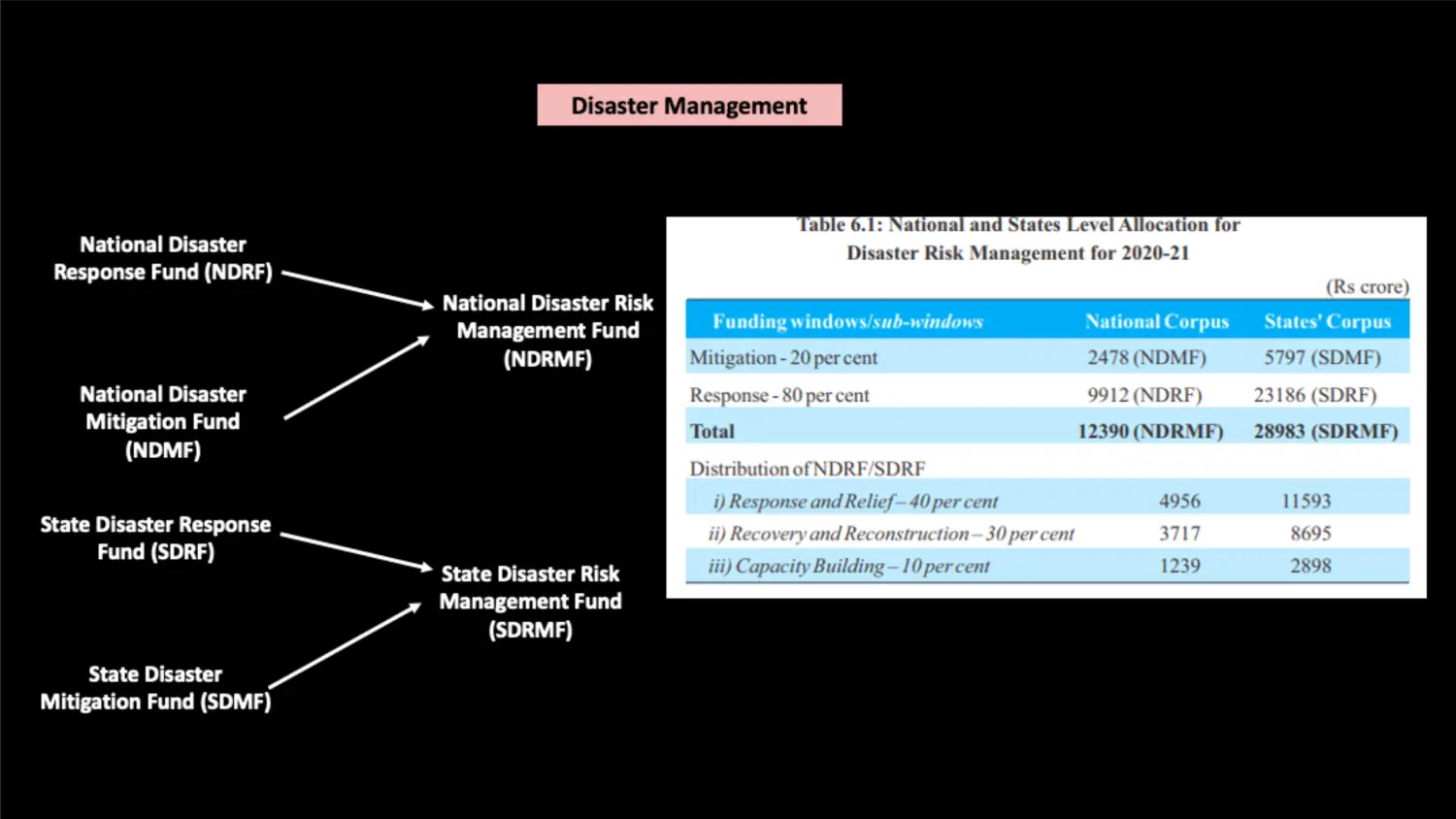
Disaster Management under the 15th Finance Commission
NCCF - Is on Tobacco and National Contingency Duty
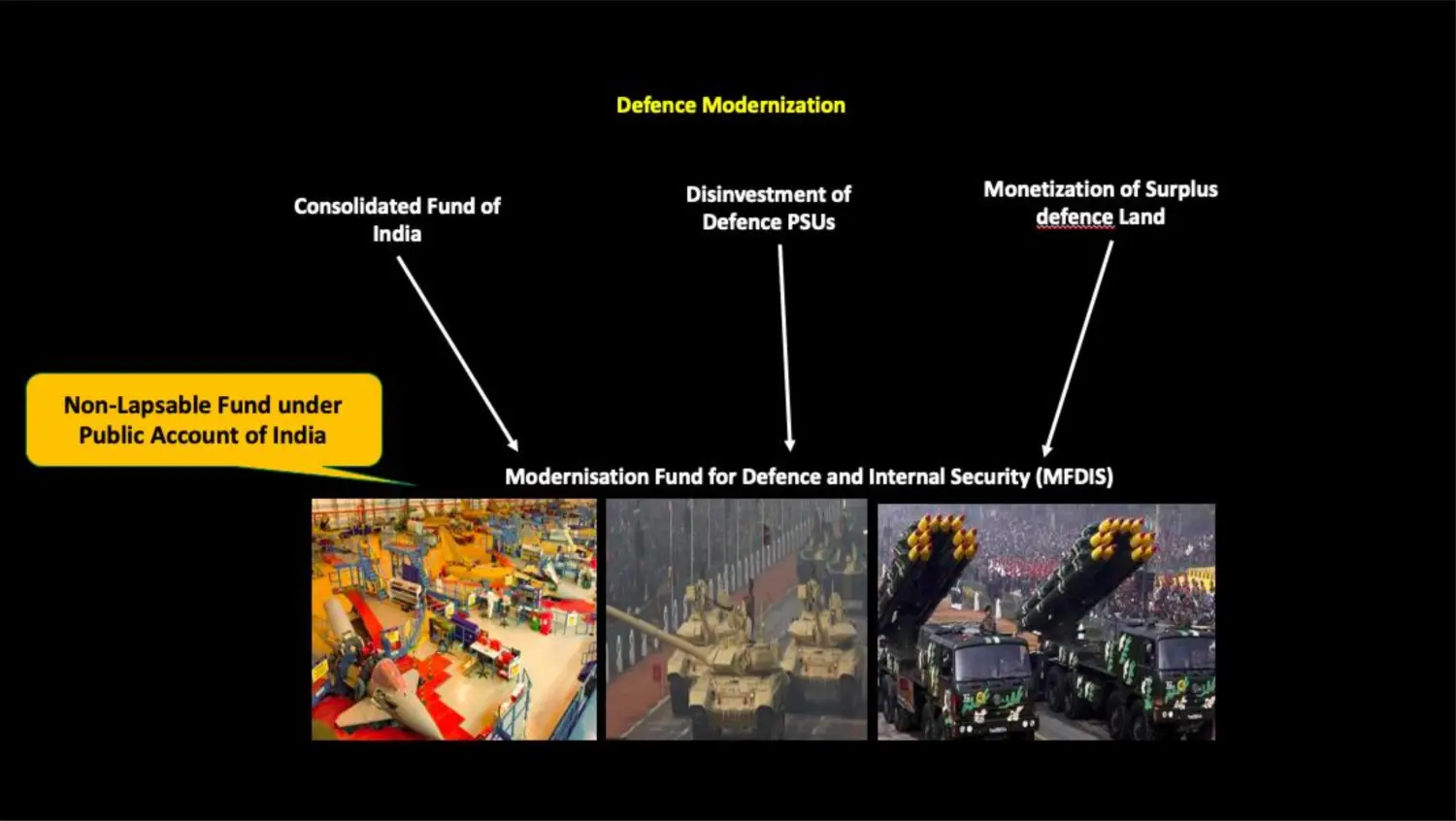
Defence Modernisation under the 15th Finance Commission
So Far this Fund has been NOT been Set Up. Can be used in Internal Security Recommendations.
Sequence
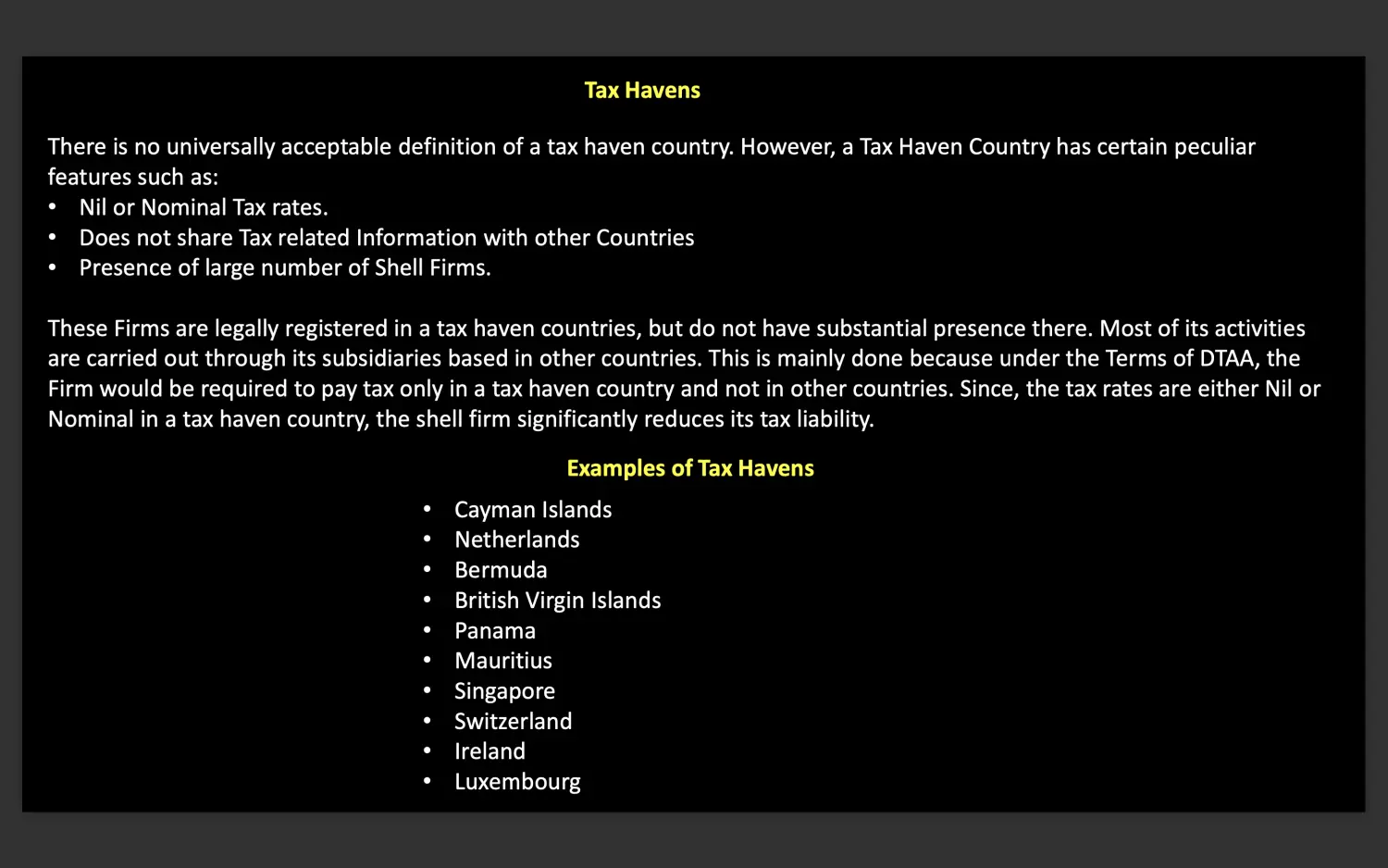
What is a Shell Company?
an inactive company used as a vehicle for various financial manoeuvres or kept dormant for future use in some other capacity
Tax Havens
OECD: Organisation for Economic Cooperation & Development
Concept of DTAA
DTAA - Double Taxation Avoidance Agreement
India has Signed DTAA with almost 80 Countries
Equalisation Levy will over ride DTAA
Will Apply to Individuals as well as Companies
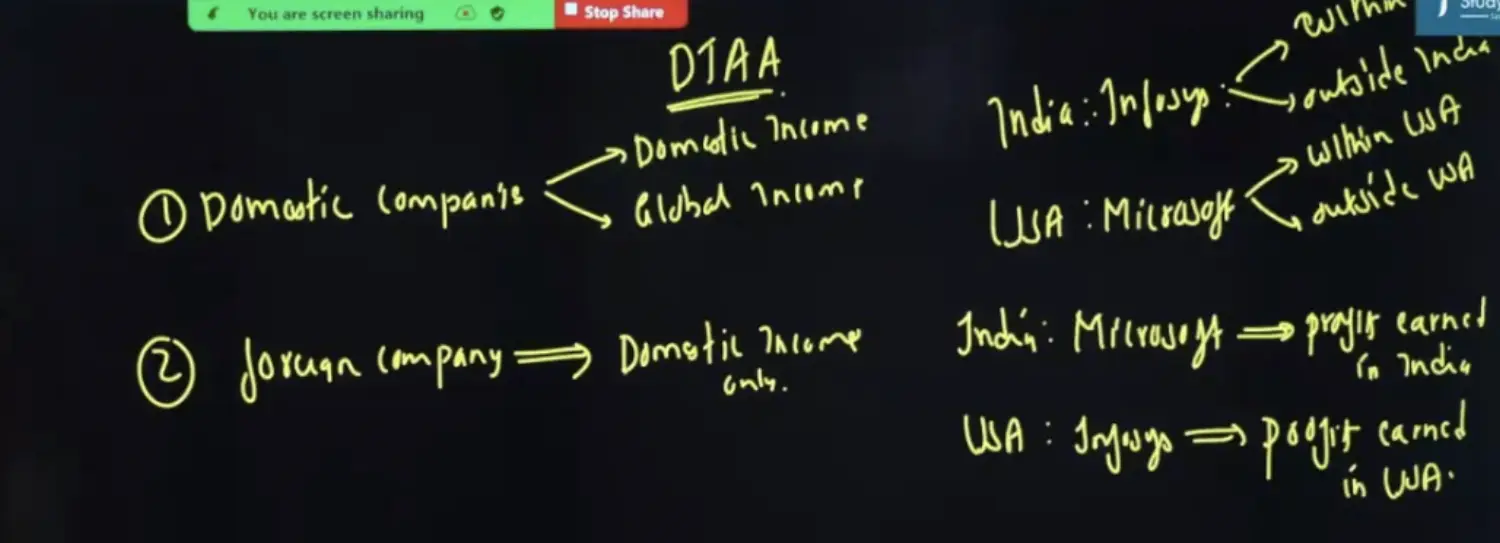
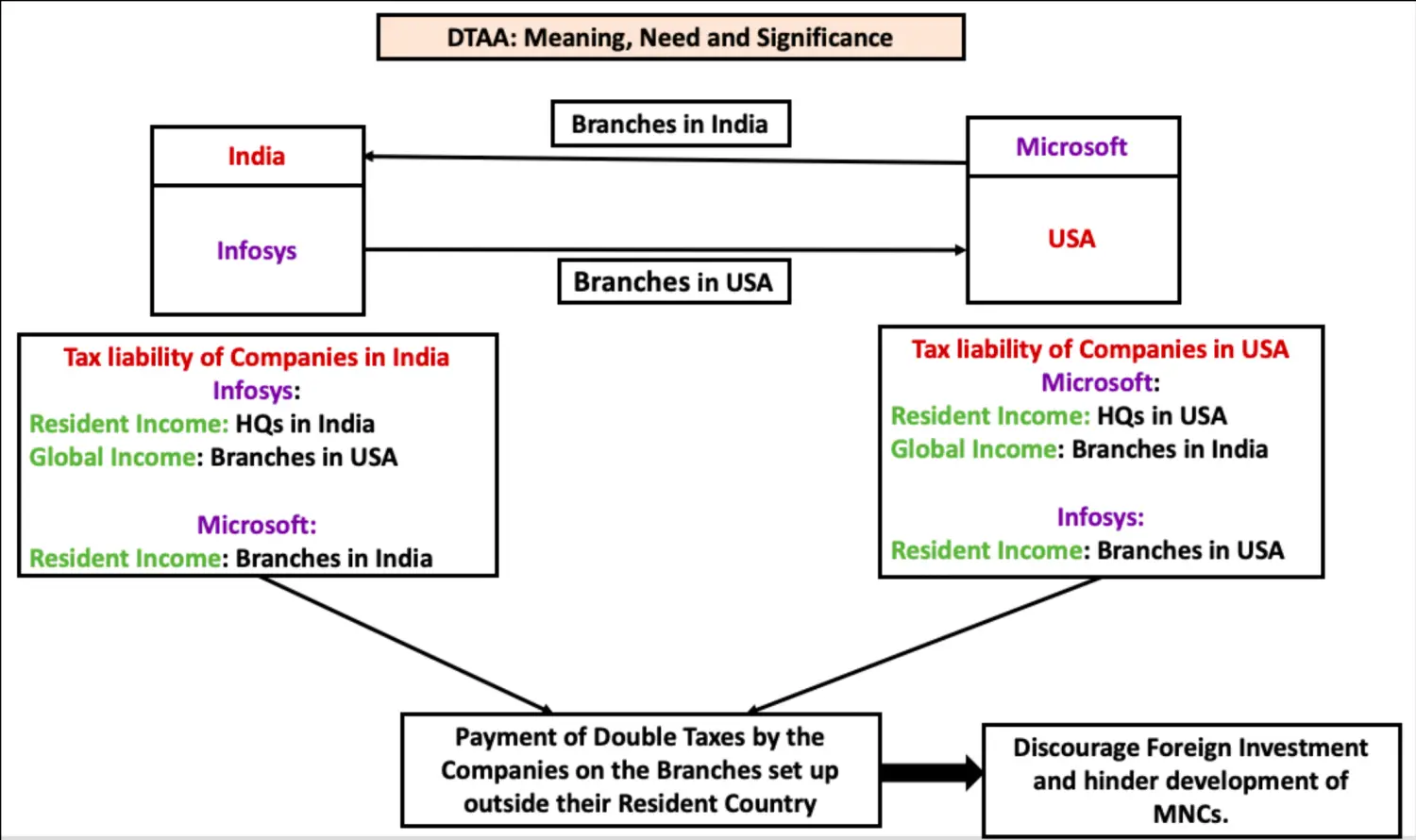
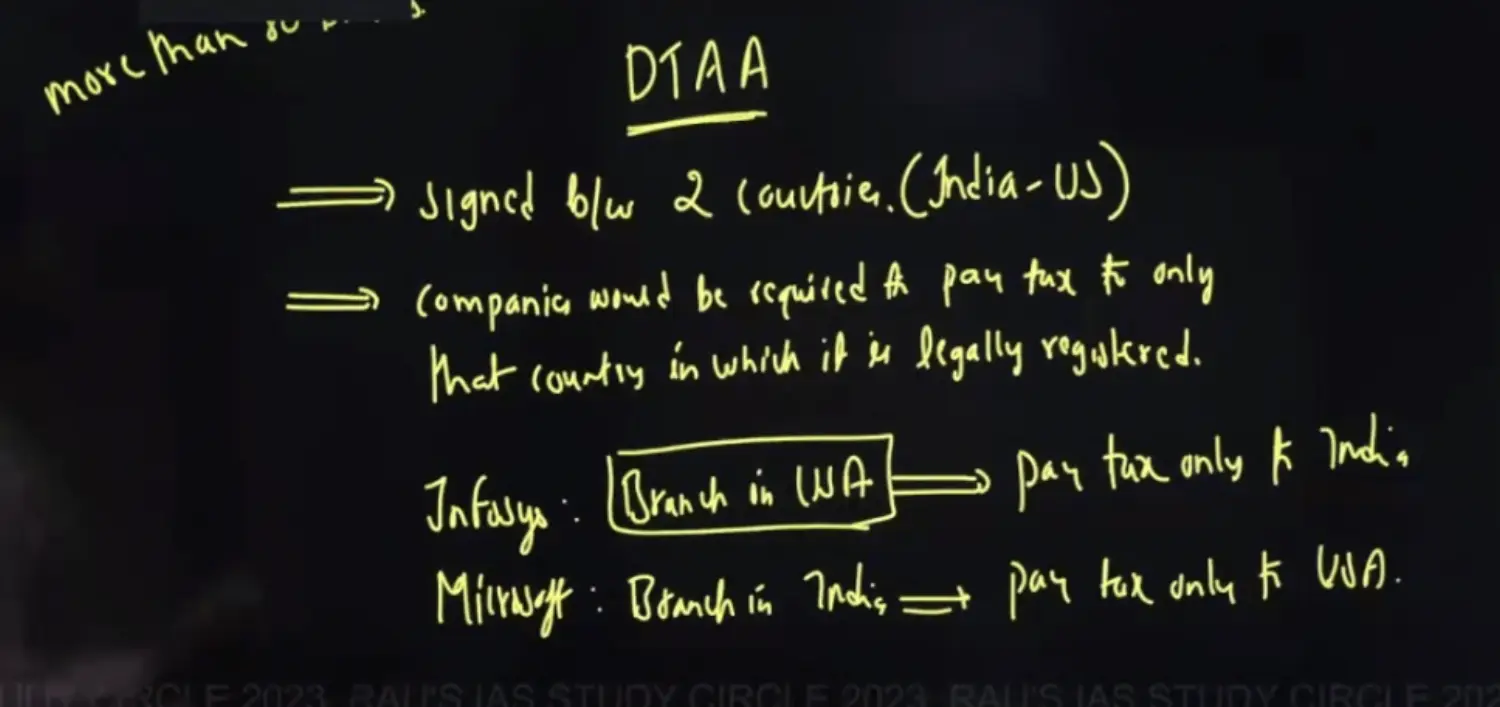
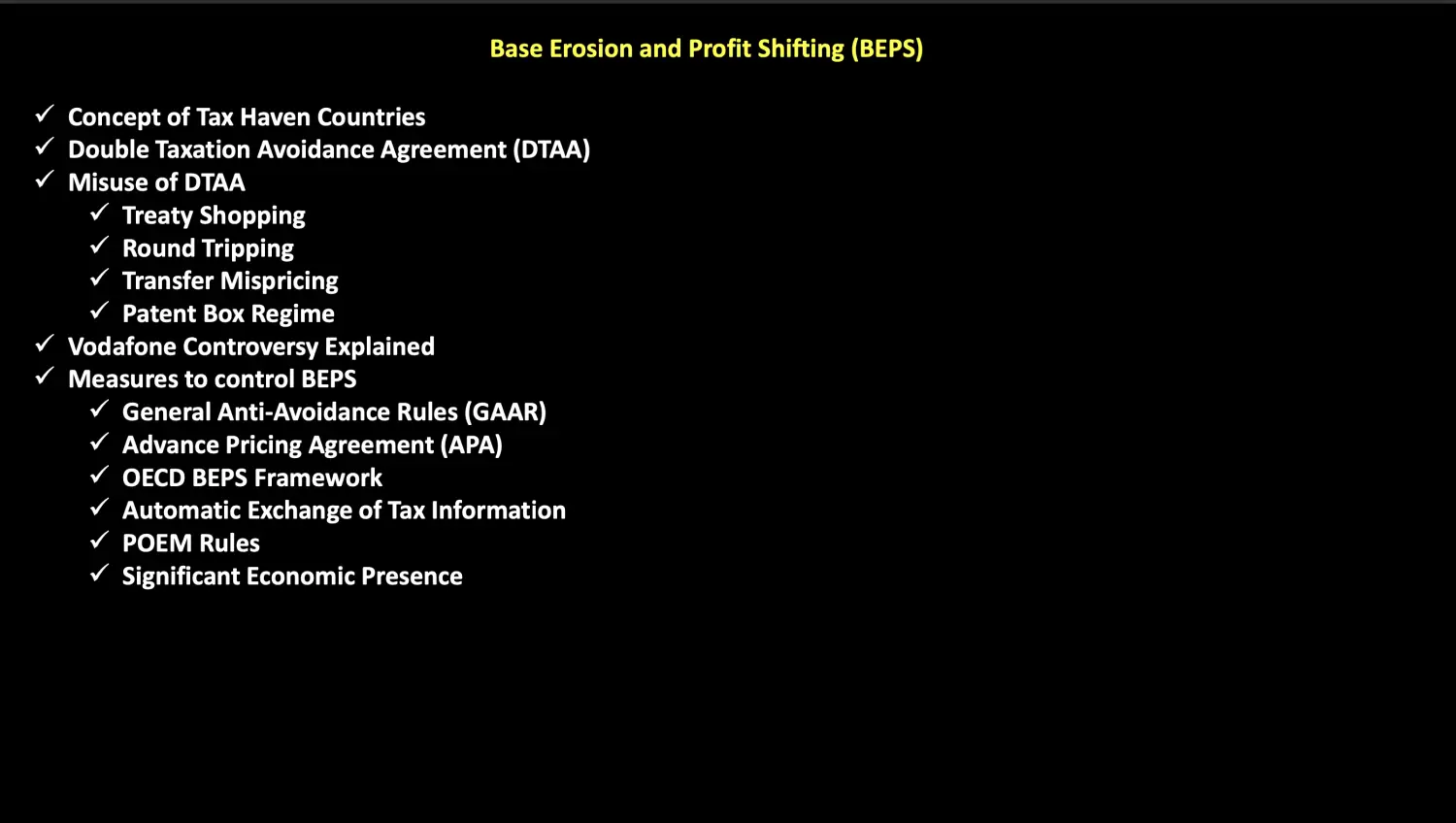
Misuse of DTAA (Base Method, Treaty Shipping, Round Tripping)
India has also Signed DTAA with Tax Haven Countries
Case 1 : DTAA with Tax Haven Countries → Leading to BEPS → Base Erosion and Profit Shifting
Companies Do BEPS by Means of DTAA with Tax Haven Countries
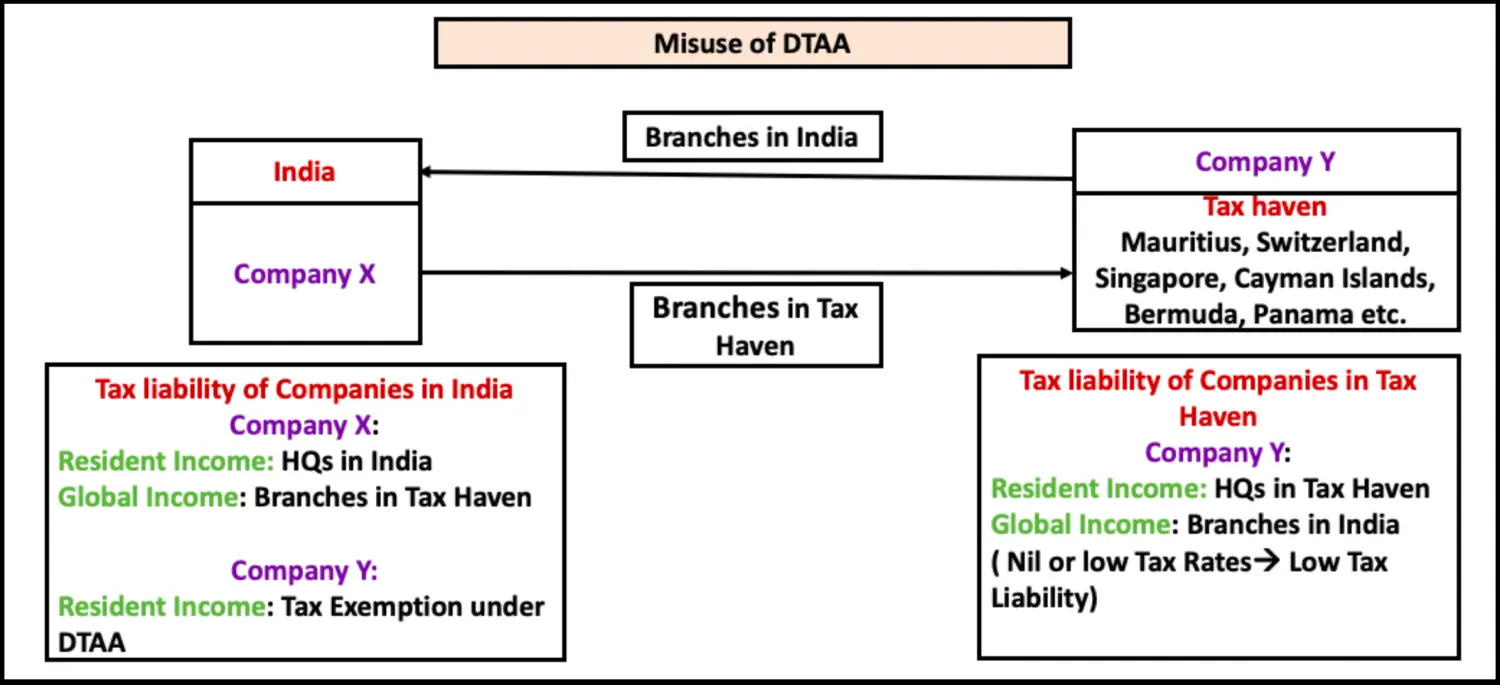
Case 2 : Treaty Shopping
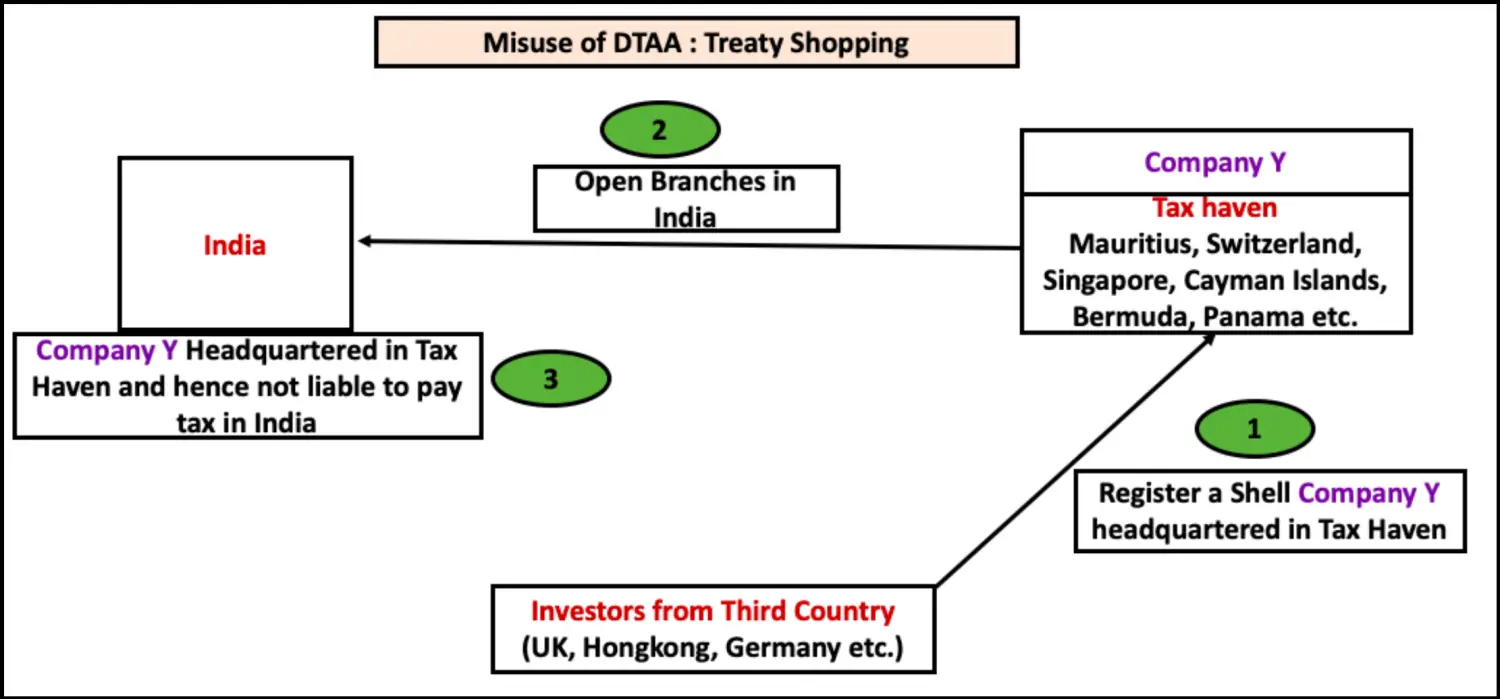
Case 3 : Round Tripping
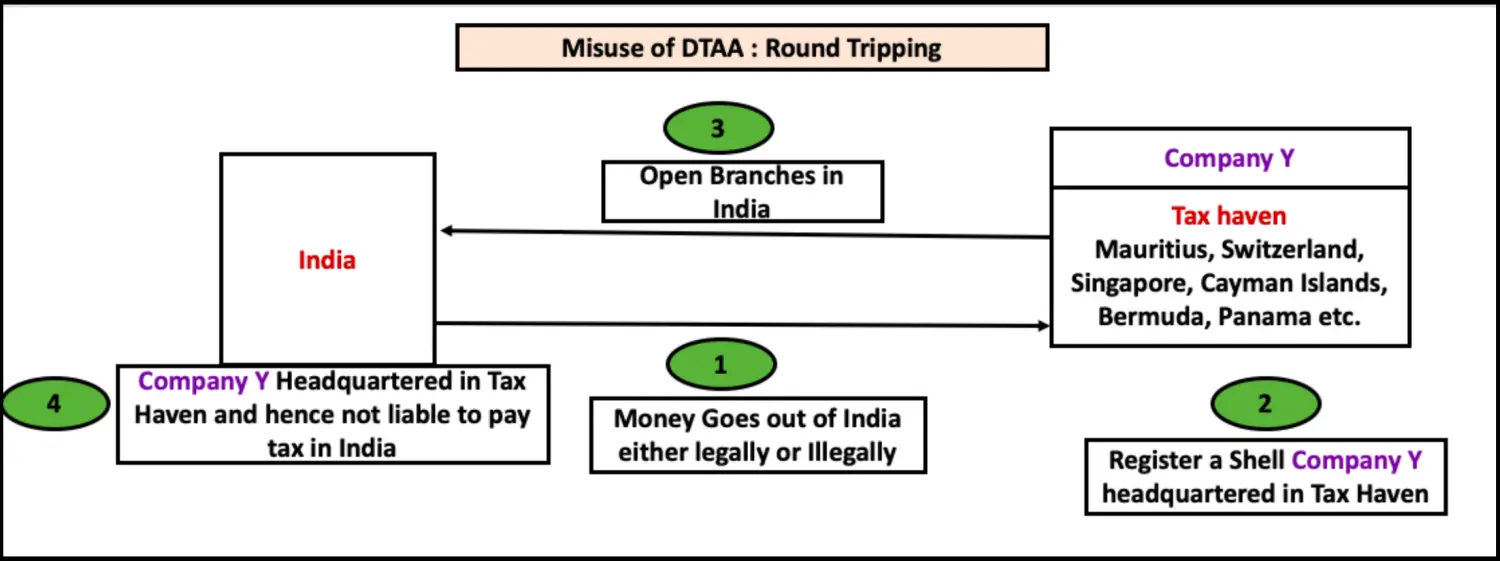
Why India has not Cancelled DTAA with Tax Havens
- Discourages FDI in India - Max Money coming in with
- Round Tripping will Stop. Hence Money Jo Jaa raha hai woh wapas toh aa raha hai
Advantages / Benefits of Tax Haven Countries
Common Features of Tax Havens Countries
They are Geographically & Demographically Small
They cannot rely on Agri or Manufacturing. They can only rely on Services
Within Services Tax Havens rely on Tourism → Mauritius, Singapore etc
Tourism is Low Productive
in India Amongst Service Sector → Financial, Real Estate & Professional Services → Contributes Highest
For Money to be coming with these Tax Haven Countries → These Countries Need and Have Low Tax
Example of Singapore becoming International Financial Sector
How is Transfer Pricing used to Shift Profit from High Tax Country to Low Tax Country?
Transfer Pricing is the Price at which Goods are being Exchanged between two Subsidiaries Companies of the Mother Companies
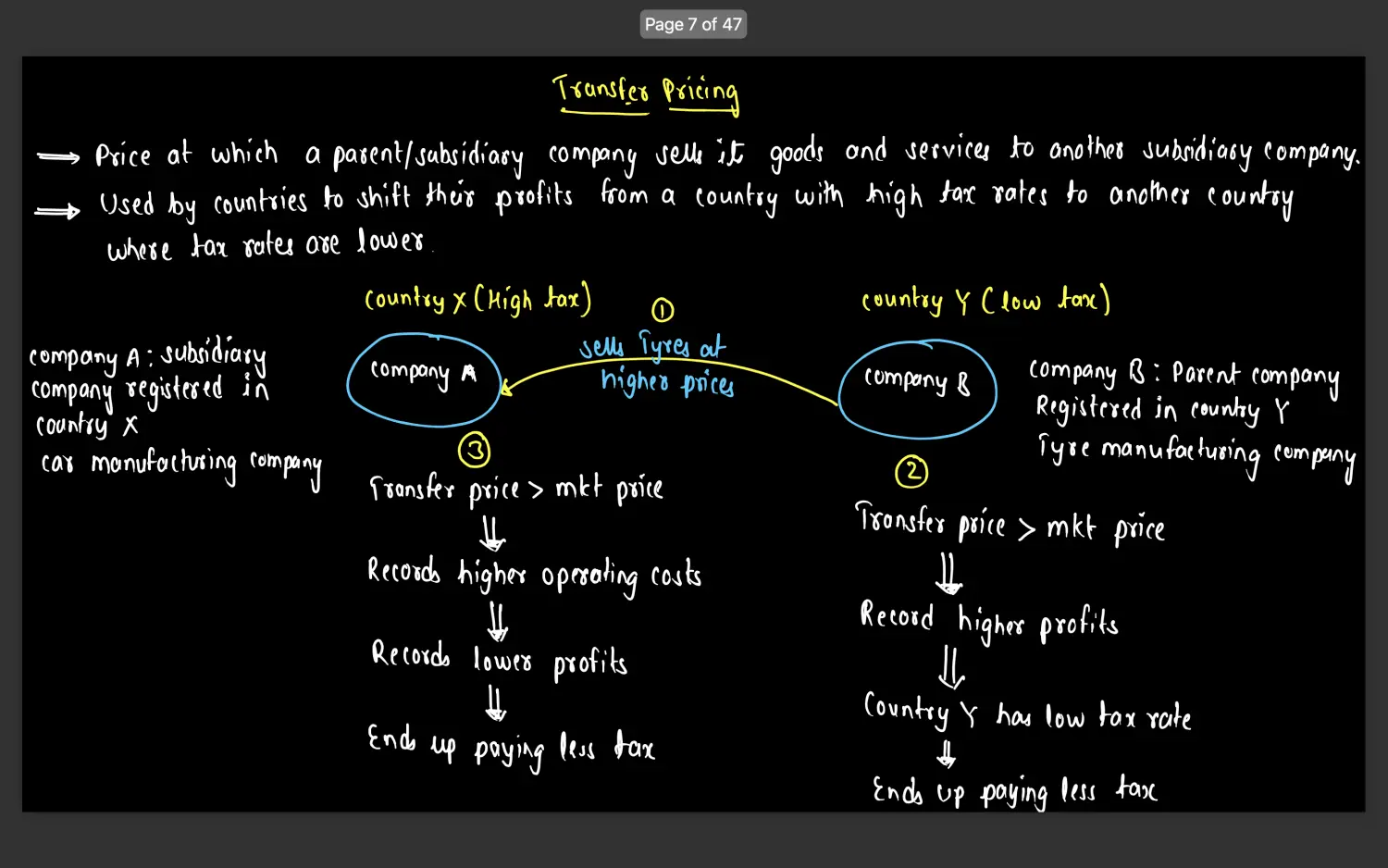
Solution to Transfer Pricing is usage of Arms Length Principle
How is Transfer Pricing controlled by Means of APA?
This is called as APA - Advanced Pricing Agreement - Authorities Enter into Agreement to Decided the Transfer Price
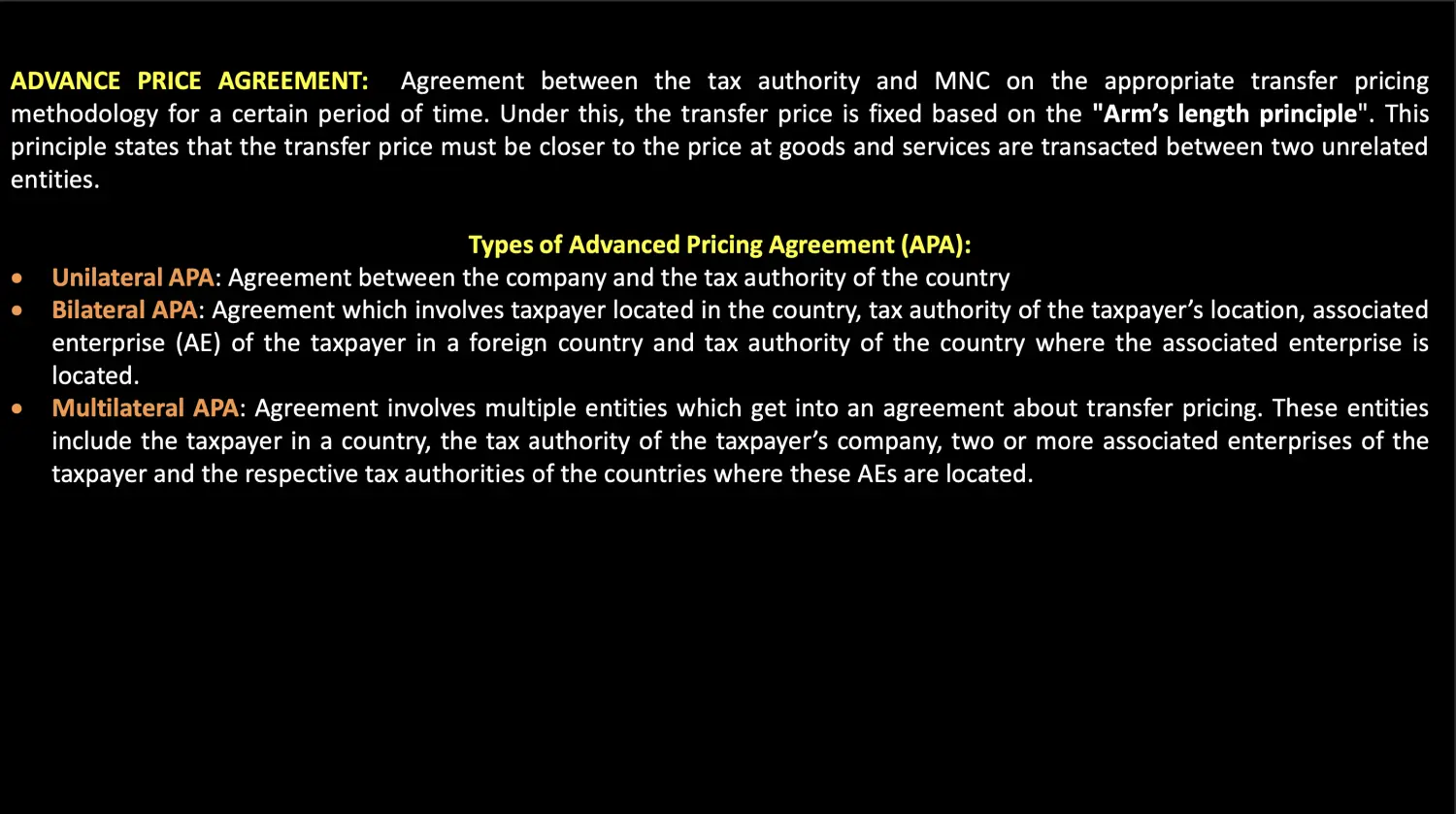
How is Profit Shifted from High Tax Country to Low Tax Country by Means of the Patent Box Regime?
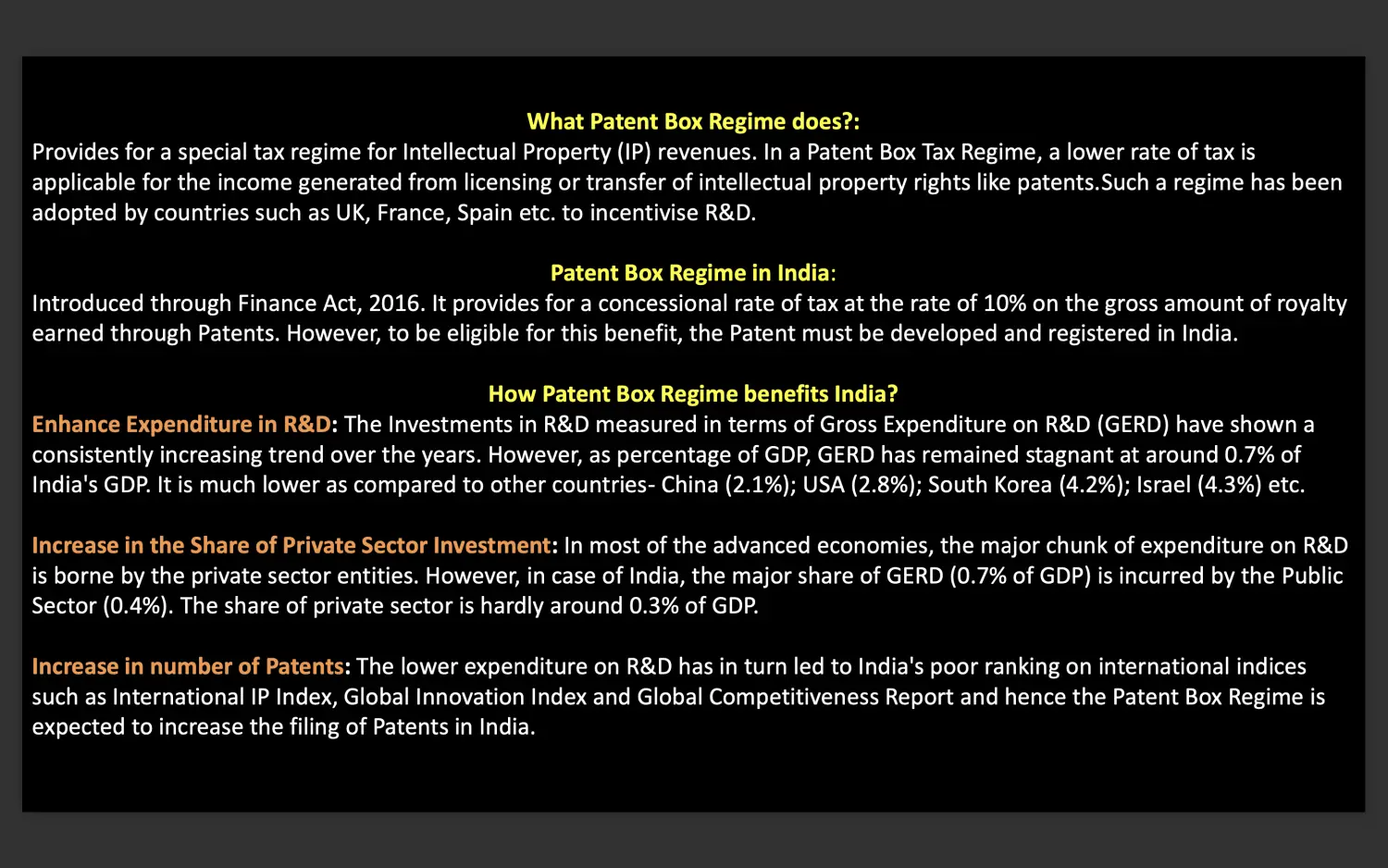
Patent Box Regime is basically where Companies Pay Low Taxes when Companies Earn Money through Patents. It was introduced by Finance Act of 2016
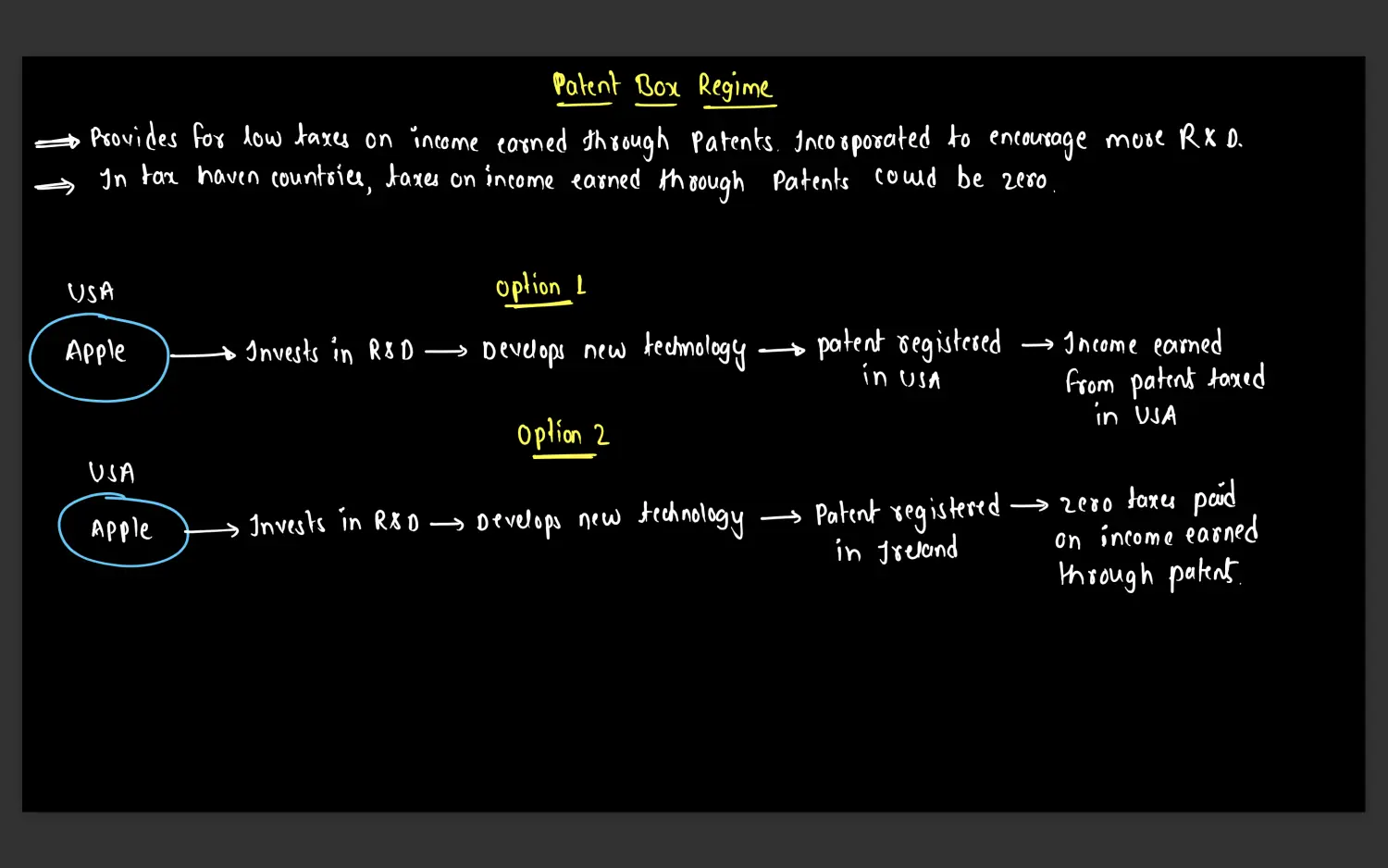
Tax Havens Countries hav no condition of Developing & R&D in the Home Countries.
These Tax Haven Countries have Zero Tax as compared to Tax of India on Patents which is 10%
Concept of Capital Gains Tax?
CGT is a Form of TDS (Tax Deducted at Source)
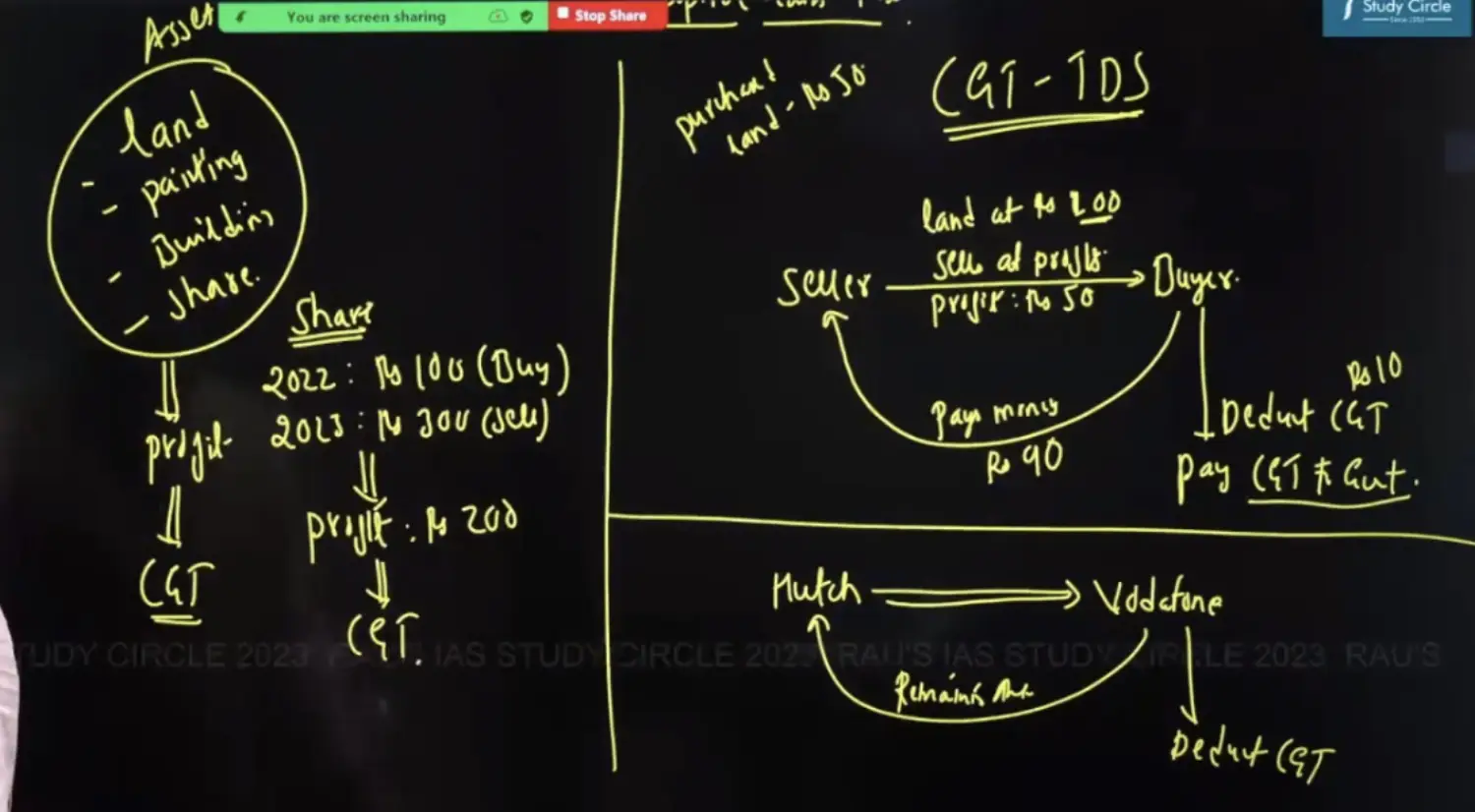
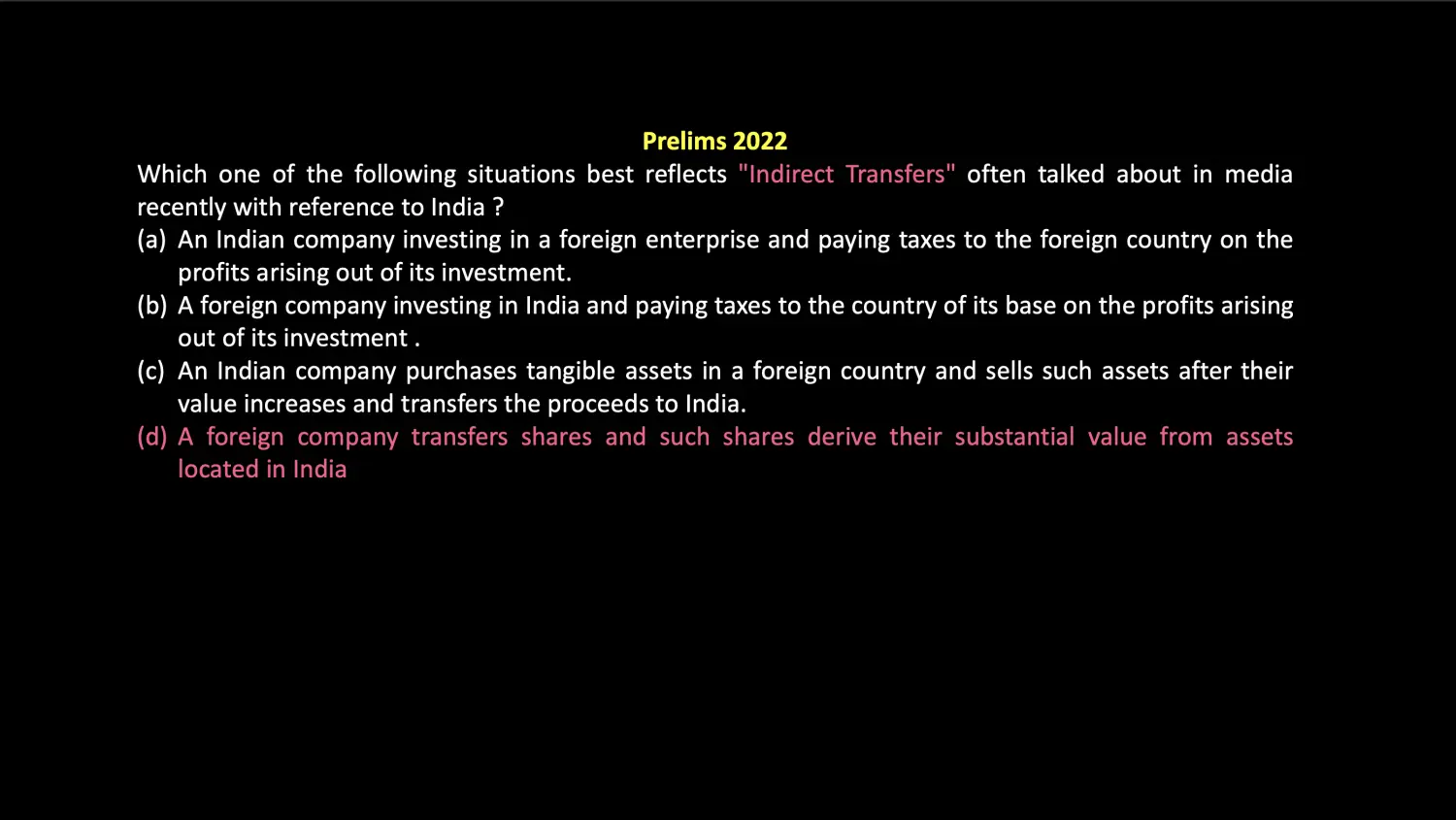
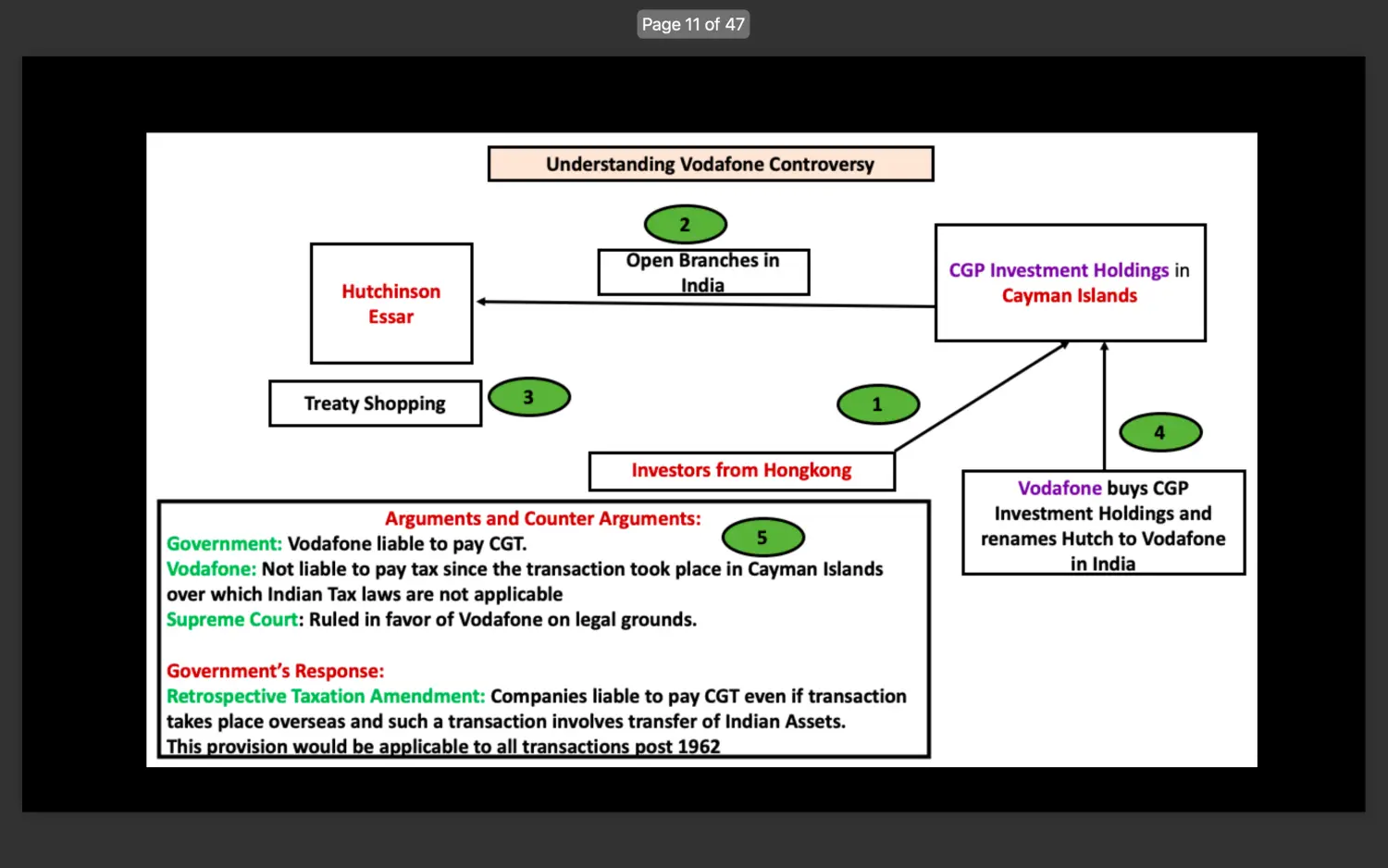
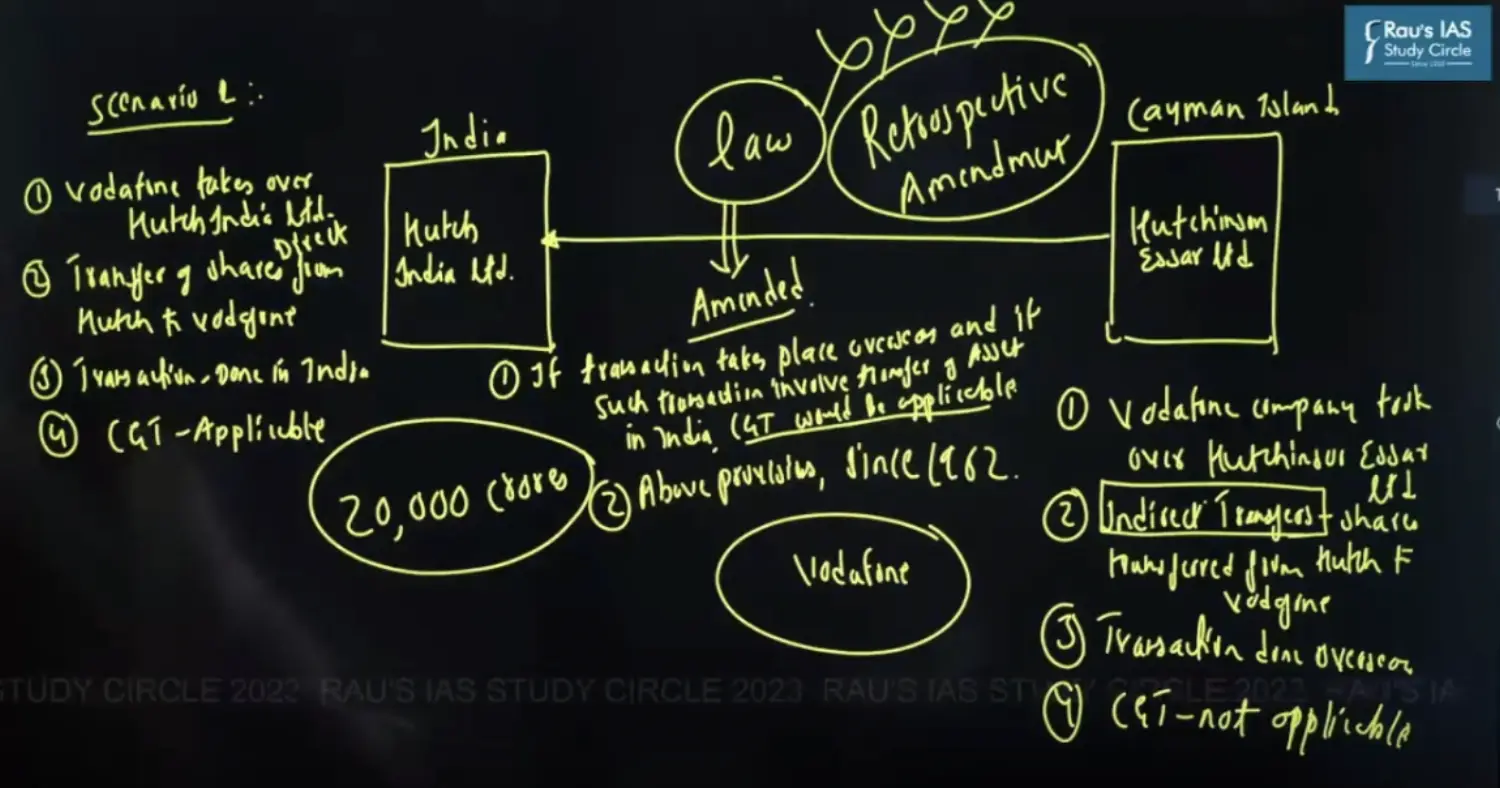
Case of Hutch & Vodafone (in lieu of Capital Gains Tax)
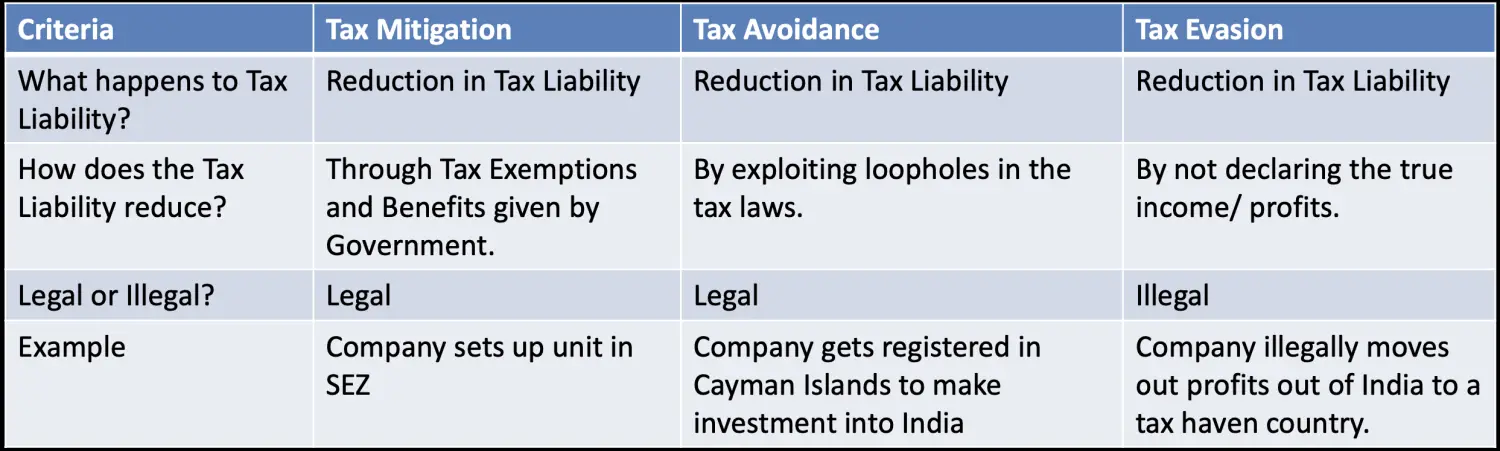
Difference Between Tax Mitigation, Avoidance, Evasion
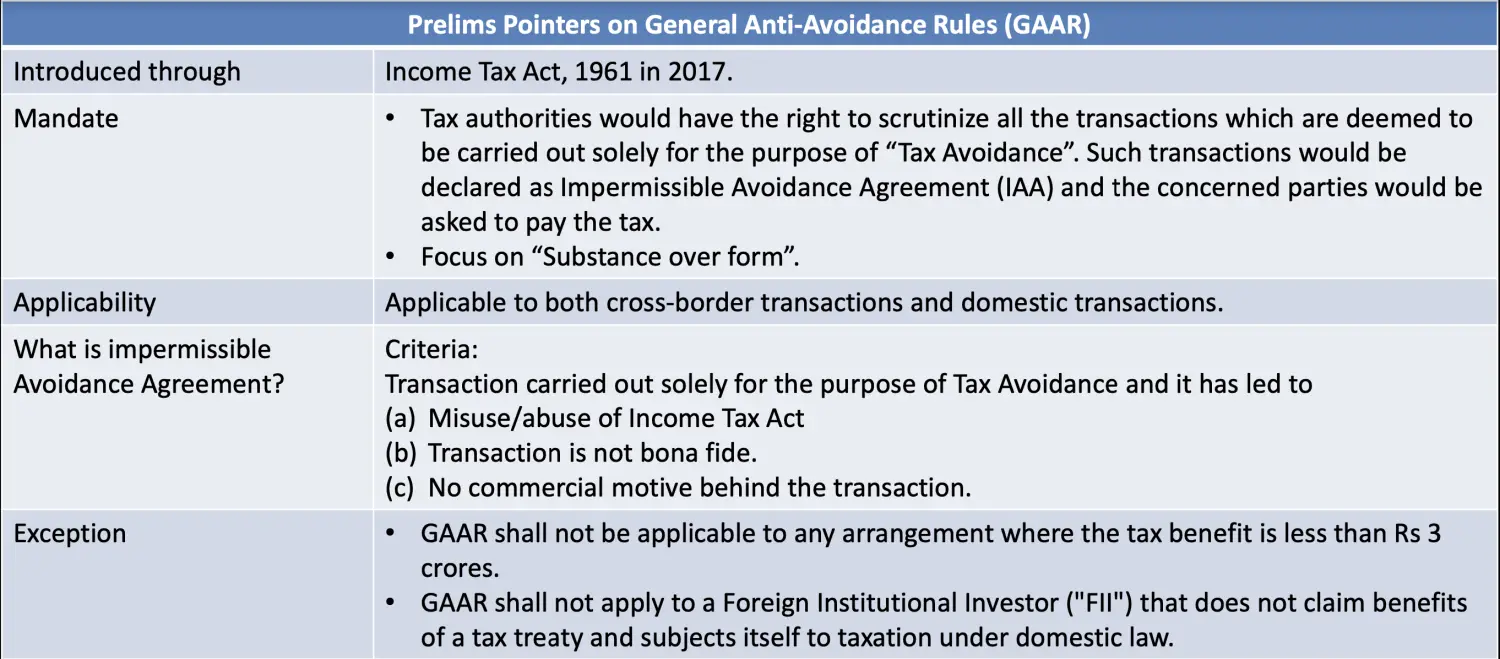
General Anti Avoidance Rule (GAAR)
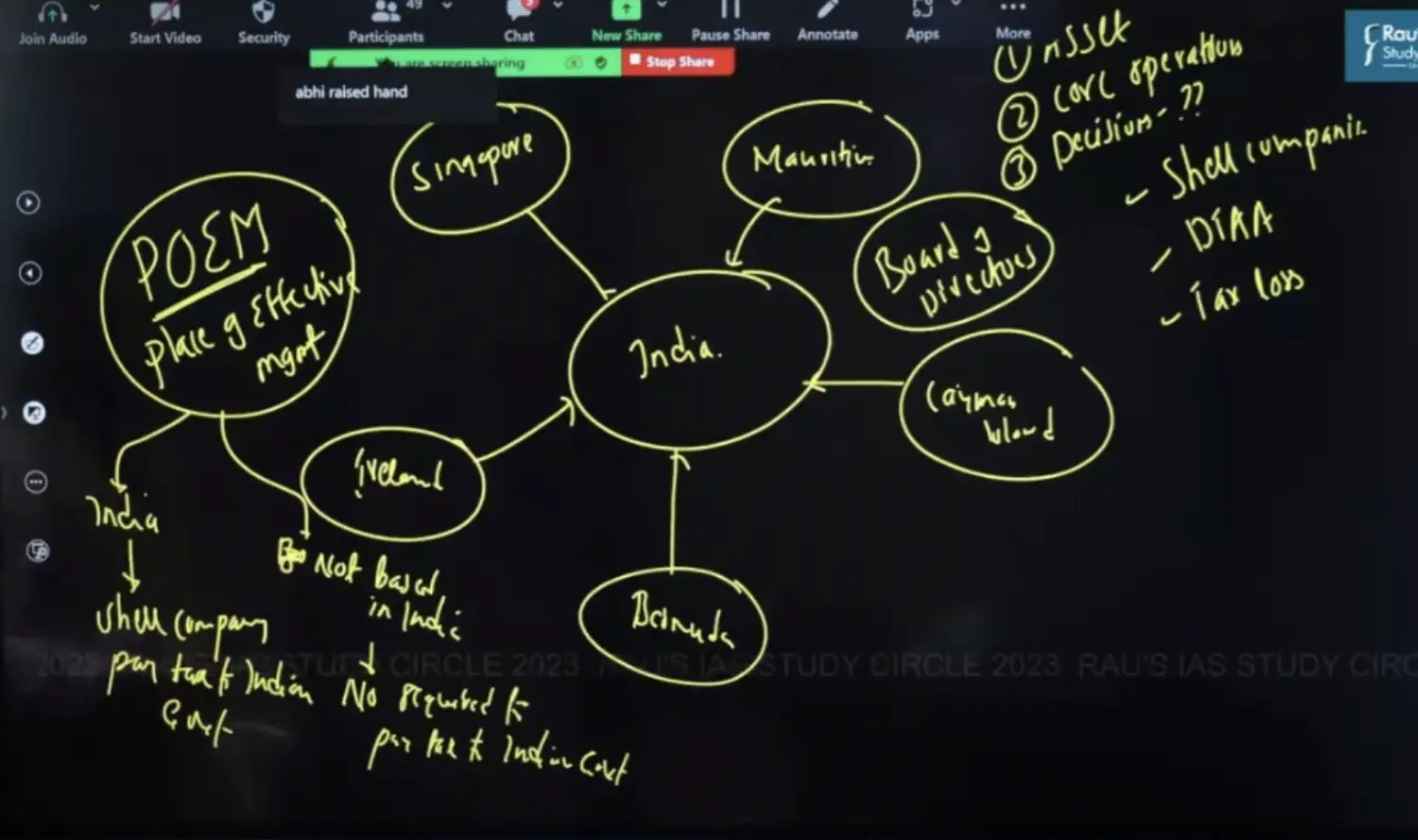
Place of Effective Management (PoEM)
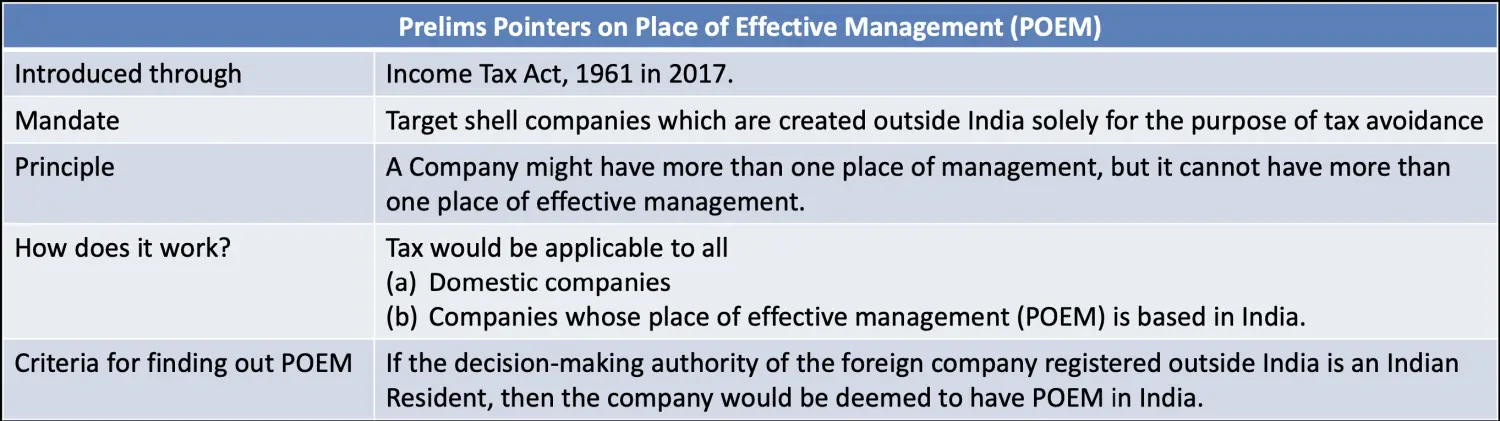
How to Decide that if the place of Effective Management is in India ? → Major Decision Place
Indian Resident can be a Indian Citizen or Foreigner Itself
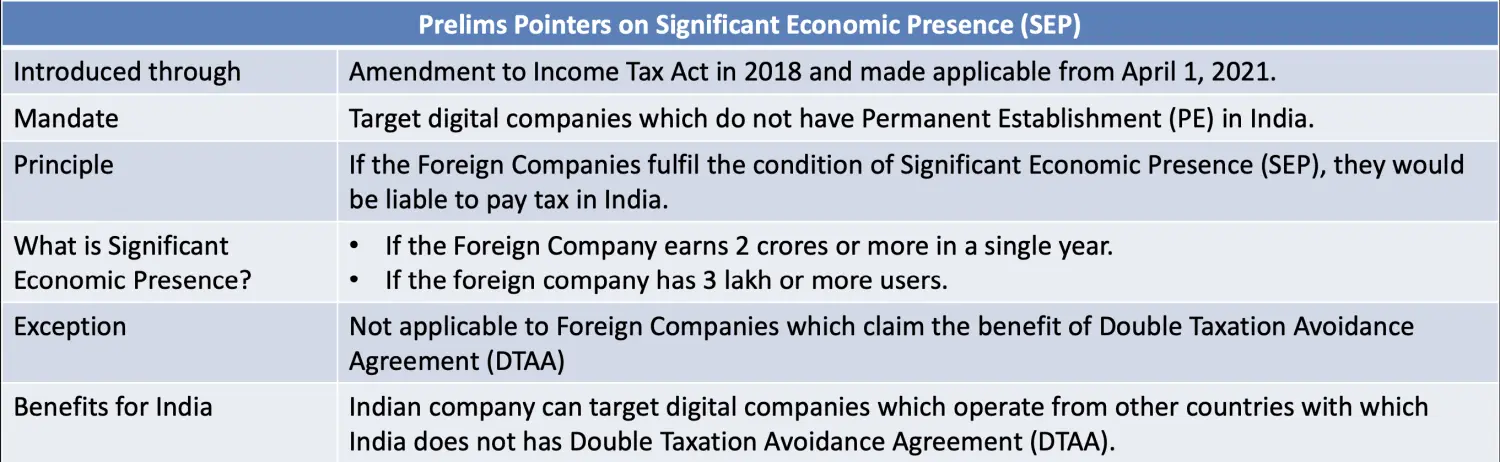
Significant Economic Presence (SEP)
Difference Between Permanent and Non Permanent Establishment 👇
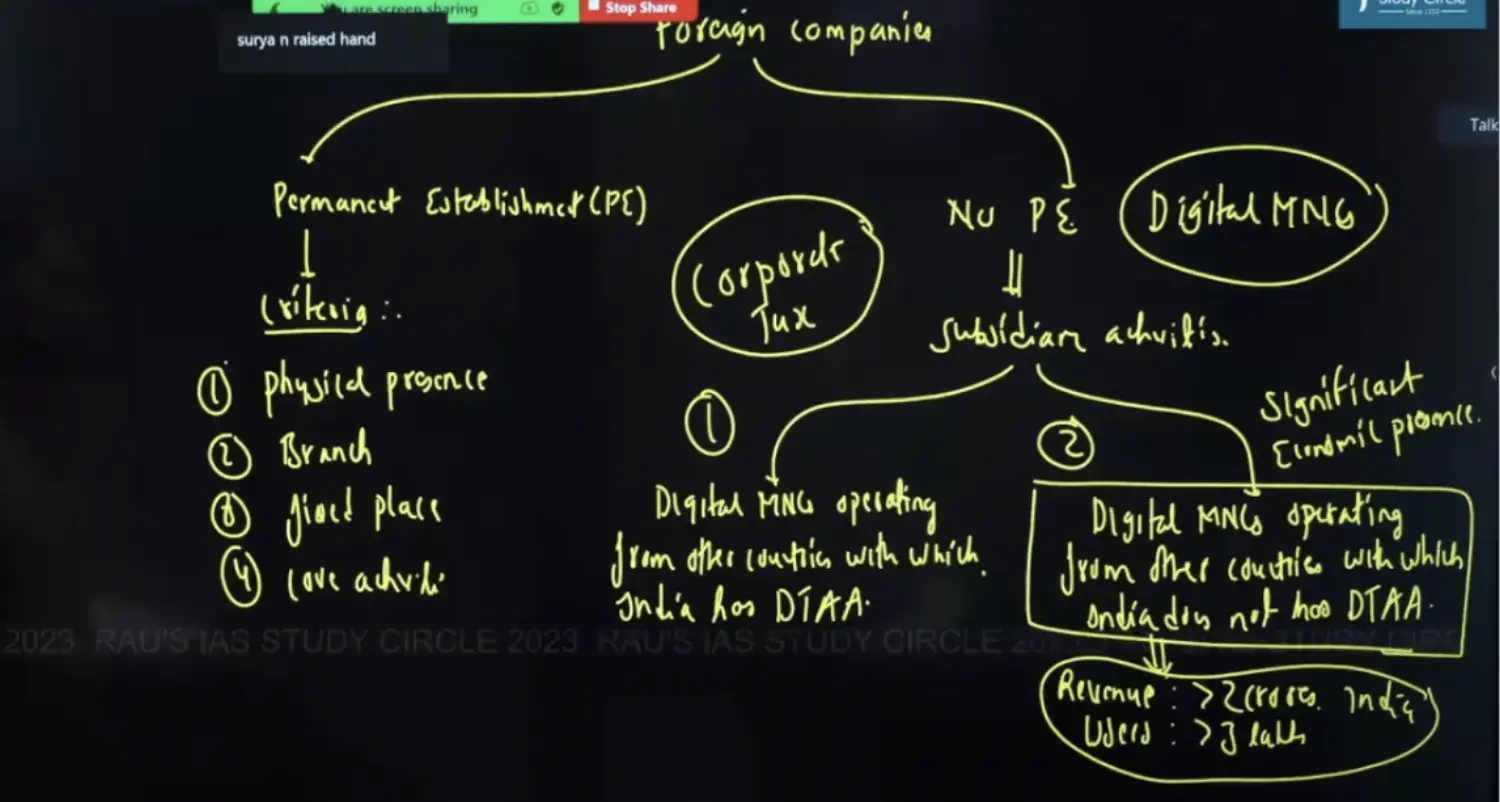
With DTAA → DTAA, Global Minimum Tax, Equalisation Levy, Global Pool for Tax Sharing under OECD Framework
Note: Equalisation Levy is applicable to both MNC’s which have HQ in countries with which India has DTAA or NO DTAA
DTAA is not company specific it is country Specific
GST Sequence
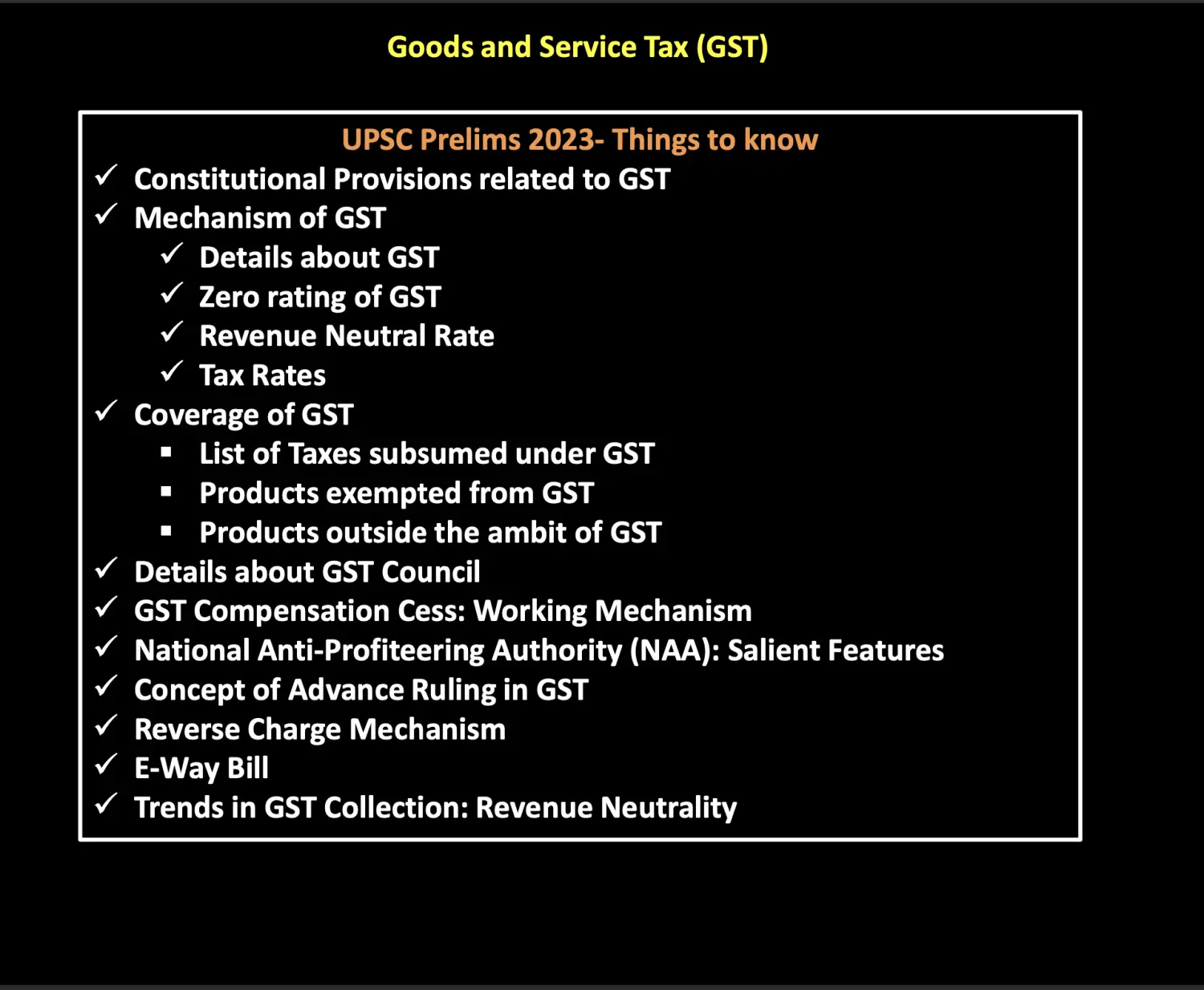
What was the Need for GST in India?
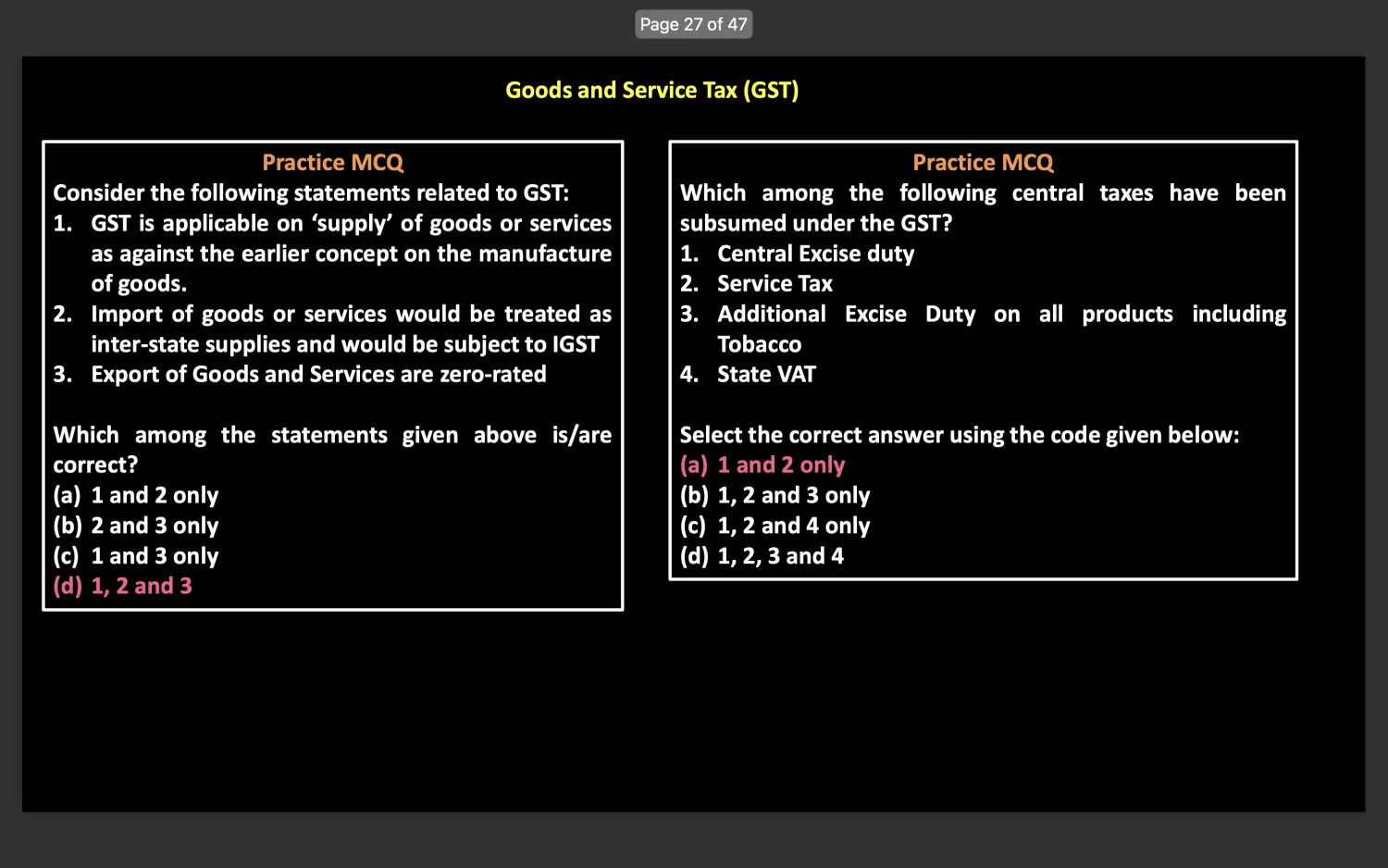
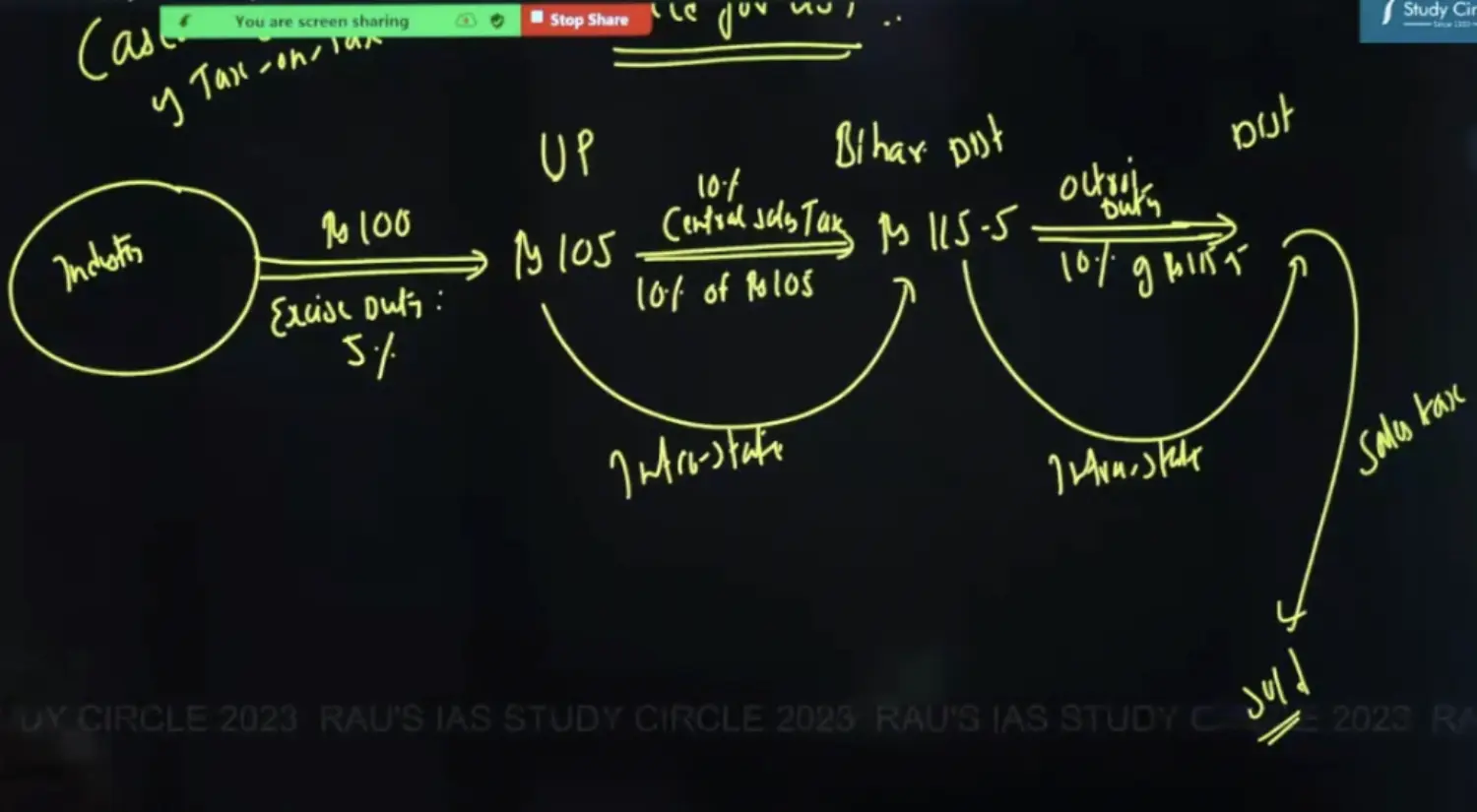
Primarily To avoid the Cascading Effect of Tax on Tax
Octroi duty is the tax levied by local or state governments on certain categories of goods as they enter the area.
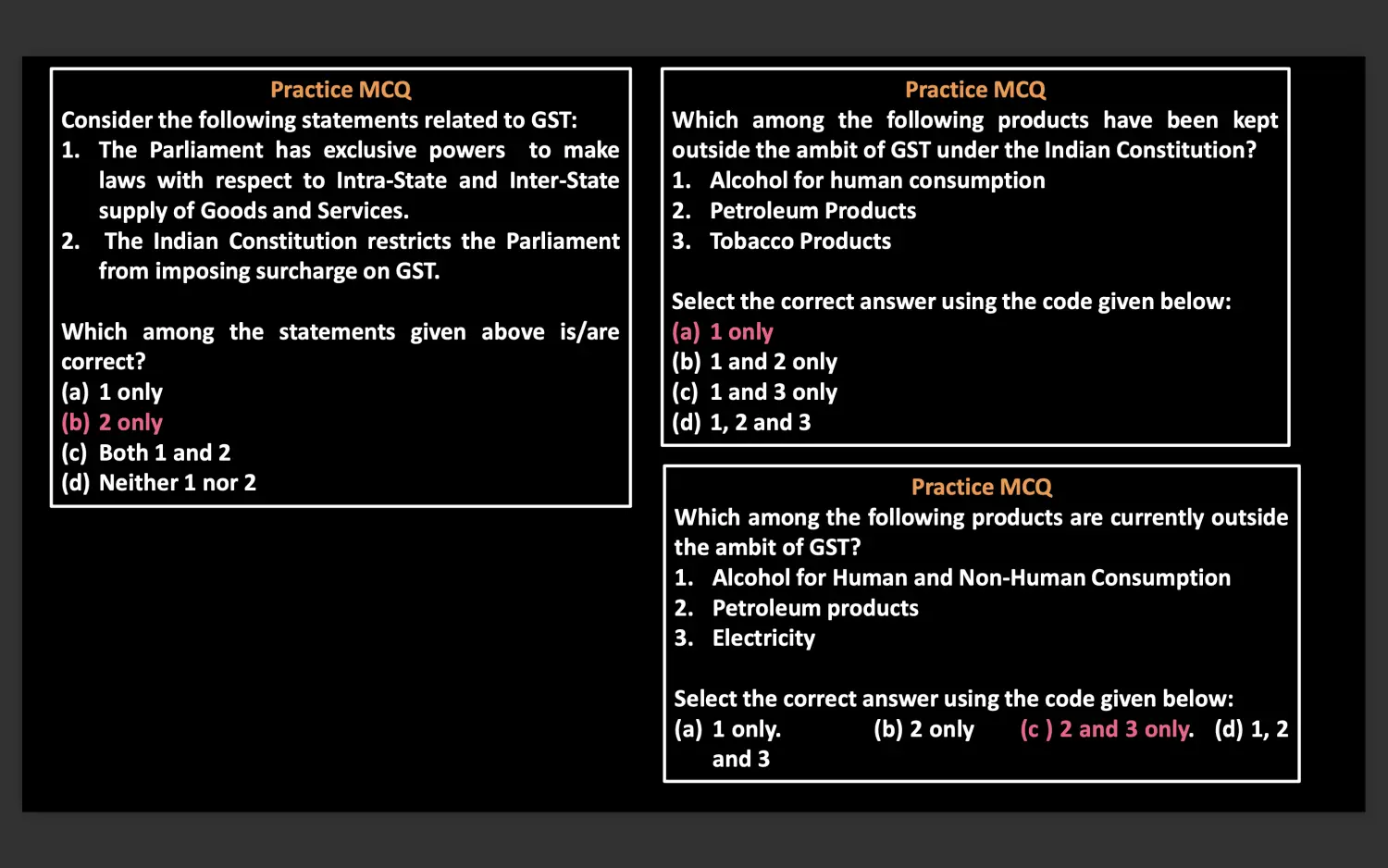
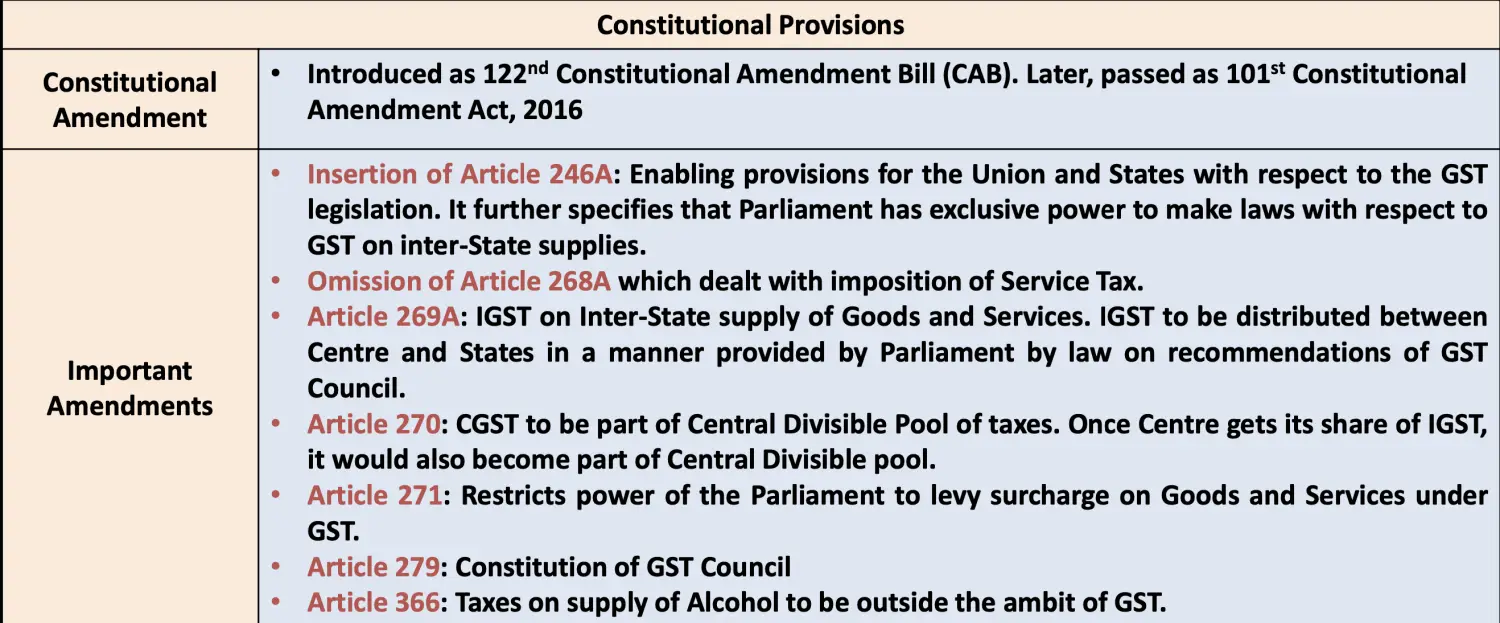
Constitutional Provisions Related to GST
GST on Alcohol is by State Govt
Standard GST Rate & Concept of IGST
5, 12, 18, 28 → CGST & SGST Applied
IGST is applicable to Import & Inter State Supply of Goods
Destination State (The Place where is it sold) will get the Tax Now which is within IGST
GST is a Destination Based Tax and Consumption Tax
because of this Revenue of Manufacturing States has reduced
Note: CGST & IGST is a part of Central Divisible Pool of Taxes
Intro to the Working Mechanism of GST
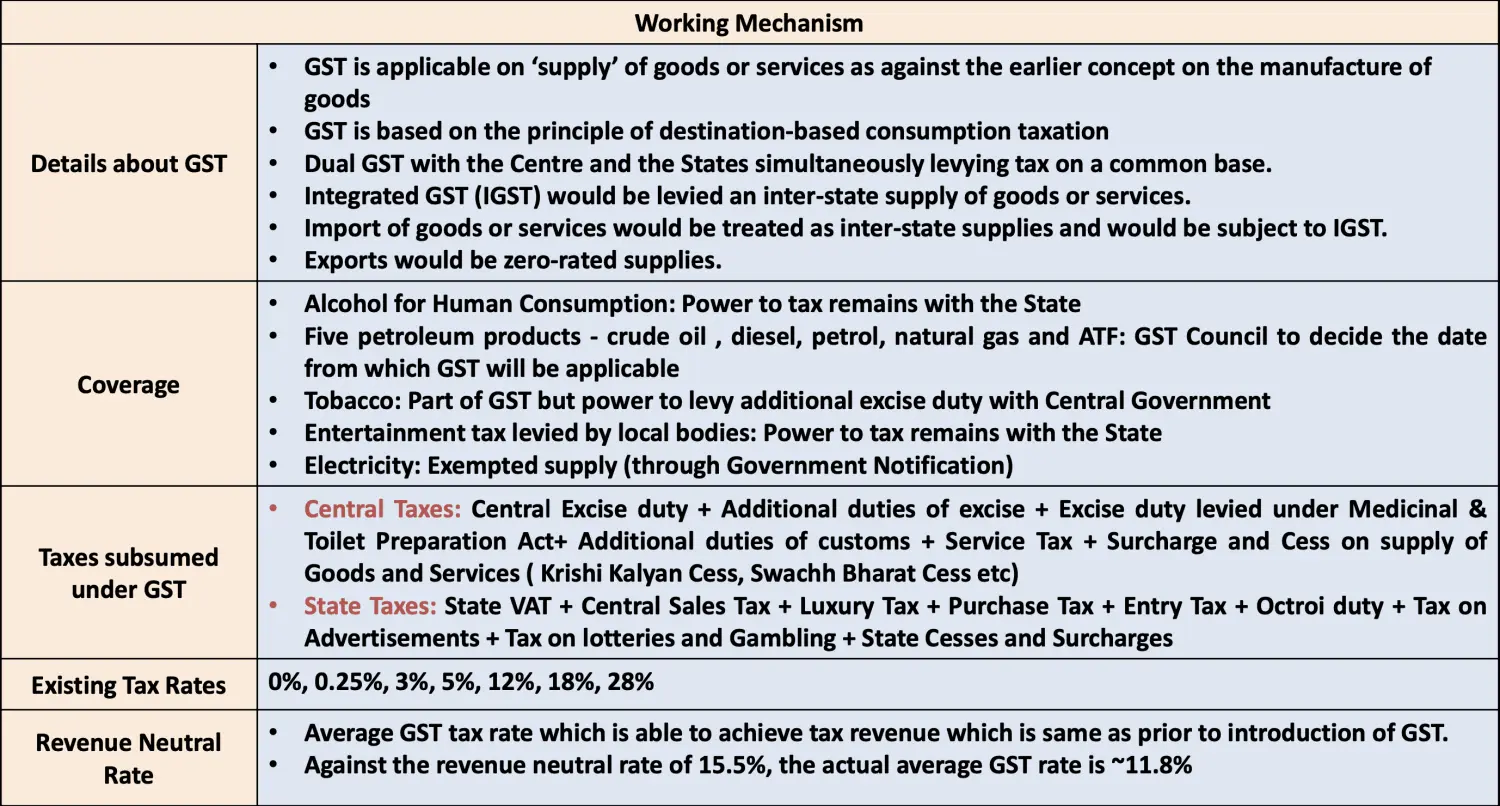
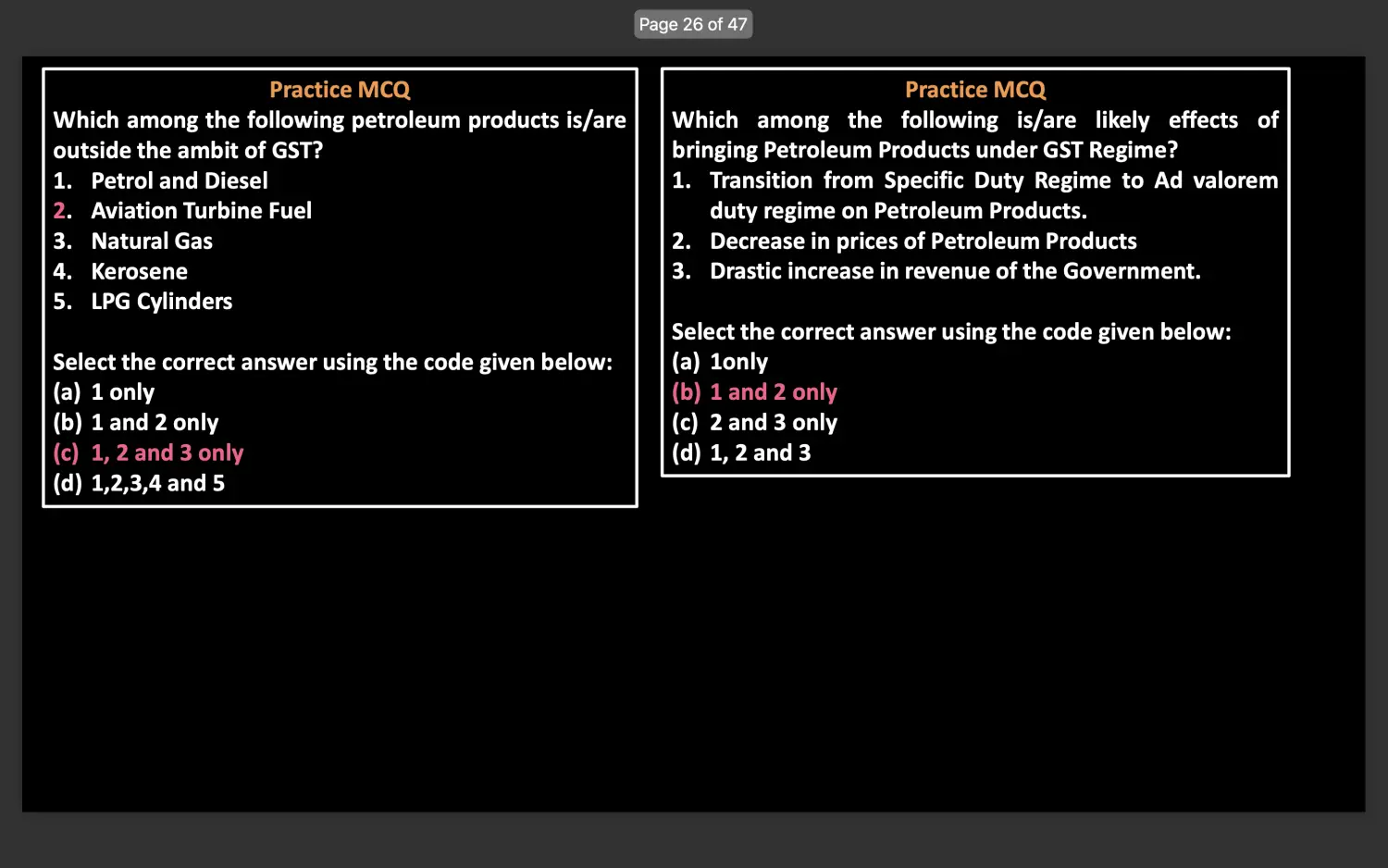
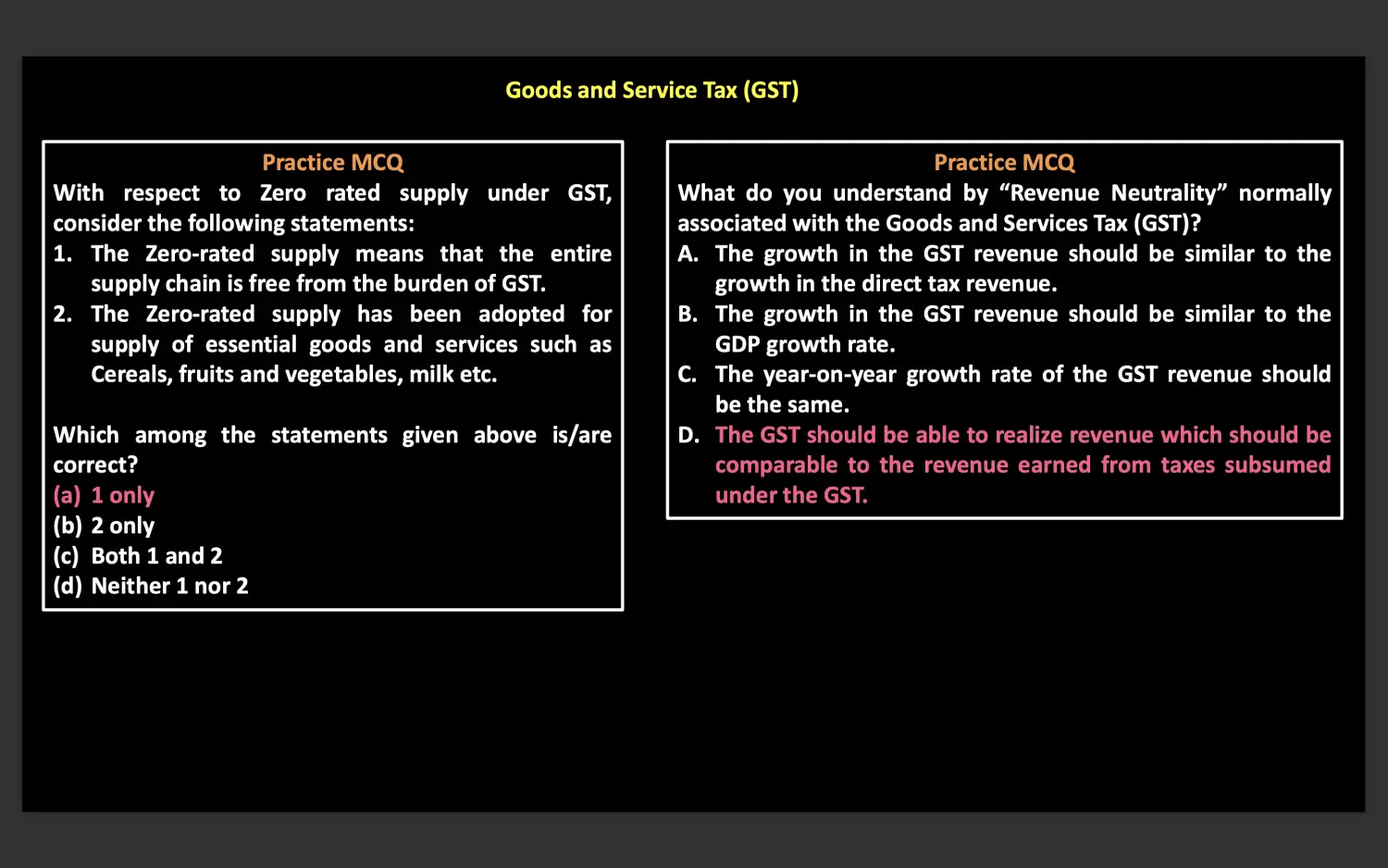
ATF: Aviation Turbine Fuel → Meaning of Revenue Neutral Rate
Suggestion of 15th Finance Commission 5 for Poor Mergin 12 & 18 && 28% for Rich People
Kerosene and LPG has GST
Concept of Input Tax Credit
GST is collected by Seller from whom you are Buying
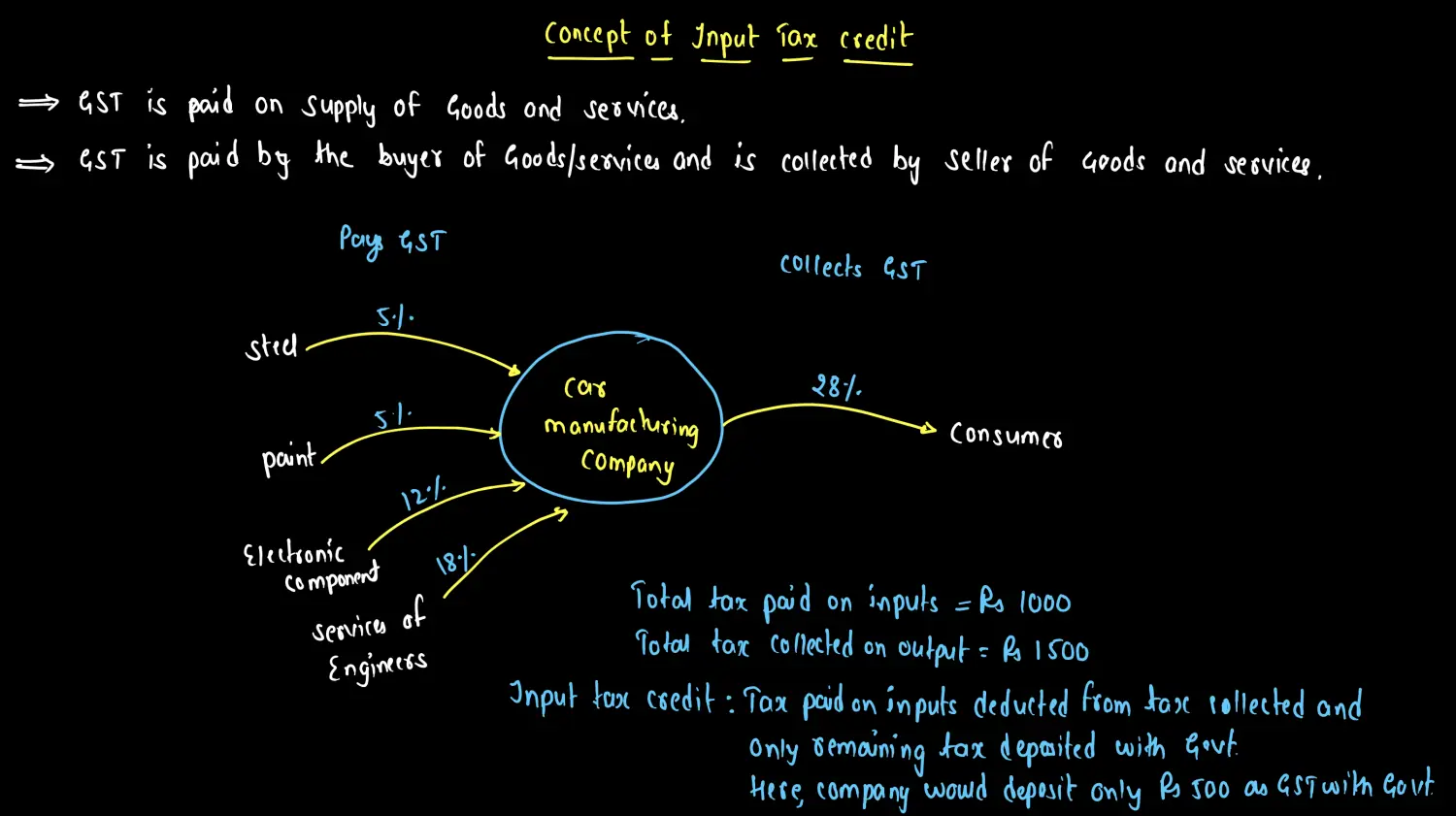
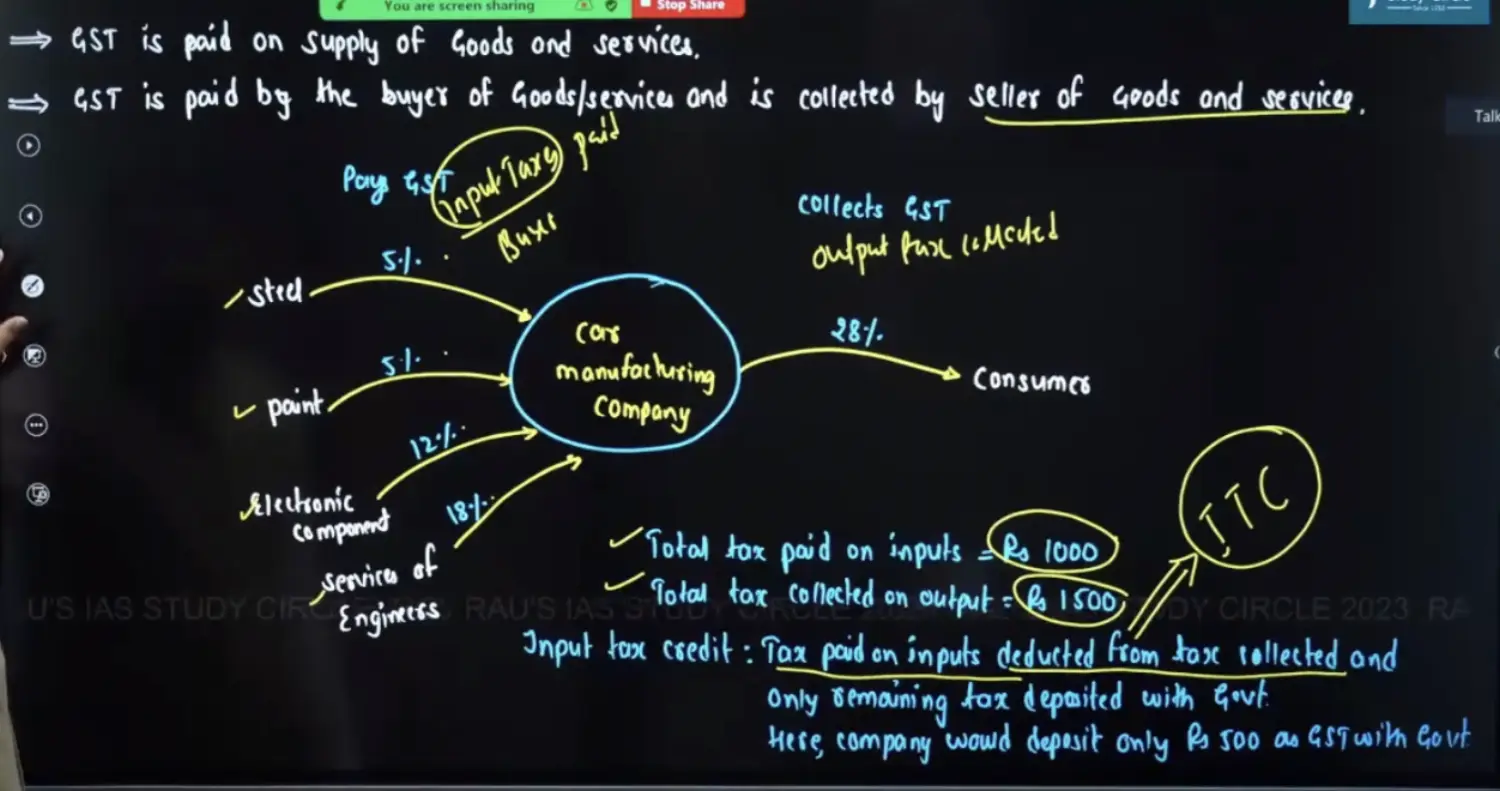
GST is on Goods & Services
No Surcharge can be collected on GST. It is only Cess.
If the Input Tax paid is more than the Tax collected. It is called an Inverted Tax
Whole Process and Mechanism of the GST
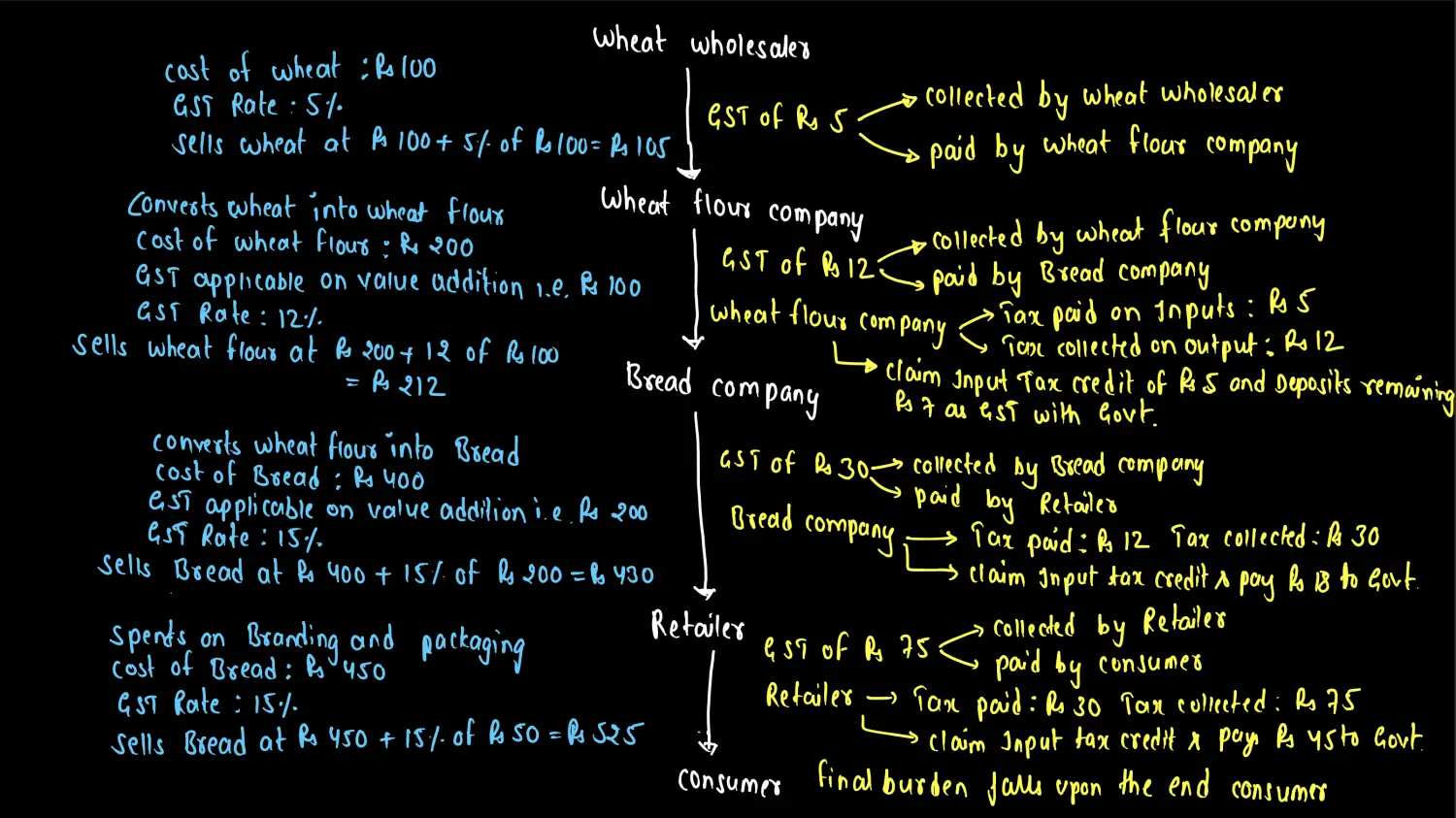
GST is added only on Value Addition
Inverted Duty Structure - Tax Paid > Tax Collected
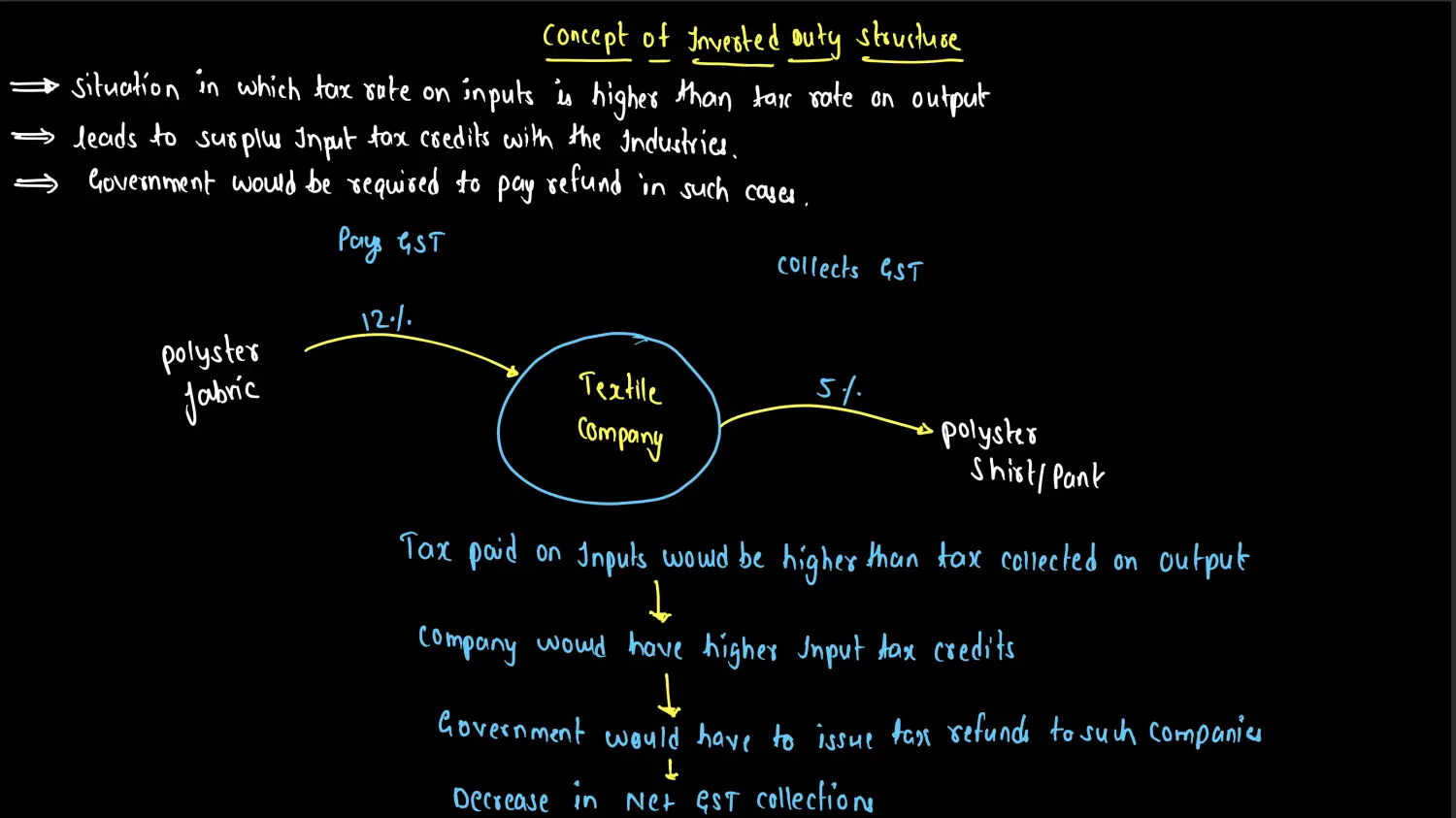
Solution : Input Tax > OUtput Tax
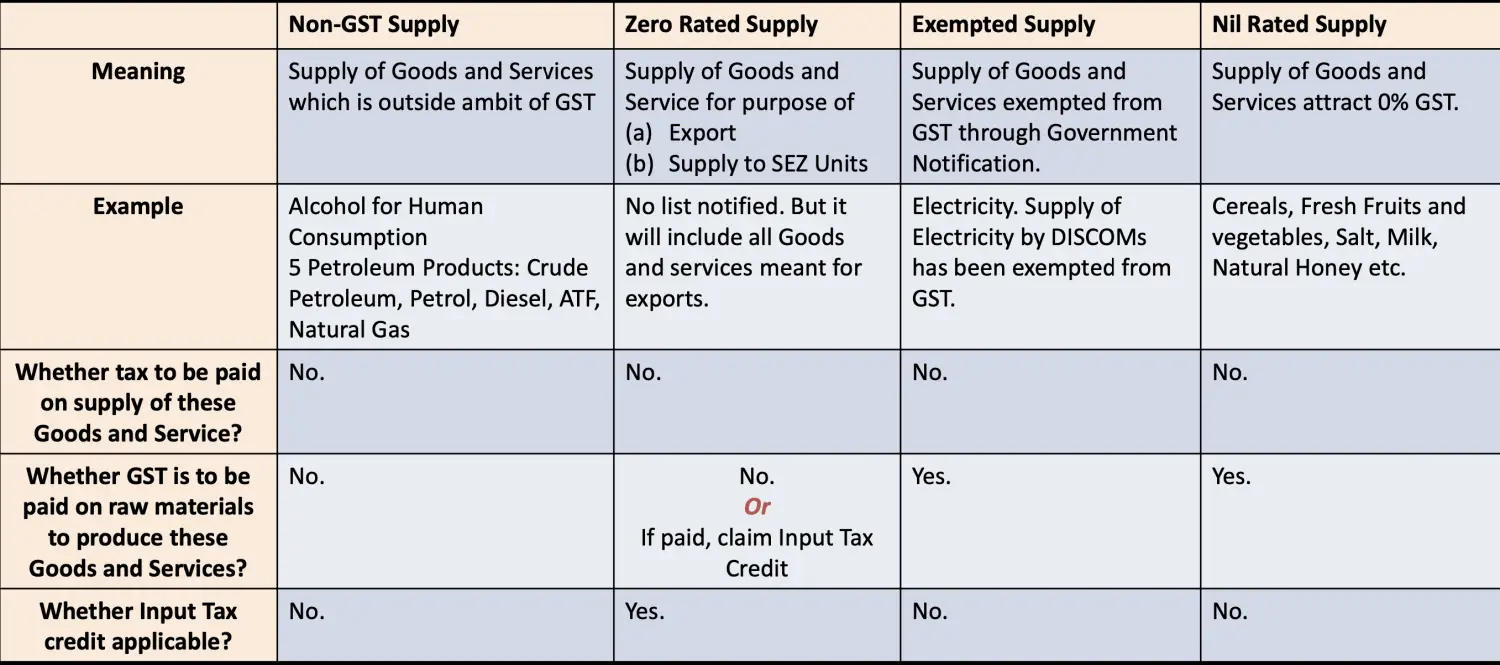
Types of Supplies in Goods & Services under GST
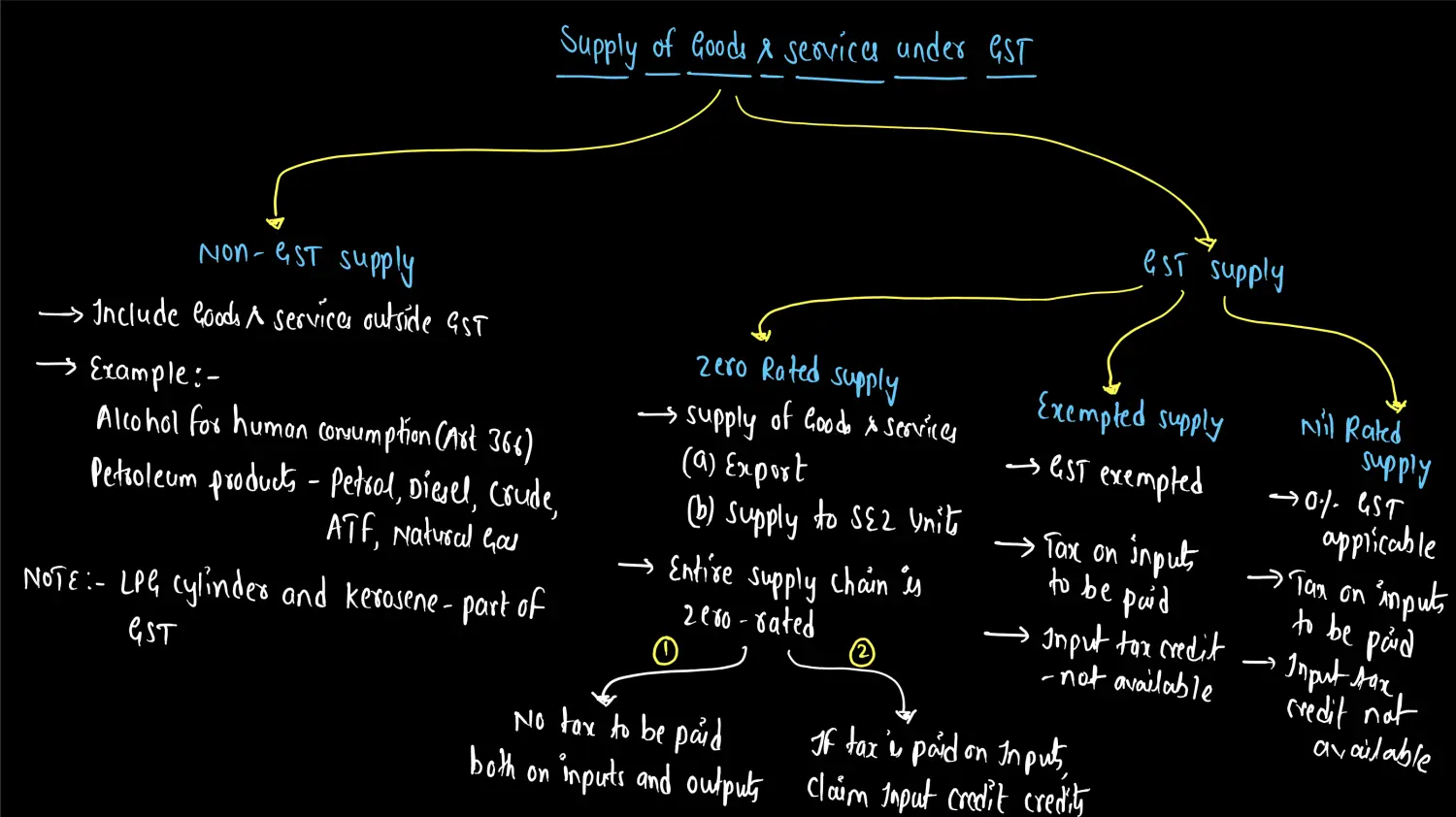
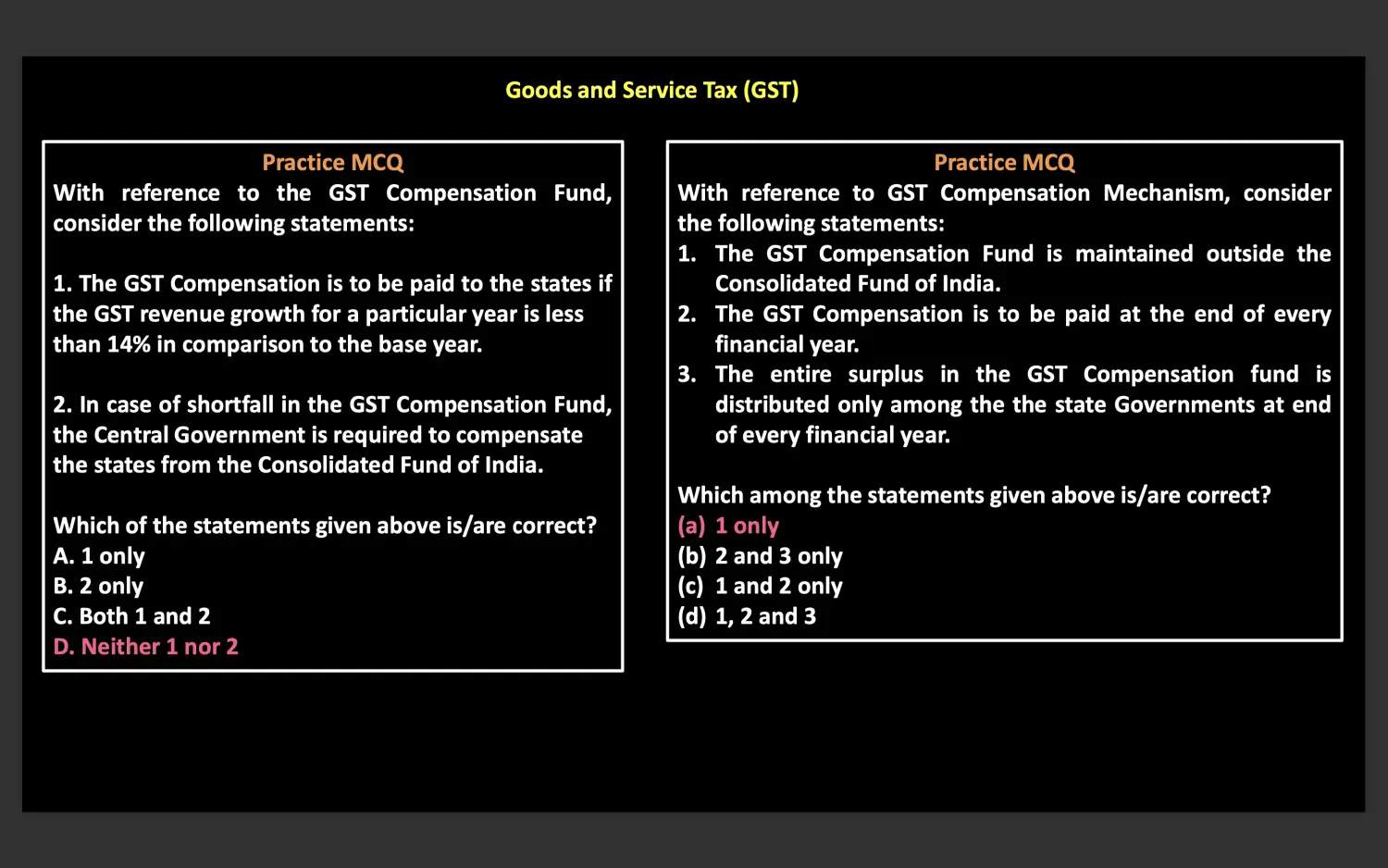
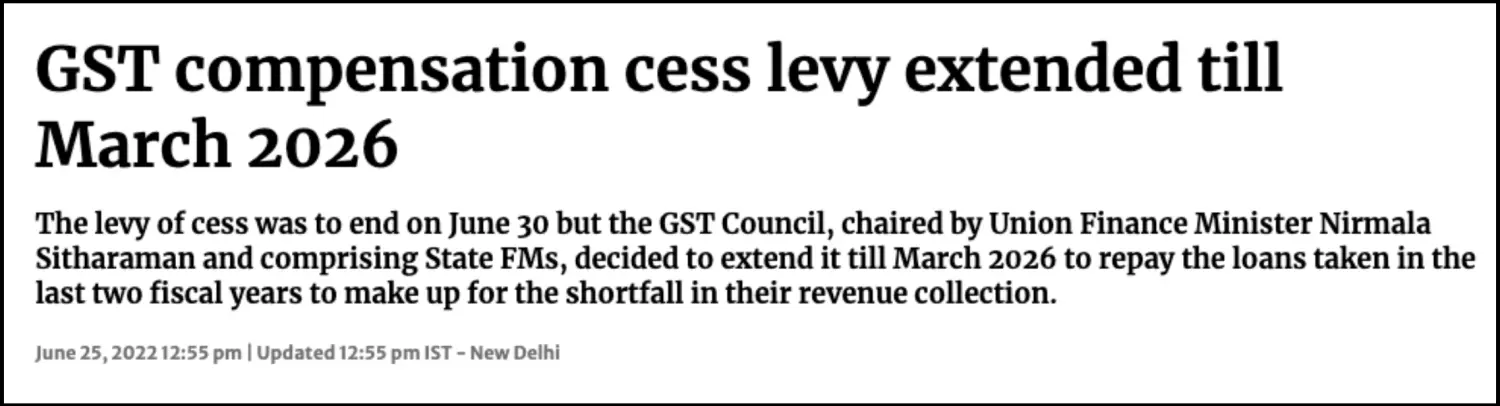
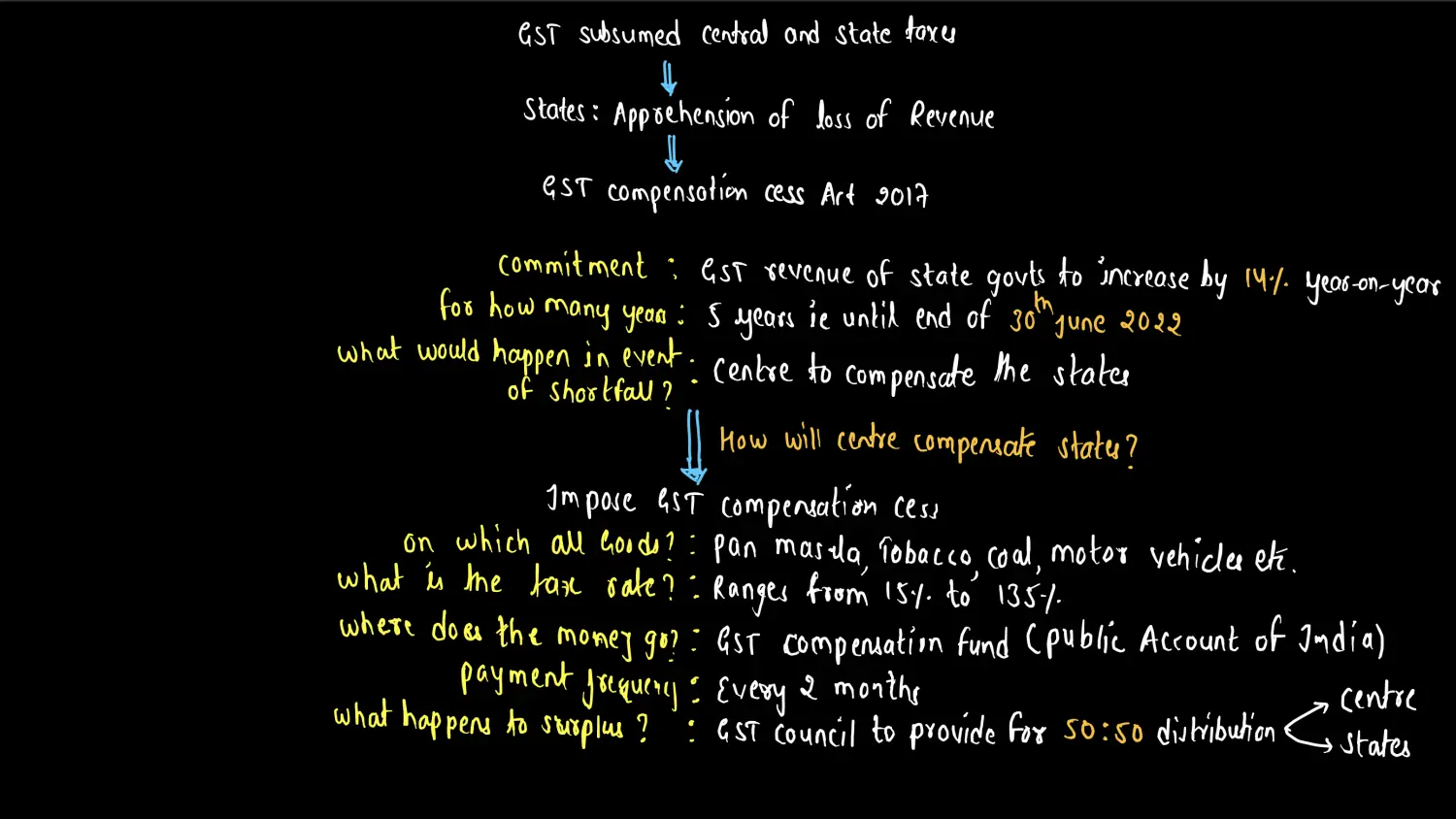
GST Compensation Cess
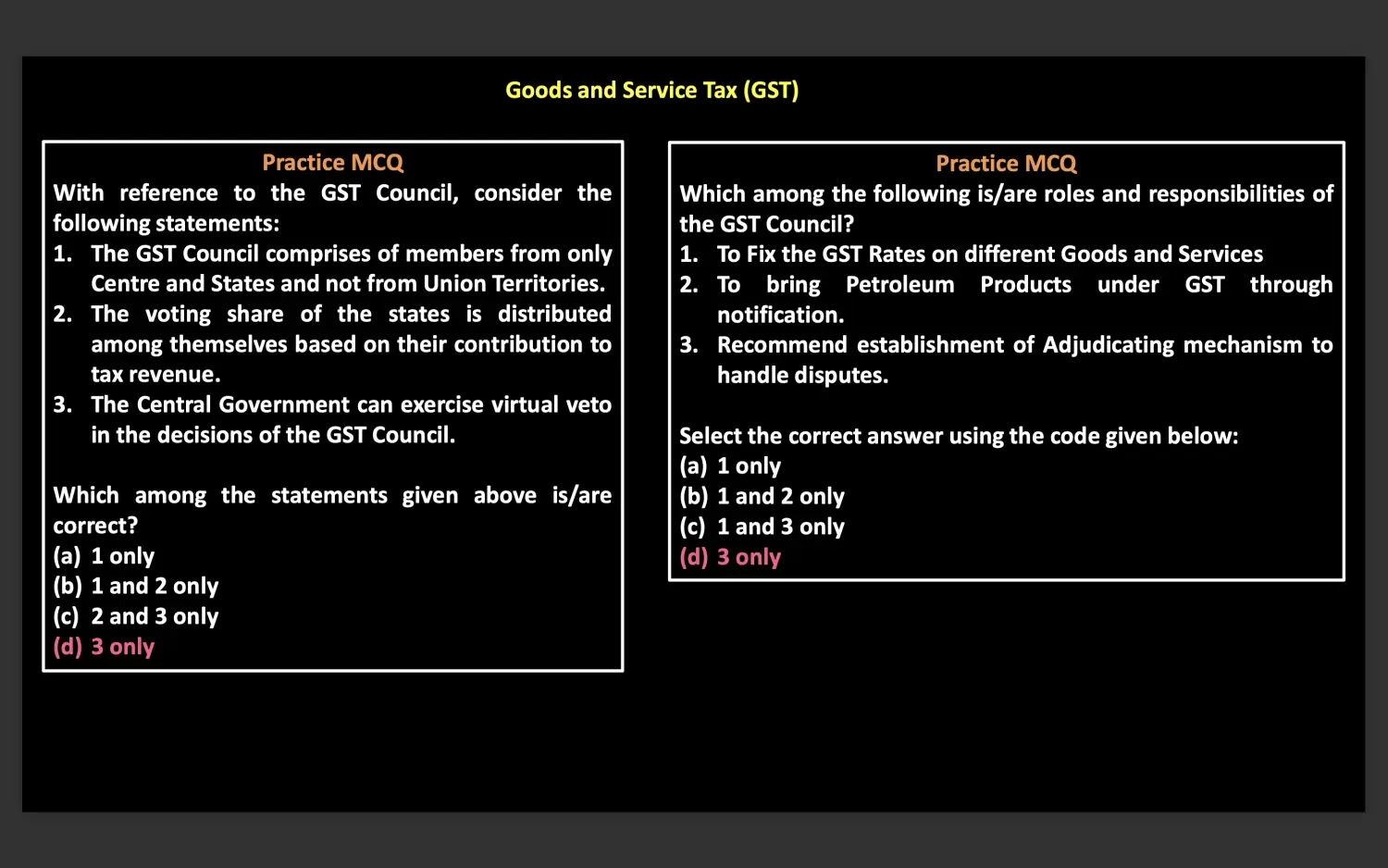
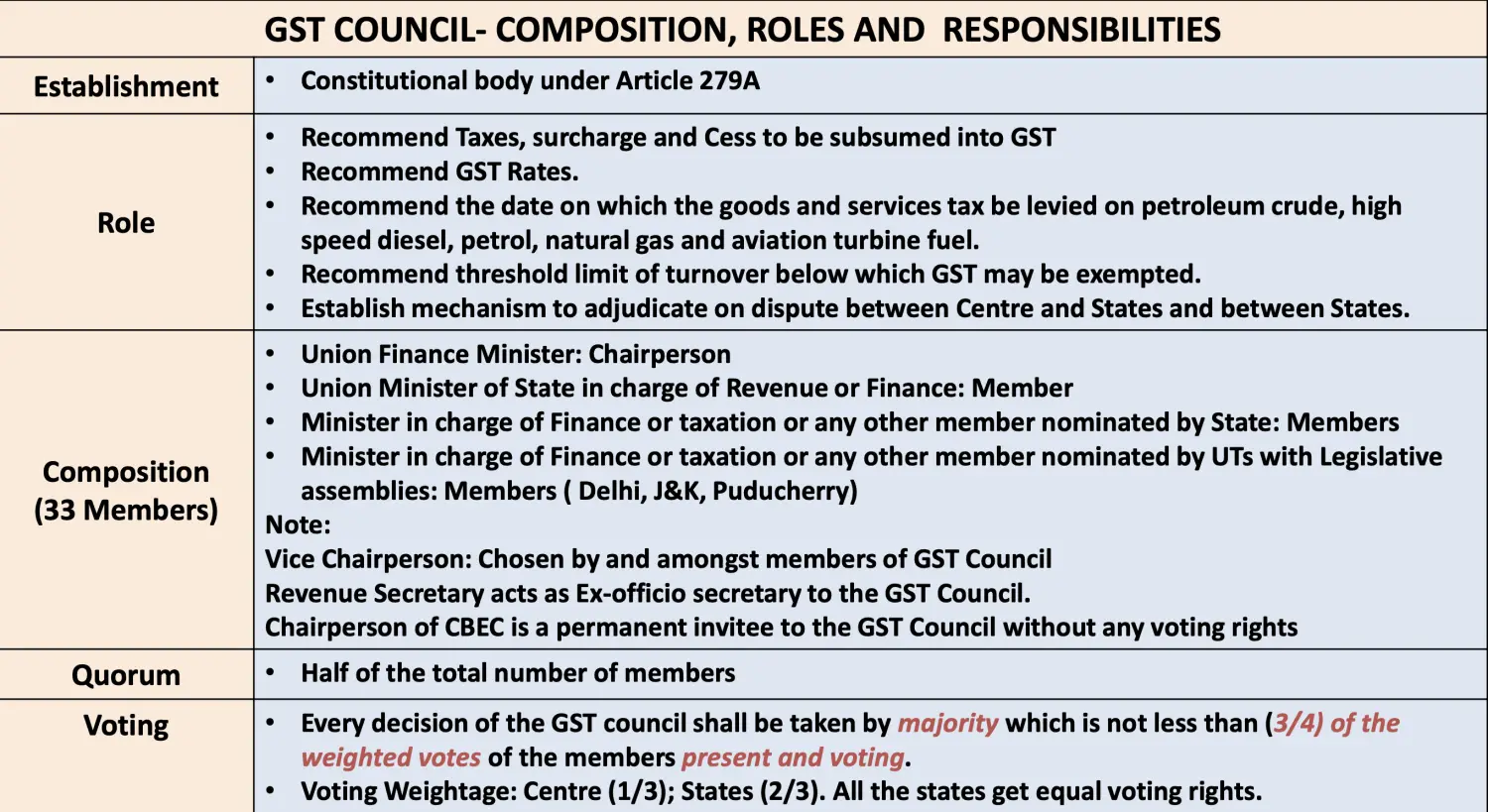
GST Council Composition, Roles & Responsibilities
It Recommends, Final Implementation by the Department of Revenue by means of Notification.
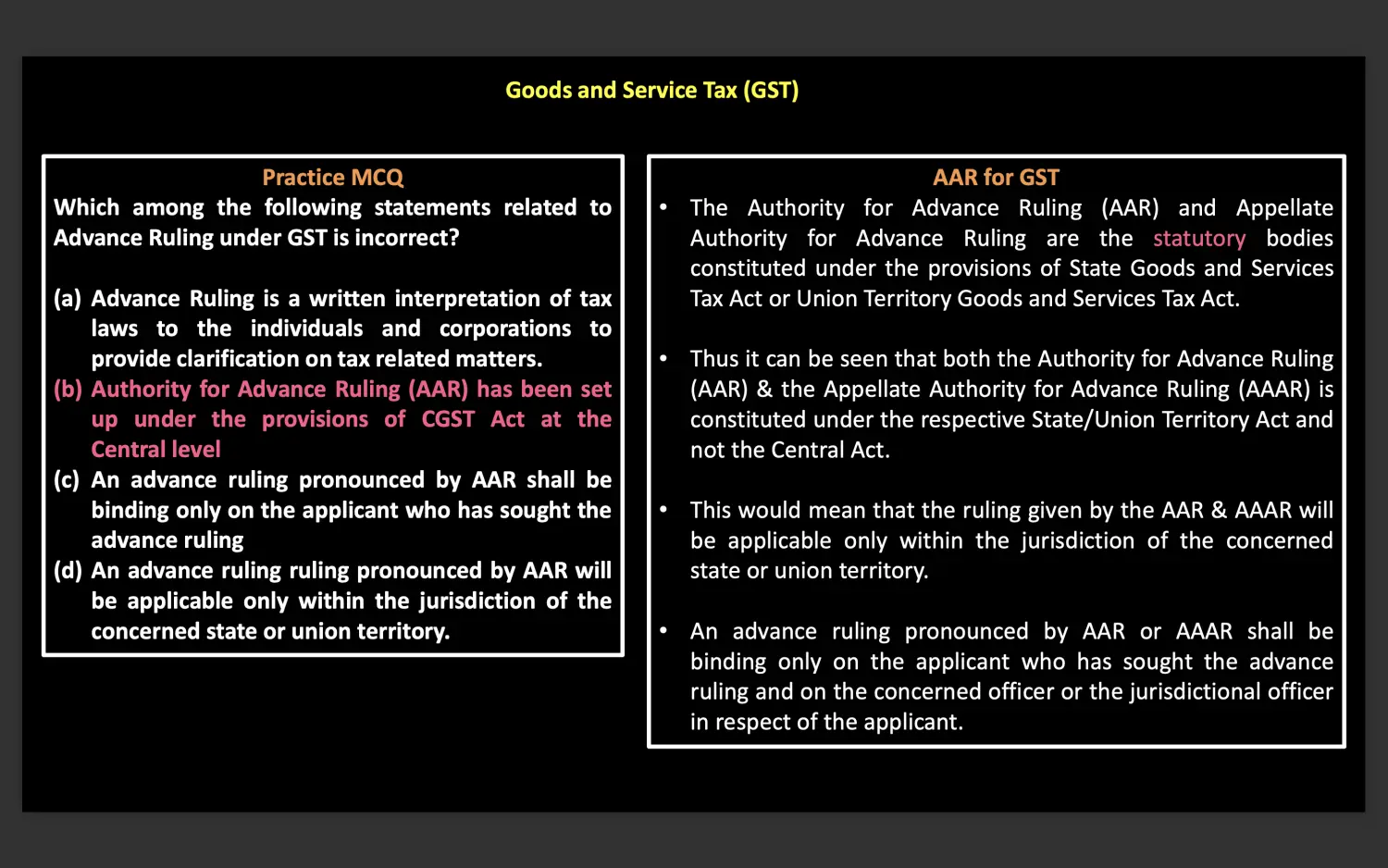
Authority for Advance Ruling on GST