Chapter 09 - External Sector
Prelims Syllabus
International Institutions
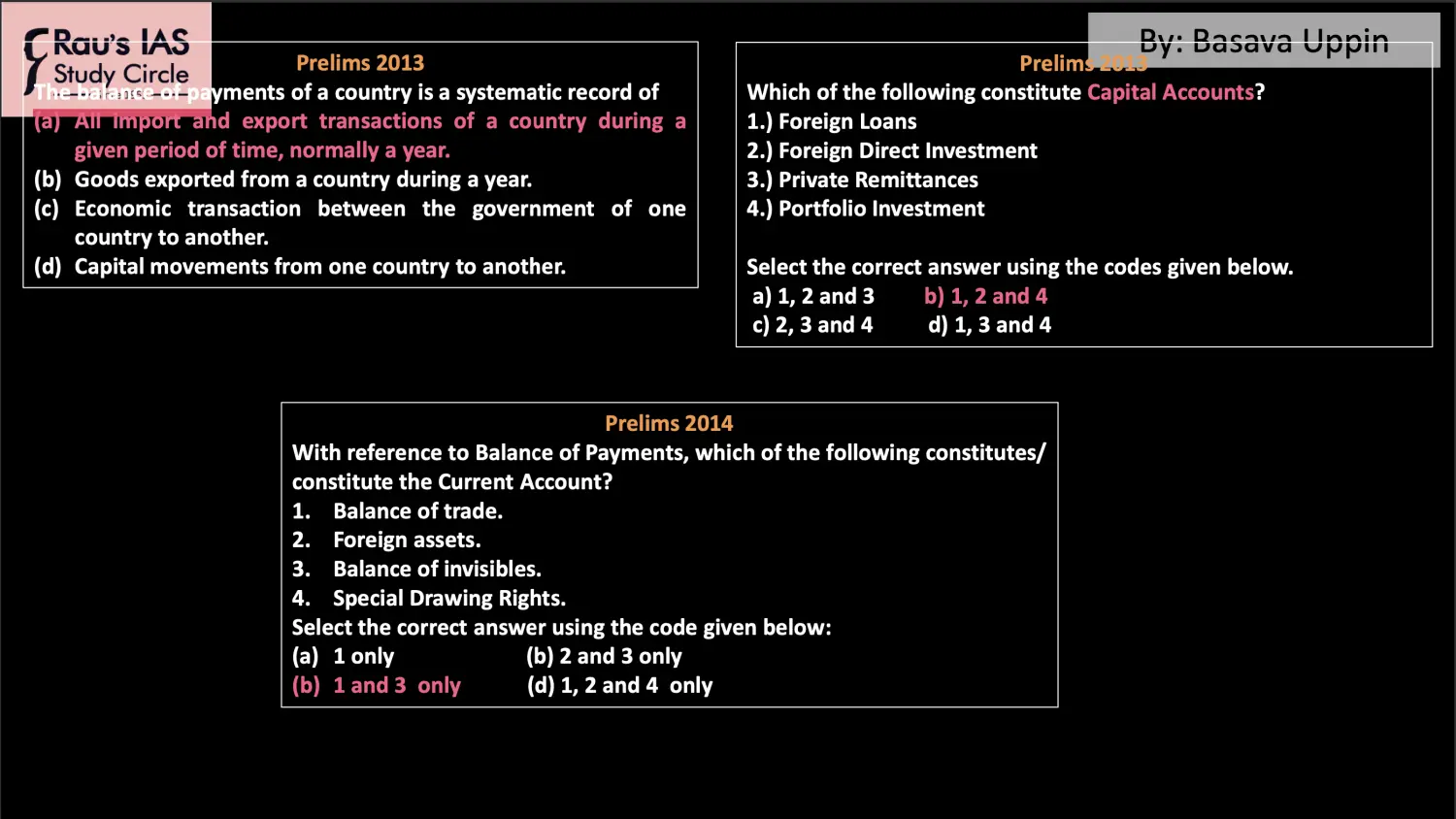
PYQ of Prelims
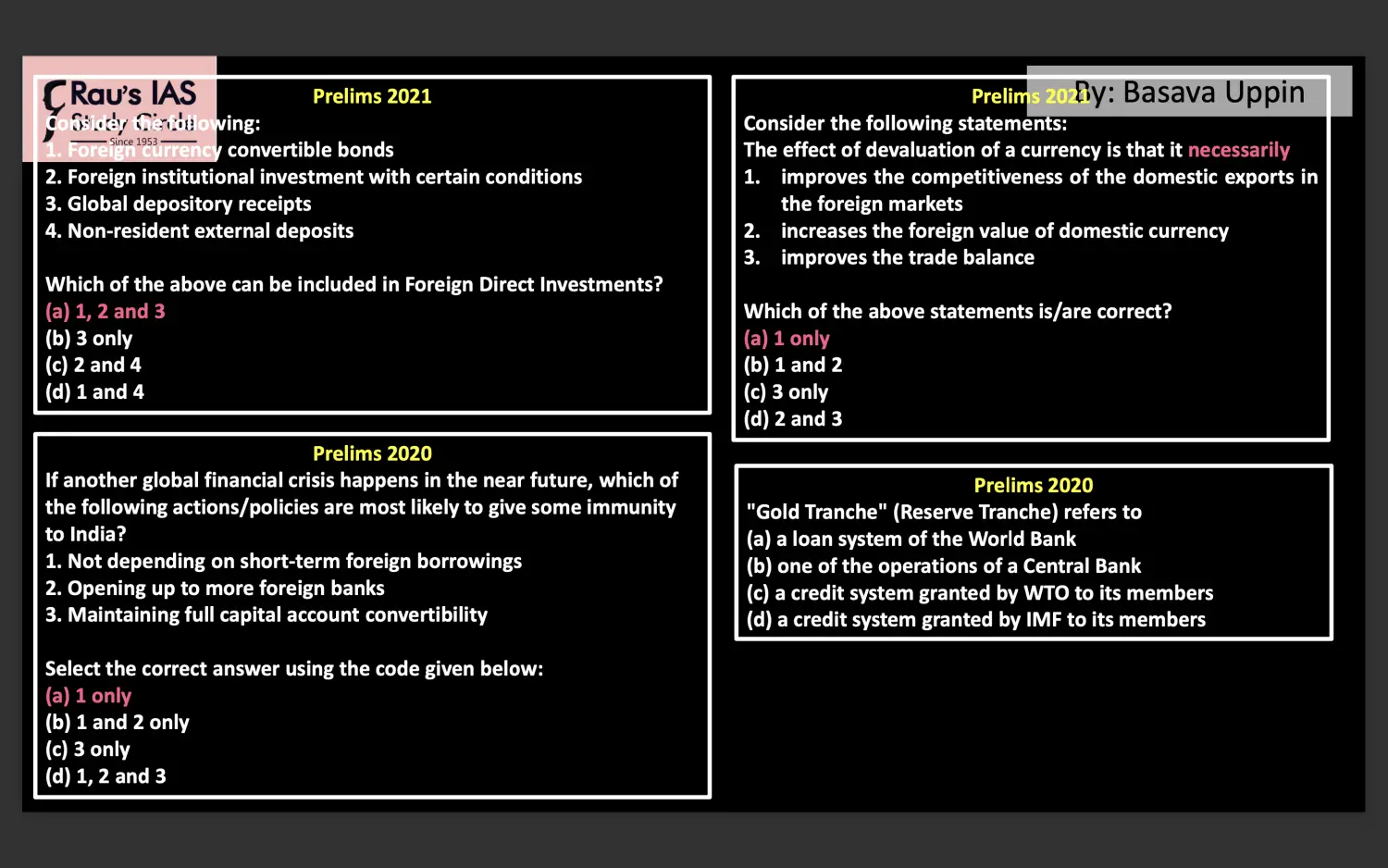
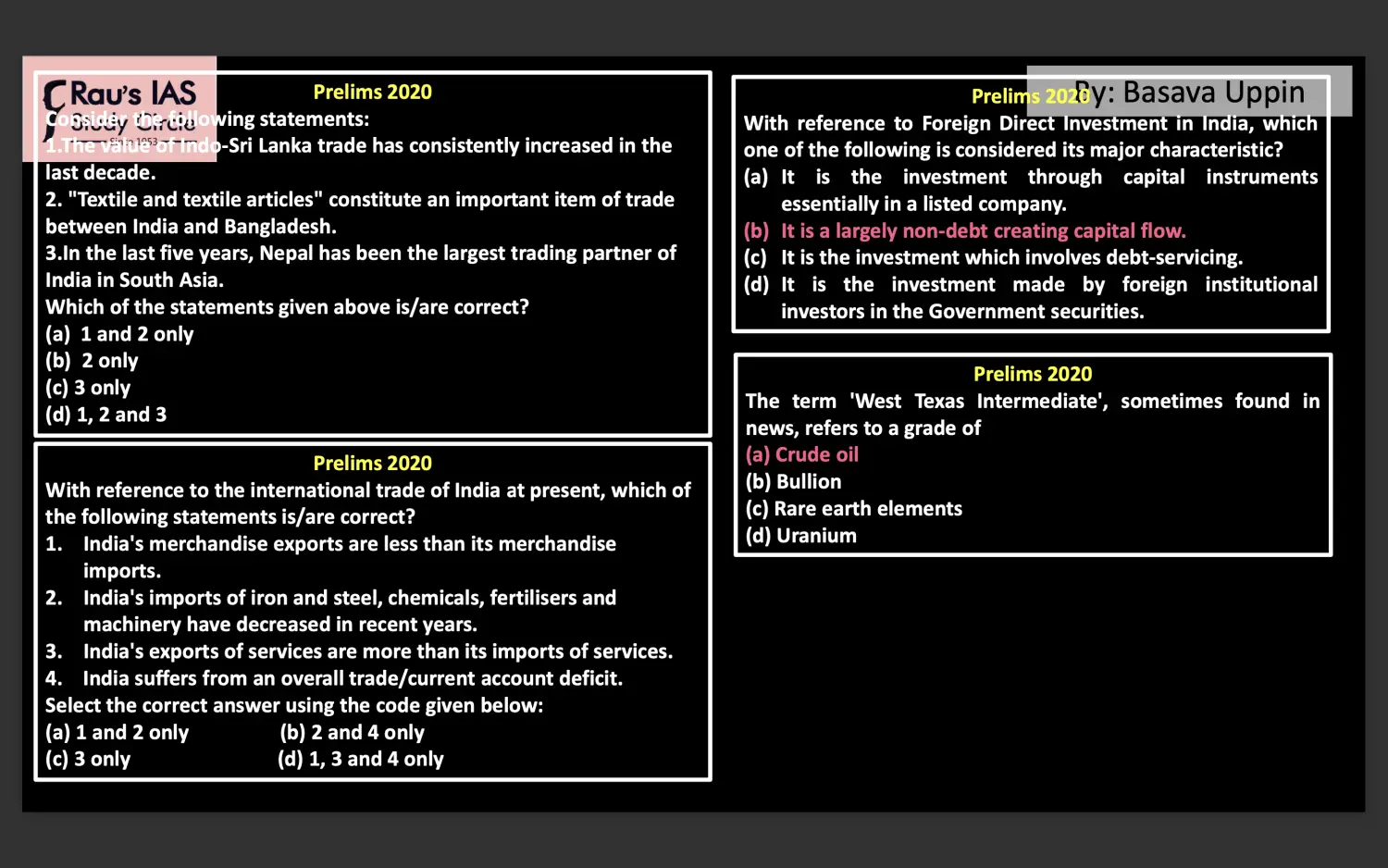
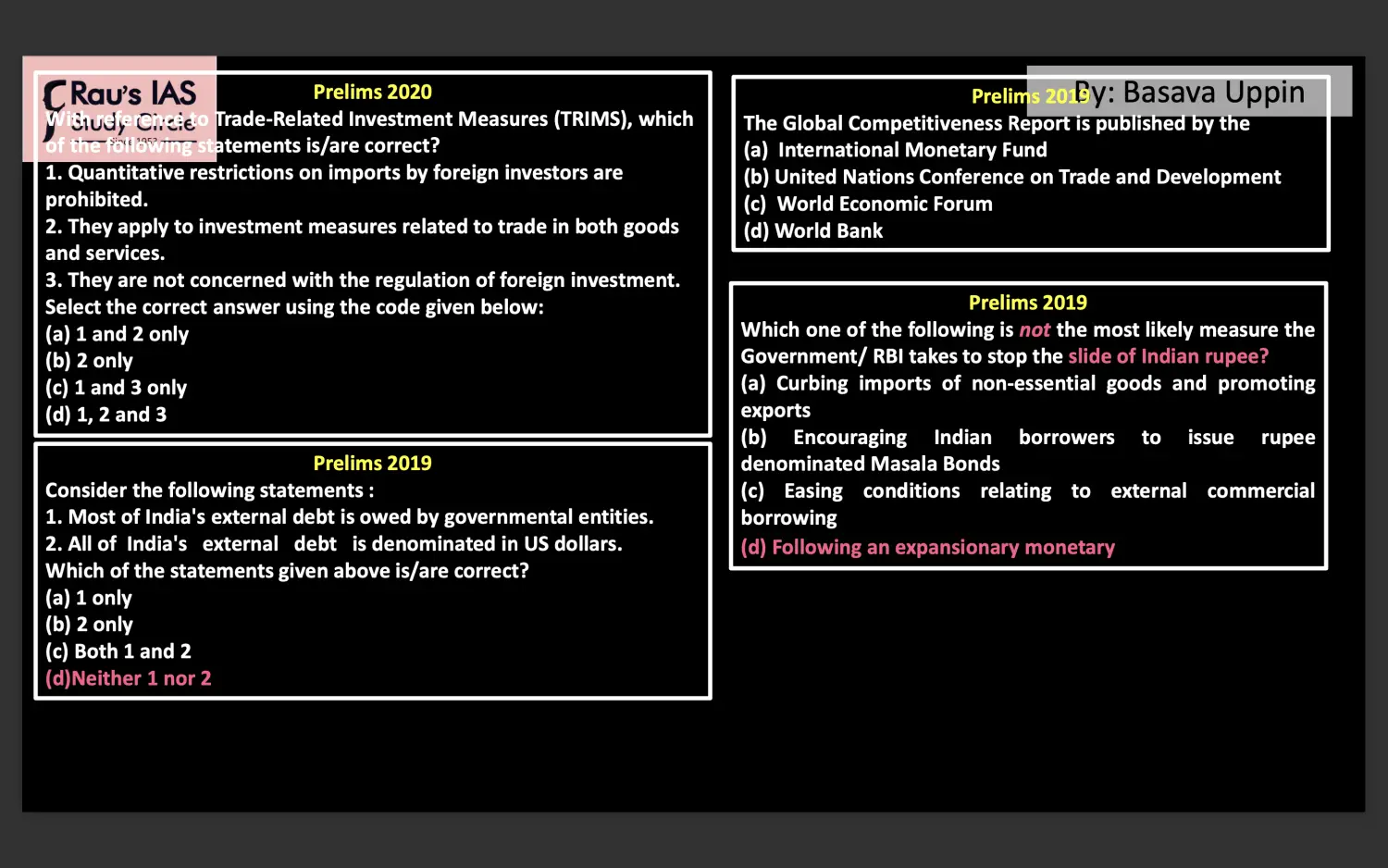
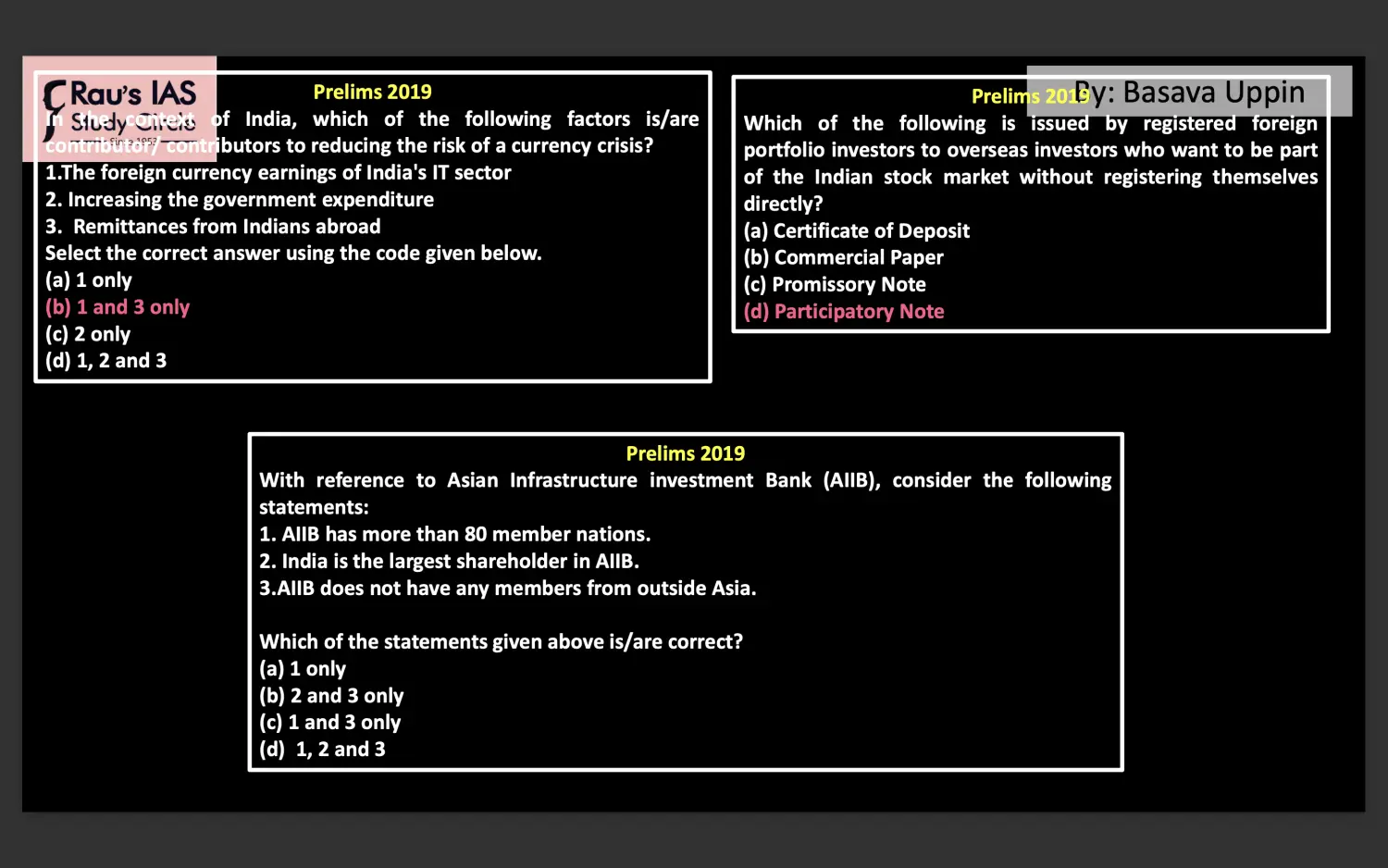
NRI Deposit is a Liability to India
BOP (Stock)
Introduction to BOP
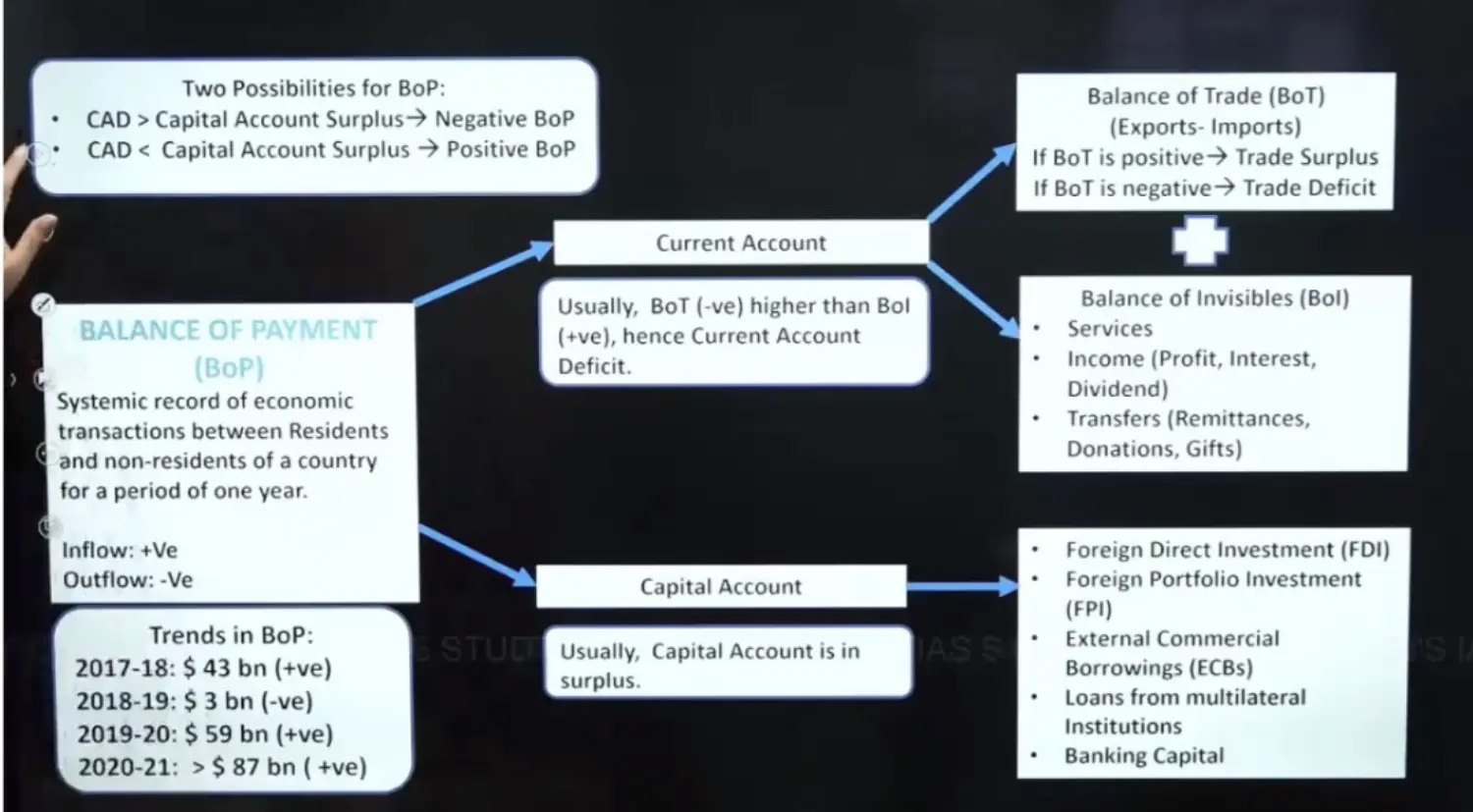
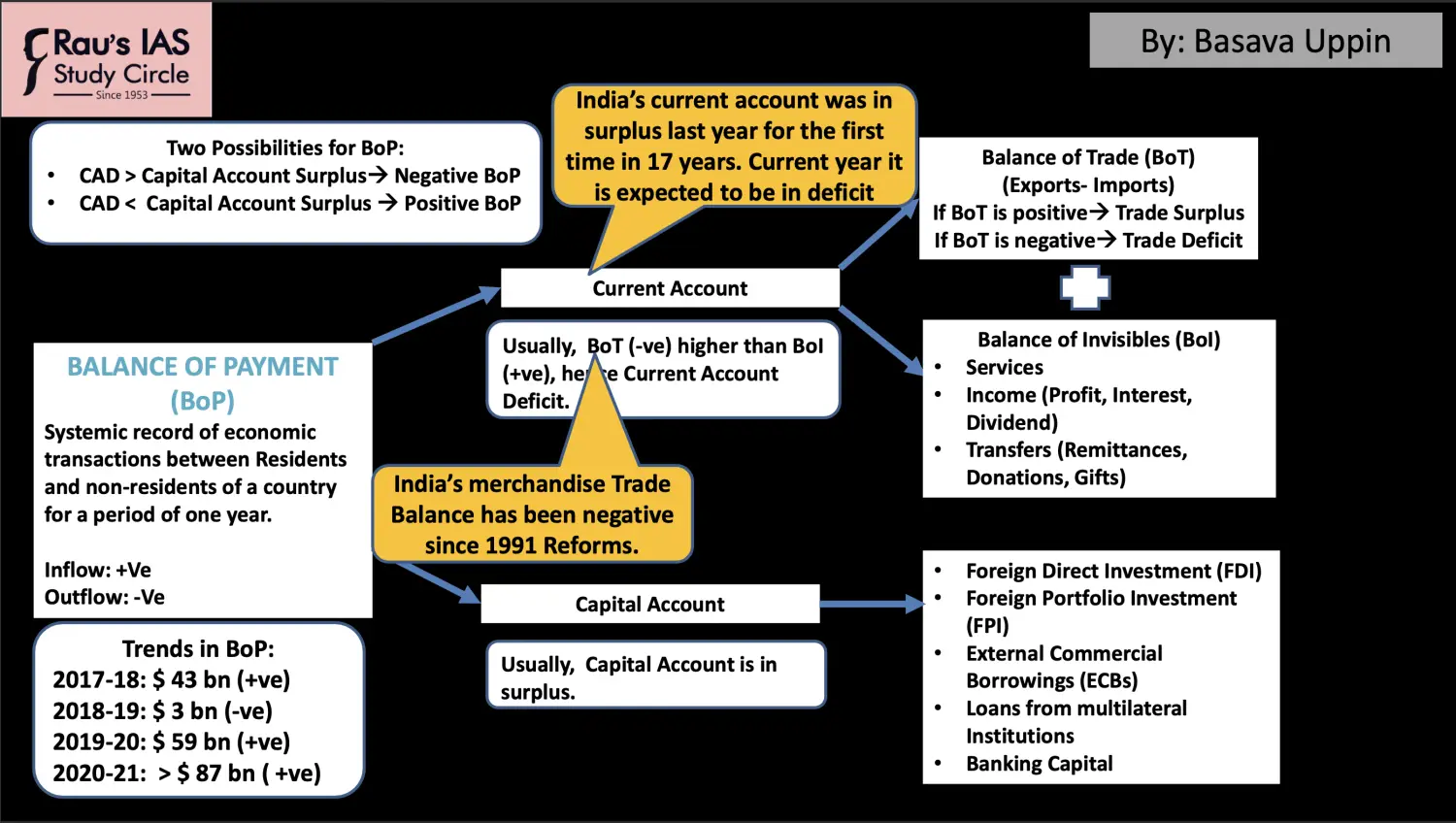
The account that keeps a record of all transactions between Residents and Non Residents
Import - Paisa Bahar Jaa Raha Hai
Export - Paisa India main aa raha Hai
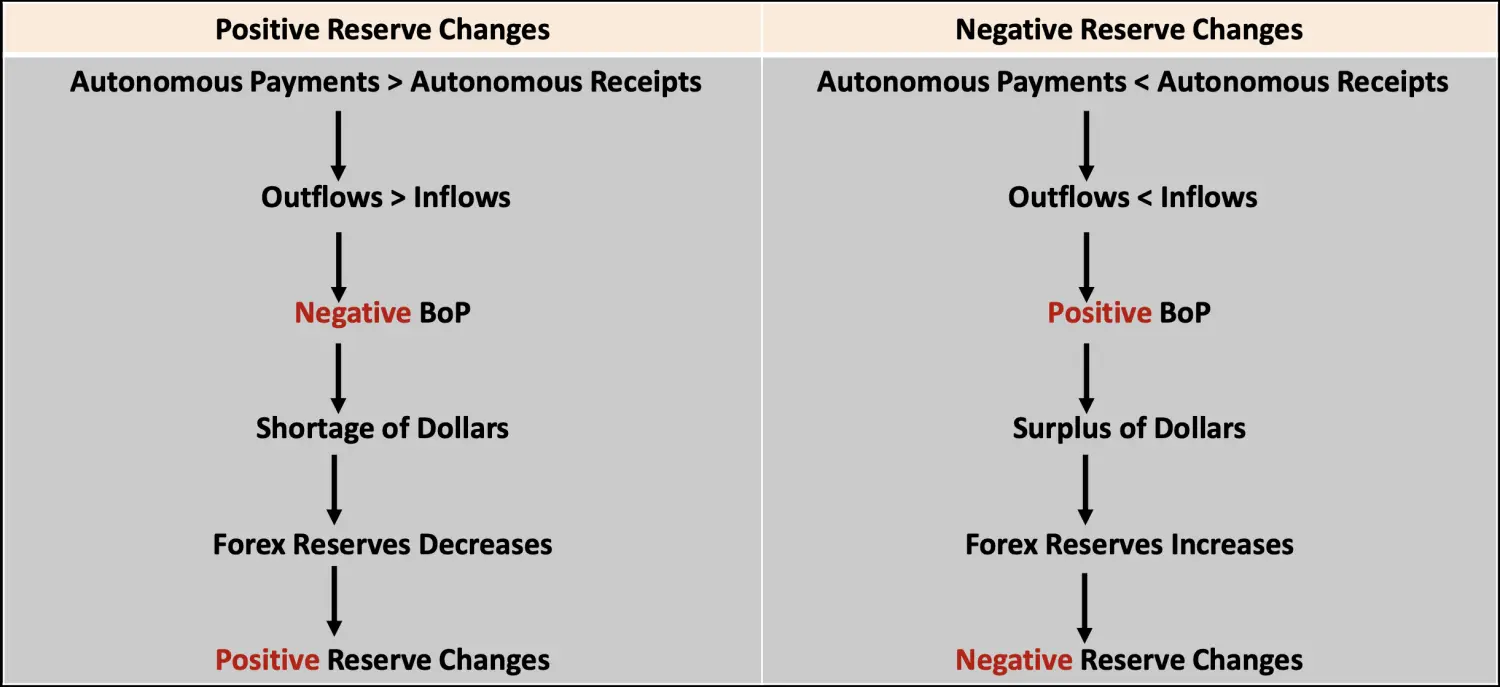
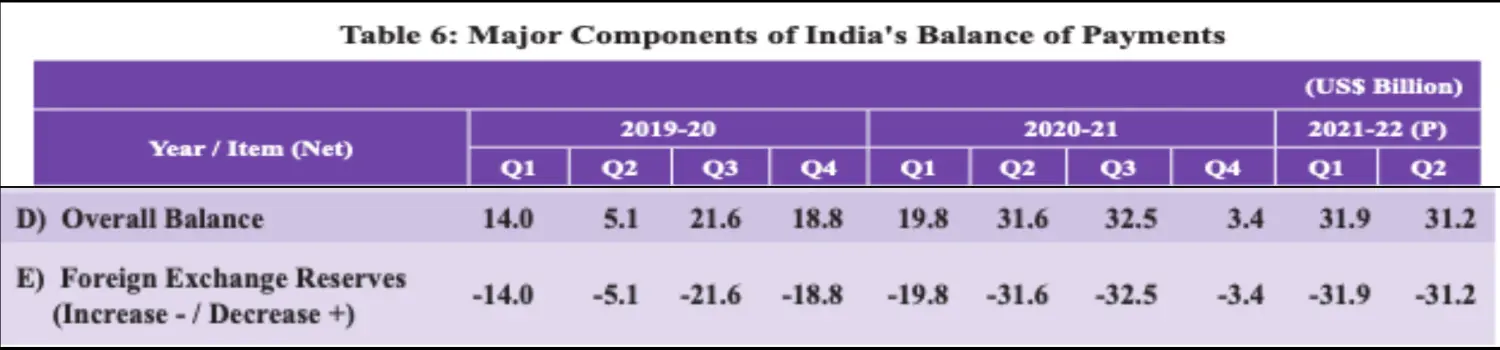
Inflow > Outflow → BOP + ve → Surplus goes to Forex Reserves Forex Reserves Increase
Outflow > inflow → BOP - ve Forex Reserve Decrease
Currency of Transaction
Foreign Currencies + Rupees
RBI Manages all the reports and transactions for BOP
Components of BOP
- Current A/C
Balance of Trade (BoT) + Balance of Invisibles (BoI)
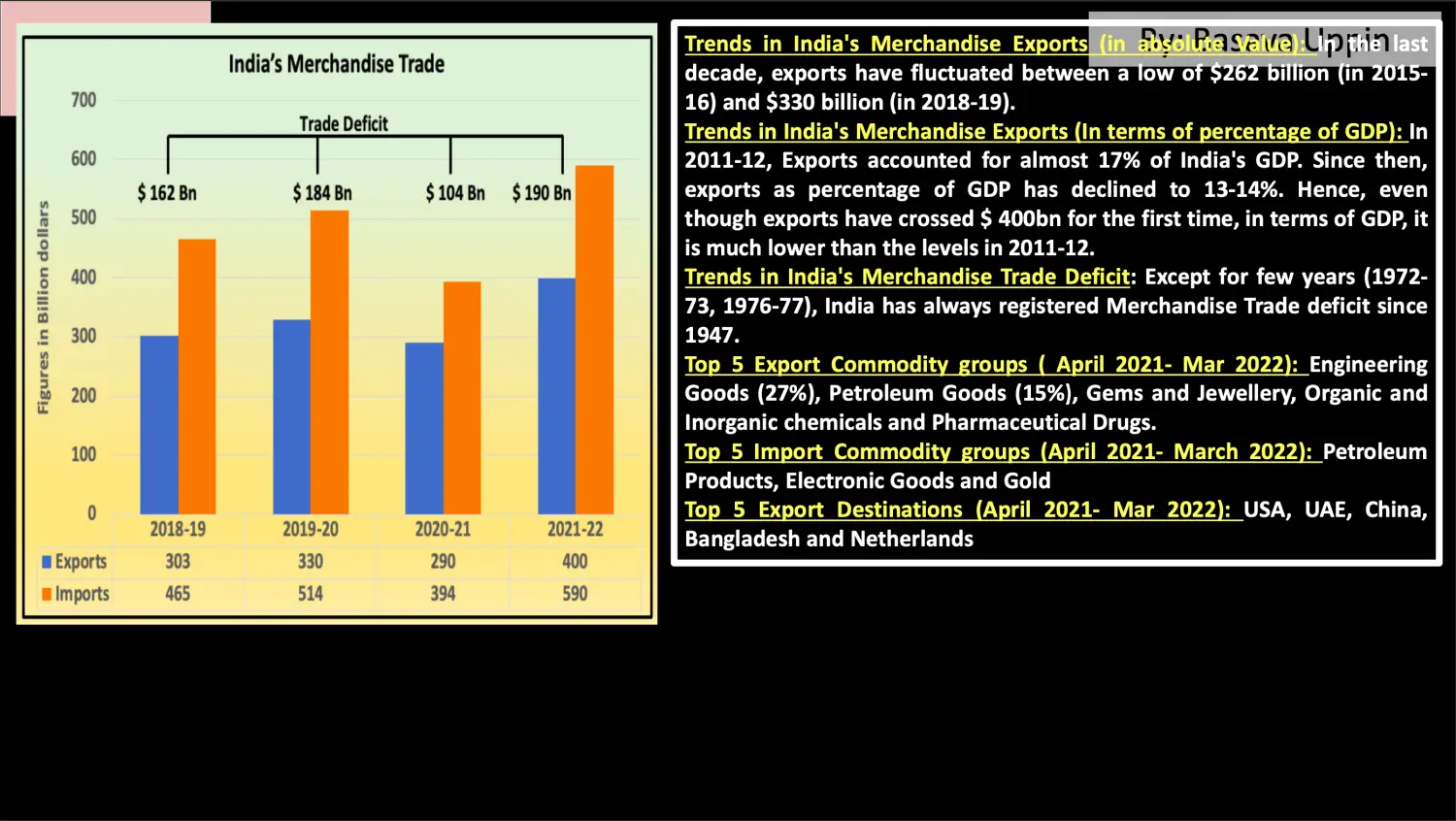
Balance of Trade Covers all the Merchandise, Not Service = Exports - Imports
Export & Import in Terms of GDP
Total Export in % age of GDP → 20%
Total Import in % age of GDP → 21%
Net Export of (-1%) GDP
Hence BoT for India has been Negative Since 1947 for 99.2%
Hence India is majorly an Importing Country in Merchandise
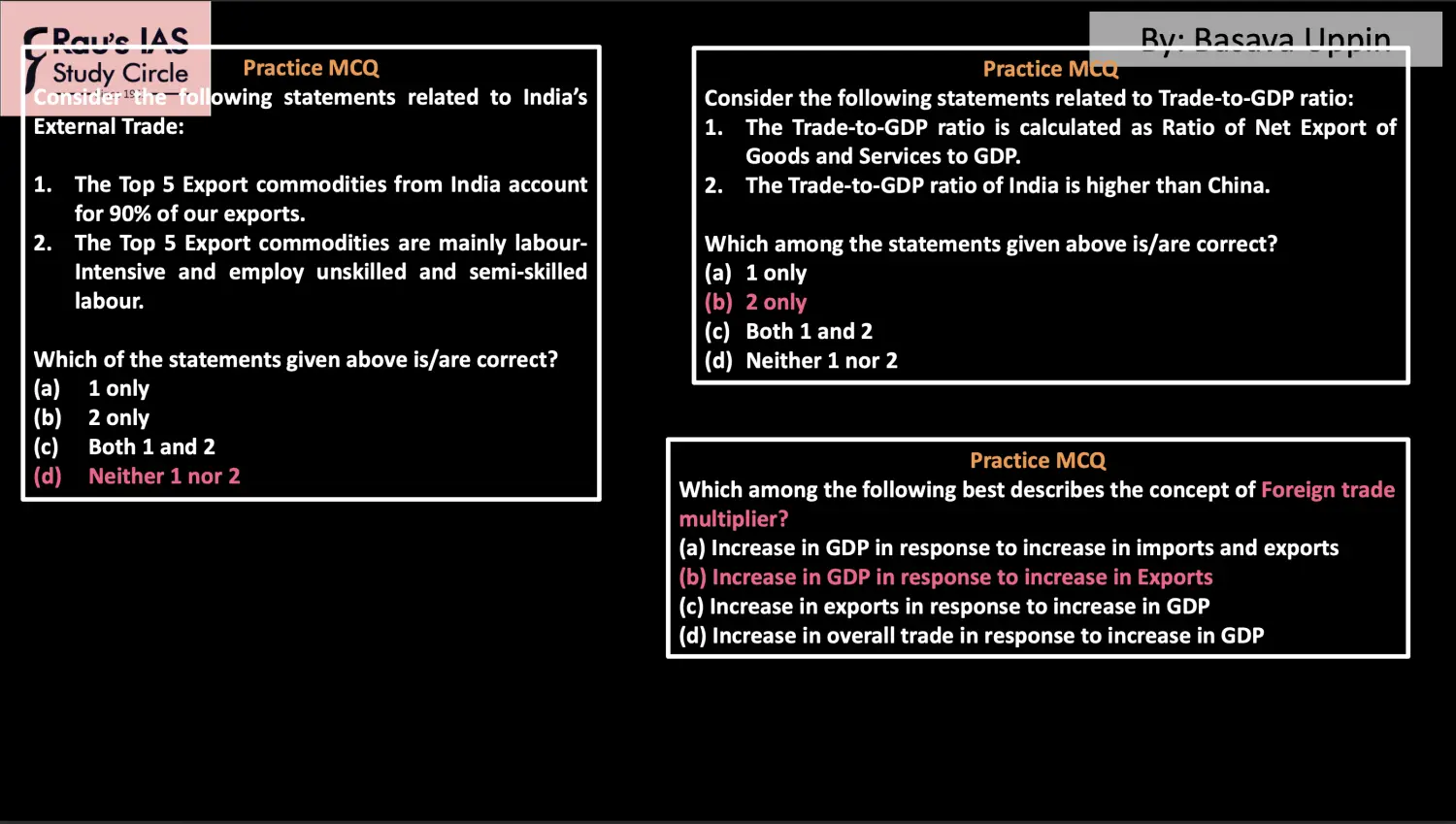
Trade to GDP Ratio
Export + Import = 41% of GDP
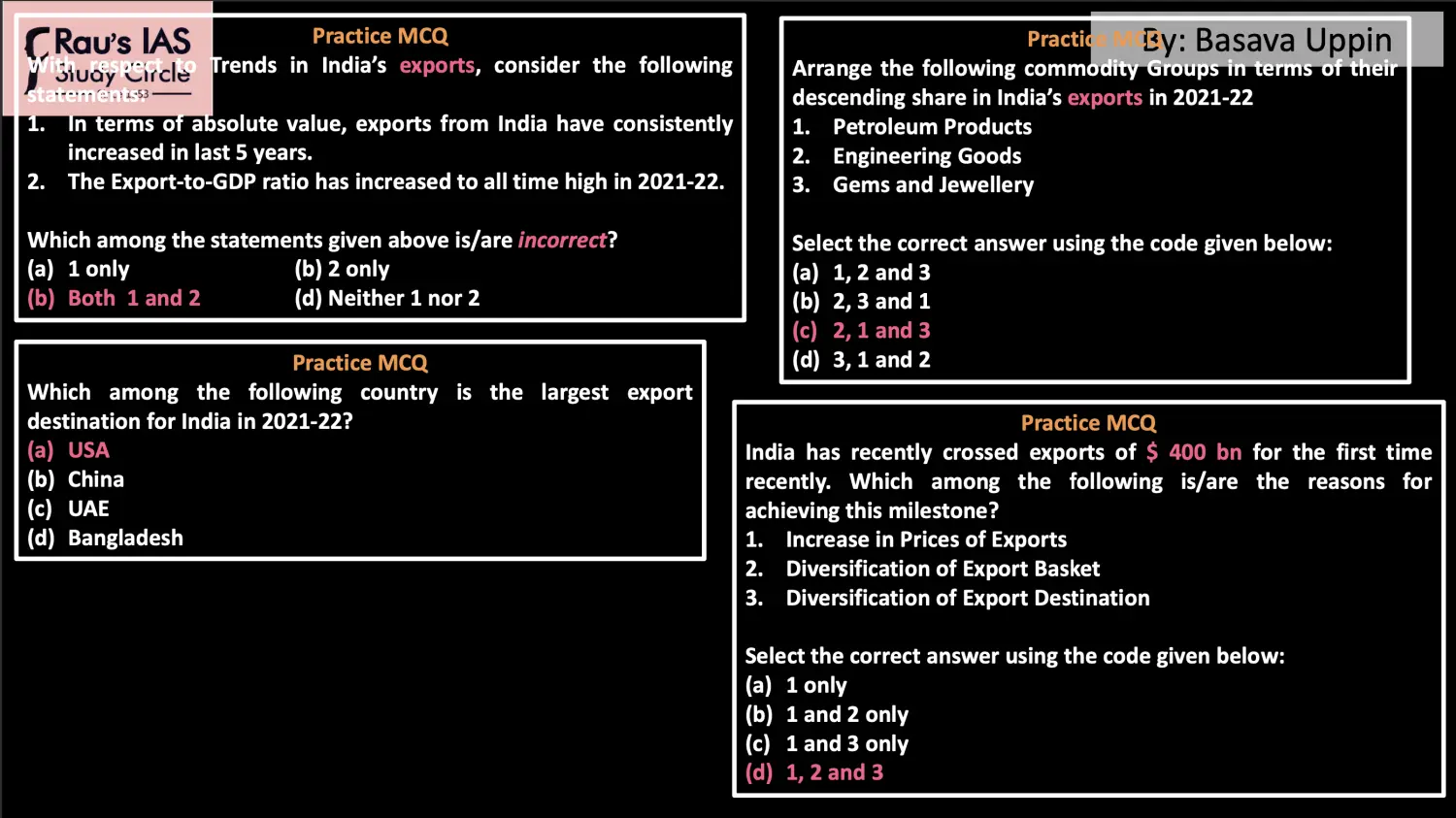
Indian (41%) Trade to GDP Ratio is more than China's (36%)
Balance of Invisibles SIP = Services Income & Transfers
Each of them is a Net Value 👇👇👇👇
- Services = Export of Services - Import of Transfers
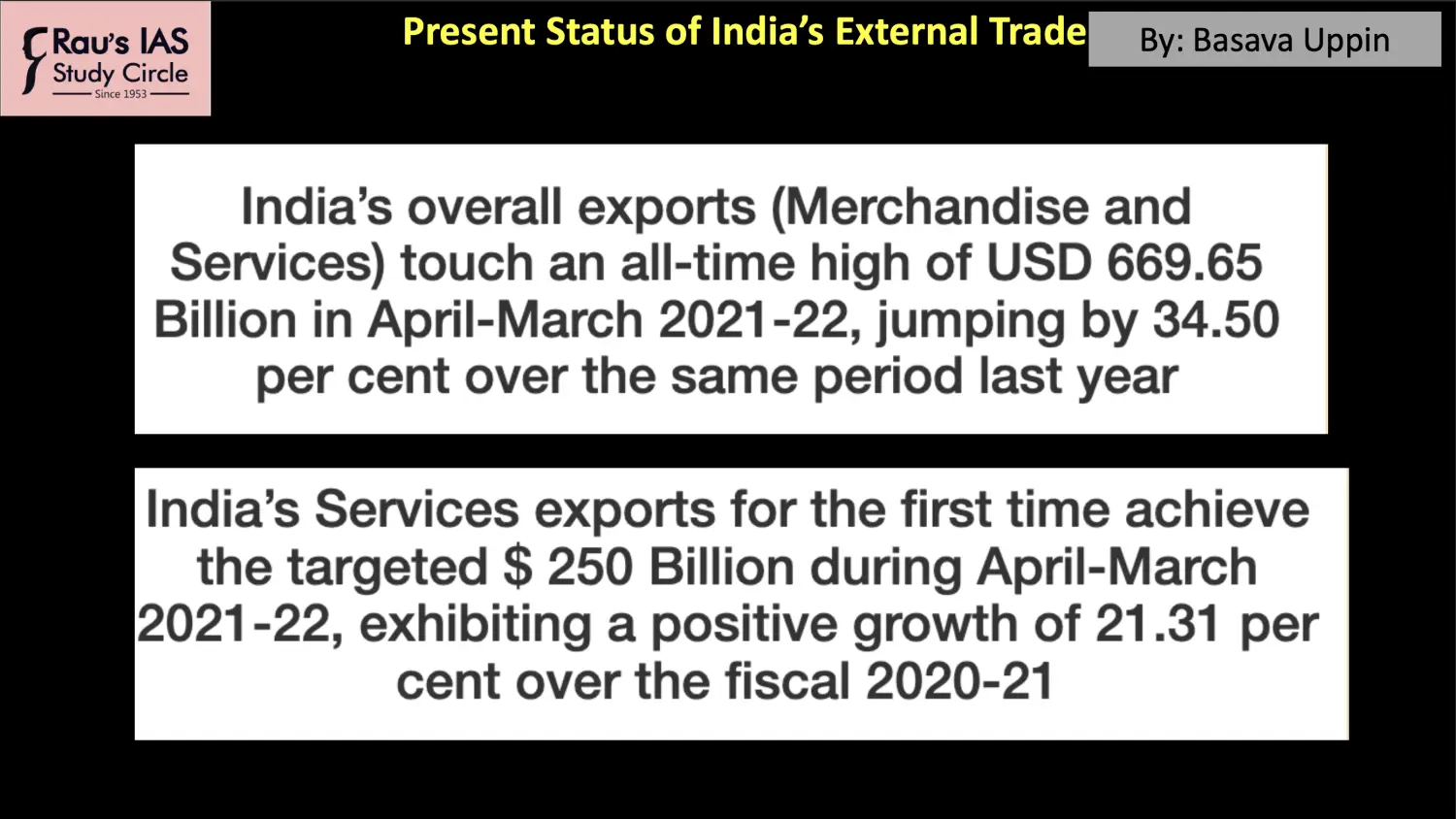
India is a Majorly Service Exporting Country
Income = Profit + Interest + Dividend
Transfers = Gift + Donation + Remittances
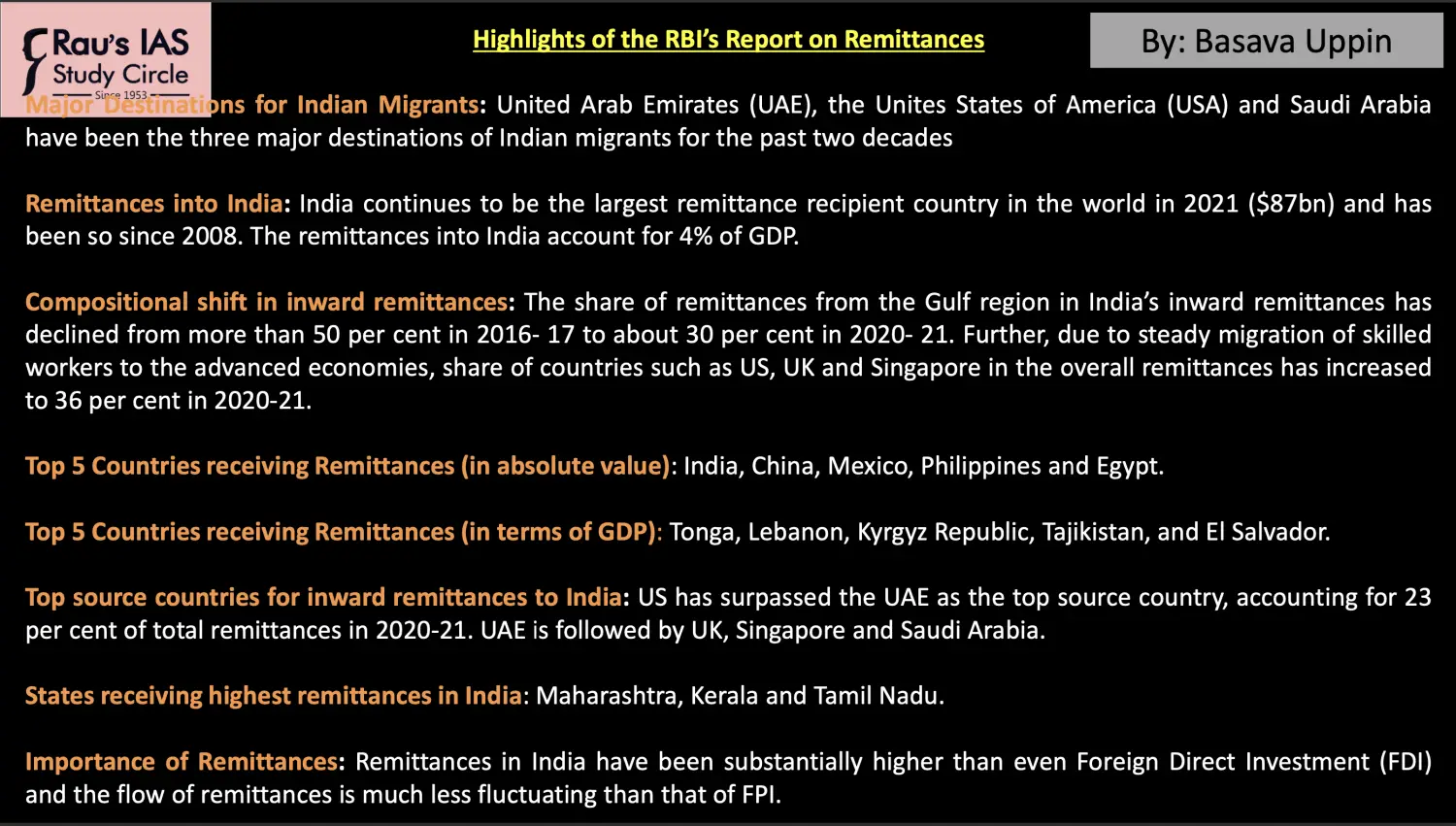
India receives the highest remittances in the world i.e 80 Billion Dollars
Current Account would be
- Positive → BoT(-ve) > BoI (+ve)
- Negative → BoT(-ve) < BoI (+ve)
- Generally, the Current a/c of India was negative. In the last 2 years, it has been in Surplus
- Capital A/C
- FDI - Foreign Direct Investment
- FPI - Foreign Portfolio Investment
- ECB - External Commerical Borrowing
- Trade Credit
- Loans from Multilateral Institutions
- NRI Deposits
👨🏫 In India Current a/c is generally (-ve) & Capital a/c is generally (+ve)- Current A/C
Summary of BOP
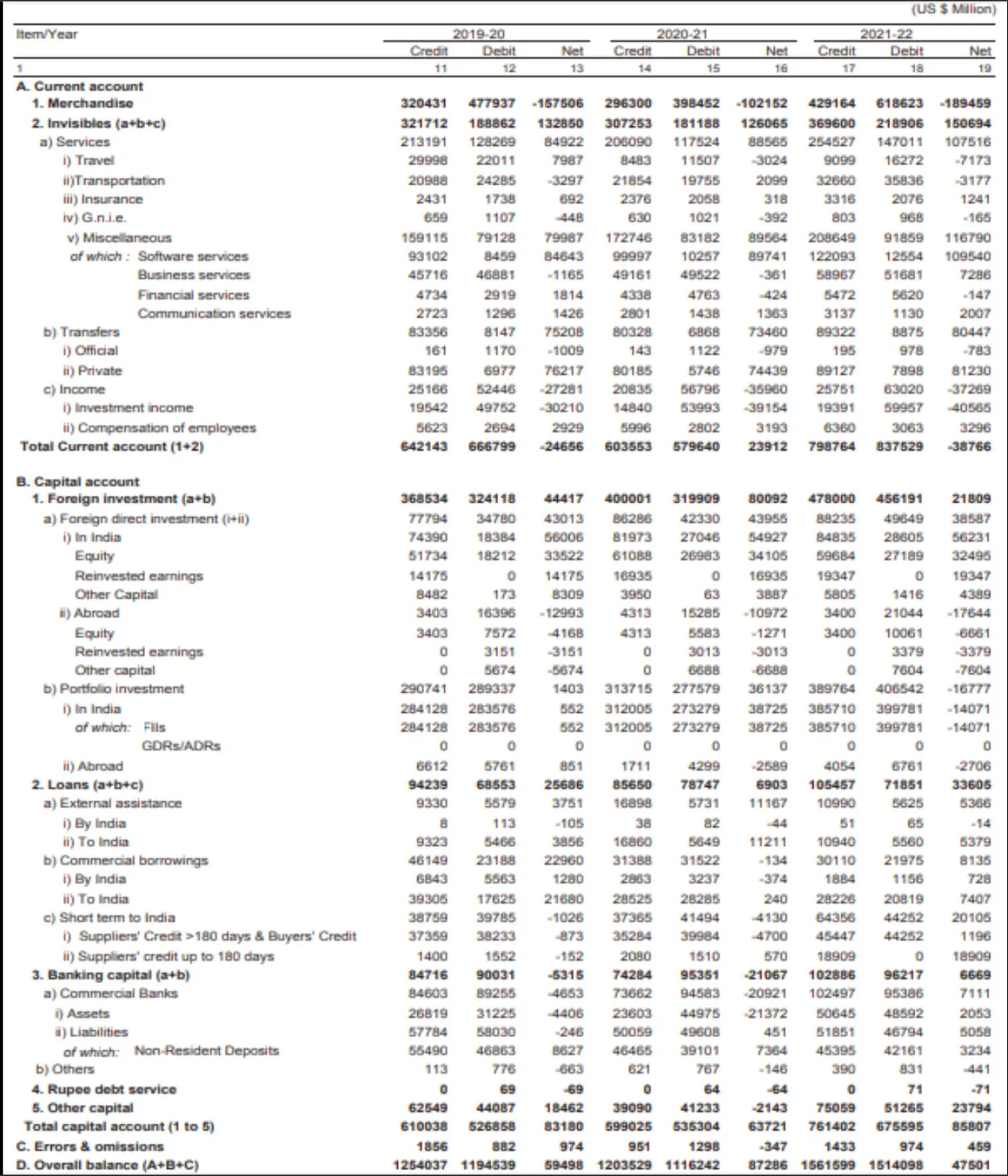
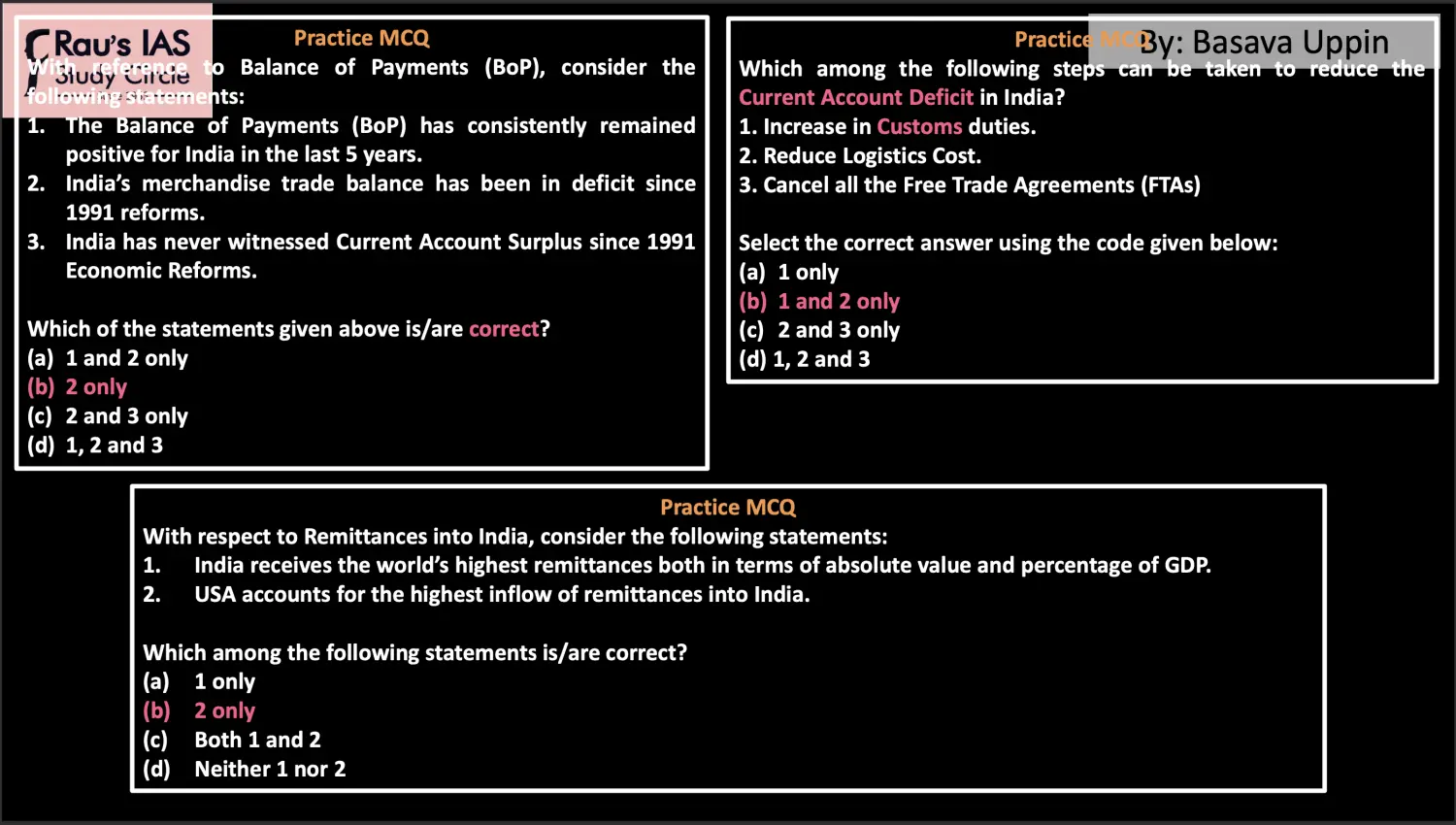
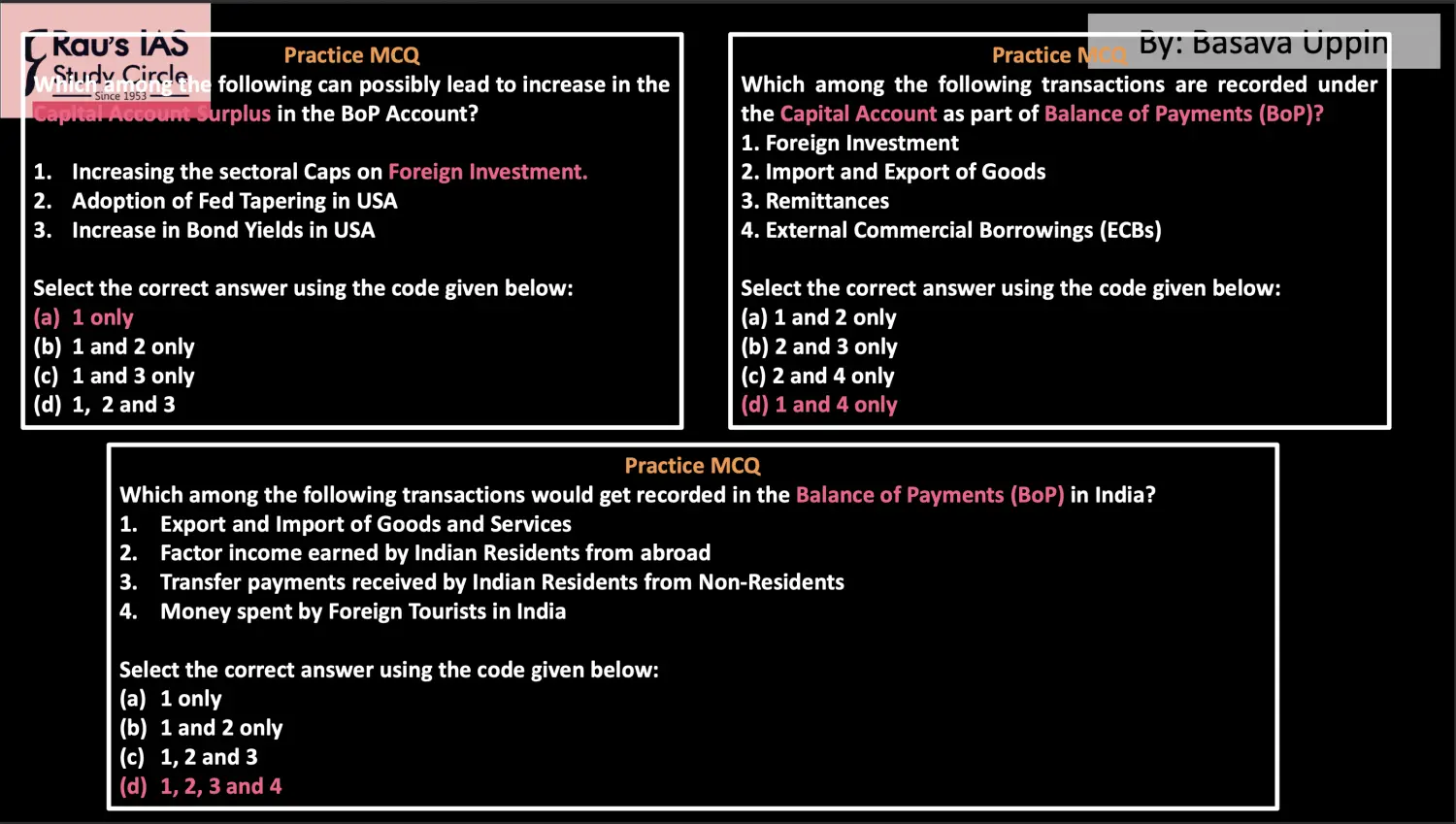
Practise Questions
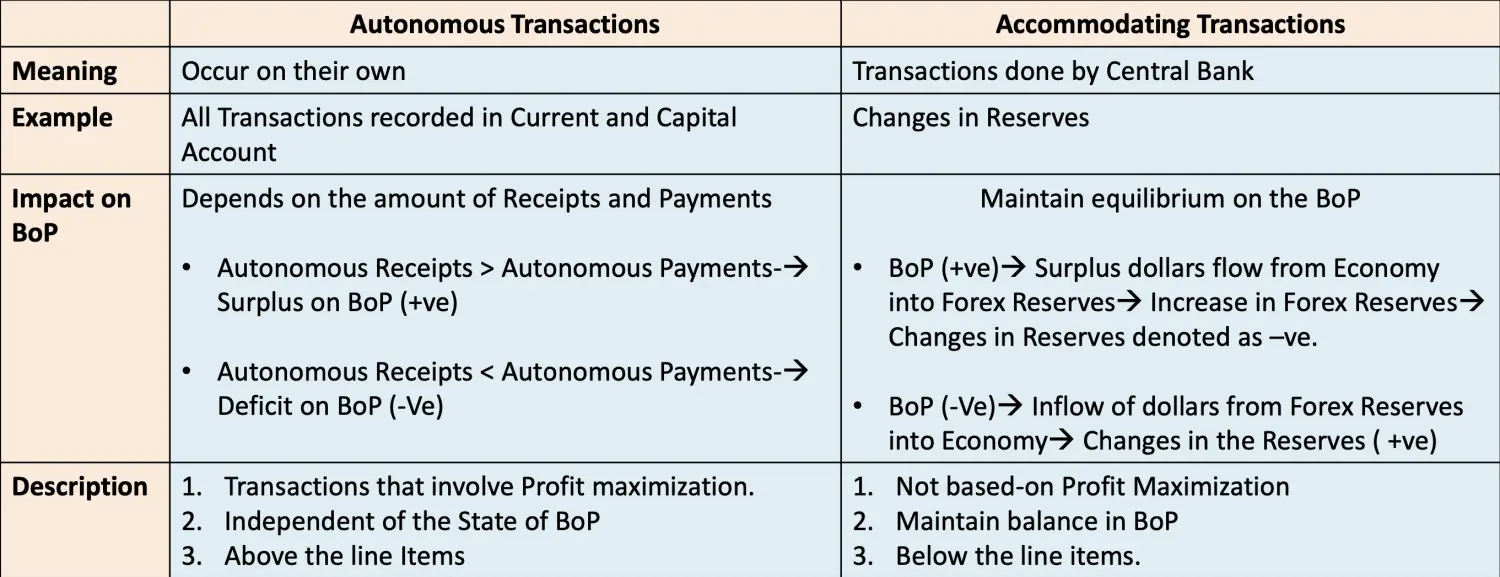
Autonomous and Accommodating Transactions
NIIP - Net International Investment Position (Flow)
NIIP for India is Negative
Note: BoP is Flow, whereas NIIP is Total Stock
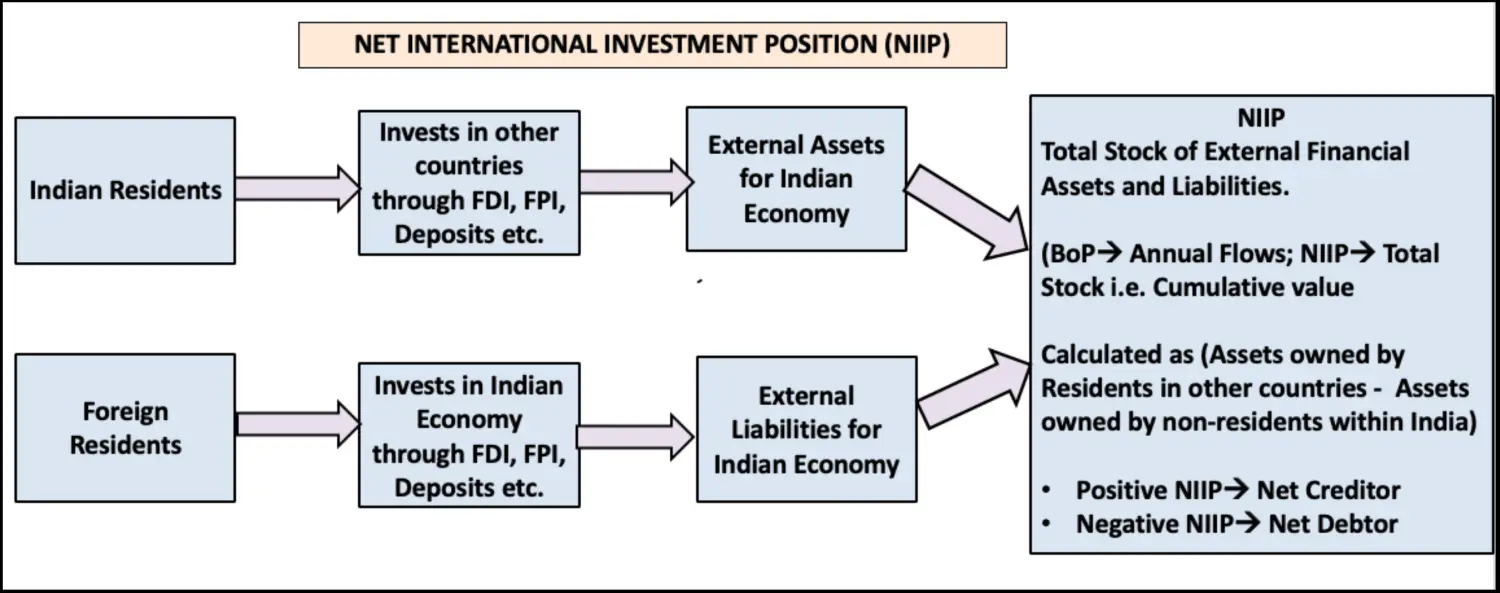
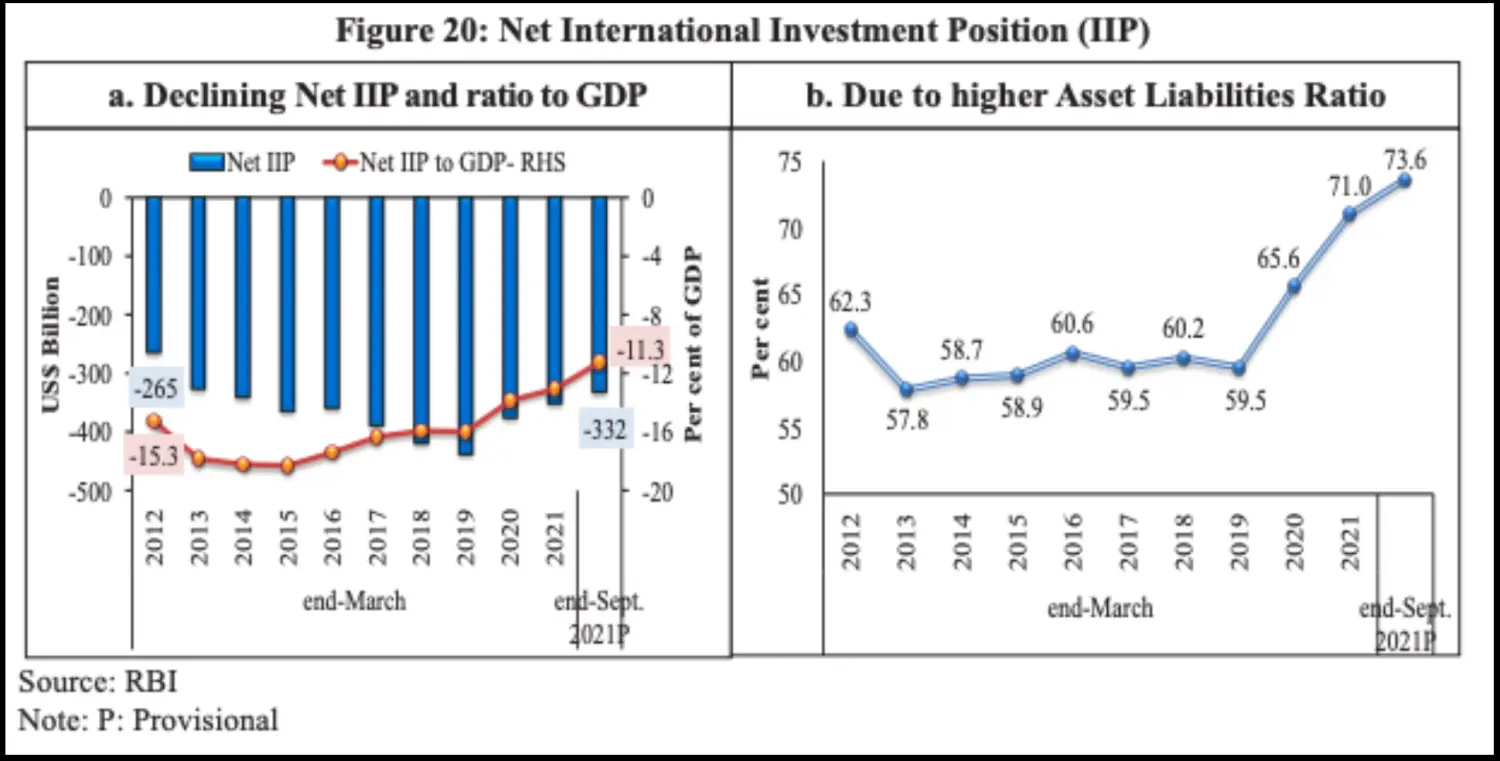
NIIP of India: -332 Billion Dollars & -11.3 %age of GDP
According to Present Scenario of Indian Economy, It is good for India as of Now.
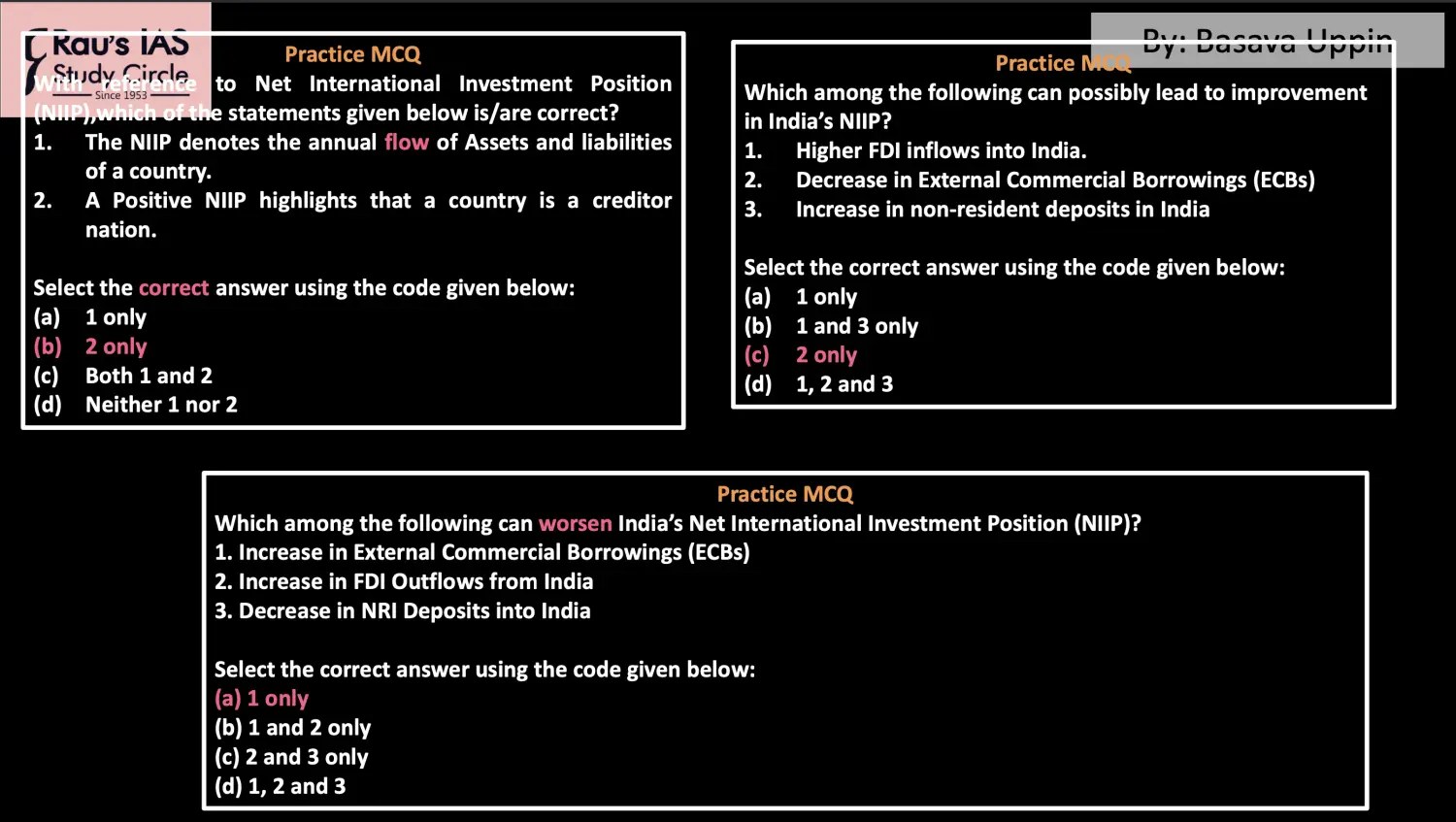
Prelims Pointers on Indian BoP
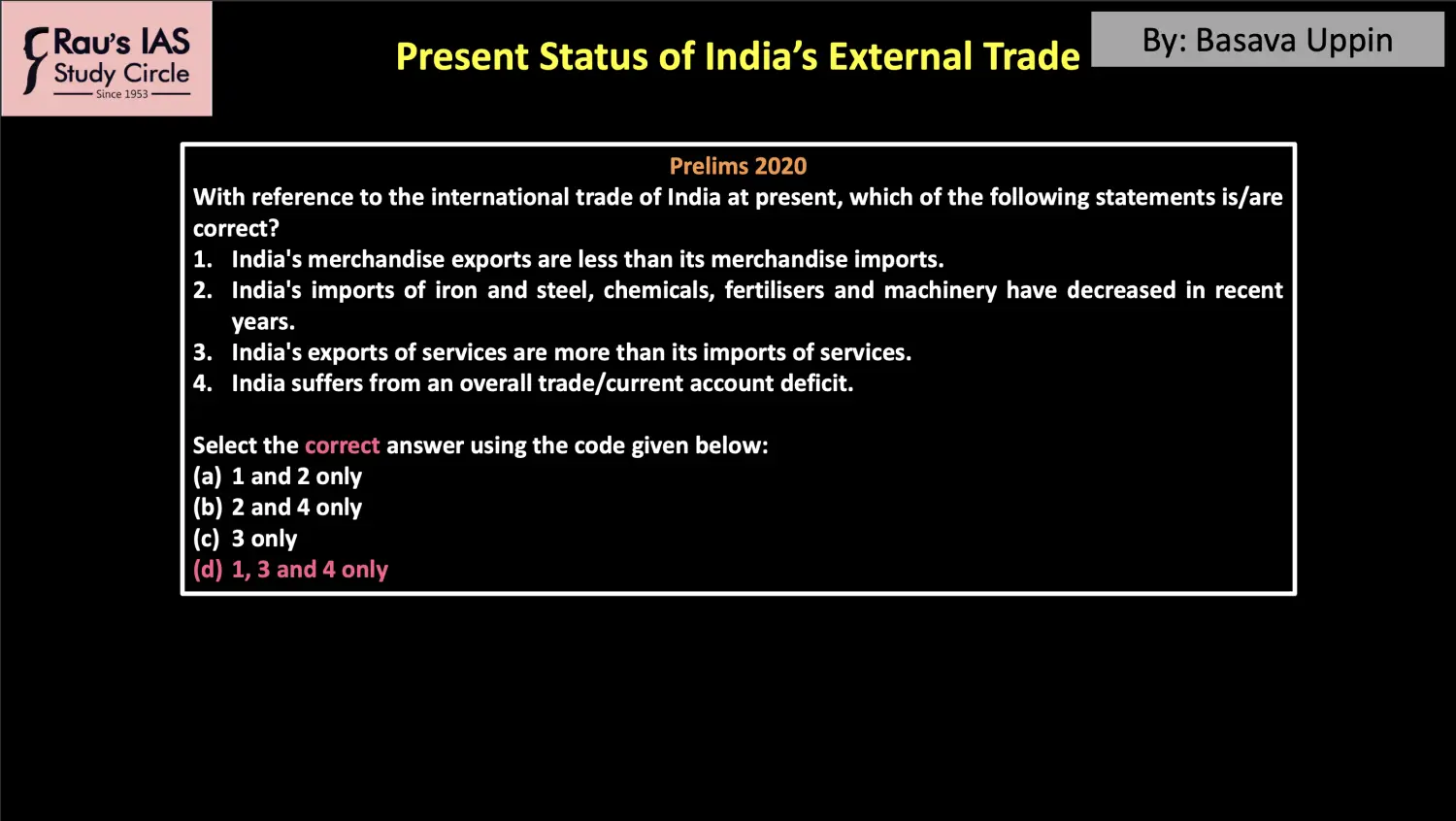
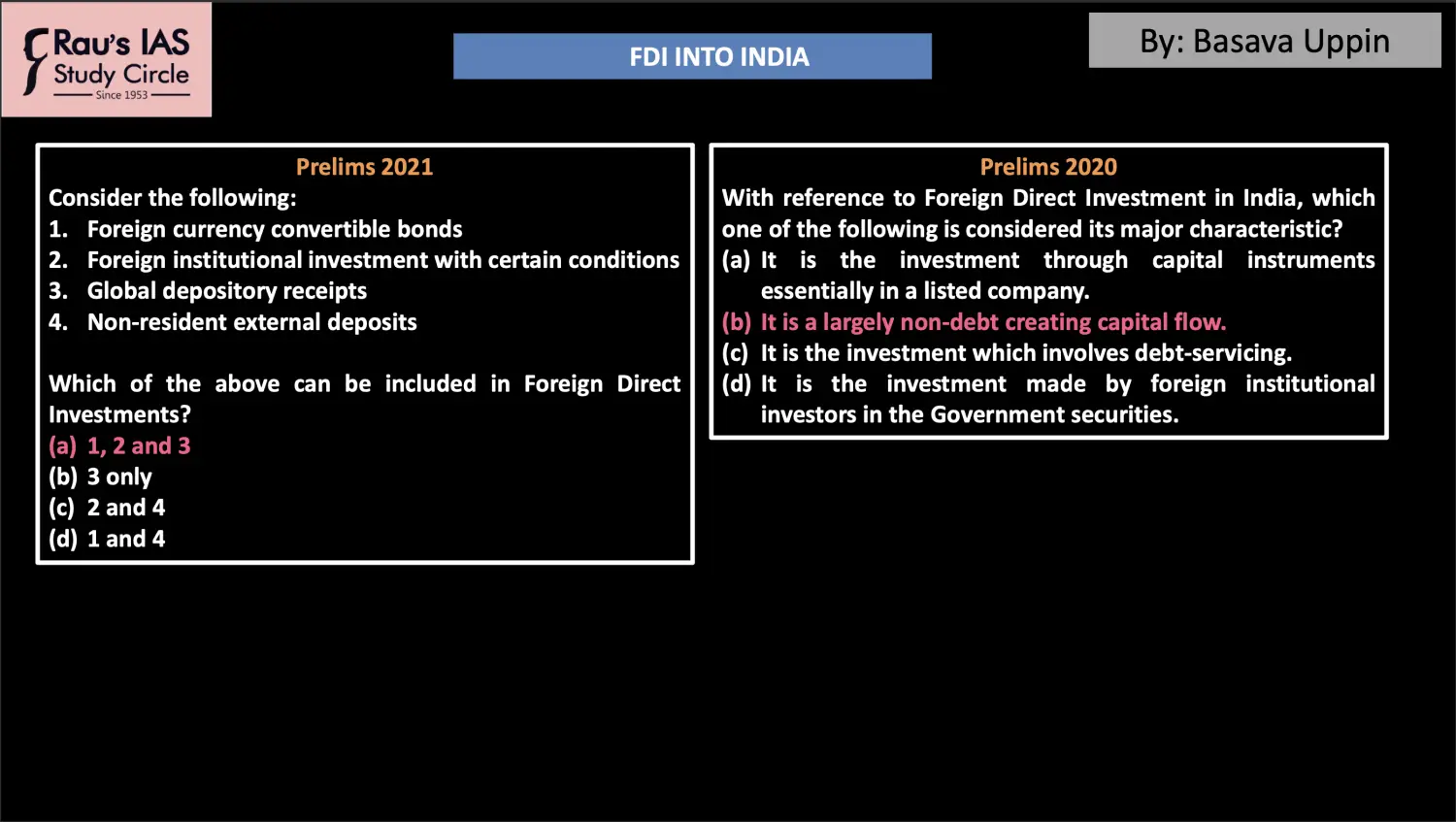
FDI into India PYQ of Prelims
- Terms
- FDI - Foreign Direct Investment
- FPI - Foreign Portfolio Investment
- FII - Foreign Institutional Investment
- QFI - Qualified Foreign Investment
- QFI & FII are now part of FPI
- Terms
Difference Between FDI & FPI
Recommended by Arvind Mayaram Committee
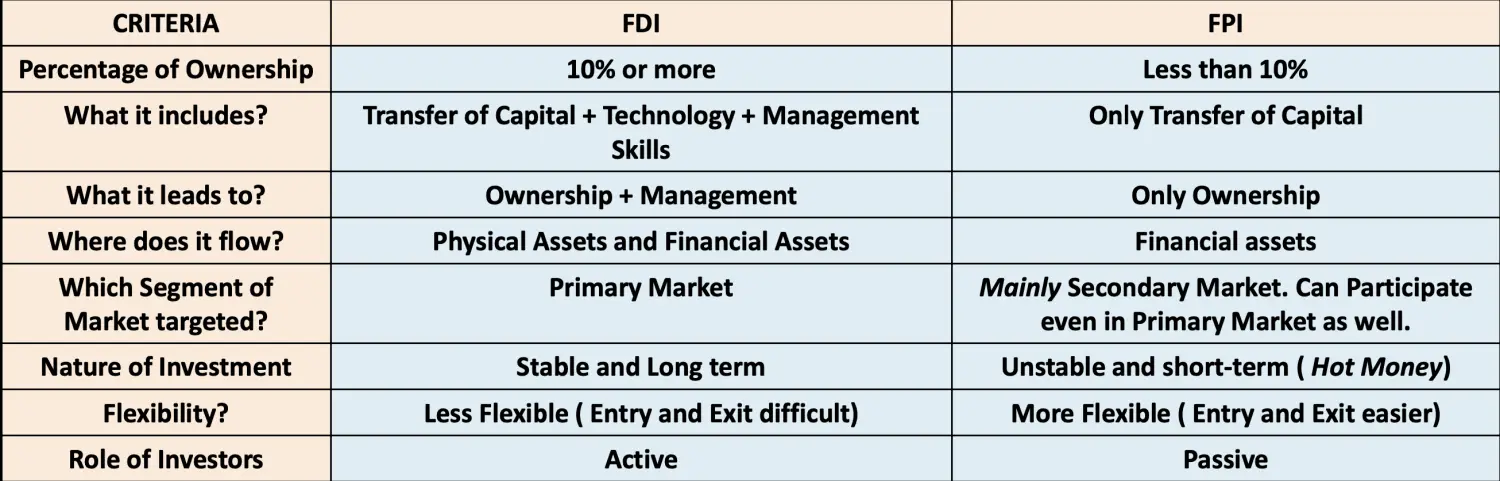
FDI can be in Secondary Market but it is very Scarce.
Prelims Pointers on FDI
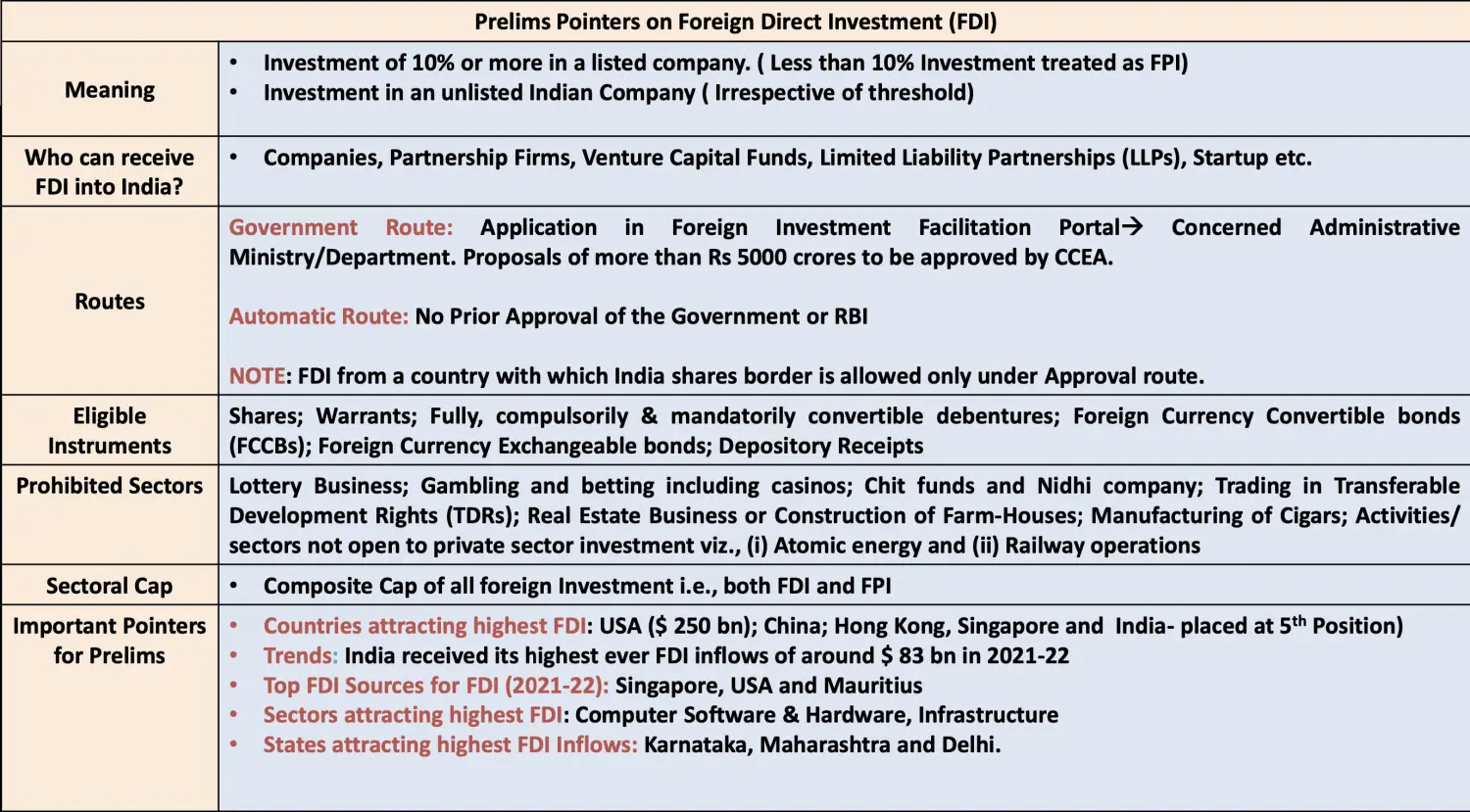
Difference between Foreign Direct Investment & Indirect Foreign Investment
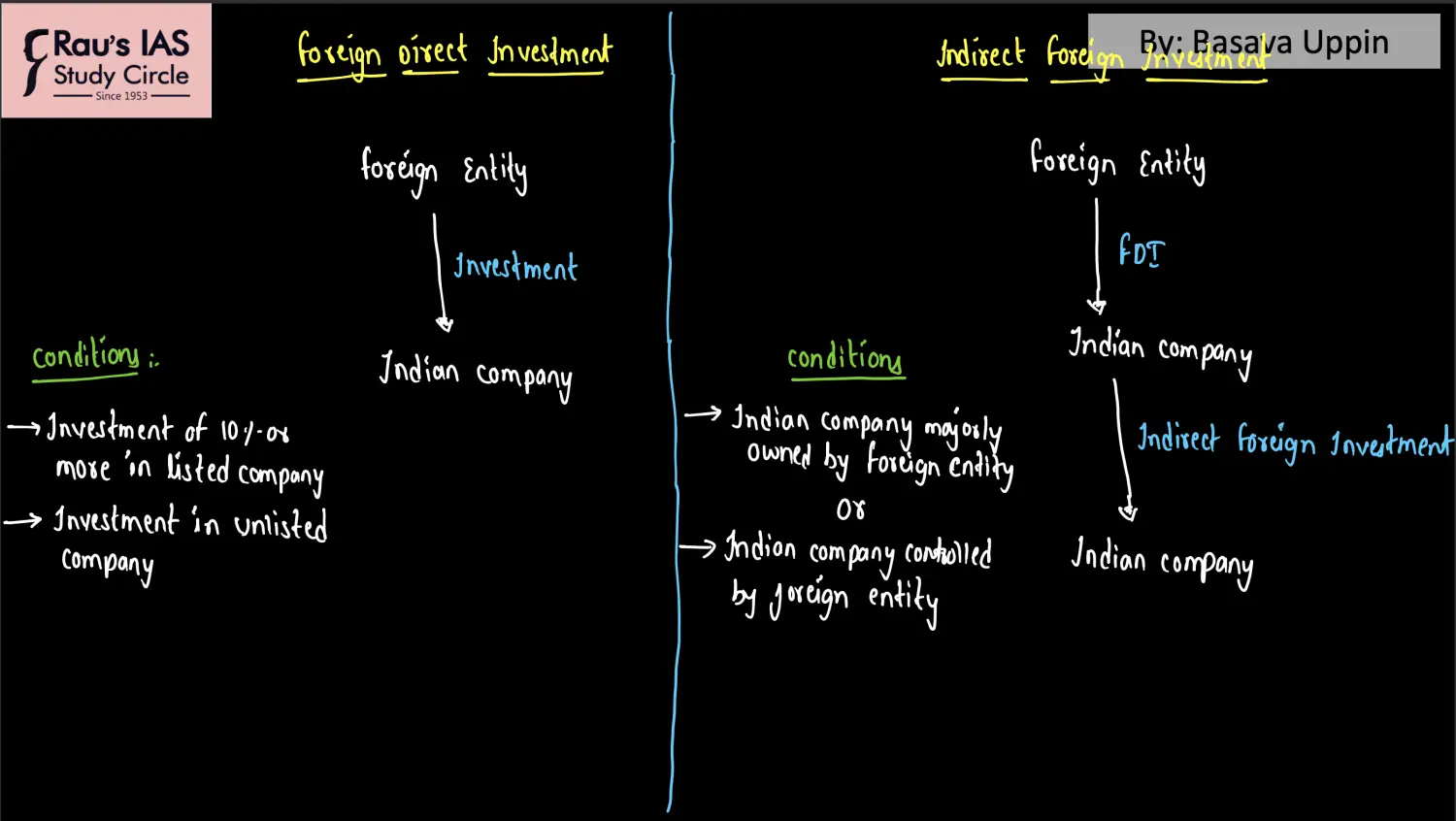
Control Means → BOD appointed by Foreign Entity
Indirect Investment is considered as FDI with similar restrictions
in Indirect Investment → Indian Company at Mid Level, if makes a Downstream Investment
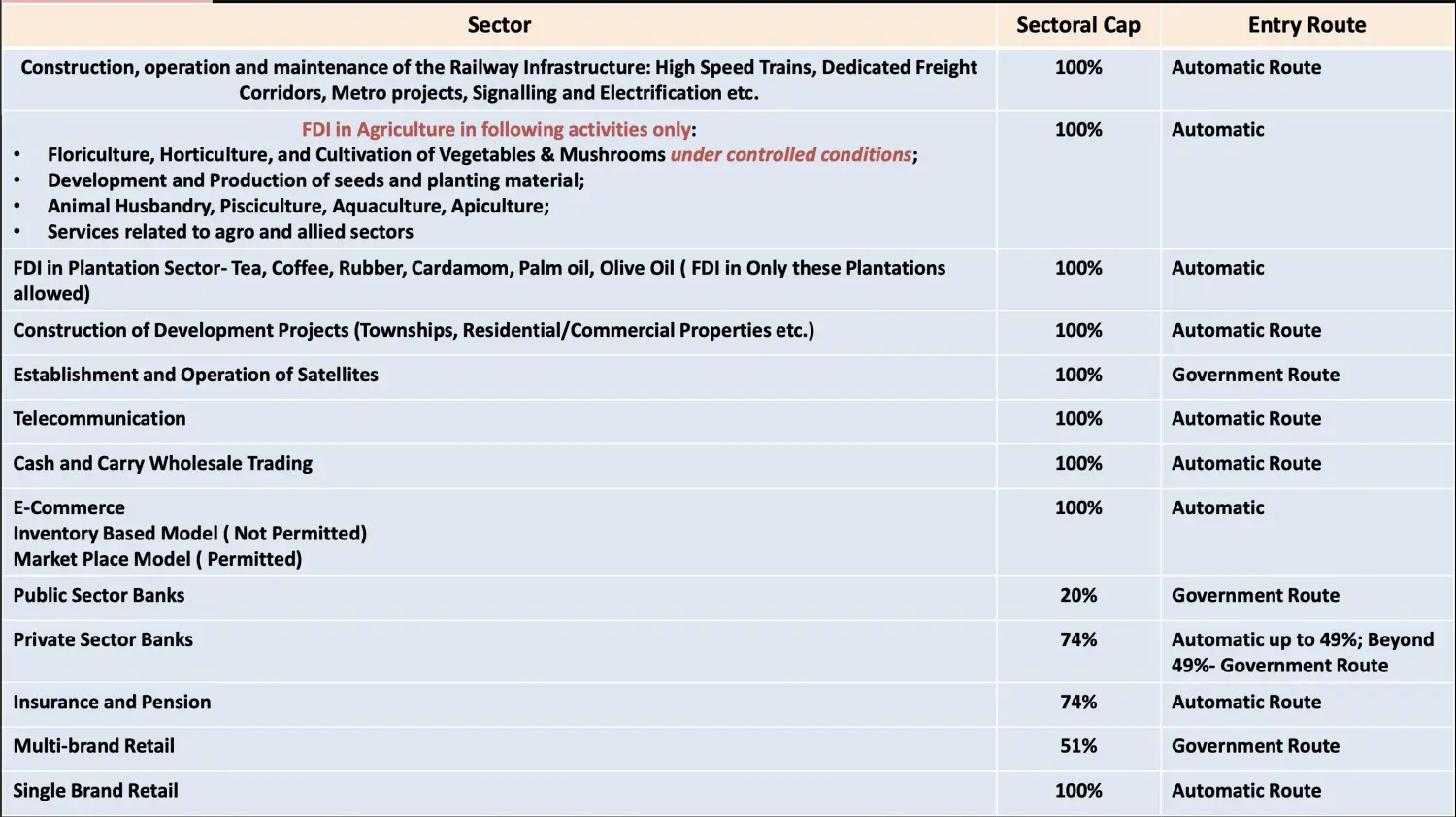
FDI (Sectoral Caps in FDI)
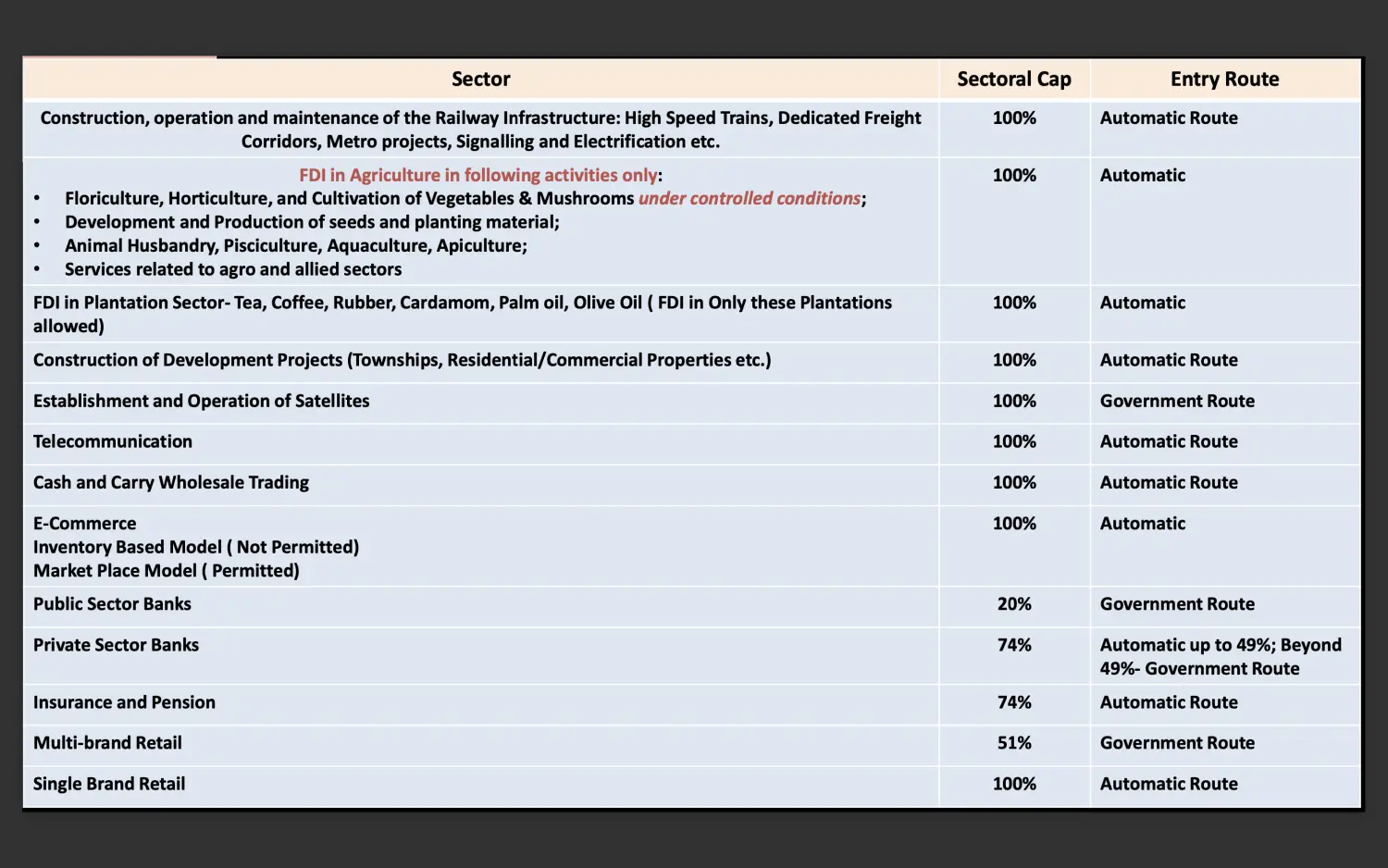
Allowed → Railways, Cultivation under Control Conditions, Seeds, Animal Husbandry, Plantation Sector
E Commerce →
Inventory Based Model (Own their Good) → Croma, Jio Mart
Example : Cloud Tale is now closed
Marketplace Model (Bring Sellers & Buyers together) → Amazon
Single Brand Retail → Under One Roof, Commodity of One Brand → Nike, Puma, Starbucks
Multi Brand Retail → Under One Roof, Many Brands → Shoppers Stop, Lifestyle, Walmart
Current Condition : First Centre and then State Govt Approval Needed
Changes in FDI Policy
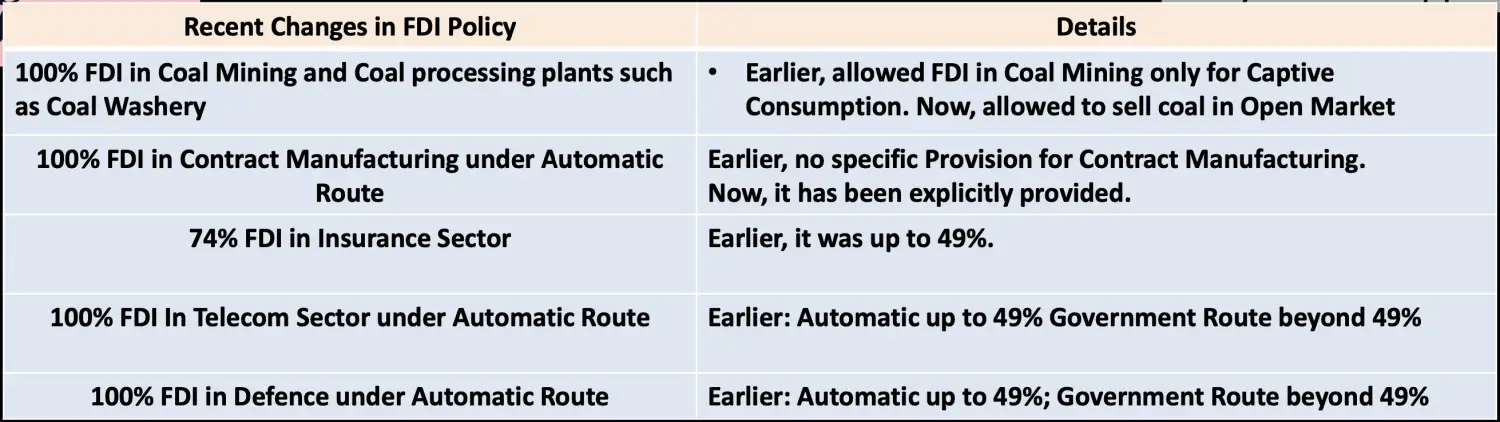
Contract Manufacturer for Apple → FoxCon & BisCon
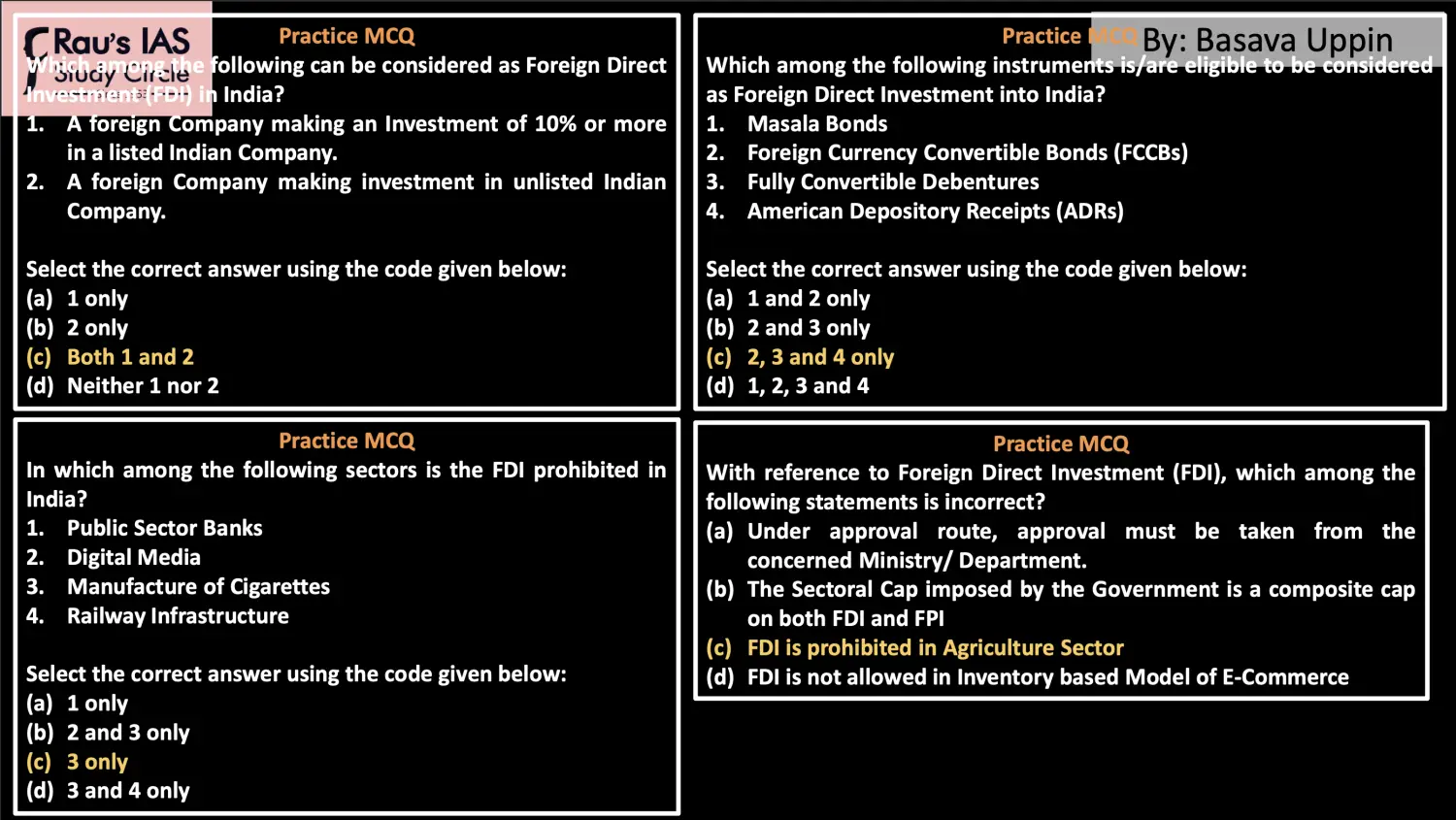
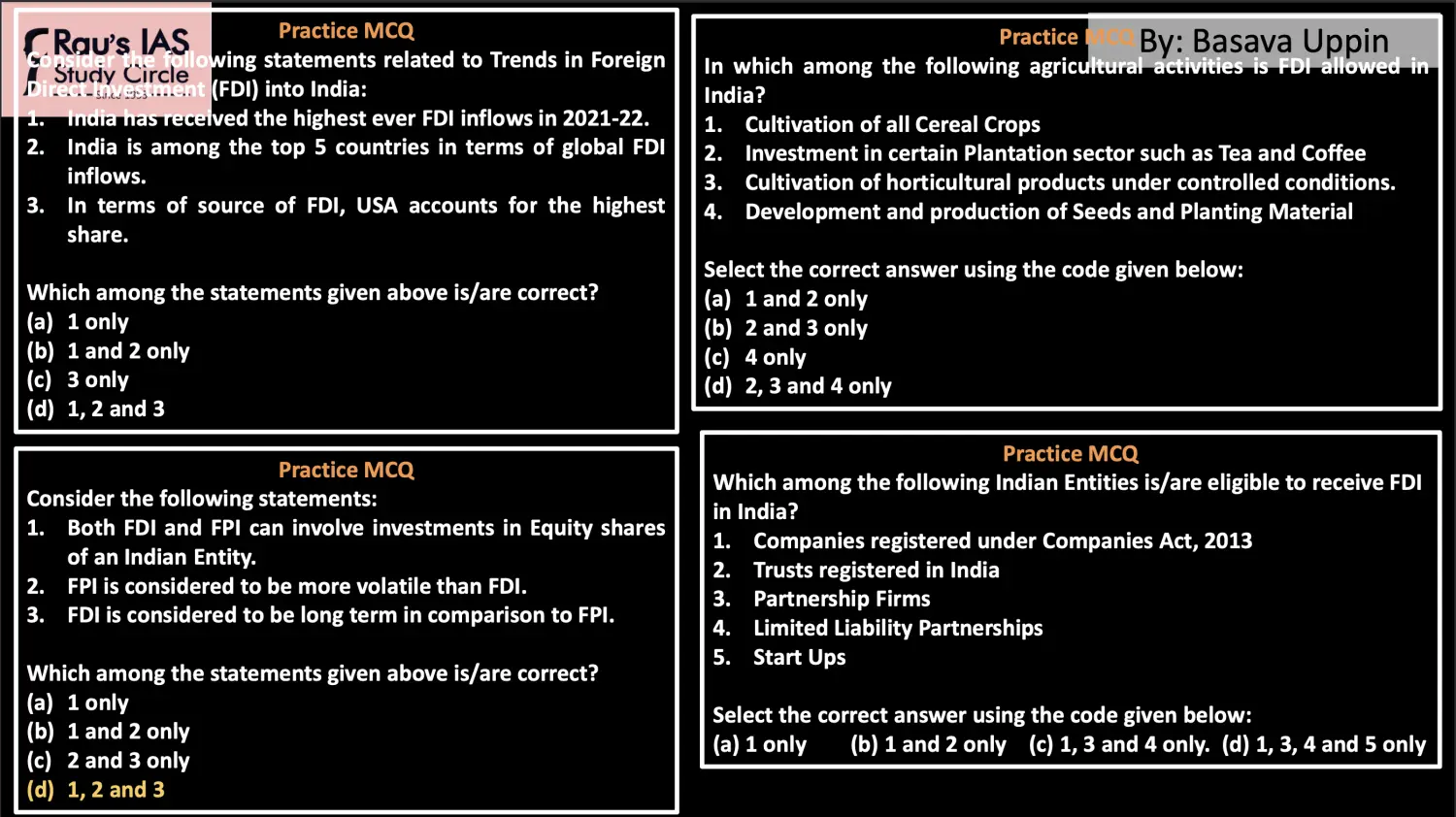
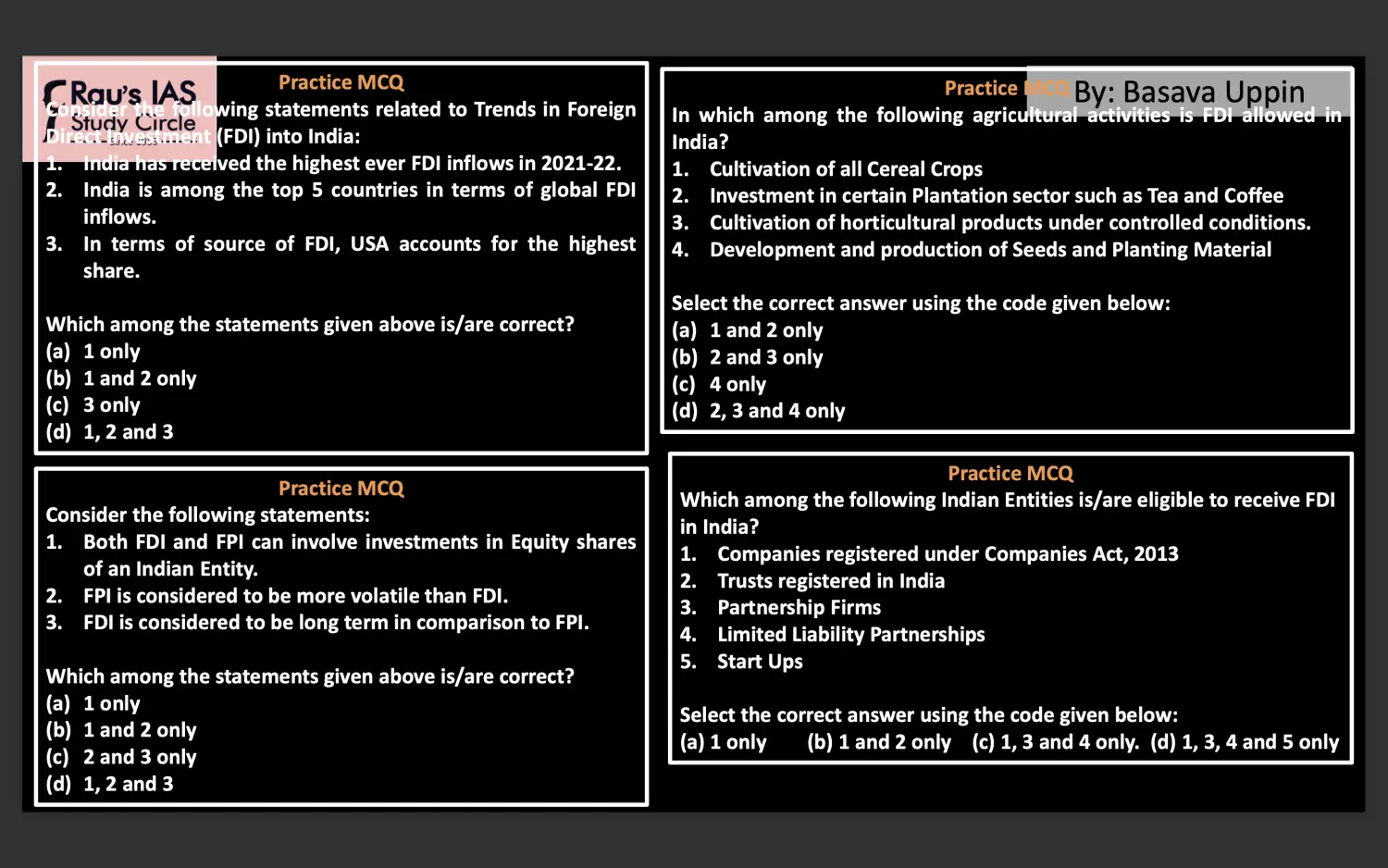
Practise MCQ on the topic
External Sector
ECB → External Commercial Borrowing
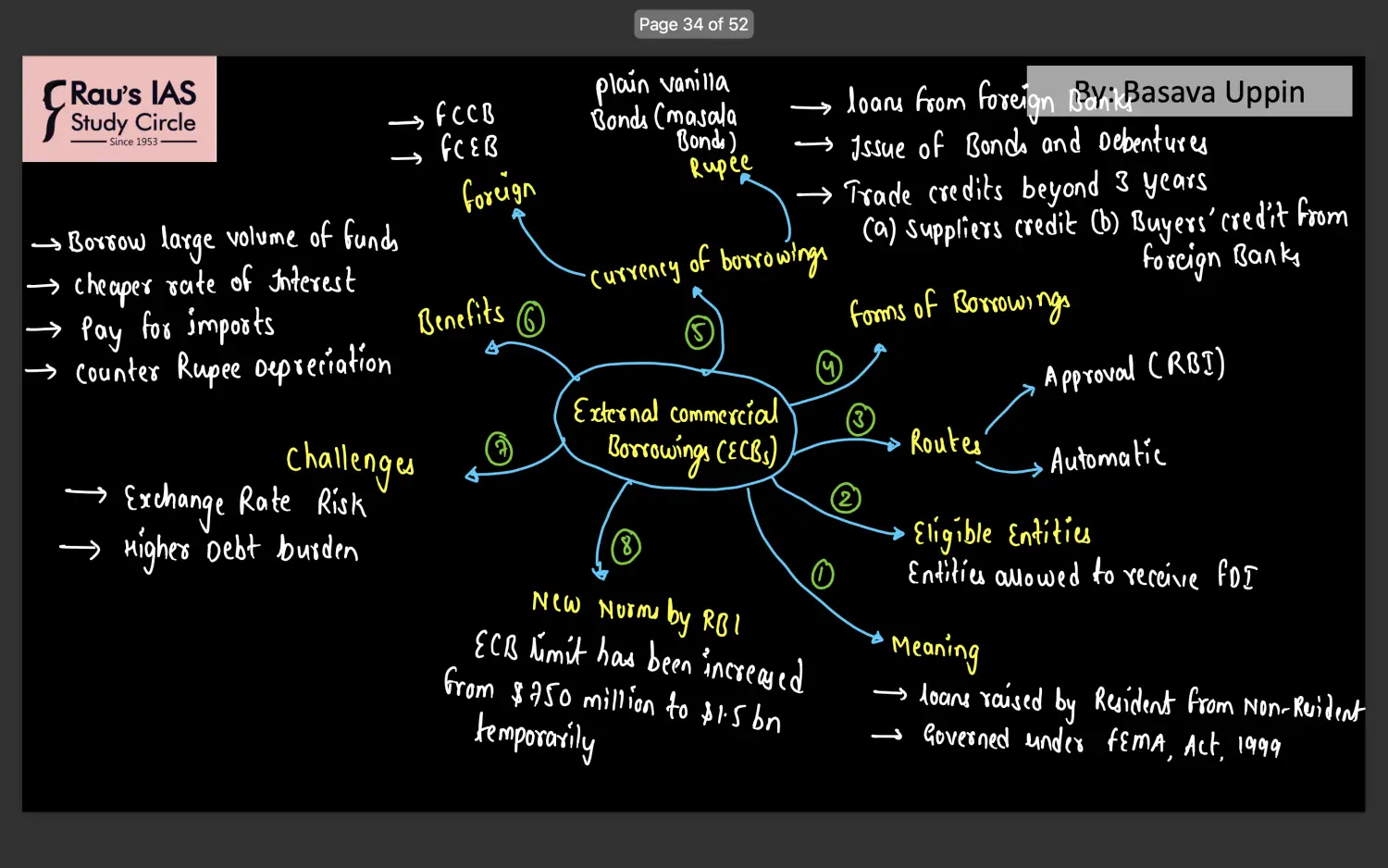
- FEMA - Foreign Exchange Management Act, 1999
- In Case of FDI in Approval Route → Approval has to be taken from respective Ministry or Department whereas in ECB Approval has to be taken from RBI only
- Trade Credit
- Less than Three Years → Simple Trade Credit
- More than Three Years → as a Part of ECB
- Type of Trade Credit
- Buyers Credit → Company Arranges Loan and Gives Money to Seller
- Seller's Credit → Seller Says Baad Main Paisa De Dena
- Money coming to India unless it is converted into Shares will be considered as ECB. Ones it is converted into Share it will be considered as FDI & FPI
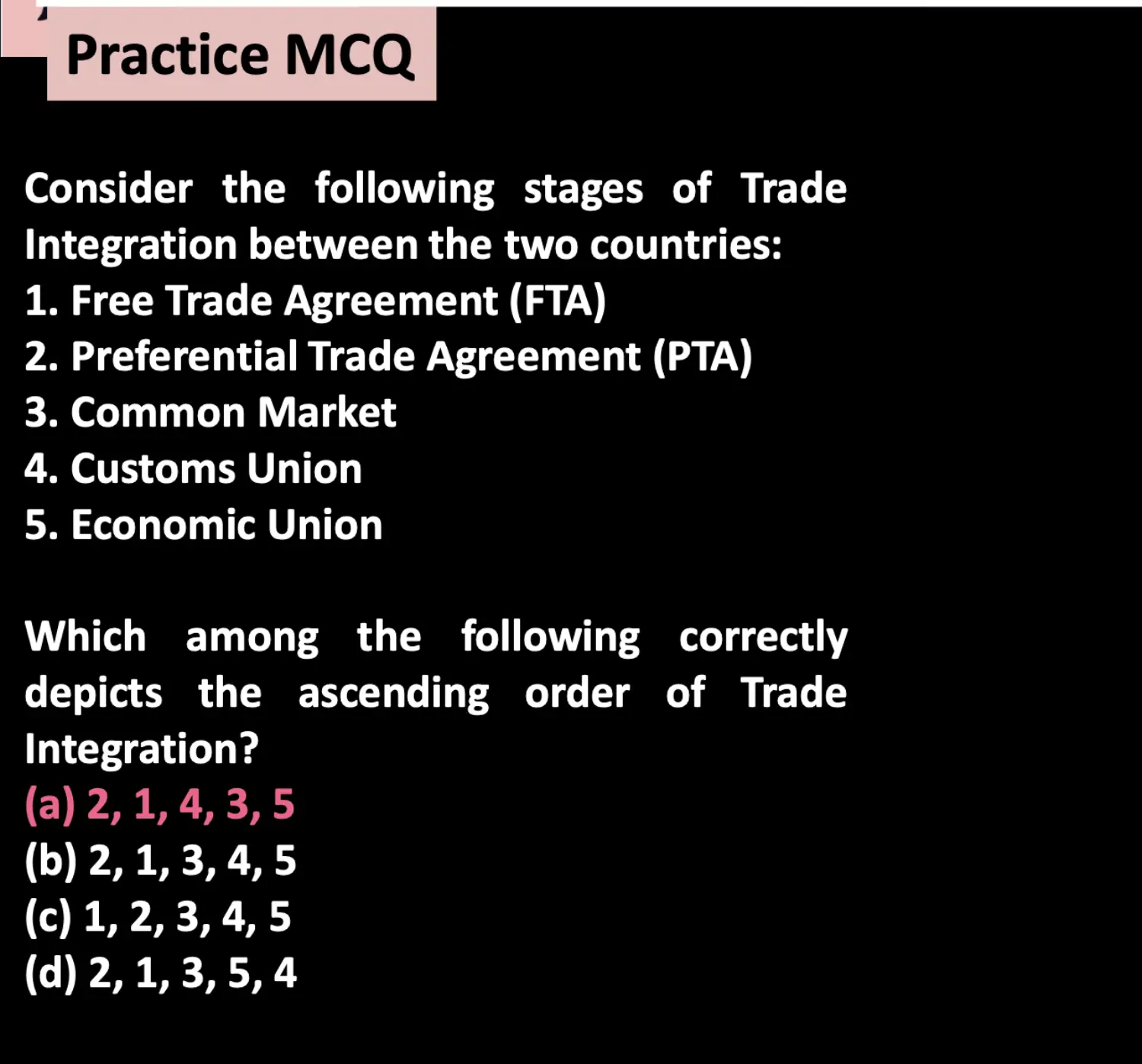
Stages of Trade Integration
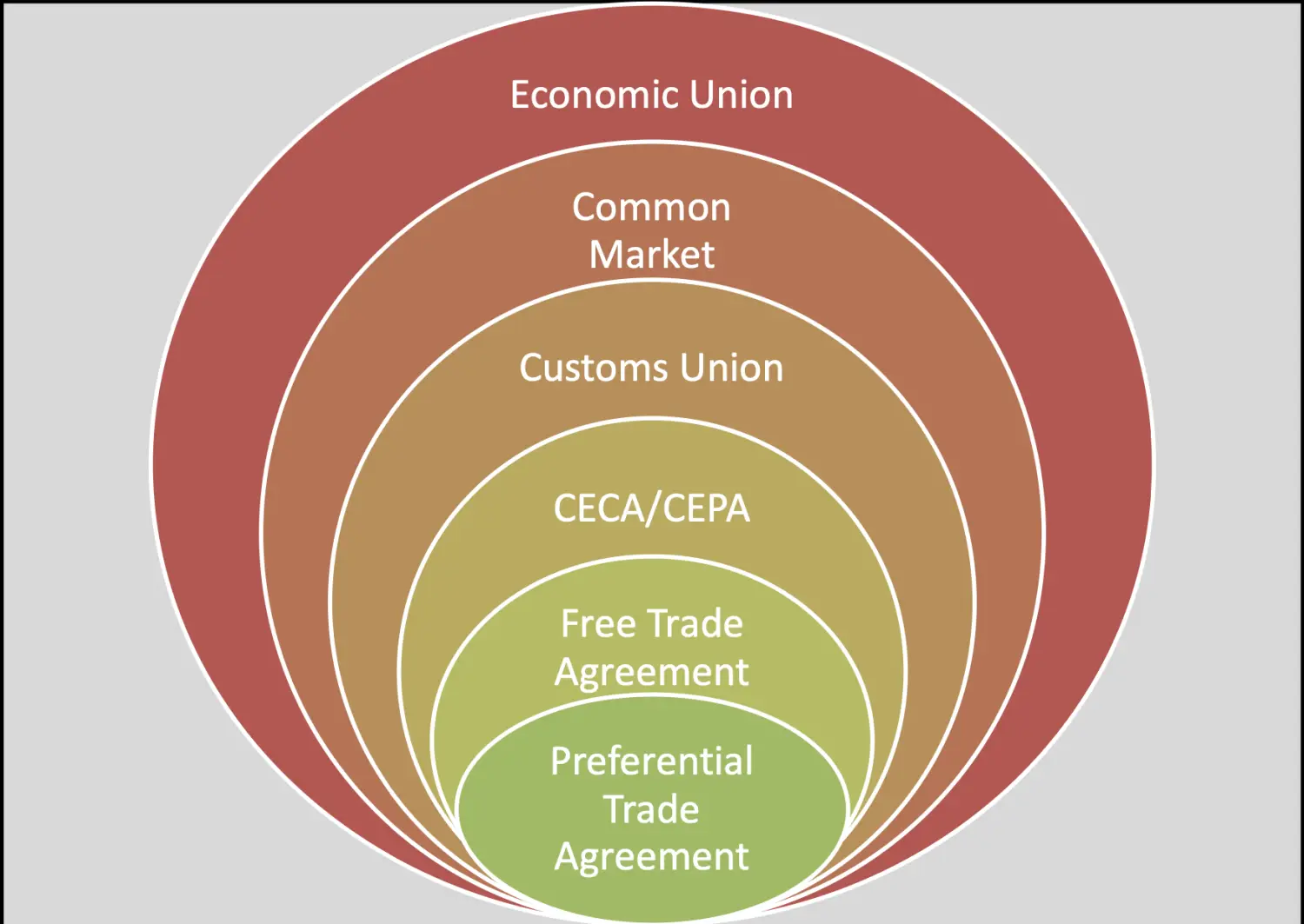
Trade Agreement is Free Flow of Goods, Service, Investment & People
From Inner to Outer → Phase 1 to Phase 6
Phase 1 → Preferential Trade Agreement
Creation of Positive List - Reduction of Custom Duty on Goods in Positive List
Phase 2 → Free Trade Agreement
Meaning of FTA
More Broader, On Most of the goods as much as 90% to 95%, There will be NO Custom Duty
In Case of FTA we have Negative List (Contains Goods which will NOT have custom duty)
Example of Indian FTA → With Australia, UAE
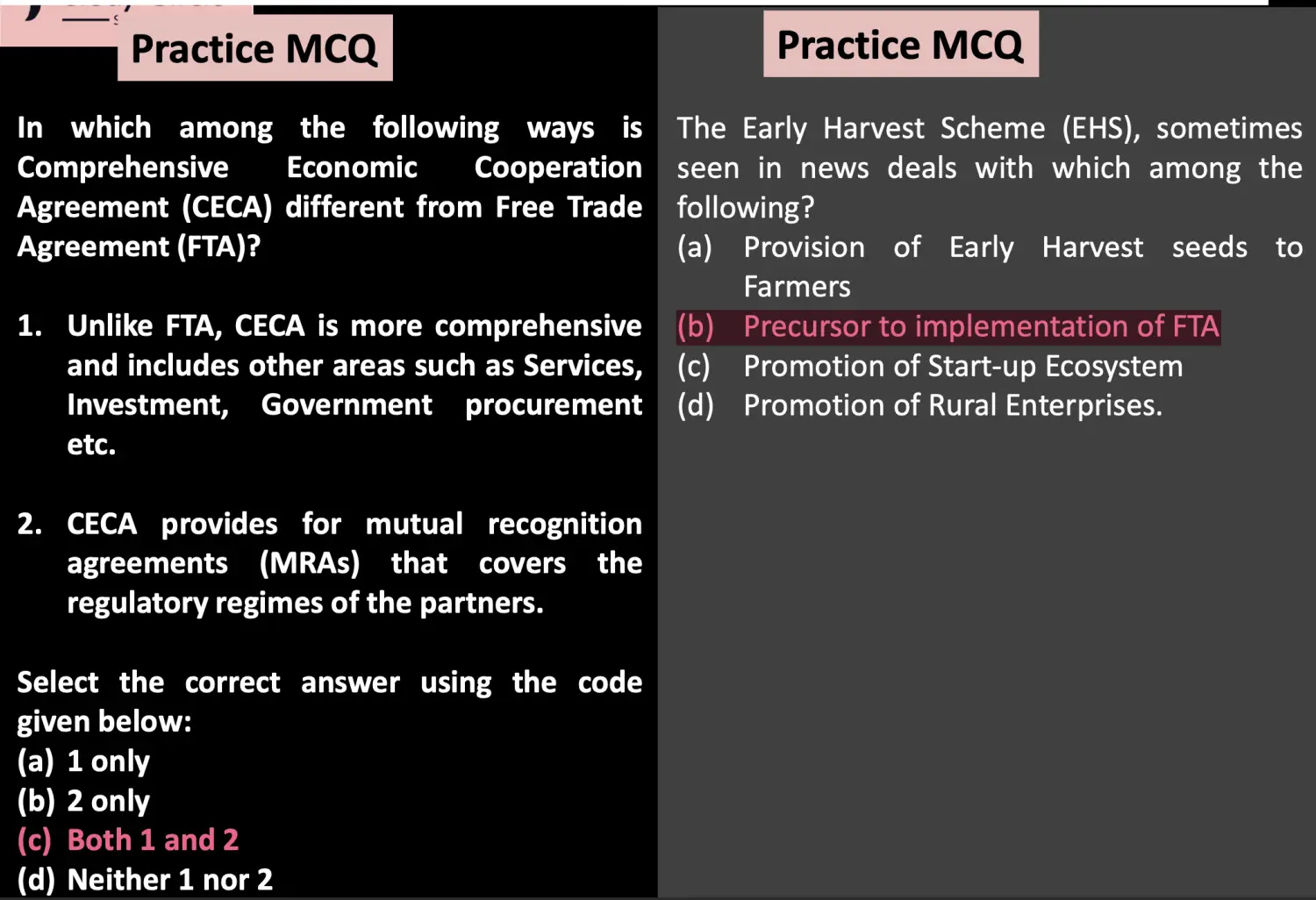
Concept of Early Harvest Scheme in FTA’s
Implementation Phase of FTA is known as Early Harvest Scheme.
Example : Currently India is in Early Harvest Scheme with Thailand
Phase 3 → CECA & CEPA
Full Form
- CECA : Comprehensive Economic Cooperation Agreement
- CEPA : Comprehensive Economic Partnership Agreement
Meaning
Goods, Services, Investment, IPR, Mutual Recognition on Regulatory Laws
As Per Ministry of Commerce there is No Distinction between CEPA & CECA
Example : India Singapore, Japan, South Korea
Phase 4 → Customs Unions
- Countries which have already Signed FTA, decide to impose common Custom Duty on Products
- All these countries do not Impose CD on each other but when they Import from another country, they do so at the same CD Rate
- Example : SACU : South Africa, Namibia, Botswana
Phase 5 → Common Market
- Common Market → Custom Union + Free Movement of People without Visas
- Example : EU by Schengen Agreement
Phase 6 → Economic Union
- Economic Union → Common Market + Common Currency
Practise MCQ
Regional Trade Agreements
Focus on Countries where India is a Part
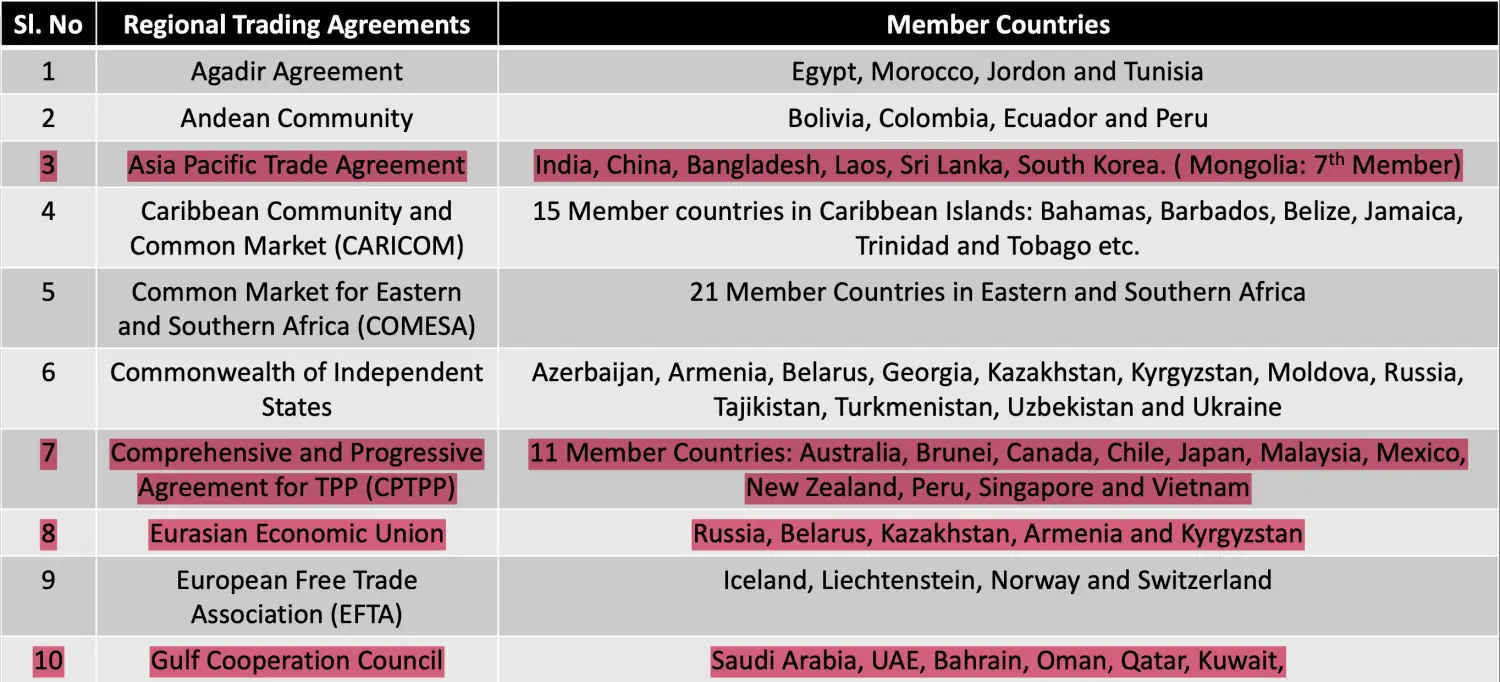
Asia Pacific Trade Agreement → India is a Part with China, Despite India Saying No to RCEP, because China was a Part of It
CPTPP → TPP was proposed by Obama. TPP was seen as US Led and RCEP was seen as China Led. But Trump said no to TPP
Eurasian Economic Union → Russia proposed India to be part of Eurasian Economic Union
GCC → India is trying to crack a FTA with whole of GCC
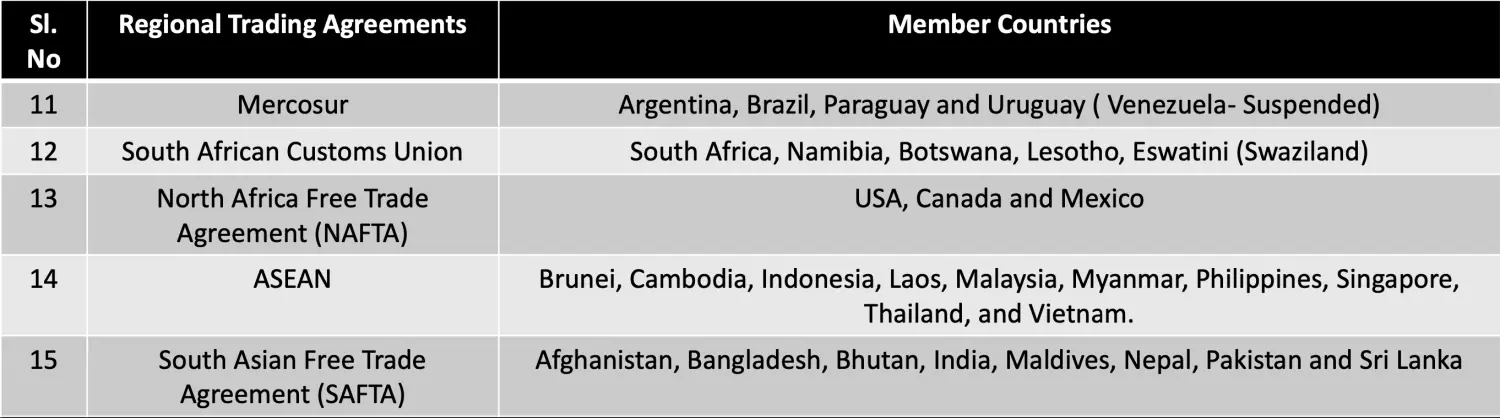
NAFTA → North American Free Trade Agreement
RCEP → ASEAN + 5 (Australia, Japan, China, New Zealand, China)
List of FTA’s Signed by India
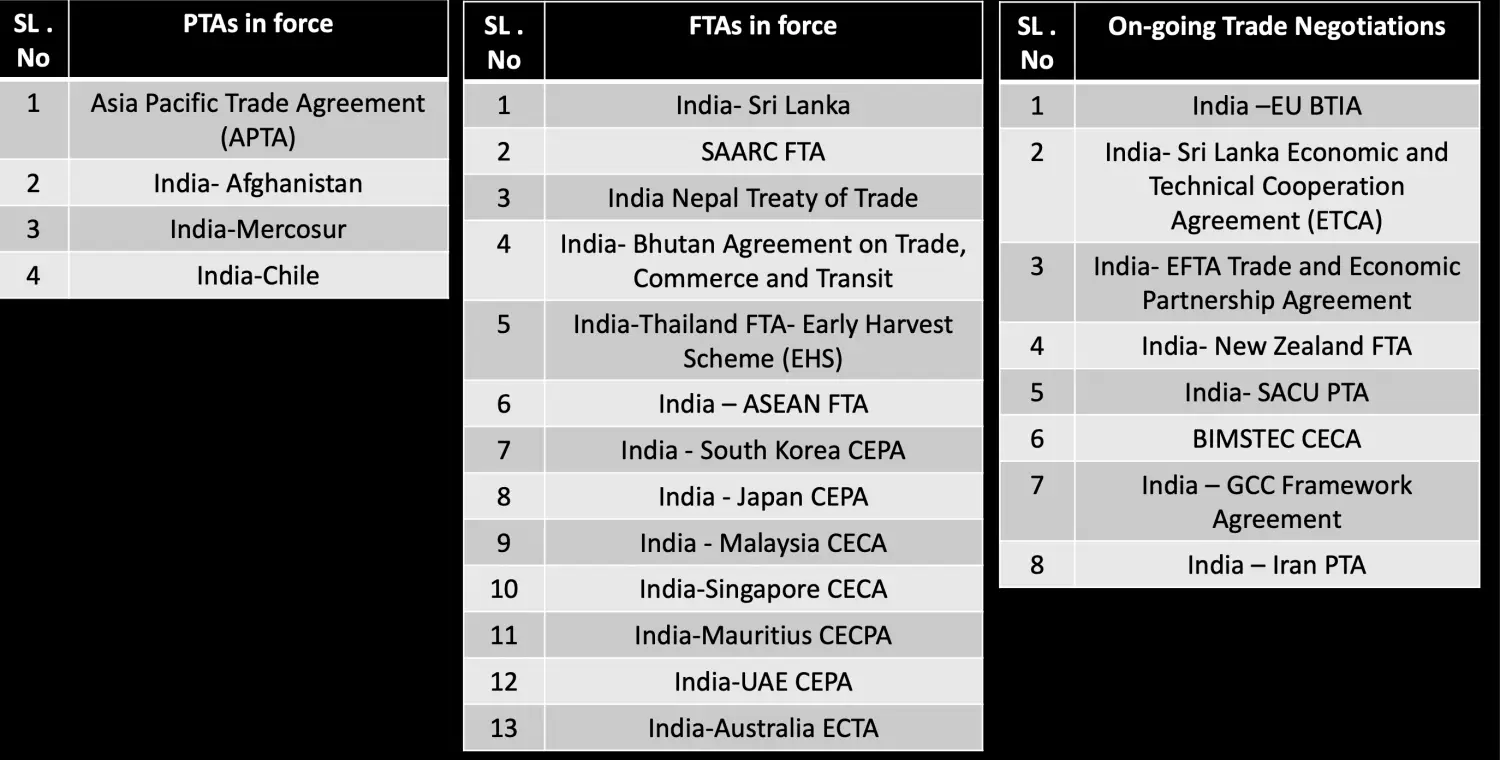
BTIA - Bilateral Trade and International Agreement is being Negotiated with EU
Types of Exchange Rate Systems
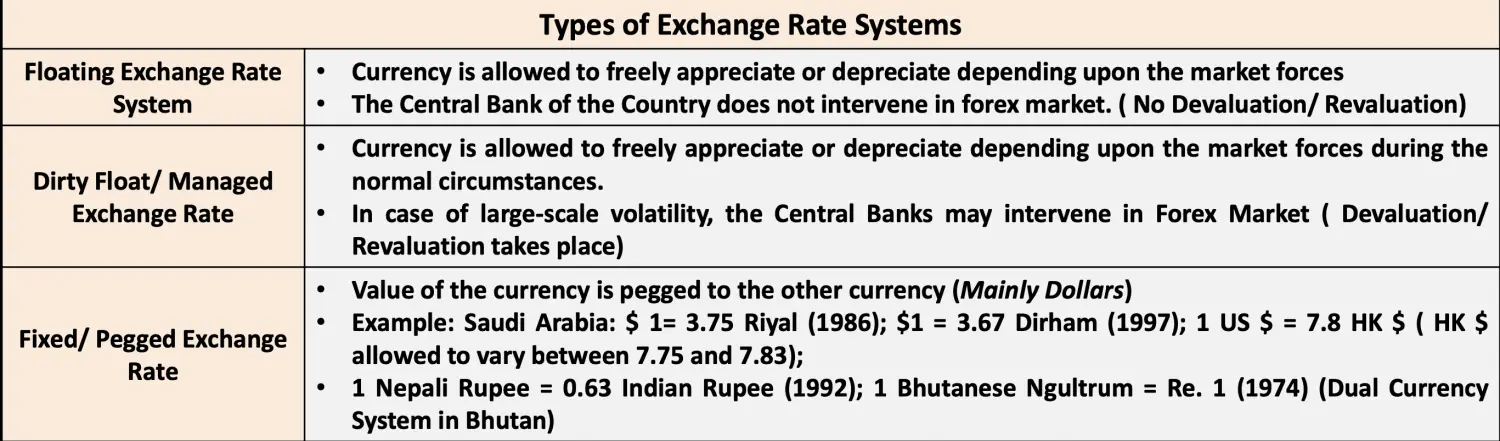
Fixed Exchange Rate like in Gulf is for prevention of DUTCH DISEASE
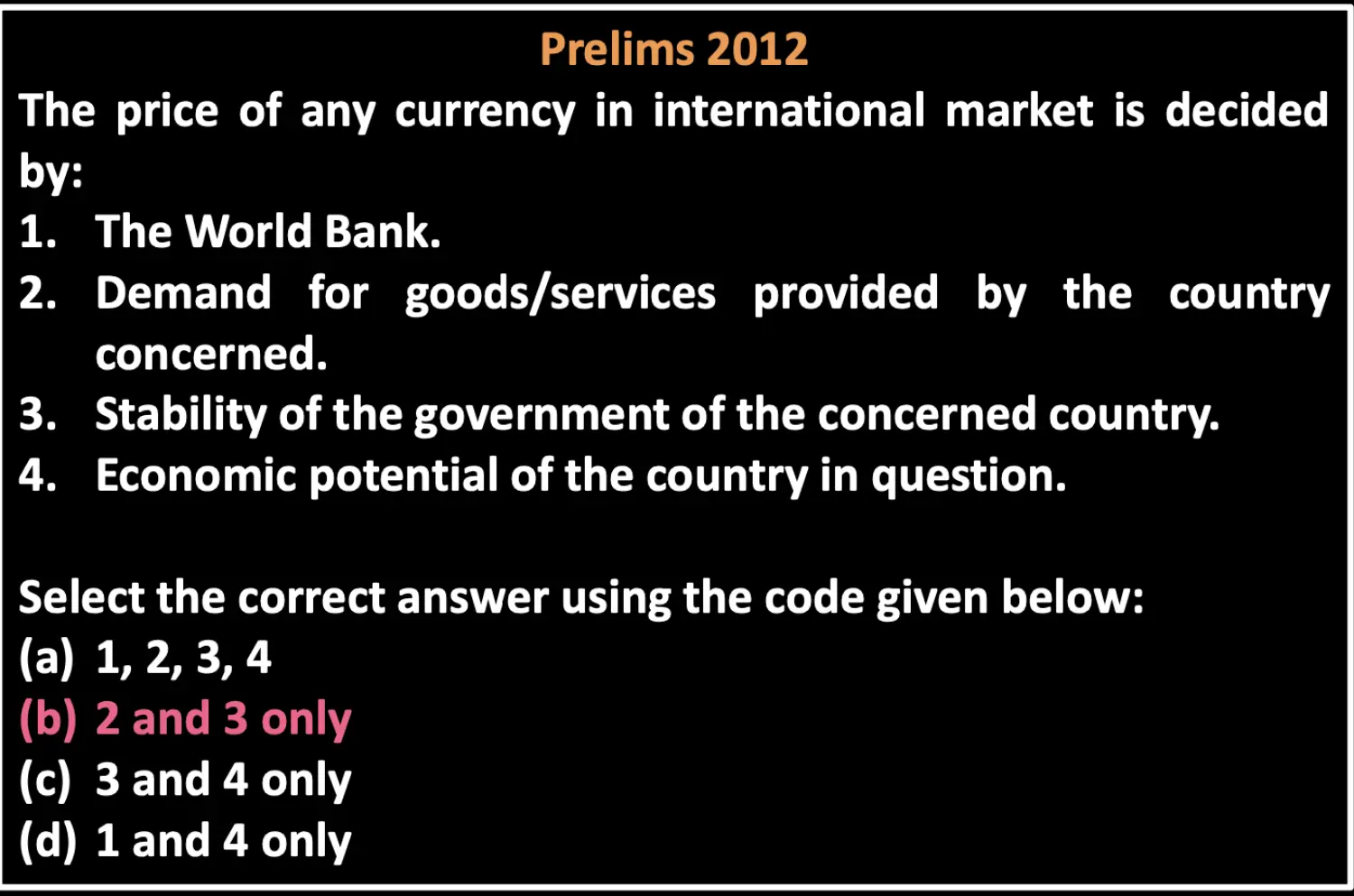
Prelims PYQP
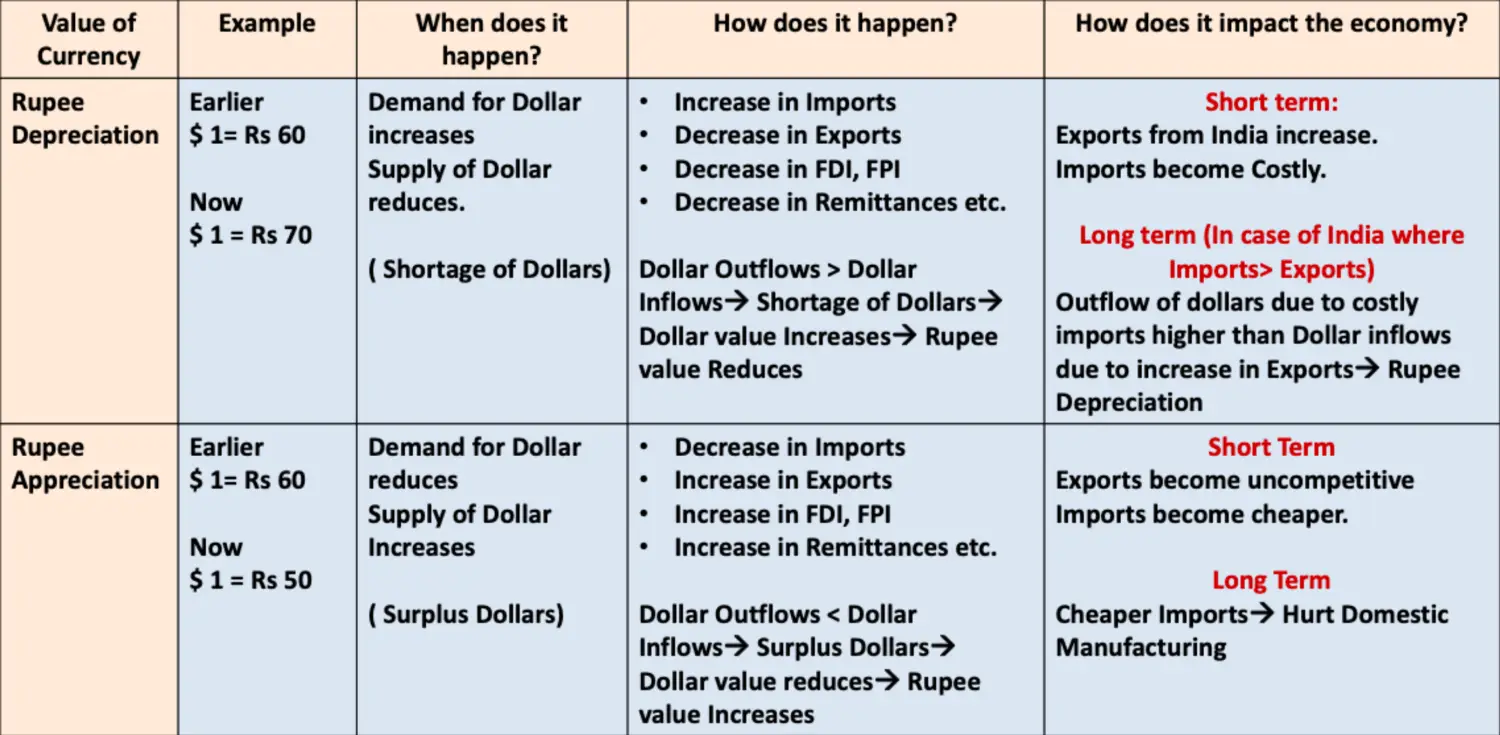
Concept of Rupee Appreciation or Depreciation
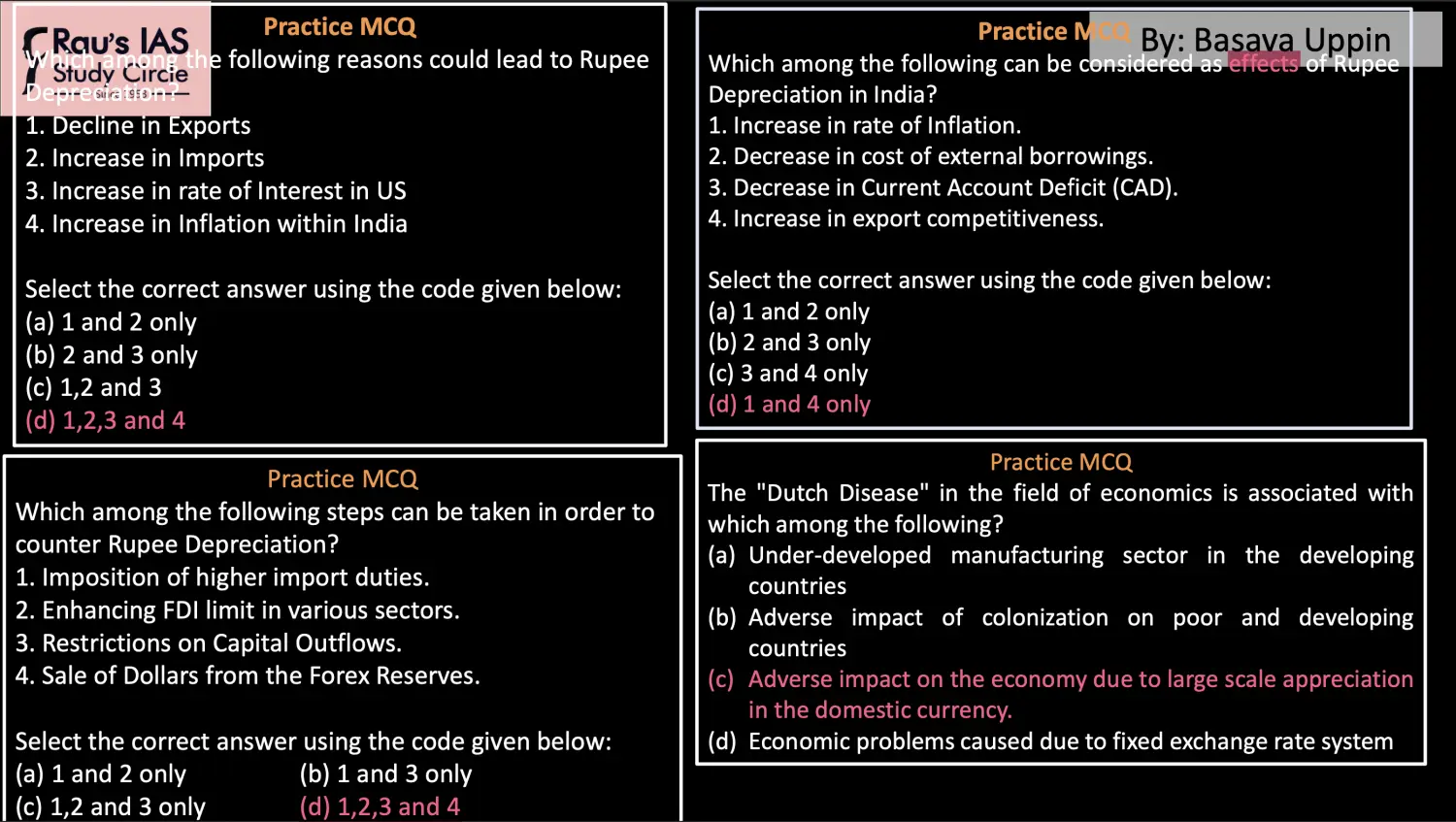
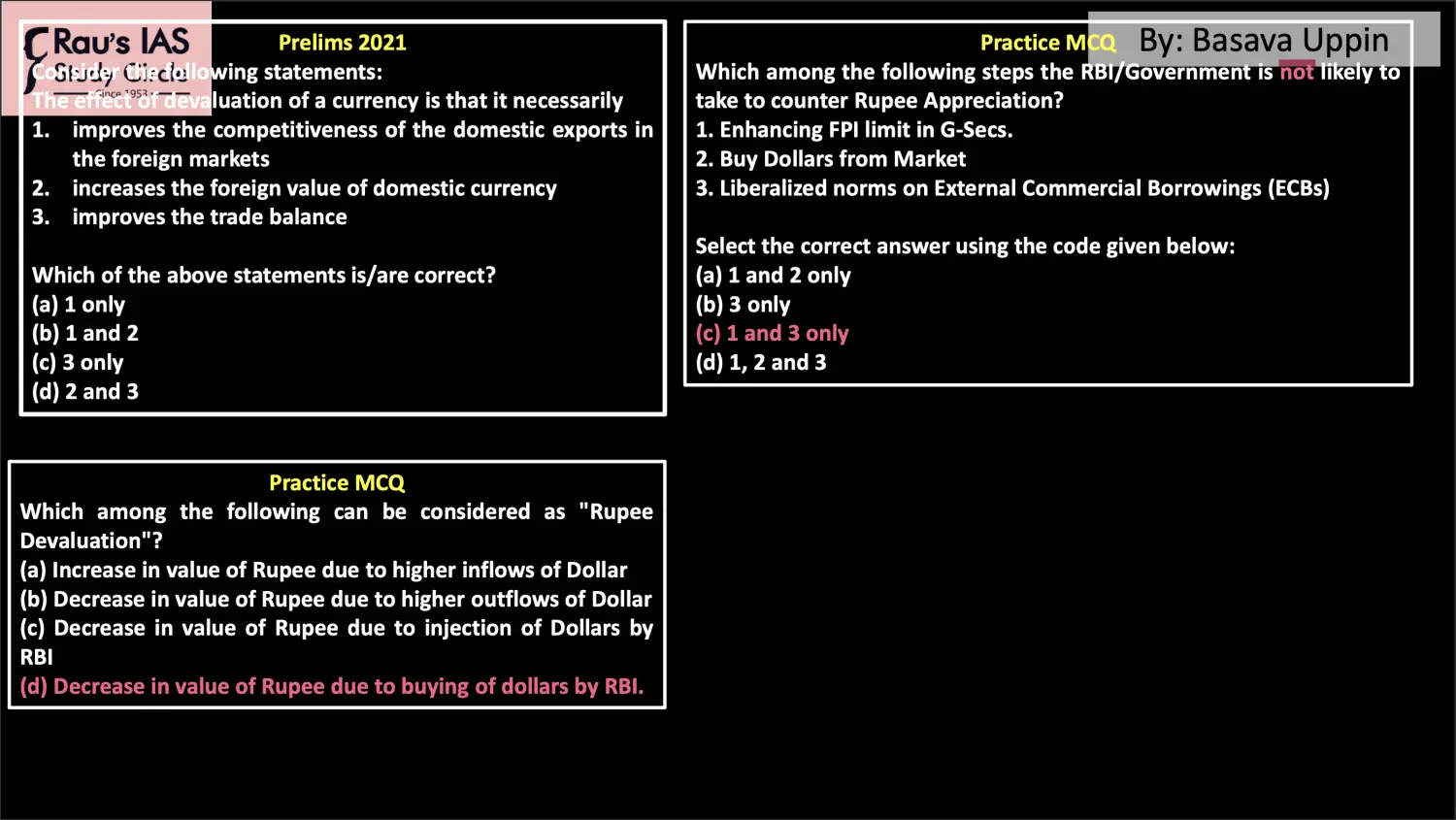
Practise MCQ on Rupee Appreciation & Depreciation
Rupee Depreciation = Outflow of Dollar in India
Counter (Rupee Depreciation) = Counter or Reduce (Outflow of Dollar in India)
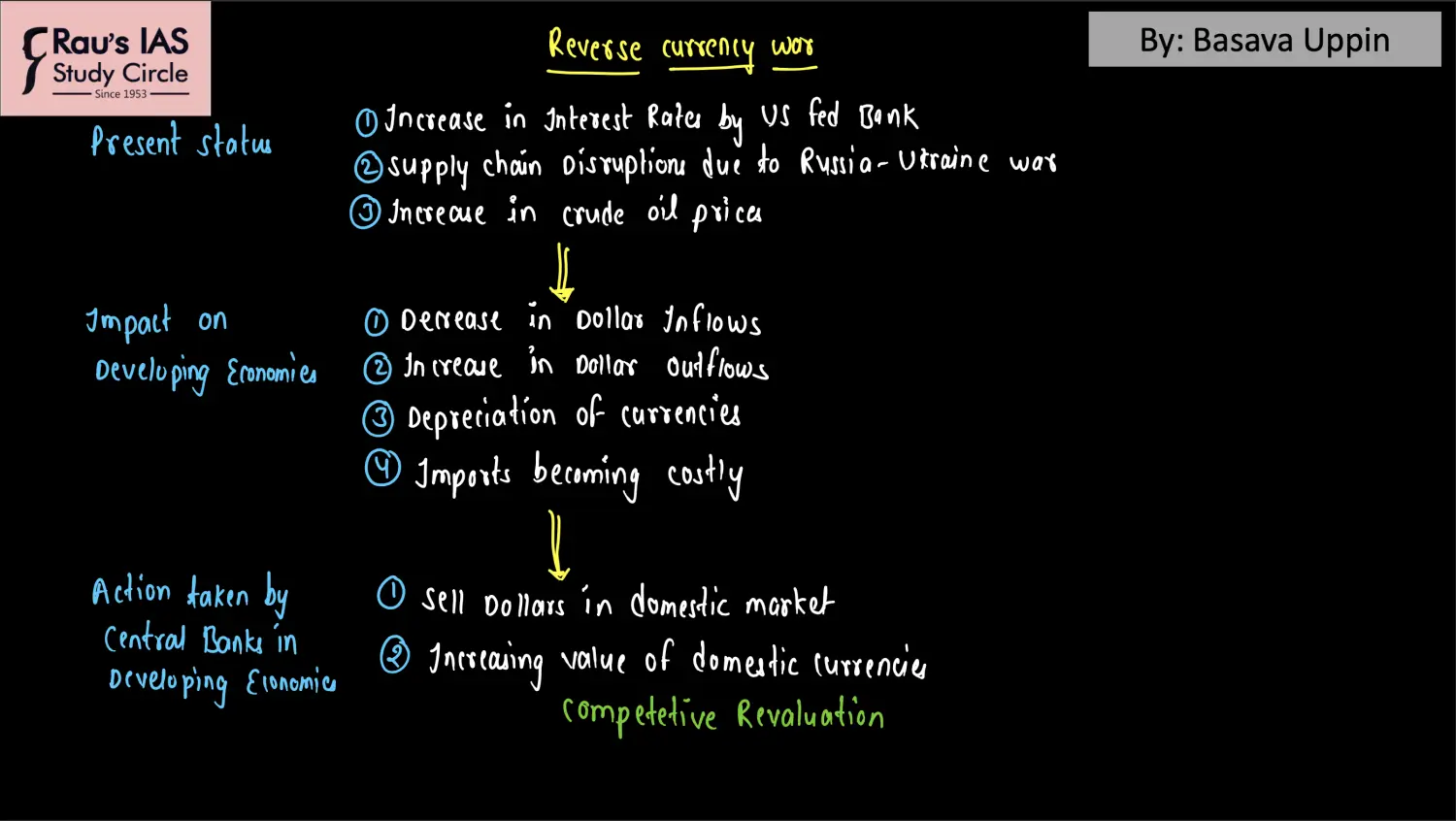
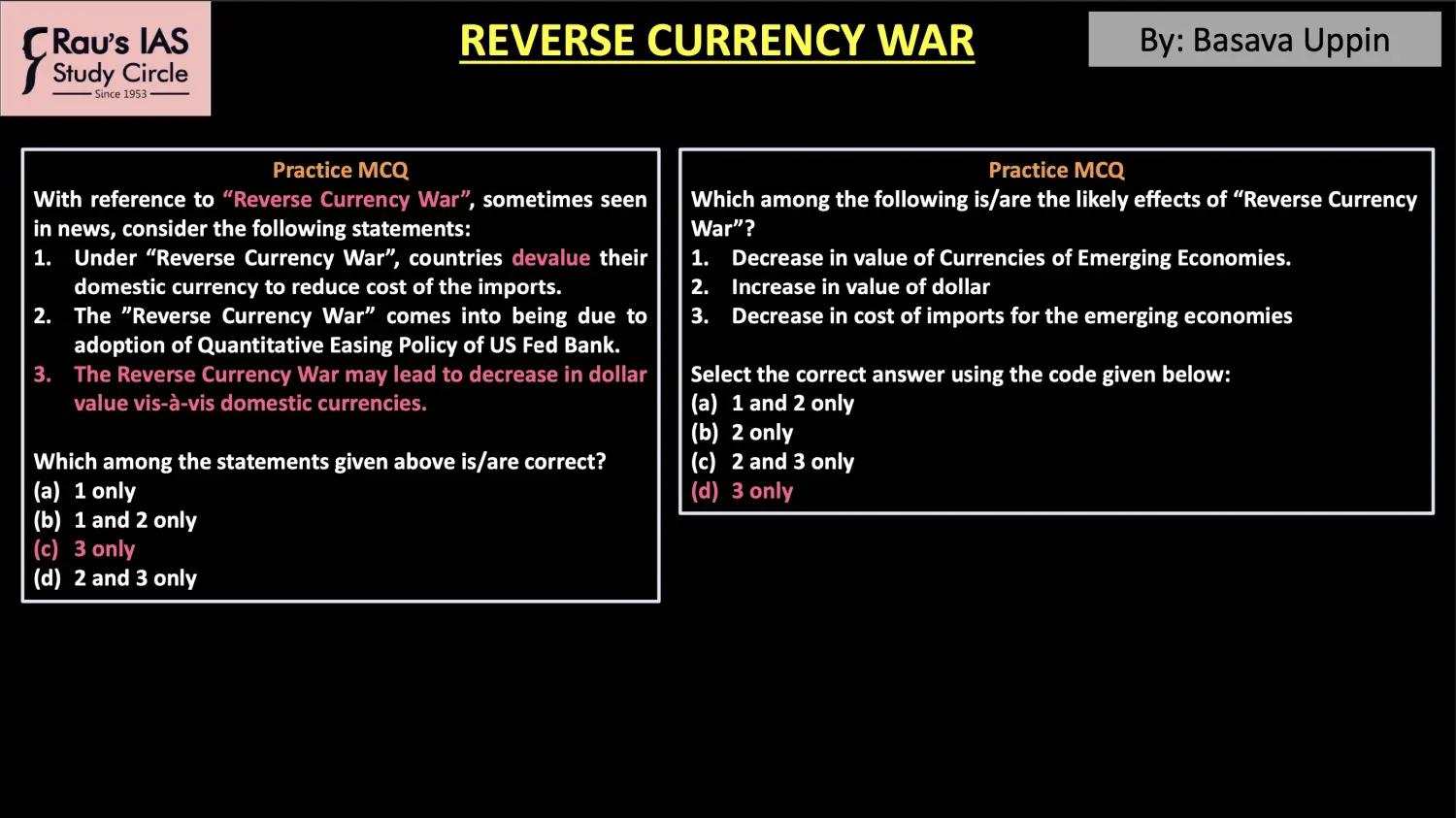
Reverse Currency War
Reverse Currency War - US is trying to Strengthen Dollar where as Emerging Economies are trying to Devalue Dollar
US Strengthens by → Reducing Dollar Supply → Fed Tapering
Emerging Economy De Values by → Increasing Dollar Supply → By Injecting Dollar in Economy or Market
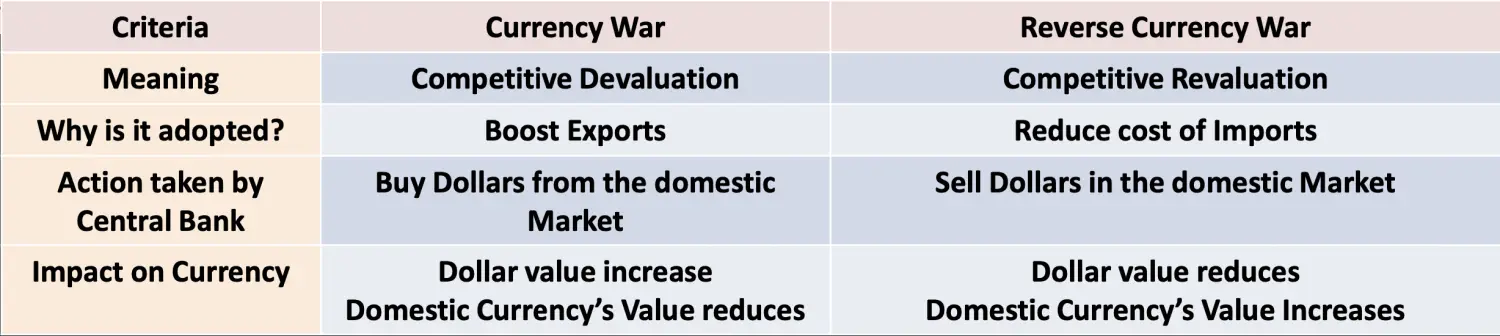
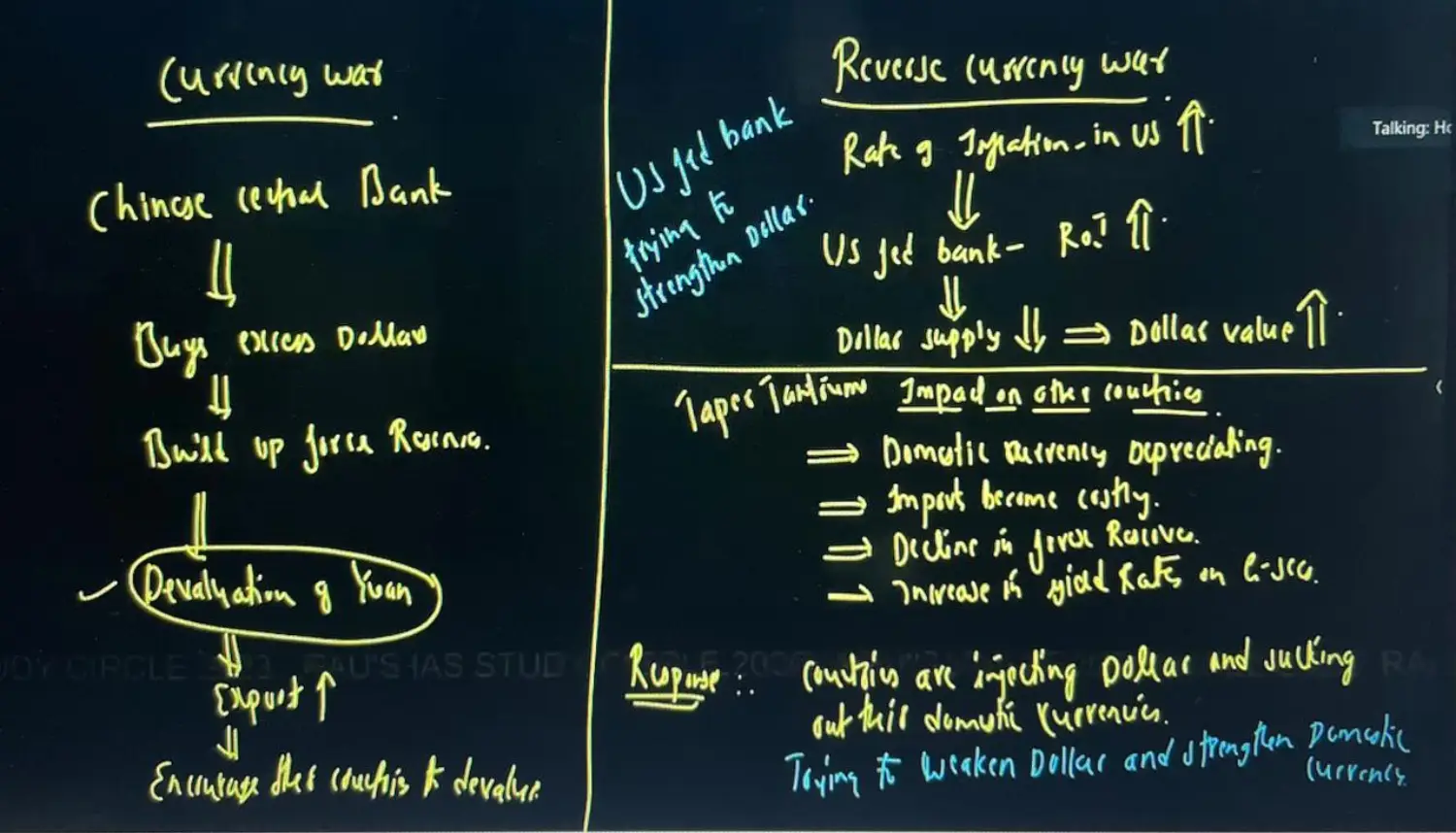
Currency War → Suck Out Dollar from Market → Devalue Local Currency
Reverse Currency War → Sell or Put Dollars in Domestic Market thus Strengthening Local Currency
Happens with Taper Tantrum and Fed Tapering of US Bank
Practise MCQ
Rupee Convertibility
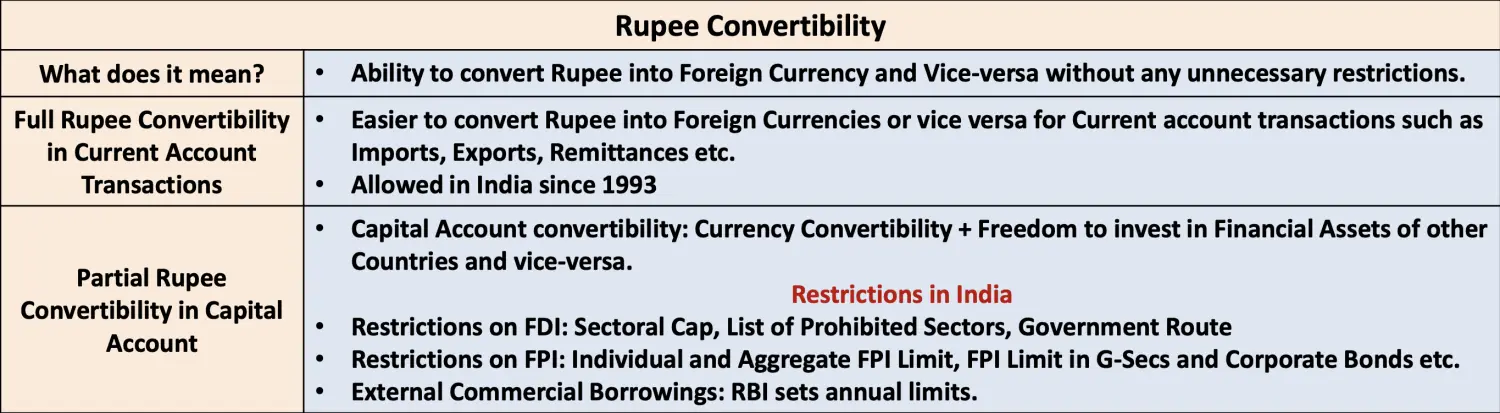
Full Rupee Convertibility → Current Account Transaction
Partial Rupee Convertibility → Capital Account Transaction
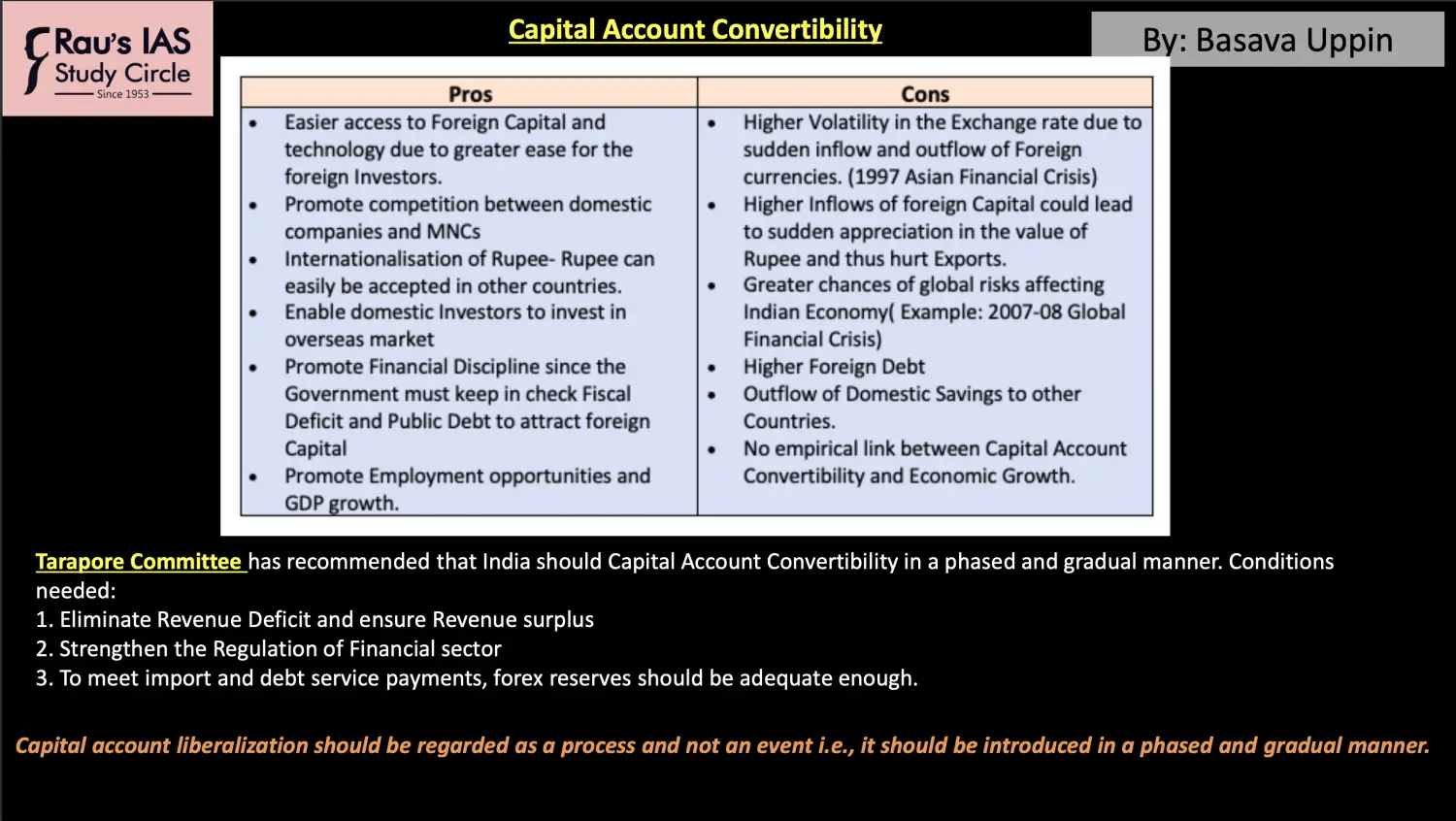
Pros and Cons of Partial Account Convertibility (Capital Account Convertibility)
Introduction to Indian Forex Reserve
They are assets readily available to RBI for Financing BOP (Balance of Payments) or to control Exchange Rates
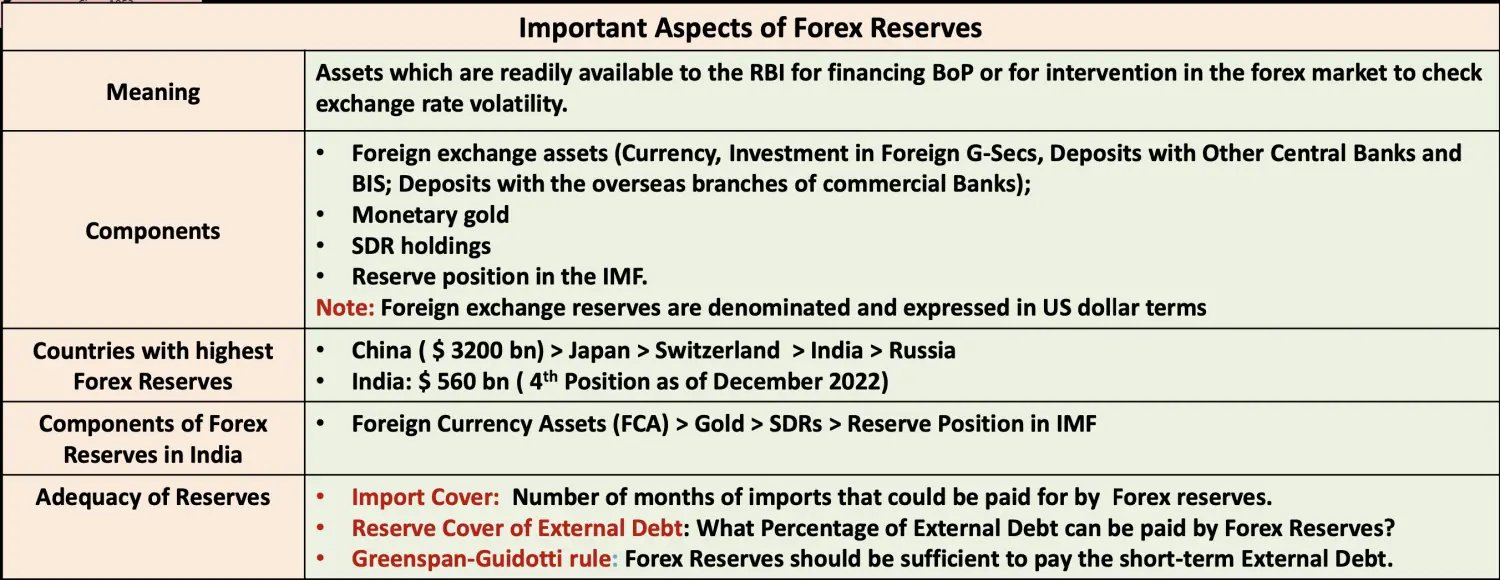
BIS : Bank of International Settlement
Type of Gold
Monetary Gold → Gold within custody of RBI
Non Monetary Gold → Gold in Circulation
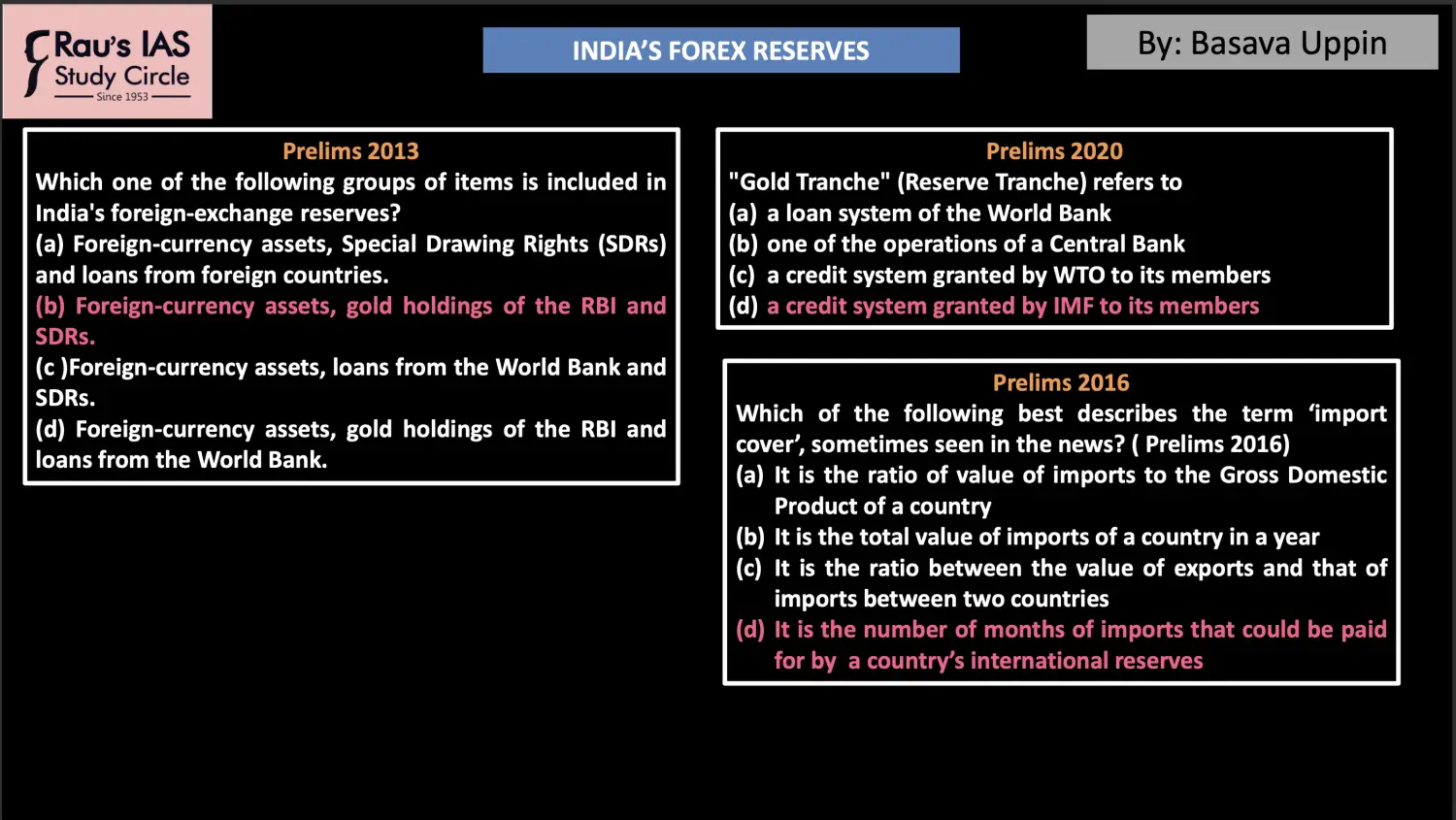
RoDTEP (Present) & MEIS Scheme (Past)
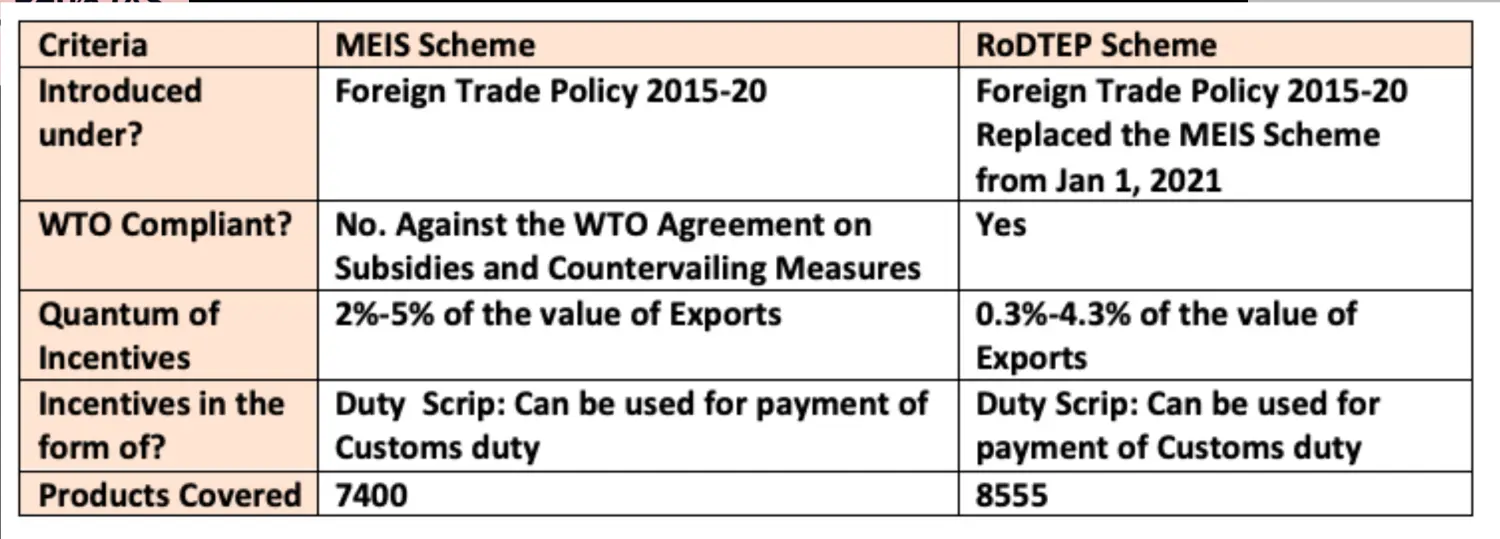
MEIS → Merchandise Exports from India Scheme (MEIS)
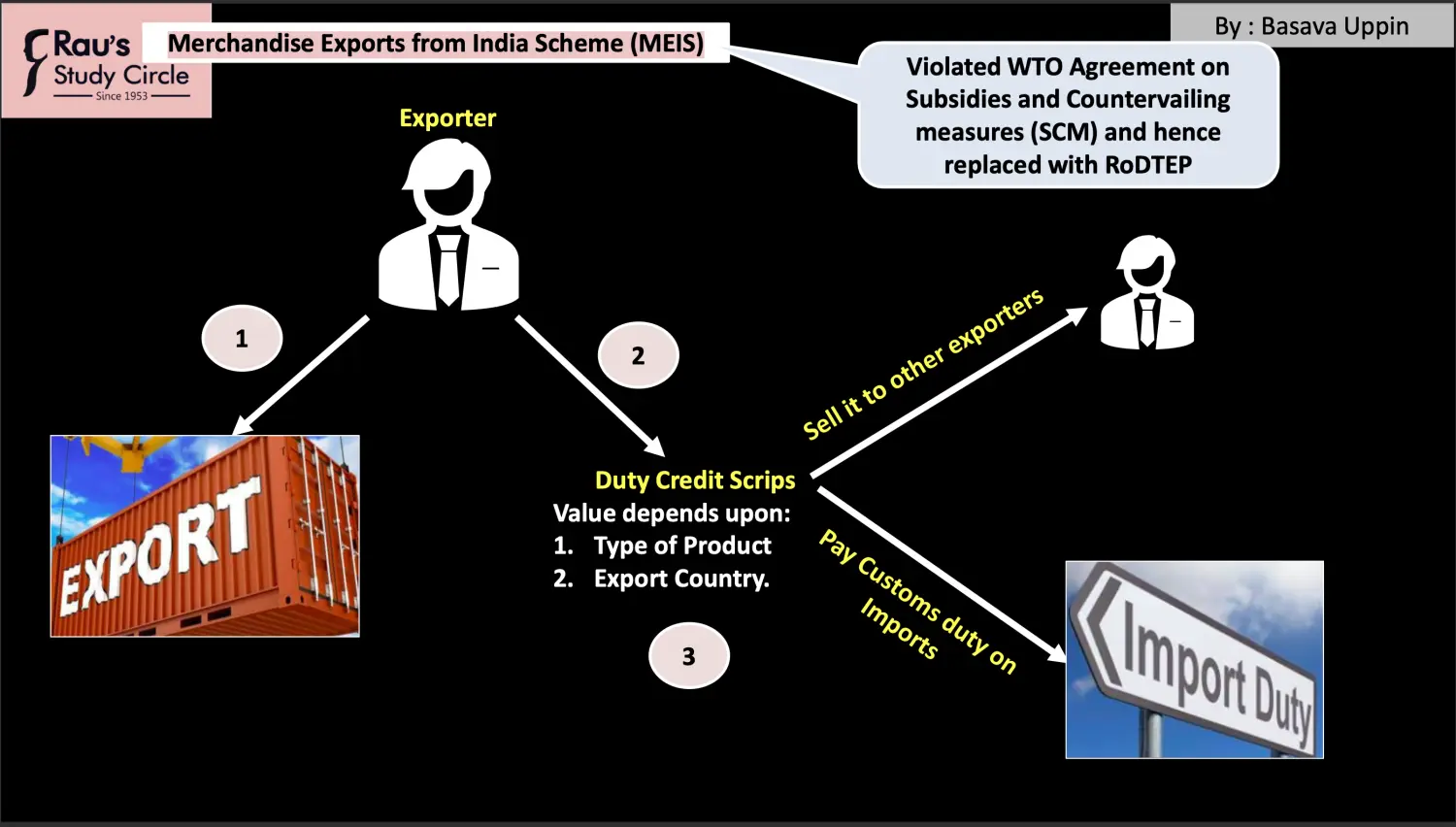
It was against WTO Norms as it provided Export Subsidies
Was Introduced to India by FTP 2015-20 (Foreign Trade Policy)
It gave incentives to Exports
Duty Credit Scrip when compared between Exports to USA or Uganda ; USA will be higher and Uganda will be lesser
Other Exporters can use Duty Credit Scrip to pay for its Custom Duties
Problem
Incentives given to exporter are based on only Exports, this was kind of Export Subsidies as per WTO under WTO Agreement on Subsidies and Countervailing Measures
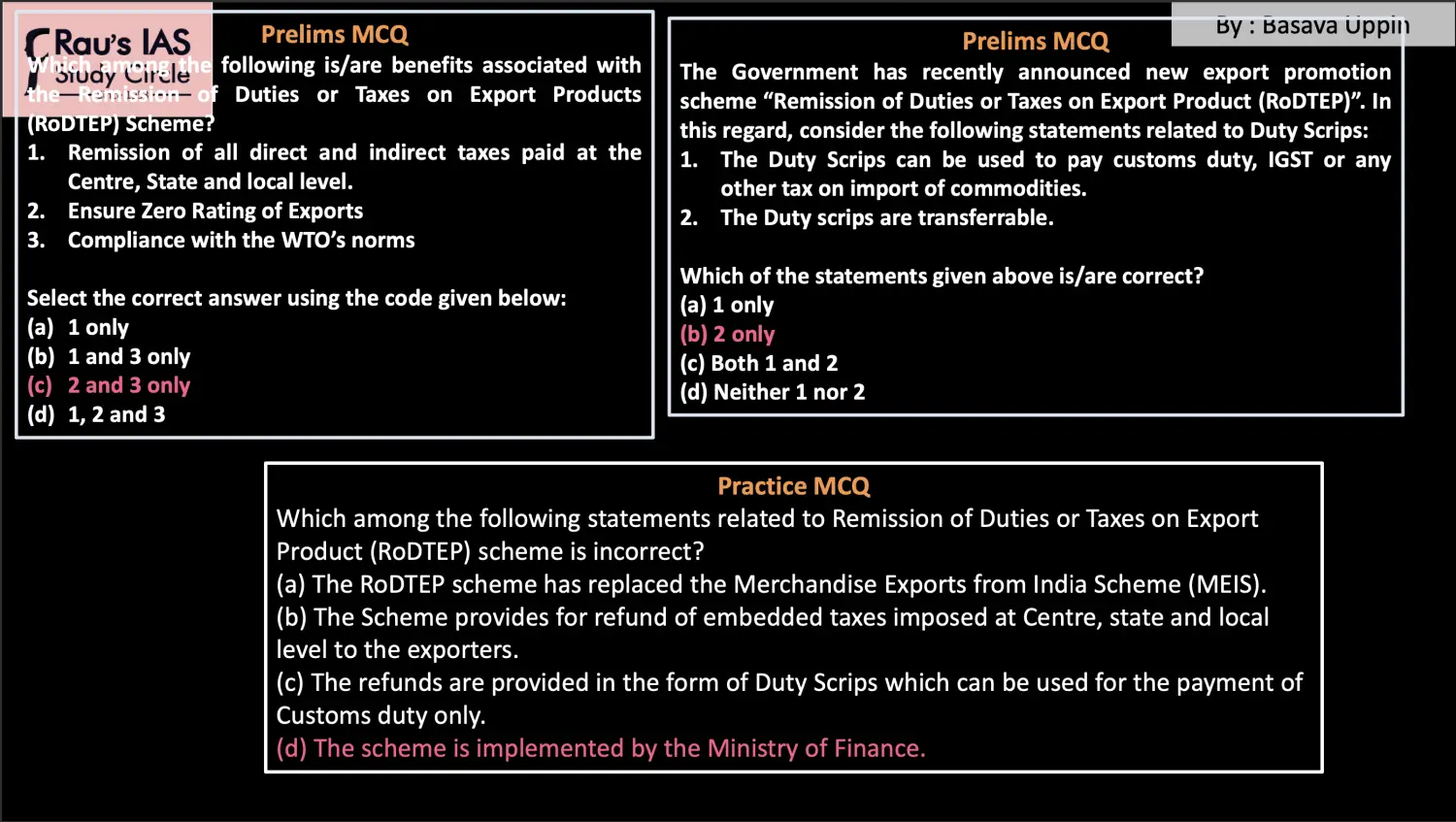
RoDTEP → Remission of Duties and Taxes on Export Products
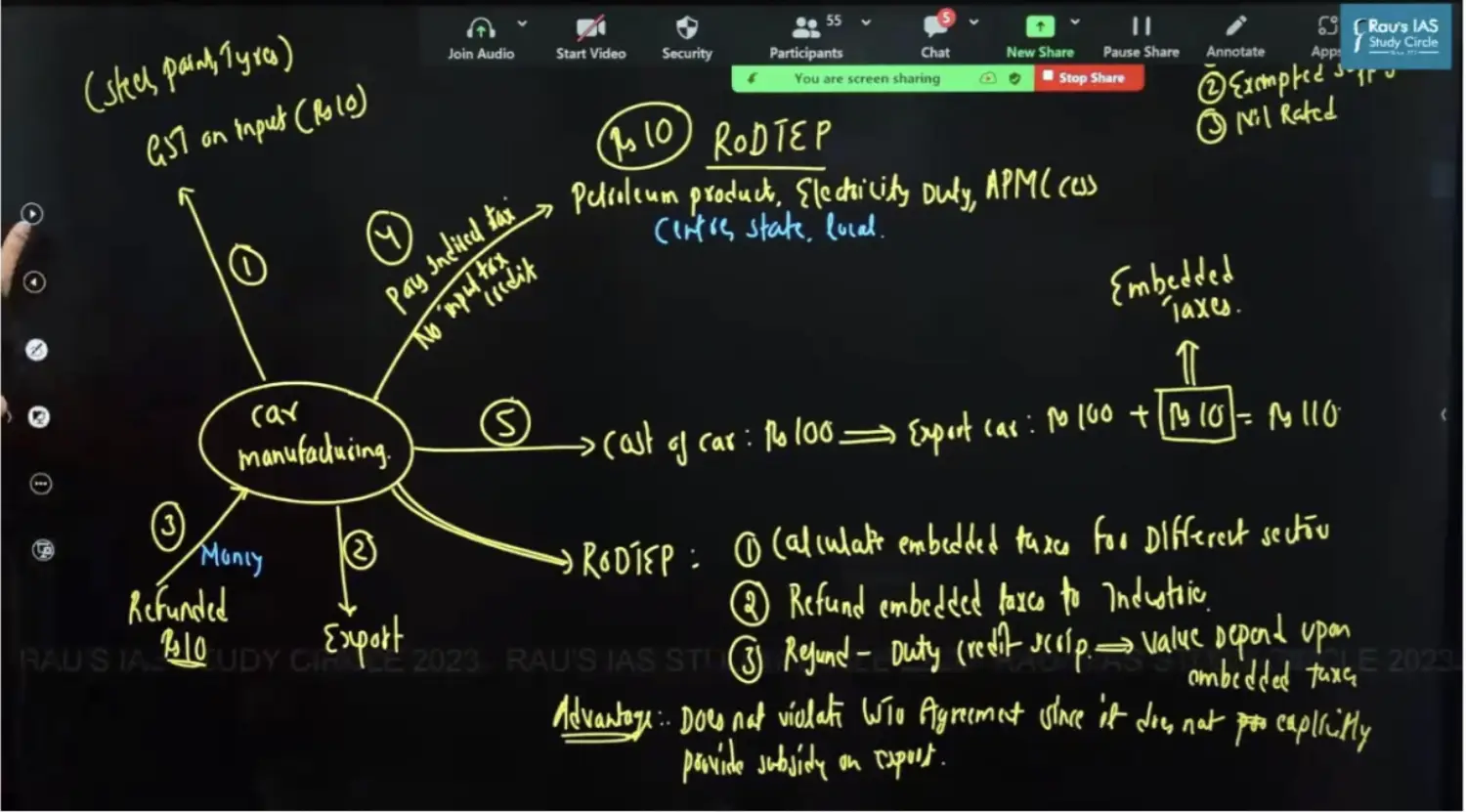
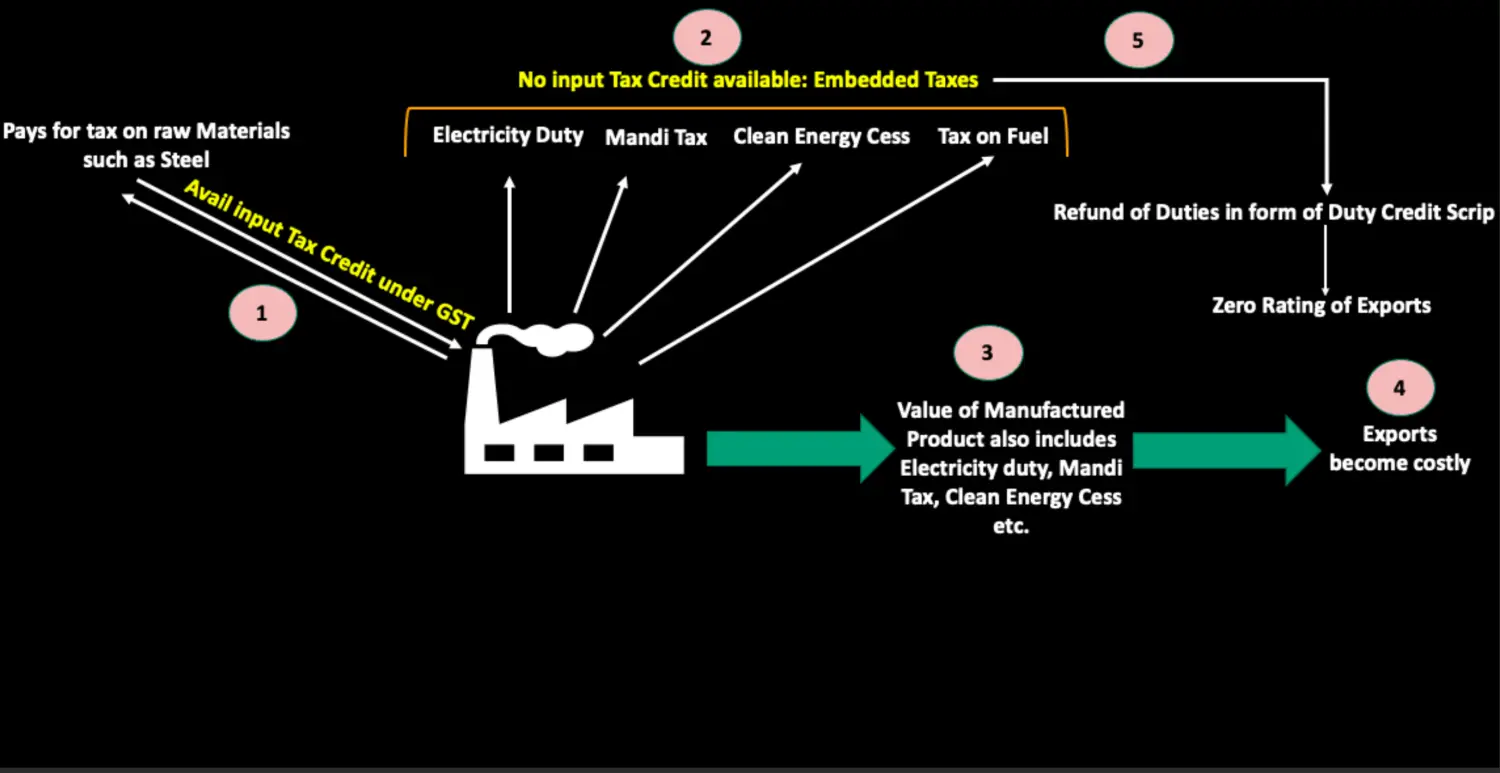
- Issue is with the fact that despite getting subsidy on Input Tax Credit in the form of Duty Credit Scrip. There are still some types of taxes paid by Exporter where company is not able to avail any Input Tax Credit.
- Here Duty Credit Scrip depends on Embedded Taxes which countries are Paying and is in no way dependent upon Exporting Country or Value of Export.
- Duty Credit Scrip is by Ministry of Commerce & Industry.
Difference Between RoDTEP & MEIS
Questions on RoDTEP & MEIS
Net Terms of Trade (NTT)
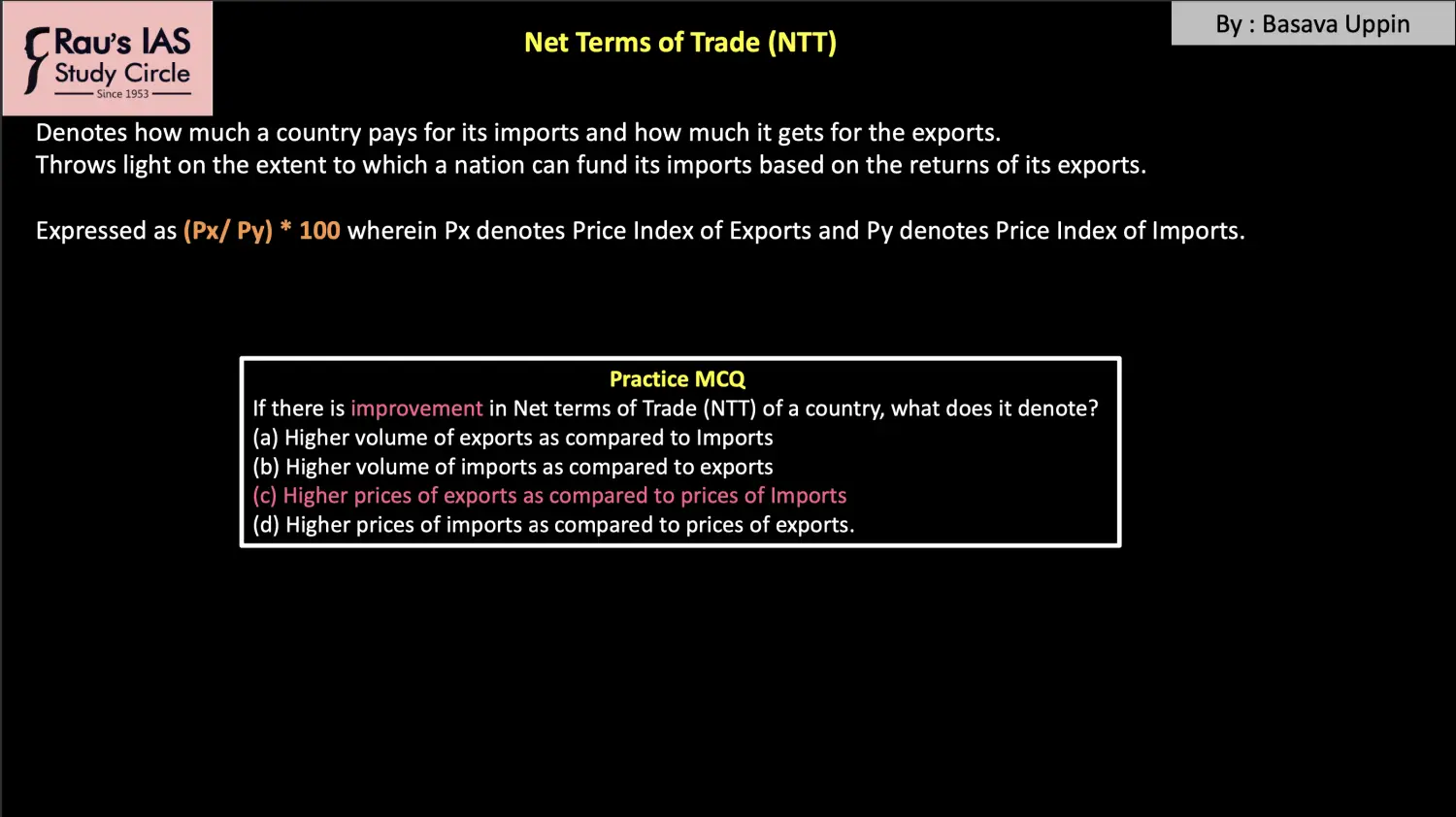
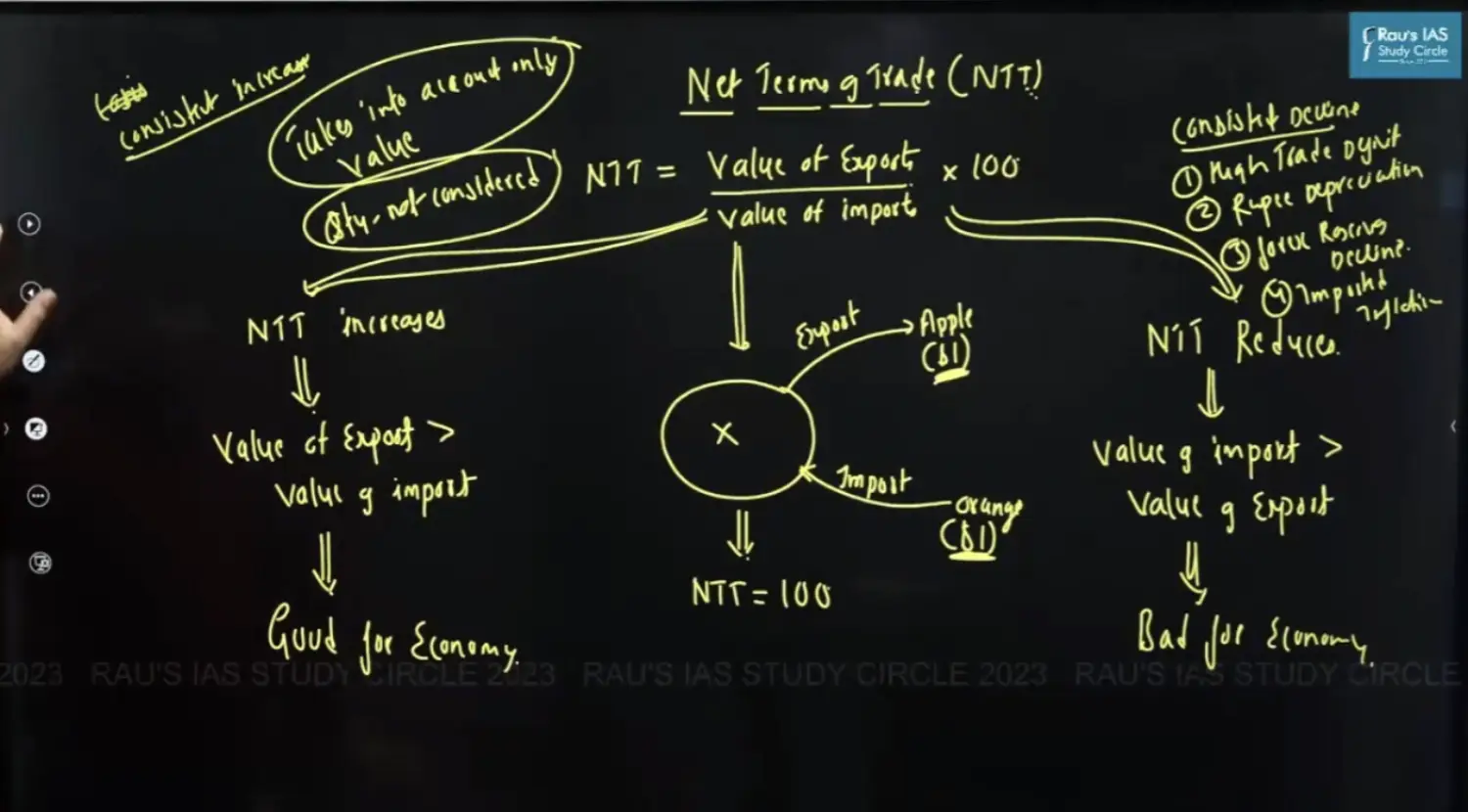
NTT
NTT = (Value of Export / Value of Import)*100
Cases
NTT Increases → Value of Export > Value of Import → Good
NTT Decreases → Value of Import > Value of Export → Bad
High Trade Deficit, Current Account Deficit
Imported Inflation
Rupee Depreciation
Forex Reserve Decrease
Here only Value is taken into Consideration & NOT Quantity
Gross Terms of Trade (GTT)
GTT = (Volume of Import / Volume of Export)*100
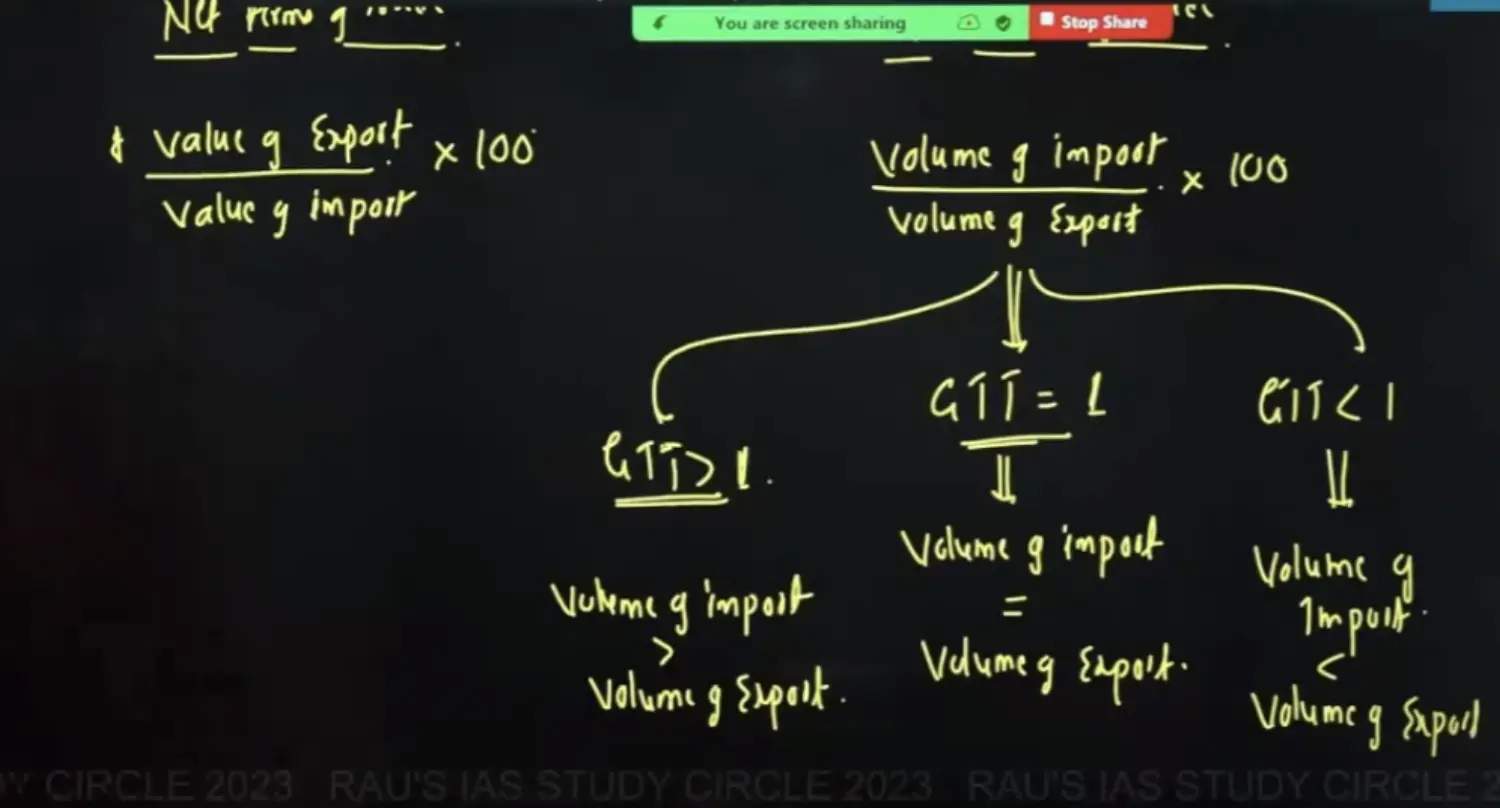
Note : NTT is more comprehensive
Overseas Investment
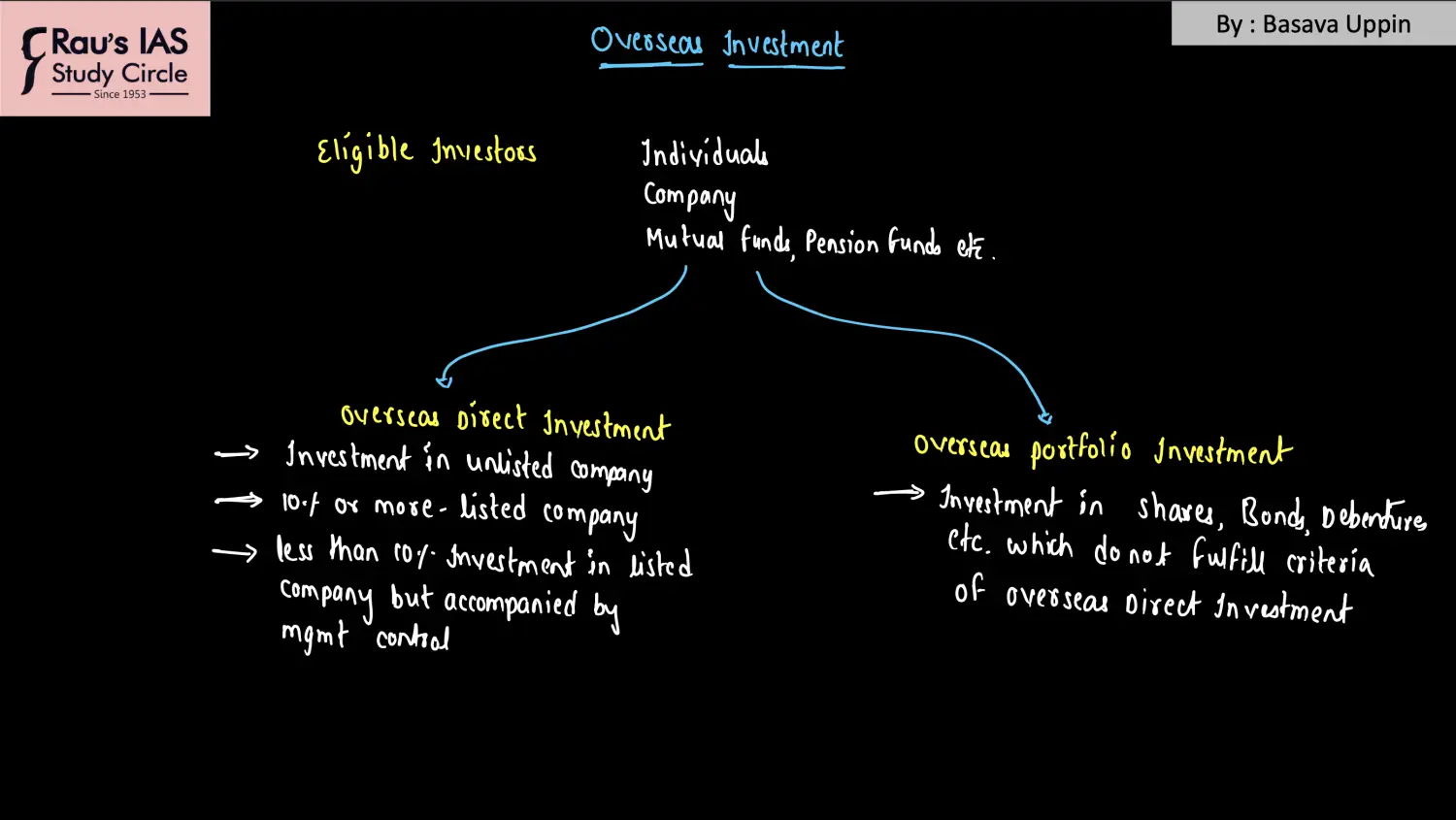
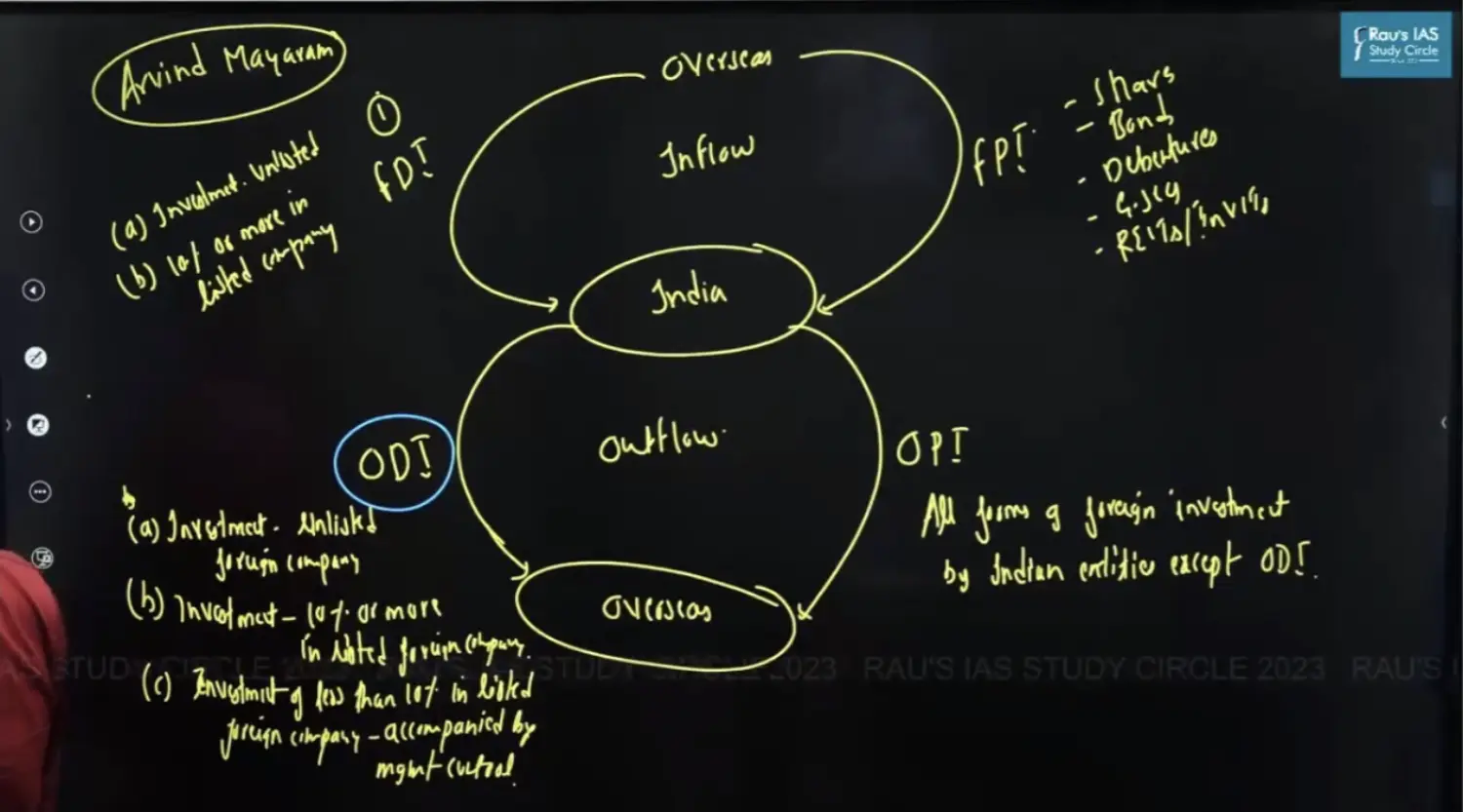
FDI & FPI - By Arvind Mayaram Committee