Chapter 06 - Payment & Settlement System
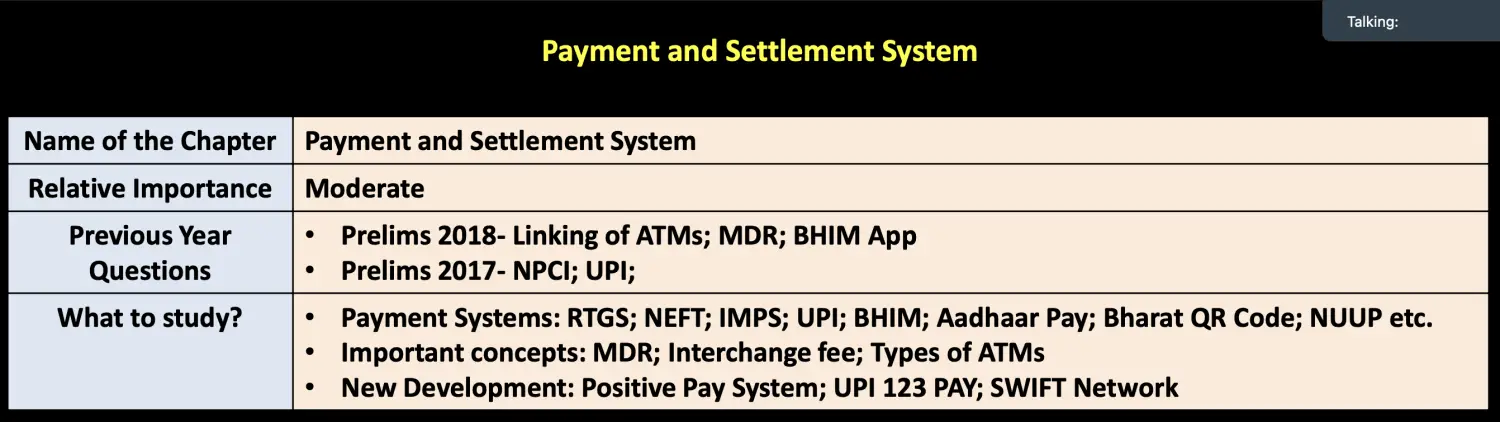
Prelims Syllabus
Introduction to Chapter
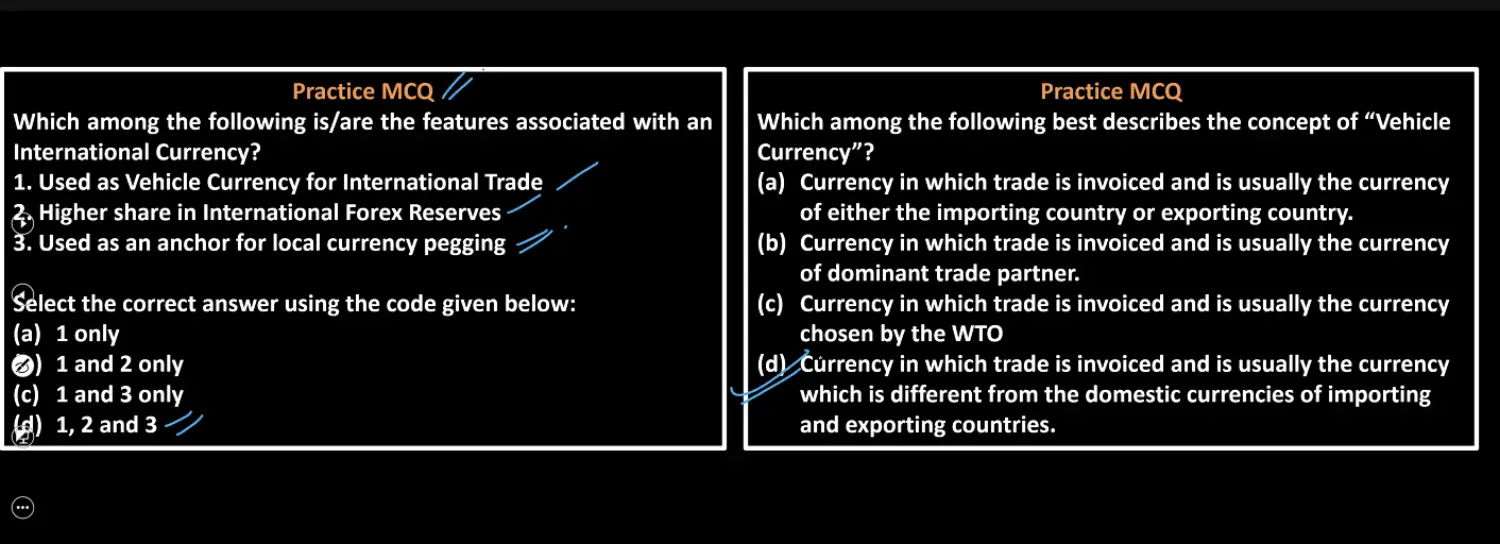
Practise Questions
Ans A👇
Who Regulates Payment & Settlement in India
- Board for Regulation of Payment and Settlement System
- It is a Statutory Board under Payment & Settlement System Act
Important Topics and Pointers
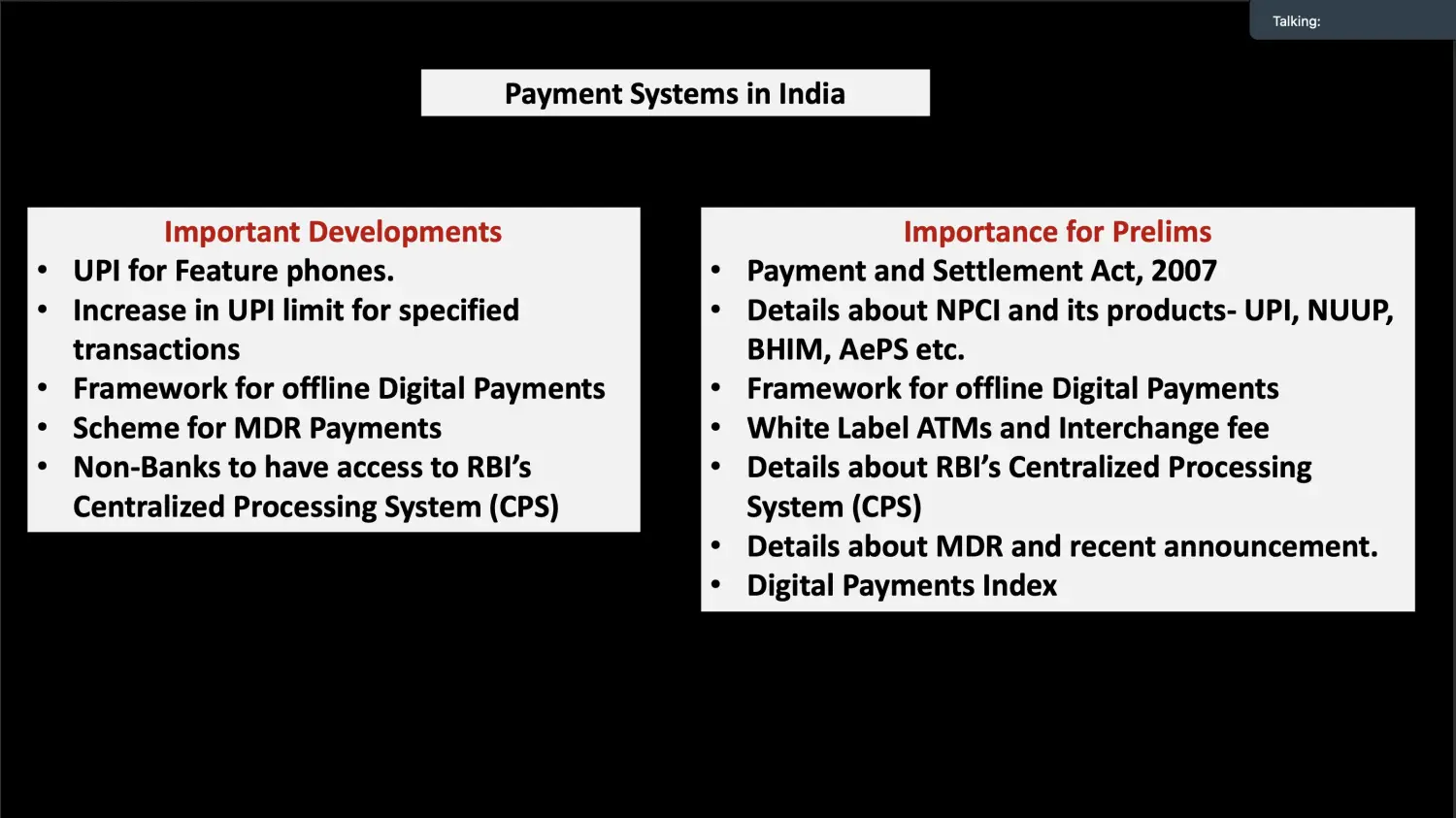
Types of Payment Systems in India
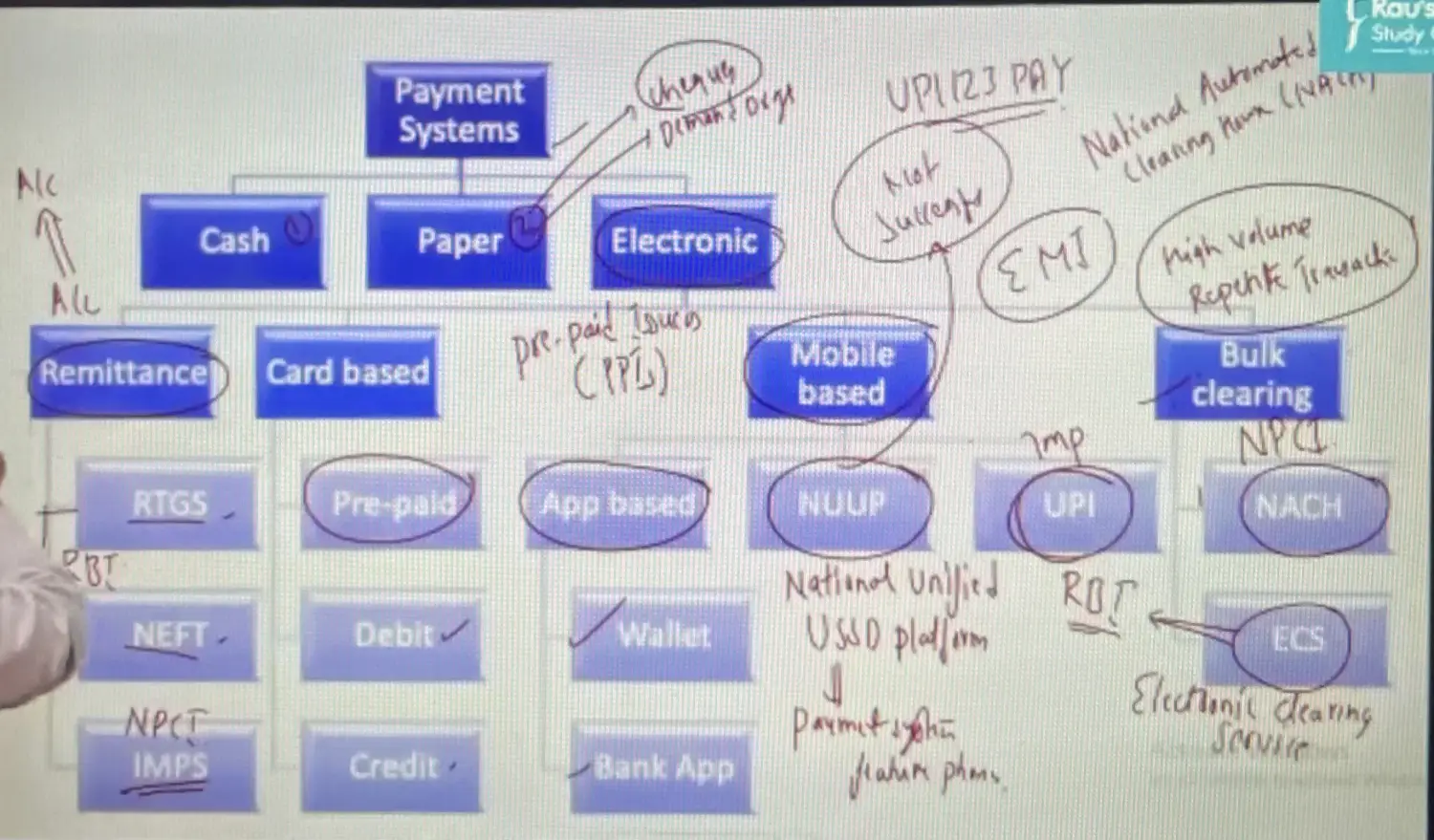
Paper Pay Includes - Cheques and Demand Drafts
Remittance - From One Account to Another Account Transfer
Bulk Clearing - High Volume Repetitive Transactions
Remittance
- by RBI - NEFT & RTGS
- By NPCI - IMPS
Prepaid Card
- Metro Card
PPI → Prepaid Issuers → Pay TM, Ola Wallet, All Entities which can issue Pre Paid Instruments in the form of waller or something else
NUUP - National Unified USSD Platform - Payment System which can be used by People who are using Feature Phones
Issue : It is not successful → Hence a New Payment System called UPI 123 Pay
Bulk Clearing
NACH - National Automated Clearing House
Enables Auto Debit for various recurring expenses
Used in : Subscription Models of Online Platform && Deduction of EMI’s
ECS - Electronic Clearing Service - Developed by RBI
Cheque-Based Payment System
Two Important Development in Paper Based System are
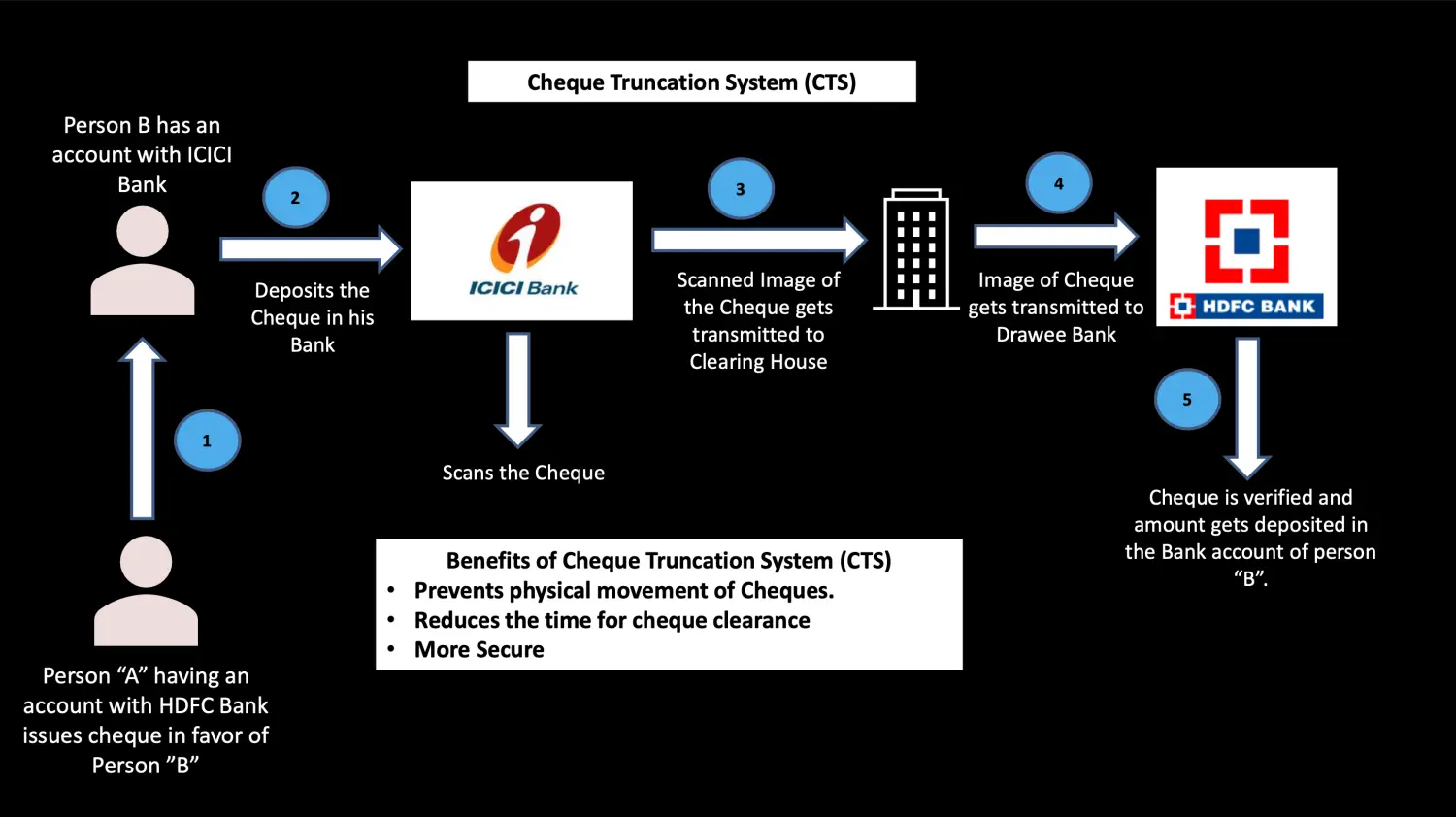
- CTS - Cheque Truncation System
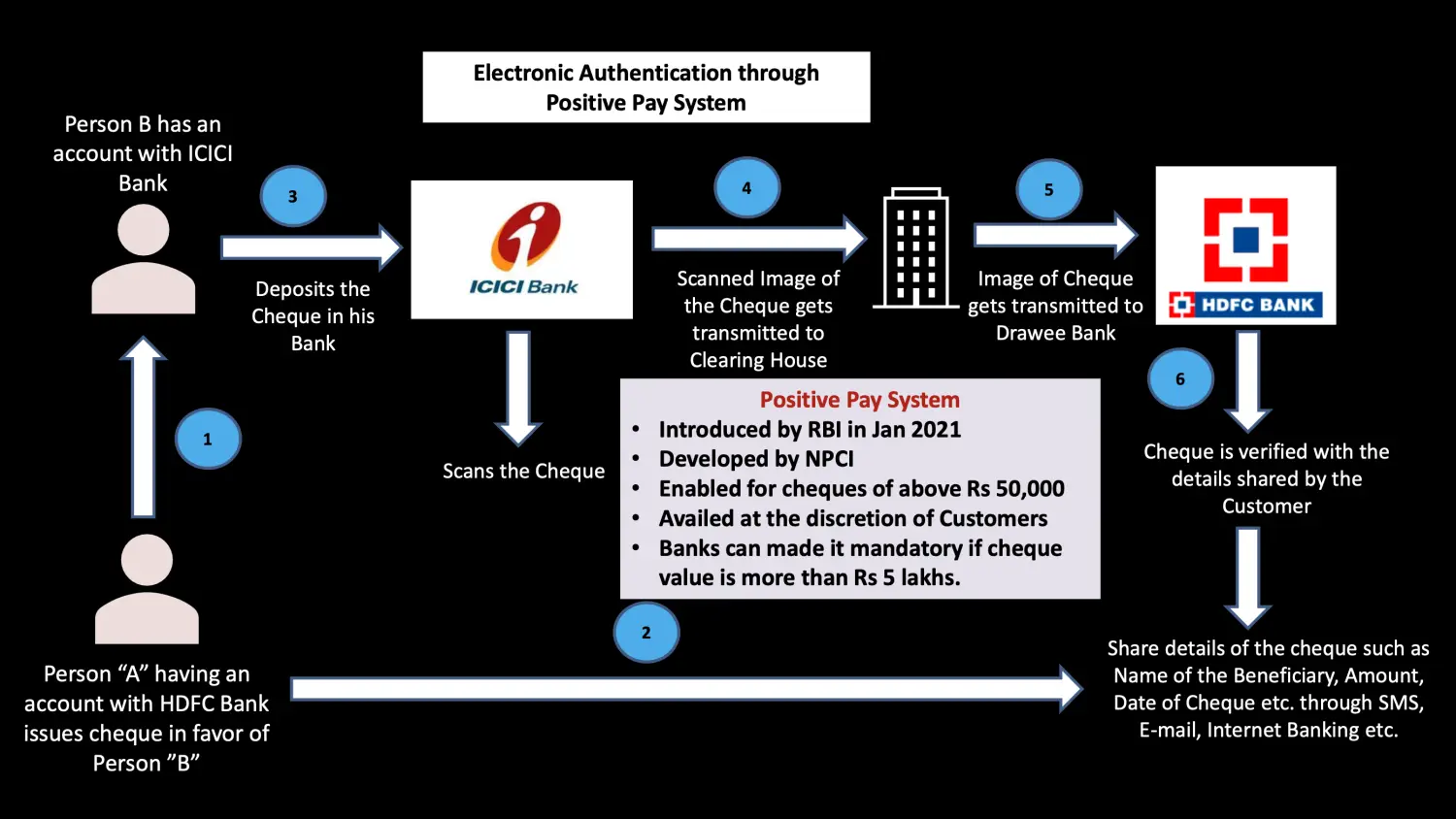
- PPS - Positive Pay System (in 2021)
Sample of a Cheque is
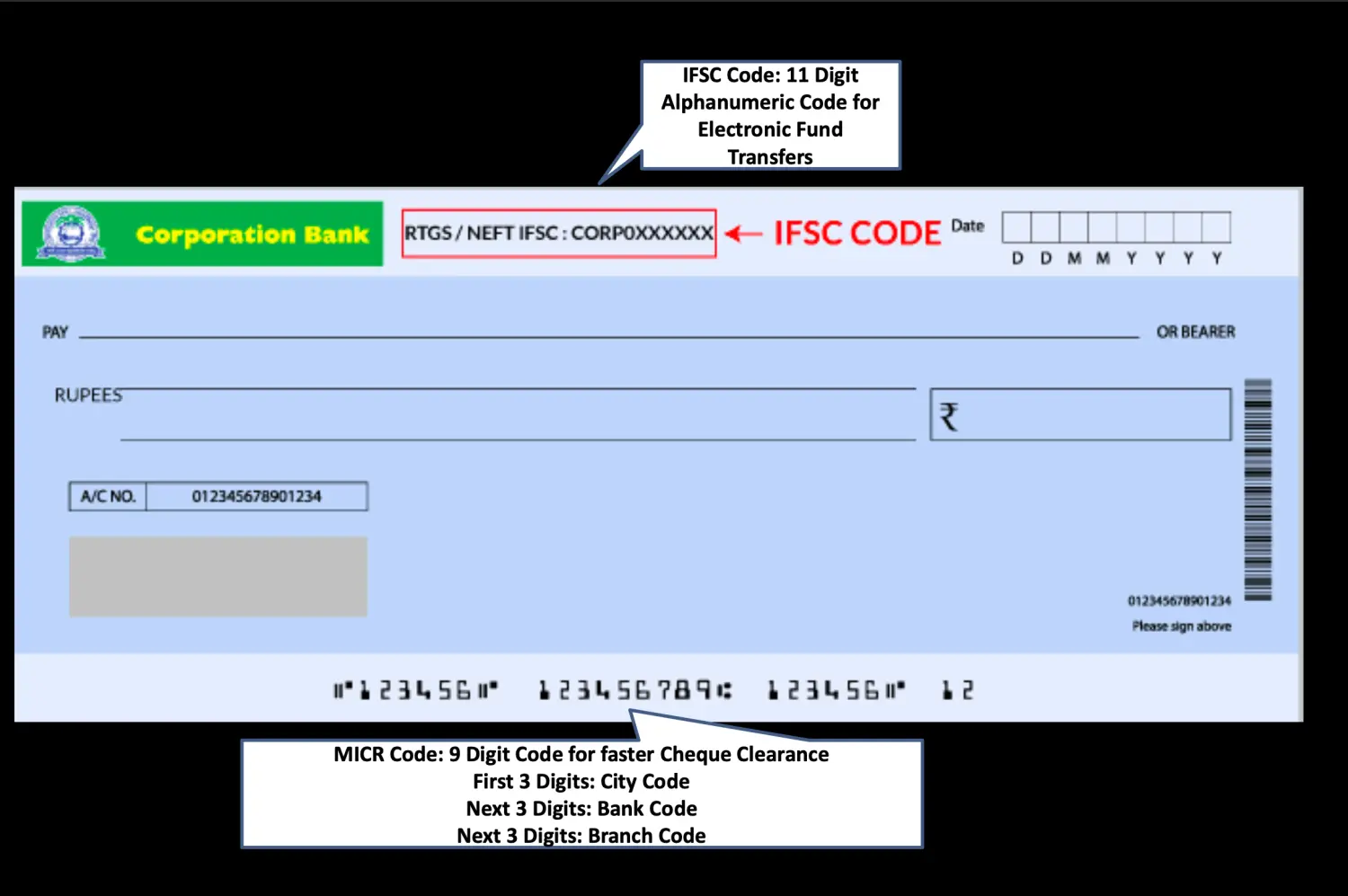
IFSC Code
- IFSC - Indian Financial System Code
- It is 11 Digit Code
MICR Code
MICR - Magnetic Ink Character Recognition Code
It is 09 Digit Code
- First 3 - City Code
- Next 3 - Bank Code
- Next 3 - Branch Code
Why is it called as Magnetic Ink
It is printed with Iron Oxide i.e Magnetised Ink
How Does Payment of Cheque Happen - Earlier
Time Consuming Process
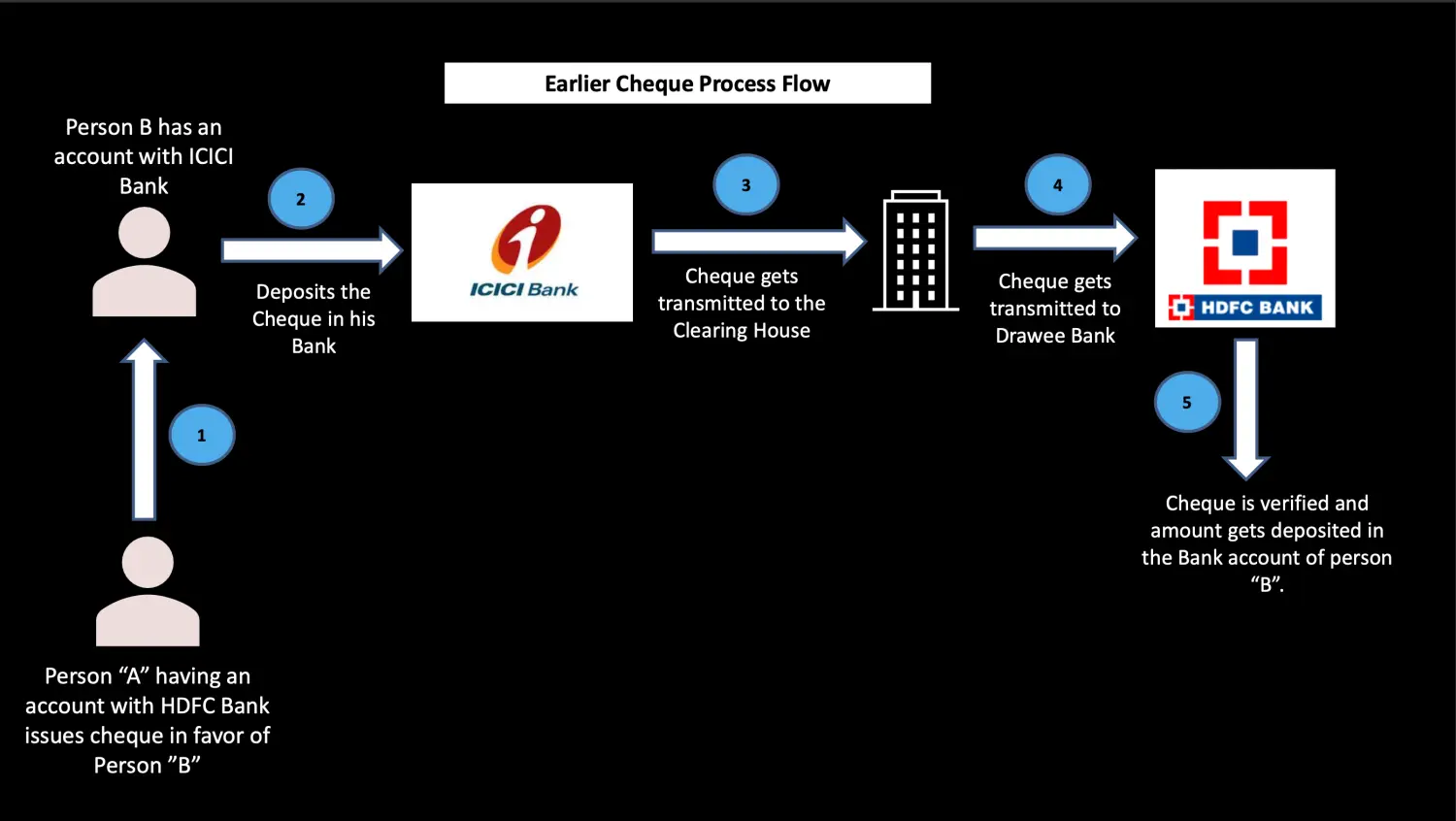
- Cheque Issued from : HDFC Delhi
- Cheque Issued to : ICICI Mumbai
- Cheque used to travel Physically. Hence, the Problems were
- Physical Damage
- Tampering Issues
- Time Consuming
How Does Payment of Cheque Happen - Now (CTS)
How Does Payment of Cheque Happen - Now (PPS)
NPCI - National Payment Corporation of India Limited
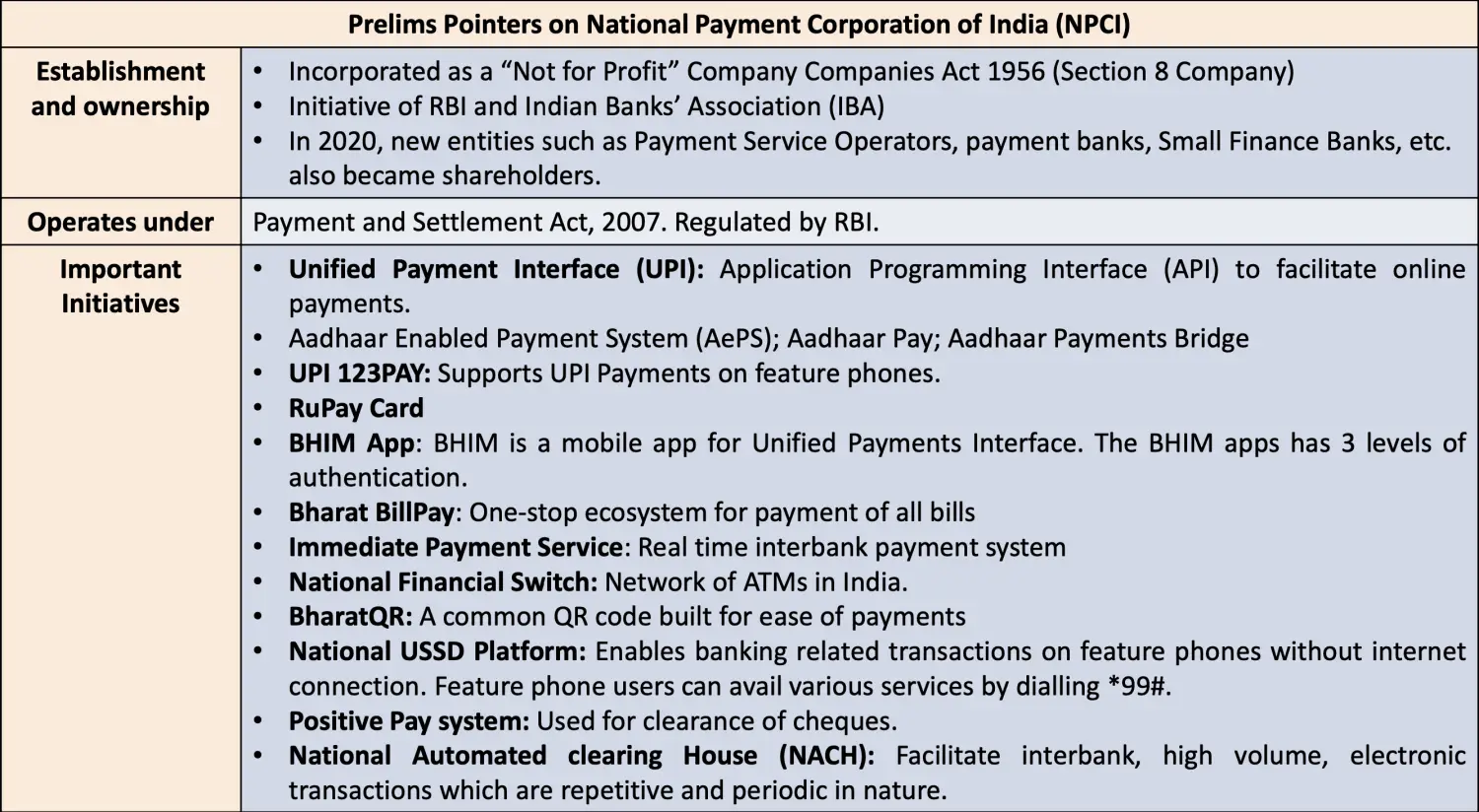
- National Financial Switch
- UPI
- IMPS
- NACH
- Positive Pay System
UPI - Developed by NPCI
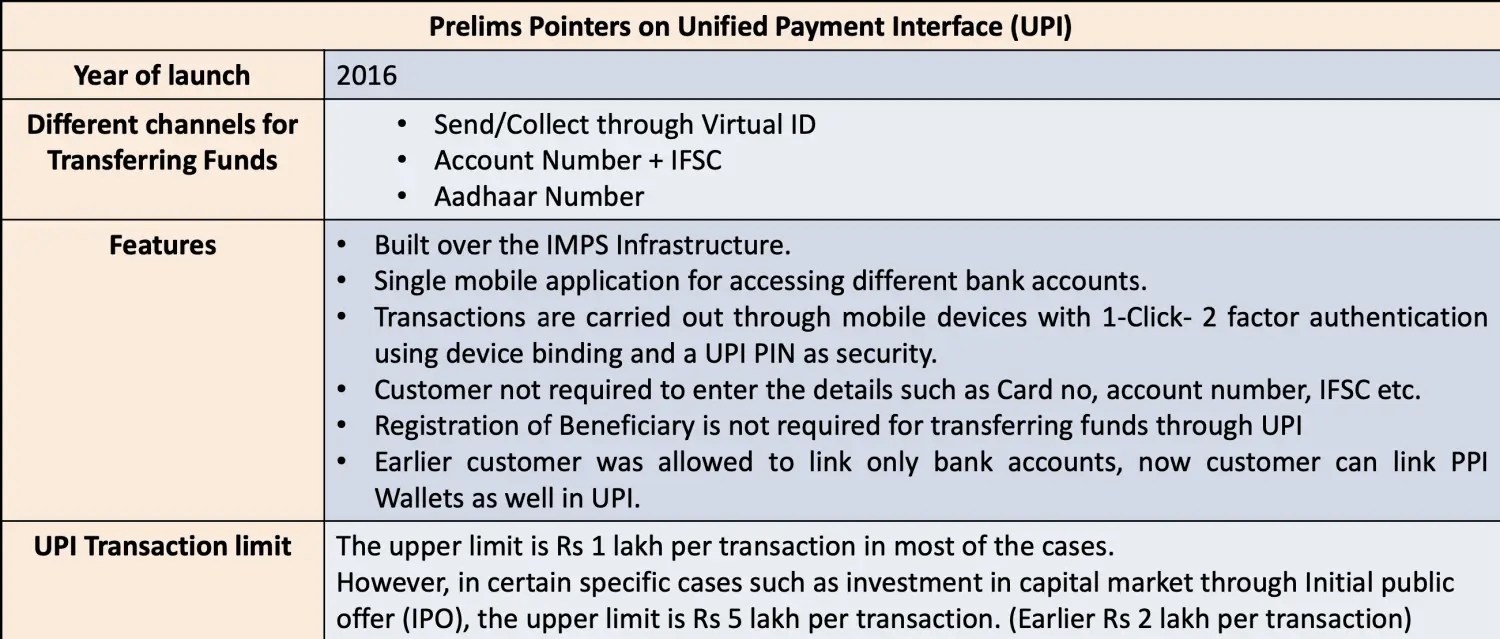
- UPI - Unified Payment Interface
- UPI is an Application Programming Interface (API). Its an Open Interface
- UPI can be used to
- Request Payment from Someone
- Make Payment to Someone
- Single UPI ID for Multiple Bank Accounts is possible
- Factor of Authentication
- How Many Levels of Authentication is needed to complete a Transaction
- UPI has 2FA
- Front End : UPI PIN
- Back End : Mobile Number & Device Number ( IMEI Number )
- Limit on UPI
- In Most Cases Upper Limit is Rs 1 Lac
- In Certain Specific Cases Limit is Rs 5 Lac
ONDC - Open Network for Digital Commerce
- in E Commerce we have - Duopoly → Amazon & Flipkart
- Open Source Platform which can be Integrated as and when needed
- Co Win Platform is an Example of Open Source Platform
- They are example of Digital Public Good
AePS - Aadhaar Enabled Payment System - To Have Access to his Bank Account
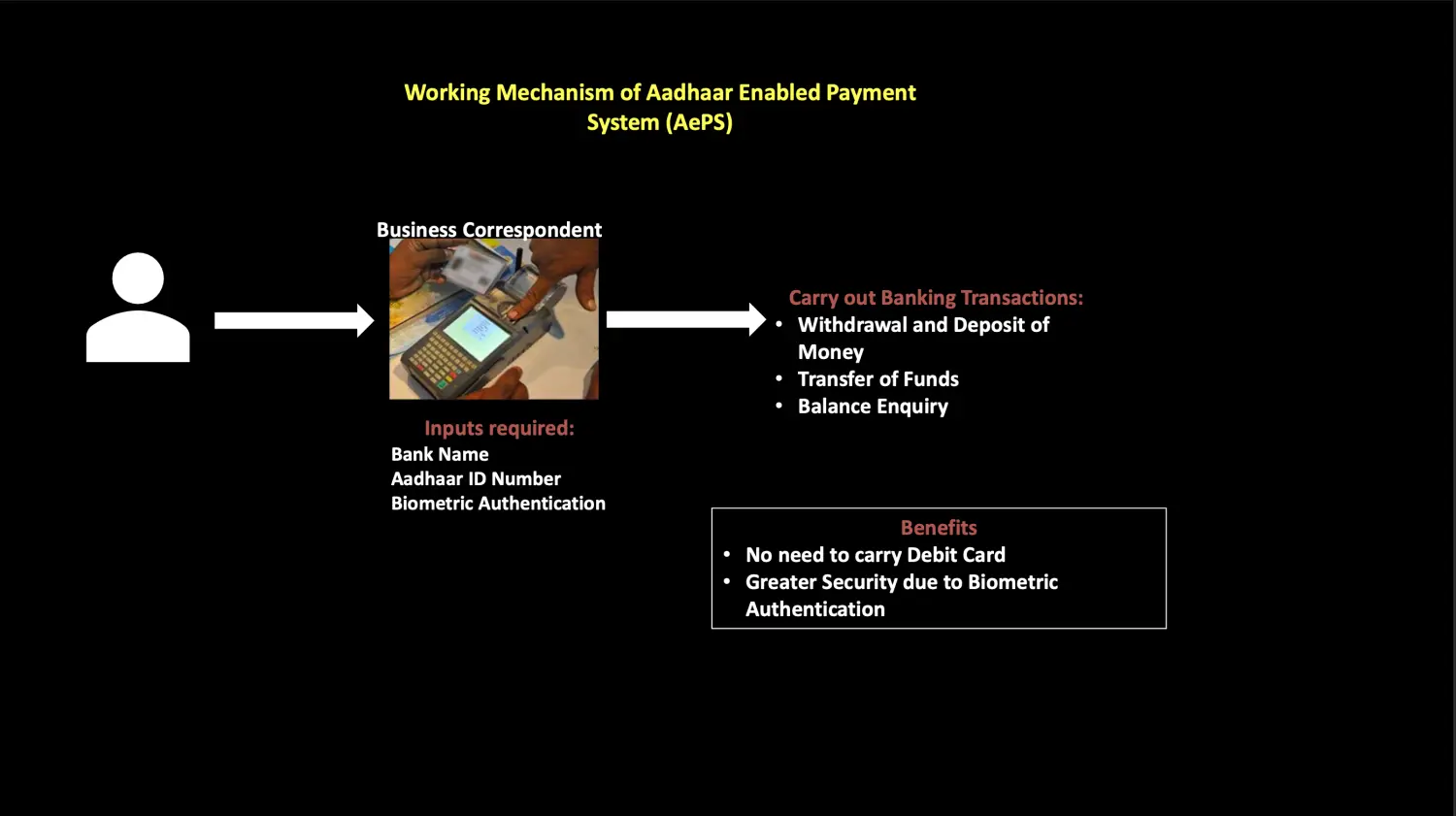
Business Correspondent Carries : Micro ATM Machine
Linking of Aadhar & Mobile Number
Aadhar Pay - Pays to a Merchant
JAM Platform - Jan Dhan Aadhar Mobile - JAM Trinity
Using Aadhar & Mobile Number - DBT is done
LPG Subsidy & PM Kisan Yojana
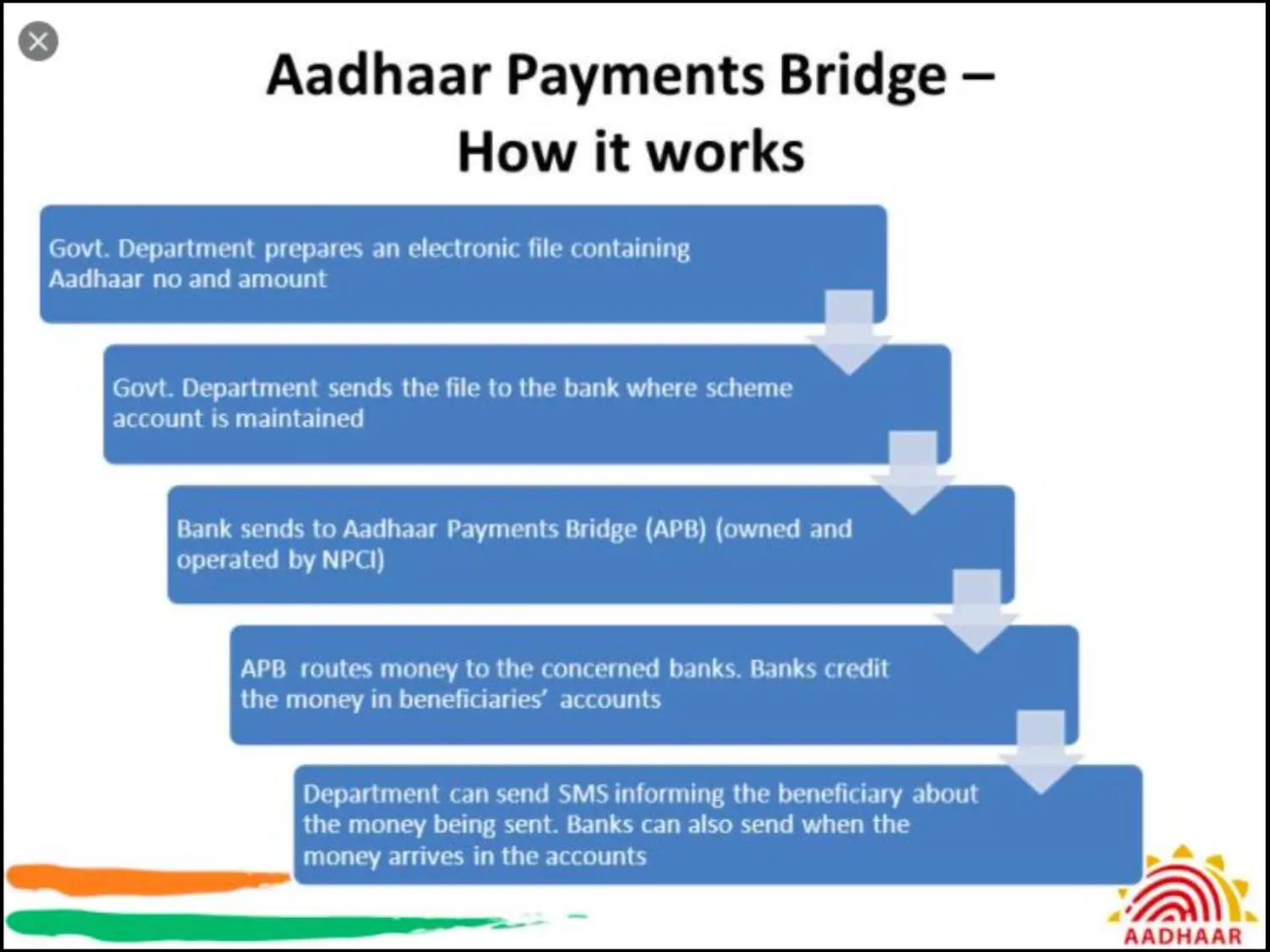
JAM is based upon Aadhaar Payments Bridge
Offline Digital Payment
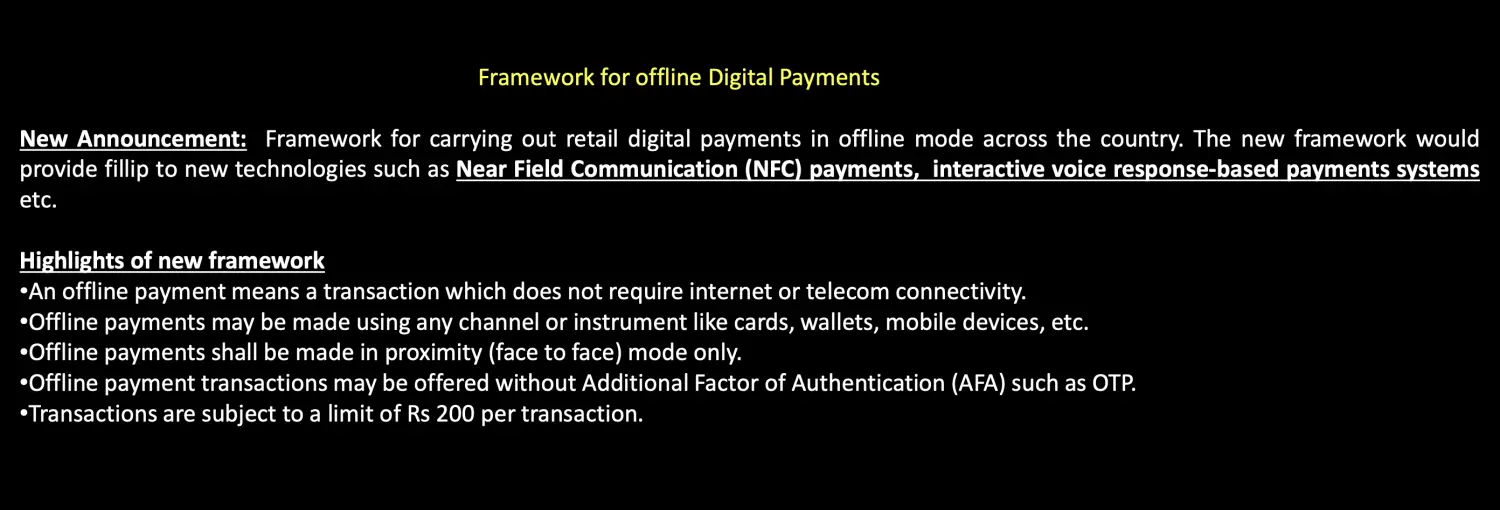
- Offline Payment is any payment done w/o use of Internet & Telecom Communication
- Examples Are
NFC - Near Field Communication
Implements G Pay - Tap & Pay Feature
16 Digit Debit Card Number & 3 Digits CVV Number
By Entering this Detail, the Mobile can act as Debit Card
Metro Card
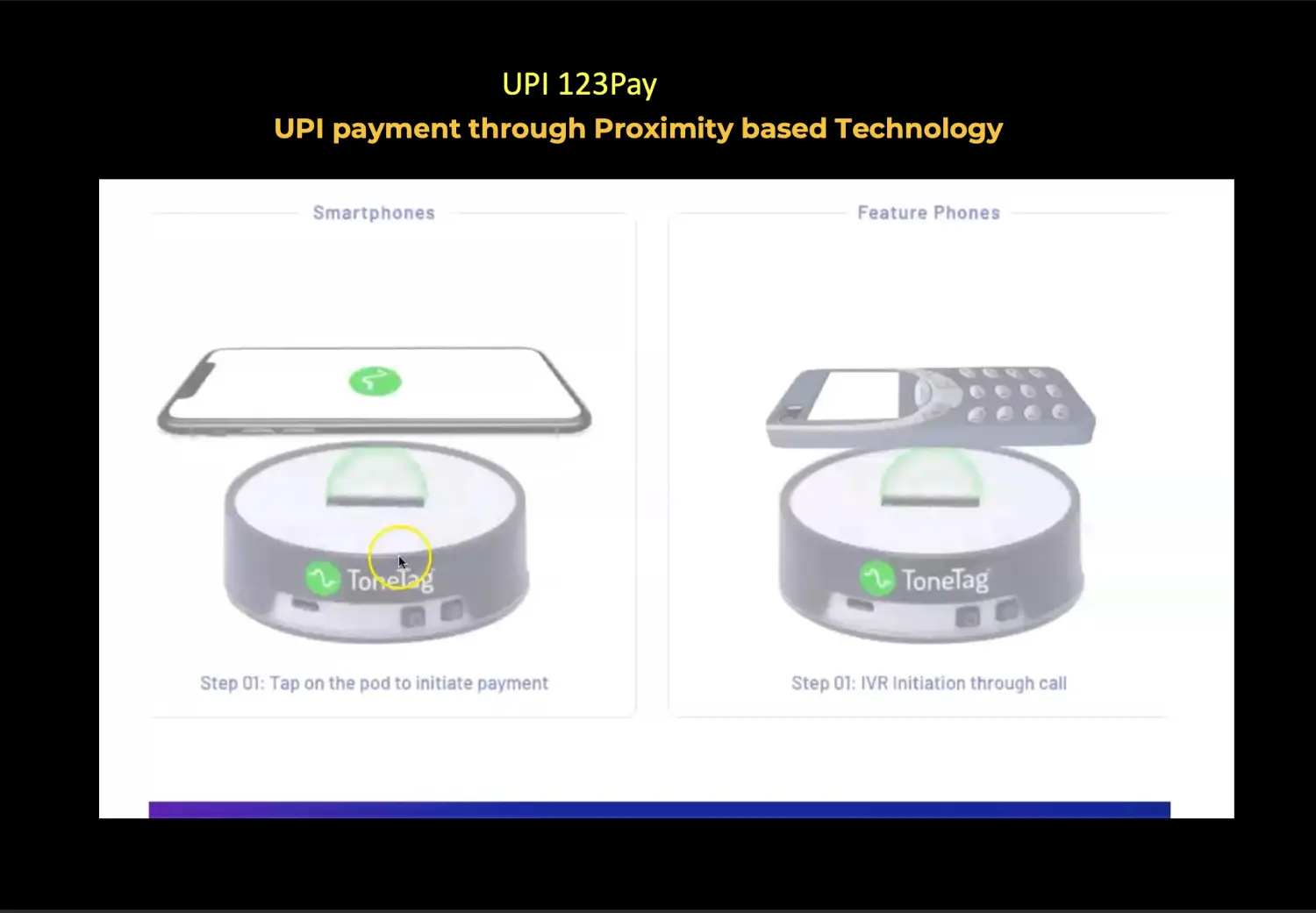
Sound Based Technology - UPI 123 Pay
UPI 123 Pay
Mind Map
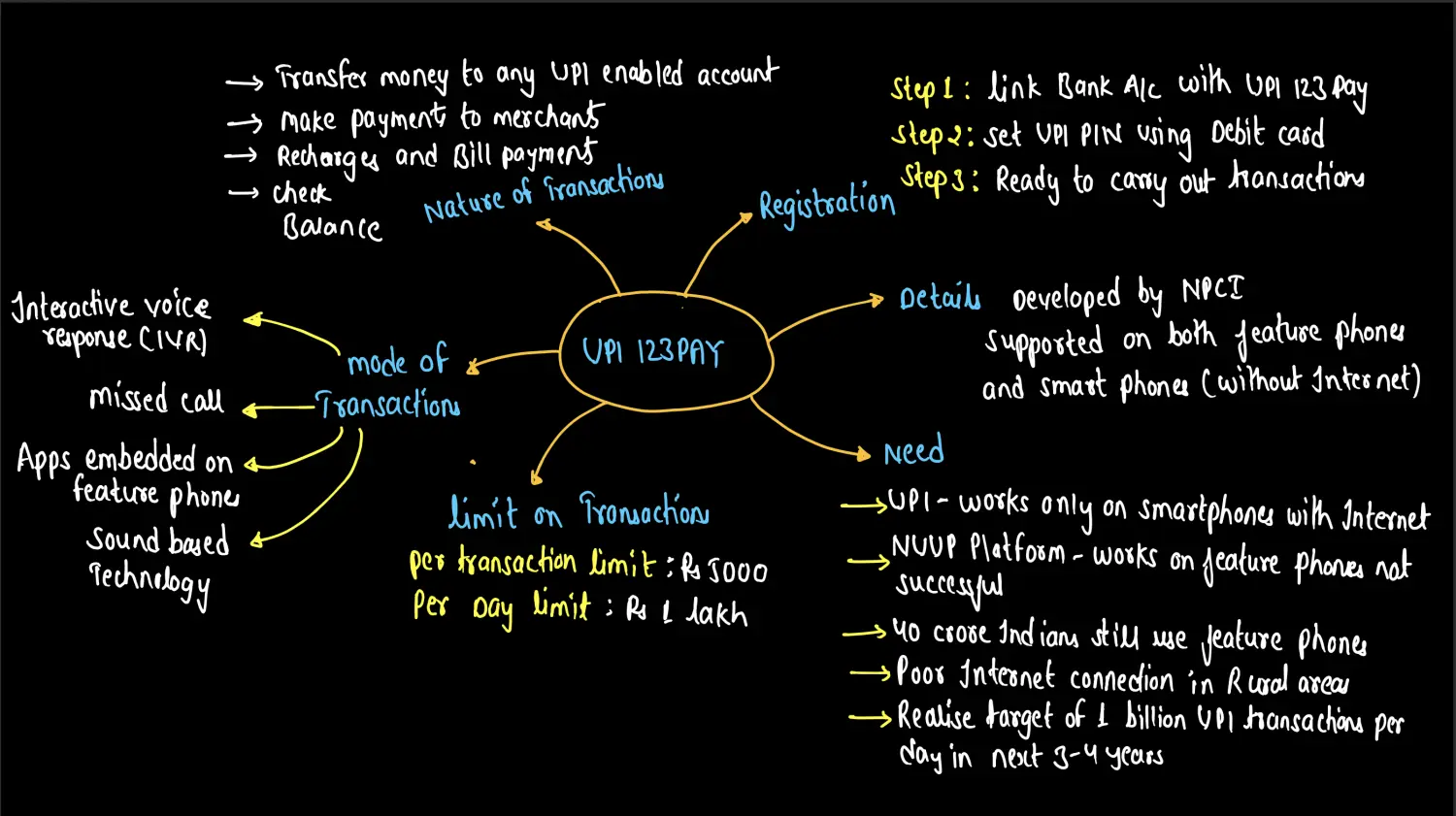
Introduction
- UPI Doesn't Work on Feature Phones
- UPI 123 Works on Feature Phones
In UPI 123 he can make payment by 4 Methods
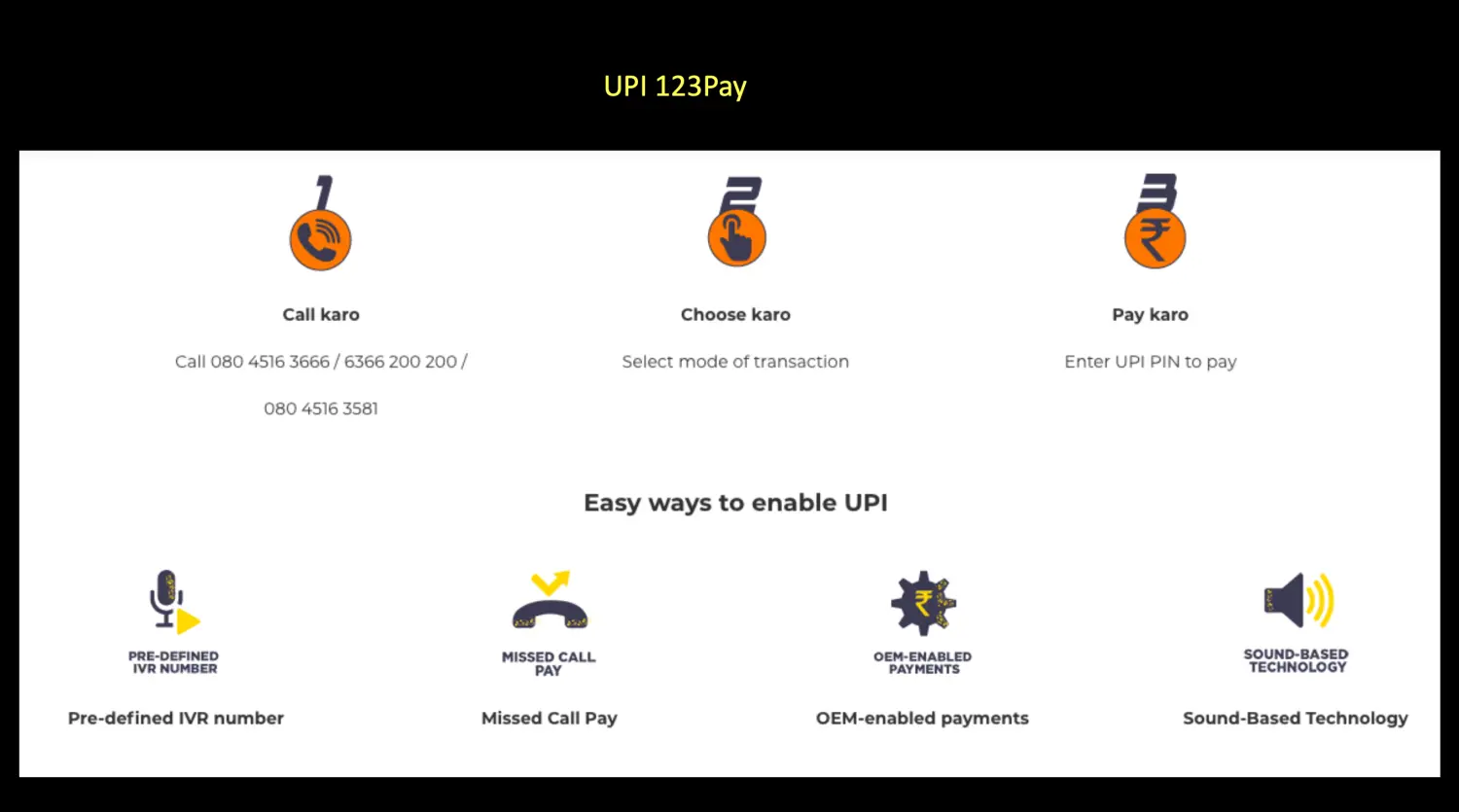
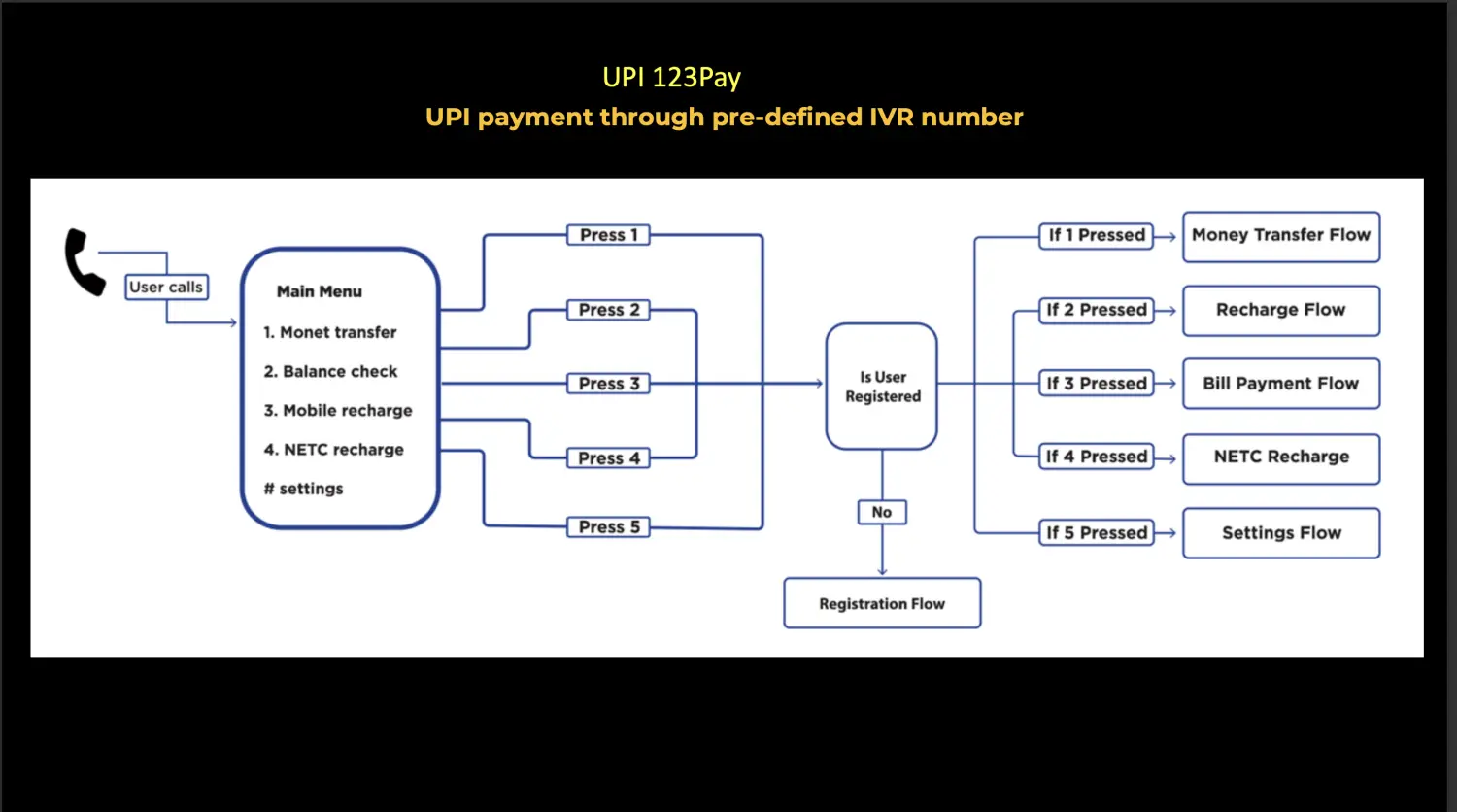
Call Toll Free Number / IVR ( Interactive Voice Response System)
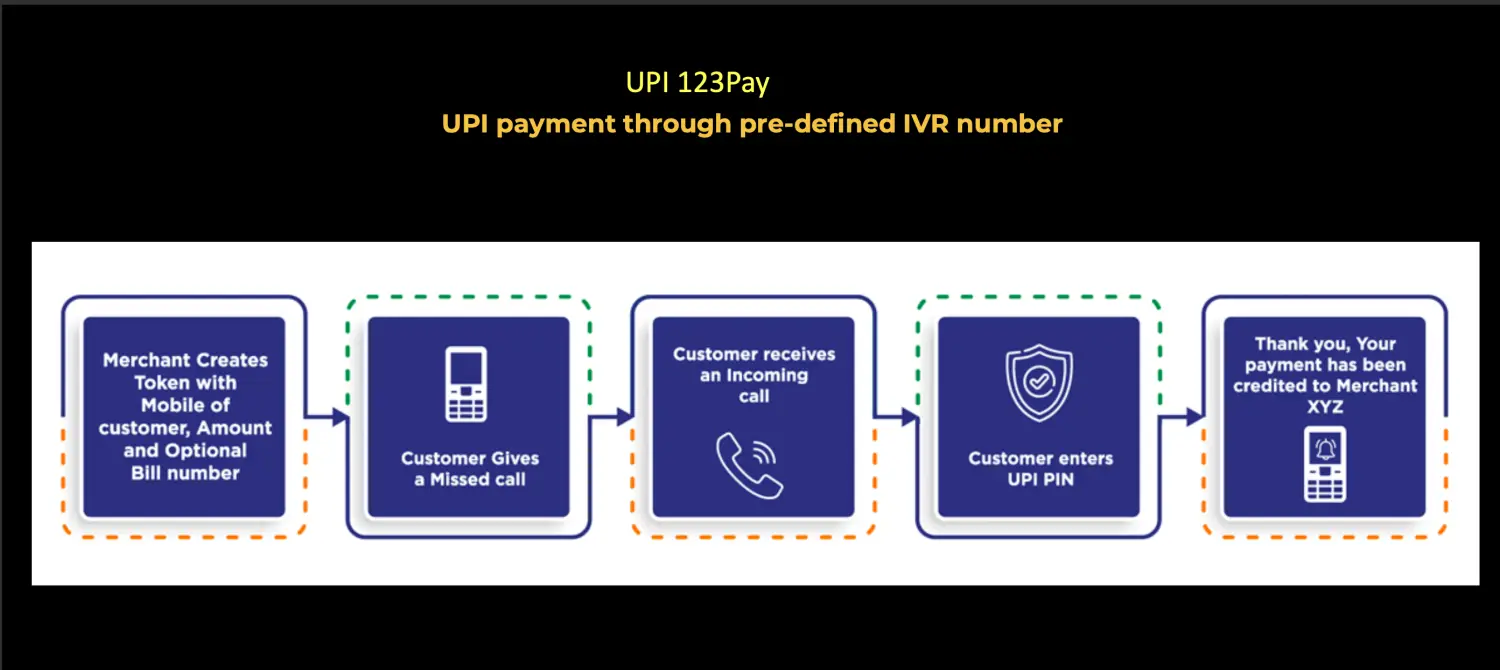
Missed Call Approach
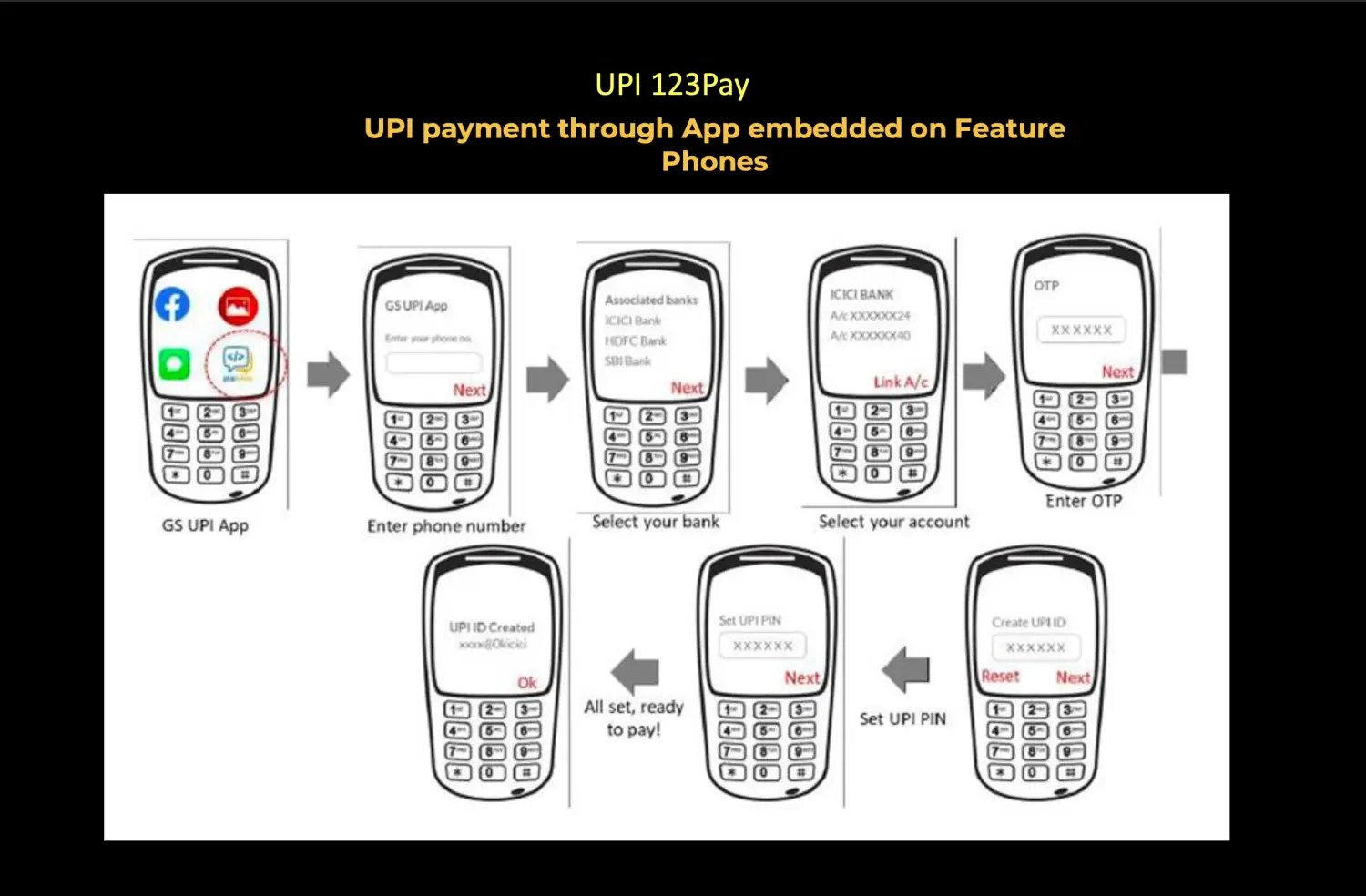
Using Apps on Feature Phones
NPCI has asked Mobile Manufacturers to create Partnership with PhonePe/GPay Companies by means of Pre Loaded Apps
Sound Technology
Transfer of Data is done through Sound Waves
QR Card
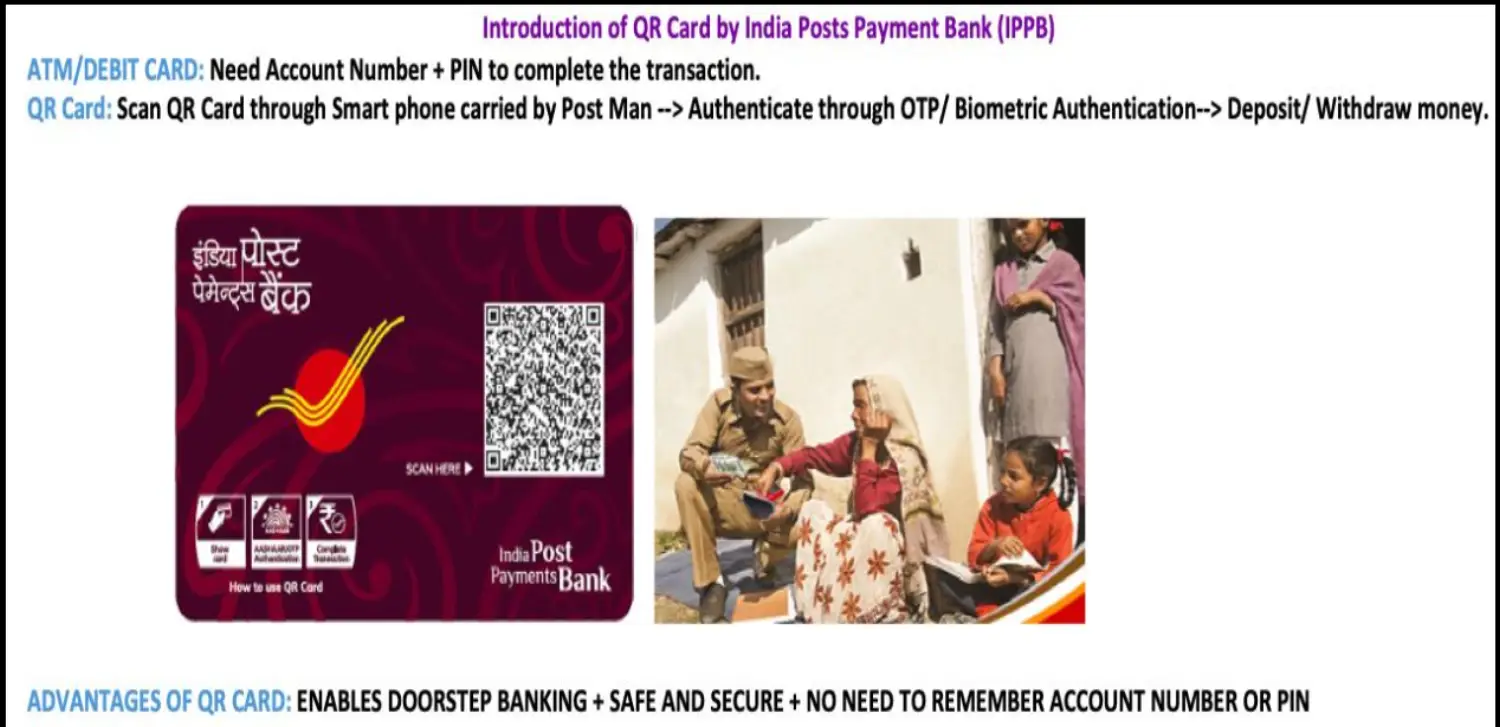
QR - Quick Response
Issued By - India Post Payment Bank (IPPB)
It is a Type of Differentiated Bank
It is kind of a Debit Card
Can it be used in ATMs ? - No Because QR cant be ready by machines
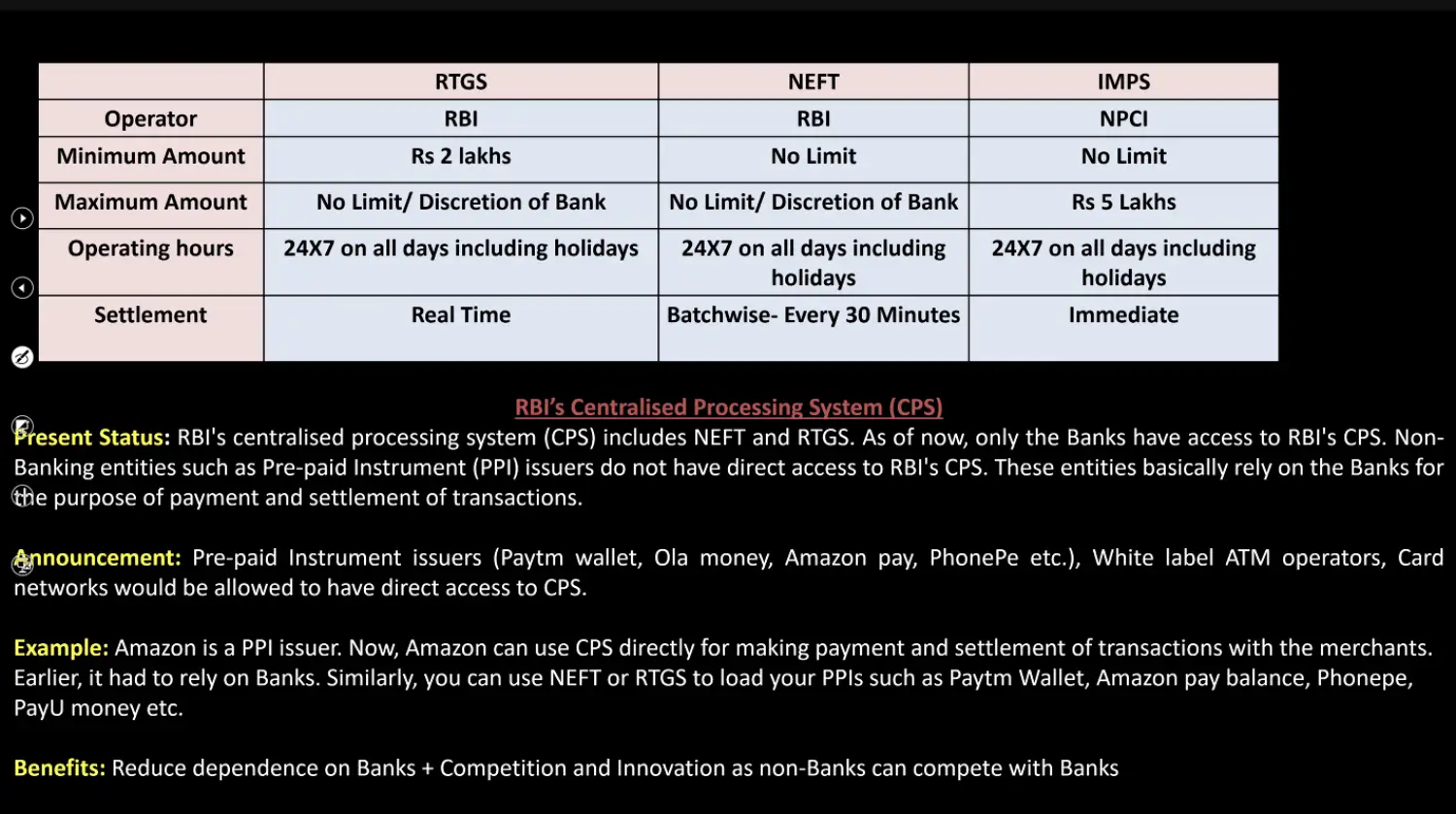
RBI’s Centralised Processing System (CPS)
E Kuber is not a Part of It
It comprises of only RTGS & NEFT
Story of Access
Earlier only Banks could access this
PPI (Prepaid Issuers) had No Access to CPS
Examples of PPI → Amazon, Flipkar, Ola, Uber, Zomato Wallet
Earlier PPI had no Access to CPS i.e it could not use RTGS and NEFT
In 2020 PPI has been given a kind of direct access to CPS
By Access to PPI it means
- PPI can use directly RTGS & NEFT
- Can Load Money on Wallet by means of RTGS & NEFT
Benefit of this Access to PPI is
- Saving of Commission via Banks
- Greater Efficiency in Transaction
What are White Label ATMs (WLAs)?
Ans: ATMs set up, owned and operated by non-banks are called WLAs. Non-bank ATM operators are authorised under the Payment & Settlement Systems Act, 2007 by the Reserve Bank of India (RBI).
Types of Payment System in India
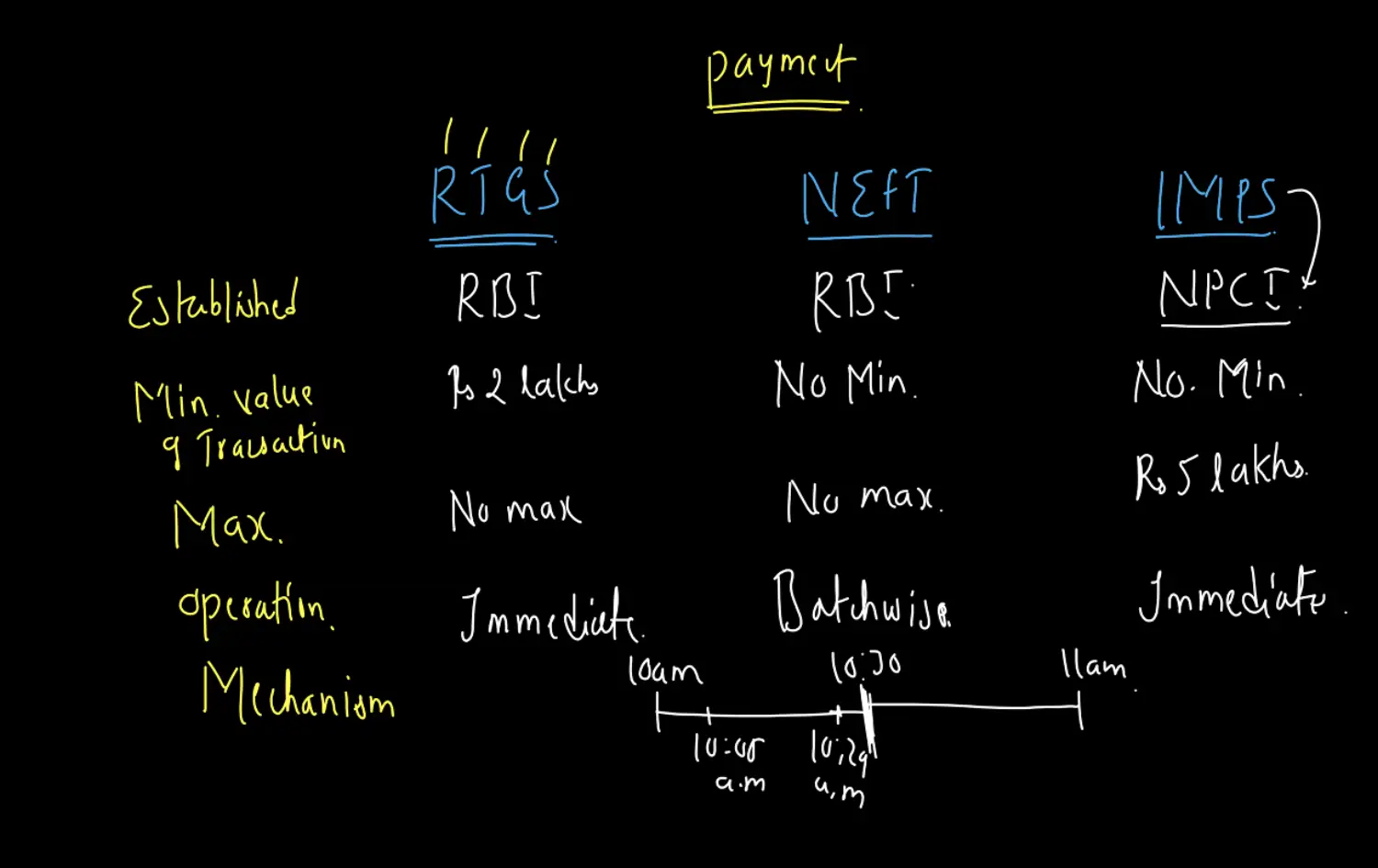
RTGS - Real Time Gross Settlement
High Value Settlement System
NEFT - National Electronic Fund Transfer
IMPS - Immediate Payment Settlement
Every 30 Min Slot Payment Settlement Occurs
Types of ATM
- Full Form of ATM is Automated Teller Machine
- Features Needed for ATM
- Installed
- Maintenance
- Connectivity
- Regulating Cash
- Based on (Who is Doing What)Types of Activities. There are Three Types of ATMS in India
Summary
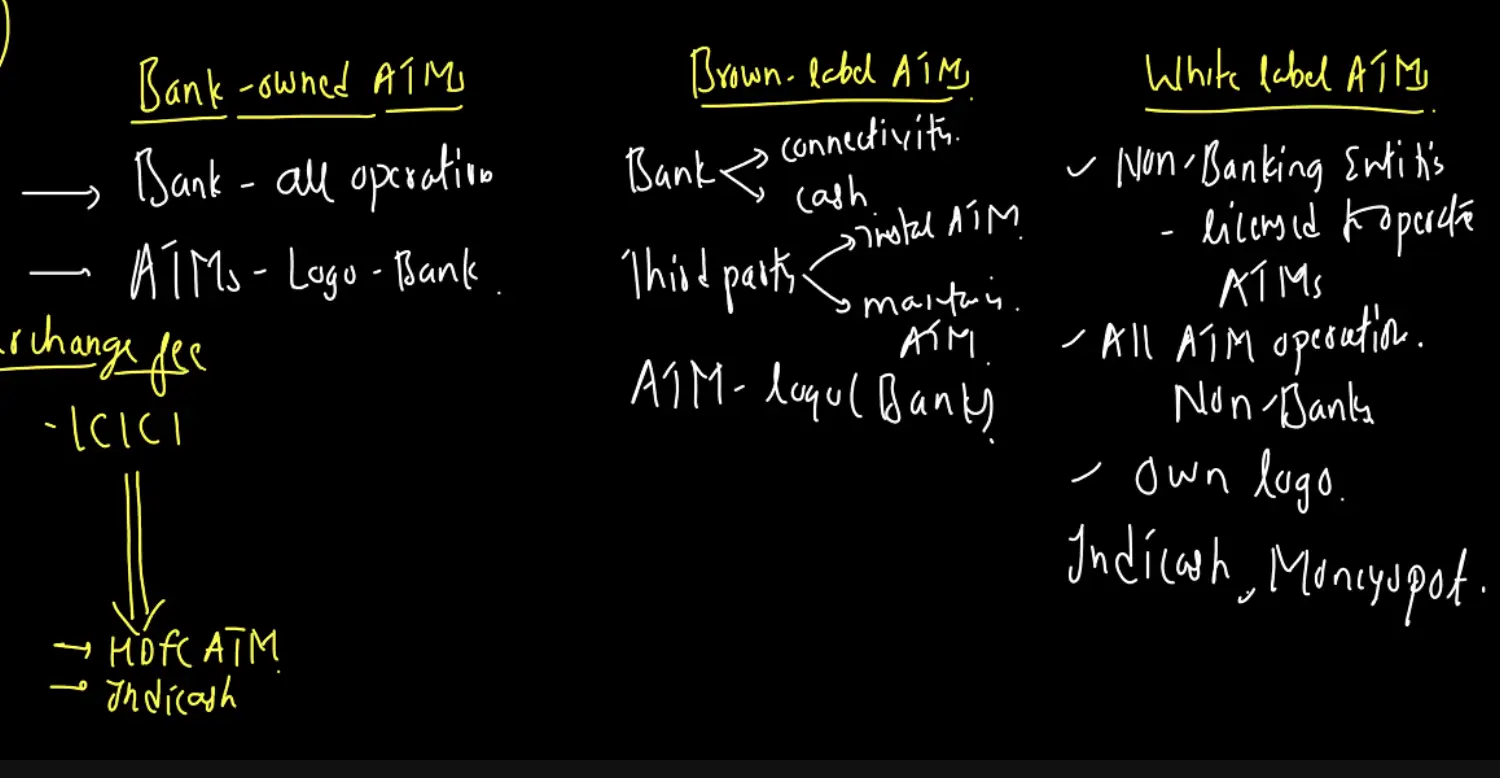
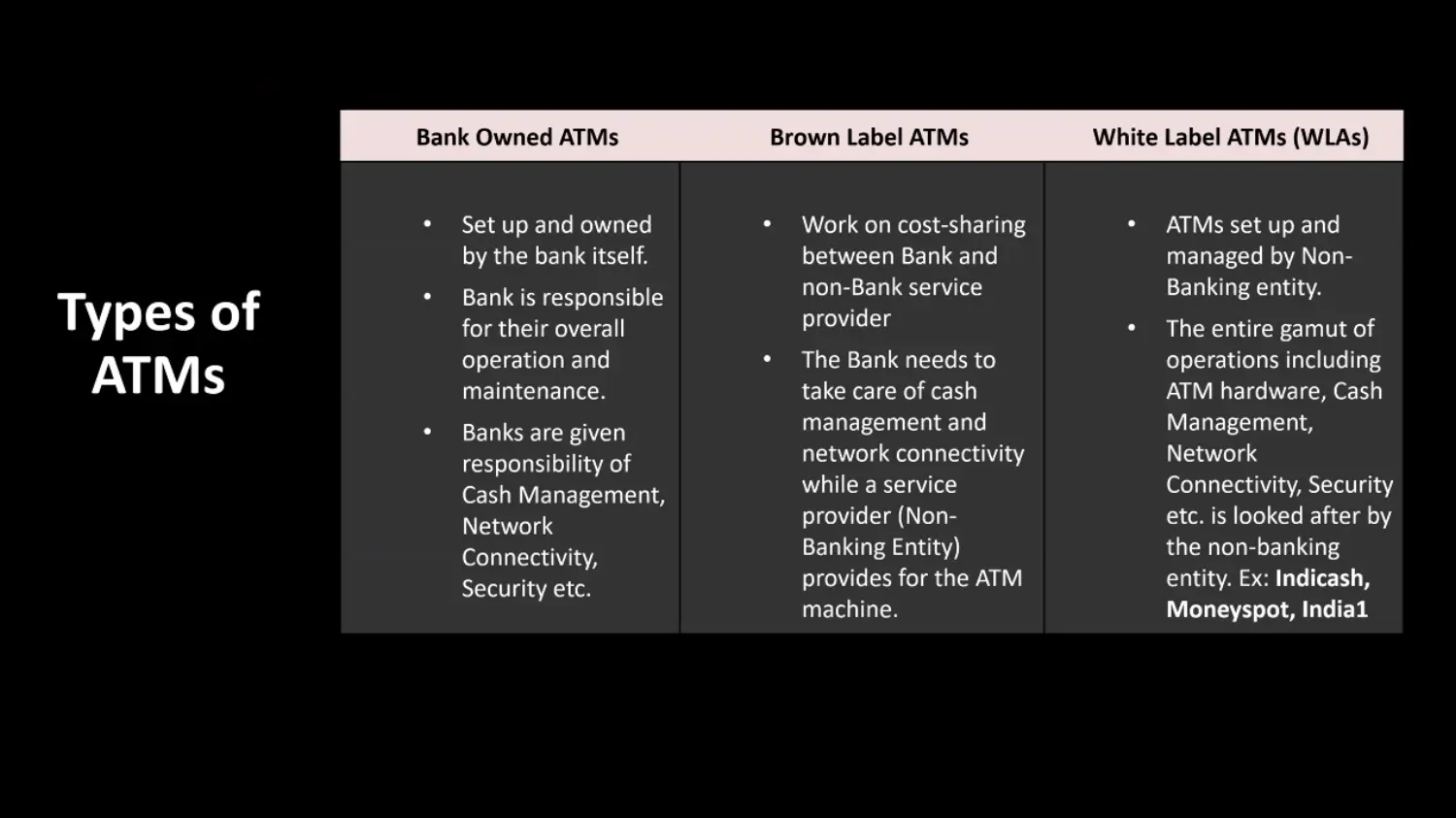
Types of ATM according to RBI are
- Bank Owned ATM’s
- Brown Label ATM’s
- White Label ATM’s
- Introduction
Indi Cash by Tata & Money Spot
They can be Identified as they have their own Logo
Benefits for a Non Banking Entity
Commission from Bank Whose Swiping has been Done
- Introduction
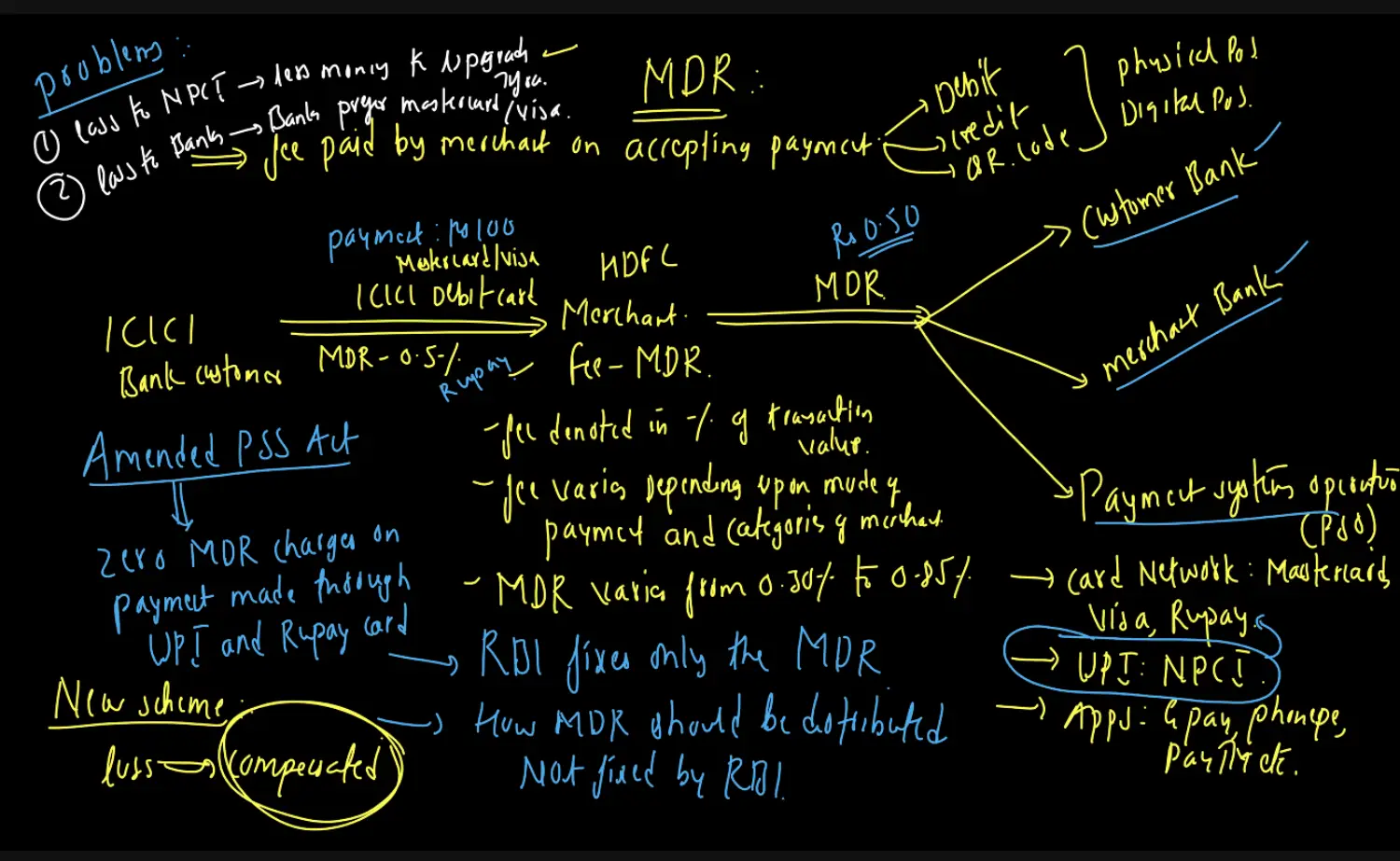
Concept of MDR
Introduction of MDR
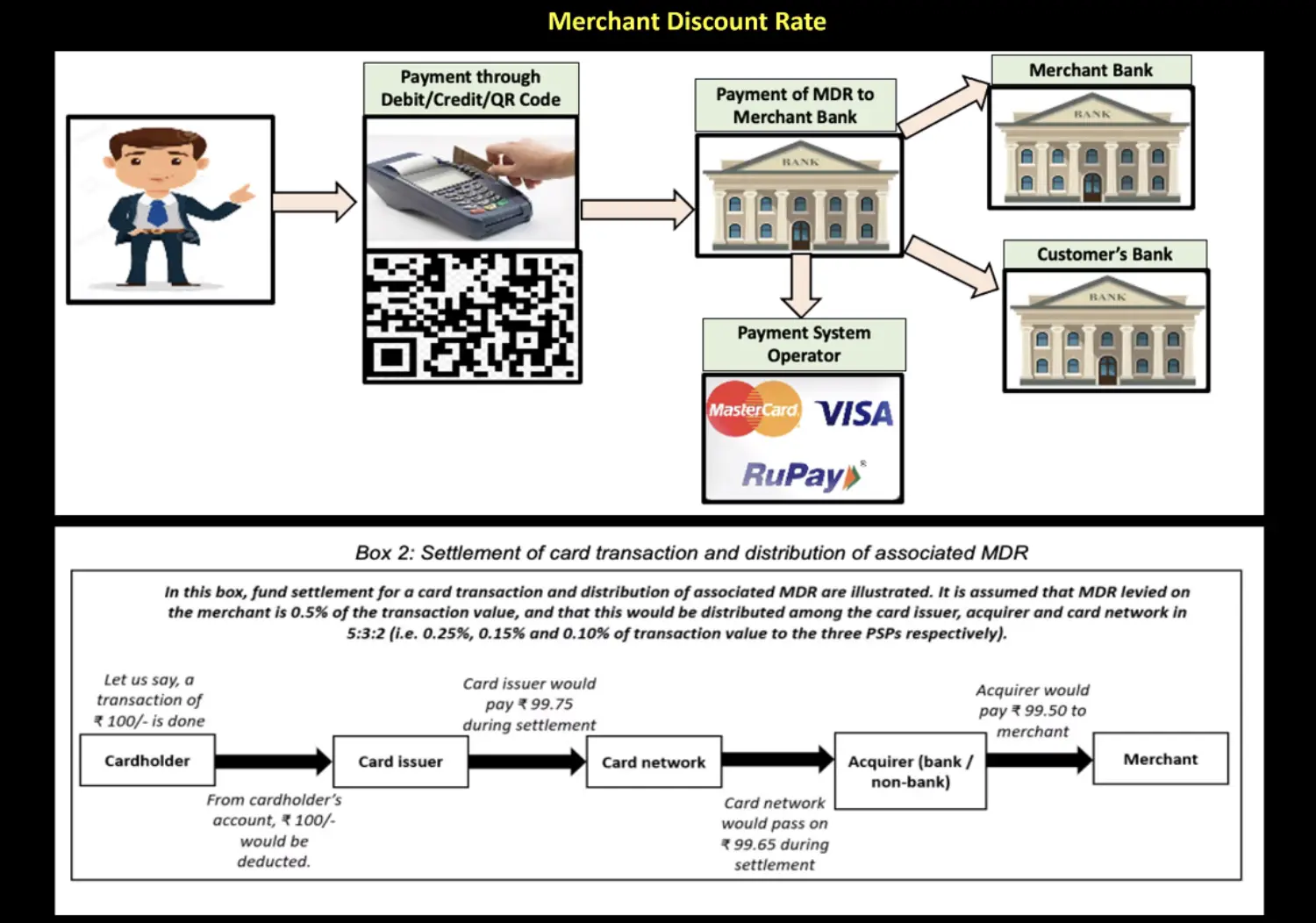
MDR is Merchant Discount Rate
Fee Paid by Merchant in Accepting Payment by Means of Debit, Credit, QR Code either Physical or Digital Payment
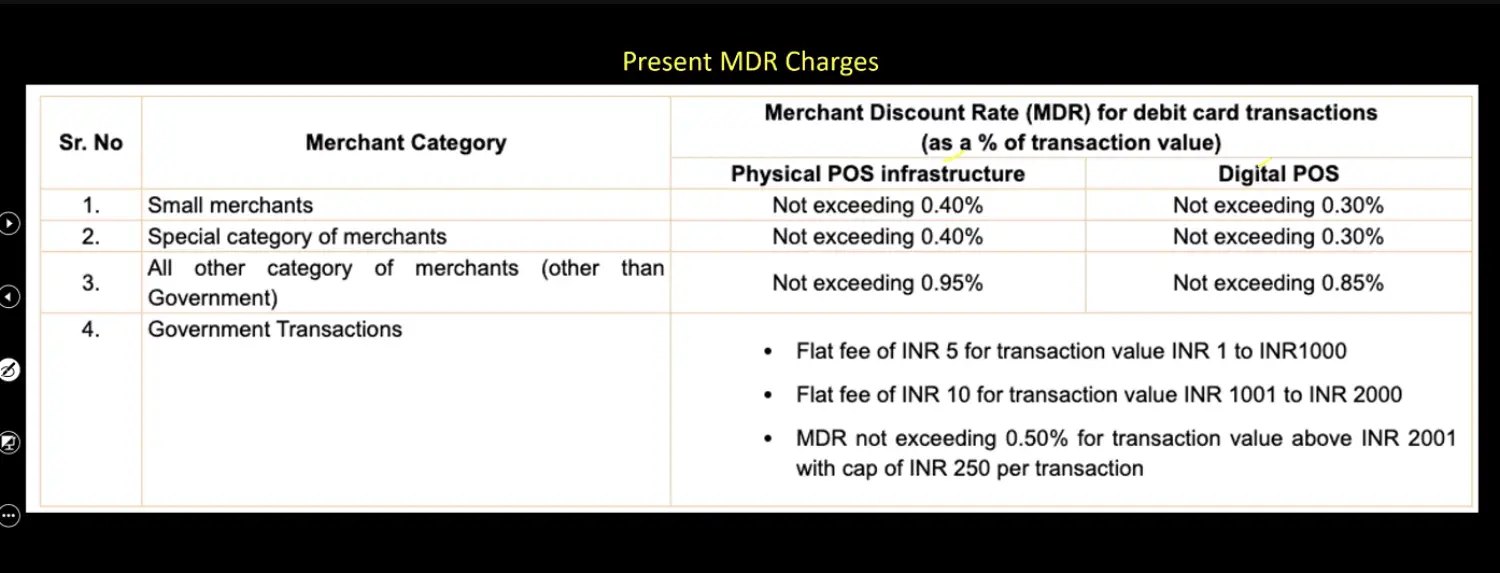
Fee Varies Depending Upon
- Mode of Payment - Credit, Debit, QR, UPI
- Categories of Merchants - Small, Medium, Large
Ranges from 0.3% to 0.85%
Process
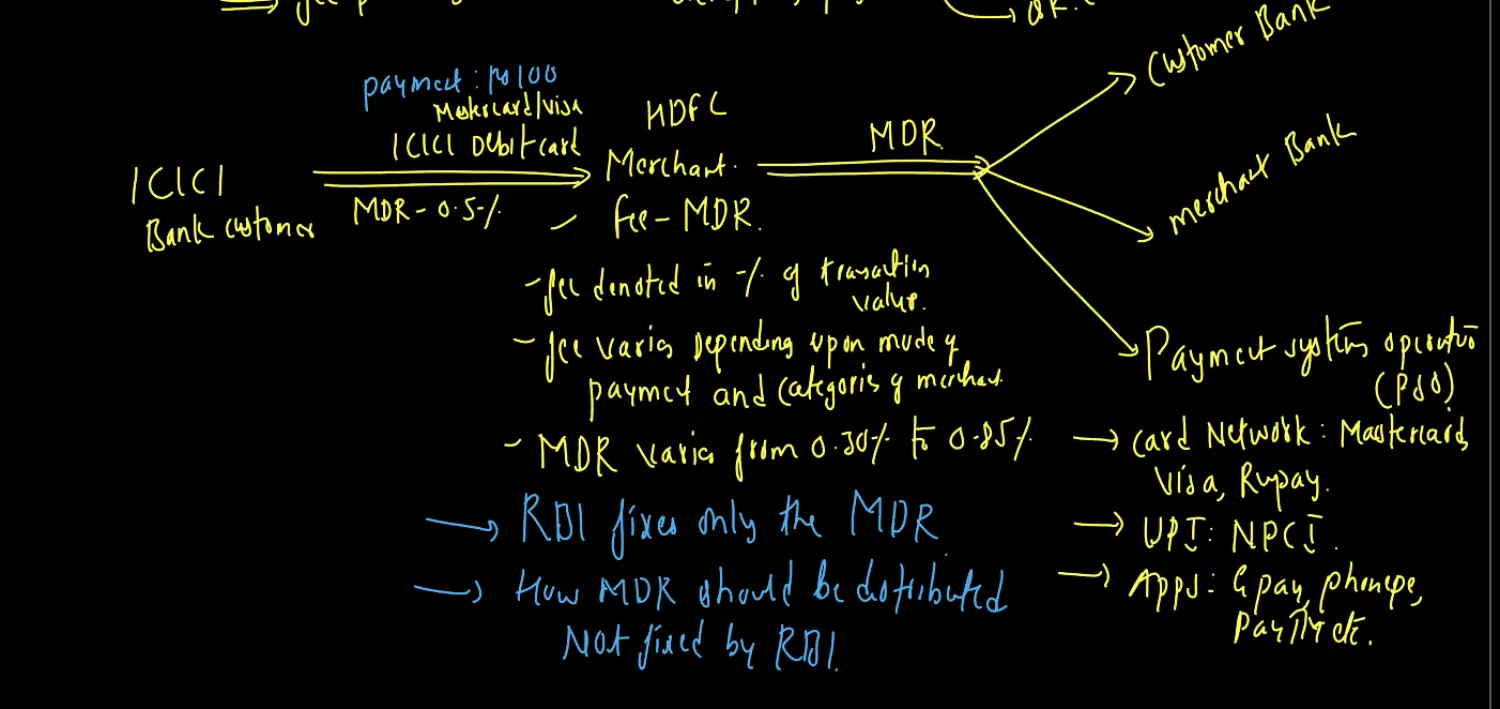
MDR Summary and Mind Map
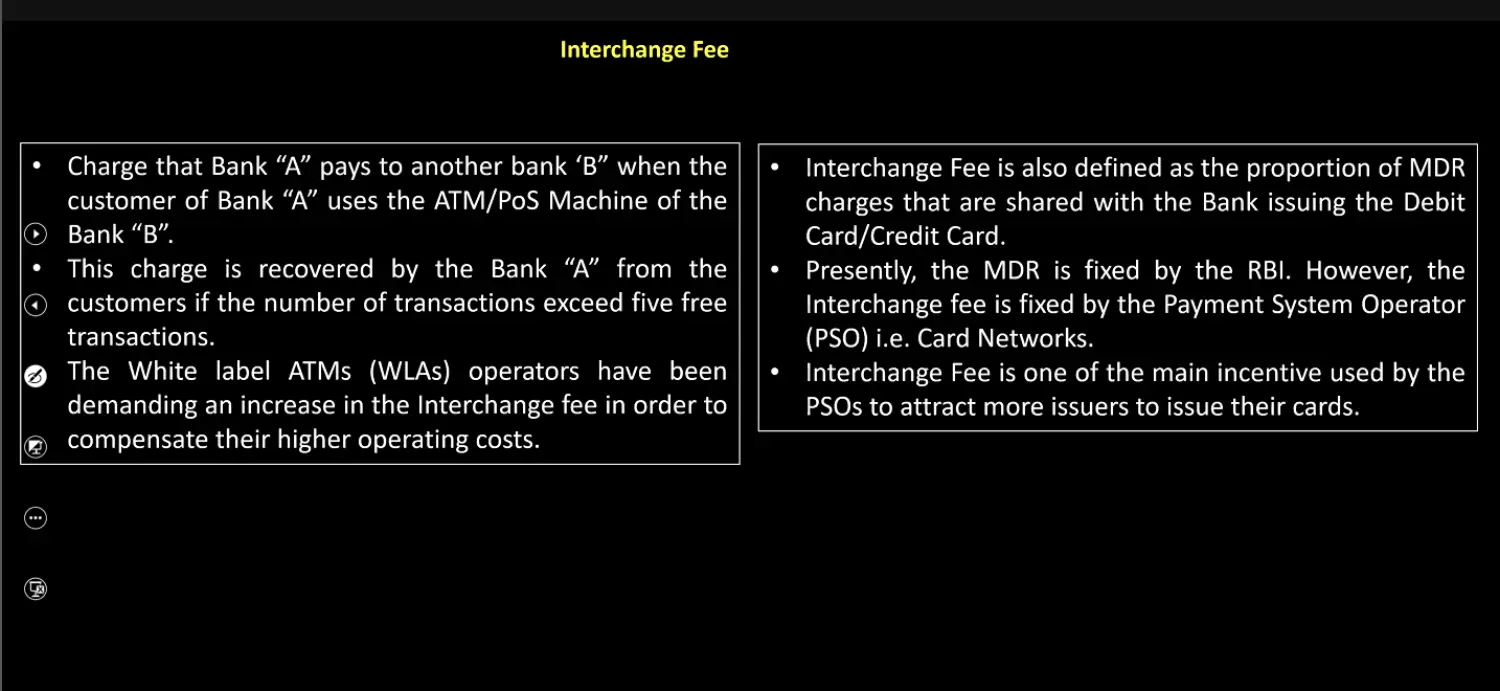
Concept of Interchange Fee for ATM
It is the Fee Paid by the Bank to the White Label ATM Operator
If ICICI Bank Card is Swiped in Indi Cash Machine then
ICICI will pay some money to Tata
It is not based on Value of Transaction but on the No of Transactions.
Earlier this fee was Rs 15, Now it is Rs 17
Interchange Fee is a Part of MDR which gets paid to the Card Issuer
Concept of Interchange Fee as a Part of MDR
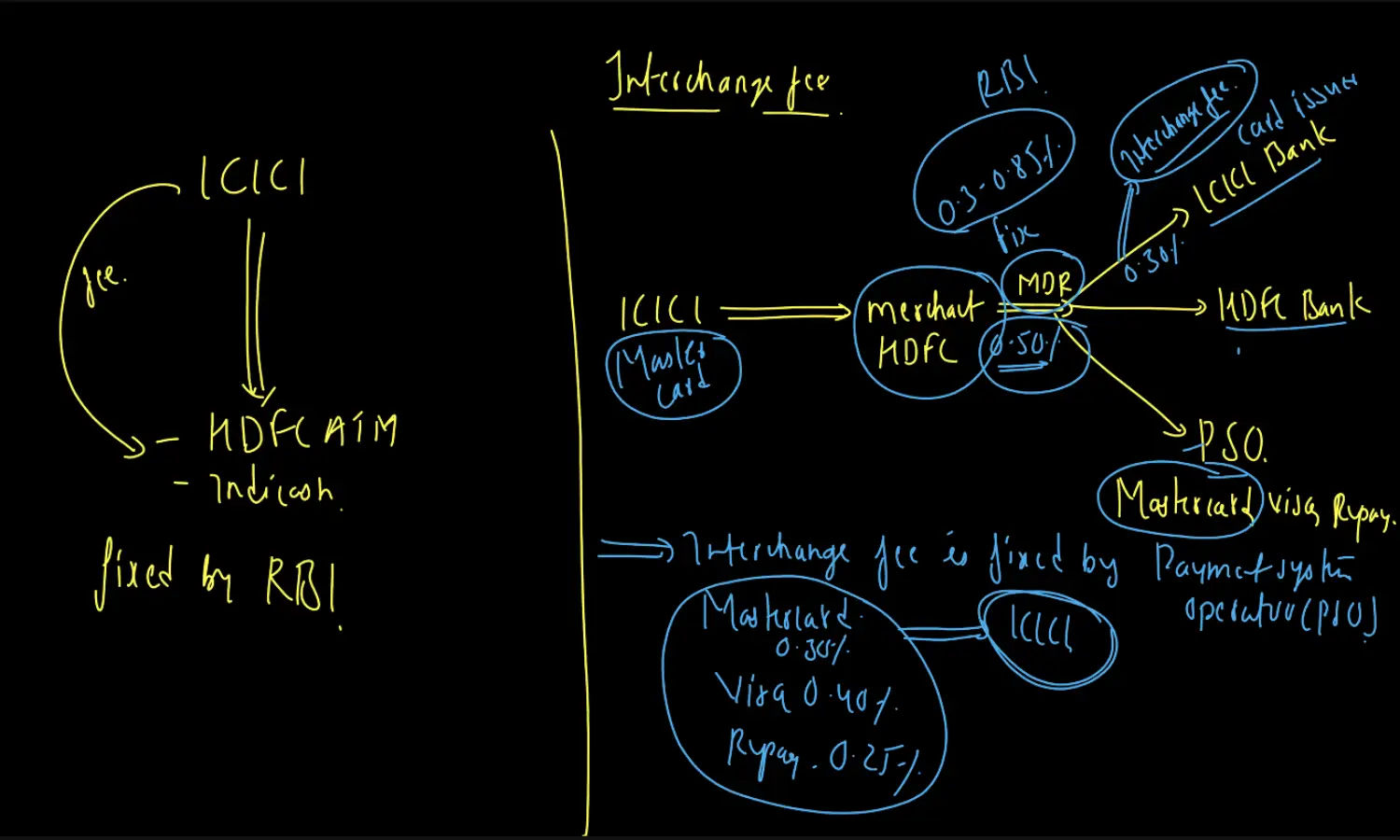
Summary of Both Types of Interchange Fees
Why are we Promoting RuPay & UPI (Allied Current Affairs)
Because it is Indigenous Payment System
Mastercard & Visa are Foreign - We should not be dependent on them
We could learn from India
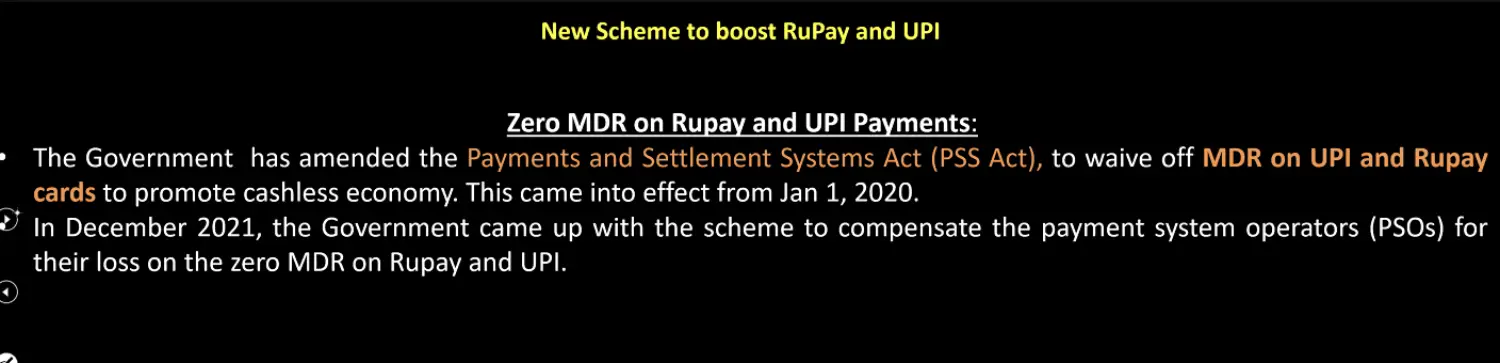
To Facilitate RuPay and UPI - Govt Amended Payment & Settlement Act
This Amendment Calls for “Zero MDR Charges on Payment Made through UPI & RuPay Card”
Issue with Merchant Not Paying MDR is
Loss to NPCI as it made both UPI & RuPay → They Have Less Money to Upgrade Infrastructure.
Hence, Because of that there's a Lot of Payment Cancellation
Its Loss to Bank as well. Hence, Banks were Issuing more of Mastercard and Visa
Hence, to Resolve this Problem. Govt came up with a New Scheme in Jan 2020
The Loss Incurred by Customer, Merchant Bank and Payment System Operator will be compensated by Govt
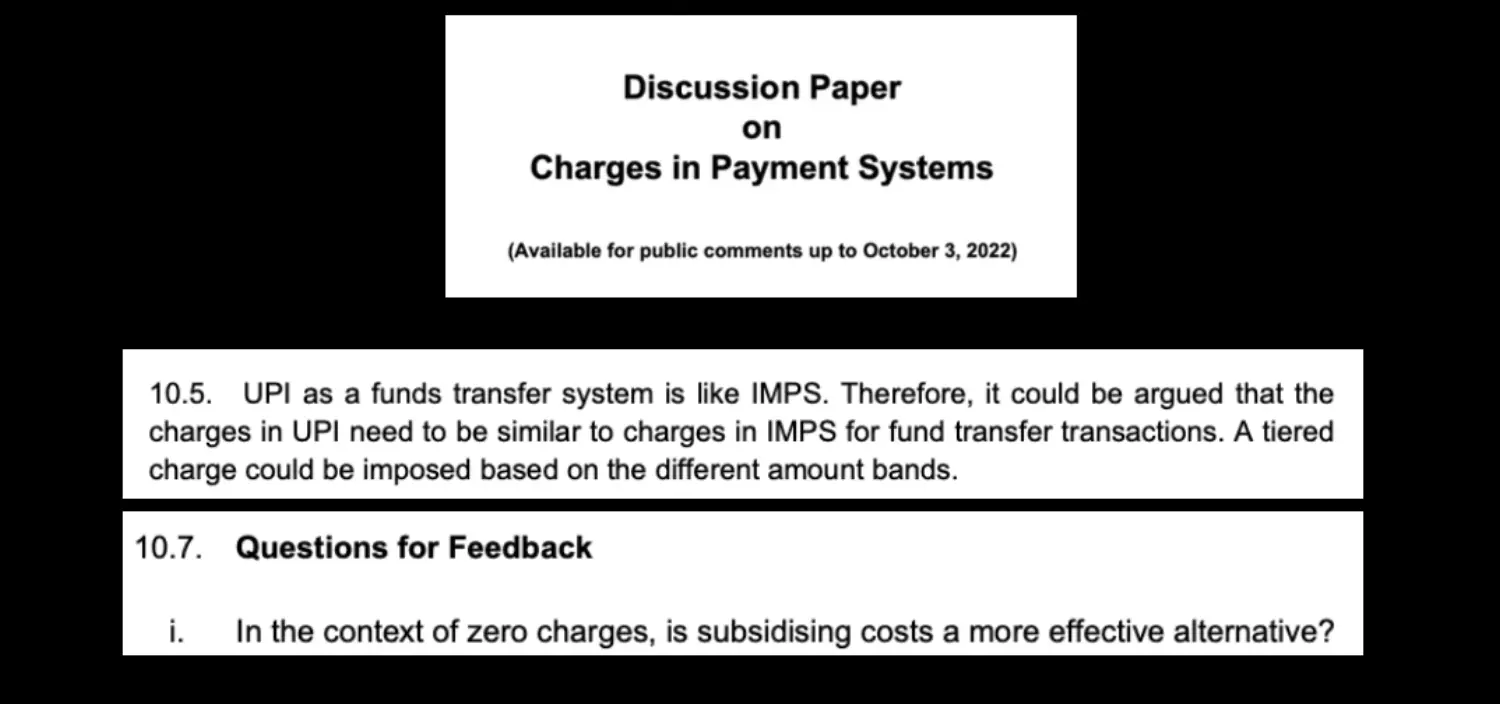
Discussion Paper on Charges in Payment System by RBI
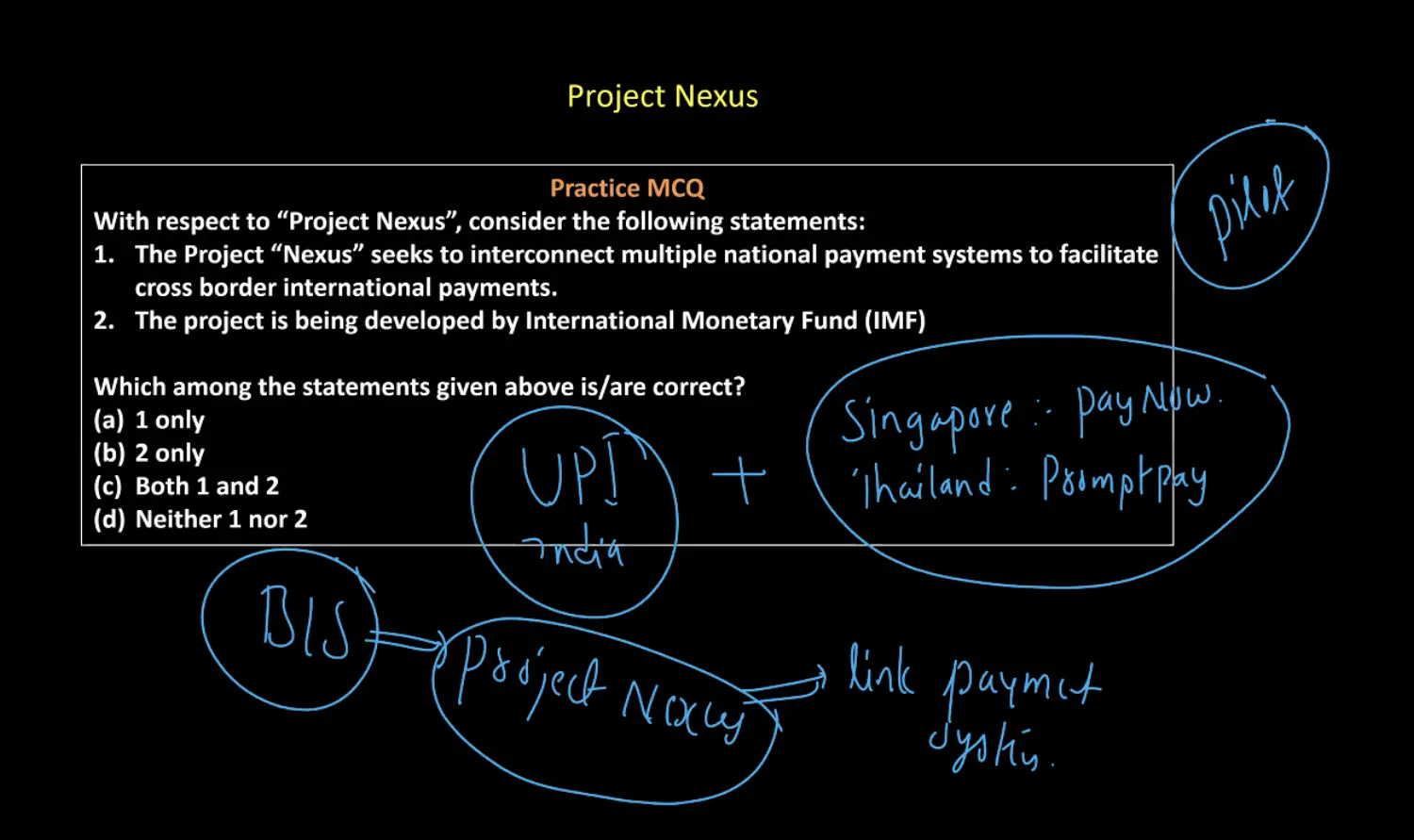
- Project Nexus
- Related to making UPI as International Phenomenon
- Recently Nepal & Bhutan have started using UPI. Hence it has recently became Regional
- Other Countries Payment System Like UPI are
- Singapore - PayNow
- Thailand - PromptPay
- BIS - Bank of International Settlements has started Project Nexus to Link Payment Systems of Different Countries
- Issues
- Charges for Transferring Money
- Different Platforms on which it has been made
- How to convert money
- Prelims Project Nexus
- What is it
- Who is Developing It
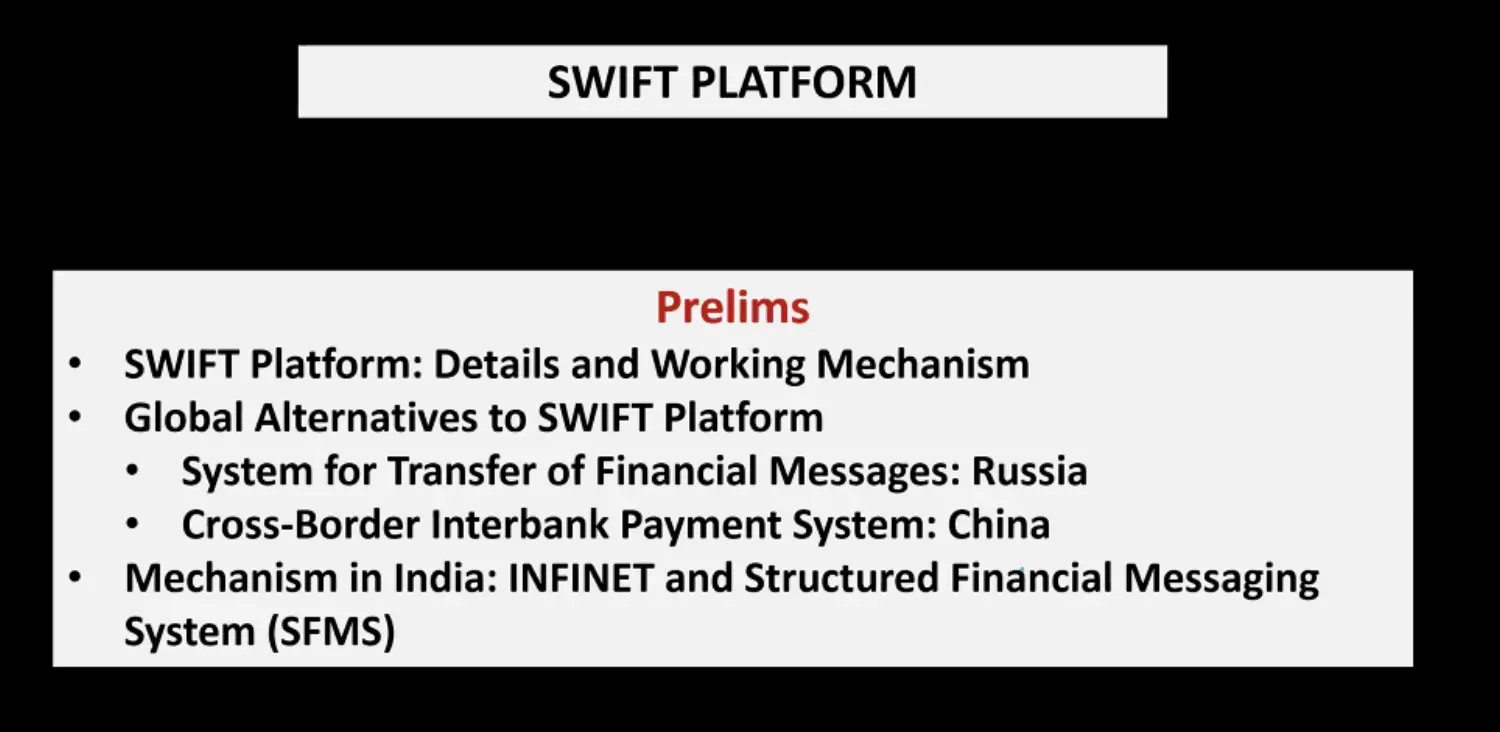
- SWIFT Platform
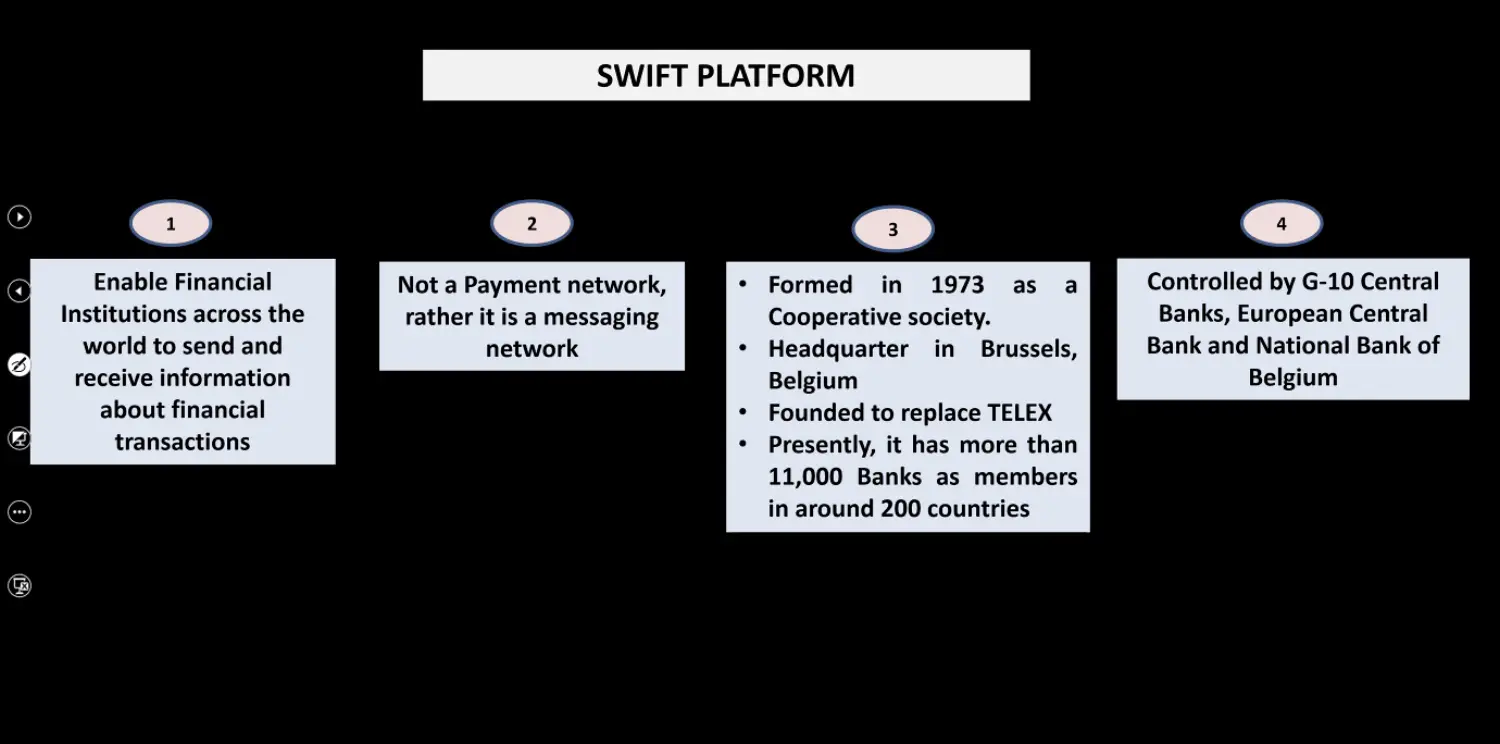
Swift Mind Map
Background
Current Development is that due to Ukraine War, US & EU has banned Russia from Using SWIFT Platforms for Both Import and Export
Global Alternatives to SWIFT Platform
To Understand SWIFT - Understand its Full Form
SWIFT: Society for Worldwide Interbank Financial Telecommunication
Financial Telecommunication
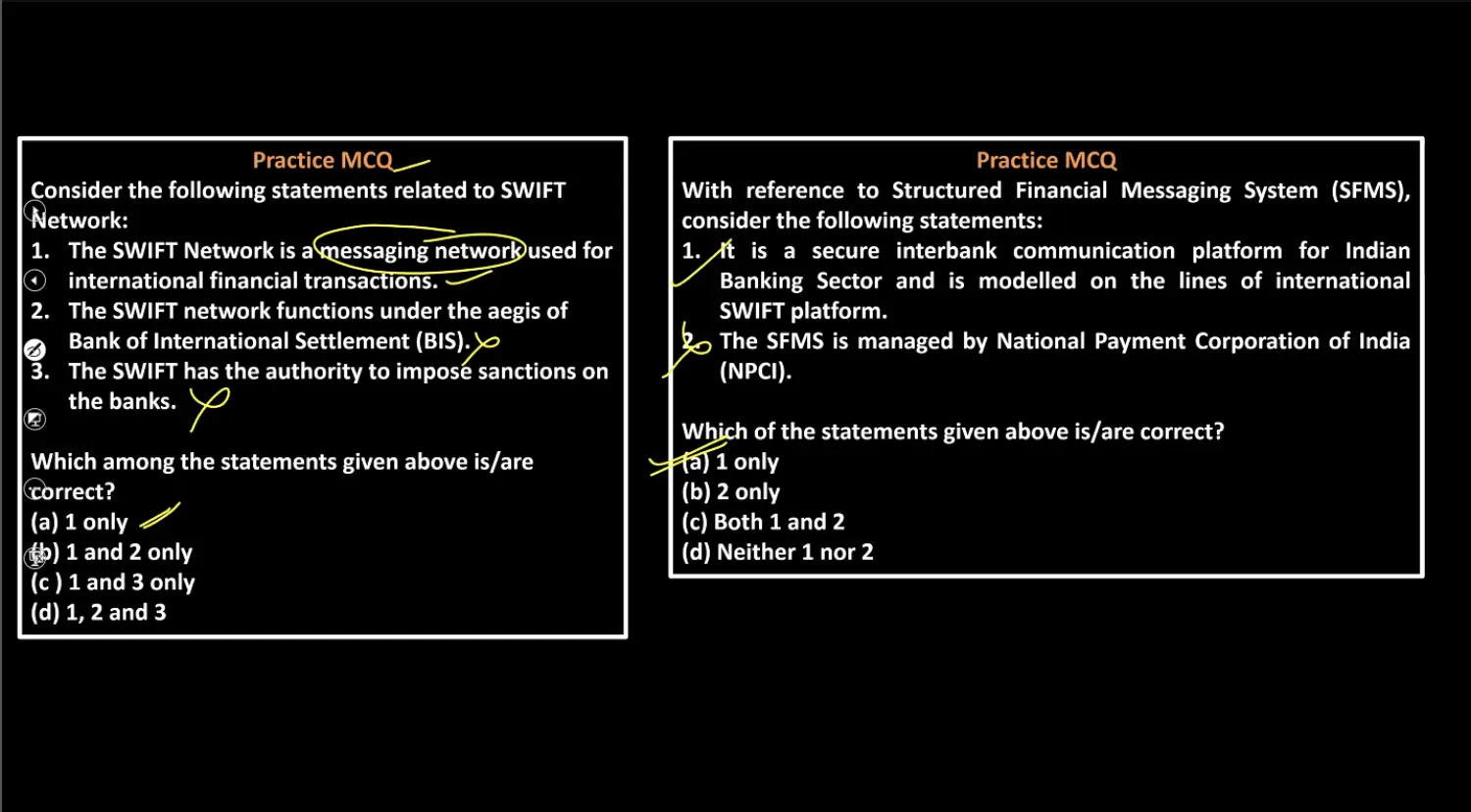
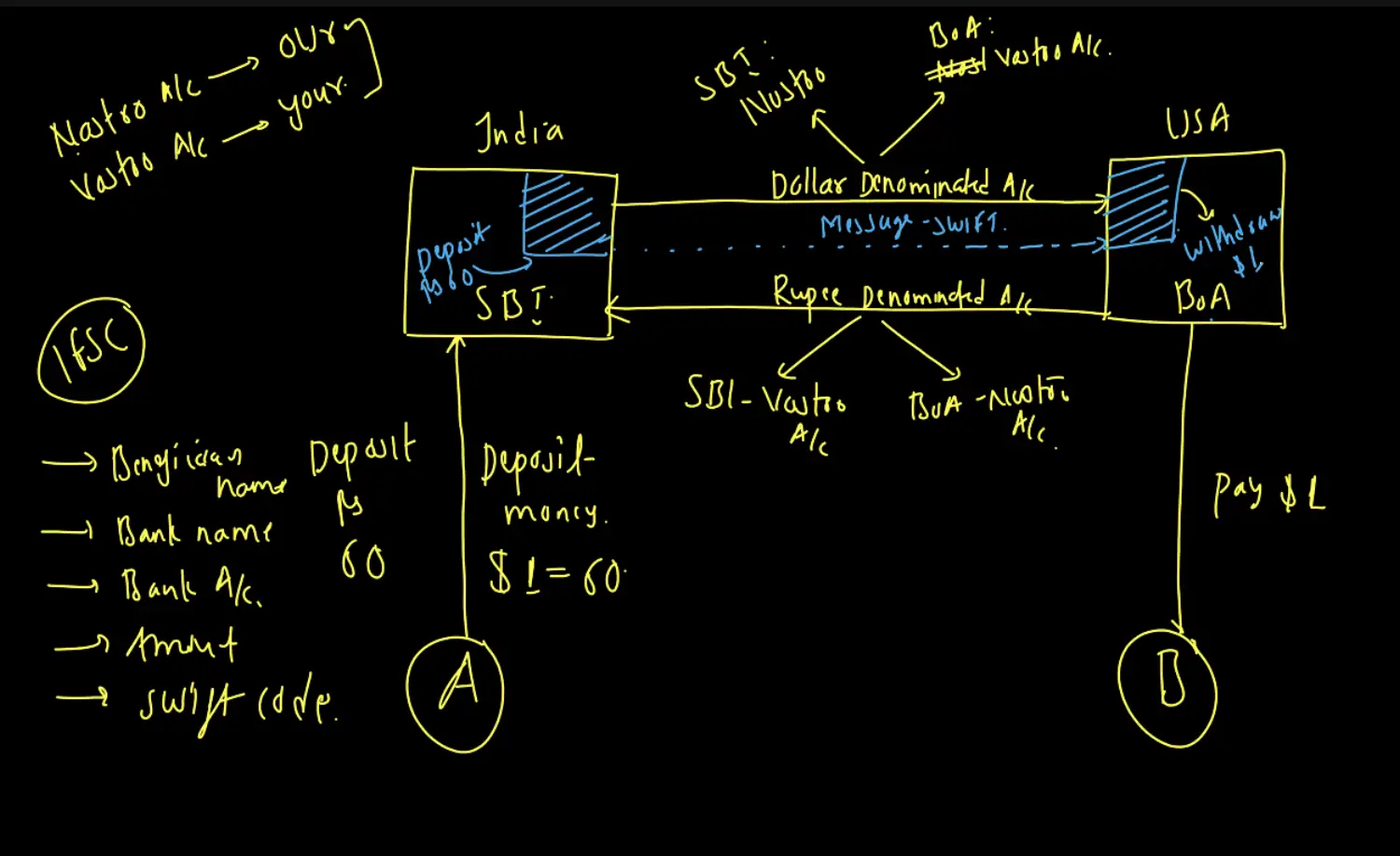
SWIFT is not a Payment Platform, It's a Messaging Platform
A Safe & Secure Communication
Interbank
Interbank Transfers at a International Level between Two Different Countries
Society
- Co Operative Society is Owned By
G 10 - Grouping of Most Developed Nation
The member countries are Belgium, Canada, France, Germany, Italy, Japan, the Netherlands, Sweden, Switzerland, the United Kingdom, and the United States with Switzerland playing a minor role
ECB - European Central Bank
National Bank of Belgium
- Regulated by EU - European Union
- Co Operative Society is Owned By
Importance
- It has a Monopoly wrt International Payment in the World
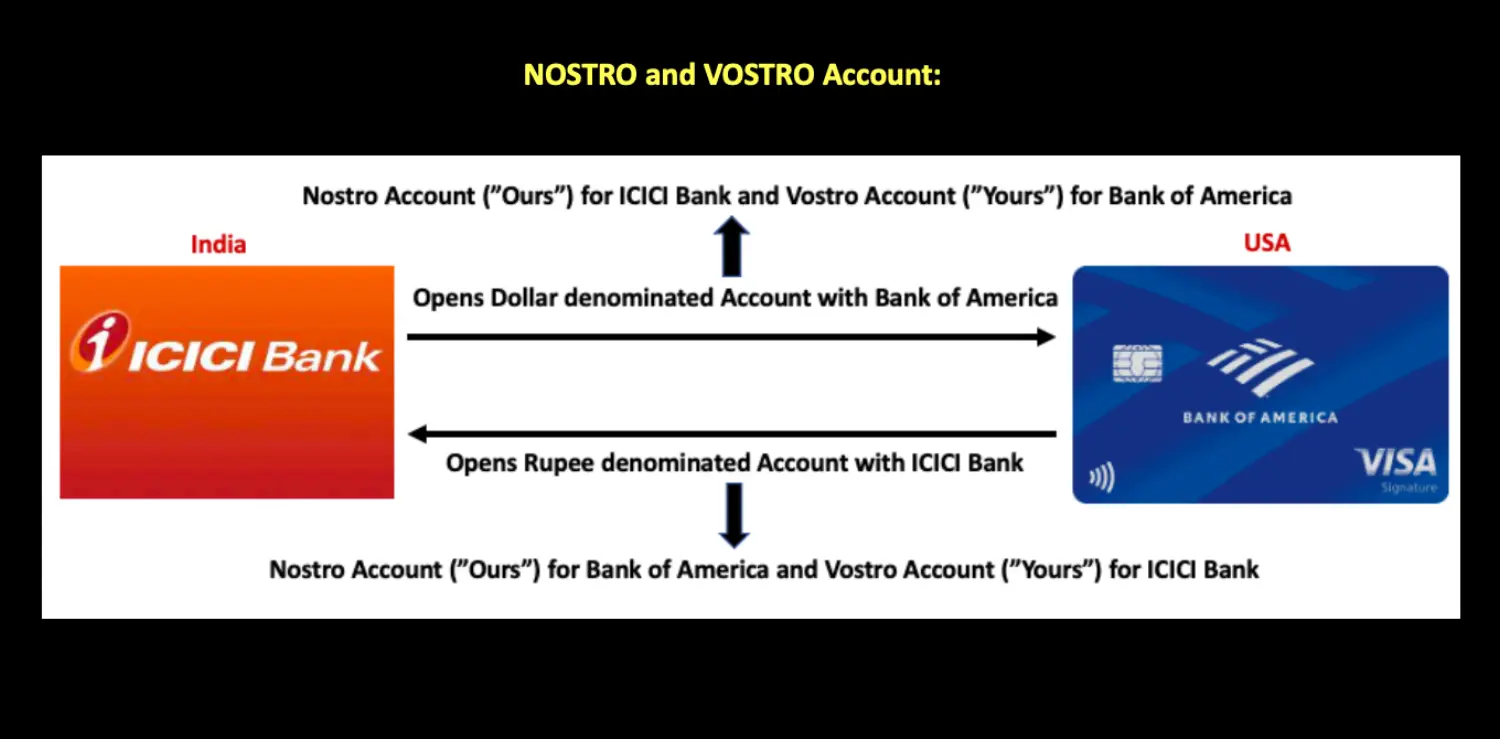
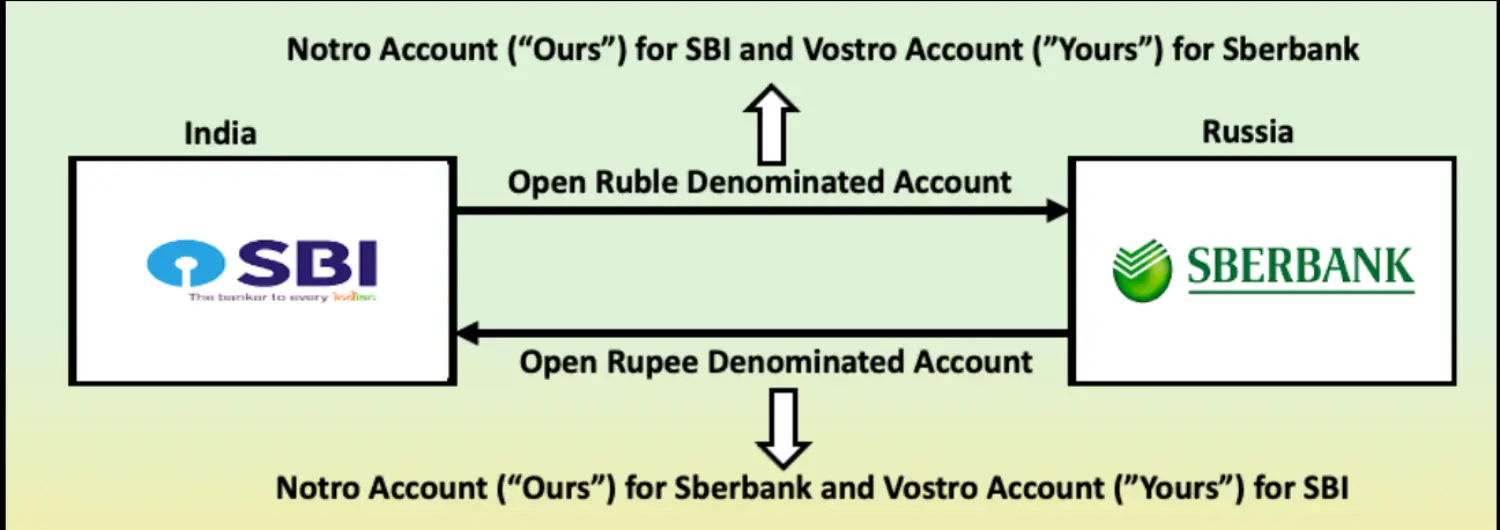
- VOSTRO & NOSTRO Account
How to Remember Nostro & Vostro
Mind Map

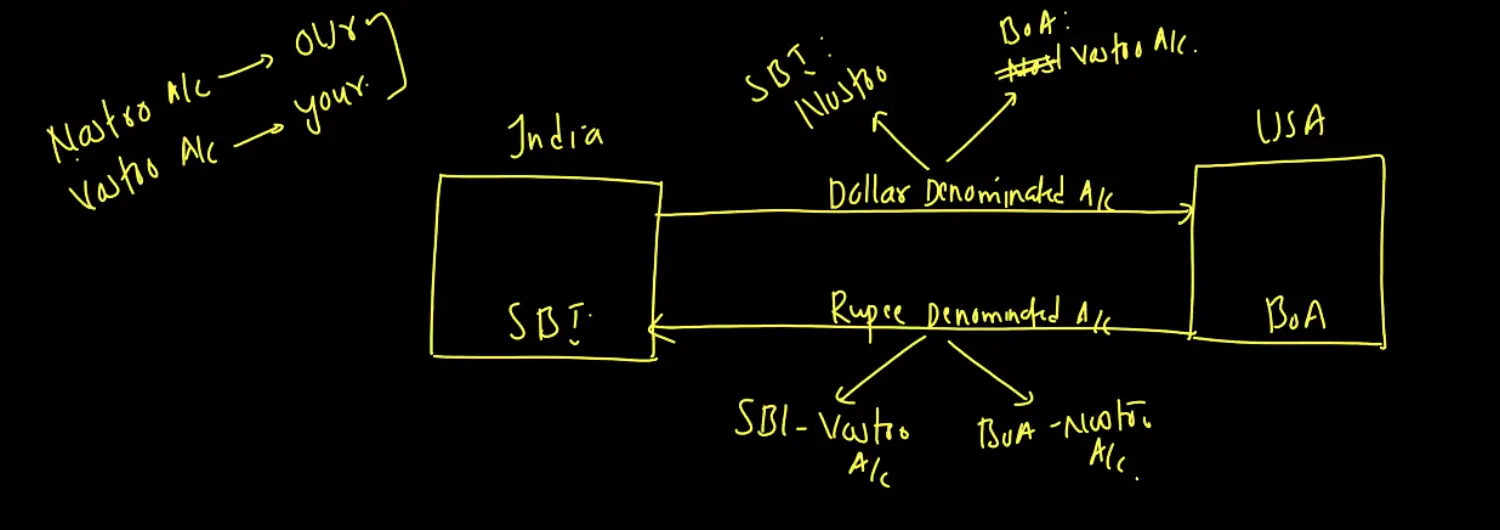
How Does SWIFT Platform Works by means of an Example
Nostro - Our
Vostro - Your
How to Remember : Our Comes First & Your Comes Later ; Nostro Comes First & Vostro Comes Later
A Summary
How is Money Transferred
International Trade Settlement in Rupees
Why Countries Do Not Use their Own Currency for International payments but rather use a third Currency
Problem with Making Payment in Rupees (Currency of the Country)
In Sri Lanka they cannot use Import Goods from Other Countries
They can't convert it in Rupees as the Exchange Price would hamper their Profit
Conversion Cost will be added Expense to them
Hence, comes the Concept of Vehicle Currency
Big 4 Currency Are : USD, GBP, EUR, YEN
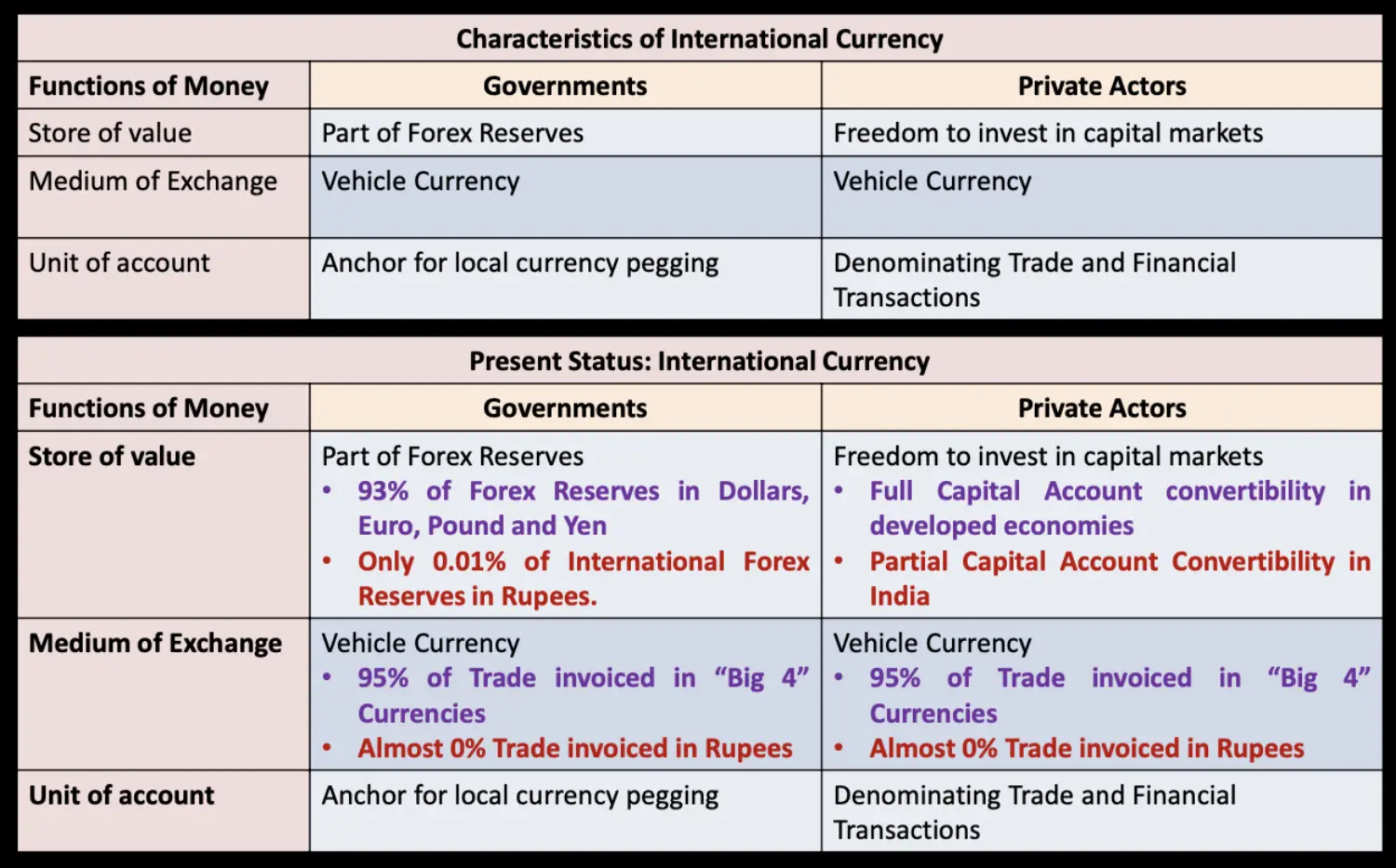
Characteristics of Money is
- Its Medium of Exchange
- Store of Value
- Unit of Account
Internationalisation of Rupee Includes Two Things - Rupee should have these three characteristics
Rupee as Medium of Exchange - Rupee should be used to make payments for International Trade
Rupee as Store of Value - Like we keep our Forex Reserves in Big 4 Currencies, in the same way other currencies should keep forex reserves in Rupees
Rupee as Unit of Account - Countries should link their currencies to Rupees
Gulf Countries have adapted Fixed Exchange Rate System - Here They have linked the value of their currency to Dollar
Here, there is no concept of dynamic change value
Why So ?
- Exchange Rate Fluctuation
- Huge Export, More Dollar Inflow, Local Currency Appreciate,
Only Two Countries have linked their currency to Indian Rupees - Nepal & Bhutan
Why Rupee Should Become International ?
- It can help us in Saving out Scarce Resources
- It can help in reducing International Cross Border Exchange Rate - Will Check Volatility
- Strategic Partners of India are Russia and Iran
Why Should we Expose Ourselves like US Fed Bank Policies by Internationalising Rupees
Present Trade Settlement System for India Internationally
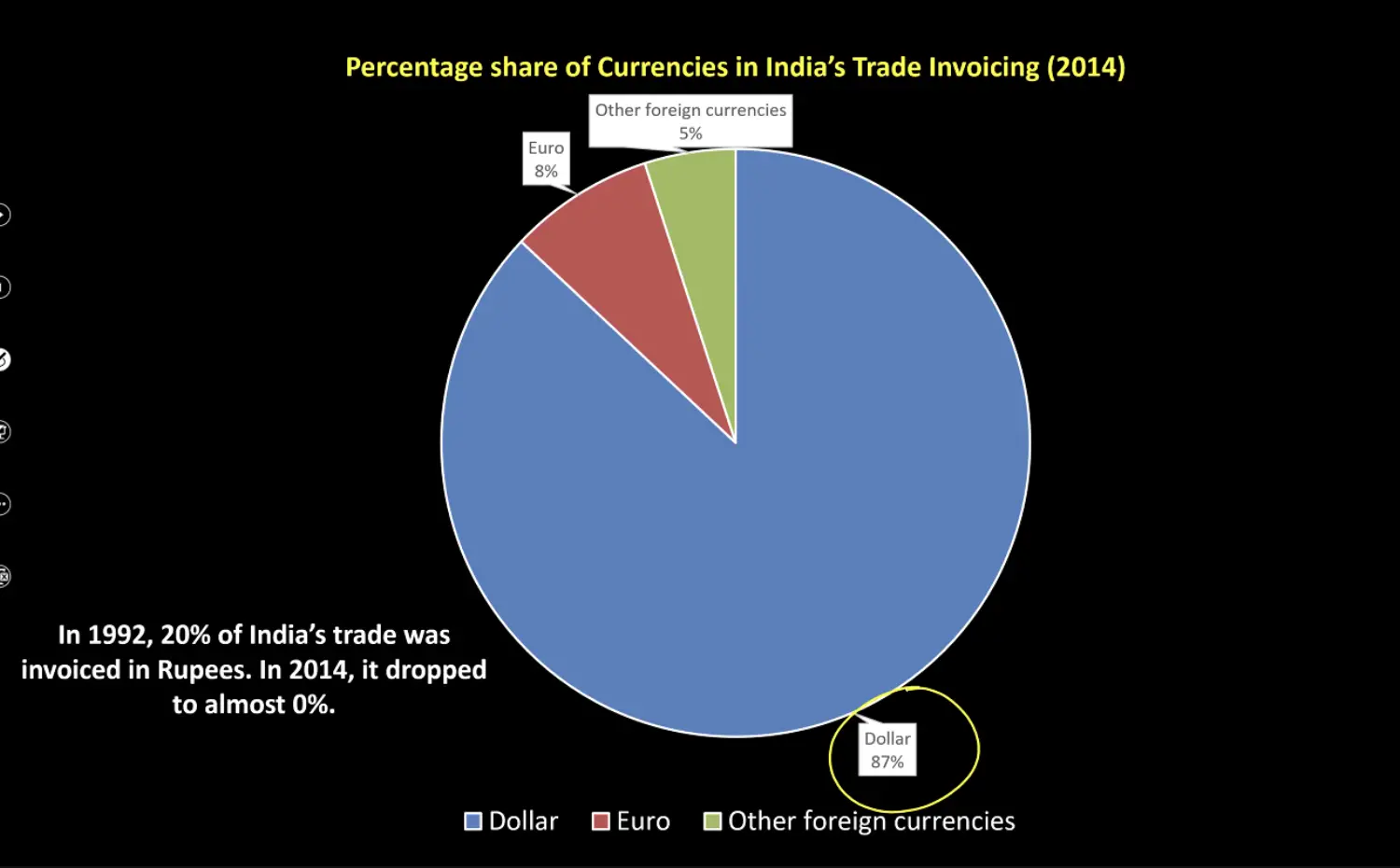
Until 2022, we do not have any official data as to which currencies are used for payment of India External Trade from Govt or RBI
But as per IMF Data of 2014
Characteristics of International Currency
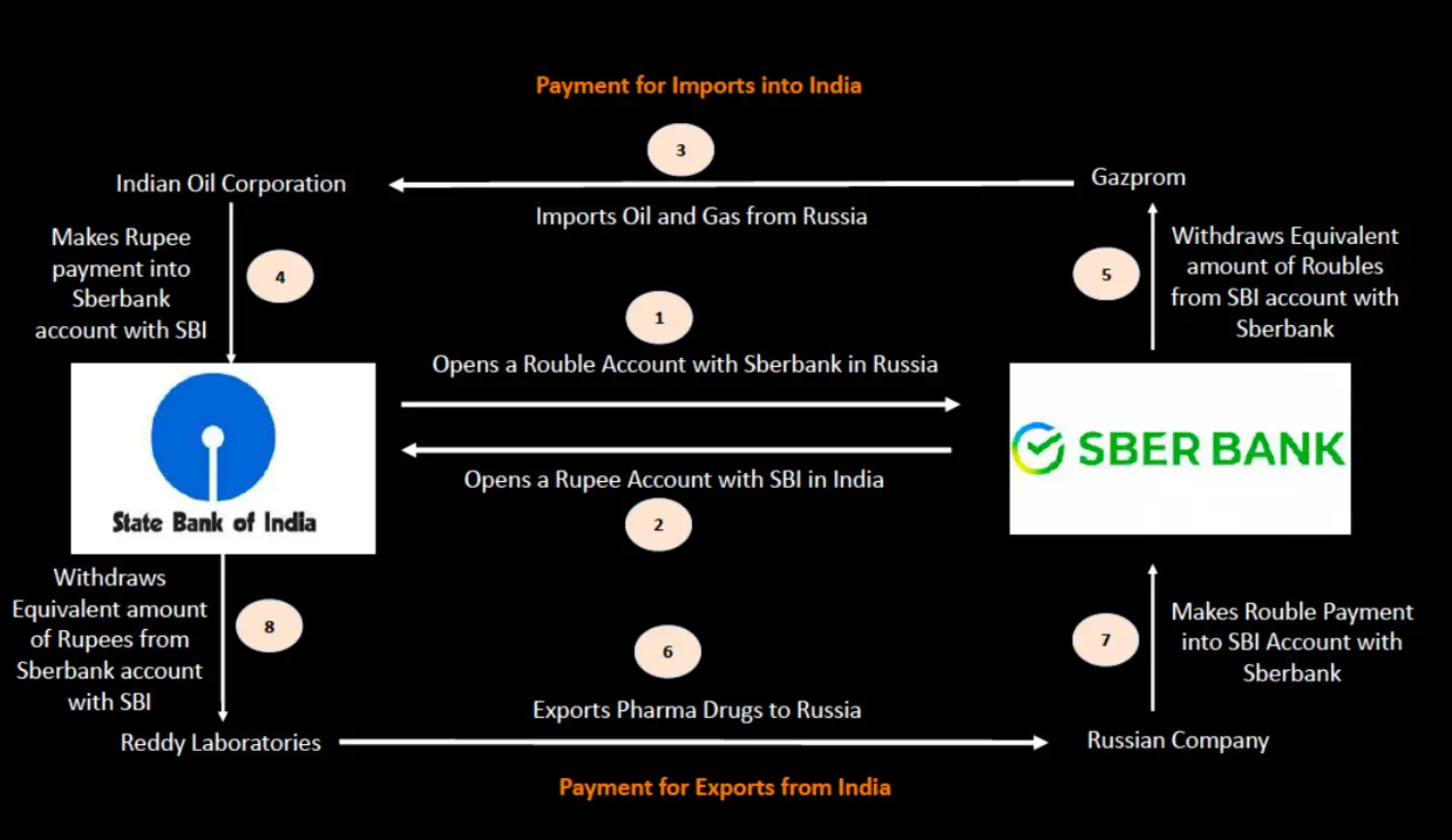
Rupee Ruble Exchange Mechanism
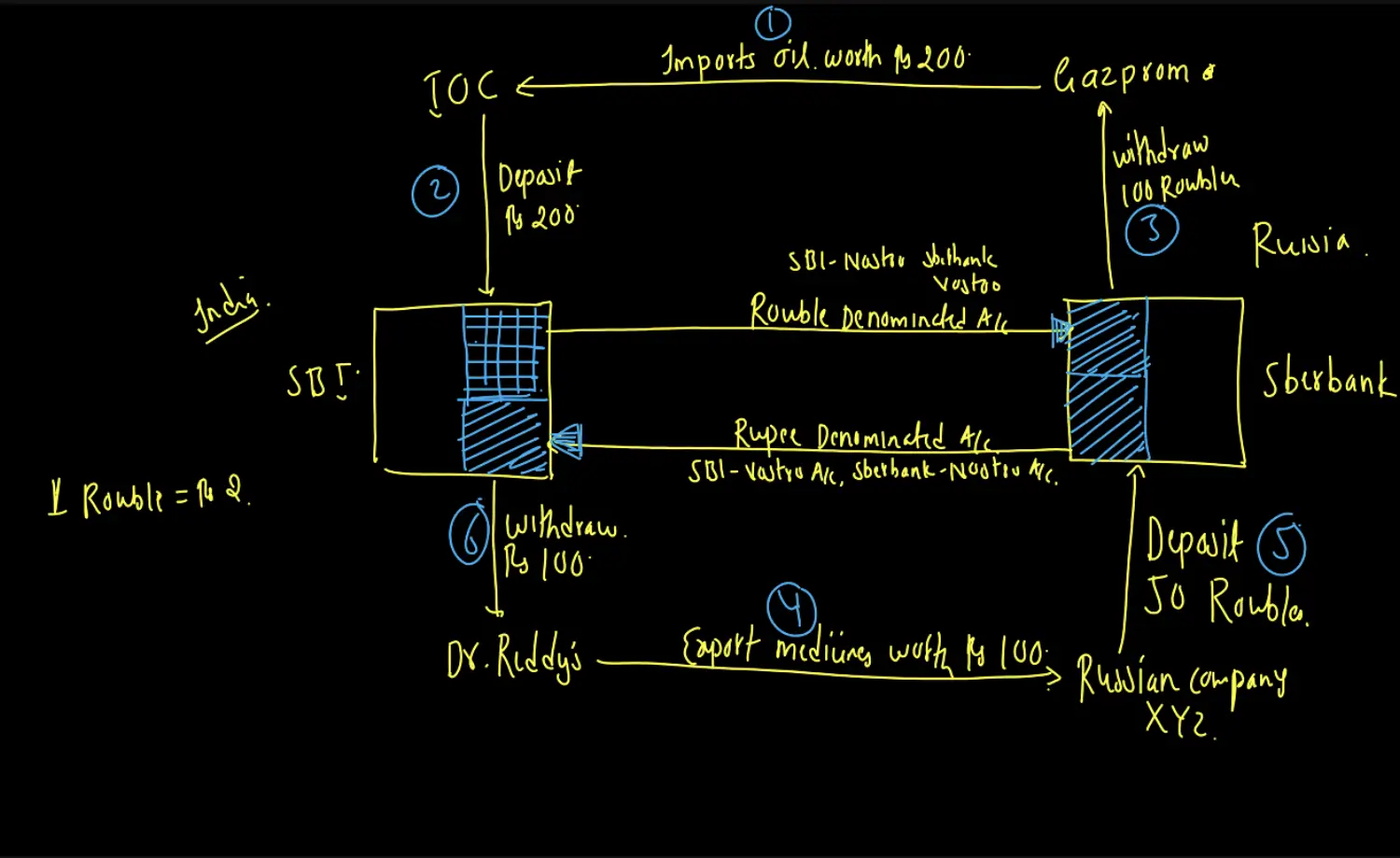
Problem of Surplus Money of Russia's Account in India - RBI Suggested to Invest in G Secs
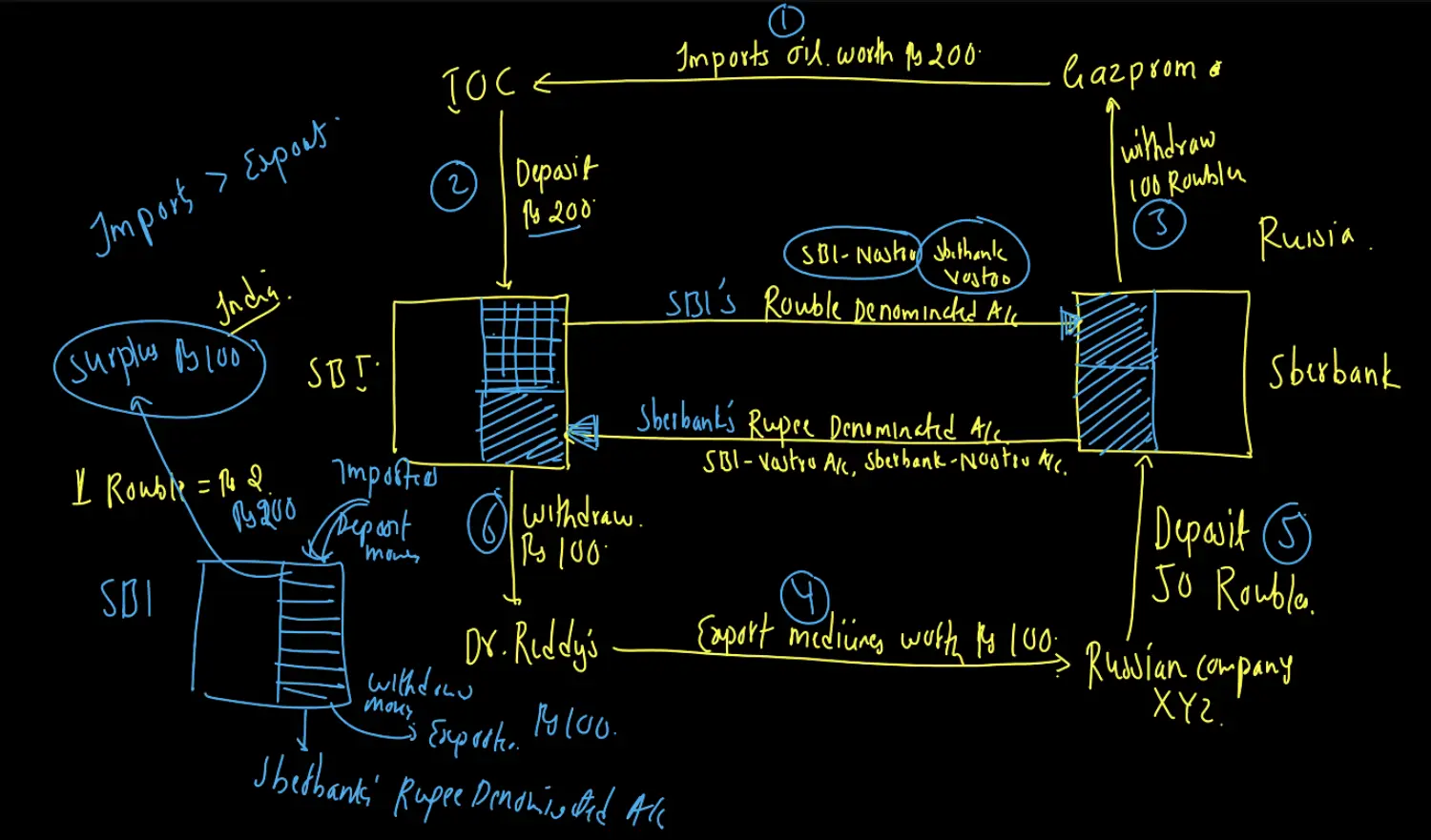
Messaging is Done through Trade Invoice, used as Proof for Transport Communication
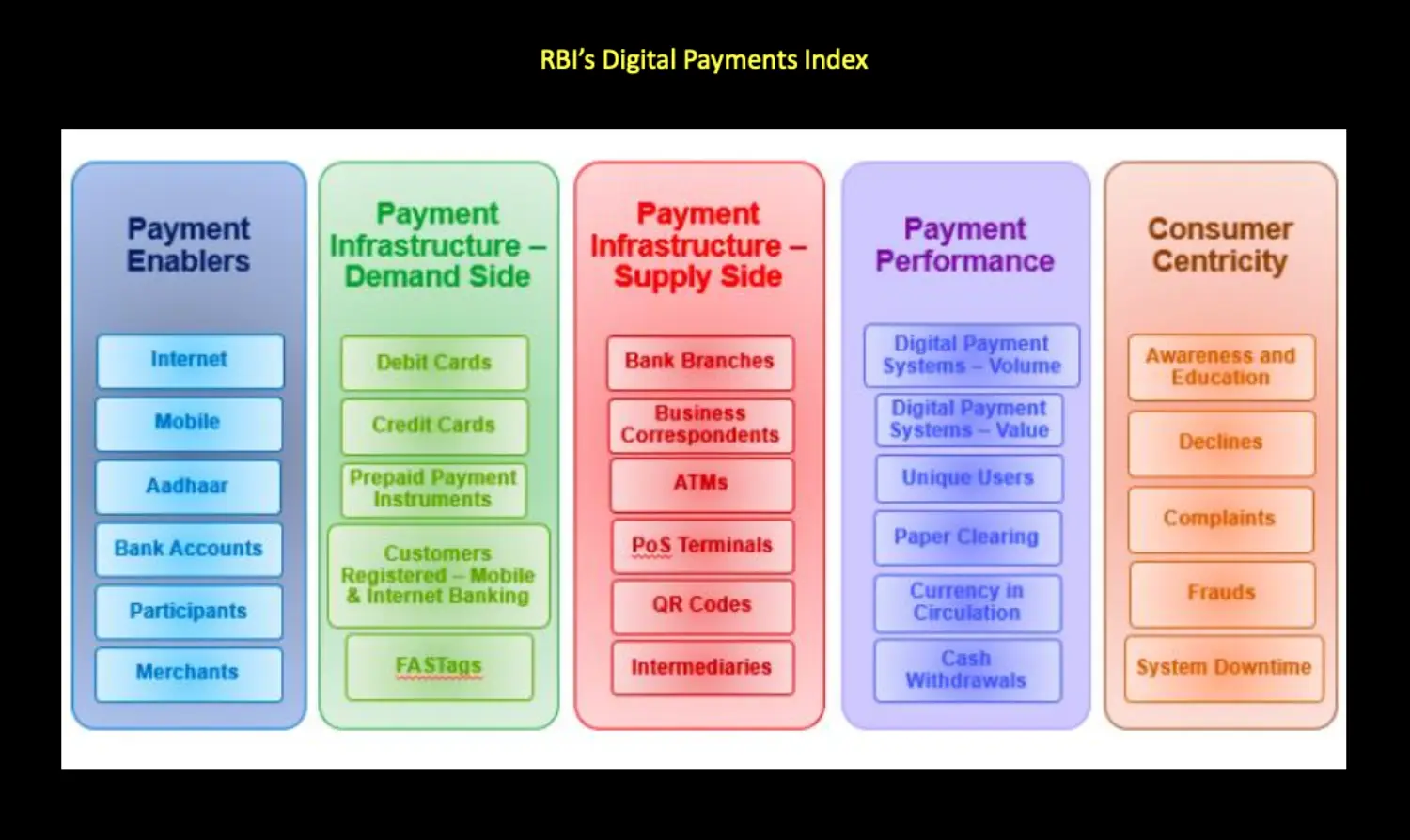
RBI’s Digital Payment Index
It is Measured by RBI to measure the Penetration of Digital Payment Index
Who Measures Digital Payment Index : RBI