Chapter 02 - Monetary Policy
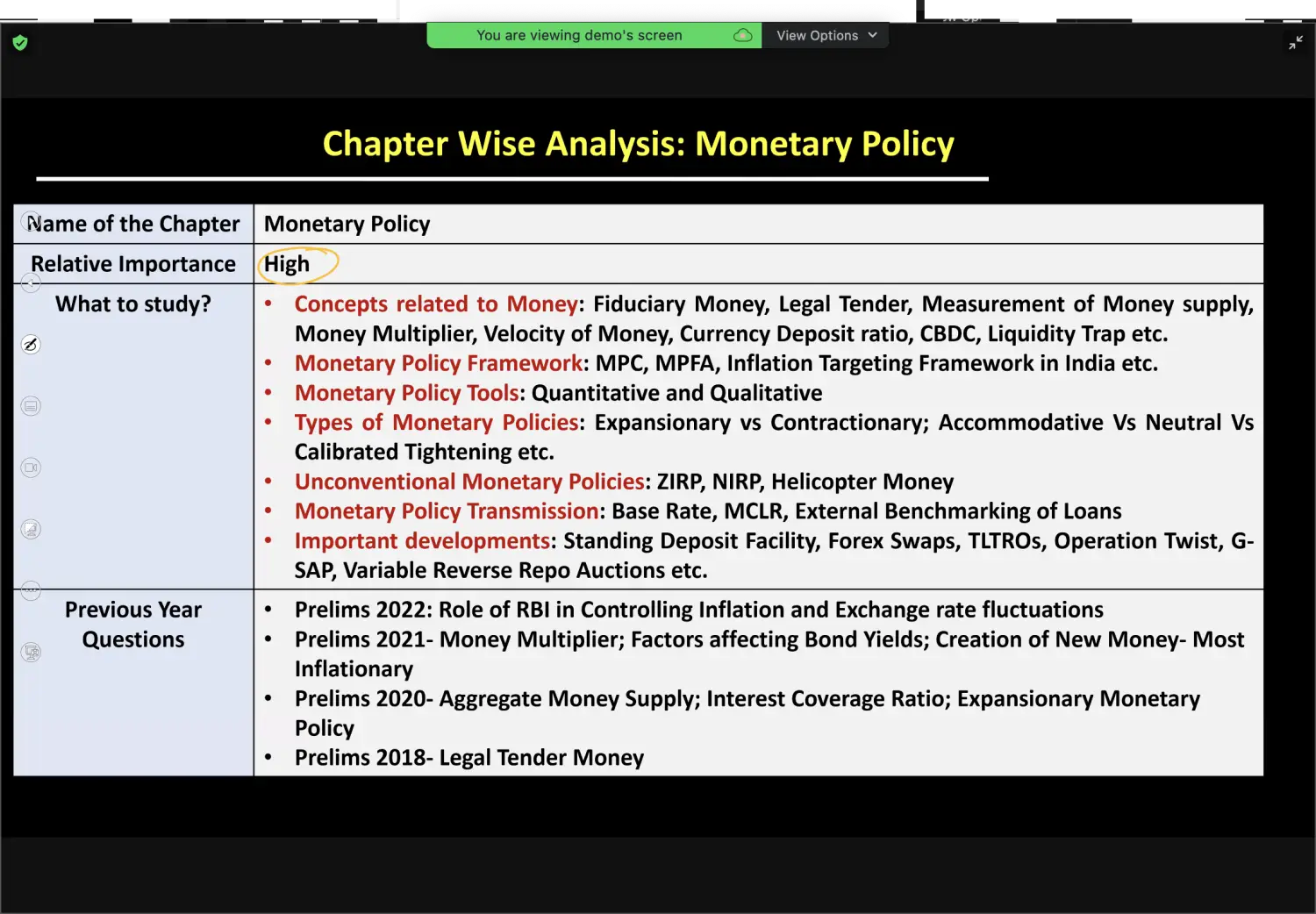
Prelims Syllabus
Introduction
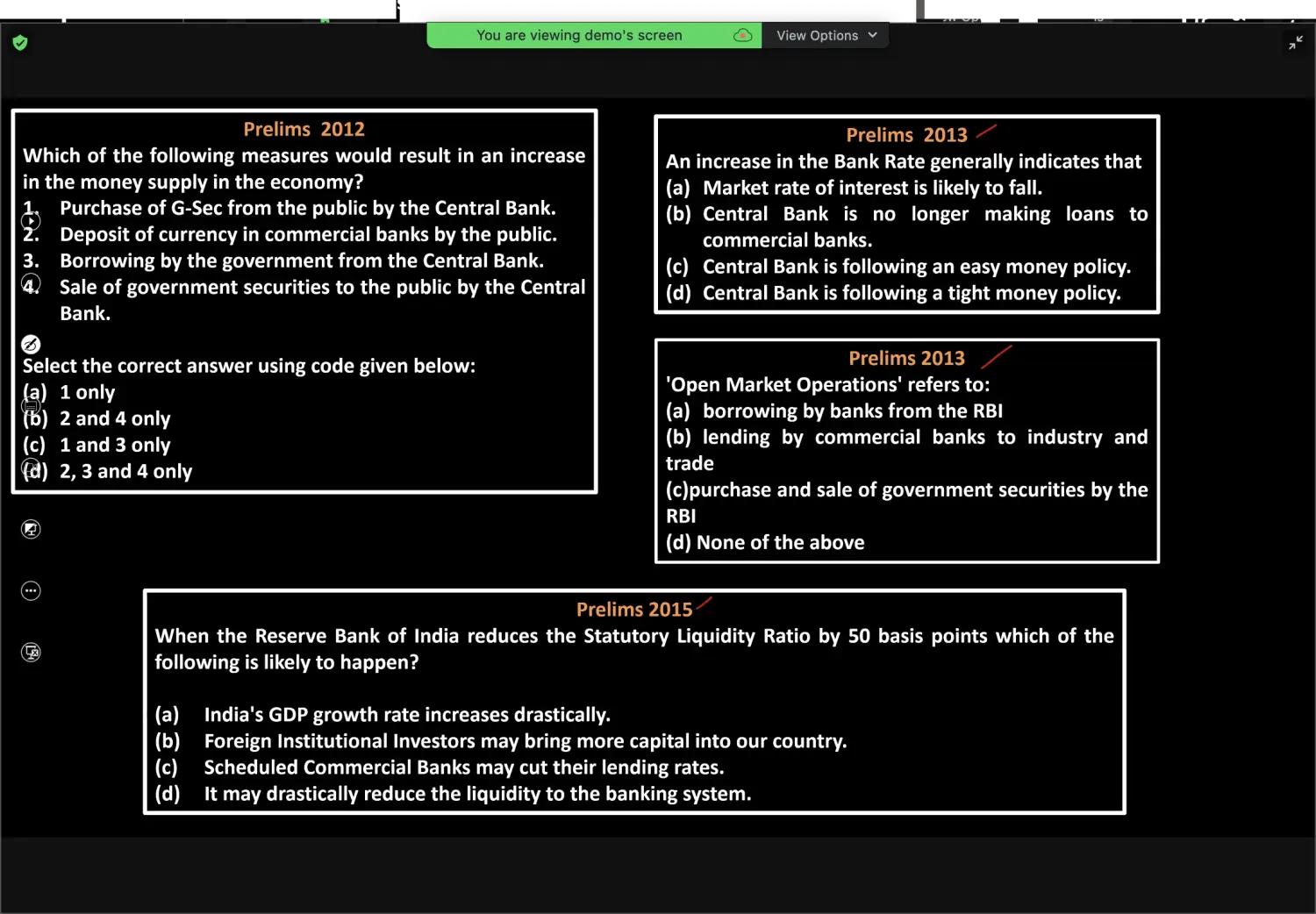
PYQP
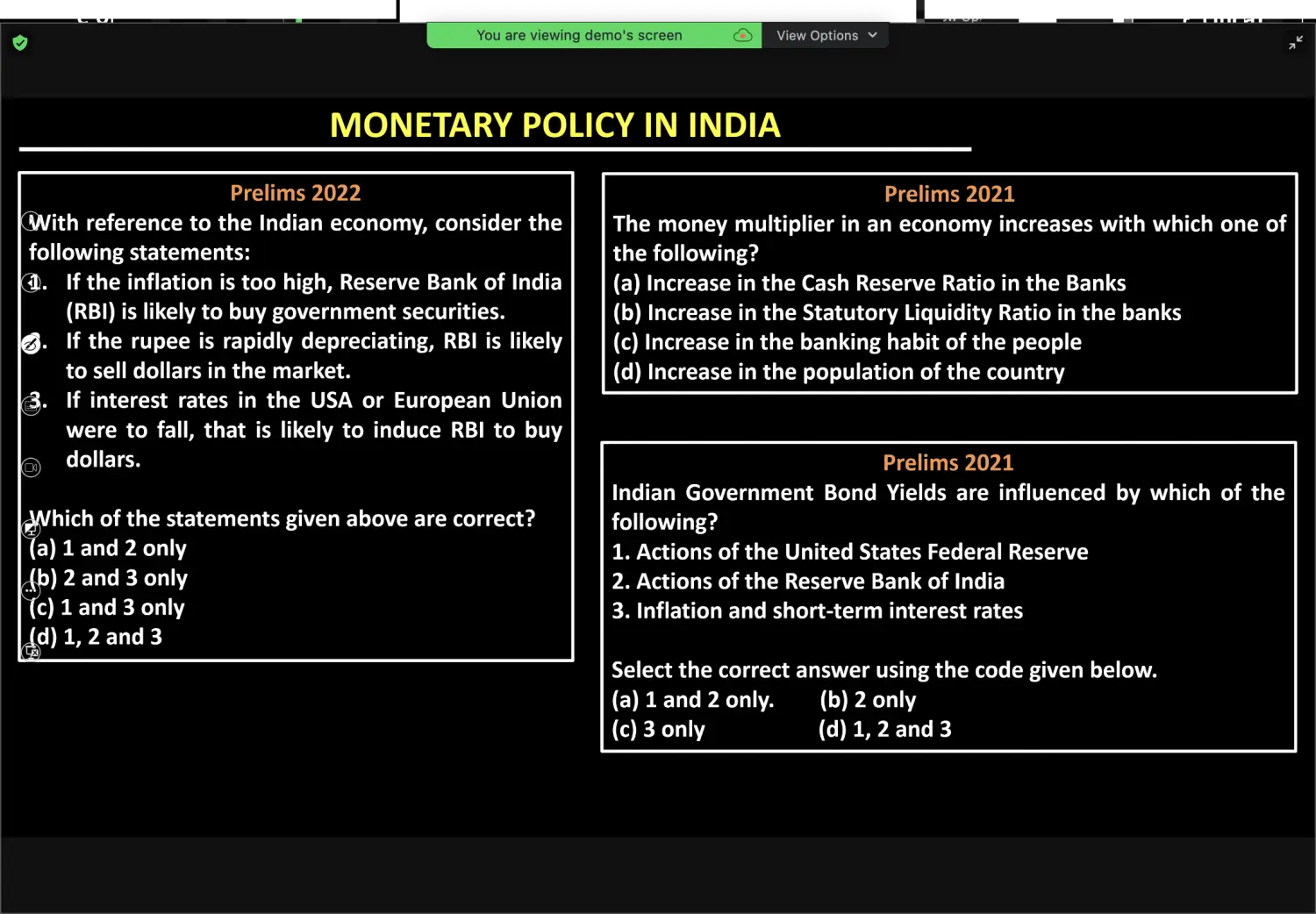
Cycle of Inflation and Recession
RBI Focuses on Demand Induced Inflation Only
Demand Increase - Demand Pull Inflation Taken Care by RBI
This List is NOT Exhaustive
- More Money with People
- Increased Population
- Govt Spending More
- ROI on Loans Reduced
Supply Decrease - Cost Push Inflation Taken Care by Government
This List is NOT Exhaustive
- Failure of Monsoon
- Increase in Cost of Raw Material
What can RBI do in Demand Inflation - Reduce Demand
Suck Out Excess Money → Leads to Reduced Demand
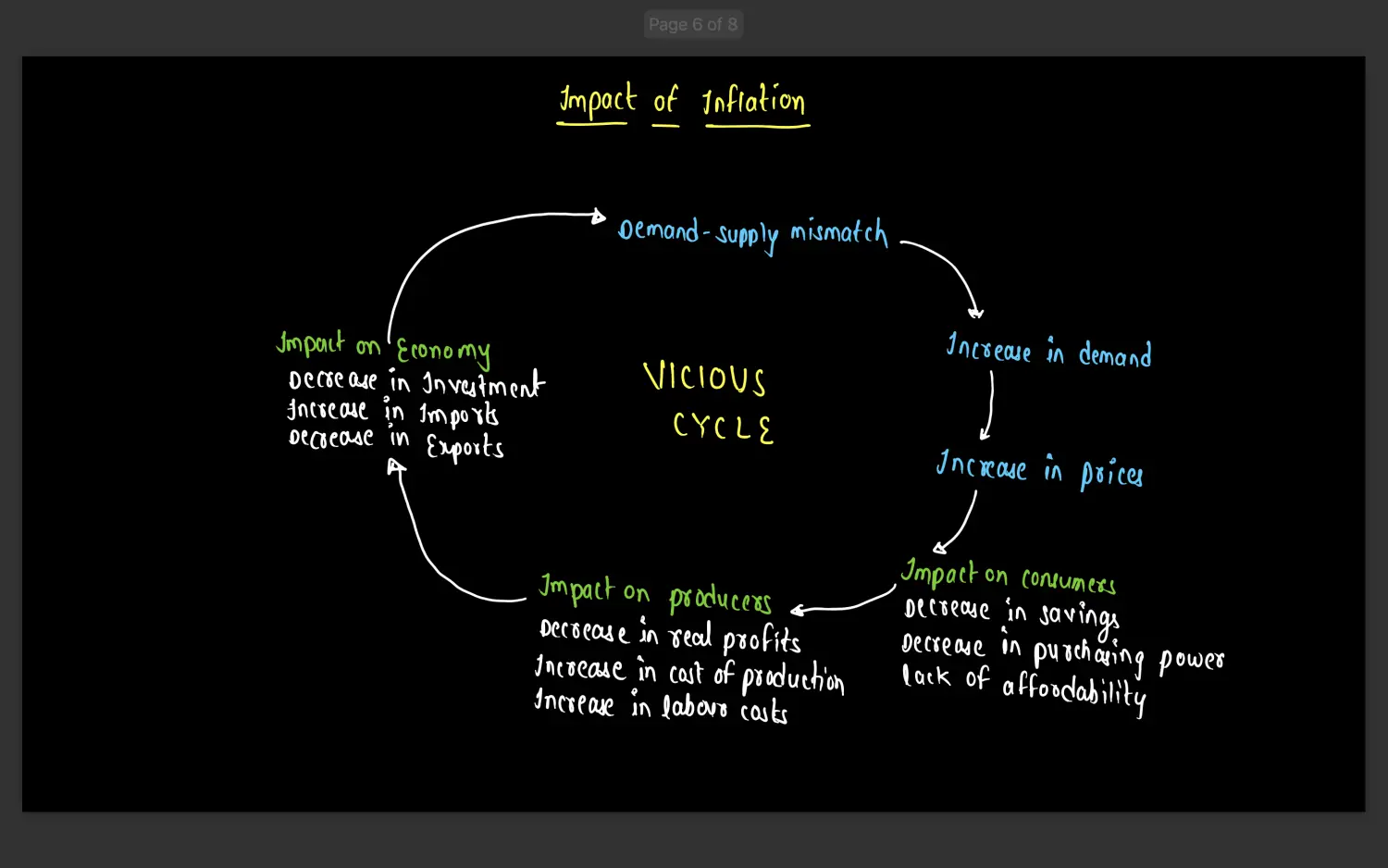
How does Inflation Affect - The Cycle
Affect to Consumer
- Things will become less affordable
- You Spend More and Savings Decrease
- Decrease in Purchasing Power of Rupee
- 2022 - Rs 20 with A - Can Buy 2 Apples
- 2023 - Rs 20 with B - Can Buy 1 Apple
- Hence, Reduction in Purchasing Power = Rate of Inflation
Affect on Manufacturer
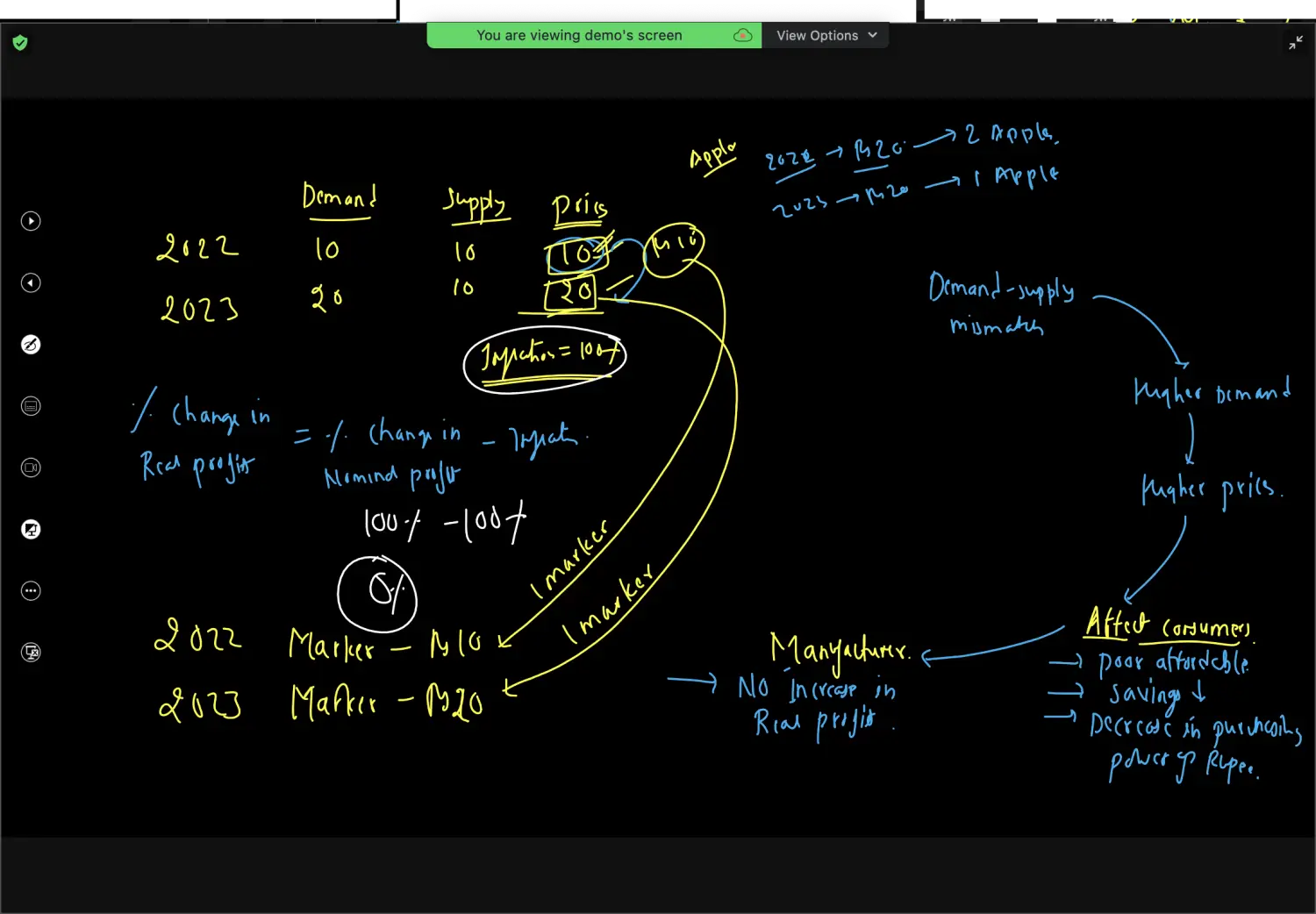
- There is NO Increase in Real Profits
%age change in real profit = %age change in nominal profit - Inflation
= 100-100
= 0
- Input Cost is Increased
- Labour Wages Increased
Affect on Indian Economy
Decrease in Investment
because no real profit
Increase in Imports
to meet the demand
Decrease in Exports
price higher in india, hence no market for costly material
Action of RBI
- Break the Cycle at Point of Increase in Demand
- Reducing Demand
- Sucks Out Money
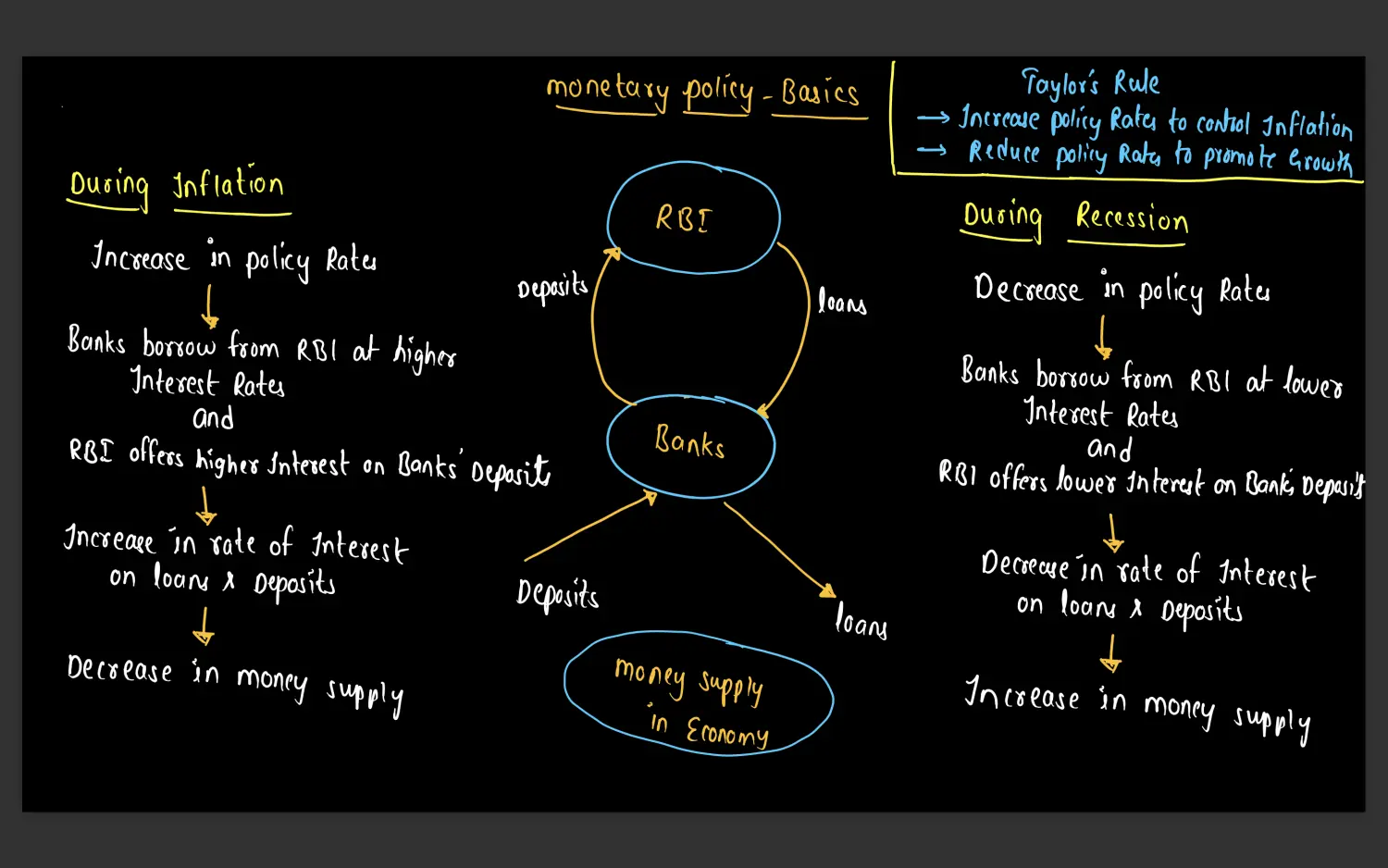
- Contractionary Monetary Policy
- Policy Rates will be Increased
- Break the Cycle at Point of Increase in Demand
Cycle of Inflation and Recession is
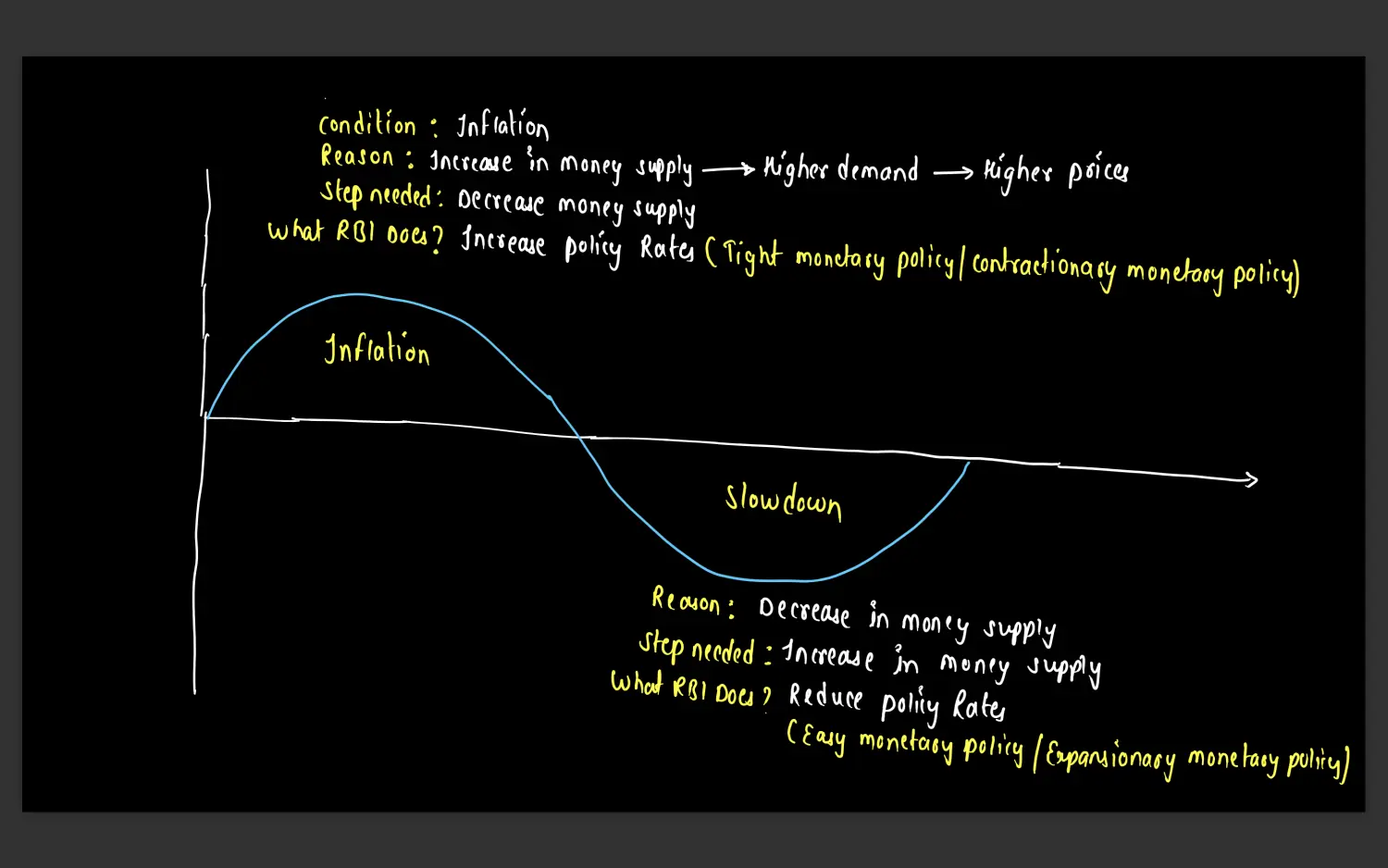
Impact of Inflation and Recession on Indian Economy
Impact of Inflation on Various Aspects of Indian Economy
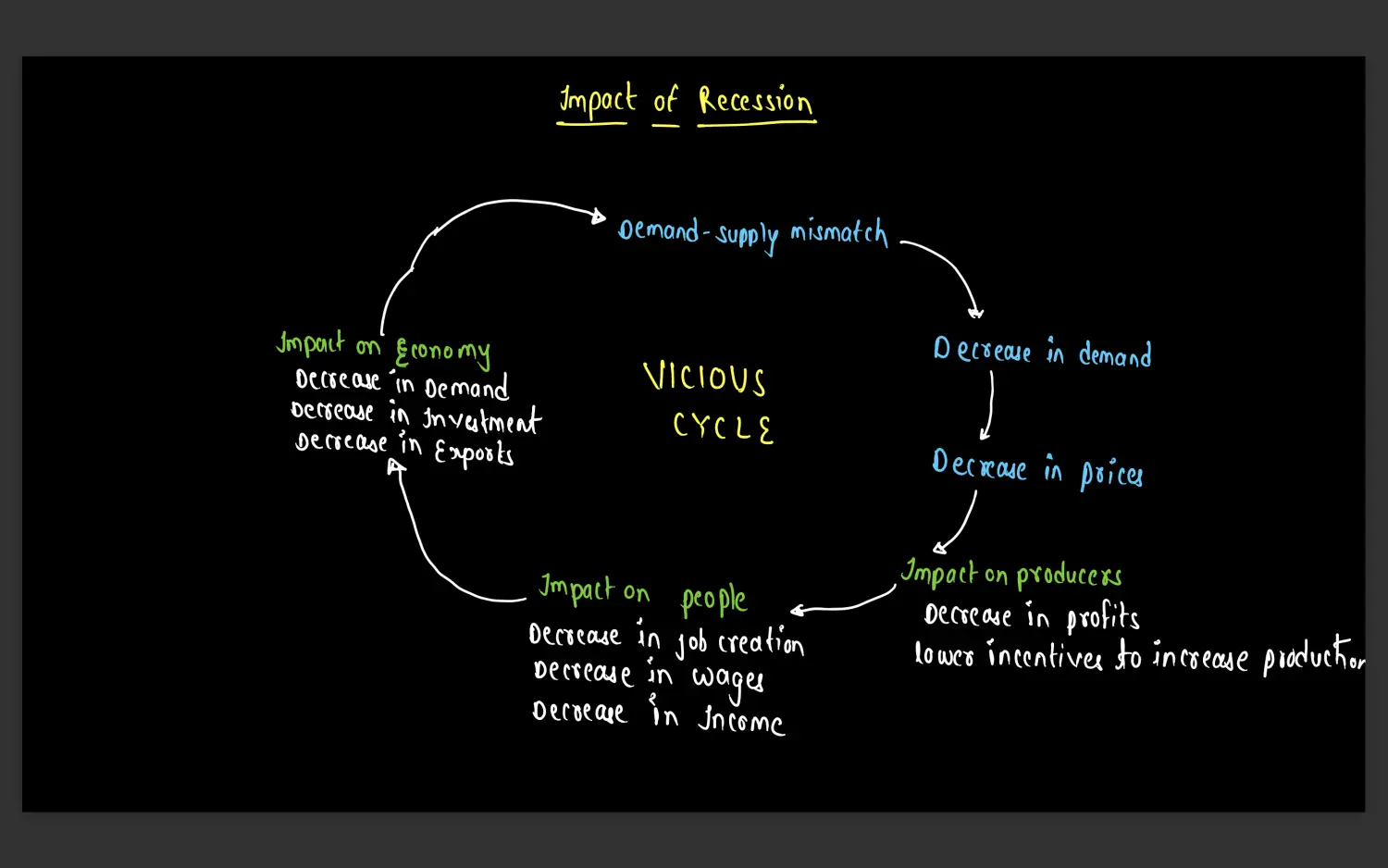
Impact of Recession on Various Aspects of Indian Economy
How RBI Controls Inflation - Taylor’s Rule
Monetary Policy Committee of RBI
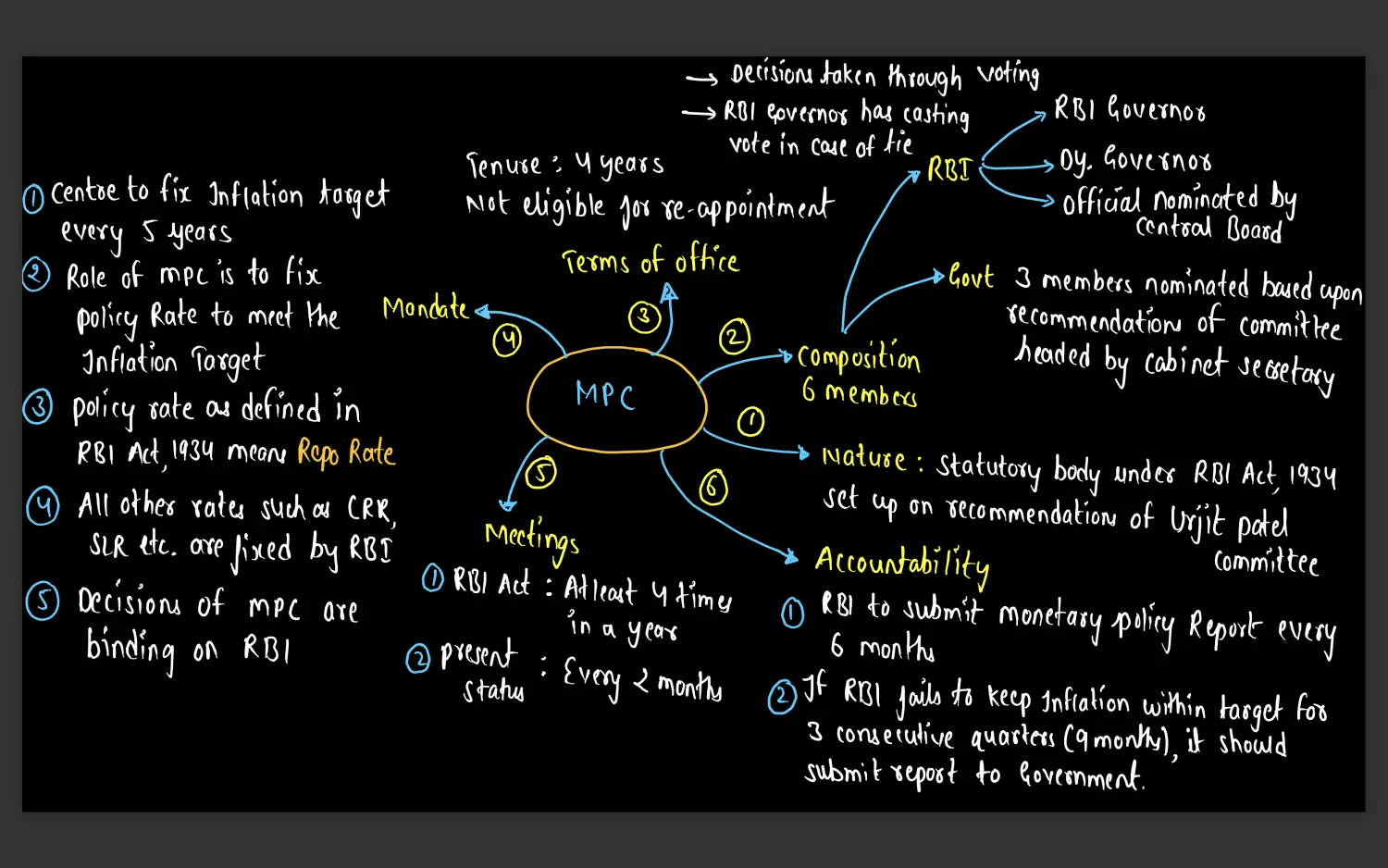
Tools to Control Monetary Policy
Summary of All Qualitative and Quantitative Tools
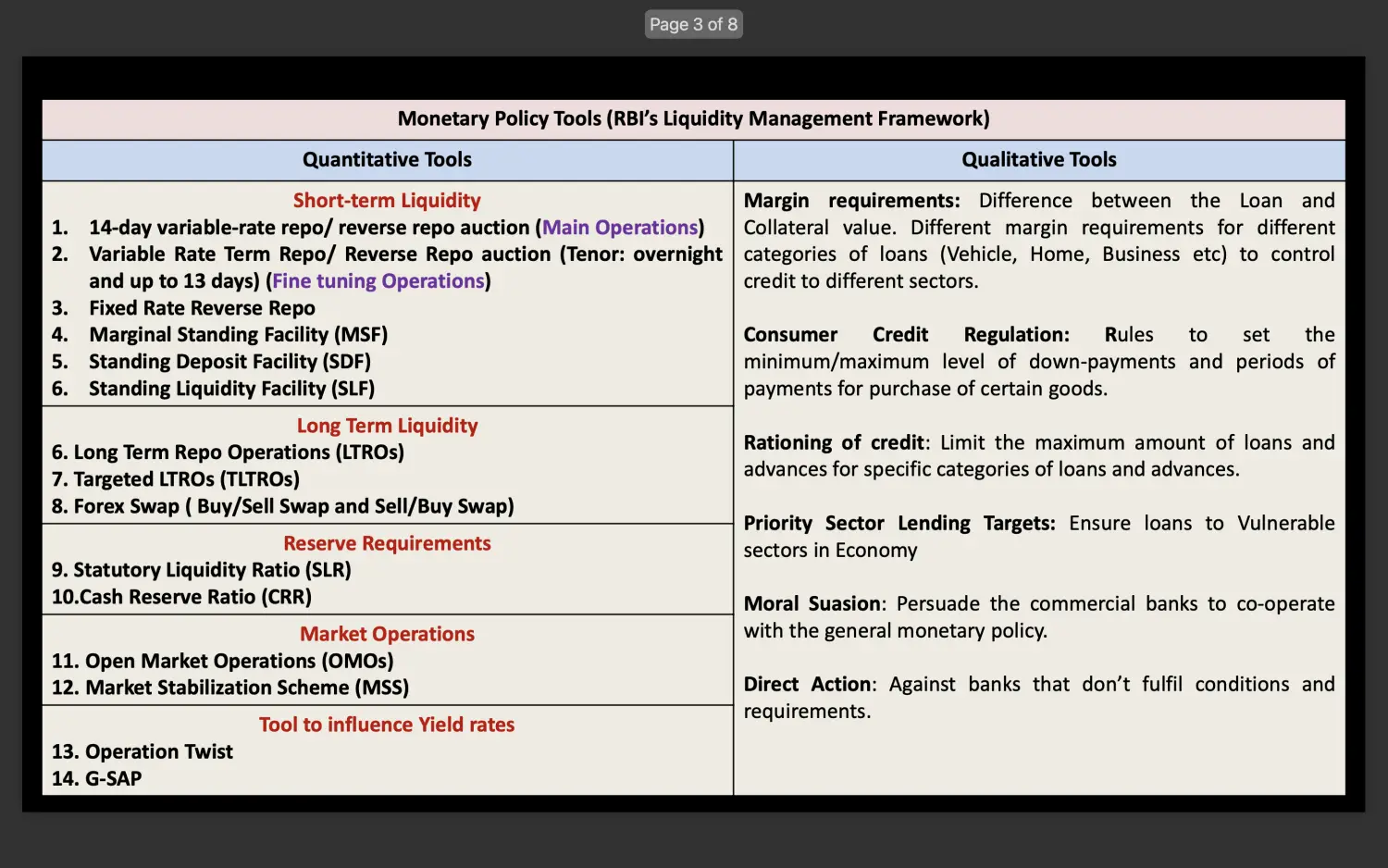
Quantitative Tools
Conventional Tools
Reserve Requirement: CRR & SLR
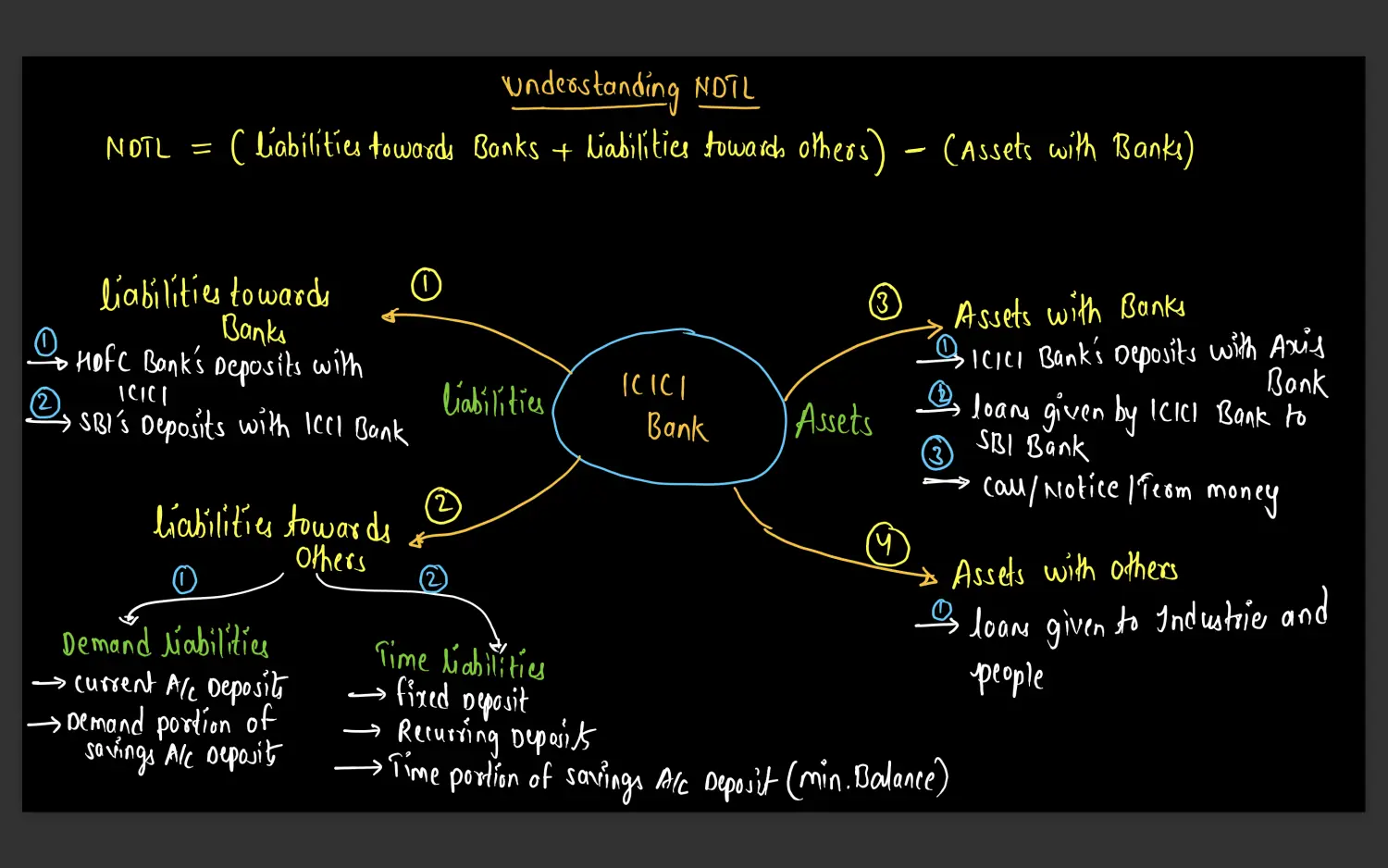
Concept of NDTL
Focus on Assets and Liabilities of Banks
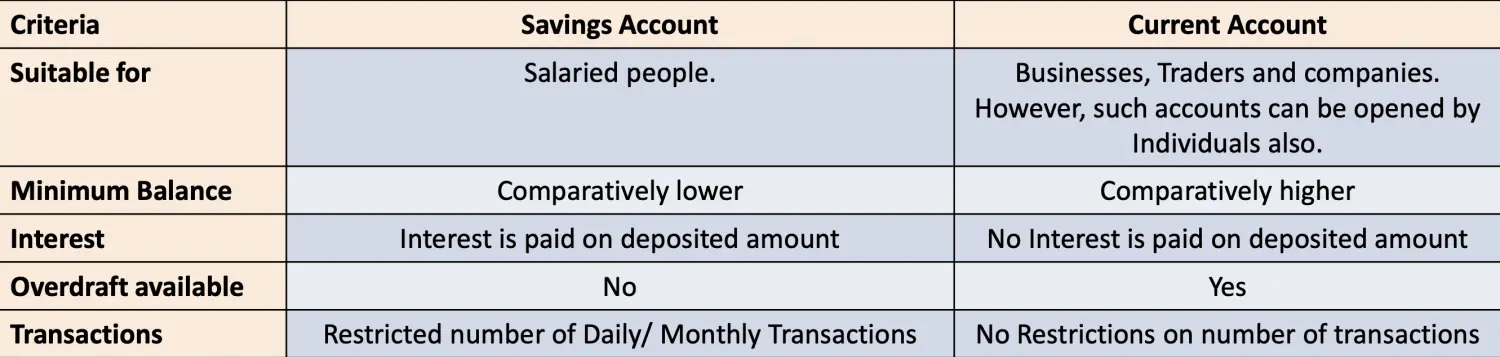
Difference Between Savings and Current Account
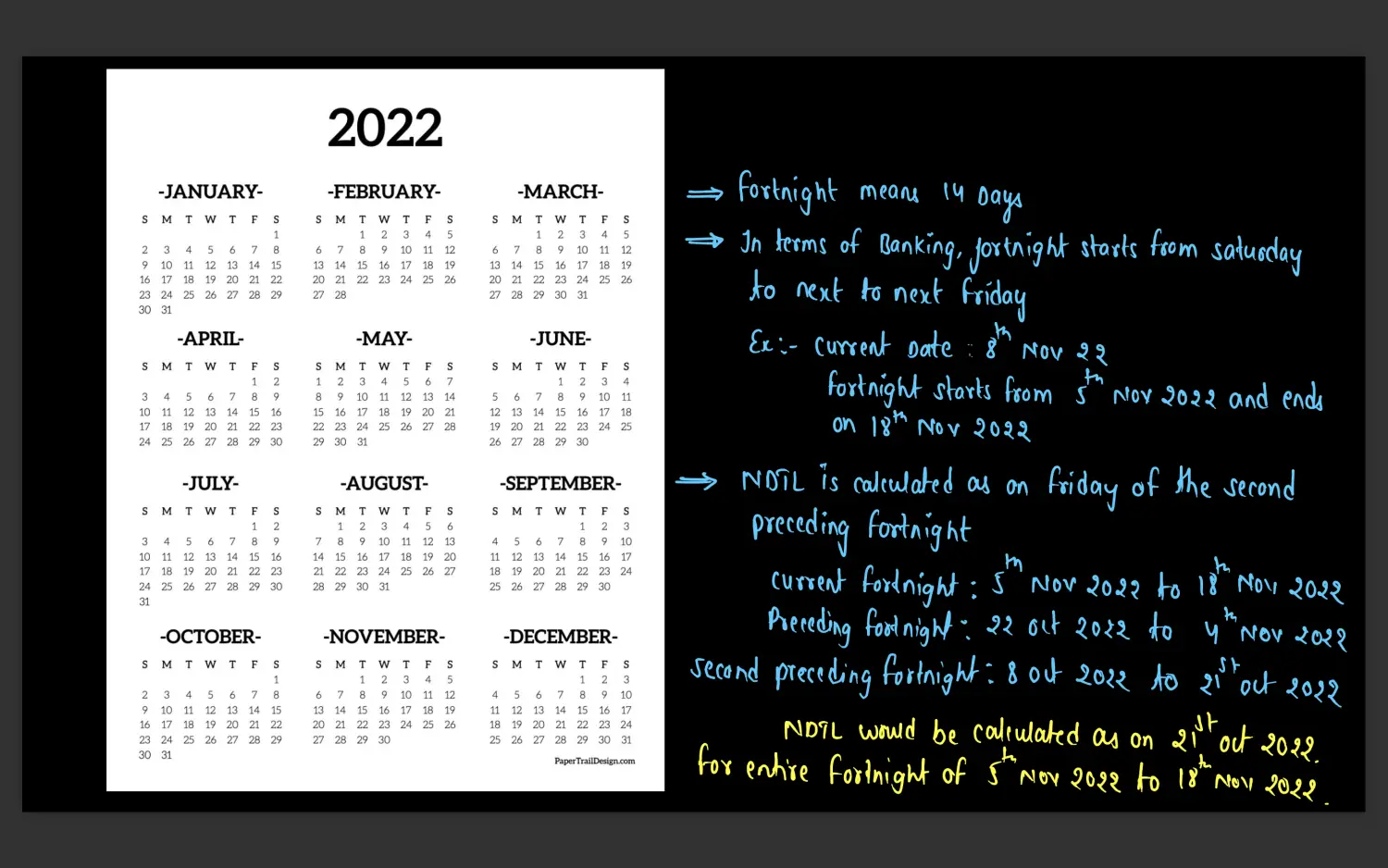
In what Time Frame is CRR calculated ?
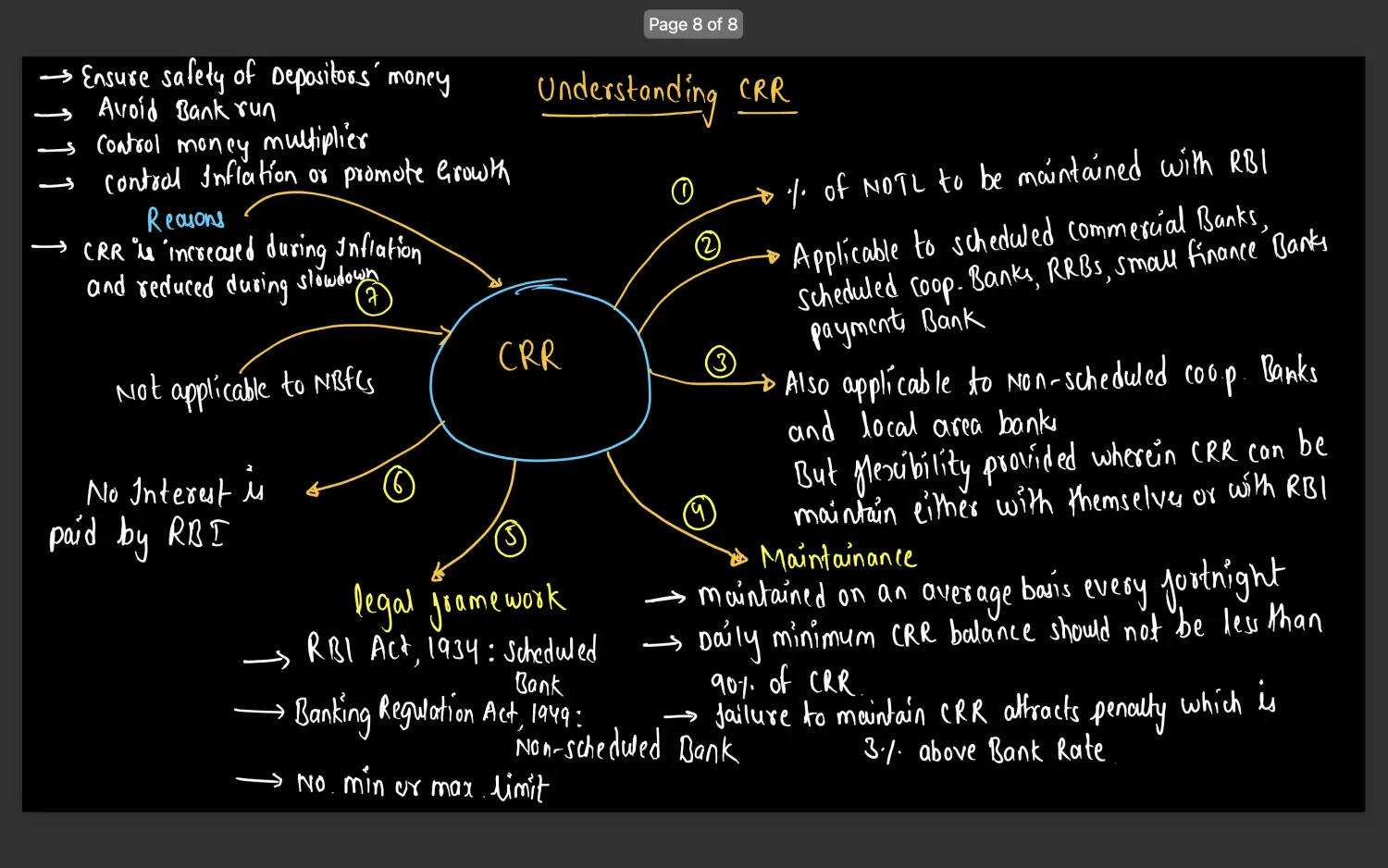
Understanding CRR
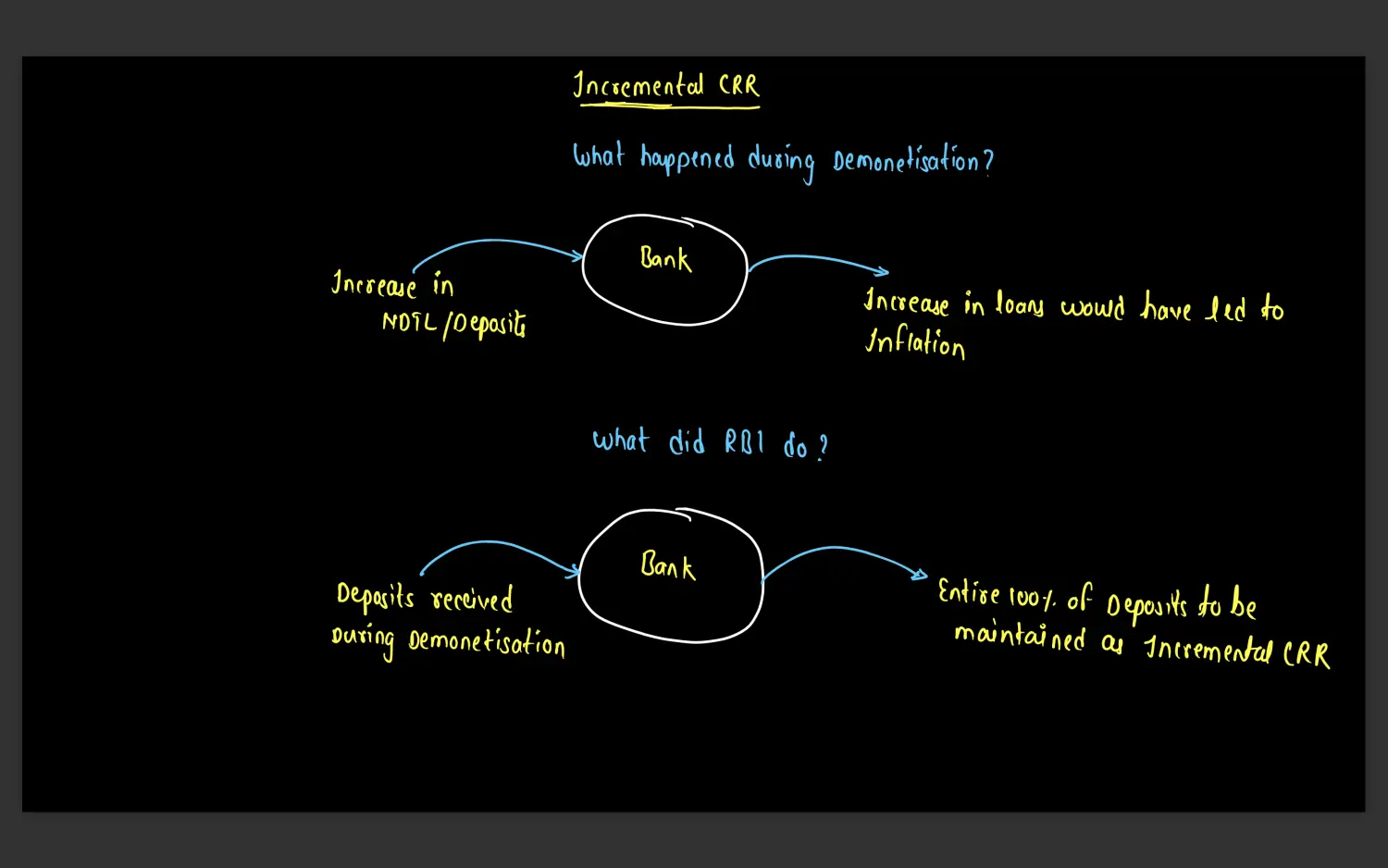
Incremental CRR
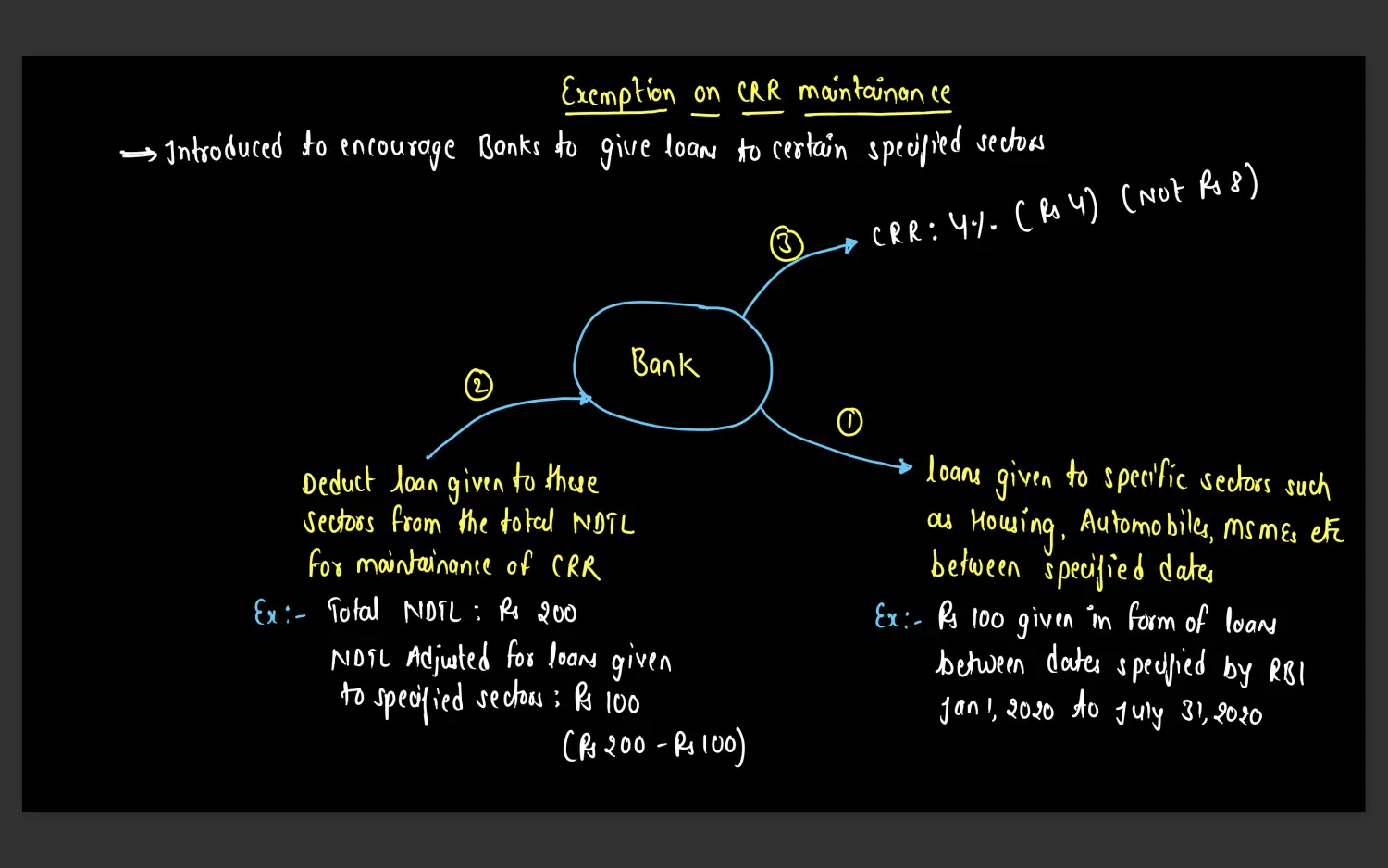
Exemption on CRR Maintainence
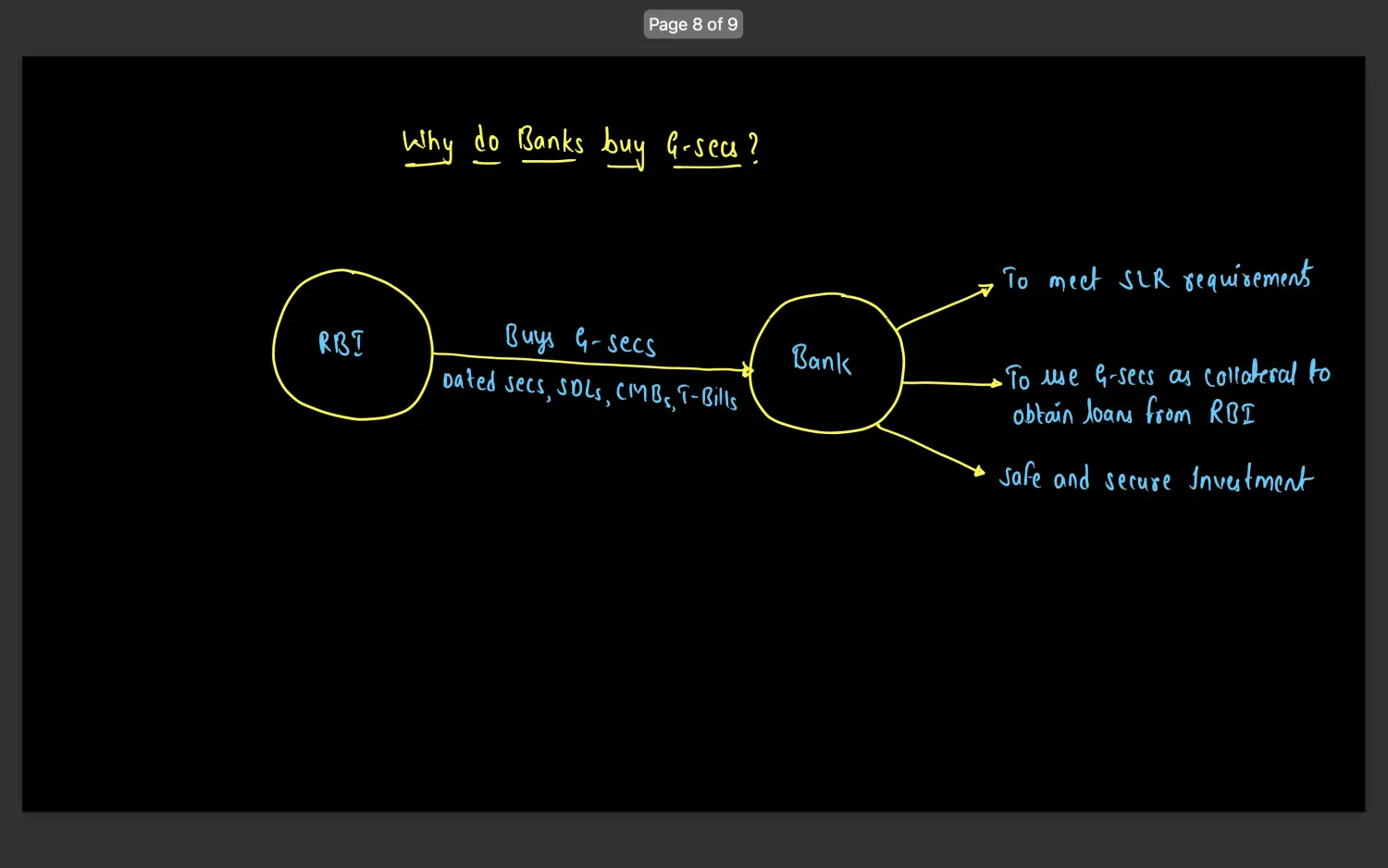
SLR
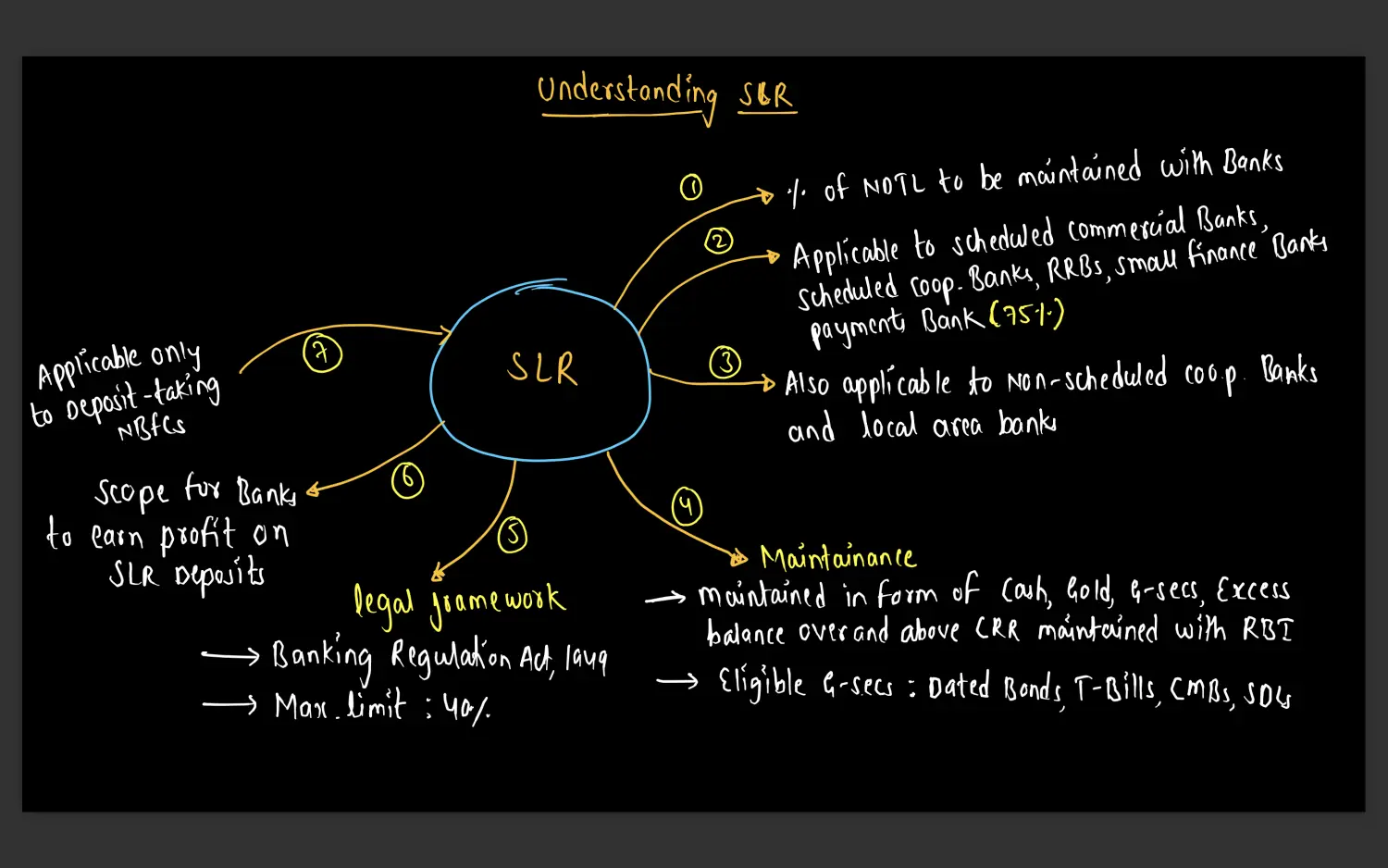
Difference Between CRR & SLR
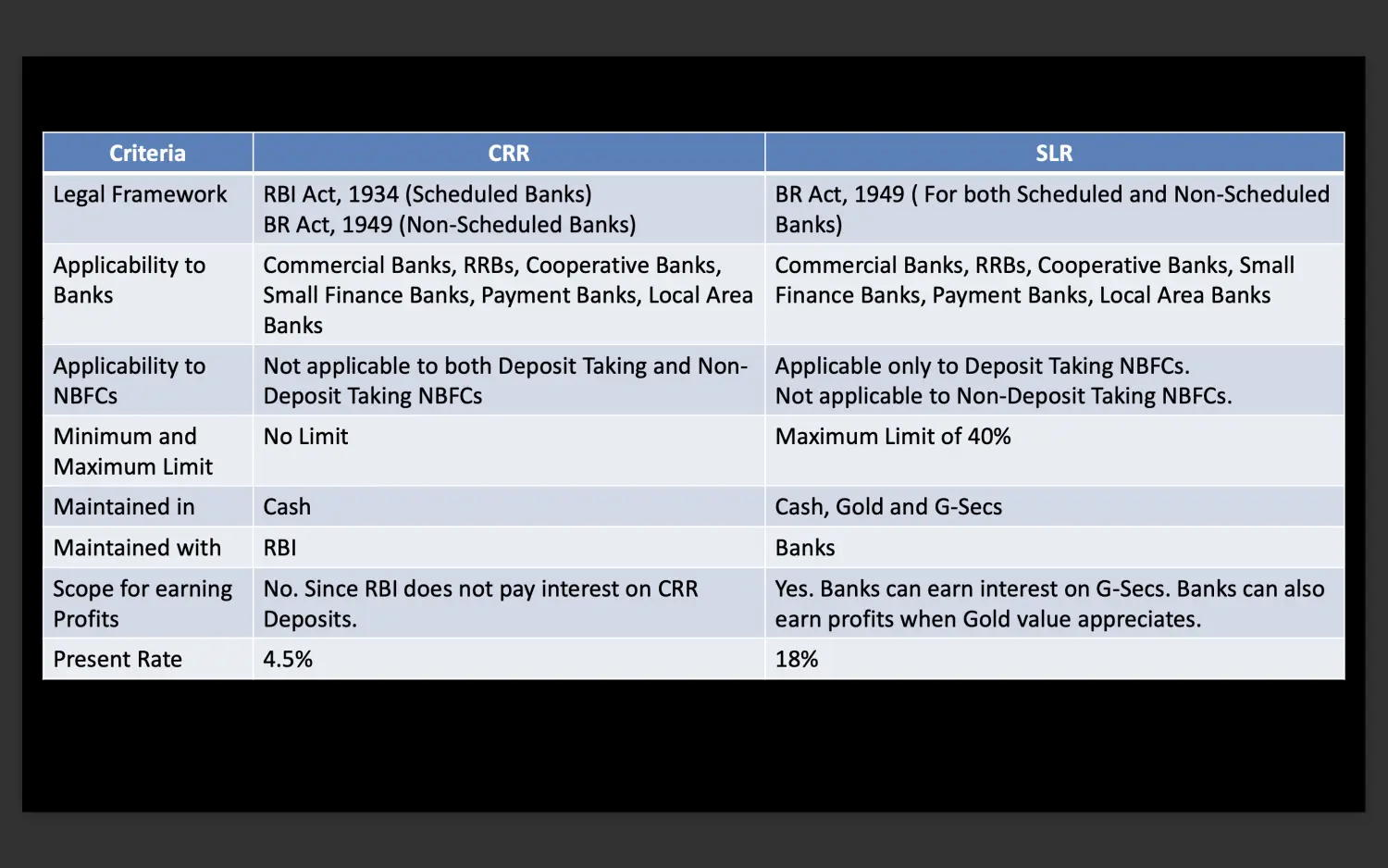
Why Do Banks buy G Secs ?
Concept of Lazy Banking

Liquidity Tool: Repo, MSF, SLF, Reverse Repo, SDF
RBI Gives Loan to Bank
Repo Rate
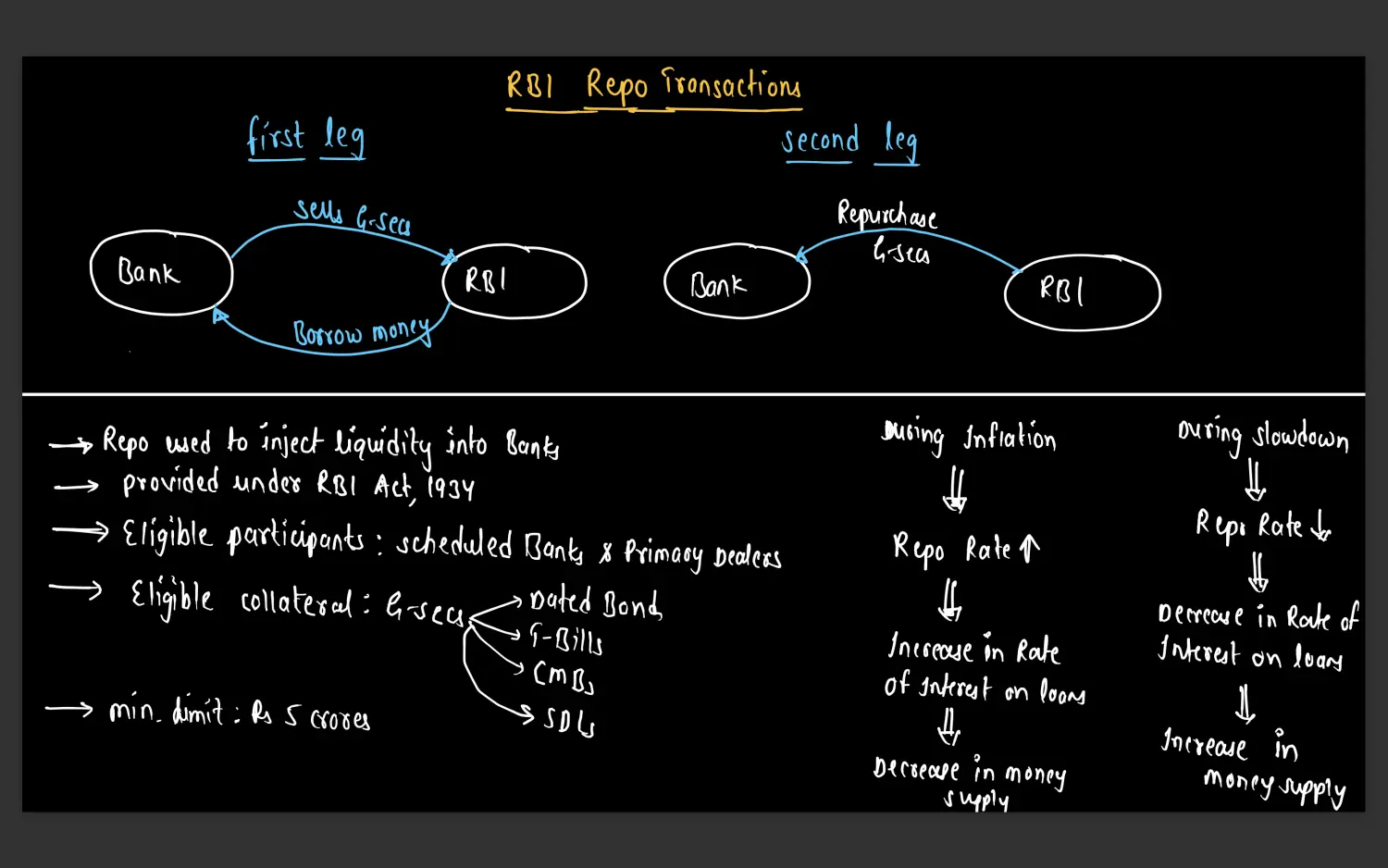
Transaction of 2 Legs
Here we have to take the Increment or Decrement in between the Legs of Transaction and not after the Transaction
Three Types of Tools which use 2 Leg Transactions are
- Repo Rate
- Reverse Repo Rate
- Forex Swap
Types of Repo
Repo can be used by RBI to Give which type of Loan ?
- Short Term Loans and
- Long Term Loans
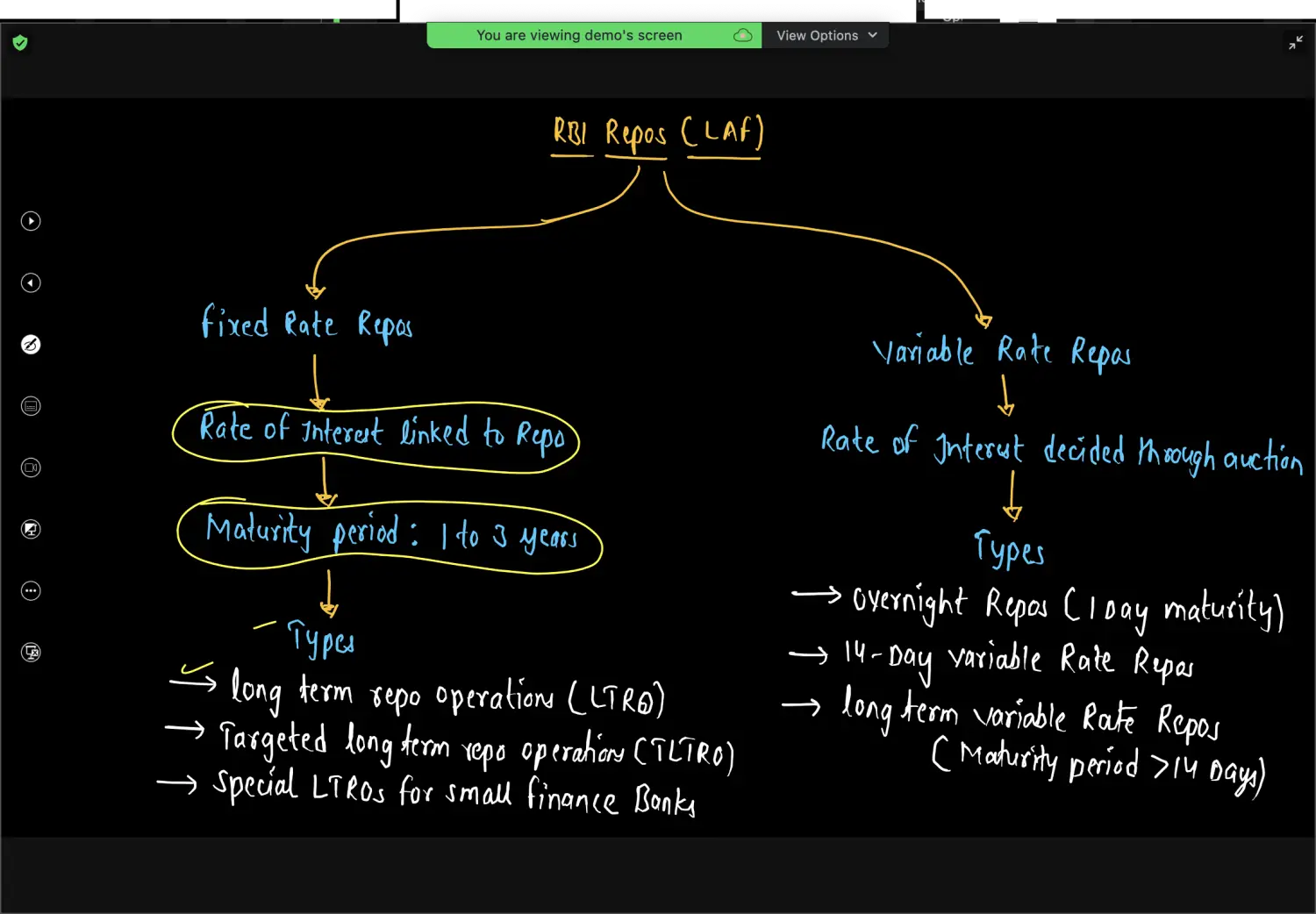
Fixed Rate Repo
Facts & Details
- ROI = Prevailing Repo Rate
- Maturity Period : Ranges from 1 to 3 Years
- Introduced by RBI as a Part of Aatma Nirbhar Bharat
ROI on Short Term Loans is higher or Long Term Loan
Generally, ROI on Long Term Loans is higher
Why was fixed Rate Repo Introduced ?
To Inject Long Term Liquidity in Economy
During Covid Times, RBI wanted to Pump In Money
Normal Years, LT Loans would be 7% When Normal Repo would be 6%
But in Covid Time, LT Loan was given at Repo Rate.
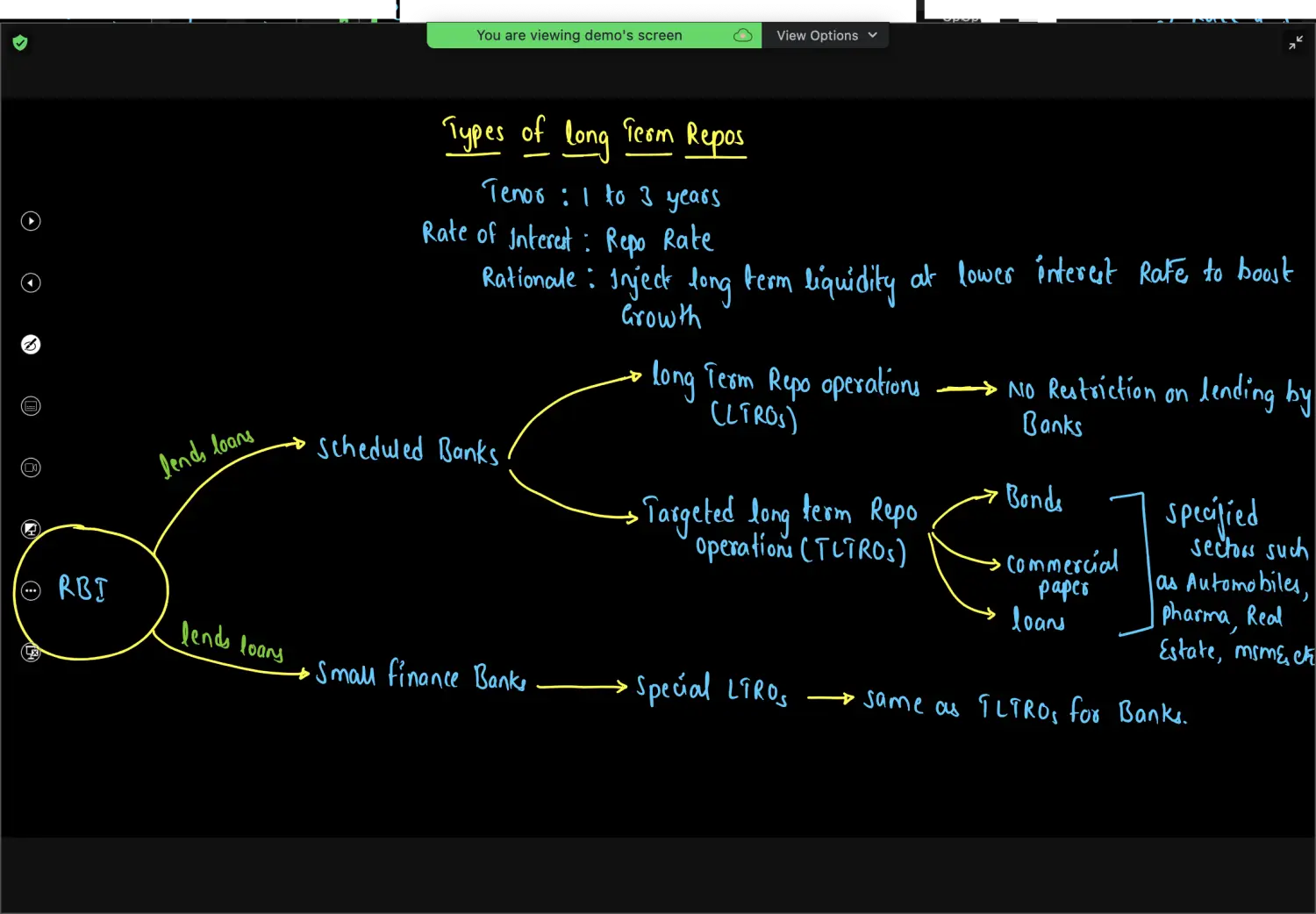
Type of Fixed Rate Repos
- LTRO - Long Term Repo Operation
- ROI = Repo Rate
- Maturity : 1 to 3 Years
- No Guidelines on where to invest money
- TLTRO - Targeted LTRO
ROI = Repo Rate
Not applicable to Small Finance Banks
Maturity : 1 to 3 Years
Compulsorily to be invested to a Specified Sector
For Example: Aviation Company
Either Give them Loan
Or Invest in this Companies Corporate Bonds
Maturity Period: > 1 Year
Commercial Paper Maturity Period: <1 Year
SLTRO - Special LTRO
Applicable Only to Small Finance Bank
Mind Map
Variable Rate Repos
To Pump in Money
ROI : Decided by Auction or Bidding
Duration : Different Durations
- Overnight Repo : for Just 1 Day
- Fortnight Repo : 14 Days
- 28 Days
- 56 Days
- Usually they are for a period less than 1 Year
RBI Notification about Bidding
The ROI Bidding Start cannot be less than the Prevailing Repo Rate
Mind Map
MSF - Marginal Standing Facility
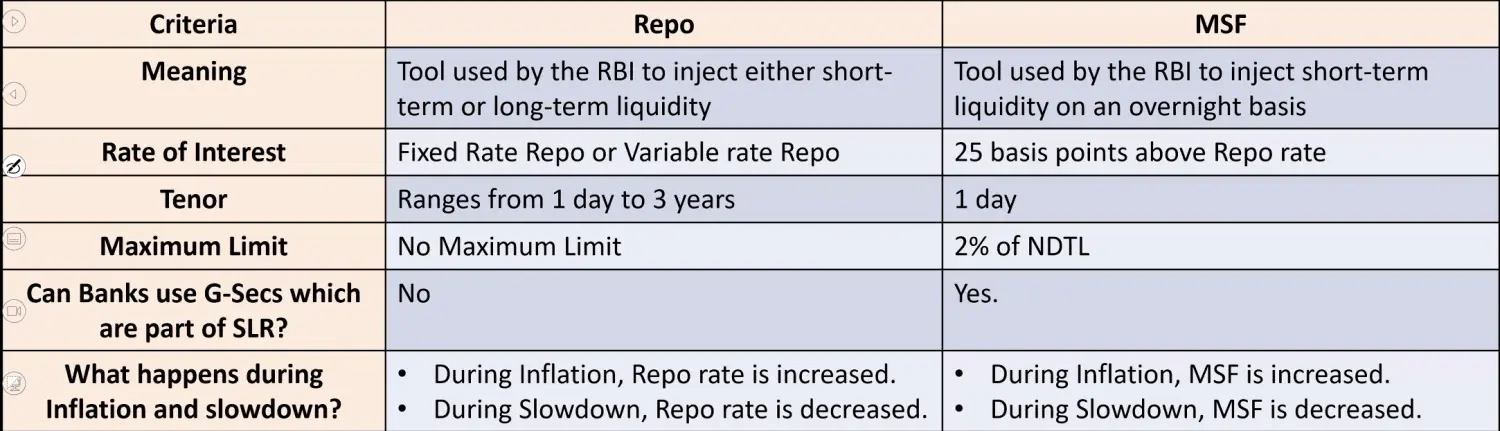
Difference Between Repo and MSF
Concept of BPS - 1 Basis Point (BPS)
1 BPS = 0.01 % of RoI
25 BPS = 0.25%
100 BPS = 1%
SLF - Standing Liquidity Facility
It is means of taking loans from RBi for Stand Alone Liquidity Facility
Bank Gives Loan to RBI
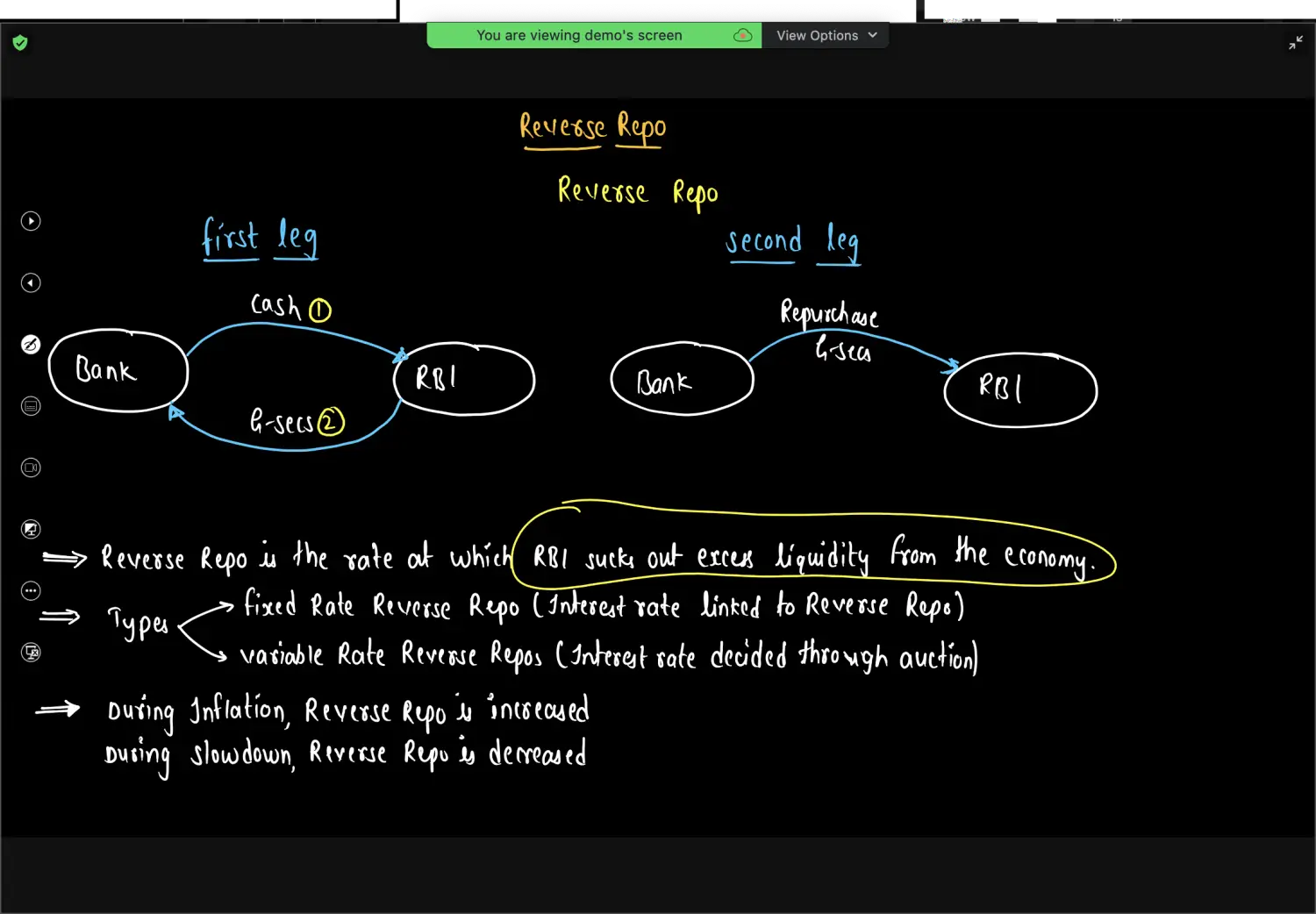
Reverse Repo
Introduction
Repo > Reverse Repo → Repo will always be greater than Reverse Repo
To Prevent Banks from Giving RBI the Money as Loan, which it borrowed from RBI Itself → Phir Hera Pheri Nahin Karne Ka
Repo → used for Injection
It also has all types of Repo Things - Fixed and Variable Reverse Repo Rates
Concept of Reverse Repo
SDF
Introduced Last Year - It is Part of Current Affairs
Introduced on Recommendation of Urjit Patel Committee
RBI Act, 1934 was Amended, SDF has been Introduced
ROI is higher than Reverse Repo because its a Collateral Free Loan
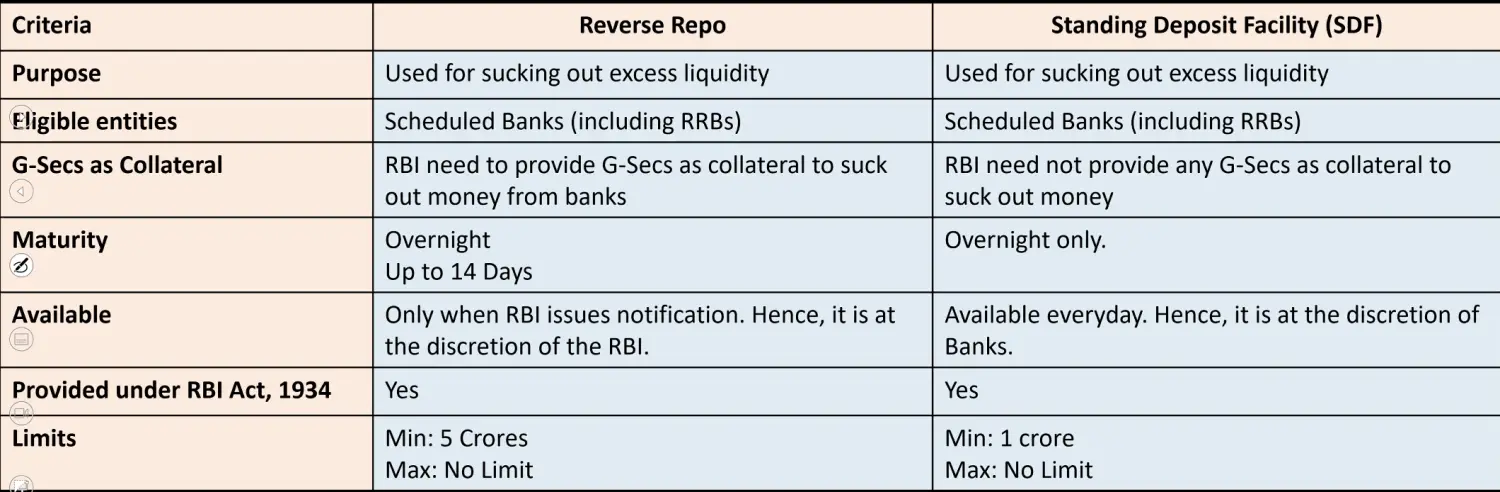
Difference between Reverse Repo and SDF
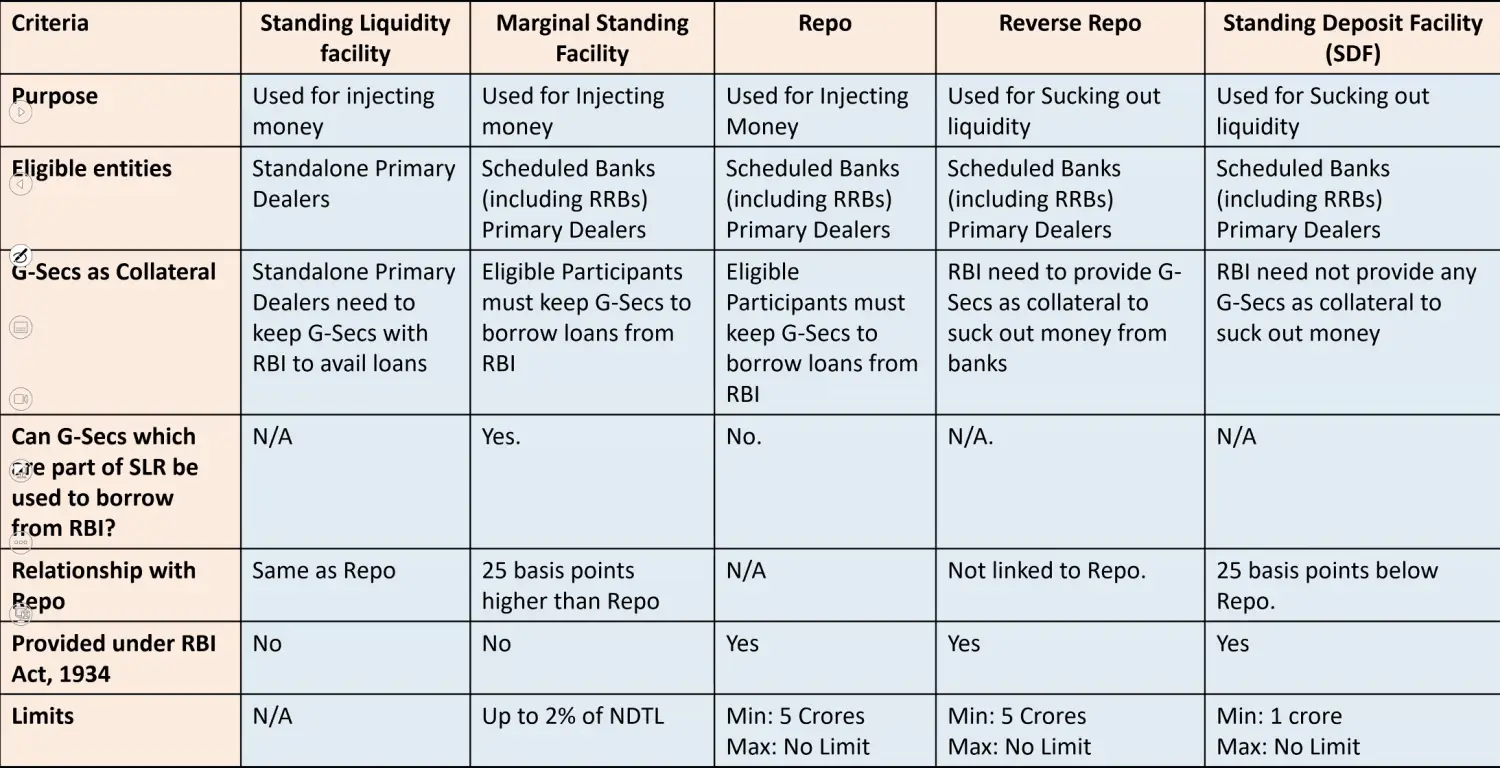
Summary of Repo, MSF, Rev Repo, SLF & SDF
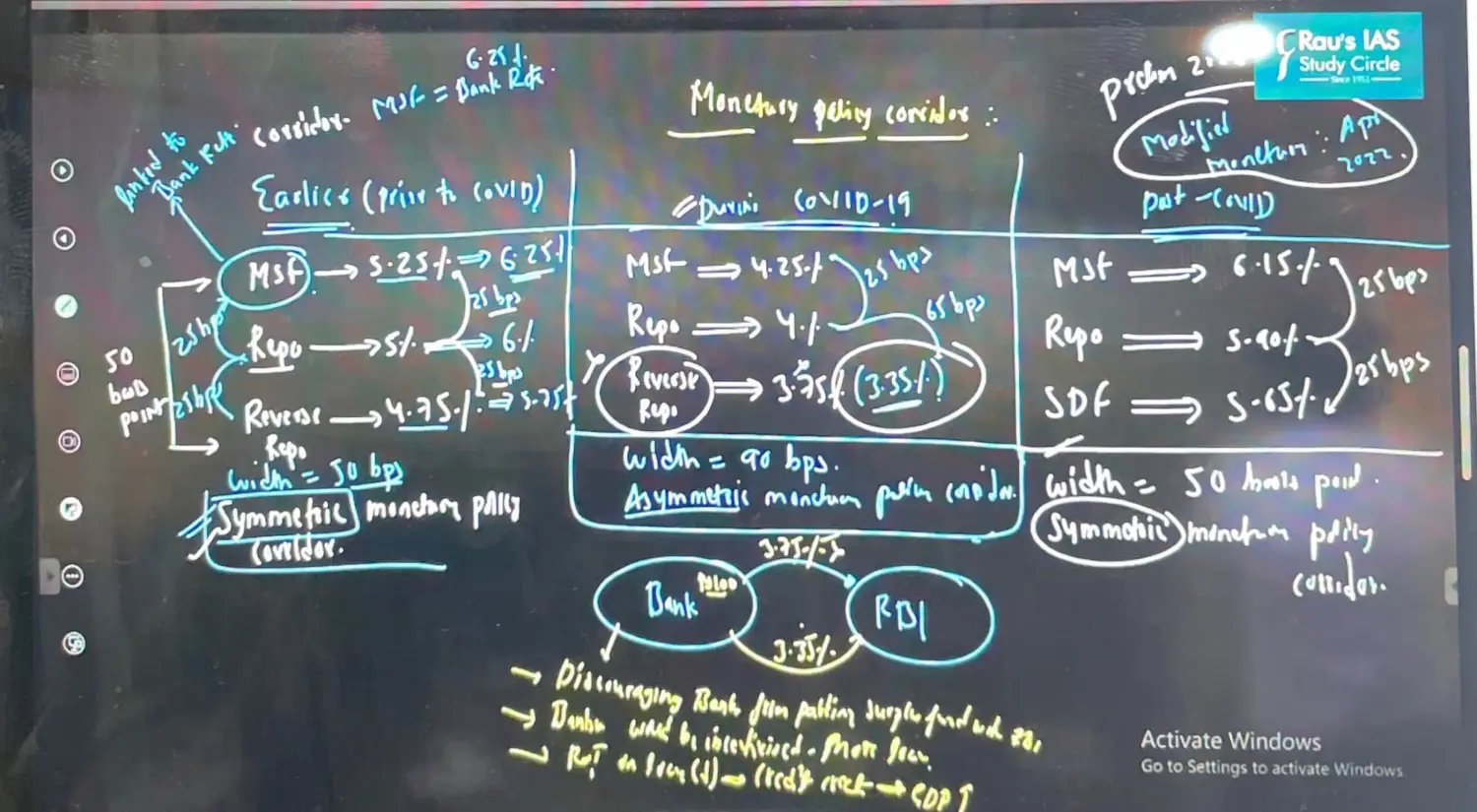
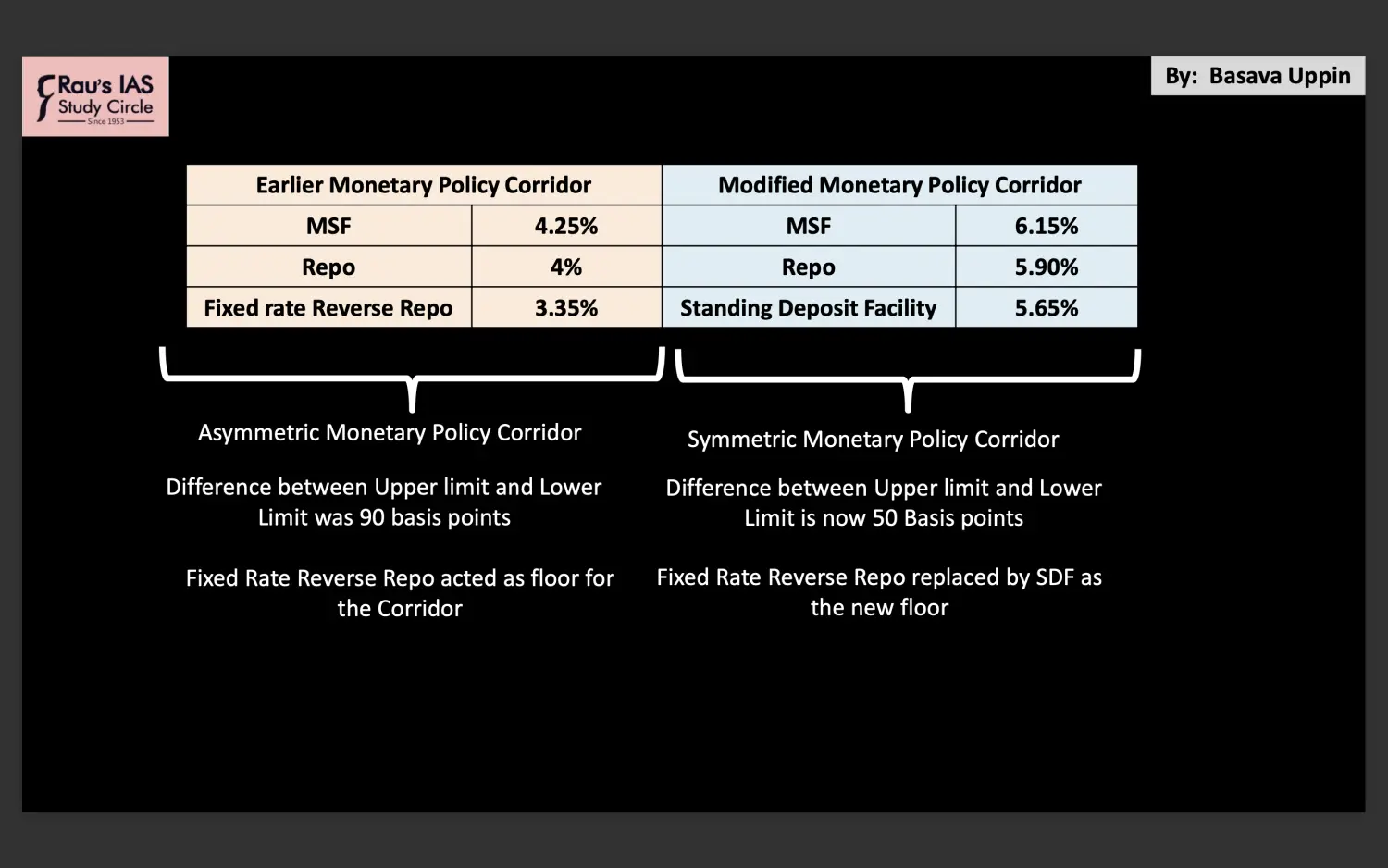
Monetary Policy Corridor
Symmetric and Asymmetric Monetary Policy Corridor
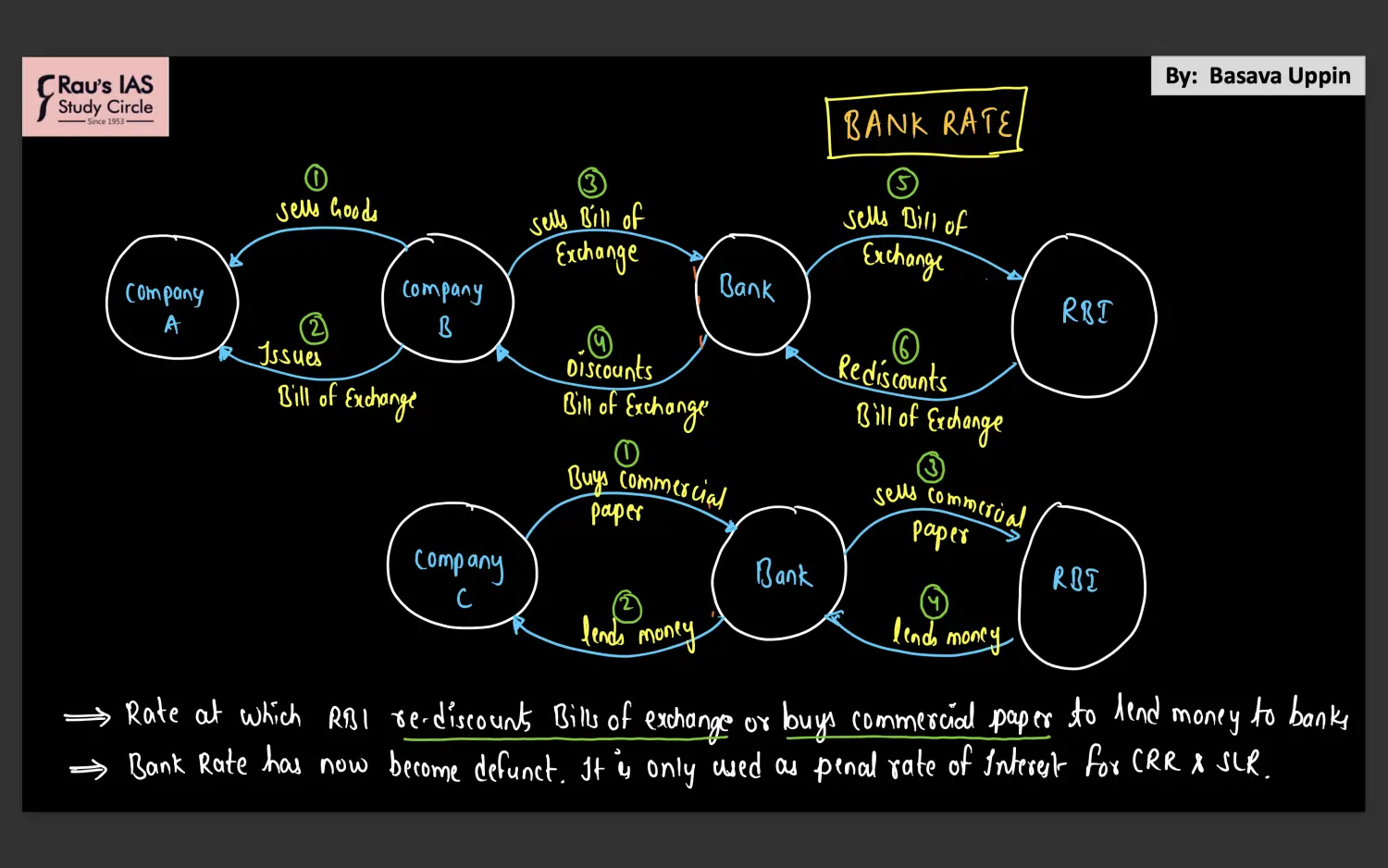
Bank Rate
Defintion
Rate at Which RBI Rediscounts Bill of Exchange or Buys Commercial Paper
Earlier Case
Bank Rate → Defunct
Now Only as Penalty Rate of Interest for not maintaining CRR & SLR
Current Situation
Process - Not functioning right now, this is just for understanding
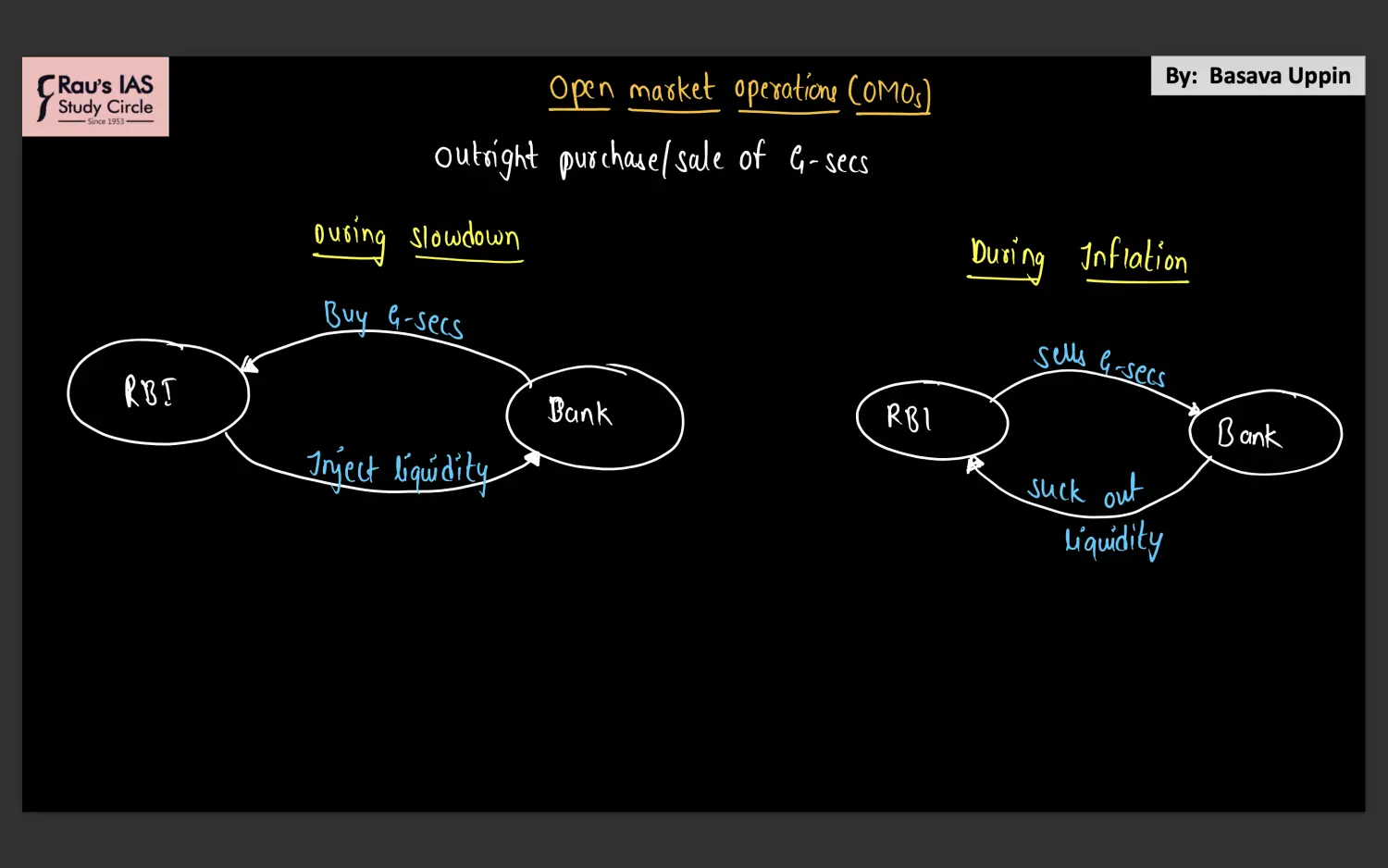
OMO - Open Market Operations
OMO - Think You are RBI
Suck Money - Sell G-Sec - During Inflation
Inject Money - Buy G-Sec - During Recession
Mind Map
Unconventional Tools
Concept of Rupee Appreciation & Depreciation
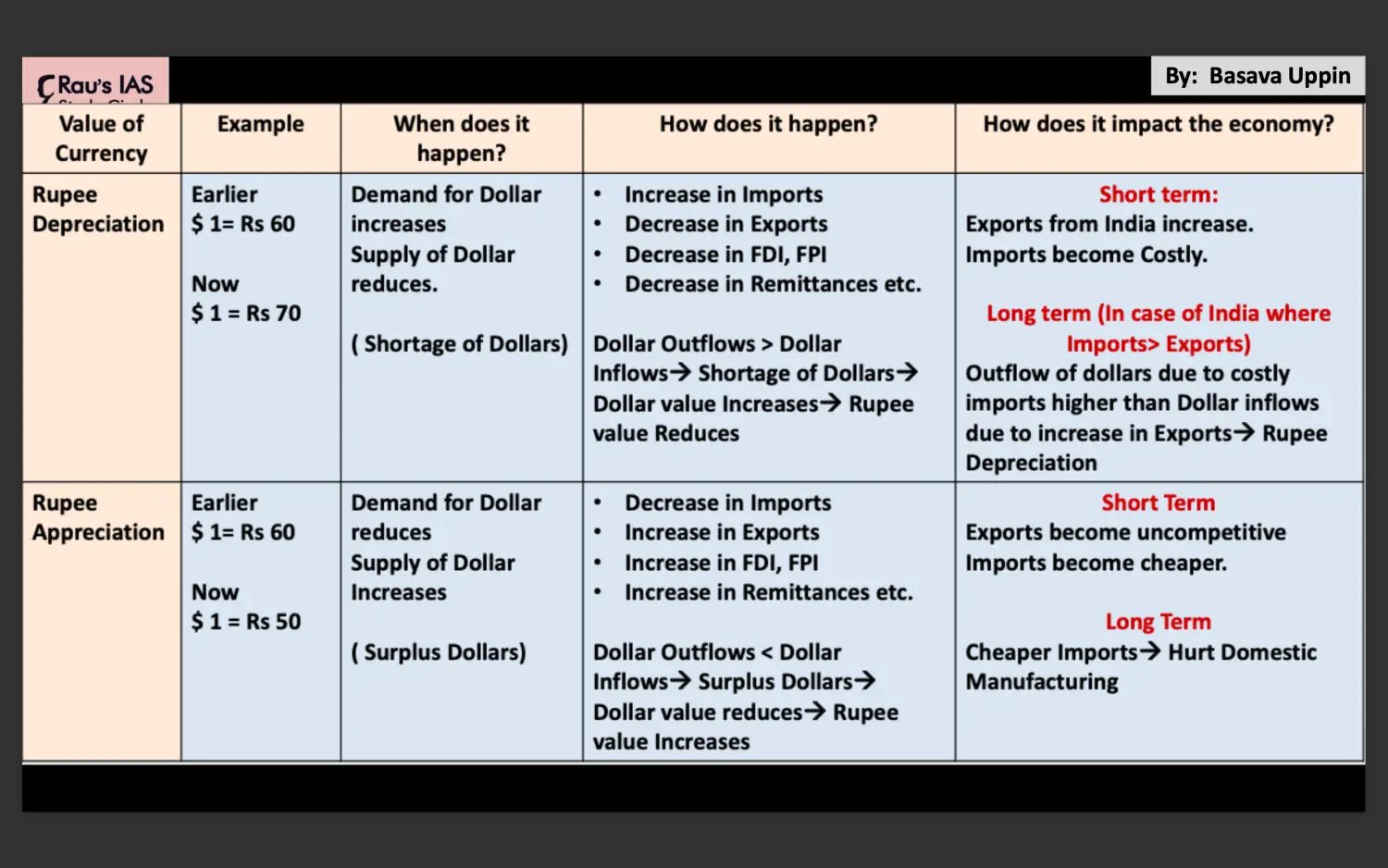
Remember Important Point *
Demand / Supply = Value
Demand Inc - Value Inc
Demand Dec - Value Dec
Supply Inc - Value Dec
Supply Dec - Value Inc
Market Stabilisation Scheme
Forex Swap
Forex Buy Sell Swap
Forex Sell Buy Swap
Yield Rate Management
- Factors Affecting Yield Rates Are
- Government Borrowings
- ROI in USA & US Fed Bank Policies
- Rate of Interests DP to
- Factors Affecting Yield Rates Are
Why increasing yield is not good for Govt
Types of Loans Given by Bank
- Fixed Rate Loans
- Floating Rate Loans
Ways to Control Yield Rates → OMO, Operation Twist, G SAP
Qualitative Tools
- Margin Requirement & 5 Concepts
- US Fed Dot Plot
- Monetary Policy Stand of RBI
- Accomodative - Expansioning
- Neutral
- Calibrated Tightening - Contractionary / Dear Money / Tight Money
Money