Polity by Babu Sir
Theory
- Important Topics for Mains to be Noted
- Ordinance Making Power of President and Governor
- Question Related to Separation of Power
- Questions on Conflict between Executive & Legislature
- Judicial Intervention in Executive & Legislature
- All Pardoning Powers
- Emergency Powers
- Governor - Each and Every Part No Matter What combined with Centre State Relations
- Art 142 - Extra Ordinary Power of Supreme Court
- 😎Extra Concepts
Resolution, Bill, Motion
- Bill - Legislative Proposal
- Motion - Not Necessarily Put to Vote
- Resolution - It is necessarily Put to Vote
Timing of No of Parliamentary Sessions in a Year
Summary
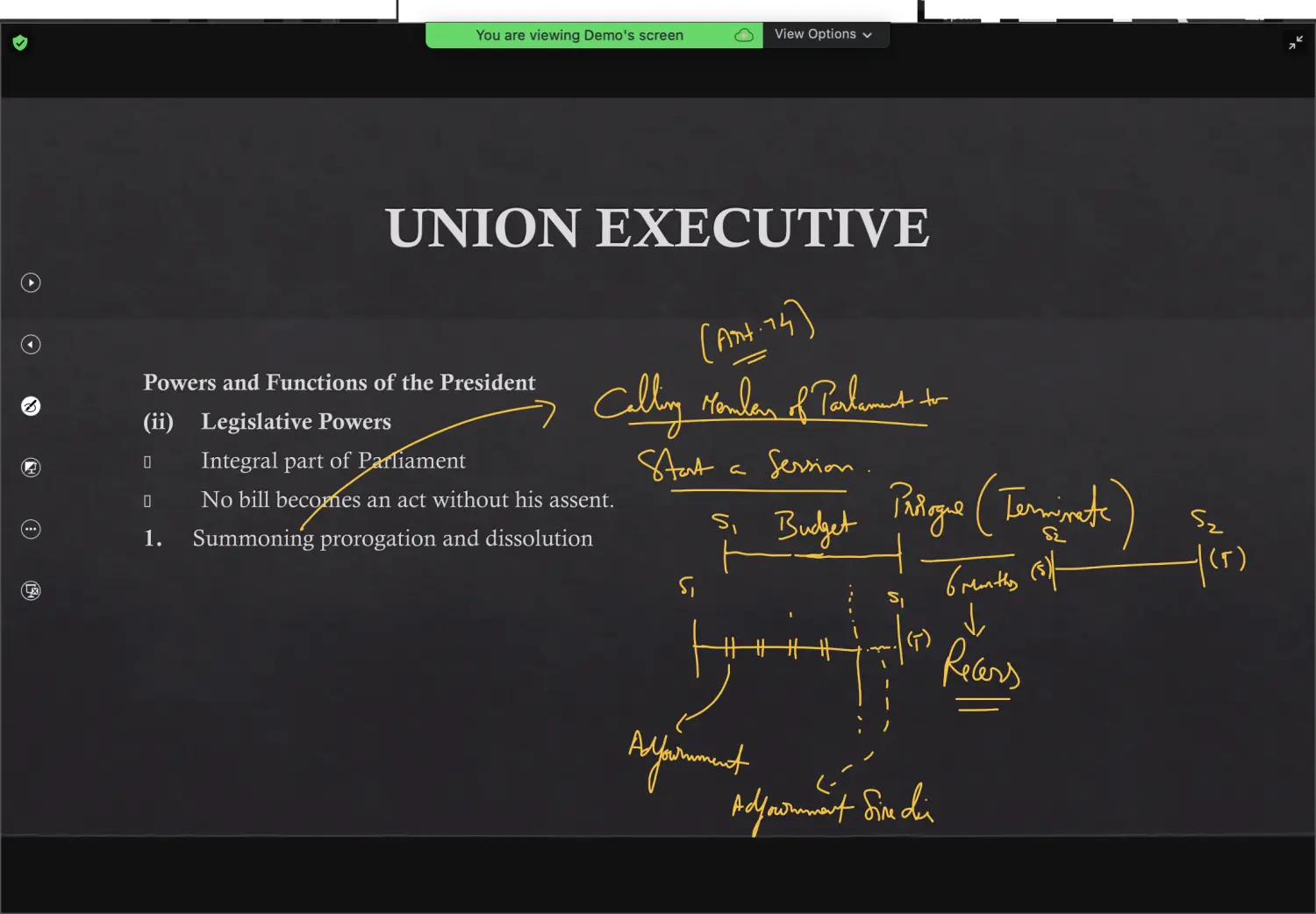
- No Mention of How Many Minimum No of Session in a Year in the Constitution
- The Constitution Only Says that there shall be no TIME GAP OF NOT MORE THAN 6 Months
- As a Conventional Practise 3 Sessions are Done. There is no Mention in the Constitution itself
- Budget Session
- Monsoon Session
- Winter Sessions
- Recess : Break between Two Sessions
- Adjournment :
- Temporary Breaks in Between the Session
- Temporary Break : Definite Break
- Hour
- Days
- Week
- Done by the Chairman of the House
- Adjournment Sine Di :
- Temporary Breaks in Between the Session
- Temporary Break : Indefinite Break
- Presiding Officer will pass adjournment Sine Die, when all the tasks are over
- This Serves as an Indication to the President that work of parliament is over, taking cue from Adjournment Sine Di President calls for Prorogation of House
Art 100 Article → When there is No Specific Majority Mentioned ?
Whenever there is no Specific Majority is Mentioned, it has to considered as a Simple Majority
Extra
- Parts 5 (Art 52 - Art 151) - The Union
- Chapter 1 - Executive (Art 52 - Art 78)
- 1 President Art 52 - Art 62
- 2 Vice President Art 63 - Art 71
- 3 President Power Art 72 - Art 73
- 4 CoM Art 74 - Art 75
- 5 AGI Art 76
- 6 Govt Business Art 77- Art 78
- Chapter 2 - Parliament (Art 79 - Art 122)
- Chapter 3 - Legislative Powers of President (Art 123)
- Chapter 4 - Union Judiciary (Art 124 - Art 147)
- Chapter 5 - CAG (Art 77 - Art 78)
- Chapter 1 - Executive (Art 52 - Art 78)
- Part 6 (Art 152 - Art 237) - The States
- Parts 5 (Art 52 - Art 151) - The Union
One Man One Vote One Value - in Lok Sabha
Art 143 - President can refer matters to Supreme Court
A Single Constitution Can Amend ?
A Single Constitutional Amendment Act can change and amend many provisions in the constitutions
AFSPA
- Implemented in Disturbed Area, Army is sent to aid the Civil Administration
Civil Administration Still is in Action
Three National Emergencies in India
- 1975 - 1976 - Time of Third National Emergency
Principle of Natural Justice
- No Person can be the Judge of his own case
- Sometimes Judges recuse themselves from hearing some cases
- All Parties should be given equal opportunity before passing the order
- No Person can be the Judge of his own case
Supreme Court Process
- A Supreme Court Bench can over rule its predecessors Judgement by having a Larger Number of Bench.
- Example : Berubari Union Case 7 Judge Bench over rides KBC’s 13 Judge Bench.
Difference Between Referendum & Plebiscite
Latest No of Amendments to the Constitution
- 105th Amendment in January 2022
- This Numbering of 1 to 105 is done under Art 368 only
Difference Between Ratification & Notification
Joint Sitting of Houses
Difference between Commission & Committee
- Commission - Independent - External
- Committee - Sub Set of Parliament - Internal
Types of Bodies
Constitutional
Statutory
Extra Constitutional
Difference Between PIO & NRI
Concepts of PIO & OCI
💡 NOTE : PIO & OCI are NOT CITIZENS OF INDIAIllegal Migrant
- Enters without Legal Document
- Stays for Extra Time in India w/o Permission
Meaning of Landmark Cases
Those cases which have laid down a new principle for the interpretation of the constitution
ILP - Inner Line Permit System
- RR of Rt to Free Movement of Internal Citizens
- ILP - Quasi Visa System
Ninth Schedule Amendment is Done by
- Special Majority
SC ST Reservation in Lok Sabah for Nomination or Not
Layout of India
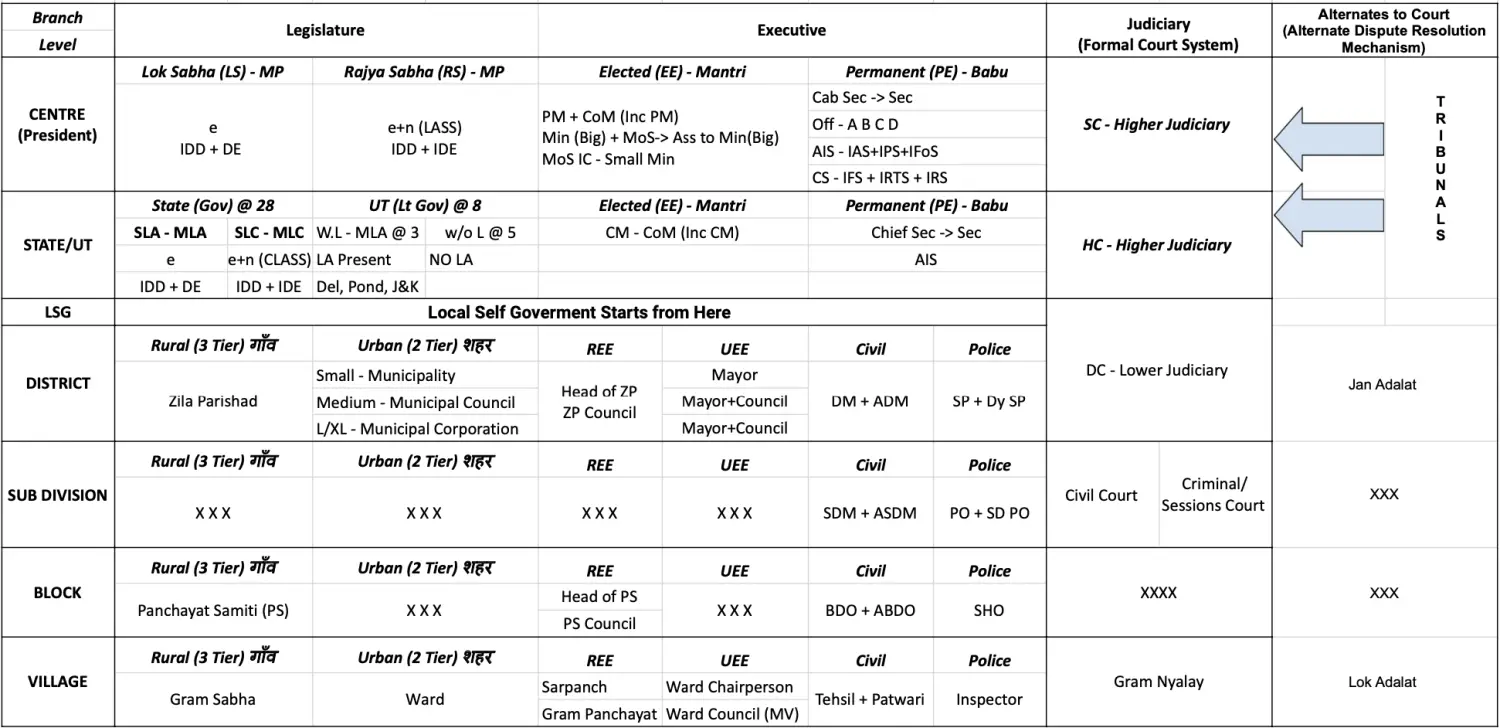
- Only State to be Demoted from State to UT - Jammu & Kashmir
- Daman & Diu and Dadar and Nagar Haveli - have been Combined
- In a World of 2 India
- You don’t choose the Village Parliament, You are the Village Parliament - Gram Sabha
JUDICIARY - INDEPENDENT & INTEGRATED
- Higher Judiciary - Collegium Process, by the Judges for the Judges
- Lower Judiciary (From District) - Recruited by State, Interview taken by HC Judges of State
Majorities in Indian Constitution 1
Analogy
- Batch of Students on 5 Aug = 100 - ABSOLUTE ATTENDANCE - Which Subject to Start with ?
- Withdrawn on 15 Aug = 20
- Effective Students = 80 - EFFECTIVE ATTENDANCE - Whether Teacher is Good or Not ?
- on 15 Jan 22 = Present in Class = 50 & ask u the question - Can we take 15 minutes Extra
- 20 - Didn't wanna Answer
- 30 - Wanted to Answer the Question - SIMPLE - PRESENT & VOTING -
Parliamentary Majority
Basic Rules
- Tougher Decision Requires Tougher Majority
- Parliamentary Majority is Who to Ask What Questions ?
Usage of Parliamentary Majority in ⇒ Part + Legislature
- State - 28 - SLA + SLC
- UT -3 - UT LA
Types of Votes
- Yes
- No
- Abstain - Present & Not Vote
- Why Allowed to Not Vote ? Explained by Example
- Ex - Voting of Farm Laws in LS
- You are a BJP MP from Punjab - You have Objection to Farm Laws
- Vote Yes - Proves Loyalty to BJP but Betray the Constituency
- Vote No - will uphold the trust of Constituency but BJP will be Betrayed
- Hence Solution is - Silence i.e Freedom of Speech is Freedom of Silence
- Example : China abstains from many votes in UNSC against Pakistan
- Example : Russia abstains from Many votes in UNSC against Iran/Iraq
Imp Note
All these Terms haven’t been used in the Constitution, it only puts down the Procedure
The above terms are our Innovation
Tough 💪 to Easy 😌 - Use More than 1/2 of Figure
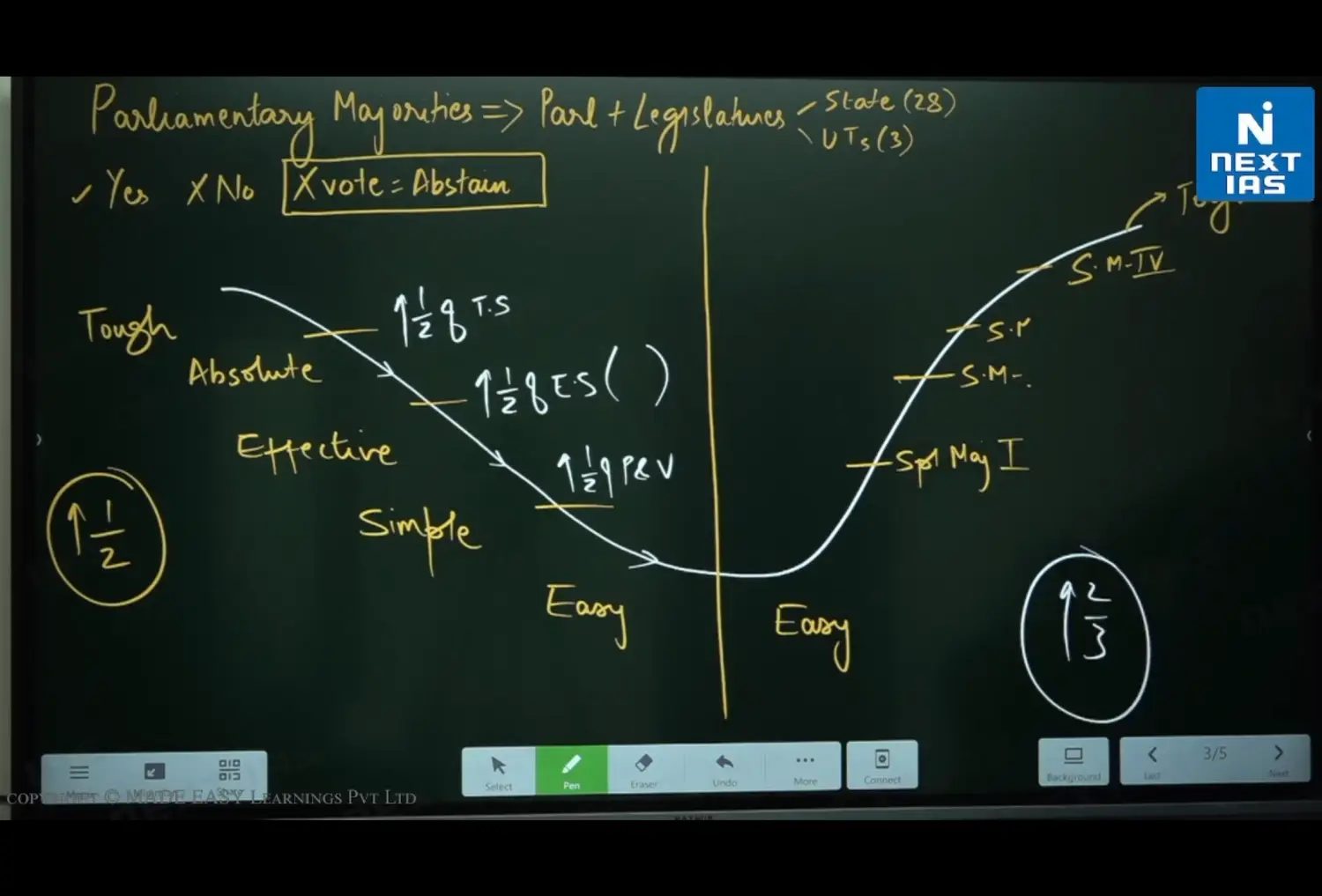
Note : Simple is Sub Set of Effective is Sub Set of Absolute Majority
- Absolute Majority - Political Majority
Used Only & Only to Establish Majority in Lower Houses, Hence used in Lok Sabha & Vidhan Sabha By Extension being used in Local Self Government
Figure : > 1/2 of Total Strength of That Specific House
Used at time of Govt Formation
LOK SABHA
- LS : > 1/2 * 545 = 273
- 545 → 543 ( Anglo Indian Nomination Removed )
- Whichever Party gets Majority in LS decide who gets to be the Minister ; that doesn't mean minister will be necessarily from LS it can be from RS
- Current Lok Sabha - 17th Lok Sabha 2019-2024
- BJP Coalition - NDA National Democratic Alliance but useless due to BJP having absolute majority of 303
- Effective Majority - To Remove Presiding Officers of Houses
- Presiding Officers
- LS - Sp + Dy Sp
- SLA - SP + Dy Sp
- UT - Sp + Dy Sp
- SLC - Sp + Dy Sp
- RS
- RS - Vice Chaiperson
- PARTIALLY REMOVE ONLY → RS - Chairperson ( VP of India
- Here Both Houses Participate
- First in RS Removed then LS Removed
- Effective Majority depends on Effective Strength
- Effective Strength = Total Strength - 3 ( Death+Disqualified+ Resigned )
- Feature : > 1/2 of ES(House)
- Example
- To Remove Lok Sabha Speaker
- Current Strenghth of LS - 543
- Dead MP - 20
- Resigned MP - 3
- Disqualified MP - 20
- Total DDR - 43
- Effective Strength ⇒ LS-DDR ⇒ 543-43 = 500
- Effective Majority = > 1/2 * 500 ; Hence Effective Majority is 251
- Presiding Officers
- Simple Majority - Jitne Aaye Hain Unse Poocho, Simple
- Used in All Houses - LS, RS, SLA, SLC, UT LA
- Purposes
- Pass Laws which are NOT Constitutional Amendments
- For all Parliamentary Motion
- No Confidence Motion - Koi Bhi Emotion Motion - Bas Notion Rahe Naam ke Saamne
- Hence, Simple Majority - Default Majority - If not mentioned then Default Majority it is
- Figure : > 1/2 of Present & Voting
- Absolute Majority - Political Majority
Easy 😄 to Tough 🤯 - Use More than 2/3 of Figure
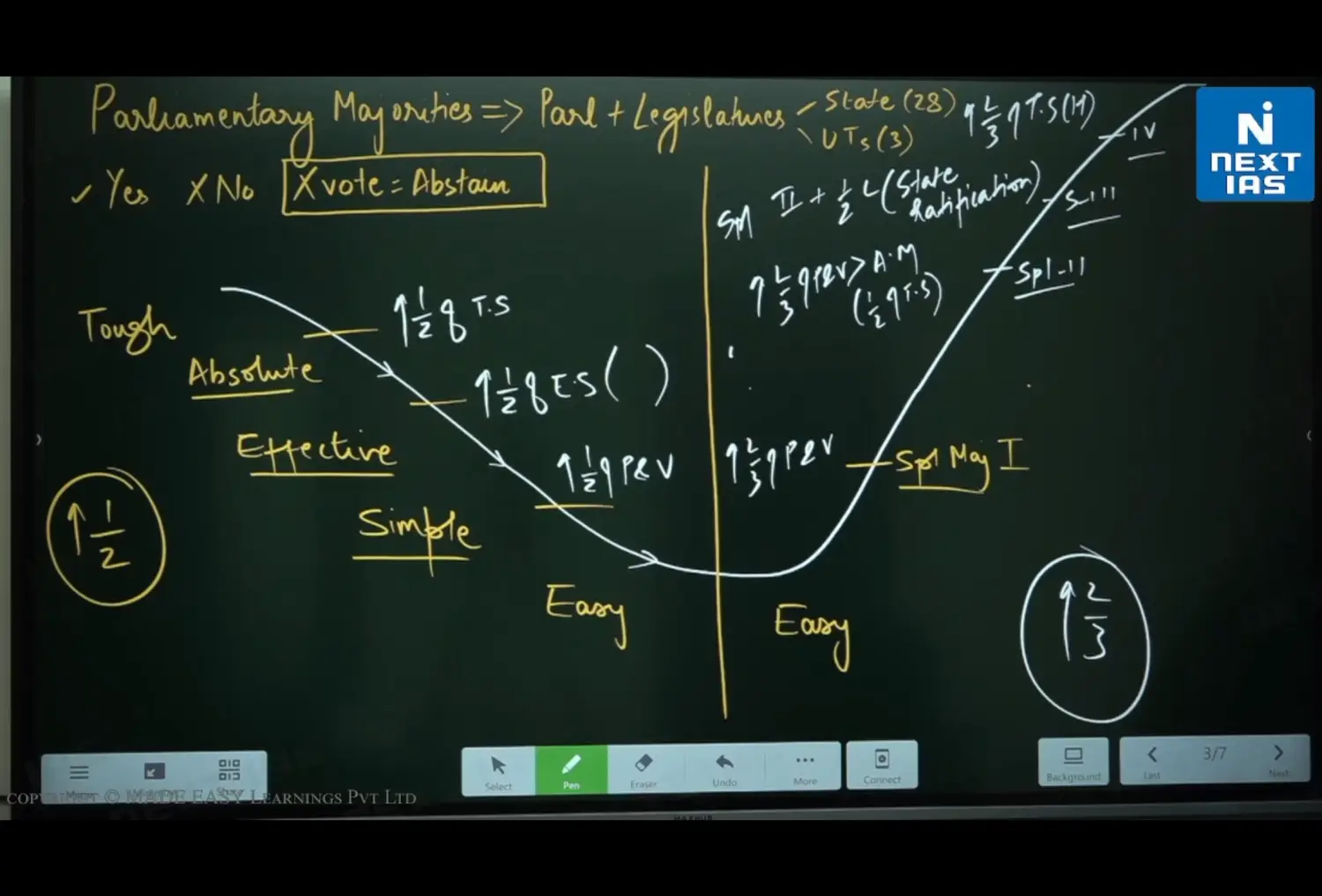
- using a Higher Fraction cause it is Symbolic that it will affect the
- Federal Structure
- Institutions
- CS Impact
- Functionaries
- Special Majority 1 - Resolution/Permission Majority
- Only in RS/SLA
- Resolution / Permission Majorities : colloquial term
- RS has some special powers like
- authorise the parliament to make a law on something that is state list
- add or subtract an all india service
- certain emergencies to approve
- Requesting SLC by State Govt
- RS has some special powers like
- Figure : > 2/3 of Present & Voting
- Special Majority 2 - Only in LS & RS
Only used in LS & RS ; not in State/UT
Usage :
- To Pass a Certain Type of Amendment
- To Remove Certain Functionaries
- SC Judge, HC Judge, CAG etc
Basic Funda : कम से कम इतना वोट तो आना ही चहिये
Figure :
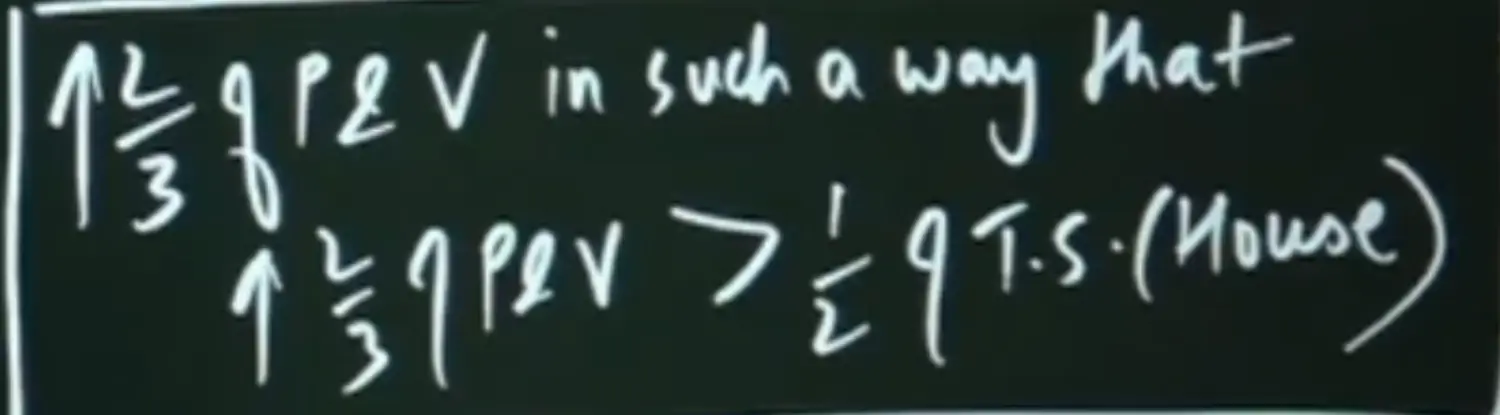
Example to Remove a SC Judge
Example 1 - Judge Not Removed
- Only Par LS/RS ( Separately will sit and do ) by Spl Maj 2
- LS Total Strength 545
- on 15 Jan 2022 : 360 MP Present
- Only and Only 270 MP - Have decided to Vote
- Other 90 - Abstain
- Hence P&V : 270
Special Majority 2 is :
- 2/3 of P&V = 2/3* 270 = 180
- this 180 SHOULD BE > 1/2 of TS of HS (LS) 545
- 1/2 of 545 - 273
- Hence 180 is not greater than 270
- Hence it will not pass
Example 2 - Judge Removed
- TS LS : 545
- MP Present : 500
- P&V : 480
- Hence > 2/3 of 480 = 320
- 320 > 1/2 of TS LS
- 320 > 273
- Hence Judge will be removed
- Special Majority 3 - Extension to Special Majority 2
- Only used for ONE PURPOSE - For a Specific Type of Constitutional Amendment
- Step 1
- Only & Only in LS & RS
- In LS - like Special Majority 2
- In RS - like Special Majority 2
- Once LS & RS SEPARATELY pass the Bill
- This Bill will be sent to all 31 Legislatures
- Only & Only in LS & RS
- Step 2 - Sate Ratification Process
- Across All SLA (28) inc UT W.L (3) = 31 Legislatures
- Out of these 31 Legislatures → 1/2 of these 31 i.e 16 Legislatures → will have to pass the same law using simple majority
- Special Majority 4 - Only in LS & RS
- used in LS & RS Separately ; not in State Legislatures
- Usage : Only & Only to remove Hon. President of India
- Figure : > 2/3 of that Specific House
- LS : > 2/3 of LS 545 = 273
- RS : > 2/3 of RS 245 = 123
- using a Higher Fraction cause it is Symbolic that it will affect the
Majorities in Indian Constitution 2
| Majorities | Remarks | Keep in Mind | | --- | --- | --- | | Simple | 1/2 of Present & Voting | How Many Pre & How Many Voting | | Absolute | 1/2 of Total of House | Remember Total Strength of RS & LS | | Effective | 1/2 of Effective (Total - Death Disqualify Resign) | How Many Death Disqualify & Reisgned | | Amend Constitution | Federal Strcuture NOT Altered NOT <2/3 of P&V) && (1/2+1 of Total Strength of Each HouseFederal Strcuture AlteredNOT <2/3 of P&V) && (1/2+1 of Total Strength of Each House&&>1/2 of State Ratification by Simple Majority | | | Impeachment of Prez | NOT <2/3 of P&V | |
Type of Majorities in India
Simple Majority
- Definition : It is the Majority of Members, Present as well as Voting
- You need to Know : How Many PRESENT ? && How Many VOTING ?
Absolute Majority
- Definition : It is the Majority of Total Membership of House
- Just Half of Total Strength + 1
Effective Majority
- Definition : It is the Majority of Effective Membership of the House.
- Effective Membership = Total Membership ( Strength of House ) - Vacancies ( Death Disqualify Resign )
- Total Membership = Total Strength of House
- Vacancies = Death + Disqualification + Resignation
💡 ***Absolute = Effective*** → when ***Vacancy = 0***Special Majority (4)
- Apart from above mentioned Majorities i.e Simple, Absolute & Effective Majorities. All other Majorities are denoted by a Common Name i.e Special Majority
- However, There are Different Types of Special Majority under Constitution for Different Purposes
- Constitutional Amendment - Has Two Conditions
- Condition 1 - There Should be a Yes by - NOT LESS than 2/3rd of Members Present & Voting
- Condition 2 - Absolute Majority of the House
- Example : Satisfying Both Conditions
- Total Members = 543
- Present = 500
- P&V = 450
- in Favour = 300
- in Against = 150
- Example : Not Satisfying Both Conditions
- Total Members = 543
- Present = 500
- P&V = 300
- in Favour = 200
- in Against = 100
- State Ratification Needed in Amendments which alter the Federal Structures of the Constitution
- Impeachment of President - Has One Condition
- Condition 1 - Yes by - NOT LESS than 2/3rd of Total Membership of House
- Example :
- LS : 2/3 of 543
- RS : 2/3 of 245
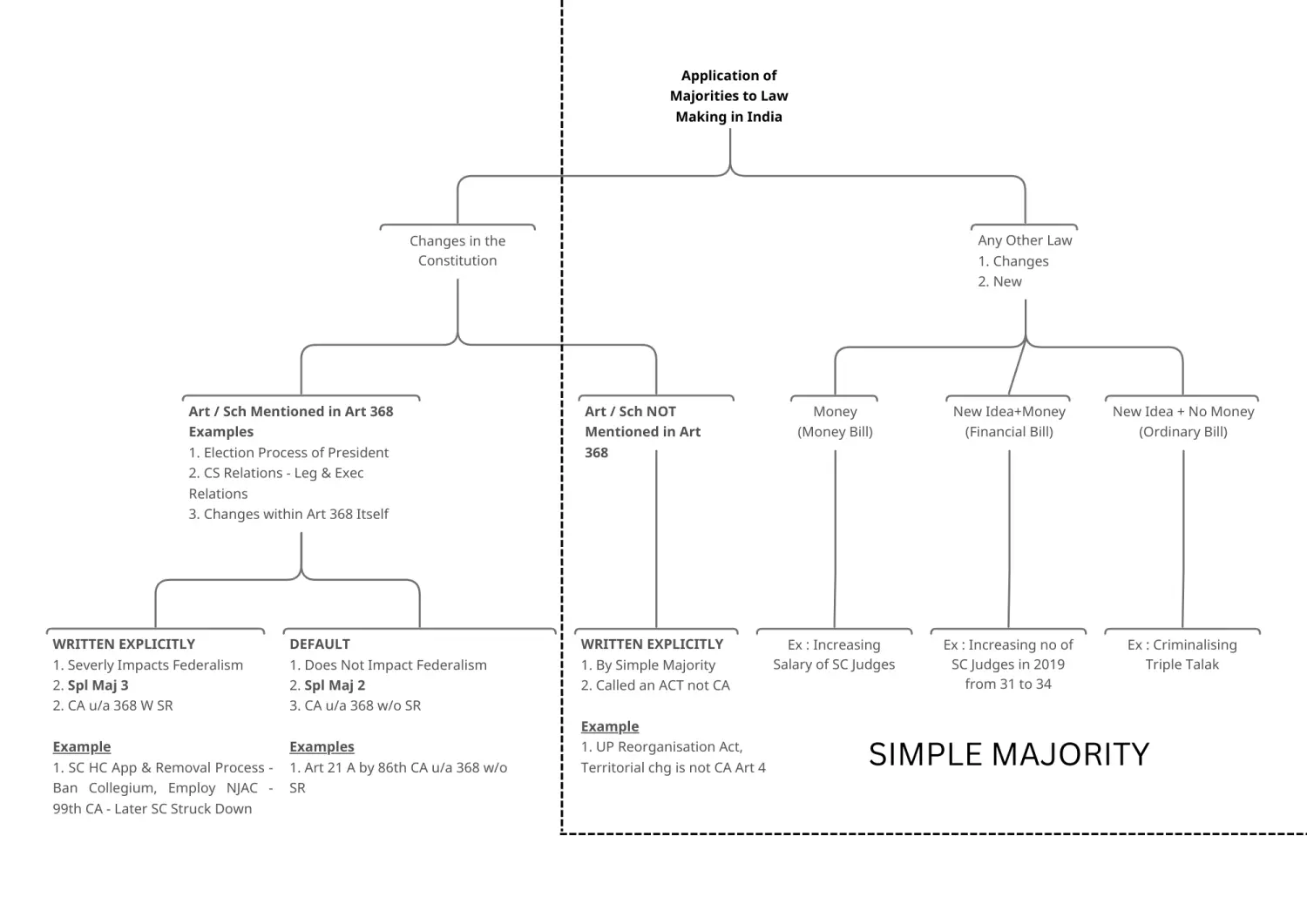
Application of Majorities to Law Making in India
There are only & only two kinds of Laws in India
List of Schedules
What is a Schedule
- Placed in Back of Constitution
- To Maintain Continuity & Organisation
- It is like a Appendix
Summary
Schedule 01 - States & Territories
Schedule 02 - List of Allowances Granted to Various Offices within Government of India
Schedule 03 - List of Oath for Various Dignitaries
Schedule 04 - List of Seats of Rajya Sabha
Schedule 05 - Protect Interest of ST Art 244(1)
Schedule 06 - Protect Interest of ST Art 244 (2) - North East 4 States
Schedule 07 - Union State & Concurrent List
- It Provides for 3 Lists
- It is example of Division of Powers
The Lists are
Union List - 100 - Power of Parliament
Defence, Home Affairs, Foreign Affairs, Insurance, Banking
State List - 61 - Normally within the Power of State Legislature
Police, Law & Order, Health
Concurrent List - 52 - Concurrent Power of Both Parliament & State Legislature
Forest, Wild Life
Total Subject Matters : 213
Schedule 08 - 22 Scheduled Languages of India
Schedule 09 - Safety from Judicial Review of Constitutional Amendments
Schedule 10 - Anti Defection Law
- Added by Second CAA
Schedule 11 - Panchayats Items
Schedule 12 - Municipalities Items
Part 20 (Art 368) - Amendment of the Constitution
Power & Procedure of Parliament to amend the Constitution
Some Important Questions
Who can Introduce a Bill ?
- Either a Minister
- Private Member
Do they have to take Prior Permission from President ?
No Not under Art 368
Do they have to take Permission from Chairman of the House ?
Yes, a Mere Formality
in LS : Speaker
in RS : VP
Can it be Introduced in any house ?
Yes, in either LS or RS
Types of Constitutional Amendments
- Bill tries to Amend - Non Federal Provisions - Doesn’t Change Power Balance b/w Centre & State
- Procedure
- Bill has to be Introduced (by any MP) - Subject Matter is to Amend the Constitution
- Introduced in & Passes to → LS/RS || RS/LS
- It should gain Special Majority
- </ 2/3rd Members Present & Voting
- Absolute Majority of House Needed
- President has to Give the Assent ( No Veto ) - It was made mandatory for the President to give assent to the bill by 24th CAA, 1971
- Procedure
- Bill tries to Amend - Federal Provisions - Changes Power Balance b/w Centre & State
- Procedure
- Bill has to be Introduced (by any MP) - Subject Matter is to Amend the Constitution
- Introduced in & Passes to → LS/RS || RS/LS
- It should gain Special Majority in both the Houses Separately
- </ 2/3rd Members Present & Voting
- Absolute Majority of House Needed
- Then it is Sent for Ratification by the State Legislature
- <1/2 of State Legislatures Accept it, its Enough
- i.e 28 States - 14 State Legislatures have to Ratify them
- State Legislature - Simple Majority
- State Legislative - Simple Majority
- President has to Give the Assent ( No Veto ) - It was made mandatory for the President to give assent to the bill by 24th CAA, 1971
- Example
- Art 246
- Schedule 7
- Procedure
- Bill tries to Amend - Non Federal Provisions - Doesn’t Change Power Balance b/w Centre & State
Basics of Polity & Indian Constitution
4 Golden Rules of Indian Polity
1 Democratic Mandate
- Mandate : Authority given to a Person to do something
- Analogy - Eligibility of Atish Sir to Teach Polity, is the Mandate of Atish Sir
- Rule Says
- in Order to Perform any advanced or higher democratic function one must have some form (direct or indirect) of a Democratic Mandate - Corollary also true.
- D(f) → D(m) && Corollary 0> XD(f)→ XD(m)
- Examples
- to be a Minister you have to be a MP - Simplest Application D(m)
- Either at time of becoming MP
- but within 6 months you have to be a MP either e/n && either in LS (IDD DE) / RS (IDD IDE)
- Example : Manmohan Singh, Arun Jaitley, S Jayshankar
- Rajya Sabha MP → elected by respective SLA → that SLA - SLA(MLA)e must be elected && SLA(MLA)n nominated not allowed
- Prez Elected by → (LS + RS + SLA)e → Nominated Members of RS & SLA & LS → DON’T Participate in a Presidential Election
- Ordinance Powers of Centre(Art 123) and State(Art 213)
- Ordinance is a Temporary Law drafted by Council of Minister Directly Sent to President for Signature when Parliament is not in Session
- The Term “Temporary Law” is the Application of Democratic Mandate
- CoM - Draft the Ordinance - in Absence of Parliament, CoM is the best Next Mandate
- President - because he has been democratically elected by LS & RS & SLA
- Advice & Suggestion given by Bodies like CAG etc → are NOT Binding → cuz they are appointed authority and not elected → Hence don’t have the mandate
- Even Recommendation of Parliamentary Committee → is NOT Binding → cuz it will violate the democratic mandate of Parliament
- to be a Minister you have to be a MP - Simplest Application D(m)
2 Federal Balance
- About Centre and State
- Analogy
- Family Dynamics → Younger and Elder Sibling → Indian Family Scenarios ELDER SIBLING (CENTRE) have the FR to Dominate YOUNGER SIBLINGS (State)
- Make a Face && Threaten to Parents → Toffee to make feel good → Superficial Condolence → Toffee Wrapper has Stones 😂
- Steps
- Step 1 : C > S ( Centre will do something to overpower the States )
- Step 2 : Candy to States to Compensate the States
- Step 3 : Hollow Candy (Hollow Appeasement)
- Examples - States ka Katna Tay Hai
- Territory
- C>S → All Territorial Rules power are with Centre and State has no say in the matter whatsoever
- Candy → President refers the Law to concerned State Legislature for their opinion
- Hollow Candy → Centre has to ask, but not bind to agree or implement their view
- State Legislative Council
- C>S → Parliament authorises the creation of SLC in the state
- Candy → Parliament can only create SLC, if State SLA has requested for a SLC (Special Majority 2)
- Hollow Candy → Just because SLA has asked, C will not give SLC to S.
- Ex : Sikkim asking for SLC since last 2 decades
- Ex : WB Bengal asking for SLC for safe passage for key functionaries
- All India Services - IAS + IPS + IFoS
- C>S
- Recruited and Removed by Centre but work for States & States pay for your training
- States didn't want this because they had their PSC with them
- Recruiting a Bunch of Officers and compulsory sending them to the states ; states don’t have the choice
- Candy → Increase / Decrease of AIS, LS can do it, but RS has to authorise LS for the same ( as RS is representative of states) & this will affect States as well
- Hollow Candy → Just because RS has said yes, its not sure if LS will accept it or pass it.
- C>S
- Appointment of Governor
- C>S : Recruited by (C) && Removed by (C) but Governor HAS to work at (S)
- Candy → as per constitution Governor has more discretionary powers than President
- Hollow Candy → Governor has been appointed by the president on advice of CoM but whenever governor uses his discretionary power against the Centre ; centre by means of president can remove him.
- Territory
Prelude to 3 & 4
Everybody believes that they are powerful - Origin of Separation of Powers (SOP)

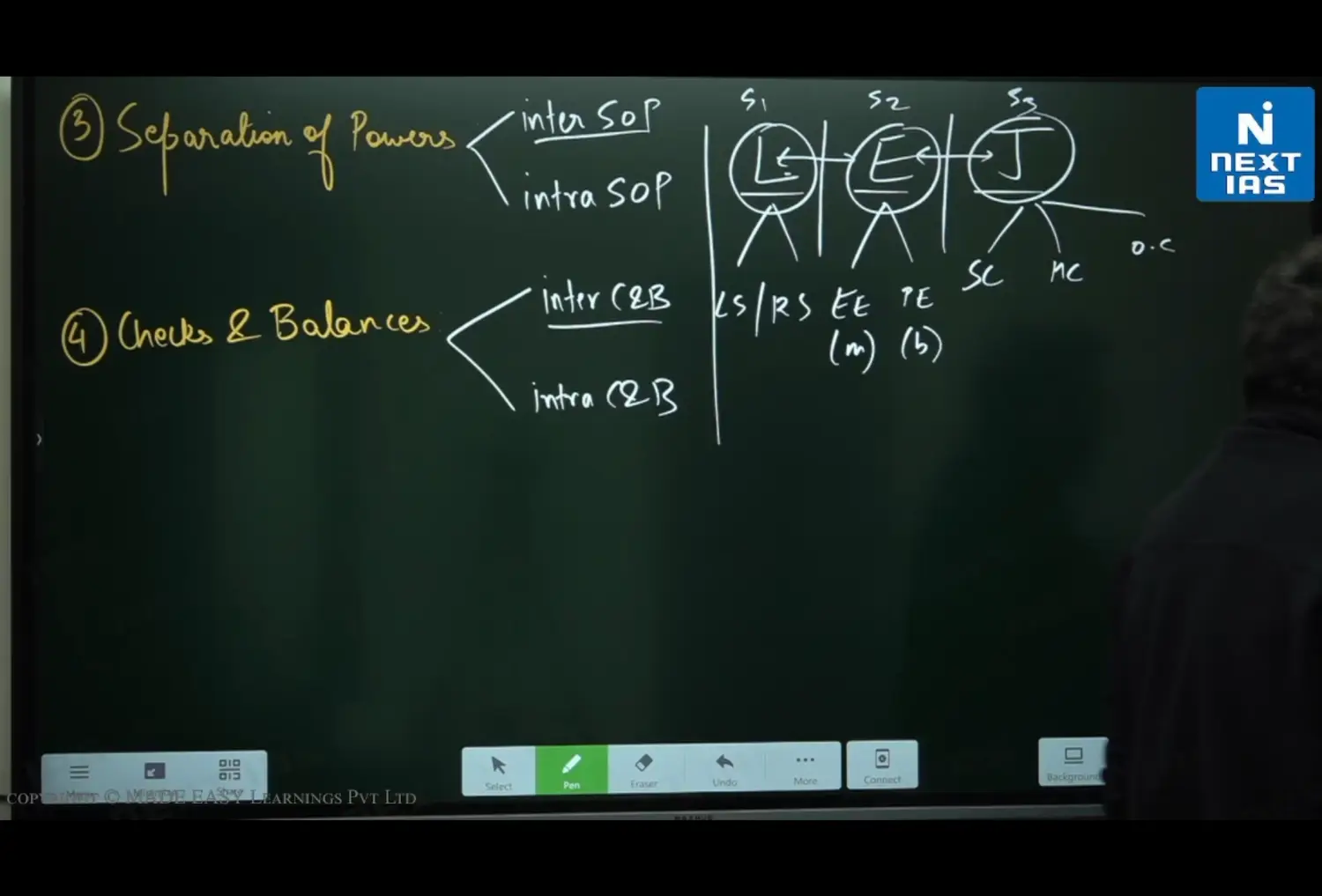
3 Separation of Powers (2)
- Inter SOP - Between L ↔ E ↔ J
- Conduct of Supreme Court Judge cannot be discussed on the floor of parliament
- Intra SOP - Inside LEJ → L (RS/LS) && E (EE-m && PE-b) && J (SC HC LC)
- Except for Ministers, LS & RS MP can only sit in the houses they belong
- Inter SOP - Between L ↔ E ↔ J
4 Checks & Balances (2)
- Inter C&B - Between L ↔ E ↔ J
- Supreme Court Judge can be removed only by Parliament
- Intra C&B - Inside LEJ → L (RS/LS) && E (EE-m && PE-b) && J (SC HC LC)
- Judgement of SC is binding on all Lower Courts
- Inter C&B - Between L ↔ E ↔ J
What is a Constitution
Countries, Political Parties, Corporates have Constitution
Constituion is Necessary but not Sufficient
A Constitution is the most basic but highest Law of the Land. All the Other Laws in the Country in order to be valid must be as per constitution.
A Constitution provides a framework for the Governance of the Country. It gives the structure of State, Its organs of state, their Functions, Powers and Limitation on these powers.
👨🏫 Organs of State Are- Legislature → Legislate Make Laws
- Executive → Execute & Implement
- Judiciary → Interpret Judiciary & Deliever Justice
A Constitution Establishes a Legal Relationship called Citizenship between State and Its People. A Democractic Constitution protects the Rights of Minorities. A Constitution for countries Like India is not just a Legal Document but also a Socio Economic Document because it contains the Values, Dreams and Aspiration of People of India
A Constitution Ensures that the basic values of a country are not threatened in moments of temporary passion.
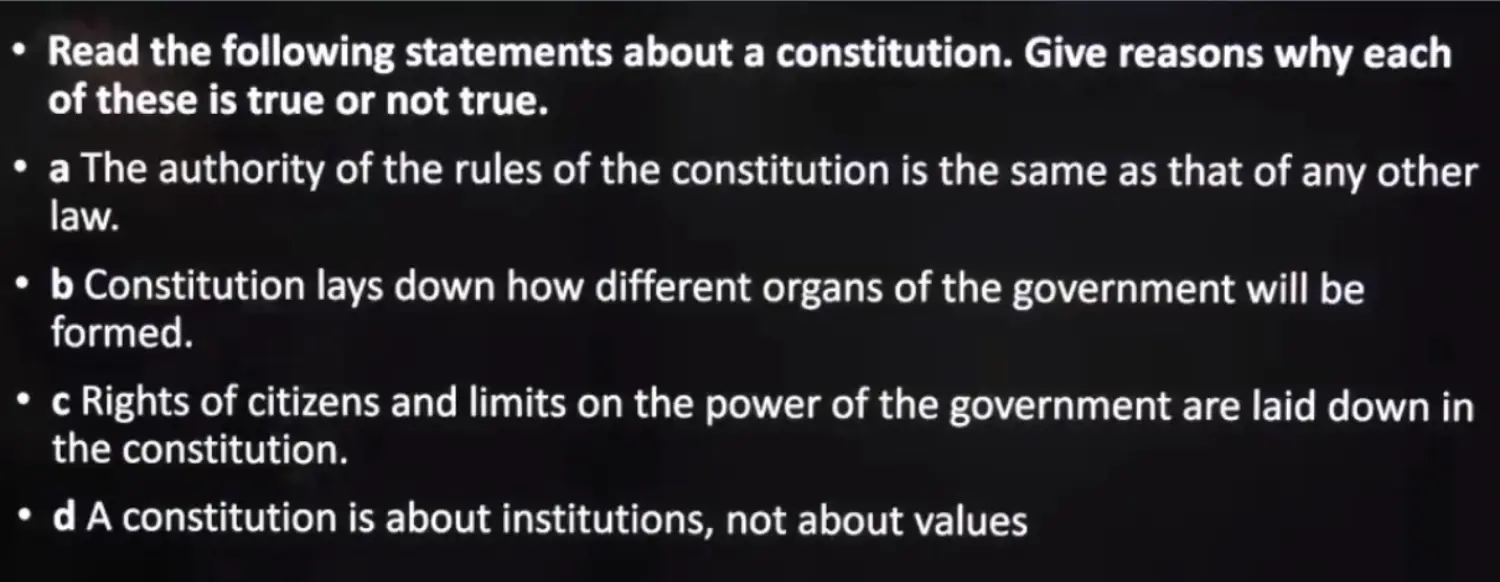
False - A & D && True - B & C
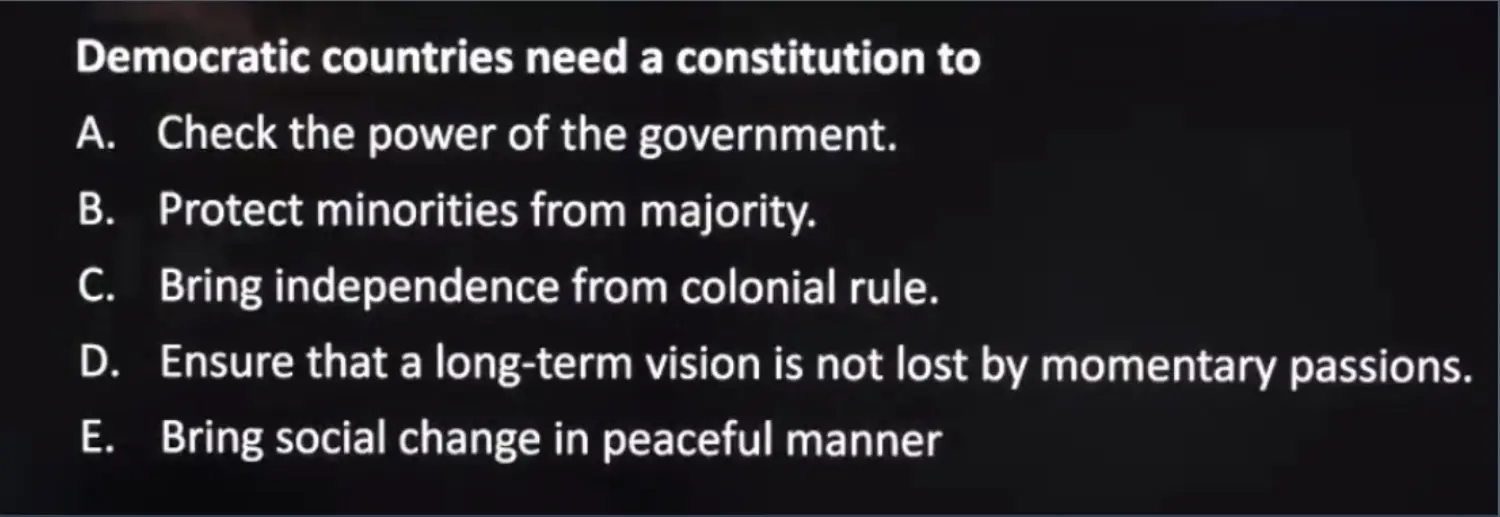
True - A B D E && False - C
Does having a Constitution Ensure Constitutionalism ?
It is more difficult to run a constitution than to frame one. Constitutionalism refers to the degree or extent to which a country is governed according to its constitution.
A country may have a written constitution but little constitutionlaism where as a country with unwritten constitution may have high constitutionalism
Written Constitution & Unwritten Constitution
An Unwritten Constitution is one whose provisions have not been codified into a Single Legal Document.
Example : UK, Israel, Newzeland
In India SC and HC by their power of Judicial Review Ensure that India has high levels of constitutioanlism
Judicial Review (from USA)
In India the Power of Judicical Review is Availaible Implicitly to SC in Art 32 and to HC under Art 226 but not to Sub Ordinate Courts
Power of Judicial Review Means the Power of Court (SC&HC) to declare any law policy or order (whether central or state) as null and void if it contravenes any provision of constitution to the extent of such contravention ( Jis Had Tak Galat Hai Sirf us had tak, not poora)
SC & HC → Can Declare Null and Void of both Parliament and State. Can be done Simultaneously in Both Together like one in CG and One in Delhi in SC.
When the court declares a Law as Null and Void it does not suggest any alternative or improvement
While Exersicing Power of Judicial Review the Courts Follow Following Principals.
👨🏫 Importance of ComprehensionWoman without her man, is nothing. Woman without her, man is nothing.
Principal 1
If a Law or Policy has Two Interpretations such that First Interpretation makes it constitutionally valid and the other makes it invalid, Judiciary Shall Consider first Interpretation and declare the Law or Policy as Valid
Thus the Presumption is in the Favour of Constitutionality
Principal 2
👨🏫 1. A Proposed Law is a Bill 2. A Passed and Assented(Prez) Bill is a Act 3. Acts come into force in India by Three Ways (Direct Assent, After “x” no of days, on the date specified in the Gazette of India)Manmohan Singh in power passed a Act called Whistle Blowers Protection Act, it read that it wil be implemented as in the date specified by Govt of India. Modi hasnt implemented yet
👨🏫 **Gazette** of Govt of India is like a Magazine of Govt of IndiaJudicial Review is not applied on the Laws and Rules which are not Operational
Principal 3
👨🏫 Suo Motu - Khud Se - By SelfExample: In IPC, 1860 && Sec 375, Sec 376
Generally SC or HC examine a Law or Policy for its constitutionality only on a petition or reference filed by someone and not Suo Motu
The Power of Judicial Review is Considered to be most Significant Power of Supreme Court w/o which court will not Enjoy Status and Prestige that it currently enjoys
Considering its importance SC decalred Power of Judicial Review as Part of Basic Structure of Constitution
What is a State ?
A State is a Poiticial Legal Term which refers to a defines Territory, Population, Govt and is Sovereign
The Terms Govt and State Should not be used Interchangebly. Govt is one of the components of State. because Govt is the Instrument to Govern the State. State is Permanent while Govt is Sub to Change.
Difference Between Nation and State from International Relatiosn
Democracy
- Cracy - Rule & Demo - People or Population
- It refers to a Political System in which people practise self rule. In Modern times, such a direct democracy is not practically feasible and therefore indirect or Representative Democracy is practised
- In this system, People elect their reprensetatives after every few years and these representatives then govern the country
- Merits of Democracy
- Citizens elect their Government.
- Citizens can change governments if unhappy with gocts policies, actions or inactions.
- Govt is accountable to the people.
- Govt works for welfare of people and hence a democratic govt is also called as a Welfare Govts
- Citizens Enjoy Basic Rights and Liberties
- Demerits of Democracy
Political & Policy Instability
Good and Bold but Unpopular Decision may not be taken. Ex: Reforming Reservation Policy is needed in India
Slow Decision Making
Minorities May be Ignored
In Democracy, there is no assurance that best persons come to power because citizens do not caste vote only on the grounds of merit
Democracy often goves Birth to Demagogues (A Political Leader is not Necessarily Leader but is good in Mobilising Emotions)
Theory of Separation of Power
Was Given by a French Philosophers Montesquieu
This Theory Proposes that the Powers of State should be divided into three distincy and separte organs
The Objective of the Theory is to Prevent Concentration of Powers and to prevent the state from working in Authortitarian or Dictatorial Manner
US was the first constitution to adopt this Theory
Constitution of India has also adopted this theory. However India being a Parliamentary Democracy this theory has not been adopted completely like that of US Constitution (Presidential System)
Art 50 (DPSP), which requires the state to separate Judicial Functions from Executive Office. Accordingly Parliament Enacted CrPC (Criminal Procedure Code), 1973 to separate Judicial Functions from District Officers.
However, District Officers still enjoy certain executive magisterial powers like
- Insepction of Jail
- Issuing Prhobitoty Orders under Sec 144 of CrPC
- Granting Parole to Prisoners (Parole is Temporary Leave from Jail)
Doctrine of Checks and Balances
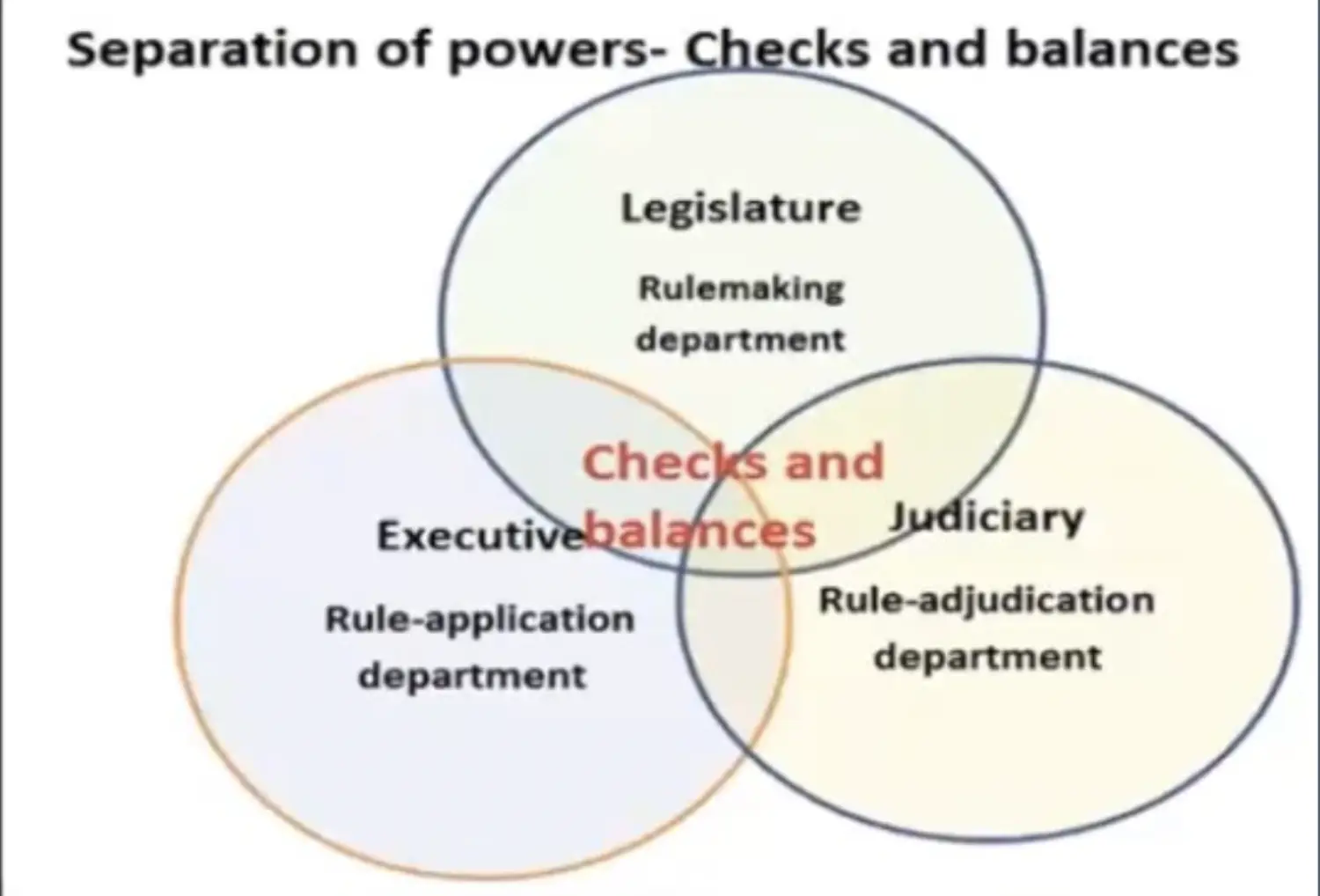
This concept is a Natural Extension of Concept of Spearation of Powers. It says that every organ of state must exersice, some checks and balances over other two organs of state
This ensures a Balance of Powers amongst three organs and that none of the organ oversteps its constitutional limits
Federalism
It is a Political System in which the powers of state are divided into two levels of govt.
First Level - Union / Central / Federal / National
Second Level - State / Region / Province / Canton (Switezerland)
Federalism is necessary in countries which are large and diverse, it allows people of different communities to stay together as a nation without the fear of one culture being imposed on others
Features of Federalism Are
Govt at Atleast Two Levels
Division of Powers and Functions between Levels of Government (Union List, State List, Concurrent List)
Division of Revenue and Taxation Powers
Independent Judiciary for the 29 states to resolve dispute between (State and State or State and Centre)
Apart from Lower House or Lok Sabha. There should be a Bi Cameralism → Upper House - Rajya Sabha (Ind) && Senate (USA) → For States Voice
A Written and Rigid Constitution
Federal Provisions cannot be amended by one level of government unilaterally
Constittuion of India does not use the word Federalism in Constitution, it is because of Centrifugal Tendencies Prevailing in Some parts of India at the Time of Independence
Art 1 Describes India i.e Bharat as a Union of States rather than Federation of States
Historical Development to Constitution
Regulating Act 1773 - COD & Central Administration
Philosophical
- The first step towards Central administration
- Political and administrative functions of East India Company was regulated, British Crown interference started
- To regulate the administration of the East India Company
Features
- Governor of Bengal (Warren Hastings) was made governor-general of Bengal + 4 members executive Council
- The Governor of Bombay and governor of Madras were made subordinate to him
- Supreme Court established in 1774 in Calcutta = 1 Chief Judge + 3 Judges
- The Court of Directors looked after revenue, civil, military affairs and reported to British Parliament/crown/government
- Ban on bribe and personal trade by East India Company officials
Amending Act of 1781 - SC Power
Supreme Court Jurisdiction
Supreme Court jurisdiction was removed
ON
- Governor general + his Council (in official capacity)
- Servants of East India Company
FROM
- Revenue matters
- Collection of revenue
Supreme Court jurisdiction remained in
- Inhabitants of Calcutta
- Muslims Sharia law
- Hindu Hindu law
Governor General Council Function Changes
Gov Gen of Ben + Council (4) - GG Council → make laws Hear Appeal of provincial courts
Pitt's India Act 1784 - Dual Government
- Dual Government was formed
- Commercial matters - Court of directors (COD)
- Political matters - Board of Control (BOC) - supervise and direct CMR affairs
- First time Sovereign authority of crown over EIC
- Dual Government was formed
Act of 1786
- Governor general had the power to override decision of counsel in special cases with his responsibility
- He was made the commander in chief of East India Company Army
Charter Act of 1793 - First Charter && GG Structure
- Governor generals overriding Council power extended
- Future governor general
- Governor of other Presidency
- Governor general of Bengal was given more power over governor of Bombay and Madras
- Trade Monopoly was extended for 20 years
- Commander in chief was not from governor general Council
- Board of Control fees and salary was to be given from Indian revenue
- Governor generals overriding Council power extended
Charter Act of 1813 - Transitionary Act && Ban on Monopoly
- Trade Monopoly in India ended Tea and Trade Monopoly with China remained
- Sovereignty of British Crown over EIC Territory
- Christian Missionary promoted to educate and awaken locals
- Western education was introduced
- Local government could authorise
- Impose tax
- Punish for non collection of taxes
Charter Act of 1833
- It was the first step towards centralisation
- Governor general of Bengal was made
- Governor General of India - William Bentick
- Was given
- Civil military power
- Executive legislative power
- Of legislative power of Governor General of Bombay and Madras was reduced
- Before and after charter act 1833
- Before - regulation
- After - ATS
- Company's commercial operation was ceased company was only administrative body now
- Civil services was made open to Indians but COD negative
Charter act of 1853
- Governor general Council function was separated into
- Legislative
- 6 Legislative Councillors Appointed
- 4 Indians From - Madras Bombay Agra Calcutta
- 2 Foreigners
- Indian Central Legislative Council similar to British parliament in London was made
- 6 Legislative Councillors Appointed
- Executive
- Civil services was made open to Indians by free and fair competition by Recommendation of Macaulay committee of 1854
- Legislative
- Companies rule extended by British Crown until further notice
- Governor general Council function was separated into
Government of India Act 1858
- Important points to note
- Government act
- Start of crown rule
- Just after the revolt of 1857
- Companies power over (civil military revenue) was removed, now it would be in the name of Her Majesty
- Governor general of India was made viceroy of India → Lord Canning
- Secretary of state was sent to India as
- Indian minister of parliament of London
- He was a member of British cabinet
- He was answerable to British Parliament
- SOS had his own 15 member Council
- Dual government was ended
- Important points to note
Sequence of GOI Act 1858, 1919, 1935,
Indian Council Act 1861
- Viceroy nominated Indians to viceroys Legislative Council, Indian inclusion was intended after revolt of 1857
- 1862
- Raja of Banaras
- Raja of Patiala
- Sir Dinkar Rao
- 1862
- Decentralisation took place
- Legislative power of Bombay Madras was restored
- Provincial Legislative Council was created
- Bengal
- Punjab
- NWFP
- Portfolio system was introduced in Viceroy council in 1859
- Ordinance power by Viceroy without concurrence of counsel was allowed
- Viceroy nominated Indians to viceroys Legislative Council, Indian inclusion was intended after revolt of 1857
Sequence of ICA 1861 of, 1892, 1909
Indian Council Act 1892
- Increased non official members in in Central and provincial legislative councils but not in majority
- Rights of Legislative Council was increased like budget decision they could ask question but not reject it
- Nomination to Legislative Council was introduced
- At Centre - by viceroy of India by recommendation of Bombay Chamber of Commerce provincial Legislative Council of state governments
- At state level by district board University and trade Association Zamindar noncommercial Chambers
- Indirect election was introduced to fill seats of centre and state legislative council
Indian Council Act 1909 - Morley Minto reforms
- Background
- Morley was Secretary of state
- Minto was viceroy of India
- Size of Legislative Council was increased
- Centre 16 to 60
- State - vary from state to state
- Changes in Legislative Council
- Central - retained official majority
- Provincial - non official majority was allowed
- Changes in Powers of Legislative Council
- Allowed supplementary question
- Allowed to move resolution on budget
- Indians in viceroy's executive Council was held at first person to be added was Satyendra Prasad Sinha as law member
- Separate electorate was introduced, this had two features
- Communal electorate
- Hence Minto is called father of communal electorate
- Communal electorate meant Muslim member of Council by Muslim voters
- This legalised communalism
- Communal electorate
- Background
Government of India Act 1919 - Montague Chelmsford reform
- Background
- SOS - Montague
- Viceroy - Transport
- It was introduced on 20 August 1917
- Relaxed Central Control over Provinces
Separate and Demarcated Subjects and Budget
DYARCHY - Centre & Province could make laws on their subjects
- Central
- Central List - GG + Executive Council
- Provincial
- Transferred → Gov + Minister of LC
- Reserved → Gov + Executive Council of Governor
- Central
- Bi-Cameralism was introduced - Majority Elected + Some Nominated
- Upper House - Legislative Assembly
- Lower House - Council of States
- Limited Franchise on Tax Education & Property
- In viceroy's executive Council 26 Indian compulsory other than commander-in-chief
- Communal electorate was extended to 6 Indian Christians anglo-indians and Europeans
- Office of high Commissioner of India in London was to share responsibility of SOS
- Public Service Commission in 1926 was established to recruit civil servants
- Statutory Commission to review working of government every 10 years was introduced
- Background
Simon Comission 1927
- Background
- 7 member committee under Sir John Simon came to India with no Indian representation
- Submitted report in 1930
- it was by quoted by all the parties in India
- Recommendations of Simon Commission are
- Abolition of dyarchy
- Extension of and establishment of responsible government in provinces
- Establishment of Federation of British government and state (to appease kings and Queens)
- Continuation of separate and communal electorate
- Also called
- It is called white paper on constitutional reforms - which is a joint select committee of British Parliament
- Lead to Round table conference between
- British Government
- British India
- princely states
- Most of its recommendation were implemented in Government of India Act 1935
- Background
Communal award 1932
- At this time ransom McDonald was the British pm
- It was a scheme for representation of minorities
- Provided for separate electorate for
- Muslim Sikh Indian Christian
- Anglo Indian and European
- Depressed classes ( SC / ST )
- Gandhi was against it
- Took a Fast in Yerwada jail Pune
- Led to Poona pact between Gandhi and Ambedkar
- Poona pact allowed to retain Hindu electorate reserved not separated seats to depressed class
- This was the starting of reservation in India
Government of India Act 1935
- Background
- It was just after World War 2 in 1939
- Mini constitution of India
- 321 section and tenth scandals
- It provided for
- All India Federation = provinces && princely state
- Power between centre and units (provinces && princely state) was divided into three part
- Federal 59
- Provincial 54
- Concurrent 36
- Power only with Viceroy
- Federation was abolished the princely states didn't agree
- Provincial autonomy was given by abolishment of dyarchy
- State would be autonomous units of Administration
- Governor woodwork with the advice of ministers of state legislature this was the responsible government suggested in Simon Commission of 1927
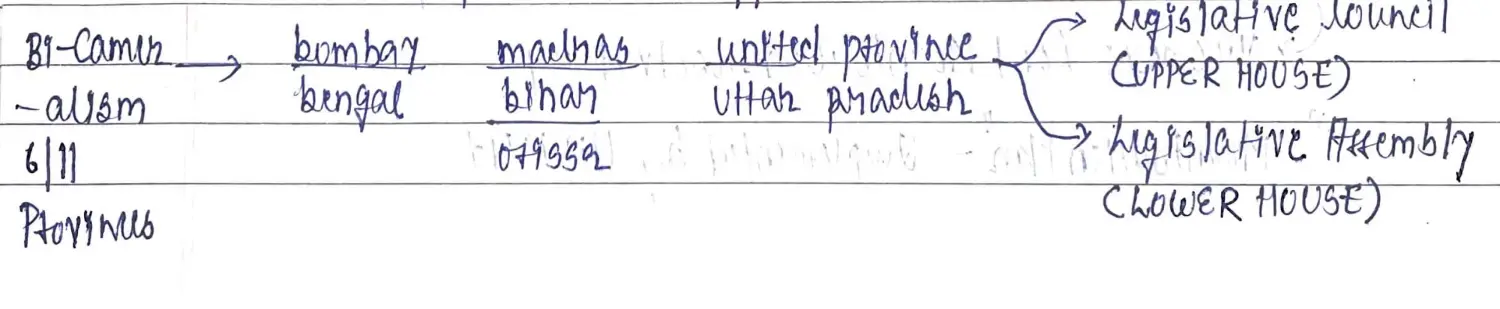
- Bi Cameralism in States
- Dyarchy at centre was launched but never started Federal subject for to be divided into reserved subjects and transferred subjects
- Communal representation extended from all minorities and SC to women labour workers
- SOS’s Council of India abolished which was established by government of India Act 1858 SOS was provided with team of Advisors
- UAF extended to 10% of total population
- RBI was given control over currency and credit
- 3 tier civil services was established
- Centre - Federal Public Service Commission
- 2 or More States - joint PSC
- 1 State - Provincial PSC
- Federal Court was established in 1937
- Background
Indian Independence Act of 1947
- Background
- Constant Assembly was established in 1946
saying that constitution kind applied to area not willing to accept
- On 20th February 1947 British pm Clement attlee said, British rule would end in India by June 30 1948 Muslim League protested in favour of partition
- Viceroy of India Lord Mountbatten resolve this by Mountbatten plan which was implemented by independence of India Act 1947
- Constant Assembly was established in 1946
saying that constitution kind applied to area not willing to accept
Features
- British rule ends in India India Pakistan would be independent sovereign countries from 15 August 1947
- Dominion status was given that is right to secede or stay from Commonwealth India was divided into two Dominions India and Pakistan
- Office of Viceroy was abolished governor general was appointed by British king on advice of dominance cabinet Mountbatten was first Governor General of India
- Secretary of state of India abolished secretary of state of Commonwealth affairs started They both had same work
- Constituent assembly of both the Nation was established to
- Enact any Constitution that they make
- Repeal any act of British including Indian Independence Act of 1947
- New Constitution was formed in India, constant assembly would do to work
- Legislate themselves for territories
- Headed by GV Mavalankar
- Make constitution
- Headed by Rajendra Prasad
- Legislate themselves for territories
- British rule ended in India → lapse of British Paramountcy, Britishers drop the title of king or emperor of India from Royal titles
- Princely states could join any
- India
- Pak
- or be Independent
- Background
Indian Political System
Meaning of Political System
- India being a democracy is an aspect of our political system
- Political Systems - A Formal / Legal / Constitutional Arrangement that constitutes the Government
- It also deals with Relationship of Government with Organs of the Country
How is Government Formed in India ?
- What are the Parts of Indian Parliament ?
- Lok Sabha - House of People - Direct Election @ UAF - 543 Seats
- Rajya Sabha - Council of States - 243 Seats
- Entire Country is divided into ?
- Entire Country i.e 28 States & 7 UT have been divided into No of Territorial States
- What is UAF ?
- Universal Adult Franchise
- Anyone who has attained the age of 18 has the right to vote
- Which is the Latets Parliament and Its Details ?
- 17th Lok Sabha Election (Popular Choice) : 2019 Elections
- Congress - Coalition - UPA - United Progressive Alliance
- BJP - Coalition - NDA - National Democratic Alliance
- 17th Lok Sabha Election (Popular Choice) : 2019 Elections
- What are the Parts of Indian Parliament ?
Key Features of Indian Political System ? (6)
💡 De PD SOP DOP FSUB IIJ1 Democracy
- Meaning
- Democracy is a Government which is elected for the people, of the people, by the people
- Means Rule of People by Representative
- Indian Democracy is Not Direct but Indirect Democracy
- India was chosen to be a Indirect Democracy because
- Huge Size of Nation
- Administrative Convenience
- Three Important Features for a Country to be called a Democracy ?
- UAF
- Universal Adult Franchise
- Every Citizen on Attaining 18 years of age shall have the right to vote without any discrimination
- Free & Fair Elections
- Process in which conduct of election is free from any from of corrupt practise & also provides an equal platform for all the candidates contesting the elections
- Ensured by Independent Authority to Conduct Elections i.e Election Commission of India
- Periodic & Regular Elections
- It also means that the elections happen at a regular interval as prescribed in the constitution
- In India normally the elections to both Parliament ( Lok Sabha ) & State Legislative Assembly happens every 5 Years
- UAF
- Meaning
2 Parliamentary Democracy
CRUX - PARLIAMENTARY DEMOCRACY
- Legitimacy of Executive (CoM + PM) is constantly & regularly accountable to Legislature (Lok Sabha && State Assembly)
- Continuous Accountability of Executive(PM/CM && CoM) to Legislature - They should always have Majority in Lok Sabha / State Assembly
- Example : India
CRUX - PRESIDENTIAL DEMOCRACY
- Process of Election in USA
- Electoral Collage : 100 Members will be elected by the People
- This Electoral Collage will elect the President
- USA Parliament is called as Congress
- House of Representatives - Lower House or the Lok Sabha
- Senate - Upper House or the Rajya Sabha
- Executive (President) is NOT accountable (meaning : to not have majority) to Legislature
- Once President is Elected, President has no Accountability to the Legislature
- Example : USA
💡 Meaning of being “Accountable” = To Have Majority In the HouseDEBATE IN CONSTITUENT ASSEMBLY
- Majority Chose Parliamentary Democracy because it is more accountable to the People
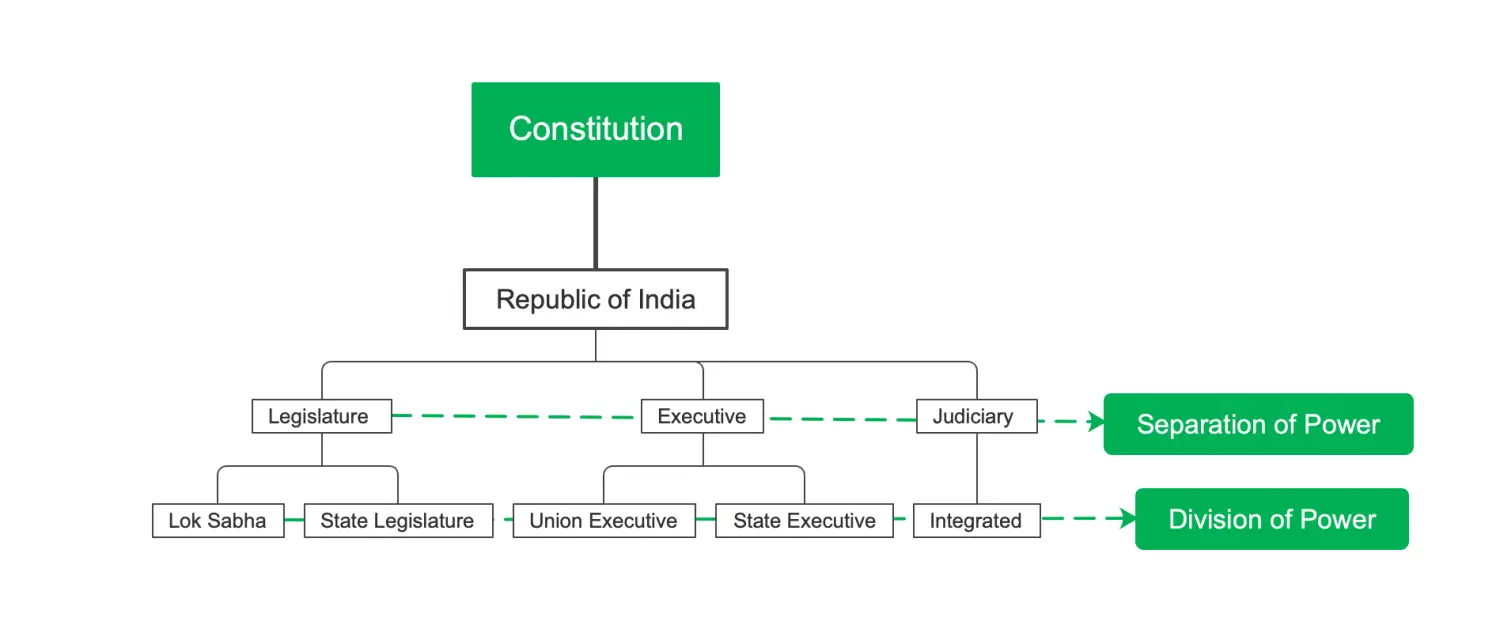
3 Separation of Powers - Inter Body - { Division between LEJ }
Prelude
- Essential Feature of Indian Political System
- Maxim : Power Corrupts but Absolute Power Corrupts Absolutely
Separation of Powers
Implemented by Checks & Balance of System
Three Important Systems
- Legislature - Making of Law
- Centre : Parliament
- State : State Legislature
- Union Territory
- With & w/o Legislature - President
- Executive - Implementation of Law
- Centre : Union Executive
- Political / Temporary Executive : Pres + VP + PM + CoM
- Permanent Executive : Central Deputed Bureaucrats
- State : State Executive
- Political / Temporary Executive : Gov + CM + CoM
- Permanent Executive : State Deputed Bureaucrats
- Centre : Union Executive
- Judiciary - Interpretation of Law
- Centre : Supreme Court
- State : High Court & Sub Ordinate Courts
- Power of Judicial Review & Interpretation
- If Judges Make Mistake : Parliament can remove Judges
- Legislature - Making of Law
SOP & DOP Mind Map
4 Division of Powers - Intra Body - { Division within LEJ }
- Prelude
- Also Called - Federal Political System or Decentralisation ;
- First Time in Government of India Act 1935
- Any Federal System in the World Follows : Division of Powers
- Federal Political System : DOP b/w C & S
- Multiple Levels of Government
- Union Government
- State Government
- Panchayati Raj
- Constitution DOP b/w C&S
- Central Govt - Unity Needed
- Defence
- Insurance
- Banking
- Citizenship
- State Govt - Regional Diversity Needed
- Agriculture
- Health
- Sanitation
- Police
- Central Govt - Unity Needed
- Prelude
5 Federal System with Unitary Bias
What is Federalism ?
- Powers of the Government are divided at multiple levels- Centre, States
- Union has its Legislature (Parliament), Executive(Centre & State)(Permanenet & Temporary)
- Federal Political System is one which has a division of Power between Centre & State
What are the Essential Features of Federalism ?
- Dual Government
- Distribution of Powers
- Supremacy of Constitution
- Rigidity of Constitution
- Independent Judiciary
Where is Federalism Suitable for ?
- Federalism is suitable for a plural society with multiple cultures and multiple language speaking populations.
- It is more democratic in nature and facilitates people participation
- Checks the powers of the government—checks abuse of power.
- Federal Government can absorb some of the costs of new technology or programs that would have to be absorbed completely by member units in a unitary system.
Is India a Federal Polity ?
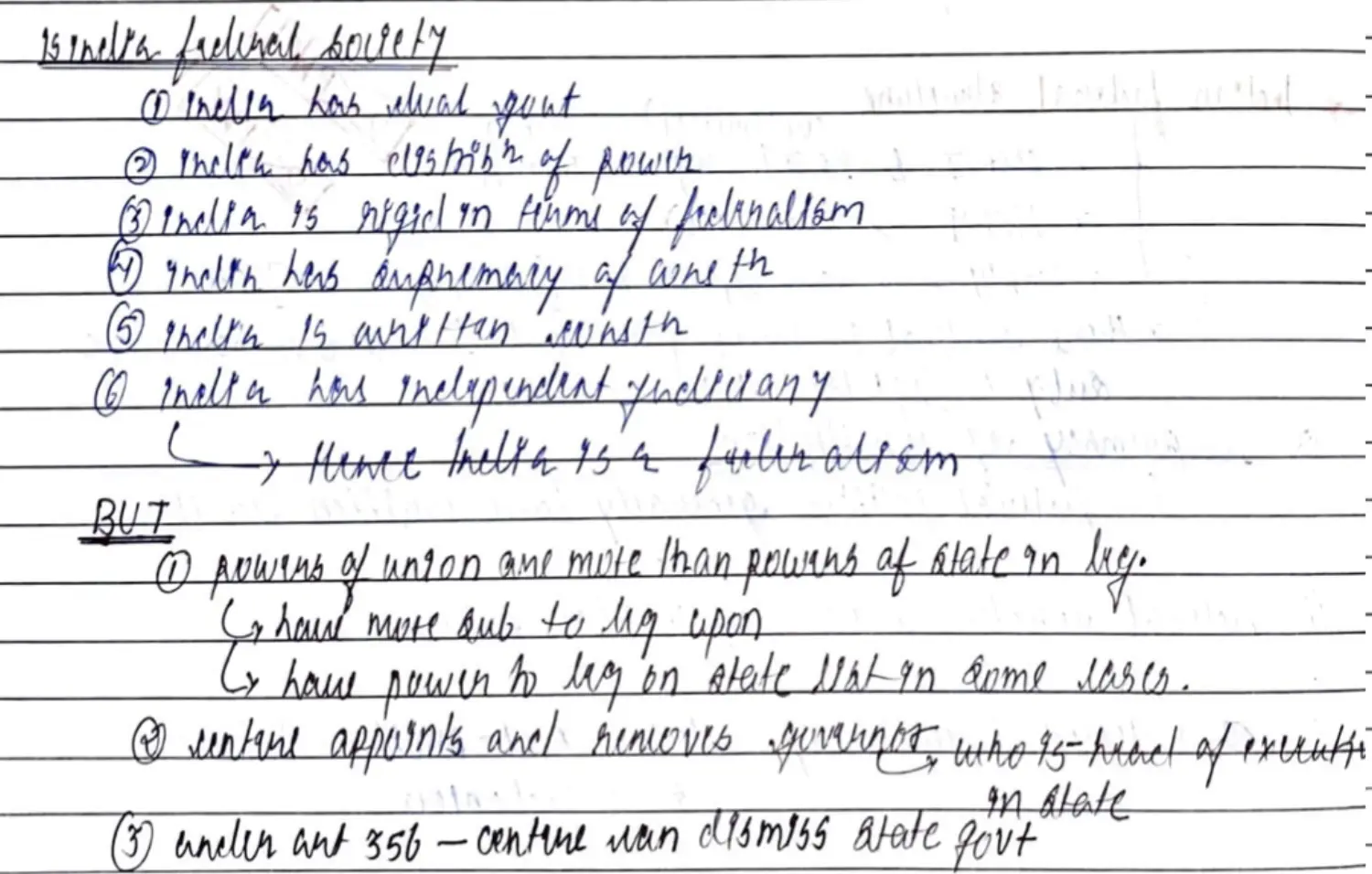
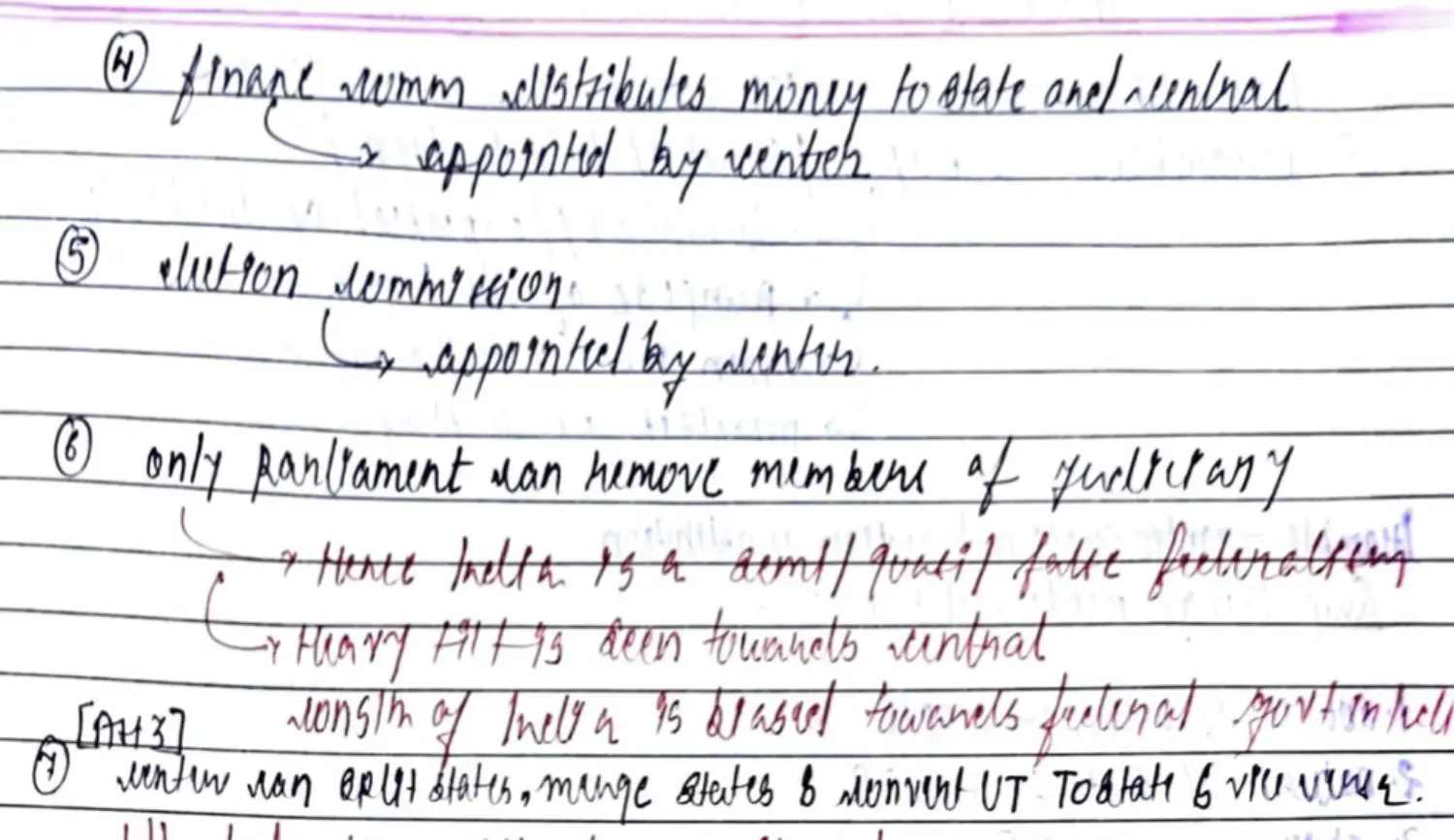
Why India Chose a Federalism with Unitary Bias ?
- Federal System - To Accommodate Diversity
- Unitary Bias - To Prevent Balkanisation of India
Federalism with Unitary Bias is Called ?
- Federal System with Unitary Bias
- Federation with Centralising Tendency
- Quasi Federal System - by K C Wheare
Ambedkars View on Indian Federalism
6 Independent & Integrated Judiciary
- Independent Judiciary
- Enough Mechanism in Constitution that insulate Judiciary from Influence of Legislature & Executive
- Once Judges are appointed it becomes extremely difficult for legislature & executive to remove a supreme court judge
- Since Constitution has been made, no judge has been removed
- Integrated Judiciary
- Judgement Given by SC is binding upon all HC & Sub Ordinate Courts
- Judgement Given by HC is binding upon all Sub Ordinate Courts of that state
- Judgement by a HC is not binding on other HC, It does not have a Binding Effect but a Persuasive Effect and a Precedence Value
- Extra Judicial & Quasi Judicial Bodies
- Tribunals with some role of Executive
- Independent Judiciary
Indian Constitution
Constitution
Why do we need to have a Constitution ? - BR, SoG, Lim of Pow, Obj Ach
- Prelude
- To Accommodate Diversity - Different Aspirations & Demands
- To Solve the Conflict of Interests
- Basic Rules by Constitution - to MINIMISE the conflicts in Society
- Basic Rules Facilitating Co Ordination amongst People
- Basic Rules : Doesn’t Have minute Information of All Small Rules
- Example : Constitution Provides for Safeguarding rights of Minority & oppressed class, each and every sections of society is protected
- Define Structure of Government
- by Democracy implemented by Elections
- India is a Parliamentary Democracy
- Not a Presidential Democracy
- Limitation of Powers
- to prevent the Government to become Arbitrary
- Meaning of Arbitrary : not seeming to be based on any reason or plan and sometimes seeming unfair
- How ? : by Conferring rights on the people → Especially Fundamental Rights
- Enables the State to Achieve its objectives
- Prelude
How do we define the Constitution ?
Definition
Constitution is the Fundamental Law of the Country which lays down the Basic Structure of the Political System having a special sanctity under which its people are to be governed.
Image of Constitution
Why is it called a Fundamental Law or Supreme Law ?
Other Laws in the Country have to be in Congruence or Consonance with the Fundamental Laws
Other Laws - Ordinary Laws - can be made by
- Parliament
- State Legislature
Why Constitution Chose Democracy ?
- The Welfare of People is Supreme
- People Should be Centric in the Governance
What is the Definition of State ?
An Independent political entity occupying a defined territory, the members of which are united together for the purpose of resisting external force and preservation of internal order and the state needs certain instruments or organs to carry out its function
What are the Major Functions of Indian Constitution ?
- To provide a set of basic rules that allow for minimal coordination amongst members of a society
- To define who has powers to make laws and enforce them i.e organizational framework
- To set some limits on what the State can impose on its citizens
- Reflects the ideology and philosophy of a Nation-State
- Provide for its own amendment provisions
How the success of the constitution could be ensured?
- A Constitution Should be drawn by those people who have credibility, are popular, and represent various sections of society
- A law that has something for everyone
- Should have constitutionalism
- Should be followed and respected
- Should be rigid yet flexible
What is Constitutionalism ?
- Constitutionalism is specific limitations on general State powers to prevent the exercise of arbitrary decision-making e.g. Gaddaffi constitution did not have constitutionalism.
- To ensure the success of democracy it is important that there is a limitation on the powers of the state
- Limitation on the Arbitrary Action of State & Tyranny of Executive
How does Rule of Law Help in Ensuring Constitutionalism ?
- For constitutionalism, the Constitution should be adhered to and followed
- The primary meaning of the term rule of law is that everything must be done according to law
- Two principles
- Everyone should be equal in the eyes of law
- No one is above the law
Salient Features of Indian Constitution (9)
1 Written Constitution
- Written Constitution
- What are the Characteristics of a Written Constitution ?
- Codified into a Single Document ( Can be in more than one Document )
- But whatever has been codified, only that will be called and used as a Constitution ; nothing else than that
- there is a clear distinction between constitutional text and ordinary laws ( IPC, CrPC, Consumer Protection, Motor Vehicles Act)
- There is a Specific time of Enactment and Adoption & Changes Organically with time but not so frequently ( Combination of Rigidity & Flexibility )
- Example : India
- Indian constitution is the lengthiest constitution
- Commencement : 395 Art ; 22 Parts ; 8 Schedules
- Currently : 465 Art ; 25 Parts ; 12 Schedules
- Example : USA
- What are the Characteristics of a Written Constitution ?
- Un Written
- What are the Characteristics of a UnWritten Constitution ?
- It is codified and written but there is no separate document as a constitution
- All the Laws Passed by Legislature, Conventions Followed by Country & Judgements Passed by Supreme Court becomes a part of constitution
- There is no distinction between Constitution & Ordinary Laws
- There is no Specific Time of Enactment and Adoption and It involves Changes but Very frequent ones
- Example : British, Israel & Newzeland
- What are the Characteristics of a UnWritten Constitution ?
- Written Constitution
2 Drawn from Multiple Sources
Summary
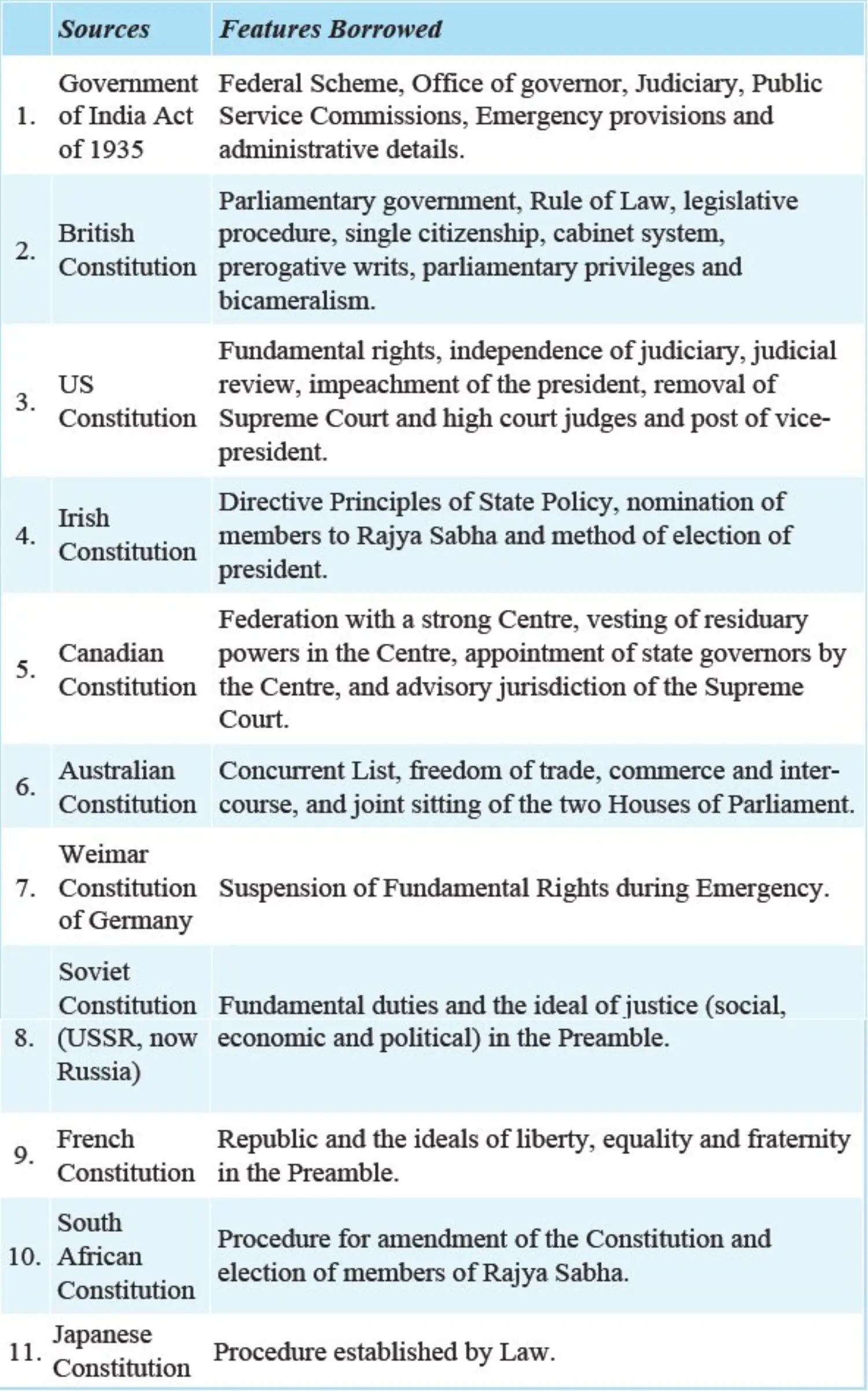
Details
Indian constitution was made after deep study of various existing constitutions of the world.
Criticism that it is a borrowed constitution. But Ambedkar refuted this statement. becasue Indian constitution was made at a time when allmost many countried had their own constitution
USA
Fundamental Rights, Concept of federalism, Independent Judicial system, bicameralism
British
Parliamentary democracy, Westminster model of Government, the idea of single citizenship, the institution of the speaker, the concept of rule of law.
German constitution
Emergency provisions.
South Africa
Procedure for amendment of Indian constitution, Election of Rajya Sabha members
Irish Constitution
DPSP, Nomination of members to Rajya Sabha.
Soviet Union
Fundamental Duties
Australia
Free commerce and trade between the states, Article 253- the power of the Union to legislate on state subject in order to keep up India’s commitment at the international level.
France
values of liberty, equality & fraternity.
Canada
A form of federalism(strong centre), the concept of residuary powers with the centre.
3 Lengthiest Constitution of the World
Indias Constitution is the Lenghtiest Constitution of the World
- Single constitution for the centre and states
- Huge diversity is prevalent
- Principles of administration have also been provided in the Indian constitution.
- Positive directions have been given to the state
Facts
- Indian constitution is the lengthiest constitution
- Commencement : 395 Art ; 22 Parts ; 8 Schedules
- Currently : 465 Art ; 25 Parts ; 12 Schedules
3 Rigid & Flexible
- How Easy / Difficult is it to change/amend a constitution
- To Change / Amend : Article 368
- Latest Amendment : 105th CAA occurred in 2022
- Contrary to this USA Constitution has been Amended 33 times only
4 Fundamental Rights Part 3 12-35
Whats is the Meaning of the Word Rights ?
Rights are Entitlement, Privileges or Normative Fundamental Rules of what is allowed of people
Why are the Rights Given ?
- Prevents Arbitrary Actions by State - Majorly Against the State
- Prevents Arbitrary Action by Citizen as well - Very Less are Against the State
What is the Top Most Rights ?
- Fundamental Right is the top most right of India under Part 3 ( Art12 - Art35) of the constitution
How are they Justiciable ?
They are Justiciable in
- Supreme Court under Art 32
- Difference : 194
- High Court under Art 226
5 DPSP Part 4 36-51
- Directive means Guidelines
- Present Under Part - IV (Art 36 - Art 51 )
- These Guidelines will lead to Welfare of State
- It has been Purposefully made Non Justiciable
- Moral Obligation - Duties of State
6 Fundamental Duties Part 4 A 51 A
- Mentioned in Part 4 A of the Constitution
- Art 51 A deals with it
- There are in total 11 Duties
- 10th FD were added by 42nd CAA, 1976 under PM Indira Gandhi ; It was time of Emergency in India
- 11th FD was added by 86th CAA of 2003
- These FD are Not Punishable
- These are moral obligations to citizens i.e., Duties of Citizens
7 Secular State
- In India, the State will never Identify itself with any one particular region
- The State will promote & provide equal opportunity for all religion
- State is Non Religious & State Promotes All Religions Equally & there shall be no Discrimination on the basis of Religion
- Concept of Positive Secularism
8 Single Citizenship
Which are the Countries that Allow Dual Citizenship
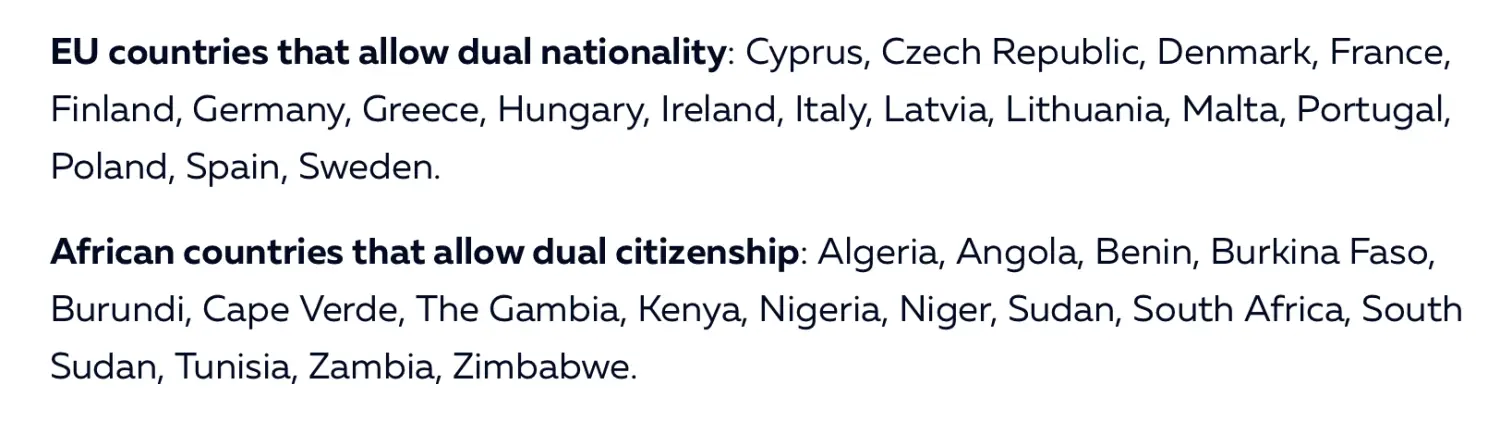
- Constituent Assembly Debated, Dual Citizenship will go against Fraternity & Brotherhood
- Local Identity of State would prevail over National Identity
- Idea of Single citizenship is to promote Unity and Integrity of Nation
9 UAF
Whats is the Meaning of Franchise ?
Franchise Means : the right to vote in elections
- It is Essence of Democracy, There shall be no discrimination on any basis
- Every Citizen above the Age of 18 has the Right to Vote
- Right to Vote was mentioned in Articles - 325 & 326
- At the commencement of Constitution, the age for UAF was 21 years
- With 61st CAA, 1988 , the age was reduced to 18 years
10 Federal Government
- Whats is Federalism ?
- Two or more levels of Government- Central level and state level
- Both the Union and State derive power from constitution
- Presidential form of government- Eg: USA
- Parliamentary government- Westminster Model- Eg: UK & India
- Essential Features
- Dual Government
- Distribution of Powers- Separate spheres of functioning. Eg: 7 Schedule-Union List, State List, Concurrent list.
- Residuary subject-In India more power to the centre
- The supremacy of the constitution
- The rigidity of the constitution
- Independent judiciary
- Benefits of federalism
- Federalism is suitable for a plural society with multiple cultures and multiple language speaking populations.
- It is more democratic in nature and facilitates people participation
- Checks the powers of the government—checks abuse of power.
- Federal Government can absorb some of the costs of new technology or programs that would have to be absorbed completely by member units in a unitary system.
- Is India a federal polity?
- India has a dual government(division of powers), Supremacy of the constitution, Independent judiciary, etc.
- In matters of federalism Indian constitution is rigid, but flexible in most others.
- Reasons for criticizing India's federal setup:
- The powers of the union are more than the state in the legislative domain.
- In certain exceptional instances, the Union can legislate on state subjects as well.
- Article 356- Gives power to the centre to dismiss the state government
- Finance commission- Appointment made by the Central government
- Why choose a federal setup with strong unitary bias?
- Secessionist tendencies at the time of independence made it imperative to have a strong centre to maintain the unity and integrity of the country.
- External threats. Eg: Pakistan
- We require uniformity in policies to address major issues facing the country. Eg: Poverty, literacy, etc.
- Whats is Federalism ?
11 Responsible Government
Executives are responsible to the legislature
12 Independent & Integrated Judiciary
India is a Unique Example of : ”Reconciliation of written constitution with parliamentary sovereignty”
Salient Feature of Indian Constitution from Laxmikant
Constituent Assembly
Facts from Laxmikant - PDF Form
Introduction
- Cabinet Mission Plan ( Pethick Lawrence, Stafford Cripps, A V Alexander )
- Pethick - Minister in British Parliament
Chronology
- First Sitting : 9th December 1946
- Objectives Resolution : 13th December, 1946
- Constitution Ready by : 26th November 1949
- Came into Existence on : 26th January 1950
Composition & Scheme
British Provinces (292) → Indirect Elections from Provincial Legislature Limited Adult Franchise ( Education Status, Tax Paying Capability, Property Holding)
💡 Limited Franchise : T E P → Tax Education PropertyPrincely States (93)→ Nomination by Head of Princely States
Commisioner Led Provinces (4)→ Nomination by the Commissioner
Total Seats = 389
What will be Basis for Seat Allocation Basis ?
- Representation in Proportion to their Population ( General Community / Muslims / Sikhs )
- For 1 Million Population i.e 10 Lac People : 1 Representation
- Members were chosen indirectly by the members of the Provincial Legislative Assemblies
Enactment & Enforcement
- Objectives Resolution : Dec 13, 1946
- Moved by Jawaharlal Nehru
- Need : To provide framework/guideline/limits on which constitution of India should be made
- It was the expression to the ideals and aspirations of the people of India and so the objectives of the Constitution.
- Later became Preamble of India
- Debates on
- Each & Every Fundamental Rights
- Committees
- Drafting Committee
- Facts
- Articles : 395
- Parts : 22
- Schedules : 8
- Objectives Resolution : Dec 13, 1946
This body continued till the first Parliament was elected in India
The Preamble
Summary from Laxmikant
The Preamble
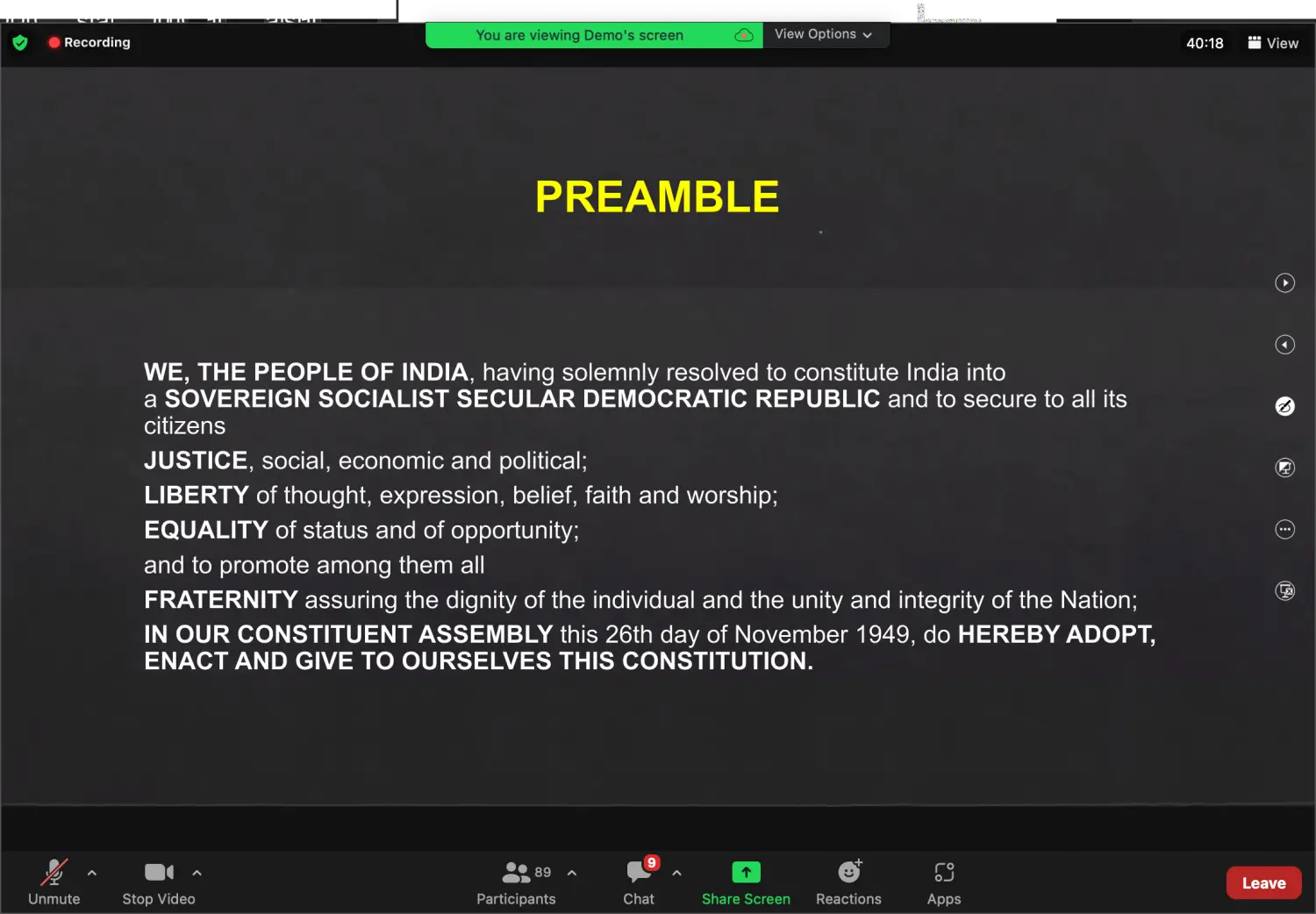
Also Called & By
- To Summarise Philosophical Aspects
- Identity Card of Constitution
- Supreme Court
- Key to unravel the Minds of Makers of Constitution
- Preface of the Constitution
We the People of India
- Source of Authority
Characteristics of State / Nature of Indian State
- Sovereign
- Full Control over the people, property & territory and also free to conduct internal & external affairs
- India can chose its friends
- Is full sovereignty possible in a Globalised World ?
- Theoretically Yes
- Practically No
- Socialist
- Whats is Socialism ?
- Social Ownership of Property & against private ownership
- Ownership of Production by the Government, so that the redistribution is easy
- What type of Socialism is followed by India ?
- India follows Democratic Socialism i.e Mid Way
- Essential for majority of masses especially poor State Holds & Provides for Example : Railways
- Not Essential or may be used by the Rich State Privatises & Promotes Public Sphere of PPE Example : Air India
- India follows Democratic Socialism i.e Mid Way
- What are the Pro Socialist provision in Constitution & Indian Polity ?
- Public Sector Union
- Nationalisation of Banks
- Social Sector Schemes
- Abolition of Privy Purse by Indira
- Why was a Socialistic Nature Adopted for the Constitution ?
- Economic Inequality
- Land Ownership Inequality
- to promote Egalitarianism
- What was the view of Ambedkar on putting the word Socialist in the Preamble ?
- DR B R Ambedkar opposed the introduction of this word in the constitution
- He said so because
- It is today in 1947 that due to inequality socialism appears good
- but tomorrow when society develops socialists ideology would become obsolete
- by putting it in constitution, it makes it permanent & thus takes away from the masses their choice of type of social, economic & political system they want
- Whats is Socialism ?
- Secular
What is the Meaning of Secular
- State is Non Religious in Character.
- State has No Official Religion
Differences between Indian & Western Secularism
What was the view of JLN on Secularism
- Unlike west Indian State can and will be involved with religion but will not promote one religion over another
- We will have our own kind of Secualrism which will be accomodated according to India
- The Indian Idea of Secularism doesnt match specifically with the current definition of secularism. Hence it is better to not put Secular as a Word in the Preamble but Indian Constitution inherently is a Secular State
- Democratic
- Govt Elected by the People, for the People, of the People
- Things that prove that India is a Democratic State
- Regular Elections 5 Years
- Rt To Vote under Art 326
- Free & Fair Election ( ECI under Art 324 )
- Republic
- Head of State will be Elected ( by Elections )
- Two Cases - Both are Democracies, Both have F&F Elections, Both have UAF but
- UK : Head of State is a Constitutional Monarchy (Heredetary Succession)
- India : Head of State is a Elected Person ( Direct Election - India && Inidrect-USA )
- Sovereign
Objectives of Constitution
Justice ( SEP )
Details about Justice
Does Equality Mean Justice ?
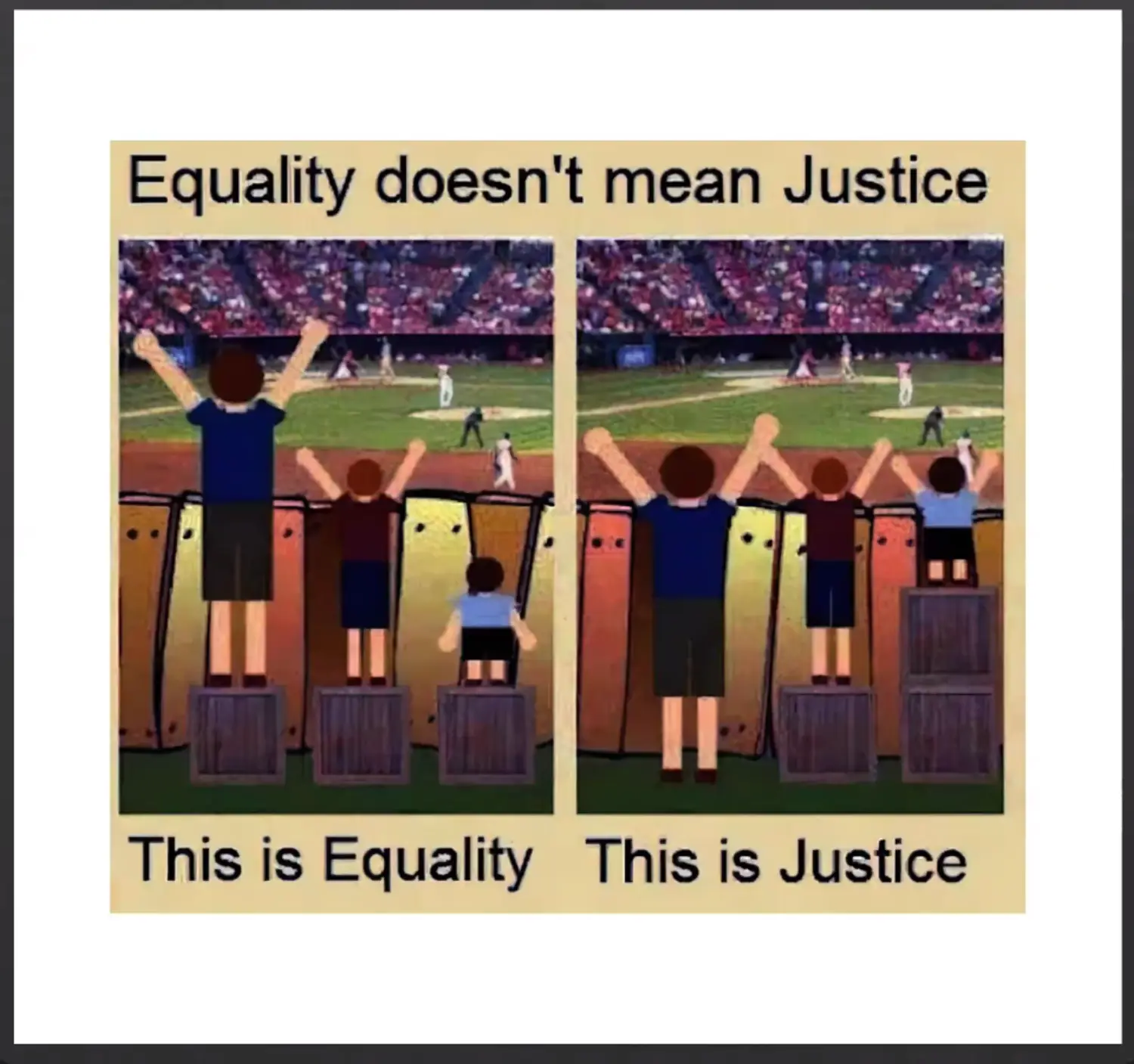
What is the Meaning of Justice ?
- Just & Fair Treatment of People
- Equality Doesnt Mean Justice
- India Doesnt Follow Equality Before Law but Equality by the Law
Why this Specific Order has been followed
- According to Ambedkar, S E P are in line of, Toughness to Achieve a Particular Justice Type
- As in Social Justice is the Most Toughest to Achieve
- Then Economic Justice is Tough
- Easiest to Achieve is Political Justice.
- For Example : in a Stroke of Enactment of Constitution, Everyone will be Equal Politcially
Social
- What is a Social Justice ?
- It is a fair and just tretament of all citizens from their social standing
- Determined by their : Educational Level, Caste Acceptance etc
- What are the Examples of Social Justice ?
- Examples of Social Justice
- Reservation in the Educational Institutions
- Reservation in Public Employment
- Examples of Social Justice
- What is concept of Postitive Discrimination
- Positive Discrimination is the Affirmative Action Taken by the State for the upliftment of a particular group
- What is a Social Justice ?
Economic
- What is a Economic Justice ?
- Equitable Distribution of Wealth amongst Citizens
- Examples of Economic Justice ?
Land Reforms & Land Ceiling
Direct Taxes - Progressive Taxation System — Differential Tax Slabs in Income Tax - People who Earn More, Pay More
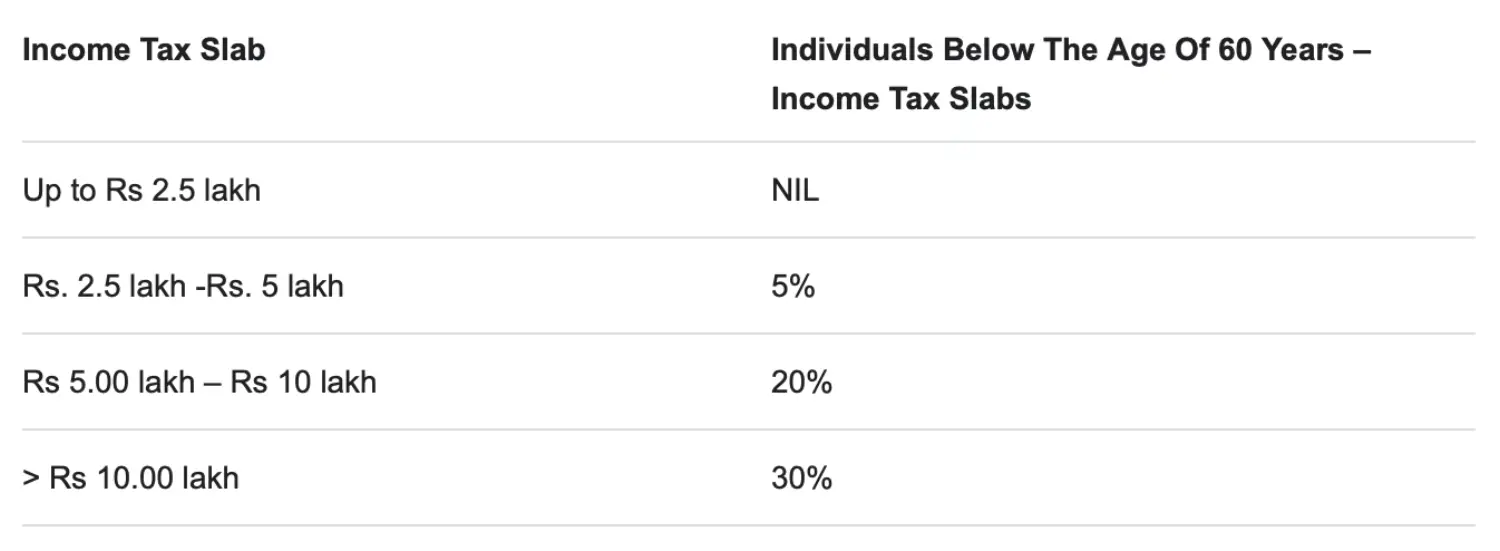
- What is a Economic Justice ?
Political
- What is the Meaning of Political Justice
- State cam commit discrimination but cannot be a Arbitray Distinction
- Absence of any arbitray disntinction between man and man
- Examples of Political Justice in India ?
- UAF
- Political Resrvation
- What is the Meaning of Political Justice
Liberty (TE BF W)
Relation Between Liberty & Freedom ?
- Liberty comes with some Reasonable Restrictions
- Liberty is not an absolute concept where as Freedom is more of a absolute restriction
- Freedom of One, might hamper the right of another
- Freedom Restrained to a Particular Level is Liberty
What are the Examples of Liberty with Restrictions ?
- Example :
- Loudspeaker in Religious Institutions ; Govt Circular on Db Level of Speakers
- Hate Speech
- Example :
Meaning of Liberty ?
Minimal Rights Essential for free and civilised existence
Types of Liberty in Indian Constitution are ?
Art 19 - with RR
- Thought - Thought Process
- Expression - To Express Thoughts in Various Forms
Art 25 - with RR
- Belief - Lower in Degree, It can be Changed
- Faith - Higher in Degree, It cannot be Changed
- Worship - Act of practising a Religion
A Belief System Repeated over time becomes Faith and Its Expression is Worship
Equality ( S&O) - Pending
Difference between Equality & Equity ?
Equality of Status
Equality of Oppurtunity
Fraternity ( Dign. & UI )
- Assuring Dignity of the Individual
- Unless All the Previously Mentioned Objectives are met, one cannot feel dignity
- Unity & Integrity of Nation (2)
- Unity ( Brotherhood ) - Single Citizenship & Fundamental Duties
- Territorial Integrity
- Assuring Dignity of the Individual
Major Themes within Preamble
- Case Chronology
- Berubari Union v/s UOI, 1960 - 07 Judge Bench
- Preamble Not an Integral Part of Constitution & cant be Amended
- Is Not Justiciable & Non Enforceable
- Keshavanand Bharti Case, 1973 - 13 Judge Bench
- Yes it is an Integral Part of Constitution & can be Amended
- Is Not Justiciable & Non Enforceable
- Why is Preamble a Part of Constitution Now ?
- cuz it was debated, discussed & voted by the constituent assembly as and like any other part of constitution
- Berubari Union v/s UOI, 1960 - 07 Judge Bench
- Is Preamble Integral Part of the Constitution ?
- Yes it is ; under Keshavananda Bharthi Case
- Can the Preamble be Amended under Art 368 ?
- Yes, But the Basic Structure cant be Amended
- Can the Preamble be Amended in Totality ?
- No, Basic Structure Doctrine cant be Amended
- Case Chronology
Backing of Important Words by Articles of Constitution
Together
Part 1 - We the People of India
- Ultimate Sovereign of Country - We the People - Reiteration of Social Contract
Part 4 - In Our Constituent Assembly
- Historical Context and Legal Status of Preamble
Country Specific Words
Part 2 - Words that Describe Country as a Whole - Mains
- S3DR
- Sovereign → Socialist → Secular → Democratic → Republic
- Sovereign
- Meaning : “Freedom from External Influence” → Look closest to this word
- Evolved : from basic notions of Independence to Interdependence
- Contemporary Context
- Territorial Sovereignty
- UNCLOS - United Nation Commission on Laws of Seas ; Recognition of CoOperation by EEZ Exclusive Economic Zone
- Geo-Political / IR / Diplomacy Context
- UNGA - Example of discussion of SOP on Terrorism ;
- In UN you can say
- Yes
- Ratification : country will come back home & implement it
- Ex : UNCOA Ratified by India & POCA (Prevention of Corruption Act) changed
- Ex : Rio Declamation
- Signatory : Good Idea but country will not implement it right now cuz they don’t have the need, will, infra for the same
- Ex : ICCPR - Protocol Death Penalty to be abolished
- Ex : Nuclear Non Proliferation Treaties
- Ratification : country will come back home & implement it
- No
- Abstain
- Yes
- Idea is that the CHOICE remains with US.
- Technology - Data Protection & Data Localisation
- Amazon data of Indians in Amazon Servers in Foreign
- Economic
- Human Right
- Territorial Sovereignty
- Conclusion
- India’s Sovereignty is based on National Interest.
- Ex : Showed Strength - Choice is with us
- Ex : Fought with developed world ; COPA
- Ex : India decides to be a member of QUAD
- Ex : India says Kashmir Valley is a Bi Lateral and non International Issue
- Ex : Stayed Silent - Choice is with us
- India Silent on Israel (Palestine Violence)
- Silent on Russia ( Question on Withdrawal in Crimean War)
- S3DR
Citizen Specific Words
Part 3 - Words that define Citizens as a Whole - Prelims
- Citizens - JLEFU
- Justice Liberty Equality Fraternity & Unity&Integrity
- Citizens - JLEFU
Background
- Dictatorship
- Internal Process → When Dictatorship Ends → Democracy has to Start
- Colonialism
- External Process → When Colonialism Ends → There has to be a “Transfer of Power” by a Law
- by Law (Indian Independence Act, 1947 by British Parliament under Clement Attlee
- ToP to Constituent Assembly → Interim Parliament forming a Interim Government → until First Election in 1952
- 26th Nov 1949 - Final Draft of Constitution was ready BUT not implemented then and now
- Constituent Assembly
- Nehru - Head of Constitution Committee
- Ambedkar - Head of Drafting Committee
- But a More Symbolic Date & country was to be made ready for the Same → Hence Date Chosen was 26 January 1950 that ALL Articles were put into force is Law Day
- Significance of 26 January 1929 - India for the First Time demanded Poorna Swaraj ( Complete Independence ) at congress session in Lahore - Symbolism
- Articles that came into force in immediately after 1949 are :
- Speech Objectives Resolution : aspiration of kind of country we wanted to build - Preamble was added to the constitution before 26 November 1950
- Preamble is the vision of Constitution, the Preface to Constitution
- Three Sets of Dates
- 15 August 1947
- 26 November 1949
- 26 January 1950
- Prelims Question Preamble is : Words that cannot be legally defined are generally correct : Pulse/Heart/Soul of the Constitution
- Dictatorship
Constitutional Article - Part 1 & Part 2
Part 1 (Art 1 - Art 4) - The Union & Its Territory
- Questions Answered by Part 1 are ?
- What is the Name of Country ?
- What is the Territory ?
- Can it Expand ?
- How can it Expand ?
- Can India Cede to a Foreign Country ?
- Can it be Done with or w/o Amendment ?
Art 1 - Name & Territory of the Union
- Art 1(1) - India i.e Bharat Shall be a Union of States
- Two Names for Country → India & Bharat
- Why Two Names ?
- Ancient Name - Bharat - One Opinion
- Modern Name - India - Second Opinion
- Union of States v/s Federation of States
- Some Members Said India i.e Bharat will be Better if it was called Federation of States ( De Centralised Power)
- Union of States - Feels Like - Unitary form of Government (Centralised Power)
- Ambedkar said that india is Federal Political System - but This Federation is Merely a Union
- As The Division of Power in CS - Leans Towards Union
- For only administrative convenience we are having states
- Two Important Things
- at no point of time, any state in India would have right to secede from the india → to prevent Balkanisation
- if the union wants, union can unilaterally internally reorganise states
- Two Names for Country → India & Bharat
- Art 1(2) - State & UT name will be in First Schedule
- Art 1(3) - Territory of India Shall Comprise(3) of
India = States (28) + UT (8) + Other Territory acquired in Future
How India will Expand its Territory ?
- It will be based on International Laws
- Whether India Acquires Territory by Normalcy or by any other method
How is it decided that it will be either a State or UT ?
- Factors which Decided if its a State or UT -
- Population of Area
- Large - State
- Less - UT
- Strategic Importance of that Area was made a UT
- Delhi
- Despite High Population, Its a UT
- if there was a State, Union would have to take Permissions
- Andaman Nicobar & Lakshwdeep - National Security Reasons
- Delhi
- Cultural Differences
- Dadar & Nagar Haveli
- Puducherry
- Population of Area
- Factors which Decided if its a State or UT -
How is a State & UT Governed ?
State - Federal Relationship
UT - Directly Under State Control
- Art 1(1) - India i.e Bharat Shall be a Union of States
Art 2 - Power of the Parliament to - Add Territory from Outside
- Add a Territory - Explicitly Mentioned
- What Happens to territory coming from outside
- Admit into the Union - Given Status of UT
- Establish New states into the Union - Given Status of State
- Who has the Power to Admit that Territory in India ?
- Parliament
- Who will Decide it is a State or UT
- Sikkim - was Made State - 36 CAA
- Goa - Initial UT & then State
- Puducherry & Daman & Die from Portugese - Directly UT 1962
- What Happens to territory coming from outside
- Add a Territory - Explicitly Mentioned
Art 2A - Special Case of Sikkim : 36th CAA, 1975 ( Art 371 F added)
- They Carried out a Special Majority under Art 368 because when Sikkim was added to India
- Three Changes were Made
- First Schedule - By Simple Majority - List of All State and UT
- Fourth Schedule - By Simple Majority - Rajya Sabh Seats of State & UT
- Art 371 F - Special Status Given - Needed CA - By Special Majority
Art 3 - Power of the Parliament to - Internal Reorganisation
Reorganise Indian Territory within Existing Territory
Powers of Parliament to
One Action leads to Multiple Actions Being Performed
Create a New State
- Merge Two States
- Divide Two States
Increase Area of State
Decrease Area of State
Alter boundaries of State
Alter Names of States
- Madras - Tamil Nadu
- Mysore - Karnataka
- Orissa - Odisha
Examples ( Hypothetical )
- All 7 North Eastern States can be merged
- Bundelkhand
- Backward Part of Country = Part of MP + Part of UP
- From MP & UP → Make a New Bundelkhand
- UT added to Tamil Nadu
What is the Procedure followed by the Parliament in Exercising its Power under Art 3 ?
Introduction of Bill
- What is a Bill ?
- A Bill is a Draft Proposal for Legislation under Consideration.
- Bill is Introduced in the ?
- Lok Sabha & Rajya Sabha
- What is a Bill ?
Diagram

Example : AP Reorganisation Act, 2015 && AP Reorganisation Bill, 2015
Procedure - Process of Constitutional Amendment Bill
- MP will seek permission from President
- President Refers Bill to the State Legislature with a Time Limit
- Yes - Opinion Not Binding
- No - Opinion Not Binding
- Delay - Opinion Not Binding
- President Gives Permission to MP
Yes
- Process in Parliament
- MP will introduce Bill in Parliament (LS/RS).
- MP can introduce in either
- his house (can vote in his house only)
- another house (cannot vote here but can introduce)
- in Lok Sabha
- Debate & Pass by Simple Majority
- in Rajya Sabha
- Debate & Pass by Simple Majority
- Goes to President
- President Gives his Assent (Says Yes)
- New State is Formed
- Constitution is Changed
What are the Changes made ?
- First Schedule - Details of State & UT
- New Telangana Added - Names & Boundary Column Created
- AP Details Changed - Names & Boundary Column Altered
- Fourth Schedule - Allocation of Seats to Rajya Sabha
Earlier
AP : 18 Seats in RS
Now
Telangana : 7 in RS
AP : 11 in RS
- First Schedule - Details of State & UT
How are the Changes made ?
Will it take a CA for changing the Schedule ?
The Act Passed by the Parliament will automatically change the Schedules
Hence AP Reorg Act automatically changed First & Fourth Schedule
- Process in Parliament
No
- Bill Cannot be introduced in Parliament
- President Refers Bill to the State Legislature with a Time Limit
- MP will seek permission from President
Art 4 - Any Law under Art 2 & Art 3 then such a Law can be made by a Simple Act of Parliament
- Laws made under Art 2 & Art 3 which provides for amendment of the first & fourth schedules
- That Law is NOT an amendment of this Constitution under Art 368
- Only First & Fourth Schedules are allowed to be Amended
- Cede a Territory - No Where Mentioned in Parliament, hence decided by Supreme Court - CAA Needed
- Re-Berubari Union v/s UOI, 1960
- Prelude for Reference
- Re → Stands for Presidential Reference
- Background
- Smoothen Process of Boundary Dispute → Cyril Radcliffe
- Place Called : Berubari Union → 9 Sq Miles of Land was a Part of West Bengal
- Pakistan Claimed this Place saying that
- Northern Part had to go to East Pakistan
- Southern Part had to go to India
- Pakistan Said that it has gone to India as a Whole
- Both Pak & Ind PM Met → JLN & Feroz Khan Noon → Nehru Noon Agreement, 1958
- Govt Thought it can be done under Art 3 ; but people said that Art 3 is only internal reorganisation
- but diminishing area of a state by ceding it to another country thus making a Net Subtraction to the States
- Question of Law
- Can Parliament do it under Art 3 ?
- Logics - Put in front of SC
- Do Not Give - Look Into Preamble
- India is a Sovereign - India is a Sovereign State, why India should budge to others part
- Can Give - Sovereignity
- India is a Democratic Country - Democratic hence Indian people elected leaders can do
- SC Said
- No point of arguing on preamble - preamble is not an integral part of constitution
- Do Not Give - Look Into Preamble
- SC Judgement
- India cannot cede a territory by Art 3
- But can cede by a CAA under Art 368 - by following a special majority for a Non Federal Dispute ( No State Ratification )
- Parliaments Action
Enclave
Small Pocket of Land completely surrounded by Another Country
Enclave Background
India & Bangladesh → Have Poor & Porus Borders
Each others Enclave in one Place or Another
9th CAA, 1960
- Unilateral Ceding of Territory
Nehru Noon Agreement, 1968
Land Boundary Agreement, 1974
- Indian Enclave will be to Bangladesh
- Bangladesh Enclave will be to India
- We Will Exchange all the Enclaves
- No Matter Profit or Loss of Net Land
- If India Losses these Enclaves
- India needs a CAA under Art 368 Non Federal Method
- This Ceding happened by CAA
100th CAA, 2015
- Exchange Enclaves between India & Bangladesh
- Ultimately First Schedule was Changed by Ceding a Territory by these CAA
- Prelude for Reference
- Examples
- 9th CAA, 1960 - North to Bangladesh by CAA
- India Retained Southern Part under Art 2
- 100th CAA, 2015 - Indian Enclaves given to Bangladesh by CAA
- India Received Bangladesh Enclaves under Art 2
- 9th CAA, 1960 - North to Bangladesh by CAA
- Re-Berubari Union v/s UOI, 1960
- States Re-Organisation Chronology in India
Historical Background
1947 - India & Pakistan, 1947
1948 - S K Dhar Commission, 1948
NO
- No Linguistic Re Organisation
- One Language One State - Not Possible
YE
- Geographical Contiguity
- Financial Self Sufficiency
- Ease of Administration
1948 - JVP Committee, 1948
- JLN, Vallab Bhai Patel, Sita Bhai Patta Ramaaya
- Rejected Linguistic Re Organisation
- Especially fro Telugu Speaking Community in State of Madra
- Protest Erupted → Violence → 56 Days of Hunger Strike → Potti Sriramamalu
1953 - Andhra Pradesh, 1953
- AP Created
- Similar Demands Started coming in Other Parts of Country
1953 - First Re Organisation Commission (Fazal Ali), 1953
- Rejected Idea of - One Language One State
- But Linguistic Re Organisation can help in Maintaining the Cultural Homogeneity of People
- Others can be taken into Account
- Economic & Administrative Viability
- Linguistic * Cultural Homogenity
1956 - States Re-Organisation Act, 1956 under Art 3
- Before this India had following States
- Part A - British Provinces
- Part B - Princely States
- Part C - Commissioner Provinces
- Part D - Andaman & Nicobar
- 14 States & 6 UT was created
- Before this India had following States
1960 - Maharashtra and Gujarat
Maharashtra for Marathi speaking people
Gujarat for Gujarati speaking people
Gujarat 15th state of Indian Union
1961 - Dadra and Nagar Haveli
- Portuguese ruled until 1954
- Portuguese administration until 1961
- Added to Union Territory of India by 10th CAA 1961
1962 - Goa Daman and Diu
- Acquired from Portuguese by police action in 1961
- Added to Indian union territory bY 12th CAA 1962
- Goa was Given statehood in 1987
- Daman and Diu remained union territory
1962 - Puducherry
- French gave Puducherry to India in 1954
- Puducherry consists of Puducherry Karaikal Maher and Yanam
- From 1954 to 1962 it was administered as an acquired territory
- In 1962 added to Indian union territory by 14th CAA
1963 - Nagaland
- Nagaland = Naga Hills + Tuensang Area → from Assam
- From 1961 to 1963 it was under governor of Assam
- Became 16th state of India in 963
1966 - Haryana Chandigarh and Himachal Pradesh
- Punjab bifurcated to create Haryana
1987 - Goa given the status of statehood
- Questions Answered by Part 1 are ?
Part 2 (Art 5 - Art 11) - Citizenship
- Questions it will Answer ?
- How to Identify citizens of India ?
- Who are Citizens of India ?
- Two Types of Citizenship
- One at Commencement of Citizenship
- One after the Independence ?
- Why is there a Concept of Citizenship ?
- State Confers all the Rights on Citizens, for Aliens it is Limited in some cases
- State expects duties from its Citizens and sometimes Foreigners are relieved
- State can differentiate between Citizen and Alien
- Who is a Citizen ?
- Citizens are Members of the State and owe Allegiance to it, They enjoy all Civil & Political Rights, guaranteed by the Constitution of the State
Art 5 - Art 8 → Citizenship Before 26 Jan 1950
**Which All Person can become Citizen of India BEFORE 26 Jan 1950 ?**Deemed to be Citizen of India by Virtue of Constitution Enforcement
ALL PEOPLE WHO WERE RESIDENTS OF INDEPENDENT UNDIVIDED INDIA
- Art 5 - Domicile → Domiciled in India before 26 Jan 1950
- Domicile → Residence + Intention
- Residence in India + Intention of an Individual to Make India as a Permanent Home
- Intention -
- Major - No of Years of Stay is 5 Years before 26 Jan 1950
- Minor - Ownership of Property
- Domicile → Residence + Intention
- Art 6 - Pak to Ind → Direct Migration → (15 Aug 1947 - 26 Jan 1950)
Deals with Person who had Migrated to India from Pakistan
Pakistan to India - Majority
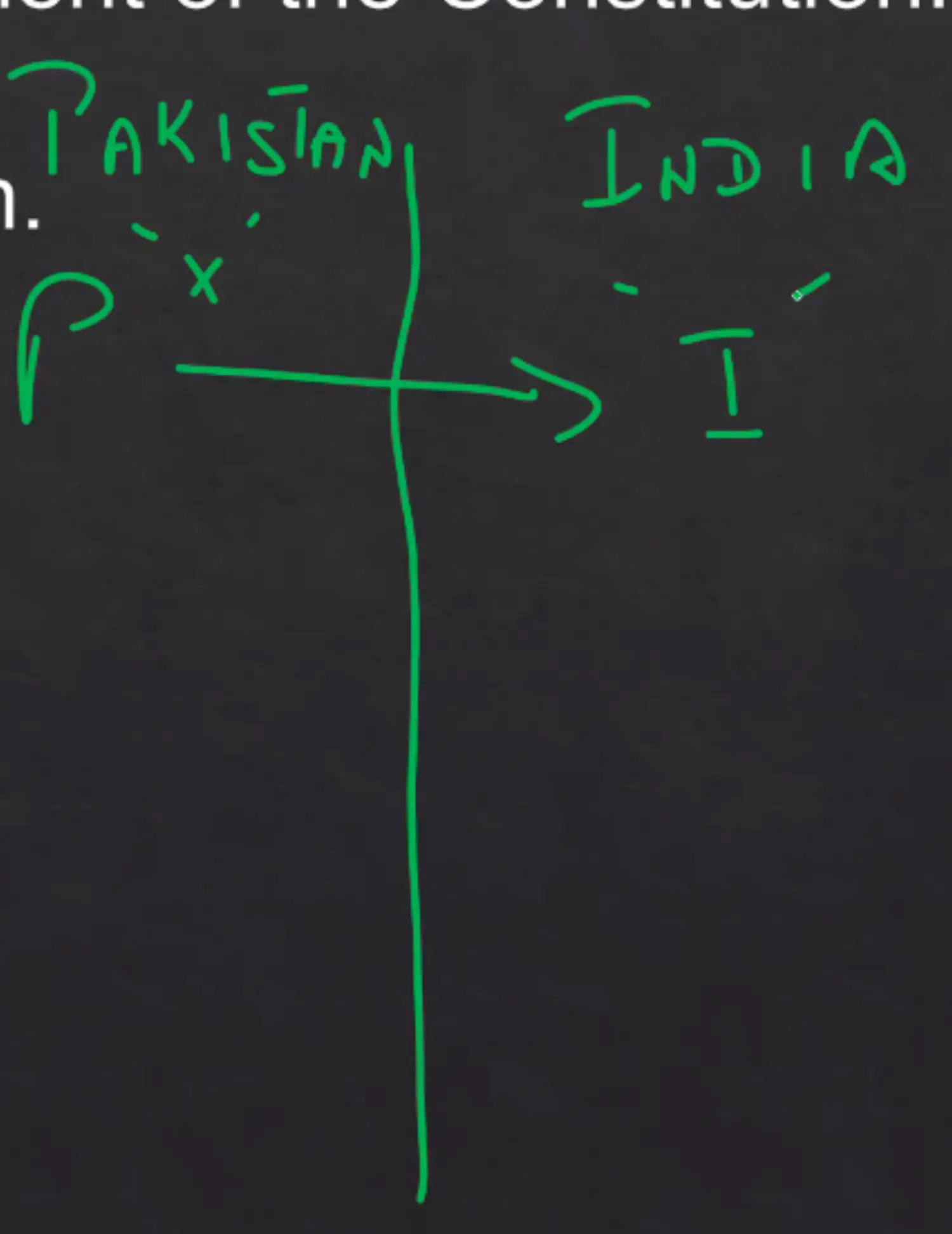
Before Commencement of Constitution if they come to India from Pakistan, they will be be made citizens of India
- Art 7 - Permit System → Reverse Migration → (1 Mar 1947 - 26 Jan 1950)
- Deals with Person who migrated from India to the Now Territory of Pakistan after 1 March 1947 but had subsequently returned to India for resettlement through Permit System
- 1 March 1947 - When Mountbatten Plan was Finalised
- Migration After 1 March 1947 → Because due to Mountbatten Plan they knew, what was the Territory of India and Pakistan ; Now if they Migrate → It means they wanted to be a Part of Pakistan
- Before 1 March 1947 → They can come back to India before 26 Jan 1950
- but these people could be used as Agents of Pakistan. Hence, a Special Permit for Background Check from Indian High Council Commissioner, Pakistan was Needed
ALL PEOPLE WHO WERE PERSON OF INDIAN ORIGIN
- Art 8 - PIO → Person of Indian Origin applied BEFORE 26 Jan 1950
- Provision relating to Persons Living in Foreign Countries at the Commencement of the Constitution
- PS : They don’t have to be in India for the Citizenship, they can be anywhere
- Define Person of Indian Origin (PIO) ?
- PIO is not a Citizen of India : A Person or whose Parents or Grand Parents are born in India as Defined in GOI Act, 1935
- How can a PIO become Citizen of India ?
- Application to the Countries Embassy
- Provide Proof that he is a Person of Indian Origin
Summary of Art 5 6 7 8
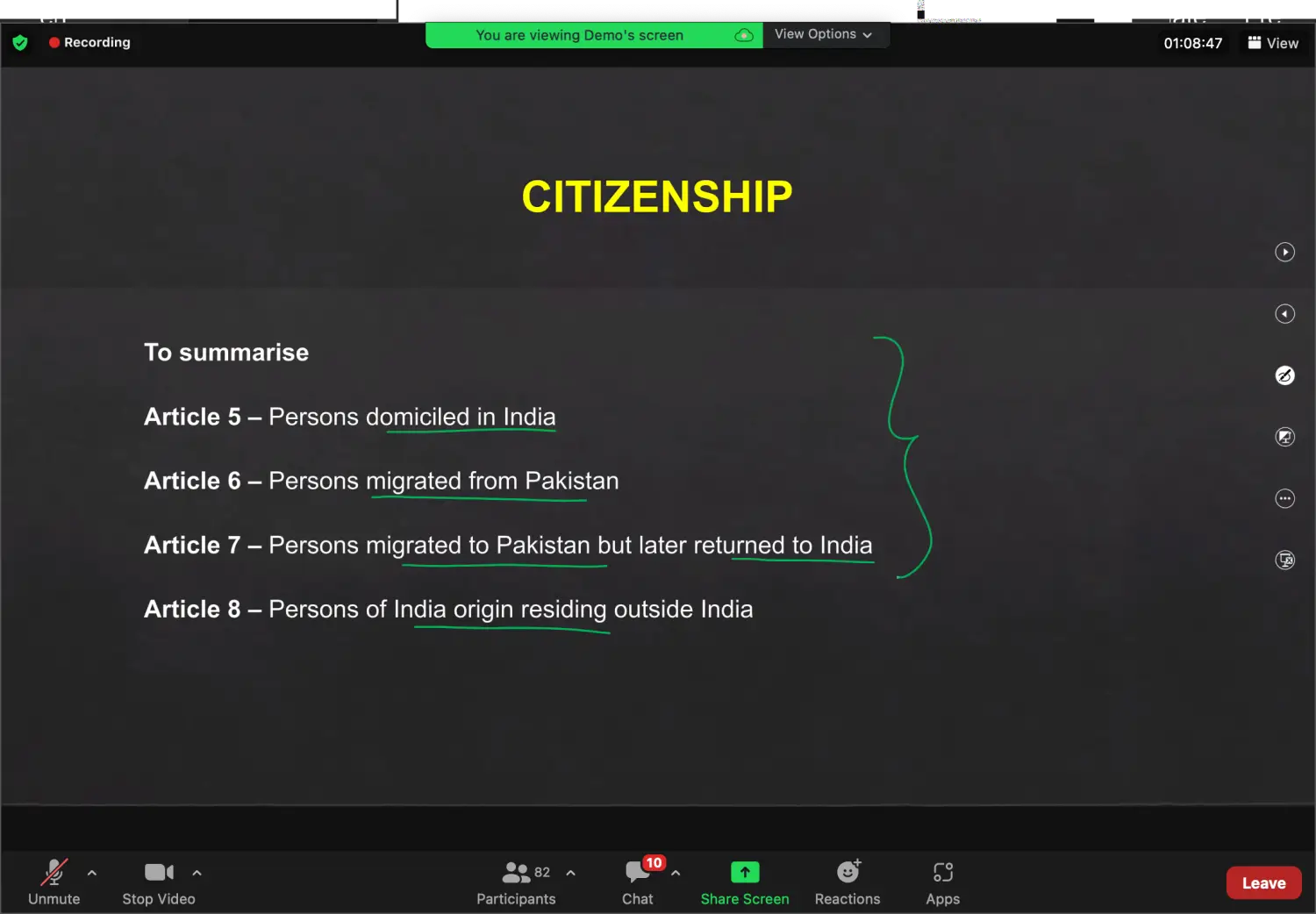
- Art 5 - Domicile → Domiciled in India before 26 Jan 1950
Art 9 - No Dual Citizenship - (Before & After 26th Jan 1950)
- No Person Shall be a Citizen of India or be deemed to be a Citizen of India, if he has voluntarily acquired the citizenship of any foreign state
- Shall be Citizen → Subsequent to Commencement of the Constitution
- Deemed to be → under Art 5 6 7 8
- Voluntarily Acquired & Any Foreign State → No Dual Citizenship
Art 10 - Provision of Power to Parliament to Acquire & Revoke Citizenship
- Every Person who is or is deemed to be Citizen of India shall continue to be such citizen subject to the provision of any law made by the Parliament
- Concept of Citizenship is not Permanent
- Citizenship can be Revoked / Altered / Terminated
- How can it be Altered ?
- by Making a Law by Parliament under power of Art 11
- Citizenship is a very Dynamic Creiteria hence Constituent Assembly gave provisions of Citizenship only until commencemnt of Constitution. After Commencement, provisions of power to parliament were made for the parliament to decide rules about citizenship by the Parliament (both acquisition and loss)
- Every Person who is or is deemed to be Citizen of India shall continue to be such citizen subject to the provision of any law made by the Parliament
Art 11 → Loss (Before & After 26 Jan 1950) & Acquisition (After 26 Jan 1950) of Citizenship
- Parliament shall have the power to make any provisions with respect to the acquisition and termination of citizenship and all other parliaments relating to citizenship
- Deals with Following Action of Citizenship
Acquisition of Citizenship → for (After 26 Jan 1950) - PENDING
1 Birth - Born in Indian Territory
- Citizenship Act, 1955 - (26 Jan 1950 - 01 Jul 1987)
- Concept
- Jus Soli - Right of Soil
- Condition of Citizenship
- Born in India → (26 January 1950 - 01 July 1987)
- If illegal migrants comes to India and gives birth in India, child would become automatically the citizen of India
- Issues
- this was very liberal and was creating problems like
- taking away economic opportunity of Indian Locals
- Population Issue
- Security Issues
- Hence Jus Soli was Restricted
- this was very liberal and was creating problems like
- Concept
- Citizenship Act, 1986 - (1 Jul 1987 - 2nd Dec 2004)
- Condition for Citizenship
- Person Should be Born in India between 1 July 1987 - 2nd December 2004
- Plus One Parent an Indian Citizen
- Issues
- Most of the Illegal Migrants came to India and Married an Indian
- Condition for Citizenship
- Citizenship Act, 2003 - (from 3rd December 2004)
- Conditions for Citizenship
- Born in India after 3rd December 2004
- One Parent an Indian citizen
- Other parent Not an illegal migrant
- Conditions for Citizenship
- Exceptions
- Convoy of a Foreign Sovereign
- IFS of another country marries an Indian and gives birth to a Child → Child will not be an Indian Citizen
- Enemy Alien
- Who belongs to a country with which India is at War with Some Other Country → Temporary Concept
- Enemy Alien Marries Indian gives birth to a Child → Child will not be a Indian Citizen
- At the time of Birth of Child war should not be going on India
- Convoy of a Foreign Sovereign
- Special Case : Aircraft & Ships
- Depends on where the Ship & Aircraft is Registered → Citizenship will be that of the Nation of Registration
- Citizenship Act, 1955 - (26 Jan 1950 - 01 Jul 1987)
2 Descent - Born outside Indian Territory
Background
- Based on Right of Blood : Latin : Jus Sanguinis
- Descent Means : By Blood Line
- Criteria
- Born outside Territory of India
- Born to an Indian Parent ( related in blood)
- at time of Birth → Parents were Indian Citizens
- Between 26th January 1950 - before 10th December 1992
- Child Born Outside Territory of India
- Father should be Citizen of India
- IMPORTANT POINT : If Mother is Citizen of India ; Father is Not ; Child will not eligible for Citizenship → Criticism of Gender Injustice
- Between 10th December 1992 - 2nd December 2004
- Born Outside Territory of India
- Any Parent should be Citizen of India at time of Childs Birth
- 3rd December 2004 onwards
- Born Outside Territory of India
- Any Parent a Citizen of India
- Paren Should Register Birth of Child in the Nearest Indian Foreign Office
- This time can be relaxed by government on grounds of Genuine Reasons
- Nodal Authroity : Ministry of Home Affairs
- Now this Law was Considered to be a Gender Neutral Law
3 Registration
Three Major Categories of People who are eligible to become Citizen of India
- Type 1 - PIO
PIO Card → OCI Card
- PIO Cardholder was Introudced by India in 1999
- To Recognise Contributions in FDI & Political Support
- PIO Cardholder Status
- File Application
- Pay Fees
- Once PIO Cardholder Status was Granted → They still had to Go for Visas and Stuff
- Hence some priviliges were given to them
- for 15 Years No Visa was Needed
- Stay for 180 Days in India without any Permission
- He wil have Property Rights similar to that of Indian Citizen
- in both Mobile & Immobile Properties
- except for Agricultural Lands & Plantation Properties
- PIO were Demanding Dual Citizenships becasue
- They weren’t eligible to Contest Elections
- Not able to Participate in Government Exams
- Committee was Setup to Look into the Matter
- Committee Reccomended Dual Citizenship
- Parliament rejected the Reccommendation.
- But Government Found a Mid Way
- Above PIO + Below Citizenship of India → Overseas Citizenship of India Status
- A PIO can Apply for OCI Status by Paying some Fees
- a OIC wil get
- Life Long Visas
- No Restrictions on Length of Stay
- Have Property Rigths - Mobile & Immobile - Agricultural Lands & Plantation Properties
- Countries Eligible
- Initially Given to only 16 Countries
- All Countries in the World
- Except for Pakistan
- PM Involved
- Atal Ji - Started
- Manmohan Ji - Narrowed Differences between PIO & OCI
- Modi - Made both PIO & OCI Same
Definition of PIO
CAA Gives the Definition as “Any Person or his Parents or Grandparent born in the Territory of India according to the Government of India Act, 1935 or any other territory acquired by India after 1947 ; and is right holding a passport of someother country”
Deconstruction of Definition
- WHO : Himself - Parents - Grandparents
- WHICH Territory
- Territory according to GOI Act, 1935 - Undvided India
- Territory acquired by India after 1947
- Sikkim
- Goa
- Dadra and Nagar Haveli
- Damn and Diu
- Puducherry
- Bangladesh Enclaves
- WHAT is current status
- Holding a Passport of Other Country
- HOW : By Registration
Process
- This Person applies for Visa for being a Citizen of India
- with the Undertaking that he will renounce citizenship of Previous Country
- Governemnt gives them Visa to be a Ordinary Resident
- Demand : 7 Years of Citizenship in India
- which is NOT Continuos but can be Irregular
- This Person applies for Visa for being a Citizen of India
Exceptions
- Can Exclude Countries Like Bangladesh & Pakistan which may vary from time to time due to various Reasons
- Security of Nation
- Population Control in India
- Can Exclude Countries Like Bangladesh & Pakistan which may vary from time to time due to various Reasons
Application to ?
- Ministry of Home Affairs
- Type 2 - Foreigner Marrying and Indian Citizen
- BKG : Foreigner who is not a PIO but Marries and Indian
- Condition :
- Marries and Indian Citizen
- Stays in India for Period of 7 Years
- Type 3 - OCI Status Cardholder
- Background
- OCI : Overseas Citizenship of India Status
- Started by Government in 2003
- OCI are not Citizens of India but has some Privilege
- now this OCI Person if wants a Citizenship in India, can get Citizenship in India
- PIO Card → OCI Card
- PIO Cardholder was Introudced by India in 1999
- To Recognise Contributions in FDI & Political Support
- PIO Cardholder Status
- File Application
- Pay Fees
- Once PIO Cardholder Status was Granted → They still had to Go for Visas and Stuff
- Hence some priviliges were given to them
- for 15 Years No Visa was Needed
- Stay for 180 Days in India without any Permission
- He wil have Property Rights similar to that of Indian Citizen
- in both Mobile & Immobile Properties
- except for Agricultural Lands & Plantation Properties
- PIO were Demanding Dual Citizenships becasue
- They weren’t eligible to Contest Elections
- Not able to Participate in Government Exams
- Committee was Setup to Look into the Matter
- Committee Reccomended Dual Citizenship
- Parliament rejected the Reccommendation.
- But Government Found a Mid Way
- Above PIO + Below Citizenship of India → Overseas Citizenship of India Status
- A PIO can Apply for OCI Status by Paying some Fees
- a OIC wil get
- Life Long Visas
- No Restrictions on Length of Stay
- Have Property Rigths - Mobile & Immobile - Agricultural Lands & Plantation Properties
- Countries Eligible
- Initially Given to only 16 Countries
- All Countries in the World
- Except for Pakistan
- PM Involved
- Atal Ji - Started
- Manmohan Ji - Narrowed Differences between PIO & OCI
- Modi - Made both PIO & OCI Same
- OCI Card Holder
- has to Posses Status of OCI for 5 Years
- Comes to India and Stays in India for 1 Year
- Undertaking that Previous Citizenship will be Revoked when Indian Citizenship is Given
- Summary
- Background
🇮🇳 NOTE : PIO & OCI are NOT CITIZENS OF INDIA- Type 1 - PIO
REVISIT OCI ka LAST PART
- 4 Naturalisation
- Any Category of Person or Any Foreigner can become an Indian Citizen provided that the Foreigner is not an illegal Migrant
- Defintion of Illegal Migrant :
- Any Foreigner who enters India w/o a Valid Document or Extends his Stays in India according the Documents is an Illegal Migrant
- Conditions in Third Schedule of of CAA
- Ordinary Resident for a Period of 12 Years
- undertaking to renounce the citizenship of previous country
- Background Verification of Good Character by Local Police
- Adequate Knowledge of any one Language specified in 8th Schedule (22 Languages)
- Bonafide Interest to Stay in India
RELISTEN FROM HERE
- 5 Incorporation of Territory
- If a New Territory becomes a Part of India, the Government of India shall specify the persons of that territory who shall be citizens of India
- Example - Puducherry Citizenship Order, 1962
- 100th CAA, 2015 - Exchange of Encalves between India and Bangladesh
- One cannot be Forced to take Indian Citizenship
- 6 Special Provision as to Citizenship of Person covered under Assam Accord of 1985
Background
- Assam Accord was Signed in 1985 under Leadership of Rajeev Gandh
- Assam Accord was a Tripartite Agreement signed among Government of India, Government of Assam and All Assam Studnets Union (AASU) demanding identification and Deportation of Illegal Migants from Bangladesh
Important Details
- Parties
- Government of India
- Government of Assam
- AASU - All Assam Students Union
- To Prevent :
- Illegal Migration from Assam
- because of Porus Borders between India & Bangladesh
- Concerns with Migration
- Especially Economic Oppurtunities been taken away by illegal migrants
- Demographic Changes - some Hindu Majority distritcs became Muslim Majority Districts
- Main Demand
- Identification - Of Illegal Migrants
- Deportation - Back to Bangladesh
- Parties
Important Questions of Assam Accord
Provisions of Assam Accorded as Incorporated in Citizenship Amendment Act, 1986
What are the Conditions to Identify Illegal Migrants ?

- All Persons - Illegal Migrants
- before 1st Jan 1966
- Can be Granted Citizenship
- cuz Good Relation with East Pakistan
- Leniency due to Turmoil in East Pak Government. India had Good Relations with East Pak Gov Initially
- 1 Jan 1966 - 25 Mar 1971
- Will be Illegal Migrant
- East Pak had a Elected & Stable Government
- Not Deported
- They will Register with Indian Authority ; From date of Registration to 10 Years in India - will be Given Citizenship
- Between Registering & Citizenship - they will have all rights except for Votes
- after 24 March 1971
- are Illegal Migrants
- they will be Deported & sent to Bangladesh
- Now Bangladesh has said that they will not accept these migrants as they are not Bangladeshi Citizens
- Now they will be sent to Deportation Centres
Both India & Assam Govt had not Implemented Assam Accord
In 2013 in SC, case was filled stating Illegal Migrations
SC directed to Implement Assam Accord → NRC was done in Assam
in NRC it was found that 1.9 Million People were Illegal Migrants
- 1.3 Million → Were Hindus
- 0.6 Millions → Were Muslims
- All These People have to be sent back to Bangladesh
- If Bangladesh Accepts → Deported Back
- If Bangladesh Doesnt → Put in Deportations Centres
- Citizenship Amendment Act, 2019
- The Details
- CAA, 2019 → It is Giving Exceptions to Some Categories of Immigrants
- Citizenship Amendment Act, 2019
- Naturalisation of Illegal Migrants
- of 3 Countries → Pakistan, Afghanistan & Bangladesh
- Exceptions to
- Hindu
- Sikh
- Christians
- Buddhist
- Jain
- Parsis
- Entered India Before 31st December 2014
- Reason : in 2014 & Subsequent to 2014 with the coming of Modi there has been not a single ant been able to cross borders
- All these People are Eligible to become Citizens of India by Naturalisation
- What will these 6 Community Provide as Proofs
- Opinion of Government
- All these 6 Communities are considered to be Persecuted Minority
- Persecuted Minority - Who are Ill Treated, Harrased, Subjected to Homicide in original country
- all the 3 Countries are Muslim Majority States with Official Religion as Islam
- Indian being a Hindu Majority Country should give hope to these Persecuted Minorities
- Views on CAA 2019
- Criticism of CAA, 2019
- Violation of Article 2014
- Equality Before Law Violated - Citizens & Foreigners
- Why Not All Persecuted Minorities & Why Not All Neighbouring Countries ?
- Rohingyas from Myanmar
- Tamils from Sri Lanka
- Ahmediyas from Pakistan
- Violation of Secular Principles
- Putting Muslims is Deporation Centres
- It is Against Assam Accord
- Assam Accord Cut of Date : 24 March 1971
- Violation of Article 2014
- In Favour of CAA, 2019
- Government - Its an Humanitarian Law to protect Persecuted Minorities
- Criticism of CAA, 2019
- Current Status
- Matter is Sub Judice
- But SC has not put a Stay on
- The Details
Loss of Citizenship → for both (Deemed(before) && Acquisition (after))
Nothing is Mentioned in the Constitution, it is decided by the Laws of Parliament.
- Renunciation
- By Voluntary Act
- With the Parent, the Childs Citizenship who is minor will also be Renounced
- Will the Child be able to restore the Citizenship on Reaching 18 Years of Age ?
- Yes, but has to apply within 1 Year.
- Termination
- By Application of Law
- When an Indian Citizen takes CItizenship of any Other Country, his Citizenship is terminated automatically from India
- Here the Main Difference is that, Here Minor Childs citizenship is NOT Revoked.
- What is the Difference Between Renunciation & Termination ?
- Deprivation
- Conditions for Deprivation
- Disloyal to India
- Fraud - Example : Malya & Nirav Modi
- Registration
- After Registration for a Period of 7 Years, If someone goes to Jail for the Next 2 Years.
- Outisde India
- Citizen of India who hasnt returned to India for a Period of 7 Years.
- Conditions for Deprivation
- Renunciation
Chronology of Citizenship Act - Liberal to Conservative
- Citizenship Act, 1955 - (26 Jan 1950 - 01 Jul 1987) - Acquisition & Loss of Citizenship
- Citizenship Act, 1986 - (1 Jul 1987 - 2nd Dec 2004) - Acquisition & Loss of Citizenship
- Citizenship Act, 2003 - (from 3rd December 2004) - Acquisition & Loss of Citizenship
- Citizenship Act, 2005 -
- Citizenship Act, 2015 -
- Citizenship Act, 2019 -
Current Affairs
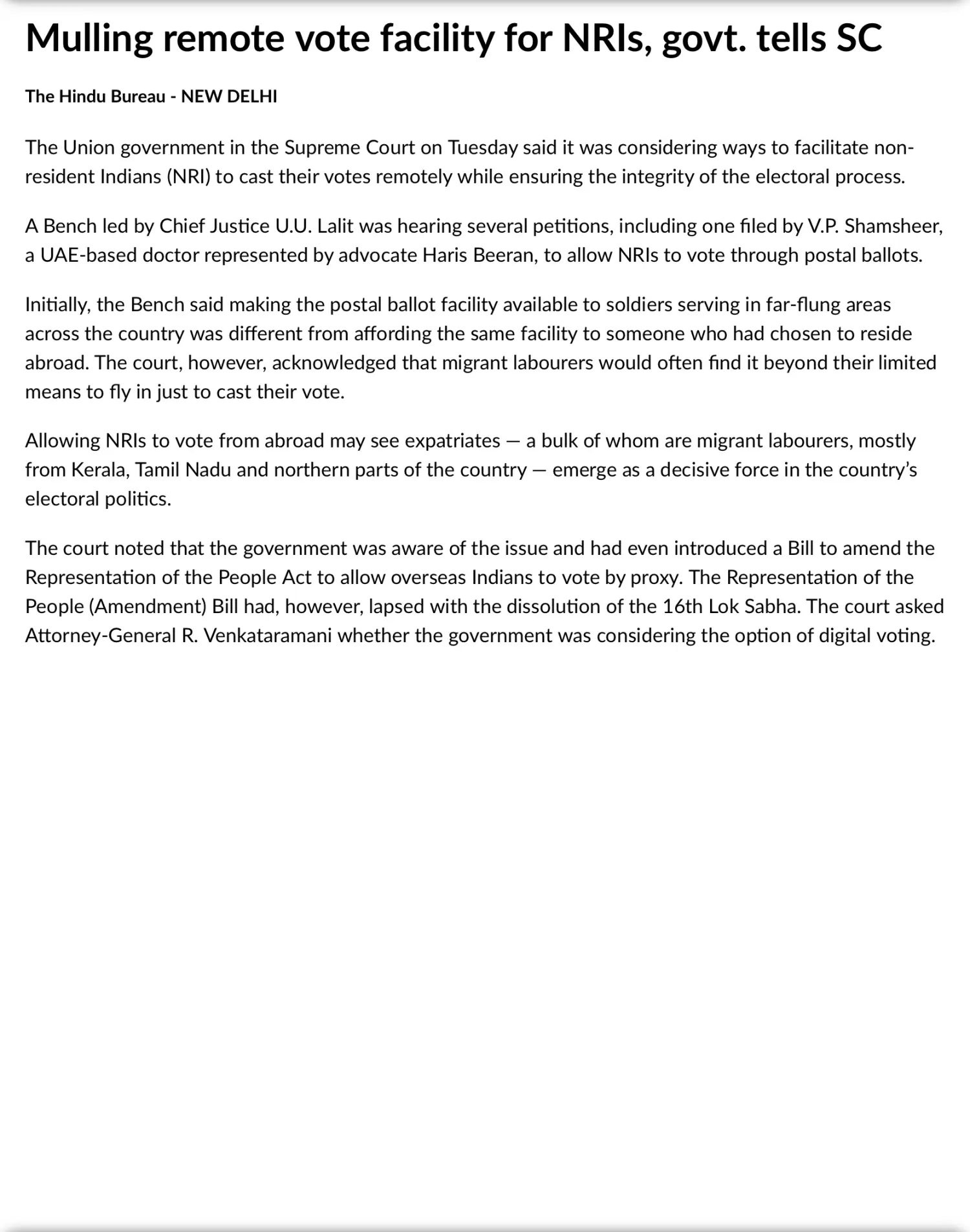
- Questions it will Answer ?
Constitution - Part 3, Part 4, Part 4A
Part 3 (Art 12 - Art 35) - Fundamental Rights
⭐️Important Questions & Concepts of Fundamental Rights
What is a Right ?
An Entitlement by the State
What is the Difference between Rights & Fundamental Rights ?
- These are Fundamental Rights is because they are essential for a “Dignified Human Survival & Realize Fullest Potential of thyself”
- Dignified Human Survival
- To have sense of Respect for ThySelf
- This makes you feel like “Life is Worth Living”
- Fullest Potential, in terms of
- Intellectual
- Spiritual
- Physical
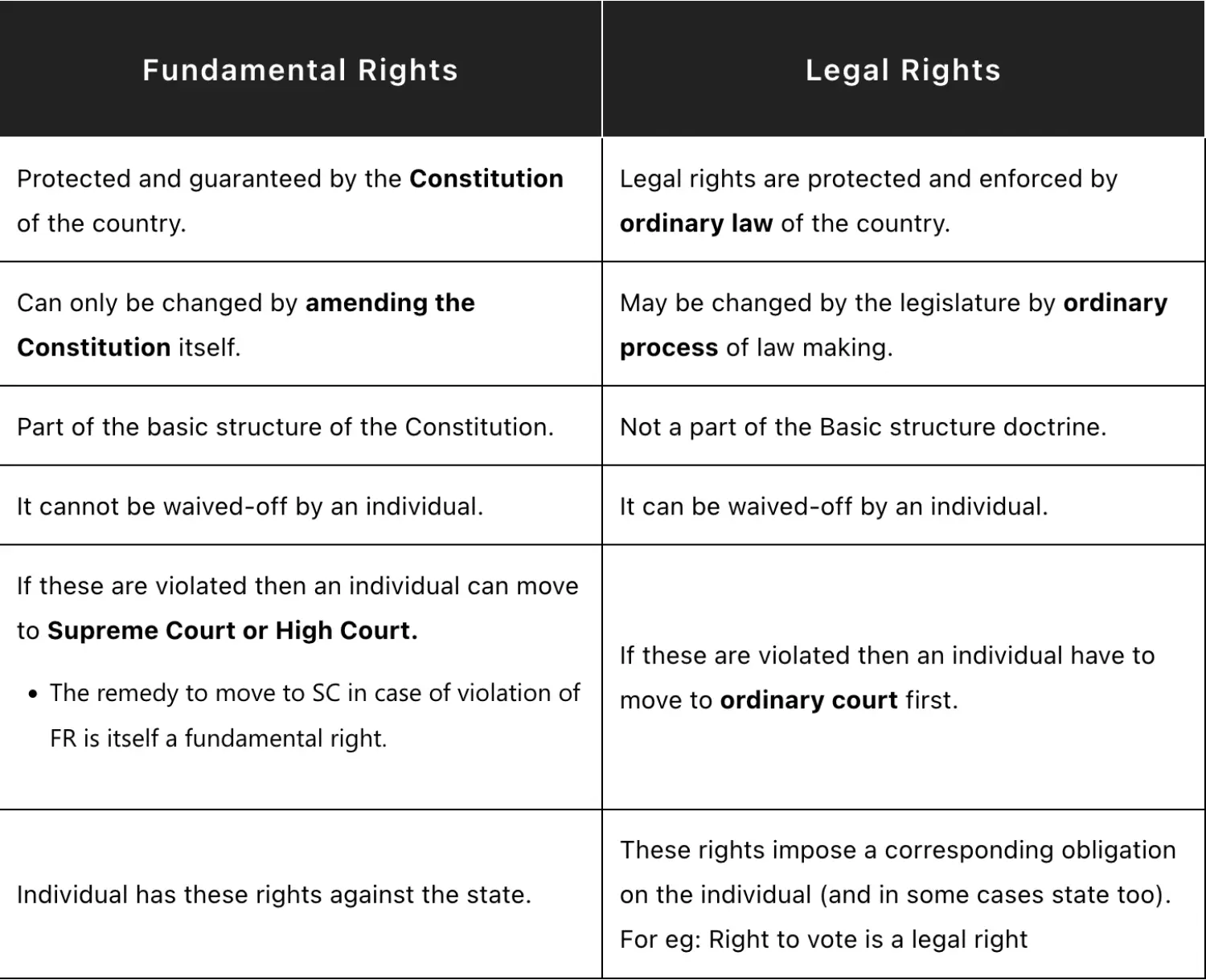
How is the Top Priority Given to Fundamental Rights (FR) ?
- One can go directly to the Supreme Court, w/o going to Lower Courts
- It is Protected & Guaranteed by the Constitution
What is the Purpose of Giving Fundamental Rights ?
- Constituent Assembly wanted the FR to be
- Protective
- Citizens be Protected from any Arbitrary & Tyranny of State
- Promotive
- Promotes Individual Well Being & Allied Aspects of Social Life
- Example : Art
- Protective
- Constituent Assembly wanted the FR to be
Who can Exercise this Privilege or Who is Holder of the Right ?
By Citizen or Foreigners (Alien)
Against Whom can we Assert this Right ?
- Against State
- Against Individuals
With Right comes Remedy - How & Against Whom ?
What is the Summary of Fundamental Rights ?
Equality, Freedom, Exploitation, Religion. Culture Education, Remedies
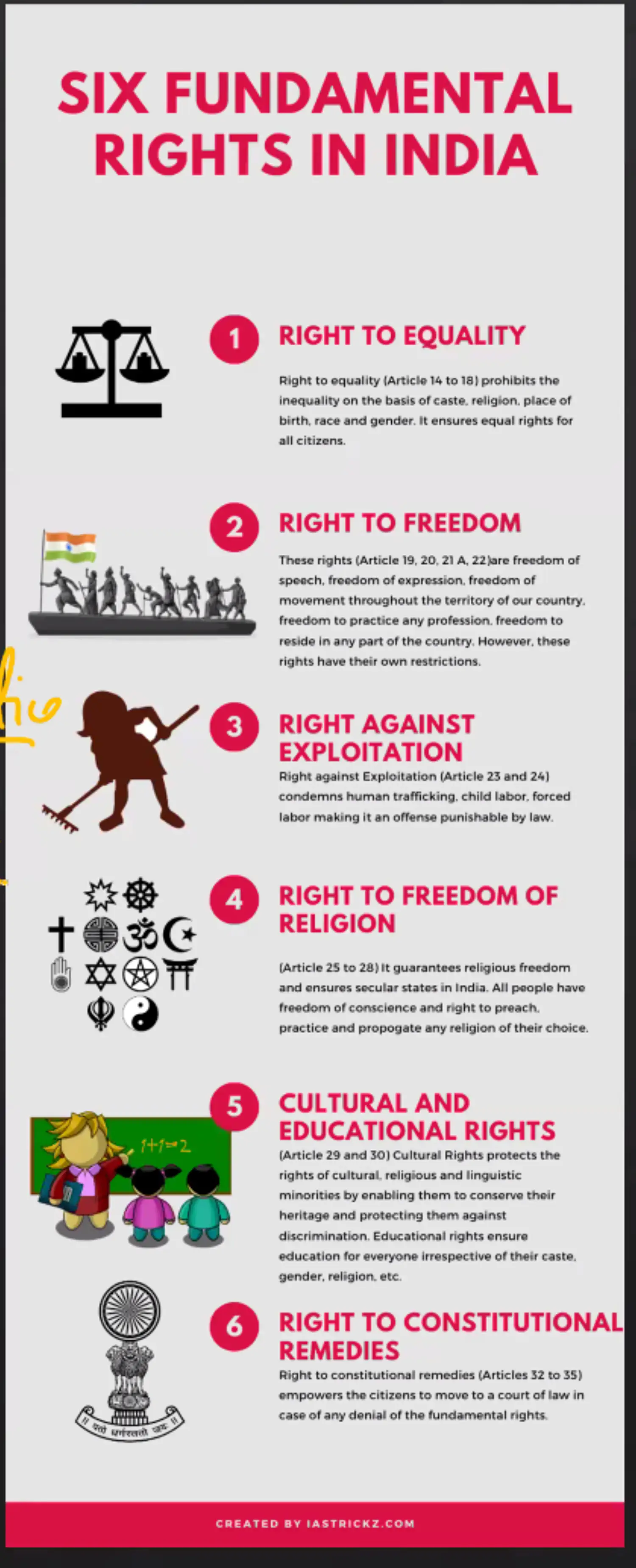
We have Borrowed Fundamental Rights from ?
Bill of Rights from American Constitution
How Many Number of Fundamental Rights were Originally & at Present ?
Originally - 7
Currently - 6
At the time of Independence we had how many Right ?
- we had a total of 7 themes of FR
- Art 31 - Right to Property has been Removed from Part 3 by 44th CAA in 1978 and sent to 300 A
How is Fundamental Right a Limitation on State ?
If by the Actions of State ( above Defined ) → FR is Violated → Individual can Assert & Seek (Remedy & Justice) this in Court of Law → Which is a Limitation on Actions of State
⭐️Features of Fundamental Rights
1 Rigidity v/s Flexibility
Not as Rigid as US
Not as Flexible as UK
2 Citizen v/s Alien
Only for Citizens → Art - 15,16,19,29,30
Other All Are for both → Citizen and Aliens
3 Qualified v/s Absolute
- These FR are only Qualified meaning they can be reasonably restricted
- Absolute Rights can cause harm to Other Individuals of Society
4 Against State v/s Against Individual
- Some are Against the State Protection Against Arbitrary Action & Tyranny of State
- Some are Against the Individuals
5 Negative v/s Positive
- Negative - Restrict the State
- Positive - Confer Privileges on Person
6 Interaction with Court of Law
- Justiciable - Can Move to Court of Law
- Defended & Guaranteed by Supreme Court
7 Not Sacrosanct & Permanent
- Can curtail or repeal them
- Only without affecting the Basic Structure of Constitution
8 Can be Suspended in Case of
- National Emergency - Except Art 2० & Art 21
- 6 Rights of Art 19 Suspended
- on basis of : External Emergency → Emergency on Grounds of War & External Aggression
- NOT on basis of : Internal Emergency → Armed Rebellion
9 Scope of Operation is Limited
10 Mode of Enforcement
- By Means of Law (Art 35) - Only By Parliament, Not by State Leg
- Self Executory
⭐️Parts of Basic Structure
- 1 Possibility of Amendment to Basic Structure
- Cannot be Deleted - Whatever is Given cannot be taken Away
- Value Can be Added - to Existing
- 2 Basic Structure According to KNB Case is
- Supremacy of the Constitution
- Unity and Sovereignty of India
- Democratic and Republican form of government
- Federal character of the Constitution
- Secular character of the Constitution
- Separation of Power
- Individual Freedom
- 3 Over time, many other features have also been added to this list of basic structure features. Some of them are:
- Rule of law
- Judicial Review
- Parliamentary system
- Rule of equality
- Harmony and balance between the Fundamental Rights and DPSP
- Free and fair elections
- Limited power of the parliament to amend the Constitution
- Power of the Supreme Court of India under Articles 32, 136, 142 and 147
- Power of the High Court under Articles 226 and 227
- 1 Possibility of Amendment to Basic Structure
⭐️Art 12 - Art 13 → Basics of Part (III)
- ⭐️Art 12 - Defines the Term State for the Purpose of Part 3 of the Constitution ⭐️
Article 12 Says
Definition In this Part, unless the context otherwise requires, the State includes the Government and Parliament of India and the Government and the Legislature of each of the States and all local or other authorities within the territory of India or under the control of the Government of India
Why do we need to define State ?
- This helps us in deciding that “Against whom to Assert these Rights” ?
- This helps us in Defining “The Arbitrary Action of” State**.** Hence Definition Necessary
- Most FR are against State. Hence Definition Necessary
What is a State Acc to Art 12 ?
- Government & Parliament of India
- P VP PM CoM + Civil Servant
- Government & Legislature of States
- G CM CoM + Leg Assembly + Leg Council
- Local Authorities
- Panchayats, Municipalities etc
- Other Authorities within the Territory of India, under the Control of the Government of India
- Other : LIC, ONGC, SAIL, MTNL, BSNL, HAL, DRDO
- Government & Parliament of India
What is Other Authorities ?
Electricity Board of Rajasthan v/s Mohan Lal, 1967
other authorities would include
all the authorities created by the constitution or statute on which powers are conferred by law
The court held that an electricity board would also be a state overruling a previous judgment where the court had ruled otherwise
In another important judgment of SC, it was held that statutory corporations such as ONGC and LIC are also a part of the state under article 12
Ajay Hasiya v/s Khalid Mujeeb, 1981 Case - Doctrine of Instrumentality & Agency
- Share Capital
- If Govt is a Majority Share Holder
- Financial Assistance
- If the financial assistance provided to a body by the govt. is so much that it meets the entire expenditure of the company
- Monopoly Status
- If company enjoys a State Conferred Monopoly
- Ex MTNL, BSNL, HAL, DRDO
- Nature of Functions
- Related to Govt Functions or Important Functions
- if an entity performs public functions or functions closely related to govt. functions
- State Control
- Appointments of Important Positions in the Company/Organisation
Note : All these Principles are not needed to be Applied at Once, Even if one or some apply, it will also be considered as a Satte
- Share Capital
Is Judiciary a Part of State ?
- Judiciary falls under the definition of state in some ways, and still, in some ways, it does not
- Judiciary carries out:
- Judicial functions - Not Considered as State
- Administrative functions - Considered as State
- Rulemaking functions - Considered as State
- Art 13 - Laws Inconsistent with Fundamental Rights be Void
- Important Questions
What is Judicial Review ?
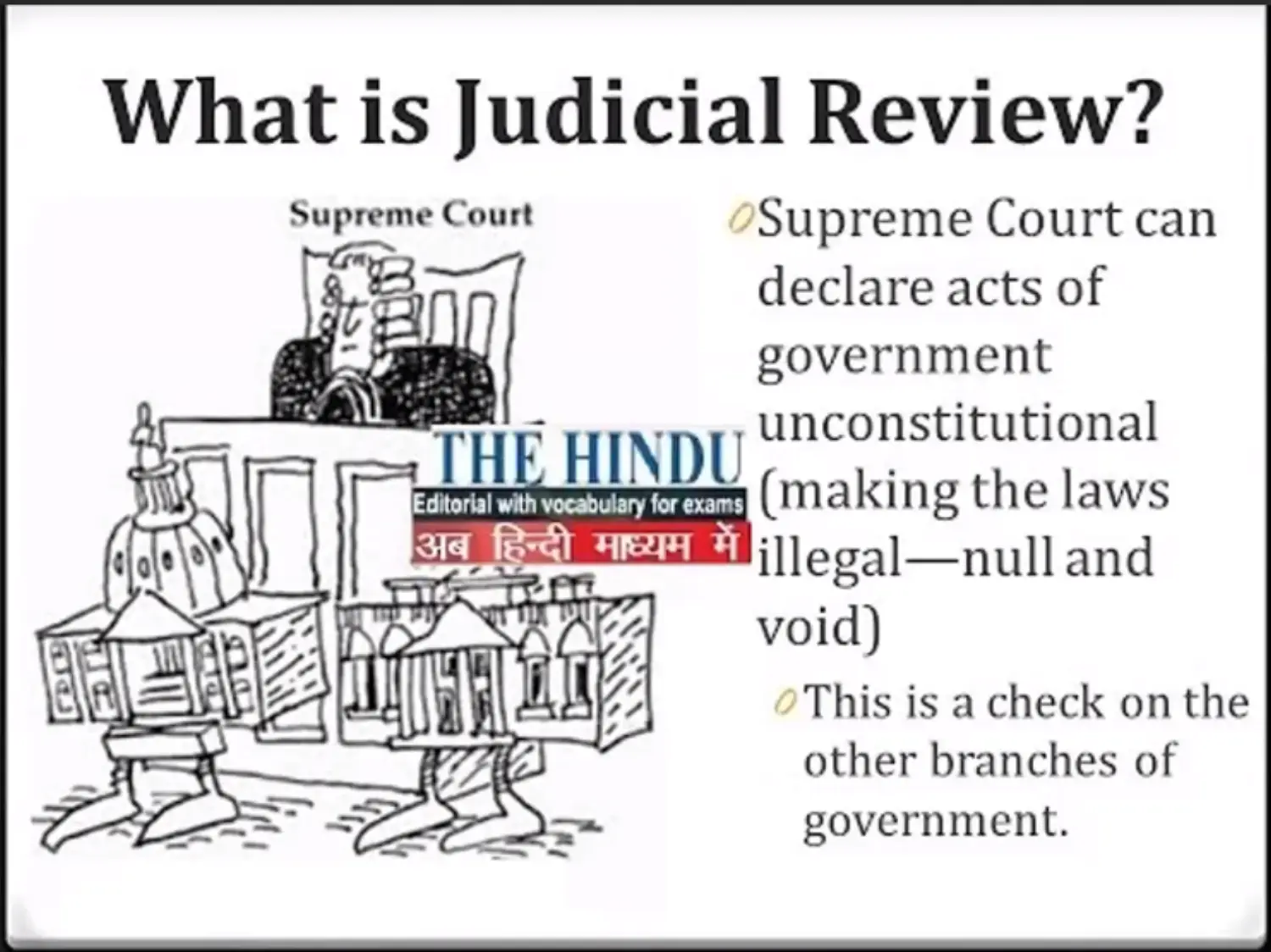
What are the Laws ?
- Pre Constitutional Law
- Entire Bulk of IPC & CrPC
- Example :
- Sec 124 A - Sedition
- Sec 377 - Rape
- Post Constitutional Law
- IT Act, 2000
- Motor Vehicle Act, 1987 → Amended in 2016
- Right to Information Act, 2005
- Right to Education Act, 2009
- Laws Made by
- Parliament
- State Legislature
- Pre Constitutional Law
What is Inconsistent ?
Not in Sync
Out of Line
Not in Congruence
Not in Concurrence
What are the Article of Fundamental Rights ?
Directly Confers the Rights - Art 14 to 32
What is a Void ?
It cannot be Implemented, There will be no Legal Affect
How much of Law will be Stuck Down ?
- Not the Full Law but
- to the Extent of Inconsistency, the Laws will be Struck Down
Who can strike down the Law ?
- Judiciary Interprets and can decalre the Laws to be Void
- Courts use Power of Judicial Review
- Under Art 13 - Power of Judicial Review under Art 13
What is a Judicial Review - Suo Moto Cognisance
- It is the Power of Courts to Review Actions of Legislature & Executive and declare them null & void if its actions are found to be violative of provisions of constitution
- Under Art 13, it is the power of the courts to Judicially Review, the actions of Legislature & Executive. If they are found to be violative of fundamental rights they can be decalred as void
- The Power of Judicial Review is Implicit under Art 13 it is not Explicitly Mentioned under Art 13
What is the Idea of Art 13
- To Give Primacy & Supremacy to Fundamental Rights
- Checks the powers of the legislature
- Shows significance/sacrosanctity of FRs
- It's like a safety valve for FRs
- Extra Self
Does the Word Law Include Ordinary Laws & Constitutional Amendment ?
Doctrine
- Doctrine of Severablity
- Doctrine of Eclipse
Can a Constitutional Amendment (Article 368) abrogate/reduce the effect of the FR?
Article 368 v/s Article 13
- Shankari Prasad v/s Union of India, 1950
- Whether the courts can look into CAA, ie., whether CAA is a law or not. (If a law, then subject to Article 13)
- 1 CAA added 9th schedule among others
- Laws kept under 9 Schedule, even if they violate FRs(Fundamental Rights), they cannot be struck down for violating Article 13
- SC(Supreme Court) majority opinion was that CAA is not a law, hence not subject to judicial review.
- Sajjan Singh v/s State of Punjab, 1965
- Whether CAA is a law was the question;
- Similar judgement-CAA is not a law;
- In this case, the minority judges(2 judges out of 3 judges) dissented- Justice Hidayatullah & Justice Mudholkar;
- Justice Hidayatullah opined that FRs are sacrosanct & they cannot be amended;
- Justice Mudholkar opined that every constitution has certain parts that can be amended and that sections which cannot be amended. If the entire constitution can be amended then what was the need of writing a constitution by the CA(Constituent assembly)
- Golaknath Case v.s State of Punjab, 1967
- 7th CAA was challenged before a larger bench;
- Whether CAA is a law or not;
- CAA is equal to law & hence subject to Article 13;
- Hence the effect of FRs cannot be amended; FRs are sacrosanct;
- 24th CAA, 1971
- introduced Article 13(4)& A*rticle 368(3)*to the Indian constitution;
- Nothing in this article shall apply to an amendment to the constitution made under Article 368-->Thus beyond the judicial powers of the court now;
- FRs can now be amended under Article 368;
- Thus via a CAA any part of constitution can be changed & cannot be challenged under Article 13;
- Keshavananda Bharti Case v/s State of Kerala, 1973
- 42nd CAA, 1976
- Minerva Mills v/s Union of India, 1980
- Shankari Prasad v/s Union of India, 1950
Criticism of Basic Structure Doctrine
- No constitutional basis
- Tyranny of the unelected—Judges
- Violates Separation of powers
- Subjective and vague Doctrine
- Evolution of Basic Structure Doctrine - Parliament (Art 368) v/s Judiciary (Art 13)
The Chronology
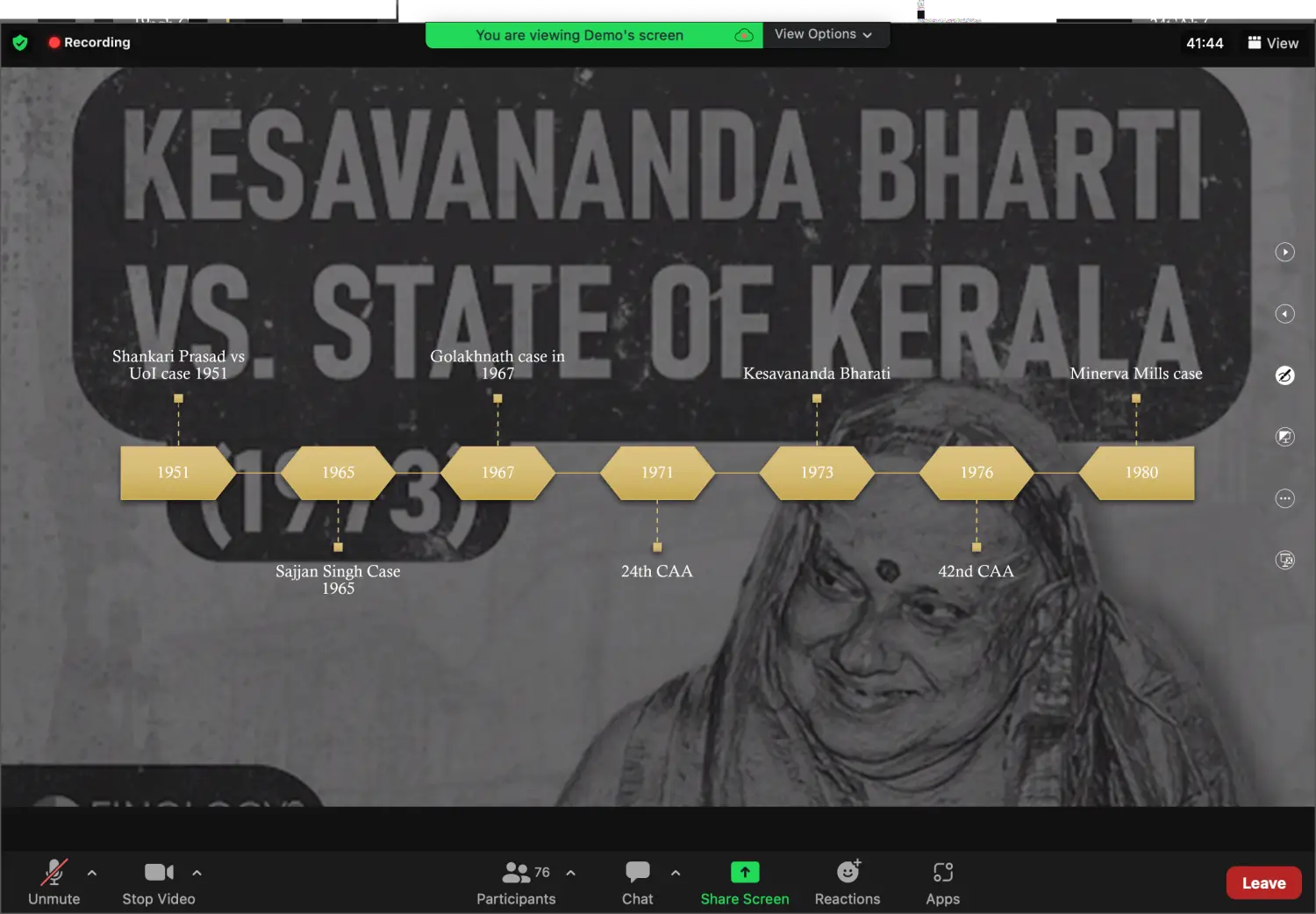
Socio Economic Reforms after Independence
- Like Zamindari Abolition Acts → Led to Resistance Amongst People
Kameshwar Singh v/s State of Bihar, 1950
- He didn't want to sell the Property, he thought it was the Violation
- of Right under Art 19
- Art 19(1)(f) - Acquire Hold Dispose Property
- Grounds of Restriction
- Interests of General Welfare of Society
- Interests of Protecting Rights of SC/ST
- of Right under Art 31
- Govt can take away property only by a law Passed by the Government ; and not only by a Executive Action
- That Compensation under Law under Art 31 is not a Just & Fair Compensation
- of Right under Art 14
- Govt had given Various Discretion of Value of Land for Various People
- Supreme Court Said
- Just & Fair Compensation is different from Equal Compensation
- Just & Fair Compensation is Must
- of Right under Art 19
- He didn't want to sell the Property, he thought it was the Violation
1st CAA - Art 31 B, 1951
- Art 31 B Says
- Saves those Laws from Judicial Review which are placed in 9th Schedule
- Art 31 B Says
Addition of 9th Schedule
- Originally Constitution had 8 Schedule
- First Law which was added : Bihar Land Reforms Act 1950
- It now has 284 Laws Now
Shankari Prasad v/s Union of India, 1951
- Supreme Court has to decide
- What is the Power of Parliament to Amend the Constitution ?
- Insertion of Art 31 B is in Part 3 of the Constitution - Parliament is Taking Away Fundamental Rights by Amending the Fundamental Rights Part
- Whether Constitutional Amendments are Considered to be a Law under Art 13 ?
- Under Art 13 - He Said Addition of Art 31 B under 1 CAA is a Law in Itself and hence can be Declared Null and Void
- What is the Power of Parliament to Amend the Constitution ?
- SC Said that
- Parliament has 2 Types of Powers
- Constituent Powers under Art 368
- Constituent Powers similar to that of a Constituent Assembly
- This power was given to Parliament because CA wanted the Constitution to be a Living Document
- Hence, Parliament can Amend the Fundamental Rights under Art 368
- Ordinary Law making powers
- Constituent Powers under Art 368
- SC said that according to CA debates, CA never wanted to consider CAA as a Ordinary Law
- Parliament has 2 Types of Powers
- Supreme Court has to decide
Sajjan Singh Case v/s State of Rajasthan, 1965
- 17th CAA was challenged in SC
- Rajasthan came up with Land Reforms Act and requested the Parliament to put up the Law in 9th Schedule
- Same Result as that of Shankari Prasad Case
- If CAA is taking away FR Parliament can Still Amend it, only a Ordinary Law cant take away your FR
IC Golaknath ORS v/s State of Punjab, 1967
- Basic Line of Argument by SC : Parliament is having Constituent Power under Art 368
- Golaknath Brother Argued that there is no Constituent Powers to the Parliament as
- Originally Art 368 says : Procedure to Amend the Constitution
- There is no mention of Power of Parliament → Hence they don’t have a Constituent Assembly like Power.
- Hence Now SC Stance was
- Earlier Until Now Parliament had two Laws :
- Constituent Law Powers : not under Art 13
- Ordinary Law Making Powers : under Art 13
- Now Parliament gad
- Constituent Law Powers : is under Art 13
- Ordinary Law Making Powers : is under Art 13
- Earlier Until Now Parliament had two Laws :
24th Constitutional Amendment Act, 1971
- Amended Art 368 → Added [Power] → Power & Procedure to Amend the Constitution
- Amended Art 13 →
- Earlier → Laws Inconsistent with Fundamental Rights be Void
- Now → Constitutional Amendments under Art 368 would not be Law under Art 13
- What was given by SC as Judgement in Shankari Prasad & Sajjan Singh Case - was added by the Parliament to the CAA as an Amendment
Keshavananda Bharti Case v/s State of Kerala, 24 April 1973
While Shankari Prasad and Sajan Singh Case gave unlimited Powers to the Parliament, KBC gave limited Powers
SC upheld that there is a Constituent Power and 24th CAA is valid and Constitution can amend the Fundamental Rights but it should not destroy the Basic Structure
Basic Structure
- Sovereignty
- Democratic
- Republic
Hence, Now merely for Amending the FR you cannot challenge the CAA in Court of Law
it can only be challenged only on the Ground that it violates Basic Structure
The Sacrifise of Justice Khanna
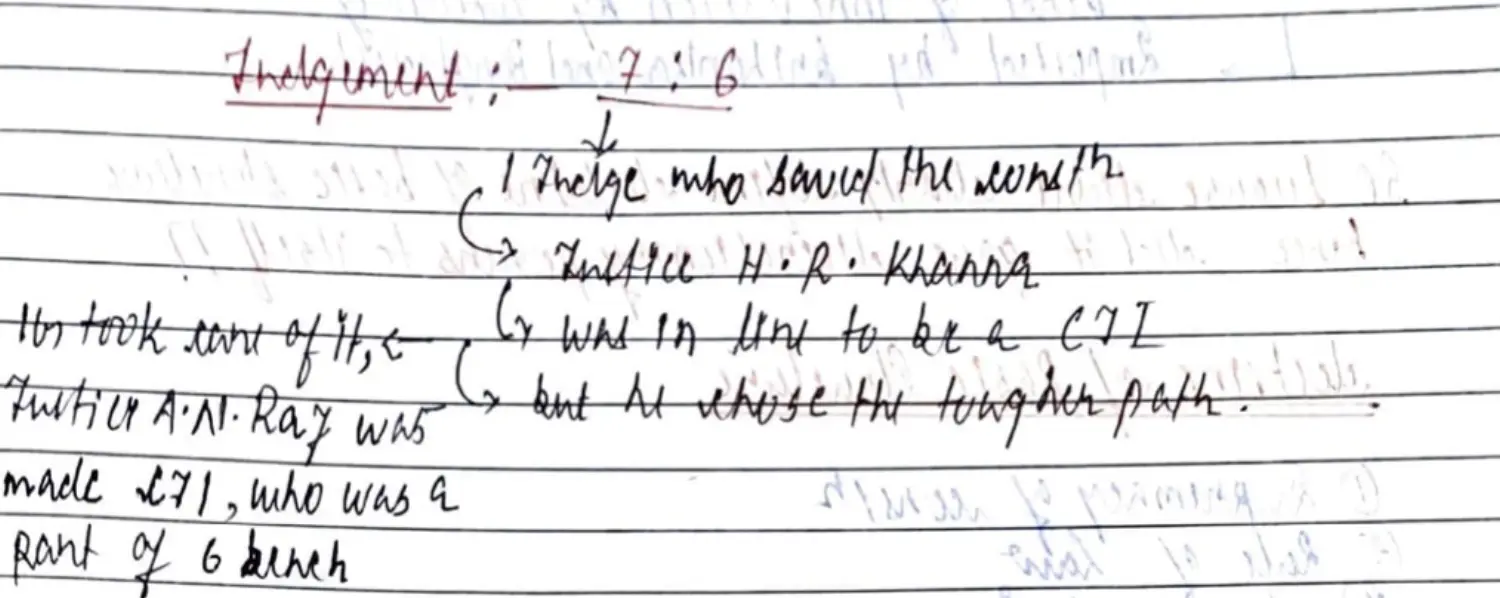
Indira / Raj Narayan Case, 1975
- Free & Fair Elections Added to Basic Structure
42nd CAA, 1976
- Amended Art 368 of Constitution → Constitutional Amendements will be complete Immune to Judicial Review
Minerva Mills Case, 1980
Power of Judicial Review of Courts is a Part of Basic Structure and Hence even by a CAA it cannot be changed. Hence 42nd CAA’s was struck down
Indira Sahani Case, 1992
- Rule of Law Added to Basic Structure
SR Bommai Case, 1994
- Secularism Added to Basic Structure
NJAC Case, 2015
- Independence of Judiciary Added to the Basic Structure
Final Answers
- Can Parliament Amend the Constitution
- Yes
- Is it Unlimited ?
- No, it is Limited
- How much is it limited
- It cannot destroy the basic structure
- Can parliament amend FR
- Can Amend but not to the extent to destroy the basic structure
- Can amendment to the FR be declared null and void by the courts
- Yes it can be declared to be Null and Void, only if it violates the Basic Structure
- Who determines the Basic Structure
- Supreme Courts
- Can Parliament Amend the Constitution
- Summary of Cases of Basic Structure Doctrine - Dynamic
- Important Questions
- ⭐️Art 12 - Defines the Term State for the Purpose of Part 3 of the Constitution ⭐️
Art 14 - Art 18 → Right to Equality (5)
Art 14 - Equality Before Law & Equal Protection of Law (1)
Art 14 in Constitution
The State shall not deny any person equality before Law or the equal protection of Laws within territory of India
To Whom & Against Whom
- Persons
- Natural Persons
- Artificial Entities
- Who Shall Not Discriminate
- State
- Persons
Why these 2 types of Application of Law came into existence
Absolute Function of Equality is not Possible
Treating Equals Equally is Actual Law
Before Law & Protection of Law
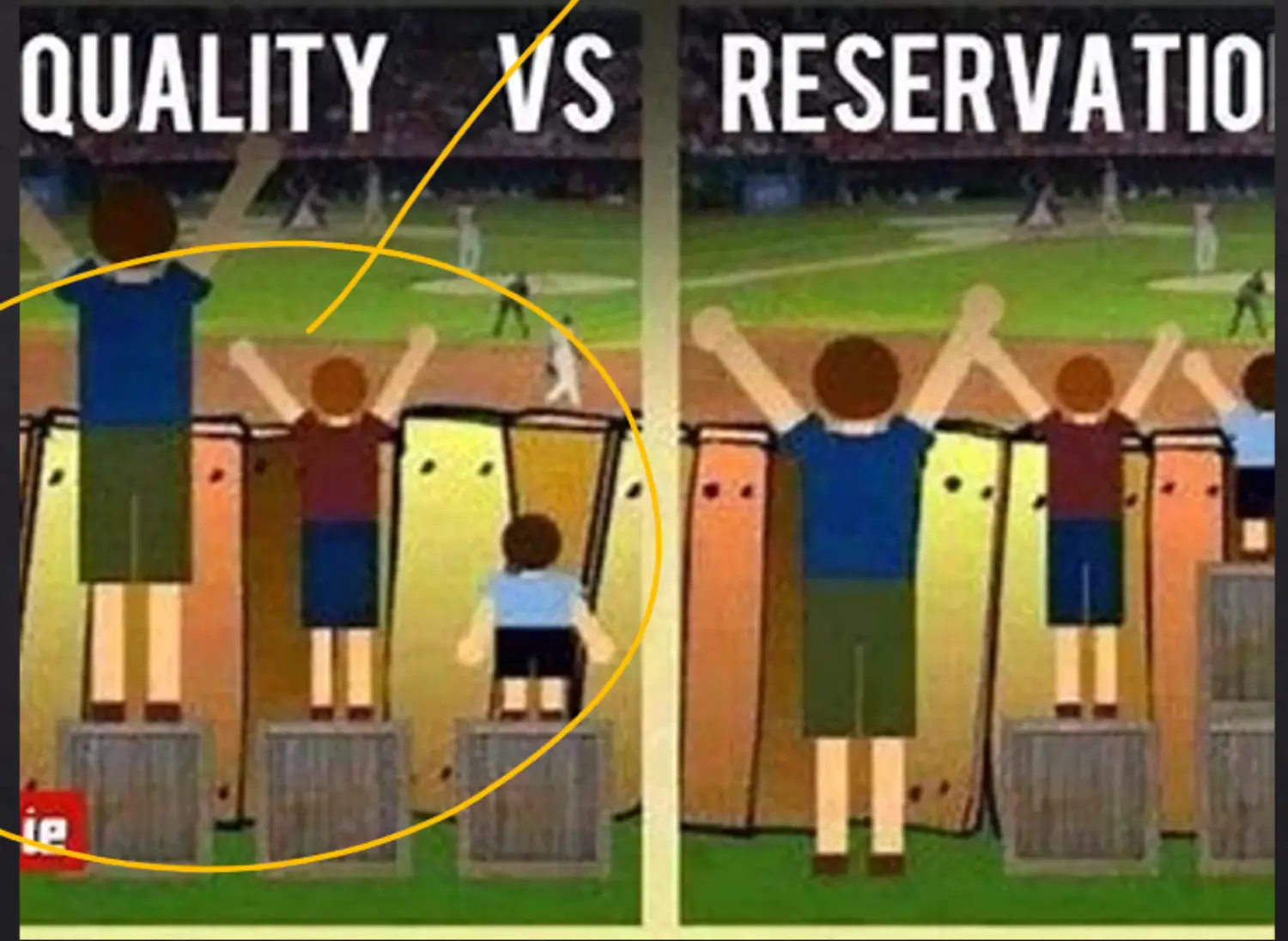
Equality Before Law
- Concept
- Exception
- Art 361 - President & Governor
- Criminal Cases
- Can’t be Convicted in Criminal Cases
- Can be trial after the Leaving of Posts
- Civil Cases
- Can be tried while in Office
- Notice of 2 months to be Given
- Criminal Cases
- Art 105 & Art 194 - Parliamentary Privileges
- Art 105 -
- Art 194 -
- Diplomatic Immunity to a Foreign Sovereign
- Art 361 - President & Governor
Equal Protection of Law
- Background
- Talks about Equals being Treated Equally
- Equal Protection of Law is not Against Equality before Law but helps in Achieving it.
- Equality Before Law includes Equal Protection of Law under Art 14
- Equal Protection of Law is applied in the form of Different Groups can be Created and Different Privileges can be conferred upon certain Groups to Empower them
- Can be called as an Affirmative Action or Positive Discrimination
- Reservation is Example of Positive Discrimination
- Individuals who are considered to be Backward (Primarily Socially)
- Scheduled Caste
- Scheduled Tribe
- Other Back Ward Class
- Summary
- Similar Treatment of Individuals whoa are similarly placed
- Positive Discrimination or Affirmative Action
- Reasonable Classification - Classification Should not be Arbitrary
- Reasonable Nexus between Classification & Object
- Examples
- Reservation Policy
- Schedule Caste : 15% Reservation in Educational Institution and Govt Jobs
- Schedule Tribe :
- Other Backward Class :
- Progressive Taxation Policy
- Slab Based Taxation Policy
- Citizenship Amendment Act, 2019
- This is Violative of Equality Before Law
- This is Application of Equal Protection of Law with Reasonable Classification of 3 Countries and 6 Religions
- Reservation Policy
- Most Important Concept
- There should be a Reasonable Nexus in the Objective and Grouping of the Beneficiaries
- The
- The Positive Discrimination
- The Affirmative Action
- of the State
- Should not become Discrimination in totality for the Unreserved
- Background
Art 15 - Prohibition of Discrimination on Certain Grounds (6)
What is Art 15
Prohibition of Discrimination on Grounds of Religion, Race, Caste, Sex or Place of Birth - ReRa CaSe PoB
Art 15(1)
Summary No Discrimination ReRa CaSe PoB
What is Art 15(1)
State Shall not Discriminate against any citizen on Grounds only of Religion, Race, Caste, Sex or Place of Birth or Any of them.
Shall not Discriminate Against
- Religion - Belief Faith
- Race - Physical Attributes
- Caste - Varna System
- Sex - Biological Factors
- Place of Birth - Birth Place
- Any of Them - or a Combination of them
Art 15(2)
Summary No Discrimination ReRa CaSe PoB Disability, Liability, Restrcition (a) Access - Shop Pub Res Hot & Place of Pub Ent (b) Use - Well Tank Ghats Road Pub Resort - Wholly Partly by State Fund
What is Art 15(2)
No Citizen shall be discriminated on grounds only of Religion, race, caste, sex, place of birth or any of them, be subject to any disability, liability or restriction with regard to
(a) access to Shops, Public Restaurants, Hotels & Places of Public Entertainment
(b) the use of wells, tanks, bathing ghats, roads and places of public resort maintained wholly or partly out of state funds
Access - Can be Private Owned
- Public Entertainment (Parks, Malls, Exhibition Centre) - Can be Private Hotel - Can be Held by Private Individual
Use - Has to be Partially / Fully by State
Art 15(3)
Summary Special Provision for Women & Children
What is Art 15(3)
Confers Power upon the State for making any special provisions for women and children
Background
- is a Enabling Provision for Women and Children
- It is Dependent on the Will and Wish of State
- Women and Children cannot Demand the Right
Example
- 73rd 74th CAA - Special Provision for Women
- Gave Constitutional Status to Panchayats and Municipalities
- Reservation for Women - 33% to Women
- Odd and Even Policy in Delhi - Special Provision for Women
- Men have to follow Odd & Even
- Women can drive any day
- Juvenile Justice - Care & Protection of Children Act, 2015 - Special Provision for Children
- Juvenile is someone below 18 Years of Age
- Criminal Offence Punishment for Adult & Children is not Same
- 73rd 74th CAA - Special Provision for Women
Art 15(4)
Summary Special Provision for SEBC/SC/ST Institute : Govt Institution
What is Art 15(3)
Confers Powers upon the State to Make Special Provisions for the Advancement of any socially and educationally backward classes or the Schedule caste and Schedule Tribes
Background
- For SEBC / SC / ST
- Added by First Constitutional Amendment Act, 1951
- and the History for it is
Champakam Dorairajan v/s State of Madras Case, 1951
Art 15(5) - Confers power upon the state to make special provisions by law for the advancement of any socially educationally backward classes or the for the schedule caste or for the scheduled tribes in so far as such special provisions relating to their admission to educational institutions including private educational institutions whether aided or unaided by the state except minority educational institutions
Why Article 15(50 when there is Article 15 (4) ?
- Supreme Court Judgement in Inamdar Case 2005
- Powers Conferred to state doesn't extend to giving reservation in Private Educational Institutions
- Added by 93rd CAA
- Special Provision for SEBC/SC/ST
- Exception : Minority Educational Institution
- Supreme Court Judgement in Inamdar Case 2005
Art 15(6) - Confers Power Upon the State for the Advancement of any EWS of citizens through reservation in Educational Institutions not exceeding 10 Percent
- Based on Economically Weaker Section
- Added by 103rd Constitutional Amendment Act, 2019
- This 103rd CAA was challenged in court of Law. Given that CAA can only be challenged if it affects the Basic Structure Doctrine
- Challenged on the basis of
- in Indira Sawhney Case, 1992 SC said that
Reservation is Approved but
The Reservation Should not be above 50%
- OBC - 27
- SC - 15
- ST - 7.5
Total : 49.5
EWS : 10
SC maintained that any reservation above 50% is violative of rule of law
- in Indira Sawhney Case, 1992 SC said that
Condition for being a EWS
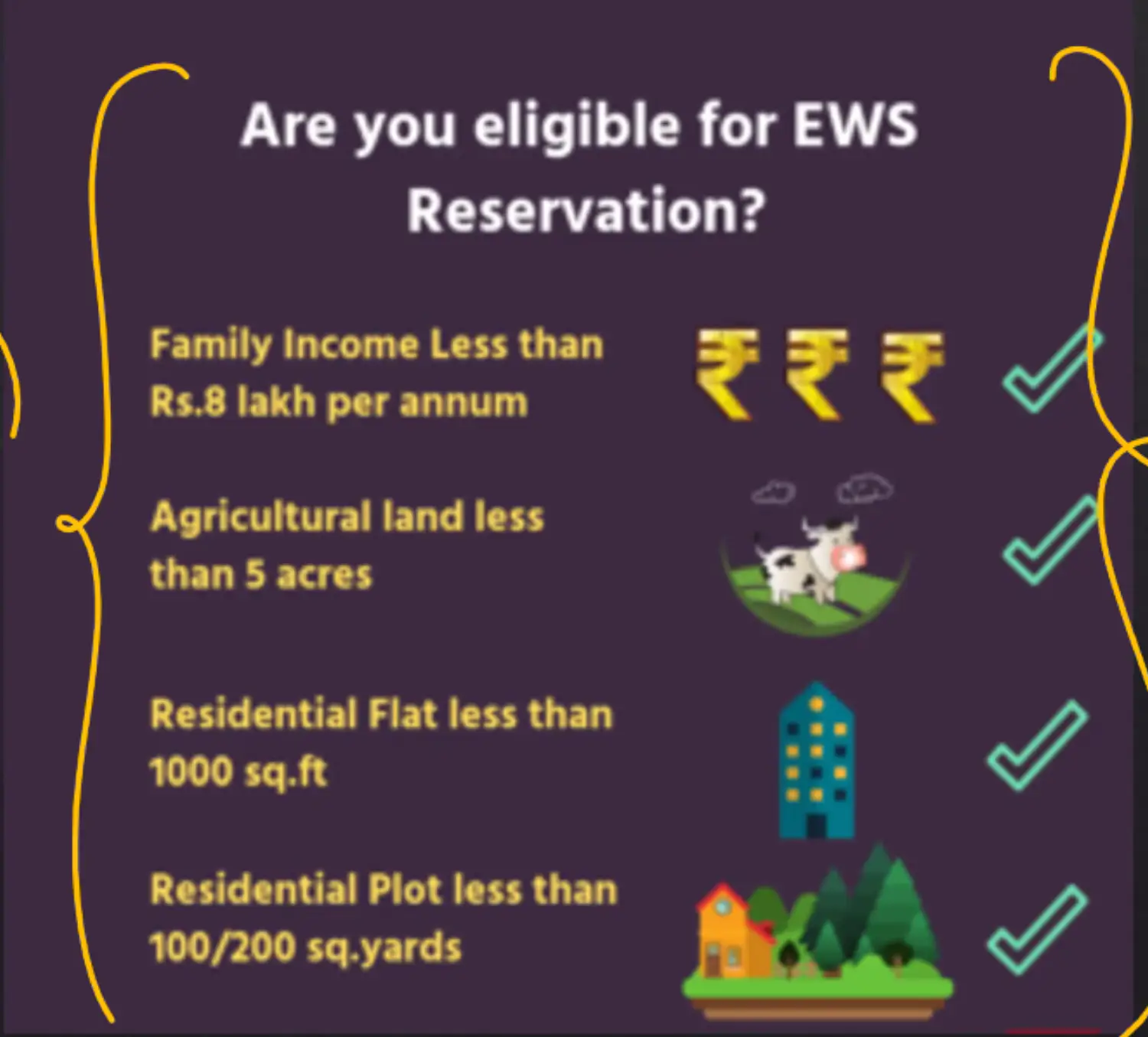
Art 16 - Equality of Opportunity in Public Employment (7)
Art 16
Article is
Equality of opportunity in Matters of Public Employment
Exceptions to Art 16
- Presidential Guards
Only People from 3 Caste can be in Presidential Guards
- Rajputs
- Sikhs
- Jaat Sikhs
Petition was filed against this in Delhi High Court
Govt Replied that
People from these 3 Castes → They have uniform body structure
This case is Sub Judice Right Now
- Women in Army for Permanent Commission
- SSC - Short Service Commission
- Indian Army SSC - 14 Years of Service
- Permanent Commission from SSC → can serve upto Retirement Age
- But Women weren't allowed to get into Permanent Commission earlier
- Now, in some fields permanent commission has been allowed for women ; Like in
- Recruitment Division
- Ordinance
- Traffic
- Non Combat Divisions
- Not in all fields
- Reasons Given by Army
- Biological Factors
- May have to go on Long Leave and it will be strategically bad for army
- Socio Cultural Factors
- Most of the Jawans are from Rural Background, They look upto leaders
- Who are More Stronger
- Women Might have difficulties in commanding leadership
- Most of the Jawans are from Rural Background, They look upto leaders
- Operational Constraints
- Biological Factors
- in 2021, SC didn't accept these factors
- Presidential Guards
Art 16 (1)
Article is
There Shall be Equality of Oppurtunity for all citizens in Employment to any office under the state
Art 16 (2)
Article is
There shall be no discrimination among any citizen only on the grounds of religions, race, caste, sex, descent, place of birth, residence, or any of them for employment under office of the state
Art 16(3)
Article is
Parliament shall have the power to make laws regarding residence as a requirement for certain employment or offices under the states
Its an Enabling Provision → To make a Law → for Local Residents only can Apply for the Jobs
The Services can be Reserved in case of Sub Ordinate Services only i.e → Group C & Group D Services
Example : Public Employment (Requirement as to Residence) Act, 1957
- Certain Jobs in : Manipur, Himachal Pradesh, Andhra Pradesh, Tripura
- in all these places : Reserved only for Local Residents
Art 16(4)
Article is
Confers Power upon the State to make provisions for reservation of post in favour of backward classes of citizens
First Backward Classes Commission, 1953 (KaKa Kalelkar Commission)
Second Backward Classes Commission, 1979 (Mandal Commission)
- Appointed by Morar Ji Desai Govt after Emergency, Govt Collapsed in 1980
- Implemented by V P Singh Government in 1990
- Recommendation of Mandal Commission 27 % Reservation to OBC in Central Government Jobs to elevate their position
Final Recommendations
- 27% OBC Reservation in Centre & State Govt Jobs - Added by Mandal Commission
- 27% OBC Reservation in Successive Promotion - Added by 77th CAA
Indira Sawhney Case, 1992
- 27% Reservation of OBC in Central Government Jobs was challenged in Court
- SC upheld 27% Reservation of OBC in Central Government Jobs
- Conditions Put Forth by Government
- Concept of Creamy Layer
- SC & ST is Homogeneous Community
- OBC is Not
- OBC Creamy Layer - are Socially & Educationally Advanced
- Hence Creamy Layer should be excluded from Reservation
- and Non Creamy Layer OBC should be Given Reservation
- Reservation only should be given to Deserving People
- No Reservation in Promotion
- 50% Ceiling Limit in Reservation
- If this Limit is surpassed, rule of law for general will be violated
- in Both Centre & State Government
- Concept of Creamy Layer
Current Reservation Status
- OBC - 27%
- SC - 15%
- ST - 7.5%
- EWS - 10%
Total : 59.5%
How is Reservation of more than 50% been Given in some states
- Maharashtra Case - Reservation of 50% - Struck Down by SC
- Old Reservation was 46-48% Reservation
- Backward Commission was Appointed by State Govt to study that Maratha Community will fall under OBC or not
- Backward Commission said that Maratha Community is in Backward Classes
- Hence Maharashtra Government, Gave Reservation and total Reservation was 64%
- First to HC → Then to SC → SC Struck Down the Reservation citing
- It goes over and above 50% Rule
- Maratha Community is Advanced Community both Socially & Educationally
- Tamil Nadu Case - Reservation of 69% - Sub Judice in SC
Prelude & Backdrop
- 50% Rule Violated by Giving 69% Violation
- Tamil Nadu Reservation & Educational Institutions & Public Employment Act, 1994
- Actions
- State Govt can pass the Law
- Only Parliament add to 9th Schedule by means of CAA
- TN Govt Requested the Parliament to Place this Law under 9th Schedule - Hence it becomes Immune to Judicial Review
- Hence 69 Percent Reservation Continued
IR Coelho Case, 2007
- Until Now 9th Schedule was Immune to Judicial Review
- IR Coelho argued that the By Putting any Laws in 9th Schedule of Constitution & Giving them Blanket Immunity It Violated Basic Structure Doctrines Part = Judicial Review
- Hence SC upheld that Laws Under 9th Schedule which violate Basic Structure Doctrine can be subject to Judicial Review
- Doctrine of Basic Structure came into Existence 24 April 1973
- After 24 April 1973 && Violates Basic Structure - Can be Challenged
- Before 24 April 1973 && Violates Basic Structure - Cannot be Challenged
TN Reservation 69% Case
FOR REMOVING 69% RESERVATION
- 69% Reservation was given by a Act in 1995
- Which is After 1973
- Also it violates Rule of Law && Rule of Law is Part of Basic Structure Doctrine
AGAINST REMOVING 69% RESERVATION
- Mandal Commission Whole India OBC was 52% Reservation was 27%
- Where as TN Has 90% OBC Hence More Affirmative Action is needed Hence More Reservation is Needed
- Maharashtra Case - Reservation of 50% - Struck Down by SC
Art 16(4)(A)
Article is
Reservation in Promotion by State in favour of SC & ST
How Much Reservation ?
Varies in Centre and in State to State
Reservation in ?
Centre & State
Art 16(5)
Article is
Confers power upon the state to make appointment to any religious denominations belonging to a particular religion
Example : Tamil Nadu Hindu Religious Charitable & Endowment Act, 1959
- Approximately 30,000 Temples are under control of Management of State of Tamil Nadu
- State can appoint : Manager & Priests
Art 16(6)
Article is
Confers Power upon the State to make reservation to public offices for categories of persons belonging to economically weaker section (EWS) not exceeding 10%
Inserted by 103rd CAA
Inserted both 15(6) - EWS in Educational Institutions
Inserted both 16(6) - EWS in Matters of Public Employment
This Amendment is Still Sub Judice
Art 17 - Abolition of Untouchability (1)
Art 17
Abolition of Untouchability
Untouchability
- is a Form of Social Disability
- is a Social Evil
- is against the concept of & Denies Equality
- Still Prevalent in Some Rural Parts of India
Art 17 Says that
Disability arising out of practise of untouchability is a punishable offence
But
It doest define untouchability
Laws Passed by Government
- Untouchability Offences Act, 1955
- Defines Untouchability & Defines Punishment of Offence
- Made Untouchability
- Non Cognizable & Bailable Offence
- Non Cognizable Offence
- Police cannot arrest without a Warrant
- Bailable Offences
- Is a Matter if Right
- Only a Charge Stands now
- He is Not Guilty Yet
- Can be Given by Police or Magistrate
- Protection of Civil Right's Act, 1976
- Defines Untouchability & Defines Punishment of Offence
- Made Untouchability
- Cognizable & Non Bailable
- Cognizable
- Police Can Arrest w/o a Warrant
- Non Bailable Offence
- Is not a Matter of Right
- Untouchability Offences Act, 1955
Art 18 - Abolition of Titles (1)
- Titles are hereditary in Character like : Raja, Maharaja, Nawabs
- This Created a Lot of
- Social Inequality in Society
- Artificial Distinction in Society
- CA felt that this goes against Equality of Status
- Balaji Raghavan v/s Union of India Case, 1996
- Courts Allowed Presentation of Awards by Indian State
- Indian Citizen cannot received Awards but not Titles
- Except - Academic & Military Titles
- Objectives
- to avoid social equality & artificial distinction
Art 19 - Art 22 → Right to Freedom (5)
Art 19 - Protection of Certain Rights regarding Freedom of Speech (6)
Articles 19 & Its Allied Restrictions - A Summary
Art 19 1 A - FoSE Art 19 2 - 8 RR
Art 19 A B - Assemble w/o Arms Art 19 3 - 2 RR
Art 19 A C - Association Union Co Operatives Art 19 4 - 3 RR
Art 19 A D - Move Freely Territory of India Art 19 5 - 2 RR
Art 19 A E - Reside & Settle Art 19 5 - 2 RR
Art 19(1)(a) - Right to Freedom of Speech and Expression
- What is Freedom of Speech & Expression ?
- Expression of Ideas, Beliefs, thought process, Faith and Ideologies subject to Reasonable Restrictions
- How can it be Expressed ?
- In the form of Picture, Writing, Speaking, Audio Video & Other Modes
- Is it Absolute ?
- It is not Absolute & is subject to Reasonable Restriction
- What is the Definition of Right to Freedom of Speech and Expression
- Definition : It is the Fundamental Right of the Citizens to express their ideas, views, beliefs, thoughts in the form of word of mouth, writing, painting, picturing, etc
- How is Democracy Affected by FoSE ?
- It is the Essence of Participatory Democracy in the World
- What are the Important Dimensions of Rt to FoSE ?
- Right to Freedom of Press
- In Romesh Thapar v/s Union of India, 1950, Supreme Court declared the Right to Freedom of Press is Implied under RFoSE
- Right to Freedom of Press
- Protects Pre Censorship
- Right to Propagate
- Right to Publish
- Press Cant be Subjected to Arbitrary Taxation
- Right to Criticise
- Kedarnath v/s State of Bihar,
- Right to Remain Silent
- Bijoe Immanuel v/s State of Kerala,
- Students not singing national anthem, not disturbing anyone but not singing
- SC Held that staying silent is not a sign of non patriotism and is the right under FoSE
- Right to Know the Criminal Antecedents of Candidates Contesting Election
- ADR - NGO to being Electoral Reforms in Country
- Association for Democratic Reforms (ADR) v/s Union of India Case
- SC Held that - People contesting election should declare their Criminal Antecedents
- Right to Freedom of Press
Can the Rt to FoSE be Restricted ?
Yes, as it is subject top Reasonable Restriction
How many grounds on which FoSE can be restricted ?
in total 8.
Who can Restrict it ?
Only State can by means of Reasonable Restriction
How can the FoSE be Restricted ?
It can only be restricted by a way of a Law
What are the Grounds ?
Sovereignty & Integrity of India - Law Pending
Example : anybody who would write or say something that affects the Sovereignty of India
Example : a Separatist Leader of Kashmir
Example : Anti India Comments on Social Media can be Removed
Security of the State
Law : Unlawful Prevention of Activities Act, 1967
Friendly Relation with Foreign State - Law Pending
Example : Someone is Authoring a Book, in which it consists some information which can strain the relation of India and some country
Hence, India on the basis of Reasonable Restriction can either completely ban or partly remove
4 Public Order
Law :
Sec 153 A - Hate Speech → Incitement of Offence → Disrupted Public Orders
5 Decency or Morality
Decency or Morality : Means of Norms of Society
Law : Indian Cinematographic Act, 1952
Body : Central Board for Film Certification (CBFC) - Does Pre Censorship of Movies
Why is Pre Censorship only to movies and not Press ?
Context : the content of motion pictures can affect the minds of society and frame narration
- Not Pre Censored - Books, Press (Online & Offline), Newspaper
- Pre Censored - Movies
- It has huge impact on audience
- something that people may like unlike book
- you can easily convey message
- actors are looked upon as role models
6 Contempt of Court
- Contempt of Court : Showing disrespect to the court including criticising the judges and their decisions
- Example : Prashant Bhushan
- Law : Contempt of Court Act, 1971
7 Defamation
Reasonable Restriction to : Defamation Law : Section 499 of IPC
8 Incitement to an Offence
Reasonable Restriction to : Incitement to an Offence or Hate Speech either Libel (written) or Slander (Speaking) to defame an Individual or a section of Society Law : Sec 153 A of CrPC
Some Controversial Restrictions
- Sedition
What is the Definition of Sedition ?
- the use of words or actions that are intended to encourage people to be or act against a government
- Any Action (words, signs or visible representation) that attempts to bring hatred or contempt or dissatisfaction or disloyalty towards the government established by Lae in India
What is the Law for it ?
Under Section 124 A of IPC Sedition is an Punishable Offence
Punishment Range : 3 Yrs to 14 Yrs
What is the current Petition in SC ?
to have a Sedition or to do away with it
What is the Background of this Law in India ?
- IPC came into existence in 1860
- 1870 Amendment brought in Sec 124 A under IPC
- It was brought in to control the actions of freedom fighters
- Some Freedom Fighters who were found guilty of Sedition in British Times - Tilak & Gandhi
- Gandhi Ji even pleaded guilty of this Offence
Will Criticism Amount to Sedition ?
In Kedarnath v/s State of Bihar Case, SC held that Mere Criticism of Government will not amount to Sedition
How many Sedition Charges are actually convicted ?
According to NCRB, in 97% cases the case put forth by govt is nullified and convicts are acquitted
Hence Conviction Rate is only 3%
NCRB : National Crime Records Bureau
What are the Criticism of Sedition Law ?
Sedition Law is a Colonial Legacy and in a democratic country sedition law should not exist
It has chilling affect on the rights of FoSE, especially on the Art 19(1)(a)
Its a Paradox that on one side scope & interpretation of FoSE is being widened and on the other hand Sedition Law is restricting it.
Even U K doesn't have such Law.
JLN personally remarked Sedition Law to be : “Highly Objectionable & Obnoxious”
Why Should Sedition Law be Continued ? - PENDING TO ADD
Kedarnath v/s State of Bihar, 1962
1 Kedarnath : Member of CPI Party in Bihar
2 Essence of Statement
India has gained freedom from Britishers but India will actually be free when India will be free of Congress and we will work towards it
3 Congress Applied Sedition Law on Kedarnath
4 He Challenged this in Court saying
- Application of Sedition doesn't Apply here
- The Sedition Law Sec 124 A in itself is unconstitutional as Sec 124 A directly violates Art 19(1)(a)
5 Supreme Court has to decide that ?
Whether Sec 124 A is constitutional or not ?
- SC held that Sec 124 A is Constitutional
- Because FoSE is not Absolute
- cuz of Diversity there may actually be instances of Sedition
- But it cannot be used Arbitaraily
If it is constitutional, actions of Kedarnath is sedition or not ?
Kedarnath was not found guilty of Sedition
6 Supreme Courts Guideline in application of Sedition Law
- What Does Not Amount to Sedition ?
- Mere Criticism of Government, no Matter how stringent will and shall not amount to Sedition
- Mere Discussion & Advocacy cant be Seditious
- What Does Amount to Sedition ?
- By Any Action of an Individual leading to clear & immediate violence against the State will constitute Sedition
- What Does Not Amount to Sedition ?
Balwant Singh Case v/s State of Punjab, 1995
- A Group of Sikh Individuals shouted “Khalistan Zindabad” after assassination of Indira Gandhi
- SC Said that what they said is not Patriotic
- but their actions didn’t lead to any violence and hence they were Acquitted
Aseem Trivedi v/s State of Maharashtra, 2011
Cartoonist Criticised Congress, Arrested for Cartoon, Acquitted
Kanhaiya Kumar v/s State of Union, 2016
Jignesh Mevani v/s State of Gujarat, 2019
Should Sedition be continued
Matter was Referred to Law Commission of India
Law Commission of India
Law Commission of India is a non-statutory body and is constituted by a notification of the Government of India
Law Commission Suggested in 2011 that Sedition is not Favourable.
Current Status of Sedition
- It is Currently Sub Judice in the Supreme Court
- SC said that until the decision is made, all sedition charges should be put at hold
Question : Mains
- Should India do away with the Sedition Law ? Critically Examine.
- Critically Examine : Both Pros and Cons
- Finally Take a Rational Stand
The Mid Way - Way Forward
Dont Scrap ; Dont Current
- The Laws Definition should be made more clear
- It is currently cognisable, this can be altered a bit
- More Procedural Safeguards in the Application of Law
- Change in Semantics will reduce the Social Degradation and Media Trial of the Blamed
- Most Sedition Law are applied on Journalists, the Journalists made requests that, before arresting people, HC should hear the conviction plea
- Mala fide Intention of Application of Law can be defined
- Ambiguity should be reduced. Rather than 'govt', it should only be contempt against the country/ 'India'…
- Hate Speech
What is Hate Speech ?
Hate Speech is an Incitement to hatred Against a Particular group of persons such as a Particular race, religion, caste residence, sexual orientation etc especially in circumstances in which the communication is likely to provoke violence
Current Law Status ?
There is no Separate Law but a No of Law
Sec 153 A CrPC
Offence of Promoting Enmity or Feelings of Hatred on the Grounds of Religion, race, place of birth, language, residence etc
Sec 505 CrPC
Promotion of Fake News
Publication of Circulation of material aimed at causing public mischief or enmity of ill will
Sec 123(3) of Representation of Peoples Act, 1951
Regulates hate speech by election candidate
Case of Religious Parliament in Uttarakhand ?
Religious Leaders passed open resolutions against minority
Court Summoned Chief Secretary and asked can it be considered a Hate Speech
Mains Question

FoSE
Hate Speech - Art 19(2)
Films in India - Pre Censorship
- Sedition
- What is Freedom of Speech & Expression ?
Art 19(1)(b) - Right to assemble peaceably & without arms
Conditions of Peace
It Confers Fundamental Rights on Citizens to assemble peacefully without arms in public places
Conditions Are :
Peaceful Manner
In Public Place
Without Arms
Grounds on which it can be restricted
Protecting Sovereignty and Integrity of India
- AFSPA → Armed Forces Special Powers Act, 1958
- Invoked in Places considered to be a disturbed area
- Disturbed Area : Insurgency Activities, Separatist Activities, Terrorist Activities
- Example : J&K & North East States
- With Application of AFSPA, Many Rights are Curtailed
- Assembly of People even if its a peaceful protest is NOT ALLOWED
Public Order
- Section 144
- Prevents Assembly & Movement of People, Despite Order if people assemble it can be considered illegal
- AFSPA → Armed Forces Special Powers Act, 1958
Art 19(1)(c) - Right to form Association or Union or Co Operative Societies
Article Says ?
Article 19(1)(c) confers rights upon the Citizen to form Association, Unions and Co - Operatives
When was the word Co Operatives Added ?
Co Operatives was Added by : 97th CAA, 2011
Meaning of Association ?
Group of People coming together for a common cause Can be a Cultural Political Sports Caste Individuals have the Right to form Association To be a Part of Association is NOT the Right
Meaning of Cooperatives ?
Cooperative is a form of association but on economic terms
Meaning of Union ?
- Union is also a form of association but the differences are
- Forming an Union is a Fundamental Right but the Union has to be Registered under Trade Union Act, 1926
- With Registration comes a Legal Obligation for Collective Bargain of Union and Employer or Opposite Party Allowed
Difference Between Union & Association

Examples of Unions
- AITUC - All India Trade Union Congress
- INTUC - Indian National Trade Union Congress
- BMS - Bhartiya Mazdoor Sangh
- BKU - Bhartiya Kisaan Union
All Unions are Association but not all Associations are Union
- Reasonable Restrictions
- Grounds of
- Sovereignty & Integrity of India
- Public Order
- Morality
- Banned Unions
- ULFA - United Liberation front of Asom
- PLA - Peoples Liberation Army
- LTTE - Liberation Tigers of Tamil Elum
- IM - Indian Mujahideen
- Al Qaida
- Grounds of
Art 19(1)(d) - Right to Freedom of Movement
Article Says
To Move Freely Throughout Territory of India
Grounds of Reasonable Restrictions
- Interest of General Public
- Epidemic Act, 1897 - Legality of Quarantine
- Sec 144 CrPC - Partying and Movement is Curtailed
- Protection of Interests of Any Schedule Tribes
- To Prevent the Contamination of Way of Living of Indigenous People
- Bengal Eastern Frontier Restriction Act - Inner Line Permit Areas
- To Enter into this Area, you have to take permission from State - Also called Quasi Visa System
- States covered under ILP are : MINA + Ma
- Mizoram
- Imphal
- Nagaland
- Arunachal Pradesh
- Manipur
- Britishers also had this Inner Line Permit System but there motive was to protect there vested economic interests
- Interest of General Public
Art 19(1)(e) - Right to Reside & Settle in any part of territory of India
- Article Says
- Grounds of Reasonable Restrictions
- Interests of General Public
- Disasters Management Act - authorities can order leaving an area
- Coastal Regulation Zone
- Nuclear Power Plant Buffer Zone
- Inner Line Permit System is for a Fixed Period
- Protection of Interests of any Schedule Tribe
- Interests of General Public
Art 19(1)(g) - Right to Profession, Occupation, Trade, Business
Article - Important for Economic Livelihood of Citizens
Right to Practise any profession or to carry any occupation, tade or business
Ground of Reasonable Restriction
Technical Qualification Restriction
- Lawyer - Law Degree
- Doctor - MBBS Degree
Interest of General Public - Public Safety | Health | General Welfare → of People
Public Safety
- Nuclear Power Plant Right not given to Private Individuals
General Welfare
- Railways Monopoly of State
- Creation & Consumption of Alcohol
- Slaughtering & Selling of Certain Animals
Health
- Creation & Consumption of Alcohol
Art 20 - Protection in respect of conviction for offences (3)
- Basics
- Presence of this right prevents India from becoming a Police State
- Conviction : Someone has been found Guilty of Some Offence
- Protection Given Under Art 20
Art 20(1) → No Ex Post Facto Criminal Legislation
Types of Legislations are ?
- Civil Legislation
- Property Disputes
- Family Disputes
- Marriage
- Divorce
- Criminal Legislations
- Murder
- Domestic Violence
- What is the Point of Difference for Civil and Criminal Legislation
- Criminal Offences are considered to be a Crime Against the Society Hence, State is the Prosecuting Authority
- Civil Offence are often Interpersonal in Nature Hence, Two Parties Involved can either be State or Individuals
- Civil Legislation
Which type of Legislation is it applied to
It is applied only to Criminal Legislation
What is - No Ex Post Facto Criminal Legislations
- Case 1 - Making a New Law All together
- No Criminal Legislations CAN NOT be given effect from BACK DATE
- All Criminal Legislation CAN be Implemented from either TODAY or from a FUTURE DATE
- Hence, Criminal Laws in Country can be Prospective but not Retrospectively
- Case 2 - Changing the Law
- No Increase in Punishment for any criminal offence retrospectively
- Can Punishment Decrease from a Back Date in Criminal Offence ?
- Yes, it is not prohibited by constitution
- Case 1 - Making a New Law All together
Can State give effect to Civil Legislation Retrospectively ?
- Yes
Art 20(2) → No Double Jeopardy
Meaning of Double Jeopardy
- Double Jeopardy → Double Prosecution & Double Punishment
- For a Same Offence at a Single Point in time, a person cannot be punished twice
Art 20(3) → No Self Incriminating Evidence
Article Says
Accused Immunity from being Compelled to Give Evidence Against Himself
The Procedure
- First of All : Police Should Not Torture Someone to Give Evidence Against Self
- Second of All : Even if the accused is forced to give evidence against themselves (oral or document)
- Now if Person Says in front of Magistrate that he gave evidence against himself by force, the current evidence will be considered null & void
Also Provides Protection from
Narco Test & Polygraph Test can only be done by the permission of the convicted
But SC said that it is not an Immunity Against Cooperation with police in investigation
- Basics
Art 21 - Protection of Life & Personal Liberty
SC View on Art 21
Has been given the Widest Interpretation
Article Says
No Person shall be deprived of his life or personal liberty except according to the procedure established by Law
Keywords
- No Person - Rt to both Citizen and Alien
- Except According to Procedure Established by Law - by Following Procedure Established by Law
Meaning of Procedure Established by Law
- SC said that meaning of Procedure Established by Law is same as Due Process of Law as in the USA Constitution
Right to Life
- Meaning of Right to Life
- SC Said : Rt to Life means Rt to Dignified Life
- First time said by SC in Menaka Gandhi Case
- Rt to Life is something more than mere animal existence or physical act of breathing
- SC Said : Rt to Life means Rt to Dignified Life
- Rt Implied under Art 21 - Rt to Life
- Rt Against Sexual Harassment - Vishakha Case
- Rt to Livelihood
- Rt to have a clean environment
- Against Pollution
- Rt to Die with Dignity
Right to Personal Liberty
Liberty Means
A set of actions that a man can undertake in pursuit of happiness by a free man which are subject to certain restrictions
Not just Rt Against Bodily Restraints rather all those rights & liberties that are essential for the orderly pursuit of happiness of a free man
Right Implied under Art 21 - Rt to Personal Liberty
Rt to Privacy
Rt against Telephone Tapping
Rt against Hand Cuffing
If Ind cooperates in arrest, he shouldn’t be handcuffed
Rt against Solitary Confinement
Rt to Speedy Justice
Rt to Travel Abroad
Case Studies
Two Concepts
- Procedure Established by Law
- There Should be a Law
- The Law should prescribe a Procedure & that should be followed
- Not Concerned whether the procedure mentioned in the Law is just, fair or reasonable
- Due Process of Law
- Procedure Established by Law (First 2 Points) +
- Whether the Procedure Mentioned in the Law is Just Fair and Reasonable
- Procedure Established by Law
What is the Difference between Procedure Established by Law & Due Process of Law ?
Due Process of Law focuses on the Procedure Mentioned in the Law is Just, Fair, Reasonable
A K Gopalan v/s State of Madras, 1950
The Case
- A K Gopalan was a member of Communist Party
- There was intel of a mass protest
- Police arrested him on a Preventive Detention
- he challenged it in Supreme Court
Details of Preventive Detention
- Before committing the crime, on anticipation of police, an individual can be arrested
- Preventive Detention can happen by a Law
- Preventive Detention Act, 1950
Gopalan Argued
Gopalan Argued that his Rt to Life & Liberty is violated
He challenged Preventive Detention Act also
SC said
- Rt to Life is not absolute
- It checked for Procedure Established by Law
- Is there a Law - Yes
- Was the Procedure Followed - Yes
- Hence SC is only concerned until here
Criticism
The Narrowness of Procedure Established by Law
The Procedure’s Just, Fair, Arbitrariness is not considered
Menaka Gandhi v/s Union of India, 1978 - Watch Part of Lecture 22/10
The Case
- Menaka Gandhi had to travel foreign
- Regional Passport Authority asked her to surrender the passport by means Indian Passport Act
- She Surrendered the Passport & asked the reason for it
- Regional Passport Officer Said : In Public Interests we cannot disclose the reason
- Regional Passport Officer had the right to do so under Indian Passport Act
Filling of Case in Supreme Court
- Menaka Gandhi with this reply filed a petition in SC and argued that this violated her
- Art 14
- Discretion of Presiding Officer - in which case to give reasons and in which case to not give reason
- This Discretion leads to Arbitrariness of officer and thus Leads to Arbitrariness of State
- Art 19
- Art 21
- Passport has been Seized - Cannot Travel Abroad & Cannot Return back
- Violates Rt to Life & Liberty
- Hence She argued that
- Procedure Established by Law was unfair - Rt to Life
SC Upheld that
Only if we apply the Due Process of Law
Individuals Rt to Life & Liberty can be maintained
Case Studies Related to Interpretation of Article 21
- Rt Against Sexual Harassment at Workplace - Watch Last Part of Lecture on 22/10
- Declared to be a Fundamental Right by SC in Vishakha Case
- Principle of Locus Standi - What your interests and how are u affected by this case
- Traditional Way - Only People who are affected can go to court
- Any one exposed to Sexual Harassment will not have a dignified life
- Outcome
- Training and Awareness has to be given
- Creation of Sexual Harassment Compliance Committee
- It will be headed by a women
- will have representation from Local NGO concerned with this things to prebtn pressure from company
- Committe will recommend Action
- Legal Action
- Action According to Conduct Rules of Service Conditions of Employees
- in 2013 - Prevention of Sexual Harassment Act was made in 2013, hence for a long time Sc guide,ines acted as a tool to prevent sexual harrasment
- Rt to Livelihood
- It became a Fundamental Right after Pavement Dwellers Case in Mumbai Municipal Corporation.
- SC said that Municipal Corporation was correct in doing it but at the same time Rt to Livelihood is a implied Rt in Rt to Life
- Hence Suggestion by Supreme Court was of making Hawking and Non Hawking Zone
- Rt to Clean Environment
- M C Mehta Case - Polluting of River Wanter Ganga
- Features
- Polluter’s Pay
- Cost of Implementation of Filtering Plants by the company
- Banning of Crackers - Enforcement is Difficult, but it is Regulated
- To Ensure Noise Pollution
- To Ensure Air Pollution
- Rt to Privacy
- M P Sharma v/s Satish Chandra, 1954
- Kharak Singh v/s State of Uttar Pradesh, 1962
- International Bodies which Recognise 2011
- International Covenants on Civil & Political Rights
- European Union
- Universal Declaration of Human Rights
- Justice Puttaswamy v/s Union of India, 2017
Retired Judge of Karnataka HC
Challenged the Aadhar Act introduced by Executive Action → which led to creation of UIDAI
UIDAI : Unique Identification Development Authority of India
UIDAI would collect
- Biometric
- Demographic
- Dimensions of Rt to Privacy
- Physical Privacy
- Home
- Even State needs Search Warrant
- Already Existed but not as a Fundamental Right
- Informational Privacy
- use of personal data of individual related to Personal Data Protection
- Other Should not use personal data of individual
- Personal data is something from which one can be recognised
- Decisional Privacy
- Whatever decisions an individual makes can have no interference by any individual
- Decision on Sexual Orientation
- Sec 377 - Criminalises Sex Against Order of Nature LGBT - Lesbian, Gay, Bisexual, Trans LGBTQ+ → Q Questioning & Queer
- Delhi HC gave some remedy in 2010
- but SC turned it down in 2013, SC declared in 2013 that Sec 377 is correct
- SC has read down some part of 377
- Current Laws is :
- Consenting Adults
- Any Form of Sexual Orientation
- in Private Space
- Physical Privacy
- Rt to Privacy Includes
- Right to be Left Alone
- Right to be Forgotten
- Right to have any Sexual Orientation
- How will the Violators of Rt to Privacy be punished ?
- SC Appointed Justice B N Krishna Committee recommended
- Data Protection Bill was proposed by Parliament ; Currently withdrawn from the parliament
- Follow the Provisions of Bill, Closely, Whenever it is introduced, Its Very Very Important
- Reasonable Restriction
- Medical Records
- Polce Investigation
- Euthanasia (Rt to Die) & Rt to Execute a Living Will
What is Euthanasia
Procedure through which you medically terminate the life of an individual
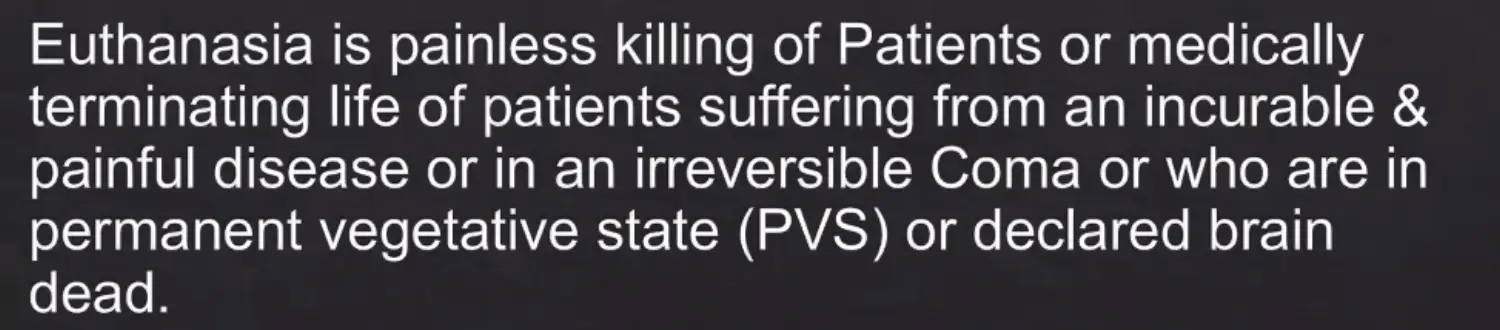
Whom Does it Apply to ?
Applicable to Only those people who are in
- Permanent Vegetative State
- Permanent State of Coma
- Brain Dead Patients
Is there a Law on Euthanasia ?
There is no Law in India on Euthanasia as such, it only works on SC Guidelines until now
How is Euthanasia different from Suicide
- Sec 309 of IPC gives punishment of 2 Years if suicide fails
- Natural Death of Ind is already commenced, he is in the process of dying, his life is not dignified in manner and hence dignified death be given to him/her
- in Suicide, the Natural Death has not yet commenced
What are the Types of Euthanasia ?
Mere Procedural Difference of Providing Euthanasia
- Active Euthanasia - Not Legal in India
- Something is Actively Administered by Doctor to Terminate the Life of Patients
- Ex : Lethal Poisonous Injection Administered
- Passive Euthanasia - India Allows this
- Medical Practitioner remains passive to the needs of patient
- Ex : He doesn't replace the Medical Support System
- Active Euthanasia - Not Legal in India
Aruna Ramchandra Shanbag v/s Union of India, 2011
- Implemented the Execution of Living Will
- Background
- Working as Nurse in Mumbai Hospital
- Didnt had good relationship with Ward Boy
- Ward Boy Strangled and Left her in Room
- She wasted a Lot of Blood, She got into coma
- Until Present She didn't gain any consciousness
SC Guidelines
- Doctors Team will give a report
- Kith & Kin has to be informed
- Family has to be taken permission from High Court
- Ask Immediate Family
- If Not, Ask Relatives
- If Not, Ask Care Takers
NGO Common Cause, 2018
Rt to Execute a Living Will
What is a Living Will ?

Consent of Patients
- Voluntary
- Non Voluntary
Important Point
Due Process of Law will be Applied to Cases of Art 21 only
But, Supreme Court has devised its own mechanism to keep a check on the Just & Fair Nature of Procedure
Art 21 A - Right to Education
Article Says
Free & Compulsory Rt to Education
Background Development
- Added by 86th CAA, 2002
- Before it was made a Fundamental Right it was considered implied under Art 21 i.e Rt to Life and Liberty
Mohini Jain v/s State of Karnataka, 1992
- in 1992, Mohini Jain v/s State of Karnataka declared that Rt to Education
- upto Higher Education (Upto Tertiary Education)
Unnikrishnan v/s State of Andhra Pradesh, 1993
- Rt to Education will be considered a FR under Art 21 upto Primary Education
86th CAA, 2002
Rt to Education Act, 2009
- Any Child upto 14 Years of Age
- has right to get Quality Education
- with Access to Free Books & Dress
No Detention Clause
- This Act has a No Detention Clause
- with Enrolment, Retaining of Individual is also a must
- They will be promoted upto 8th Std
- But because of this Clause
- The quality of education had been degraded
- Math Skill of a Class 5 is of Class 1
- Language Skills worst
- Now they cannot be failed until Class 5
- After Class 5 there will be purview of District Education Officer
Reservation
- In Govt School, No Once Can Deny Admission
- 25% Reservation of Seats in Private School for Disadvantaged Section (SC ST & BPL)
- Disadvantaged Section will be notified by the State Govt
- Operational Implementation of this Reservation due to Stigmatisation is Difficult
- Exception is : Minority Schools
Art 22 - Protection Against Arrest & Detention in Some Cases
Article Says
Protection Against Arrest & Detention in Certain Cases
Detention - Preventive & Punitive
Scheme of Things - Preventive & Punitive Detention
- Punitive Detention
Defintion


Process
A → Complains Against → B → Police Officer Acts → Cognisable Offence → w/o Warrant Arrest
- Judge if wants to extend the custody, will give the Judicial Custody - ie in Jail and not in police station
- After Investigation Report is submitted, and then he is bailed until judgement is given
- Result
- Found Guilty → Sent to Jail → Punitive Detention
- Not Found Guilty → Released
Rights of Person who is Arrested
Written
- Should be Informed the Reasons of his Arrest
- Has to be given a Legal Right of Lawyer
- Has to be produced in front of nearest Magistrate in front of a Judge within 24 Hours
- Judge will give permission for extending the custody or giving the bail
Image
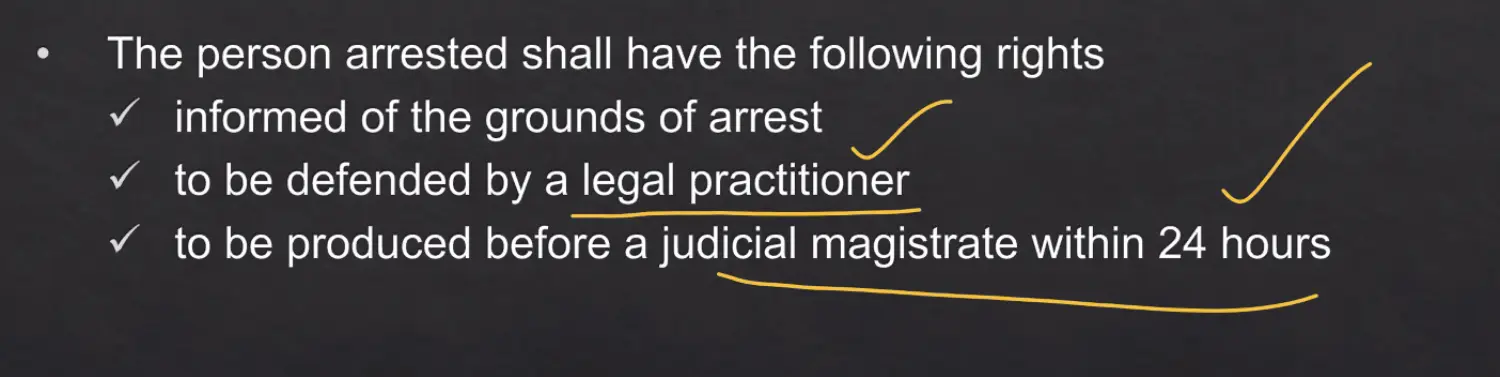
D K Basu v/s State of West Bengal
- Rt to see the Identity Card of Police Officer
- There has to be a Arrest Witness of a Person in locality
- Women has to be Arrested
- in presence of a women police officer
- after sunrise and before sunset
To Note
- The Trial Will Take Place
- Offence has already taken Place
- Preventive Detention
Defintion
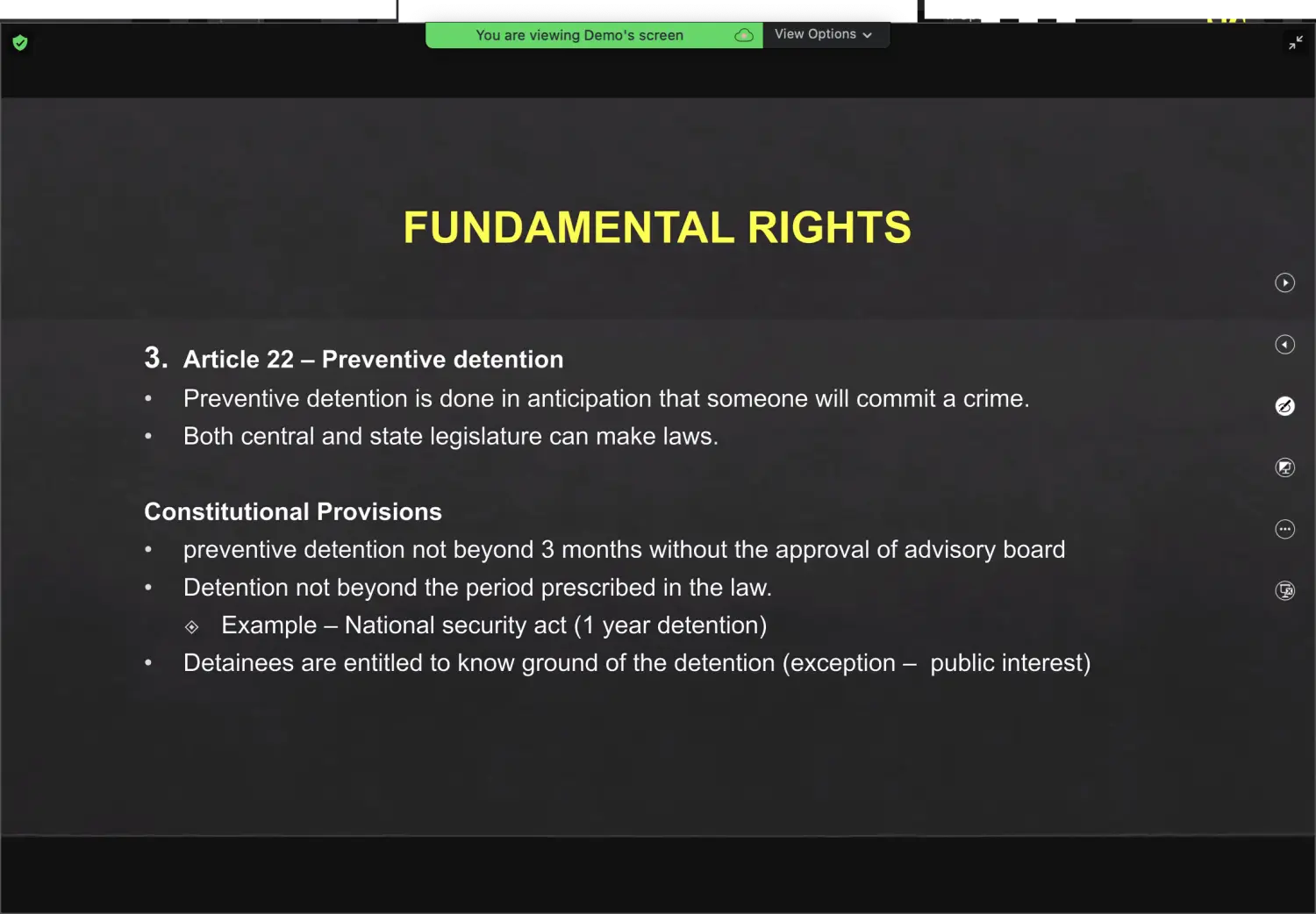

Example
- All Local Leaders were kept under house arrest
- A K Gopalan Case
To Note
- It is done in preventive basis
- The actual commission of offence has NOT been done
- Preventive Detention can happen only by way of Law
- Both Central & State Can Make Law
- Centre - Applies in India
- State - Applies to State
- Examples of Laws of Preventive Detention
- PDA - Preventive Detention Act, 1950
- MISA - Maintainence of Internal Security Act, 1971
- NSA - National Security Act, 1980
- Both Central & State Can Make Law
Constitutional Provisions
PD not beyond 3 Months w/o the approval of advisory board
- Advisory Board Consists of Judge of HC & Other Members
Detention can not be beyond the period prescribed in the Law
- Ex : NSA Max Detention is 1 Year Detention
Detainees are entitled to know the grounds of the detention
Except : Public Interests
- Punitive Detention
Art 23 - Art 24 → Right Against Exploitation(2)
- Art 23 - Prohibition of Traffic in Human Being and Forced Labour
What does the Article Say

What is Begar & Human Trafficking
- Trafficking - Commercial Exploitation of Human Beings
- Organ Harvesting
- Sexual Slavery
- Prostitution

Why is Trafficking a serious concern for India ?
- India is at the Tri Junction of Afghanistan and Pakistan leading way to South East Asia
What are the Laws Against It ?
- Immoral Traffic Prevention Act, 1986
- Bonded Labour System Abolition Act, 1976
Is Devadasi a part of Human Trafficking
- Some Big Temples in South India and Orissa it was widely prevalent
- Some Young Girls are brought to Temple as Wife & Daughters of God
- But in the lieu of Religion, they are sexually exploited by Local Influencers
- Art 24 - Prohibition of Employment of Children in Factories
Article Says
No child below the age of 14 Years, shall be employed to work in any factory or mine or engaged in any other hazardous employment
What are the Acts Against it ?
- Mines Act, 1952
- Factories Act, 1948
- Child Labour Prohibition Act, 1986
- Lists Down the List of Hazardous Jobs
Recent Amendment - Done to be in Resonance with Rt to Education
The Child Labour (Prohibition & Regulations) Amendment Act, 2015
- Here Rt to Education has been made a FR
Category Child (0-14)
- Child Shall Not be employed in any employment upto age of 14
- Exception to - During Vacation Not During School Hours
- Audio Visual Industry
- Family Enterprise
- Self Agricultural Farms
Adolescence (15-18)
- Shall not be employed in Hazardous Jobs
- Art 23 - Prohibition of Traffic in Human Being and Forced Labour
Art 25 - Art 28 → Right to Freedom of Religion(4)
- Background
- Questions to Ask ?
- Positive Secularism has a Interventionist Approach
- To What Extent Can State Intervene in the Religion
- Article in totality Says
- Profess, Practise, Propagate : The Freedom of his Choice
- Questions to Ask ?
- Art 25 - Individual Religious Rights
Article Says
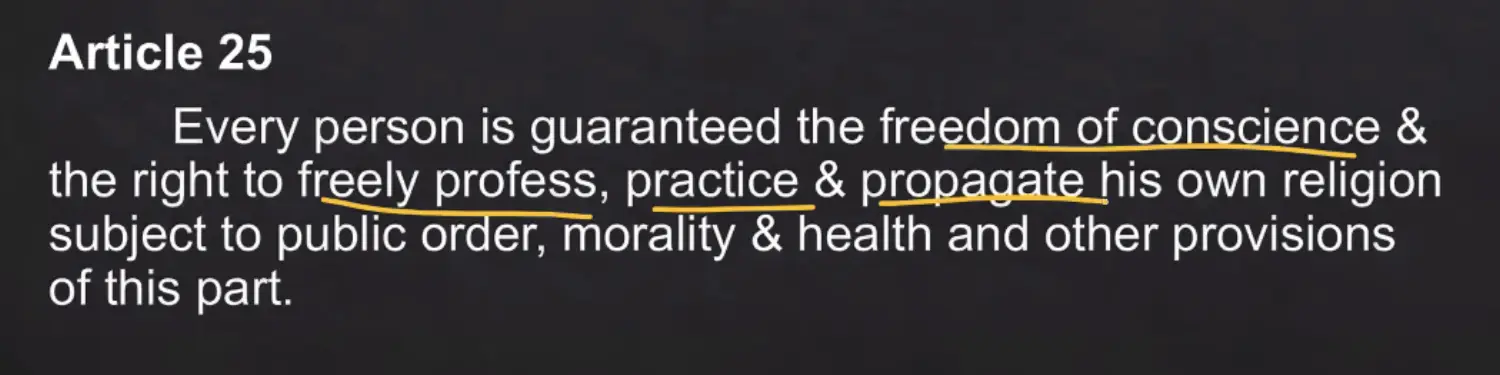
Propagate - Disseminate Information
Practises - Rituals or Religious Practises
Profess - Openly using his/her faith/belief
Important Points
- State Intervention is Possible in Matters of Religion → Positive Secularism
Reasonable Restriction
Public Order
- Use of Loudspeakers
Morality & Health
Health
- Practise of Sallekhana & Santhara
Morality
- Practise of Performing of Nudity by Monks of Digambar's
Other Provisions of this Part
- If Rt to Freedom of Religion is violative of others FR
- Forceful Conversion
- a Person wilfully can convert from religion to another religions by his faith and clarity of conscience
- but cannot be by means of force, fraud, inducement or fear
Doctrine of Essentiality
Also called the Doctrine of Essential Religious Practise
Religious Practises can be divided into 2 Parts
Essentiality Religious Practise
According to Supreme Court there are certain practises which are integral to the religion w/o which the practise of the religion is not possible
Non Essential Religious Practise
However there are certain practises which are not integral to the religion. Such Practises doesn't affect the essence of the religion
Sirur Math Case, 1954
- Innovated by SC for the first time in this case
Santhara Case - Jains
- HC Said it is not
- SC it is Essentially Religious Practise
- Evidence Taken as
- Religious Texts
- Testimony Given by Religious Experts
Hijab Case - Muslims
One View - No
Against Secularism & Equality
One View - Yes
Rt to Life - 21
Rt to Liberty - 19
There is no Question to enter into Doctrine of Essentiality
Evidence Taken was
- Empirical Evidence
- Behavioural Issues
Sabrimala Case - Hindus
Why Not Entered
God Placed in sacrosanctum practises Celibacy
Hence entry of Active Menstruation Ladies is not allowed
SC Said
Evidence - Scriptures & Religious Experts
Violative of Art 17 & Art 25
Criticism of Doctrine of Essentiality
- Judges may be Legal Experts but they are not Religious Experts
- Methodology Used by Judges is Different in Different Cases
- In Totality, Why is Supreme Court Venturing into a domain, which is not its domain
- Art 26 -Freedom to Manage Religious Affairs & Religious Denominations
Article Says

Meaning of Denominations
- Denomination means the Group of People
- Within a Religion there can be many Denomination
- Religious Denomination has not been defined in the constitution
- Definition by SC : It consists of a Religious Sect or a Body having common faith and organisation and designated by a distinct name
Rights Included within are
- Rt to Establish Religious Denominations
- Rt to Manage their Religious Affairs
- Rt to do Charitable Activities
- Rt to Acquire & Own ; Movable and Non Movable Property
Subject to Reasonable Restriction
- Note : Art 25 Individual Art 26 Group
- Art 27 - Religion cannot be a basis of Taxation Policy in Country
- No Tax on the Name of Religion ; Whatsoever
- Usage of Tax on Promotion of Religion
- Subsidy for People for Mansarowar Temple
- Building of Ram Temple, Contribution by States
- Hajj Subsidy Earlier there, Now not there
- Question of Fees collected in Various Temples in India
- collected only for secular activity and not for promoting religion
- Art 28 - Can there be Religious Instructions
Article Says

Religious Worships - Religious Practises cannot be forced upon students
Religious Instructions - Preaching of Religious Texts and Scriptures
Three Types of Institutions
- Educational institution wholly maintained by State
- No Religious Instruction - 100% Ban
- Educational Institution Administered by State but Established under the Religious Endowment or Trust
- Religious Instructions are allowed
- Religious Endowment or Trust Act
- Estab of Madarsa
- Estab of Convent Schools
- Private Educational Institutions recognised or aided by the State
- Religious Instruction or Worship can be Imparted only on Voluntary Basis
- Cannot be Forced to do it
- Educational institution wholly maintained by State
What is the Exact Meaning of Religious Instructions
- Mere Teaching of Religious Peoples Lives, Like teachings and values of Guru Nanak is not a Religious Instruction
- Background
Art 29 - Art 31 → Culture & Educational Rights
- Art 29 - Protection of Interest of Minorities - FOR ANY SECTION OF CITIZEN
Article Says
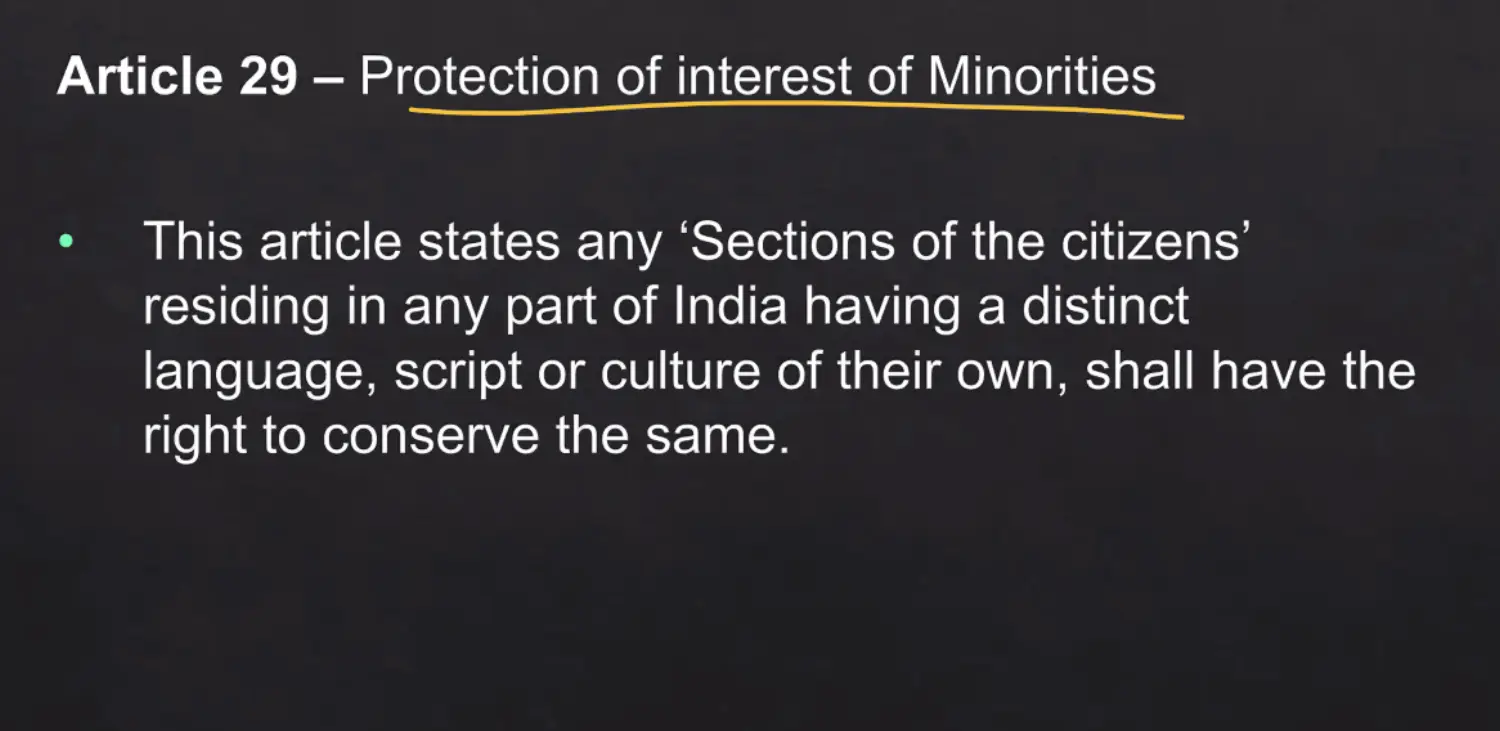
Section of Citizens
Can be a Minority or Majority - Any Section of Citizen
Residing in Any Part
Distinct Language, Script, Culture
Shall Preserve by Any Means
- Like the Game of Jallikattu
- Initially banned
- Protest in Tamil Nadu
- Again Court Hearing and Finally Allowed with Slight Modification in Tamil Nadu
- Jallikattu
- Taken up by PETA
- Asked for Ban of Jallikattu
- Cruelty of Animals to be Prevented
- Prevention of Cruelty to Animals Act
- What Does Jallikattu Do ?
- Practise leads to hurting of these animals
- usage of chilli powder on eyes and nose of animals
- physical abuse of animals to make it more violent
- Taken up by PETA
- Art 30 - Right of Minority to Establish & Administer Educational Institutions - ONLY FOR MINORITY
- in Art 29 - by any means
- in Art 30 - by means of establishing educational institutions
Conditions
- Only if they(minority person or group) establish and then they will have right to administer
- No Unnecessary Interference from State
Art 30(1)
Article Says
All Minorities whether based on religion or language shall have the right to establish and administer educational institutions of their choice
Grounds on Which Minority can be Identified
- Religion
- Language
Amongst these 2 who will be minority
that is not defined in the constitution
What is the Basis of Identifying Minorities
TMA PAI Foundation v/s State of Karnataka, 2003
wherever the educational institution has to be established ; the state should be the unit
Whoever is less than 50% in numbers on grounds of language or religion → it will be considered as minority
Examples of a Minority Educational Institutions
- AMU
- St Stephens
- Jamia Milia Islamia
Privileges to Minority Educational Institutions
- They will be regulated but with minimal interference
- they can setup their own governing body
- reasonable fee structure, state can just set a boundary
- they will recruit their own teaching or non teaching staff
- method of appointment - upto institute
- Admission should be in fair manner - but how do u do that is your outlook
Why is the Minority Educational Institutions
- To Give Impetus to education in that community
- Free to Reserve 50% of Seats in the Institution
- Reservation Doesn't apply here
Can the Land be compulsory be acquired by state ?
Normal Institution
Yes it can be acquired by state compulsorily with proper remuneration
Fair & Just Compensation < Market Value
Minority Institution
Can be Compulsorily Acquired
But the Compensation here should be completely on Market Value and NOT a Just & Fair Compensation
Art 31 - Rt to Property && Art 19(1)(f) - Currently Removed from Part 3
By 44th CAA, 1978
- Both Clauses were present in the original constitution
- 19(1)(f) - removed from Part 3 of the Constitution
- Article Says Guarantees to Every Citizen the Right to Acquire, Hold & Dispose Property
- Not an Absolute Right
- RR for Art 19(1)(f) are
- Public Welfare
- Interest of Scheduled Tribe
- Art 31 - Removed from Part 3 and Placed in 300A
- Article Says No Person shall be deprived of his property except by an authority of Law
- Law : Land Acquisition Act
- Meaning : The Action of the state has to be backed by a Law
- Earlier it was a FR now its a Legal Right
- Kameshwar Singh v/s State of Bihar, 1950
- He Said Land Acquisition Act is violative of Art 14 Art 19 Art 31
- SC Said land can be taken away by law
- He Said that it should be by Fair & Just Compensation - Hence Violative of Art 19 & Art 31
- Different Place Different Compensation - Violative of Art 14
- SC accepted this Premise
- Was a Blow to the Govt. Hence Series of Changes were brought to Indian Constitution
- as a Reaction to Kameshwar Singh v/s State of Bihar
- Art 31 A was inserted
- Art 29 - Protection of Interest of Minorities - FOR ANY SECTION OF CITIZEN
Art 31 A - Art 31 D → Saving of Certain Laws
Art 31 A - Saves Certain Categories of Laws related to Agrarian Reforms
- Inserted by First CAA, 1951
- Saves Certain Categories of Laws related to Agrarian Reforms, (Specifically 5 Categories of Law) specifically for Socio Economic Reforms
- Even if Law of Land Acquisition violates Art 14 19 31 is violated, it cannot be challenged in court of law
- Art 31 A takes away the power of Judicial Review from Courts on the cases of Art 14 19 31
Art 31 B - Saves Laws Placed in the Ninth Schedule
- Inserted by First CAA, 1951
- Saves Laws Placed in the Ninth Schedule
- Provides for Complete or Blanket Immunity
- Provides Protection Against All the Fundamental Rights
Why Need 31 A when there is 31 B
31 B requires a CAA && only when it is placed in the Ninth Schedule
Currently there are 284 Laws in the Ninth Schedule
Where as a CAA is not required in case of Art 31 A
Art 31 C - Save Any Law Trying to Implement Art 39(b) & 39(c) on grounds of violation of Art 14 19 31
- Inserted by 25th CAA, 1971
- Indira Gandhi Wanted to Specifically Implement Two Important Directives i.e Art 39(b) & Art 39 (c)
- Art 39(b) → Prevention of Concentration of Wealth in the hands of few individuals of society
- Art 39(c) → Redistribution of Wealth
- by 42nd CAA, 1976 she tried to enlarge scope of Art 31 C
- Protection of 39(b) 39(c) was extended to all the DPSP over Art 14 19 31
- Now the Art 31 C read - Saves Any Law Trying to Implement DPSP over Art 14 19 31
- Minerva Mills Case, 1980
- This was taking Judicial Review of Supreme Court. Hence, the Extended Scope of 31 C was made null and void
- SC declared - These 2 to be part of Basic Structure
- Judicial Review
- Harmonious Balance between DPSP & FR
- Sometimes 39 (b) 39 (c) can be given supremacy over Art 14 19 31
- Here DPSP - Collective Need - Art 39(b) && Art 39(c)
- Here FR - Individual Need - Art 14 19 31
- 44th CAA, 1978
- 19 (1)(f) was repealed
- Art 31 deleted & inserted in Art 300 A
Art 32 - Art 35 → Right to Constitutional Remedies - Heart & Soul of Constitution
Art 32 - The 5 Writs
Writ Summary
Background
- According to Ambedkar its the Heart & Soul of the Constitution
- Talks About Writ Jurisdiction
- Enforcement of Rights comes from this Right
- Rt to Seek Remedy in case of violation of FR is itself a FR
Process of getting Constitutional Remedies
- Individual will file a petition that SC has been violated
- Court will issue Writs - Directive by Court
Powers of Issuing Writs
- Power to Issue Writs is a Concurrent Powers(SC & HC Both) and Not Exclusive Power
- Affected Individuals can knock doors of
- SC under : Art 32
- HC under : Art 226
Difference in Jurisdiction of HC & SC
Difference Between Knocking Doors of SC & HC
Territorial Jurisdiction
- But SC has got wider Territorial Jurisdiction
- whereas HC can issue writs only if right has been violated within the state
Nature of Cases
- SC can issue writs only in case of violation of FR
- where as HC can issue writs for both FR & Legal Rights
Can any other court other than SC & HC issue writs
- Art 32(3) provides for the Parliament to Give power to Other Courts to Issue Writs as well
- Not done until now
When is a Writ Issued
When the violated BRINGS TO THE NOTICE OF COURT, that his FR has been violated
Meaning of Locus Standi ?
- Whenever a case is brought in front of court, the court asks the person, what is your standing or what is your relation to this case
- Traditionally Judiciary has been following the rule that, the person who is affected should come to the court
- the affected person might not have resources to file the case, this would prevent justice
Public Interest Litigation - PIL
- hence SC innovated PIL - Public Interest Litigation
- Where the another person having no connection to the case, can apply to the court for justice
- Examples are
- Aruna Shaunbague Case
- Vishaka Case
Habeas Corpus - To Have the Body
- Meaning
- Literally Means to Have a Body
- It means, to produce the body in front of the authorities which has issued the order
- Does Principle of Locus Standi apply in this case ?
- No it does not apply in case of Writ of Habeas Corpus
- Meaning not necessarily the Affected Ind but any other person can also file for petition
- Hussainara Khatoon & ORS v/s Home Secretary, State of Bihar, 1979 - PIL
- It was in case of prolonged Undertrials
- in Bihar No of Undertrials were increasing, even if convicted jail would be for 2 Years but they have spent 5 to 6 Yrs in Jail
- SC Said
- Rt to Speedy Justice is Rt under Art 21
- Initially 14 Undertrials were released
- Taking Precedence later 40,000 Undertrials were released
- Meaning
Mandamus - We Command
- Principal of Locus Standi Doesnt Apply here
- Its a command given by the Courts to the Public Authorities (PA) in case of Violation of Rights cuz PA failed to Perform the Duty
- This is only in case of PUBLIC Authority
- Failing of PA could be
- Omission - Missed
- Commission
- Examples of Public Authority not doing its work ; for the court to issue mandamus
- Police Station not Filling FIR
- Municipal Corporation Not taking care of Pollution Free Environment
Prohibition - To Forbid (HC→LC)
- Direction for Higher Court to Lower Court
- Preventive in Character ; Negative Injunction
- Principle of Locus Standi Applies in Case of Prohibition
- This is a Direction from Higher Court to Lower Court ; to tell the lower court that this is not the jurisdiction of the lower court in the first place
- Prevents Lower Court from Exceeding Jurisdiction
- Negative Injunction which directs Inactivity of Lower Court
- Applies to Only Judicial and Quasi Judicial Authority
- Examples of Quasi Judicial Bodies
- Parliament
- Finance Commmission
- Election Commission
- Arbitration Board
- Tribunals
What if the Lower Court has already passed the boundary of Jurisdiction
Certiorari - To Certify
- Grounds on Which Higher Court can certify Lower Courts Judgement
- Error of Law
- Excess of Jurisdiction
- Violation of Natural Justice
- Certiorari is CURATIVE in NATURE
- Principle of Locus Standi Applies
- Can be Issued against
- Against Judicial
- Quasi Judicial
- Administrative Authorities - by Departmental Enquiry based on the Conduct Rules
- Grounds on Which Higher Court can certify Lower Courts Judgement
Quo Warranto - By What Authority
- To Check of an Eligible Person is holding on to the Public Office (which is Significant & Substantive)
- Examples : PM, CM, CoM, CEC, CVC
- These Offices can only be held with Suitable Qualifications
- Whenever the Writ of Quo Warranto is filed, the person has to prove in court of law that he fulfils the eligibility
- by What Authority or Warrant
- Enquire into Legality of claim of a Person to a Public Office
- Against Public Authority holding office of substantive importance
- Principle of Locus Standi does not apply
- Under Representation of People Act, 1951
- If they are convicted for a minimum of 2 Years or More. Then they will be immediately disqualified to be the member of state legislature
- Further, They cannot contest election for another 6 Years
- Examples
- Jayalalita was convicted for 4 years for Prevention of Corruption Act
- Her Party won the Elections
- she didn't fight elections
- She was appointed the CM
- Quo Warranto Applied
- 6 Months time for Jaylalitha
- SC said within 6 months also she is not eligible to contest elections
- Azam Khan convicted for 3 years for Hate Speech
- Jayalalita was convicted for 4 years for Prevention of Corruption Act
Art 33 - Power of the Parliament to Modify the Rights Conferred by this Part (Part 3)
- Art 33 empowers the parliament to restrict or abrogate the FR of the members of the
- armed forces - Army Navy Air Force
- para military forces CISF, BSF, NSG, ITBP
- police forces - CBI
- intelligence agencies - R&AW, IB
- analogus forces - NIA
- Examples of Law
- Army Act, 1950
- Navy Act, 1950
- Airforce Act, 1950
- Police Force (Restriction of Rights), 1965
- Rights Restricted are :
- Rt to Form Union
- Rt to Speech and Expression
- Rights Restricted due to
- National Security Concerns
- Art 33 empowers the parliament to restrict or abrogate the FR of the members of the
Art 34 - Restriction on Rights conferred by this part while Martial Law is in Force in any area
- This Part is Part 3
- Sec 144 is NOT Martial Law
- After Independence ; There has never been implementation of martial laws
- Martial Law : Military Rule
- The Civil Administration System doesn't work
- The Justice, Administration & Whole Process of an area is given to an army officer
- When can Martial Law be Implemented - War, Invasion, Insurgency
Art 35 - Legislation to give affect to provisions of this part (3)
- Who has Authority to make Laws for Part 3
- Article 35 Empowers the Parliament not the State Legislature
- To Make Laws to give the Affect
- Article 16(3)
- Article 32(3)
- Article 33
- Article 34
- Prescribe Punishment for those acts which are declared to be offences under this part
- Art 17 - Untouchability
- Art 23 - Begar
- Art 24 - Child Labour
Trinity - Goden Triangle - Art 14 19 21
- Before Menaka Gandhi Case, FR were considered different in water tight compartment
- After MG case only, FR were considered to be connected
- If Rt to Life & Liberty is Deprived - Art 21 If need to be, only by Due Process of Law
- Test of not only Art 21 but also test of Art 14 & Art 19 is also needed
- How is Art 14 19 21 related
- Restrictions should be - Reasonable Restriction Test of Reasonability
- Google Art 14 19 21
Part 4 (Art 36 - Art 51) - DPSP
Art 36 - Definition of State
Article Say
Same as Definition in Part 3 unless stated otherwise
Why do we need to define it
- To Know who has the obligation
- If violated, who is accountable
Art 37 - Moral Obligation
Shall be the Duty of the State to apply these principle in governance of the state though not enforceable in a court of law
Art 38 - Art 51
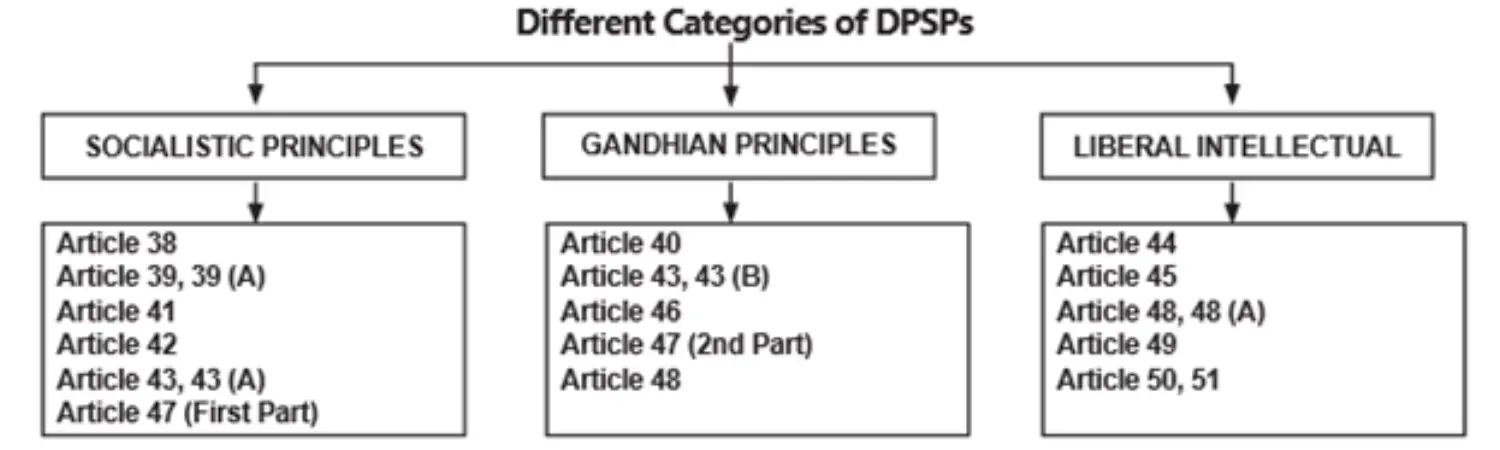
- Socialistic (8) - 38, 39, 39A, 41, 42, 43, 43A, 47
Art 38 - Secure a Social Order
- Living Peacefully
- Stability in Society
- Duty of State to ensure Peace and Stability in society
- By Institution of Police and Court
Art 39 - Certain Principles and Policies
6 Principles under Art 39 are
1 To Secure Adequate means of Livelihood for all the Citizens
MGNREGA
UBI - Universal Basic Income Scheme - Not Implemented but Govt is contemplating
Minimum Allowance to Citizen, to follow a certain standard of life
India is thinking about Quasi Judicial UBI
Work More on it
2 Equitable Distribution of Resources - Art 39(c)
- Equitable not Equal
- Land Reforms Act
- Progressive Taxation Methods
- Tax from Rich
- Subsidy to Poor
3 Prevention of Concentration of Wealth - Art 39(b)
- Progressive Taxation
- CSR
- Abolition of Privy Purse
- Abolition of Princely States
4 Equal Pay for Equal Work
- To Prevent Social Justice
- Equal Remuneration Act
- Men and Women India Cricket Team
5 Preservation of Health of Workers
- Labour Laws
- Mines Act
- Factories Act
- Industrial Disputes Act
- Disability During Work - Compensation
6 Opportunity for Healthy Development of Children
- Mid Day Meal Scheme
- Mission Vatsalya
- ICDS - Integrated Child Development Scheme
- POCSO - Protection of Children against Sexual Offences
- ASHA Workers
Art 39A - Equal Justice & Pre Legal Aid
- There is no Equal Access to Justice
- Free Legal Aid for certain people
- Legal Services Authority Act
- Provide for Free Legal Aid for Poor People
- National = NALSA - National Legal Service Authority
- State = SLSA - State Legal Service Authority
- District = DLSA - District Legal Service Authority
Art 41 - Right to Work, To Education, To Public Assistance
Work
MGNREGA
Education
Rt to Education
Public Assistance
- Provision for Disables in Public Sphere
- Disasters
- Old Age Homes
- Widow Pension Schemes
Art 42 - Provision for Just & Humane Conditions of Work and Maternity Leaves
Just & Humane Conditions of Works
Mines Act, Factory Act, Industry Disputes Act
Maternity Leaves
Maternity Benefit Act
- One is maternity leave which is of 180 days ( applicable for first two children only ) which can be started 3 months before the delivery date. This is now applicable to all private and public institutions also.
- In central govt one more leave ,that is child care leave which is of 720 days which can be taken till the child attains the age of 18 years.
Paid Leave Means
- She can take paid leave of 26 Weeks in an organised Sector
- It will be counted for her seniority and her salary will be given
- can be taken in one single stretch or in any no of breaks
Art 43 - Living Wage etc for Workers
- Minimum Wages Act - to Prevent Exploitation of Workers
- Implementation is still questionable
Art 43A - Participation of Workers in Management of Industries
- Industrial Disputes Act
- Trade Union Act
- Workers can collectively Bargain by forming a union
Art 47 - Duty of State to raise the level of Nutrition, Standard of Living, Improve Public Health
Level of Nutrition
- Food Security Act
- PDS
Standard of Living
- Indira Aawas Yojana - Free Housing
- Free Electricity
- Jal Jeevan Mission - Drinking Water Facility
- Internet to all Panchayats
Improve Public Health
- National Health Mission
- Ayushman Yojana
- Schemes at Primary, Secondary & Tertiary Schemes
- Gandhian (6) - 40, 43, 43B, 46, 47(Second Part), 48
Art 40 - Organisation of Village Panchayat
- 73rd CAA, 1992 Constitutional Status to Panchayat
- with Constitutional Status - It means it becomes Mandatory to be established
- Earlier - Even if Panchayat will be constituted or not, state could actually stop it also
For Gandhi Democracy at Grass Root Level is the Real Democracy and not at the Highest Level
Advantage of Having Panchayat, Elected Representatives of Local Area, They can question them
Hence, Third Tier Democracy Increases Accountability
Art 43 - Promotion of Cottage Industries - Gandhian Principles
- Promotion of & Empowering the Cottage Industries
Art 43 B - Promotion of Co Operative Societies
- Co Operative Societies Act - To Regulate and Empower Co Operatives
Art 46 - Promotional of Education and Economic Interest of SC ST and Other Weaker Sections
SC ST OBC
Reservation to SC ST OBC in Educational Institution
Reservation for ST in Promotion
Standup India Schemes - To Promote Economic Interests of SC & ST
Every Year a Minimum of 1 Crore has to be Sanctioned for the SC ST for Entrepreneurship from EACH & EVERY BRANCH of each bank
Economically Weaker Section
- 103rd CAA - EWS - Weaker Section
Art 47 - Prohibition of Intoxicating Drinks
- Gujarat, Bihar, Nagaland, Mizoram, Lakshadweep
- In Gujarat - was challenged under - Art 19 (1)(g) - Rt to Occupation Trade and Business
- In Bihar - was challenged under - Art 21 & Art 19
- Patna HC - Struck Down Bihar’s Case
- SC Sub Judice
- Follow Judgement
Art 48 - Organisation of Agriculture and Animal Husbandry
Most of the States there is a Regulation with regards to prevention of Slaughtering of Cow and other Milch Animals
Complete Ban - UP, Gujarat, Rajasthan, MP
Partial Ban - Karnataka
Like Until Productive Age, There cannot be Slaughtering
No Ban - Kerala & Some North Eastern States
- Liberal (7) - 44, 45, 48, 48A, 49, 50, 51
Art 44 - Uniform Civil Code (UCC) - Very Important ⭐️⭐️
How old is the case of UCC ?
The Debate of Having a UCC is as old as the CA itself.
What is the Meaning of UCC ?
Definiton
A Set of Common Civil Code for all Indian Citizens in personal matters related to marriage, divorce, property, inheritance etc irrespective of religion which right now is not uniform
- Uniform - Set of Common Laws
- Civil Code
- Mundane Aspects
- Marriage
- Divorce
- Inheritance of Property
- For Civil / Personal Laws
- Mundane Aspects
Current Status of Laws ?
- 80% Hindu Buddhism Sikh Jain - Same Law
- 20% Muslims Christians Parsis & Others - Different Law
Why do we need UCC - In Favour ?
- It is the Moral Obligation of State
- UCC is example of Progressive Society
- Example : France & USA
- Uniform Laws help in reduction of Vote Bank Politics
- Deals with Remedy to Violation of Rights
- Example
- Grounds of Religion - Art 15
- Equality Before Law - Art 14
- Right to Life - Art 21
- Example
- Gender Injustice across religion
- Equality of Law Across Religion
Why do we NOT need UCC - Against the Motion ?
- Violative of Art 25 - Religious Rights
- If people don’t accept State Implements it by Force Unity & Integrity of the Nation will hampers because people will resent
- State Interference in Personal Matters
Examples of Laws Different Laws Currently ?
- Marriage
- Hindu Marriage Act, 1955
- Muslim Personal Law (Shariat)
- Incurable Leprosy
- Hindu & Muslim - Ground for Divorce
- Christian & Parsis - Not Ground for Divorce
- Adoption
- Adopted Child Right to Inherit Property - Hindu Yes
- Other Religion No
- Maintainence After Divorce
- Hindus - Compulsory
- Others - No
- Practise of Triple Talak & Polygamy
- Muslims - Allowed Until Now
- Hindus - Not Allowed
- Marriage
How does it violate FR ?
- Art 14 Art 19 Art 21
Who Suggested UCC in CA ?
Ex of Western Countries which have UCC ?
France and USA
Case Laws wrt to UCC in SC & LC ?
Largely SC was Neutral,
- Shah Bano Case, 1985
- Case of Divorce b/w Muslim Husband & Muslim Wife at age 65
- Husband denied Maintainence
- Maintenance for only first 3 Months
- Under Muslim Personal Law, she cant get maintenance
- SC invoked 125 of CrPC - Criminal Law Its a Punishable Offence to not Provide Maintainence to Wife Even after Divorce she would continue to be Wife of husband if she has not married anyones else Husband will have to give Rs 500
- SC Recommended Implementation of UCC
- Sarla Mudgal Case, 1995
- Sarla Mudgal - Hindu
- Husband - Hindu
- Marriage - Hindu Marriage Act
- Husband - Converted to Islam
- Husband - Married Muslim Women
- SC declared
- We don’t see your religious conversion not on belief but to take advantage of polygamy rule of Islam
- SC Suggested Govt to think about UCC
- SC recommended matter to Law Commission
Law Commission has very categorically said that UCC is
Neither Feasible Nor Necessary
Why LC said like this
- Tension Amongst Minorities
- Citizens don’t accept it
LC suggested Incremental Approach but not a Sweeping Reform
Example
THE PROHIBITION OF CHILD MARRIAGE (AMENDMENT) BILL, 2021
Like Making Age of Marriage 21
- Shah Bano Case, 1985
Art 45 - Provision for Early Childhood Care & Education to Children below the age of Six Years
Art 48 - Organisation of Agriculture and Animal Husbandry
- Green Revolution
- Pink Revolution
- White Revolution
- Schemes
Art 48 A - Protection & Improvement of Environment and Safeguarding of forest and wildlife
- From Environment Classes
Art 49 - Protection of Monuments and Places and objects of National Importance
- Ministry of Culture
- ASI - Archaeological Survey of India
- Scheme : Adopt Heritage Sites Scheme
- Companies Can Show it as part of CSR
- CSR under Companies Act
- Private Individuals, Companies & NGO
Art 50 - Separation of Judiciary from Executive
- CrPC - De Alienates Power of Police & Who Can Give Punishment
Art 51 - Promotion of International Peace & Security
- India is the Second Largest Country in the World to Give Men for International Peace Keeping
- Panchsheel - Non Interference in Internal Affairs of other Country
- No First Use Nuclear Policy
- India will not use Nuclear Weapon against a Non Nuclear State
- India was initially a part of Non Alignment Movement
- Socialistic (8) - 38, 39, 39A, 41, 42, 43, 43A, 47
Does Constitution divide DPSP categories
- No it does not, we make these division for our understanding
Background
- Present in Part 4 of Constitution
- Consist of Art 36 to Art 51
What is a DPSP
- They are Certain Guidelines and they are very detailed guidelines
How is FD & DPSP related
- FD are Moral Obligation - On Citizens
- DPSP - Moral Obligation - On State
How does DPSP lead to Welfare State
- If State keeps implementing DPSP → will automatically lead to Welfare State
Why was DPSP Kept a Moral Obligation
Initially india was a Nascent Democracy at the time of Independence
Though Some Members of CA wanted it to be a Legal Obligation, Ambedkar Said it should only be a Moral Obligation because
Resource Constraints
- DPSP is very aspirational, country like US cant even implement it fully now
- Legal Obligation will only increase the Litigation in Courts
Power of Indian Democracy
- Even Moral Obligation can make Govt follow the DPSP, because India is a Democracy and they cant ingnore it
In what condition DPSP is Justiciable
Unless Implemented It cant be made a Legal Obligation
But if the Govt makes a Law and Confers Rights in the Citizen → Taking Inspiration from DPSP→ Then after the Law being made → If rights are violated, now it is justiciable
Example
MGNREGA - 100 Days of Employment If he is not given Employment, he can seek remedy
Is DPSP new to Constitution
- In Government of India Act 1935, there were elements of DPSP
- In GOI Act, 1935 it was called Instrument of Instruction
What is the Difference Between FR & DPSP ?
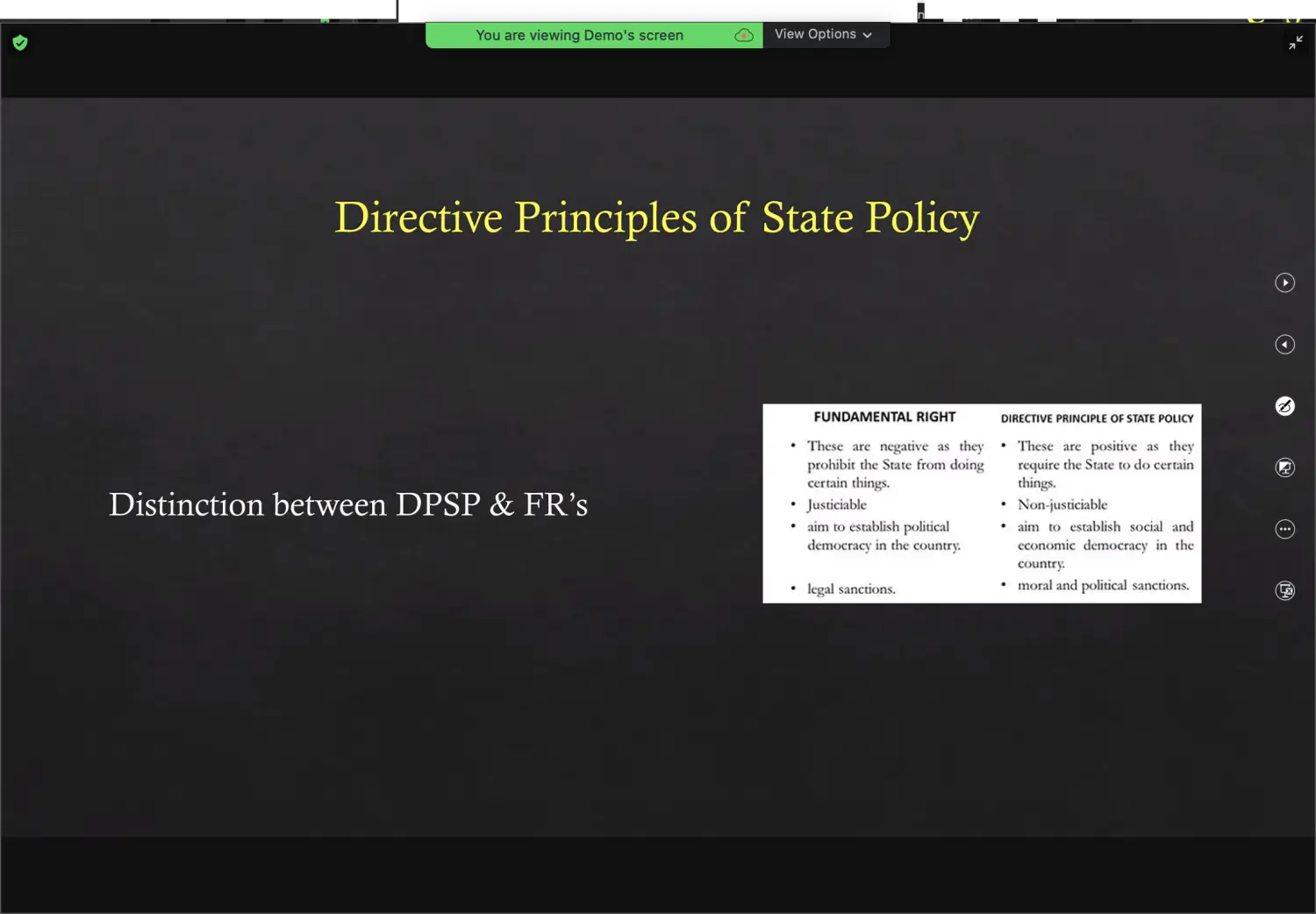
Examples of Questions Possible
- Justiciable or Moral Obligation
- Amendments of DPSP
- Difference from DPSP & FR
- Prelims Exam - Min 1 Max 2
- Mains - 1 Question - Majorly UCC
Part 4A (Art 51A) - Fundamental Duties
Background - Factual Information
- was not Part of Original Constitution
- Added by 42nd CAA 1976
- Added to Part 4 A
- Added Art 51 A
- Initially had 10 Duties
- 11th Duty added by 86th CAA, 2002
The Fundamental Duties Images
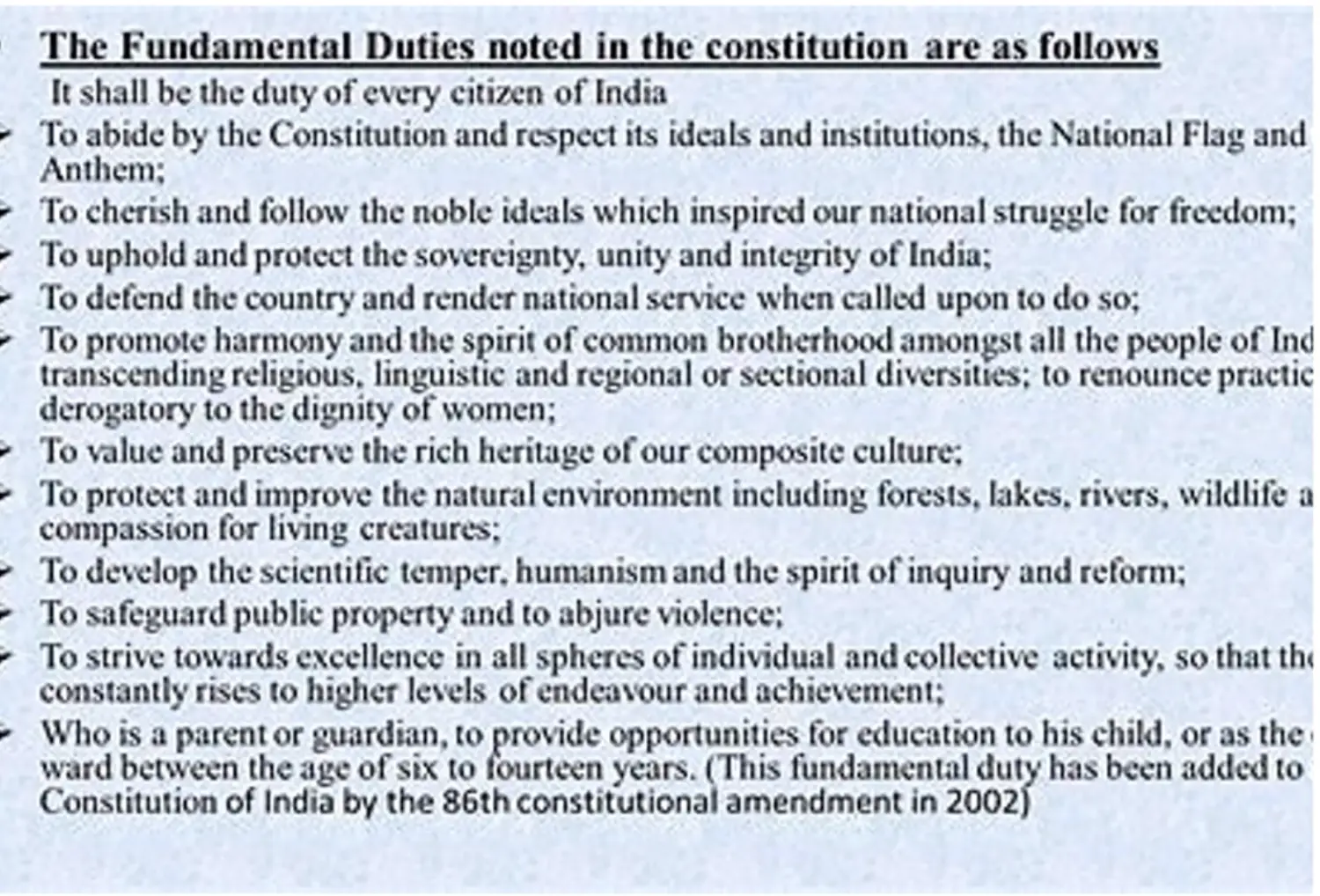
The Story Behind its coming
- Based on Recommendation of Swaran Singh Committee (Defence Minster of India then)
- He was Part of Kitchen Cabinet of Indira Gandhi
- 1975 - 1976 - Time of Third National Emergency
- People weren't happy ; Public Property was destroyed
- He Recommended Bringing in some Fundamental Duties
- This FD could be a Moral Obligation & NOT a Legal Obligation
Important Points to Note
- It is the Duty of the Citizens
- It is the Moral Obligation of Citizens
- There is NO moral obligation on Aliens
Can It be made a Legal Obligation
- Examples
- FD : To Respect National Emblems
- Law : Prevention of Insults to National Honours Act, 1971
- It become a Legal Obligation, Only if the Law is Made on it
- Examples
Scope of Mains Questions
FD is the Codification of task integral to Indian Way of Life
with FD it was codified but the morals were already present in the lives of Indians
Sample Question

- Respect National Emblem
- Call for Nationalism and Preservation of Property
- Preservation of Environment
- Worship of Nature
- Sacred Grooves in Tribe
- Chipko Andolan
- Strive Towards Excellence
- Bose
- Aryabhatta
- Taxilla
- Composite Culture
- Most of Kingdoms Secular
- Less Religious Persecution
- Institution of Family & Marriage is Sacred in India
- Protecting Sovereignty
- Sikh At least 1 Offspring to serve the army
- Respect National Emblem
Scope of Prelims Questions
- Non Justiciable
- Applicable Only to Citizen
- Facts
- Which of the Following is a Fundamental Duty
Detailed FD
- To Abide by the Constitution and Respect the Ideals of Constitution & to the National Flag and National Anthem
- Ideals are Justice Liberty Equality
- Institutions - Judiciary Parliament
- To Cherish and to follow the Noble Ideas which inspired Struggle for Freedoms
- Ideals - Self Respect, Non Violence, Satyagraha
- To Uphold Protect and Sovereignty & integrity of India
- Revolt against foreign rules
- Uprisings & Revolt of 1857
- after independence, Chinese war, civilians participated
- To Defend Country
- Same as above
- To Promote Harmony and the spirit of common brotherhood amongst all the people
- Vasudeva Kutumbhakam
- Renounce Practise Derogatory to Dignity of Women
- Social Reformer - Abolish Sati Widow Re Marriages
- Value & Preserve Rich Heritage & Composite Culture
- Indian Festivals
- Foreign Soft Power
- Scientific Temper
- Bose Aryabhatta
- Spirit of Reform
- RRMR
- Safeguard Public Property & Abjure Violence
- Satyagrah
- Non Violence in Religions
- Individual and Collective Activity
- DPSP
- Cooperative Movements
- Child Education
- Gurukul Culture
- To Abide by the Constitution and Respect the Ideals of Constitution & to the National Flag and National Anthem
Executives - Union & State Executives
⭐️Division of Power - Union & State
Because of Division of Powers ; Executive in India can be divided into two Parts
*Union Executive*Political Exec
President
Vice President
Prime Minister
CoM
Permanent Executive
Attorney General
Civil Servants
State Executive
Political Exec
Governor
NA
Chief Minister
CoM
Permanent Executive
Advocate General
Civil Servants
⭐️President - Basics
Articles Involved
- Art 52 - There shall always be a President
- Art 53 - Head of Union Executive
- Art 54 - Electoral College for Presidential Elections
- Art 55 - Proportional Representation
- Art 58 - Qualification of President
- Art 59 - Conditions of Presidents Office
- Art 61 - Impeachment
- Art 71 - Election Dispute of President
- Art 74 - Council of Ministers to Aid & Advice the President
Who are the Real Executive ?
- Real Executive is Someone Directly elected by People
- PM & CoM
Is President a Real or Nominal Executive ?
Although He is head of Executive. he is a Nominal Head because he has to work on the Aid and Advice of CoM (Art 74)
Is the Aid and Advice of CoM, binding upon the President ?
- Until 1976 the Judiciary had to answer this Question, Many times.
- It was assumed by the CA, instead of a King or Queen, India will have a President & he has to play the same function performed by the Monarch in UK
- It wasn't explicitly mentioned in Constitution, Hence some presidents were acting in contradiction
- So every time in a tussle between president and govt happened - judicial intervention was needed
- Hence, IG brought 42nd CAA, 1976 → Word “SHALL ACT” was added.
- Then, 48th CAA, 1978
- After Emergency, 1977 Janta Party Came to Power
- Janta Party was ok with President being a Nominal Executive
- But 48th CAA
- Added that President can send for reconsideration *only once *
- if the Govt sends again, then President has to agree now
So Does President EVER exercise any discretionary power ?
Yes He Sometimes Exercises, Some Situational Discretion
Existence of President
- What if President Suddenly Dies in Office
- VP will become President of India
- If VP dies
- CJ of India will be President
- If CJ dies
- Senior Most Judge of SC will be President
What if Senior Most Judge Dies
→ Then Next Line of 33 Judges based on Seniority
- What if President Suddenly Dies in Office
Art 58 - Qualification for being the President
1 Citizen of India
Can a Naturalised Citizen be a President of India ? Yes
Indian Constitution doesn't differentiate between a Natural Born & Naturalised Citizen - Once a Citizen he is a Citizen
But in USA, only Natural Born Citizens are allowed
2 Age : 35 Years of Age
3 Qualifies for Election as a Member of House of People (Lok Sabha) - Art 84
1 Citizen of India
2 Not Less than 25 Years of Age
Automatically allows for Presidents Age
3 Oath / Affirmation in front of an Authorised Authority
- He has to file his Nomination Papers in front of Authorised Authority
- Authorised Authority - Decided by Election Commission
- He is generally a Returning Officer - Alternating
- Secretary General of LS - For President
- Secretary General of RS - For Vice President
4 He/She should be an Eligible Voter
- He should himself be able to vote in Lok Sabha
5 He/She should not hold any Office of Profit
0 Office of Profit is NOT defined in the constitution
1 SC Decided the Definition
2 Office of Profit - Before 2006
Any Office executive in nature, either under central govt, or state govt, or local authorities by a way of which an individual receives a salary or a remuneration or profit can be considered to be an office of profit
3 Jaya Bacchan Case, 2006
- Jaya Bacchan was a MP in Rajya Sabha
- Only when they are elected as a MP, MP should not hold any office of Profit.
- Subsequent to being MP in RS, she was also appointed as Chairperson of Uttar Pradesh Film Development Corporation
- She was disqualified from being an MP of RS
- Jaya Bacchan said her Disqualification was wrong, but she said that she hadn't taken any salary from there.
- Hence, the Disqualification was Unconstitutional
- SC changed the definition of Office of Profit
4 Office of Profit - After 2006
Any Office Executive in nature, either under central govt, or state govt, or local authorities by a way of which an individual receives a salary or remuneration or profit is receivable in the first place
can be considered to be an office of profit
It is immaterial whether the individual actually receives the salary or not
Concept of Office of Profit
0 Office of Profit is NOT defined in the constitution
1 SC Decided the Definition
2 Office of Profit - Before 2006
Any Office executive in nature, either under central govt, or state govt, or local authorities by a way of which an individual receives a salary or a remuneration or profit can be considered to be an office of profit
3 Jaya Bacchan Case, 2006
- Jaya Bacchan was a MP in Rajya Sabha
- Only when they are elected as a MP, MP should not hold any office of Profit.
- Subsequent to being MP in RS, she was also appointed as Chairperson of Uttar Pradesh Film Development Corporation
- She was disqualified from being an MP of RS
- Jaya Bacchan said her Disqualification was wrong, but she said that she hadn't taken any salary from there.
- Hence, the Disqualification was Unconstitutional
- SC changed the definition of Office of Profit
4 Office of Profit - After 2006
Any Office Executive in nature, either under central govt, or state govt, or local authorities by a way of which an individual receives a salary or remuneration or profit is receivable in the first place
can be considered to be an office of profit
It is immaterial whether the individual actually receives the salary or not
Exceptions to Office of Profit - Pres, VP, Gov, CoM (Union & State)
- Sitting President
- Sitting Vice President
- Sitting Governor
- Ministers (Union/State)
Art 56 - Term of Office
- Since the Day he assumes office → for 5 Years
- A President is eligible for re election as many times as he wants
- US Presidents only for 2 Terms
- Resignation
- to Vice President
- No Need to give some specific reason
- with Resignation comes vacancy to the President
- This Vacancy can only be for a period of 6 Months and until then the office has to filled with elections
Art 54 - Electoral College & Type of Election for President
Why Indirect Elections
In a Democracy Elected Government will have the real power and once PM is elected. Having a Direct Election for President would means
Extra Cost of Election for a Nominal Executive
Power Tussle between PM & President
How is Presidential Election related to Indian being Republic ?
No Matter What Kind of election, the election will have to be there, because India is a Republic and it needs to have a elected head of state
What is the Meaning of Electoral College
Electoral College will mean all the people who will be Eligible to Vote
Why is it called a Indirect Election
- Because people elect people
- who then elect the president
Who are part of Electoral College
- ELECTED MEMBERS of Both Houses of Parliament
- Lok Sabha (545)
- Elected
- 543 Members Elected - Exist
- Nominated
- 2 Members Nominated from Anglo Indian Community by President
- Removed by 104th CAA, 2020
- Elected
- Rajya Sabha (238)
- Elected
- 233 Elected
- Members
- 12 Nominated - NOT Considered
- Elected
- Lok Sabha (545)
- ELECTED MEMBERS of LEGISLATIVE ASSEMBLY of States
- Legislative Assembly
- Elected
- No of Seats State to State
- Nominated 1 Member could have been nominated by the Governor - NOT Considered for Election
- Elected
- Legislative Council - NOT CONSIDERED
- Legislative Assembly
- ELECTED MEMBERS of LEGISLATIVE ASSEMBLY of NCT of Delhi && Puducherry
- Added by 70th CAA of 1992
- NCT meaning - National Capital Territory
- Will J&K be also a part of electoral college for presidential elections
- ELECTED MEMBERS of Both Houses of Parliament
Who is Not Part of the Electoral College
- Nominated Members of Both Houses of Parliament
- Nominated Members of State Legislative Assemblies
- Elected and Nominated Members of State Legislative Council
- Unless & Until a CAA is done to Art 54 & 55, J&K UT is also not a Member of Electoral College
Art 59 - Conditions of Presidents Office
- Should not be a Member of Parliament or State Legislature
- Member of Parliament - of Lok Sabha & Rajya Sabha
- State Legislature - MLA & MLC
- An MP or MLA MLC can contest elections in being in the post but as soon as he becomes president he should resign
- He Should not Hold any Office of Profit
- He is Entitled for Official Residence
- He will have to live in Rashtrapati Bhawan for discharging works of president and security of president
- Emoluments & Allowances - Law by Parliament
- Law will be made by Parliaments
- Presidents Salary is 5 Lac Per Month
- Presidents Salary & Allowances cannot be varied to be his disadvantage
- can be varied to Advantage but not disadvantage
- Should not be a Member of Parliament or State Legislature
Art 55 - Manner of Election
Concepts Needed
For Population - Important Point - 1971 Census
Latest Census was Used until 1975
Latest Census Rule was amended and changed by 42nd CAA, 1976 by IG
They Inserted the Word : 1971 Census was to be used till the Year 2001
& Replaced the Word : Latest Census
in Year 2001, this Provision was amended by 84th CAA, 2001 - that Census of 1971 will be used until the First Census after the Year 2026
What is the Reason Behind this
During Emergency - Idea of Sanjay Gandhi - Congress brought Family Planning in India
There were instances of Forced Sterilisation in India
Central Govt asked the States to Implement this Policy
Southern State said : Already there is Low Population Growth in Southern State as compared to Northern State
Hence, Southern States would have been in Disadvantage as the value of their MLA would have degraded
Hence, 1971 Census was fixed for Levelling the Play Field
Acceptable Growth Rate was thought to be achieved by 2001
but then due to non achievement it was further amended until 2026
By Secret Ballot Vote (SBV)
- No one can know, who voted for whom
- The Party can give Direction but the person will vote completely on the conscience of his own
By Single Transferable Vote (STV)
What is Single Transferable Voting System
Each and Every MP or MLA will have a Single Vote, but they can give preferences
How does Ballot Paper Look Like
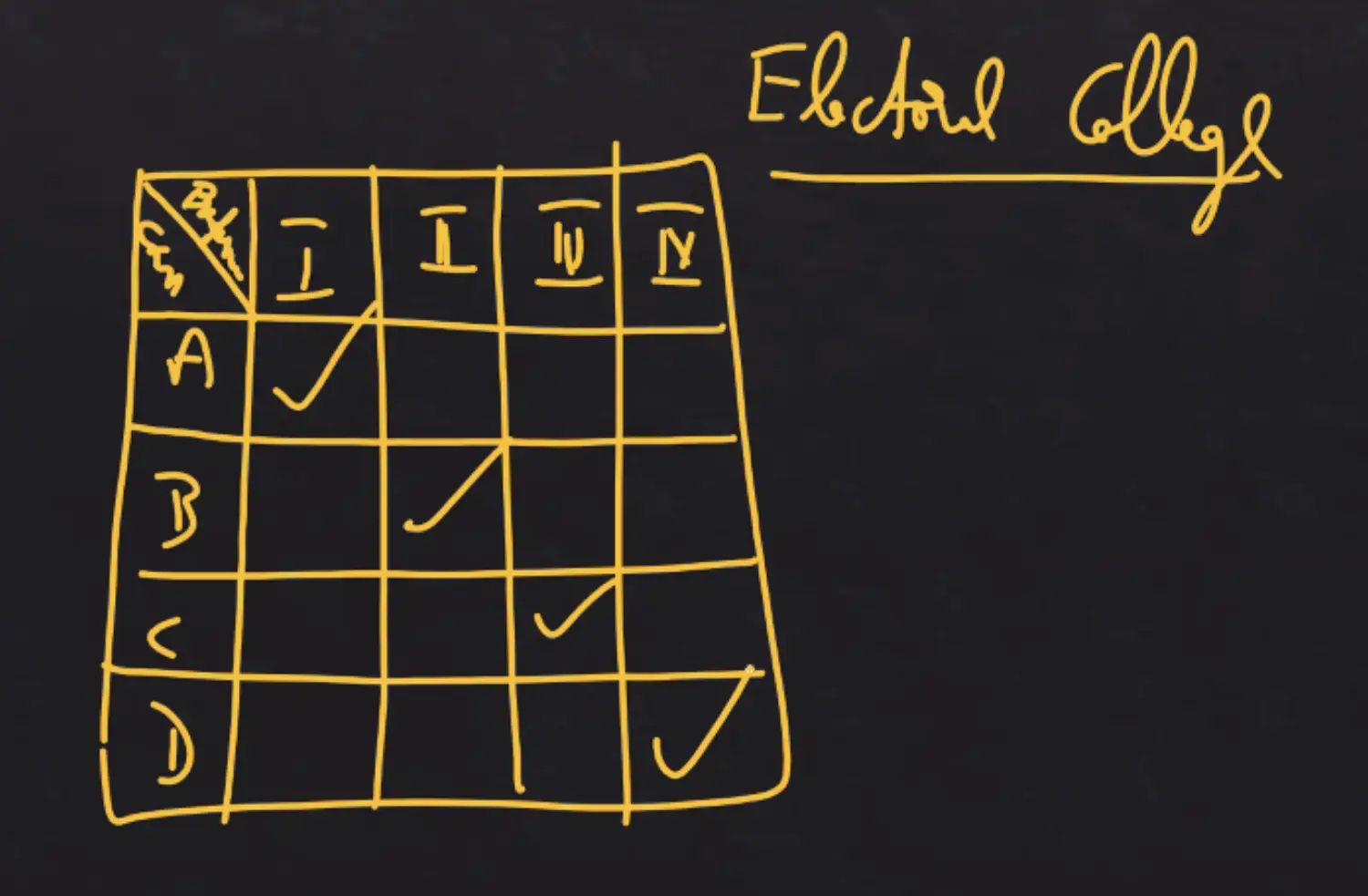
FPPT System
FPPT - First Past the Post System
Used in Elections in Lok Sabha and Legislative Assemblies
Running Race Competition :
The Person has to just get only vote, no matter even if he gets one vote
but in Presidential Elections we have Electoral Quota
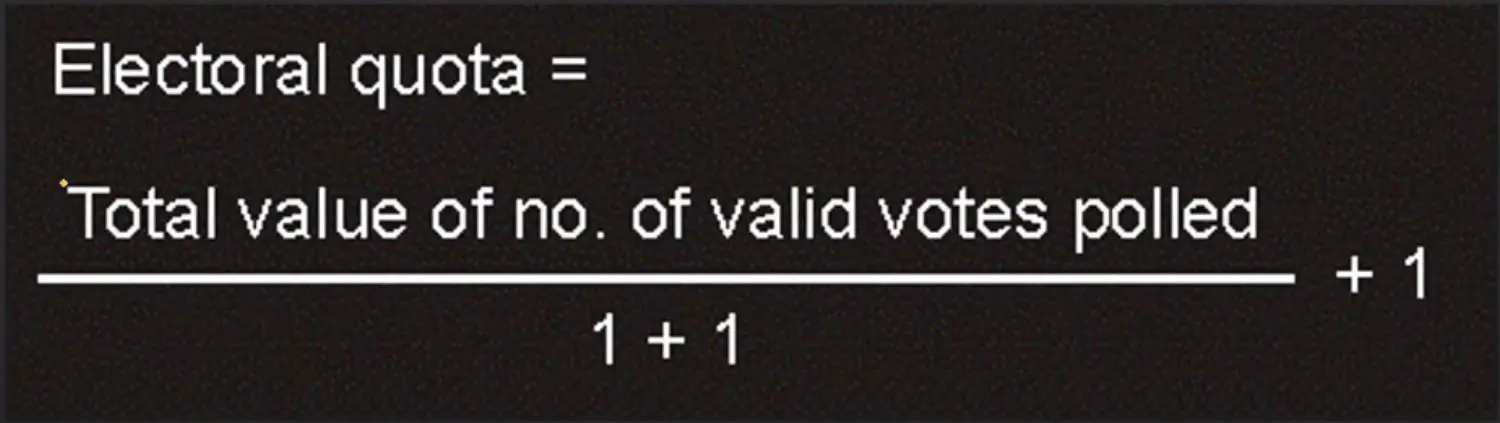
Valid Votes - Key Word
How does vote become Invalid
- No First Preference
- Giving Two First Preference
- Not Legible or some procedural Works
Simply Said :
Electoral Quota : > 50% + 1
For Ex If : Total No of Valid Votes : 10 Lacs President Should Minimum Get : 5 Lacs + 1
Important Points for Counting Votes
- Giving First Preference is Compulsory
- EC will only count the First Preferences
How is Single Transferable Vote Implemented
Now what if this Occurs
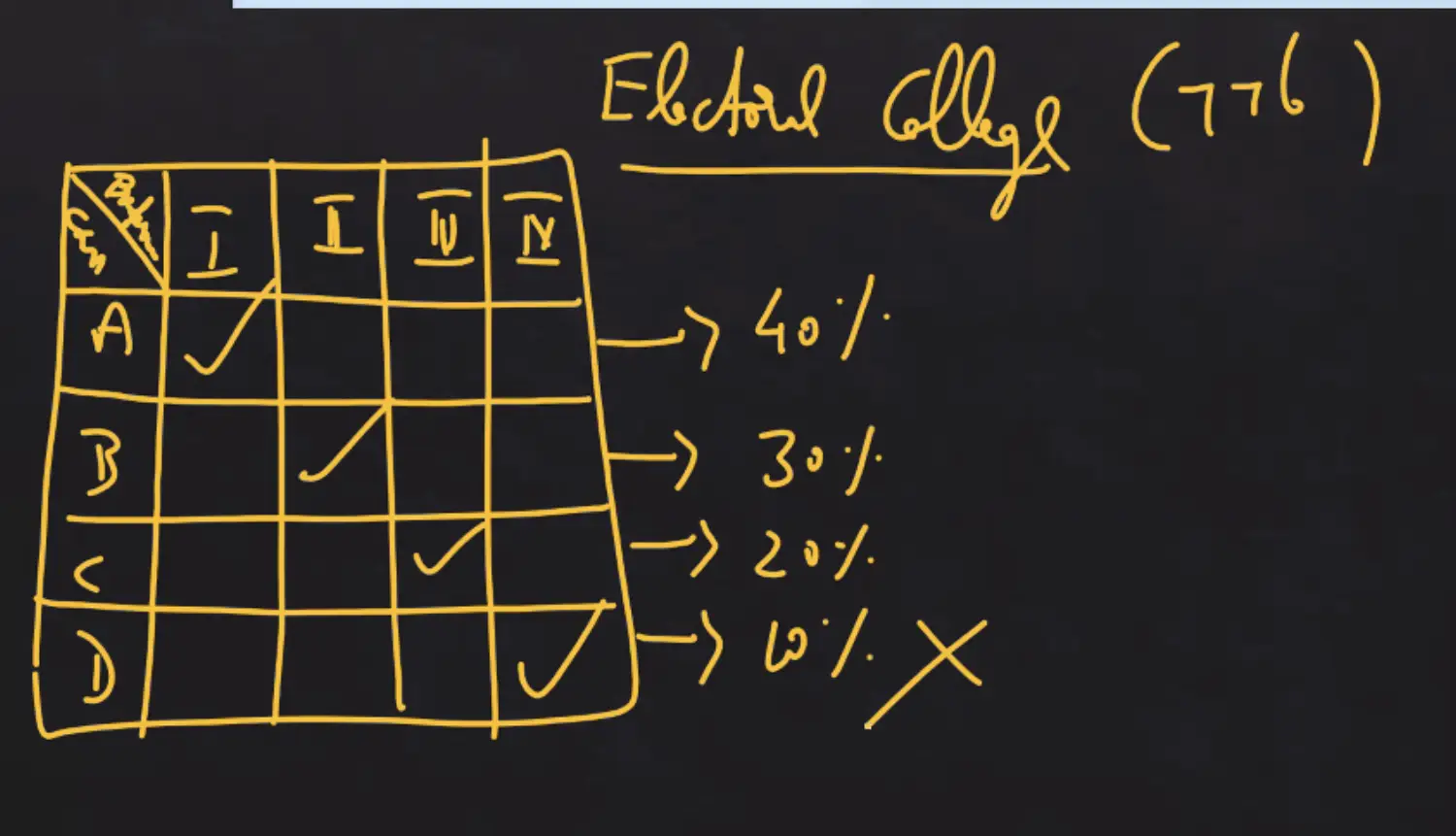
Now 10% is ruled out
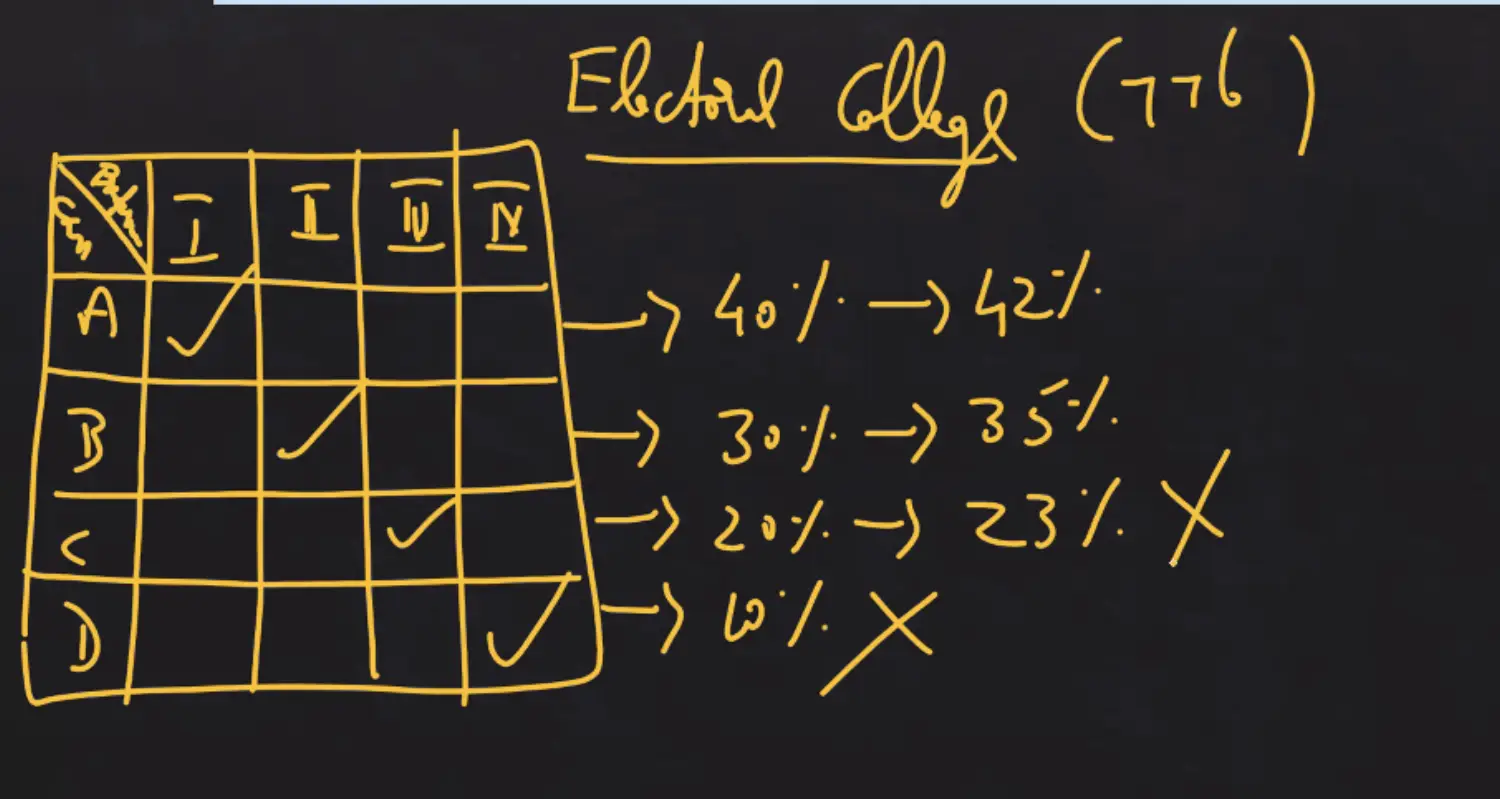
Now Also No One is Achieving the Electoral Quota. Hence, C is ruled out
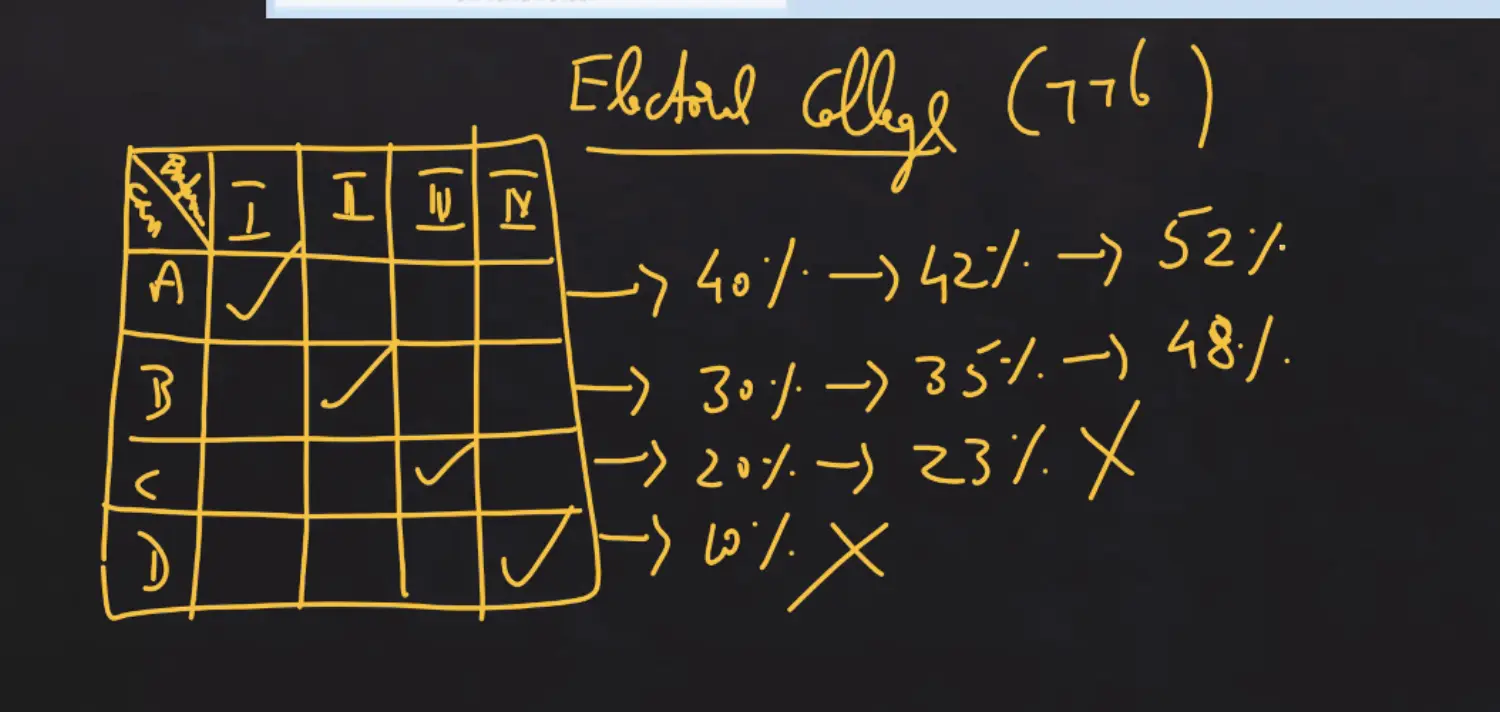
Summary of Presidential Elections
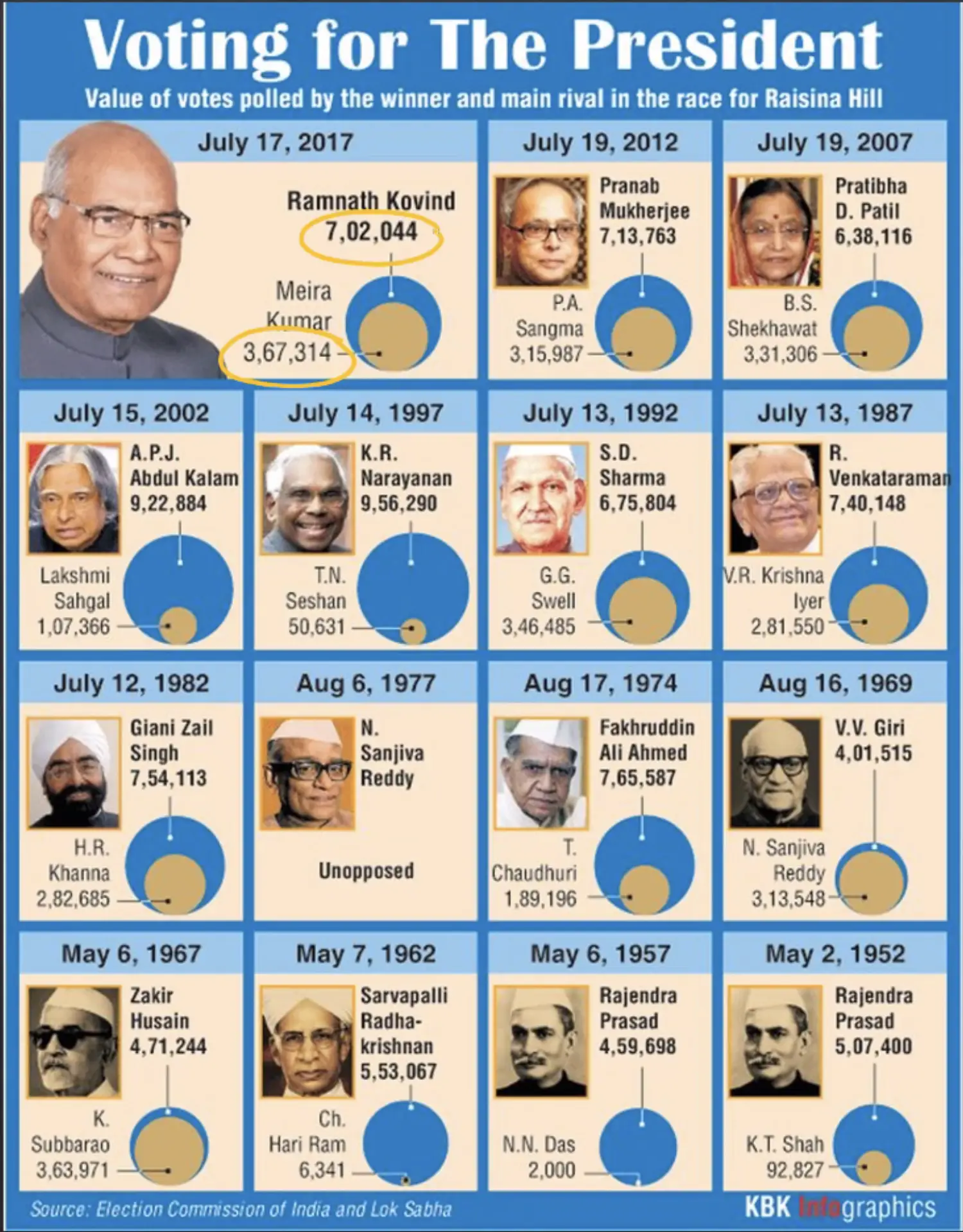
By Proportional Representation (PR)
Value of Vote of MLA
State having more population will have more say in the elections, by giving them more power
Value of Vote of MLA of State is dependent on Population of State
Formula for MLA
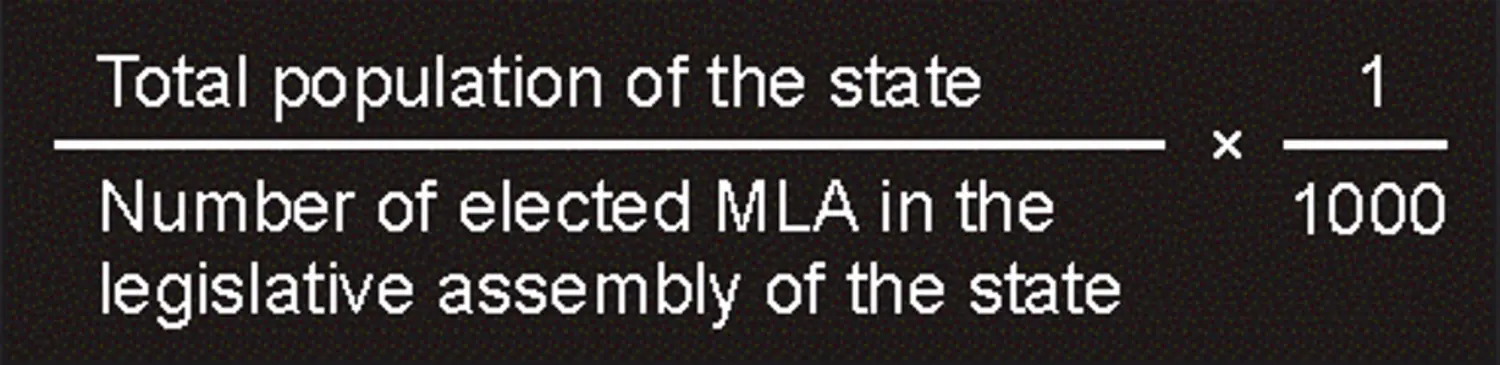 🇮🇳 UP : Highest : 208 per Vote Sikkim : Lowest : 7 per Vote
Value of Vote of MP
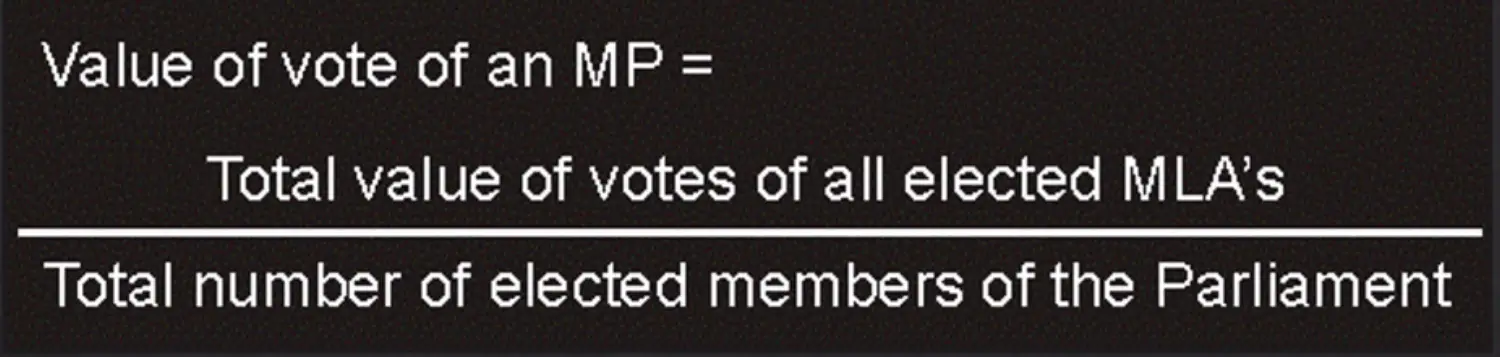
Total Number of Elected Members of Parliament
LS - 543
RS - 233
Total = 776
Electoral Quota
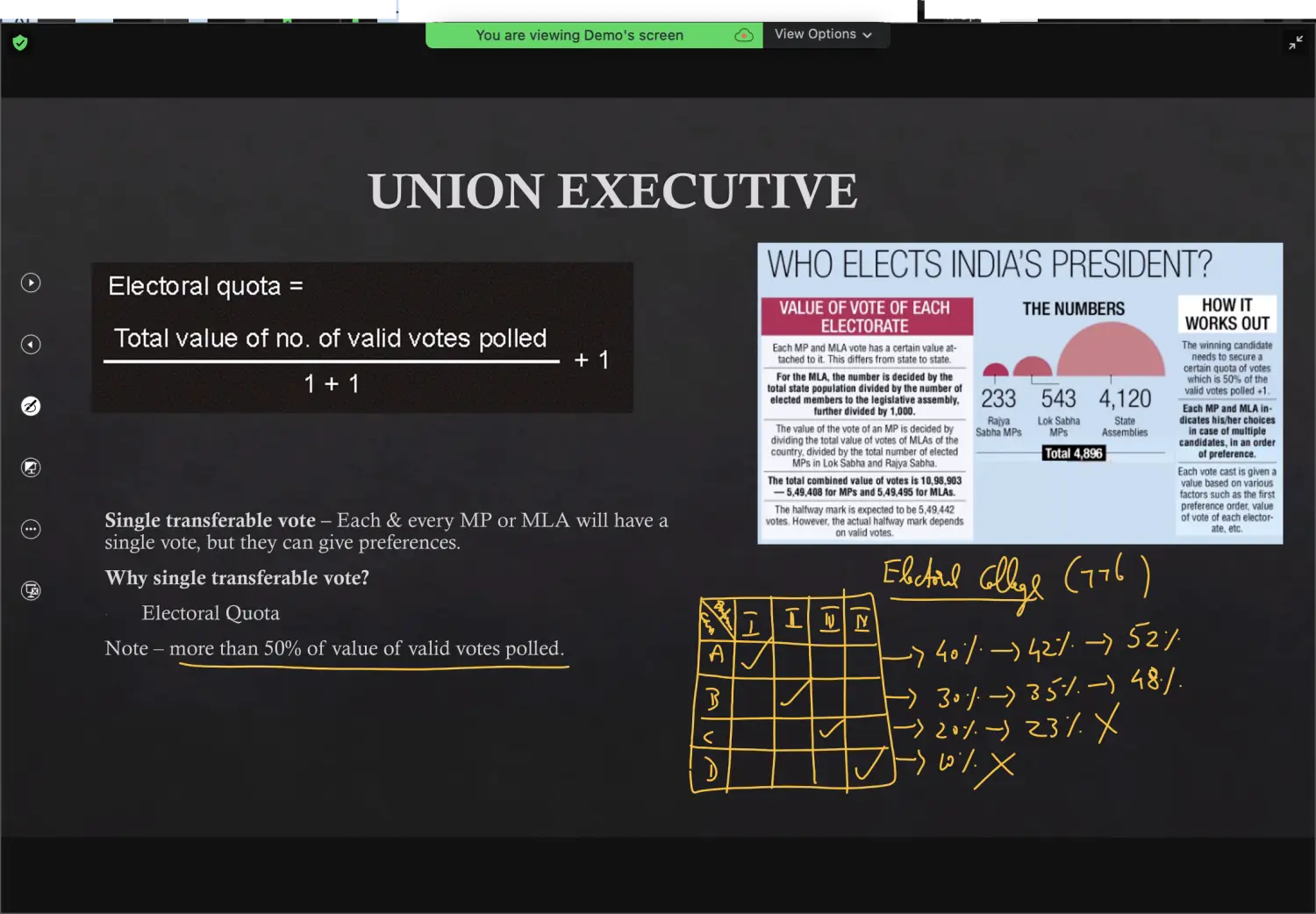
Anti Defection Law doesn’t apply in case of Secret Election
🇮🇳 **Inferences - VVIMP**- Value of Vote of RS & LS MP is Same
- Value of Vote of an MP > Value of Vote of MLA
- Value of Vote of a MLA is Different in Different States
- An MLA in Same State will have Same Value of Vote
- Cumulative Value of Vote of MP from Lok Sabha > Rajya Sabha
Summary of MLA & MP Votes Value
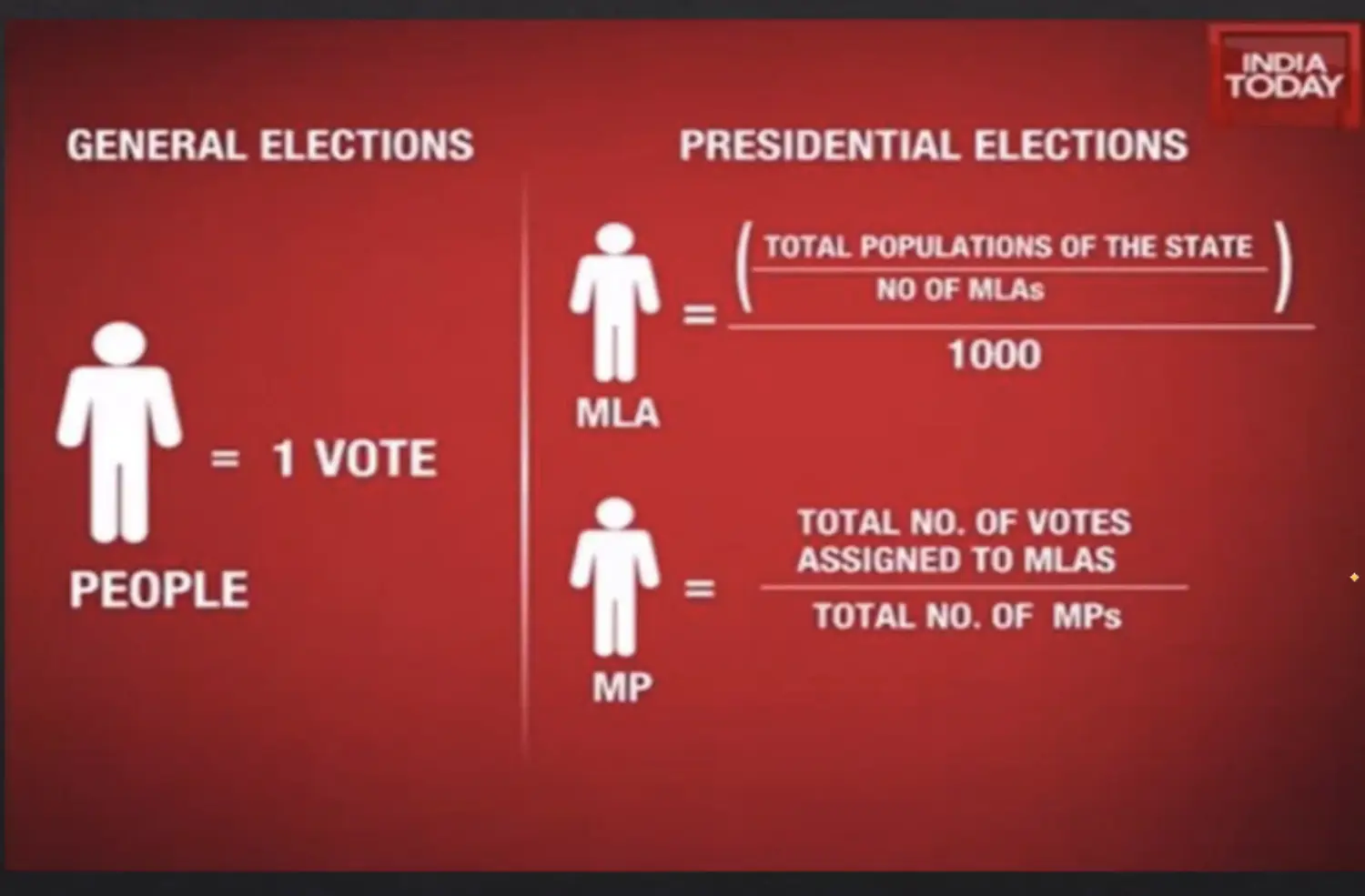
Art 71 - Election Dispute of President
- Only Place where Presidential Election can be challenged is in Supreme Court
- No Petition can be made to any High Court
- Supreme Court - OR Juris
- Original Jurisdiction
- Exclusive Jurisdiction
- Prior Acts - Will Remain Valid because
- To Prevent Administrative Inconvenience
- Anyways the President has acted upon the Aid and Advice of CoM (Art 74)
- Vacancy in Electoral College is NOT a Ground to challenge the Presidential Election
Art 61 - Procedure for Impeachment of President
Grounds on which President can be Impeached is only & only
“Violation of Constitution”
Procedure
Resolution for Removal to be Introduced in either Houses
Resolution → Proposal
Proposal Should
- Include the Charge
- Narration of Incident
Proposal Approved by
Even Before a Proposal is introduced it should be supported by 1/4th of Members of the House (in which he is trying to introduce the bill)
Proposal is given to the Presiding Officer
- Speaker - Lok Sabha
- Chairman/VP - Rajya Sabha
Presiding Officer will give permission only when
1/4th Members (in which it is introduced) have seconded it
Before Introduction the 14 Days Prior Notice to the President has to be given
Introduced in (Either Houses)
- Either LS
- Either RS
2/3rd of total membership of the house majority is needed
Resolution Passed to the Next House President has the Right to Represent (Alone or with aid of his personal council)
2/3rd of total membership in the other house is achieved
President Stands Impeached
Vacancy of Office of President
Current President Carries on
- Due to Expiry of the Term - To Prevent Constitutional Interregnum
Vice President Takes Over
Becomes the President for a Period of 6 Months, within 6 Months ECI has to conduct elections
- Death
- Resignation
- Removal by Impeachment
- Otherwise → Election Declared Void by SC
President - Advanced
Powers & Functions of President
- Why These Functions ?
- President is the Head of Union Executive
- All Action taken by Union Govt is taken in the Name of President
- Name of President Meaning (Art 74) : The President Shall act on the Aid & Advice of PM & CoM
- But Still, Being a Union Executive he has to perform of some function
Major Functions of President
1 Executive Powers
🚀These are also called Administrative Powers
Discretionary Power
Discretionary Power Art 78 : Right to be Informed of the Affairs of the State
Example : Delegation led by Opposition went to president during time of Farm Laws Protests
Normal Power
Normal Power Art 77 : President Makes Rules for more Convenient Transaction of Business and allocation among the ministries
- How Many Departments
- How Many Portfolio
Normal Powers Art 239 : Administers Union Territory Directly
President is the Authority to Appoint People
President can appoint an office who report to governor for functioning of UT
UT w/o Legislative Assembly
- Lt Governor
- Commissioner
- Administrator
UT with Legislative Assembly
- J&K
- Puducherry
- Delhi
They have special powers and some level of autonomy but
- UT’s are not in Federal Relation with centre
- The Boss is Still President for them.
Normal Power : All Executive Actions are taken in the name of the President
- Every means Every
- All Simple and Major Actions
Normal Powers : Appointment & Removal of Various Constitutional Functionaries
All these Constitutional Functionaries - Appointed and Removed by President
- CAG - Comptroller & Auditor General
- Election Commissioner - EIC
- Attorney General - AG
- Members of UPSC
- Judges of Supreme Court & High Court (Based on Recommendation of Collegium)
Normal Power : Power to Appoint Commissions to Investigate Conditions of SC ST OBC
- Appoints National Commission like
- NCSC - National Commission for SC
- NCST - National Commission for ST
- NCBC - National Commission for OBC
- Appoints National Commission like
2 Legislative Powers
🚀Veto Power
1 Art 111 Veto Power (Centre) : Powers to Assent Legislations & Veto Powers
Veto for Ordinary Bills Only
Types of Veto Powers of President
Is the Word Veto Mentioned in the Constitution
Word Veto is no where mentioned in the Constitutions
For what kind of bill is the Veto Done ?
These Kinds of Vetos are only for Ordinary Bill
Meaning of Veto
to refuse to give official permission for an action or plan, when other people have agreed to it
Example of US
In US President has to give assent within 10 Days or it is deemed to be passed
In India there is No Time Limit for Giving Assent
Pocket of President of India is Much Bigger than that of US
Is there a Lapse Period/Time ?
No there is no Lapse Period of Bill
- 1 Absolute Veto - Situational Discretion
Meaning : He is going to withhold the assent to the Bill
Condition : This can be Done in only Two Conditions
Situational Discretion
Private Members Bill
- It is not agenda of the government
- govt would support it
- very less chances, that it might pass in lok sabha
- however if by luck private member passes the bill, CoM can advice the president to not give assent to the bill
Bill is passed by the Parliament but lok sabha is dissolved
- Bill is passed by the Parliament
- But Lok Sabha is Dissolved
- Because of Expiry of Term of Lok Sabha
- Because of Losing Majority
- Concept of Care Taker Government
- If LS is dissolved, because of President
- as President should always be there
- So there shall always be CoM to aid the President
- this Govt will be called Caretaker Government
Example : of Usage of Absolute Veto
- President R Venkat Raman (1991)
- Salary Allowances & Pension of Members of Parliament Amendment Bill, 1991
- 2 Suspensive Veto - Discretionary Power
What is the Meaning of Suspensive Vote ?
When the President Sends the Bill for Re Consideration
Why is it called Suspensive Vote?
Because the Veto of President is suspended by the Parliament by passing a Simple Majority
Why is it Sent ?
May be President is not happy with the Bill and wants it reconsidered. A breathing room for dialouge & discussion
How Can it be Sent ?
- He may send it with or w/o a Note
How Many Times can he send the bill for Re Consideration ?
- Sending the Bill for Reconsideration “on his own” Only Once is his discretionary Power
- Now if the Parliament again passes the Bill with Simple Majority
- The President has to give assent to the Bill
Example of usage of Suspensive Vote ?
- President A P J Abdul Kalam
- on Office of Profit Bill, 2006
- a MP cant hold any office of profit
- There will be some Exemptions where the MP from being Office of Profit
- Kalam sent for Re Consideration
- But it was again sent for assent
- and now kalam sir HAD to give his assent
- 3 Pocket Veto - No Situation
Meaning of Pocket Veto ?
President does not take any action on the Bill
Why is there a Pocket Veto ?
Because Constitution does not specify a time in which the President has to give assent to the Bill
When is it Generally Done ?
- Before Dissolving of Lok Sabha
- Before Ending of Session of Bill
Example of Usage of Pocket Veto ?
- by President Gyani Zail Singh, 1986, Post Office Interception Mail Bill, 1986 ; He Just Sat Over it
- Govt Term was Over, The Act was not given assent anyhow
Three things that can be done by the President
1 Gives his Assent
Bill is Passed
2 Withhold his Assent - Is Always a Situational Veto
Meaning
Means he is communicating that he is not going to give his assent.
As Long as he withholds his assent, Bill doesn't becomes act
by Absolute Veto
3 Return for Re-Consideration - Suspensive Veto
Meaning
for time being he is not giving the assent
based on advices fom his advisors : Secretary & Other Legal Advisors
by Suspensive Veto
4 Sit Over It w/o Communicating - Pocket Veto
2 Art 200 Veto Power (State) : Powers regarding the bill passed the state legislatures (Governor to Reserve Bill for Presidents Consideration)
Process of Making Law in State
- State Legislatures can make Laws in States
- Governor Gives the Assent
- With the Gubernatorial Assent, Bill becomes an Act
Powers of the Governor
No Role of President
- 1 Can Give Assent → Bil Becomes Act
- Can Withhold Assent
- Private Member Bill
- Legislative Assembly is Dissolved
- Can Send it for Re Consideration to the State Govt Once
Role of President Involved
- Can Reserve it for Re Consideration of President *
What Happens when Governor Reserves the Bill for the Assent of President
Now Fate of Bill is in Hands of President
After Sending the Bill for Re Consideration, does the Governor has say in the Bill now ?
Now Governor has no say in the assent or dissent of the bill is what soever
Which Bill will be Reserved for the Consideration of President by the Governor ?
- It is strictly on the Constitutional Discretion of Governor
- Exception Being for Money Bill of State
What can the President do when the State Bill is sent to him for Consideration ?
- 1 Prez Give Assent to State Bill
- Bill doesn't become Act
- 2 Prez Withhold Assent to State Bill
- 3 Prez can direct the Governor to send the Bill for Re Consideration to State Assembly
- President can send the Bill to the State Legislature as many times as he wants
- If the President sends the bill back for Re Consideration to State Legislature, Governor will ask the State Legislature to Re Send the Bill Back to the President within 6 Months
- 1 Prez Give Assent to State Bill
Ordinance Making Power
1 Art 123 : President Ordinance Making Power
What is ordinance ?
Ordinance is similar to that of Law like by Legislature
What is ordinance making power ?
It is the Law Making Power Entrusted in the Hands of the Executive, during extraordinary circumstances
Why this power was given ?
to meet any urgent or unforeseen situation especially when the legislative body is not in session.
With whom advice is the ordinance made ?
According to Art 74, President can make ordinance on the Aid & Advice of the CoM
According to SOP
- Law Making - Legislature
- Implementation - Executive
- Interpretation - Judiciary
Critique of ordinance making power ?
It violates the doctrine of separation of power
Conditions under which Ordinance Making power can be invoked ?
- Recess or any one of the house of parliament not in session - Original Constitution
- When there is too much work in the house and govt needs an urgent Law - D C Wadhwa Case
- Satisfaction of President as to emergent situation - Original Constitution
What is the nature of ordinance ?
It is temporary in nature, it is NOT permanent
What are the checks and safeguards on ordinance laws ?
Whenever the parliament comes to session, within 6 weeks, the parliament has to pass it with simple majority
Is Ordinance Making a Parallel Power ?
No, It is not. You cannot make any ordinance, when the session is in parliament.
it can be only done when parliament is not in session
What is the area in which president can make ordinance ?
The Ordinance Making Power of President is Co Terminus with Scope of Laws that can be made by parliament
Can ordinance be made for a Constitutional Amendment Bill ?
No, the exception to Ordinance making power is that of non inclusion of constitutional amendment in its scope
Is Ordinance making power subject to Judicial Review → Chronology
- Ordinance Making was beyond judicial review till 1970
R C Copper v/s Union of India, 1970 (Bank Nationalisation Case) - Maintained that Ordinance Making Power was under Judicial Review
- This case made clear that what will be the nature of ordinance making power
- R C Cooper was the person who had major stakes in these banks
- Nationalisation of banks was done with Ordinance and not by normal majority
- He challenged it on the grounds that , 2 days before the parliament was to be in session, the ordinance was made, hence hinting Mala Fide intention
- SC Maintained in R C Cooper Case that
Presidents Satisfaction on Ordinance Making is Under Judicial Review on the Grounds of Mala fide Intention
Govt wasn't happy that Ordinance making was under Judicial Review
38th CAA, 1975 → Said that Ordinance Making Power was beyond Judicial Review
44th CAA, 1978 → Ordinance making power was again brought under scope of Judicial Review
2 Art 213 : Governor Ordinance Making Power
All these 3 cases can be used in argument of ordinance making power of both president and governor
R C Cooper v/s UOI, 1978
Governors Ordinance Making Power also came under Judicial Review
D C Wadhwa v/s State of Bihar, 1987
Background
- was a professor in pune
- researching about ordinance making power of governor
- he was surprised that from 1960-80, governors of Bihar had passed more than 200 Ordinances
- Here in Bihar, they didn't pass it through parliament, but kept re promulgating it again and again. thus making it as a kind of law only
SC Said
- Re Promulgation of Ordinance again and again is an act of violation of constitution
- Extra Ordinary or Exceptional Power of Ordinance Making should not be used as a Substitute of Legislature
Criticism
- In Bihar, House was in Session and even then ordinance was made. Meaning that it was used as a parallel power of legislation.
- Because there was a lot of work in the house and they needed urgent law.
- Hence SC maintained that If there is too much legislative business or the time at the the disposal of the legislature is short
Krishna Kumar Case v/s State of Bihar, 2017
SC Maintained
- Re Promulgation of Ordinance is a fraud on the constitutional power
- Re Promulgation is the Subversion of Democratic Legislative Process
Mains Question : Do you think that the ordinance making power entrusted upon the President and Governors violates the concept of separation of powers ?
Normal Power
1 Normal Power : Is an Integral Part of Parliament
Parliament = President + LS + RS
2 Normal Power : No Bill becomes an act without his assent
3 Normal Power : Summoning Function of Parliament (Parliamentary Sessions)
By President
Summoning Acc to Art 74 - 5 साल की शुरुआत
Calling of the Members of Parliament to Start a Session
The President can Summon the Session of Parliament as and where he wants.
For Example
In Case of Wars, Session can be called in at a different place
Prorogation Acc to Art 74 - 5 साल के बीच में
Termination of Session is called Prorogation by President
Dissolution - 5 साल बीतने के बाद
When Term of Lok Sabha is Over Entire House is Dissolved
By Presiding Officer of House (Generally for Winter, Summer Kinda Session)
- Recess → Temporary Break in Between Two Session
- Adjournment → Temporary But a Definite Break
- Adjournment Sine-Di →Temporary But a Indefinite Break
4 Normal Power : Right to Send Message and Address the House of the Parliament
Can send messages to the Parliament
When a Bill is Pending for a Long Period of Time in Parliament
considering the respect for president
Address the Parliament
Optional to Address
- When calls for Bill Pending - Addressing the House is Optional
Compulsory to Address
When a New Govt is Formed → Speech made by Govt via the Mouth of President
Routine First Session Every Year
During First Session of Every Year which is generally the Budget Session
This Address can be Either
- To Individual Houses
- To Join Sitting of Houses
This Speech is the “Report Card of Govt : On Previous Year Achievements of Govt”
Motion of Thanks - IMP *
Whenever a President Addresses House, a Motion of Thanks has to be Introduced in both Lok Sabha and Rajya Sabha Independently.
No Matter that if President has Addressed the Single House or Joint Sitting, Motion of Thanks will be Presented in
- Lok Sabha - Generally by CoM and PM
- Rajya Sabha
Distinctively (Alag Se)
If Motion of Thanks is not passed in
LS - It is considered that the govt has lost the majority in LS and is not enjoying majority and hence the Govt has to resign
Because PM & CoM is accountable to the Lok Sabha
RS - It is merely a Embarrassment to the Govt
5 Normal Power : Powers of Nomination of the Member of the House
Original Constitution, President can Nominate
- Lok Sabha - Done Away with 104th CAA, 2021
- 2 Anglo Indians was done to ensure their adequate representation
- This was meant to be for next 10 Years
- Rajya Sabha - Still Exists
- 12 Members in fields of Arts, Commerce, Sports & Social Science
- Lok Sabha - Done Away with 104th CAA, 2021
6 Normal Power : Laying of Report before the House of the Parliament
- CAG
- Union Finance Commission
- NCST / NCSC / NCBC
7 Normal Power : Prior Sanctions for Introduction of Certain Legislations (3/110/117 @ New State/Money/Finance)
Why to take Permission of President ?
Due to Importance of Some Bills, constitutions wants certain types of bills to be introduced only if recommendation is given in first place
Examples of Such Kind of Bills of President
Example of Bills are :
- Art 3 : Bill of Creation of New States
Importance of National Unity
- Art 110 : Introduction of Money Bills
Importance of Finances
- Art 117: Introduction of Finances Bill
Inferences
- To Prevent Unnecessary Publicity of Bill
- To Discourage Private Member from Entering the Bills
3 Judicial Powers
🚀Art 72 Pardoning Power
- Why this power was given to the president
- Judiciary is not beyond errors, hence a way if judiciary goes wrong
- True Idea of Justice in not merely punishment but reform of individual as well
Powers of President are :
Summary of Art 72
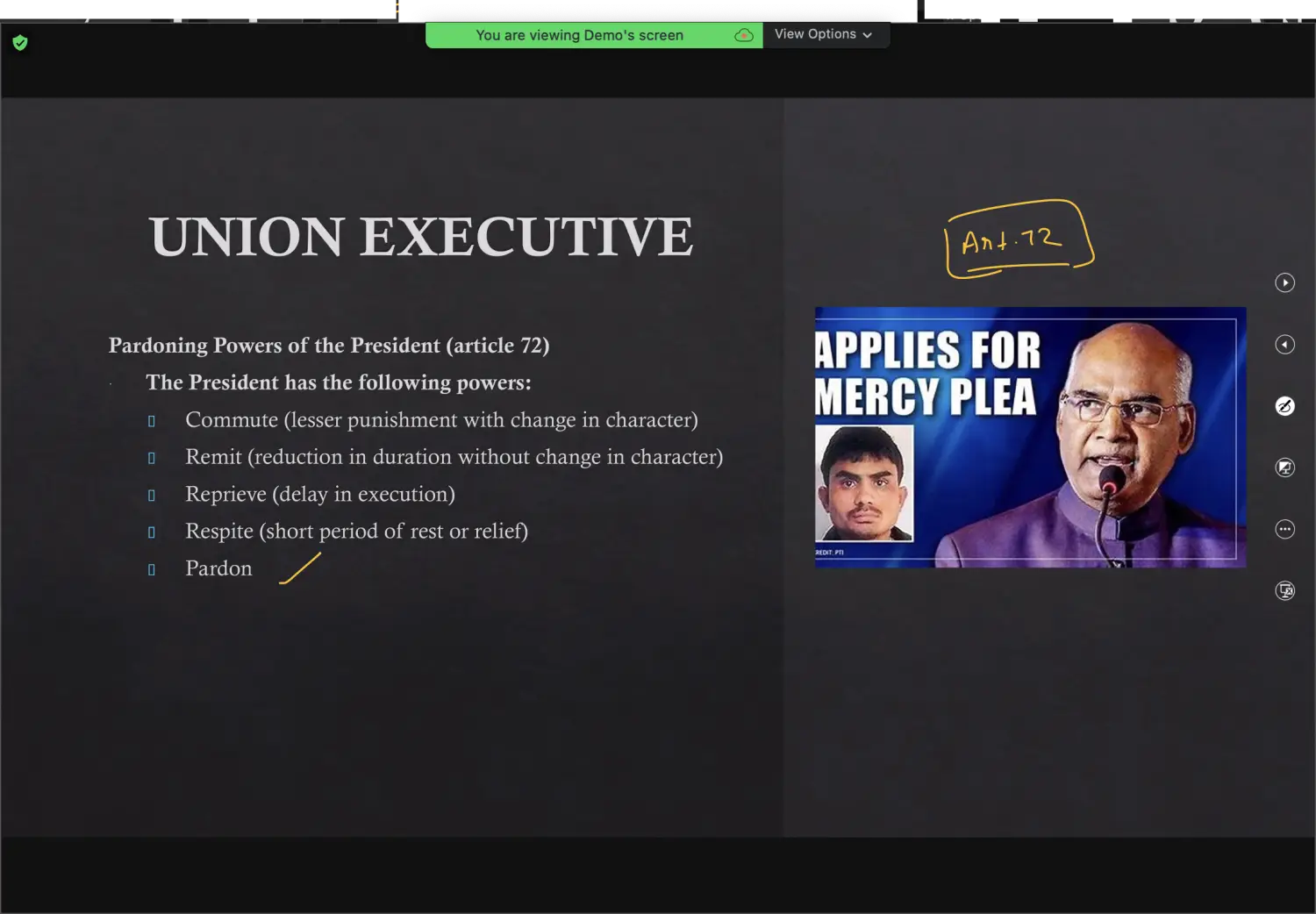
1 Commute
Lesser Punishment with change in character
Ex : Capital → Life Imprisonment Ex : 14 Yrs of Jail → 10 Yrs of Jail
2 Remit
reduction in duration w/o change in character
Ex : 5 Yrs of Imprisonment → 2 Yrs of Imprisonment
3 Reprieve
delay in execution of punishment
Ex : generally in case of capital punishment
4 Respite
short period of rest or relief under special circumstances
Ex : special circumstances
- person in jail → undergoes physical disability
- women in jail → is expecting a baby
5 Pardon
- It is the Highest Form of Mercy Petition
- Meaning
- completely set free
- absolving all consequences of punishment
- Example - Azam Khan
- Under RPA, 1951 under sec 8(1)
- If the punishment is of ≥ 2 years → Leads to Immediate Disqualification from Seat
- Then after coming out of jail he cant contest election for 6 Years
Cases in which President can Exercise these Powers :
1 Court Martial
Military Court → Can give no of punishments including capital punishment
2 In all cases where the punishment is for an offence ; to which the executive power of the union extends
- Here one can only go to the president if and if the laws are made only by the parliament
- Here punishment on any law(other than capital death) made by state
3 In all cases where punishment is sentence of death
- In laws of state legislature and parliament
- President cannot be approached for mercy petition, on the punishment given based on the laws made by state legislature except for capital punishment
Supreme Court Cases
Maru Ram v/s Union of India, 1980
Pardoning Power of President is under judicial review on the ground of mala fide intention in a limited manner
like relative of CoM being pardoned etc
Devinder Pal Singh Case, 2013
Power to be exercised on the aid and advice of council of ministers
Mahinder Singh v/s State of Punjab, 2013
There cannot be a Oral Hearing in front of President. It can be only on the basis of Written Petition
- Why this power was given to the president
4 Emergency Powers
🚀Background
- Contained in Part 18(XVIII) of the Constitution
- from Art 352 to Art 360
Circumstances under which Emergency can be Proclaimed
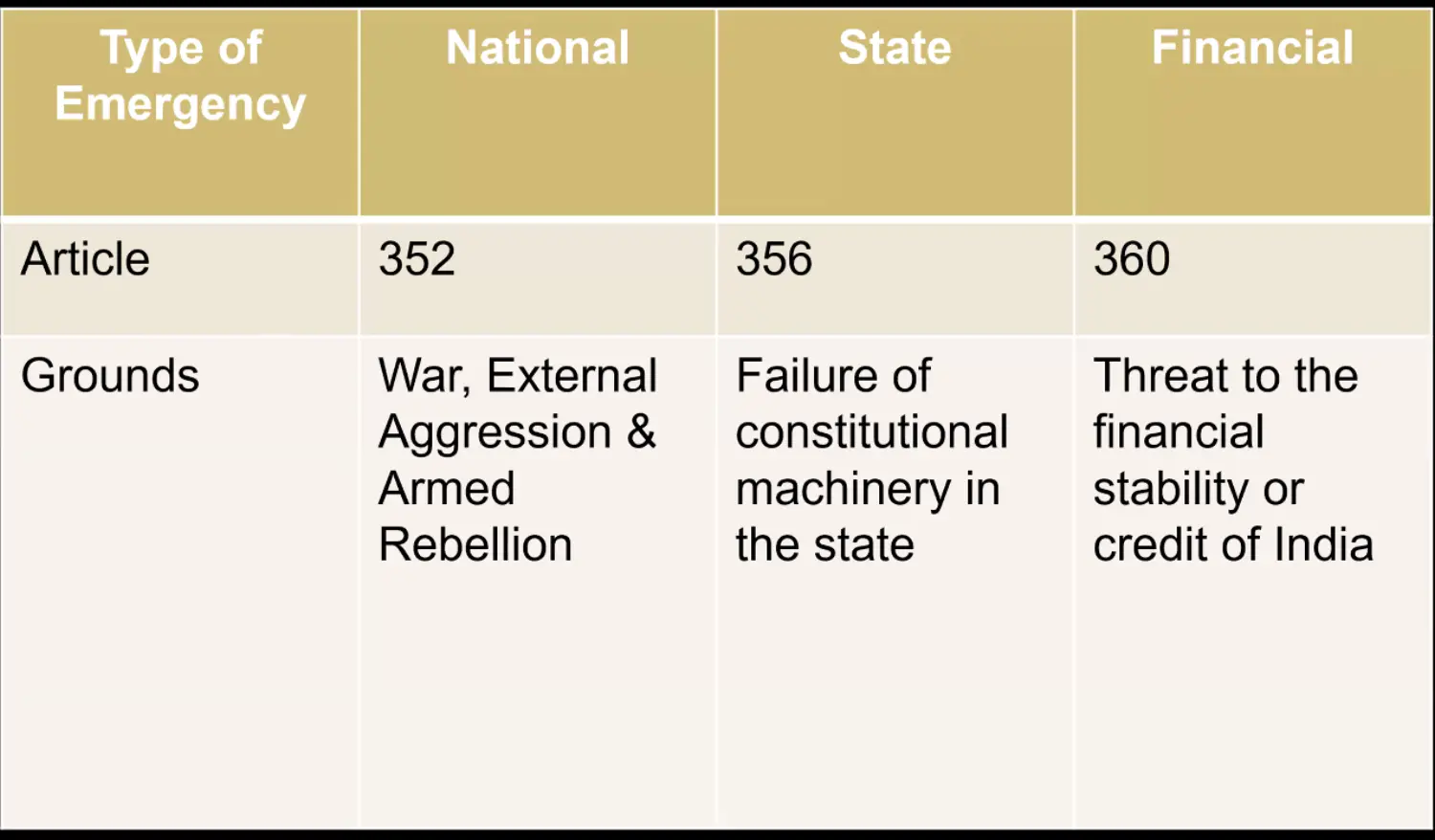
Based on Art 74 : Aid & Advice of CoM
- Art 352 : To Proclaim National Emergency
Grounds : War, External Aggression & Armed Rebellion
- War - Both Sides
- Armed Rebellion - Within Country Maoist Activity
- External Aggression - Unilateral Attack from one side on Territorial Integrity & Sovereignty of India
Original Constitution
- War
- External Aggression
- Internal Disturbance - This was amended by 44th CAA
- They replaced the Word Internal Disturbance with Armed Rebellion
Scope : Can be for whole Country, Part of India
Instances of National Emergency in India (in Totality 3 Emergencies in India)
- Indian China War 1962 - External Aggression - Normal
- (1971-1977) → India Pakistan War 19 - External Aggression 1971 - Normal
- (1975-1977) → Indira Gandhi Emergency, 1975 - Internal Disturbance (25 June 1975) - Controversial Emergency
Cases and Story Around Third Emergency
Case: Indira Nehru Gandhi v/s Raj Narayan Singh
Background
Raj Narayan fought against Indira Gandhi from the Same Constituency in 1975 Election
RN lost. He later maintained that IG had misused resources of Govt of India for her election bias
RN argued on Corrupt Practise Clause under RPA, 1951 → Saying that It was not a Free and Fair Election
According to RPA, 1951 → in HC of that Constituency the case has to be filed of RP
on 12th June 1975 Allahabad High Court, gave its decision → that IG was involved in Electoral Malpractice & Corrupt Practises for winning election
Violation of RPA, 1951 - Found by Allahabad HC
on Grounds of Corrupt Practise which is a ground for Disqualification,
Appeal in the Supreme Court
IG appealed in the SC
on 24th June 1975 → SC Passed an Interim Order that → Until we decide the legitimacy of IG’s election → She can continue to be the PM but w/o the right to vote
cuz the question was debate is that she is MP or Not
This led to Protest → Delhi Chalo Andolan → IG was quarantined in her residence
They were sending direction to govt servants to not follow orders of this govt
Hence on Case of Internal Disturbance Emergency was put
How FR of Protestors was curbed
Art 359 was used to curb the FR of Individuals,
How was the third Emergency of 1975 was Invoked, when the second emergency of 1971 made ?
- Here 1975 Emergency was brought in on grounds of Internal Disturbance
- It was politically wrong to put leaders in jail on grounds of war and aggression and suspension of FR wasn't justified on base of war and aggression
- On Grounds of External War and Aggression, curbing the Internal Unrest would not have been Commensurate
- So Third Emergency was put on grounds of Internal Disturbance, here FR could be curtailed here and all most all the opposing leaders were put in jail thus curtailing their FR
39th CAA by IG
- Election of PM was Sub Judice in SC
- Crux : Pre VP PM Speaker, their action can only be challenged in front of an authority as may be appointed by an act of law
- IG said - Now SC cant hear her case
SC Struck down 39th CAA
SC Declared this 39th CAA as Un-Constitutional
SC Struck it down by Means of “Violation of Basic Structure”
on grounds of Separation of Power
Free and Fair Election was added to the Basic Structure of Constitution
Invoking of Art 396
In Original C President can curb all Rights
Under Art 74 - on Aid & Adv of PM - Suspended FR of Citizens
ADM Jabalpur Case, 1976
- This case tested the Viability of Invoking of Art 396
- SC Maintained that President can revoke all FR of all Citizens even Rt to Life and Everything
- Dark Day of Democracy
- Was Considered a Negative Case
SC Decision
SC found IG Innocent
Concept of CoM
- In total there are 70 - 80 CoM
- Cabinet Ministers
- Core Ministers - Cabinet Minsters - 20/25
- Cabinet Minsters have Independent Portfolios
- Minister of State
- They may have or not have an Independent Portoflio
- They are in Line of Succession to be a Cabinet Minsters
- Deputy Ministers
- They don’t have a Independent Charge
Can be Implemented in
- Whole Country
- or a Part of India i.e State
Procedure for Proclamation of National Emergency
President can declare the National Emergency only if he is satisfied that there is a IMMINENT Danger to the Security of India
Satisfaction → on Aid and Advice of CoM
Imminent → No On Going Danger Needed
It is not a Discretionary Power of President
Grounds on which Emergency can be Invoked
- War
- External Aggression
- Armed Rebellion
- Added by 44th CAA, 1978
- Earlier Word was : Internal Disturbance
Once President Imposed National Emergency it is not final in itself
Emergency can be Imposed Directly but
But Both the House of Parliament has to give approval within 1 Month → then it can continue for another 6 month
6 Months time from the date of Proclamation of Emergency
It was initially for 2 months 44th CAA made it 1 months
It was initially for Indefinite Period, 44th CAA made it compulsory for a Successive Approval
Parliament has to give approval with Special Majority
It was initially Simple Majority, 44th CAA made it for a Special Majority
Similar to that of Majority required for Amendment in Constitution
Then towards the End of 6 month, another special majority mandate by the lok sabha has to be taken
How to End an Emergency
Proclamation may be revoked by president at any time on Aid and Adv of CoM
Lok Sabha can pass a Resolution to that effect by Simple Majority (only in Lok Sabha)(Not in Rajya Sabha)
This mandate of Lok Sabha has been made binding upon president
Changes by 44th CAA 1978
- Before - Aid and Advice of CoM - Orally
- Now - Aid and Advice of CoM - With a Written Communication of Cabinet Specifically for Art 352
- Each and Every Minister of Cabinet Rank has to give it in writing to President
- Even if one Cabinet Minister doesn't give in writing president cant impose emergency
Criticism of National Emergency
- Was Arbitrary on SOme View
- Was done by one person
Consequences of National Emergency
It has four fold effect on the polity of India
Goes Against Federal Structure of India - Centre Becomes More Powerful
Effect on Legislative Relationship between Centre and State
- Introduction
- Federal Political Power Changes
- Federal Politics becomes Unitary in Characters
- From De Centralisation India goes to Centralisation of Power
- Changes are
Parliament can legislate on any matter of State Lists
Meaning the States Power aren’t taken away BUT
Parliament will have over riding power
Parliament will have a concurrent power
Wherever National Emergency is Imposed, State Legislature is intact but it is under the central parliament
- Introduction
Executive Relationship between Centre and State
- Union can give executive directions on any matters
- Normally
- CM & CoM - will carry the functions of state
- Final Responsibility is of CM & CoM
- Normally Union Cant Interfere in States Work
- Union and State Executive is divided
- Emergency
- CM & CoM - State Executives will continue to function
- Union Executives order now becomes binding on State Executive
- Basically State Executive become sub ordinate to Union Executive
Note - On Above 2
State Legislature & Executive is Intact, but they become subordinate to Union Legislature & Executive
Financial Relationship between Centre and State - Re Listen from Lecture of 12 Nov
- Tax System Normally - Normal Finance Year 41%
Normally
Tax
Major Source is Tax
Spectrum of Collection o
Non Tax
Return from Investments
Borrowings
Collection of Fines
Auctioning of Natural Resources
Disinvestment from Public Sector
Division of Tax
Centre Collects - Rs 100
Divisible Pool 50%
to be Shared with States
41% of this has to be shared with States
It has to be shared with all States
Non Divisible Pool 50%
Exclusive to Centre
State Collects - Rs 50
Centre can keep it all
Under Art 280 of Constitution - Independent Constitutional Body appointed by President called Finance Commission
- Centre can unilaterally alter States Share of Divisible Pool
- Tax System Normally - Normal Finance Year 41%
Fundamental Rights between Centre and State
- Precondition of Art 358 & Art 359
- Art 358
- Automatically comes into effect
- Automatically Suspends Art 19
- Only in case of - War & External Aggression
- Art 359
- Not Automatic
- Suspension of FR done through a Presidential Order
- Except Art 20 & 21
- Original Constitution could suspend all FR
- 44th CAA made sure that Art 20 & Art 21
- President has to Specify which FR he is suspending
- Art 356 : To Impose Presidents Rule / State Emergency
Difference between State and National Emergency
| State Emergency | National Emergency | | --- | --- | | For a Particular State | For Country or a Part of Country | | Also Called Presidents Rule | Also Called National Emergency | | The CoM loose their Seats | The CoM Retain there position | | Leg Ass is dissolved | Leg Ass is Intact | | Power is with Parliament Can Give Power to President | Power is with the State, but the Centre can over rule it |
Examples / History of State Emergency in India
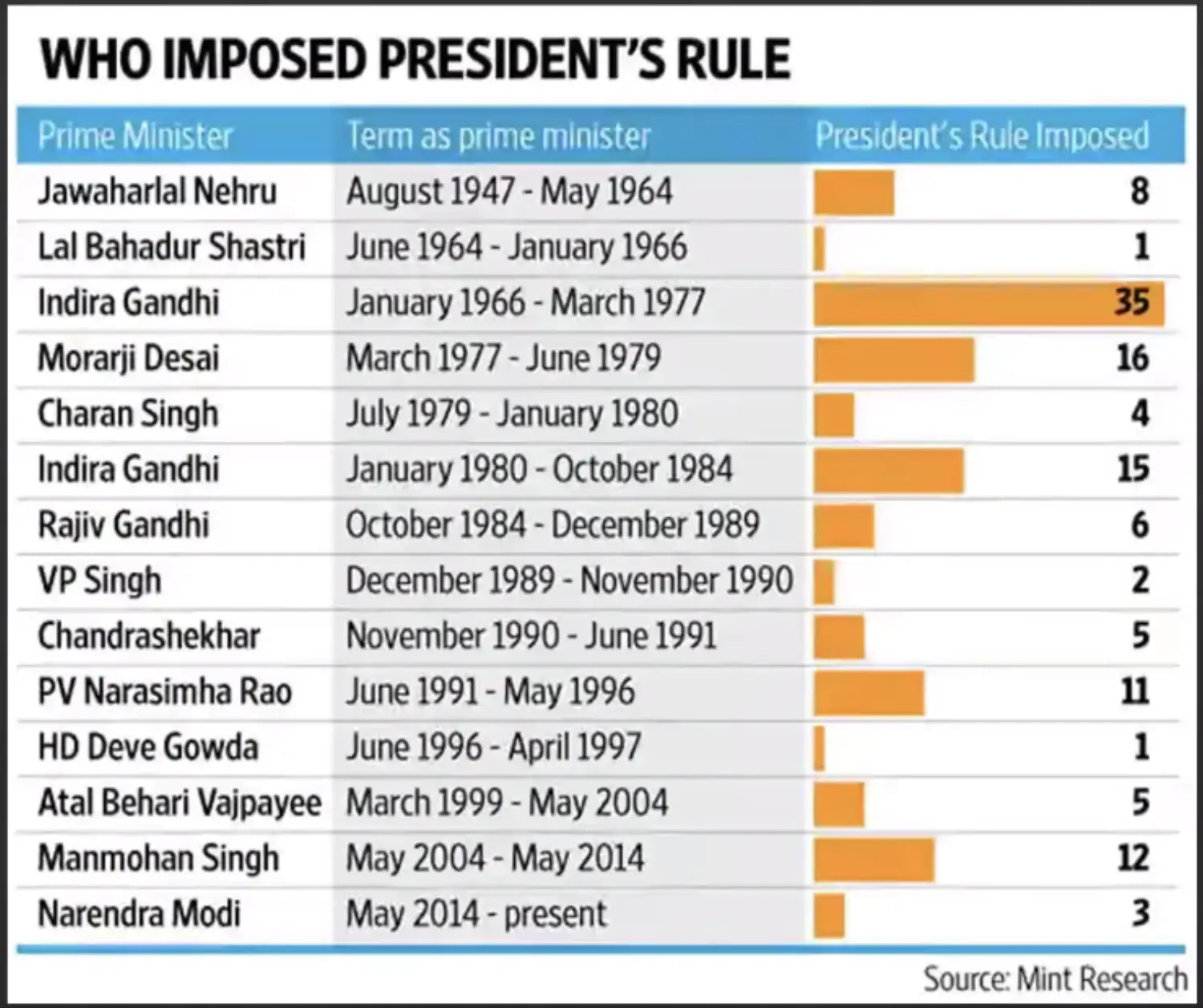
Rationale Behind this State Emergency
At No Point of time Indian Constitution will and should not provide any scope for maintenance of an Illegitimate Government
Ambedkar wanted This Article to be a Dead Letter in the Govt but it has been used and misused many no of time
Grounds : Failure of Constitutional Machinery in the State
- Constitutional Machinery - Not Defined in Constitution
- Generally Means they have failed out to perform function as mentioned in the constitution
- For Example :
When State Govts Looses Majority in the State Legislature.
and no other party can prove majority
Recently in Maharashtra
Hung Assembly - After Election no party is able to form Government
They have majority but Govt is not able to maintain Law and Order in State.
State Govt is doing something which is against constitution. For Ex Against Secular Nature of Indian Constitution
What can be considered a Constitutional Breakdown
- But this constitutional Breakdown has not been defined in the constitution
- this constitutional breakdown has been defined by various supreme court cases
- Hence Meaning of Constitutional Breakdown are
- Government Looses Majority
- Majority is preserved but the Law and Order of the State is disturbed and out of order
- If any state govt is carrying any activity which is anti-secular activity or politics
- These are just few Examples, the Interpretation of Constitutional Breakdown will be done by Supreme Court time to time
S R Bommai Case, 1994
- Background
Its a Land Mark Judgement wrt Imposition of President Rule in India
S R Bommai was a CM of Karnataka in 1989 from Janata Party
He is father of current CM of Karnataka Basavaraj Bommai
After he became CM, few MLA from his party and other party, went to Governor, to tell that Bommai has lost majority in the state
Governor sent the letter to President to impose president rule
Meanwhile, Bommai went to Governor, to ask for an opportunity to prove his majority
Gov didn’t listen to him, President Imposed President Rule, Bommai reached Supreme Court
- Supreme Courts Decisions & Guidelines
- President Rule is Subject to Judicial Review
- For the First Time, SC said that Power of President for imposing State Emergency is under Judicial Review on grounds of mala fide Intention
- Opportunity to Prove Majority
- It should not be done on basis of Subjective Satisfaction of President
- But shall be done only on the Basis of Floor Test
- w/o the floor test, if presidents rule is imposed, it would be considered unconstitutional
- the floor test can only in the Legislative Assembly not in Raj Bhavan, or a bungalow, or a hotel
2 Months time for Simple Majority from House
Imposition of PR by Prez is not final, it has to be put it in front of the parliament, it has to be passed within 2 months by both the houses of parliament by simple majority
Very Important Point
Once the State Emergency is Imposed &&
Unless the PR is passed by simple majority by both houses of the parliament within 2 Months
the CoM & Leg Ass of State will be kept under Suspended Animation
Suspended Animation → It will not actively perform active functions but it will not be dissolved as well
Why Suspended Animation →
State Govt - Rabri Devi CM of Bihar
National Govt - Atal Bihari Vajpayee Govt suggested imposition of PR on grounds of Law & Order but Bihar Leg Ass was with Complete Majority
Here PR was put to houses, LS gave approval, RS didn’t
Hence, Now Bihar Govt was put back in action, Rabri Devi became CM
If the Govt was dissolved, Election would have been the only option
- If the State Govt is not Happy with PR then the Burden of Proof Lies in the Hands of Central Government
- SC maintained that if the PR is not passed in Parliament they will be given a Full Remedy / Complete Justice i.e by restoring the earlier govt
- Presidents Rule Grounds
- Constitutional Breakdown
- Law & order
- Majority Lost
- Anti Secular Motives
- Not on grounds of Administrative Breakdowns
- Not a Welfare Orientation
- Lot of Corruption Charges
- Constitutional Breakdown
- Anti Secular Politics is Liable to Action under Art 356
- Background
Procedure to Impose State Emergency
What Happens in a Normal Condition
Normally on Aid and Advice of CM & CoM, Governor Works
But this process only works until and unless the government is a legitimate and constitutional government
If the Particular Government is dismissed, till the time the new government is elected by election
In this meantime President is given the power to administer the state
President Rule is Applied when the
President is Satisfied that there is Constitutional Breakdown in the State
President on Receipt of Report of Governor or Otherwise (Art 356)
- whenever he feels that there is a constitutional breakdown
- Normally Governor sends report on Constitutional Breakdown
- But It is not necessary for the President to wait for the report of governor
- It is not the Discretionary Power but on Aid & Advice of CoM
Approved both Houses within 2 Months
- By Simple Majority
- Leg Ass of State will be until then put under Suspended Animation
- Once Approved the President Rule can extend upto duration of 6 Months
Can be extended by 6 Months once approved for a Maximum of 3 Years. However Beyond one year it can be extended only when
Before this 6 Month Ends, Another Simple Majority can extend the State Emergency to another 6 Months
This can be done only for 6 times that is for a totality of 3 Months
Imp Point : Upto 1 Year there is No Issue
From 1 Year to 3 Years, it can be extended only under 2 conditions only
- There Should be National Emergency
- In Entire Country
- Or Any Part of Country where the State Exists
- && The Election Commission of India certifies that due to the National Emergency it is difficult to carry out Elections
Note : Both Conditions have to be fulfilled
- There Should be National Emergency
Revoked by the President
By AA of CoM President can revoke the President Rule
Consequences of State Emergency
Important Point
That Particular State looses Federal Relation with the Centre
The Relationship between Centre and State will change only with that State and no other state is affected
B R Ambedkar Supported this provision and wanted it to be a part of it
Consequence 1 - Executive Relationship
All Executive Authority is taken up by the President
Consequences 2 - Legislative Relationship
The Legislative Powers of the State shall be exercisable by or under the authority of the parliament or confer power upon the president
- CoM is bound to be Dismissed
- Legislative Assembly is put under Suspended Animation
- Art 360 : To Proclaim Financial Emergency
Grounds : Threat to Financial Stability or Credit of India
Conditions are
High Fiscal Deficit
Expenditure High Income Low
Lack of Balance of Payment
Inflation is High
Unemployment is Very High
Insufficient Foreign Exchange Reserves
Reserve should be for the Minimum of 3 Months
Instances
There has not yet been a Single Financial Emergency in India Yet
Example of One Instance where it could have happened
- in 1990 Govt of India had only foreign reserve for only 15 days, after 15 days there would not have been a energy source
- Theres no Example as such yet
- There was consideration of Financial Emergency in 1990’s
- IMF Help was given on the Condition of Liberalisation
Declaration of Financial Emergency
The President can declare the Financial Emergency if he is SATISFIED that
Satisfied Means → Not Necessarily the Condition has occurred but if only the President is Satisfied
the Financial Stability & Credit of India is threatened
Declaration to be Approved within 2 Months by the House of Parliament
Approval by Simple Majority
Consequences of Financial Emergency
- The Union Government may give direction the State to Observe Canons of Financial Propriety
Centre generally doesn’t have a say so as to how the State can spend the Money
But in Financial Emergency, Centre can direct the State on Financials
- Reduction in Salaries on all or any class of person serving in the State Governance
- Reservation of Money Bills or Financial Bills of the Consideration of the Presidents
Centre can ask the President
President may ask the Gov to Reserve all Bill
Governor will have to Mandatorily Reserve the Bill
- Reduction in Salaries and Allowances of all classes of person serving in the Central Government including Judges of Supreme Court and High Court
- Ambedkar's Comment on Emergency
We cannot allow a unconstitutional govt
I envisaged it to be the Dead Letter in Constitution
Its been used as a Deadly Weapon now
5 Financial Powers
It is the Financial Nature of Executive and Emergency Powers of President
The president can reduce the salaries of all government officials, including judges of the supreme court and high courts, in cases of a financial emergency.
All money bills passed by state legislatures are submitted to the president for approval.
- Why These Functions ?
Minor Functions - Extension of Executive Powers
6 Military Powers
President is the Ex Officio Head of Military of all 3 Wings - Also called the “Supreme Commander”
7 Diplomatic Powers
All Signatures are done in the Name of President
- International Treaty are Done
- Welcoming of International Guests
- Vice President
Introduction to Office of Vice President
There shall be an Office of Vice President
Ex Officio Chairman of Council of States → Someone holds an office by virtue of holding ant other office
Rajya Sabha
- Chairman - not elected
- Deputy Chairman - elected
Acts as President when Office of President is Vacant due to
- Due to Death
- Resignation
- Removal of President
- Otherwise
Not in case
e. NOT due to Expiry of End of term of Incumbent President
Example 1
- VP B D Jatti - Became President
- Fakhruddin Ali Ahmed - Died as President in February 1977
Election of Vice President
Indirectly Elected - Not a Significant Role
Electoral College - Very Less
Members of Both Houses of Parliament (Both Nominated and Elected Members of the House)
Very Important Note : In case of VP → Both Elected & Nominated Members are included in Electoral College
Qualification for being the Vice President
1 Citizen of India
Can a Naturalised Citizen be a President of India ? Yes
Indian Constitution doesn't differentiate between a Natural Born & Naturalised Citizen - Once a Citizen he is a Citizen
But in USA, only Natural Born Citizens are allowed
2 Age : Completed 35 Years of Age
3 He should eligible to contest election to Rajya Sabha (Council of States)
1 Citizen of India
2 Not Less than 30 Years of Age
Automatically allows for Presidents Age
3 Oath / Affirmation in front of an Authorised Authority
- He has to file his Nomination Papers in front of Authorised Authority
- Authorised Authority - Decided by Election Commission
- He is generally a Returning Officer - Alternating
- For President → Secretary General of LS
- For Vice President → Secretary General of RS
4 He/She should be an Eligible Voter
- He should himself be able to vote in Lok Sabha
5 He/She should not hold any office of Profit
0 Office of Profit is NOT defined in the constitution
1 SC Decided the Definition
2 Office of Profit - Before 2006
Any Office executive in nature, either under central govt, or state govt, or local authorities by a way of which an individual receives a salary or a remuneration or profit can be considered to be an office of profit
3 Jaya Bacchan Case, 2006
- Jaya Bacchan was a MP in Rajya Sabha
- Only when they are elected as a MP, MP should not hold any office of Profit.
- Subsequent to being MP in RS, she was also appointed as Chairperson of Uttar Pradesh Film Development Corporation
- She was disqualified from being an MP of RS
- Jaya Bacchan said her Disqualification was wrong, but she said that she hadn't taken any salary from there.
- Hence, the Disqualification was Unconstitutional
- SC changed the definition of Office of Profit
4 Office of Profit - After 2006
Any Office Executive in nature, either under central govt, or state govt, or local authorities by a way of which an individual receives a salary or remuneration or profit is receivable in the first place
can be considered to be an office of profit
It is immaterial whether the individual actually receives the salary or not
Exceptions to Office of Profit
- Sitting President
- Sitting Vice President
- Sitting Governor
- Ministers (Union/State)
Term of Office of Vice President
- 5 Years of Tenure
- Resignation Given to the President
- Removed by Resolution passed by Effective Majority - Rajya Sabha Simple Majority - Lok Sabha (Simple Majority Art 100)
- For VP it can be introduced only in the Rajya Sabha
Note for Death of Vice President
Vacancy to Office of Vice President to be filled as soon as possible
ECI should conduct election as soon as possible
Vacancy to Office of VP - Same as President
Oath to be Administered by President
Election of Vice President can be challenged in Court of Law
- Original & Exclusive Jurisdiction of Supreme Court
Prior Acts of VP will not be Invalidated
Election of VP cannot be invalidated merely on vacancy of electoral collage
- Powers & Functions of Vice President
- His only function is to be the Ex Officio Chairman of Rajya Sabha
- To be the President when President Dies in Office
Governor
- Head of State Executive. He is the Constitutional head of the State
He works on Aid and Advice of CoM
President is Nominal Head of States
Governor is Nominal Executive of States
President Nominal by Art 74
Governor Nominal by Art 163
Except for his Discretionary Power he has to act on the A7A of CoM
He has more Constitutional Discretionary Power than the President
He has a Dual Role
Executive Head of State
Representative of Center
SC directed to Not use the words Agent of Centre
- He is Appointed by the President
- His Term is of Five years (Occupies Office during Pleasure of the President)
Meaning
Pleasure of President means on the Wish of President
B P Singhal Case, 2010
Questions he Asked ?
He Challenged in Court of Law the Meaning of Pleasure of President
Can the Governor be Removed at any point of time by the President ?
Is there any remedy to the Governor ?
SC Said
Yes the Governor Holds office only and only during the Pleasure of the President
Meaning Governor can be removed at any point of time
Although, the Pleasure of President is Mandatory, it does not mean the Governor can be removed Arbitrarily or by a Mala Fide Intention
Such Removal is Subject to Judicial Review
- Examples Arbitrary Actions
President cant Remove if →
Governor is NOT directing States for formulation of Policies according to Ideology of Centre
If Gov is Removed if Centres Whims and Wishes aren’t followed
Security of Term of Governor
- Security of Term of President is needed for a Neutral & Better Functioning of President
- Governors Can only Handle the Pressure when there is a Security of their Term
Cases of Gubernatorial Tensions
It is generally seen at places where the state govt is a local regional party or a party whose ideology doesn’t match with the centre
For Example
Kerala, West Bengal, Karnataka ETC
Commissions on Centre State Relations
Sarkaria Commission, 1983
It was established to Study the Centre State Relationship
Recommended About Security of Tenure
Governor to be Informed Reasons or Grounds of his removal IN WRITING

Punchi Commission, 2007
- It was established to Study the Centre State Relationship
- Recommended a Fixed Tenure of 5 Years
- Removal of Governor by Impeachment
- Conditions of Office of Governor
- Should not be an MP of Member of State Legislature
A Member can be appointed but as soon as he becomes Governor he shall cease to
- Should not hold any Office of Profit
According to Jaya Bacchan Case
- Salaries and Allowances shall be determined by an Act of Parliament
- Same Person can be appointed Governor for Two or More States
He will get a Salary of One State but he will get some extra allowances
this will be decided by President
- He is Administered Oath by Chief Justice of High Court or the Next Senior Most Judge of State
Powers & Functions of Governor
- Governors doesn't exercise these powers
- No Diplomatic Powers
- No Military Powers
- No Emergency Powers
- Governors has Similar Powers to that of President
Comparison between President & Governor wrt Executive & Legislative Powers
| Theme | President | Governor | | --- | --- | --- | | Discretionary Powers | Less | More | | A&A of CoM | Art 74 | Art 163 | | Place in Government | Centre | State | | Administrative / Executive Power | All Executive Actions are taken in the name of the President | All Executive Actions are taken in the name of the Governor | | | Art 77 President Makes Rules for more Convenient Transaction of Business Rules and allocation among the ministries | Art 166 Governor Makes Rules for more Convenient Transactions of Business and allocation among the ministries Based on Aid & Advice of CoM | | | Appointment & Removal of Various Constitutional Functionaries
- CAG
- Election Commissioner | 1. Advocate General
- District Judges
- State Election Commission Appointed d by Governor removed by president only
- State Finance Comm | | | Power to Appoint Commissions to Investigate Conditions of SC ST OBC | State Level Commissions of SC ST OBC by Governor | | Discretionary Powers | Art 78 : Right to be Informed of the Affairs of the State | Art 167: Governor can call upon CoM to apprise him of State Affairs | | Other Power | Art 239 : Administers Union Territory Directly | NA for Governor | | Legislative Powers | President Is an Integral Part of Parliament | Governor is an Integral Part of State Legislature
Case 1 Govt = Gov + Leg Ass + Leg Council
Case 2 Govt = Gov+Leg Ass
Why is he a Part? cuz without his assent bill cannot become act | | | No Bill can become an act without his assent | No Bill can become an act without his assent | | | Summoning Powers | Summoning Powers | | | Right to Send Messages and Address the House of the Parliament | Right to Send Messages and Address the House of the Parliament | | | Powers of Nomination of the Member of the House
LS - No RS - Yes → 12 Mem from Arts, Science, Social Service, Literature | Powers of Nomination of the Member of the House
LA - Originally 1 Member from Anglo Indian Now Removed by 104th CAA
LC -Arts, Science, Social Service, Literature && Co-Operatives | | | Laying of Report before the House of the Parliament
Reports of CAG NCSC NSCST Union Finance Commission | Laying of Report before the House of the Parliament State
SCSC SCST State PSC State Finance Commission | | | Prior Sanctions for Introduction of Certain Legislations
Art 3 - Creation of New States Art 110 - Money Bill | Prior Sanctions for Introduction of Certain Legislations
Art 110 - Money Bill Art 117 - Finance Bills | | Veto Power | Art 111 Veto Powers | Art 200 Veto Powers
Extra Option to Governor
Can Reserve bill for Consideration of President | | Ordinance Making Power | Art 123 Concurrent with Law Making Power of Parliament
Case Laws Same | Art 213 Concurrent with Law Making Power of State Legislature
Case Laws Same | | Emergency Powers | Has been Stated Below in Emergency Powers | No Powers to Governor in terms of Emergency Power |
Comparison between President & Governor wrt Pardoning Powers
Executive Power of Centre Extends Means - The Law is Made by Parliament
Executive Power of State Extends Means - The Law is Made by State Legislature
| Theme | President | Governor | | --- | --- | --- | | Power by | Art 72 | Art 161 | | Idea Behind Pardoning Power | Same | Same | | Powers are | Pardon Commute Remit Reprieve Respite | Pardon Commute Remit Reprieve Respite | | Pardoning Power Jurisdiction | 1. Court Martial
Executive Power of Union Extends → 2.1 Where Law is made by Parliament (Union List)
In Case of Capital Punishment (Does Not Matter if Executive Power of Union Extends or Not, Capital Punishment is an exception for Pardoning to President)
In Case of the Punishment Given on violation of above Laws, Pardoning Plea can be applied | 1. No Power wrt Court Martial
- Executive Power of State Extends →
2.1 Where Law is Made by State Legislature (State List)

2.2 Where Law is made by Parliament && State Implements it (Concurrent List)
2.3 Where Law is made by Parliament but centre asks the state to Implement it (Union List)
- In Case of Capital Punishment (Provided Executive Power of State Extends) OR (by Law Made by State Legislature)
In Case of the Punishment Given on violation of above Laws, Pardoning Plea can be applied | | To Note | Aid & Advice of CoM | Aid & Advice of CoM | | To Note | Subject to Judicial Review | Subject to Judicial Review | | To Note | No Rights for Oral Hearing | No Rights for Oral Hearing |
Special Case of Capital Punishment
- Capital Punishment is given by Law Made by State
- Can Apply for Pardoning Power to Governor
- Can Apply for Pardoning Power to President
- Both Independently
- Capital Punishment is given by Law Made by Parliament
- Can Apply for Pardoning Power to President Only
Hence Governor has no Power in Pardoning in Cases of
- No Power wrt Court Martial
- No Power wrt cases where Executive Power of Union Extends
Comparison between President & Governor wrt Discretionary Power
| Theme | President | Governor | | --- | --- | --- | | Constitutional Discretion | Less | More | | Situational Discretion | Both Exercise | Both Exercise | | Situational Discretion | Art 74 A&A of CoM | Art 163 A&A of CoM except in those areas where he can act in his discretion | | | There shall be a Council of Ministers with the Prime Minister at the head to aid and advise the President who shall, in the exercise of his functions, act in accordance with such advises | There shall be a CoM to A&A Gov to exercise his function except in so far as matter he is required to exercise his function in his discretion
except in so far as matter he is required to exercise his function in his discretion - Explicit Recognition of his her constitutional Discretion |
Examples Where, Governor uses his Extra Discretionary Power
Art 200
Reserving Bills for Consideration of President
Art 356
Imposing President Rule i.e Sending report to Presidents
Art 167
Can Summon Ministers and ask them
Art 200
Reserving the Bill to be sent to the President
Due to this Discretion Power, There is a Issue as well
State Govt Becomes Helpless
There’s always a Lacuna on the question that Art 163 doesn’t define exact places where governor can exercise his discretion
SC has said many time that governors discretion should only in the places where constitution has defined the Discretion clearly
Despite this, even if the Gov doesnt act according to A&S of CoM then State Govt becomes helpless. It has no power to remove the Gov whatsoever, unlike the president who can be impeached by the parliament, at least there's a procedure
Here the Governor is appointed and removed only by the President on A&A of CoM of Centre
Way Forward
- Hence Recommendation of Sarkaria and Punchi Commission is a must to be Implemented
- Also, the Office of Governor should be Given a Specific Time Of Office
- CM of the State should be consulted before appointing the Gov
Difference Between Parliamentary and Presidential Parliament
| Parliamentary System | Presidential System | | --- | --- | | Political Party with the Majority forms the Govt Eg : PM is Leader of Majority Party | President Directly / Indirectly elected by the People | | Executive Part of the Legislature | Executives are not Part of Legislature | | Executives Require Support of Legislature for Survival | Executives don't require any support | | Lower House can be dissolved before expiry of the term | House cant be Dissolved | | Less Stable | More Stable | | More Accountable | Less Accountable | | Dual Executive Head of State - President Head of Govt - PM | Real Executive Head of State & Govt - President | | No Complete Separation of Power Especially b/w Legislature & Executive | There is a Complete Separation of Power |
Difference Between Indian and British Parliament
| Indian Parliamentary System | British Parliamentary System | | --- | --- | | Republic - Head of State Elected | Constitutional Monarchy - from Royal Family by Hereditary Succession | | Supremacy of Constitution | Parliamentary Sovereignty | | Any Person can be appointed as minister (Max 6 Months) Ex: Mamta & Uddhav | Only MP can be appointed as Minister | | PM can be from any House Ex: Manmohan | PM should be from only Lower House | | No Tradition of Shadow Cabinet | Tradition/Convention of Shadow Cabinet |
PS : The Shadow Cabinet is the team of senior spokespeople chosen by the Leader of the Opposition to mirror the Cabinet in Government
Real Executive - PM & CM
Summary
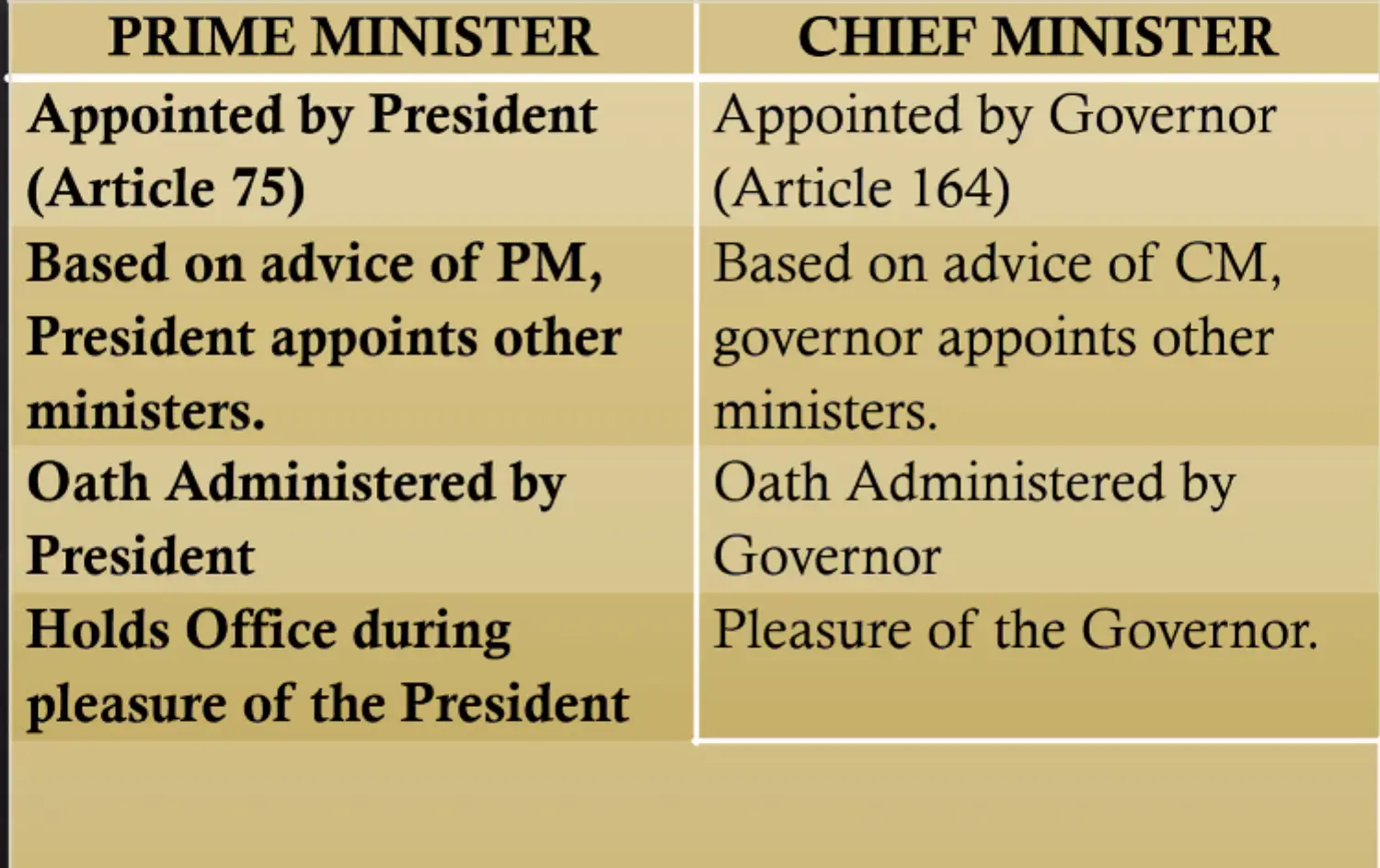
| Theme | PM | CM | | --- | --- | --- | | Parliament / State Leg | 1. When Session is Summoned 2. When Session is Prorogued 3. When the Session is Dissolved 4. Set the Agenda | Performed by CM as well | | CoM & Govt | 1. PM Advice President 2. Co-Ordination 3. Head of Cabinet Committees 4. Chief Spokesperson of Govt | Performed by CM as well | | President / Governor | 1. Art 78 - What is Happening in State 2. Advice for CAG, Fin Com, NCST, NCSC | Performed by CM as well
No CAG at State Level, Others are same | | Holds Office | on Pleasure of President | on Pleasure of Governor |
Real Executive - CoM - Union & State
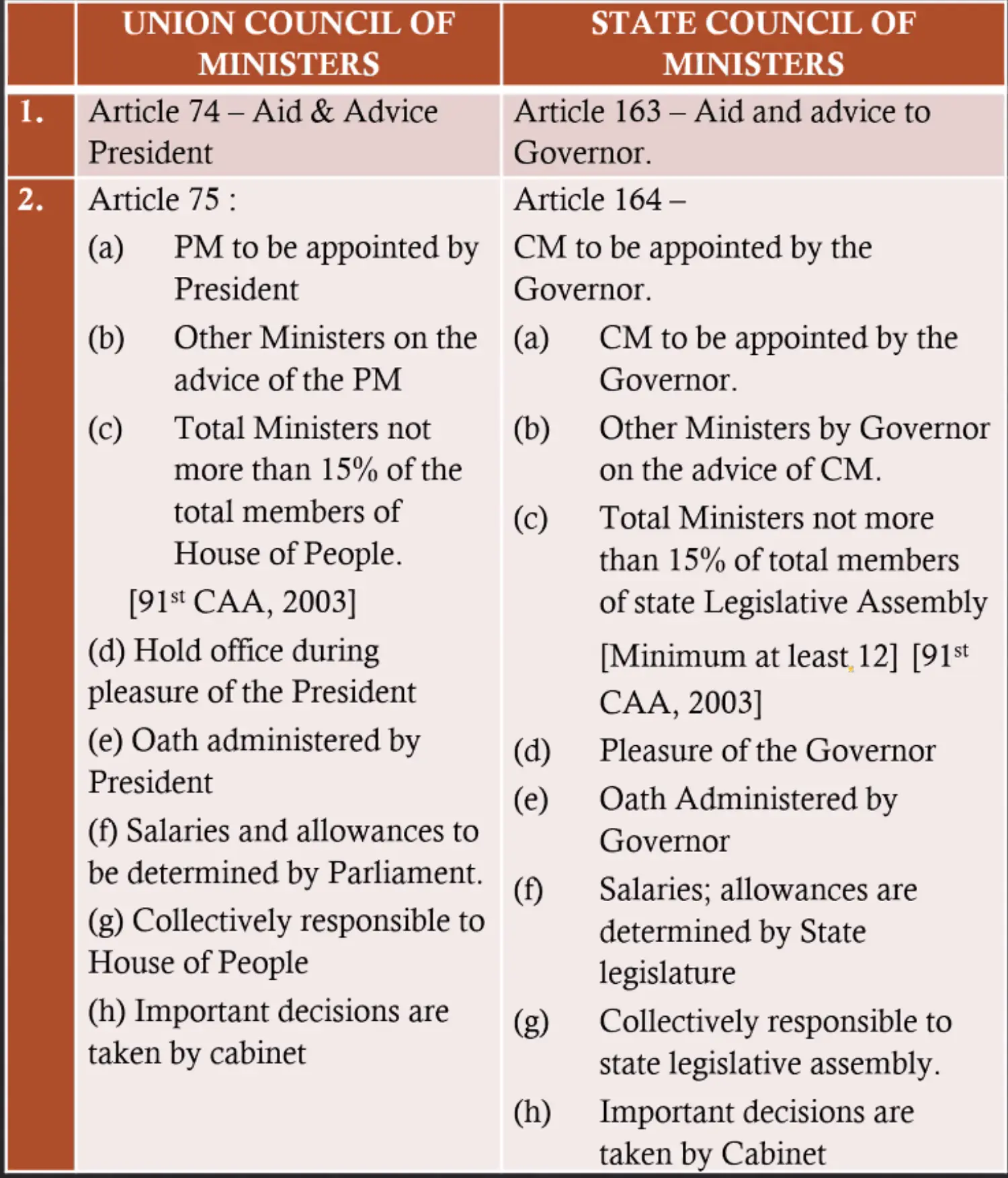
| Theme | Union CoM | State CoM | | --- | --- | --- | | Real Executive | Art 74 - Aid & Advice to President | Art 163 - Aid & Advice to the Governor | | Appointment | PM appointed by President
Other Ministers by President on Advice of Prime Minister | CM appointed by Gov
Other Ministers by Gov on Advice of Chief Minister | | Size of CoM Reason for Amendment: Later there were more Coalition Govt, Everyone wanted their say as a ministers post | Size of CoM /> 15% of House of People
Added by 91st CAA, 2003 | Size of CoM /> 15% of State Legislature
Added by 91st CAA, 2003
Special Note: in Case 15% < 12 Members - Then they can have 12 CoM
Example: AP is a State Leg of 60 Seats. There 15% is 9 Members
They can have 12 members | | Pleasure Of | Holds Office during the Pleasure of President | Holds Office during the Pleasure of Governor
Pleasure : Unless they lose Majority | | Administered Oath by | President | Governor | | Salaries by | Parliament | State Legislature | | Collectively Responsible to | House of People | State Legislature | | Important Decision by Cabinet - Means Most Important Ministers | Cabinet Ministers are called upon depending on Functions | Cabinet | | Headed by | PM
Unless PM is absent or he asks someone else to head the cabinet meeting | CM |
Attorney General & Advocate General
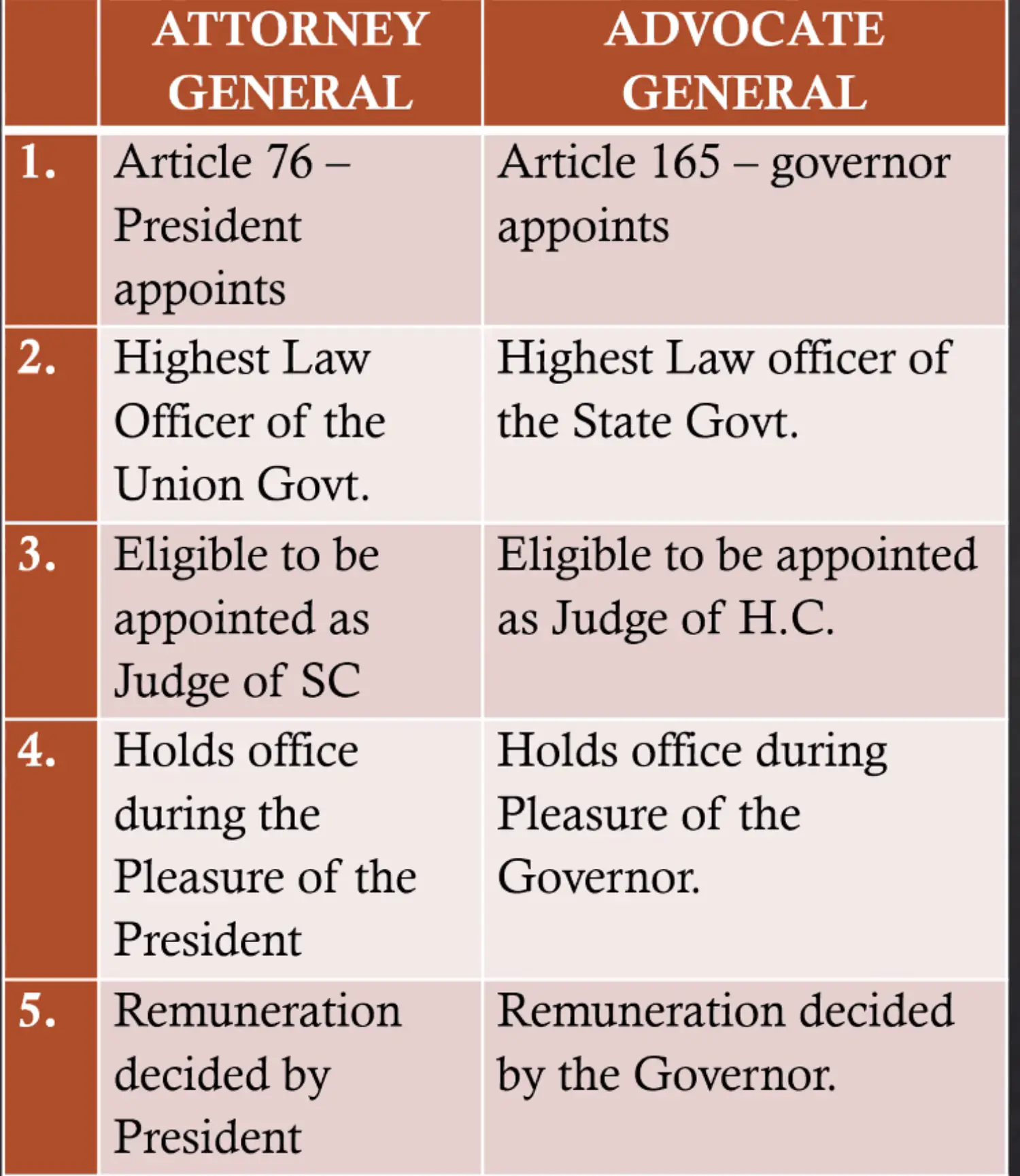
Appointment
- Choice is of Govt
- Should be Qualified to a Judge of SC
- Salary Decided by President
Functions needed to Perform
He has to defend govt of India in Court of Law
Example
He Defended India in the Rafael Deal
He Defended India in the Aadhaar Act
It was introduced as a money bill
He gives Legal Opinions wrt Variou Cases to the Government
Any Other Functions as may be directed by the President
in Art 143, Presidential Reference to SC by President, AG makes clear of the case to the SC
Immunities of Attorney General
Can be called upon to Defend Govt in Parliament
Opposition said Govt & Ministers don’t know, call AG, Govt didn’t accept
He can talk and debate but he will not use the Rt to Vote
Here he will Exercise all privileges and immunities as that of Member of Parliament except the right to vote
He has the Right to be an Audience in any court within territory of India
He Also has the Right to Private Practise but he should not hold against a Brief against the Govt
He May also appear against the Govt, but with Prior Permission of Govt
SC Maintained that the relation between AG and Govt is NOT that of a Employer and Employee but that of a Council and a Subject
Tenure
Normally Term is 3 Years. They can be removed at any point of time on the pleasure of president
Points of Attorney General and Advocate General are same but with some minute changes of area
Legislature - Union & State Legislature
Schema of Legislature
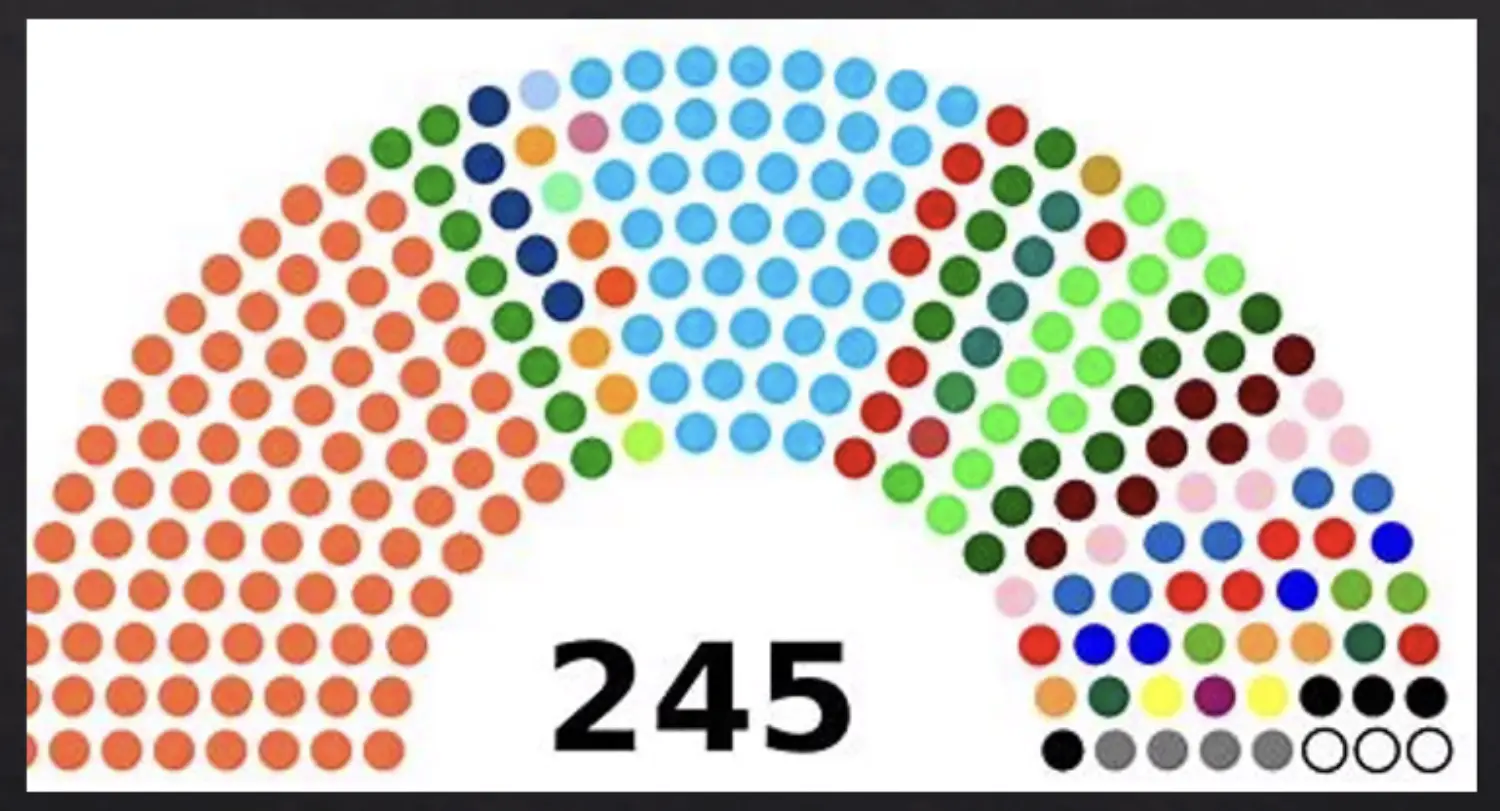
Structure of the Parliament
- Parliament = President + Lok Sabha + Rajya Sabha
- President is not a member of parliament but he is a Integral Part of Parliament
- Bicameralism Nature of State
- Council of States - Upper Houses - Will of States
- House of People - Lower Houses - Will of People
- Council of States (Rajya Sabha)
Why has it been made mandatory in the constitution ?
- To Protect the Interests of the States
- Strengthens the Federal Structure of Constitution
Special Powers of RS
- Art 312 - Creation of New All India Services - 3
- Art 249 - under some special circumstances the RS can authorise the LS to make laws on state list
Maximum Strength
Elected → Not More than 238 from
States →
All States Have Representation in RS
UT →
Except for UT of PC, NCT of Delhi, J&K
Details of Which are Present in the Schedule 4 of the Constitution
Past and Future Amendments will be done on the premise of their populations
Nominated → 12 from Areas of Literature, Art, Social Service, Science and Literature
Examples : Sachin & PT Usha, Ellai Raja
Indirect Election of RS
Electoral College - Elected Members of Legislative Assemblies
Proportional Representation by means of Single Transferable Vote
Proportional Representation
Concept
UP - 403 Seats
BJP - 250
SP - 100
Others - 53
Vacancy is RS happens after every second year, Hence Elections of 1/3 seats will be done every 2 Years
The Maths of Election is
- Total No of Rajya Sabha Seats is decided in the Schedule 4 of the Constitution, for UP it is - 31
- Total No of Seats in the State Legislative Assembly of UP is 403
- Hence, (403/10+1)+1 → “38 Single First Preference Votes” are needed for a member to be elected to the Rajya Sabha
- BJP has 250 Seats in State Leg Ass, Hence BJP can send 250/38 → 6.54 → 6 Members by means of “38 Single First Preference Votes”
- House of People (Lok Sabha)
Earlier
Earlier It was 552 Members Maximum = 550 Elected + 2 Nominated
Art 331 - Representation of Anglo Indian Community
2 Members to be Nominated from Anglo Indian Community
Now, 104th CAA Ended 2 Nominated Members
Now It is of no use as, it has been repealed
Presently, Maximum Seats is 550 = 550 Elected (Sub to Art 331)
- 530 States - Elected Directly
- 20 UT - Elected Directly
- Current Total No of Seats - 543
- Hence India Needs to be divided into 543 Constituencies
Direct Election (UAF - Art 325 & Art 326 )
- By Art 326 - Adult Suffrage
- Earlier 21 Years
- By 61 CAA
- Now 18 Years
- By Art 325 - Universal
- Gives Equality Between the Adults
- By Art 326 - Adult Suffrage
Territorial Constituency / Single Member Constituencies
FPPS - First Past the Post System
There is no Threshold of votes as such
He has to get Maximum No of Votes as compared to others, even if its just one
Seats are allocated in Proportion to the Population
- States with More Population will have more seats
- States with Less Population will have seats
Delimitation Commission
- Who Undertakes this Creation of Constituency and allocation of Seats
Concept
Constitution Empowers the Parliament
Parliament Makes the Law to Create a Authority
this Authority has to take care of dividing India into number of constituencies
Parliament Passed the Delimitation Act, 1952
Delimitation Act Created Delimitation Commission
Delimitation Commission has to create these constituencies based on the Representation by Population
This Commission gets to know the Population by Means of Census of 1971 & 2001
- Structure of Delimitation Commission
- Retired Judge of Supreme Court - Chairperson
- CEC / EC - Chief Election Commissioner
- SEC - State Election Commissioner
- Functions of Delimitation Commission
They have to decide the Number of Seats of Every State and UT by the Principle of RBP (Representation by Population
- Here Census used is - For Inter State Parity - 1971 Census
- “Latest Census” was amended by 42nd CAA 1976
- Latest Census was freezed to 1971 Census
- This was amended by 84th CAA, 2001
- Now 1971 Census was fixed until first Census after 2021 (probably 2031)
- Here Census used is - For Inter State Parity - 1971 Census
They have to Delimit the Constituencies = They have to draw the Boundaries of Constituencies
For Ex : LS Seats for UP is 80 Seats
Here Census used is - For Intra State Parity - 2001 Census
By Means of Delimitation Act of 2002
2001 Census - used to Demarcate Boundary
They have to Reserve Seats for SC & ST
Here Seats will be reserved on the basis of Population
Here Census used is - For Intra Parity State - 2001 Census
By Means of Delimitation Act of 2002
2001 Census - used to allot seats to SC ST
- Who Undertakes this Creation of Constituency and allocation of Seats
Seats of RS, LS & SL are mentioned In
- Seats of RS - In Constitution
- Seats of LS & State Legislatures is in - In RPA, 1950
Tenure of Houses
- Lok Sabha
- 5 Years Normally
- Reduced
- Lost Majority
- They have majority they ask the President to dissolve the Lok Sabha
- Term Extended -
- National Emergency under Art 352
- Third Emergency 1971 until 1977 due to Emergency
- Rajya Sabha
- It’s a Permanent House
- Every Second Year 1/3 of the Members Retire
- Started in 1952
- First Batch Retired in 1954 - 1/3 Members
- Second Batch in 1956 - 2/3 Members Retired
- Lok Sabha
-
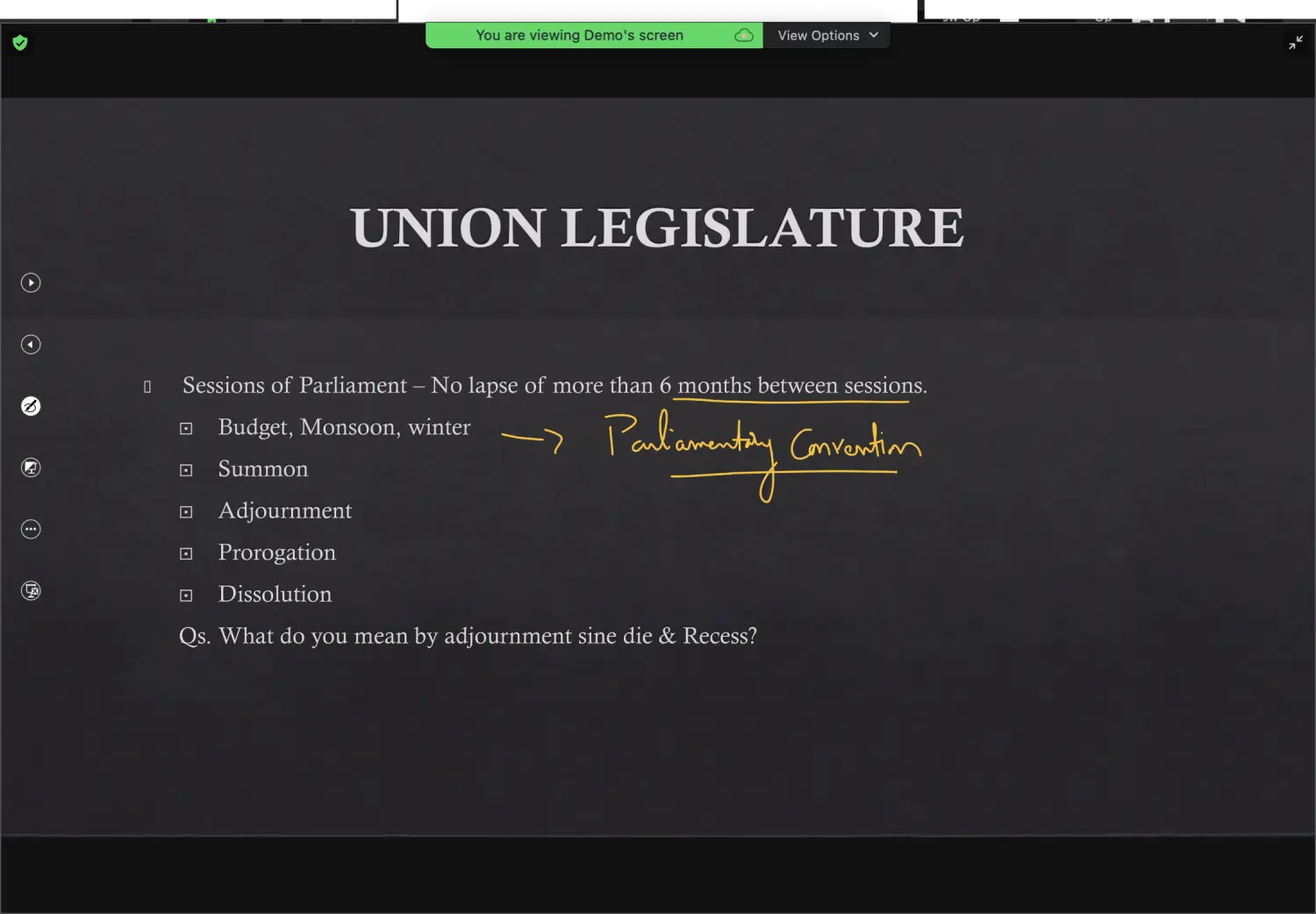
What Happens to Bills
Summary
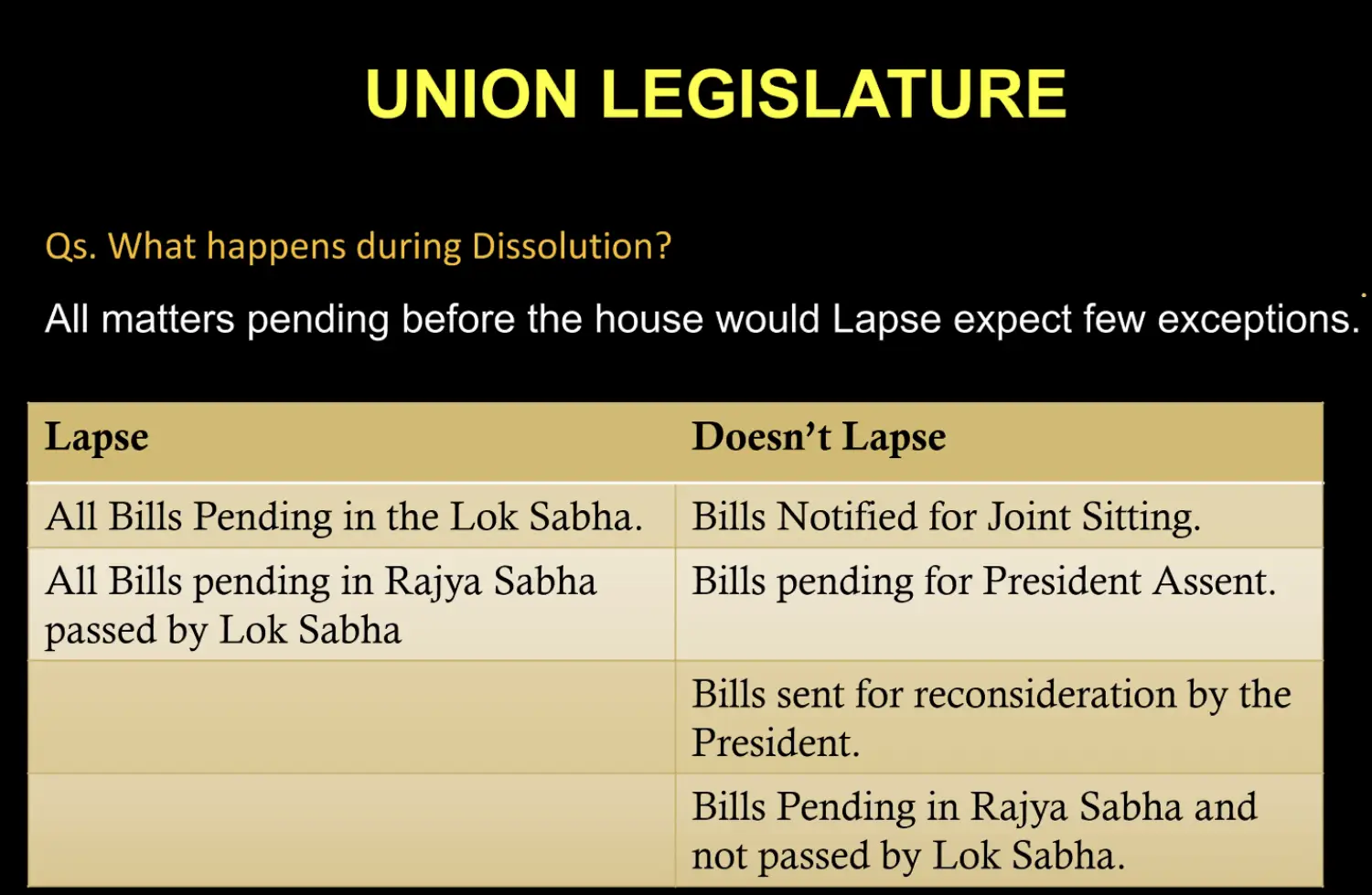
The Rule
🧠 Rule : Any Bill Related to Lok Sabha, On Dissolution of Lok Sabha, It will LapseWith Exception of : If Before LS is Dissolved & President is Involved
- Case 1 - Bill Lapse Subject to Few Exceptions
- in 17th LS, A Bill has underwent 3 Stages
- Bill Progressed → 2 Stages Pending
- 17th LS Dissolved, 18th LS Started
- Hence the Bill Lapses
- Case 2
- RS may accept with change - RS will send back to LS - Bill Lapses
- RS accepts without any change - Sent to President - Bill Does Not Lapse
Bill Related to Lok Sabha It Will Lapse
- Yes
- It Will Lapse
- Exception - Before the Lok Sabha is Involved - Bill will NOT Lapse
- It Will Lapse
- No
- It will not Lapse
- Yes
Cases
Pending = Under Consideration
Bill Will Lapse
- All Bills Pending in the Lok Sabha
- Intro in LS → Pending in LS → It will Lapse
- Intro in RS → RS Pass → Pending in LS → It will Lapse
- All Bills pending in Rajya Sabha passed by Lok Sabha
Intro is LS → Passed by LS → Pending in RS
- RS Passed it → Bill becomes an act
- RS Send it back for Reconsideration & Changes and Accepted to LS
- RS Rejected the Bill
In all these 3 Cases the Bill Will Lapse
Bill Will Not Lapse
Bill Pending in RS → Not Passed by LS
Intro in RS → Pending in RS → Bill will NOT Lapse
Bills Pending for President Assent
- Bill Intro → Pass by RS → Pass by LS → Prez Generally used Absolute Veto Art 111 → Bill will NOT Lapse
Bill Sent for Re Consideration by the President
- Bill Intro → Pass by RS → Pass by LS → President Sent for Reconsideration → Bill will NOT Lapse
When LS and RS reach a Deadlock → On Art 74 → under Art 108 Prez can call a Joint Sitting → If Prez has called for Joint Sitting → Bill will Not Lapse
- All Bills Pending in the Lok Sabha
Qualification to the Members of Parliament for both of LS & RS
By Grounds Mentioned in Constitution
They Should be a Citizen of India
They have to take an Oath / Affirmation before an authorised authority means
Authorised Authority → As Appointed by Election Commission Of India → Generally Called the Returning Officer
Not Less than
- Lok Sabha - 25 Years of Age
- Rajya Sabha - 30 Years of Age
By Other Qualification as mentioned by Law
Representation of People Act, 1950, Provides for Certain Qualifications like
- He Himself should be an elector from any constituency in India
- Members of Reserved Category to Contest Reserved Constituency (of SC/ST) → he himself should belong to a particular community
Difference in Qualification of LS & RS
- Age
- There is no Reserved Seats in Rajya Sabha
Disqualification to the Members of Parliament for both of LS & RS
Grounds Mentioned in Constitution
If it is found that who is elected but is found that he was not a Citizen of India, leads to disqualification
If he Voluntarily Gives up the Citizenship after becoming a Member of Parliament
Undischarged Insolvent
Somebody who has taken credit from Banks or from any financial institution and he is not paying the debt despite many notices to him by the Bank by Means of Insolvency Code
He is considered to be a Disqualified Person
Holds Office of Profit
- Parliament (Prevention) of Disqualification Act, 1959
- By Protection under this Law, Certain Offices are mentioned under this particular Law will not be considered as office of profit
If somebody turns out to be a Unsound Mind
By Laws Made by Parliament
By RPA, 1950 → there are no of grounds as of now, there’s only one ground
If somebody is convicted under any offence, under any law for 2 or more years
He will be considered Disqualified
Found Guilty of Election Offences
Example : Raj Narayan Case
Here the Disqualification is Automatic
Disqualification By
Disqualifying Authority is President of India on the Aid & Advice of Election Commissioner which is binding on the President
Anti Defection Law by 52nd CAA, 1985 (Tenth Schedule) - Special Case of Anti Defection Law
Introduction
It was not a part of Original Constitution
In Anti Defection Law, Disqualification is done by Presiding Officer himself, He Conducts an Independent Enquiry.
He does not act on aid and advice of EC by a Quasi Judicial Process
Here President has no say in the process
What is the Constitutional Position of Anti Defection Law ?
Added by 52nd CAA, 1985 to the Tenth Schedule
Background of Anti Defection Law
Why was there no Defection Law in the Original Constitution
In the original constitution there was no need for defection law
- Congress was only Party
- Conscience of people was high
What is the Meaning of Defection ?
If a member having a ticket from one party to another party, after getting elected from the previous party
Why was a Rise in Defection Seen ?
- Coalition Govt
- Political Instability
- Aayaram Gayaram Episode
Why was Anti Defection Law Brought in
- To Prevent Political Instability
- To Prevent Political and Economic Gains of Defectors
- To Prevent Subversion of Entire Democratic Process
- To Respect the Sentiments and Emotions of Peoples Mandate
What is Anti Defection Law ?
What do you mean by Defection ?
In general MP and MLA elected from a Particular Party ticket moving to another party OR engaging in anti party activities may be considered defection
What amounts to Defection ?
Voluntarily giving up membership of political party
- Resigned from the Party
- He has not resigned in a party but is engaging in activities against the party
- Example : BSP Member Not Resigned, Sitting in SP
If we abstain from voting or vote, contrary to party directions
- Party Whip - Senior Member of Party
- Anybody Doing Contrary to the Party Will
Exception
- Taken Permission from Party Before Hand
- Apologised to the Party within 15 Days
If any independent member joins any political party
- Independent Member - निर्दलीय
- He can support the Govt or he can help in formation of Govt but without taking membership of the party
If any nominate member joins any political party after expiry of six months
As of Now, RS 12 Members
For Ex: At time of Nomination, Sachin Tendulkar was not a member of any party, ab within six months if he wants to join the party he can, but within 6 months
Example of Process
- Belonging to Congress
- Mp of 2 Years
- Goes to BJP
- Presiding Officer Disqualified Him
- He cannot be a member of Parliament
- Unless and Until he is Re Elected Again
Exception to Anti Defection Law
If there is 1/3rd Split in the Membership of the Party
Case 1
Party - 60 Members
1/3 - Move Out - 20
2/3 Remain - 40 Members
This is called as a Faction or Ideological Differences
Case 2
This was amended by 91st CAA
Brought in 2/3rd Merger
A Minimum of 40 Members have to split and get merged with another party
What are the Case Laws Related to ADL ?
Kihoto Hollohan Case, 1992
- Argument 1
- It Challenged the Constitutionality of ADL
- It argued that ADL violates Art 105 in Centre and Art 194 and takes away parliamentary privileges of the MP
- It violates Freedom of Speech in voting in Parliament to which they are immune to
- SC Said, that there is grave conflict but Stability of govt is more important over the Freedom of Speech
- Hence, its constitutionality was upheld
- Argument 2
- 52nd CAA, 1985 said that decision of presiding officer to be final and binding
- SC maintained that the law in entirety was constitutional but the part of presiding officers decision being final and binding is unconstitutional
- Hence this was changed by SC
- now a member can appeal to higher courts
- Argument 1
What are the Pros and Cons of ADL ?
Advantages of Anti-Defection Law are
- Ensures stability of government
- Ensures Party Discipline and Decisions on Party Direction
Disadvantages of Anti-Defection law
One of the Reason that why quality of debate in parliament has reduced is because the mentality of MP has become
No Matter what he debates, he has to anyhow vote on the party lines
Not Truly Representative : MP Depicts the Will of Party and Not will of People
Mis Use of Discretionary Powers by the Presiding Officer
Speaker i.e Presiding Officer is from the Ruling Party
There is not a Fixed timeline for the Presiding Officer to Act, SC Recommended the Presiding Officer to act within 3 Months
The Speaker can not take Suo Moto Cognisance
Example TRS & TDP In Telangana
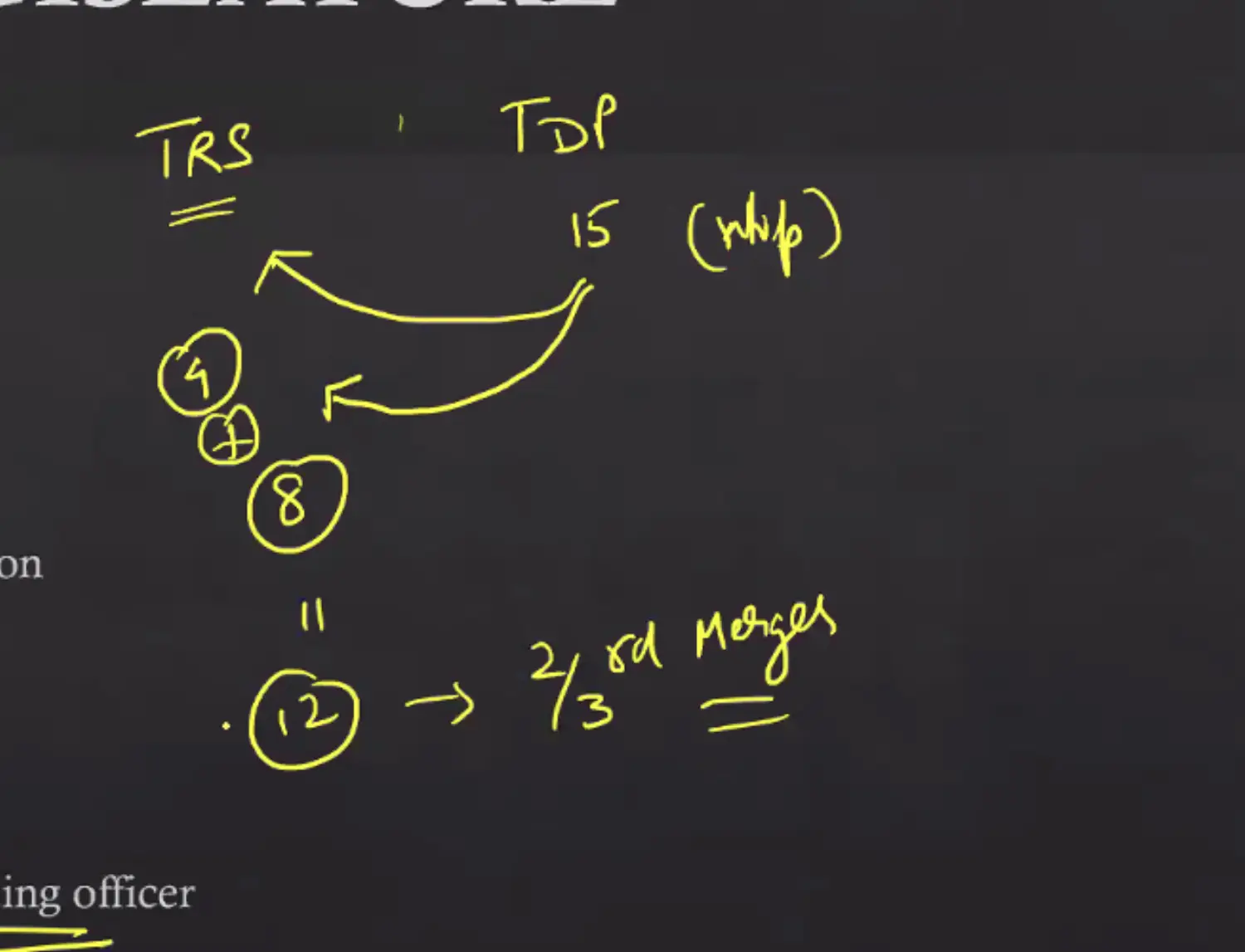
What are the Suggestions to improve upon ADL ?
Strictly Restrict ADL to No Confidence Motion
Example : UK, Parliament System
Law Commission of Indian in its 170th Report also recommended this
Power to be Exercise by independent officers like President and Governors on the Recommendation of ECI
Suggestion by Dinesh Goswami Committee & M Venkatachaliah Commission (NCRWC, 2002)
NCRWC - National Commission to Review Working of Constitution
Appoint a Politically Neutral Person as Speaker
Ex : Convention is followed in UK
Once a Person is elected he gives up the membership of Party
SC Recommended Creation of Separate Tribunal to deal cases with ADL
- Speaker of Lok Sabha
Presiding Officers of
Lok Sabha - Speaker
Rajya Sabha - Vice President
The Process of Election of Speaker
Election
Prove Majority
PM Appointed by President
CoM Appointed by Prez on A&A of PM
Prez Appoints Speaker Pro Term
Speaker Pro Term Administers the Oath to Newly Elected Members
Speaker Pro Term will conduct elections for a Speaker on the Date Decided by President
Qualification
Only Qualification to Contest Elections is that he or she should be a member of Lok Sabha
To be elected as Speaker, a simple majority is needed
Office of Speaker Pro Term ceases to exist after Speaker is elected
Pro Term Speaker
Speaker Pro Term is generally a person who has been elected to the House Maximum No of times generally
Tenure
The Current Speaker of 17th LS will continue to be the Speaker until 18th LS, until Pro Term Speaker of 18th LS
Removal
He can be removed as speaker by means of effective majority
Resignation
Speaker can give his resignation to Deputy Speaker
Disqualification
All Criteria of MP for Disqualification
Exception
A Speaker cannot be disqualified from the post of speaker for resigning from the Party
Powers & Function of the Speaker
Maintain the Order and Decorum in the House
Presiding Officer has the power to carry out the proceedings only if there is Quorum of the House
Quorum - Minimum Strength Needed to carry the Proceedings of House
Quorum of Lok Sabha -1/10 of the Total Membership
He is the Final Authority to Interpret rules within the House
He has the Power to Preside over Joint Sitting
President has the Power to call for Joint Sitting under Art 108 on A&A of CoM
In Joint Sitting if it is passed with Simple Majority, then it is deemed to be passed by both houses of Parliament
Convened by President, Presided by Speaker
If Speaker not There, Deputy Speaker of LS, Dy Chairman of RS
Chairman RS cannot
He has the Power to Certify a Bill as a Money Bill under Art 110
He has the Powers to Disqualify on the grounds of Defection
Voting Power of Speakers
To Break a Tie he can use or exercise his casting vote
He Appoints Chairman to Various Committees.
He himself is the Chairman of
- Rules Committee
- Business Advisory
- General Purpose Committee
Independence and Impartiality of the Speaker
- How his position can be misused
Important because of Anti Defection Power
Misuse in case of certifying a bill as a Money Bill
In Money Bill RS deprived of its power and LS will have all the Power
Misuse of Power to not give opposition member be spoken
- Provisions for Speaker
Security of Tenure
Salary & Allowance charged from CFI (Consolidated of Fund of India)
CFI - Consolidated Found of India
Charged on CFI - Parliament can’t
Made from CFI
Not to be Questioned in court of Law Regarding proceedings of house
Presiding Officer can vote in case of a Tie as his Casting Vote
- How his position can be misused
- Deputy Speaker of Lok Sabha
- Its a Parliamentary Convention from the 11th LS &
- From 16th & 17th LS there is No Deputy Speaker as there is No Opposition as of Now
- Elected from Amongst the Members
- Acts as a Speaker when Office of Speaker is Vacant
- He automatically becomes chairperson of a committee if he is a member of that committee given that speaker is not a member of that party
- Chairman of Rajya Sabha
- Vice President - Ex Officio Chairman
- Powers & Functions (Similar to Speaker)
- Maintain Order and Decorum
- Conduct Proceedings when Quorum
- Final Authority to Interpret Rules of RS
- Final Authority to Preside Joint Sittings
- No Power to Certify Money Bills
- No Power to Preside Joint Sitting
- Deputy Chairman of Rajya Sabha
- Elected Amongst Members of Rajya Sabha
- Removal by Effective Majority
- Resignation to Chairman
Parliamentary Privileges (Art 105 & Art 194)
What does it mean by Parliamentary Privileges ?
Parliamentary privilege refers to rights and immunities enjoyed by parliamentarians in order to properly discharge the duties and functions entrusted upon them by the Constitution
Roles of Parliamentarians
To Make Laws
Accountability of the Govt
Financial Accountability
What is the Rationality behind it ?
To Ensure Accountability of Government
Constitutional Provisions ?
For Centre Art 104 and State Art 194
What are the Parliamentary Privileges exercised by MP’s ?
2 by Constitutional Provision and others by Parliamentary Convention
Right to Freedom of Speech and Right to Vote
Right to Publication - Collective Right
Collective Privilege is exercised by means of speaker
What Punishment will be given - Parliamentary will decide
But Scope of Parliament is not Restricted to these two privileges,
Apart from these Priv there may be other Priv as may be determined by Laws of Parliament
Till the Time Parliament Makes Laws, Parliamentarians may exercise privileges before constitution came into existence(i.e by Constituent Assembly)
Important Note on Parliamentary Privileges
- Constitution Empowers the Parliament to Codify Privileges
- Till Such Codification Members Continue to Enjoy Privileges they enjoyed before the commencement of constitution
- It is taken care by Privilege Committee, Each Separate for Lok Sabha and Rajya Sabha
Final List of Privileges exercised by Parliamentary
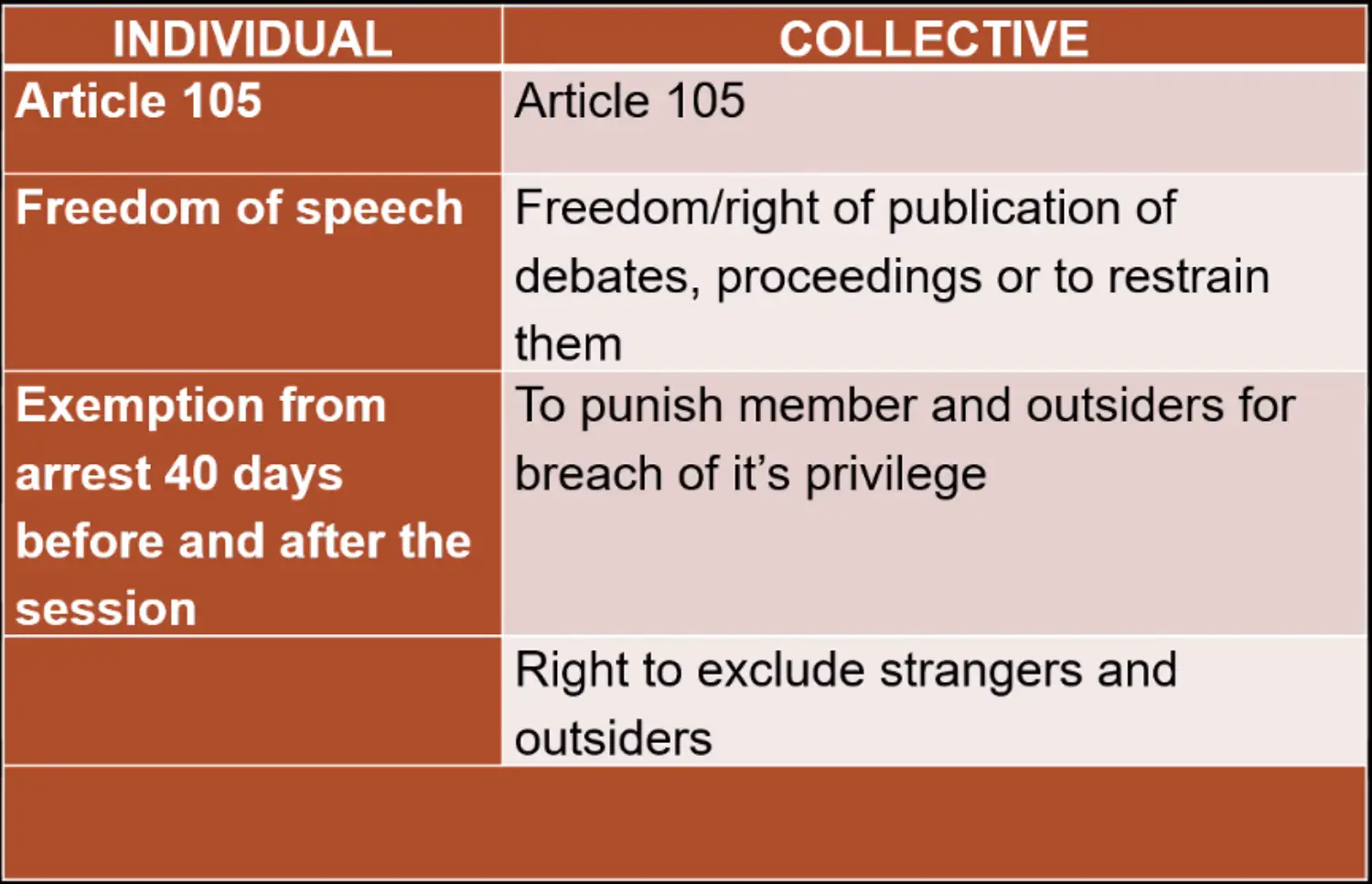
What are the Issues Around Parliamentary Privileges ?
Borrowed from British Parliamentary System as a Conventional Practise
- Collective
- Art 105 - Ind & Coll
- Freedom to Right of Publication of Debates Proceedings or to Restrain Them
- To Punish Members and Outsiders for Breach of its Privileges
- Right to Exclude Strangers and Outsiders
- Individual
- Art 105
- Freedom of Speech - Individual → Subject to Exception of
- Rules of House of Parliament & Constitution
- Unparliamentary Languages
- Cannot Engage in Contempt of Court or Criticise Actions of a Judge
- Exemption from arrest 40 Days before and after the session → Effectively Amounts to 5 Years of No Arrest
- Collective
What are the Issues Around Parliamentary Privileges & Associated Case Laws ?
Violation of Art 19 & Art 21 of Constitution
MSM Sharma Case, 1959 or Searchlight Newspaper Case
Case of Bihar, Published in Newspaper which was barred by Speaker of Leg of Bihar
Here Supreme Court Ruled that Art 194 will have precedence over Art 19
Keshav Singh Case, 1964
Ques: Is Judicial Review of Parliamentary Privileges Possible ?
Ans: SC Maintained that Judicial Review is Possible in case of Parliamentary privileges especially if it deprives Rt to Life & Liberty
Court Said that whenever you are trying to deprive someone of Rt to Life and Liberty, there has to be Due Process of Law
Ques: Can Judges be considered to have Breach of Parliamentary Privileges
Ans: No they cannot be ever a Liability to the Judges
Why is Codification Required ?
Goes Against the Idea of Limitation of Powers
Goes Against the Principle of Constitutional Supremacy
It rather promotes Parliamentary Sovereignty
For Protection of Fundamental Rights
Misused for Vested Interests - Generally for Political Vendetta
What are the Disadvantages of Codifying Parliamentary Privileges ?
Once Codified, it will lead to Judicial Scrutiny and Lead to Pendency of Cases and May be used to hamper the proceedings of parliament
M N Venkatachaliah Commission (NCRWC 2002) - Recommended the Codification of Parliamentary Privileges
Sample Mains Question

Parliamentary Procedures - Summarise, Structure and Add Once
In Sequence
Summary
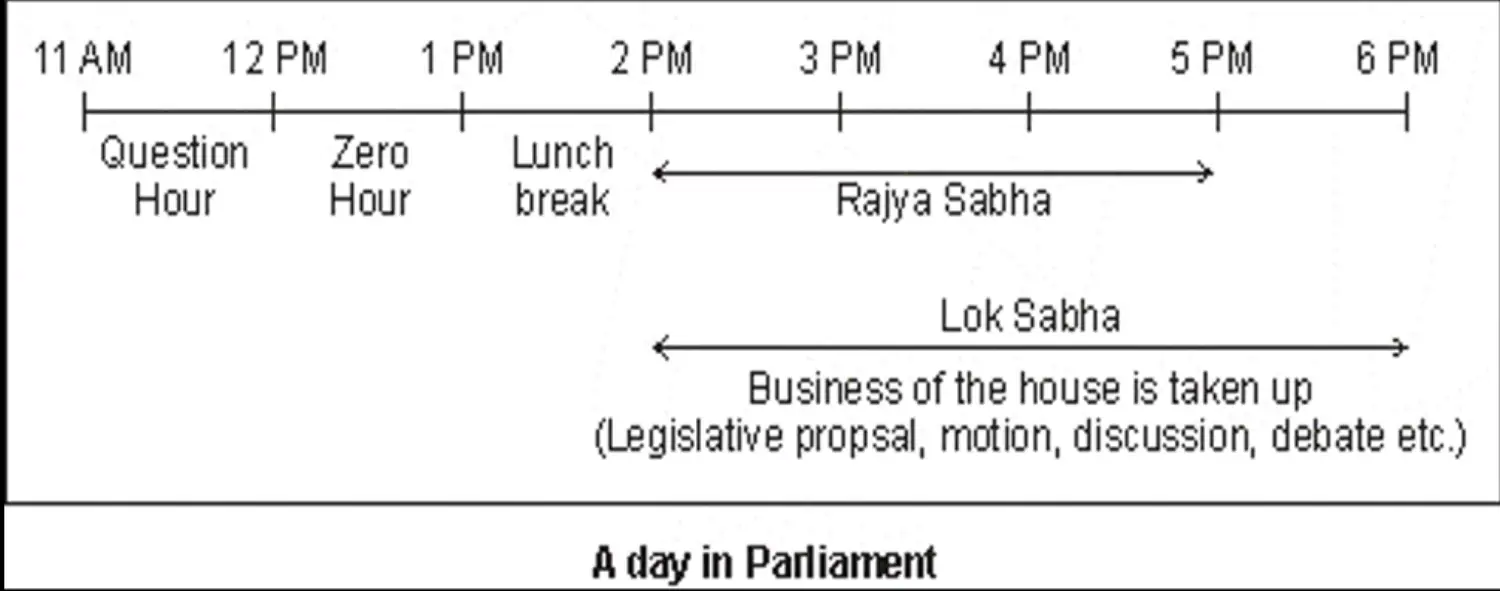
Question Hour
Introduction
- Any Kind of Question can be fired to Ministers
- It is also called Accountability Hour
- 15 Days Notice has to be given to the presiding officer
Types of Questions asked
Advance Notice has to be given to the Minister
Starred Question - Oral Answer
Here Notice time is a Minimum of 15 Days Notice
Unstarred Questions - Written Answer
Here Notice time is a Minimum of 15 Days Notice
Short Notice Question - Oral Answer
Here Notice time can be less than 10 Days
Zero Hour
- Merely an Extension of Question Hour
- No Prior Notice of 10 Days is Needed
- Indian Innovation, Its Merely a Convention
- Starts at Zero at 12 Noon
- Entire Rules and Procedures have to be done by speaker Lok Sabha
- There is No Specific Agenda for the Zero Hour as Such
Motions & Questions
Difference between Motion and Questions in the House
Question is Asked and it is Answered
It is introduced in the first part of the day
Motion is Introduced, Debated and Deliberated & Voted Upon
It is introduced in the second part of the day
Introduction to Motion
A motion is a proposal which is introduced in the house to elicit a debate on a particular matter
It can be put up only in the second part of the day
Types of Motions
- Vote of Thanks
What is Motion of Thanks
Given by President
When Does it Happen ?
It is given by By President
When Govt is Installed after General Election is Over
He Talks about Objectives and Aims of the Government for the next 5 Years
First Session of Every Year
He Lays Report like a Progress Report of the Government
What will happen if the Motion is Not Passed ?
- In Lok Sabha - Considered as No Confidence Motion -
- In Rajya Sabha - Its Just an Embarrassment if government takes it to be an Embarrassment
- No Confidence Motion
- This word is no where mentioned in the Question
- Mentioned in Rule 198 of Lok Sabha
- Any Person can Introduce No Confidence Motion
- But it can be in the Lok Sabha Only
- Presiding Officer may or may not accept it
- PO may not accept it unless and until it is supported by 50 Members at the time of introduction
- There has to be No Specific Agenda for the No Confidence Motion
- Once No Confidence Motion Passes
- President may accept the resignation and look for installation of new government
- President may accept the resignation but if there is no new govt to be installed the old govt may act as a Caretaker Government. Here A&A of CoM will not work
- Art 75 of the Constitution - Talks about collective responsibility of members or minsters to Lok Sabha
- Adjournment Motion
- Not Mentioned in Constitution
- It is a Rule of the House
- Can be Introduced only in the Lok Sabha
- Once this motion is admitted in the floor of the house, even the speaker lok sabha cant adjourn the house, until and unless the ADJOURNMENT Motion is talked and debated and completed
- It is used for a Matter of Urgent Public Importance
- Can only be introduced only if 50 Members support this motion then only it can be introduced
- Minimum Discussion will be for 2.5 Hours
- House cannot be adjourned Motion is put to vote
- Even if it is passed, there is no impact on the Government but it is a indication that government might not be having majority
- Privilege Motion
- Before Punishing a Individual, this motion is introduced
- Motion is passed and voted upon to finalise the punishment for breach of Parliamentary Privileges
- Vote of Thanks
Lunch Break
Actual Business of House
The Law Making Process - As a Base by Example of Ordinary Bill
What is a Bill
It’s a Legislative Proposal, Once Passed by Both the Houses of Parliament and has Been Given Presidential Assent before it become a Law
Procedure Involved in the Bill
- Introduction of the Bill
Who Introduces the Bill
- Government Bill - Introduced only by the Minster
- Pre Legislative Process - Add from Lecture
- Bill is referred to Legislative Dept under Law Ministry for the drafting of Bill
- If he wants, Before he places in House, it can be put up in public domain
- Before putting it in parliament, PM is told about it
- PM calls a Cabinet Meeting with Important Ministers
- Cabinet Gives Approval - Bill is backed by the Government
- Now Treasury has to support the Bill, if he denies it will be considered as Defection
- Pre Legislative Process - Add from Lecture
- Private Member Bill
- Pre Legislative Process - Add from Lecture
- Anyone who is not a minster is a Private Member
- He has to do it by Legislative Experts Privately
- He will have to take permission of Presiding Officers and put it up in the house
- Pre Legislative Process - Add from Lecture
What is the Subject Matter of the Bill
- Money Bill
- Financial Bill
- Ordinary Bill
- Constitutional Bill
What is the Place where Bill has been Introduced
- Lok Sabha
- Rajya Sabha
What happens with the Bill
- The Person who Introduces this Bill will discuss the Objectives of the Bill
Referral to DRSC
Departmentally Related Standing Committees
In Parliament - 24 DRSC Present
Each House will have 31 Members 21 from - Lok Sabha
10 from - Rajya Sabha
- 16 DRSC - Lok Sabha
- 8 DRSC - Rajya Sabha
These DRSC’s divide the Whole Major Functions of Government
Example
- Constitution Amendment Bill - to DRSC on Home Affairs
- Mediation Bill - to DRSC on Public Grievances
They Scrutinise in Depth and Prepare a Report on the Bill. They Give the Report back to the House
Drawback of these Committee
Neither it is mandatory for the Govt to refer to DRSC
Nor the Recommendation of DRSC is Binding on the Govt
A Minister cannot be a part of any DRSC
Discussion Stage or Second Reading
Clause by Clause Analysis is done here s
Even after the Second Reading Stage Govt feels that bill should be referred to another committees
It can be referred to - Ad Hoc Committee
Ad Hoc Committee - Temporary Committee made for a Specific Time is called
Standing Committee - Permanent Committee
- Join Parliamentary Committee (JPC)
- Select Committee - is from a Specific House not from Both the House
Example : Surrogacy Bill became Act → It was long time pending in the Select Committee
- Final Vote or Third Reading in the First House
- Bill has to be totally accepted or rejected
- Bill has to be passed with Simple Majority
- No Clause by Clause Analysis
- No Changes can be made here in this Stage
- Bill in the Second House
The Process
Ordinary Bill - Both LS and RS have Equal Power
Bill is introduced in the Second House
Major Objectives and Reasons of the Bill will be discussed
- They Do Not Take An Action
- If after the Introduction the Bill has been pending in the second house for more 6 Months → Constitution calls it Deadlock
- They Take an Action → Bill moves to Second Reading Stage
- They Do Not Take An Action
Second Reading Stage in Second House - They Make Clause by Clause Analysis
They can make changes
They can refer it to a JPC or Select Committee
They Do Not Make Changes
Bill is sent to Third Reading Stage
Bill is put to vote in the Second House
- Bill is Passed
- They Pass with Changes
- First House will Accept the Changes → Bill is sent to Presidents Assents
- First House will Not Accept the Changes → Deadlock
- They Pass with No Changes
- Bill Goes to the President for his Assent
- They Pass with Changes
- Bill is not Passed → Deadlock
- They do not take action since introduction for 6 Months → Acc to Constitution → Deadlock
- Bill is Passed
The Summary
Same Procedure as in the first house
Options in the Hands of Rajya Sabha
- Accept the Bill without any change → Sent for President Assent
- Reject the Bill → Deadlock
- Pass with Amendments & First House Accepts the Amendment → Sent for Presidents Assent
- Pass with Amendments & First House Does Not Accepts the Amendment → Deadlock
- No Action for Six Months → Deadlock
Here Joint Sitting can be convened by President under Art 108
Presided by → Speaker LS → Dy Speak LS → Deputy Chairman RS
- Presidential Assent
- Can Give Assent to Bill → Bill becomes an Act
- Can withhold Assent to Bill → Absolute Veto
- Can send for Reconsideration to the House → Suspensive Veto
- Can sit on it without communicating on the Bill → Pocket Veto
Types of Bills & Allied Procedure (Detailed)
Difference Between Ordinary Bill, Money Bill, Financial Bills (1 & 2), Constitutional Bills
| Theme of Difference | Ordinary Bill | Money Bill | Financial Bill 1 | Financial Bill 2 | Constitutional Amendment Bill | | --- | --- | --- | --- | --- | --- | | Powers of LS & RS | Lok Sabha & Rajya Sabha have equal powers | Lok Sabha is more powerful | Like Ordinary Bill | Like Ordinary Bill | | | Prior President Recommendation | No Prior Recommendation of President is Needed | Prior Recommendation of President is Needed | Prior Recommendation of President is Needed | President may recommend for its consideration in both the houses | Not Needed | | Introduced in | Can be Introduced in LS & RS | Can only be Introduced in LS | Can only be Introduced in LS | Like Ordinary Bill | Can be Introduced in LS & RS | | Can Second House Reject | RS can reject the bill or sit on it for 6 months until the deadlock | RS cannot reject the bill Can Sit on it for 14 Days | Like Ordinary Bill | Like Ordinary Bill | | | Recommendation Bill of RS Binding | The recommendation of RS has to be considered or else deadlock | The recommendation of RS is not binding & if LS does not agree, Money Bill can still pass | Like Ordinary Bill | Like Ordinary Bill | | | Presidents Assent | President Can
- Approve - Art 74 on A&A of CoM
- Withhold - Absolute Veto
- Sit-Pocket Veto
- Reconsideration - Suspensive | President cannot send it back for Reconsideration Only can Withhold the Assent → in case of Caretaker Govt in case of LS Dissolved | Like Ordinary Bill | President Can
- Approve - Art 74 on A&A of CoM
- Withhold - Absolute Veto
- Sit-Pocket Veto
- Reconsideration - Suspensive | | | Scope of Deadlock | Possible
- RS Rejects the Bill
- RS Sends for Recommendations but LS Rejects
- RS Sits over it for 6 Months | No Scope for Deadlock | Like Ordinary Bill | Like Ordinary Bill | |
-
What is a Subject Matter of Ordinary Bill
Any Bill which is not a Constitutional Amendment Bill, Nor a Money Bill, Nor a Finance Bill1, Nor a Finance Bill 2 will be considered as a Ordinary Bill
Examples
- POCSO Act
- CAA
Money Bills - Art 110
Introduction
- Art 110 deals with Money Bills
- Any Bill which contains only those items mentioned in Art 110 of the Constitution can be certified as money bill by the Speaker of Lok Sabha
Subject Items in Art 110
- Important Full Form
CFI → Consolidated Fund of India
Income Generated by Govt is Credited into CFI
To Withdraw Money, Approval of Parliament is Needed
CFI → Contingency Fund of India
PAI → Public Accounts of India
The 6 Majors Heading of Art 110 for Money Bill
- Taxation Matters
No Tax can be Levied except by Authority of Law
Ex : IT Act → Authorises Govt to collect Taxes
- Borrowing Clauses
Indian Budget → Deficit Budget → Earning - Expenses = Deficit
Law Needed → FRBM Act - Deals with Clauses of Borrowing
- Custody of Consolidated Fund and Contingency Fund of India AND Withdrawal of Money
Income Generated by Govt is Credited into CFI
To Withdraw Money, Approval of Parliament is Needed
Contingency Fund of India - Expenditure for Unforeseen Expenditure like a Disaster
It is Generally Less the Consolidated Fund
- Appropriation of Money from CFI
Withdrawal from Contingency Fund of India can be authorised by merely a Executive Action under Contingency Fund of India Act, 1951
- Declaring a Expenditure as Charged Expenditure for CFI
There can be only two types of Expenditure in Indian Government
Under Art 112 of the Constitution - Tells which Expenditure are Charged Expenditure and Which are Made Expenditure
- Made Expenditure
- Charge Expenditure
Explanation
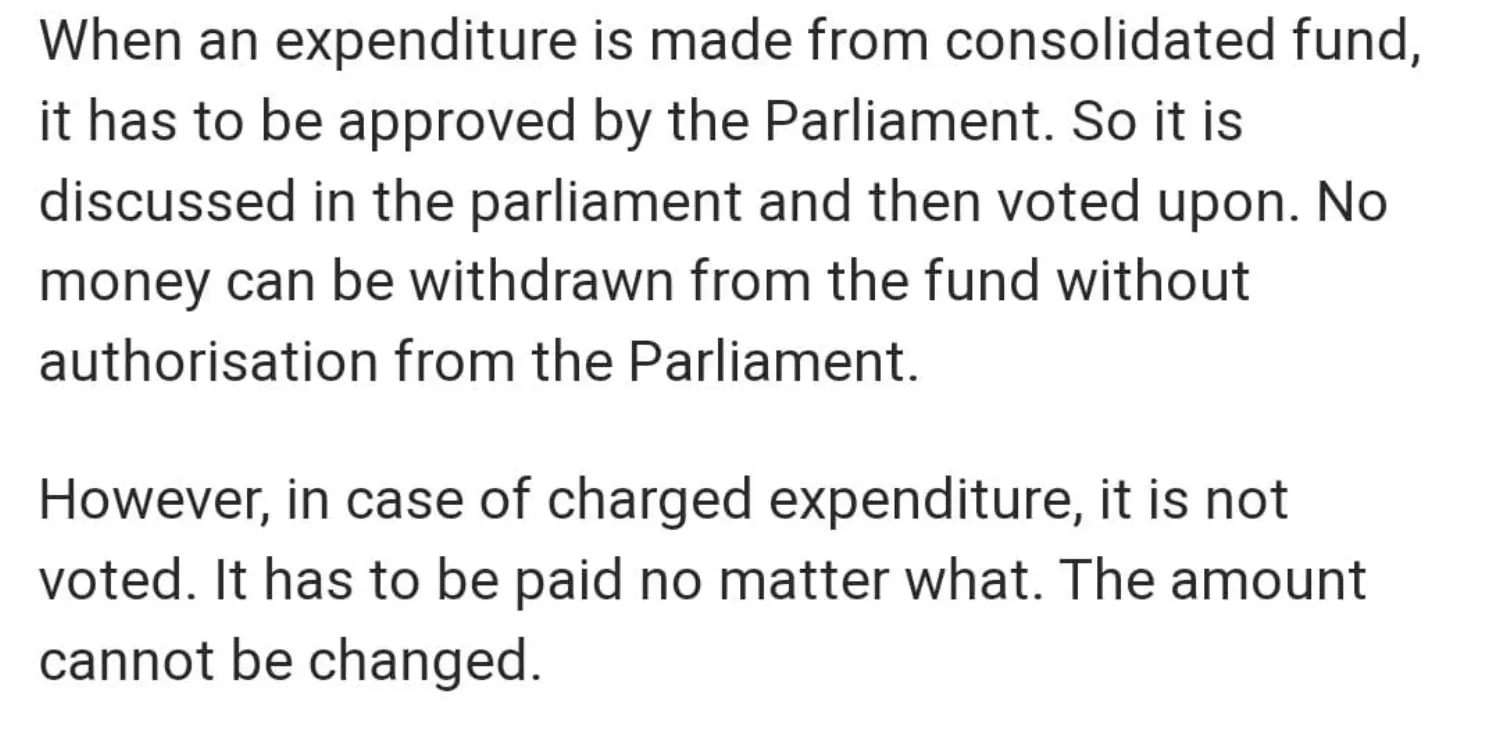
- Receipt of money on account of CFI or PAI
PAI - Public Accounts of India
Govt Functions as a Trustee to this Fund
PAI → Example : Post Office Savings, Pension Funds
- Important Full Form
Procedure for a Money Bill
- Detailed
Introduction of Bill - Requires Prior Recommendation of President
Both Minister and Private Members can introduce the Bill → But in both the case Prior Recommendation of President is Needed
Prior Recommendation - To Discourage Private Members to Introduce Money Bill
Can be Introduced only in the Lok Sabha → as Govt is Accountable only to the Lok Sabha
Speaker Certifies the Bill to be a Money Bill → Now RS has no Power on this Bill
Only Power of RS is → Max RS can sit over the Bill for 14 Days
- Can they Reject the Bill - No
- Can they accept the Bill
- With Changes → Send back to Lok Sabha → Can Send Back with Changes but Recommendation of Rajya Sabha is NOT binding upon Lok Sabha
- Without Changes
- Summarised
- Introduced Only in the House of People
- Transmitted to Council of State after passed by Lok Sabah
- In RS Maximum Delay of 14 Days Allowed
- Return the Bill with or Without Recommendation
- Lok Sabha can accept or reject such recommendation
- Detailed
Relation Between Money and Financial Bill
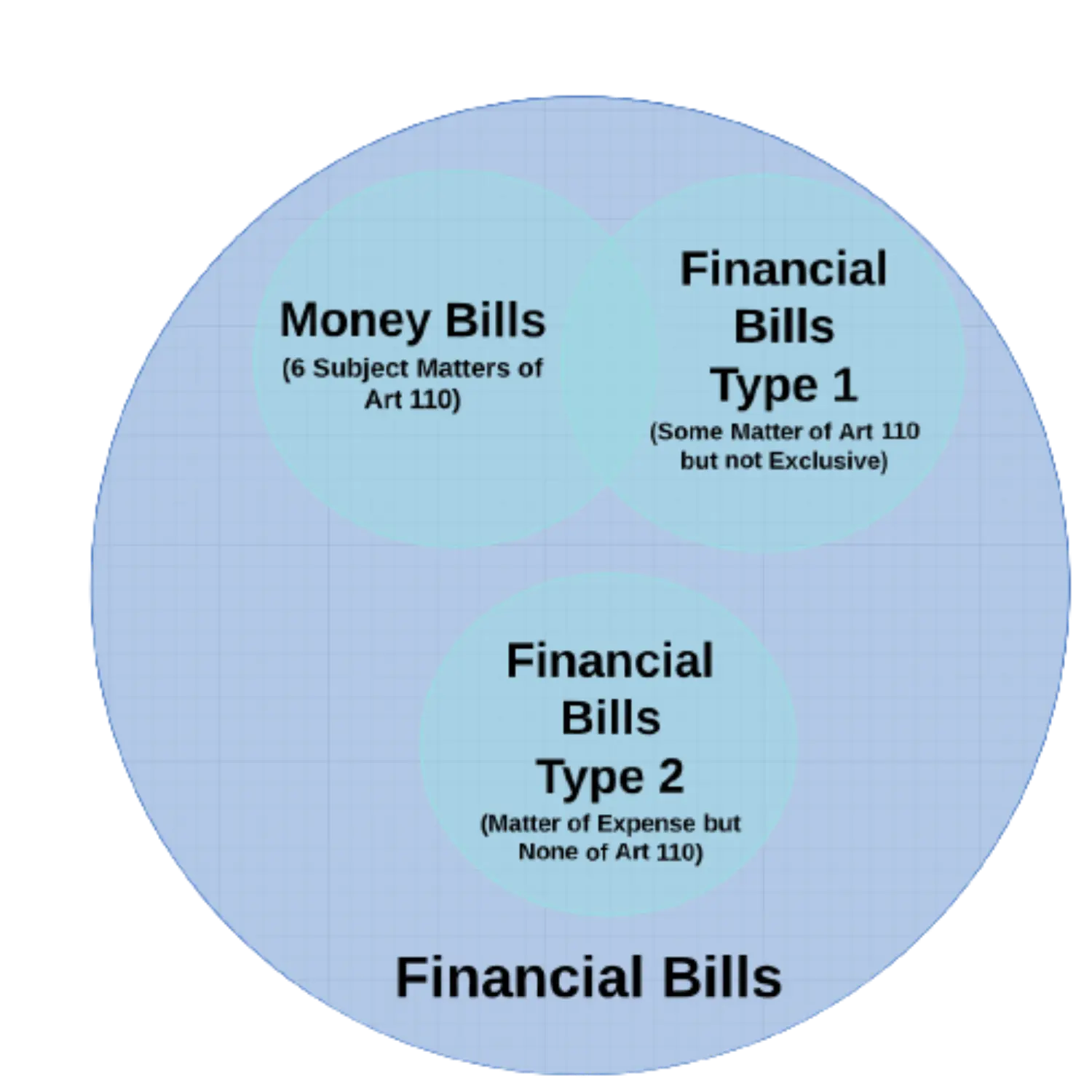
Financial Bills
Relation Between Money Bills and Financial
All Money Bills are Financial Bills
But All Financial Bills are NOT Money Bills
Now, other than the Money Bills there can be bills which deal with the Finances of Government. These can be divided into Two Types, Namely :
Financial Bills Type 1
A Bill which contains any of the matters contained in Article 110 but does not Exclusively Contain only those Matters
Meaning It will contain some clause of the 6 Subjects of Art 110 but not only that, with Art 110 Clauses it will also have some other Parts as well
Example: Compensatory Afforestation Fund Act, 2016 → To Maintain Balance between Afforestation and Development in India
For a Industrialist who wants to build a Industry in a Forest Area, he will pay a compensation for the Same. This Fund will be used for developing a forest cover equal or better than that
This Fund will go to
PAI - Public Authority Fund of India
PAS - Public Authority Fund of State
This Fund will be Managed by CAMPA like Officials Fees and Usage of this Money
How is it Similar to Money Bill
- It can be Introduced only with the Prior Recommendation of President
- It can be Introduced only in the Lok Sabha
President Assent
Like Ordinary Bills
Financial Bills Type 2
- Any Bill which merely involves expenditure but does not Include any matter in Art 110
- Example: Salary Allowances and Pensions of Members of Parliament Bill
- Procedure for Financial Bill Type 2 is Similar to that of an Ordinary Bill except that President may Recommend for its consideration in Both the Houses
- That is After the Introduction in the House and in Between the Second Reading of the House
- In Ordinary Bill DRSC Can be Skipped and from Introduction it can directly go to Second Reading
- But in Financial Bill Type 2, After the Introduction Either After DRSC Step or to directly go to Second Reading Stage, Presidents Assent is Needed, It is a Must
Constitutional Bills
Power & Procedure of Parliament to amend the Constitution
Some Important Questions
Who can Introduce a Bill ?
- Either a Minister
- Private Member
Do they have to take Prior Permission from President ?
No Not under Art 368
Do they have to take Permission from Chairman of the House ?
Yes, a Mere Formality
in LS : Speaker
in RS : VP
Can it be Introduced in any house ?
Yes, in either LS or RS
Types of Constitutional Amendments
- Bill tries to Amend - Non Federal Provisions - Doesn’t Change Power Balance b/w Centre & State
- Procedure
- Bill has to be Introduced (by any MP) - Subject Matter is to Amend the Constitution
- Introduced in & Passes to → LS/RS || RS/LS
- It should gain Special Majority
- </ 2/3rd Members Present & Voting
- Absolute Majority of House Needed
- President has to Give the Assent ( No Veto ) - It was made mandatory for the President to give assent to the bill by 24th CAA, 1971
- Procedure
- Bill tries to Amend - Federal Provisions - Changes Power Balance b/w Centre & State
- Procedure
- Bill has to be Introduced (by any MP) - Subject Matter is to Amend the Constitution
- Introduced in & Passes to → LS/RS || RS/LS
- It should gain Special Majority in both the Houses Separately
- </ 2/3rd Members Present & Voting
- Absolute Majority of House Needed
- Then it is Sent for Ratification by the State Legislature
- <1/2 of State Legislatures Accept it, its Enough
- i.e 28 States - 14 State Legislatures have to Ratify them
- State Legislature - Simple Majority
- State Legislative - Simple Majority
- President has to Give the Assent ( No Veto ) - It was made mandatory for the President to give assent to the bill by 24th CAA, 1971
- Example
- Art 246
- Schedule 7
- Procedure
Budget Bill - Annual Financial Statement
What is a Financial Year ?
1 April to 31 March
What is a Budget
Budget is Statement of Estimated Expenditure & Estimated Earnings
Some Important Points
When is the Budget Laid Down by the FM ?
On Or After 2017 - Budget is Laid by Finance Minister on 1st Feb
Whose Responsibility is to Lay down the Budget ?
Under Constitution - The Responsibility to Lay Down the Budget is of President of India
In Which Session is Put to Vote in the Parliament
It is put to vote in the parliament in a Budget Session
Who Prepares the Budget and What is the Hierarchy ?
- Under Finance Ministry
- Under Secretary Department of Economic Affairs there is a HOD of Budget Division
- This is then Presented to the Finance Minister
- FM puts it to the PM who then approves it to be put to Parliament
When would the process for creating the Budget Start ?
The Process for Budget of Year 2023 would be started by September 2022
Is the Budget Laid down in front of only LS or Both LS & RS ?
Now President has to lay down such report in front of Both the Houses of Parliament every financial year
What are the Contents of a Budget
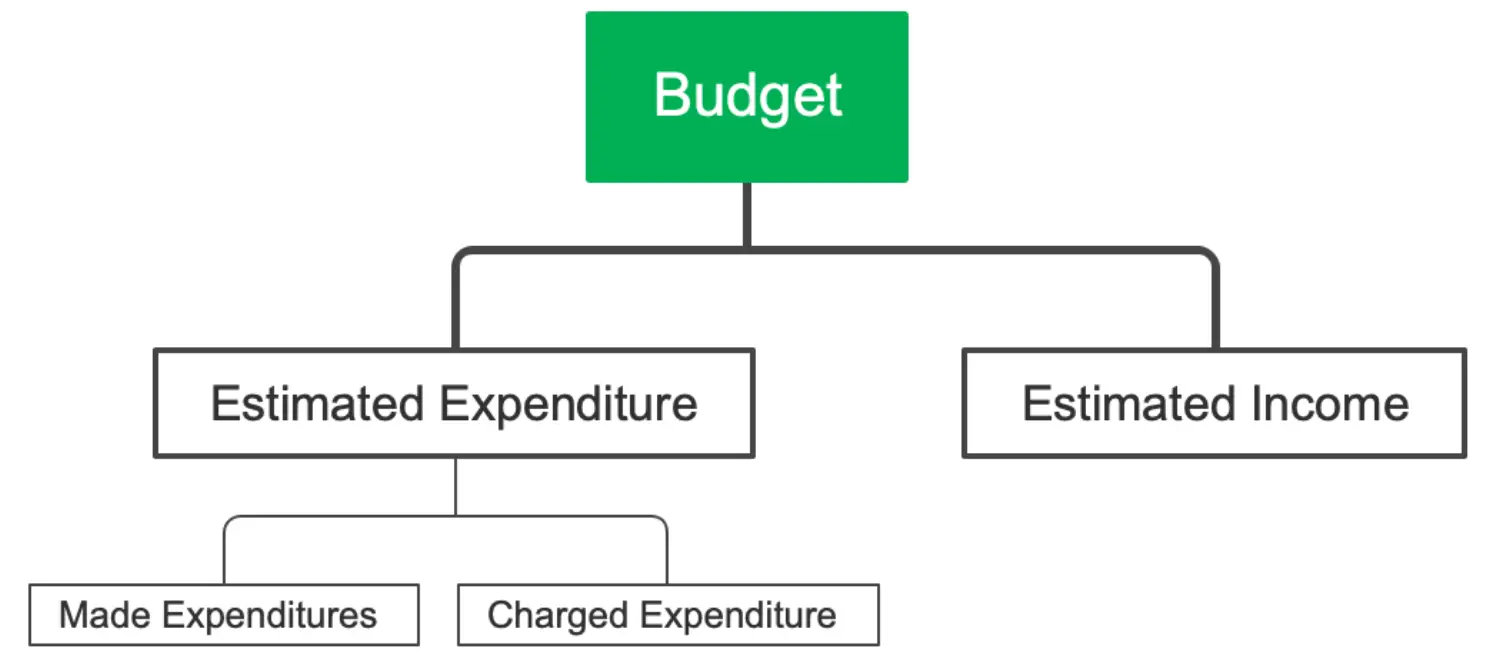
Budget is a Statement in the Form of Estimated Receipt and Estimated Expenditure
Expenditures have to be divided into Charged and Made ExpenditureThis has been told about in Art 112
- Made Expenditure - Around 95% Expenditures - Voted in LS
- Charged Expenditure - Around 5% of Total - Cant be Voted in LS
Salary of President & His Office Expenditure
Salary Allowances of Chairman, Dy Chairman, Speaker & Dy Speaker
Debt Charges of the Government
Salary Allowance and Pensions of Judges of Supreme Court
Pension of Judges of High Court
In Case of HC it is just the pensions
What About Salary of Judges of HC → will be Consolidated Funds of Respective State
Salary Allowance and Pension of CAG
Sums Required to Satisfy any judgement, decree or any award by the court
Example: SC Fined Govt. of Rs 50 Lac in Favour of Shri Nambi Narayanan
Any Other Expenditure declared by a Law of Parliament or Constitution
Its an Indicative List, Not an Exhaustive List
Example Constitution: Art 146 → Servants Working in Supreme Court
Or By a Law Made by Parliament
Process of Budget Enactment
Introduction of Budget
In Both the Houses - First in LS and then After a Day or Two in RS
FM Gives a Introductory Speech - Stating Some Basic Trends, Facts and Allocations
General Discussion Stage
Scrutiny by DRSC
DRSC were started in 1990’s
Total 24 DRSC - 16 LS & 8 RS → Major Functions of Govt are Covered Here
1 DRSC - 31 Members = 21 Mem of LS + 10 Mem of RS
Each DRSC will look into the Specific Part of the Budget
For Example : Defence DRSC will look into the Defence Part of Budget Only
This Generally Happens for 2 to 3 Weeks
DRSC Submits the Report back to Lok Sabha
Vote on Demand for Grants
- These are Demands of the various Department one at a time and NOT the WHOLE Budget at a time
- It is only the Power of LS and NOT RS
- LS Passes all these Demands One by One By Simple Majority
The LS can do the 4 things to a Demand
They Can Approve the Motion
Policy Cut Motion
It Disapprove the Entire Demand
The Demand be Reduced to Rs 1
Economy Cut Motion
Demand is Reduced by a Specific Amount as decided by Lok Sabha
Token Cut Motion
Last Year they had grievance with the way money was spent
It is like with a warning, these motions is passed
As a Symbol - Rs 1 is deducted from the Proposed Budget
Lok Sabha has 26 Days to Pass All These Demands
First 25 Days - Important Demands are Put to Vote One by One
Last Day - All Undiscussed Demands are Put to Vote and Passed All together at once → It is called Guillotine Closure
Here Only the Made Expenditure are Voted Upon. ONLY MADE EXPENDITURE CAN BE PUT TO VOTE
Charged Expenditure Cannot be Voted Upon Even in Lok Sabha. They can be discussed but cannot be put to vote
- Why is the Prerogative of Lok Sabha
Because Expense is the Responsibility
- Here In Principal Approval has been Given but the Permission to take out money hasn’t been given yet
Passing of Appropriation Bill (Money Bill)
All the Procedures Seen in the Case of a Money Bill will be applied
The Withdrawal and Deposit Authority of Govt is Finance Ministry
Passing a Finance Bill (Money Bill)
- How Much Tax Should be Credited in the CFI
- Deposit into CFI
Time Line of Budget
Prior 2017
Railway Budget - First Week of February
General Budget - Last Week of February / Last Day of February 28 Feb
Post 2017
- Introduction of Budget - 1st Feb
- General Discussion - 3 to 4 Days
- DRSC - 2 Weeks
- Vote on Demand - 26 Days
45 Days Completed by Now
Budget has to be Enacted before 1 April
Case Where Budget Cannot be Passed Before 1 April
In the Whole Process It Approximately Takes 45 Days and at Max RS can sit on it for 14 Days
Thus before 2017 if the budget is introduced on 28 Feb then, the complete enactment of Budget i.e the Passing of Appropriation Bill would not be possible before 1 April
Vote on Account
It is a special power given to parliament to authorise the government to take out money from CFI even in case of Pending Passage of Appropriation Bill and Passing of Budget for Maximum 2 Months
Only if at least the General Discussion Stage is completed
and in the meantime Parliament has to enact the Budget
Types of Grants
After Budget, If New Expenditure Occurs or Expenditure Increases we have certain tools in Indian Constitution
Supplementary Grant
Defintion
It is the money granted found to be insufficient for a particular service during a financial year
Example: MGNREGA
It happened in 2021,22,23 → because of Covid & Migration of Workers
Budget was allocated to MGNREGA before covid. By December the Funds for the Scheme was over for that financial year.
Now the Money was found to be Insufficient for Entire Course of Year
Money can be made available to the program in the form of Supplementary Grant.
Process
Hence, Govt will put a Vote on Demand for Grant, it will be put to vote and then Lok Sabha will approve it.
This will be Followed by a Corresponding Appropriation Bill
Note: The Scheme should already be there in the Budget
Additional Grant
Defintion
Additional Expenditure on a New Service not contemplated in annual financial expenditure of Year
Example : COVID
Example: Covid was unseen for
Process
Hence, Govt will put a Vote on Demand for Grant, it will be put to vote and then Lok Sabha will approve it.
This will be Followed by a Corresponding Appropriation Bill
Excess Grant
Defintion
Money Spent on any service during a financial year in excess of the amount Granted
Example
Defence 50,000 Cr
Parliament Approved this way
- Salary 10,000 Cr
- Research & Acquisition 10,000 Cr
- Border Road Development 10,000 Cr
- Arms Acquisition 10,000 Cr
- Other Miscellaneous Charges 10,000 Cr
Process
- Transfer of the Money from One Head to Another Head
- First they Spend the Money
- They Then take the Approval of the Lok Sabha
Vote on Account, Vote of Credit, Exceptional Grant
Vote on Account
Provision to make advance gran in respect of estimated expenditure before passing of the appropriation bill
Vote of Credit
Parliament instead of Authorising a specific demand on Vote on Demand for Grant. The Parliament Gives a Blank Cheque to the Govt for Expenses
It generally happens when the extent and nature of expense is not clear and defined
Example: Defence Ministry cant tell that until when and what kind of costs will be incurred in a War
Definition - It is granted for meeting an unexpected demands upon the Resources of India
Nature of Demand and Magnitude is Indefinite in Character
Exceptional Grant
It has never been utilised everywhere, there is a service for which govt needs money, the head of this service is something on which the government has never ever used money in past
Example: Alien Has been Caught and Govt Needs Money for setting up a laboratory for the Alien
Definition: To Make an Exceptional Grant which forms no part of current service of financial year
Type of Fund in the Parliament
Art 266: CFI - Consolidated Fund of India and Public Accounts of India & of the States
Consolidate Fund & Public Accounts of India → Constitutional Fund
- Source of Fund is Constitution Itself
- Art 266(1) - CFI for Union and States
- Art 266(2) - PAI of India and States
| CFI | PAI | | --- | --- | | Consolidated Fund of India | Public Accounts of India | | Whatever Revenue Govt makes, it is credited into CFI | Govt is the Custodian of this Fund | | They Taxable and Non Taxable Sources (Natural Resources, Fines, Profits on Investments etc) | Sources Are - Pension Funds, Small Saving Account in Post Office, Other Govt Saving Places | | Govt is NOT authorised to take money out by itself | As & When People Require, Govt does not need approval of the Parliament |
Art 267: Contingency Fund of India - Statutory Fund
Contingency → Unforeseen and Unexpected Circumstances
Art 267 → It is a Statutory Fund, Article in the Constitution Says that Parliament shall create a contingency fund
Act is → Contingency Fund of India Act, 1951
Source of Money → Money will be taken from CFI of India as and when budget is made
when the Corpus of Contingency Fund is Finished, A supplementary grant is taken for it
It Does not need approval of Parliament
It can be done by an executive order of President of India
Here President of India has already made the Finance Minster of India, Its Overseer. Hence, he/she can take out the money as and when needed
Legislative Council
Important Details of Legislative Council
Art 169 provides for Legislative Council
Final Authority to tell decide about it is that of Parliament of India
Parliament can either create or deny the creation of Legislative Council
Parliament Cannot do this action in Suo Moto Cognisance
Resolution for LC in States has to be passed with Special Majority in the Parliament
State LA has to first pass a resolution and then parliament can create and abolish LC for the states
Remember Two Things
- Parliament Cannot Do it Suo Moto
- Resolution of State Leg Ass is not Binding upon the Parliament
LC not existing in the states or it existed and then it has been abolished will make a change in the constitution of India i.e in Art 168
So does the Parliament has to follow the process of a Constitutional Amendment ?
No Constitutional Amendment is needed to add the name of state to the Art 168
It can be done by an act of parliament requiring Simple Majority
This Exception has been given in the Constitution itself
Summary of Adding or Abolishing a Legislative Council
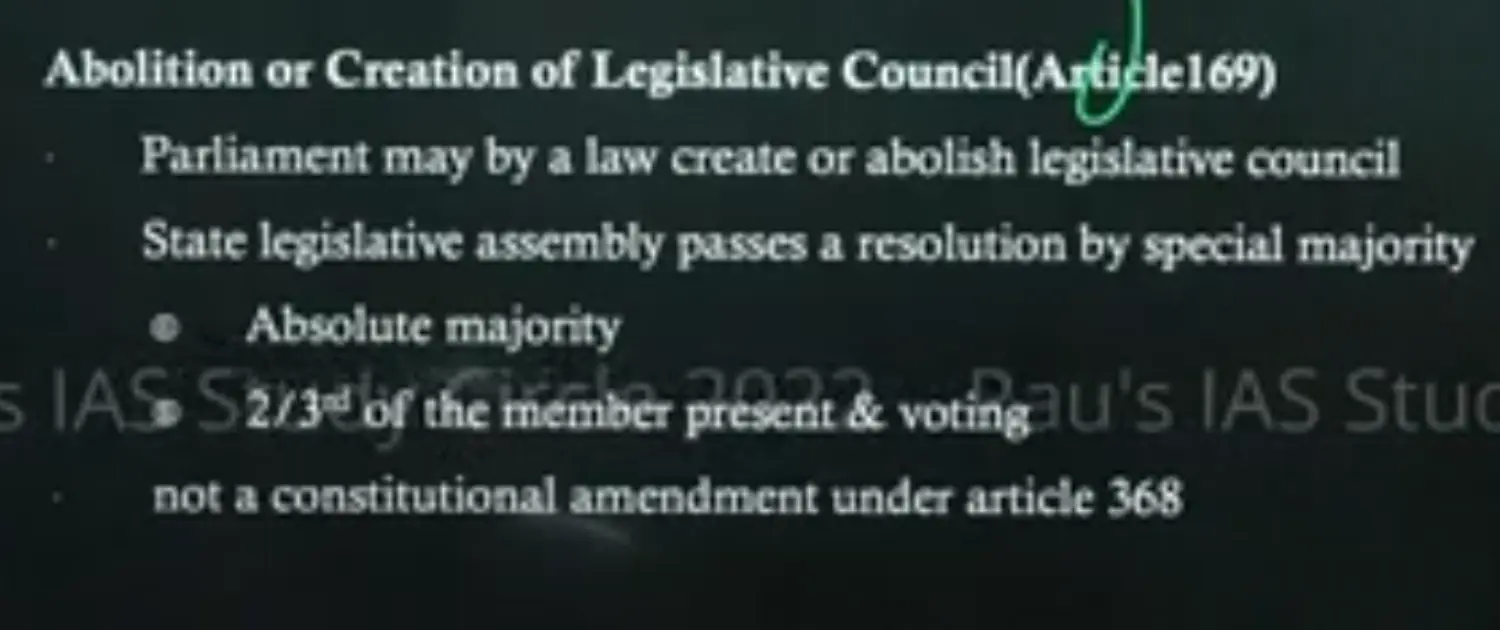
Composition of Legislative Council
- Total How Many Members can be there in a Legislative Council ?
There is no fixed Exact Number for the Legislative Council
- Not More than 1/3rd Members of Leg Ass of State and Not Less than 40
Example State X has 180 MLA’s
Strength Can Range Between → 40 - 60
Example State X has 100 MLA’s
Here, It will be Exactly 40
People who can vote in Legislative Council Election & its Composition ?
Summary
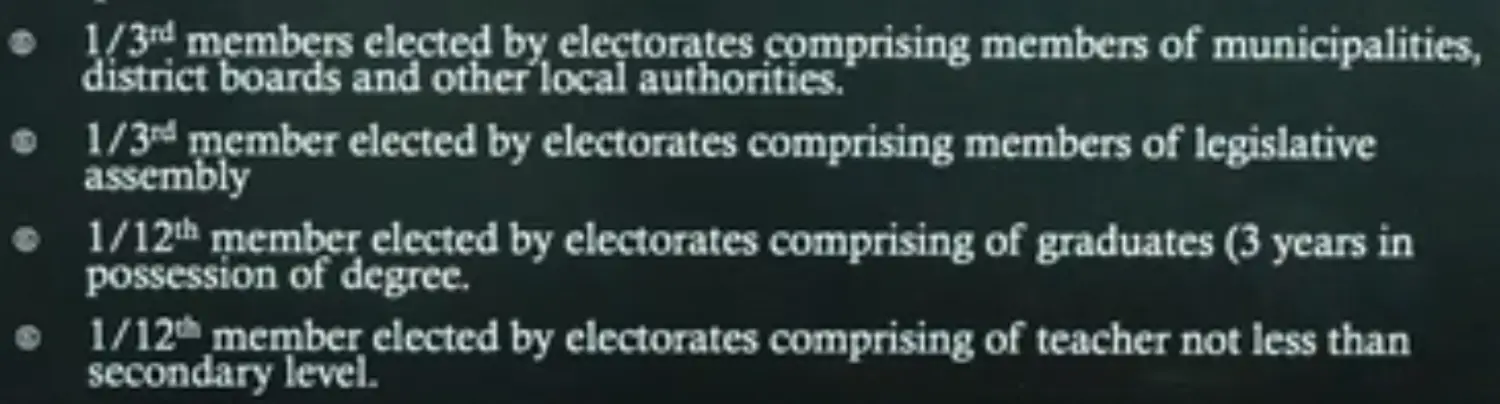
Detailed - Here People of Leg Council are ELECTED BY, not ELECTED AMONGST
Electorates → Who Have the Right to Vote
1/3rd Members Elected by Electorates
- Members of Municipalities, District Board & Other Local Authorities
- Members of Legislative Assembly
1/12th Members Elected by Electorates
Graduates (3 Years in Possession of Degree)
Each Election will have one Constituency Graduates for Each Election, in Next Election Another Constituency will be given the chance
Teacher Not Less than Secondary Level (Teachers from Class 9th)
Nomination by Governor
- 1/6th Members to be Nominated by the Governor of state from the fields of (Art, Literature, Science, Social Science, Cooperatives)
- Total How Many Members can be there in a Legislative Council ?
Home Work : Relevance of Legislative Council in India
Comparison Between Centre and State Legislature
| Theme of Comparison | Central Legislature | State Legislature | Note / Exception | | | --- | --- | --- | --- | --- | | Composition of Legislature of State | 1. President 2. Lok Sabha 3. Rajya Sabha | 168 - State
- Governor
- Legislative Assembly
- Legislative Council Art 169(If it exists) | Bicameralism is mandatory at Union Level & not at States | | | Maximum No of Seats | Maximum Seats for Lok Sabha is 552 | Cannot be More than 500 and cannot be less than 60 | De Limitation Commission No of Seats by 1971 Census until (2026)
Boundary by 2001 Census | | | Voting Age and Method of Election | 18 Years of Vote
First Past the Post System | 18 Years of Vote
First Past the Post System | | | | Duration of Houses | Normally 5 Yers but can be dissolved earlier or extended
Parliament by Law can extend it indefinite 1 Year at a Time | Life of State Leg Assembly can be extended or dissolved earlier | | | | Permanence of House | Rajya Sabha is a Permanent House | Leg Council is a permanent house once created and until abolished
Parliament can abolish but not by Suo Moto Cognisance
Resolution has to be passed by Special Majority in Parliament | | | | Terms of Upper House | RS Every 2 Year 1/3 Member Retire | LC Every 2 Year 1/3 Member Retire | | | | Sessions & Process of Parliament | As in Notes | Same as Lok Sabha | | | | What Happens to the Pending Proposals When House is Dissolved | As in Note | All Proposals Lapse
When Matter has gone to Governor
When Governor has sent it for Re Consideration
Introduced in LC, pending in LC | No Provision for Join Sitting in State Legislature | | | Qualification of Members of Parliament | 1. Citizen of India
Oath Affirmation
LS - 25 RS - 30
RPA - Elector from any constituency from India
Reserved Category should be from Community | 1. Citizen of India
Oath Affirmation
LA - 25 LC - 30
RPA - Elector from any constituency from State
Reserved Category should be from Community of that State | | | | Disqualification | For Office of Profit, Laws can be made by Parliament which can be exempted for certain office
Disqualifying Authority: President
Aid & Advice of ECI
Challenge in Supreme Court
Anti-Defection Law in Art 102 Here ADL By Speaker of LS | For Office of Profit, Laws can be made by that State Leg Ass which can be exempted for certain office
Disqualifying Authority: Governor
Aid & Advice of SEC
Challenge in High Court Anti-Defection Law in Art 191 Here ADL By Speaker of SLA | ADL by 52nd CAA | | | Presiding Officer | As in Notes Above | Same as Centre | | | | Functions of Presiding Officer | As in Notes Above | Same as Centre | | | | Chairman & Dy Chairman of RS | VP - Chairman Elected - Dy Chairman | Chairman and Dy Chairman - Based on Elections | | | | Parliamentary Privileges | Art 105 | Art 194 | Breach of Parliamentary Privileges in State is More than the Centres | | | Parliamentary Procedures | As Mentioned Above | Most of State Leg Follow Same Procedure as in Parliament but some states might have some different things which are NOT Needed to be Studied | | | | Law Making Process | Who Introduces - Govt or Pvt Bill
Sub Matter - General, Money, Financial, CAB | Who Introduces - Govt or Pvt Bill
Sub Matter - General, Money, Financial | | | | Procedure for Ordinary Bill | 1. Introduction 2. Referral to DRSC 3. Discussion Stage or Second Stage 3. Final Vote or Third Reading 4. Passed in LS 5. Goes to RS 6. RS Can Accept → President Reject → Deadlock Amendments → Accepted → Denied → Deadlock Sit for 6 Months → Deadlock | No Provision for Deadlock in case of State Leg Ass and State Leg Council
Steps in State Leg Ass
- Introduction
- Referral to DRSC
- Second R -
- Third R -
- Passed in State Leg
Bill Passed by Leg Ass →
- Accept the Bill - Gov Assent
- Amendments & Sent Back to LA & LA Accepts the Changes ———————————
- Reject the Bill - ———————————
- No Action for 3 Months
- Amendments & Sent Back to LA & LA is not Accepting the Changes
Here, Bill Sent to LC Again by LA
Now, LC can either Accept - To Gov
Reject or 2.Sit on it for 1 Month → Deemed to be passed as passed by LA
within a period of 1 Month → LC Proposes Changes Again and Sents to LA → LA can pass it as LA deems to be fit | In Centre LS and RS have equal powers. Hence, Deadlock May Arise
At Max What, LC can do is at Max delay it by 4 Months | | | Procedure for a Money Bill | Items under Art 110 Prior Recommendation of President is needed | Items Under Art 199 Prior Recommendation of Governor is needed | For Financial Bill Type 1 and Type 2 → Replace President by Governor | | | Annual Financial Statements | Responsibility of President | Responsibility of Governor | | | | Charged Expenditure | 1. Salary of President & His Office Expenditure
Salary Allowances of Chairman, Dy Chairman, Speaker & Dy Speaker
Debt Charges of the Union Government
Salary Allowance and Pensions of Judges of Supreme Court
Pension of Judges of High Court
In Case of HC it is just the pensions What About Salary of Judges of HC → will be Consolidated Funds of Respective State
  6. Salary Allowance and Pension of CAG

  7. Sums Required to Satisfy any judgement, decree or any award by the court
Compensation has to be given by Union Govt
8. Any Other Expenditure declared by a Law of Parliament or ConstitutionIts an Indicative List, Not an Exhaustive List Example Constitution: Art 146 → Servants Working in Supreme Court Or By a Law Made by Parliament | 1. Salary of Governor & His Office Expenditure
Salary Allowances of Chairman, Dy Chairman, Speaker & Dy Speaker for SLA & SLC
Debt Charges of the State Government
Salaries & Allowances of Judges of High Court
In Case of HC it is just the pensions What About Salary of Judges of HC → will be Consolidated Funds of Respective State
5. Sums Required to Satisfy any judgement, decree or any award by the courtCompensation has to be given by State Govt
6. Any Other Expenditure declared by a Law of Parliament or ConstitutionIts an Indicative List, Not an Exhaustive List Example Constitution: Art 146 → Servants Working in High Court Or By a Law Made by Parliament | | | | Contingency Fund | Approval by Parliament
Head of Contingency Fund is Governor | Approval by SLA
Head of Contingency Fund is Governor | | |
CAG - Comptroller & Auditor General
Ambedkar's View on CAG
Ambedkar Said that for him CAG is Guardian of Public Purse and for Ambedkar Single Most Important Constitutionally Important Functionary is CAG
CAG Submits the Report to President
CAG Helps them In
Parliament is a very large body, hence it is not possible for everyone to do every work
Hence DRSC Come into Play
Committee Function Throughout the Year but Parliament Meets only when the Parliament is in Session
CAG Audits PSU as well
Ex PSU : SAIL, HALE,
PSU have Internal Offers of Themselves
CAG is Outer Reporter
Parliamentary Committee
What is the Need for Parliamentary Committees
- Functions of Parliament & Thus of DRSC Are :
- They have to Make Govt Accountable
- To Pass the Bills and Make Laws
- Quasi Judicial Functions
- Removal of President
- Punishment for Breach of Parliamentary Privileges
- Budget Making
- CAG Reports are Scrutinised by the Parliamentary Committee → Financial Accountability
Types of Parliamentary Committees
Standing or Permanent Committees
Financial Committees (3)
They help the Govt in Ensuring the Financial Accountability of Government
| Theme | Public Accounts Committee | Committee on Public Sector Undertaking | Estimate Committee | | --- | --- | --- | --- | | Composition | 22 Members 15 - LS 7 - RS Rep from Both Houses | 22 Members 15 - LS 7 - RS Rep from Both Houses | 30 Members 30 - LS No Rep from RS | | Chairperson is Appointed by | Appointed by Lok Sabha Speaker
As a Convention Chairperson of Public Accounts Committee is from Opposition | Appointed by Lok Sabha Speaker
As a Convention Chairperson of Public Accounts Committee is from Opposition | Appointed by Lok Sabha Speaker
As a Convention Chairperson is from Ruling Party | | Term | 1 Year Generally, They are Re-Elected in Parliament. Its a Convention in Parliament | 1 Year Generally, They are Re-Elected in Parliament. Its a Convention in Parliament | 1 Year Generally, They are Re-Elected in Parliament. Its a Convention in Parliament | | Who Can be a Member | No Minister can be a Member of this Committee
Only a Pvt Mem can be Member | No Minister can be a Member of this Committee
Only a Pvt Mem can be Member | No Minister can be a Member of this Committee
Only a Pvt Mem can be Member | | Election Method | Elected through System of Proportional Representation | Elected through System of Proportional Representation | Elected through System of Proportional Representation | | Functions | They Get the CAG Report from the President of India, submitted to him by CAG (Direct Finance of Govt)
They will make noise, they may share the CAG report with public as well | They Get the CAG Report from the President of India, submitted to him by CAG (Indirect Finance of Govt)
They will make noise, they may share the CAG report with public as well | They Recommend on the estimates prepared by Department of Economic Affairs for the Budget of that Year | | Anecdote / Remarks | Murli Manohar Joshi called PM Singh in 2014 as Chairperson of this Committee | | |
Recommendations
- Cut the Allowances, and Use the Money in Hiring the Experts
- They Completely Function in Non Transparent Manner
- NCRWC Recommended a Panel of Full Time Experts and Researchers to help the Parliament
Drawback
- Committee is Recommendatory & Non Binding
- Their Nature of Work is Post Martem except for Estimates Committee
- Allowances Given to them to hire the Help of experts are used for Personal Use and Seldom Experts are Hired unlike US
DRSC (24)
- Details
DRSC - Departmentally Related Standing Committee
It was started as a practise in 1993
24 Total Committees → Each Cmt has 31 Members - 21 from LS & 10 from RS
16 in LS - Headed by LS Member - Chairperson by LS Speaker
8 in RS - Headed by RS Member - Chairperson by RS Chairman
All Members are Nominated by Speaker and Chairperson Respectively
- Functions
- Scrutinising the Bills
- Scrutinising the Demand for Grants
- Implementation of Various Policies & Schemes by Govt
- Example: DRSC on Health & Family Welfare will look into the Functioning of NHM - National Health Mission
- Example: DRSC on Urban Affairs will look into the Functioning of Smart City Mission
- Issues
When the Bills are Introduced it is not Mandatory to Refer the Bills to DRSC
in 16th LS only 25% of Total Bills Introduced were referred to a DRSC
The Recommendations of DRSC is only binding in Nature
Members of DRSC are Not Experts in Legal or Field of DRSC. They do not have expert help as well
NCRWC called it “Crippled” in its functioning
No Transparency in its working
- Advantages
- As there are members from different parties and houses, it acts as a better consensus building forums before the bill is introduced
- Members can freely raise their concern as a part of Ruling Party, even a member of ruling party can go against the bill in the PC without the fear of Anti Defection Law
- Details
Administrative Committees
Helps Smooth & Better Administration of House
Examples of Administrative Committees are :
Rules Committee of LS and RS
To Frame the Rules in the House
Headed by Speaker in LS and Chairman in RS
Ethics Committee
Keeps a Note of Various Conflict of Interests a MP may have
It is largely dysfunctional in both the houses
Business Advisory Committee
Advises the PO so as to how to carry out various businesses in the house
Headed by Speaker in LS and Chairman in RS
General Purpose Committee
After All the Functions which are left out will be taken up by the General Purpose Committee
Headed by the Presiding Officers Themselves
Functions
Helps Presiding Officer to maintain the discipline and decorum of the house
It is there in both the house of parliament i.e LS & RS
Temporary Committees
- Ad Hoc Committees
- They are Temporary in Nature
- It is set up for a specific reason
- Example
- Joint Parliamentary Committee
- It will always have members from both the house
- can be formed for
- Look into Corruption Charges
- Scrutinise the Bill
- Select Committee
- In case of Select Committee it is only a member from a particular house
- Members are chosen for a expert reason
- Once Work is Done, They are Removed
- Joint Parliamentary Committee
- Functions of Parliament & Thus of DRSC Are :
Function of the Parliament
- Law Making
- Budget Formulation
- Budget Enactment
- Accountability of Govt/Executive
- Quasi Judicial Rule
Is the Quality of Working in Parliament Declining ?
- At Commencement of Constitutions, P used to sit for 122 Days, Now it sits for 70 Days Only
- Quality of Debates has to be increased, majority in the house doesn’t speak against it due to ADL
- Bills aren’t having good expert preview as only 25% of bills are being sent to DRSC
- No of Ordinances in parliament is increasing which signifies decline of functioning of parliament
- There has been New in most of the Budget, Most of the Budget are Incremental Budget
- Criminalisation of Politics, It is grave that Law Breakers are Becoming Law Makers
- No Gender Parity in the Parliament, Representation of Women is Less than 10%
Reforms in Functioning of Parliament
- NCRWC Suggested Minimum of 120 Days of Siting
- Check on Ordinance Making Power
- Reservation for Women in Lok Sabha
- Mandatory Referral to DRSC except for under Exceptional Charges
- Members with Criminal Background should be subjected to Fast Track Court
- Changes to Anto Defection Law
Judiciary - Union & State Judiciary
Introduction to Indian Judiciary
What do you mean by Independent and Integrated Judiciary?
- Independent from Executive and Legislature → Balances the Feature of Federalism
- Integrated with HC and DC → Where Order of Upper Court is Binding upon Lower Court
- Integrated Judiciary → All Courts can Look into All Laws, There is no Separate Hierarchy of Court for different Laws
Establishment & Constitution of Supreme Court
- Supreme Court of India - Highest Court of India
- Judges of Supreme Court shall be appointed by President
- However, at the commencement of constitution there shall be 7+1 Judges
- But Present Strength of Judges of Supreme Court is 33 Judges and 1 CJI of India
What does it take to Increase the Number of Judges?
Supreme Court of No of Judges Act, 1956 → The Power to make this law has been given to the parliament
It can be done by an ordinary law and the number of judges can be increased as per the demands
Supreme Court of India
What does the constitution say about the appointment of Judges of the Supreme Court?
- President may in consultation with
- Judges of Supreme Court
- Judges of High Court
- Chief Justice of India
shall appoint Judges of High Court
What is Collegium System
No other Democratic Country uses this System but India
Its a System of Appointment of Judges to higher judiciary where the judges appoint the judges
Here, President is a mere appointing Authority
Collegium - Group of Judges
What is the Origin of Collegium System
Its an Judicial Innovation by Supreme Court like that of Basic Structure Doctrine
What are the Case Laws Involved in Judicial Innovation of “Collegium System”
- First Judges Case, 1981
- Meaning of Consultation was asked
- SC Said that Consultation does not mean Concurrence
- Hence, Primacy was given to the Executives
- Second Judges Case, 1993
- Question
- This Issue was Raised that if the Ultimately the Primacy is of Executives, then it will affect the Integrity of Judges and Hence Supreme Court
- There Should be No Case of Committed Judiciary → Committed Meaning Committed to Govt
- SC Said,
- that Henceforth → Collegium System Evolved → CJI & 2 Senior Most Judges
- Here, Consultation would amount to Concurrence
- Question
- Whose Consultation would amount to Concurrence
- SC Said
- Consultation of Chief Justice of India would amount to Concurrence
- Question
- Third Judges Case, 1998 (Presidential Reference u/a 143)
- Consultation with Plurality of Judges → SC Expanded the Collegium
- Collegium would now amount to → CJI + 4 Senior Most Judges
- Along with CJI At Least 3 Senior Most Judges should be in Concurrence
- First Judges Case, 1981
Other Countries System
- India - Collegium
- US - Judicial Commission
by 99th CAA, 2015 → Govt brought in NJAC
- NJAC → It was declared null and void by the SC on Grounds of violation of Basic Structure
- Here Independence of Judiciary was considered to be a part of Basic Structure
Comparison Between NJAC and Collegium System
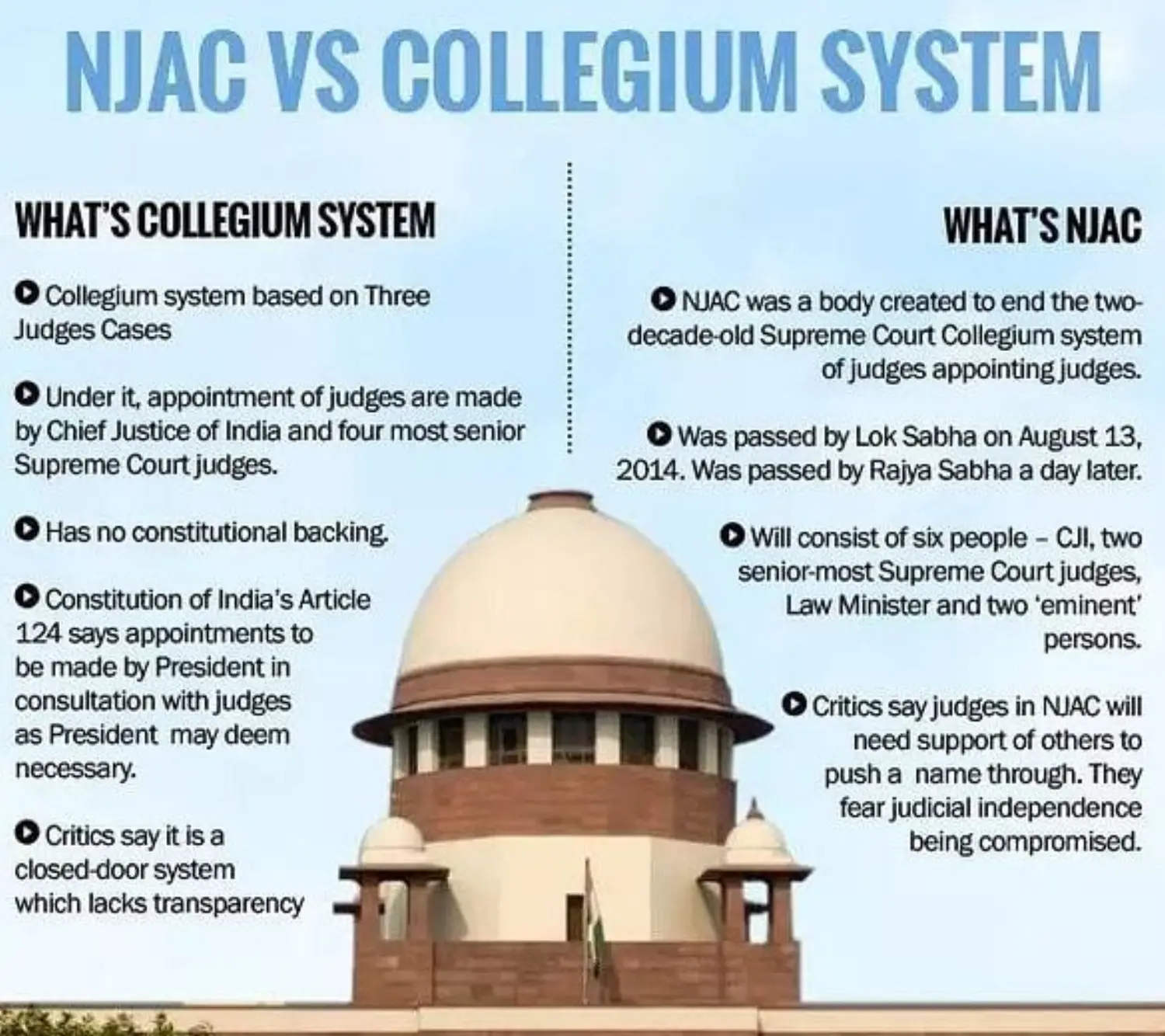
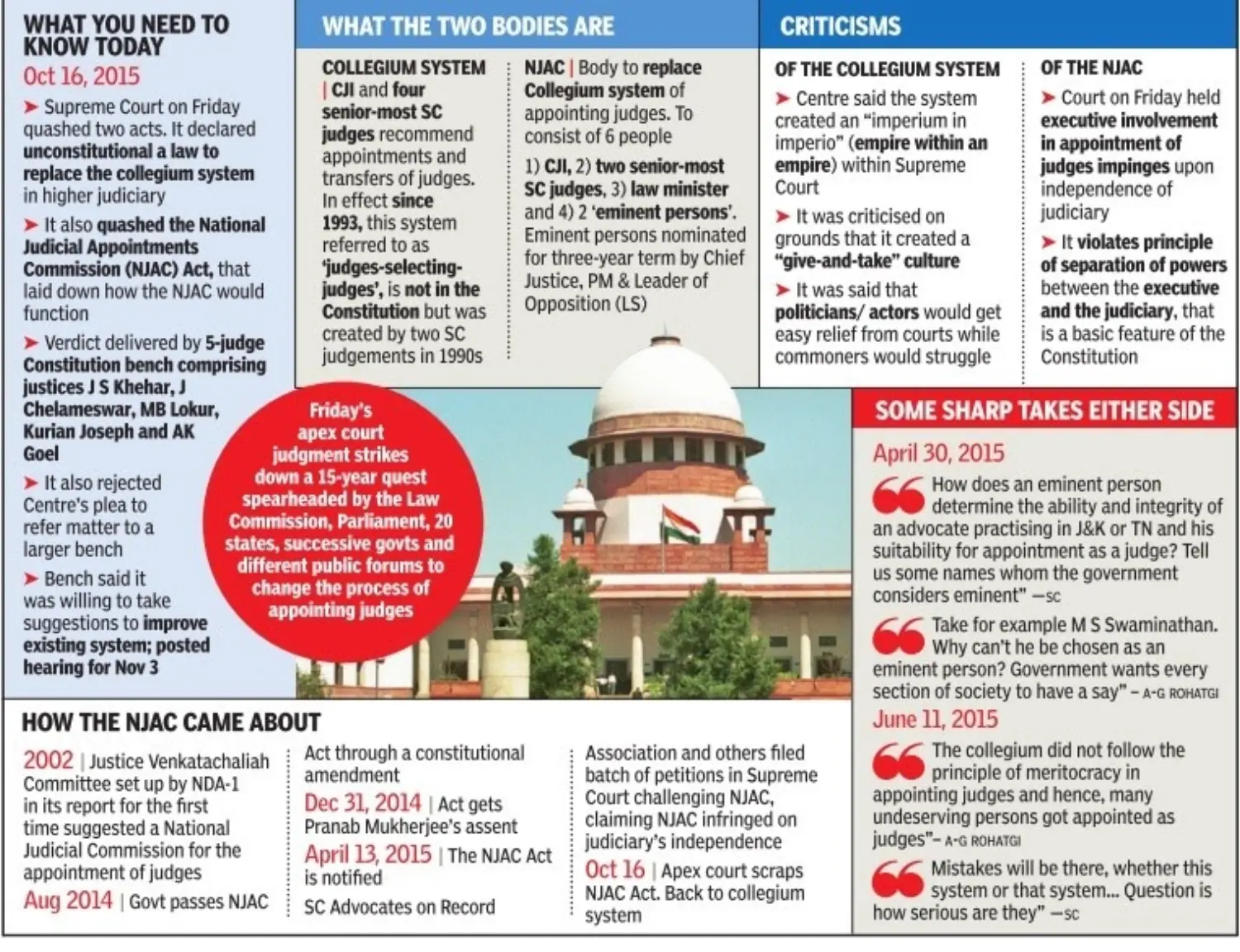
Critical Analysis of Collegium System and NJAC
- Promotes Judicial Nepotism: At Least 50% of Judges are Kith and Kin of Past Judges
- Goes against concept of Separation of Power → It does away with the system of checks and balances
- The Process is Non Transparent and Non Questionable
- There is Lack of Accountability on the Part of Collegium
- But, the Compromisation of Judiciary is also a grave concern
- Home Work: How to Improve Collegium System
- Home Work: Example from where the Power of Judicial Review Flows?
- Art 13
Appointment of Supreme Court Judges
- President is appointed by a Warrant under his Hand and Seal
- Till they Attain 65 Years of Age
- Resignation by given to the President
- Can be Removed by Order of President →
- Only by Motion Passed in Parliament
- Addressed in Both the House
- In the Same Session
- By means of Special Majority
- On Grounds of Misbehaviour and incapacity
- Once Passed, the President has to Sign the Order
- Here, Step by Step Procedure is NOT Given in the Constitution
Procedure from Removal of a Judge of Supreme Court*
Constitution has empowered the Parliament to give a detailed Process for impeachment of President → Judges Enquiry Act, 1968
in 1988 → There was a Motion for CJ of Punjab of High Court
Procedure for Removal of a Judge
- Motion has to be Introduced in Either Houses
- Signed by 100/50 Member of LS and RS
- Subject to Pre Approval of Speaker & Chairman in LS & RS
- Here, Even after the Support of 50 Members, the PO can deny the approval of the Introduction of the Bill
- PO shall appoint a Investigating Committee of Three Members
- Two Judges of SC
- One Retired Judge - Jurists
- Hence this is a Quasi Judicial Function of Parliament
- Incapacity
- Not so Severe Physical Disability
- Mental Incapacity like - Schizophrenia
- CMT will give the Report to Parliament
- Passed with Special Majority in the First House
- Passed to Next House and Motion will be put to vote in the Same Session of the Parliament
- If Passed with Special Majority in the Second House, Sent for Presidents Approval
- President will Sign and Judge Stands Impeached
Qualification to be a Supreme Court Judge
Citizen of India (In Addition to this)
Not Necessarily by Birth or Naturalised Citizen
Either: Five Year Judge of High Court or Two or More Such Courts
Either: Advocate of High Court or Two or More Such Courts in Succession for 10 Years
Either: Someone who is a Distinguished Jurists in the Opinion of President (Opinion of Collegium)
There is NO Minimum Age Criteria for the Appointment of SC Judges
Note
An Oath has to administered by President under his hand of warrant and seal
- Difference Between Jurisdiction and Power
- Jurisdiction - Type of Cases they can entertain
- Power - Not Necessarily Jurisdiction but some powers that they can do
- Jurisdiction & Powers of the Supreme Court
- Original Jurisdiction
Introduction
- Given by Power Article 131
- Cases that can be taken directly by the ONLY by the Supreme Court
- No Other Court in India can take these cases or look into it
- Example:
- Any Dispute which is Federal in Character → Federal Disputes
- Federal in Nature
- Union of India v/s State or States
- Union of India and State v/s State/States
- State v/s States ( Two or More States )
- Here Individuals are NOT Party to it, Only States or Centre
Special Case of UT
Special Case: Dispute Between Union Government and UT - Is it a Federal Dispute ?
Under Art 239 UT is controlled by Centre → Hence not being in a Federal Dispute they should go to High Court and then by Means of Appellate Dispute
Special Case: Dispute Between UT and any other States is a → Federal Dispute
Who is considered to be in a Federal Dispute
For Someone to be in a Federal Relationship - There Should be a Different Constitutional Head
Hence, Including UT Of Delhi, JK & Puducherry is not in Federal Relationship
- Appellate Jurisdiction
- In Original You go to SC directly
- In Appellate by means of Hierarchy, they can make an appeal to the Supreme Court
- Nature of Case in which there can be Appellate Jurisdiction
- Appeal on Civil Law
- Criminal Matters in the Supreme Court
- Here Individuals and State both can be a Party to it
Appeal by Special Leave
Example of Inter State River Water Dispute is a Federal Dispute ?
Yes
Will it go to SC directly ?
No
What is the Exception then ?
- Exception is Art 262 which says, Whenever there is Case of River Water Disputes, the matter shall not go to Supreme Court but Shall in Lie in front of an Authority as made by the Law of the Parliament
- Inter State River Water Disputes Act, → Taken Up by an Ad Hoc Tribunal
- Example: Cauvery Water Dispute took 25 Years to give the Order, TN Govt Said they will not accept the Orders of Tribunal. Meanwhile they accepted the Interim Orders of Proportion of Water Sharing, but they didn't accept the Final Order of Tribunal
- According to constitution the order of Tribunal is Binding. But Now TN Govt appealed to SC by means of Special Leave Jurisdiction
If any party in India, is not able to go to the Supreme Court by means of any other Jurisdiction, then they can appeal the Supreme Court by Special Leave Jurisdiction
Exemption to Special Leave Jurisdiction : Orders of Armed Forces Tribunal
It's a Extraordinary Power and Hence used by the SC very Sparsingly
- Writ Jurisdiction
- Power to Issue Writs for Fundamental Rights only
- Case Only
- Write Petition - W
- Original Petition - O
- Appellate - A
- Special Leave Petition - SLP
- There are 5 Types of Writs that can be Issued by the Supreme Court
- Can SC Issue Writs for Legal Rights
- Difference
- SC - Can take Matters only for Violation of FR only but Geographical Area is More
- HC - Can take Matters only for Violation of FR & Legal Rights but Geographical Area is Less
- Art 139 of the Constitution Parliament can empower the Supreme Court to issue writs for Legal Rights as well
- Review Powers
- SC Can review their own order and change it
- Hence You Cannot Punish the Judge if SC Changes its decision
- In Such Cases a, Review Petition is Filed in the Supreme Court
- Examples
- Kesavananda Bharati Case
- Curative Petition
- It is NOT Mentioned in Supreme Court
- SC under Art 137 of the Constitution did a Judicial Innovation and made a Curative Petition
- Once All Exhaustion of Options is Done and even Review Petitions is exhausted, then curative petition exists
- Then Even if Curative Petition is Exhausted then there is NO Option from the Court
- Only Option is Mercy Petition to the President
- Law Declared by the Supreme Court binding on all courts
- It is an example of implementation of Hierarchy of Courts
- Judgment from one HC to another HC is not binding but Persuasive
- Examples
Judgment Already Passed by the Supreme Court has to be taken care by HC. Hence in Sedition Case Conviction Rate is only 3% as all sedition cases go to Supreme Court Firsts
Example
Kedarnath Case, 1962 → Clear and Immediate Incitement of Violence (Sedition)
- Rule Making Power - Article 145
- Rule Making Powers is given to SC by means of Art 145
- Supreme Court can make Rules with the Approval of Presidents, regulating general practice and procedure in the Court
- Approval of Presidents → It is Generally Given
- Rules Like
- Procedure of Filling of Cases
- Conduct if Judges
- Min No of Judges Needed for a Constitutional Bench
Advisory Jurisdiction
Art 143
- It's a Little Different from other Jurisdictions
It can be for
- Question of Law
- Question of Fact
Whenever President Seeks Advice of Supreme Court
It is not binding upon the Supreme Court to take the Case
It is not binding upon the Govt to accept the Decision of Supreme Court
Example : Ayodhya Mandir Verdict President Referred it to SC in 1990, SC Rejected the Case for Advisory
Now, another new case was filed in Supreme Court which couldn't be rejected by the Supreme Court
- Contempt Powers
- It is nowhere mentioned or defined in the Constitution
- Contempt - Showing any type of Disrespect to the Authority of the Court
- Art 129 - Supreme Court has the Power to Punish for the Contempt of the Supreme Court and other Courts
- Contempt can be defined based on the Law passed by the Parliament → Contempt of Courts Act, 1971
Summary - It is NOT Defined in the Constitution, It comes from the Contempt of Court Act
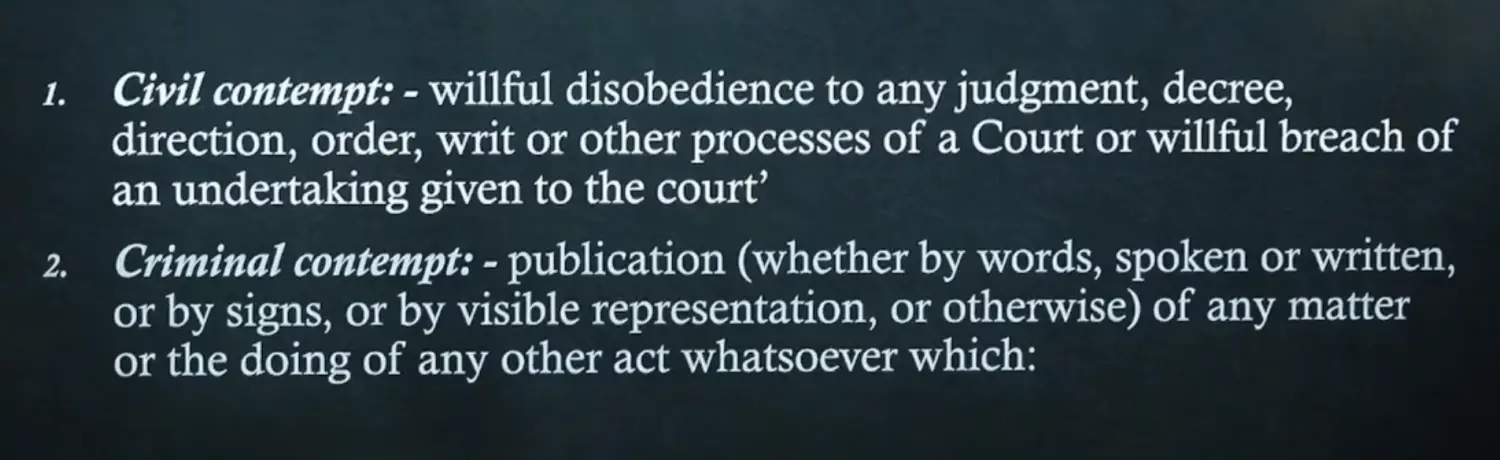
There are 2 Types of Contempt
Civil Contempt
Willful Disobedience
Not Appearing in Front of the Court or Non-Compliance of Civil Judgement
Generally, It's a Fine
Criminal Contempt
Disrespect to Judge or Institution of Judiciary
Someone who prevents the functioning of the Judiciary
Generally, It’s a Punishment in Jail
- Example: Adv Prashant Bhushan was filed for Criminal Contempt, but SC took a Lenient Way and Said
- Accept the Contempt
- Apologise
- Pay a Fine of 1 Rs
- or Go to Jail for 3 Months
- Extraordinary Powers of SC under Art 142
Art 142: The Supreme Court of India can Exercise its powers by Laws made by the Parliament of India
Example: Periyar Volan Case - Person involved in assassination of Former PM Rajiv Gandhi
Mercy Petition → President → President Sat on it
SC used Extraordinary Power → Commuted Hanging to Life Imprisonment
Now he filed the Mercy Petition for Reducing Life Imprisonment to the Governor of TN
TN CoM A&A that His Life Sentence Should be Reduced → Gov Sat on it
SC used Art 142 → Until Now he had spent 30 Years in Jail
Now, SC Released him from Jail
High Courts of India
Introduction
Constitution Says that there shall be a High Court for Each State → Meaning Some HC can have Concurrent Jurisdiction
Each High Court Shall Consist of a Chief Justice plus some Judges (as decided by the President)
Note:
In SC Number of Judges is Decided by an act of Parliament
In HC Number of Judges is decided by the President
Process for Appointment of Judges of HC
- Appointment and Condition of Service of Judges of High Court (Art 217)
- Appointed by President by warrant under his Hand and Seal
- They can retain the Office until they ATTAIN the Age of 62 Years (In SC its 65 Years of Age)
- For the Appointment of Judges, President shall Consult
- CJI
- Governor of State
- CJ of the HC of the Concerned State where the appointment to other judges of the High Court is done
- Here in Third Judges Case, SC Held that for the HC Judges also Collegium Shall Consists of
- CJI + 2 Senior Most Judges of SC
- CJ of Concerned High Court
- Other Judges of High Court and Such Judges of SC Conversant with the Affairs of High Court Concerned
The Movement of Files in Appointment of HC Judge is
- Process of Apt started by CJ of HC
- Files go to CM
- from CM to Gov
- From Gov to Ministry of Law
- From Here to CJI
- From CJI to Ministry of Law
- From Ministry of Law to PM
- From PM to President
Procedure for Removal of HC
Same Process as that of SC Judges
Qualification for being the Judge of a HC
Citizen of India &&
10 Years of Judicial Office in the Territory of India
Judicial Office: District Judge etc
OR Advocate of HC for at least 10 Years
Oath Administered by Governor
Transfer of Judges from one HC to Another
- President of India can Transfer the Judges from one HC to another HC
- But Right Now it is done by Collegium. President acts on the aid and advise of Collegium
- Collegium → CJI + 4 Senior Most Judges (Written Recommendation Mandatory)
- Chief Justice of Both High Court (from where being transferred to where being transferred)
- Such other Judges of Supreme Court who are conversant with the affairs of the High Courts Concerned
- Recommendation is Mandatory but the Ultimate Authority is that of Collegium
- Judges of the HC have to show compliance no matter what, only way they can defy is by means of Resigning it
Jurisdiction and Powers of HC
Introduction
- All HC in our country shall continue to exercise such powers as before the commencement of constitution subject to law made by parliament and state legislature
- Jurisdiction as existed at the commencement of the constitution subject to law made by parliament and state legislature
Original Jurisdiction
Civil Matters: based on laws passed by the state legislature
Criminal Matters: there is no original jurisdiction in case of criminal matters in case of HC
Criminal Matters detailed investigation has to be done which is done by Lower Courts
Appellate Jurisdiction
Applies to all the Civil and Criminal Matters
HC Power of Superintendence
General Guidelines - Regulating Practise and Proceeding in the courts, prescribed forms in which accounts have to be kept
Note : Armed Forces Tribunal Excluded from the Jurisdiction of High Court
Writ Powers of HC
- Art 226 of Constitution
- They Can Issue Writs for Legal Rights and FR, throughout the Territory of the Concerned State
Subordinate Courts
All Courts Below and Including District Courts is Subordinate Courts
Appointment Made by Governor in consultation with HC. No Procedure Defined
Recruitment of Person Other than District Judges
By Means of PSC of That State conducts State Judicial Service Examination. Appointment made by Governor
Rules Made by the Governor in consultation with state public service commission and high court concerned
Homework: All India Judicial Services Pros and Cons
One of the Reason that there is a Lot of Pendency in Courts is that most cases is appealed in the High Courts, that is due to poor quality of judgements in the Lower Court. Most Important courts of India are Session and District Courts
Reform Suggested Are: All India Service under Art 312 → All India Judicial Services
Pre Condition: Rajya Sabha has to give a consent by passing Resolution by means of Special Majority
Currently Judges are selected from the same state. Hence State has a very limited set of Talent Pool
PIL - Public Interest Litigation
Concept of Locus Standi
Concept of Locus Standi: How are you connected to the case, especially in case of Writ Jurisdiction
People who have any problem can go and knock the doors of Judiciary, despite they are not connected to the case
Any Person can bring it to the notice of court by means of bonafide intention and not some vested interests
What is PIL ?
OIK is defined as Litigation in interest of general public without following the principles of Locus Standi
Who can file a PIL ?
PIl is a proceeding in which an individual or group seeks relief in the interests of general public and not for his or her own relief. PIL Has modified and relaxed the Traditional Doctrine of Locus Standi.
Examples
- ADR
- Common Cause
Since When has it gained Prominence in India ?
From 1970’s
Defining Case: Husainara Khatoon v/s State of Bihar, 1970
- Considered to be known prominent in PIL
- Relates to PIL for Plight of Undertrials
- Undertrials - Poor People, No Bail, No Judicial Knowledge
- SC Said:
- Speedy Justice as FR under Constitution
- 14 to 17 People were released
- that year 40,000 People were released
Defining Case: SP Gupta v/s UOI, 1981
- PIL can be filed for
- Writ Jurisdiction - Largely used when FR is violated
- Who can file it
- Individual or Social Action Group
- PIL can be filed for
Are Guidelines by SC Law ?
Guidelines by SC is Law until and unless law made by the parliament
Advantage of PIL
Protection of Rights of Individuals
Example: Husainara Khatoon v/s State of Bihar, 1979
Example: Vishakha Guidelines preventing Sexual Harassment at Workplace, this was law until 2013. In 2013, they made law
Policy Decisions to Address Major Lacuna in Governance
Example: CNG in Delhi
Example: Nota in Elections → ADR filed PIL → Has no Significance → But allows Expression of Discontent
Example: Good Samaritan → In case of Helping Police
Disadvantages of PIL
Private Interest Litigation / Publicity Interest Litigation / Political Interest Litigation
Example: Kalyaneshwari v/s Union of India Case → Industries Polluting Environment, Petitioner was part of Competitive Industry
Violation of Doctrine of Separation of Powers
- Judge Made Laws
- Judge Made Policies
- Judicial Innovations
Differentiating between Judicial Activism or Judicial Overreach is very difficult
Judicial Activism (Pro Active Role Played by Judiciary) Examples → Positive Things
- Procedure Estab by Law is Due Process of Law
- Vishakha Case
Pro Activeness of Judges venturing into Legislature or Executive → Judicial Adventurism → Negative Things
Example: Based on PIL, All Alcohols within 500 M Range of Highways has to Shut Down things
Example: Censoring of some parts of Jolly LLB despite certification from Central Film Board
Solutions
- While Entertaining PIL, a Court should Follow the Established Guidelines
- Bonafide Intention should be confirmed
- No Judicial Adventurism / Overreach → Judicial Restraint by Judiciary itself
- While Entertaining PIL, a Court should Follow the Established Guidelines
Tribunals
Origin of Tribunals
- It was Inserted into the constitution by 42nd CAA
- It’s a Quasi Judicial Body
Difference Between Quasi Judicial and Judicial Bodies
Called as Quasi Because
- They have Specialised Jurisdiction whereas Judicial Bodies have General Jurisdiction
- Service Conditions & Independence
- Judges are appointed by Govt and Executives Hence Independence is not as strong as Judges
- There is a Lot of Conflict of Interest for the Judges in Tribunals
- Jurisdiction of Quasi Judicial Bodies is very Restricted
- Procedure they Follow → Judicial Bodies follow a Rigid Process but Tribunals follow easy procedures that they only have to follow Law of Natural Justice
- They have Speedy Justice
- For Example: Taxation Matters, Environment Matters, Admin Matters
Called as Judicial Because
- They impart Justice
Origin
First Recommended by First Law Commission (14th Report)
Pros
- Speedy Justice
- Cost of Justice Reduced
- Easy Access to Courts
- Judicial Pendency will be reduced
Cons
- Independence and Impartiality of Govt
Justice Shah Committee, 1972 ( HC Arrears Committee)
Recommended Creation of Tribunals
Sixth Law Commission
Not in Favour of Creation of Tribunals
May Violate Jurisdiction of HC & SC
But if after the Tribunal, One can go to HC & SC. Then there should be no provision for appealing after Tribunals
But then it can hamper the Jurisdiction of SC & HC violating Article 226, Art 32 & Art 236
If you have to go to SC & HC → Then what is the point of making tribunals
Based on Recommendation of Swaran Singh Committee under PM ship of IG
It is Not a Part of Original Constitution, it was brought in by 42nd CAA
- Article 323 A → Administrative Tribunals
- Parliament is the only authority to make law
- Laws made by Parliament → Administrative of Tribunals Act, 1985
- Centre - CAT → Centre Administrative Parliament
- State - SAT → State Administrative Parliament
- Article 323 B → Other Tribunals
- Both State Leg & Parliament can make Laws on
- Taxation Matters, Env Tribunals etc
- Article 323 A → Administrative Tribunals
SP Sampath Kumar v/s UOI, 1986
- Administrative Tribunals Act, 1985 was challenged in Supreme Court
- Tribunals would be final and binding, hence ATA was unconstitutional violative ofA
- Art 226
- Art 32
- Art 136
- When the Matter was Sub Judice, Govt made changes and allowed appeal to HC & SC
- Here Art 32 and Art 136 was protected & Art 226 was NOT Protected
- Govt Debated : Effective Alternative Institutional Mechanism Theory saying that people can go to SC but not HC
- Here SC somehow accepted it
L Chandra Kumar v/s UOI, 1997
- It argued that Judicial Review Flows from Art 226
- They Said if Art 226 is a part of Basic Structure Doctrine
- Here SC Said, You Can Make Tribunals but can’t substitute the role of HC
- Here SC Held, that you can make the Tribunals, but HC appeal can be made
- SC Said,
- Position of Judges in Tribunals is independent from Partiality
- SC Suggested
- Judges in Tribunals shall be appointed by a Committee headed by CJ of HC
- HomeWork: Rationalisation of Tribunals Act, 2021
Centre State Relations: Addition of Current Affairs is a Must
Framework
Constitution Divides the Relationship between Centre and State in the Following Way
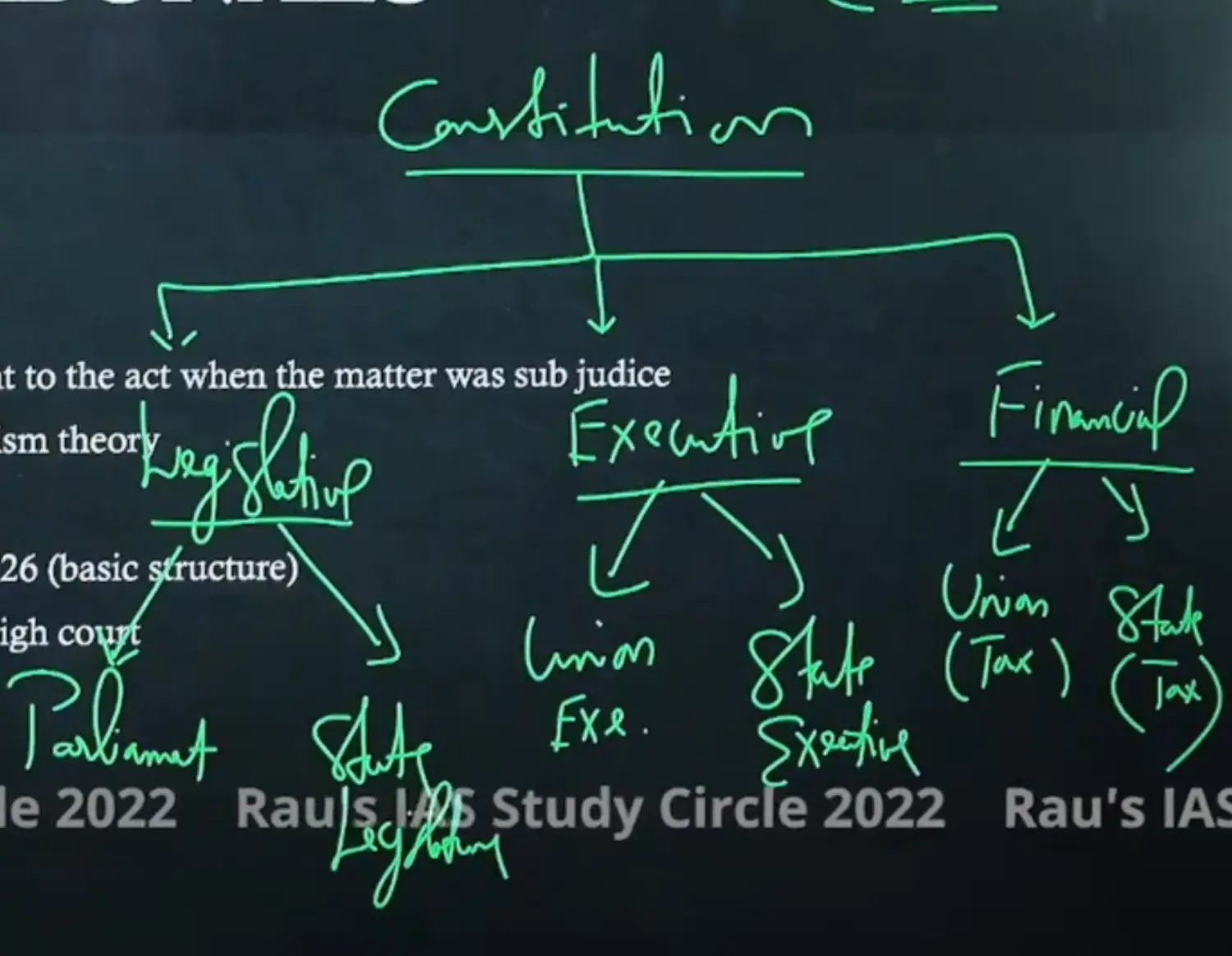
Example of Companies Having Federal Political System
- USA Canada Australia & India
- Indian Federalism is closely related to constitution of canada
- Each Countries Federal Structure is Different
Division of Powers (DOP) Between the Central and State Government
Legislative DOP - Between Union Legislature & State Legislature
- Questions to be Asked in Centre State Relations of
- What are the items on which Parliament can make Laws ?
- What are the Items on which State can make Laws ?
- It is related to which article and Schedule
- Art 246 Provides for Schedule 7
- Schedule 7 Provides for 3 Lists, Namely
What are the Lists of Schedule 7 Here ?
Union List - Union Makes Laws (97-100)
Laws Needing Uniformity have been Given to Union
Laws Made by the Parliament will apply throughout the country until and unless exceptions have been defined
Law made by Parliament can have Extra Territorial Jurisdiction meaning outside India
Example: Defence, Foreign Affairs, Communication, Banking & Insurance
Example: NIA Act after Mumbai Attacks of 26/11/2008
State List - NORMALLY State Makes Laws (66 - 61)
- To Accomodate Regional Diversity
- Throughout Country of Concerned State
- Example: Health, Sanitation, Agriculture, Fishery
Concurrent List - Both Parliament and State Makes Laws (52 -47)
- As of Regional Diversity Later Uniformity can be applied for
- Example: Forest, Wildlife, Population Control and Family PLanning, Education, Social and Economic Planning, Marriage & Divorce
Framework of Lists
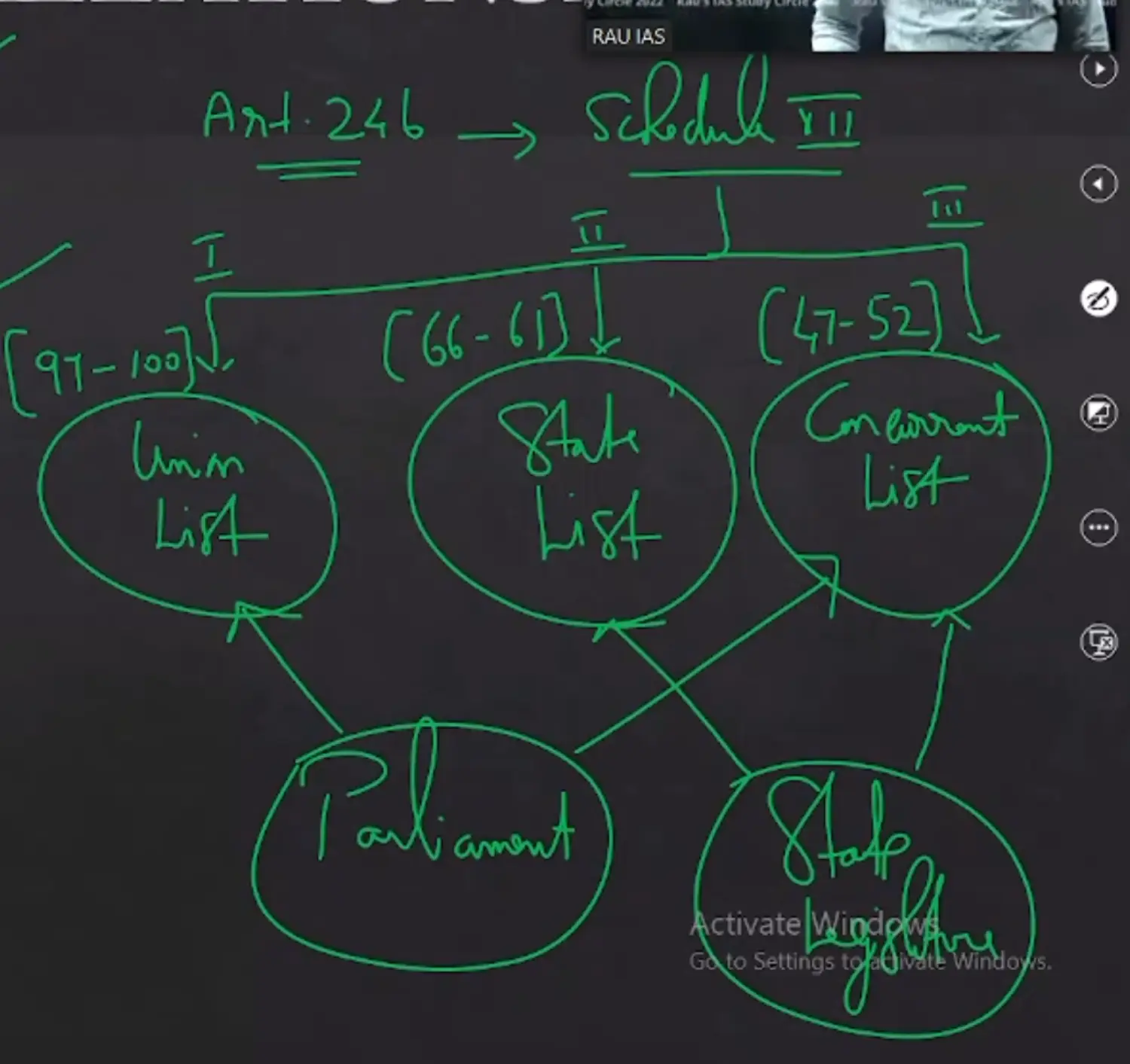
What is the Case when the Law Made by State can prevail ? What is the Exemption ?
If there is a conflict in Law made by States and centres, in all times law made by centre will prevail with only one exemption
The Exemption being, For Example for Education State and Centre has made Laws, Assent is given by Governor Normally
Now, If Gov Reserves the Bill, The Bill is reserved for President's Assent & if the President Assent is Given on the Bill of State. Then here the Law of State will Prevail
For Example: NEET as Mandatory Exam for entry into Medical Courses
State Govt of TN: Passed a Bill by all Legislators 100% Bill was accepted to exempt students of TN from NEET Examination
Constitutionally Education is a Item in the Concurrent List
This bill passed by TN Govt is only useful when the Governor reserves it for President and President has to give the assent
Is India a Truly Federal Country ?
- India is a Federal Supremacy not a Truly Federal One
- It’s a Federal Structure with Unitary Bias
What are the Instances where Union is Preferred over State
More Items in Union List
Shift in the Nature of Amendment that has happened to Schedule 7, has been shifting items from State List to Concurrent Lists
In Case of Any Conflict between Centre and State
Art 3, Only INherent Power of the Parliament to reorganise States
Only Parliament can make Constitutional Amendments
Through Governors Power, Centre can control law making powers of State
In Case of Creation of Leg Ass, Even Ratification of that State isn’t binding upon centre
Residuary Powers of Law Making is with Central Government
( In a True Federal Country, like US, States have Residuary Powers)
What is a Residuary Power ?
- Anything that does not fall under three lists
- Parliament has the Power
- GOA Act, 1945 - Residuary Powers to Viceroy
- USA - Residuary Powers to State
Doctrine of Pith & Substance: In Case of Conflict between State Law & Central Law, the Central Law will Prevail
The Doctrine: where a question arises whether a particular law relates to a particular subject mentioned in one list or another, the court investigate the substances of the law.
For Example: if the substance falls within the union list, then the incidental encroachment by the law on the state list does not make the law invalid.
Innovated by SC through: State of Rajasthan v/s G Chawla, 1959
Example of Application of Doctrine of Pith & Substance:
- Agricultural Law: By Art 131 for Federal Dispute in Supreme Court, Many States applied in Law
- NIA Act, 2008: was challenged in court by some states, by empowering NIA, parliament is trying to encroachment upon the power of state of Law and Order of State List
What Does Supreme Court Do
- If Union has unintentionally encroached upon the powers of state.
- If, the reason, objective, subject matter is centred around administration of item in the Union List (only then) that Law cannot be considered as a unconstitutional Law
- Example: By NIA Act 2008
State Said : Centre is Encroaching Upon the Powers of Police of Law and Order which is in State List
Centre Said : It is not for encroachment in powers of state but for a centralised intelligence agency
Centre said it has made law under National Security Item
Here SC: Said that Centres Law is Correct
- Example: Agricultural Law
- There is Nothing Regarding Agriculture in the Union List
- In Concurrent List Also, there is no direct agriculture but only Agricultural Produce and Distribution.
- Hence, There is a INTENTIONAL Encroachment upon powers of state is seen
- Though the Law has been withdrawn by the Centre, SC would by this Doctrine, would have struck down this Law
Power of Parliament to Legislate on State List
- Art 249: National Interest
Special Resolution by Rajya Sabha by a Majority of 2/3rd Members of Present & Voting
When they have to suddenly make laws on something which is in state list
For Example: Health is in State List, During Covid Time Govt wanted to bring in Law for Health
Parliament can’t do it alone, it has to be done with the permission of Rajya Sabha as well
Here this Law made is not a Permanent Law, it’s a Temporary One, this Resolution passed by Lok Sabha the Resolution will be enforced for a period of One Year
The Law Ceases to Exist after 6 months
The State can also make Laws on this item of concurrent list but there has to be consistency in it or the law of Parliament will prevail
- Art 250: Power of Parliament to make laws during Proclamation of National Emergency
- National Emergency is under Art 352 but Power of Legislature to Make Laws during National Emergency is under Art 250
- During National Emergency Parliaments will have the power to legislate on any item in State List
- Whenever the National Emergency is Revoked, The Centre can make laws on matters in State List
- But only six months after the Revocation of National Emergency
- Note : Here Power of State Legislature is Not Deprived
- Art 252: Legislate for Two or More State by Consent and Adoption of such legislations by any other State
Here there is No National Emergency
State here is requesting to make laws on State List
Minimum of 2 States have to Make Such a Requests
Done in cases where uniformity between 2 states is needed
For Example: Wildlife was in State List until 1976
It was later made part of Concurrent List
Wildlife Protection Act 1972 was passed by the Parliament as the state requested the Parliament
Two or More States Request the Parliament by = Passing Resolution by Simple Majority
Now in the Future only Parliament will gave the Power to amend such law
Also this will be a permanent Law
The Law will apply to those states only
Now that they want to adopt such a law they can adopt the Law
But once adopted by a simple majority, it will be amended only by parliament
- Art 253: Implementation of International Treaties
- Parliament Makes Laws to Implement International Treaties
- Here they don't even have to take permission from states for items under states list given that the condition is of Implementation of International Treaties
- Art 356: State Emergency
- Here the Law made by the Parliament is a Permanent Law
- Parliament can makes laws on any items in the State List
- Questions to be Asked in Centre State Relations of
What is the Procedure to Amend Schedule 7
- Special Majority - Absolute Majority + Not Less than 2/3rd of the Parliament
- State Ratification by Simple Majority of 50%+1 States
Executive DOP - Between Union Legislature & State Legislature
Art 256: Obligation of States and Unions
Executive Power of Every State Shall be exercises as to ensure with laws made by parliament and any existing law in that state
Executive Power of Union Extends to Giving Such Direction to a state as may appear to the government of Indian to be necessary for the purpose
Here States have to respect the Constitutional Direction of Union or else they can be given direction by centre to obey
Here, Still they don’t obey, President can conclude, failure of constitutional machinery failure and can apply Art 365 for President's Rule
Financial DOP - Between Finances of Union & Finances of State
Introduction
- Each and Every Govt should have a major source of revenue - Prominently by Means of Taxation
- Art 265: No Tax can be collected in country except by an authority of Law
- Whatever Tax is collected by Union cannot be solely kept by Centre, But what a State Earns can keep it with itself and it will get something from Centre as well
- Body that will recommend the Govt the distribution of Resources within State and Centre is Finance Commission. It will also recommend distribution between states under Art 280
- NOTE : Concurrent List Items are made upon by Parliament but Implemented by States
- Resources Are :
- Taxation Revenue - Necessarily Need Law
- Non Taxation Revenues - May and May Not Need Law
- Auction of Natural Resources
- Fines
- Profit from PSU
- Borrowings
- Profit
Distribution of Powers to Levy Taxes on Union & State
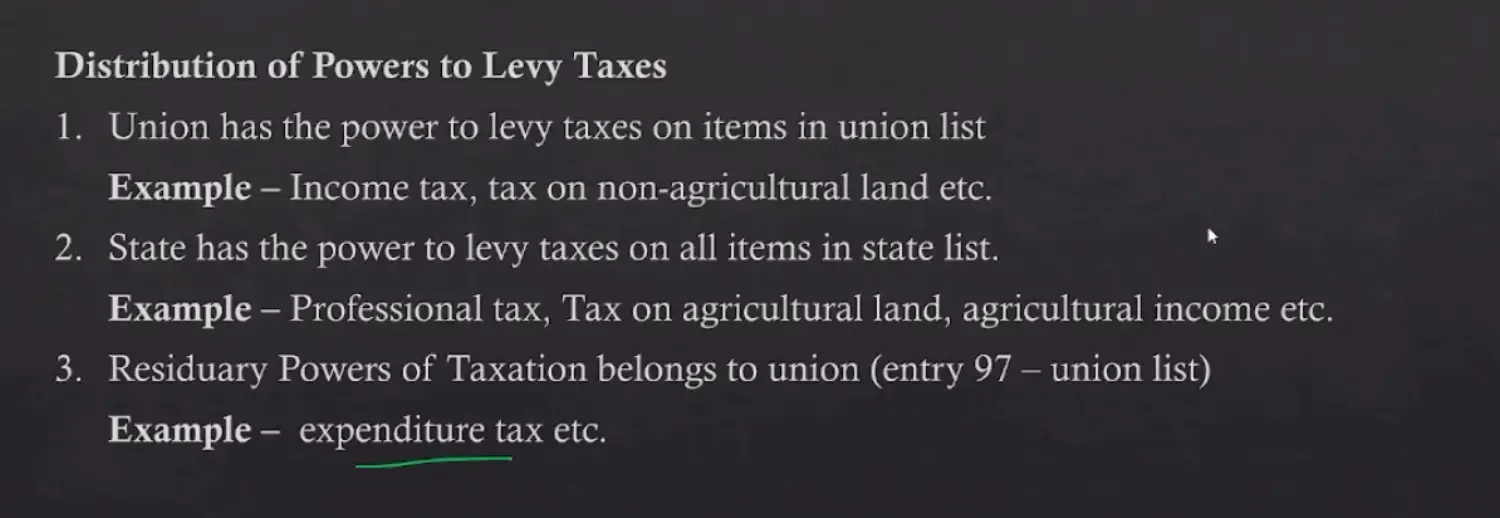
Finance Commission - Finance Commission Act, 1951
- It decides the Distribution of Revenue between Centre and States
- FC consists of Chairman and 4 Members
Qualification to be a Chairman is
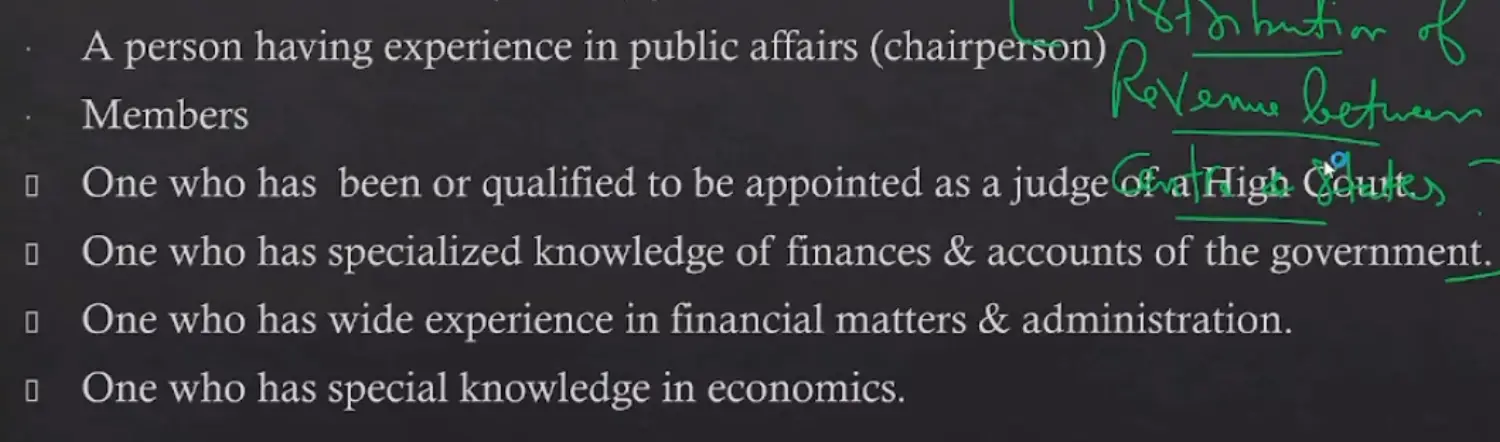
Latest Commission - 15th Finance Commission
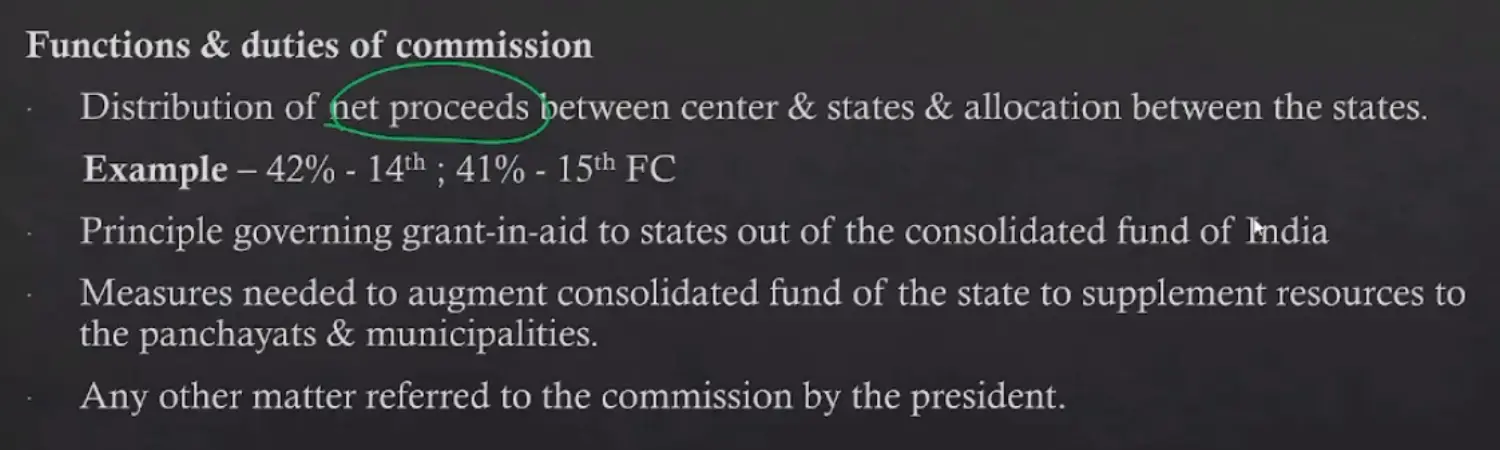
- Any Other Matter Referred to Commission by the President: To Mobilise Funds for Local Govt by State Govt
- Centre - Divisible and Non Divisible Pool
- Centre Shares money with States from Divisible Pools
Issues with Grant in Aid
- FC is a Important Body in Fiscal Federalism
- Grant in Aid by the FC is being Given to States who are the Party from Centre and Not for those who are actually in Need
- Horizontal Distribution Parameters are Not Followed by FC Generally
- In the Latest 15th FC -
- 2011 Census - Used 2011 Census and More Weightage was given to 1971 Census
- Earlier 2011 Census Low and 1971 Census High Percentage
- 1971 Census Used High Percentage
- Central Govt Said, They Agree South may be affected by Census, but revenue sharing on the basis of Performance Indicators like
- MMR, IMR
- Digital Penetration
Cooperative Federalism
Definition

Example:
- Inter State Council
- Constitutional Body, Under Art 263
- Headed by PM (Chairperson)
- Other Members
- CM of all States
- CM of UT with Leg Body
- Administrators of Other UT
- 6 Cabinet Ministers of Union Govt nominated by PM Himself
- Issues
- It has been largely dysfunctional over a period of time
- they hardly meet
- if they meet, there is no specific agenda
- Zonal Council
- It’s a Statutory Body established by State Reorganisation Act, 1956
- It Provided for 5 Zones of Councils
- North
- East
- West
- South
- Central
- Headed by HM of Centre
- Members are CM of all States
- Can Help in Solving River Water Disputes
- Agriculture Laws could have been brought Zonal Council
- NITI Aayog
- Replaced Planning Commission of India
- PC was a Extra Constitutional Body
- Its Recommendations are not Binding
- It follows a Bottom Up Approach
- More Favourable to States
- States can give opinion as well
- GST Council
- Apex Body for Tax Rates of Goods & Services
- 2/3 Representation from States and 1/3 from Centre in the Structure of Body
- Inter State Council
Competitive Federalism
- Competition between Federating Units
- Centre and State
- in Between States
- Its a Concept where units of Federation Compete with One Another
- Examples Are:
- Allocation of Funds by 15th Finance Commission on Performance Based Indicators
- Ease of Doing Business Report by World Bank, Helps in Foreign Investors
- Report by NITI Aayog: States Composite Water Management Index
- 15th FC Performance Parameters of States
- Competition Amongst States in Implementing Swachh Bharat Mission
- Competition between Federating Units
Both Types of Federalism is by Relation of
Cooperation : Is Largely Between Centre and State
Confrontationist Approach in Indian Federalism
- Indian Federalism has been lately example of it
- Examples
GST Cess Settlement between Centre and States
WB not Implementing Centre Funded Scheme
Office of Governor being used as Carrier of Message of Centre
Example: Tamil Nadu
Usage of CBI on States by Centre
States have withdrawn General Consent Between CBI
Centrally Govt Changed the Rules of All India Services
- Issues Arise Especially when Centre and State are of Different Parties
Sample Mains Question
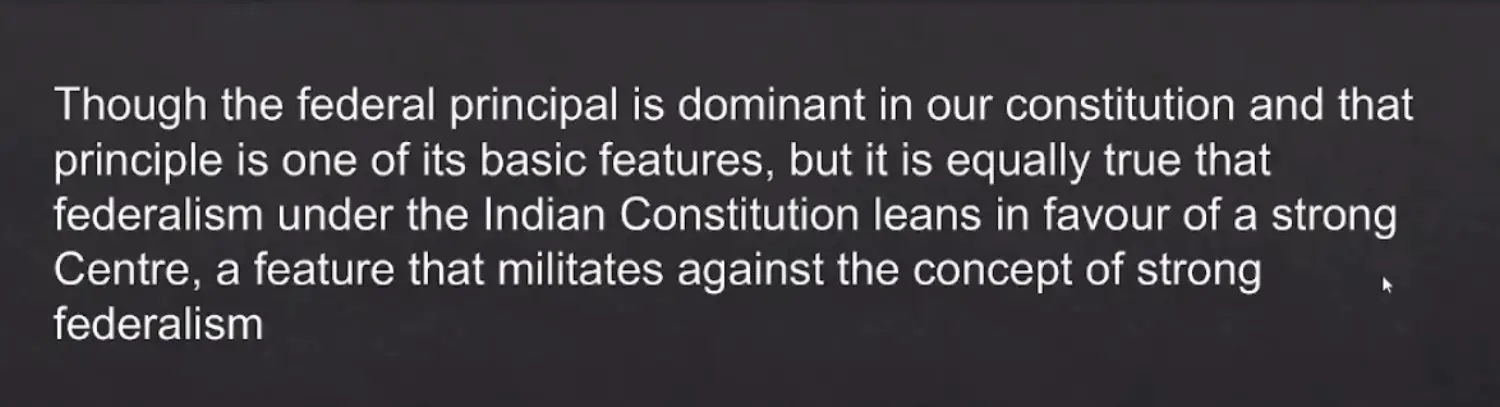
Local Government in India (LGB - Local Government Bodies)
- Three Tier Govt System added by 73rd & 74th CAA
- Urban Local - Municipality
- Rural Local - Panchayat
- Background
- Given Constitutional Status by 73rd CAA, 1992 → Panchayat
- Given Constitutional Status by 74rd CAA, 1992 → Municipality
- They were there before 1992 but were not of constitutional status
- Municipalities are older than panchayats
- Lord Ripon is the Father of Local Government in India
- After 26 Jan 1950, Local Govt is Item No 5 in State List. Hence State can Legislate it. They used to decide to have a panchayat and municipality
- There was no uniformity in
- The Structure of M&P
- The Existence of M&P
- The Rules of M&P
- What is its Significance & Importance
- Accountability
- De Centralisation of Power
- Gadhis View of Ram Rajya and Village Swaraj
- For Uniformity in Indian M&P
- By the Narsimha Rao Govt. This amendments were brought
States had to Establish M&P Madatory
Strucural Uniofrmity was Brought in Panchayats
Levels Were
- District Panchayat
- Intermediate Panchayat
- Village Pachayats
Strcuture of Muncipality was Given
Levels Were
- Transitional Municipality
- Municipality
- Municipal Corporation
- Objective of Giving Constitutional Status
- Decentralising Power
- Bringing Democracy at Grassroot Level
- Ensures Accountability of Local Govt to Local People
- To Increase People Participation
73rd CAA, 1992
Introduced Part 9 as Panchayats from Art 243 to 243 O
Inserted a New Schedule as Schedule 11 of the Constitution with 29 Functional Items
Example: Fisheries, Roads, Animal Husbandry, Sanitation
Art 243 G - Legislature ay empower the Panchayat to take care of any of the functional items
- They have no Legislatures
- Local Govt is an Item in State List
- State Govt has to make laws, from the 29 Items of Sch 11 for the Local Government to Make Laws on it
74th CAA, 1992
Inserted in Part 9A of of the Constitution
Inserted Schedule 12 of the Constitution
Functional Items for Municipalities is 18 in Number
Example: Urban Planning, Urban Poverty, Fire Services, Registration of Births and Deaths
Art 243 W: Legislatures can epower the Local Bodeis to Carry out any of the functions through an act of state legislature
Provision of Panchayats & Municipalities
Note: In Case of Lok Sabha and State Leg Dissolved, there is a Re Election for the New 5 Year Term
In Case of Village Panchayat, After Pre Mature Dissolution & Re Election, panchayat will be for Remainder of the Term.
The Re Election will not happen only when the New Election Time is less than 6 Months
Note: There is Difference Between Re Election and By Election
| Panchayat | Municipalities | | --- | --- | | Art 243 Defitintion Rural Local Self Govt | Art 243 P Definition Urban Local Self Government | | Article 243 A Gram Sabha at Rural Level Compulsory Gram Sabha at Village Level
Perform Such Function as the State Leg may determine by Law | | | Art 243 B: Constitution of Panchayats → Three Tier
This Structure is a Must Exception: If Any State has Population Less than 20 Lac, it can directly have district panchayat without the use of Intermediate Panchayat
Village: Intermediate: District: | Art 243 Q: Constittuion of Municipaltities
Nagar Panchayat: Transitional Area Municipal Council: Smaller Urban Area Municipal Corporation: Larger Urban Area (Usually Population > 10 Lacs)
Transitional Area from Rural to Urban, Like Agri Reduced & Industry Increased | | Art 243 C: Composition of Panchayats
State Legislature May by Law Detrmine
- Composition
- Election of Members & Chairpersons
Direct Elections(FPPS) for Members at all 3 Levels (Territorial Constitutencies)
Chiarperson at Village Level (Sarpanch) (Depends on Law Passed by State Legislature)
Chaiperson at Intermediate & District Level from the Among the Elected Members | Art 243 R: Composition of Municipalities
State Legislature may by Law
State Legislature may by Law
Composition
Manner of Election of Chairpersons
All Members by Direct Election | | Art 243 D: Reservation of Seats
SC / ST Reservation in Proportion to Population
Chaieperson in Panchayat for SC / ST - decided by State Leg
Women - 1/3rd Seats to be Reserved for Women in Case of Members & also Chairpersons
OBC - Reservation of Seats & Chairperson as determined by Law of State Legislature
Reservation for women and SC&ST can be Adjusted in the same seat | Art 243 T: Reservation of Seats
SC / ST Reservation in Proportion to Population
Chaieperson in Panchayat for SC / ST - decided by State Leg
Women - 1/3rd Seats to be Reserved for Women in Case of Members & also Chairpersons
OBC - Reservation of Seats & Chairperson as determined by Law of State Legislature | | Art 243 E: Duration of Panchayats
5 Years, unless sooner dissolved, New Panchayat constituted for Pre Mature dissolution only for Reamining term
New Panchayat to be constituted only when Remainder Period is at Least 6 Months | Art 243 U: Duration of Municipality
5 Years, unless sooner dissolved, New Municipality constituted for Pre Mature dissolution only for Reamining term
New Panchayat to be constituted only when Remainder Period is at Least 6 Months | | Art 243 F: Disqualification of Membership
If he/she is disqualified under any law for election to state legislature concerned (Generally According to RPA 1951)
If he is less than 21 Years
If he is so disqulified by or under any law made the by the legislature of the state (may vary from state to state) → for Grievance an appropriate authority will be made
Any Question of Disqualification may be referred to such authority or amy be determined by state leg by Law | Art 243 F: Disqualification of Membership
If he/she is disqualified under any law for election to state legislature concerned (Generally According to RPA 1951)
If he is less than 21 Years
If he is so disqulified by or under any law made the by the legislature of the state (may vary from state to state) → for Grievance an appropriate authority will be made
Any Question of Disqualification may be referred to such authority or amy be determined by state leg by Law | | Art 243 G: Powers Authroities and Responsibilities of Panchayats
State Leg may by law provide such authorities to panchayat | Art 243 W: Powers Authroities and Responsibilities of Municipalities
To Enable them to perform Institutions of Self Govt (Any or all items mentioned in 12th Schedule)
State Leg by Law | | Art 243 H: Power to Imposes Taxes and Funds of Panchayat
State Leg by Law Authorise the Panchayats
Levy Collect & Appropriate Duties & Tolls
Assign, Such Taxes, Duties
Grant in Aid
Constitution Fund (They can have ther constitution of funds by means of Law made by State Leg) | Art 243 X: Power to Imposes Taxes and Funds of Municipalities State Leg by Law Authorise the Panchayats
Levy Collect & Appropriate Duties & Tolls
Assign, Such Taxes, Duties
Grant in Aid
Constitution of thier own Fund | | Art 243 I: Constitution of State Finance Commission for Panchayats
Respo of Governor to appoint State Finance Commission
Composition: State Legislature
Functions 3.1 Distribution of Net Proceeds 3.2 Tolls, Fees, Duties, Taxes - Assigned to or appropriated by the Panchayats 3.3 Grant in Aid 3.4. Other Matter Referred by the Governor | Art 243 Y: Constitution of State Finance Commission for Municipalities
| | Art 243 K: Elections to Panchayat State Election Commission Appointed by Governor
SEC Removal can be done in the same manner as the Judge of a High Court
Conditions of Service cannot be caried to his disadvantage
State Leg can make law for conduct of elections; Sub to Provisions of the Constitutions | Art 243 ZA: Elections to Municipality | | Art 243 L: Application to UT
Subject to Such Modifications as the Preisdent may Specify | Art 243 ZB: Application to UT | | Not Applicable to Panchayats | Art 243 ZD: Committee for District Planning (DPC)
District Panning Committee for each District → Consolidation of Plans by DPC
Composition as Decided by Law made by State Leg
Chairperson of DPC; Forwards the Plan to State Govt (Not Binding on State Govt) | | Not Applicable to Panchayats | Art 243 ZE: Metropolitan Planning Committee
Metropolitan Planning Commiittee; Draft Plan - Metropolitan Area
Composition as decided by Law of State Leg
Chairperson of DPC; Forwards the Plan to State Govt (Not Binding on State Govt) |
Compulsory & Voluntary Provisions in 73rd and 74th CAA
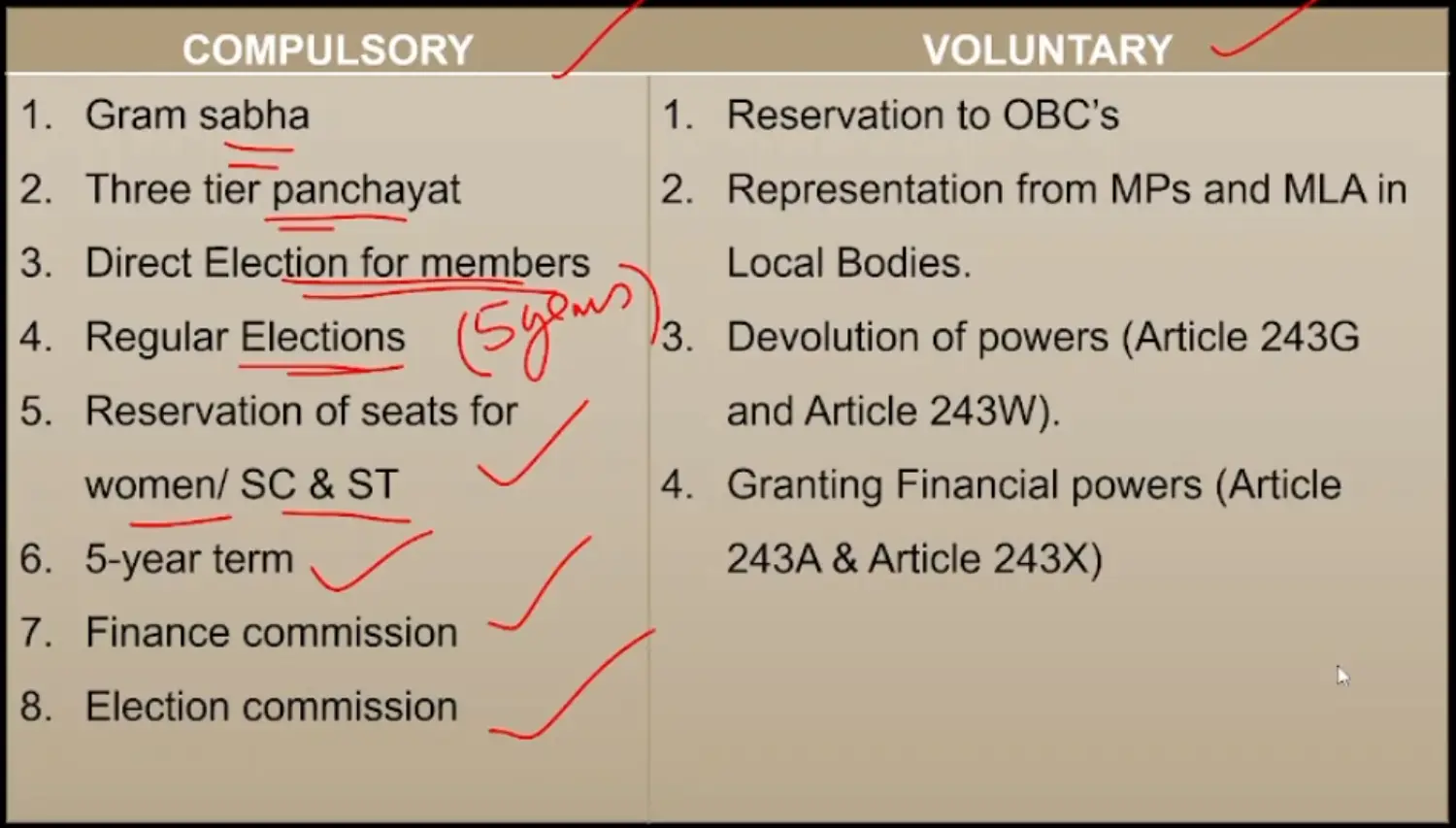
- Three Tier Govt System added by 73rd & 74th CAA
Local Governance in Tribal Area
- Provision of Fifth and Sixth Schedule of the Constitution
- President can declare an area to be Scheduled Area wrt Art 74
- A Tribal Advisory Council shall be established. On its aid and advice the Governor will be advised on how the administration of scheduled area has to be done
- Amendment to the Schedule 5 of the Constitution can be done by a simple majority or ordinary law. it is not an Amendment under Art 368
- Certain States Like Assam, Meghalaya, Tripura, Mizoram → Within State certain Tribal Districts are Protected under Schedule 6 of the Constitution
- Here in Tribal Districts there shall be a Autonomous District Council they can make their own Laws wrt Marriage and Other Social Aspects of Life
- Here Changes in Schedule 6 is not an amendment under Art 368 and it can be done by an act of simple majority
- Will Panchayat System Extend upto Schedule 5 & 6 ?
- Parliament while making the Law did not apply Third Tier Government System to Sch 5 & 6
- Here PESA Act was Passed → Panchayat Extension to Schedule Areas Act, 1996
- Here Gram Sabha under PESA has more power than the Actual 73rd CAA Gram Sabha like
- Gram Sabha will decide Schemes and Policies
- Can Decided about Minor Forest Produce
- Can identify Beneficiaries
- PESA is applicable to only 5th Schedule Area → Major Objective is to Promote Self Governance
- Hence
- Normal Rural Area - 73rd CAA
- Sch 5 Area - PESA
- Sc 6 Area - Autonomous District Council
- Provision of Fifth and Sixth Schedule of the Constitution
Problem with Regards to Implementation of Local Governance in India
Abbreviations Used
SPV - Special Purpose Vehicles or Institution
MPLAD - Member of Parliament Local Area Development Fund
MLALAD - MLA Local Area Development Fund
DPC - District Planning Committee
MPC - Metropolitan Planning Committee
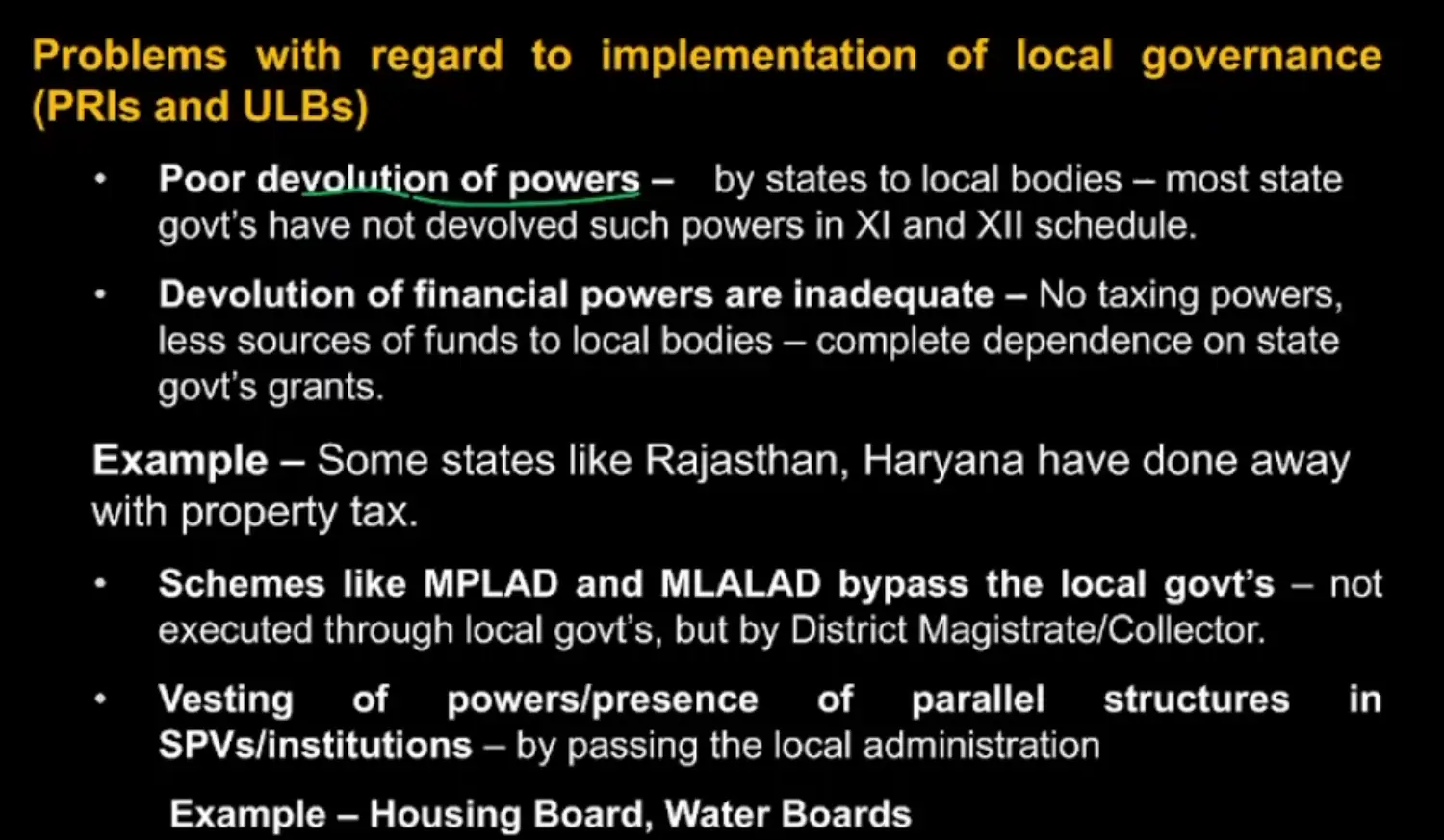
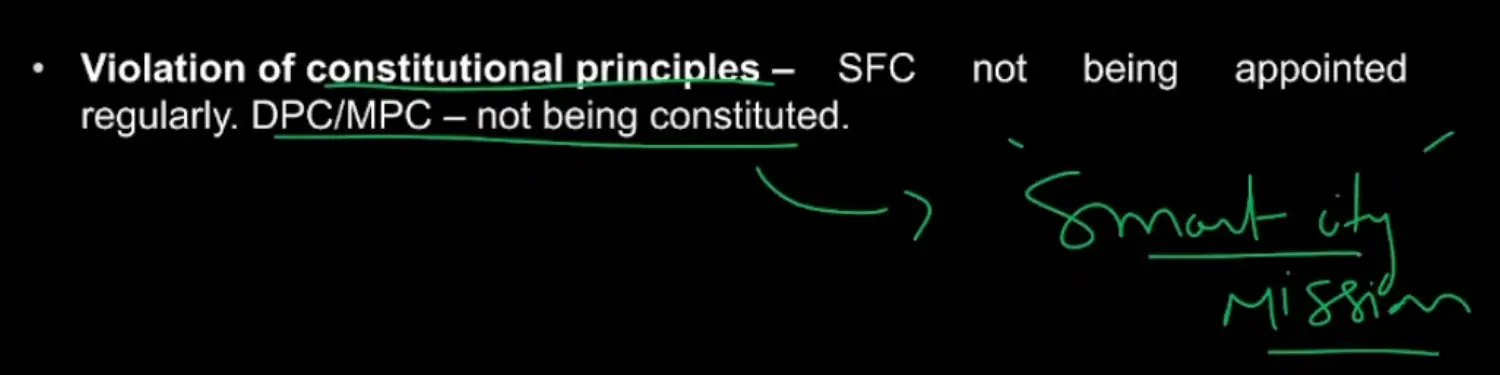
For Implementation of Smart City Mission, MPC is needed. Here it is either Not Constituted or it is not empowered

Here Rural Development Agency, is a SPV and it has bypassed Local Bodies
Here Development may happen, but the Idea of Grassroot Democracy by Means of Elected Representatives at Village Level does not Occur
Model Case Studies for Local Governance
- Kerala Case Studies - For Panchayats
- Bangalore Metropolitan Local Governance Reforms - For Metropolitan Corporation
ARC Recommendation on LGB
- It recommended improvement in
- Finances - Funds
- Functions - to be empowered
- Functionaries - Skill
- It said that initially it might be time consuming but once developed it will be really useful
- It recommended improvement in
Constitutional Bodies
Meaning of Constitutional Bodies
If something is mentioned in the constitution then it is not sure that it is a constitutional body
Constitution may say that it is a Body that may be estab by means of Law
Constitutional Body is a Body which is Directly Established by Constitution itself
Election Commission of India
To Ensure Free and Fair Election
Art 324 Says there shall be an Election Commission
Responsibility is to Direct, Control and Supervise Election in our Country
They have to carry out Elections of LS, RS, State Leg, State Leg Council, Election of President and Vice President
State Election Commission → Election of Panchayat and Municipalities
CEC & Election Commissioners as may be determined by the President time to time
Here the Composition is NOT Mentioned in the Constitution
By Conventional Practise, from 1989 we have on CEC and 2 EC
Constitution only says that if there are other election commissioners, then the CEC may be made as Chairman of EC
Privilege of CEC
- Based on Law made by Parliament → Position of CEC and Other EC is same
- He is the only Chairman
- The Decisions are taken only on the basis of Majority Votes
Regional Commissioners
- President can appoint, if they want wrt Art 74
- for 4 to 5 states one regional commissioner
CEO - Chief Electoral Officer
Hierarchy
- CEC + 2 EC → Appointed by President
- Regional Commissioners → Appointed by President
- Chief Electoral Officer → Appointed by CEC
Service Conditions are decided by Means of Parliamentary Law → Election Commission Act of 1991
Removal of CEC
He can be removed in the same manner as the Judge of a Supreme Court
The Process has been made hard so as to make the position of CEC Independent so that he can conduct a Free and Fair Election
Same Grounds of Misbehaviour and Mental Incapacity
President with the Recommendation of CEC can remove the EC
Hence EC have to maintain good relations with EC
Case
- 1990 - President of India Appointed CEC and 2 EC
- Then President Removed EC
- Here there was no recommendation of CEC
- EC went to SC against President
- Here President was NOT Wrong according to SC
- as post was scraped and not they were removed
Manpower
- They do NOT have Permanent Manpower
- It is the Responsibility of President and Governor to Provide Manpower
- Hence, Govt Teacher, State Police, IAS can be deputed by Pres and Gov→ During Deputation Election Commission can Punish them
Detailed Process for the Elections has been made by Parliament by means of RPA 1951 and RPA 1950
Criticism of Election Commission
Election Commission of India wanted the Same Grounds for Removal of Election Commissioners like that of CEC
as of Now Election Commission of India doesn't have permanent Secretariat
Not even few permanent officials → There should be some minimal staff for the same
There by Insulating other people from within the Govt in the Process of Election Commission
Expenditure of Election Commission is MADE from the Consolidated Fund of India. It should be Charged Expenditure
Even the CAG is Charged Expenditure
There is No Cooling Off Period for the CEC or EC to get into some other posts
Comptroller and Auditor General of India
Introduction
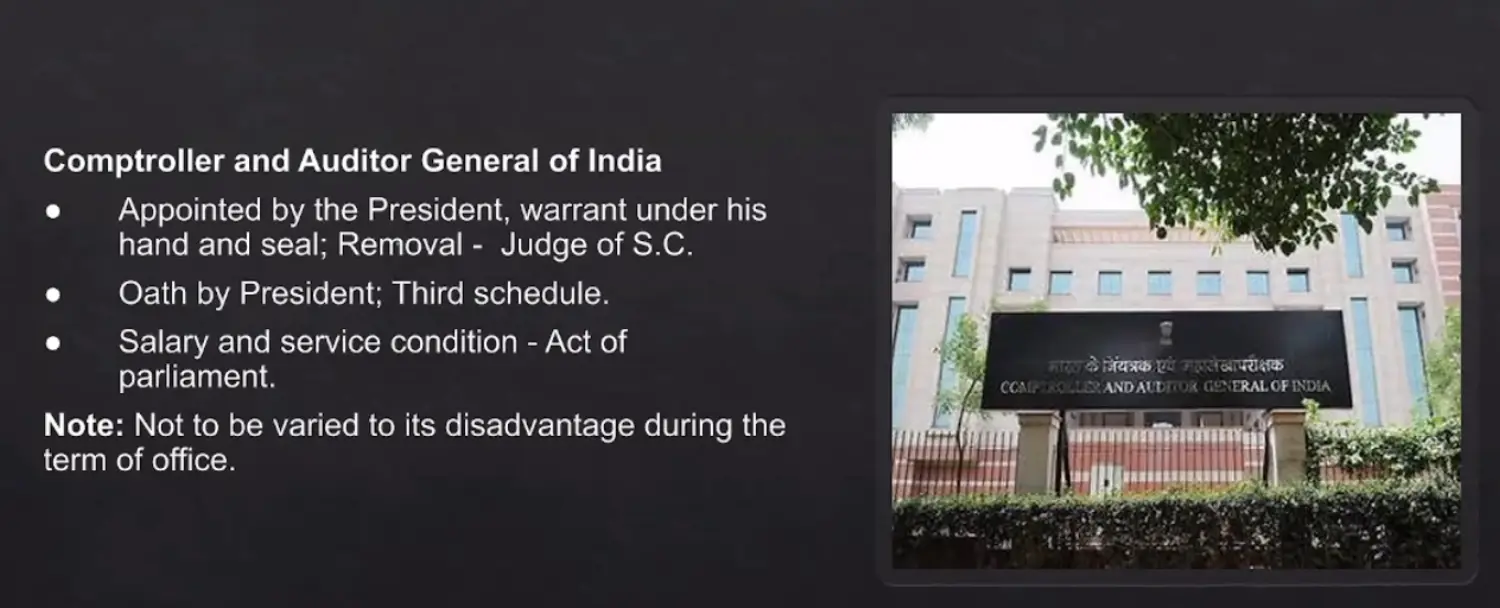
- Art 148 of the Constitution Provides for Establishment of Office of CAG
- Appointed by the President by a Warrant under his hand and seal
- He makes the Government Accountable for each and every single penny that Government Spends. Hence Prevents Financial Arbitrariness of the Government
Why is it called so ?
It is Merely a British Legacy
He is NOT a Comptroller - Someone whose permission is needed to withdraw Fund
In India he is merely a Auditor General → Who Audits
In India Comptroller is → Parliament of India
Constitutional Safeguard
Removal → Like CEC and Judge of a Supreme Court
Salary and Service Conditions → By An Act of Parliament
It is NOT be President
His Positions cannot be and should not be varied to his Disadvantage
Office Expenses, Salaries and Allowances of Members of the Officers, Charged on the CFI
Duties and Power of the CAG Art 149
- Decided by An Act of Parliament → CAG ( Duties Powers and Conditions of Service Act, 1971)
- Audit of Income and Revenue for Centre and State
- Audit of Receipts and Expenditure of Union and States
- Compile Accounts of Centre - CGA - Compiler General of Accounts
- He Performs Financial Audits but he can perform Audit of Wisdom as well - Where and How can it be spent better
- Audit of PSU and Government Companies and Corporation etc
Audit Reports Art 151
- Union Reports - President - Parliament
- State Reports - Governor - State Legislators
Criticism
- Language of the CAG - Very Technical
- Timely Report of the CAG
- There is NO Technical Qualification for the CAG. It's a very specialised Job for a Specialised Jobs
- There is NO Specific Body for the Appointment of CAG
CAG Is NOT Eligible for Further Appointment. He cannot be Re Appointed as well
PSC - Public Service Commission
Purpose
- It an Independent Body because it is entrusted with Responsibility of Most Important Officers
- There may be Nepotism & Not on Basis of Merit. If left to the Government
PSC for Union and State u/a Art 315
Art 315 Says that there shall be a UPSC and SPSC - Constitutional Body
Enables Parliament to Establish JSPC - Statutory Body if Established
in 1996 there was of Haryana and Punjab
On Request of Governor, With Approval of the President ; UPSC may serve any needs of the State
Disciplinary Actions Opinion
Recruitment to Central Government, All India Services and States
Appointment and Term of Office Members - Art 316
Chairman and Members of UPSC and JPSC are appointed by President
SPSC by Governor
1/2 of Members of Every Service Commission should have held ; at least 10 Years of Service ; either Under GoI or State at the Time of Appointment
During Vacancy of Chairman, Pres may temporarily appoint another member as Chairman until new Chairman is Appointed in case of JPSC and UPSC
Same for SPSC by Governor
e. Term of Office
- 6 Years of 65 Years - UPSC
- 6 Years of 62 Years - SPSC & JPSC
Removal and Suspension
They are Adjudicating Insolvent
Engaged in Paid Employment outside the Office
Physical Disability or State of Mind → Infirmity of State or Mind
On Grounds of Misbehaviour, only after making reference to the Supreme Court
Pending such enquiry by Supreme Court, the President (UPSC/JPSC) and Governor (SPSC) can suspend the Chairman or Members
Governor can suspend but CANT Remove for SPSC Also
SPSC Removal by President after SC tells to remove
Powers to Make Regulations and Conditions of Service (Art 318)
UPSC and JPSC - President
SPSC - Governor
Other Constitutional Bodies
- Art 338 - National Commission for Scheduled Caste
- Art 338 A - National Commission for Scheduled Tribes
- Art 338 B - National Commission for Backward Class
- Functions
- Policy Research
- Awareness About Rights
- Constitutional and Legal Rights Addressed
- Look into Violation of Rights
- Criticism
- They are Politicised in Function
- Their Recommendation are merely recommendatory
Statutory Bodies
- Basics to Know About
- By an Act of Parliament or State Legislature
- There has to be an Object or Objective
- What is the Composition of that Body - Not So Important
- Functions of the Body - Related to Objective
- Criticism are Generally Same
- Suggestions are Generally Same
- Important Statutory Bodies
- National Human Rights Commission, 1993
- Central Information Commission, 2005
- National Commission for Women, 1992
- National Commission for Minorities, 1992
- National Commission for Protection of Child Rights, 2005
- Lokpal 2013
- Criticism
- Politicisation of Appointment
- Toothless Tiger → Except for Lokpal & Central Information Commission → All are Recommendatory in Nature
- Irregularity of Fund & Lack of Financial Resources
- Suggestions
- Giving Constitutional Status can lessen the inefficiency of these commissions
- Merely Giving a Constitutional Status can't be the Solution
- For Politicisation Issue - There should be a Similar Select Committee
- Statutory Backing - For Govt to give it in writing that why any act has been done
- appropriate Backing has to be given by means of Political Will
- Basics to Know About
Executive Bodies
Meaning
- Created by An Executive Order - Like by Cabinet Ministers
- by an Executive Order or Executive Resolution
NITI Aayog
- NITI Aayog Replaced erstwhile Planning Commission in India
- National Institution for Transforming India
- Its a Think Tank for the Government
- Gives no of Policy Proposal for Govt
CBI
- Premier Investigating Agency of Central Govt - Headed by Rank of IG of Police called Director CBI
- It is NOT Created by a Law but by Means of Executive Order
- Before Independence, During WW2 it was formed to investigate war corruption activities under ministry of defence
- It is under DoPT now
- They Derive Powers from Act called Delhi Special Police Establishment Act, 1946
Home Work : Look at Reforms for CBI
ED - Enforcement Directorate
- Under Ministry of Finance
- Implements
- PMLA Act - Prevention of Money Laundering Act
- FEMA Act - Foreign Exchange Management Act
NCB - Narcotic Control Bureau
Representation of People Act
Introduction
- Art 324
- Art 327
- RPA Act was passed by Provisional Parliament as RPA, 1950 & RPA 1951
- Elections for Both Parliament and State Legislature
Why Two Laws were Needed ?
- Segregate so as to what the Election Commission has to do before the Election itself
- Two Sets of Laws for
- RPA 1950 - Before & After Conduct of Elections
- RPA 1951 - Actual Conduct of Election
RPA, 1950 - Not So Important
Before the Actual Conduct of Election
Consolidation of all order passed by Delimitation Commission for specifying Constituency
To Prepare Electoral Role
Allocation of Seats - House of People, Legislative Assembly and Council
EC ensures how the seats have to be filled as a Single Member Constituency
Preparation of Electoral Roles by CEO (usually senior IAS Officer) appointed by CEC
CEO is assisted by DEO (District Electoral Officer - Generally DM / Collector)
Eligible for Voting unde UAF subject to Disqualification Criteria
You should be 18 Years of Age
You Should be a Ordinary Resident of India
You Should be a Citizen of India
You Should be a Person of Sound Mind
You Should be Eligible to vote under law and Not be debarred from Voting under Law for Time Being
By Means of Active Case & In Jails
Amendments to the Electoral Roll
Earlier Cut of Date was only 1 i.e 1 January
Now 4 Cut off Dates are there
- 1 January
- 1 April
- 1 July
- 1 October
No Person should be Registered in More than One Constituencies
Link Aadhar to Voter ID - to prevent duplication of votes
Before EC was taking undertaking from the Person
Home Work : Issue of Linking Aadhar and Voter ID
RPA, 1951 - Very Important - Questions Every Year
Qualification of Membership of Council of States and House of People
Elector in Parliamentary Constituency ; Not Necessarily from the Same Parliamentary Constituency
From How Many Constituency can you contest an election from
Earlier there was No Limit. With Amendment it was made to be 2 Only
Member of SC / ST to contest elections from Reserved Constituency
Qualification for Leg Assembly and Council
Elector from any Parliamentary Constituency from that State
Disqualification and Conviction for Certain Offences
In Constitution
- Citizenship
- Insolvency
- Office of Profit
- Unsound Mind
- In case of Defection
Shall be Disqualified on the Basis of
- Protection of Civil Rights Act - He Practised Untouchability
- Customs Act
- UAPA
Only Fine - No Election for Next 6 Years
With Punishment - No Election for Next 6 Years from the date of completion of punishment
Hence if Punishment is of 1 Years then for 7 Years he cannot contest election
Other than this Offences - Not Mentioned in RPA - Lily Thomas Case
- Imprisonment < 2 Years - No Disqualification
- Imprisonment Minimum of 2 Years → No Immediate Disqualification + Can Contest Election + Temporary Vacancy
- Imprisonment > 2 Years → Immediate Disqualification + No Election for the Next 6 Months
Corrupt Practises - Raj Narayan Case
Engaged in Govt Contracts leads to Conflict of Interest. Example Hemant Soren
Disqualification - Dismissal for Corruption or Disloyalty - Cooling Off Period is 5 Years
EC will recommend the President after the Quasi Judicial Process
Govt Servants Disqualified for 5 Years
Remedy within 30 or 40 Days to challenge disqualification in High Court
Can go to SC
Sections Dealt with are Section 8 & Section 9
Election Notification by President for Council of States & House of People on recommendation of Election Commission
Legislative Assembly and Legislative Council
Duties and Powers of Administrative Officers
- CEO
- DEO
- Returning Officer - Nomination Paper Accepted Rejected
- Presiding Officer
- Election Agents of Political Parties
Registration of Political Parties
Cant do Deregistration
Nomination Candidates
Moral Code of Conduct for Elections
Conduction of Pollings
Counting of Votes
Declaration of Results
Vacation of Seats - Not to be a Member of Both the Houses of Simultaneously
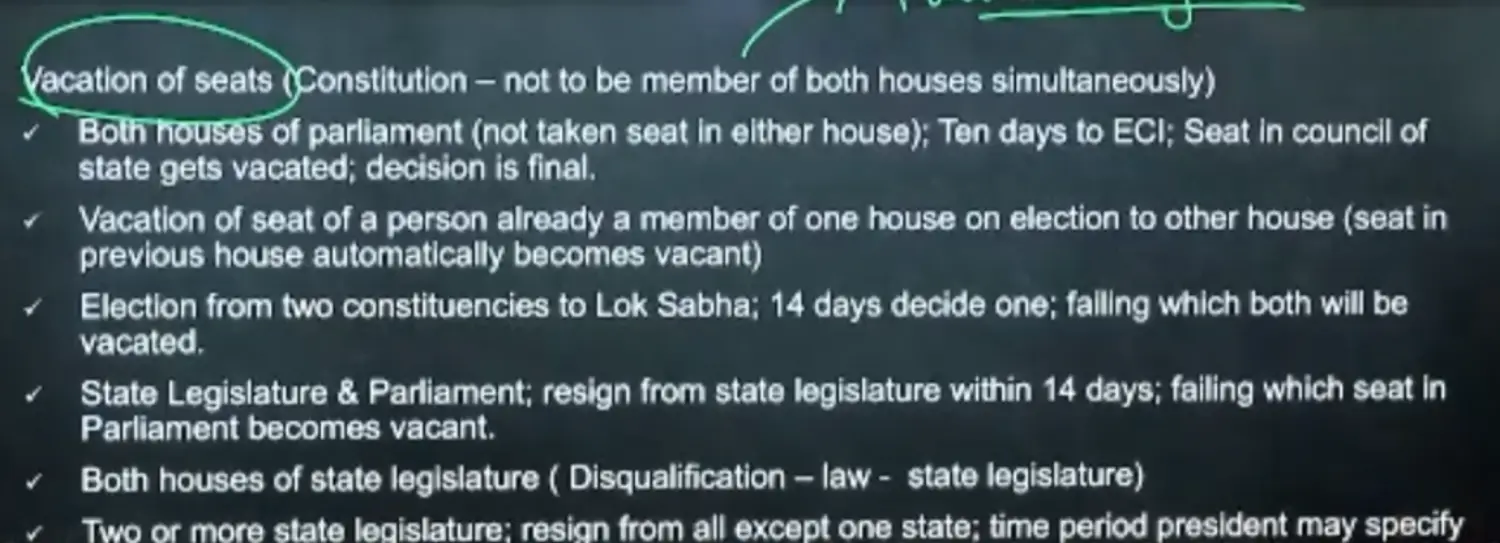
may specify rules; failing which seats in all legislatures become vacant
Home Work : Google Election Symbol
Home Work : Amendments to RPA
Home Work : State and National Party
Home Work : Difference between Delisting and Deregistering by Election Commission
Pressure Groups
Introduction
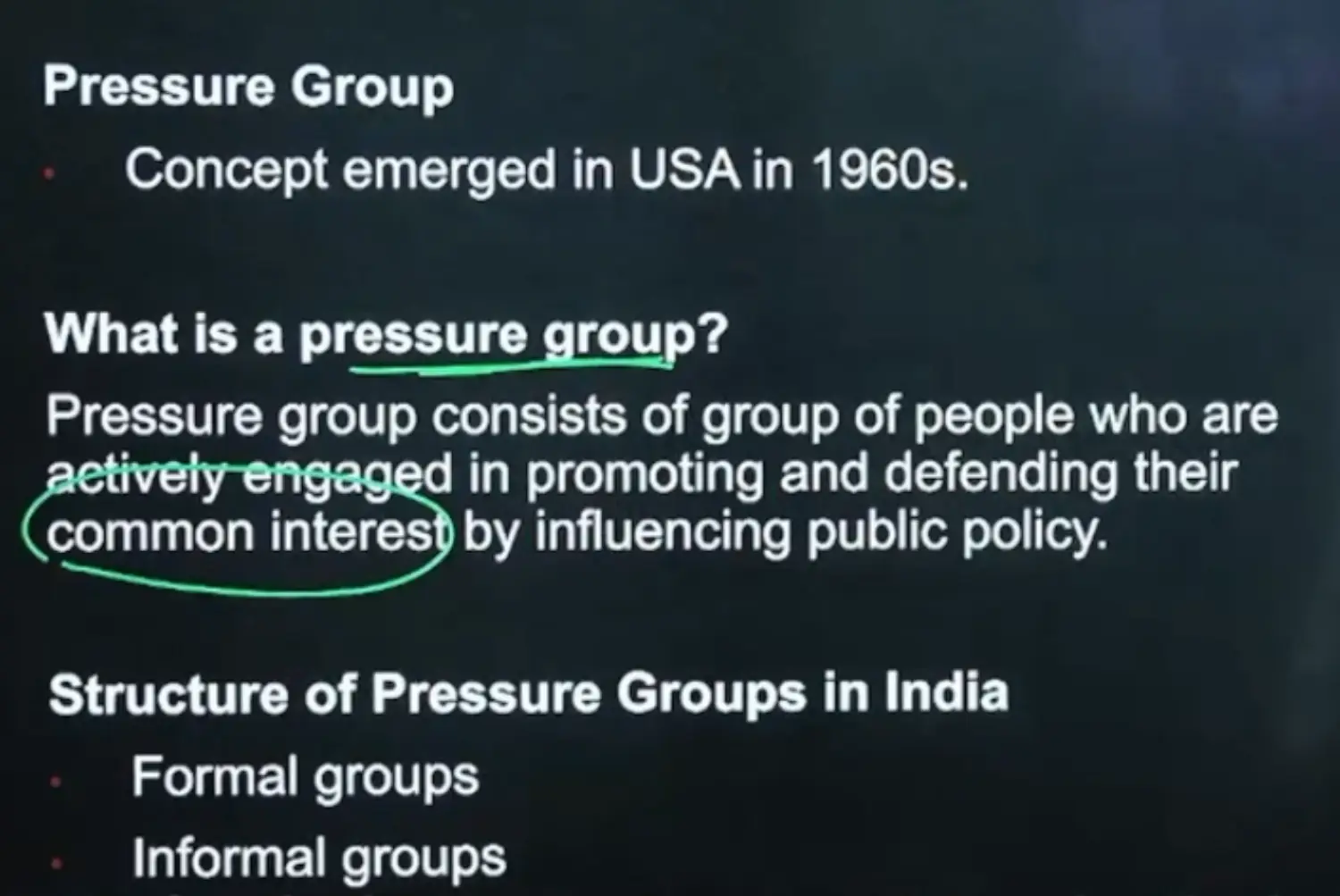
Types of Pressure Groups
Formal Pressure Groups
- Pressure Groups which have well established Institutional Structure are called Formal Pressure Groups
- Example:
- Industry : FICI, ASSOCHAM
- Trade Union : AITUC, CITU
- Professional Groups : IMA, Bar Council, Indian Bank Association
Informal Pressure Groups
- Pressure Groups that does not have well established Institutional Structure
- Example
- People Movement by Anna Hazare ( India Against Corruption) - led to Lokpal
- Chipko Movement
- Maratha Agitation
- Patidar
- Methods / Functioning of Pressure Groups - Add from PPT by Sir
Electioneering
Lobbying
Propagandizing
Ex: Anna Hazare India Against Corruption
Difference Between Political Parties and Pressure Groups
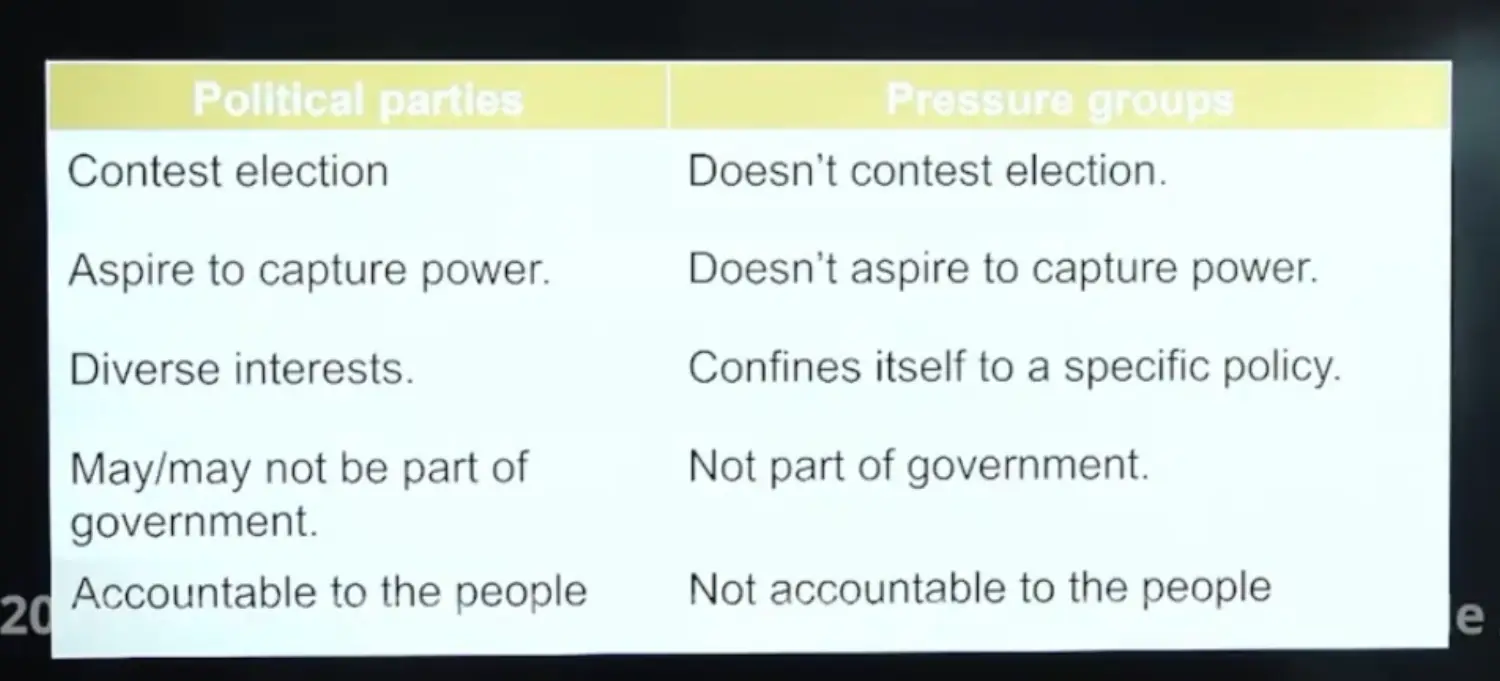
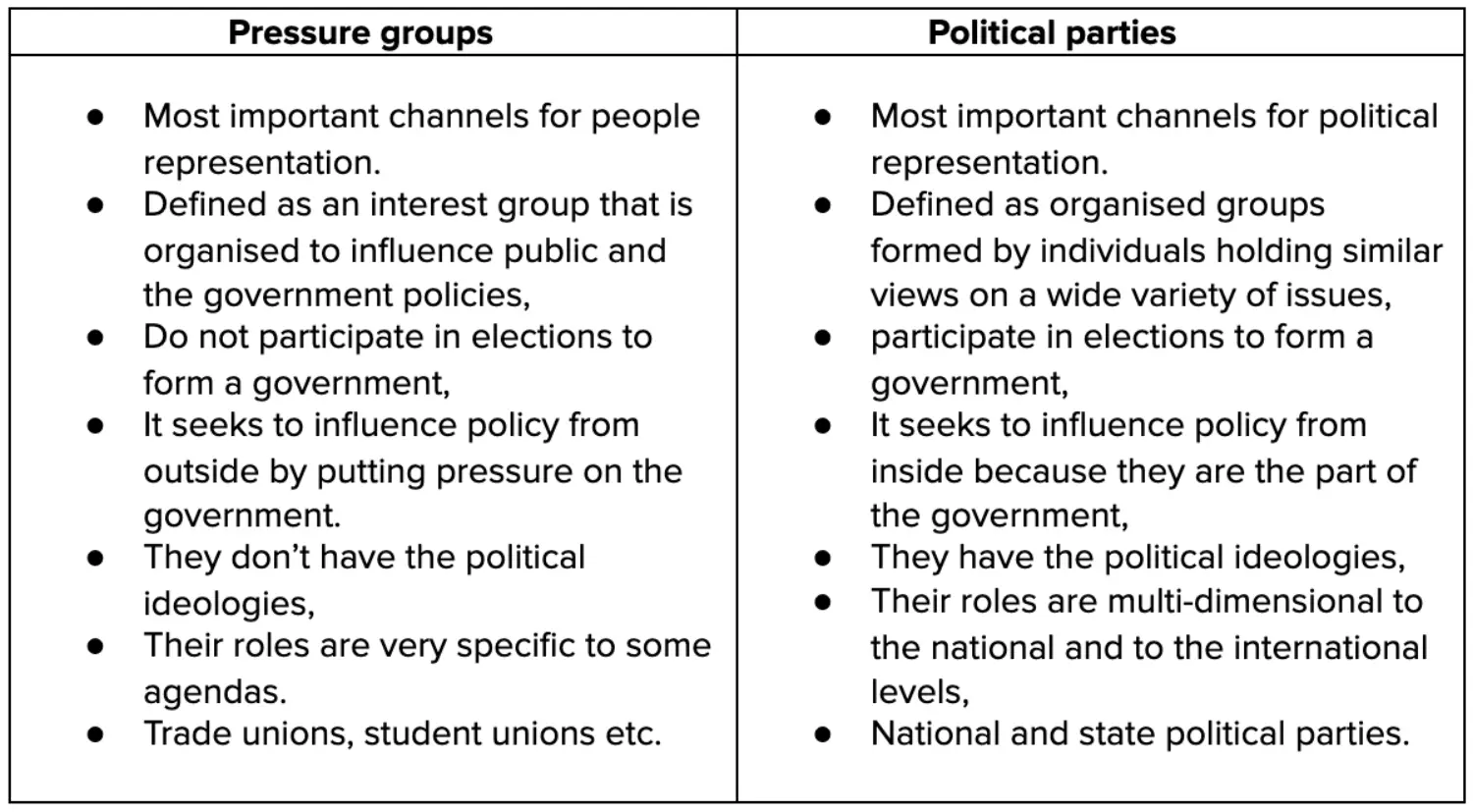
Similarities Between Political Parties and Pressure Groups
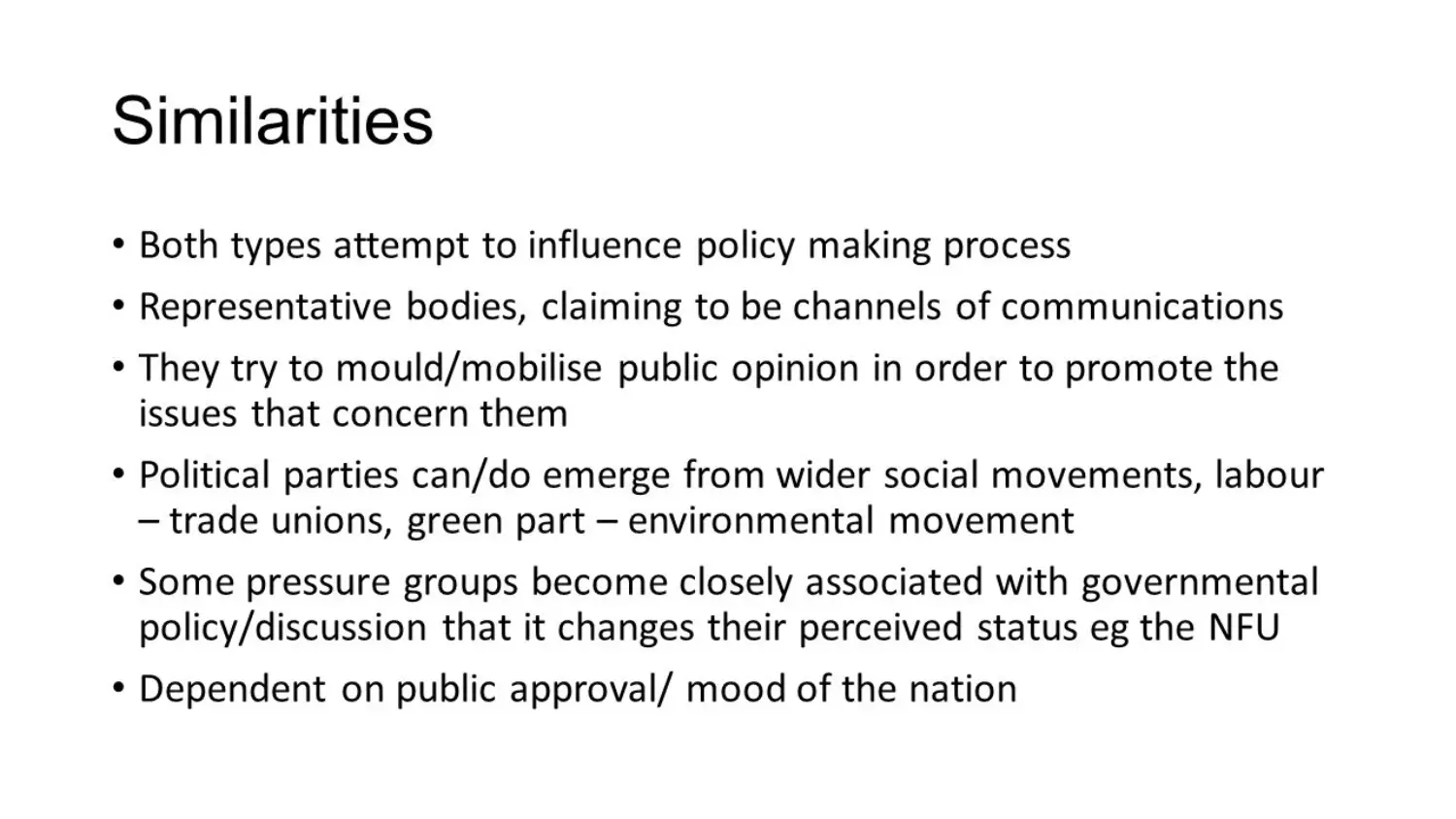
Role of Civil Services in Democracy
Definition
Roles of Civil Servants
Features of Civil Servants
Issues in Civil Services
Lateral Entry
Reforms in Civil Services
Civil Services Bill