Environment & Ecology
Syllabus
- Prelims Specific
Environmental Ecology
Ecology
Definition
It is the scientific study of inter-relationships, interdependence and interaction of any living being at any point of time
Example :
In Photosynthesis, Many microbes help plants for better supply of nitrogen. Plants are consumed by Herbivores, which in turn are consumed by carnivorous. So, continuously interactions are taking place.
Branches of Ecology (2)
Auto Ecology
Based on Interaction of Particular Species / Individuals.
Example :
- Tigers : Sunderbans
- Lion : Gir
- OH Rhino : Kaziranga
Synecology
Scientific study of interactions of multiple species continuously interacting with each other because of interdependence
Example
Rhinos+ Elephants+Plants+Birds+etc of Kaziranga Interacting with each other
Environment - Updation is Very Very Important
Definition
It is the habitat of species in the surrounding.
Surrounding = Lives + Functional Nature
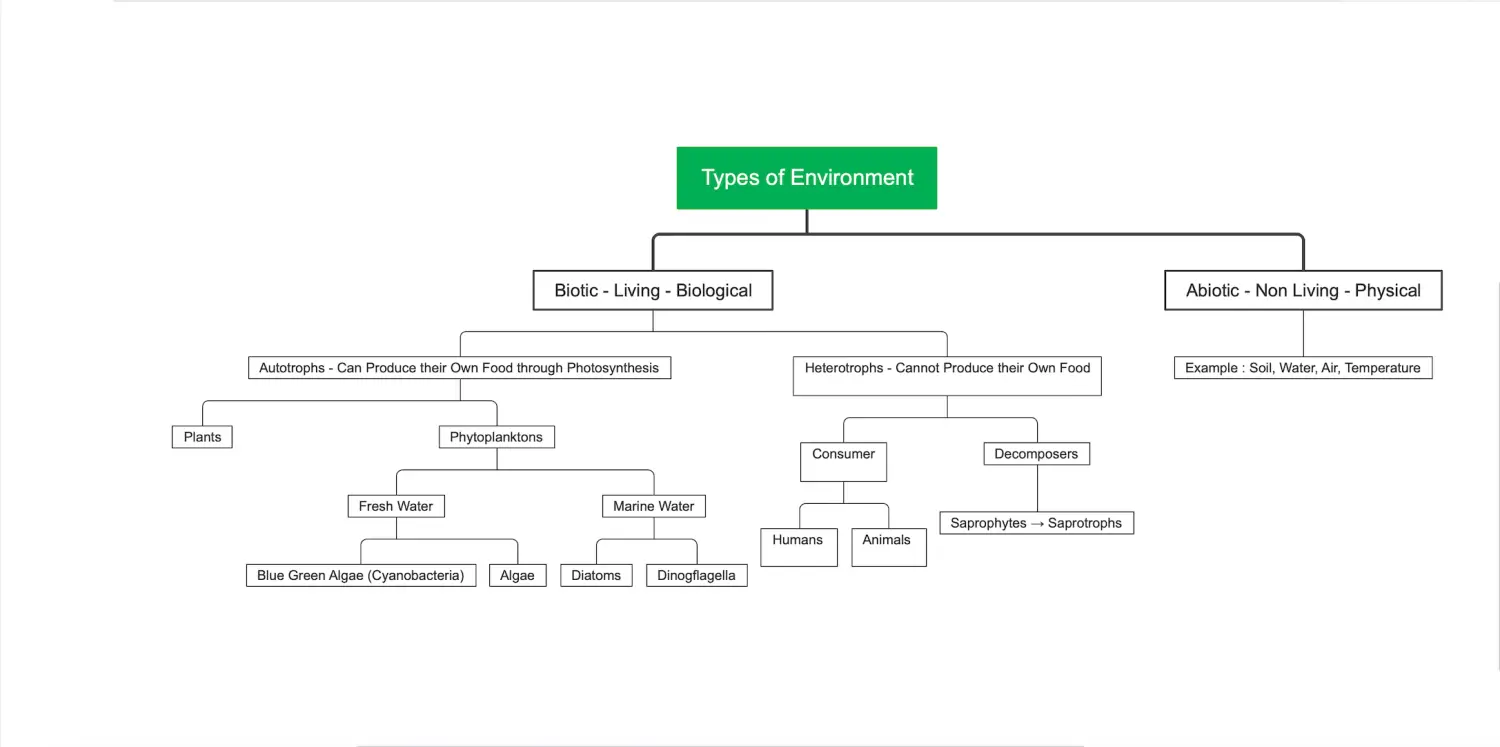
Types of Environment
Biotic - Living - Biological (2)
- Autotrophs - Can Produce their Own Food through Photosynthesis
Plants
Phytoplanktons
- Fresh Water
- Blue Green Algae (Cyanobacteria)
- Algae
- Marine Water
- Diatoms
- Dinogflagella
- Fresh Water
💡 Heterotrophs are Dependent on Autotrophs- Heterotrophs - Cannot Produce their Own Food
- Consumer
- Humans
- Animals
- Decomposers
- Saprophytes → Saprotrophs
- Consumer
- Autotrophs - Can Produce their Own Food through Photosynthesis
Abiotic - Non Living - Physical
Example : Soil, Water, Air, Temperature
Bio Diversity
Climate Change
- Mains Specific
- Conservation
- Pollution
- EIA
- Broad Division of Syllabus
Basic of Ecology and Ecosystem Functioning - 20% Questions
Concepts Like Food Chain, Autotrophs, Heterotrophs, Producers, Consumers, Decomposers and adaptations in various plants
Bio Diversity, Conservation, Rules Regulations & Legislations - 30% Questions
Various Protected Areas : National Parks, Tiger Reserves, Rules and Regulations for taking care of Environment like WPA 1972, EPA 1986, FRA 2006
Global Warming, Climate Change, Pollution & Sustainable Development - 50% Questions
Various Aspects of Pollution and its control, Climate Change and its impacts, Sustainable Development and EIA
- Prelims Specific
Sources
- Class 12th Biology → 10th Unit 4 Chapters
- 9th 10th NCERT
Extra Concepts
Read About Pusa Decomposer- for Agri Residue
Bio Words to Study
- Biofortification
- Bioaugmentation
- Bioventing
- Biosparging
- Bioweapons
- Biotechnology
- Biohazards
- Biopiles
Antipyretic - Lower Down Temperature
Analgesics - a substance that reduces pain
Peneplain & Mountains life Cycle
Net is Gross minus Losses
Difference Between Conference and Convention
Conference - Meeting
Convention - Has a Fixed Agenda &
Protocol - Implementation of Convention
Difference Between Crop Rotation and Mulching
Details about Virus
A virus is NOT Considered as a Part of Any of the Kingdom
Viruses are Obligate Parasites
Viruses are inactive Outside a Host Cell
It Requires a Host Cell for Its Development
Virus Either have RNA or DNA. Not both together
Why Virus Requires a Host Cell → Virus Lacks Necessary Enzymes for Functioning of Cell
Prokaryotes and Eukaryotes
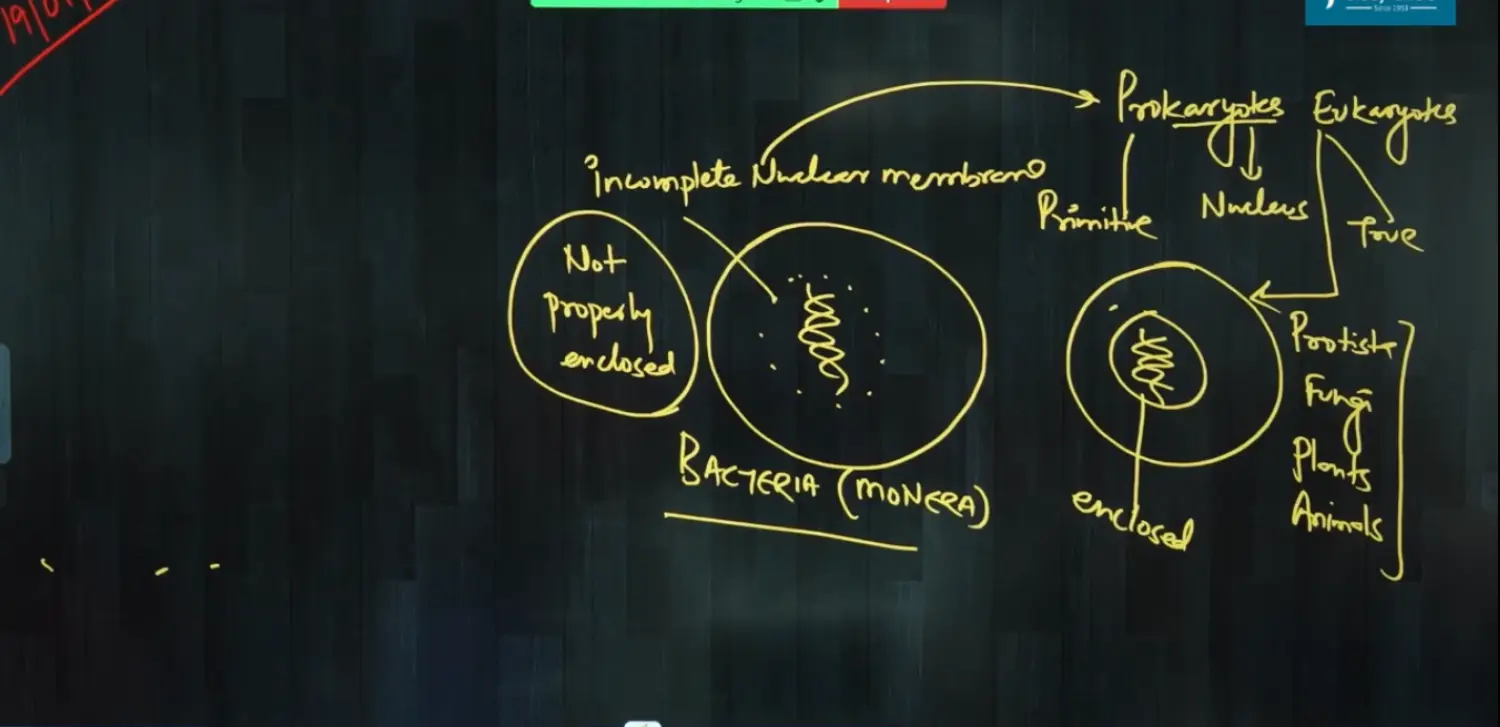
Pro - Primitive
Eu - True
Example: Protista Fungi Plants and Animals - Eukaryotes
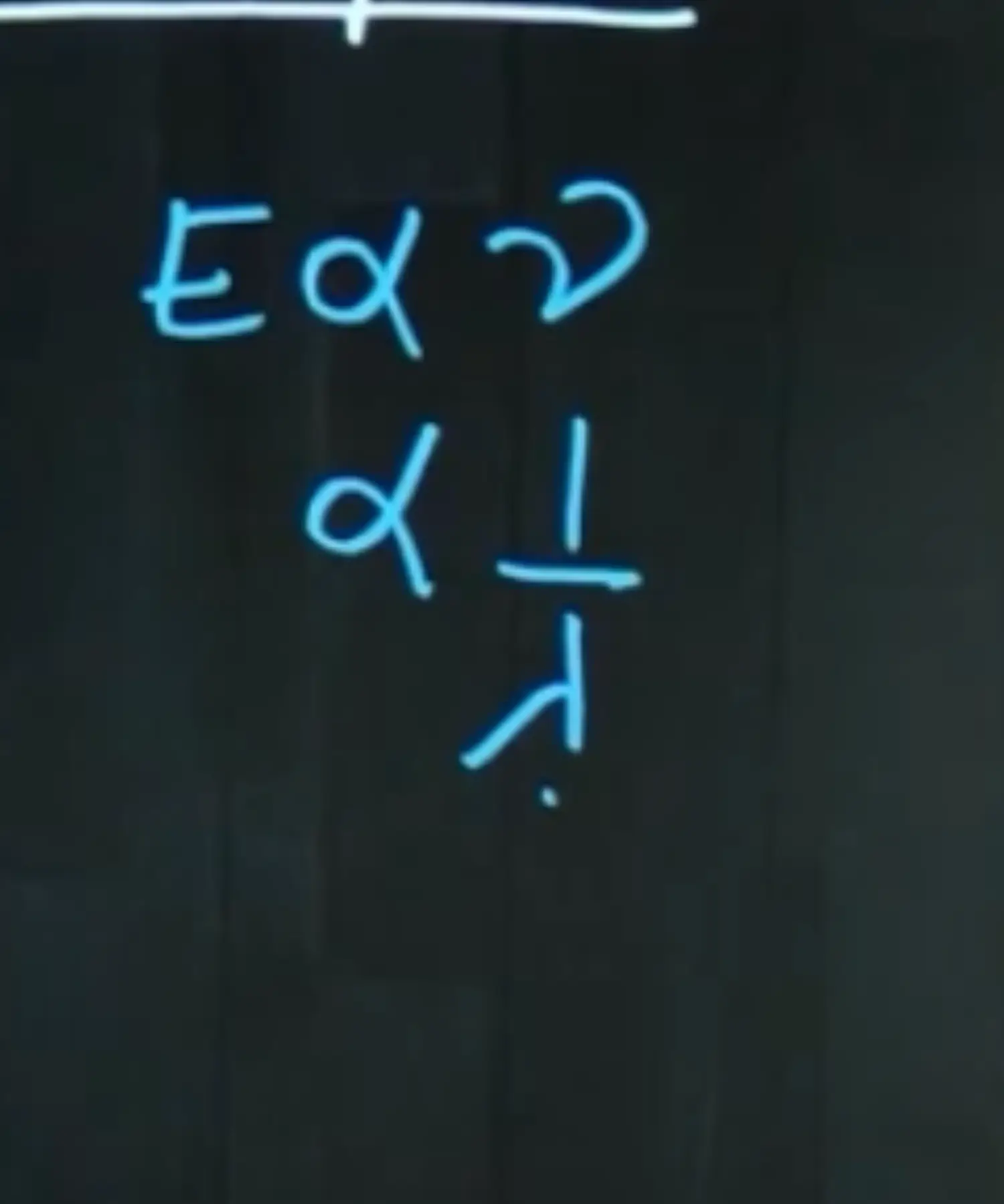
Energy and Frequency
Belize is in Central America
Difference Between Common Kinds of Terms
- Biotechnology
- Genetic Engineering
- Recombinant DNA Technology
Important Terms
- Oligo - Few
- Phytic - Relating to Plants
- Trophic - Relating to Food and Nutrition
- Biont - Small Size Individuals
- Rhiza - Roots
- Xero - Dry
- Halo - Salt
- Phyte - Plants
- Phycology - Study of Algae
- Mycology - Study of Fungus
- Malacology - Study of Molluscs like Snails
- Ornithology - Study of Birds
- Ichthyology - Study of Fishes
- Entomology - Study of Insects
Symbiotic Relationship is also called Mutualism
Colostrum
Colostrum is the First Milk coming from Mothers Mammary Gland which is very rich in Anti Bodies essential for development of immune system in the Newly Born
Glands Simply mean Secretion - They can secrete Hormones or Non Hormones (saliva)
Glands which secrete hormone are called Endocrine Glands
Which do not secrete Hormone are called Exocrine Glands
Thyroid Gland - Thyroxine
Hilly Tribes Migration
Hill Tribes with Livestock from Hills to Valley and back to Hills when winter is over is called Transhumance
Types of Saccharides
Saccharides - Sugar
MonoSaccharides - Sugars having one molecules
Glucose, Fructose, Galactose
DiSaccharides - Two Molecules
Sucrose → Glucose + Fructose → Commercial Sugar
Lactose → Glucose + Galactose
Maltose→ Glucose + Glucose → Most Prominent Sugar found in Germinating Seeds
PolySaccharides - Multiple Molecules
Starch & Cellulose
OligoSaccharides - Few Molecules of Sugar
Deficiency of Vitamin A
can lead to Xerophthalmia - dryness of eyes
Xero - Dry
IPR - Patents / Trademarks Copyrights are Regulated by
Earlier called DIPP - Department of Industrial Policy & Promotion
Now Called DPIIT - Department for Promotion of Industry & Internal Trade
Atlas Mountain Africa Diagonally Opposite
Difference Between Bonn Convention & Bonn Summit
Difference Between Stockholm Conference & Stockholm Convention
Marrakesh Accord & Agreement
Read in Co Relation to WTO
Marrakesh Treaty
To Study Material Providence for Braille Language
Doha Amendment
Operation Thunderbird
Crime Control Mission by WCC
Montreux Record - Ramsar
Mantax Record - TB detection Test
Schedule 6
4 North Eastern States which share border with Bangladesh
Mizoram, Meghalaya, Nagaland, Assam
Chicken Neck Corridor of North East India
There are Three Species of Crocodile Found in India
- Alligators
- Gharials
- Mugger
Wheeler Island - Kalam Island
Rice Seasons in Assam and West Bengal
Example : Three Different Harvests of Rice in Parts of Assam and West Bengal within a Year are called Aus Aman Boro
Entire Living World is divided into 5 different groups - MP Fungi Plant Animal
1 Monera
- All Bacteria and their various forms
- Example
- Blue Green Algae
- Rhizobium
- Mycobacteria - causes Tuberculosis
- E Coli
2 Protista
- Diatoms
- Dinoflagellates
- Slime Moulds
- Euglena
- Protozoa
Amoeba
Paramecium
Malaria is caused by a Protozoa called Plasmodium
Plasmodium is Causal Agent
Mosquito Carrier
3 Fungi
- Yeast
- Mushroom
- Penicillium - First Anto Biotic to be discovered Penicillin by Alexander Flaming
4 Plantae
Algae
Bryophytes
They are called Amphibians of Plant Kingdom because they require water for their reproductive stage
Xylem Phloem Present from here
- Pteridophytes
- Gymnosperms
- Angiosperms
5 Animalia
- 5.1 Vertebrates FAR BM
- Fishes
- Amphibians
- Reptiles
- Birds
- Mammals
- 5.2 Invertebrates
- Earthworms
- Octopus
- Tapeworm
- Spider
- Honey Bee
PS : Snake is not a Invertebrate
- 5.1 Vertebrates FAR BM
Equation of Photosynthesis
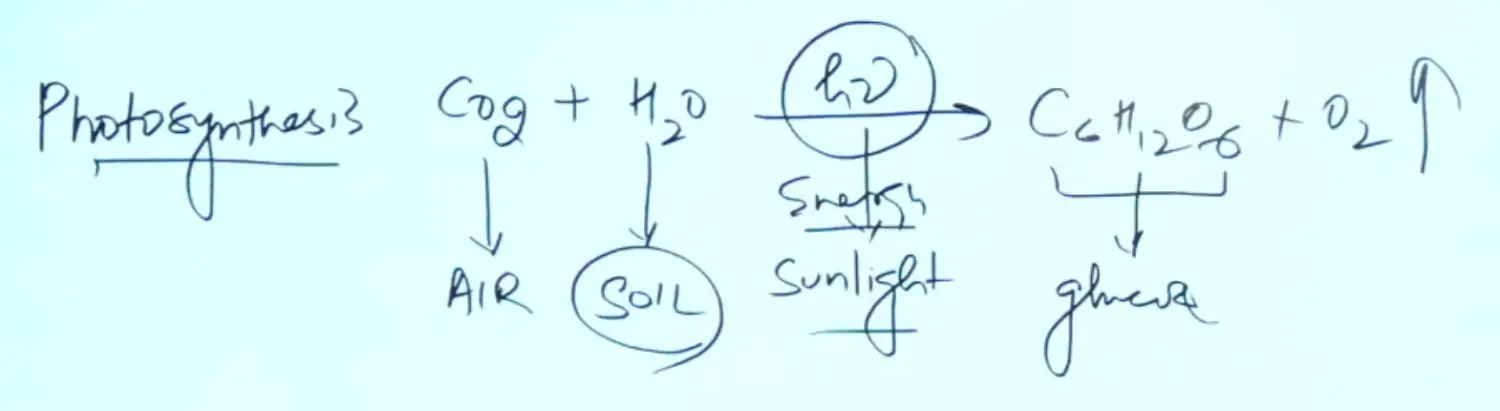
In Photosynthesis, Free energy is getting converted into potential energy of glucose which is stores in leaves
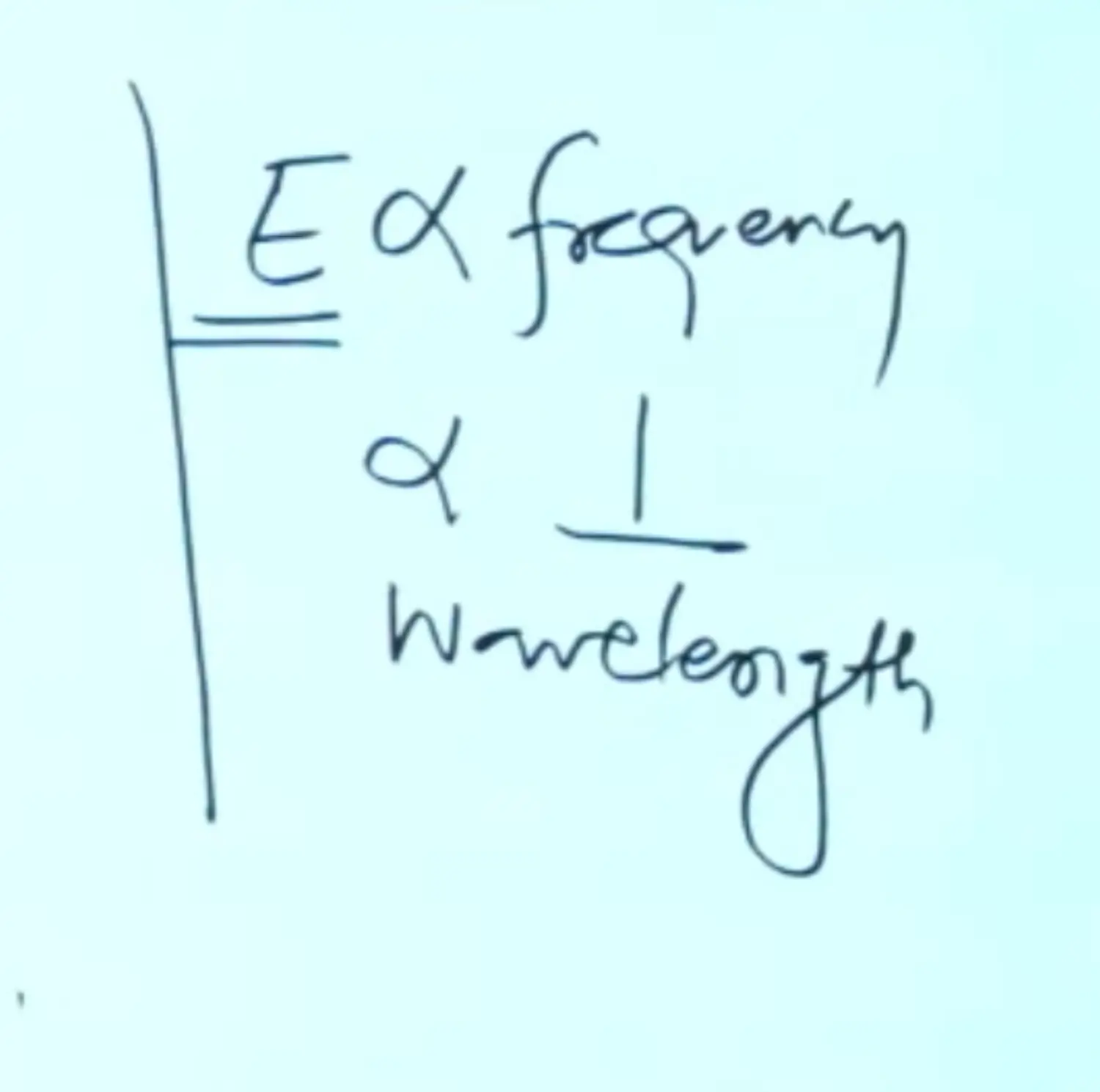
Electromagnetic Radiation
hv - Sunlight - Energy of an electromagnetic Radiation is directly proportional to frequency and is indirectly proportional to wavelength
Symbiotic Relationship of Rhizobium
Largest Fresh Water Lake of North East ?
Loktuk Lake of Manipur
Only Floating National Park of World ?
Keibul Lamjao National Park
Phytoplanktons
small size microscopic producers found in water bodies
any living being
- which is in water bodies
- which is microscopic
- which is photosynthetic
Algae is both Plant and Phytoplankton
Composting and Earthworms
Earthworms are termed as farmers Friend
Composting - Dig Ground, bury waste
Vermi Composting - In the Pit, Earth Warms are added
Use of Red Earth Worms in the process of composting.
Red Earth Worms because
It has fastest rate
availability and growth is also easier
Other Earth Worms can also be used
Indian Wild Dog is called
Dhole
Neelakurinji of Nilgiri is ?
- It is a flower which blooms after 12 years
Largest Man Made Reservoir of India is ?
Govind Vallabh Pant Sagar on Rihand River
Rihand is tributary of River Son
Son in turn is a Tributary of Ganga
Taiga Region
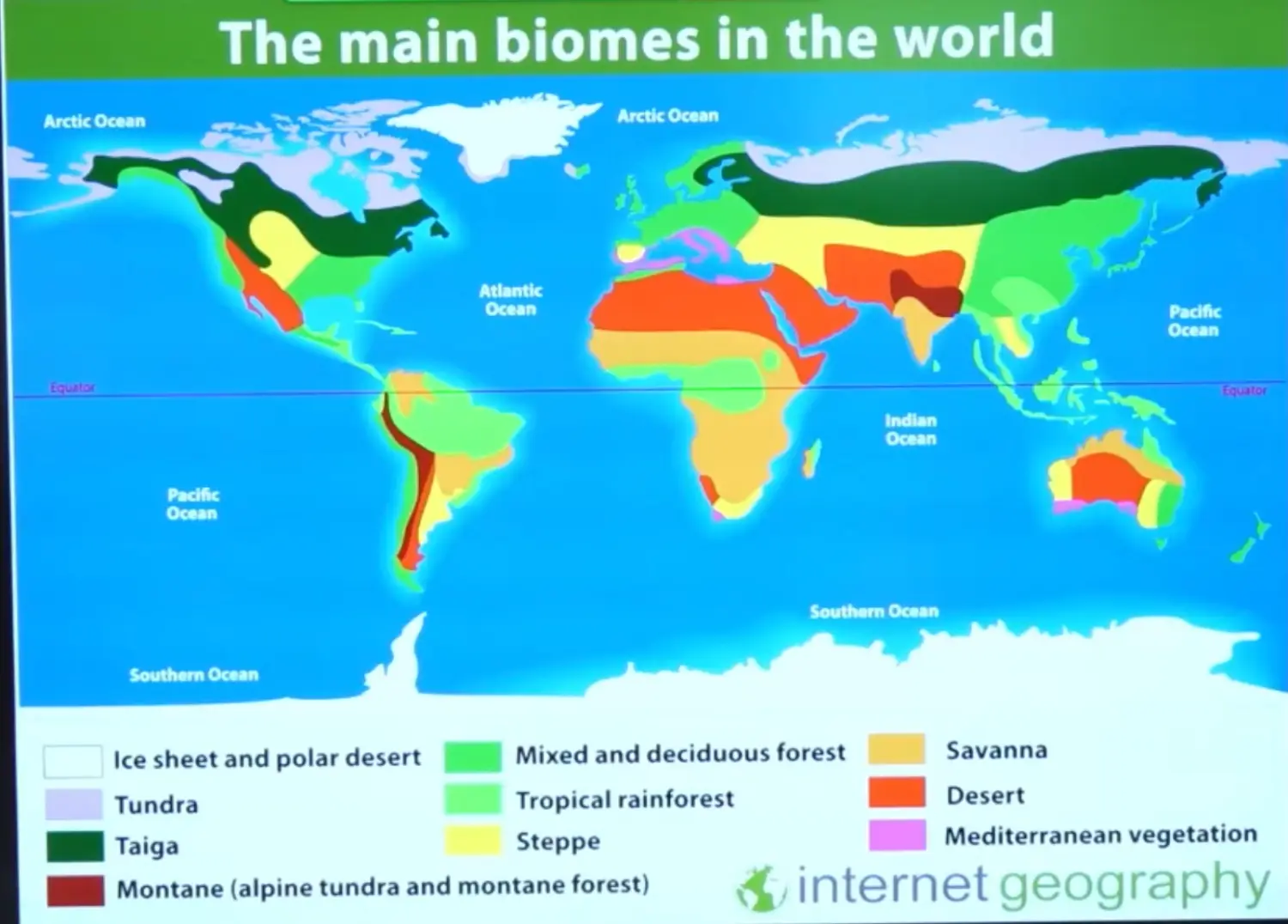
Scandinavia
Denmark, Norway, Sweden, Finland, Iceland
Why are they called Scandinavian ?
due to Scandinavian Mountains of this Region
Extracellular Enzymes
Extra Cellular Enzymes released by fungi carry out Catabolism in the process of Decomposition
Why is milk teeth called milk teeth
RI of Milk = RI of Teeth
Second Name of Milk Teeth
Deciduous Teeth
Silent Valley
Silent Valley is termed as Silent Valley due to absence of Night Insects Crickets
BT Cotton - Pest Resistant Variety of Cotton
- Genetically Modified form of Cotton
- Some Kind of Modification has been done in its Genes
- This Modification is done to Alter Some Characters
- Modification is done to
- Either Add Characters
- Or Suppress Characters
- Insects - Ball Worms, Beetles, Cotton Worms → They Attack Cotton → Cotton Production Down → In Nature
- in Soil Bacteria → Bacillus Thuringiensis BT → This bacteria Naturally kills these Insects mentioned above
- Cry Gene of BT attacks the Insects
- Picked up the CRY Gene of BT and Introduced it in the Cotton.
- Now Cotton became defenced from Insects
- This is why Punjab has high Productivity of Cotton
- Punjab is Green Revolution Belt
- BT Cotton Needs
- High Water - Himalayan River Water, Indo Gangetic Plains
- Costly Seeds - Rich Farmers
- Why Vidarbha not high Production
- Vidarbha Region Black Soil Area
- Farmer Suicide Reason is BT Cotton
- No Rainfall - Monsoon Dependent
- No Water Harvesting - Neeche Patthar Hai, It has Plateau
- Jan Dhan Yojana 2014 - Loan for Cotton in Vidarbha from Bank,
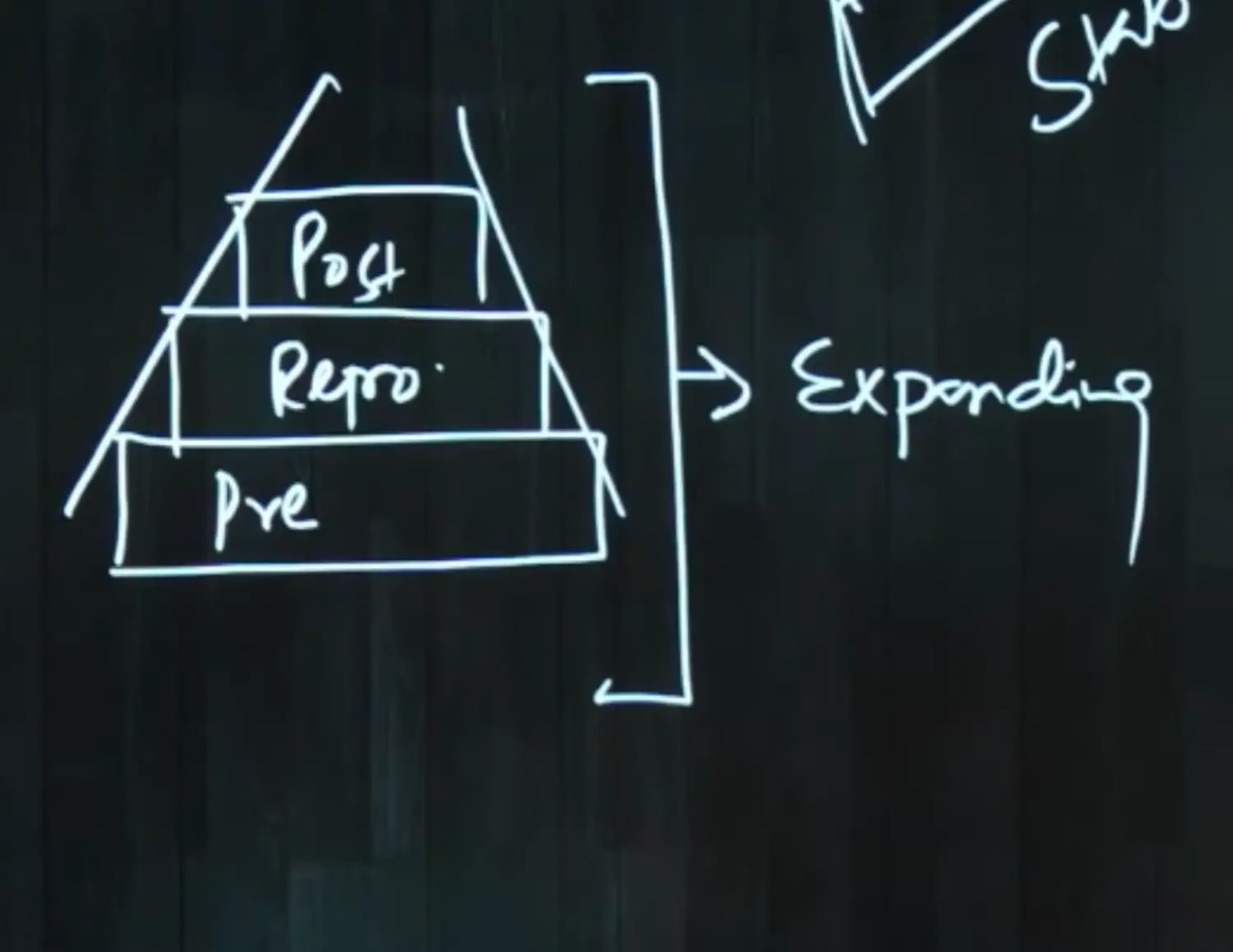
Population Pyramid
- Guided by Population Pyramid
Expanding Population
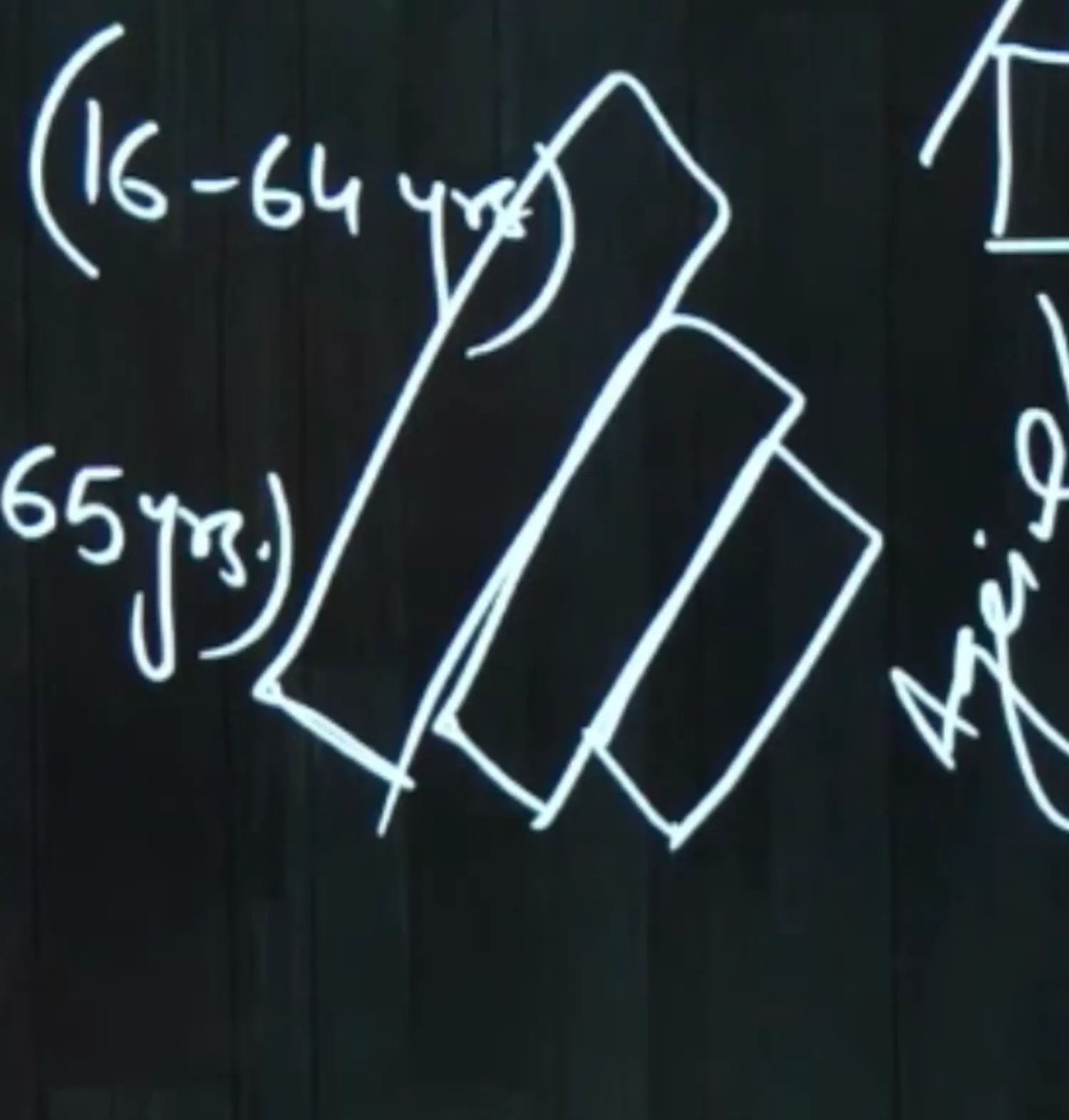
Stable Population - Less Steep of Pyramid

Declining Population / Ageing Population
Na K Mg in Body
Na is used for transportation
Mg is used for nerve activity
Mg deficiency leads to Convulsions and Hallucination and it is required for activation of neurotransmitters
Convulsion - Uncontrolled Movement
Hallucination - False Perception
Mg is an Important Component of Chlorophyll Important for Photosynthesis
Selvas are Evergreen Forest of Rainforest of South America
Find out Local Names for Shifting Cultivation
- Jhoom Cultivation → Jhoomin - Assam and North Easter Parts of India
- Orissa - Kondh
- Andhra - Podhu
- Karnataka - Kumari
- Kerala - Poonam
- MP + CG → Pendu & Jhum
- Himachal → Khil
- Brazil → Roca
- Mexico → Milpa
- Central America → Milpa
- Indonesia → Ladang
- Malaysia → Ladang
West Flowing Rivers of India do not form deltas like Narmada and Tapi - Find out Why ?
Read About MFF - Mangroves for Future
Summaries
Basic of Ecology and Environment
Ecology
Ecology is the Scientific Study of Interactions and Interrelationships, between various living beings in association with influences of non-living components
There are Two Branches of Ecology
Autecology
Ecology of a particular species or Individuals
- One Horned Rhinos of Kaziranga
- Tigers of Sunderbans
- Sangai Deer / Dancing Deer / Brow Antler Deers of Keibul Lamjao National Park
Synecology
Scientific Study of Interactions and Inter-Relationships of Multiple Species present at a location
Example :
Rhinos+Elephants+Tigers+Birds+Plants etc → Of Kaziranga (interacting with each other)
Environment
The environment is the Immediate Surrounding of a Particular Species, where it lives and performs its activities including both Biotic and Abiotic Components
Mind Map
Abiotic / Physical - Non-Living Components
Ex : Light, Air, Water, Sunlight
Biotic / Biological - Living Components
Types of Classifications
Ecological/Environmental Classification : Producer Consumer Decomposers
Biological Classification : Autotrophs Heterotrophs
1 Producers - Autotrophs
PLANTS
Classification of Plants
- Algae
- Bryophytes
- Pteridophytes
- Gymnosperms
- Angiosperms
PHYTOPLANKTONS
Both Fresh Water & Marine
- Algae
- Blue Green Algae (Cyanobacteria)
Only Marine
- Diatoms
- Dinoflagellates
PS : They Belong to Protista Group
2 Consumers - Heterotrophs
Who cannot produce their own food
Examples : Humans and Animals
3 Decomposers - Saprotrophs / Saprophytes
- Decomposers
- Example
- Bacteria
- Fungi
- Slime Moulds (is also a Protista)
- They Perform the process of Decomposition
- Through Process of Decomposition they perform the Recycling of Nutrients like Phosphorus, Minerals etc
- Example
- Related to Process of Decomposition
Detritivores
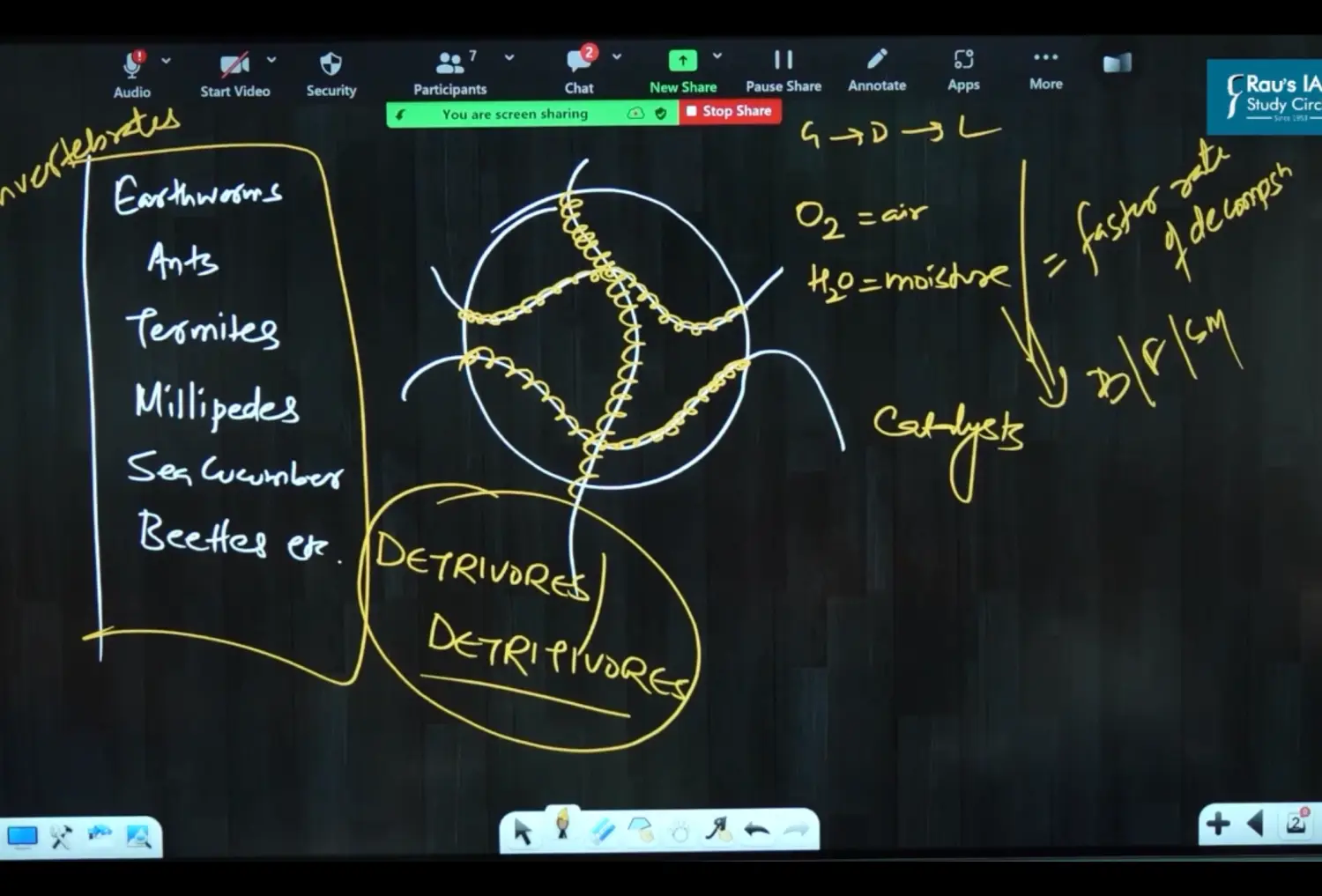
DETRITUS : Collectively the Dead Remains, the Dead and Decaying Matter
Examples of Detritivores
Examples
Earthworms, Ants, Termites, Millipedes, Sea Cucumber, Beetles
They aren't Decomposers but the passage they create in Detritus, speeds up the process of Decomposition by providing space for O2 and H2O (Moisture)
Detritivores : They are Invertebrates feeding on Detritus
They act as a Catalyst to the process of Decomposition
Aeration and Hydration is Improved by them.
Scavengers
- They are Natural Cleansing Agents
- Examples
- Vultures
- Eagles
- Hyenas
- Racoons - Wild Dog of America
- Generally, They do not spend energy in killing their prey, they can sense the smell of food
Note : All may act in a single point of time as well.
- Decomposers
Process of Decomposition
Definition of Decomposition
Process in which Detritus is being broken down to form
Organic Derivatives - Humus
Inorganic Minerals - N, P, K, S && CO2+H2O
Steps involved in the Process of Decomposition
First Three Steps are Simultaneous Steps
First Two Steps - No Activity of Bacteria
- Fragmentation of Detritus
- Involves Activity of Detritivores
- Improves Passage of Moisture and Oxygen → Imp for Activity of Decomposers
- Leaching
- with rainfall, certain minerals, sugars, salts will percolate to lower levels of soil or wash away due to loosening due to detritus activity
- Catabolism
Decomposers will start acting on this Detritus Now
Catabolism - Cut Down Reaction
Anabolism - Smaller Parts Join to Form Larger Bodies
Extracellular Enzymes, Released by Bacteria and Fungi will carry out Catabolism
They will convert the Complex Unit into Simpler Units
Example
- Proteins Into Amino Acids
- Fats into Fatty Acids
- Carbohydrates into Glucose
- Humification
- Will Lead to Formation of Humus
- A Dark Colored Substance will be accumulated in the Soil which is termed as Humus
- It is the actual reservoir of Nutrients → N, K, P, Ca
- Humus is highly resistant to Bacterial Action & undergoes extremely slow decomposition
- Mineralisation
- Slow and Gradual from Humus into Soil is process of Mineralisation
- It improves the Fertility of the Soil → N,P,K,S,Ca
- Along with Release of Minerals there is Release of CO2 + Water Vapour + Some Amounts of CH4 (Methane)
- Fragmentation of Detritus
Factors Affecting Decompositions
Compositional Factors
Nitrogen Rich Detritus
Faster Decomposition due to Better Enzymatic Activity
Lignin and Pectin Rich Detritus
Lignin and Pectin are Present in Cell Wall of Plants
Slow Decomposition due to Resistance to Enzymatic Activity
Chitin Rich Detritus
Chitin is Present in Cell Wall of Fungus and Exoskeleton of Insects like Cockroaches or Wasps
Slow Decomposition due to Resistance to Enzymatic Activity
Climatic Factors
Temp + Moisture + Oxygen
Best Case
High Temperature, High Soil Moisture, Optimum Oxygen → Higher Rate of Decompositions
Found in Tropical Evergreen Forests
High Temp + High SM + Low Oxygen → Bottom of Water Bodies
High Temp + Low SM + High O2 → Desserts
Low Temp + High SM + High O2 → Temperate & Hilly Areas
Decomposition & Release of Greenhouse Gases
CO2 & Water Vapour & CH4 → These are Green Houses Gases and Hence it Contributes to Global Warming
Any Activity that Increases Rate of Decomposition, Contributes to Global Warming and Emission of Greenhouse Gases (GHG)
Tilling or Ploughing Soil Organic Matter being Broken down much more rapidly speeding up the rate of decomposition
It improves fertility of the Soil and Hence Improves Production but at the same time but there is Faster Release of GHG like CO2, Water Vapor & Methane → Contributing to Global Warming and Climate Change
Hence, Experts are Advocating Zero Tillage / No Till Farming i.e w/o ploughing or tilling the fields, directly sowing the seeds below the top layer of the soil
Ecological Hierarchy
The highest level of Biological Hierarchy becomes the lowest level of Ecological Hierarchy
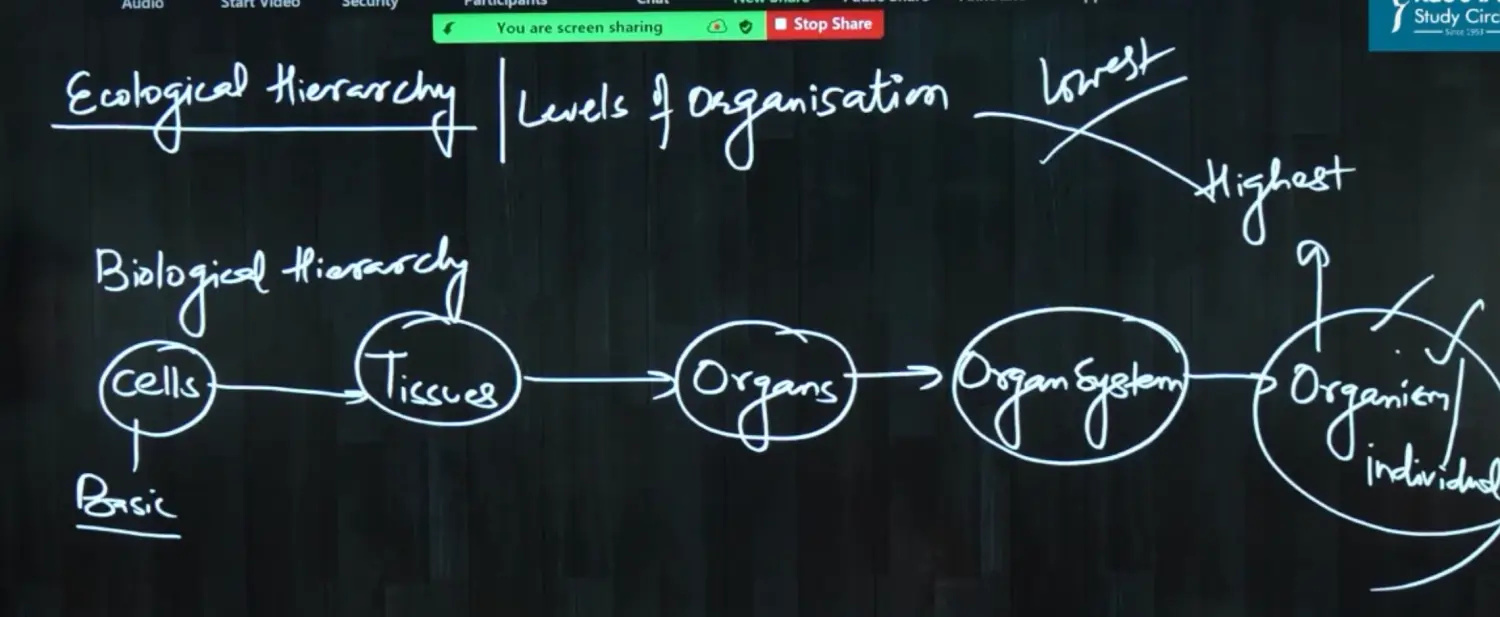
Ecological Hierarchy
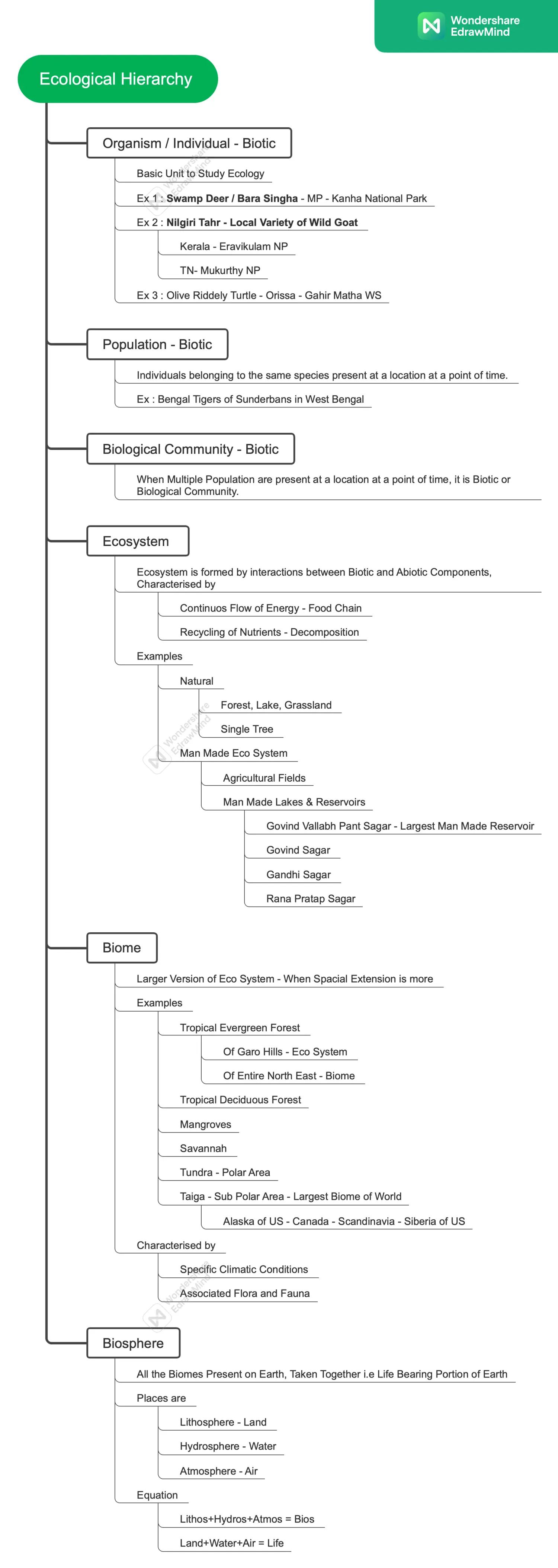
Ecological Terminologies
Habitat and Ecological Niche
Habitat
the natural home of a plant or an animal
Ecological Niche
Ecological Niche is defined within the Habitat of the Species, based on 3 factors
The Range of Conditions it can tolerate
The Resources it can utilise
Extra Water Demand
Eucalyptus in Northern Plains and Western Ghats
Extra Oxygen Demand
Water Hyacinth (Eichorrnia) primarily in Bengal & then in Gujarat
The Functional Role played by that Species in that Ecosystem
Producer Consumer Decomposer
Note : Two or Multiple Species can have matching ecological niches but no two species are believed to occupy exactly the same Niche.
Relation between Habitat and Ecological Niche
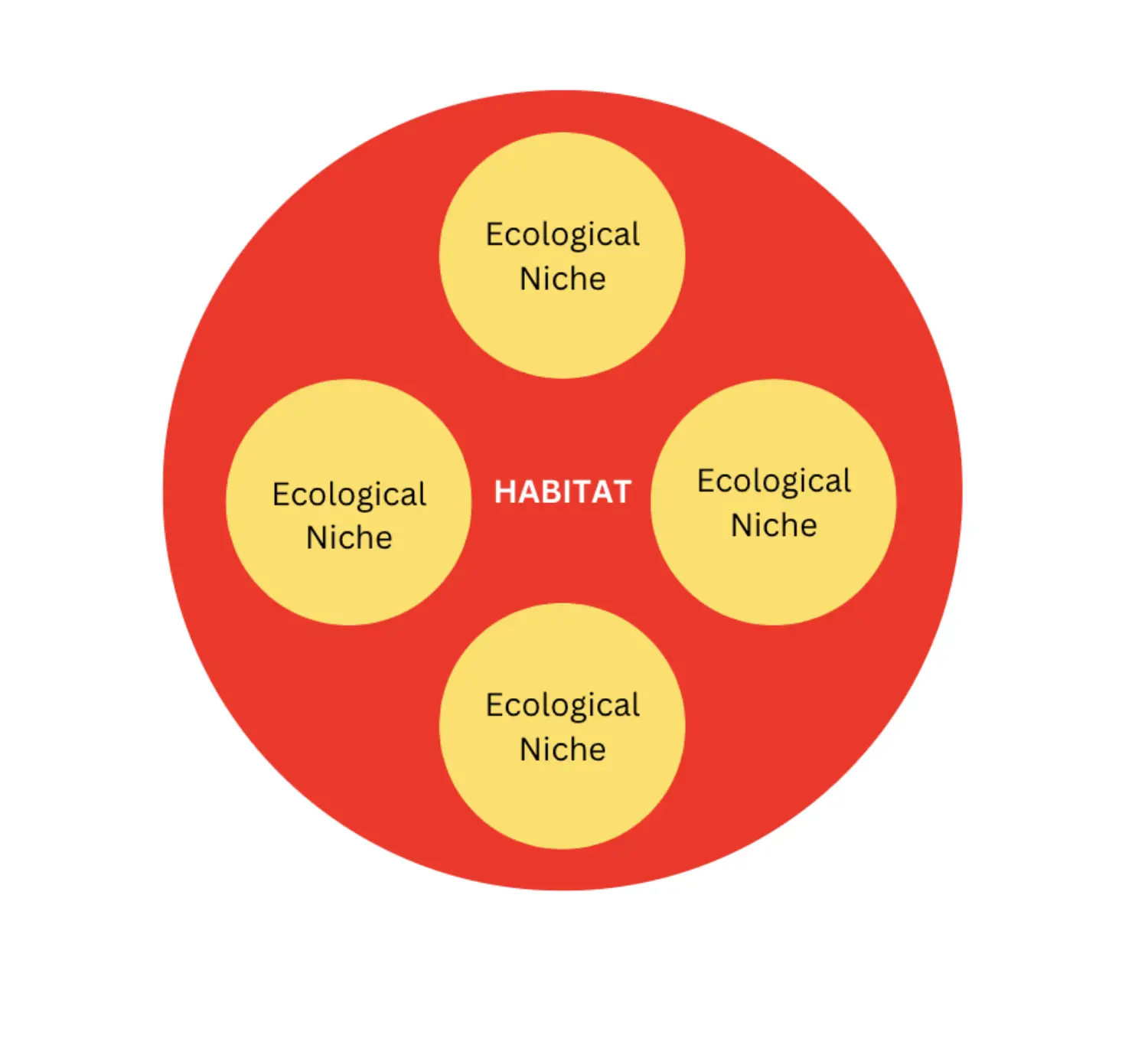
Ecotones and Edge Effect
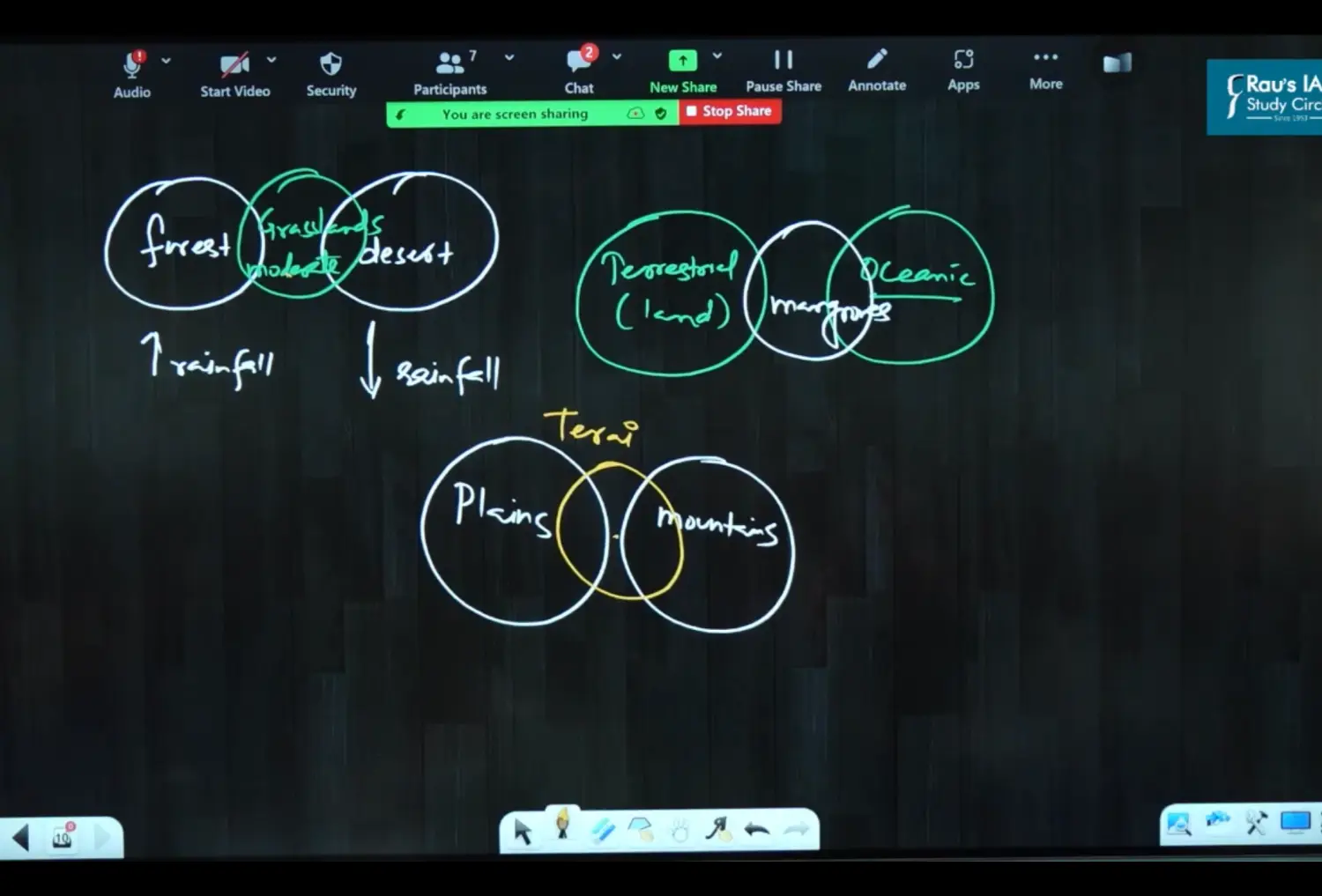
Ecotone
Ecotone is a Transition Zone between two different Eco Systems, having a climatic condition matching with both the adjacent Eco Systems
Examples
Grass Land Eco Tone Between - Grassland and Desert
Mangroves Eco Tone Between - Terrestrial and Oceanic
Terai Eco Tone Between - Plains and Mountains
Edge Effect
There can be more Species Diversity in Eco Tone areas, due to climatic conditions matching with Adjacent Eco Systems, this increased species diversity in eco tones is termed as Edge Effect
Summary of Both
Genotype and Phenotype
Central Dogma of Molecular Biology
- DNA to DNA - Replication
- DNA to RNA - Transcription
- RNA to Protein - Translation
- RNA to DNA - Reverse Transcription can be found in certain viruses like HIV
- If RNA doesn't forward the message to Proteins → Characters will not be Displayed Gene will be Silenced → It is called Gene Silencing
The Relation between Biological Units
- We are made up of cells containing a nucleus
- Chromosomes are found within the Nucleus
- Chromosomes → by Condensation of DNA+Protein
- DNA → Genes are found on the surface of DNA
- Genes → are the actual units controlling the Characters
- Characters → Regulated by Certain Proteins on directions of multiple forms of genes that is Alleles
- Genes and DNA regulate characters through certain proteins coded by special form of RNA i.e mRNA (Messenger RNA)
💡 All the **Characters** in living beings are regulated by **Genes** through certain **Proteins**Definition of Genotype and Phenotype
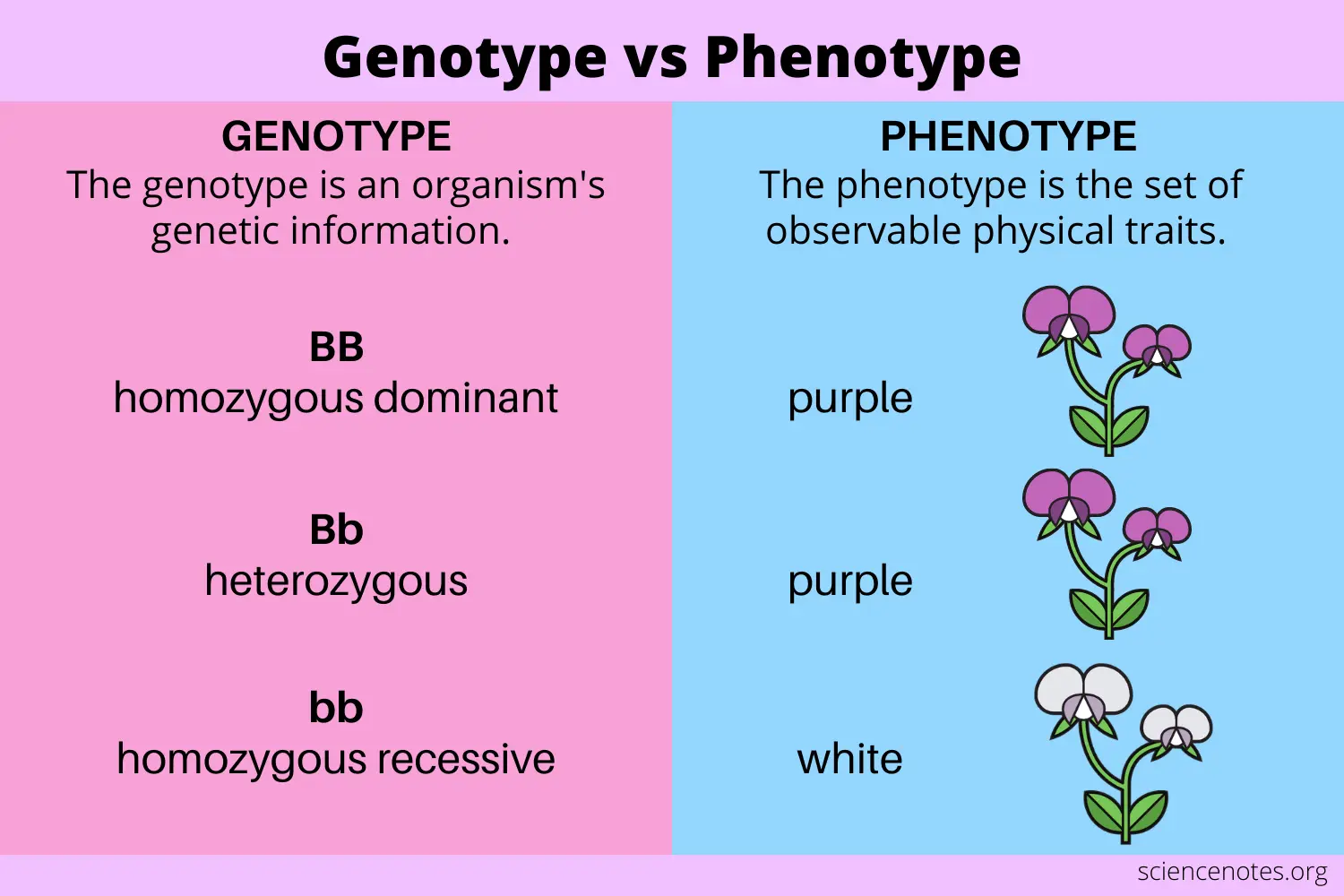
Genotype is the Genetic Constitution of an Individual regulating various characters
Phenotype is the outward Manifestation or Morphological appearance of an individual
Phenotype is an outcome of interactions between Genotype and Local Environment
Difference Between Genotype and Phenotype
Acclimation/Acclimatisation and Adaptations
| Theme | Acclimatisation | Adaptations | | --- | --- | --- | | Definition | Short Term Adjustment with New Climatic Conditions, When a Species or Individuals are suddenly exposed to it | Modification in the body structure and mechanism taking place, during the course of evolution to fulfil some particular demands of local climate | | Nature | Short Term & Reversible | Permanent & Irreversible | | Example | 1. Extra RBC production to counter altitude sickness when a person visits from plains to mountains 2. When Europeans Visits Tropical Country Like India, their Skin will produce extra melanin pigment to protect it from Strong Sun Rays | 1. Small Size Leaves in Desert Plants to conserve water i.e to reduce the rate of Transpiration | | Done Through | Due to Sudden Condition | During Course of Evolution |
Ecosystem - Structure & Functioning
The ecosystem is formed by interactions between Biotic and Abiotic components of the environment. It is characterised by
- Continuous Flow of Energy → Food Chain
- Recycling of Nutrients → Ecological Succession
Food Chain
- Introduction
Food Chain is a Sequence of Organisms feeding on each other that is transfer of energy based on mechanism who eats whom
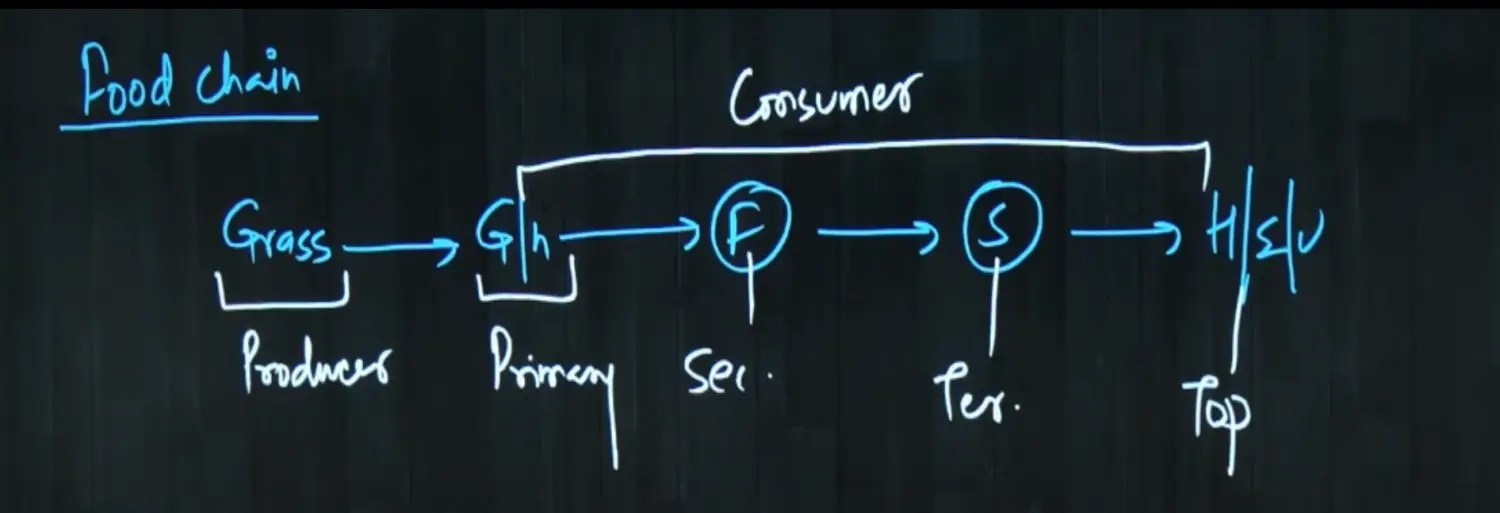
Interconnection Between Food Chain
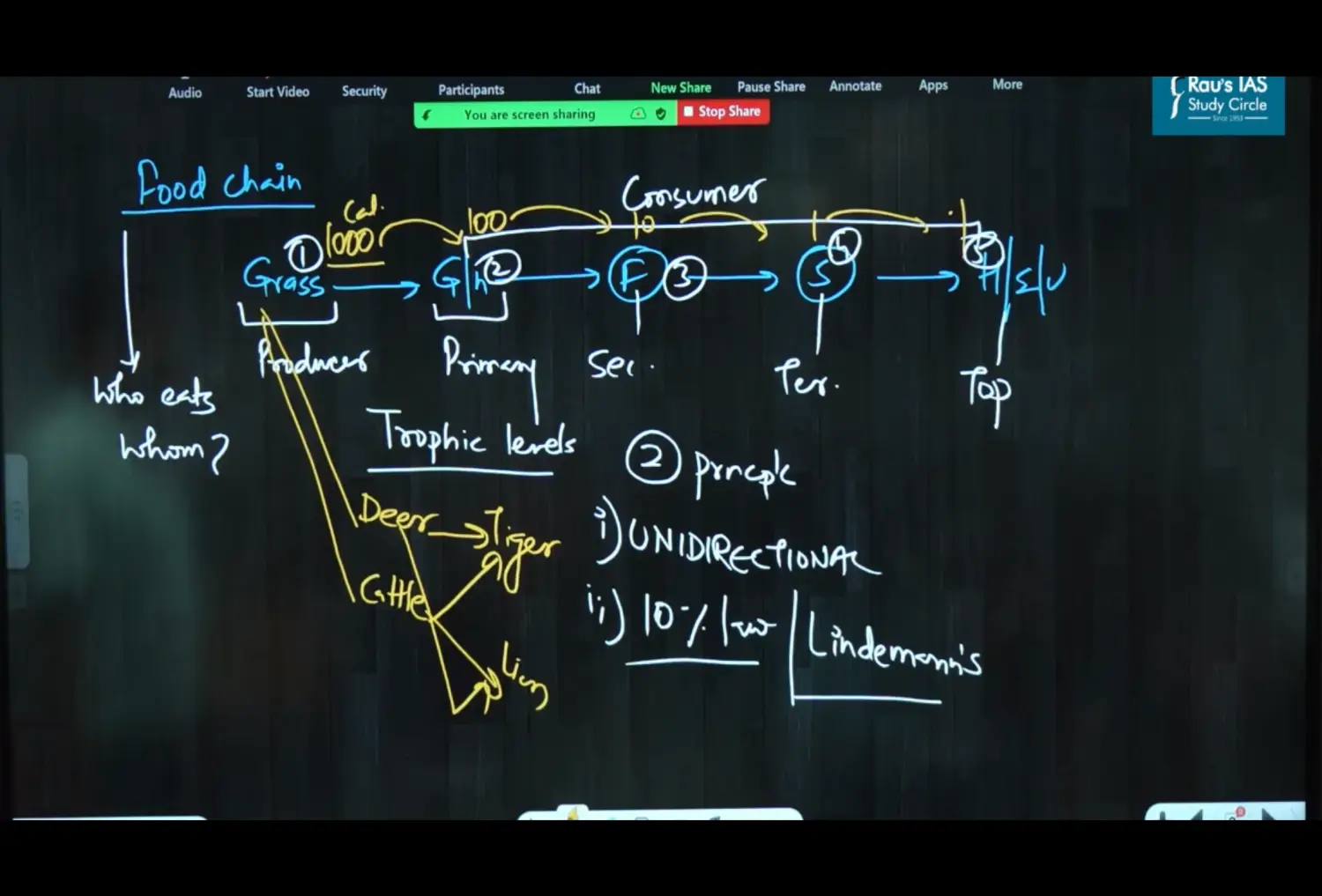
Each Level is called a Trophic Level
Flow of Energy in a Food Chain follows two principles
- Flow of Energy is **Unidirectional →**Always from Producer to Consumer
- 10% Law → Lindemann’s Law
- Roughly 10% of energy is transferred from lower trophic level to higher one
- Rest of the Energy (90%) is :
- Lost into the Environment as Heat
- Utilised in the Previous Trophic Level
- Types of Food Chain
- Grazing FC - Started with Grass or Producers
- Generally Starts with Grasses or Producers,
- Generally is Longer having more number of trophic levels
- Detritus FC - Started with Dead Remains
- Starts with Detritus (Dead Remains) and then the activity of decomposers
- Acted upon by Detritivores - Sea Cucumber, Ants, Earth Worm etc
- Process → Loose - Hydration Aeration - Decomposers
- It is NOT a uniform food chain
- Imp → Doesn’t follow 10% Law thats why it is not considered as a food chain by many ecologists
- Starts with Detritus (Dead Remains) and then the activity of decomposers
- Grazing FC - Started with Grass or Producers
- Productivity of Ecosystems
Introduction
Differentiates Between Production and Productivity
| Crop | Highest Production | Highest Productivity | | --- | --- | --- | | Sugar Cane | UP | Tamil Nadu Due to Frost Free Environment Good Moisture Content due to Nearness of Sea | | Gujarat | Gujarat | Punjab GM BT Cotton | | UP | UP | Harayana |
Production - Total Bio Mass Production
Productivity - Means Rate of Bio Mass Production in the Eco System
Rate of Bio Mass Direction is the Rate of Photosynthesis
Rate of Capture of Sunlight to be converted into Energy Rich Organic Compounds like glucose
Due to thick density of Vegetation and presence of other optimum conditions, mature form of Evergreen Forests (Rain Forest) are having highest levels of Primary Productivity
Sequence of Eco Systems in terms of Productivity - MUG UP
- Tropical Rain Forests > Mangroves > Corals > Estuaries > Tropical Deciduous Forests > Savannah > Lakes > Oceans > Deserts
- Has been Asked Two Times by UPSC
Types of Productivity
- Primary Productivity is the Productivity at the Level of Producers i.e Photosynthesis
- Secondary Productivity reflects the consumption or utilisation part at the level of consumers for generation of consumer bio mass
- Ecological Pyramids
Summary
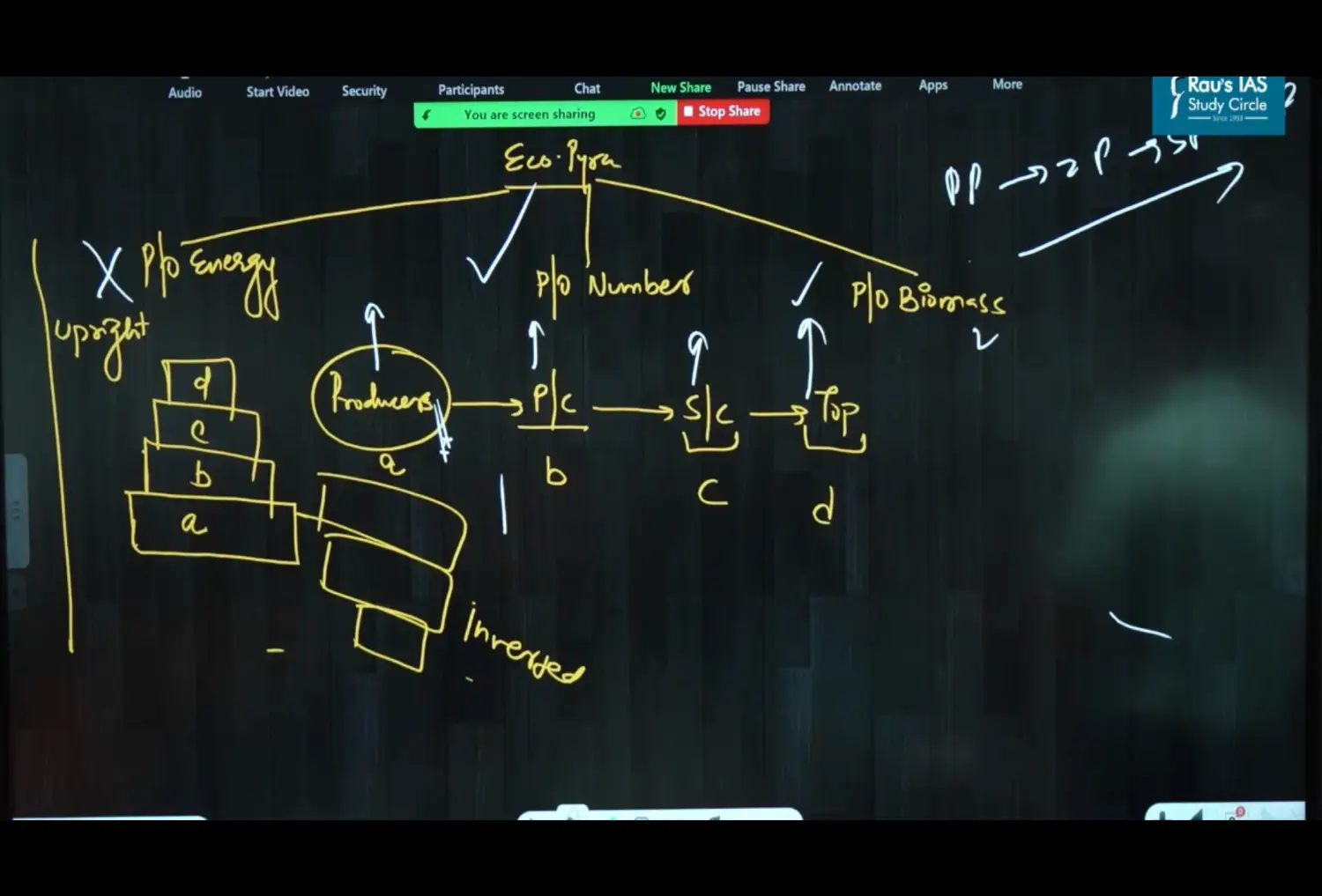
Pyramid of Energy
- Always upright without any exception i.e energy levels at
- producers, trophic level is more than primary consumers
- primary consumers more than secondary consumers and so on
- Energy Flow Follows 10% Law
Pyramid of Number & Pyramid of Bio Mass - Common Notes for Both, Examples Different
- Like Pyramid of Energy these are also upright in maximum ecosystems
- No and Bio Mass of Producers is more than that of primary consumers
- Primary Consumers more than that of Secondary Consumers and So On
- Exceptions to
- Exceptions → Pyramid of Number
- Tree Dominated Eco Systems
- Detritus Food Chain
- Exception → Pyramid of Bio Mass
- Aquatic Eco System → Like Lakes and Oceans
- Exceptions → Pyramid of Number
- Introduction
Ecological Succession
Ecological Succession is the Successive Replacement of Biological Communities one after another involving change in both biotic and abiotic components i.e when an Ecosystem reaches its beginning to the mature stages.
- Types of Succession
Primary Succession
- Which is taking place for the first time, that is on a previously unoccupied site, where no life was present before that.
- Primary Succession can take place in Hydrarch or Xerarch Conditions
- Hydrarch → Water Body Succession
- Xerarch → Bare Rock Succession
Primary Succession is a long, slow, gradual process which takes thousands of years
Secondary Succession
- Takes places when life was already present in an ecosystem but has been destroyed by some human or natural factors
- Human → Like Slash & Burn Agriculture or Shifting Cultivation && Deforestation etc
- Natural → Natural Disasters like Flood, Volcano, Earthquake etc
- Levels of Succession
Pioneer Community
- First Species to occupy a Bare Rock or a Freshly created Water Body is Pioneer or Primary Species which is accompanied by Multiple Other Species forming Primary or Pioneer Community
- It has a shorter Life Span and Less Stability than Climax Community
- Examples
- Hydrarch → Phytoplanktons
- Xerarch → Lichens
Sere / Seral Stages
Intermediate Stages
Complex Community
- It reaches upto the final mature stage of climax community through various intermediate stages.
- It is more stable as it is adapted to different climatic conditions, during the course of evolution
- Examples
Hydrarch → Phytoplanktons + Zooplanktons
Xerarch → Lichens + Mosses
One component of Lichens is Fungi, which will release acids and enzymes leading to breakdown of rocks to form soil.
How do we know that we have reached Climax Community ?
When the complex forms of life, Like
- Gymnosperms and Angiosperms in plants
- Birds and Mammals in Animals
are found in significant populations, we get to know that ecosystem is approaching toward climax community.
- Types of Succession
Grasslands, Wetlands, Forests & Vegetation - India & World
Concept of Tropical, Temperate & Polar
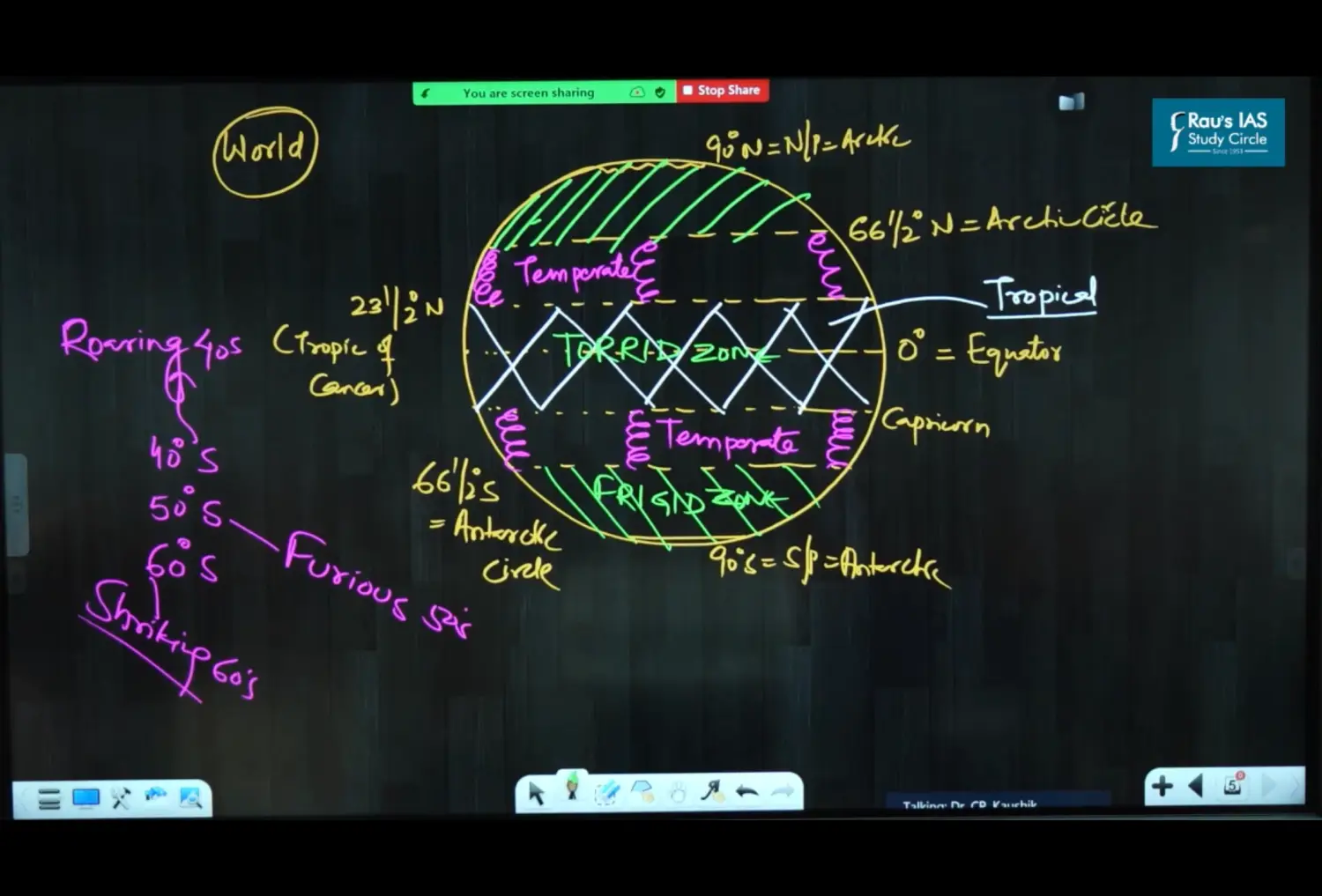
Tropical World → From 23.5 N to 23.5 S → Sun Rays Direct
Grasslands (Rangelands)
Introduction
These are Eco Systems dominated by Grasses.
Along with Grasses they have
- Herbs, Shrubs, Scrubs
- Scattered Trees
- They are not closely located (if closely located they could become forests)
- These are not very tall
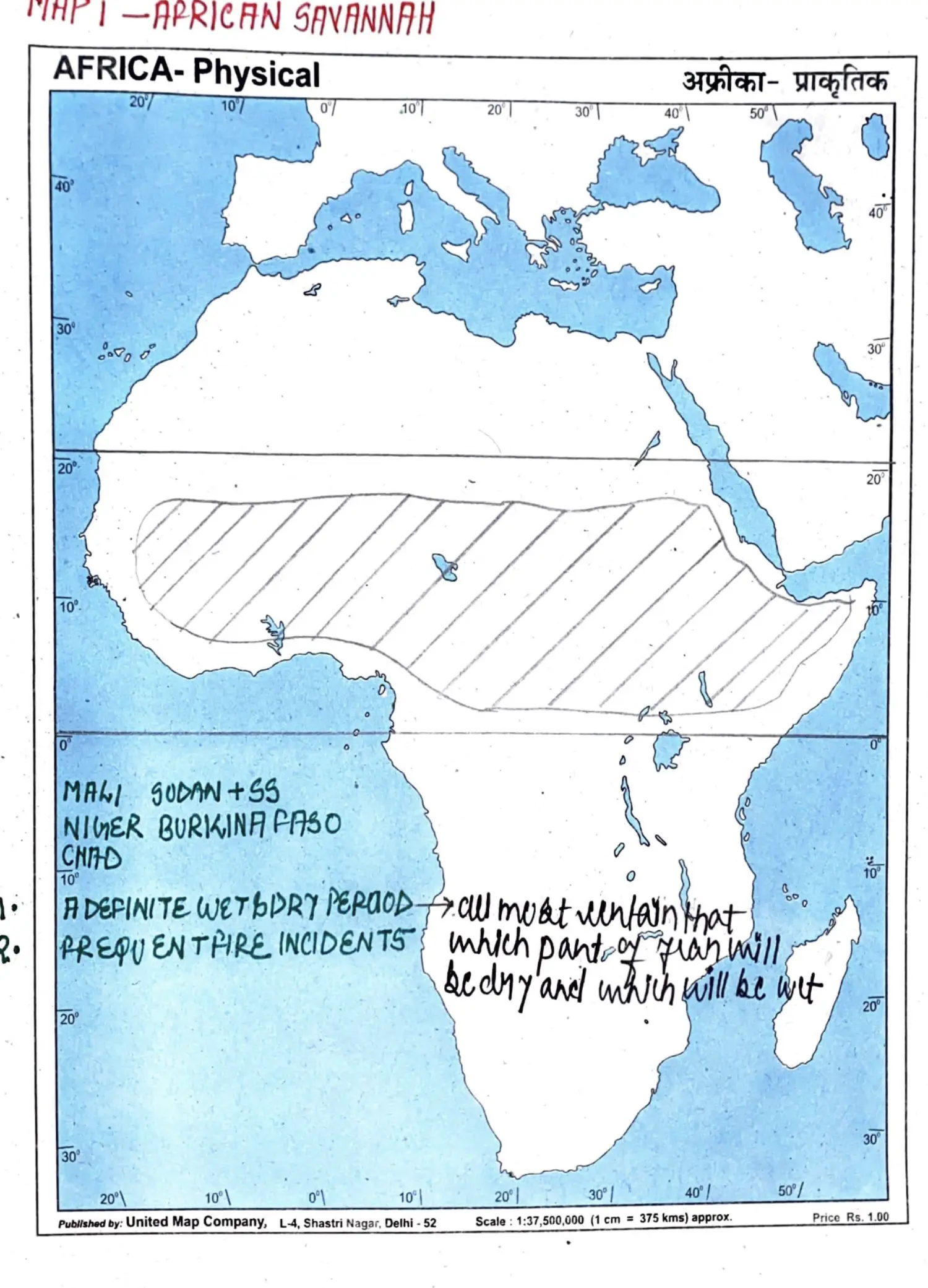
Larger Trees & Forest like growth is absent in Grassland due to - UPSC Pre 2021
- Scarcity of Moisture
- Frequent Fire Incidents
Challenges to Grasslands
- Overgrazing
- Expansion of Agriculture in Grassland Area
Most Important Contribution of Grassland towards Eco System Functioning is prevention of soil erosion because of branched root network of grasses binding soil particles tightly
Prominent Grasslands in the World
Tropical Grasslands
Savannah of Africa
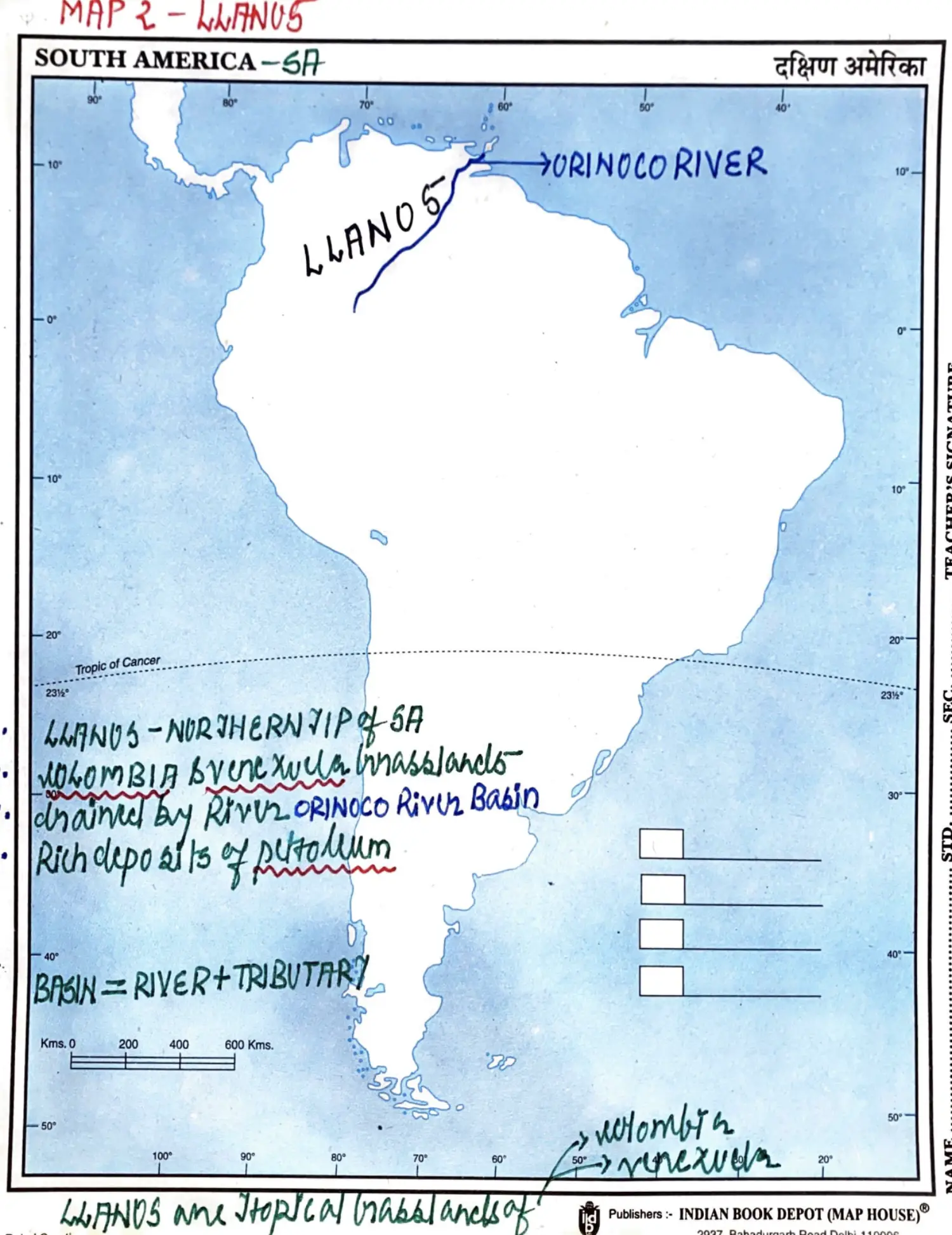
Llanos of Colombia and Venezuela
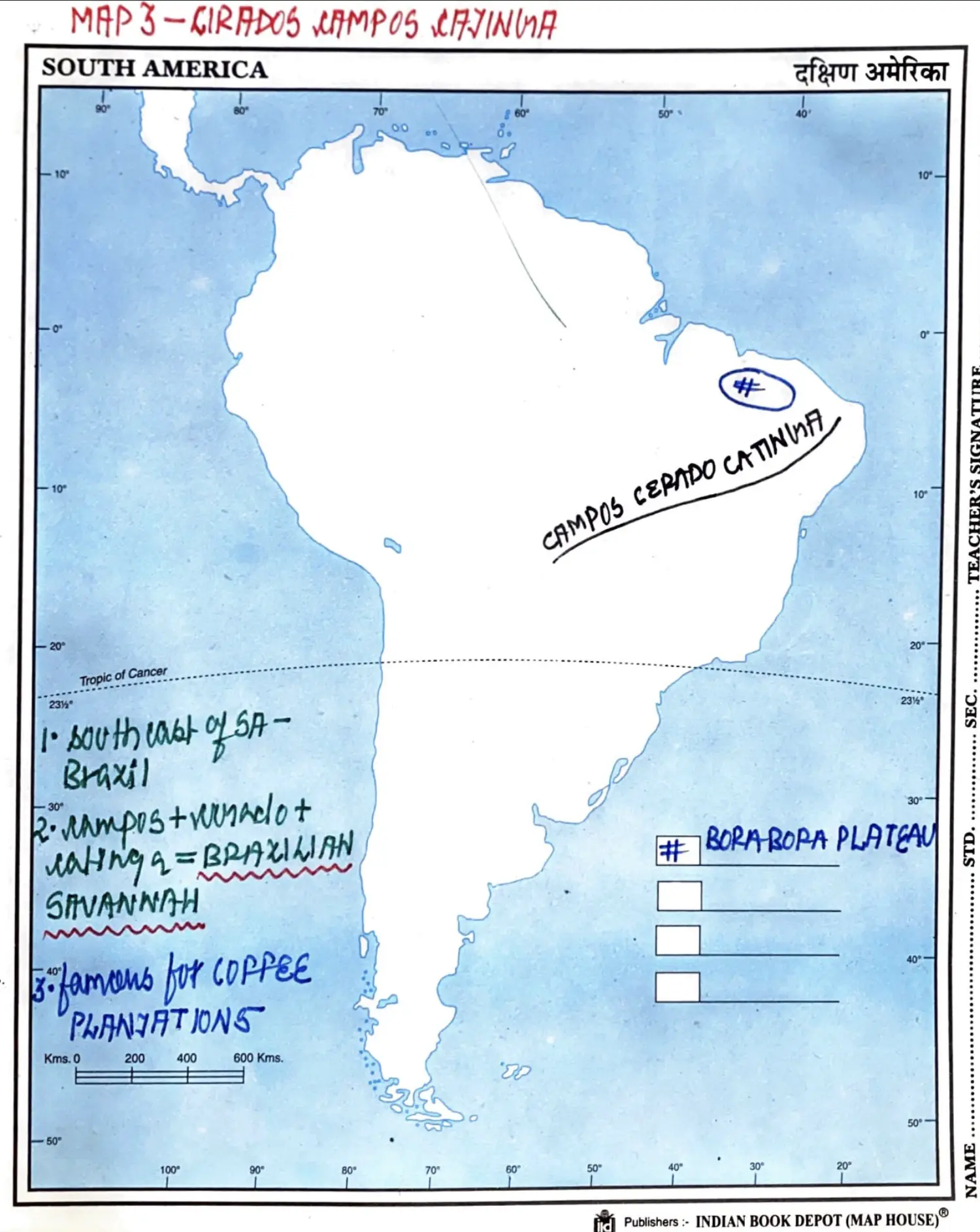
Campos / Cerrado / Caatinga of Brazil
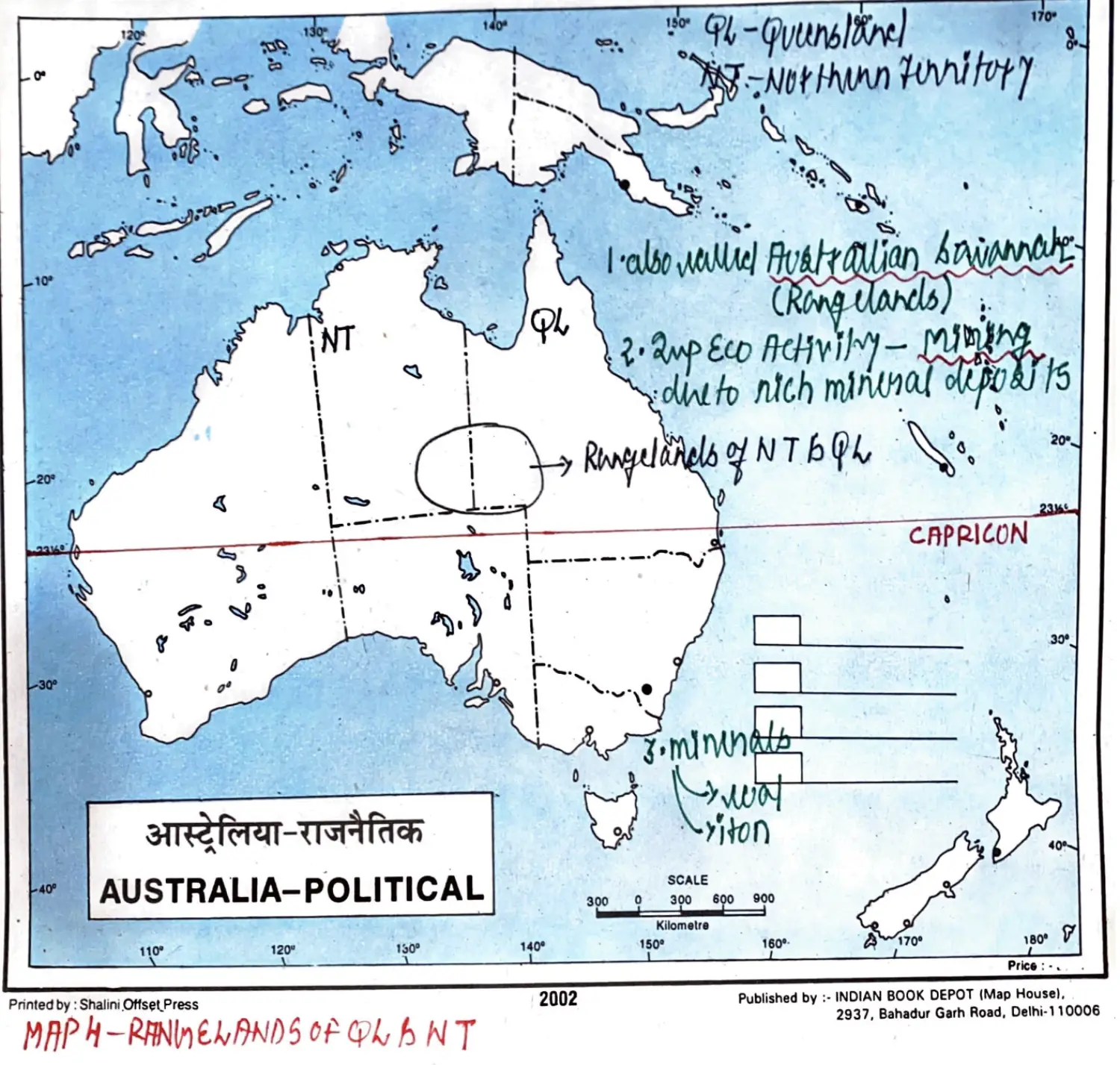
Range Land of Northern Territory & Queensland
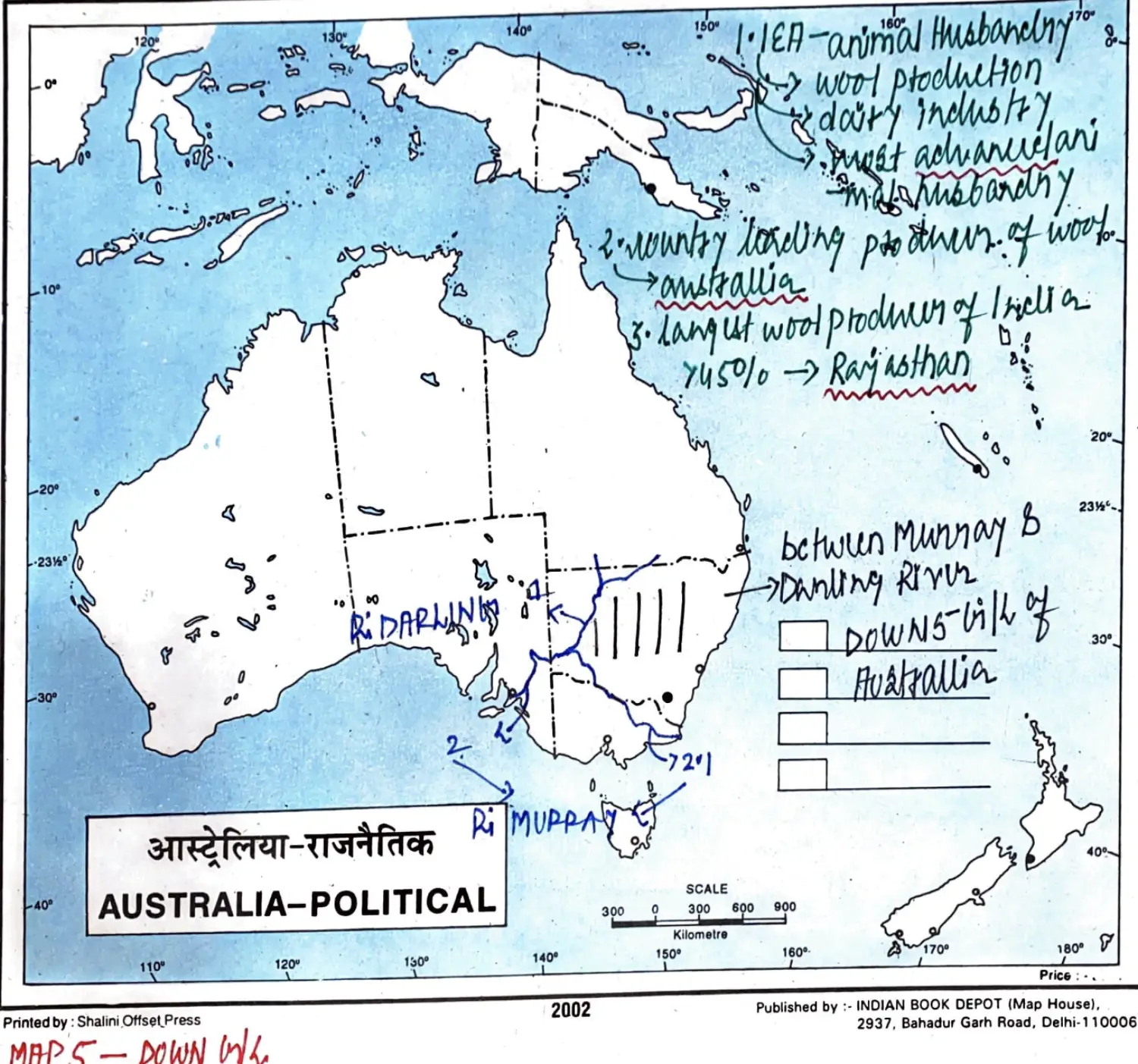
Temperate Grasslands
Downs
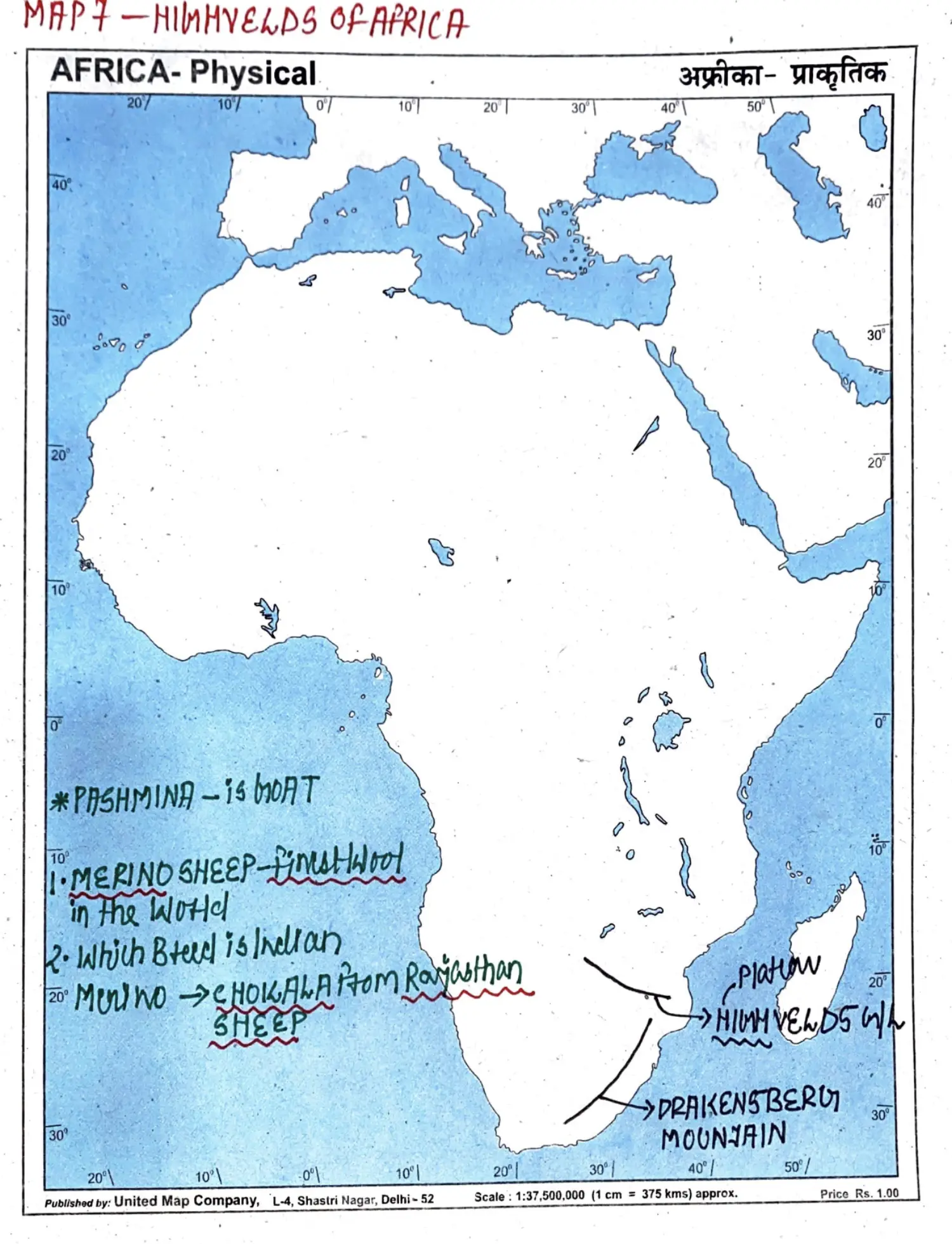
Velds
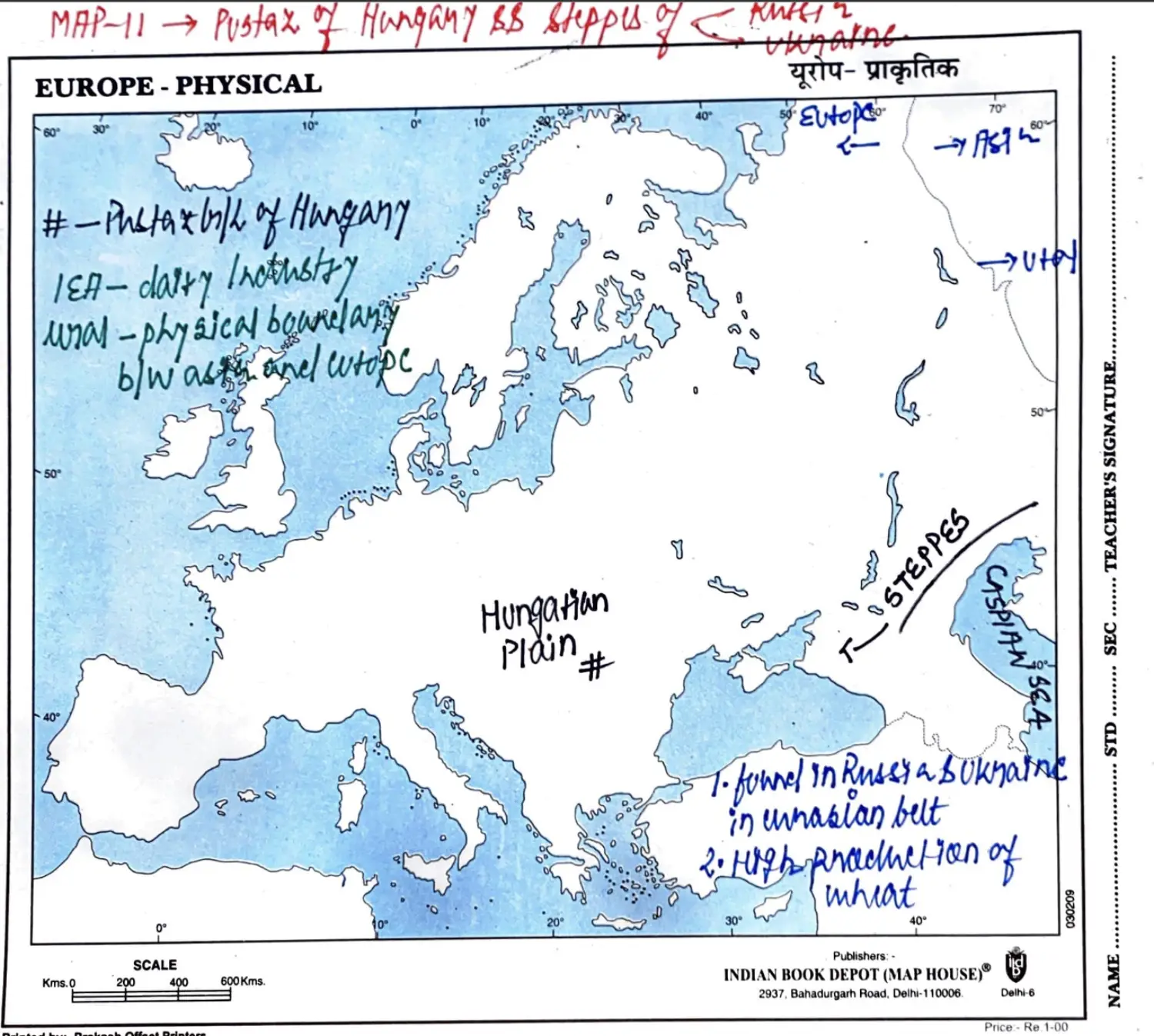
Steppes
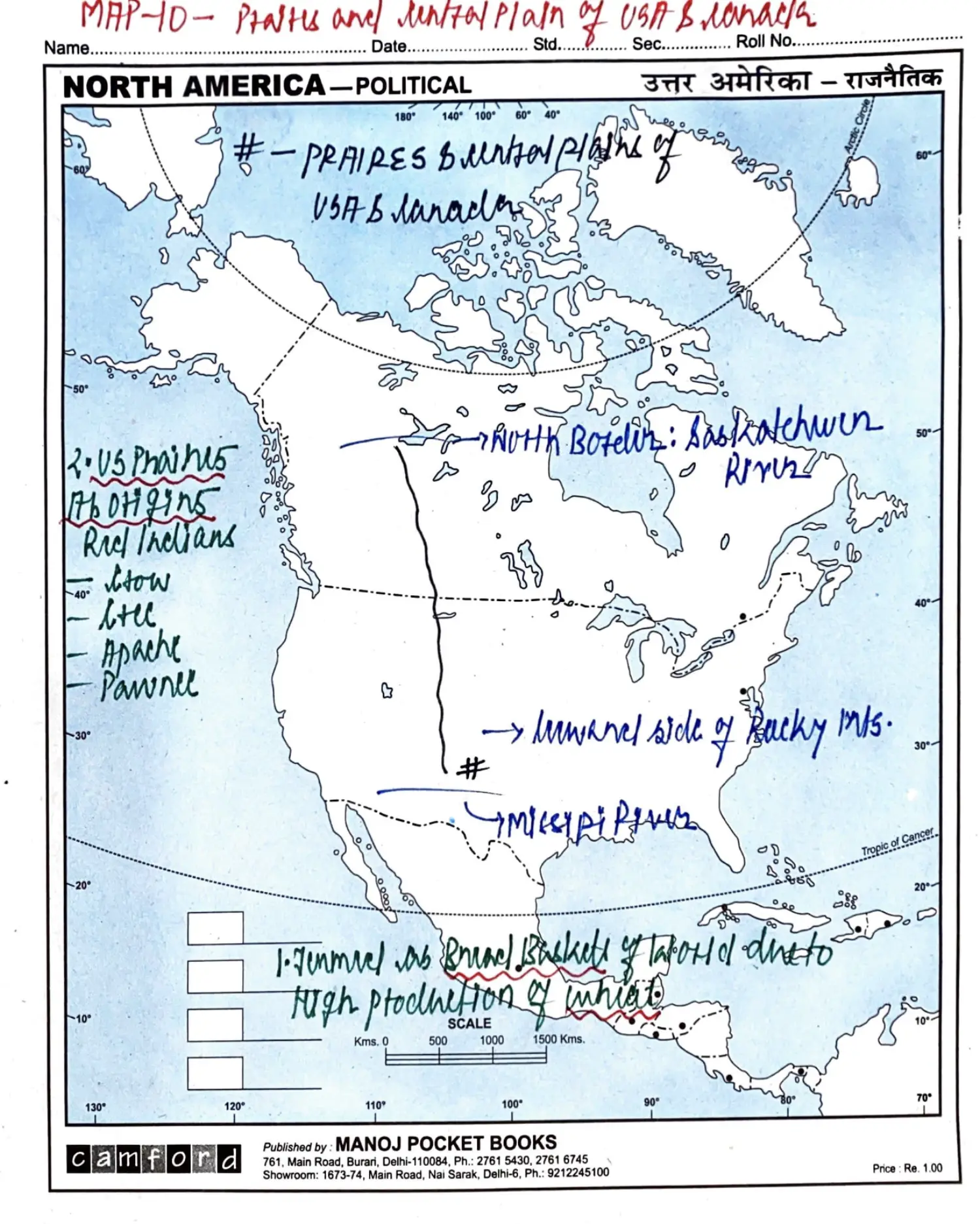
Prairies
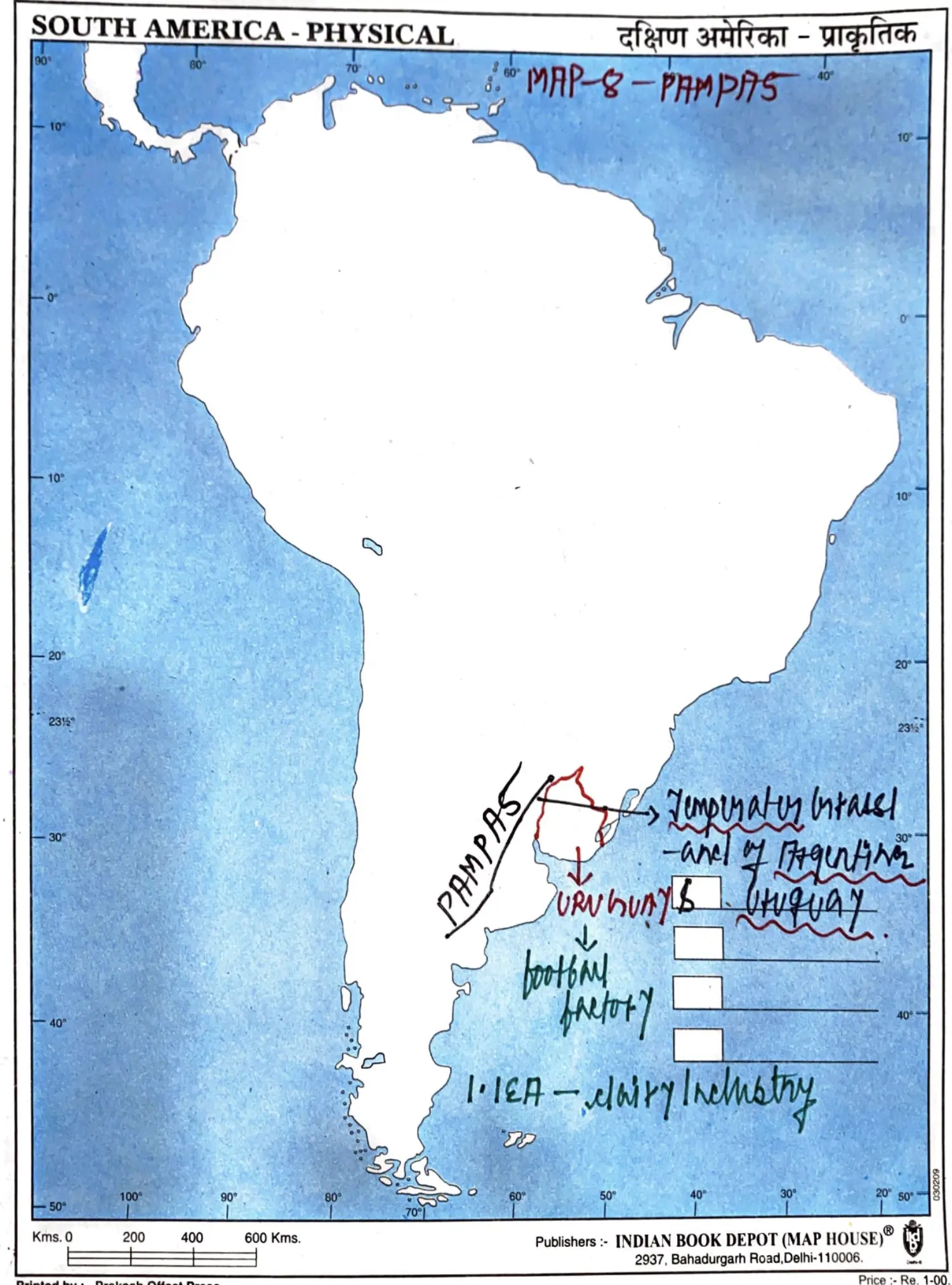
Pampas
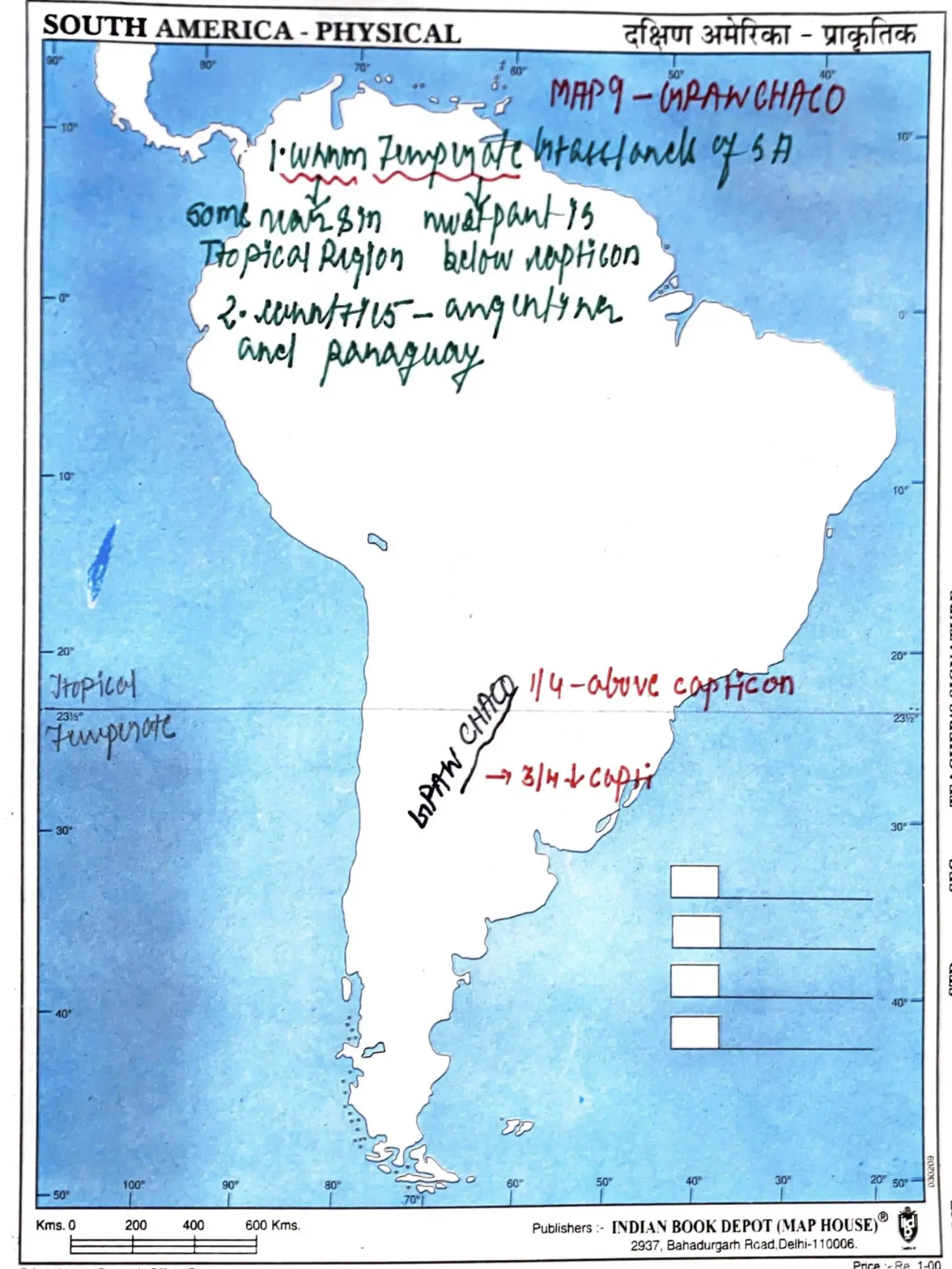
Gran Chako
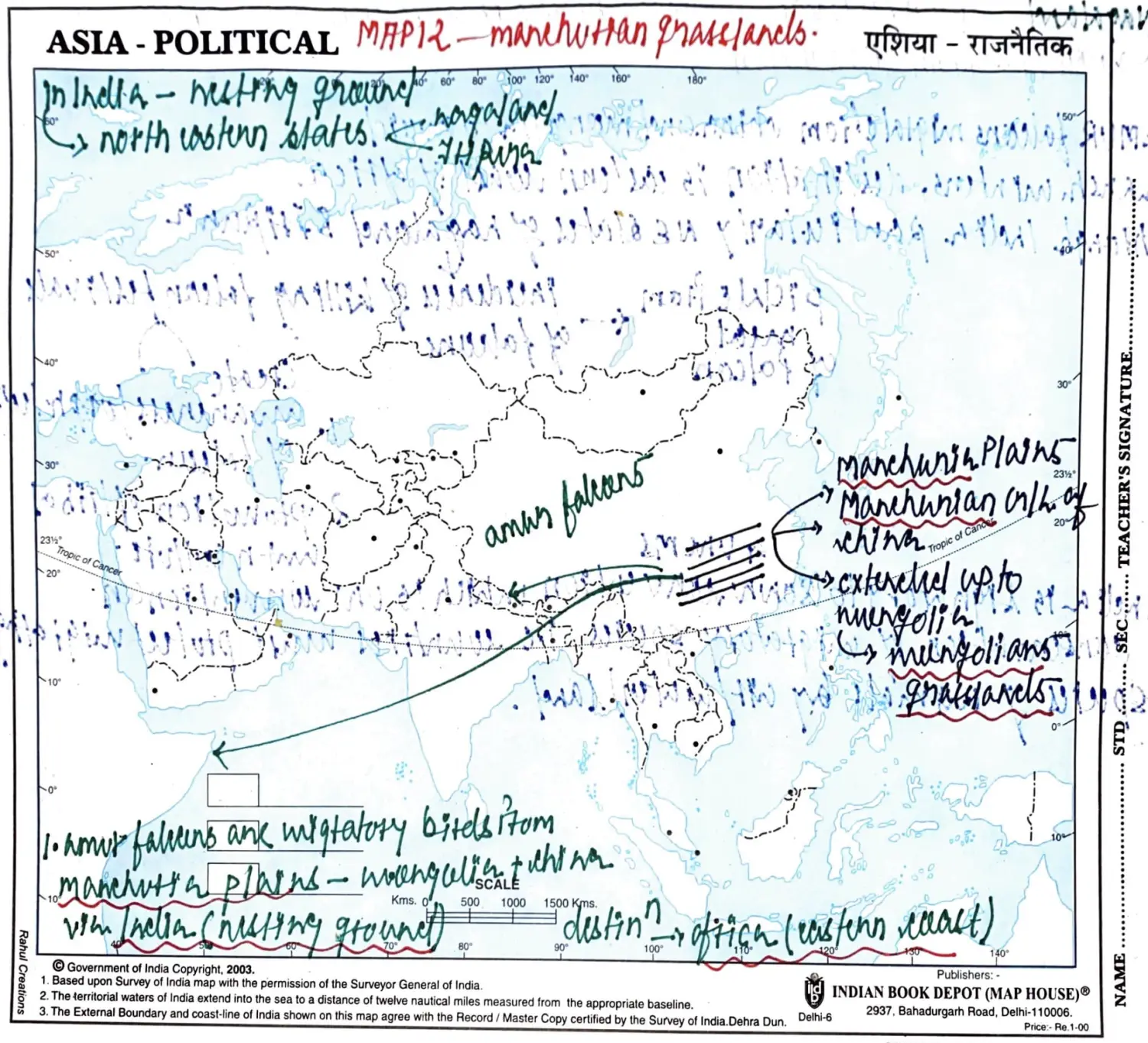
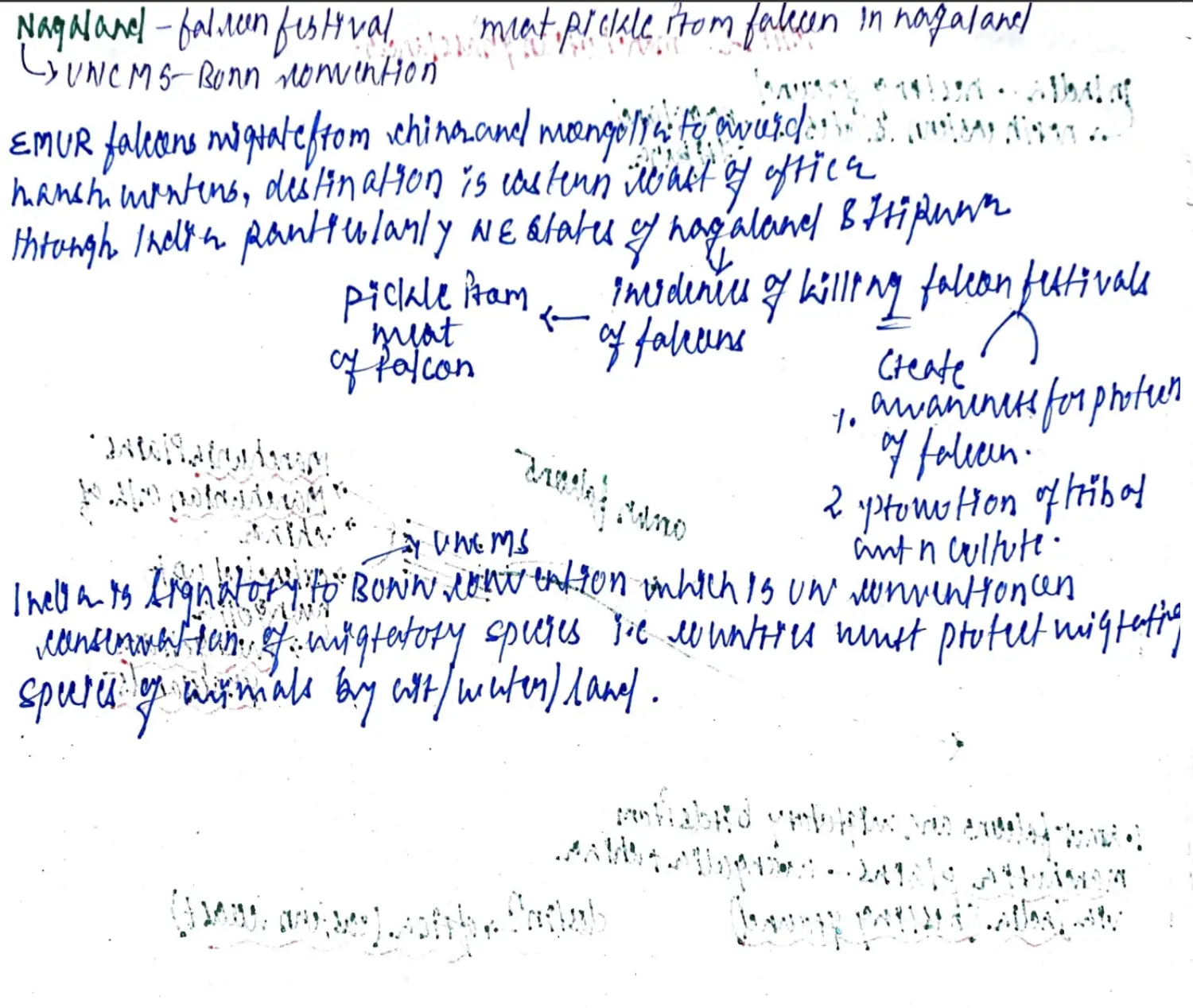
Manchurian
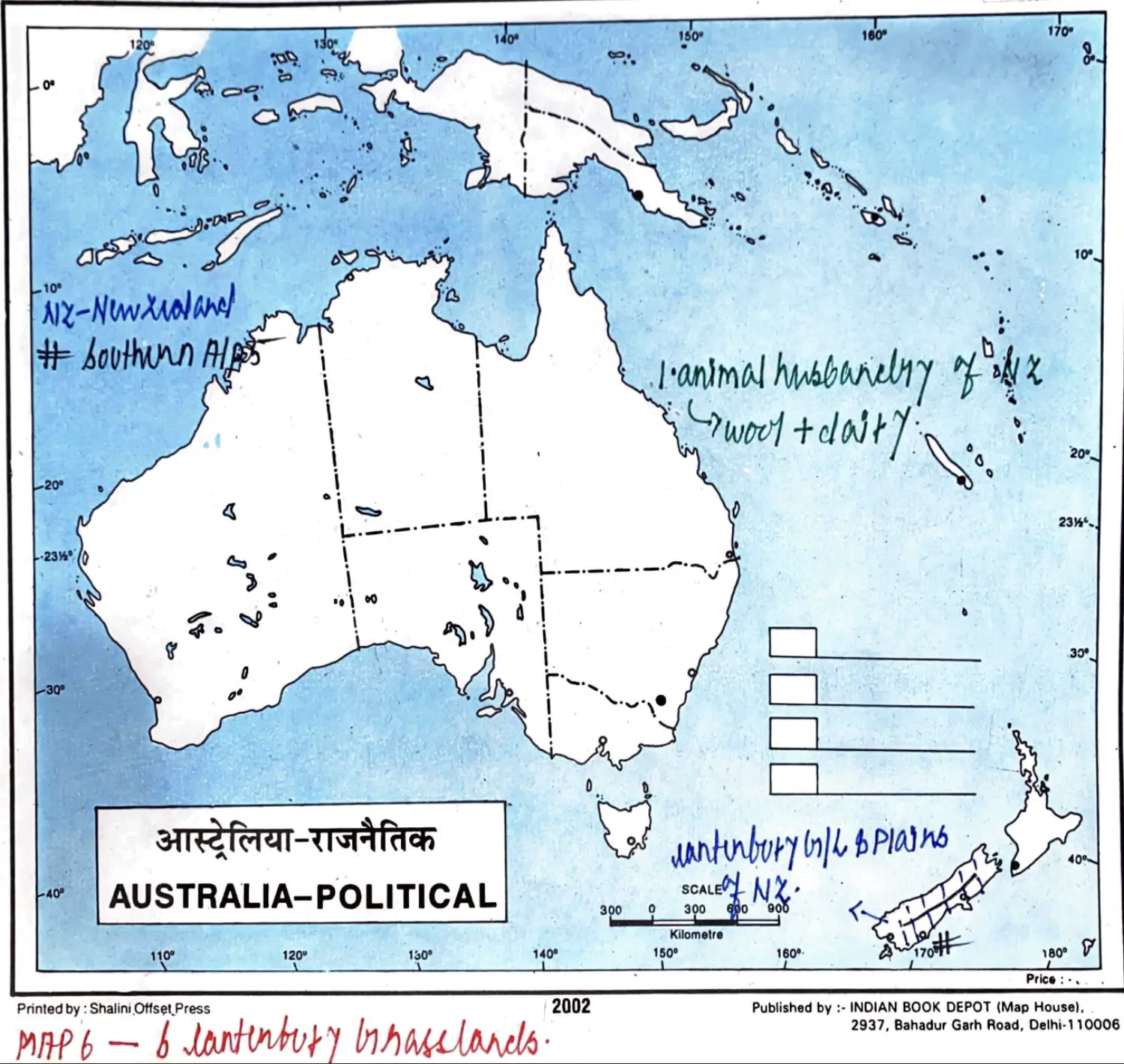
Canterbury
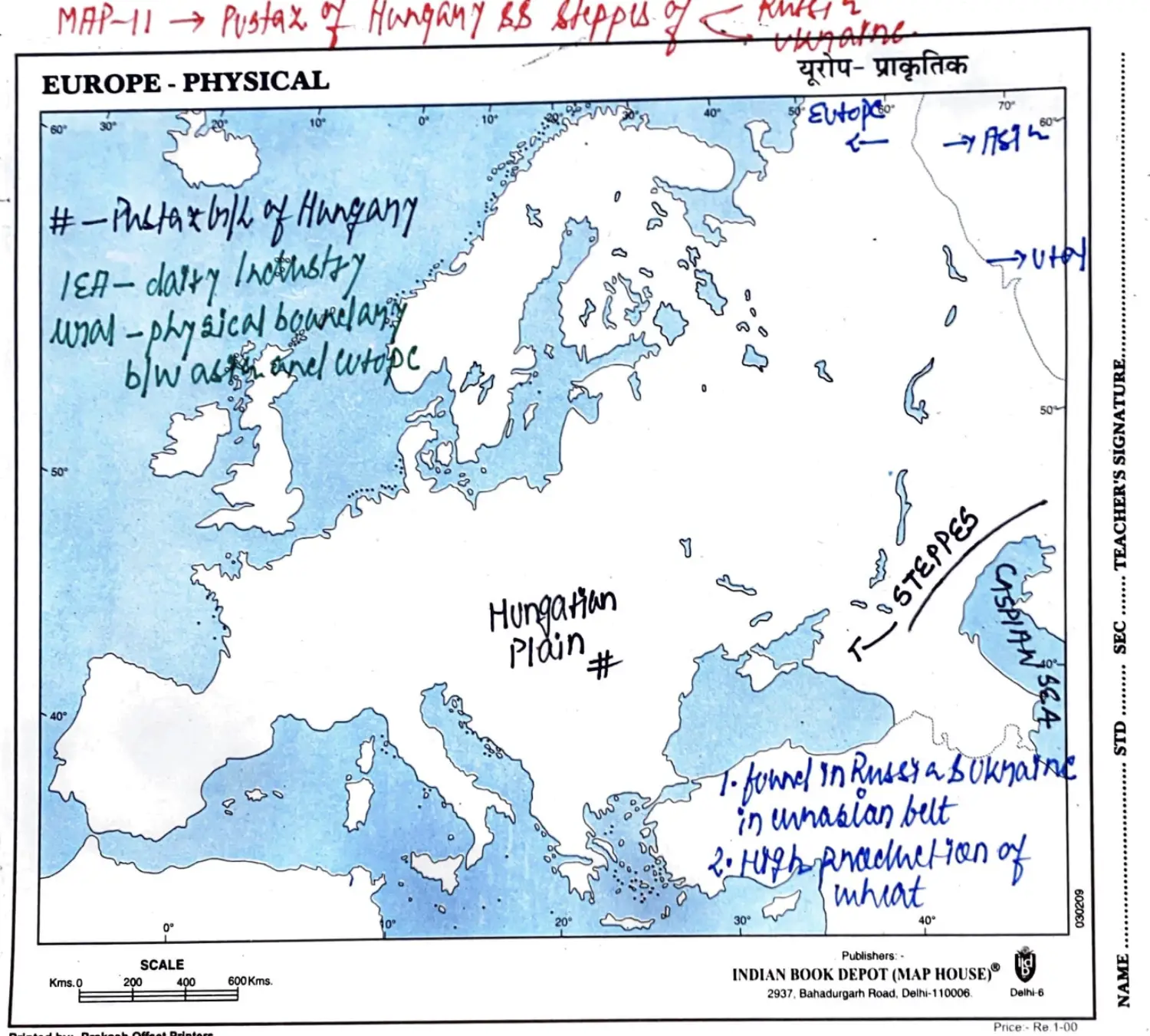
Pustaz
Prominent Grasslands in India
No Defined Grasslands in North East - They are Moist Deciduous Forest
Difference Between Invasive and Exotic Species
Not all the Exotic Species are Invasive in Nature, but all the Invasive Species are Exotic
Invasive - Outsider causes Problem
Exotic - From Outside
Prominent Invasive Species in India
Invasive Species - Means Not Native to India, Has been Introduced from Outside
- Eucalyptus
- Eicchornia
- Water Hyacinth - Terror of Bengal
- Lantana introduced by Britishers from South America
- Untimely Forest Fires in Bandipur NP / TR of West Bengal
- It is Dry and has Thorn, When It looses Water, it totally becomes Dry
Tropical
Banni Grassland
- Kutch, Gujarat
- Maldharis of Gujarat
- It is challenged by an Invasive Species Prosopis Julifora
Indian Savannah
It is scattered in 8 different states
AP Telangana, Guj & Raj, MP CG, Karnataka & Maharashtra
Terai - Foothills of Himalayas
Shola
- Nilgiri Region of Karnataka, Kerala & Tamil Nadu
- Kota, Kurumbas, Toda Tribes
- It is challenged by Invasive Species Senna Spectabilis
Temperate
- Khajjiar
- Gaddis Tribe
- Margs in Kashmir (Gulmarg, Sonmarg)
- Bakarwals Tribe
- Bugyals
- Bhotias Tribe
- Shola - Due to Height or Altitude
- Khajjiar
Wetlands
Defintion
- These are Low Lying Area of Land filled with Shallow Water
- This Water can be
- Fresh Water
- Salt Water
- Brackish Water (Mix of Both Fresh and Salty Water)
- This Water can be
- Stagnant
- Moving
- This water body can be
- naturally formed
- man made
- This water body can be
- Permanent
- Temporary
Hence, a Wet Land can be
Lake
Canal
Stretch of River (Not a River)
Estuary
When River Merges into Ocean but Delta is NOT formed
Lagoon
When Ocean Water is Entering Land with a Depression
Example : Chilka, Pulicat, Shri Hari Kota
Paddy Fields
Lagoons
Mangroves
Contribution of Wetlands Towards Eco System Functioning
Acts as Natural Water Purifier (Purification)
They Filter Out Sediments and Pollutants acting as Kidneys to Nature
They Help in Recharging the Aquifers & Ground Water
Aquifers → Water Trapped in Rock Channels and Rocks
Wetland Soil is an Important Carbon Sync helping in Carbon Sequestration
Important Nesting Grounds for Migratory Species of Birds
They can hold extra water, thus helping in preventing floods
Mangroves act as a Buffer, Reducing the Intensity of Disasters like Floods, Cyclones, Tsunami etc as they don’t get uprooted easily
They Prevent Soil Erosion
They Support the Existence of Bio Diversity by Providing Food and Water
Prominent Wetlands in the World - Scan and Add Map
- Great Lakes
- L Titicaca
- L Victoria
- L Nyasa / L Malawi
- L Tanganyika
- L Aral Sea - Fresh Water Lake
- L Dead Sea
- L Kinneret / Sea of Gallillee
- L Baikal
- L Von / L Van / L Von Gollu
Ramsar Convention on Wetlands
Introduction
- Ramsar is a City in Iran
- It is an Inter Governmental Convention
- It is NOT under UN
- It is NOT binding on the Countries
- 2nd Feb 1971 - 2nd Feb as World Wetlands Day
Objectives
Protection, Conservation & Wise Use of Wetlands
Wise Use → No Exploitation as Such the Status is Irreversible
Optimum Usage Defined by → There Should be NO Ecological Imbalance in the Nature
Meaning Until the time wetlands are performing their work properly
Example: Death of Migratory Bird on the Outskirts of Sambhar Lake in Rajasthan → Means the Wetlands is NOT Functioning Properly
The Conservation should be done by National Action but with International Co Operation
International Co Operation
- Financial Support
- Technical Support
- Access to Best Practises
Example: Sunderbans Shared by India and Bangladesh. Hence Measures should be taken by Both
6 International Independent Partners (NGOs) to Ramsar
- IUCN - International Union for Conservation of Nature & Natural Resources
- WWF - World Wildlife Fund
- IWMI - International Water Management Institute
- Wetlands International
- Birdlife International
- WWT - Wildfowl and Wetlands Trust
No of Ramsar Sites in the World
- More than 2400 Recognised Ramsar Sites in the World
- Maximum No of Ramsar Sites is in UK
- Maximum Area under Ramsar is in Bolivia
- In India
- 75 Ram Sar Wetlands in India
- First Two Ramsar Sites in India
- Keoladeo Ghana Bird Sanctuary, Rajasthan
- Chilika Lake, Orissa
- India Declared 2 New Ramsar Wetlands on 2nd February to mark World Wetlands Day
- Bakhira WS, UP
- Khijadia WS, Gujarat
Prominent Ramsar Wetlands of India
- TSO Kar Wetland Complex - Ladakh
- TSO Moriri - Ladakh
- Wular Lake - J&K
- Hokera - J&K
- Kanjali Wet Land - Punjab
- Harike Wet Land - Punjab
- Confluence of Vyas & Sutlej
- Origin Point of Indira Gandhi Canal
- Renuka - Himachal Pradesh
- Smallest Ramsar Wetland of India
- Chandratal - Himachal Pradesh
- Sultanpur - UP
- Bhindawas - WB
- Sambhar Lake - Rajasthan
- Nalsarovar - Gujarat
- Sasthamkotta - Kerala
- Vembanad Kol - Kerala
- Astamudi - Kerala
- Point Calimere - TN
- Kolleru - AP
- Bhitkarnika - Orissa
- Sunderban - WB
- Largest Ramsar Wetlands of India
- Rudrasagar - Tripura
- Loktak - Manipur
- Deepor Bed - Assam
- Bhoj - MP
- Nandur Madhmeshwar - Maharashtra
Montreux Record
Montreux is a Voluntary Mechanism under Ramsar Convention Including List of Wetlands facing certain immediate challenges, where changes in ecological characters have occurred, is occurring or may occur in near future
Wetlands under Montreux need some extra support from outside, Once wetland recovers from Imbalance in its functioning, it will be removed from Montreux Record
Earlier There were 3 Wetlands of India under Montreux. Loktak and Keoladeo Ghana Remain, where as Chilika has been removed from the List
Forest and Vegetation in India
- Introduction
ISFR - Indian State of Forest Report
ISFR is a Biannual Publication published by Forest Survey of India working under Ministry of Env Forest & Climate Change
It Gives Report of Forests and TOF ( Trees Outside Forests) also
Forest and Wildlife is in Concurrent List of Constitution after 42nd Constitutional Amendment Act
ISFR is a Biennial publication of Forests Survey of India under Environment Ministry
ISFR Estimated About
- Forest Cover
- Trees Outside Forest (TOF)
- Mangroves
- Bamboo Resources
- Forest Fires
- Water Bodies Present in Forest Areas
- State Wise Carbon Stock etc
ISFR 2021 highlighted that 24.62% (ISFR 2019 : 24.56%) of India’s Geographical Area is under forest and tree cover which is far behind the target of 33.33 % (according to National Forest Policy NFP 1988) & also Internationally agreed upon target
First NFP → 1894
Second NFP → 1952
Third NFP → 1988
Out of 24.62% 21.71% is under forest cover alone
From Google Sheet
- Classification of Forests in India according to ISFR (Only Official Classification)
- Very Dense Forest ( > 70% Tree Canopy Density)
- Moderate Forests ( Between 40-70 Tree Canopy Density )
- Open Forest ( 10-40 Tree Canopy Density)
- Shrubs / Scrubs / NFA’s (Non Forests Area) (< 10% Tree Canopy Density)
- Introduction
Types of Vegetation in India
Tropical Evergreen Forest → Rainforest
Found in High Rainfall Area where Rainfall exceeds 200-250 cm, Hence Named So
High Temperature Almost throughout the Year
They are Always Green meaning there is no specific season of Leaf Fall
These are Found Near Equator in Tropical Areas
These are only 4 Defined Location of Rainforests in India
- Western Ghats
- Western Slopes have High Rainfall
- Andaman Nicobar Islands
- Lakshadweep Islands
- Forests Areas in North East
- Western Ghats
Semi Evergreen Forests / Evergreen Like Forests (Not Evergreen but Not Deciduous Also)
- Coastal Area of West Bengal
- Some Parts of Orissa
- Some Parts of Tamil Nadu
- Some Parts of MP and CG
Prominent Vegetation Found in these Forests Area are
- Rosewood → Sheesham
- Mahogany
- Ebony
- Cinchona (Quinine)
- Rubber
Due to this high Rainfall there is very High Tree Canopy Density
Mature Stages of Evergreen Forests will be Dark due to High Canopy
Epiphytes : are those plants which take mechanical support from other plants to take support of plants to reach upto sunlight
Epiphytes → Climbers
Well Marked Stratification in Height is most well marked in Evergreen Forest Area
Soils in the Evergreen Forest Area are Deficient in Nutrients due to excessive rainfall and subsequent washing away of mineral or percolation in the bottom layers of the Soil.
Thats why these soils are all most unfit for Agriculture
These Natural Deficiency of Mineral in the Soil is compensated by faster rate of decomposition where the dead remains are recycled quickly improving the fertility of the Soil
Tropical Deciduous Forest → Monsoon Forest
- They are called Monsoon Forests because they flourish the Most in Monsoon Forest
- They are termed as Deciduous Forests because they Shed off Leaf at a Specific Period of Year when moisture is less in the Soil and there is No Rainfall
- Rainfall Range 75 CM to 200 CM annually
- According to Rainfall Tropical Deciduous Forests have two types
- Dry Deciduous Forests (75 - 125)
- It is scattered through out the country except North East, Islands, Himalayan Region, Goa & Kerala
- Moist Deciduous Forest (125 - 200)
- Interiors of North East
- Inner Parts of Island
- Terai (Foot Hills of Himalayas)
- Eastern Slopes of Western Ghats (Leeward)
- Eastern Slopes of Eastern Ghat (Windward)
- Western Orissa with Adjoining Portions of Jharkhand & CG
- Maximum Parts of Madhya Pradesh other than Bundelkhand
- Dry Deciduous Forests (75 - 125)
- Nearly 62% of India’s Forest is Deciduous Forest out of which
- Moist Deciduous Forest - 20%
- Dry Deciduous Forests - 42%
- Vegetations
- Teak
- Sandalwood - Chandan
- Bamboo
- Sal
- Tendu
- Outer Covering Beedi, Baskets & Disposable Plates
- State Leading Producer of Tendu Leaves in India is MP
- Arjun
- Kusum
- Sheesham Wood
- Special Point for Dry Deciduous Forests
- During the Dry Parts of Year, they shed their leaves completely, hence these dry deciduous forests look like Grasslands from top
Tropical Thorny Forest → Semi Arid & Arid Forests
- Areas with Rainfall <70 cm Annually
- 40 - 70 - Semi Arid
- < 40 cm - Arid
- Vegetation
- Babool
- Cactus
- Acacia
- Date Plants
- Khejdi / Khejni
- Vegetation is Sparsely Located, typical look of the forest is absent
- Location in India
- Western Part of Rajasthan & Adjoining Haryana, Punjab & Gujarat
- Bundelkhand Region Part of
- Western Part of Maharashtra - Vidarbha Region of Maharashtra & Adjoining Portions of Telangana and Karnataka
- Central Deccan Region
- Areas with Rainfall <70 cm Annually
Littoral or Swamp Forest → Mangrove Forests
Termed as Mangroves Forest Because Dominated by Mangroves
Termed as Swampy Forests Because Dominated by Marshy Swampy Water Loges
Termed as Littoral Forests Because
In Coastal Area Land Merging into the Ocean
Littoral, Limnetic, Profundal, Benthic
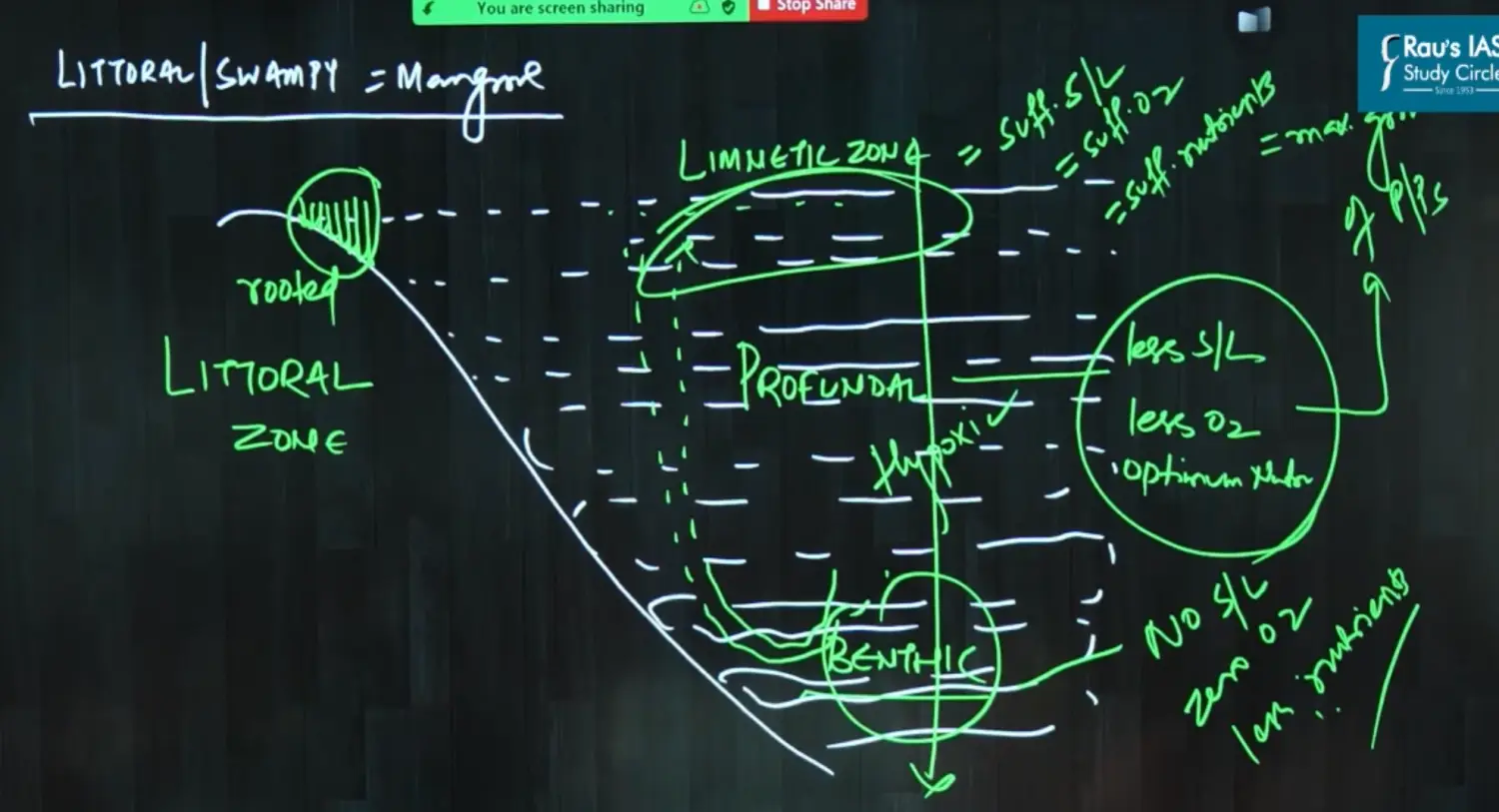
Example
Throughout the Coastline of India Starting from Gujarat in west to WB in East
Andaman Nicobar and Lakshadweep
But Maximum Density of Mangroves is found in Eastern Coast and Not the Western Coast
Even in Eastern Coast, Maximum are found in River Deltas, Especially
- Ganga Brahmaputra
- Mahanadi
- Krishna Godavari
- Cauvery
There are no deltas in the Western Coast of India rather they from Estuaries
Prominent Mangroves of India are
- Sundarbans
- Bhitarkanika
- Coringa from Andhra
- Pichavaram from Tamil Nadu
Mangrove Species
- Sundari Mangrove - Sunderban
- Rhizophora
- Avicennia
- Red Mangroves
- Sonneratia / Apple Mangrove / White Chippi - Declared by Mah as State Mangrove → also Found in TN Coast, Andamans & Puducherry
Mangroves are examples of Halophytes as they grow in Saline Conditions (Halophatic Conditions)
Montane Forest / Himalayan Forests
Found in Southern Western Ghats, Nilgiri Region, Shola Forests
has both Tropical and Temperate Nature
Tropical - Due to Nearness to Sea
Temperate - Due to Altitude
The Precipitation and Snow Fall Change at Each Altitudinal Level
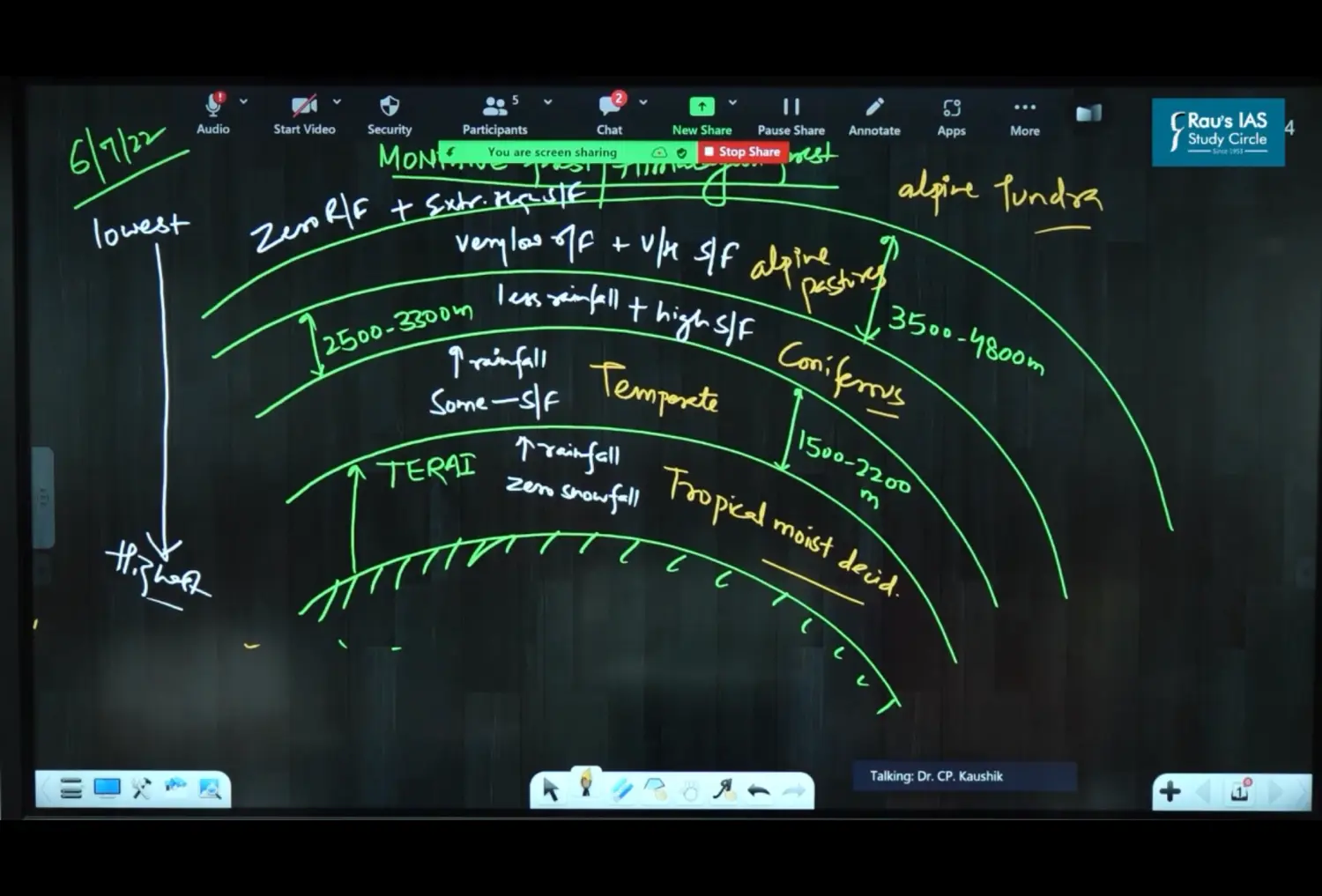
High Biodiversity → Due to Presence of Multiple Zones of Diversity
Ecocline / Ecoline → Change in Plant and Animal Species Based on Changes in Climatic Conditions
Presence of Himalayan Vegetation Like Oak and Rhododendron in Nilgiri Forest is a Geographical Miracle
Ecocline / Ecoline - It is the Gradual Change in the Flora and Fauna in different parts of a Larger Eco System
Example of Himalayan Vegetation Trees - General
Pine
Oak
Cedar / Deodar
Chestnut
Apple
Maple
Rhododendrons
State Flower of Himachal
India's First Rhododendron Park by Arunachal
Shingba Rhododendron Wildlife Sanctuary in Sikkim
Spruce
Silver Fur
Junipers
Chilgoza
Example of Himalayan Vegetation Trees - General
Himalayan Nettle - Scented Flowers - Used in Agarbatti and Creation of Scents
Brahma Kamal - Scented Flowers - Used in Agarbatti and Creation of Scents
Kuth
Himalayan Gold ( Caterpillar Fungus) / Also Called Himalayan Viagra - Because of its Aphrodisiac Properties
Poaching of Rhino - Rhino Horn - Rhino Horn Powder - Aphrodisiac Powder
Gucchi Mushroom as a Local Fibre started in Nepal entered later in Himachal
Biodiversity
Biodiversity, Conservation and Act / Rules
Diversity in the Biological World
Different Forms of Living Beings & Multiple Forms of Same Species
Multiple Forms of Species means - Gene Diversity of Crop
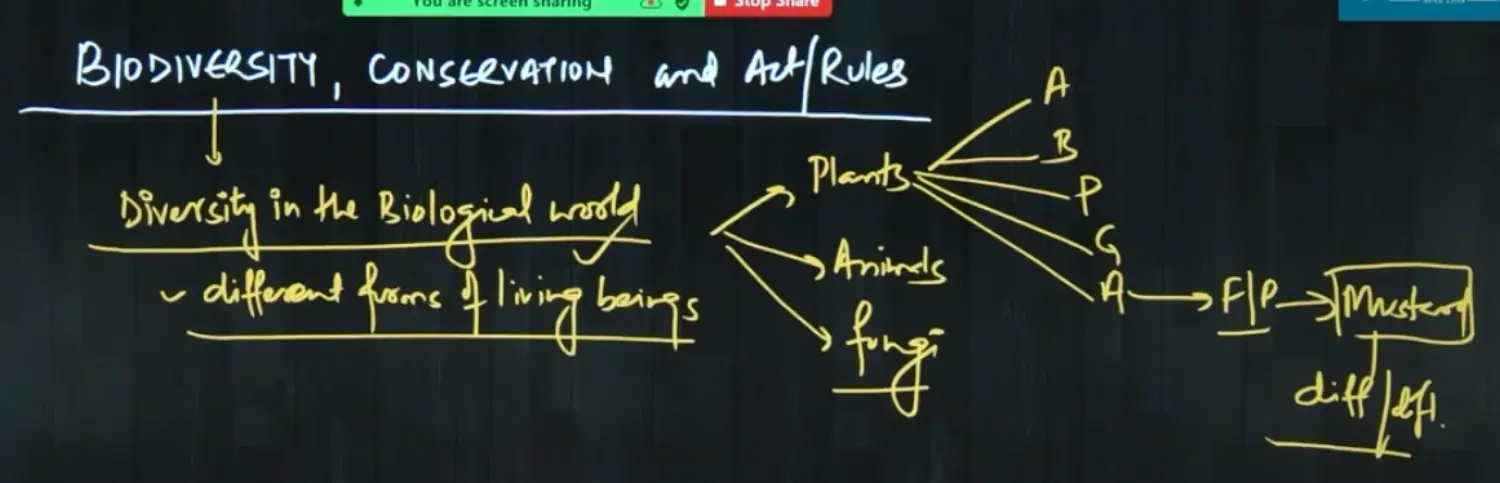
Biodiversity is the Sum Total of all the Living Beings Species, Different Varieties of Species in Various Communities and Ecosystem
It Includes Different Species of Plants, Animals, Fungus etc at a particular ecosystem at a particular point of time
Three Different Levels of Biodiversity are
Genetic
Diversity at the Level of Genes within a Species
More is the Genetic Diversity of Species better will be its adaptability and hence more will be its chances of survivals when exposed to different climatic conditions
Example: Thousands of Wild Varieties of Rice, Found in Different Parts of the World
Species
It Defines Species Richness i.e number of different species found in unit are of an ecosystem
Its NOT defined based on more number of individuals of particular species
Maximum Species Diversity is found in Corals
Maximum Plant Species Diversity is Found in Evergreen Forest
Maximum Animal Species Diversity is Found in Corals
Community and Ecosystem Diversity
Biological Communities and Ecosystems are having Same Levels of Biodiversity which can be defined based on three different Indices
Alpha
Diversity of a Particular Community or Ecosystem like of a Lake
Beta
Diversity Between Two Different Communities and Ecosystem
Gamma
Diversity of Larger Region having Multiple Communities and Ecosystem
Threats Faced by Biodiversity
Collectively Initial Top 4 Reasons are called Evil Quartet
Overexploitation of Natural Resources
Overfishing, Overgrazing, Excessive Deforestation, Heavy Mining etc
Habitat Loss and Fragmentation
Due to Highways, Railway Tracks, Mining, Expansion of Agriculture
Introduction of Invasive Species
Discussed Above
Co Extincts
Interdependent Species can Extinct Together, if one is under threat due to any specific reason
Natural and Anthropogenic Disasters
Tsunami, Volcano, Forest Fire
Pollution, Grown Water and Climate Change
Various Types of Pollutions and Rise in Water Level etc
Proneness to Extinction
- Species having Less Genetic Diversity and Hence Less Adaptability
- Any Species Having High Commercial Value like
- Skin of Tiger
- Tusk of Rhino or Elephant
- Species Having Fixed Migratory Route
- Species having Narrow Geographical Range found in Limited Geographical Belt like Rhinos in Kaziranga and Lion in Gir
- Species Feeding on the Higher Trophic Levels in a Food Chain
- Species having more number of Predators
- Species having Low population Growth Rate
Conservation Status by IUCN Red List
IUCN - International Union for Conservation of Nature
Most Comprehensive Document Released by IUCN about Global Conservation Status (for World) of Wildlife
- Wild Life - Animals and Plants
- Note its Not Local, Its Global
Based on it Various Government Bodies frame the Conservation Plans for Wildlife
IUCN Red List Talks about certain International Conventions & Treaties
UNCBD
United National Convention on Biological Diversity
CITES
Convention on International Trade in Endangered Species of Flora and Fauna
It is also called as Washington Convention
Basic Objective is to Ensure, that International Trade in Wildlife is NOT Threatening the Existence of that Species or Other Dependent Species on that
IUCN Red List Divides Wild Life into 9 different categories based on Conservation Status
- Extinct
- Gone
- Extinct in Wild
- Not in Wild, But in Human Supervision
- Population Trying to Increase population
- Critically Endangered
- Endangered
- Vulnerable
- Near Threatened
- Least Concern
- Data Deficient
- Not Evaluated
- Extinct
Threatened Categories is called as
- Critically Endangered
- Endangered
- Vulnerable
Level of Extinction Moves from Not Evaluated to Extinct
Threatened Categories of IUCN Red List
Critically Endangered
70 to 90 % of the Natural Population of the Species is Lost in the Previous Decades
So there is Extremely High Risk of Extinction in Immediate Future
Endangered
50 to 70 % of the Natural Population of the Species is Lost in the Previous Decades
So there is Very High Risk of Extinction in Near Future
Vulnerable
30 to 50 % of the Natural Population of the Species is Lost in the Previous Decades
So there is High Risk of Extinction in Medium Term of 20 - 25 Years
List of Threatened Categories - Prominent Species
- Critically Endangered
Malabar Civet
Bengal Florican (Sister Species of Great Indian Bustard)
Great Indian Bustard
Gharials
Vultures
Pygmy Hog
North River Terrapin
Freshwater Turtles found in Lakes of Sunderban
Fire Corals
Asian Cheetah
Kashmir Stag
Pangolins
Jawan Rhino
Sumatran Rhino
Namdapha Flying Squirrel
- Endangered
- Asiatic Lion
- Tiger
- Gangetic Dolphin
- Elephant
- Lion Tailed Macaw
- Nilgiri Tahr
- Indian Wild Ass
- Indian Wild Buffalo
- Indian Wild Dog (Drole)
- Red Panda
- Sangai Deer
- Vulnerable
- Swamp Deer ( Bara Singha)
- Olive Ridley Turtle
- Snow Leopard
- One Horned Rhino
- Great Indian Hornbill
- Dugong
- Clouded Leopard* - Imp for Prelims
- Leopard
- Cheetah
- Critically Endangered
Conservation of Biodiversity - Ex Situ Method
There are 2 Different Methods of Conservation of Biodiversity
Ex Situ Method - Just One Pointer Discussion
Protection and Conservation of Biodiversity Outside its Natural Habitat
- Zoological Parks - Zoo
- Botanical Gardens - Garden
Gene Banks / DNA Banks
Storing of DNA Sample for Lab Multiplication
LaCONES in India
Laboratory for Conservation of Endangered Species in Hyderabad under Government of India where Genes and DNA of Wildlife of India is Stored
We Store them using the Technology of Cryopreservation - Storing Something up to -196 Celsius in the Medium of Liquid Nitrogen
- Seed Banks
SVALBARD Norway
Facility to Store Seeds of Wild Species of Plants from Across the World
It is called Global Seed Vault
- Captive Breeding
Breeding under Human Supervision under Human Supervision
Captive Breeding of Great Indian Bustard Started by Govt of Rajasthan & Govt of Gujarat at Desert National Park
Captive Breeding of Vultures started by Haryana at the Foothills of Shivalik
Conservation of Biodiversity - In Situ Method
Protection and Conservation of Biodiversity Inside its Natural Habitat
- Biosphere Reserves - BR
MAB Program by UNESCO - Man Biosphere
- Conservation of Bio Diverity
- Protection of Wild Life
- Local People - Conservation of Livelihood and Culture
Other than these the Objectives of BR in India are
- Scientific Research, Educational Activities, Eco Tourism
- So that Sustainable Economic and Social Development can be Achieved
BR are not having any Legislative Back Behind them
- Means Biosphere Reserves Do not Function under any act of Parliament
- BR is declared by Central Govt
- But Maintenance is done by Concerned States with Necessary Financial and Technical Support from Centre
There are 18 Biosphere Reserves in India
- Nilgiri - First BR - 1986
- Panna - Latest BR - 2011
- Kutch, Gujarat - Largest BR
- Dibru Saikhowa, Assam - Smallest BR
Structure of BR
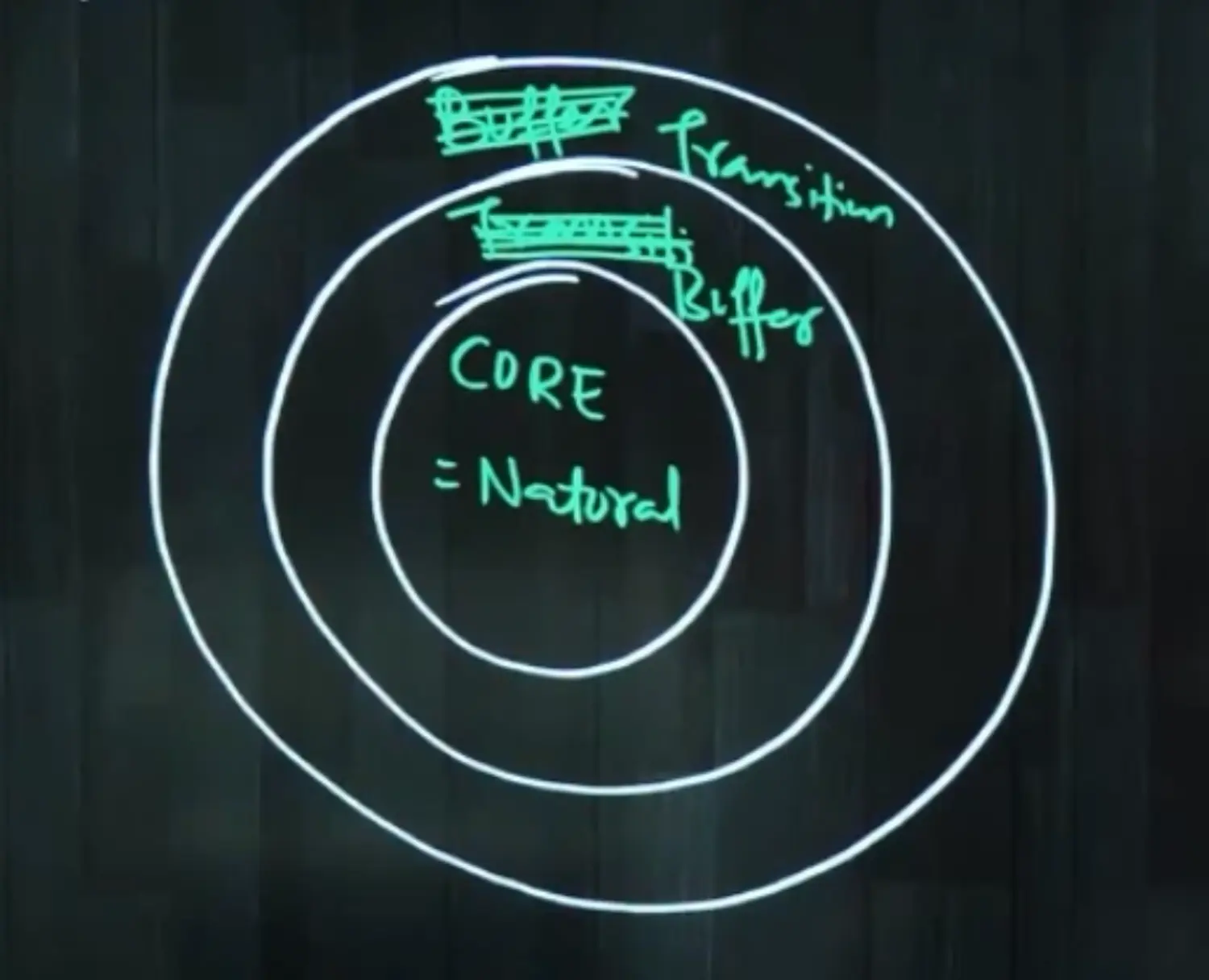
Core Natural Zone
No Human Interference Allowed
Buffer Zone
Eco Tourism, Scientific Research, Educational Activities allowed in the Buffer Zone
Transition Zone
Villages, Agric, Fishing, Grazing, Collection of Minor Forest Produce, Loggin is allowed
Minor Forest Produce - Bamboo, Grasses, Honey → Used for Sustenance and Not for Commercial Gains
Out of these 18 BR → 12 have been recognised by UNESCO
- After Recognition → BR is called to be under “World Network”
- Panna is the Latest Entry of India & Latest BR of India into the BR World Network
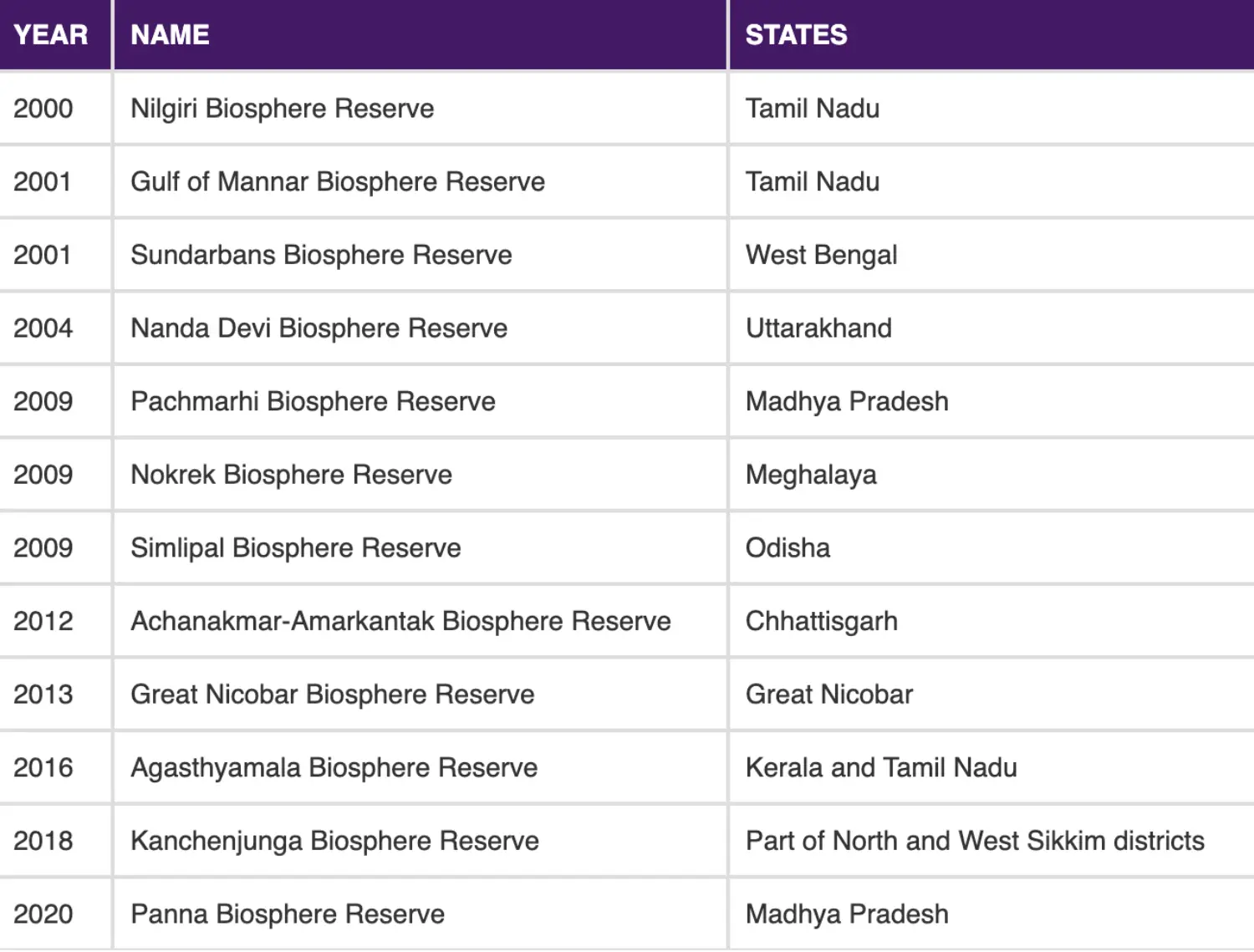
Area of Biosphere Reserve
A BR is generally a Larger area having multiple other protected area within it like National Parks, Sanctuaries, Tiger Reserves, Ramsar Wetlands etc
- Example: Agasthyamalai
- Has Kalakkad Mundanthurai Tiger Reserve
- Peppara WLS
- Shenderny WLS
- Neyyer WLS
- Example : Cold Desert
- Pin Valley NP
- Sarchu WLS
- Kibber WLS
- Chandratal Ramsar Wetland
- Example : Nilgiri - Home Work
- Example : Panna - Home Work
- Example: Agasthyamalai
State of Orissa has requested the Central Government to Declare Mahendragiri as Biosphere Reserve
- NP & WLS
Similarities
- Declared Under WPA, 1971
- Maintained by State / UT Govt
- Declared in Area of Ecological, Biological, Natural, Economic, Geomorphic Significance
Differences
| National Parks | Wildlife Sanctuary | | --- | --- | | These Activities are totally prohibited in National Parks | Activities like Grazing, Cropping, Logging are strongly regulated in Wild Life Sanctuary | | Enjoy the Highest Degree of Protection Amongst the Protected Areas of India | | | For Protection of Flora and Fauna | Declared for Protection of Fauna | | Can't be declared for a Single Species | Can be declared for Protection of Single Species also
Example:
- Indian Will Ass Wild Life Sanctuary
- Flamingo Sanctuary | | 106 NP’s | 550 WLS |
Assam and its Importance
Facts
- Earlier it has 5 NP, Its 7 NP Now
- They have been upgraded as National Park
- Imp to Learn due to Rhino Census
- Places can be declared by State Govt
- After Declaration of Protected Areas like National Parks and Sanctuaries, No Alteration in the Boundaries can be done without approval from NBWL: National Board for Wild Life
- NBWL is a Statutory Body under WPA, 1972 → Under Environment Ministry
- NBWL is chaired by PM
- Also, Permission to Any Project within or Near By To a Protected Area ( 5 KM Radius) can only be given after approval of NBWL
💡 Downgrading the Status of National Park to a Wildlife Sanctuary is NOT allowed in IndiaList
- Dihing Pataki NP
- Raimona NP
- Manas NP
- Kaziranga NP
- Orang NP
- Dibru Saikhowa NP
- Nameri NP
Facts
- Which State has No National Park in India → Punjab
- Which State has maximum No of National Parks in India → Madhya Pradesh
- National Park in Nagaland → Intanki NP
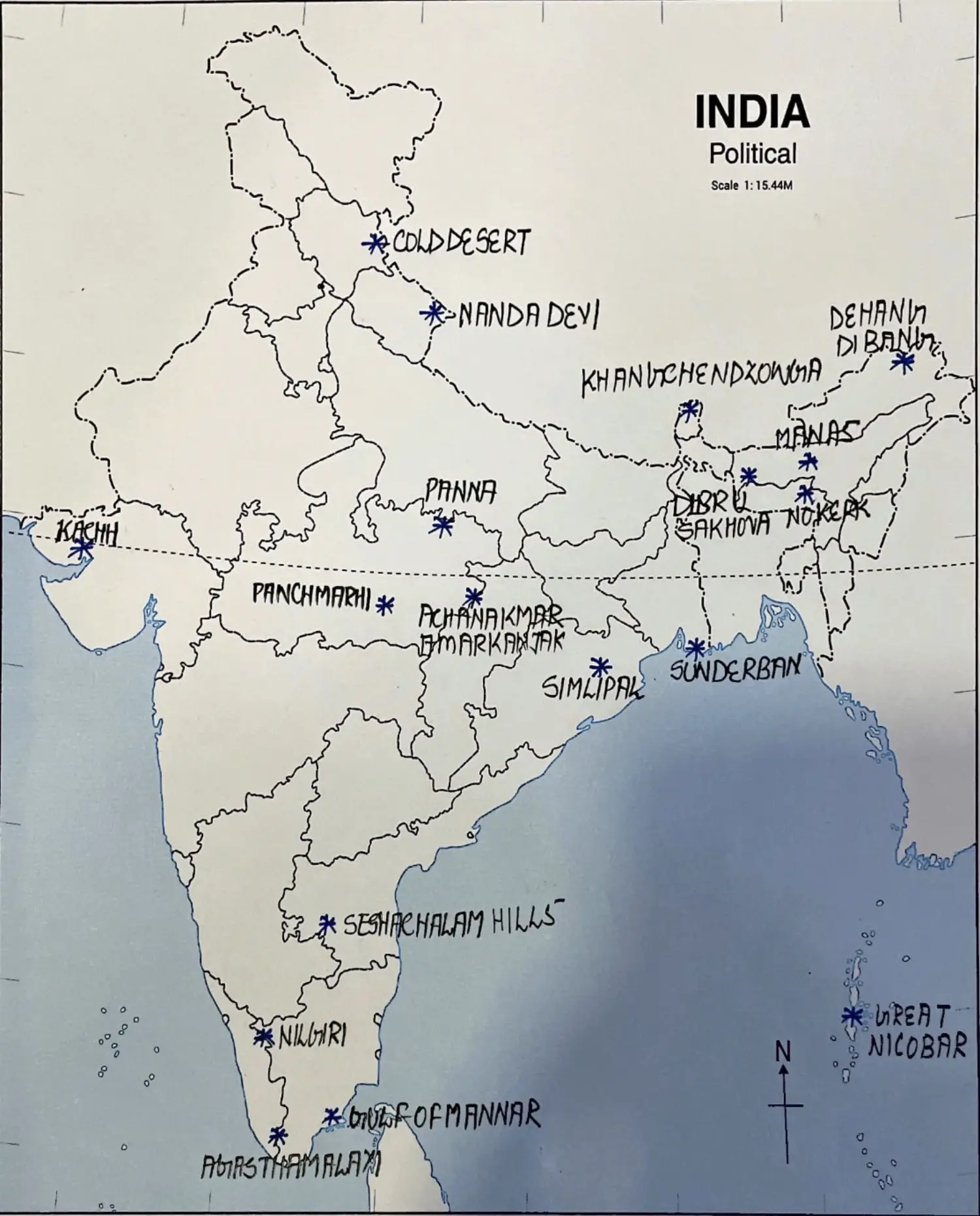
Mapping of Biosphere Reserves in India
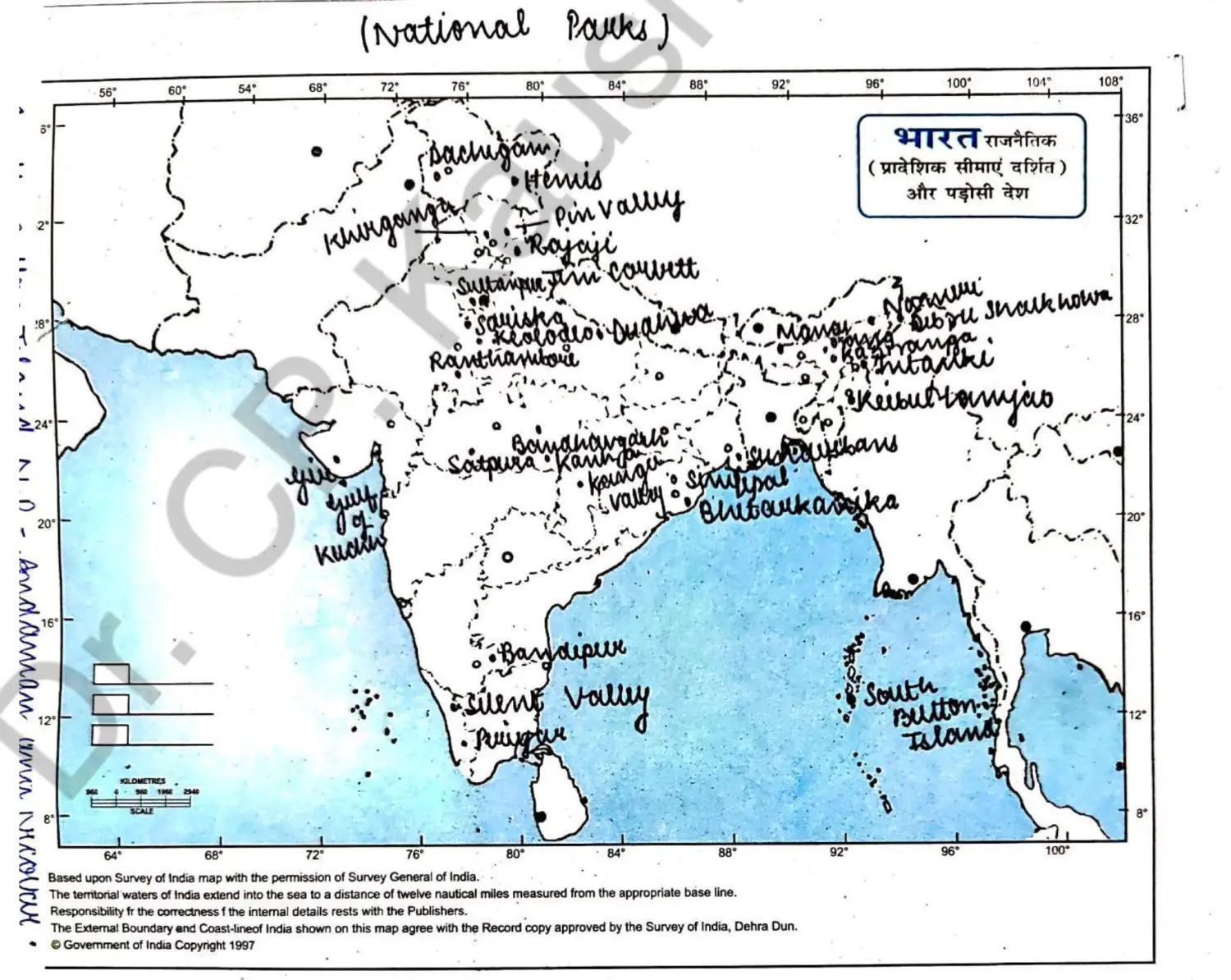
Mapping of National Parks in India
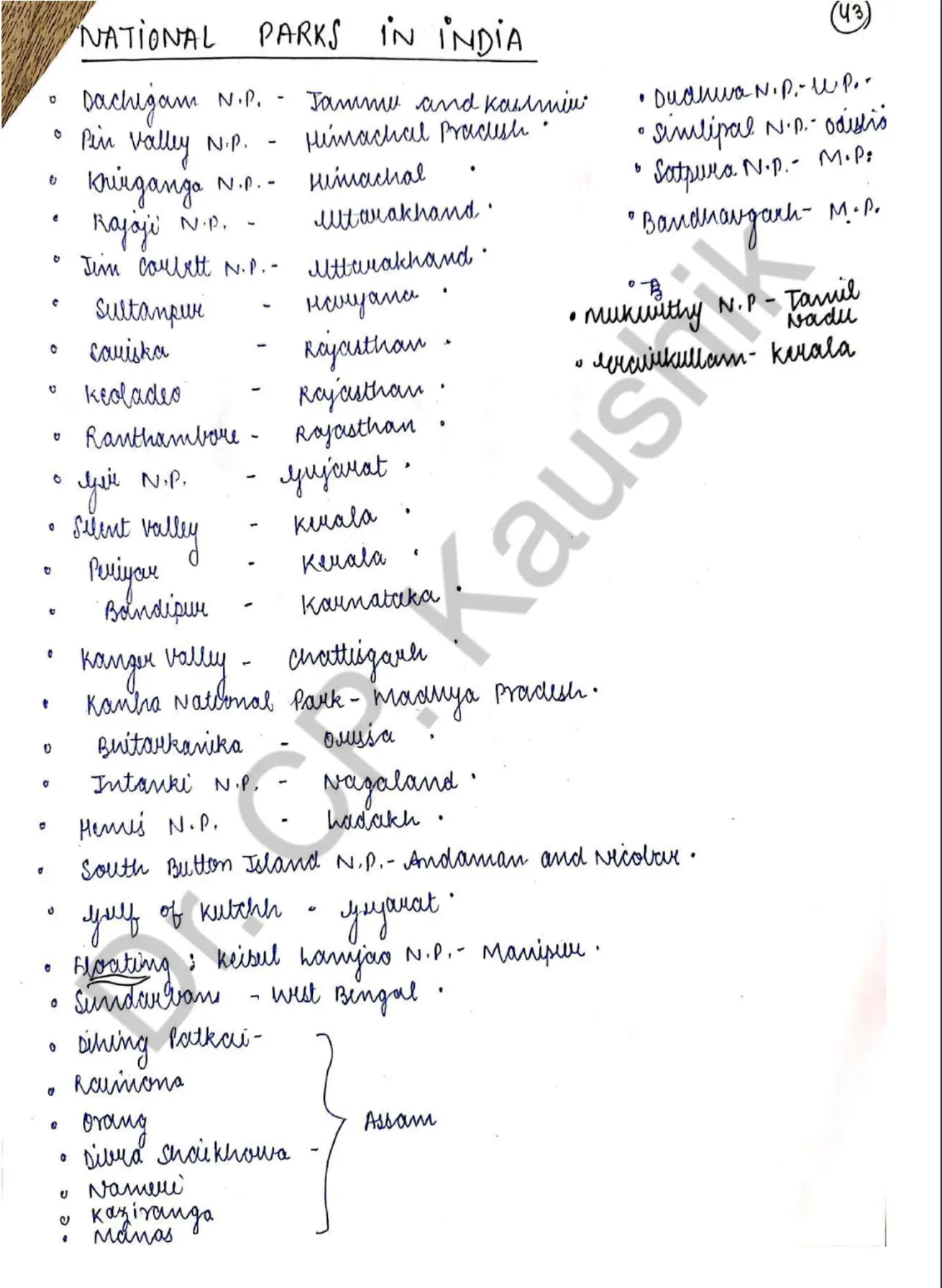
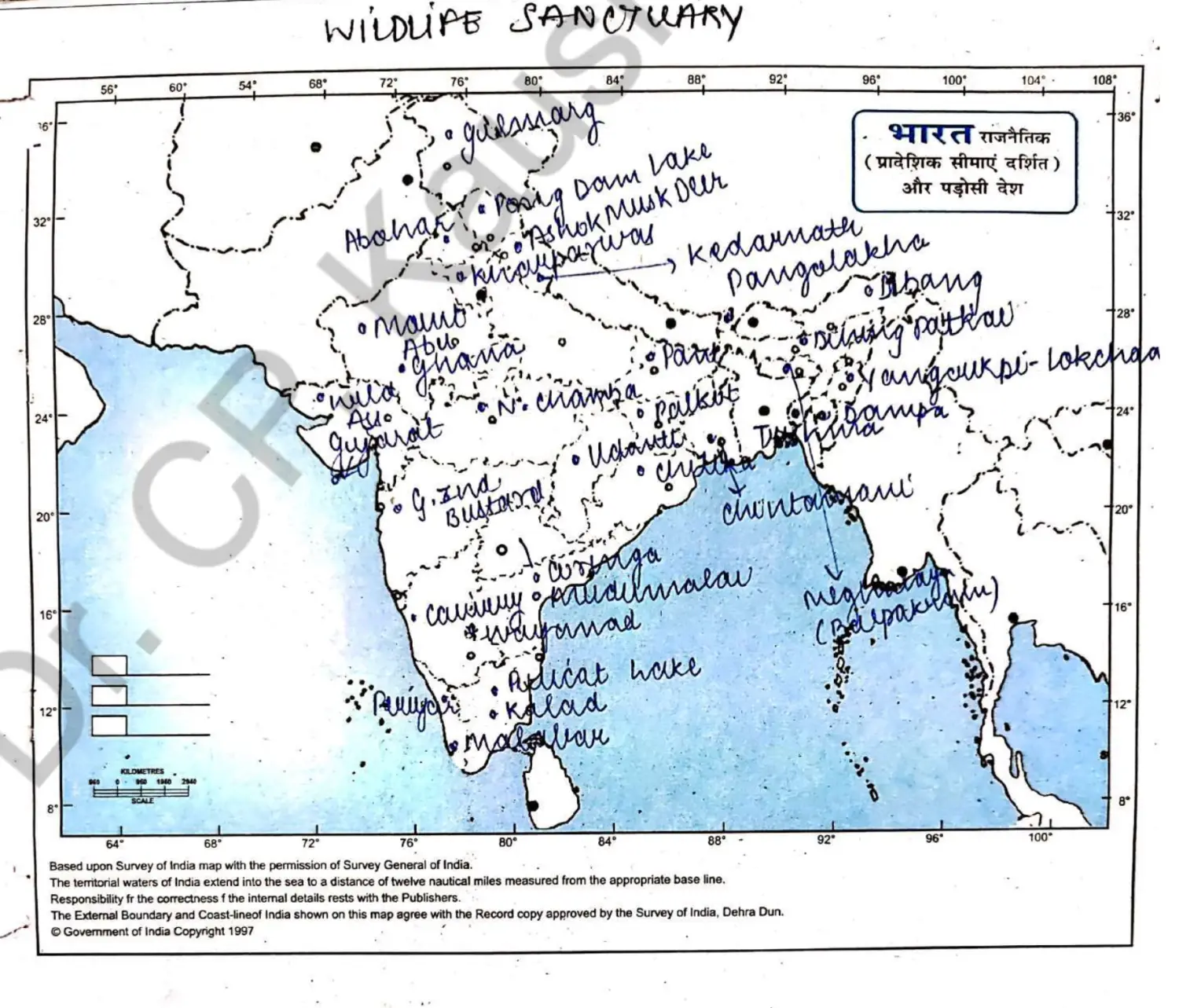
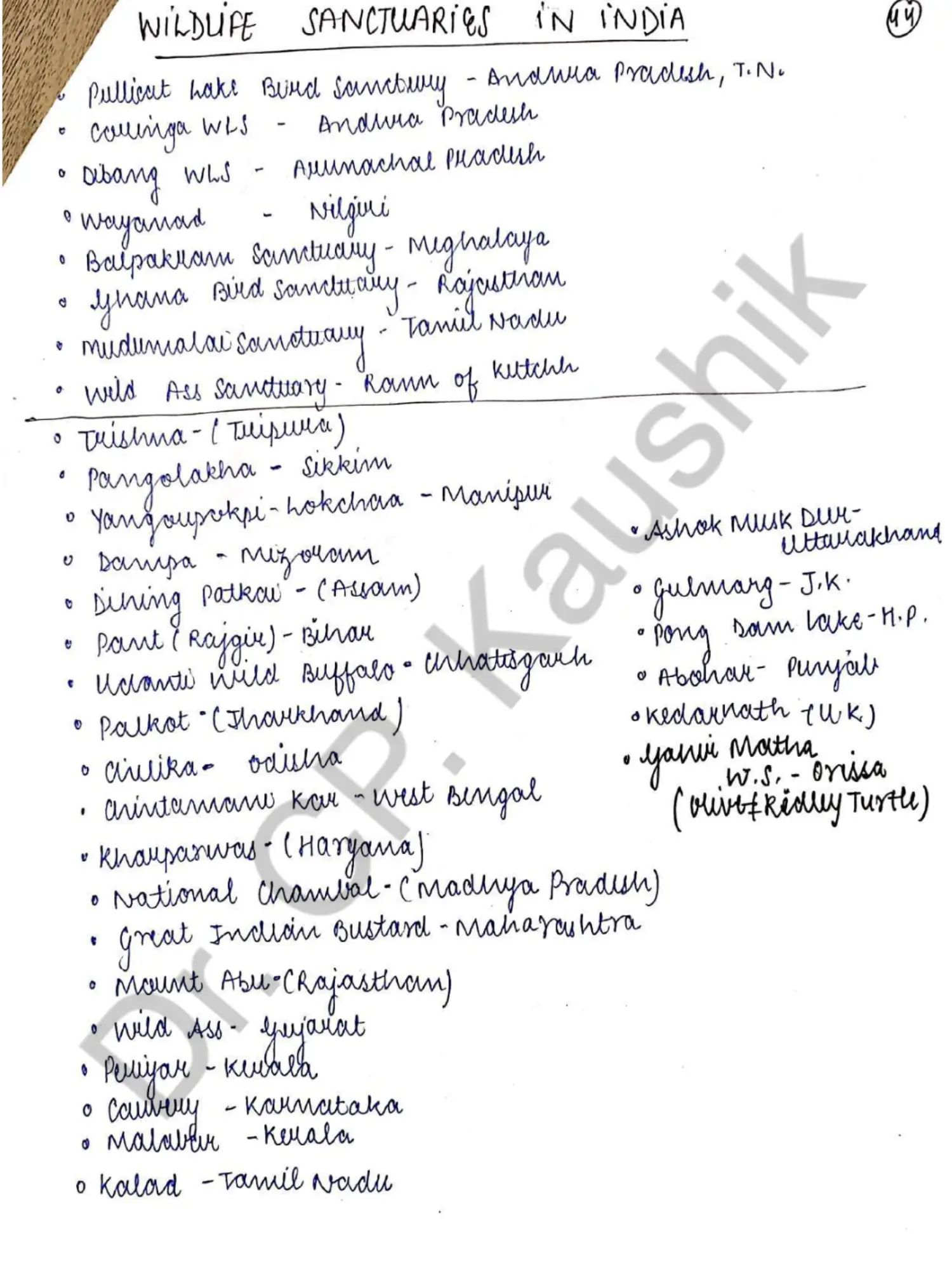
Mapping of Wildlife Sanctuaries in India
Community & Conservation Reserves - CCR
- Any Part of the State can be declared by State as CCR under WPA, 1972
- When these are declared → Commercial Exploitation is Stopped and Tribal Rights are not Hampered
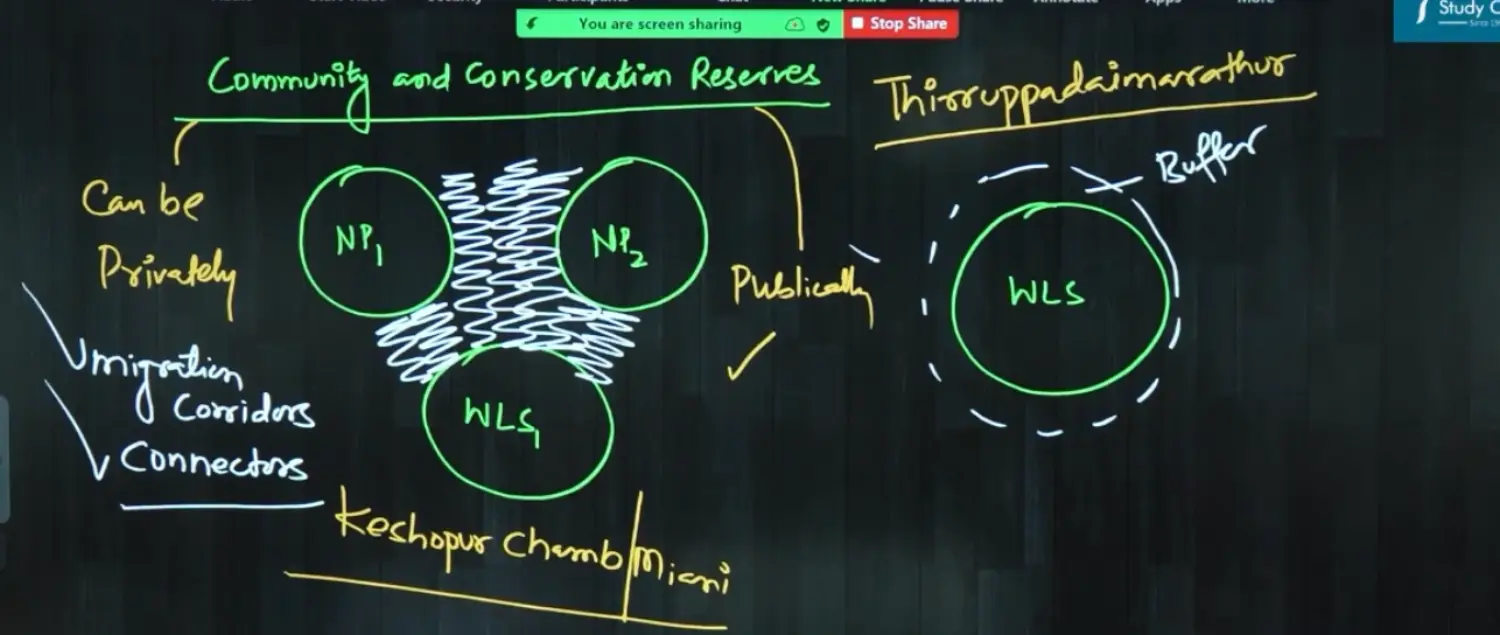
- Community Reserve - Can be Privately Owned
- Conservation Reserve - Has to be Publicly Owned
- Declared under WPA 1972 by State Governments in any part of the state particularly area surrounding protected areas acting as a buffer or the Areas present between the Protected Areas like Migration Corridors or he Connectors between NP & WLS
- Community Reserves can be Privately Owned or Publicly Owned but Conservation Reserves are always publicly owned
- First Community Reserve - Keshopur Chamb Miani, Punjab
- First Conservation Reserve - Thirruppadaimarathu, Tamil Nadu → was declared for Birds Nesting Ground
Sacred Grooves, Lakes, Forests
- Only Grooves are Protected Under WPA, 1972
- No Backup to Lakes and Forests
- Example → Sacred Grooves
- Sarnas, CNP, Jharkhand
- Devras / Devrais, Western Ghats of Maharashtra
- Example → Sacred Lakes
- L Khecheopalri, Sikkim
- L Parashar, Himachal Pradesh
- Example → Sacred Forest
- Parvati Valley Forest, HP
- Silent Valley Forests, Kerala
- These Represent Community Protected Ecosystems which Represent one of the most undisturbed Natural Resources of the Country
- as The Local Community has some sort of Religious Affinity associated with these forests or the flora or fauna or some water bodie in it
- these are scattered throughout the country, from himalayan region to thar to western ghats to central india & also in Eastern and North Eastern Parts of the Country
Biodiversity Heritage Sites - BHS
To be Discussed with Bio Diversity Hotspots
Marine Protected Area - MPA
- These are Designated Protected Areas as National Parks, Sanctuaries, Biosphere Reserves, Tiger Reserves, Associated with Coastal or Marine Ecosystems
- They are governed by CRZ - Coastal Regulation Zone Rules under Environment Protection Act, 1986
- Example: Marine National Park
- Gulf of Kutch, Gujarat National Park
- Mahatma Gandhi Marine National Park, Andaman Nicobar
- Example: Marine Sanctuaries
- Defence Island Wildlife Sanctuary, Andaman Nicobar
- Example: Marine BR
- Gulf of Mannar
- Sunderban BR
- Great Nicobar
- Example: Marine Ramsar Coastal Wetlands
- Point Calimere
- Chilika Lake
- Example: Marine Tiger Reserve
- Sunderbans
- Biosphere Reserves - BR
Biodiversity Terminologies
Biodiversity Hotspots & Endemic Species
Concept Given by Myers
Rich Ecosystems have → HIgh Species Diversity → which are Endemic to that place → Hence have higher Threat Perception
Endemic Species are present at a particular geographical area and are found nowhere else
Examples of Endemic Species
- Asiatic Lion in Gir Forest
- Nilgiri Tahr
- Lion Tailed Macaw
- Sangai Deer
- Namdapha Flying Squirrel
- Red Panda
- Kashmir Stag
- Indian Wild Ass
- Malabar Civet
- Gharials
These are NOT the Example of Endemic Species
- One Horned Rhino - Kaziranga & Bhutan
- Gangetic Dolphins - Ganga & Its Tributaries
- Bengal Tiger - Many National Park
- Dugong Dugong - Gulf of Mannar, Gulf of Kutch
- GIB - Sindh, Maharashtra
- GI Hornbill - North East & Western Ghat
- Snow Leopard - Russia, Afghanistan
- Olive Ridley Turtle - Orissa and Brazil
Conservation International designates Biological Hotspots
There are in total 36 Biodiversity Hotspot Regions
- Indian Biodiversity Hotspots - None of the Hotspots in India are EXCLUSIVE to India
- Himalayas - Bhutan + Myanmar + Nepal as well
- Eastern Himalayas including North India and Indo Burma Region
- Western Ghats including Indo Sri Lanka Region
- Nicobar Islands as an Extension of Sunda Land of Indonesia
- Biodiversity Hotspots of the World
- Carribean Island
- Madagascar and Indian Ocean Islands - A&N NOT a part of this
- Coastal Forests of Eastern Africa
- Mediterranean Sea - Basin of Europe Only ; NOT For Asia and Africa
- Mountain of South Western China
- Cerrados of Brazil
- Indian Biodiversity Hotspots - None of the Hotspots in India are EXCLUSIVE to India
Biodiversity Heritage Sites
- They are Declared under Biological Diversity Act, 2002
- Areas which have
- Rich Diversity
- Presence of Endemic Species
- or With them Some Rare Species
- or with them Some Keystone Species
- and There is a Threat Perception
- This is the Indian Version of Biodiversity Hotspots
- These are declared by Respective State Govt in Consultation with
- Local Bodies PRI - Panchayati Raj Institutions
- BMC - Biodiversity Management Committee
- There are 20 Biodiversity Heritage Sites in India
- Hogrekan, Karnataka
- Chilkigarh Kanak Durga, West Bengal
- Majuli Island, Assam (World's Largest Riverine Island on Brahmaputra)
- Naro Hill, MP
- Gharial Rehabilitation Centre, UP
- Amboli, Western Ghats, Maharashtra - Latest
Keystone Species
- They have Less Presence in Ecosystem in terms of
- Their Number is Less
- Biomass is Less
- But their Impact is Significant
- They have relatively Low Abundance in an Ecosystem but their Impact on the Functioning of Ecosystem is huge
- They Regulate the Relative Abundance of Other Species.
- In Absence of Keystone Species there can be Imbalance in the Functioning f Ecosystem or even the entire food chain can collapse
- Example
Large Mammalian Predators like Lion Tiger Cheetah etc regulate the population of Herbivores
Sea Otters which are marine mammals control the relative population of Sea Urchins
Sea Urchins feed extensively on underwater forest ecosystems
Underwater Forest Ecosystem is called Kelps
- They have Less Presence in Ecosystem in terms of
Biodiversity Hope Spots
- These are Ecologically Unique Areas of Oceans designated for Protection
- Ecologically Unique
- They can have Significant Wildlife with them
- They can be destination for Migratory Species
- They can have Significant Kelps
- They can have potential for Carbon Sequestration (Capturing and Storing CO2)
- Protection - Have Threat Perception
- This Concept was Started by an International NPO called Mission Blue. But Later it got the Support of IUCN
- Hope Spot is a Kind of Awareness Generation Campaign, So that we can get the attention of Governments
- Their Objective is to protect at least 20% of the World Oceans and their Biodiversity by Designating them as Hope Spots
- There are more than 100 Designated Hope Spots in the World
- Both A&N && Lakshadweep got the status of Hope Spots
Sentinel / Indicator Species
They Indicate about the Health of an Ecosystem, i.e if there is some disturbance in the natural functioning of an Ecosystem, these species wouldn't be able to Grow
In Simple words, they indicate about Increased Pollution Levels or Drastic Impacts of Global Warming and Climate Change
Example:
- Lichen is an Important Air Pollution Indicator
- Corals Indicate Marine Pollution or Even Acidification of Oceans
- Gangetic Dolphins are Fresh Water Pollution Water Indicators
Flagship or Umbrella Species
Species which are selected by Government and Authorities to have a project based on their name i.e they are chosen by Government to represent an Environmental Cause
Example: Tigers, Elephants, Rhinos etc
Exotic and Invasive Species
Discussed Above
Animal Projects
Main Animal Projects
Main Animals
- Project Tiger - CSS, 1973
CSS - Centrally Sponsored Schemes → Schemes Formulated by Centre and Implemented by State. Contribution of Centre monetarily can vary
Started with 9 TR and is Currently 52 TR in July 22
Example of TR
- Kamlang TR, Arunachal Pradesh - 50th TR
- Meghamalai Srivilliputhur - 52sd TR
- Ramgarh Vishdhari WLS - 52nd TR
In Principle Approval to 53rd TR has been given
- Guru Ghasidas National Park in CG
Out of 52
- MP and Maharashtra have 6 / 6 TR
- Karnataka has 5 TR
Largest TR
- Nagarjuna Sagar Sri Sellam TR - Andhra, Telangana
Objective
- Protection and Conservation of Endangered Tiger
- Safeguarding the Rights of Local Tribals & Local Villagers staying within or near to Tiger Reserves
Nodal Agency - NTCA
- National Tiger Agency Authority
- It is a Statutory Body under WPA, 1972
- It gives the Directions and Frames Rules, Implemented by State Government
- It Approves the Tiger Conservation Plans prepared by state governments
- With the Help of State Governments it conducts Tiger Census Every 4th Year
Tiger Census
- First in - 20016, 2010, 2014, 2018
- There are Total 2967 Tigers in India → Making India Home to 75% of the World's Tiger Population
- Followed by Russia and Indonesia
- From 2014 of 2226 Tigers → There as 30% Jump in Tiger Population
Three States with Maximum Tiger Populations
MP and Karnataka Had Roughly Same Number of Tigers only with a Gap of Two
- MP - 524
- Karnataka - 522
- Uttarakhand
Tiger Reserve with Maximum No of Tigers → Jim Corbett National Park
Tiger Reserve with Maximum Density of Tigers → Pench TR, MP
Tiger Complex → It holds world's Single Largest Population of Tigers i.e nearly 600 Tigers
It is found in the Tri Junction of Three Different Political States but one single geographical area of Nilgiri Hill Belt
- Mudumalai - Tamil Nadu
- Bandipur - Karnataka
- Nagarkhole - Karnataka
- Wayanad - Kerala
Method of Tiger Census - Stripes are Unique to a Tiger
- Camera Traps
- Camera Traps uses M Stripes Software → Monitoring System for Tigers Intensive Protection and Ecological Status
- Its an application based platform to differentiate between the Tigers based on Pattern of Stripes
- Pug Marks
- Scats - Waste Drops, Fecal Matter
- Hence we adopt double sampling method for Tiger Census
- Camera Traps
- T * 2 Program
- Also called as St Petersburg Declaration
- This Program was started in 2002 in association with ICUN
- Process was Shortlist and Finalised → in 30 Tiger Range Countries → Target was to Double the Nation of Tigers in that country by 2022
- Country Successful are
- Nepal First Country
- India Second Country
- Project Elephant
- Objectives
Protection and Conservation of Elephant
To Control Hunting, Killing and Poaching of Its Tusk for Ivory
Avoiding Man Animal Conflict
Program BEE - Home Work
Taking Care of Elephants in Captivity
- There are 32 Elephant Reserves in India, that are divided in 10 Different Elephant Landscapes
- Kaziranga (Assam) - Karbi Anglong(Assam) - Intanki(Naga Land) Landscape
- Kamong (Arunachal)- Sonitpur(Assam) - Landscape
- Peiyar (Kerala)- Agasthyamalai(TN) Landscape
- Brahmagiri (Ka)- Nilgiri(Ka+Ke+TN) - Eastern Ghats Landscape (Andhra)
- Central Land Scape - Orissa (Centre), West Bengal, Chhattisgarh, Jharkhand
- Three States with Maximum Population of Elephants
- Ka
- Assam
- Ke
- Objectives
- MIKE
- Monitoring the Illegal Killing of Elephant
- Project to Control the Illicit or Illegal Trade of Elephant
- P 8 - Home Work
- Indian Rhino Vision 2020 - Project Rhino
It is not a Project by Govt of India
Its a Project by
- Govt of Assam
- WWF
- International Rhino Foundation
- Bodoland Autonomous Council
Objectives
Target 2020 has been Appraised to 2022
Target was to Increase the Population of Rhino from 2000 to 3000
Protection & Conservation of One Horned Vulnerable Rhino
Lets Relocate this Increased Population to 7 Nearby Area (Not Defined as of Now)
Presently Maximum Population of Rhino is in Kaziranga
Maximum Density of Rhino is in Pobitora Wildlife Sanctuary
Current Status
- in Recent Census of Apr May 2022, 2600 Rhinos are there in India
- Not Reached Target but we have Increased
Biggest Problem
- Poaching of Horn of Rhino for Medicinal Purposes and for Religious Purposes
- Project Tiger - CSS, 1973
Other Animals Project
- Asiatic Lion Conservation Project
- Project Dolphin
- IDWH - INtegrate Development of Wildlife Habitats
Environmental Legislations
- Difference between Signing and Ratification of Convention
- Signing - Signing at that time, meaning agreeing that we will do it
- Ratified - coming back to India and implementing the promise by means
- Prominent Env Conventions by UN
- 1972 UNCHE → United Nations Conference on Human Environment Stockholm Conference
- 1992 UNCED → UN Conference on Env and Dev Rio Summit
- 2002 WSSD → World Summit on Sustainable Development Rio + 10
- 2012 UNCSD → UN Conference on Sustainable Development Rio + 20
- 2022 Stockholm + 50
WPA, 1972
Wild Life Protection Act, 1972 (WPA, 1972)
It's the most comprehensive legislation in the country for protection and management of wildlife
It is applicable to both
- Plants
- Animals
Not All Species and Plants are Covered → Some Specified Species of Plants and Animals are only covered
There is a Penalty and Punishment on Violation of Rules and Regulations of WPA depending upon degree of protection accorded to a particular wild life and degree of violation
Both Monetary Fine and Imprisonment are awarded on Incidence of Violation
There 6 Schedules of WPA
- Degree of Punishment Increases from Sch 4 to Sch 1
- Degree of Protection Increases from Sch 4 to Sch 1
- Schedule 1 - 5 → Wild Animals
- Schedule 6 → For Wild Plants
- Schedule 5 → Vermins Animals which can be killed but there is no Punishment and Fine
Schedule 5 - Animals Listed here are termed as Vermins which can be killed without any Penalty or Punishment
As they can disturb the agriculture, spread of disease, Imbalance to Ecosystem Functioning or Carrier of Some Disease
Examples
- Common Crow
- Rat
- Mie
- Flying Foxes are Fruit Bats
State Governments can request the Centre to Add a Particular Animal in the Category of Vermin for the Entire State or part of it for a fixed period of time
It's up to the Centre to Accept or Reject that
State Wise Vermins
- Nilgai is Vermin in Bihar → Disturb Agri
- Wild Boar is Vermin in Uttarakhand → Disturb Agri
- Monkey is Vermin in Parts of Himachal Pradesh
Andhra and Punjab are considering to request centre to declare Wild Boar as Vermins
- Schedule 6 - Wild Plants
- It is about wild plants for which cultivation, collection of products, storage or trade in the products is not allowed without Prior Permission as they can disturb the Functioning of the Ecosystem Threatening the Existence of Some Species
- Example
- Pitcher Plant
- Certain Varieties of Orchids → Ladies Slipper Orchid
- Red Vanda
- Blue Vanda
- Certain Varieties of Cycads - A Variety of Gymnosperms
- Schedule 1 - 4 → Protected Category of Animals
- Schedule 1 to 4 are about protected categories of wild animals were penalties and punishments keep on increasing from schedule 4 to schedule 1
- Sch 1 - Highest Level of Penalty and Punishment
- Sch 4 - Least Level of Penalty and Punishment
- Schedule 1 - Endangered and Vulnerable Animals
- Animals Listed Over Here Need Absolute Protection
- Maximum Species are of Threatened Categories
- Examples are
- Black Buck
- Tiger
- Snow Leopard
- Rhino
- Lion Tailed Macaw
- Nilgiri Tahr
- Gangetic Dolphin
- Schedule 2 - Less Protection & Protection than Sch 1
- Rhesus Monkey
- King Cobra
- Bengal Porcupine
- Himalayan Brown Beer
- Flying Squirrel
- Schedule 3 - Less Protection & Protection than Sch 2
- Nilgai - Sch 5 for Bihar, Sch 3 for India
- Indian Porcupine
- Sambhar / Chital
- Spotted Dear
- Hyenas
- Schedule 4 - Birds
- Flamingos
- Kingships
- Falcons
- Hares
Statutory Bodies under WPA, 1972
Any Body by Law of WPA
NTCA - National Tiger Conservation Authority
Nodal Agency for
- Project Tiger
- Asiatic Lion Conservation Project
- Cheetah Reintroduction Project
NBWL - National Board for Wild Life
WCCB* - Wildlife Crime Control Bureau
Regulate Crime Against Wildlife
CZA - Central Zoo Authority
Give License and Management of Zoo around India
Important Note
- WPA empowers Centre and State to Claim the Ownership of Wild Life
- Even if an a Wild Animal like elephant is under domestic captivity, ownership rights lies with governments
EPA, 1986
Introduction to EPA, 1986
In 1972 Stockholm Conference was organised by UNESCO
Official Name was UNCHE - UN Conference on Human Environment
UN Directed its Member Countries to have Domestic Legislations for
- protection and healthy management of Environment
- to reduce the levels of pollutants
- to conserve biodiversity
- for protection and management of wild life
there was no mention of global warming and climate change at that time as climate change was a Fuzzy concept before 1990’s
1970’s was one of the most vulnerable decades for India witnessing war with pakistan & liberation of Bangladesh, Emergency, Significant Changes in Constitution like 42nd CAA of 1976, Change of Govts etc
Bhopal Gas Tragedy of 1984 forced India to frame legislation for protection and management of environment
MIC - Methyl Isocyanate - A Poisonous Gas Leaked from Union Carbide Factory leading to death of thousands of people
EPA 1986 was formulated to fulfill India's Commitment of 1972 Stockholm Conference
But Immediate reason was Bhopal Gas Tragedy
Provisions of EPA, 1986
Maximum Permissible Limits of Various Pollutants were fixed from various Industries, Factories or Operations
Including Air, Water, Soil and Noise Pollutants
For the First Time Central Govt got the Powers to directly raid an Industry or Operation to check with their compliance with environmental rules and regulations i.e the Concept of Environmental Audit Emerged in India
Violation of Rules can lead to Orders for Closure of Industry or Operation on Permanent or Temporary Basis
Supply of Essentials like Water and Electricity can also be affected for a Temporary Period
EPA, 1986 Gradually Emerged as an Umbrella Legislation and various rules and regulations became a part of this like
- EIA Rules - Environmental Impact Assessment Rules → 1994, 20016, Recent in 2020
- Various Types of Waste Management Rules like Plastic Waste, Electronic Waste, Bio Medical Waste, Municipal Solid Waste, Hazardous Waste etc
- Coastal Regulation Zone Rules (CRZ Rules)
- Designation and Maintenance of Eco Sensitive Areas
- Statutory Bodies under EPA, 1986
Statutory Bodies under EPA, 1986
CGWA - Central Ground Water Authority
Water Table and Groundwater Management
NCMZA - National Coastal Zone Management Authority
GEAC - Genetic Engineering Appraisal Committee
For GM Crops and Other Bio Tech Derivatives which are result of Genetic Engineering
BDA, 2002
Biological Diversity Act, 2002
1992 Earth Summit - Rio Summit - UNCED - Un Conference on Environment and Development
This Resulted in 3 things
- Agenda 21
- GEF - Global Environment Facility
- Rio Conventions
UNCCD - UN Convention to Combat Desertification
UNFCCC - UN Framework Convention on Climate Change
UNCBD - UN Convention on Biological Diversity
It had 3 Objectives
- Process
- India Signed UNCBD in 1993
- India Ratified UNCBD through BDA, 2002
- Its Objectives were
- Conservation of Biodiversity
- Sustainable use of Components of Biodiversity
- Fair & Equitable Sharing of Benefits coming out of commercial utilization of Biodiversity
- Process
To Implementent BDA, 2002
National Level
National Biodiversity Authority as a Statutory Body under BDA, 2002
State Level
State Biodiversity Boards, SBB’s - Not a Statutory Body
Local Level
BMC - Biodiversity Management Committees are consulted by State Government before Declaration of Biodiversity Heritage Sites
Patents Rights Related to Biological Discoveries in India is Regulated by National Bio Diversity Authority
FRA, 2006
Layman Name: Forest Rights Act, 2006
Actual Name: Scheduled Tribes and Other Traditional Forest Dwellers (Recognition of Forest Rights) Act, 2006
Nodal Ministry: MoTA - Ministry of Tribal Affairs
Backdrop
- Britishers changed the nature of relation of forests and tribals
- Britishers exploited the forests and tribals
- After Independence, Due to Welfare Nature of State we needed Resources, Which led to Exploitation of Results and Hence, Exploitation of Tribals
Objective: Restitution of Deprived Forests Rights
Rights Provided to
- to Tribals
- Other Forest Dwellers
- Villagers Near Forests Area
Methodology
- Providing Habitat Rights → To Stay in the Forest
- Providing Livelihood Rights → To utilise the Resources(Minor Forest Produce etc) of Forests for Sustenance
Medium of Extending Rights
Individuals Rights
Patch of Forests Given to a Family
Community Right
Patch of Forests Given to a Community with Multiple Families
Forest Rights were given to GRAM SABHA: All the Eligible Voter Villagers
Remember it’s NOT Gram Panchayat
Hence Gram Sabha Got the Powers to Self Govern the Minor Resources
Only Two Legislations in the Country FRA, 2006 && PESA, 1996
- FRA, 2006 - Forest RIghts Act
- PESA, 1996 - Panchayat Extension to Scheduled Areas
Prime Focus of FRA, 2006 is on PVTG (Particularly Vulnerable Tribal Groups)
- Features of PVTG
PVTG are still dependent upon Hunting Gathering kind of activities i.e they are foragers
They still use the Pre Agricultural Levels of Technology like Stone tool
Extremely Low Levels of Literacy
Example: Sehariya in MP && Sahariya in Rajasthan → First Graduate of this Group was in 2011
Very Less Population & Population Growth Rate can be almost Zero or even Negative
- Facts about PVTG
PVTG are recognised by Home Affairs
There are Total 75 PVTG in India
Maximum is in Orissa - 13 PVTG
Second Max is in - Andhra + Telangana - 12
Andaman & Nicobar Tribes
- Jarawas
- Sentinelese
- Ongez
- Great Andamanese
- Shompen
Note: Great Nicobari is not a PVTG
Tribal Groups of Andhra are
- Chenchus
Tribal Groups of Orissa
- Makidia
- Dongariya Khonds
Tribal Groups of Orissa
- Sehariya of MP & Sahariya of Rajasthan
- Baigas of MP
First Tribe to Get Habitat Rights under FRA, 2006 is Baigas
Tribal Groups of Kerala
- Chola Naikans
Tribal Groups of Gujarat
- Khatori
Tribal Groups of Tamil Nadu
- Irular and Irulas
Tribal Groups of Todas
- Nilgiri Region - Ke, Ka, TN
Tribal Groups of Karnataka
- Kota Tribes
- Kurumbas
Features of PVTG in North East in Maximum Tribal Groups in North East is NOT Seen
Tribal Groups of North East - Manipur
- Maram Nagas
Tribal Groups of North East don't fall under the features of PVTG - as their development as compared to central india was due to Prime Impact of Christian Missionaries
- Features of PVTG
Benefits of FRA, 2006 - FRA is a Potential Tool to
Provide Habitat and Livelihood Rights to Tribals and Forests Dwellers and Villagers Settled Near the Forests
Conservation and Sustainable Management of Resources
Promotion of Local Self Governance → Gram Sabha
Father of Local Self Governance in India is → Rippon
- CAMPA, 2016
- IFA, 1927
- FCA, 1980
- NGT, 2010
- Difference between Signing and Ratification of Convention
Ecological Adaptations
Adaptation Related to Animals
- Migration
- Reasons why Animals Migrate = Food, Avoid Death, Avoid Predators, To Reproduce
- Species which Migrate →
- Fishes
- Amphibians
- Reptiles
- Birds
- Mammals
- Max & Min
- Min Migration is Found in → Amphibians
- Max Migration is Found in → Fishes and Birds
- Prominent Examples of Migrations
Amur Falcons - In Map
Siberian Crane - Birds
From Siberia of Russia to Grasslands of Eastern Africa through India to avoid the extreme winters
Prominent Nesting Grounds of Siberian Crane in India
- Harike Wetland
- Sultanpur Wetland
- Keoladeo Ghana* (Montreux) - Earlier Siberian Crane used to Visit, Now it doesn't because of some damage to Ecology thats why its a part of Montreux Records
- Chilika
- Pulicat
- Nalsarovar
Flamingos - Birds
- Come from Central Asia to Avoid Winters
- Destination is India and Indian Ocean Lands like Seychelles, Maldives, Madagascar etc
- Water Bodies like Lakes and Creeks in Mumbai Thane Region of Maharashtra is the most Prominent sites for Flamingos
- Harike
- NalSarovar
- Chilika
- Pulicat
- Allahabad Sangam
Arabian Sea Humpback Whales - Mammal
- Found Near Oman and Yaman Coast of Arabian Sea
- From there it comes Paralle to Western Coast of India
- Its Destination is Palk Bay and Indo Sri Lanka Belt of Bay of Bengal
Route
Arctic Tern
- It migrates from Arctic to Antarctic
- Route
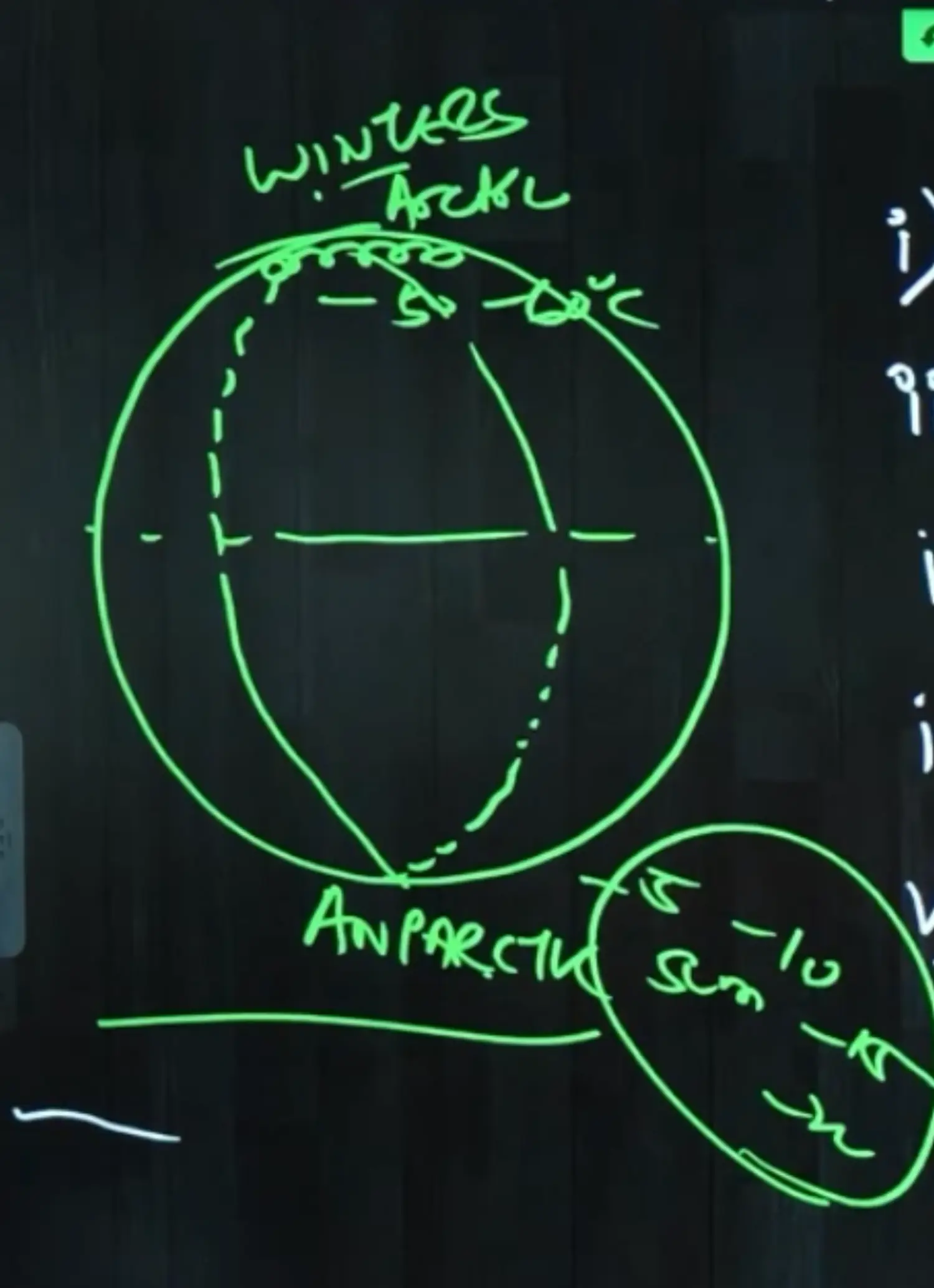
- It is the Longest Known Migration in the World
- Birds can sense the Earth's Magnetic Field Lines Along with Position of Sun Moon and Stars
Transhumance
- is the Seasonal Migration of Certain Hilly Tribes from Top of the Mountain towards Valley or Pastures
- Kashmir → Gujjars and Bakarwals
- Himachal → Gaddis
- UK → Bhotias
- Sikkim → Lepcha
- Hibernation
- In General Called as the “Winter Sleep”
- Hibernation means Reduction of Body Metabolism Activity to Zero or Minimum to Conserve the Heat
- Example
- Polar Bear
- Bats
- Lizards
- Aestivation
- It is called Summer Sleep only during day time
- during aestivation animals can move out during day time
- Examples
- Bats
- Rabbits
- Flying Fox
- Camouflage
- It is to blend with surrounding, cryptic appearance and false appearance
- Maximum Camouflage is seen in Reptiles and Butterflies
- Example
- Chameleon
- Octopus
- Butterflies
- Echolocation
- Echo is Reflected Sound
- Dolphins and Bats which are Blind release certain Sounds and in Reverse Coming of this Echo, They Locate Locations
- It helps them in Prey Catching and Movements
Adaptation Related to Plants
Xerophytic - Dry
They are Called Dry Plants
Plants found in Arid and Semi Arid Conditions
They Face
- High Temp
- Scarcity of Water / Moisture
Challenge faced by them are
Denaturation of Proteins → Protein Get Denatured due to Temperature
Adaptations for Temperature
- Adaptation 1: To Prevent this they will develop Heat Shock Proteins - Chaperonins
- Adaptation 2: Proline Amino Acids
Adaptations for Scarcity of Water & Moisture
Not all adaptations are found in all Xerophytes, some plants have some adaptations
Important Terms to Know
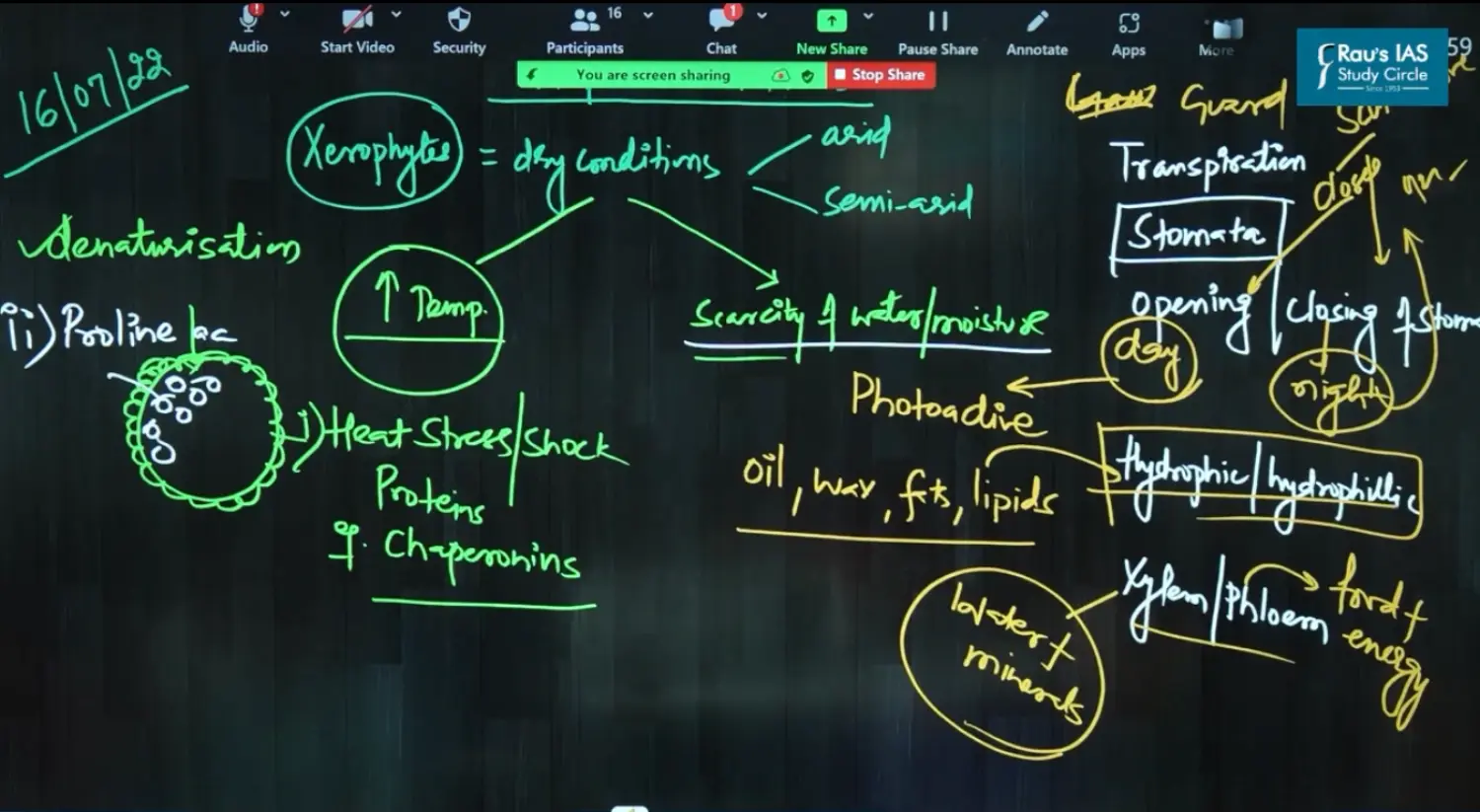
- Transpiration - Loss of Water Mainly from Leaves of water due to Pressure Difference
- Evaporation is a Part of Transpiration
- Stomata - Leaves of Plants Opening is called Stomata
- Stomata are Generally
- Open During Day - Photo Active
- Closed During Day & Open During Night - Scotoactive
- They are never completely open or completely closed
- Opening and Closing of Stomata is done through - Guard Cells
- Stomata are Generally
- Exchange of Gas takes Place from Stomata
- Xylem - For Conduction of Water and Food and Energy
- Phloem - Conduction of Food and Energy
- Hydrophobic - Water Repelling
- Hydrophilic - Water Atracting
Adaptation 3: They have Deep Root Systems
Adaptation 4: They have small sized Leaves for less no of stomata for less transpiration - 80%
Adaptation 5: Deeply Seated Stomata or Sunken Stomata which is on the backside of these small leaves - 10%
Adaptation 6: Scotoactive Stomata i.e Open During Night for prevention of Transpiration - 5%
Adaptation 7: Waxy Cuticle to Repel the Water Moving Towards Stomatal Opening
Diagram
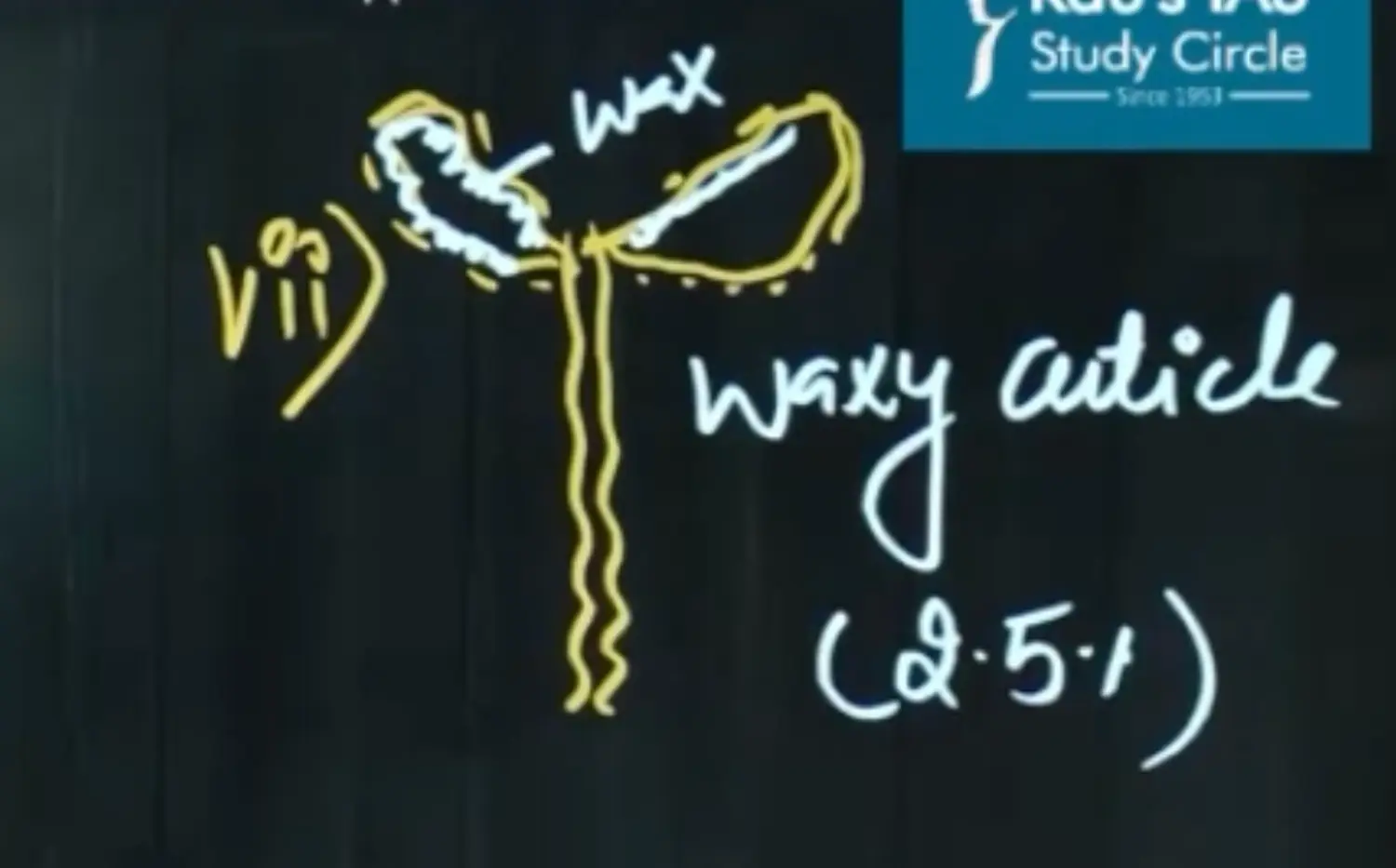
Adaptation 8: Leaves Getting Modified into Spines or Thorns
Adaptation 9: Succulence - Storage of Extra Water in Extra Body Spaces like Swollen Stem of Cactus
Adaptation 10: Ephemeralism - J Shaped Growth Curve → Small Life Time
Adaptation 11:
Most Common Form of Photosynthesis is termed as C3 Form of Photosynthesis
In Many Xerophytes there is Special Form of Photosynthesis is called CAM Photosynthesis
CAM - Crassulacean Acid Metabolism, also known as CAM photosynthesis, is a carbon fixation pathway that evolved in some plants as an adaptation to arid conditions that allows a plant to photosynthesize during the day, but only exchange gases at night
CAM and C4 are somewhat related but not the same
- Halophytic - Salty
- They are Plants of Salty Conditions
- Example are Mangroves
- Biggest Challenge faced by these plants is presence of extra salt in the surroundings
- Example of Mangroves are : Sundari, Sonaresia, White Chippi or Apple Mangrove, Avicenna, Rhizophora, Sonerasia
- They have 4 Prominent Adaptations
Adaptation 1: Salt Glands
- Maximum are Found in Roots
- They will Remove the Extra Salt from the Body mixed with Secretion
Diagram for Adaptation 2 & 3
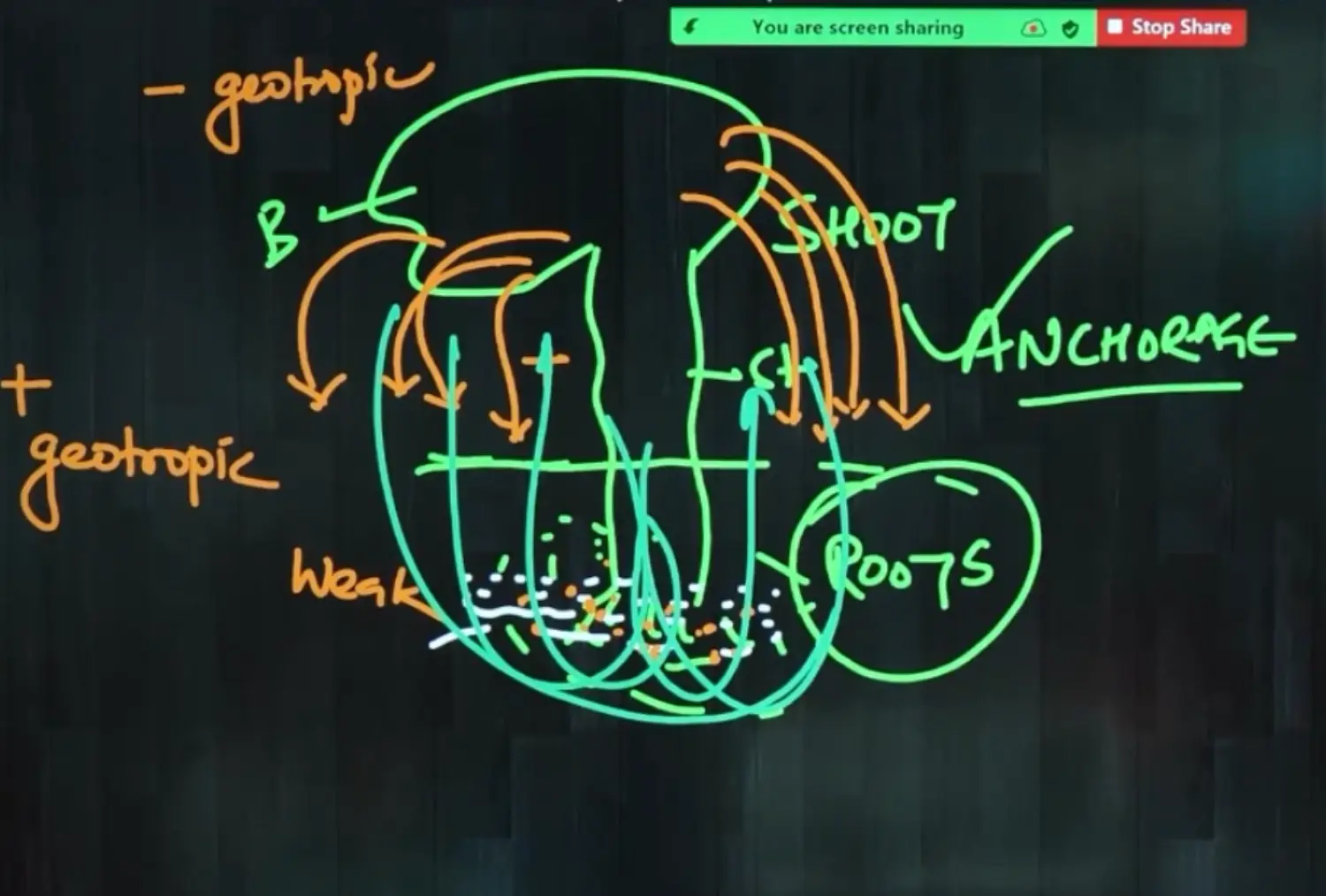
Adaptation 2: Prop and Stilt Roots
Branches Come Down
in General
- Geo - Earth
- Tropic - Towards Earth
- Roots → Positively Geotropic
- Shoots - Branches → Negatively Geotropic
Here Adaptation
Prop and Stilt Roots are Positively Geotropic Branches which are coming down to support plants in Mangroves but they act as roots. Hence Called Positively GeoTropic Prop and Stilt Roots
Adaptation 3: Pneumatophores
They are the Respiratory Roots of Halophytes, which are Negatively Geotropic, coming out from exchange of Gases
Adaptation 4: Vivipary
Vivipary is Germination of Seeds Taking Place when it is still attached to the Parent Plant to Avoid the Stress of Salinity in the Ground.
It is typical characteristics of Halophytes Like Mangroves
Oligotrophic - Few
Oligotrophic Ecosystems or Soils are not fully supportive for growth of life or vegetation. They provide only a few conditions for sustenance of life. Rest of the Factors are missing. Hence should be supplemented with Adaptations or Associations.
Examples Are : Lichens
Lichen - Symbiotic Relationship Between Algae and a Fungus
Algae - Phycobiont
Myco - Mycobiont
Algae - Producer - Photosynthesis - Food -
Fungus - Certain Projections Like its Fingers called as Fungal Hyphae → Better Absorption of Water and Minerals
Hence Fungus Gives Better Absorption of Water and Minerals and Algae in Return Gives Foods
Diagram Example
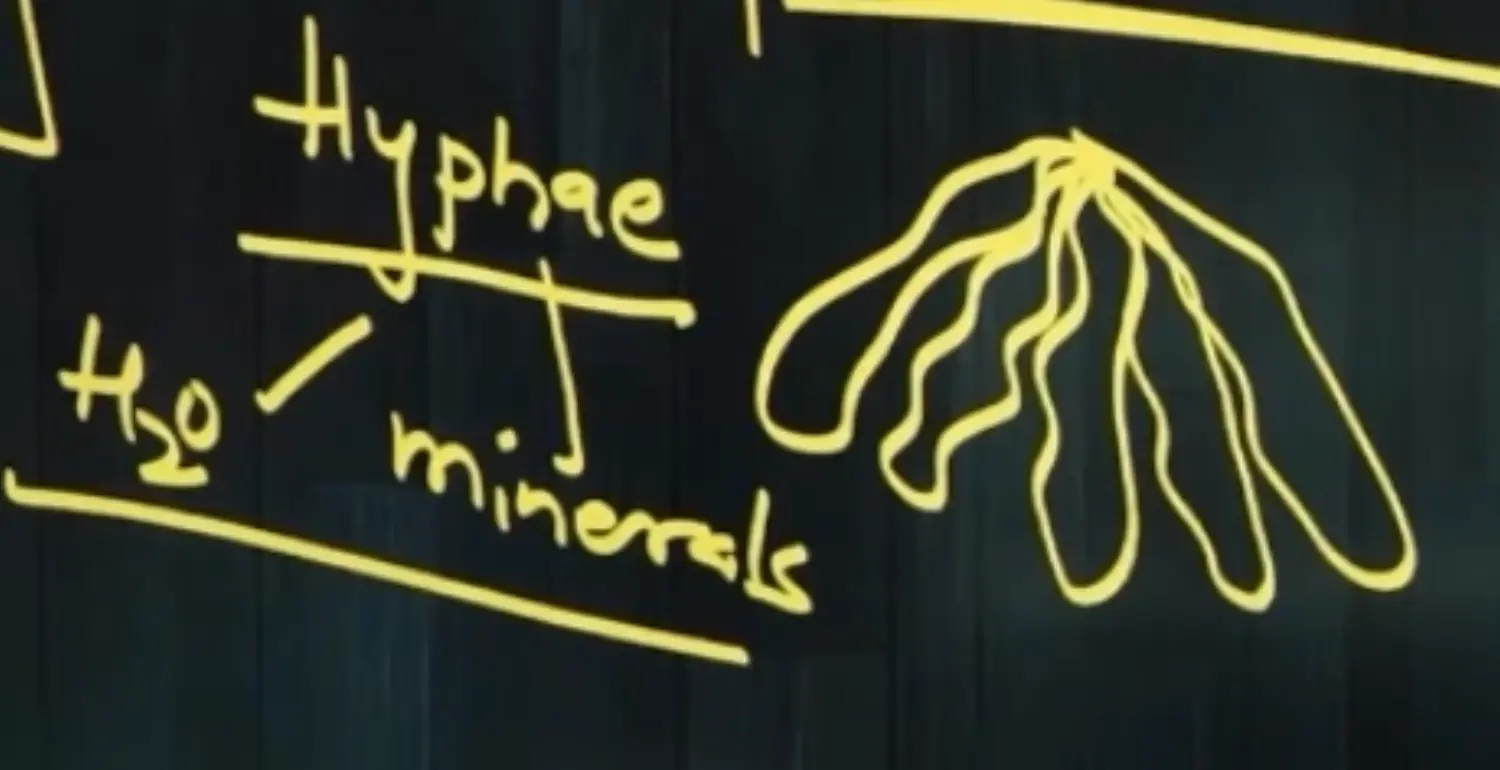
Examples Are : Mycorrhiza
Mycorrhiza - Symbiotic Relationship Between Plant Roots (Roots of Higher Plants) and a Fungus
Higher Plants in Terms of Evolutionary Hierarchy like Gymnosperms and Angiosperms
Fungus Hyphae Helps in Better Absorption of Minerals and Water, Plants Give them Food
Hence = due to this there will be
- increased production
- increased resistance to diseases
- increased resistance to water stress
Mycorrhizal Biotechnology is use of Genetic Engineering and Biotech Applications for Inducing the Formation of Mycorrhiza. Benefits will be same as Point 4
Hydrophytic - Water
Plants of Water Conditions
They Need
- Buoyancy
- Upthrust and Floatation
Adaptation 1 : Aerenchyma
These are Air Filled Tissues and Spaces for Exchange of Gases.
Generally found in Leaves
Adaptation 2 : Waxy Body Surface
Adaptation 3 : Inflated Petiole
Petiole → Leaf Stalk → Connection of Leaf with Stem
Heliophytic & Sciophytic Adaptations - Sun
Heliophytic - Sun Adapted
Sciophytic - Shade Tolerant
Passena Kahan Zyada Niklega ?
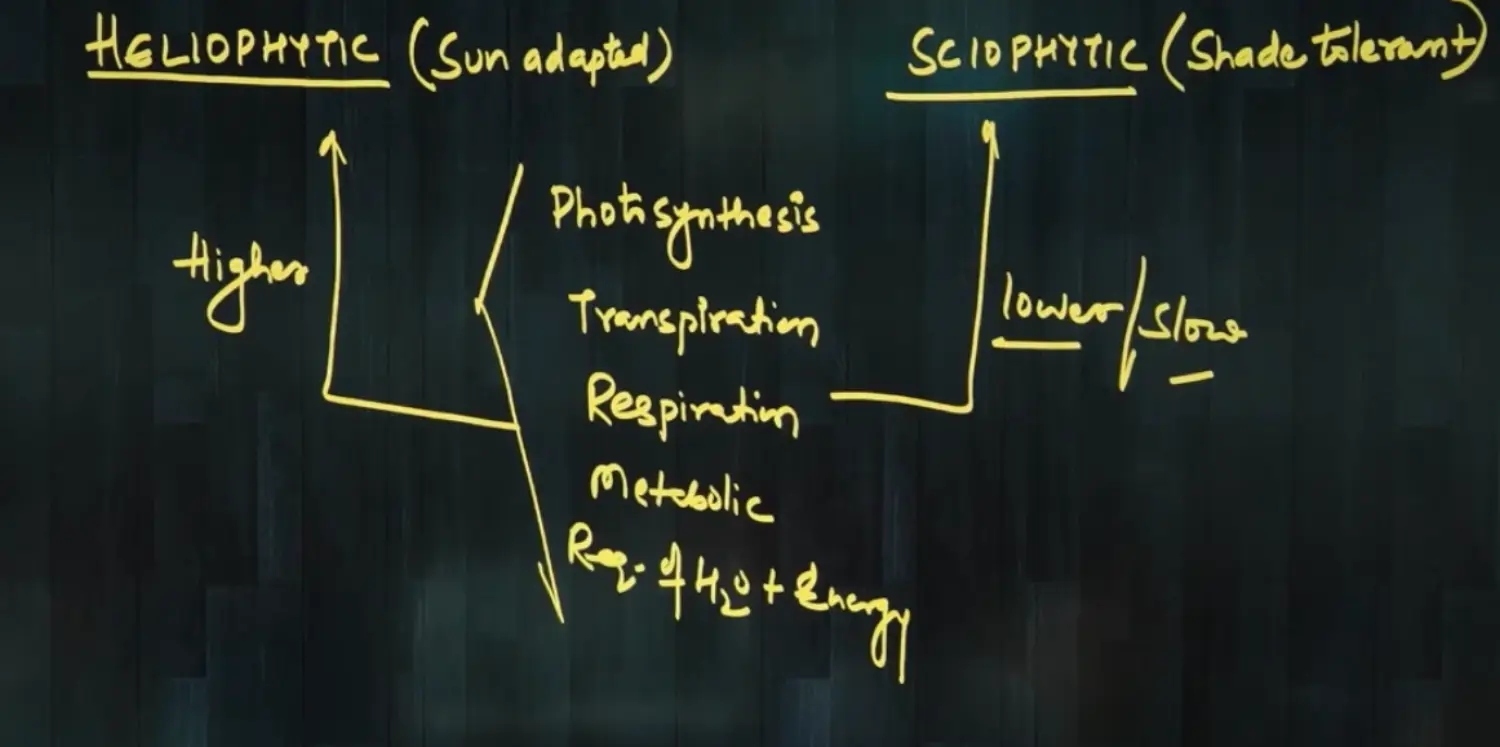
Where will we find more Chlorophyll ?
Sciophytes have high amount of Chlorophyll in their leaves cuz whenever there will be availability of Sunlight. The High Chlorophyll content will use it maximally
Heliophytes have less chlorophyll as compared to Sciophytes
Ecological Interactions
Symbols
“+” → Benefited
“-” → Human Ecological interactions
“N/O” → Unaffected
Summary
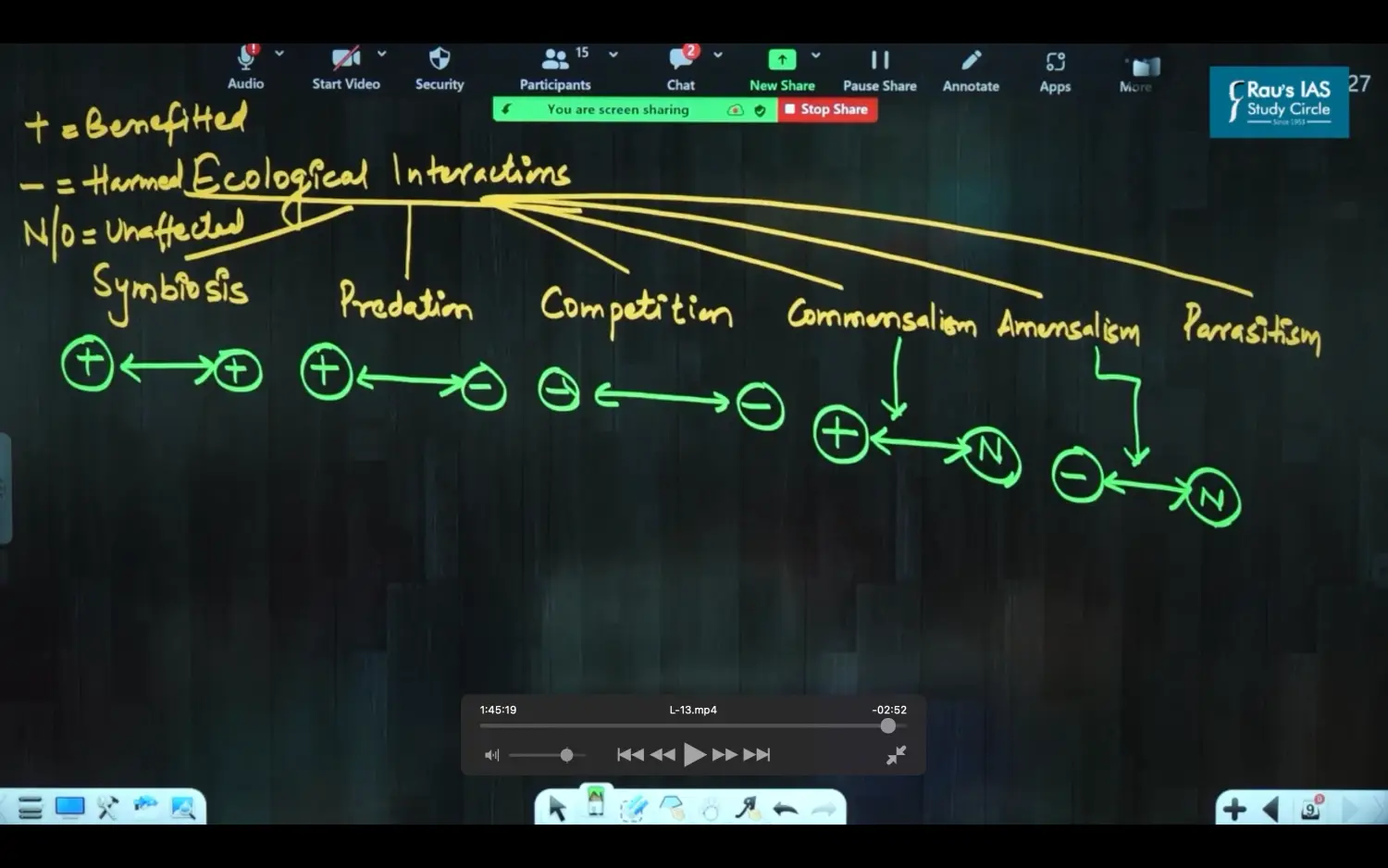
Symbiosis
- Both Participants get benefitted from Relationship
- Examples of Symbiotic Relationships
Lichens - Fungus & Algae
Mycorrhiza - Higher PLant (Gymno & Angio) + Fungus
N2 Fixation
- Elemental or Gaseous form of Nitrogen cannot be picked up by Plants due to inability of PLant Enzymes
- Hence this Nitrogen should be converted into
- Ammonium Ions
- Nitrites
- Nitrates
- This Conversion and Dumping into Soil is done by
- Rhizobium
- Azotobacter
- Azospirillum
- Chemical Fertilisers used in Agriculture - NPK
- Urea - Nitrogenous Fertiliser
- DAP - Diammonium phosphate
- Potash -
- These Fertilisers Contaminate Env
- Soil
- Water Bodies
- Ground Water
- They are Not Safe for Human and Animal Consumption
- These Bacterias Hare Safe to Human Health and Environment and provide the same NPK - Hence are called Biofertilizers
- Promotion of Growth of These Bacteria in Farming is called - Organic Farming → Supported by Paramparagat Krishi Vikas Yojana
- Not only these Bacteria but certain Cyanobacteria(BGA) can also help in Nitrogen Fixation
- Nostoc
- Anabaena
- Aulosira
- Oscillatoria
Corals
Conditions Necessary for Formation of Coral
Warm Tropical Waters ( 26 C - 33 C )
Found in Shallow Parts of the Ocean, Not Found in Deeper Parts.
Some Exceptions Do Exist
Oxygen Amount Should be Sufficient
Nutrient should be Sufficient
Corals need Saline Water → Not Found in Fresh Water or River or River Belts
Water should be free from Sediments
Types of Corals
- Fringing Reefs
- Barrier Reefs
- Atolls
Formation of Corals
There is Symbiotic Relationship of
Zooxanthellae
Algae - Phytoplanktons - Producers
Coral Polyps
Polyp is an INVERTEBRATE of the category Cnidaria (also called as Coelenterata)
Example of Coelenterata- Jellyfish
Invertebrates form the Hard Calcareous Skeleton
Relationship
- Coral Polyps - Hard Calcareous Skeleton & Shelter
- Zooxanthellae - Producers and Colors
They are called as Rainforest of the Sea due to High Species Diversity. Million of Aquatic Diversity take shelter within Coral Ecosystem
Prominent Corals of the World
- Great Barrier Reef
- Chagos Maldives Laccadive Atolls
- Belize Barrier Reef
- Apo Reef Philippines
- Caribbean Reefs
- Red Sea Corals
- Coral Triangle - Home to more than 40% of World Triangles
- Point 1 - South of Japan
- Point 2 - South of India
- Point 3 - Melanesia / Polynesia → Fiji / Tuvalu / Kiribati
Prominent Corals of the India
- Lakshadweep
- Andaman Nicobar Island
- Gulf of Kutch
- Gulf of Mannar + Palk bay
- Netrani Island of the Coast of Karnataka
- Malwan Coast of Maharashtra (There is a Malvan Sanctuary Also)
Pollination
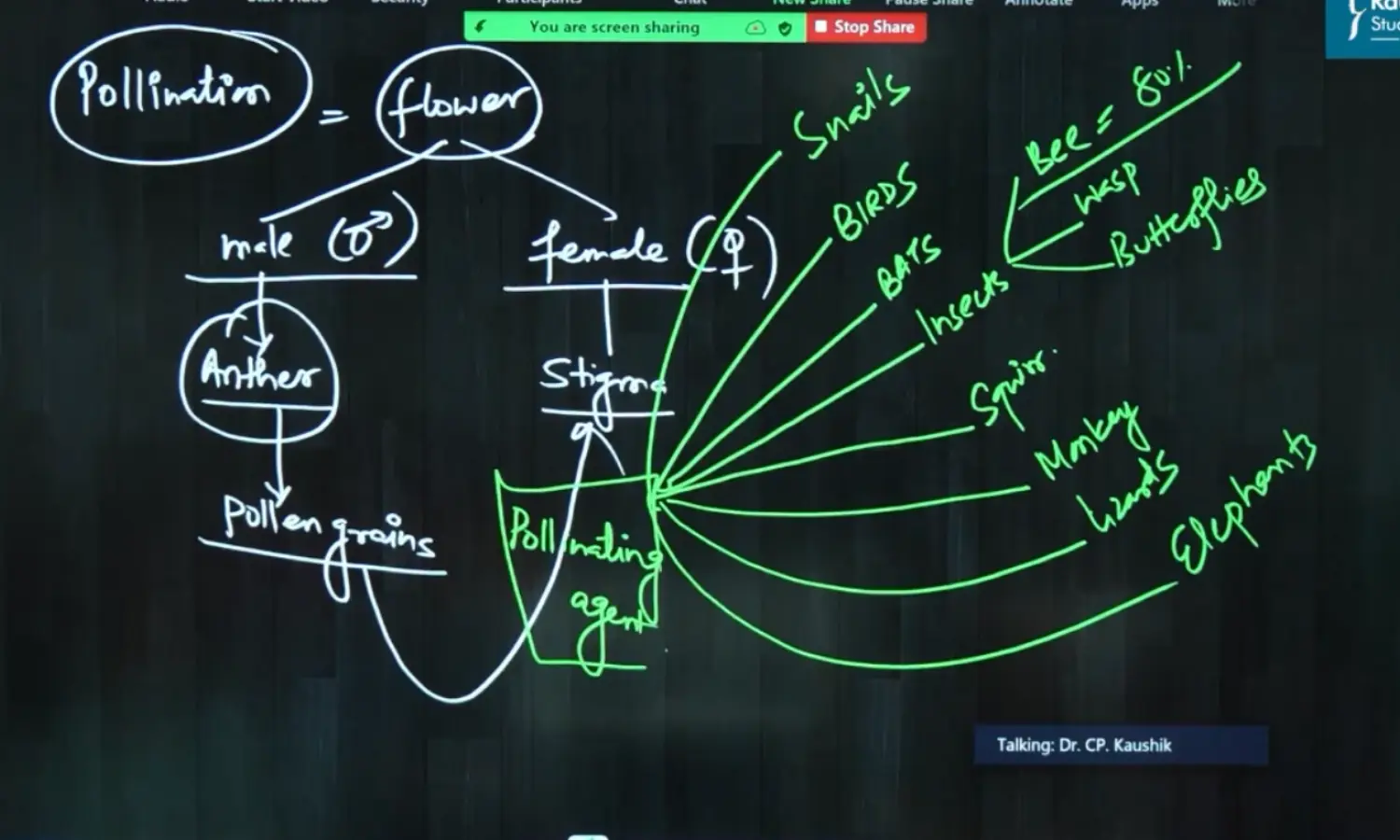
Flower is the Reproductive Parts of the Plant
Flower can be
- Male → Anther → Pollen Grains
- Female → Stigma
Transfer of Pollen Grains from from Anther of Male Flower to Stigma of Female Flower by Means of Pollinating Agents
Pollinating Agents Examples - Biotic Components - Part of Symbiosis
- Snails
- Birds - They Prefer to Pollinate Colorful Flowers
- Bats - They Prefer to Pollinate Fruit Bearing Plants
- Insects
- Bees - 80% of Pollination is done by Honey Bee
- Wasp
- Butterflies
- Squirrel
- Monkey
- Lizards
- Elephants
Pollinating Agents - Abiotic Agents - Not a Part of Symbiosis
- Air / Wind / Wind Dust / Dust Cross
- Water / Rain
Two Types of Symbiosis
- Self Pollination - Have Both Male and Female Parts within the Same Flower
- Cross Pollination
- Same Plant & Different Flower - Geitonogamy
- Plant is Different & Flower is Different - Genetically Similar → Xenogamy
Recent Report by IPBES highlighted about the sharp decline in the population of Pollinators in different parts of the world particularly in Latin and South America. It had less impact on Country like India
This can lead to an imbalance in the functioning of an ecosystem challenging the food security etc. Can lead to extinction of some species also
MoEFCC Responded by formation of ILTEO - India Long Term Ecological Observatories, which are research stations or observatories in different biogeographic regions of the country, to continuously monitor the healthy functioning of ecosystems and pollination is a Significant part of this
Predation
Competition
Commensalism
Amensalism
Parasitism
Global Warming, Climate Change, Pollution & Sustainable Development
Introduction to NATURAL Greenhouse Effect
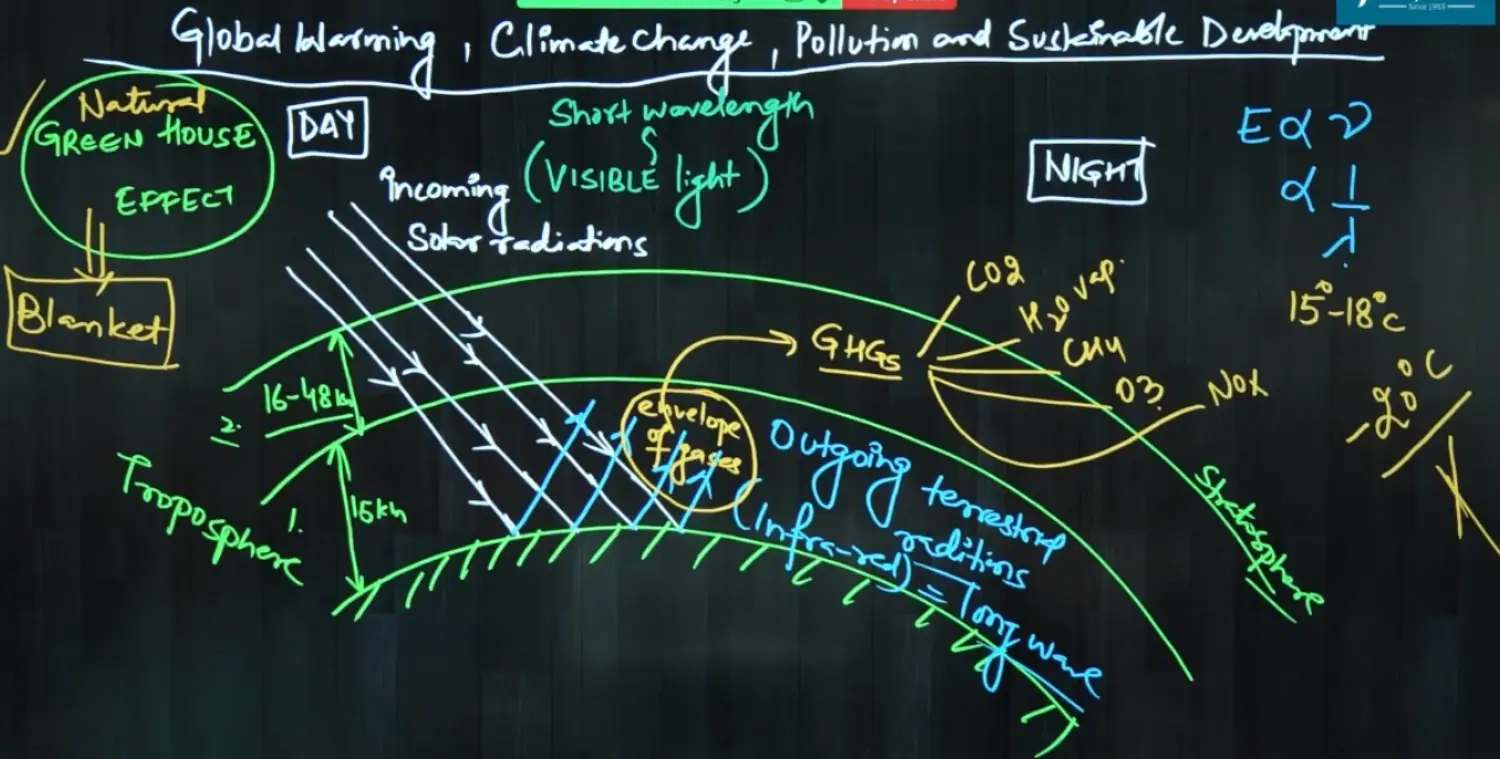
Envelope of Gases → Greenhouse Gases → Co2, H2O, CH4, NOx → Capture Outgoing Terrestrial Radiation
Heating is taking place from the Soil → Hence Lapse Rate Occurs
Blanketing Effect
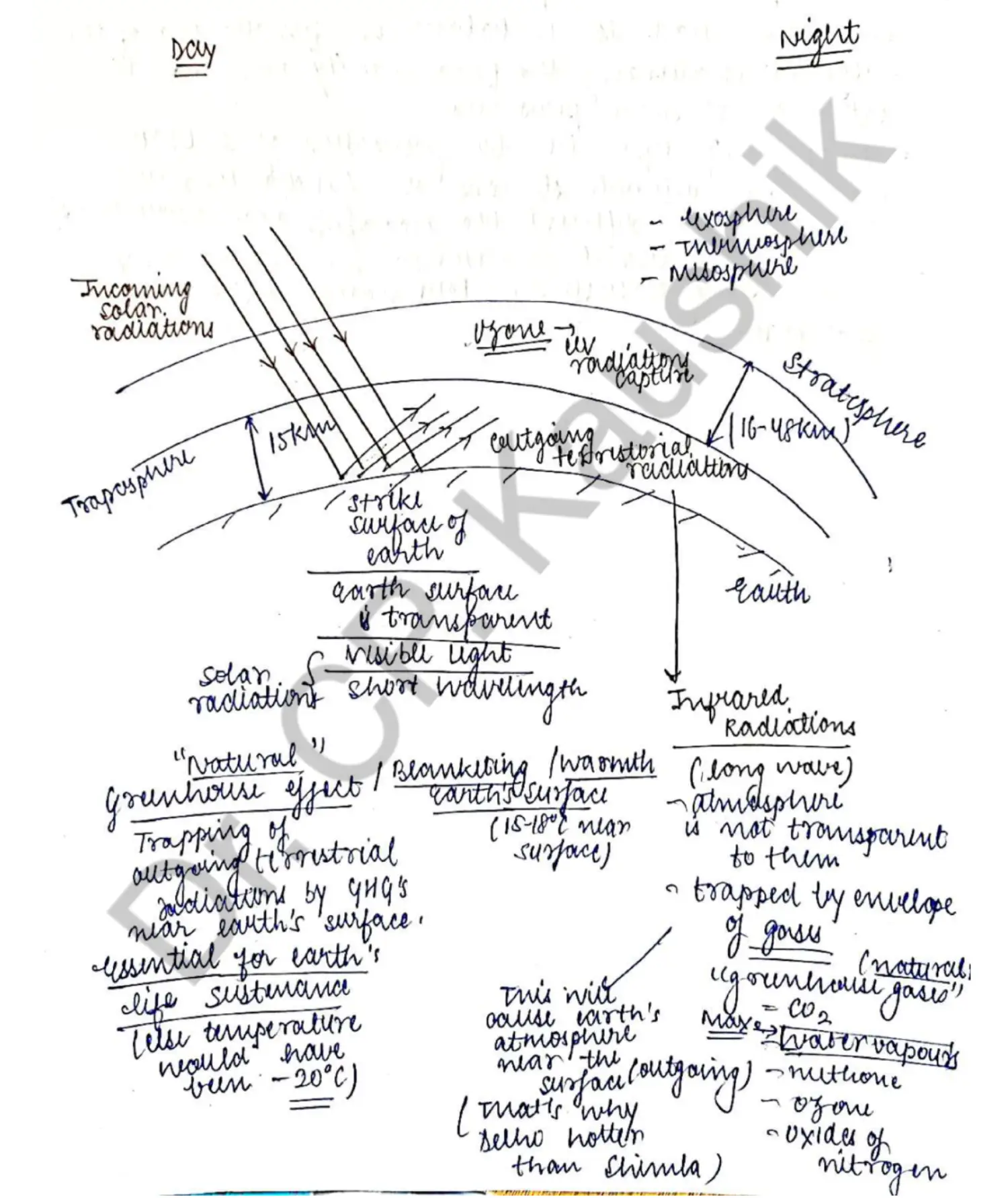
Components of Sunlight
Cosmic Rays - Highest Energy - Highest Frequency - Wave Length Minimum
Gamma Rays
X Rays
UV Rays
UV Rays C - 5
UV Rays B - 6
UV B - Maximum Part Absorbed by Stratospheric Ozone Layer
Very Small Amount of UV B Reaches Upto Surface of Earth
UV Rays A - 7
Lesser Absorbed by Ozone Layer and Maximum Reaches upto Surface of Earth
Visible Rays
White Light & VIBGYOR → Used by Plants for Photosynthesis → PAR - Photosynthetically Active Radiation → Its Wavelength 375 to 720 Nanometers
- Infrared
- Microwaves
- Radio Waves
- 1+2+3+4 - Absorbed by and Reflected by Exosphere → Highly Lethal
Analysis of GHG for CFC & Fluorides
- Natural Greenhouse Effect - Good - Blanketing Effect - Maintains Temperature for Earth
- Co2, H2O, CH4, NOx - Natural Greenhouse Effect
- Maximum Contribution in Natural GHG is of Water Vapour
- The Process of GHG
Now If Concentration of Methane, Co2 and Oxides of Nitrogen
Sometime Man Made GHG like
- Fluorinated Gases → PFC & HFC
- PFC - Perfluorocarbons
- HFC - Hydrofluorocarbons
- SF6 → Sulphur Hexafluoride
NOTE on CONFUSION Between CFC and Fluorine Derivatives
Chlorine Derivatives like CFC / HCFC / CCl4 are NOT Greenhouse Gases. They are Strong Ozone Depleting Substances
They WERE being used in AC’s, Refrigerating Units, Rocket Propellants, Fire Extinguishing Agents, Plastic Foaming Agents (Shaving Foam), Deodorants
They are so volatile, they can reach upto Stratosphere → Here UV will Attack CFC
CFC will Release → CL* (Free Radical)
CL* (Free Radical) + O3 → O2 + Cl → Cl+O3
In Montreal Protocol:
It was said that lets stop the use of Chlorine Derivatives
Chlorine Derivatives were replaced by Fluorine Derivatives → But They are Strong Greenhouse Gases
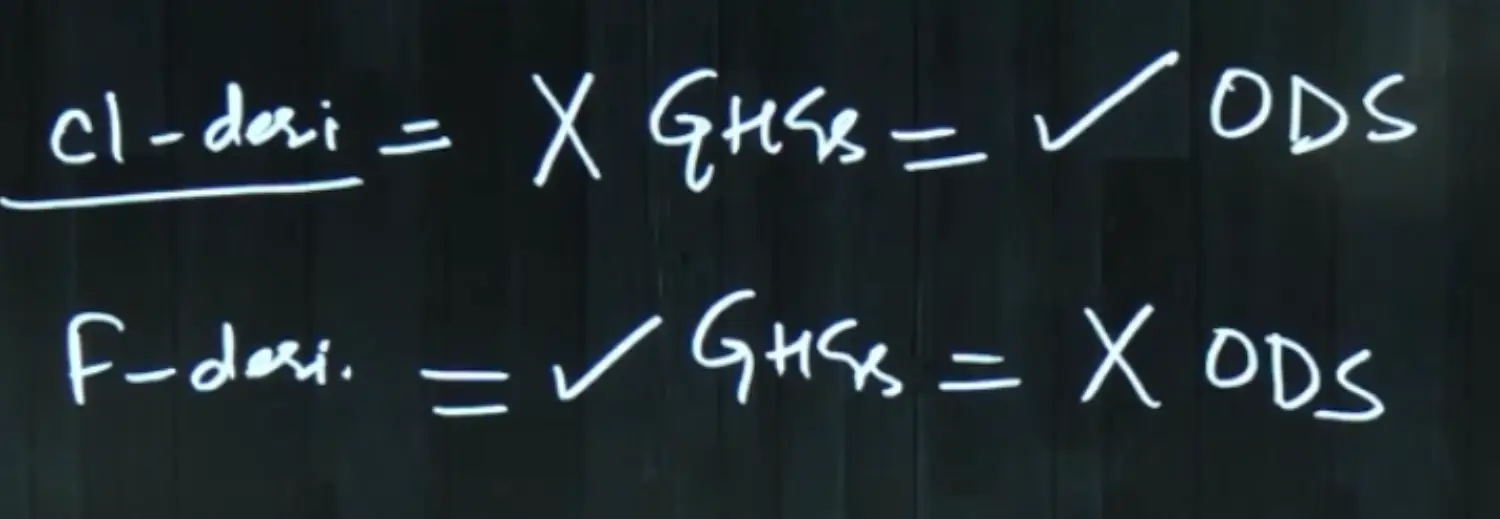
- Fluorinated Gases → PFC & HFC
More Trapping of the Outgoing Terrestrial Radiations
Increased Warmth Near Surface of the Earth
Earth's Average Temp Near its Surface Increase
This is Global Warming
- Hence, Global Warming is Increased Natural Greenhouse Effect → This is Anthropogenic by Man
Carbon Footprint & Carbon Handprint
Carbon Footprint is Total Emissions of Greenhouse Gases Directly or Indirectly by a Country, City, Group or an Individual or by an Event.
It also included emissions occurring during international transport of road, air, water etc
It Not only includes the emissions occurring in consumption of goods and service but also takes into considerations, emissions that have already occurred, in production of those goods and services
Carbon Footprint for Various Countries is calculated on Per Capita or Per Head Basis
Carbon Footprint Per Head for a Country is - Countries with Highest Carbon Footprint
- USA
- Singapore
- Canada
- Germany
Biggest Emitters of GHG in India
- China
- USA
- European Union
- India
- Russia
Carbon Hand Print Includes various steps taken by a country or an institution or by an individual to minimise the footprint
It not only celebrates various steps that have already been taken but also considers the steps that need to be taken for minimising the emissions
For Example, Large Scale Plantation Drives, Aforestation, Promotion of Electrical Vehicles, Clean Energy Methods, Govt India Plan to fix AC Temp to 22 C only, In USA its Already Min Temp is 22
Carbon Watch: First Such Initiative in India Started by UT of Chandigarh to study the footprint os Residents of Chandigarh based on 4 different parameters for which the details has to be filled on an application based platform created in this regard
Factors Included are
- Utilisation of Water
- Consumption of Energy or Electricity
- Waste Type and amount generated
- Mode of Transport
Sources of Greenhouse Gases
Stubble - Agri Residue
Ruman is a Part of Cattles Stomach - Bacteria contains Methanogen - Generates Methanes
| CO2 | Methane | NOx | Fluorinated Gases | | --- | --- | --- | --- | | 1. Plants & Animal Respiration 2. Volcanic Eruption 3. Combustion of Fossil Fuels in Industry or Agriculture or Transportation 4. Burning of Organic Matter or Organic Waste like Forest Fires, Stubble Burning 5. Cow Dung Cakes 6. Mining of Coal, Petroleum, Natural Gas 7. Burning of Plastics | 1. Natural Process of Decomposition 2. Volcanic Eruption 3. Ruminant Animals 4. Cattle Rearing through Animal Waste 5. Paddy Fields 6. Marshy Swampy Area like Mangroves 7. Landfills or Waste Management Sites 8. Mining of Coal 9.Methane Hydrates trapped below Ice Cover in Sea Mountains and Permafrost (Permanently Frozen Soil in Polar Area) 10. Combustion of Fossil Fuels in Industry and Transportation 11. Thermal Power Plants | 1. Combustion of Fossil Fuels in Industry and Transportation 2. Thunder and Lightening 3. Excessive use of Nitrogenous Chemicals in Agri like Urea 4. Thermal Power Plants 5. Poultry Farming→ Poultry Waste contains ammonia, which oxidises to release Nitrogen Oxides | Air Conditioning, AC, Refrigeration, Rocket Propellants. Plastic Foaming Agents like Shaving Foams, Fire Extinguishing Agents |
Carbon Sequestration * FSI
Capturing and Storing of CO2 for Longer periods to avoid its contribution in Global Warming and Climate Change
Types of Sequestration
Natural Methods of Sequestration
- By Forest - Through Vegetation
- By Ocean - Through Phytoplanktons
They Both are Important Carbon Sinks
Anthropogenic Methods of Sequestration
Wetlands Restoration
Wetland Soil is an Important Carbon Sink, Maintaining the dead remains or organic matter in undecomposed or partially decomposed forms for Longer periods due to less availability of oxygen in muddy conditions of wetlands soil
It is nearly 7 to 8 percent of total soil on earth but can hold even upto 15% of the soil carbon due to slow rate of decomposition
Hence, Maintenance of Wetlands in Healthy Conditions & Restoration of Degraded Wetlands is having carbon sequestration potential
Zero Tillage Agriculture or NO Till Farming
Tilling Results in Soil Organic Matter, being broken down much more rapidly speeding up the release of Co2 into the air → Contributing to Global Warming and Climate Change
It keeps the soil organic matter intact in the Soil for Longer Periods slowing down the rate of release of CO2, So Having a Carbon Sequestration Potential
Biochar Burial (Biological Charcoal)
Running Notes
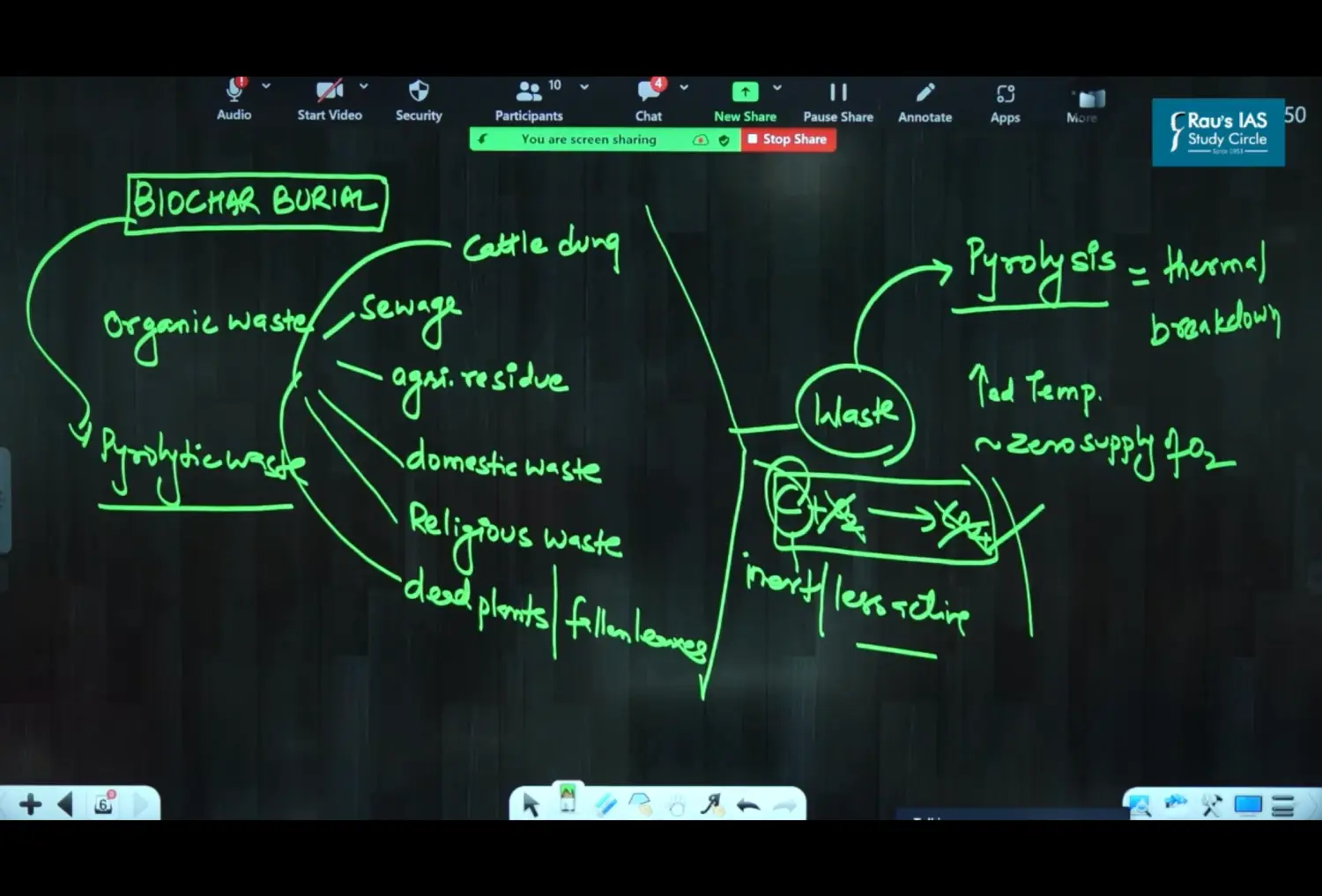
Biochar is Biological Charcoal. Biochar is Pyrolytic Waste.
It can used in Agri as Manure or Bio Fertiliser → It undergoes natural process of decomposition → Gives N, P, K etc but Co2 is less by 1/4th → Can be used as Soil Improver
Reduced GHG - Control in Global Warming or Climate Change
Pyrolytic Waste Usage in Bioreactor - Biogas or Gobar Gas - Used in Clean Fuel - CH4
Improve Income of Villagers or Farmers
Health Benefits and Promotion of Cleanliness in Villages
Hence Govt came up with Gobar Dhan Yojana
GOBAR : Galvanizing Organic Bio Agro Resources
It has been made as a Sub Component under Swachh Bharat Mission
Rural Component of Swachh Bharat Mission → Min of Drinking Water & Sanitation Now Ministry Dissolved, created under Jal Shakti Mission
Urban Component of Swachh Bharat Mission - Ministry of Housing and Urban Affairs
Class Dictation
Biochar is Bioorganic Charcoal Produced by Pyrolysis of Organic Waste. This is Thermal Breakdown at Increased Temperatures with Minimum or Zero Supply of Oxygens, It will minimise the active nature of carbon to block its oxidation into CO2 → It will help in mitigation of Global Warming and Climate Change
Examples of Organic Waste Are, Cattle Dung, Sewage, Agri Residue, Domestic Waste, Religious Waste, Dead Plants and Fallen Leaves
Organic Waste After Pyrolysis becomes Biological Charcoal i.e Biochar with its Carbon Less Active Minimising its Chances of Oxidation to CO2
This Biochar can be used in Agriculture Fields as a Biofertilizer or Soil Improver or Organic Manure, Increasing the Fertility of the Soil and Hence Production.
It Helps in Mitigation of Global Warming and CLimate Change by Reducing Emissions of Greenhouse Gases Particularly Co2.
Can be used in Bioreactors for Production of Bio Gas or Gobar Gas which is a Clean fuel rich in Methane
It can act as a Source of Energy Supply in the Villages
Can Help increasing the Income of Farmers and Villages
Can Promote Cleanliness in Villages also having health benefits with controlling spread of Diseases
With All these things → Gobar Dhan Yojana was Formed and has been made as a Sub Component under Swachh Bharat Mission Rural under Dept of Drinking Water & Sanitation, Union Jal Shakti Ministry → GOBAR : Galvanizing Organic Bio Agro Resources
Geological Sequestration
- Capturing and Storing of CO2 Below the Ground is called Geological Sequestration in between Rock Channels, Mined Coal Beds, Depleted Oil and Gas Reservoirs, Unmineable Coal Beds, Deep Saline Formations
- CO2 is Captured from the Source, Compressed and is Pumped below the Ground, so that its entry into the air can be blocked
- Mainly done with Industries
- Country which has Successfully done it is CarbFix Project of Iceland
Negative Emission Technologies (NET’s)
Running Notes
- Concept of Positive & Negative Emission
- Types of Sequestration
Natural Mechanism
- BECCS - Bio Energy with Carbon Capture & Storage are nothing but Biofuels
- Promotion of those Crops which Capture More & More CO2 and Store with them for more time is called Bio Fuel
- Example: Jatropha, Alfalfa Grass, Soyabean, Maze, Sugar Cane
Technological Intervention
Sometime also called Climate Engineering
Sulfate Aerosol Injection
Aerosol - Solid or Liquid Droplet
Space Reflectors or Space Mirrors
Marine Cloud Brightening
Addition of Certain Clouds to Brighten Clouds forming over ocean
Cirrus Clouds Thinning
Reflected Part of Sunlight is called Albedo
Class Notes
These are Technological Interventions or Efforts from the Side of Humans for Mitigation of Global Warming and Climate Change by Reducing the Intensity of Natural Greenhouse Effect or by Increasing the Capturing of CO2 by various methods like aforestation, biochar burial, restoration of Degraded Wetlands etc
NET’s are use of various technological and engineering applications in natural climatic phenomenon like increasing the reflected part of sunlight like albedo. So that it won't be contributing in greenhouse effect
Use of Sulphate Aerosols by Injecting them in Stratosphere
Space Mirrors and Reflectors
Thinning of Cirrus Clouds
Marine Cloud Brightening
Ocean Fertilisation
It is use of Mineral like Nitrogen and Iron to promote the growth of Phytoplankton so that it can capture more of CO2 and Photosynthesis
Details
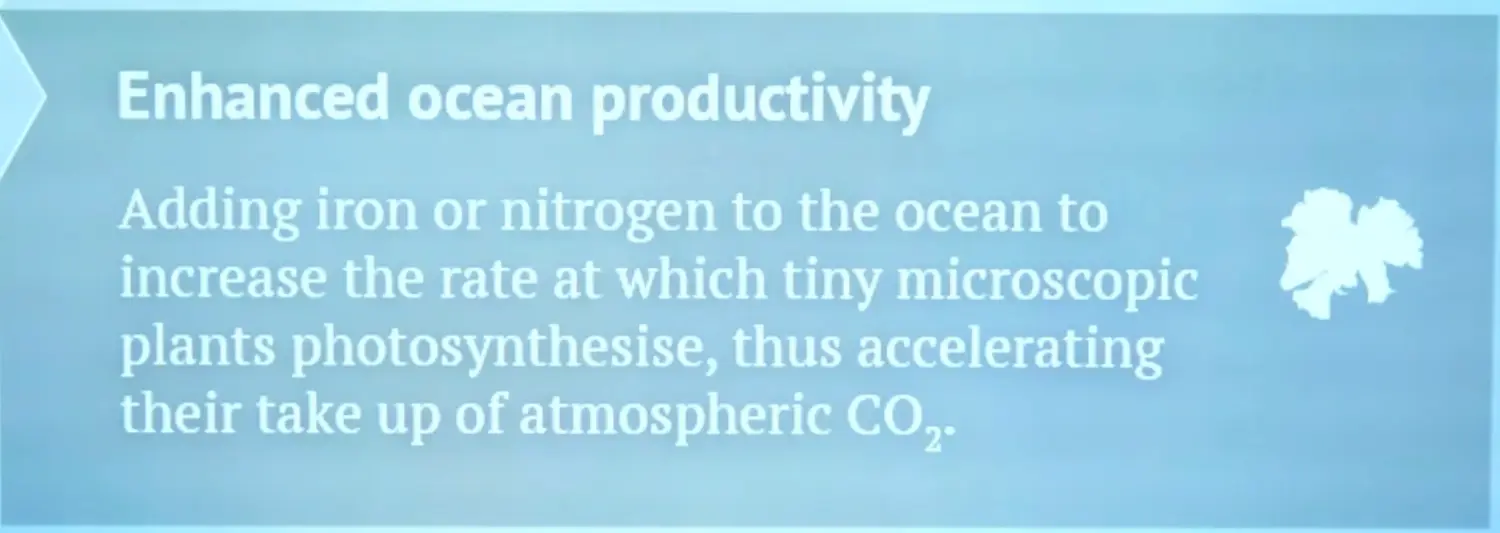
Cloud Treatment
Cloud Treatment to Increase Alkalinity → Addition of Alkali, will allow easy exit of Co2 or it may be dissolved
Blue Carbon
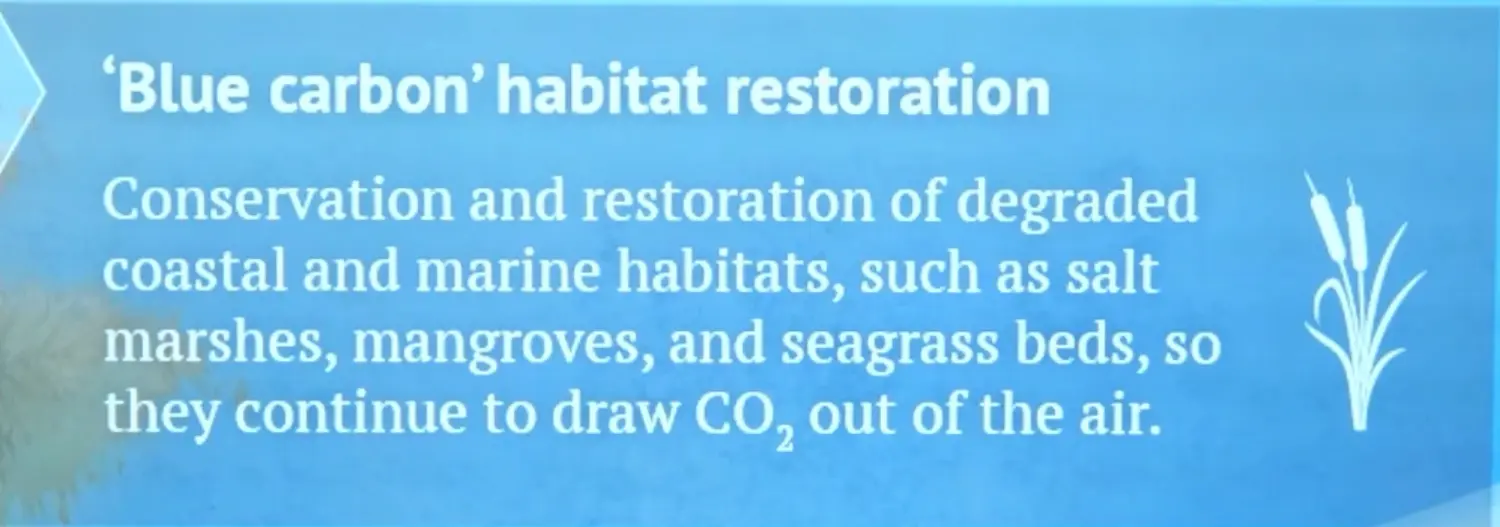
BECCS - Bio Fuels
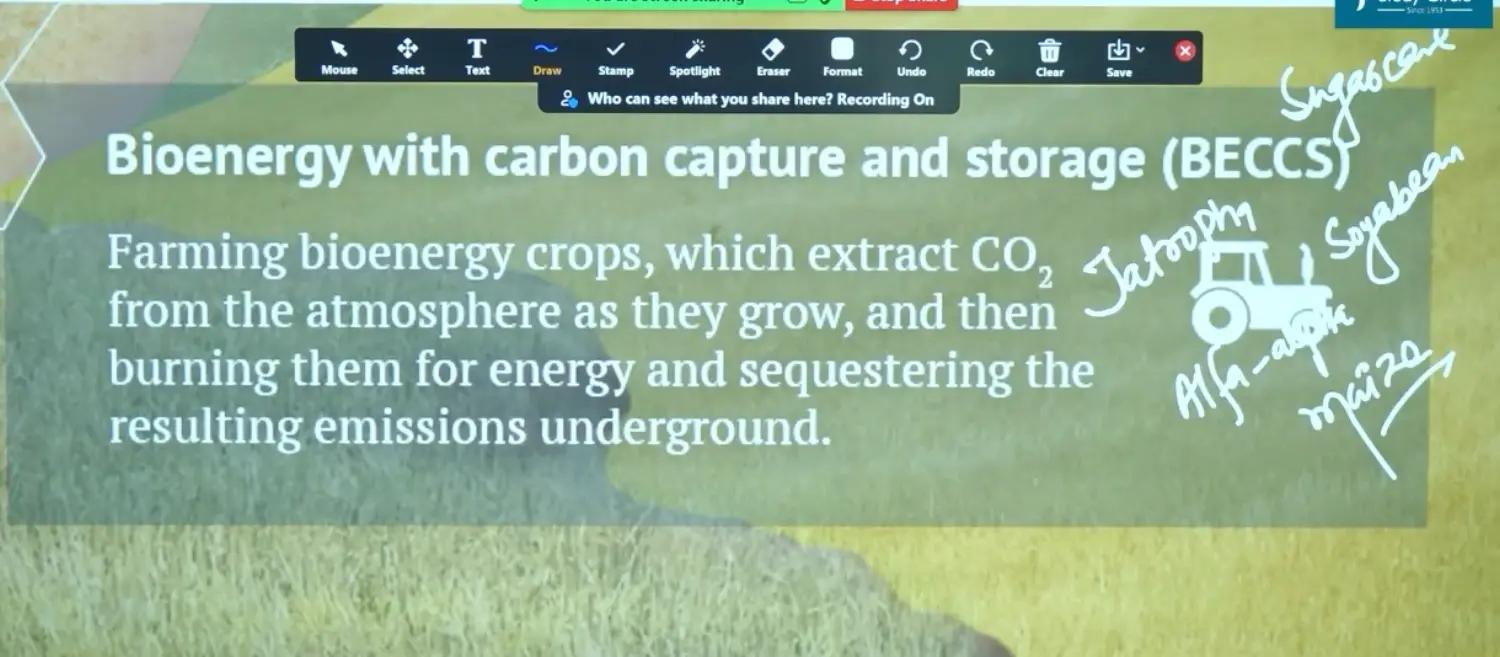
Impact of Climate Change
Impact of Increased CO2 and Subsequent Increased Temperature
Impact 1 - Flash Flood & Landslides
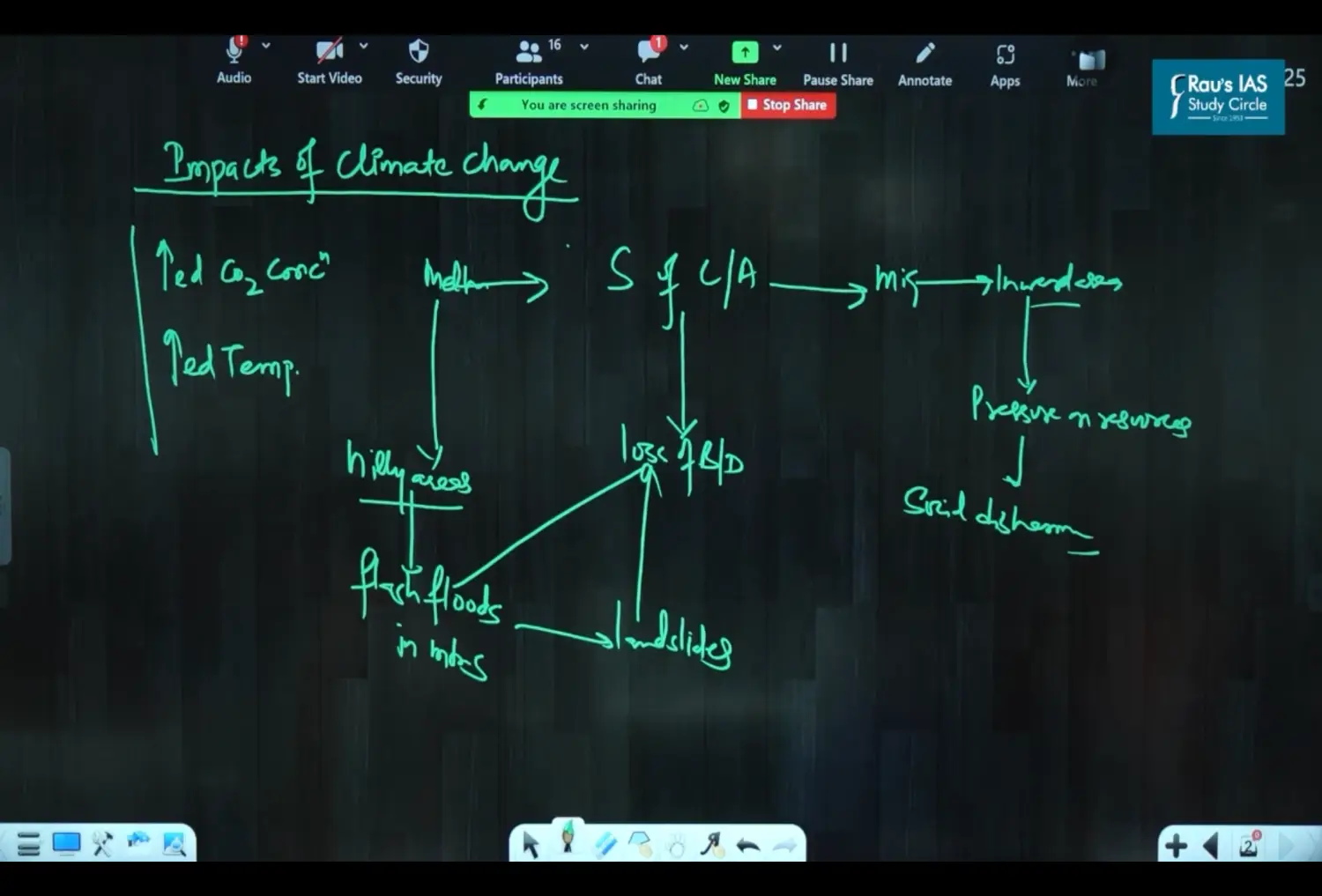
- Due to Increased Co2 Concentration and Increased Temperature → This can trigger melting of Glaciers, Sea, Ocean in Polar and Sub Polar Areas → In Permafrost Regions or the Higher Reaches of Mountains like Himalayas
- Melting of Glaciers = Rise in Sea Level = Submergence of Coastal Areas = Loss of Biodiversity = Migration of People to Inward Area = Pressure on Resources = Social Disharmony
- Melting of Glaciers = Hilly Areas = Flash Floods = Landslides = Loss of Biodiversity
- Over All → Loss of Agriculture and Large Scale Soil Erosion
Impact 2 - Forest Fires and Heat Waves
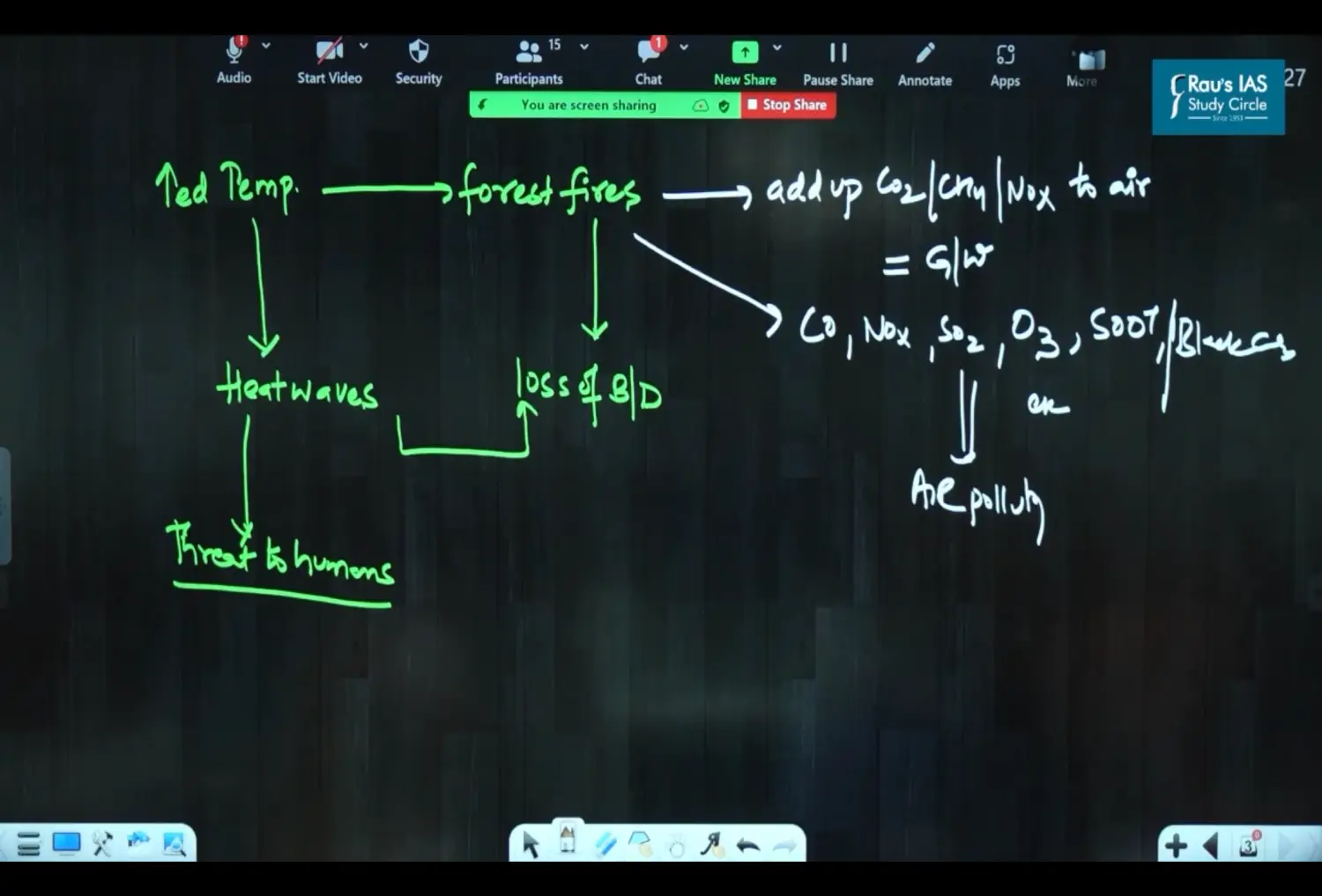
- Increased Temp = Forest Fires = Loss of Biodiversity
- Increased Temp = Heat Waves = Threat to Humans
Impact 3 - Deadly Trio of Climate Change
- Terms
- Ocean - P - Phytoplanktons
- H+ → Hydrogen Ion
- OH- → Hydroxyl Ion Concentration
- Dead Zones in the Oceans - Loss of Biodiversity
- Mind Map
- Deadly Trio of Climate Change
- Rise in Sea Surface Temperature → Due to Rise in Temperature of Surroundings
- Ocean Acidification → Long Term Decrease in Sea Water Ph by Decreased Concentration of Hydrogen Ions
- Decrease in O2 Dissolving Capacity of Oceans → Less Oxygen Availability will create Hypoxic Zones which can Intensify in Dead Zones
- All these Three Points Above are Threat to Entire Marine Ecosystem including Fishes, Zooplanktons and Corals
- Terms
Impact 4 - Stressed Coral & Bleached Coral
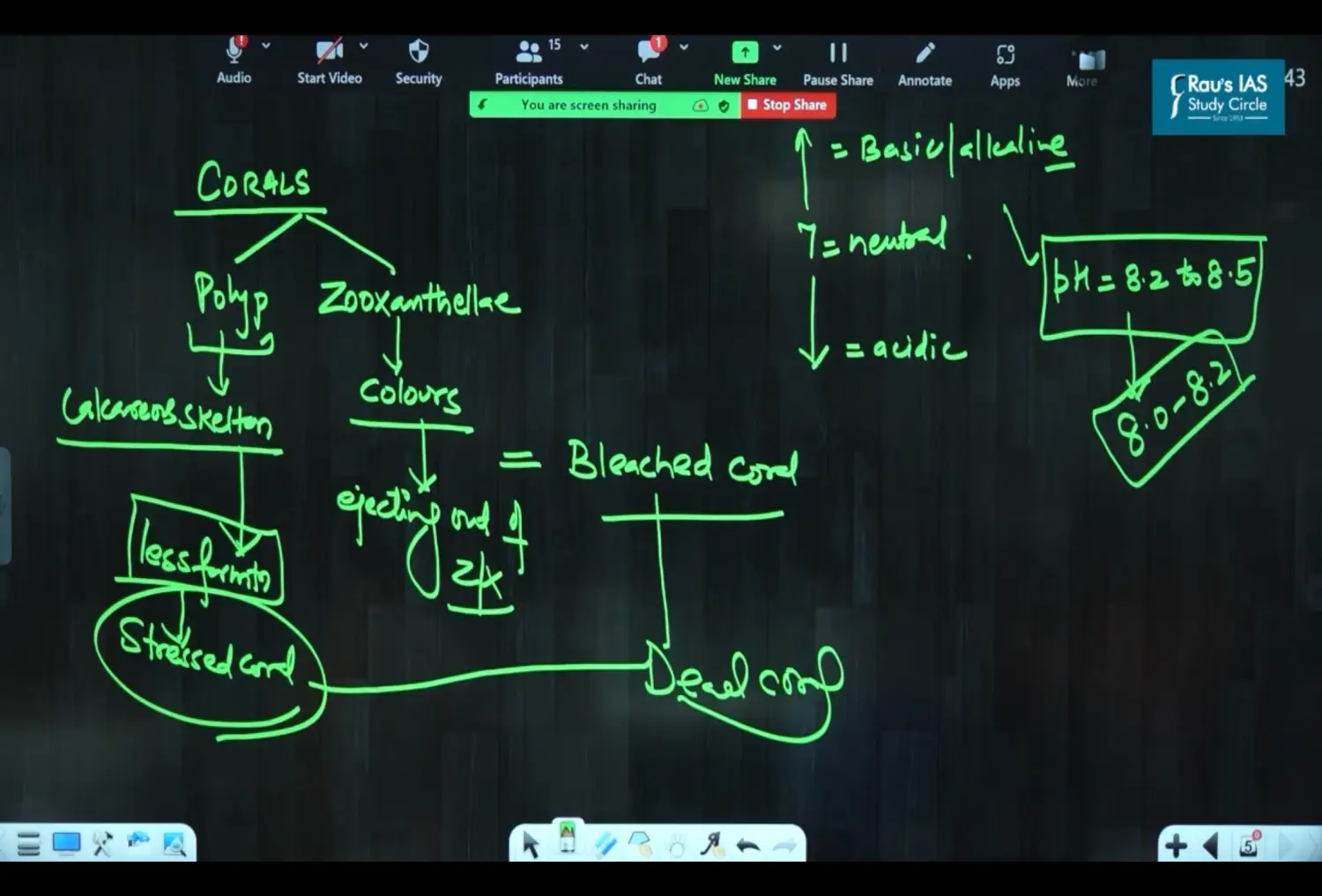
Corals → Coral Polyp (Exoskeleton) and Zooxanthellae (Color)
In Total Threat to Marine Bio Diversity
Impact 5 - Intensity of Disaster & Erratic Monsoon
By Name of Report : Assessment of Climate Change over Indian Region
Increased Frequency and Intensity of Disasters due to changes in the Climatic Conditions
Floods, Droughts, Cyclones, Forest Fires, Landslides, Threatening the Bio Diversity,
Changes in the Wind Patterns will adapt to the erratic nature of monsoon Impacting Agriculture and Over All Indian Economy
Hence, Already Erratic Monsoon will become more unpredictable
Impact 6 - New forms of Diseases
New forms of Diseases can spread due to exposure to different forms of Pathogens which are trapped below the Ice
Impact 7 - Migration of Species
- Species will tend to migrate from Equator towards the Poles and from Lower Elevations towards the Higher Elevations
- Species Includes both Animals and Plants
- Over All Change in Latitudinal and Temperature Relations
Ozone Depletion & Allied Legislation
Good Ozone - Stratosphere → Filters Negative Impacts of UV B
Bad Ozone - Troposphere → Pollutant & GHG → G/W
Ozone Depletion is Reduction in Good Ozone in Stratosphere
Reduction is measured Dobson Units in Stratosphere
This Reduction takes place due to
- Chlorine Derivatives → CFC & HCFC & CCL4
- NOx
- Bromine Derivatives -
- HBFC ( Hydro Bromo Fluoro Carbons - Used in Fire Extinguishing Agents)
- Halons
- Methyl Bromide (Strong Pesticide)
- Organic Solvents
- Carbon Tetrachloride CCl4 && Tri Chloro Ethane
- Used in Pharmaceutical Industry, Artificial Rubber Manufacturing Industry, Oil Refineries etc
UN Vienna Convention on Protection on ODS of O3 Layer → It was Implemented through Montreal Protocol → It is not binding in nature
in 2009, it became first convention to be universally ratified
Here List of 100 ODS were Finalised
Recently Montreal Protocol was Implemented through Kigali Agreement to Phase out the use of chlorinated Gases (as they are strong GHG)
Why O3 Hole over Antarctica ?
PSC’s - Polar Stratospheric Clouds
They are formed at Ultra Low Temp at -60 & -7- DC → they speed up the release of chlorine free radicals
Polar Vortex Formation - These are Upper Jets in Polar Region
These are Rapidly Circulating upper jets in the Polar Area which prevent the mixing of Air
Warm Air from Lower Latitudes is NOT allowed to be mixed up with the cold layer of antarctica
This happen only in Southern Hemisphere in Antarctica (Here Wind blows very fast), but it does not happen in Northern Hemisphere in Arctic Ocean due to Presence of Land Mass (here wind movement is slow)
Global Warming Governance in the World - The Timeline & Detailed Discussion
- 1972 - UNCHE - Stockholm Conference
- India - EPA, 1986
- International Level - UNEP
- 1980 - World Conservation Strategy by UNEP, UNESCO, WWF & IUCN
- For the First Time the Term Sustainable Development was used
- 1987 - Brundtland Commission Report
- Name of Report - Our Common Future
- Brundtland - Norwegian PM of that time
- For the First Time Sustainable Development was Defined
- The Definition of SDG is
- Development which is not only fulfilling the Demand of Present Generation but also takes into consideration the requirements of upcoming generations
- Development reaching upto the most marginalised sections of the society like the forest dwellers, ab origins etc
- Development taking along with it the poorest economies of the world
- 1992 - Earth Summit - UNCED - Rio De Janeiro ( Rio Summit)
- UNCED - UN Conference on Environment and Development
- It resulted into three things
Agenda 21
Agenda 21 is the Agenda for the Upcoming 21st Century to achieve the Targets of SD. It was having a top down approach from global to local agendas
Local Agendas → Along with taking care of nature and natural resources, the folklore of local people like culture, dialects, traditions, livelihood rights etc need to be safeguarded
Rio Conventions - Resulted into 3 Binding Instruments
Rio Convention Summits in India
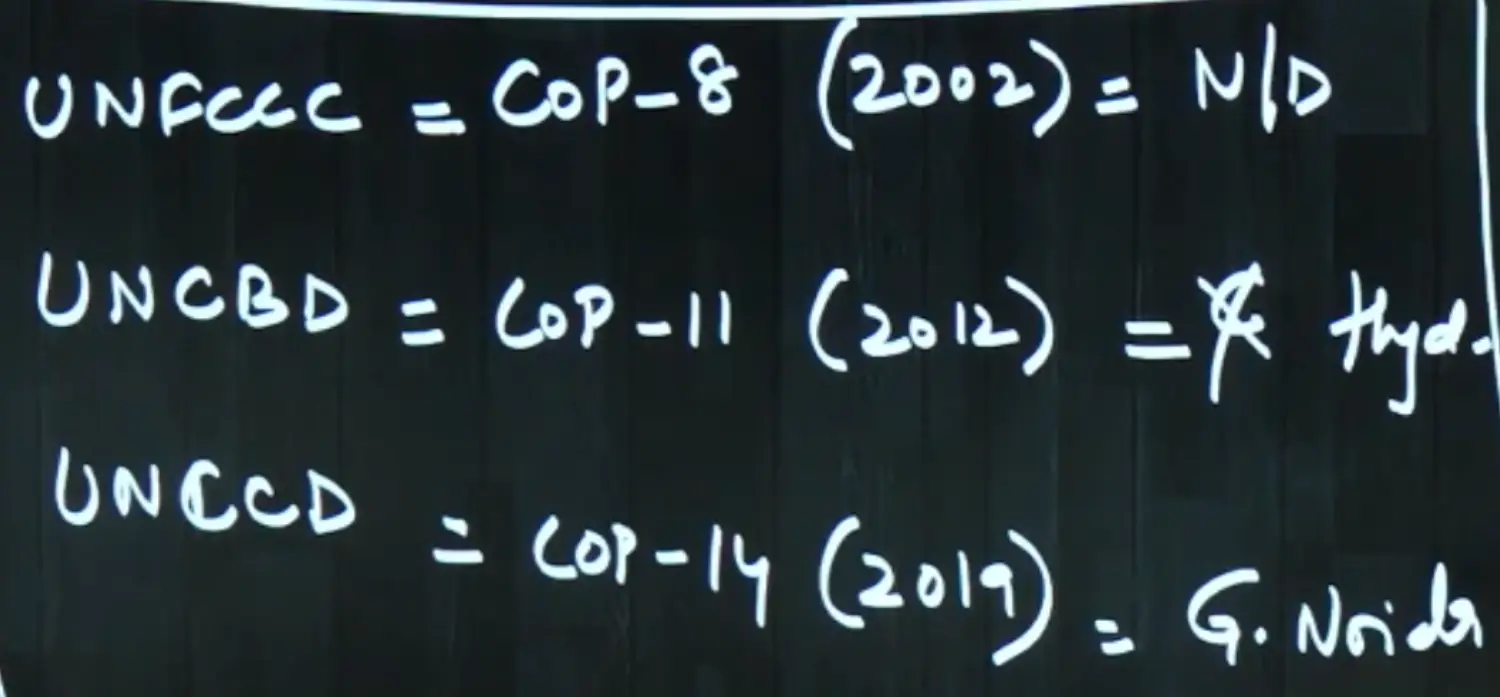
UNCCD - United Nations Convention to Combat Desertification
Introduction
to Control the Expansion of Deserts → To regulate Land Degradation
Asia and Africa are Focus Continents
It is the Only International Treaty or Convention which is a Binding Instrument
It is having a Bottom Up Structure, moving from grass root or local scale to global scale
(Only Two Environmental Treaties and Convention are having Bottom Up Structure, other one is Paris Climate Deal)
Working of COP
It has its COP’s - Conference of Parties
It is the Highest Decision Making Body for UNCCD which meets once in every 2 Years
Until 2022 - 15 COP’s have been conducted
Latest → COP 15 May 2022 in Cote D’Oire in Africa
Theme : Land Life Legacy - From Scarcity to Prosperity
India → COP 14 in Greater Noida
Theme : Restore Land Sustain Future
Green Wall of Africa - Sub Saharan African Country
Image of Green Wall
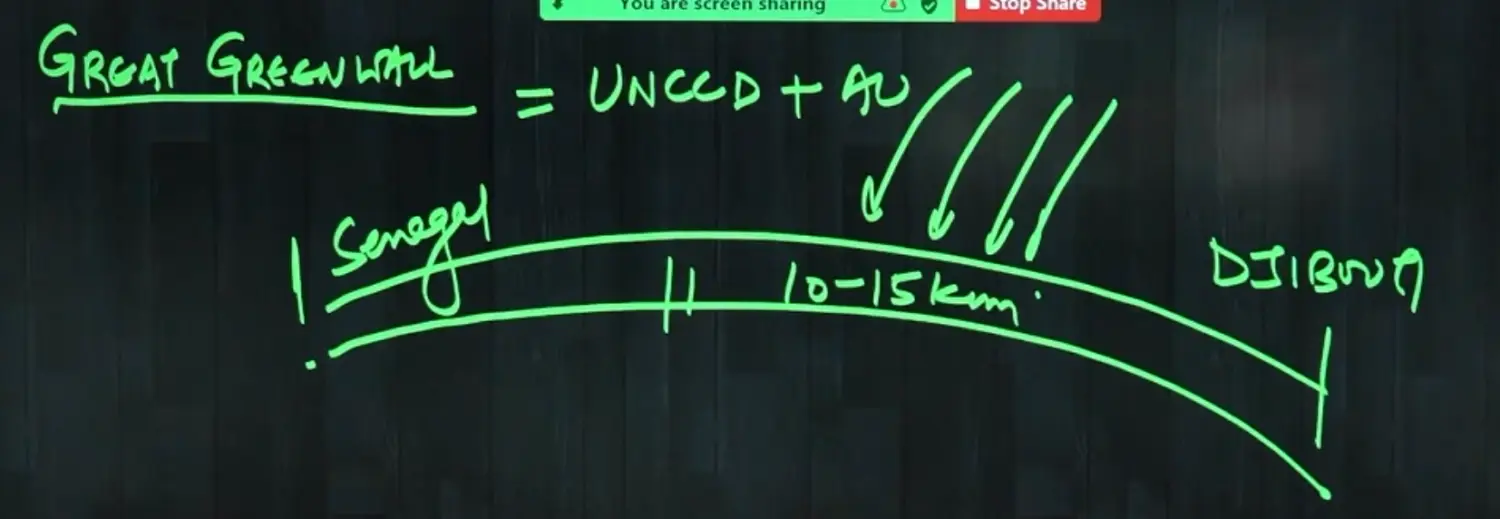
- From Senegal in the West to Djibouti
- Objective
- Main Objective is to Control the South ward extension of Sahara Desert
- Green Jobs & Employment
- Fight Climate Change
- Restore Land
Copying this India Started - Green Wall of India (NOT UNder UNCCD)
Objective is to Regulate the Eastward Extension of Thar Desert
It is planning of a 3 to 5 km wide Green Cover from Porbandar in Gujarat to Panipat in Haryana
UNCBD - Convention on Biological Diversity
Introduction
It has 3 Objectives
- Conservation of Bio Diversity
- Sustainable Use of components of Bio Diversity
- Fair and Equitable Sharing of Benefits arising out of commercial utilisation of Bio Diversity
Highest Decision Making Body is COP having a Meeting once in every 2 Years
Three Important COP
COP 11 (2012) → Hyderabad, India
- Theme : Nature Protects if she is protected
- Hyderabad Pledge - Gesture to hold the COP, India Contributed USD 50 Million as a Bio Diversity Fund
- Commitment of Doubling the Climate Finance - By 2015
COP 14 (2018) → Sharm El Sheikh, Egypt
Theme : Investing in Bio Diversity for People and Planet
COP 15 (2021) → Kunming, China
- Theme : Ecological Civilisation ; building a shared future for all present on the Earth
- It was a Virtual COP
- Kun Ming Bio Diveristy Fund was Created - Amount of 233 Million USD Contributed by China
- 30 by 30 Initiative Taken Here - Protection of at least 30% of the Land and Ocean Bio Diversity by Bringing it under Protected Area Network by 2030
Three Outcomes of UNCBD Were
Cartagena Protocol on Biosafety, Colombia
Also Called Biosafety Protocol. Biosafety from
- Genetically Modified Organisms (GMO’s)
- Living Modified Organisms (LMO’s)
For Other Species as well as for Environment
TRAP : Nagoya Kuala Lumpur Supplementary Protocol is Supplementary to Cartagena Protocol
It is for Liability and Redressal Mechanisms for the Negative Impacts taking place due to use of LMO’s and GMO’s
Nagoya Protocol, Japan
Nagoya Protocol on Fair and Equitable Sharing of Benefits arising out of Commercial Utilisation of Bio Diversity
Aichi Bio Diversity Targets, Japan
- Set of 20 Targets to be achieved by 2020 for Protection, Management and Sustainable use of Bio Diversity
- It is Divided into 5 Different Strategic Goals
Strategic Goals A:
Address the Underlying Causes of Bio Diversity Loss, By Bringing Bio Diversity in Mainstream
Strategic Goals B:
Reduce the Direct Pressure on Bio Diversity and Promote its Sustainable Use
Strategic Goals C:
Improve the Status of Genetic Species and Ecosystem Levels
Strategic Goals D:
Enhance the Benefits to All from Bio Diversity and Ecosystem Services
Strategic Goals E:
Enhance Implementation through Participatory Planning, Knowledge Management Planning and Capacity Building
UNFCCC - United Nations Framework Convention on Climate Change
Introduction
- Objective is Mitigation of Global Warming and Climate Change by Reducing the Emissions of Greenhouse Gases
- It was not a binding instrument in the starting phase, but had a provision that it will be followed by certain binding updations or protocol like kyoto protocol, paris agreement etc
- Its Highest Decision Making Body is COP and it meets every year on annual basis
All 26 COP Summary
Total 26 COP’s have been conducted until 2021
.png)
List of COP’s are
COP 01 - 1995 → Berlin Mandate, Germany
Mandate of UNFCCC was finalised to mitigate global warming and climate change
COP 03 - 1997 → Kyoto Protocol (KP) *, Japan
Introduction
- Based on Principle of CBDR - Common But Differentiated Responsibility
- India China - Not Bound && US & Japan - Bound → to Reduce Emissions under KP
- Later CBDR got Transformed Into CBDR RC i.e reduction in the emission based on the respective capabilities
- CBDC RC → RC is Respective Capabilities
- US and Canada withdrew from the Principle of CBDR
- Commitments Periods
- First Commitment Period - 2008 to 2012 → Below 5 Percent
- Second Commitment Period - 2013 to 2020 → Below 18 Percent
- KP was formulated as a Binding Instrument for Developed Industrialised Countries and NOT Binding for Developing or Under Developed Countries
Countries Under Kyoto (UNFCCC)
Annexure 1 Countries
44 Industrialized Countries Including European Union
14 EIT’s (Economies in Transition) - Countries which were members of erstwhile USSR other than Russia
Annexure 2 Countries
24 Most Developed Countries of the World, which are members of OECD (Organisation for Economic Cooperation Development)
To Provide Financial & Technical Support to Kyoto
Annexure A - Kyoto Gases - GHG under Kyoto
- CO2
- CH4
- NOx (Nitrous Oxide, Tri Oxide of Nitrogen)
- PFC’s
- HFC’s
- SF6
Annexure B Countries
List of Industrialised Developed Countries which are reducing their emissions under Kyoto Protocol
Non Annexure B Countries and Non Annexure Countries
Developing COuntries like India and China which are Not Bound to Lower down their Emissions
Least Developed Countries (LDC Countries )
Poorest Countries of the World Particularly African Nations
Kyoto Mechanisms for Annexure B Countries
There are Two Different Types of Mechanism under Kyoto
- Binding Mechanisms
- Flexible Mechanisms
Joint Implementation → Between Annex B & B
When Two Annexure B Industrialised Countries share the targets of emission reduction i.e one annexure B Country Sponsoring, Some Less Emitting or Non Emitting Project in Another in Another Annexure B Country. Like France Sponsoring in Belgium
CDM - Clean Development Mechanisms → Annex B & Non Annex B / LDC
Annexure B Country some less emitting or non emitting project in any non annexure country or LDC
Like France Sponsoring in India
Certified Emission Reductions will be Earned by Annexure B Country which will be provided to this country as Carbon Credits
Carbon Market Mechanisms → Between Multiple Annex B → Emissions Trading → Mentioned in Article 6 of Paris Also
EU is the Biggest Example of Carbon Market. It's a Mechanism between Different Annexure B Countries when CER’s Certified EMission Reductions are being sold and Purchased as commodities
Also Discussed under Art 6 of Paris Climate Deal and Mechanism of Governing the Carbon Markets is still undecided i.e even upto COP 26 Glasgow 2021
COP 07 - 2001 → Marrakesh Accord, Morocco
- Rules and Regulations of Kyoto Protocol was simplified for Early Ratification based on 55 55 Criteria i.e when 55 countries responsible for a minimum of 55% global greenhouse gases emission, when they
- Marrakesh Adaptation Fund was Formulated to Support the Underdeveloped, Developing Countries and Small Island to get adapted to the Negative Impacts of Climate Change
- It was implemented in 2007 in Bali in COP 13
COP 08 - 2002 → New Delhi Summit, India
- Only Once COP took place is India in 2002
COP 11 - 2005 → Montreal Summit, Canada
- Kyoto Protocol Got Ratified
COP 13 - 2007 → Bali Action Plan, Indonesia
Action Plan for Implementation of KP was finalised under Two Commitment Periods
Commitment Period 1 → 2008 - 2012
Reduction of min 5% of GHG according to 1990 Level
Commitment Period 2 → 2013 - 2017
Reduction of min 18% of GHG according to 1990 Level
Adaptation Fund Got Implemented
REDD was Proposed for developing countries as a Sustainable Forest Management Initiatives to Reduce the Emitted Greenhouse Gases Concentrations as Carbon Sink → It was Not Accepted by Developing Countries
COP 14 - 2008 → Ponzan Summit, Poland
- REDD was modified to REDD+
- As Improvised Aspect of SFM (Sustainable Forest Management) where the efforts will be recognised and rewarded at various international platforms
- And Financial and Technical Support will be provided to Developing Countries for Implementation of REDD+
- It was NOT Accepted by Developing Countries
COP 15 - 2009 → Copenhagen Accord, Denmark
- Agenda for Copenhagen was already defined as a Possible agreement between developed and developing countries, related to future course of action
- Or the Voluntary cut in emission from the side of developing countries
- No Consensus or Agreement between Developed and Developing Countries
- but there was an Informal Agreement between US and BASIC Countries (Brazil, South Africa, India, China) that in the coming time BASIC Countries will be reducing their emission on non binding basis
COP 16 - 2010 → Cancun Summit, Mexico
- Green Climate Fund (GCF) was Formed with a Corpus of 100 Billion USD to support the Developing Countries in Development, Procurement and Adoption of Cleaner Technologies which are Less Emitting
- In the Recently Concluded COP 26, Glasgow Summit in Nov 21. India Complained about Non Disbursement of GCF Funds to be not more than 10%
COP 17 - 2011 → Durban Platform, South Africa
No Acceptance to any change in the working mechanism of kyoto or UNFCCC before 2020
Even After 2020, Principle of Equity to be maintained
Equity - Countries Which Emitted More, Will Reduce More && Countries which can reduce more will reduce more
COP 18 - 2012 → Doha Amendment, Qatar
- KP was amended to have Second commitment period for Next 8 years instead of 5 Years
- REDD & REDD+ was Implemented as Sustainable Forest Management Initiatives (SFM), it came out with three things
Forest Carbon Partnership Facility
To Increase the Carbon Stock in Forests Area along with conservation of Already Available Carbon Stock
Forest Investment Program
Invest in Forestry Outside the Forest Area to Minimise the Damage Caused by Various Activities and Industries on Forests
Bio Carbon Fund Initiative for Sustainable Land Management
Following Sustainable Agricultural Practises like Climate Smart Agriculture to Minimise the Agricultural Contribution towards Destruction of Forests
COP 19 - 2013 → Warsaw Summit, Poland
First Official Proposals for Voluntary Cut in Emissions, proposed by developed countries for developing countries
It was termed as INDC’s or NDC’s - Intended Nationally Determined Contributions
It was to be Finalised in Paris in 2015
Warsaw International Mechanism Emerged
is for the Losses and Damaged occurring due to increased disasters as a result of impacts of climate change due to already increased greenhouse gases
NO Separate Fund was created for this
COP 21 - 2015 → Paris Climate Deal *, France
What India Did
- India became the First country to submits its INDC’s to UNFCCC in advance to PCD (Paris Climate Deal)
- India Committed that, By 203O
- India will create an Additional Carbon Sink of 2.3 to 3.0 Billion Tons through Aforestation and Reforestation etc
- By End of 2030 a Min of 40% of Energy Production in India will be from Non Fossil Fuel Based Resources
- By 2030, India will reduce its Emissions Intensity of GDP by a minimum of 33 to 35 Percentage
What World Did
- Objective was to rise in Temperatures to well below 2 degree celsius as compared to pre industrial levels by the end of 21st Century (2100)
- This 2 Degree Celsius Rise in Temperature is the Upper Limit and the World must continue its efforts to restrict its rise in temperatures to below 1.5 degree celsius
💡 5th Assessment Report of IPCC found this target impractical as more than one degree celsius rise in temperature has already taken placewith the present rate of emissions, target of 1.5 degree celsius rise in temperature can be breached as early as 2030
and 2 degree celsius target anywhere between 2030 & 2050
- Developed Countries must continue to take the Lead in Supporting Developing Countries Financially and Technically even after Kyoto (Kyoto is until 2020)
- Paris Climate Deal is a Post 2020 Agenda which is a Binding INstrument for both Developed and Developing Countries
- Art 6 of Paris Agreement talks about carbon market mechanism
India Proposed International Solar Alliance
- India Proposed International Solar Alliance as a Grouping of Tropical and Subtropical Countries to Harness the Potential of Solar Energy in these countries which is sufficiently available for maximum part of the Year
- It is Headquartered in India Gurugram
- Membership Open to all the countries on recommendations of India as temperate countries can be benefited with the utilisation of solar energy
- India Proposed Setting up a Grid to connect various Countries - Later Proposal took the Form of - One Sun, One World, One Grid
- This was Finalised at Recently Concluded COP 26 at Glasgow
COP 23 - 2017 → Bonn Summit, Germany
- Resulted into Talanoa Dialogue
- Traditional Dispute Resolution Mechanism in Polynesian Countries of Fiji, Tuvalu, Kiribati, Solomon Islands, for amicable resolution of grievances without putting blames on each other
- It was extended to UNFCCC for Developed and Developing Countries
COP 24 - 2018 → Katowice Summit, Poland
- Rule Book for Paris Climate Deal Finalised
- No Agreement on Article 6 on Paris Agreement i.e on Carbon Market Mechanism
- Article 6 → Carbon Market Mechanism
COP 25 - 2019 → Madrid Summit, Spain
- Its Original venue was Brazil but they Denied
- Venue was shifted to Chile. But it was under Student Protest
- Then the Venue Got Shifted to Madrid Spain and Resulted into Chile Madrid Time for Action
- Countries should reach the peak of their emissions as early as possible so that a decline in emissions can occur after that
2020 - Missed due to Corona
COP 26 - 2021 → Glasgow Summit *, Scotland
Modification of INDC
UNFCCC Directed the Countries to improve their INDC Targets
India Modified its INDC
- 2.5 to 3. Billion Tonnes → 3.5 to 4.0 Billion Tons
- Minimum 50% Energy Production in India will be Non Fossil Fuel Based
- Reduction of 43 to 45 of Emissions Intensity of GDP by 2030
2 More Elements to INDC were added
India will produce 500 GW of Solar Energy by 2030
India will achieve Net Zero Emission by 2070
Net Zero Emission = Absorption > = Emission
These 5 Combined Together were called - Panch Amrit
Proposal of Green Grid
- India Proposed Green Grid System under One Sun, One World, One Grid - Strongly Backed up by UK
GEF - Global Environmental Facility
It is the Biggest & Largest Climate Finance Initiative of the World under the Custody of World Bank, sponsoring environment related activities under 5 Different conventions
- UNCCD
- UNCBD
- UNFCCC
- MINA MATA Convention on Mercury
- Stockholm Convention on POP’s (Persistent Organic Pollutants)
- 1997 - Rio + 5 - New York Summit
- Progress for Agenda 21 was noticed as Uneven
- 2002 - Rio + 10 - Johannesburg Summit - WSSE - Earth Summit, 2002
- WSSE - World Summit on Sustainable Development
- It is also called as Earth Summit 2002
- Re Affirmation of Agenda 21
- 2012 - Rio + 20 - UNCSD - Rio 2012 - Earth Summit, 2012
- Two Main Focus Area
SD → Led to Adoption of SDG under UNDP
Set of 17 Goals to be achieved from the time period of 2016-2030
New Concept of Green Economy
Green GDP = Gross GDP - Losses caused to Environment
Considering Economic Indicators and Growth in Environmental Perspective i.e reducing the monetary value of looses incurred to Environment
Green Economy led to Adoption of PAGE - Partnership for Action on Green Economy
- UNDP
- UNEP
- UNIDO
- ILO (its an UN Body)
- UNITR
GEF is not sponsoring montreal protocol directly but phasing out of ozone depleting substances can be supported with GEF
- Two Main Focus Area
- 2022 - Stockholm + 50
- 1972 - UNCHE - Stockholm Conference
Types of Pollutants
- Biodegradable & Non Biodegradable Pollutants - from Handout
- Primary and Secondary Pollutants
- Primary Pollutants - From Handout
- Secondary Pollutants Example
- Acid Rain
- Dilute Acids in the Air
- Ozone
- Smoke
- Certain VOCs Volatile Organic Compounds like PAN (peroxyacetyl nitrate)
- O3 + NOX + PAN + Intense Solar Radiation → Photochemical Smog → Example of Secondary Pollutants
- Qualitative and Quantitative Pollutants
- Qualitative Pollutants - Inherent Nature of Chemical is to be a Pollutant like CO
- Quantitative Pollutant - Beyond a Concentration its a Pollutant
- CO2
- NOX
- O3
Pollution
Air Pollution and Pollutants
- CO
- Sources →
- Burning of Fossil Fuels and Organic Matter in Limited Supply of Oxygen
- Cigarette
- Crackers
- Issue with CO
- Oxygen Combines with Blood i.e Hb to Form Oxy Hb
- CO has more 4 to 5 times more affinity to combines with HB over Oxygen
- CO Combines with Haemoglobin i.e Blood forms Carboxyhemoglobin, which when supplied to body parts causes issues
- Note : Carboxyhemoglobin is also formed by CO2 Combining with Hb
- Sources →
- NOx
Industry → Most Important
- Copper Smelting Units
- Coal Based Thermal Power Plants
4th UNEA - Colombo Declaration for Sustainable Nitrogen Management at 4th UNEA 2019-20 Nairobi, Kenya (UN Environment Assembly)
There were two commitments from India
- Sustainable NItrogen Management
- Phasing Out of Single Use Plastics by 2022
- NOx & SO2
- Oxides of Nitrogen and Sulphur can cause Acid Rain
- Skin Issue to Humans and Animals
- Damage to Heritage Buildings like Classical Case Study of Taj Mahal
- Affects Small Size Water Bodies and Aquatic Life
- Makes Soil Acidic - Reduction in Soil PH - Reduction in Agri Production
- Acid Rain Can Lead to Early Fall of Leaves in Plants Impacting Photosynthesis and Food Production
- Why is there Less Impact of Acid Rains on Indian Soils
- because they are already slightly alkaline in Nature
- Oxides of Nitrogen and Sulphur can cause Acid Rain
- VOC (methane)
- Example
- Benzene
- Formaldehyde
- PAN
- CH4
- Sources
- Pharma Industry
- Oil Refineries
- Artificial Rubber Manufacturing Industry
- Plastic INdustry
- Agricultural Activity
- Freshly Painted Walls
- Polishes
- Issues
- Various Health Issues
- Higher Amounts can even be Caricnogenic
- Example
- PM & SPM
- Introduction
Particulate Matter - Particle Form of Pollution
Can be Either Solid Part or Liquid Droplet
Types
Here 10 is Size in Microns ⇒ 10 * 10^6
- PM 10 - Largest - Cannot Enter Lungs
- PM 2.5
- PM 1 - Smallest
Larger is the Size of Particulate Matter, More Difficult is to Enter into Body
PM 2.5 & PM 1 can even enter into Blood ; crossing Lungs
In India we are NOT Measuring PM 1
- Examples
- Metallic Pollutants are Examples of Particulate Matter
- In General
- These Pollutants can be released from Various INdustries, E Waste
- They can also contaminate the quality of soil and reach water bodies even in the Ground Water
- Mercury
- in Extra Amounts can lead to a Neurological Condition called Minamata Disease
- Mina Mata is a Place in Japan
- Mina Mata Convention on Use and Negative Effects of Mercury
- Cadmium
- Cadmium Contamination can lead to Itai Itai or Ouch Ouch Disease
- Arsenic
- Causes Black Foot Disease - Neurological and Skeletal Issues
- In General
- Dust Silica and Pollens also act as PM, Particularly causing Respiratory Illness
- Fly Ash or Coal Ash
- The Powder or Residue coming out of Coal Based Thermal Power Plants
- It Contains Silica, Oxides of Silica, Oxides of Aluminium & Along with these small amounts of Toxic Metals (Hg, PB, Cd, Ar)
- Can be Used Constructively in - (Because it acts as an Adhesive)
- Cement
- Bricks
- Road Construction
- Hence for Better Utilisation - Maharashtra became the first state to come up with Fly Ash Utilisation Policy
- Ash Track is a Mobile Application Based Platform to Measure the Levels of Fly Ash
- Soot Particle or Black Carbon or Solid Carbon
- The Particles coming out of Burning Wood or Coal are called as Soot Particles or Solid Carbon
- They Act as Particulate Matter
- It has Following Problems associated with it
It can go to Stratosphere, they act as reflecting particle for sunlight, they increase the albedo and hence alter the heat budget of the earth at least at the localised areas
Disturbs the Blanket Effect of Earth's Atmosphere
They are black and due to its color they absorb more heat and hence contribute in increasing of temperature, thus acting as Greenhouse Particle - Further Adding up to Global Warming and Disasters
They can get deposited on the mountain tops, which are black, hence will absorb more heat and can lead to melting of snow on the ice caps
- Metallic Pollutants are Examples of Particulate Matter
- Introduction
- Recent Steps to Combat Air Pollution - Self Search & Add Thyself and CA Updation
Smog Towers
Reduce usage of Fossil Fuels → Electrical Vehicles → FAME Scheme (Faster Adoption and Manufacturing of Hybrid & Electric Vehicles)
We changed from BS 4 to BS 6 → BS is Bharat Stage → They are Emission Norms based on European union Emission Norms
These are Fuel Quality Standards and Corresponding Changes in Engine Technology
From BS 4 to BS 6 → Engine Changes were Required
When we shifted from BS 4 to BS 6 → Significant Decline was seen in
- SO2 (Highest Change Seen) → then PM → then CO → then NOx
- in BS 6 → 10 PPM was released now BS 4 → 50 PPM was released → thus there was 80% reduction in the Sulphur Release
Hydrogen as a Fuel - Read About National Hydrogen Mission in Budget
Fly Ash Utilisation Policy
Use of Technology for reduction of Air Pollutants - NAQI → National Air Quality Index for Color Coding Scheme
From Green to Red Maroon - Based on Concentration of 8 Different PM
Examples Are : PM 2.5, PM 10, O3, NOx, CO, SO2, Pb, NH3
Ban on Stubble Burning
Use of Bio Decomposer to Dissolve the Stubble
- CO
Water & Soil Pollution and Pollutants
Studying them Together because maximum causes of soil pollution ultimately containment water also
Causes
- Industrial Discharge and Waste including Chemicals, Hot Water etc
- Municipal and Sewage Waste
- Excessive use of Chemicals in Agriculture including both Fertilizers and Pesticides
- Oil Spills
- Religious Waste
- Dead Bodies and Cremations
- Acid Rain
- Plastic Waste
- Bio Medical or Hospital Waste
- E Waste
- Nuclear or Radioactive Waste
- Metallic Pollutants coming out from Industrial or Electronic Waste
- Mining
Harmful Algal Blooms and Eutrophication
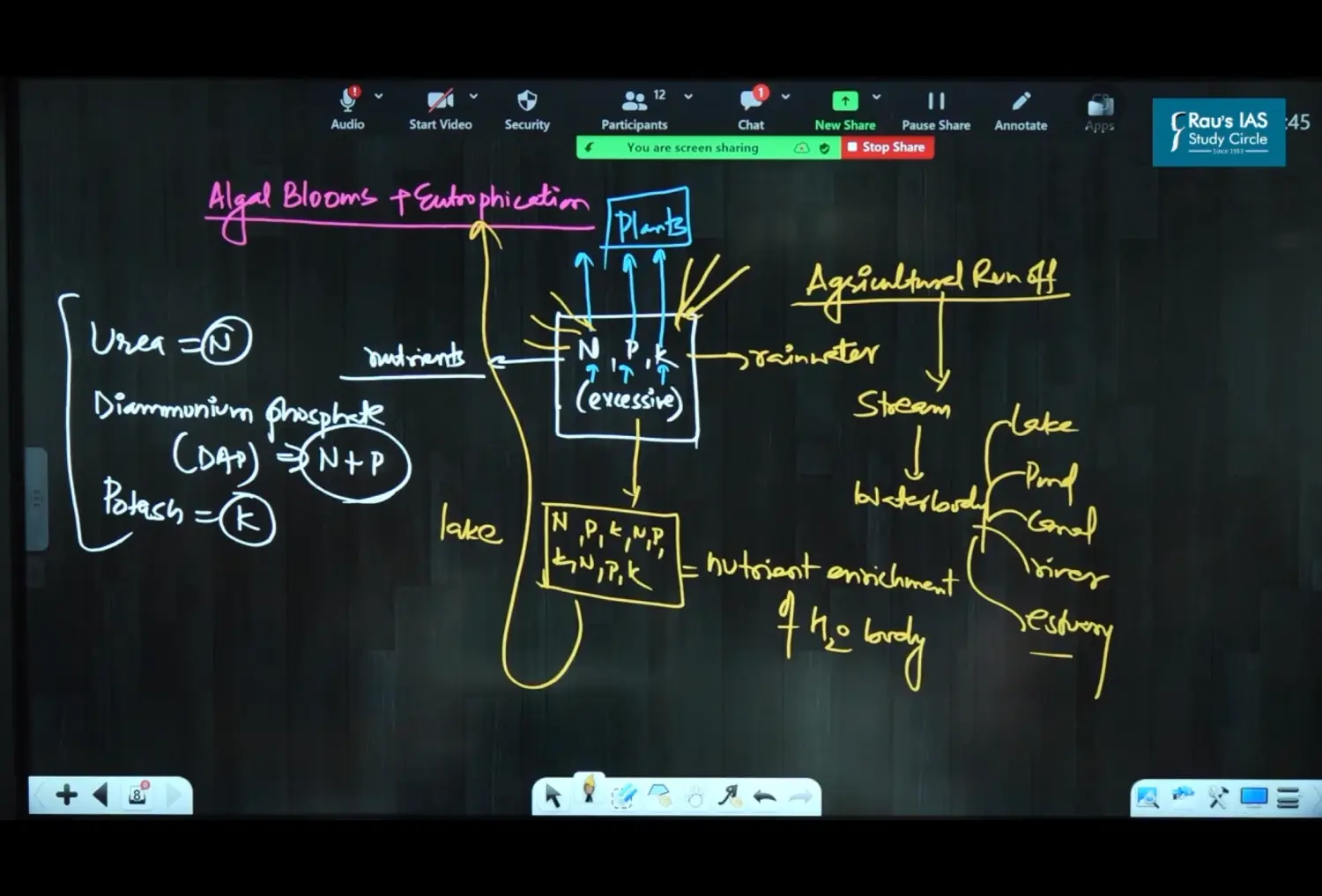
- Fertilisers for NPK
- Misuse or Excessive Use of Fertilisers
- Agricultural Runoff to → Stream of Water Body
- Nutrient Enrichment of Water Body = is called Eutrophication → Cultural Eutrophication → Abrupt
- Natural Eutrophication also occurs → Gradual Process
- These Nutrients are used by Blue Green Algae → Overgrowth of Blue Green Algae (Algal Bloom)
- Eutrophication is Nutrient Enrichment of Water Body which is a Natural Process during the Ageing of the Lakes, but Natural Eutrophication is very slow and is not easy to observe
- Cultural Eutrophication is Human Induced Nutrient Enrichment of Water Bodies when waste like sewage, municipal waste and agricultural runoff, having extra chemicals in it is continuously discharged into a water body
- This can Trigger the Overgrowth of Blue Green Algae
- Which Can Restrict the
- Entry of Sunlight with Surroundings
- Exchange of Gases with Surroundings
- Also Certain Algal Blooms are associated with Release of Toxins
- Leading to Death of Bio Diversity in the Water Body i.e Algal Bloom Leading to Cultural Eutrophication
- Biggest Reason for Cultural Eutrophication are
- Urea - N
- Diammonium Phosphate - N+P
- Potash - K
- Eutrophication can occur in
- Lakes
- Canals
- Stretches of Rivers
- Estuaries
Bio Accumulation, Bio Concentration, Bio Magnification / Bio Amplification
Examples of Pesticides - They are Non Biodegradable
- DDT
- BHC
- Aldrin
- Dialdrine
- Endosulfan
- Carbfurans
- Methyl Parathion
- Phorates
They can reach
- Plants
- Ground H2O
Diseases
- Blue Baby Syndrome
- Meth Hemoglobina
Significant Decline in Vultures (Case Study) due to use of diclofenac by veterinary
Non Metabolization
| Bio Accumulation | Bio Concentration | Bio Magnification / Bio Amplification | | --- | --- | --- | | Entry of Toxins, Chemicals & pollutants in a specific trophic level of a Food Chain | It is another term for Bio Accumulation Only when it is taking place in Aquatic Environment | When Toxins, Chemicals and Pollutants move in a Food Chain from Lower Trophic Levels to Higher Trophic Levels in Increasing Concentration on Per Head Basis | | Generally in Trophic Level 1 but can be higher also | All the cases of Bio Concentration can be considered as Bio Accumulation but Opposite is Not True | | | Examples:
DDT Accumulation in Plants
Diclofenac Accumulation in Cattles
Mercury Contamination in the Fishes of Minamata Bay
DDT or Nitrates entering humans through Ground Water | Examples:
Mercury Contamination in the Fishes of Minamata Bay | Examples:
Diclofenac Accumulation in Vultures, Humans and Animals
Mercury Contamination in Humans and Animals feeding on fishes of Minamata Bay |
Concept of DO, BOD and COD
Over All Mind Map
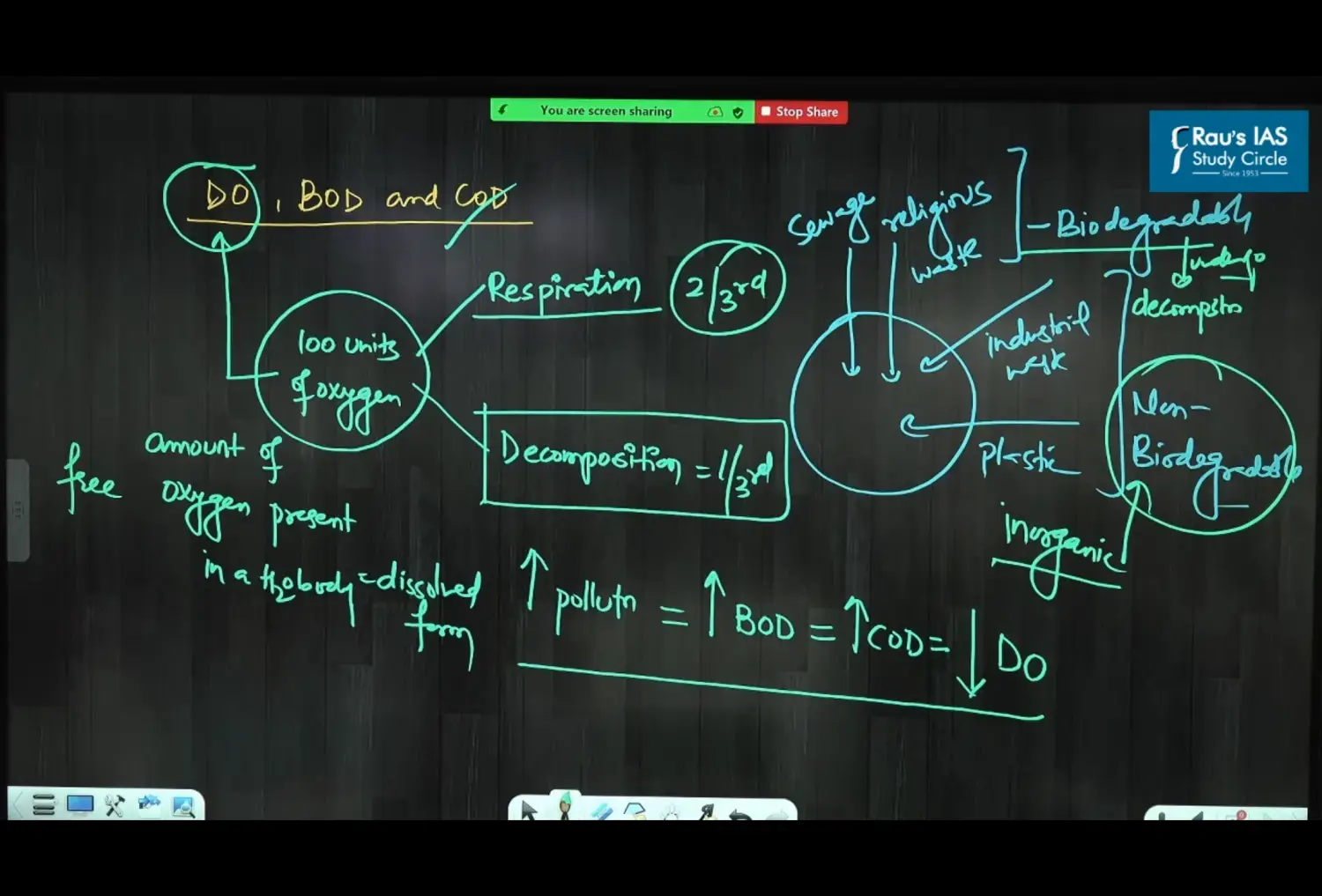
Abbreviations
- DO - Dissolved Oxygen
- BOD - Biological Oxygen Demand
- COD - Chemical Oxygen Demand
- DO → Dissolved Oxygen is Total Amount of Free Oxygen in Water Body in Dissolved Form. It is Utilised mainly for Process of Respiration and Decomposition and a Balance in the Water Body is Maintained
- BOD → It is the Extra Demand of Oxygen from the Side of Decomposers, to disintegrate or decompose the organic or biodegradable waste dumped into the water body
- COD → Extra Amount of Oxygen Demanded by Decomposers for Decomposition of Entire Waste ie Including Both Biodegradable and Non Biodegradable i.e Organic and Non Organic
Relations Between BOD, COD and DO
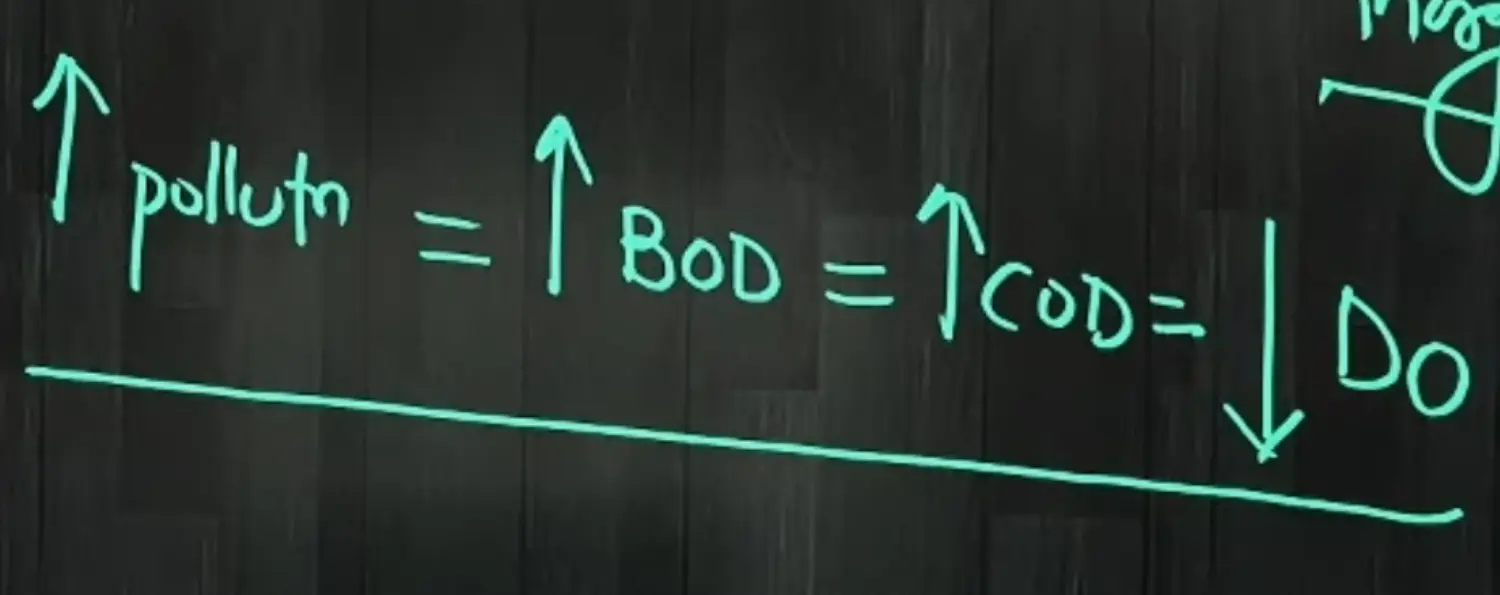
Concept of Bio Remediation *
Bio Remediation is an application of Bio Technology in Environment when certain modified forms of microbes like bacteria and fungi are used to reduce to levels of pollutants. These are either on site or off site
These Microbes are Modified using Bio Tech Application
Examples
**Oil Spill Treated by Oil Zapper (Digestion of H & C Bonds)**Oil Zapper is Mixture of Modified Forms of Bacteria like → Pseudomonas, Sphingomonas, Mycobacterium
Formed by TERI - The Energy Research Institute
New Version of Oil Zapper is Oiliuorous S → It is effective against Sulphur Sludges
Recently used in Chennai Oil Spills
Types of Bio Remediation
Ex Situ Bio Remediation → Away from Site
When Bringing the waste to some other place apart from source of Origin
Examples: Landfills, Bio Piles, Bio Reactors
In Situ Bio Remediation → On Site
When Treating Waste at the SIte of Generation
Examples: Bio Augmentation, Bio Sparging, Bio Venting
BRS Conventions
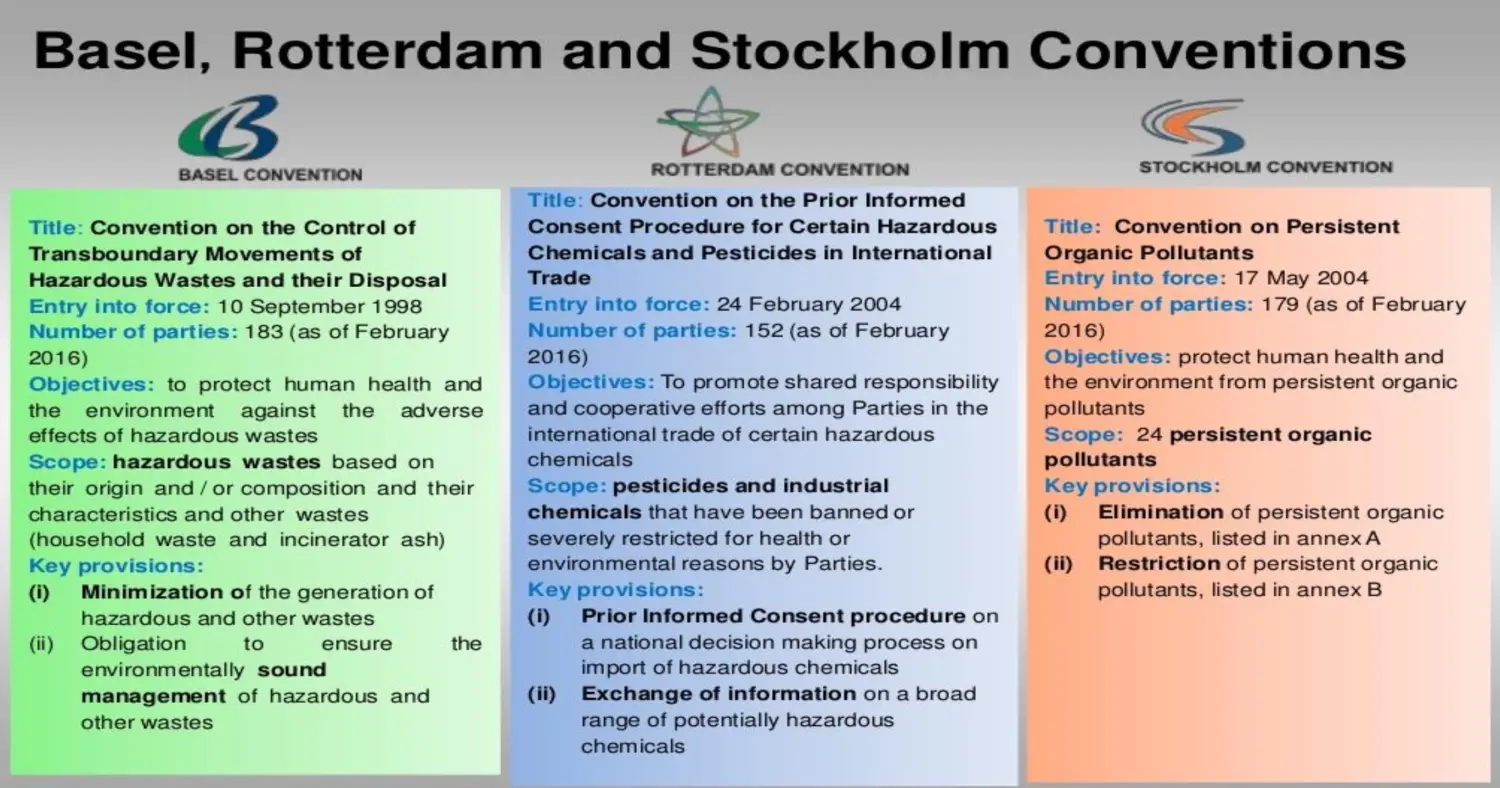
- Introduction
- All 3 are Targeting to Minimise the Negative Impact of Various Pollutants and Chemicals etc on Human Health and Environment
- By Minimising Their Use, Trade and Finally Phasing out their Production itself
- Conventions
BASEL Convention, Switzerland - Transboundary Movement of Hazardous Waste & Its Disposal
All Categories of Waste are Included under BASEL Convention except radioactive or nuclear waste
Rotterdam Convention, Netherland - Transboundary Movement of Hazardous Waste
PICP - Prior Informed Consent Procedure
Stockholm Convention , Sweden - Transboundary Movement on POP ( Persistent Organic Pollutants) → Dirty Dozens
- Introduction
Plastic Waste
Introduction to Plastic Waste
- Nearly 26,000 tonnes of waste is generated in India Every Year. Out of this only 20% is collected for recycling
- More than 90% of recycled plastic waste in India is done by Unorganised Sector using unscientific methods
What Can we Do
Burning of Plastic May Lead to
- CO2
- CO
- VOC - Carcinogenic
- Dioxins - Carcinogenic
Decomposition of Plastic into Micro Plastic
- Micro Plastic can enter into the Food Chain and Marine
- Bio Accumulation, Bio Concentration, Bio Magnification / Bio Amplification of Plastics will take care
- Micro Plastics is converted into Micro Beads - They cannot be further degraded
- Biggest xposer of Microbeads in the Ocean is Sunscreen
- On a trail for disintegration by decomposers, various types of plastic are getting converted into micro plastic and further into micro beads (totally non biodegradable and resistant to decomposition)
- Both Micro Plastics and Micro Beads can enter into the food chain, being bio accumulated and bio magnified in living beings
- Like Recently, Micro Plastics were found in Human Blood in Some Scandinavian Countries
- Micro Beads can be directly released into the environment also, through various cosmetics, toothpaste, sunscreens etc
- The Biggest Challenge faced by Oceans is by the use of Sun Screens, that's why use of microbeads is banned in many western countries
Plastic Pollution Can Lead to
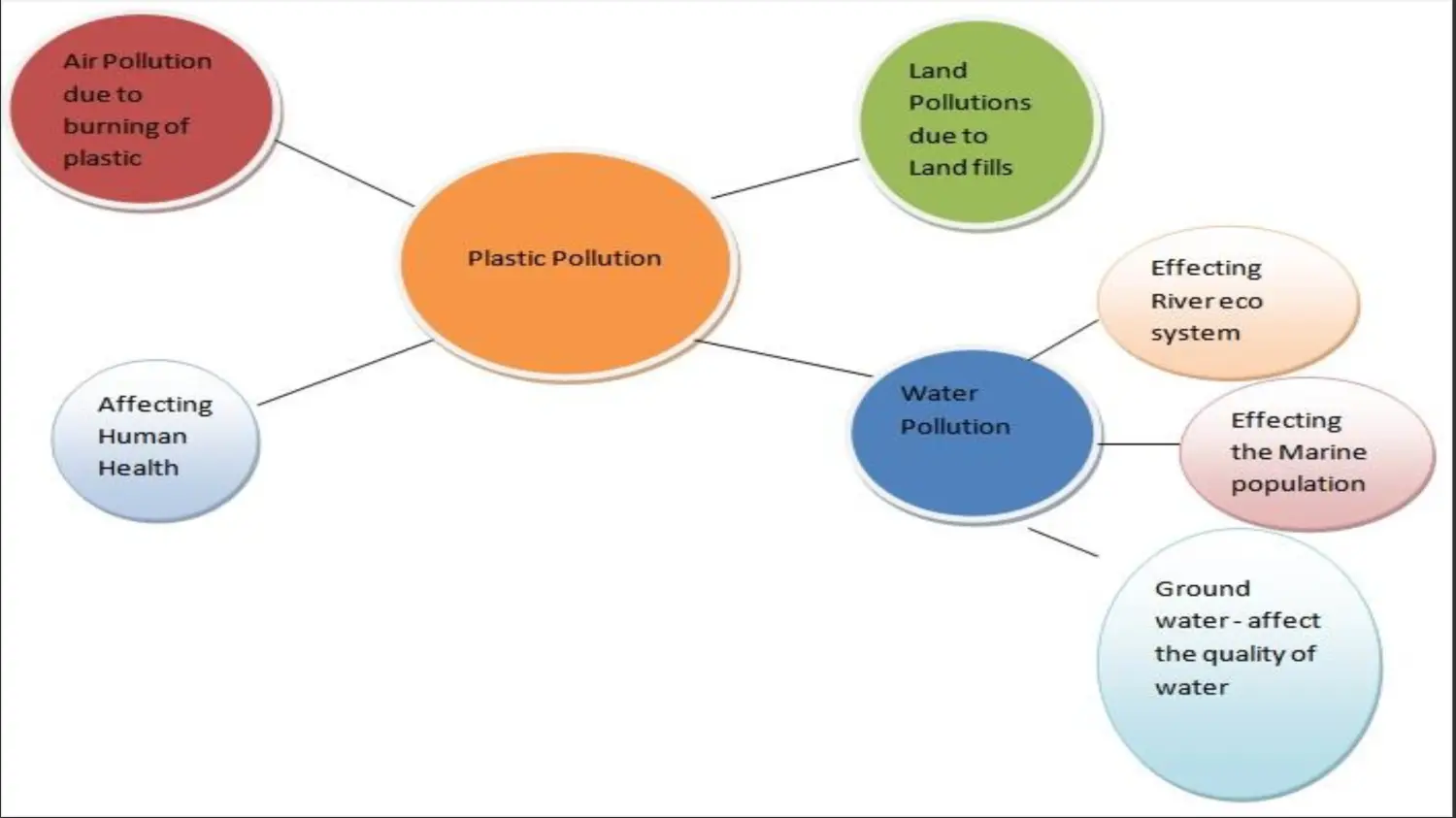
Recyclable Forms of Plastic *
- Plastic forms like Polyethylene Terephthalate (PETE 1) and High Density Polyethylene (PETE 2) can be widely recycled
- Prominent Uses
- Plastic Bottle in Water, Soft Drinks, Cooking Oil
- Milk Container
- Cleaning Agents
- Shampoo Bottles
- Bleach Bottles
- Plastic Forms like Low Density Poly Ethylene or Poly Styrene & Some Other Forms of Plastics (Like Poly Carbonates and Poly Actics) cannot be recycled as can release CO & Dioxins while recycling
- It is because of Low Thickness and Low Density
- Prominent Uses
- Plastic Bags
- Food Wrapping
- Food Takeaway Containers
- Plastic Cutlery
- Egg Tray
Plastic Forms like Polyvinyl Chloride PVC and Polypropylene cannot be recycled easily but can be done with the help of advanced scientific methods like
Poly Crack Technology
Uses
- Plastic Piping
- Vinyl Flooring
- Cabling Insulation
- Roof Sheeting
- Bottle Tubs
- Food Tubs
- Furniture
- Houseware
- Medical
- Rope
- Automobile Parts
Single Use Plastics
Plastic Waste Management and Handling Rules, 2016 formulated under EPA, 1986 was amended recently in 2021 to match with the International Standards of thickness of Single Use Plastics i.e 100 Microns
India Started with 40 Microns, Increased to 50 and with the recent amendment increased to 75 Microns which will be valid till 31st december 2022. From First January 2023 onwards, SUP - Single Use Plastics in India will be of 100 Microns in thickness
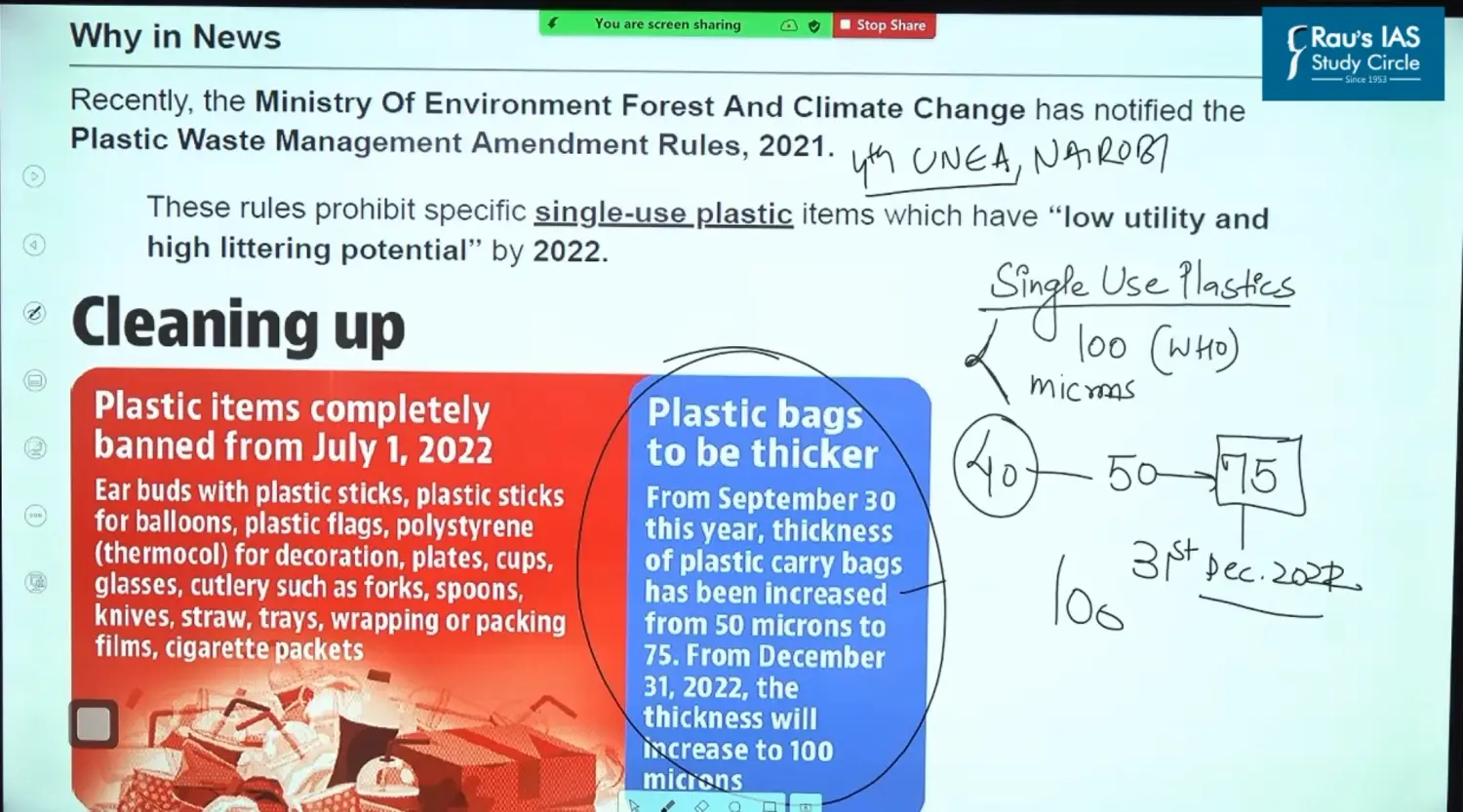
KVIC - Khadi and Village Industries Commission
They came up with project Replan to provide substitute for Plastic Bags
KVIC is a Statutory Body under MSME Ministry. Find Ministry
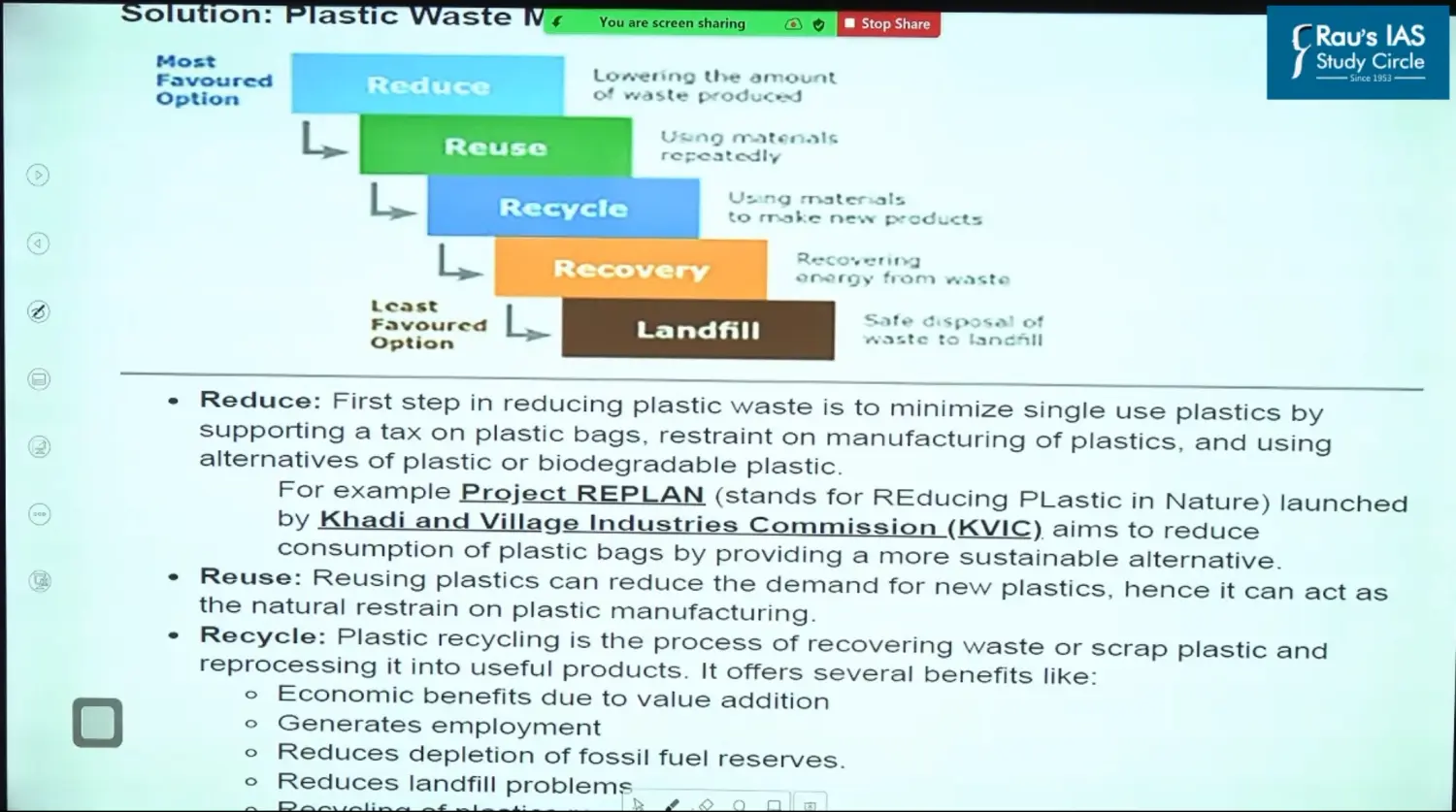
E Waste
Introduction
- Dead & Discarded End of the Life of Electronic and Electrical Equipments, when not dumpted properly using scientific methods becomes electronic waste
- Because it contains various metallic pollutants, plastics, metal plastics, etc
- It is not safe to human health and environments
- Electronic Waste Management and Handling Rules 2016 performed under EPA, 1986
Contaminants Present in Electronic Waste
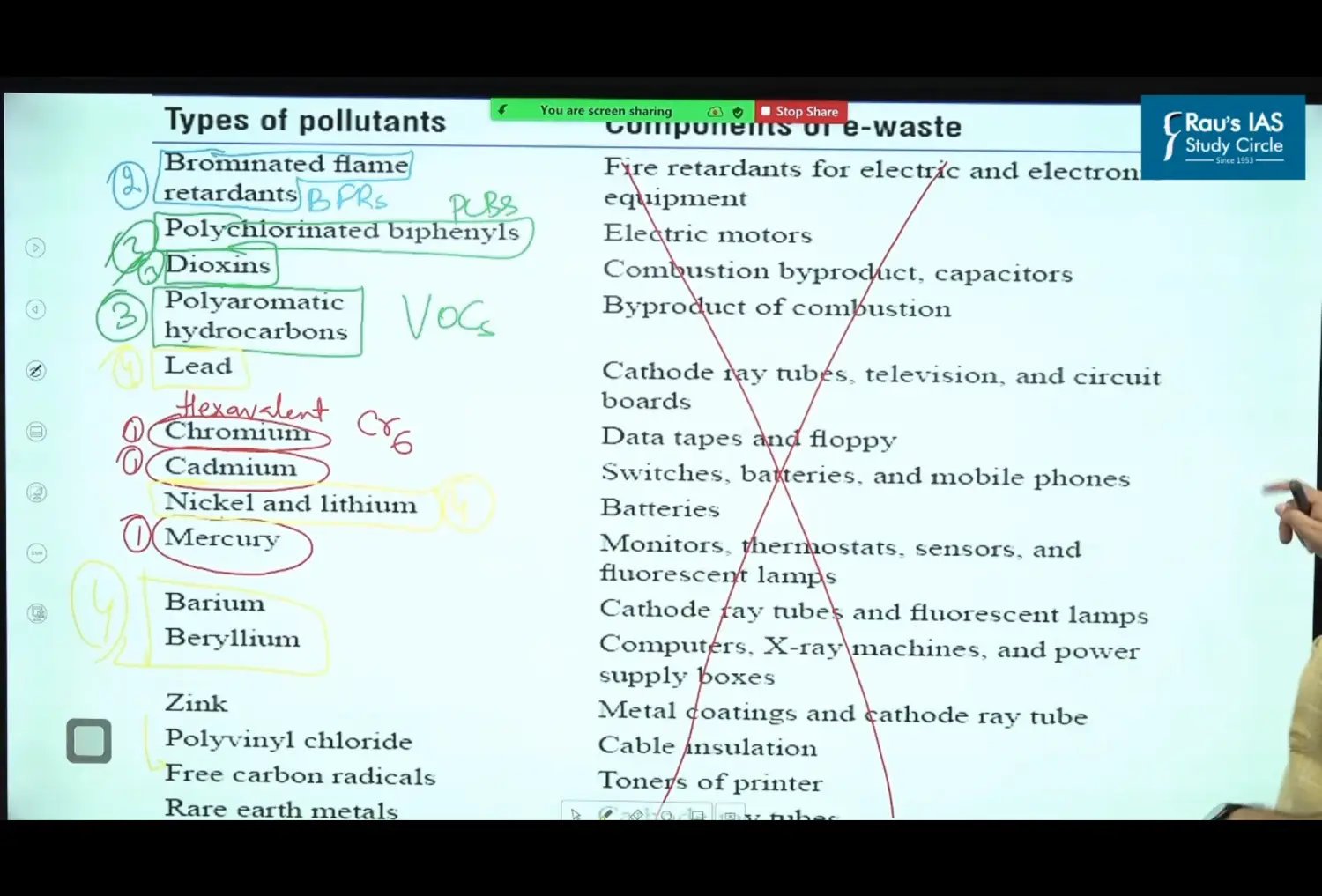
- Metallic Pollutants like Chromium, Cadmium & Mercury and Hexavalent Chromium which are poisonous to both Animals and Human. They Also Pollute the Air, Water & Soil
- BFR - Brominated Flame Retardants which are used to avoid the catching of fire are volatile particles which can be inhaled by humans and animals. It can be bio accumulated by human beings causing various respiratory issues and allergies
- Various Types of VOC like Poly Aromatic Hydrocarbons and Polychlorinated Biphenyls and Dioxins can even lead to cancer
- Other Metallic Pollutants like Lead, Nickel and Lithium, Barium and Beryllium used in automobiles and batteries can contaminate the quality of soil and water also, causing health challenges in humans
- Free Carbon Radicals can also be Present acting as persistent organic Pollutants (POP) which can be bio accumulated in humans and animals and can also be cancerous
The E Waste (Management Handling Rules) 2016
The EPR ⇒ Extended Producer Responsibilites
Electronic Waste Management Rules, 2016 introduced the concept of EPR in India i.e the manufacturer or producer responsibility
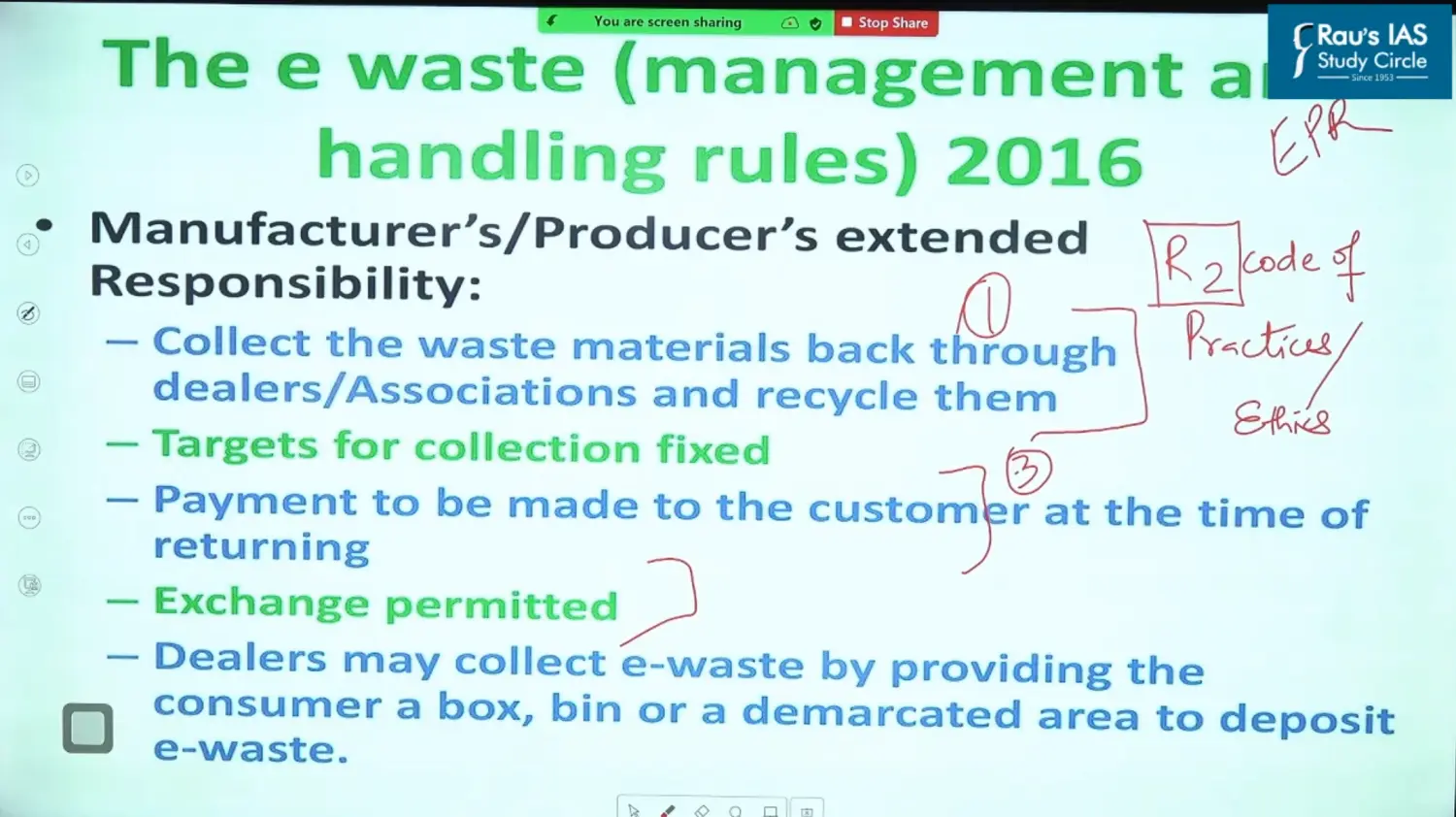
R2 Code of Practises - Responsible Recycling
- It is Targeting a Responsible Recycling to avoid the Unnecessary Recycling of Electronic Products
- To Prevent the Misuse and Improper Recycling of Electronic Waste
- R2 code of practises has been formulated by a Collegium of Corporate, Industry, Consumer Organisations and Government Bodies at National and INternational Levels
BMW - Hospital Waste or Bio Medical Waste
Human and Animals Anatomical Waste, Body Specimens, Discarded and Expired Medicines, Used Gloves, Masks, PPE Kits, Needle and Syringes etc generated during
Medical Research & Development
Diagnosis of Diseases
Treatment
Camps like Vaccination, Blood Donation Etc
Categories of BMW in India
- Green / Black - General - Kitchen Waster, Paper, Tissue, Water Bottle, Can → Secured Landfilling Disposal
- Infected Waste of Plastic Nature - Red - Syringes, Gloves, PPE kits etc → Can be Disinfected through Autoclaving Disinfection i.e Thermal Disinfection
- Infected Waste of Non Plastic Nature - Yellow - Anatomical, Chemical, Laboratory, Discarded Medicine → Can be Disinfected through Disinfection or Pyrolysis
- Glassware - Blue - Metallic Ware and Glass Waste, Antibiotic Vials, → Can be Disinfected through Autoclaving
BMW Management and Handling Rules 2016 formulated under EPA, 1986
Its Nodal Agency is CPCB - Central Pollution Control Board
Any Types of Waste is Regulated by CPCB except for Nuclear Waste
Nuclear Waste’s Nodal Agency is
SDG
- Sustainable Development As defined by Brundtland Commission Report, is development which is taking into consideration not only the needs of present generations but also not compromising with the demands of future generations
- Also, social justice, carrying forward the elements of development, to the marginalised and vulnerable sections of society and also taking along with the pace of development. the poorest economies of the world (Economic Justice)
EIA
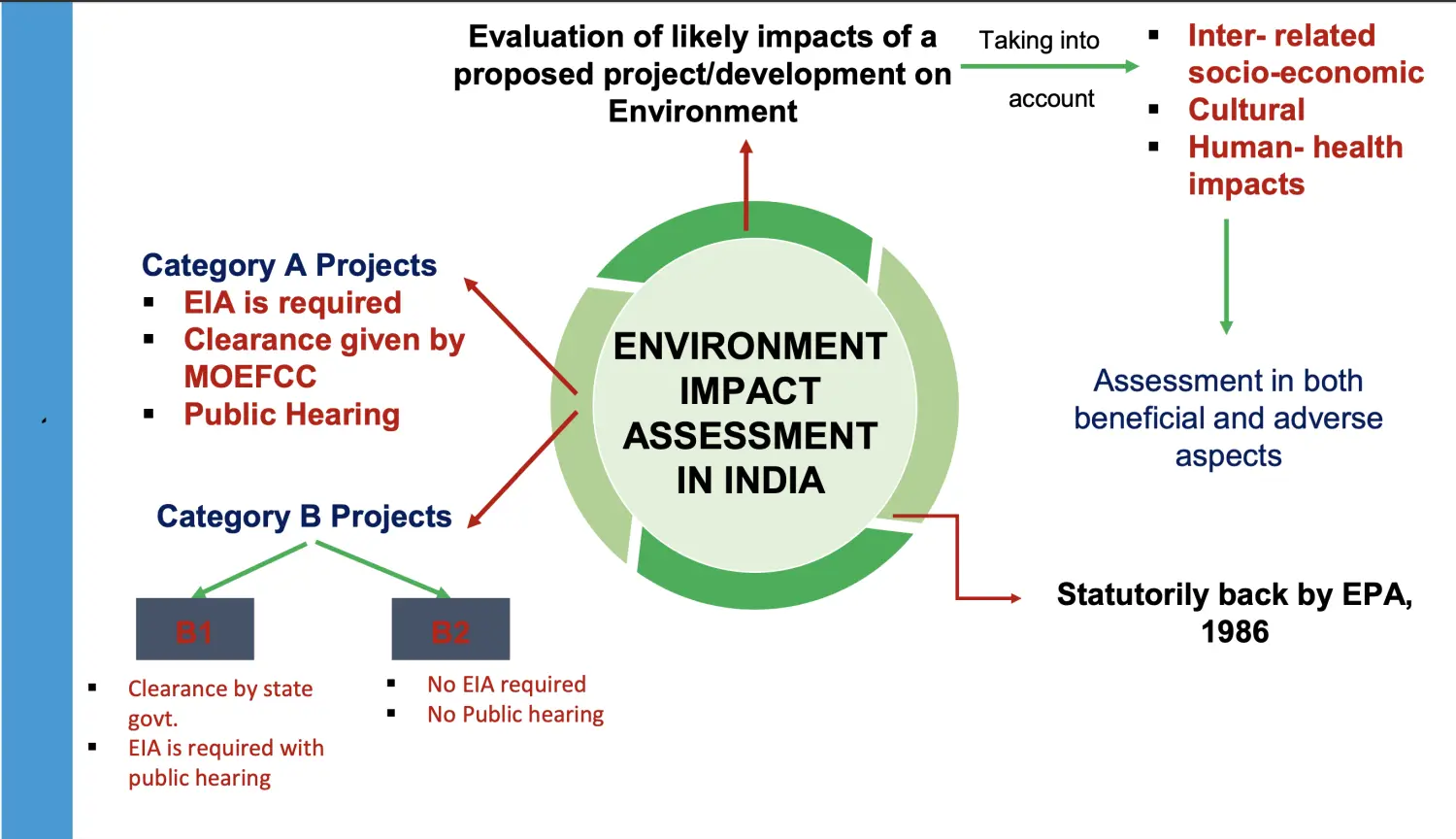
- EIA rules were formulated under EPA, 1986 then
- Factors and Causes
- Read About India-based Neutrino Observatory, Theni Dist, Kerala → Shola Mathi Ketan National Park, Kerala & Associated NGT Cases
- Differentiate Between EIA Rules 2020 - Terms like Ex Post Facto Clearance
ESA
- They are Declared under EPA, 1986 but there is no Mention of the term Eco Sensitive Areas under the Act, these are ecologically fragile or vulnerable eco systems which can face more damages when exposed to some particular stress as compared to other ecosystems - so demands extra care or protection
- Concept of Eco Sensitive Areas is not at all against the concept of economic development which can hurt the livelihood of people, but is favouring sustainable development
- Maximum Developmental Activities are allowed in Eco Sensitive areas but with Strict Rules and Regulations
- NBWl chaired by PM forms a 15 Yr Agenda for Protection & management of wildlife in the country.
- This 15 yr agenda is called as National Wildlife Action Plan
- NWAP 1 by NBWAL - 1986-2001
- NWAP 2 by NBWAL - 2002 - 2017
- NWAP 3 by NBWAL - 2017 - 2031
- under NWAP 2 central govt directed states to find out places where damage can be more - called fragile area which later became eco sensitive area
- Concept of ESA was formulated by Madhav Gadgil Panel (Western Ghats Ecology Experts Panel) formed by Environment Ministry, 2010
- The Panel Recommended to Declare Western Ghat into ESA
- Another Panel called K Kasturirangan Panel also recommended ESA
- Read More About K Kasturirangan Panel and Madhav Gadgil Panel