Pillar 1 - Theory - By Smriti Mam
Ethics and Human Interface
UPSC Question
In The Context of Defence Services, Patriotism readiness to lay down ones life in protecting the Nation. According to you what does patriotism imply in everyday civil life - 10 M (2014)
UPSC Question
To ensure efficiency in the organization we should look for intelligence, energy, and integrity. However, if integrity is absent the other two will kill us
This is a PYQP → Answers are Ravan, Duryodhan, Hitler
Meaning of Aptitude
- Potential Ability of an Individual
- Can be Natural / Acquired
- Aptitude is different from Intelligence
- Necessary conditions to be a good administrator BUT it doesn’t guarantee effective administration.
- To be a good administrator
Meaning of Intelligence
Refers to an ability of an individual
- Think Rationally
- To Act Purposefully
- To Deal Effectively with the Environment
Meaning of Ethics
- Introduction
- Definition : Ethics is a prescriptive code of conduct wrt Rightness and Wrongness of an action.
- Like a Prescription of Do’s & Don’ts
- What is the Significance of Ethics ? - Divide in Ind & Society Based
Prevent Social Strife
Imparts Peace in Society
Helps in establishing peace/harmony/cohesion
- We Will be Tolerant
- We Will be Accommodative of Diversity
- Actual Realisation to Unity in Diversity
Getting a virtuous society (eg: Ram Rajya)
Creating a Ethical Society
Sense of peace/joy/happiness
Result of above things Point 1 2 3 is Point 4
Helps in resolving dilemmas between competing values
Example of Doctor - Generic Medicine and Ethical Medicine
which leads to Quick Decision Making
Example of Doctor - Generic Medicine and Ethical Medicine
Improves credibility & prestige in society
Removes problem of Cognitive Dissonance
Cognitive Dissonance : Mental Discomfort created because of conflicting values goes away
Efficiency in Administration:
- Helps you become a better Human Being
Improve the overall productivity
Nothing to Fear
Imparts Courage in thyself
Ethics generate the ability to walk the talk
What you Preach You Practise
- Introduction
Meaning of Integrity
- When the path of righteousness is followed across time and space it is referred to as integrity.
- Righteousness → Meaning To do what is Right
- When you are alone, when no one is watching and you are still ethical → It is Integrity
UPSC Question
What is the Significance of Ethics for an Individual and Society ? - 10 M
Example 1 - Difference of Aptitude
- Civil Servants who Clear Exam might not be a Good Teacher
- A Good Teacher might not have administration for Civil Services
Example 1 - Integrity - AQ Khan & APJ Kalam
- Nuclear Scientists - AQ Khan and APJ Abdul Kalam
- Kalam - Honest & Integrity
- AQ Khan - Sold his nuclear codes to foreign State
- Inference : Just by having knowledge, you cant ensure Integrity
Example 2 - Integrity - Warren Buffet
To ensure efficiency in the organization we should look for intelligence, energy, and integrity. However, if integrity is absent the other two will kill us.
This is a PYQP → Answers are Ravan, Duryodhan, Hitler
Who Decides what is right and wrong ? What is the Source of Morality ?
💡 There is no one right thing to do- Religion - Scriptures
- Family - Culture
- Leader - Gandhi
- Philosophy - Does End Justify Means ?
- Gandhi & Robin Hood
- Intuition
- Laws & Constitution
- Self Conscience and Humane Intuition
💡 School of Thought : Virtue Based EthicsVAME → Value Attitude Morals Ethics
VAME IS ONE
What is the Concept ?
VAME is a mental construct that acts as an instrument of behaviour regulation.
Mental Construct - Cant Measure but Infer from Behaviour
They are responsible for guiding our
- decision-making
- influence our choices
- direct our behaviour
What are they Made up of ?
CAB Model or ABC Model
- 1 Cognitive / Belief
Belief is a Internal feeling, that something is true.
Belief can be unproven/irrational
Belief can be rooted in tradition, myth, folklore, superstition, verifiable facts, etc
Belief refers to ideas, viewpoints which are held by society or group etc
Beliefs give us hope, human beings thrive on what they believe in.
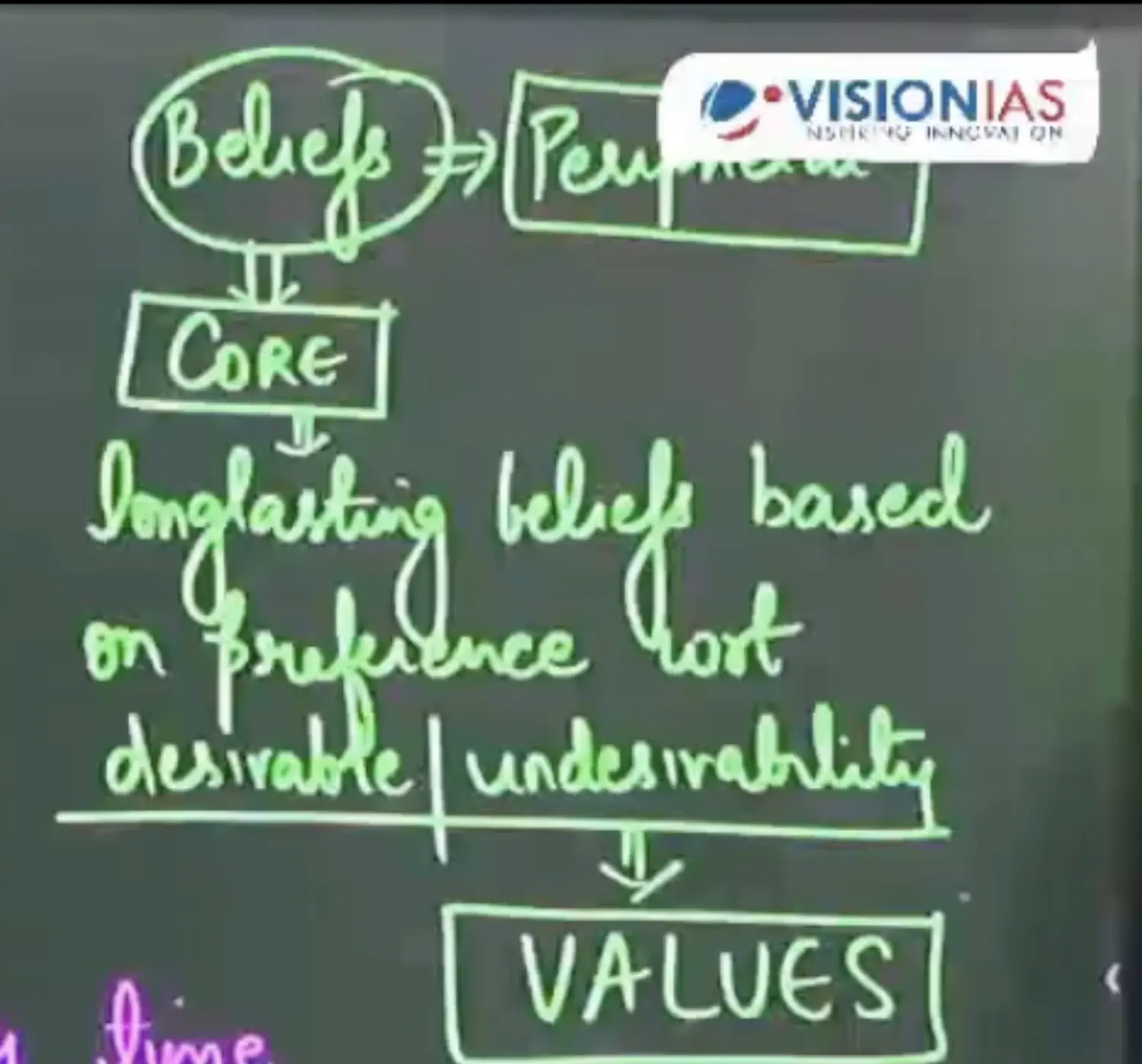
There are 2 Types of Belief - Core and Peripheral
Core Beliefs : can be challenged but is very difficult to change
Integral to your existence
If it is changed then it constitutes peripheral belief
Peripheral Beliefs : can be changed easily
Ex : Allowing Women to Work outside
Ex : Glass is half filled or full filled
Examples
- Acche Din Aayenge
- Life After Death
- 16 Monday Fast Gives Good Husband
Beliefs GENERATE Emotions
- 2 Affection / Emotion
It is a feeling or bodily arousal
Expression to an event: internal & external
If Expressed Properly it gives you a sense of Relief
Expressed through Actions
However, Once the emotions are generated there is a desire for action but it doesn’t guarantee that you will perform the action
Example:
- Belief: Corruption is threat to development of Country
- Emotion: Anger towards Corrupt People
- But: its doesn't guarantee I will be whistleblower or not
Example:
- Belief : Citizens should be loyal to country
- Emotion : Patriotism
- But : Not Necessary I will join Defence Forces
Emotions LEADS to Behaviour Tendency
3 Behaviour Tendency
This Tendency to Behave - May Translate into Action or not Translate into it
- 1 Cognitive / Belief
Characteristics Features ?
Static or Dynamic
Image
VAME is relatively permanent
Its not that it cannot change ever but it can change but not so frequently or rather once or twice a life
It is the source of our identity
It involves investment wrt cost, energy, time
It takes time to develop
However, under the same set of values, there can be multiple behaviours (which might add some dynamism)
Example : Behaviour of Mam May Change Daily (Laugh, Angry, Low Energy) but Not the Values of Secularism and Women Empowerment
Sometimes, with drastic changes in environment/ circumstances, there can be changes in Values
Examples
Example 1 : King Ashoka (Change of Values)
Example 2 : Anguli Maal and Gautam Buddha (Change of Values)
Example 3 : Not Necessarily Emotions Convert into Action
No Doubt Patriotism is a Value
But : Manifestation is Not Necessarily Joining Defences, It can be developing Scientific Temper, Respecting Ideals etc (Background of Fundamental Duties)
Absolute or Relative
Absolute: Values are constant
Independent of context/ situation.
There cannot be a wrong way of doing the right things.
Relative: Nothing is right/wrong for all time to come, It is dependent on context.
Absoluteness has a tinge of Rigidity
Relativeness lends the flexibility which is required to interact successfully with the environment.
There cannot be a wrong way of doing the right things.
It is dependent upon
Timing, Situation, Choice of Words - Should be Correct
Examples
Example 1
Kurukshetra - When Dark No Fight, Lord Krishna, Did Leela in the Evening for a Larger Cause victory of dharm over adharm
Example 2
Sage and Thief - Dacoit Killer
for Upholding Value he didn't say the truth, but for taking pride in it
Example 3
Friend shared a moment of truth
you share it with others, not for truth but for sadistic pleasure
Example 4
Patient Dying, Doctor has to tell problem properly
Example 5
Movie Newton : Voting has to be done until 5, time 4.45 AM - Danger of Life
The Problem is You take pride in being honest
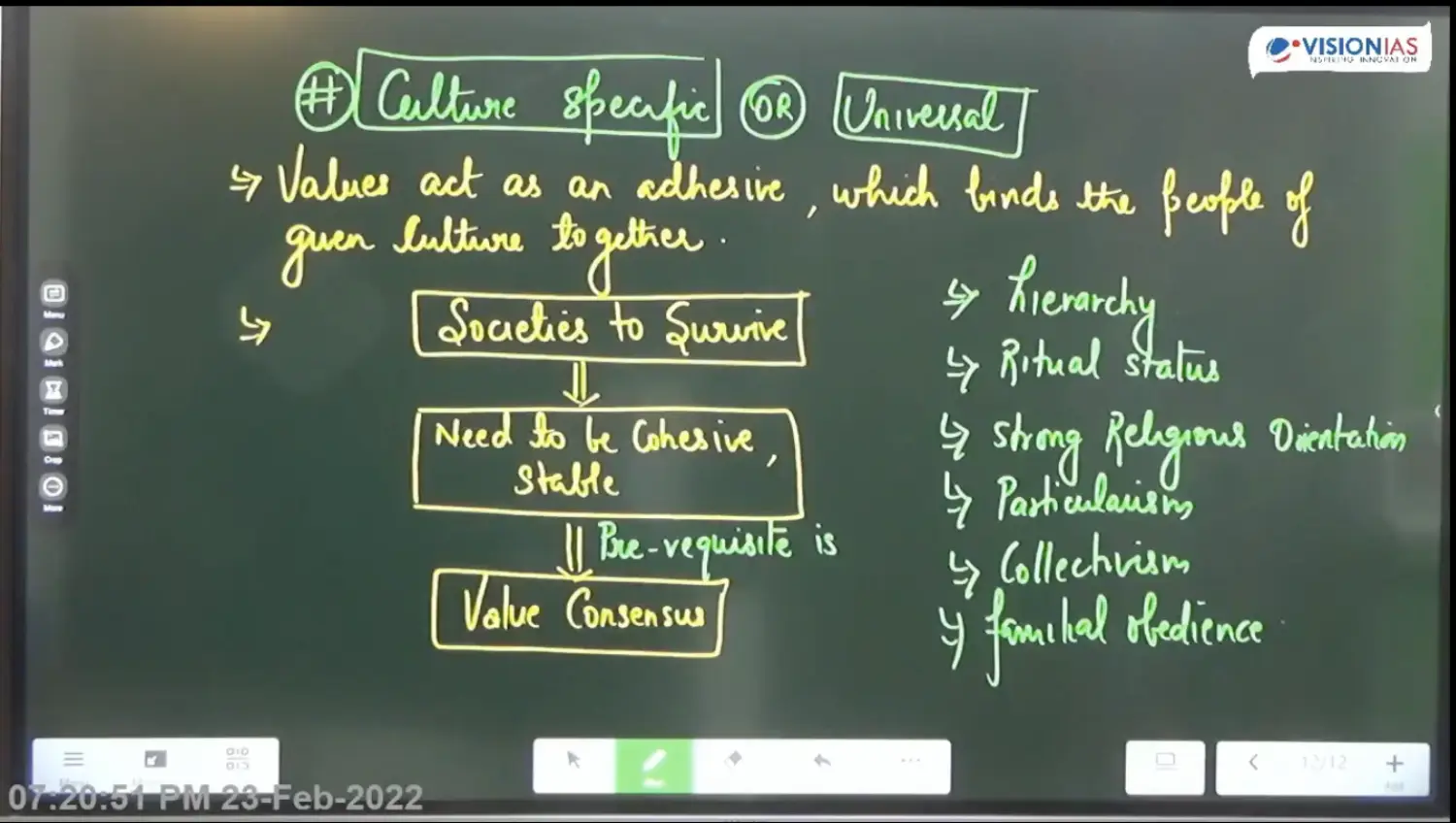
Culture Specific or Universal
Culture-Specific
Values act as an adhesive that binds the people of given culture together.
Societies to survive → Need to be cohesive & Stable → Prerequisite is value consensus
Examples - Characters of Indian Culture
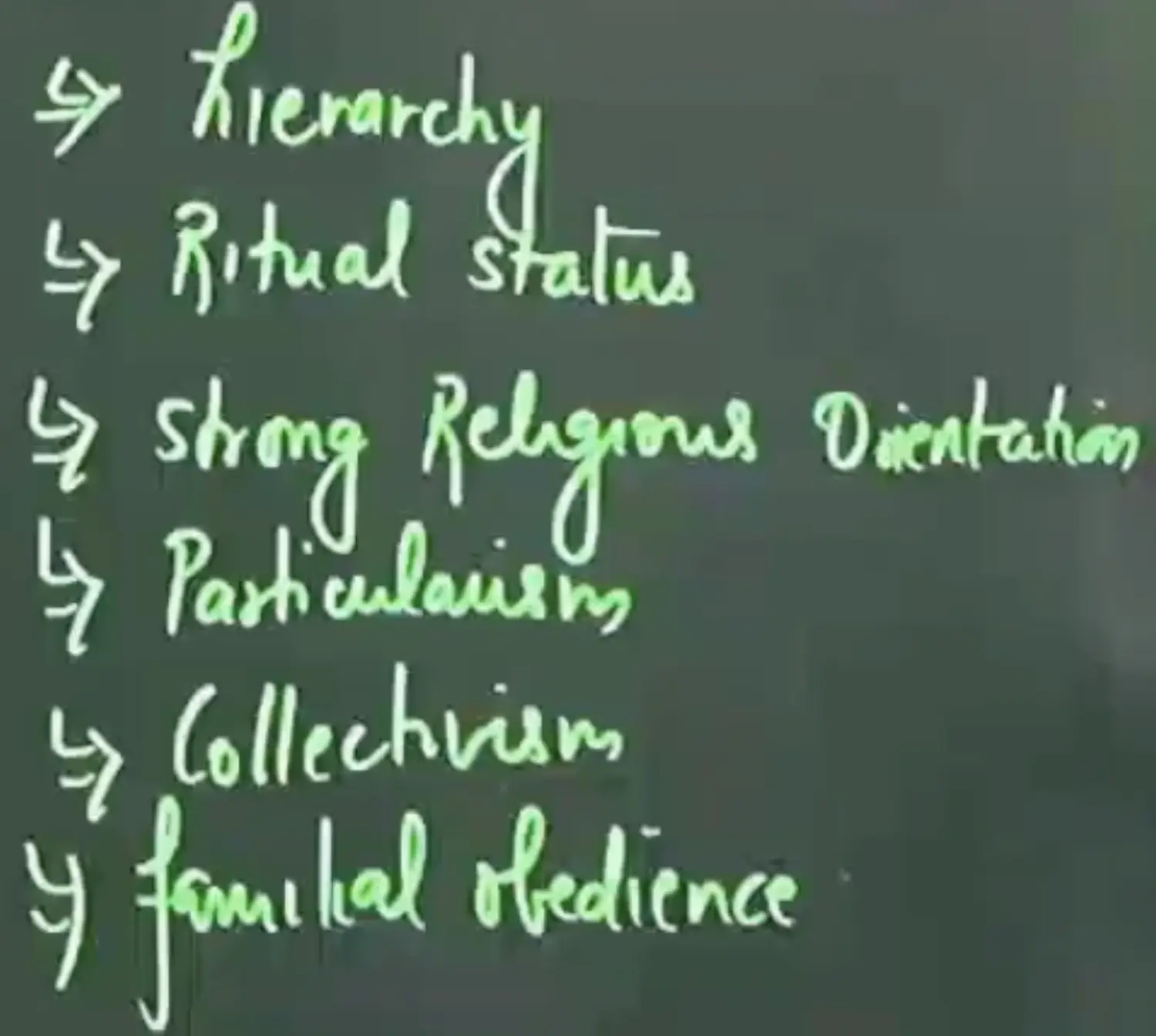
Universal Values
However, there are certain values that transcend the boundaries of different cultures.
For Eg: Love, Happiness, Compassion, Empathy, Integrity
Objective or Subjective
Objective: Some have to be Objective
Values are independent of the individual who is holding them.
- Integrity
- Compassion
Subjective: But Largely they are Subjective
values are subjective it depends on
- individual perception
- understanding
- Judgement
Example: Platos
Plato's beliefs, values exist outside the individual
It is not impacted by the belief/perception
For Example: Beauty is Objective but it was refuted by saying that - According to Platos
But Beauty lies in the eyes of the beholder, Hence Beauty is Subjective
Example : Protagoras
Protagoras Says that to measure something you add value to it and thus it depends on the Human observer.
VAME IS DIVIDED
There Inter Relationship ?
In Sequence
1 Summary
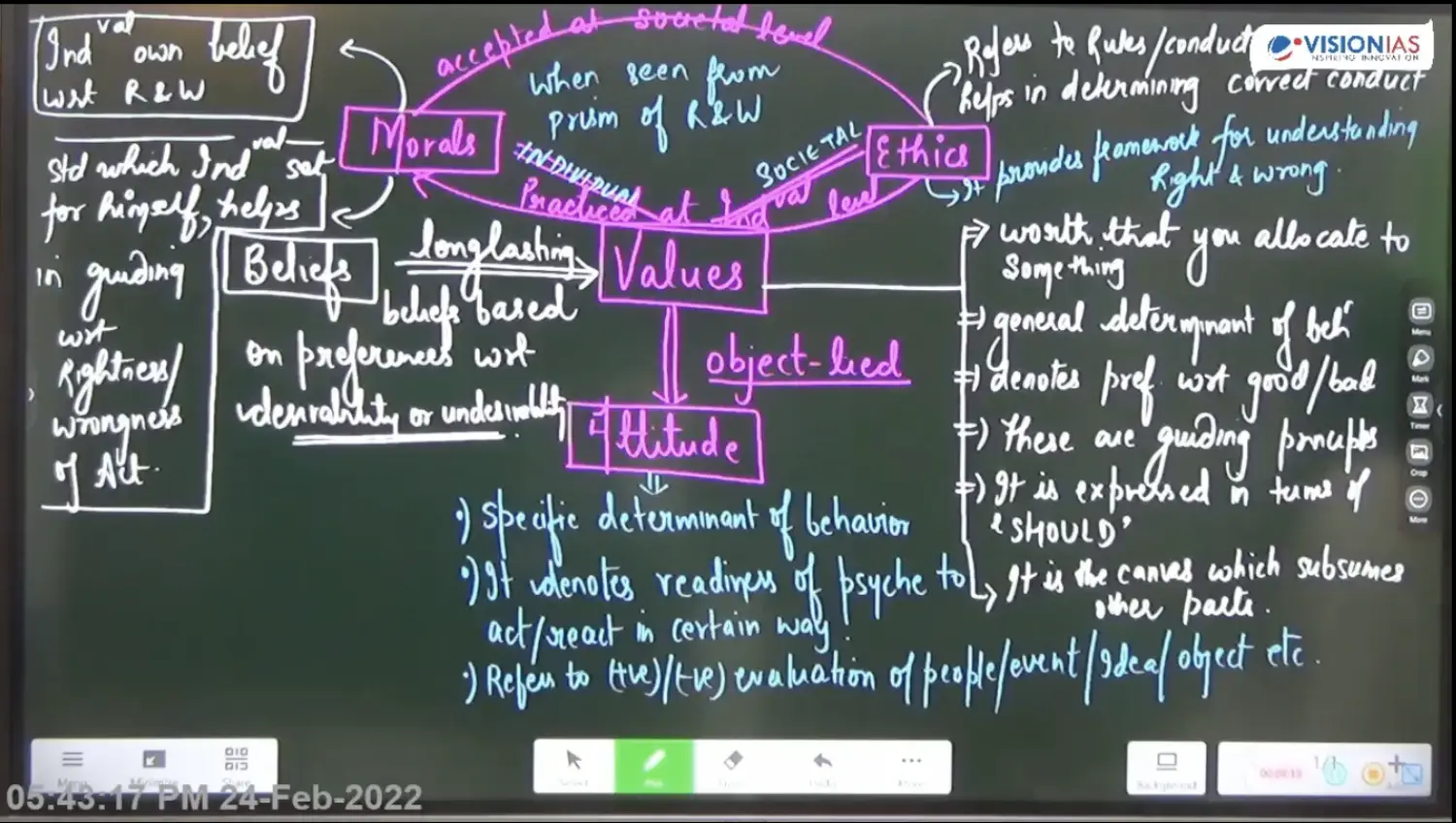
2 Chronology
- Belief is
- Long Lasting Belief is Value
- Value tied to a Object is Attitude
- Attitude that can be seen in the prism of Right and Wrong at
- Individual Level - Morals
- Societal Level - Ethics
3 Belief
There are 2 types of belief
Core and Peripheral Belief
Long Lasting Belief based on Preference to Desirability and Non Desirability is called as Values.
These Values are of Two Types
- Desirable Value - Virtue
- Undesirable Value - Vice
4 Values
Simple Definition of Value
The Worth that you allocate to something is value
Ex : Pens value is more for a teacher than a labour
What is Value ?
- Belief = Perception
- Belief → Core → Long Lasting beliefs based on preference wrt desirable/undesirability is called Value
Values
- Worth that you allocate to something.
- General determinant of behaviour
- Religious but not turned up for Keertan
- Denotes preference with respect to good or bad.
- These are guiding principles.
- It is expressed in terms of 'SHOULD'
- It is the canvas that subsumes other parts.
- Examples
- Innovation
- Peace
- However it is the general determinant of behaviour
- It cannot guarantee you will behave. However
Value System
- Value System Needs time to be developed and similarly needs time to be changed as well
- Hence, Process of Socialisation is a necessity, so that value system can be shaped in a good manner before that value system is made in a wrong way
5 Attitude
- Specific determinant of behaviour
- It denotes the readiness of the psyche to act/react in a certain way
- Refers to a positive and negative evaluation of people/event/idea/object etc’
- Attitude is a lasting evaluation of some aspects
6 Example of Value and Attitude
Example 1
- Value → Peace : all have this value
- Attitude → Attitude : all will not turn up for peace protest
Example 2
- Value → You believe in Parliamentary Democracy
- Attitude → but you didn't vote
Example 3
- Value → You are Religious
- Attitude →
- For You No Bhajan Keertan and No Temple
- For Some going to Temple
- For Some Extreme Pooja Paath
7 Value - Wright and Wrong → Moral and Ethics
Value that cannot be seen in the prism of Right and Wrong
For some being adventurous and creative might be a value but
If I am not adventurous and creative then, you cannot say that I am not a person of value
Values that can be ALWAYS seen in the prism of Right and Wrong
- If I do not have integrity, morality and truth, I am not a person of Value
- This Value if seen in the context of
- Individual - is Morality
- Society - is Ethics
8 Morals - Individual Level
- Morals are individual own beliefs w.r.t to right and wrong.
- The standard that an individual set for himself helps in guiding w.r.t rightness/wrongness of an act.
- Morals when accepted at a societal level are Ethics.
- When Ethics is practised at an individual level is Morals.
- Values are seen from the prism of right and wrong at the societal level it is ethics and individual level it is Morals.
9 Ethics - Societal Level
- Ethics refer to rules of conduct that help in determining correct conduct.
- Overall provides a framework for understanding what is right and wrong.
10 Example of Moral & Attitude
Example 1
You are a Doctor who has to save a Rapist who met with an accident
Moral → Ind Morality Should not treat this Rapist
Ethics → Societal Ethic of Job is to save the guy irrespective of anything
Example 2
You are a defence lawyer and you know your client has committed a murder
Moral → Ind Morality will say your client should be punished according to Law
Ethics → Societal Ethics of Job is to defend him in court of Law and get him acquitted
Difference Between Morals and Attitude
| Parametere | Ethics | Moral | | --- | --- | --- | | What is it ? | 1. Prescriptive rule of conduct i.e. correct way of doing things. 2. The right way to act in a situation. | 1. values held by individuals with respect to right or wrong. Principles of right behaviour which we use to judge the good or bad. | | Source | External or Social System | Internal / Individual | | Why we do it | Because, Society says it is the right thing to do | Because, we believe in something being R/W | | What if we deviate | We might face social disapproval or ostracisation | Might Lead to Guilt or Remorse etc (Crisis of Conscience) | | Flexibility | Collective Preposition of society hence it is more objective | Subjective, as it varies fro Individual to Individual | | Example | 1. Defence Lawyer 2. Doctor | Different Opinion on Surrogacy, Abortion, Prostitution |
How do they Develop ? → Socialisation
UPSC Question
What do you understand by Value and Ethics ? In what way it is important to be ethical along with being professionally competent ? - 10 M
Ethics and Norms
Summary
Ethics and Norms
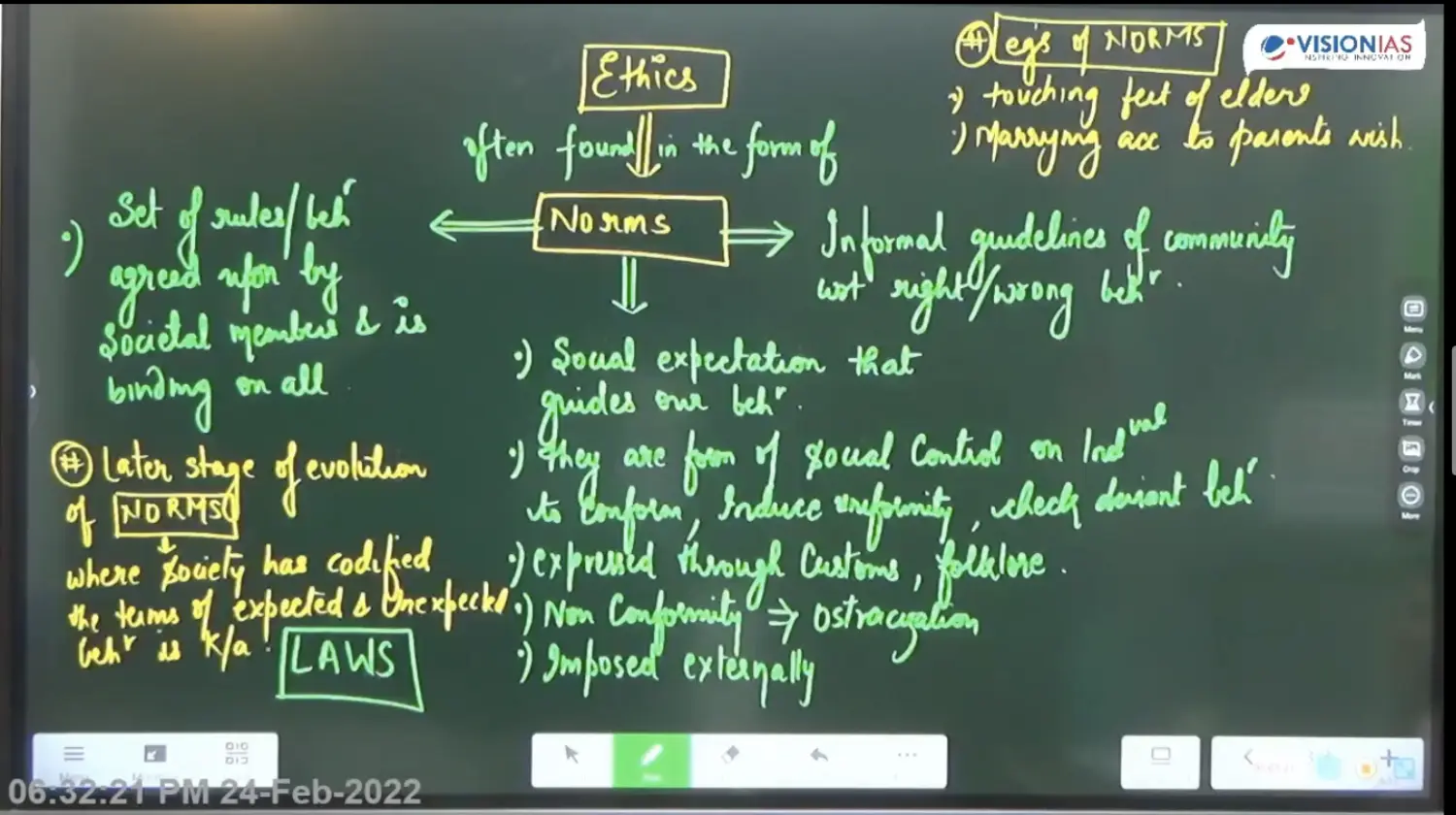
Ethics are often found in the form of Norms.
What are these Norms
Norms are informal guidelines of community with respect to right/wrong behaviour
They Social expectation guides our behaviour
Ex : Marrying according to your parents wish
How are these Norms Formulated ?
Set of rules/behaviour agreed upon by societal members and is binding on all
Why do these Norms Exist
They act as a tool of social control on individuals to
- practise conformity
- induce uniformity
- check deviant behaviour
How are they Expressed ?
Expressed through customs, folklore
What is you don’t follow the Norms ?
Non conformity → Ostracisation.
Ex : Not Marrying within the caste has led to boycott
How is it Imposed ?
Imposed externally
Examples of Norms are ?
- Touching Feet of Elders
- Marrying According to Wish
Ethics and Laws
What is a Laws
The later stage of evolution of Norms, where society has codified the terms of expected and unexpected behaviour is LAWS
Relation Between Ethics and Laws ?
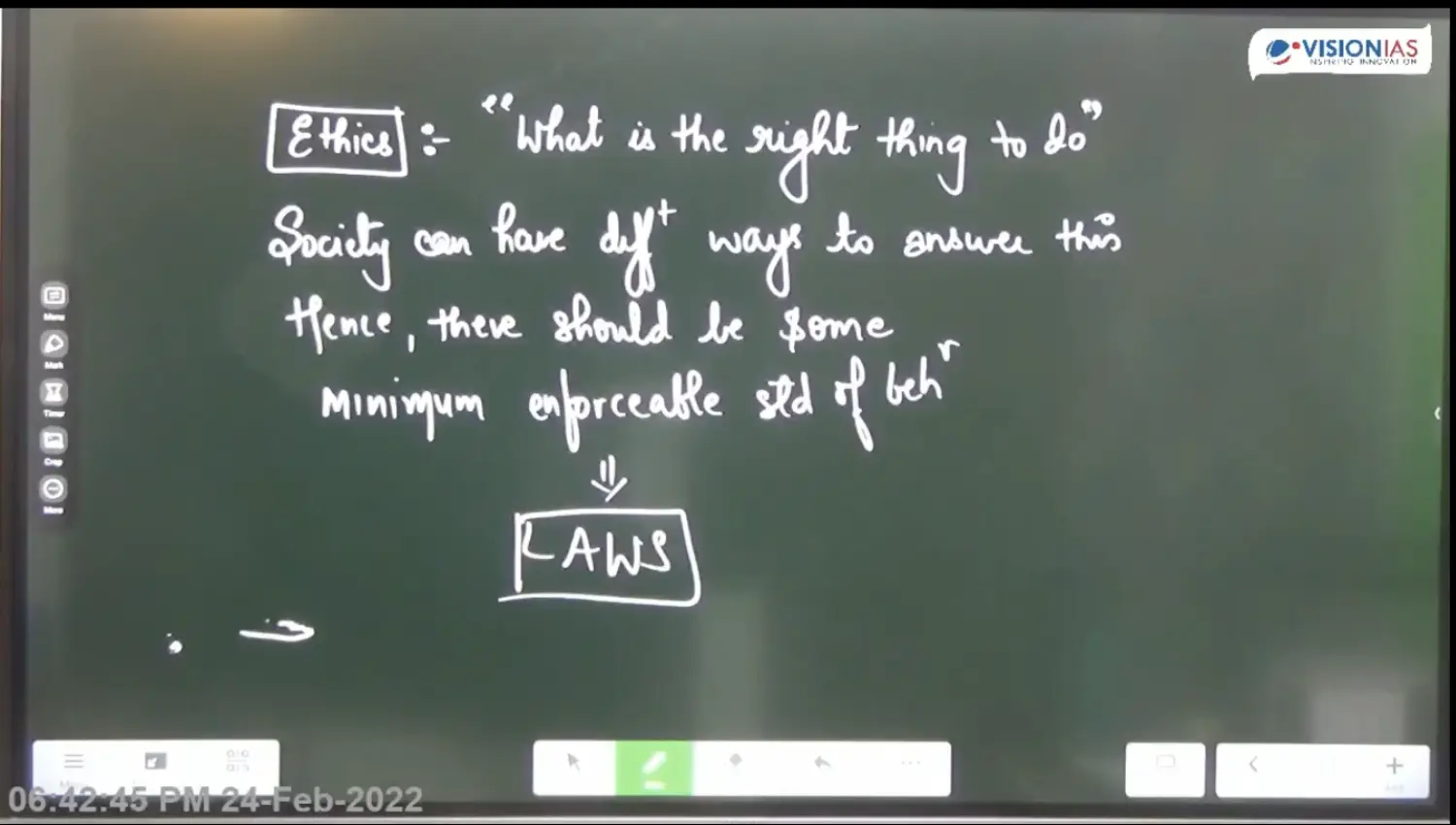
Ethics is “what is the right thing to do” society can have different ways to answer this.
Hence, there should be some minimum enforceable standard of behaviour in the society is nothing but LAWS
Why are Laws Needed ?
Laws are Necessary to maintain social order, peace and cohesion in the society
The Story
- Ethics refers to well-founded standards of right and wrong that prescribe what humans ought to do, in terms of rights fairness, obligation etc.
- Laws are usually based on an ethical framework to bring social order
- Laws act as an external set of standards in a post on an individual by a government.
- An Individual disobeying the law is liable to face penalties and punishment
- Laws have societal sanctions, hence has an important role in the smooth functioning of society.
Ethics act as a moral compass in guiding an individual even when the laws are silent on the action.
Example 1
the role of an administrator's discretion has to be exercised.
Discretion provides ample opportunities for corruption.
Therefore, Ethics is significant as a person with weak ethics may easily fall prey to such situations.
- Therefore Ethics is the first line of defence even laws are not in the subject.
- Ethics act as a defence mechanism whereas laws are reacted and only a remedy
- Person with weak ethics may fall prey to such situations
- Example : Legal but not Ethical
- Capital Punishment
- Apartheid in Africa
- Marital Rape
- Smoking
- Passive Euthanasia
- Adultery
- Cheating on Partner
- Prostitution
- Female Genital Mutilation
- Breaking Promises
- Abortion
- Slavery in America Once
- Live in Relationship
- Suicide
- Money on Road, Picked up and used
- Jharkhand → people didn't get ration because their ration card was not connected to aadhar card and they died
- Shakur Basti Encroachments Removed in a Cold Winter Night
- Inflated Price at Hospital - Clinical Establishment Act
- Ambulance People - Taking High Amount of Money
- Example : Ethical but not Legal
Hungry Child Stealing Bread
Concept of Robin Hood
Anand Margi Sect - Tandav on Street
Azan on Loudspeaker
Asking for sex of foetus
Mother Died, Child Could be saved, father said don’t want child
For Doc - to save child is ethical
For Doc - to perform surgery w/o consent is illegal
Khap Panchayat for many people is Ethical but it is not Legal
UPSC Question
Differentiate Between Law and Ethics - 10M
UPSC Question
Ethics is the first line of defence against malpractices, while law enforcement is remedial and reactive. Examine the Statement with Suitable Examples
UPSC Question
Law Succeeds in encouraging ethical behaviour in a society only when it is backed by conscience of its individuals. Discuss
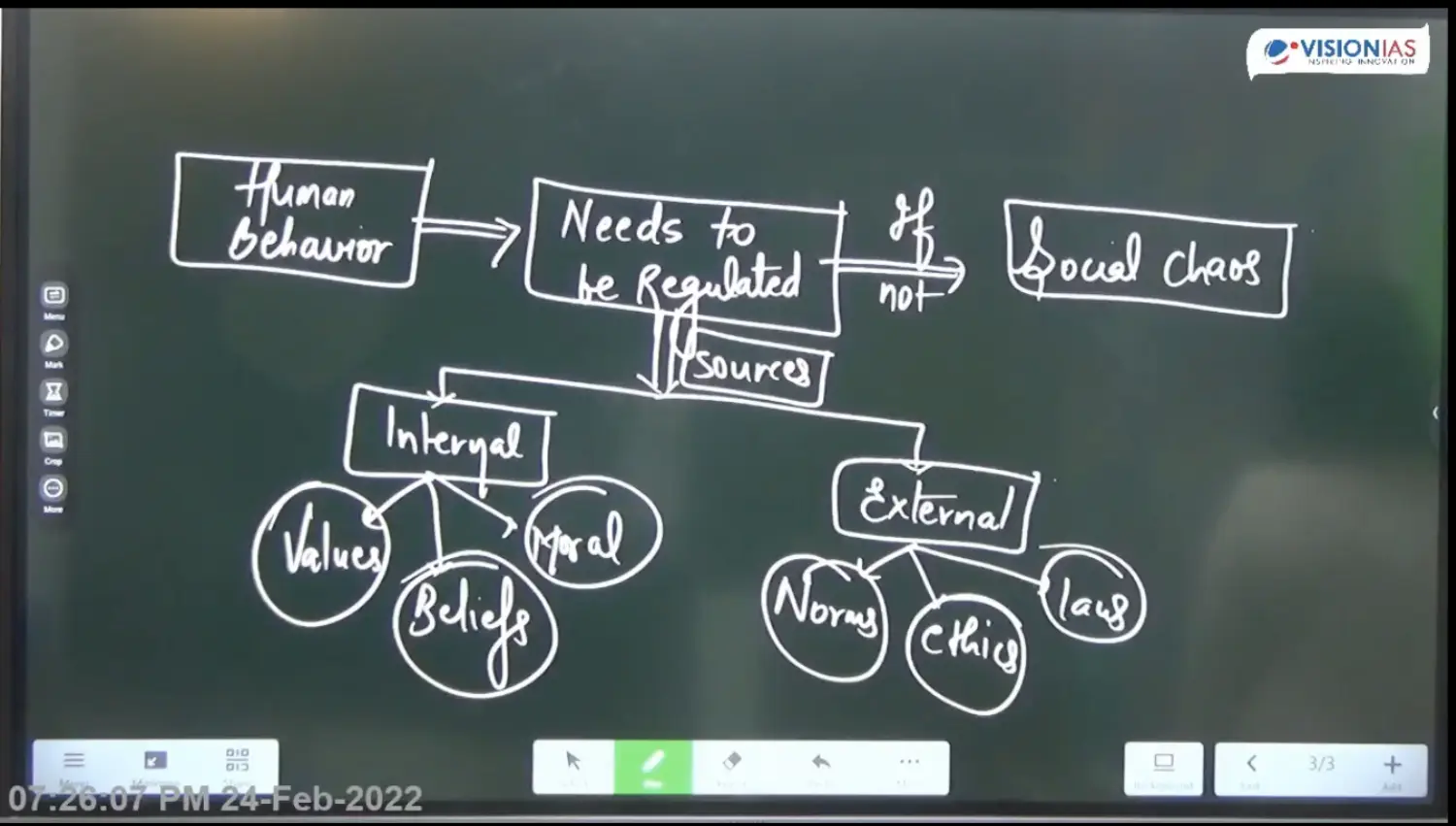
Regulation of Human Behaviour
Values and Socialisation
Summary
Socialisation
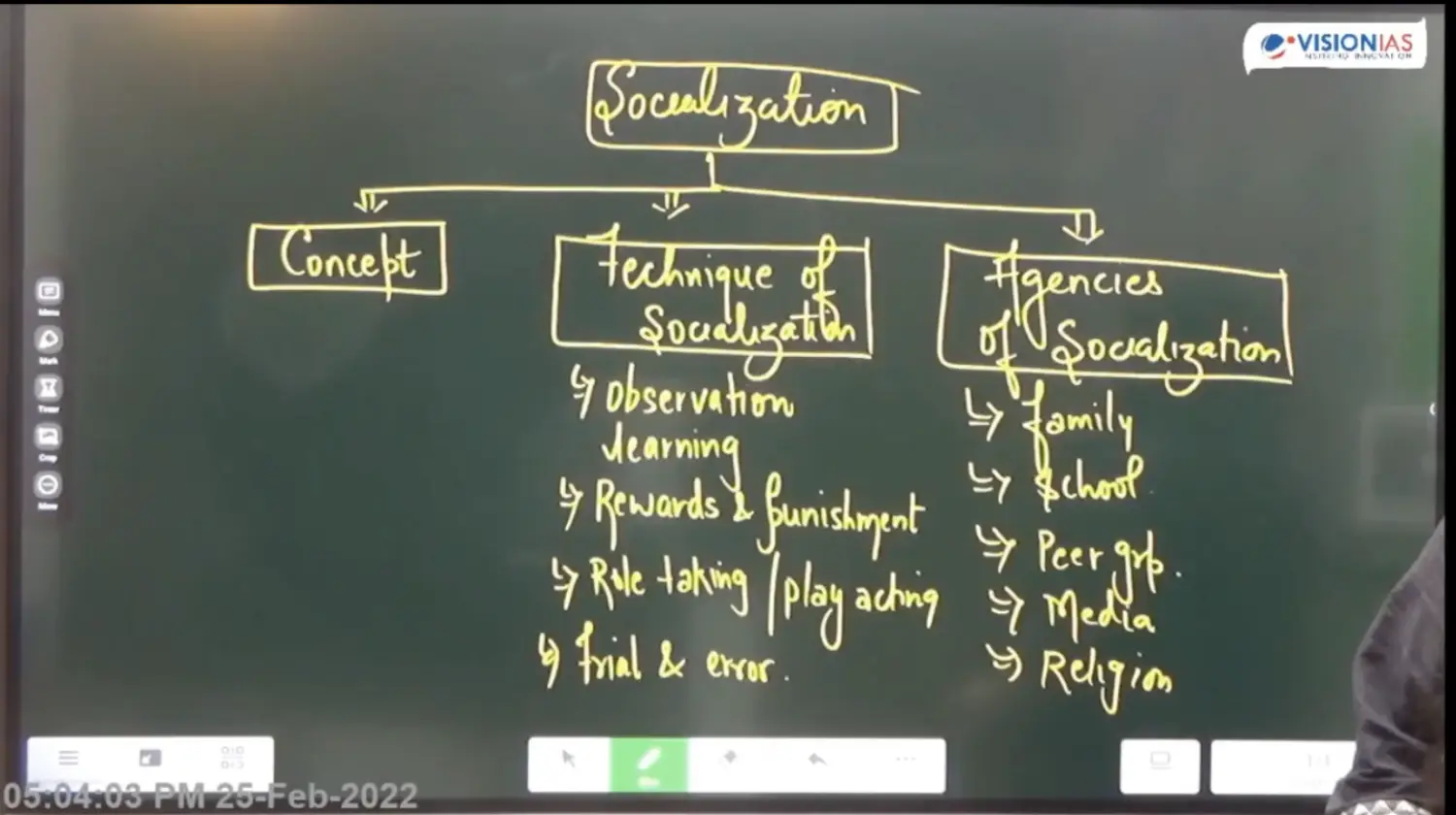
- Concept : Socialisation is a process by which a child is indoctrinated into his culture.
- It is referred to as a process by which culture is transmitted from one generation to the other.
- The individual develops his personality by learning the content of his culture.
- It’s a lifelong process of shaping individual tendencies so that he/she becomes and remains useful and a productive member of his society.
There are different Technique of Socialisation
1 Observation Learning
The process of learning by watching others is called observation learning.
It occurs through social role models like parents teachers friends etc.
2 Rewards & Punishment (Operant Conditioning)
It focuses on using either punishment or rewards to decrease or increase a behaviour respectively.
3 Role taking or Play Acting
Definition : The process of imaging visualising oneself as someone else and acting like him is explained as role play.
While playing such a role the individual is able to get a feel of how others are feeling and hence can suitably modify their response.
Example : Making the Most Notorious kid the Monitor of the class himself
Example : Fancy Dress Competition
Example : One Act Plays - Julius Caesar, Playing Bhagat Singh
Significance : Helps in imbibing & visualising the ethics
4 Trial & Error
By self-learning or one own experiences.
Agencies of Socialisation / Role of Agencies in Inculcating Values / Tool of Socialisation
Pro Tip : Hands that Rocks the Cradle, is the Hand that Rules the World (Ex → Mother of Shiva Ji etc)
1 Family
Summary
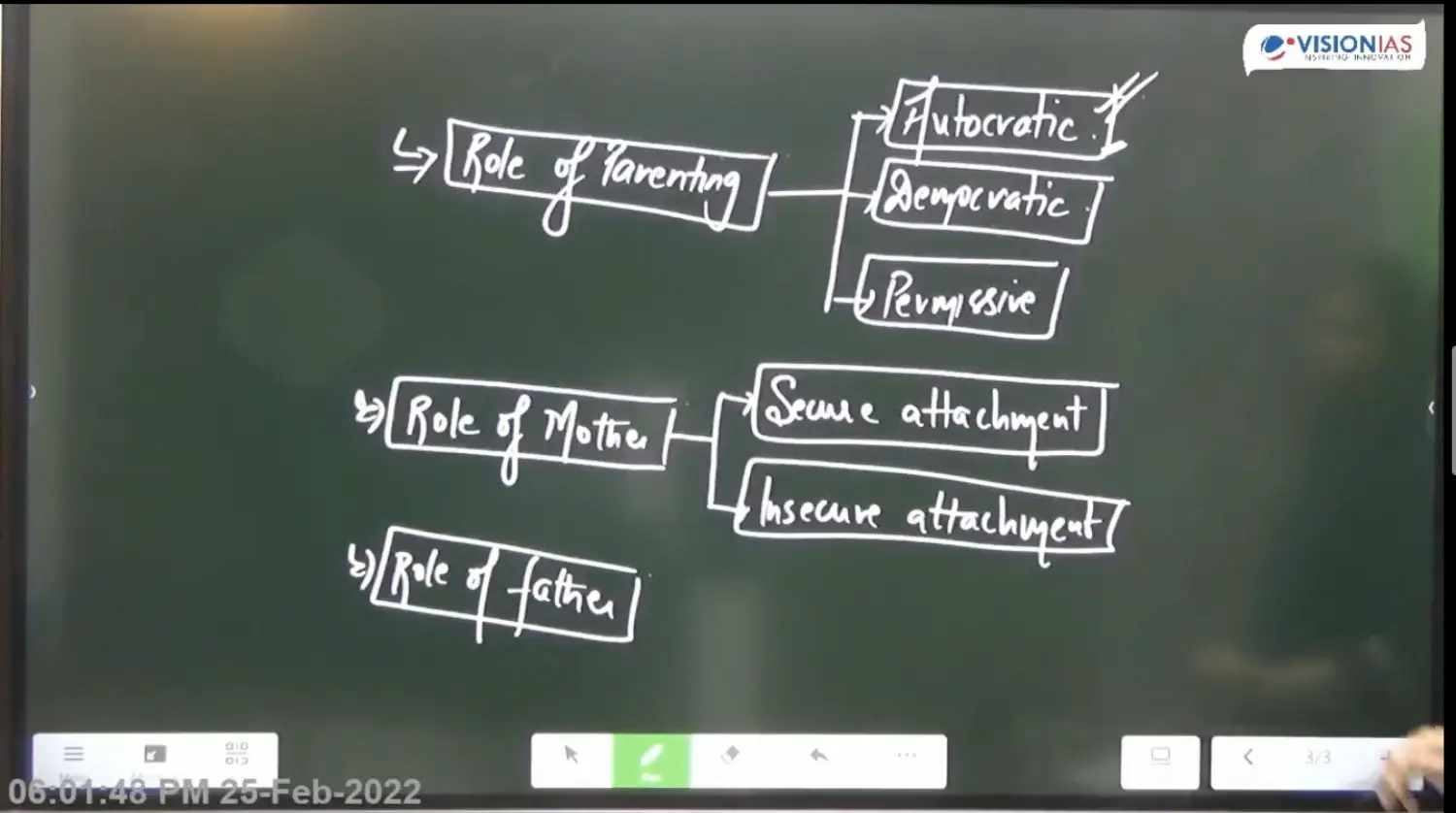
Introduction
It’s an informal agency of Socialisation
It is an institution that fulfils the need for value consensus by socialising the children in their formative years by imparting societal values.
Value Consensus → Similarity & Uniformity in Value System
It helps children in conforming to the norms and roles required for integration into the community
Family is the First school of Value Learning
Family Members are Immediate Role Models for children
Values such as honesty, truthfulness, love, cooperation, etc are inculcated by family like by experiences, life lesson and stories of parents
In recent years certain changes have been witnessed in the structure of the family
For Example :
- Single-parent families
- Nuclear families
- Reconstituted families - Divorced Couple, take their children and marry in a new family, like living with your step father / mother etc
However, despite these changes family still played a vital role in the transmission of societal value to the children.
Role of the family still Prominent across all stages of learning and development for children.
For Example :
There was a time when, a joint family inculcated the value of
- cooperation
- collective orientation
- familial obedience
- delayed gratification
PS : This Might Lead to Prostitution of Personality
Now also Family Inculcates Values but the the values inculcated are ;
- competition
- Individualism
- immediate gratification
- achievement orientation
- consumerism
Role of parenting
- Three Types of Parenting
Summary
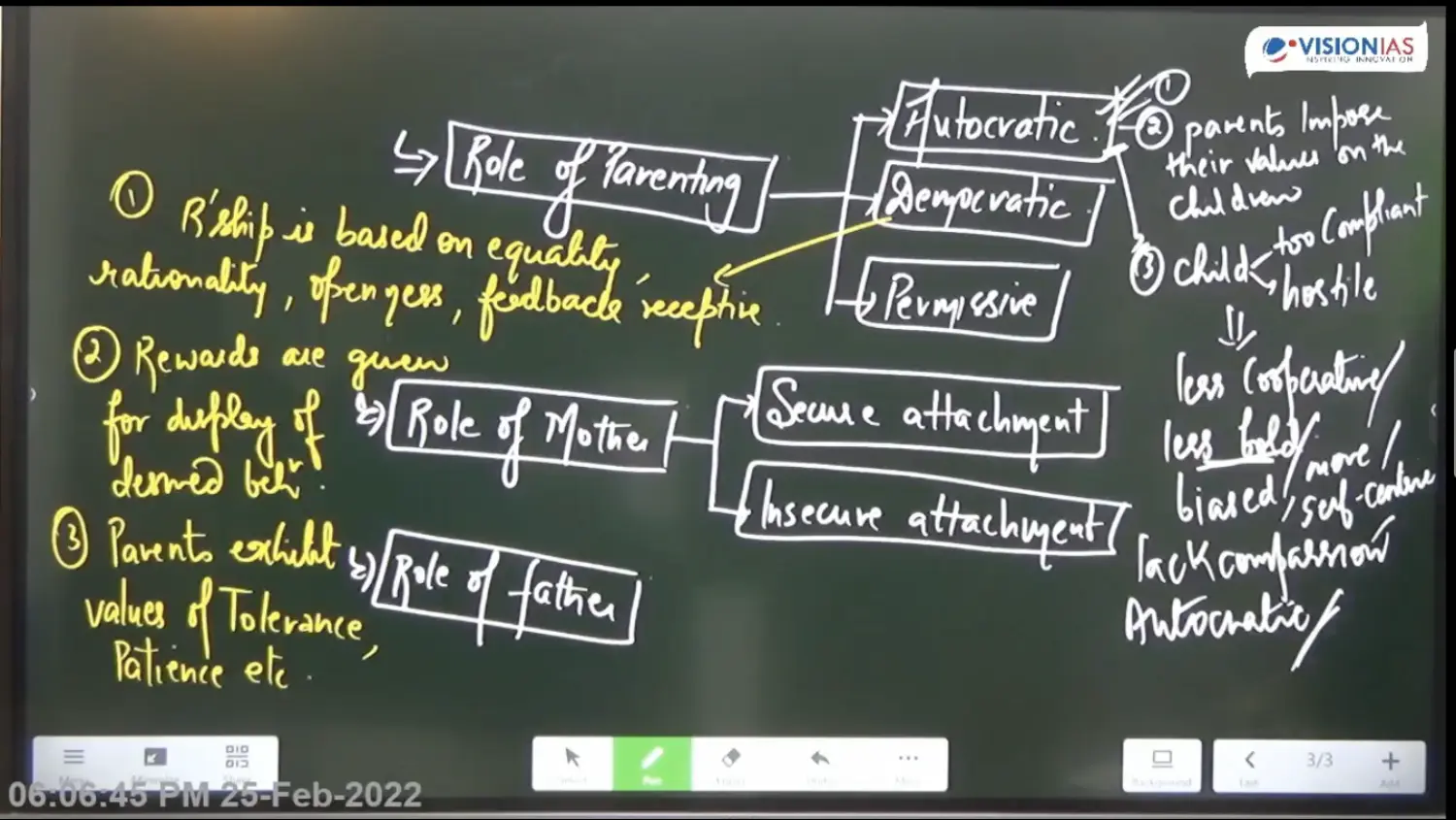
Autocratic Parenting
- believes in restricting the autonomy of children.
- Parents imposed their values system on the children as the resulting child becomes too compliant or too hostile
- Values they have is
- less cooperative
- less bold
- biased
- lack compassion
- they themselves will be autocratic
- more self centric
Democratic Parenting
- Relationship is based on equality, rationality, openness, feedback, receptive.
- Rewards are given for the display of desired behaviour.
- Parents exhibit the values of tolerance, patience, etc
- They do not believe in physical punishment rather they involved in withdrawal of love or threatening to withdrawal of love
- The values which are developed in kids are
- Objectivity
- compassion
- tolerance
- impartiality
- cooperation
- Here there is no Power Distance, Dispute Resolution is based on Content and Rationality based on situation
- Cons at max : Decision Making might be delayed
Permissive Parenting
- Providing freedom to children to an extent that it is in tandem with their physical survival
- Jab tak jaan pe baat na aa jaaye, tab tak unko freedom do
- This is New Age Parenting
- Parents are busy with their lives
- Values Inculcated are
- non-involvement
- tendency to identify with non-social elements
- Apathy
- Indifference
- Three Types of Parenting
Role of Mother
Secure Attachment
- Mother is a rational role model.
- Mothering is consistent.
- The relationship between mother-child is driven by trust, respect, warmth, etc.
- The values developed are
- empathy
- patience
- tolerance
- display of bold and confident behaviour
Insecure Attachment
- The mother is impervious (not affected by or not influenced by) to the needs of the child
- Places unreasonable demand on the child when the mother-child relationship is characterised by neglect, indifference or excessive indulgence.
- Values inculcated are the
- absence of trust
- self-belief
- lack of bold confident behaviour
- poor achievement orientation
Comparison
| Secure | Insecure | | --- | --- | | 1. Mother is a rational role model & Mothering is consistent | The mother is impervious (not affected by or not influenced by) to the needs of the child | | Values 1. empathy 2. patience 3. tolerance 4. display of bold and confident behaviour | Values 1. absence of trust 2. self-belief 3. lack of bold confident behaviour 4. poor achievement orientation | | Mother child relationship is driven by trust, respect, warmth, etc. | mother-child relationship is characterised by neglect, indifference or excessive indulgence. |
Role of Father
- Based on observation of learning and rewards & punishment the father also plays a significant role in Socialisation
- In fact
- the Boy learns gender-appropriate behaviour from the father
- a girl learns to make heterosexual adjustments by the father
UPSC Question
Comment on the Role of Family as a Source of Values. Give an Example of Situation where these acquired values guided you in a situation of dilemma ? - 10 M
2 Educational Institutions & System
Education w/o values no matter how good it seems to create a Clever Devil - C S Lewis
- Introduction
- It’s a formal agency of Socialisation
- It provides a medium where the individual learns to communicate with those who are neither kin nor friends
- child learns cooperation accepts differences and becomes adaptive via Socialisation provided by schools
- It acts as a bridge between family and society and prepares the child for his or her role in adulthood.
- It instills values such as
- equality
- brotherhood
- achievement
- orientation
Three Components within Education System which play a Significant Role in Socialisation are
Role of Teachers
Teachers are great role models and their action leaves a great impact on children at an impressionable age.
Teachers can influence the behaviour of students through their
- unbiased treatment
- commitment
- diligence
- timeliness
- ability to walk the talk
- ability to develop curiosity in the minds of the students
They can play a significant role in influencing the self-attribution pattern of learners
Positive Self Attribution → To Identify the Motive behind a Behaviour
Example :
A Kid used to look outside on the windows
Teacher 1 → said you are Nalayak
Teacher 2 → You can be a Environmentalist, You are a good Observationist
Example :
The Most Less Remunerated Job in India is Primary School Teachers, rather it should be the most paid one
We need teachers with the following values: empathy, impartiality, integrity, etc
Role of Curriculum
Trivialisation of Aim of Learning has Been Done & Needs to be Addressed
Role of Curriculum Notes
The education system is failing to inculcate the right kind of values due to the following factors :
the gap between the text and the context - Difference in Theory & Practical
Lack of sync between teaching at schools and family
Lack of outcome-based learning
lack of scientific temper
parochial evaluative standards
Parochial : only concerned with small issues that happen in your local area and not interested in more important things
lack of value-based education system
Culture-specific inputs so that it facilitates adjustment in the social milieu
That is one needs to “THINK GLOBAL but ACT LOCAL”
Milieu → the social environment that you live or work in
Example : Teaching Tribal Population that Jhoom Cultivation is bad whereas his parents are involved in it
Example :
Difference in Teaching and Background leads to High School Dropout
Hence,
- focus on vocational education
- education in the mother tongue
- mechanism of storytelling Anecdotes & activity-based learning (experiential learning)
Value Based Education - Might Get a Question, Hence Extra Notes
Values are generalised preferences to live a particular life like compassion, integrity, love, happiness, etc.
Since values are learned by Socialisation, therefore education must help to inculcate appropriate values like harmony, compassion, peace, humility, etc.
Aristotle said : "Educating the mind without educating the heart is no education at all"
Gandhi Ji’s concept of “Nai Taalim” : literary education is of no value if it is not able to build a sound character.
Values-based education prepares the young generations to develop their own creative base to respond to the force of westernisation
Values can guide individual action based on principles of fairness, goodness, wisdom to differentiate between right and wrong.
For Example : the ability to differentiate between the potential & pitfalls of some technological and scientific advances
It is a value-based education that helps us to learn the value of being considerate towards the marginalised sections.
it inculcates the ability in us to fight the challenges posed by social prejudices.
Because it will help us to develop the personality with traits like courage, compassion, integrity etc.
Value-based education also enables us to promote national integration, due to the value of tolerance, brotherhood, non violence etc
Conclusion : Hence we can say that the value of education empowers the citizens with certain attitude as well as the ability to constructively face different challenges and create a virtuous society.
Extra Curriculum Activities - Value Addition
It helps in developing team-building cooperative behaviour tolerance commitments etc.
- Introduction
UPSC Question - Important for Practise
Integrity is the value that empowers a human being, justify with suitable illustration ?
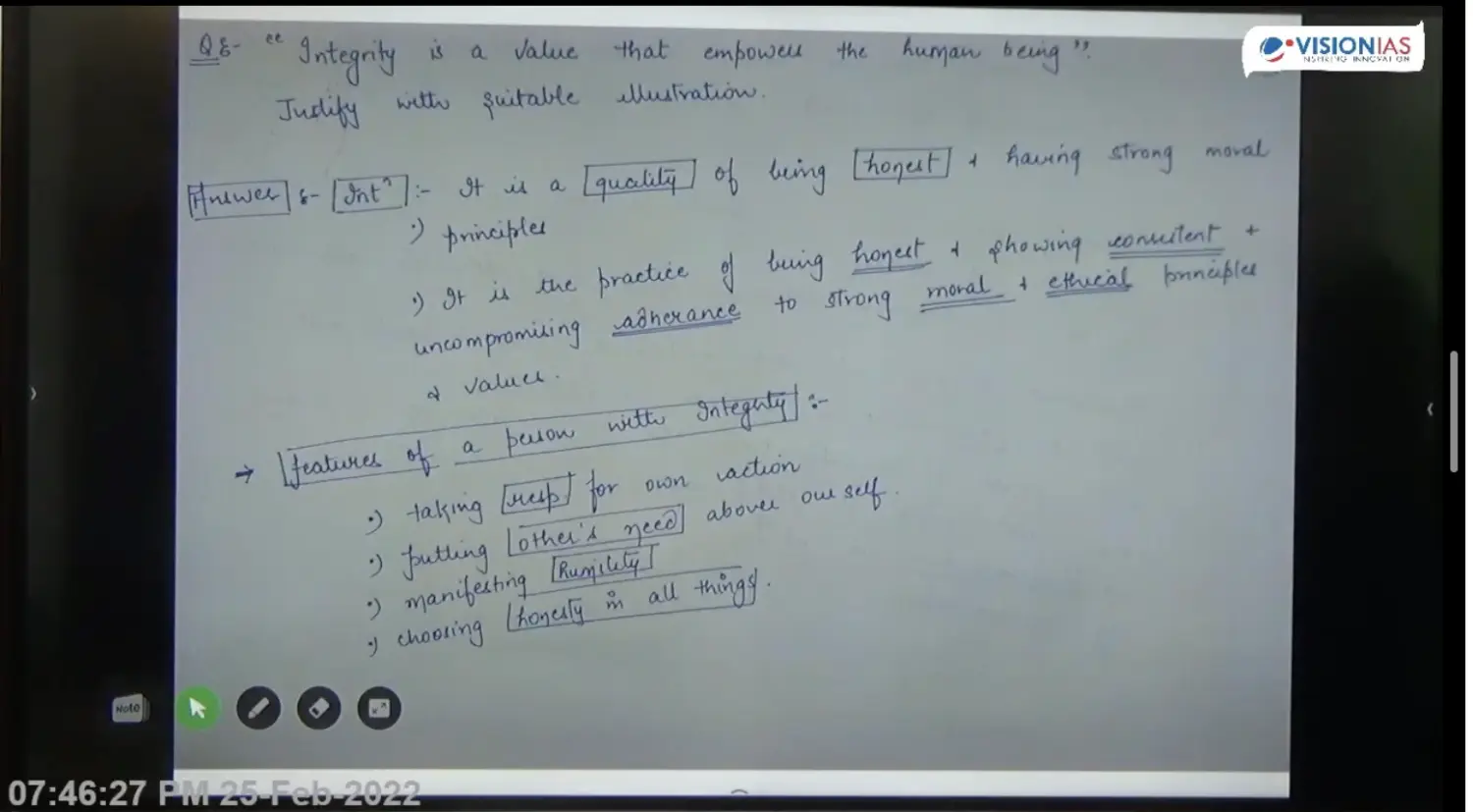
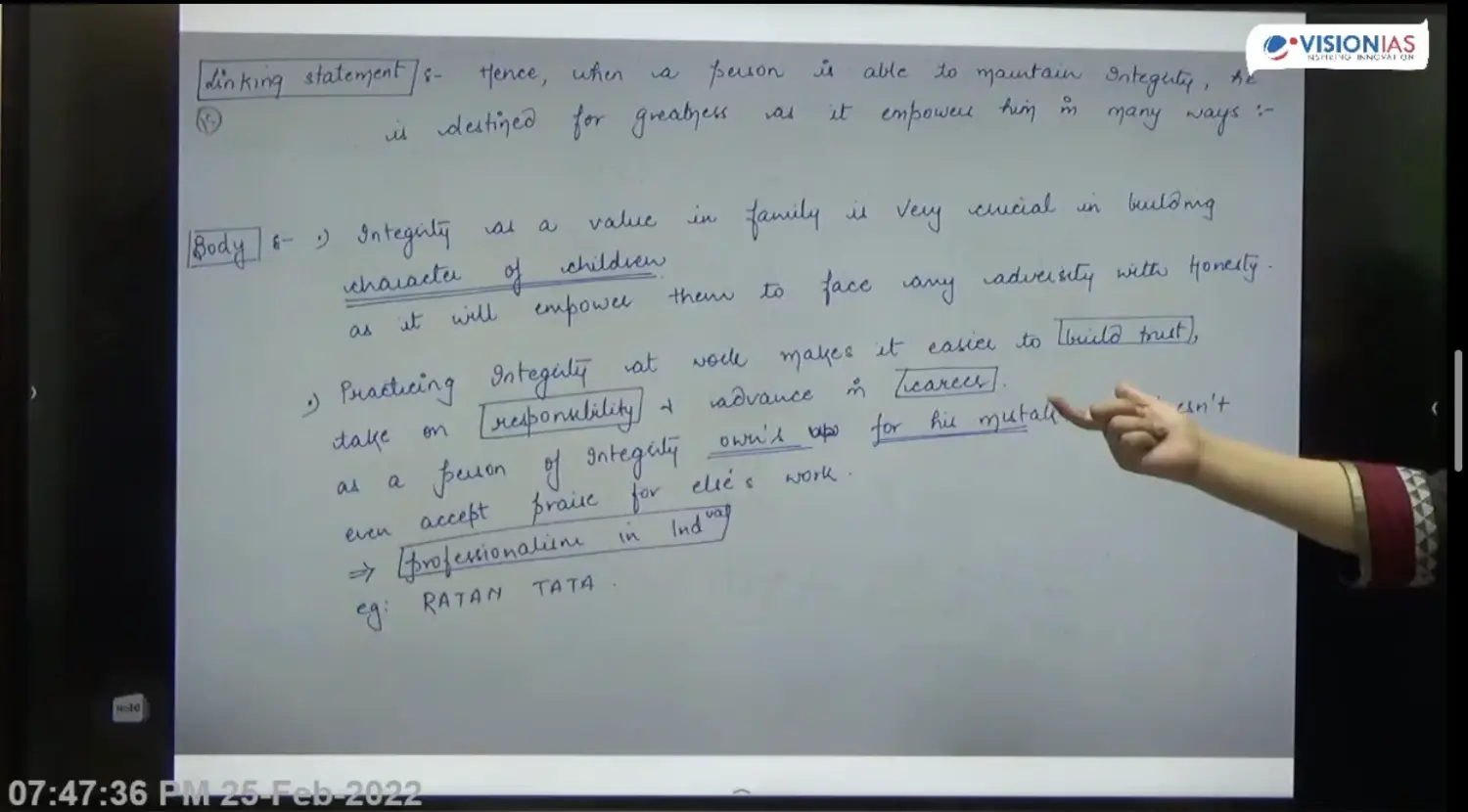
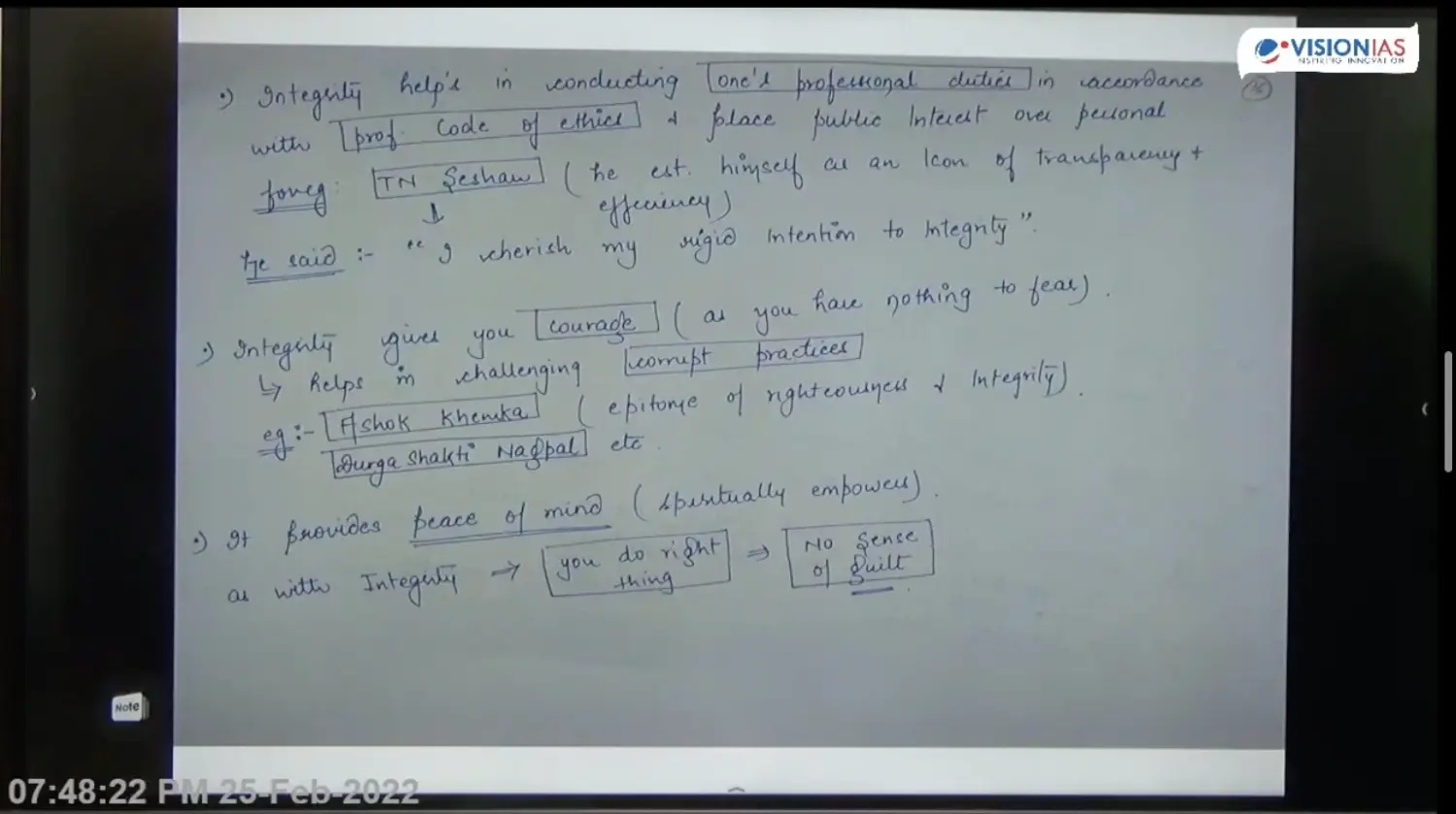
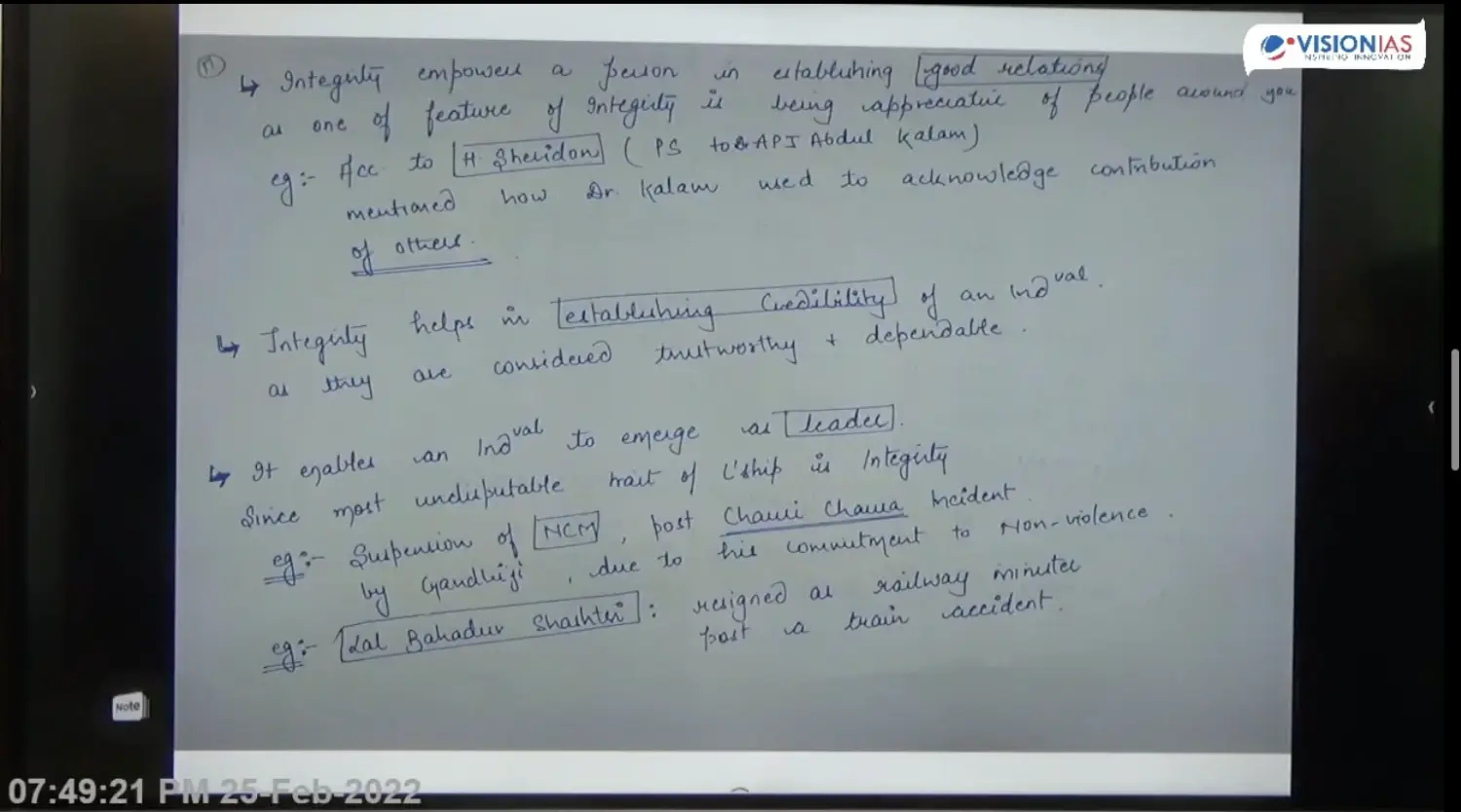
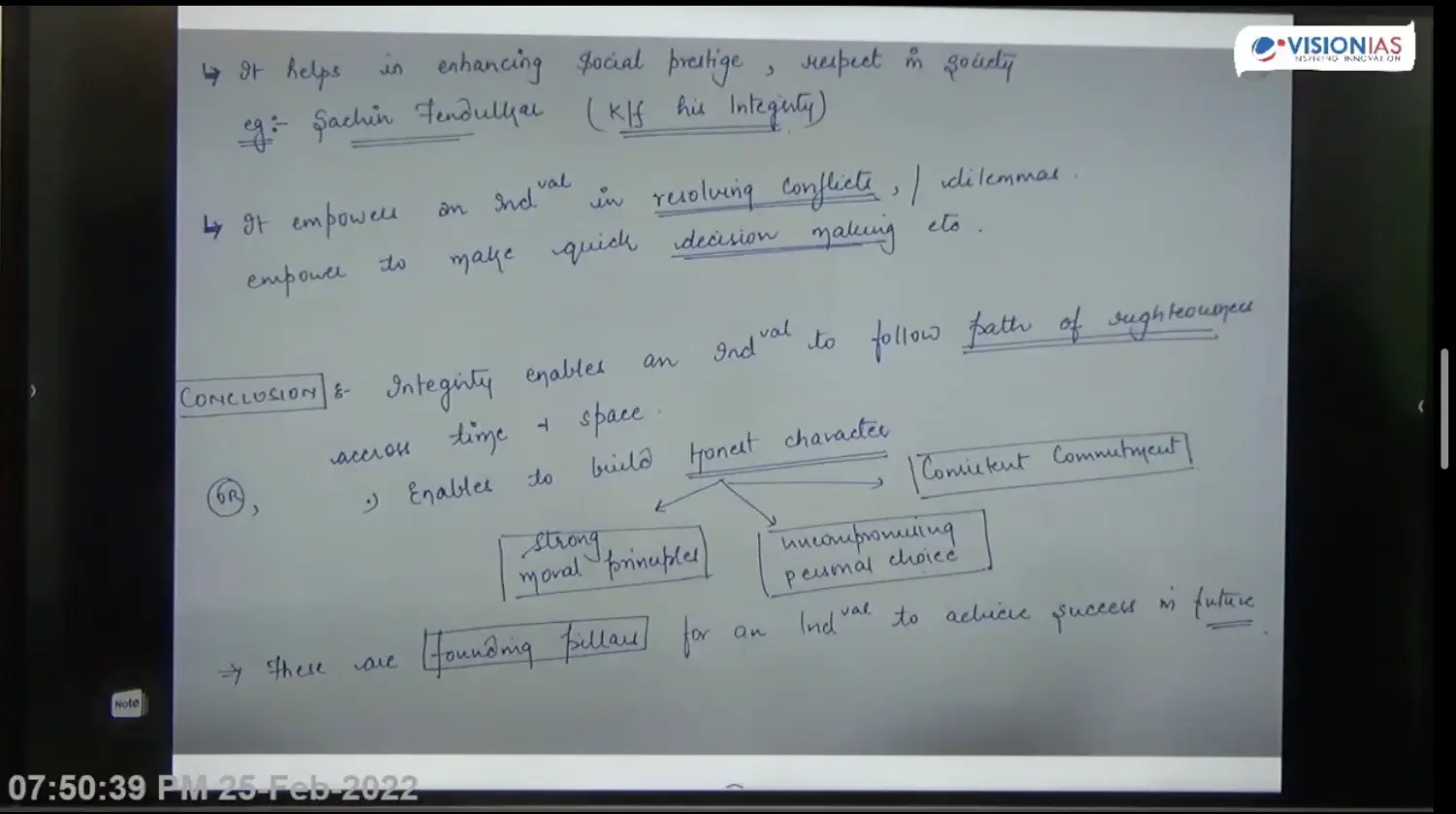
How will it empower a human being ?
Note :
Give Example/Illustrations then and there with the concept
Don’t take Controversial Examples
3 Media
Introduction
- Media refers to channels of communications through which ideas, information & entertainment get disseminated.
- There are different manifestations of media: TV, Social Media, Print Media, Magazine etc
How Media acts as a tool of Socialisation ?
It acts as a tool of
- Social Management Tool
To Maintain Status Quo
- It is often used by corporate houses and political parties to contain their hegemony
- For Example : If rich and dominant own the media they want the status quo in the society so as to continue with their domination & hegemony
- Social Diffusion
- It also acts as a tool for social diffusion i.e the process through which culture, ideas, values, beliefs etc gets disseminated
Social Change
It brings about social change
Example : # Me too campaign
It influences the process of socialisation by providing topics for debate, deliberations, and discussions
It acts as a means for vicarious reinforcement
If in public domain a public behaviour is rewarded then a person will try to do the same
Vicarious → felt or experienced by watching or reading about somebody else doing something, rather than by doing it yourself
It Shapes our Value System, Attitudes, & Opinions
It Influences our aspiration
UPSC Question - Important for Practise
With Proliferation of Social Media people have got the opportunity to express their views anonymously and more freely ? What according to you is its effect on social and political culture of country ?
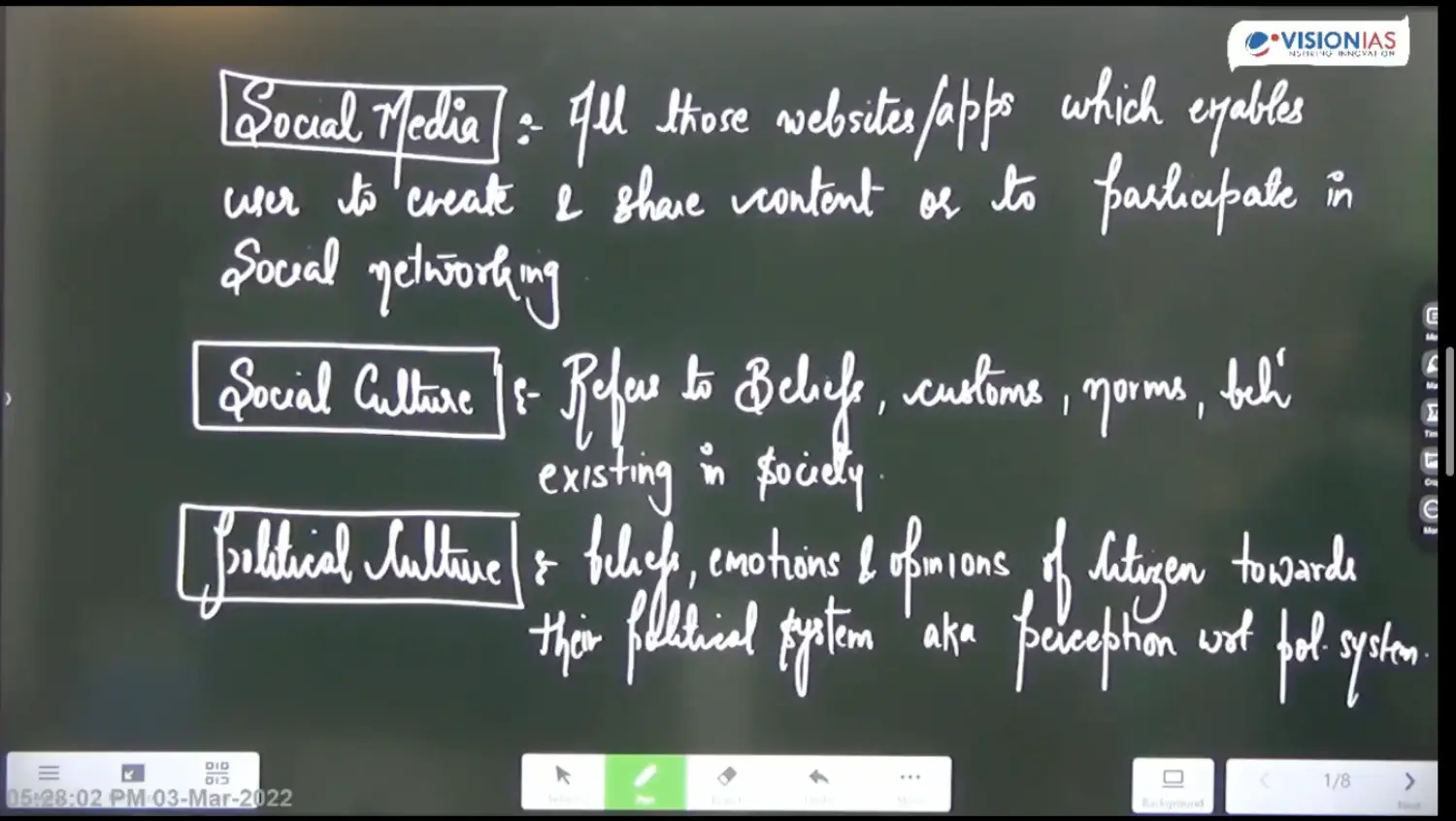
IMP NOTE : In Ethics Paper, Every Topic that has been put in the question must be defined even if very briefly must be defined in the answer.
This is not the case in General Studies
Thats why we are writing definition of Social Culture & Political Culture
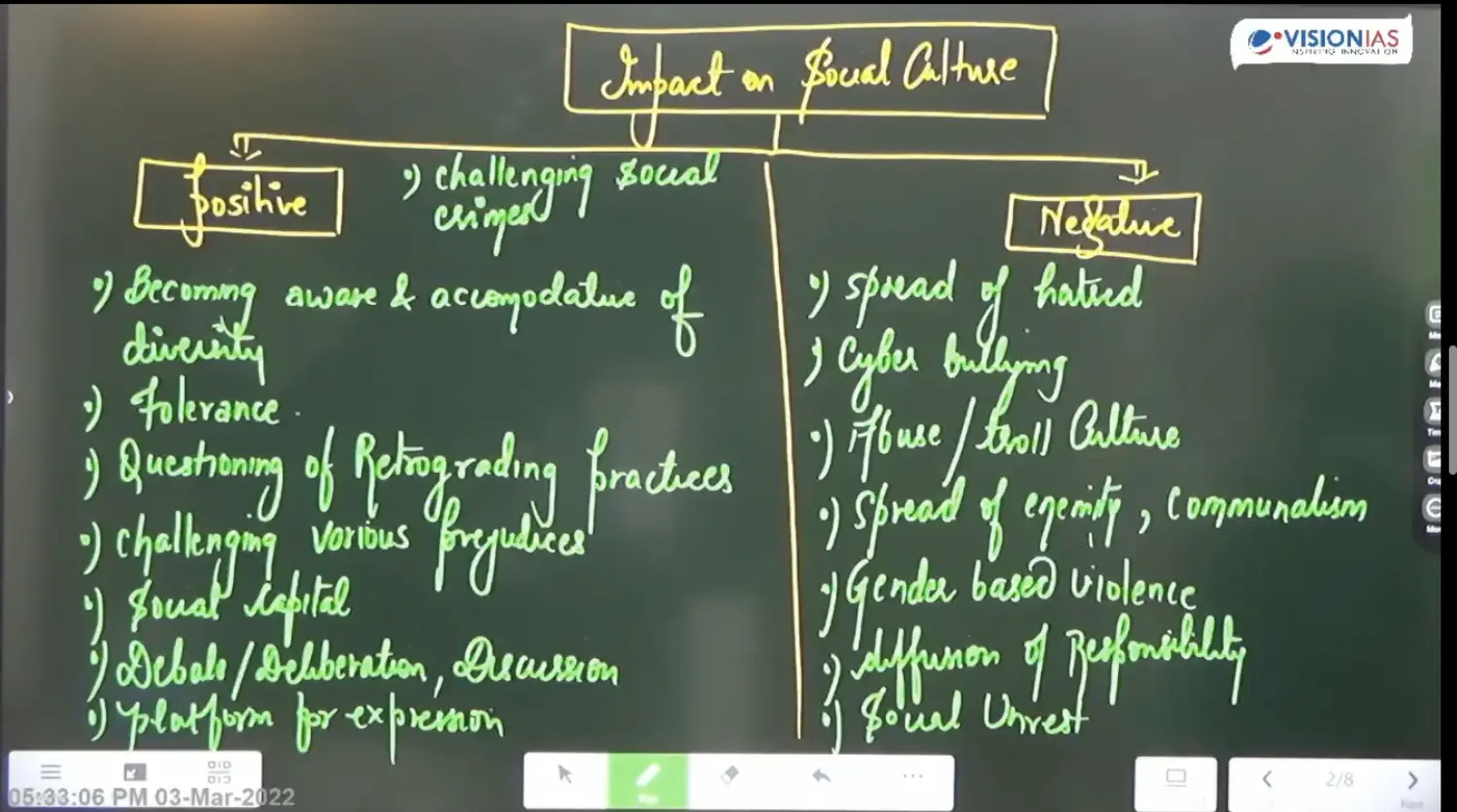
- Impact of Social Media on Social Culture ?
- Positive Impact of Media
Source of Infotainment
Helps in developing Scientific Culture
development of social capital;
accommodative of diversity (social tolerance);
platforms of expression (creative);
influence behaviour through walking the talk;
agency of social change by questioning regressive practices;
a platform for discussion and debate,
awareness about current social issues such as vaccine hesitancy, etc
Role of Education
Ex : Bharat Ek Khoj
Voice to the Stakeholder
Promotes Genders and Social Awarenss
- Negative Impact of Media
- troll culture;
- consumerism;
- commodification
- social unrest;
- Radicalisation
- Objectification
- Relative deprivation
- spread of regressive values such as misogyny, communalism, etc
- Positive Impact of Media
WEIGHTAGE of Question Depends upon the Weightage of Question
Example : Adarsh Shrivastava saved girls from Human Trafficking
Diffusion of Responsibility : Anonymous Hiding behind the Screen
Means → Palla Jhaadna
Theres No Deterrence, No Accountability can be held
Example : Mob Lynching because it does not have any face
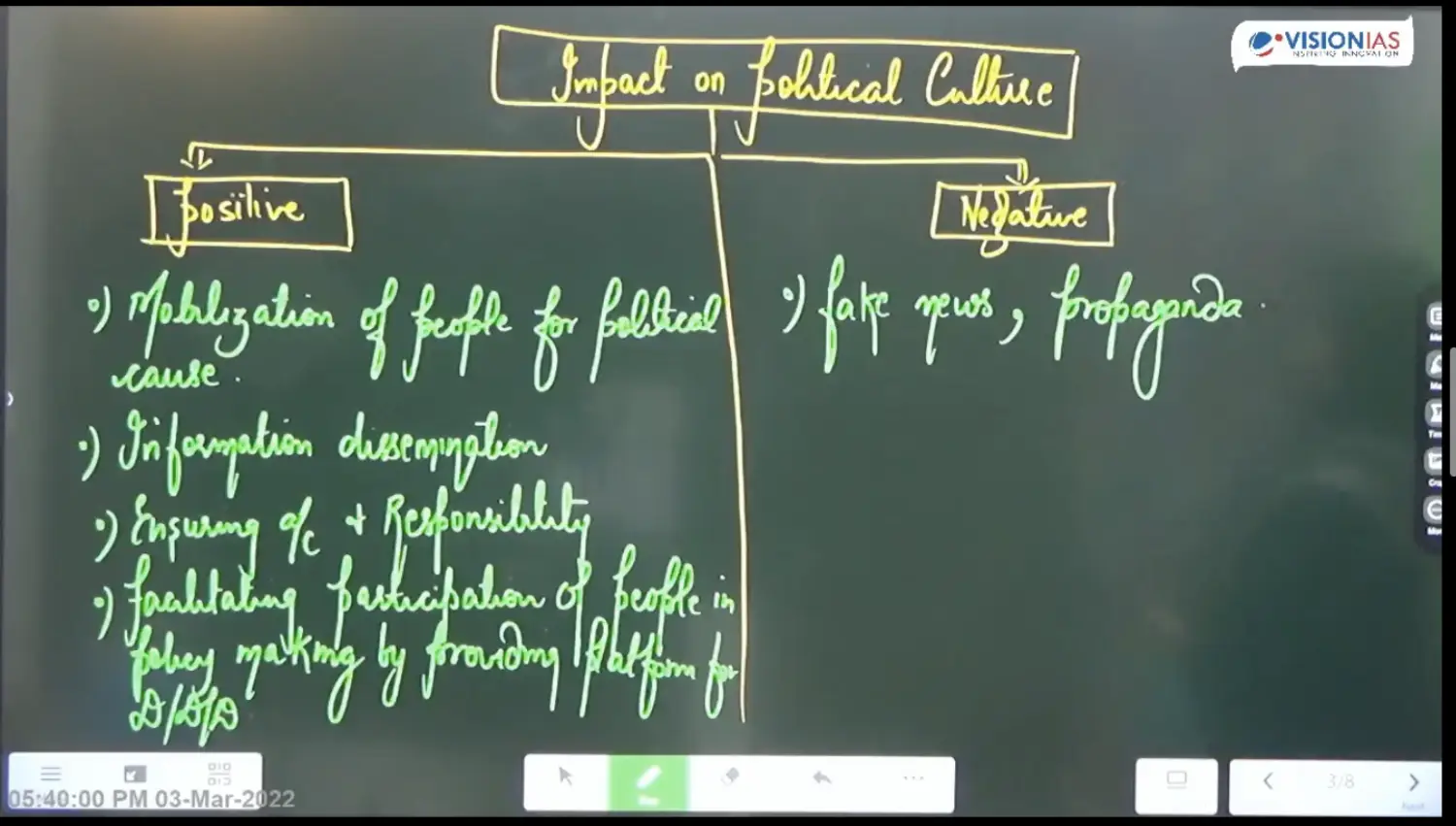
- Impact of social media on Political Culture
- Positive
- strengthen democracy by the informed citizenry;
- policy inputs;
- voice to stakeholders;
- the legitimacy to government;
- creates awareness among people with respect to rights and entitlements;
- promotes good governance, etc
- Negative
- It includes fake news, paid news, manufactured news; post-truth analysis; propaganda, etc
- Positive
Conclusion :
Prima Facie Every Tech is Neutral
According to Noble Prize Winner Mohammad Yunus → Technology Per Say is Neutral it all depends upon the usage of it. Hence, it is a Double Edged Sword
- Impact of Social Media on Social Culture ?
4 Religion
Definition of Religions
Religion is defined as a unified system of beliefs and practices which unite people in one single moral community
Function of Religion
- It is an integrated social force which shapes collective identities.
- It gives an individual a sense of belongingness.
- Religious rituals promote group solidarity or cohesion.
- Religious teachings help in shaping the goals of one's life.
- It enables you to cope with misery or It provides a framework to manage misery
Religion as a Tool of Socialisation
The role of religion as an agent of socialisation cannot be ignored as it is the primary transmitter of our core personal and societal values
Values enshrined in our constitution are fundamental precepts of most religions.
Example of Values from Religion to Constitution equality, tolerance, universal brotherhood, social justice, etc
Many leaders such as Mahatma Gandhi have called upon religious values to awaken the moral sensibilities of the nation
Religion helps individuals to cope with dysfunctional influences such as drugs, negative peer groups, violence, etc
Example
- Abraham Lincoln
- Martin Luther King Jr
5 Peer Group
- It is referred to as interactions among co-equals
- The range of topics taken for interaction is very wide and hence the influence
- The importance of peer group is at its peak during adolescence as its a period of transition and a high probability of identity crisis
- It is the peer group association along with inputs by family and school are very significant wrt to socialisation
- Peer group influences our life goals, occupational goals, inter-personal goals, etc
- There are also various incidences of negative socialisation wrt peer group
UPSC Question Prospects
Questions of What Shapes your Attitude can be handled through tools of socialisation
Attitude
Mind Map
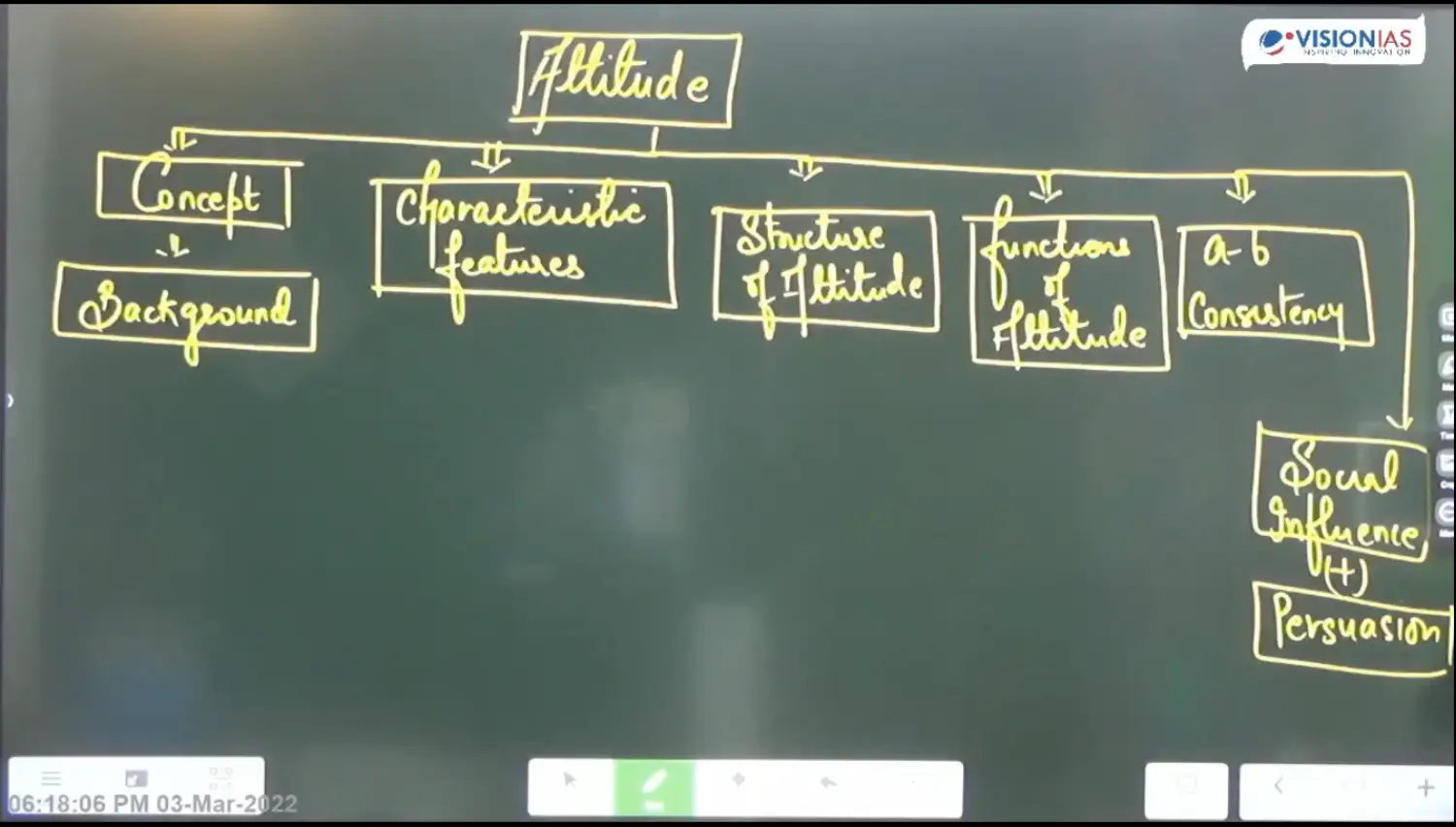
Concept
Introduction
- Definition 1 : Attitudes are lasting evaluations of various aspects of our social world.
- Definition 2 : It is an organization of beliefs, feeling, and behavioural tendencies towards socially significant objects, groups, events, or symbols
Background of Attitude
Application of Attitude : If you have the knowledge about the attitude of the person, it will be easy to understand, describe, control, and predict their behaviour
Example : for better implementation of schemes like Swachh Bharat Mission and tackle any resistance during implementation
Characteristics
- Characteristic Features of Attitude
Attitudes are enduring
They are acquired or learned as a result of socialisation
Attitudes are held because they perform some function for the attitude holder
Attitude May Involve an Individual or Groups
Attitude are Evaluative Judgements
Positive and Negative Evaluation of things
Attitudes are always communicated and can be expressed either verbally or non-verbally
Attitude shapes your behaviour
Attitude confirms the notion of consistency
based on attitude Behaviour is practised.
attitude might be the same, based on situation the behaviour might change
Attitude are subjective experiences, they vary from person to person
Structure
Summary
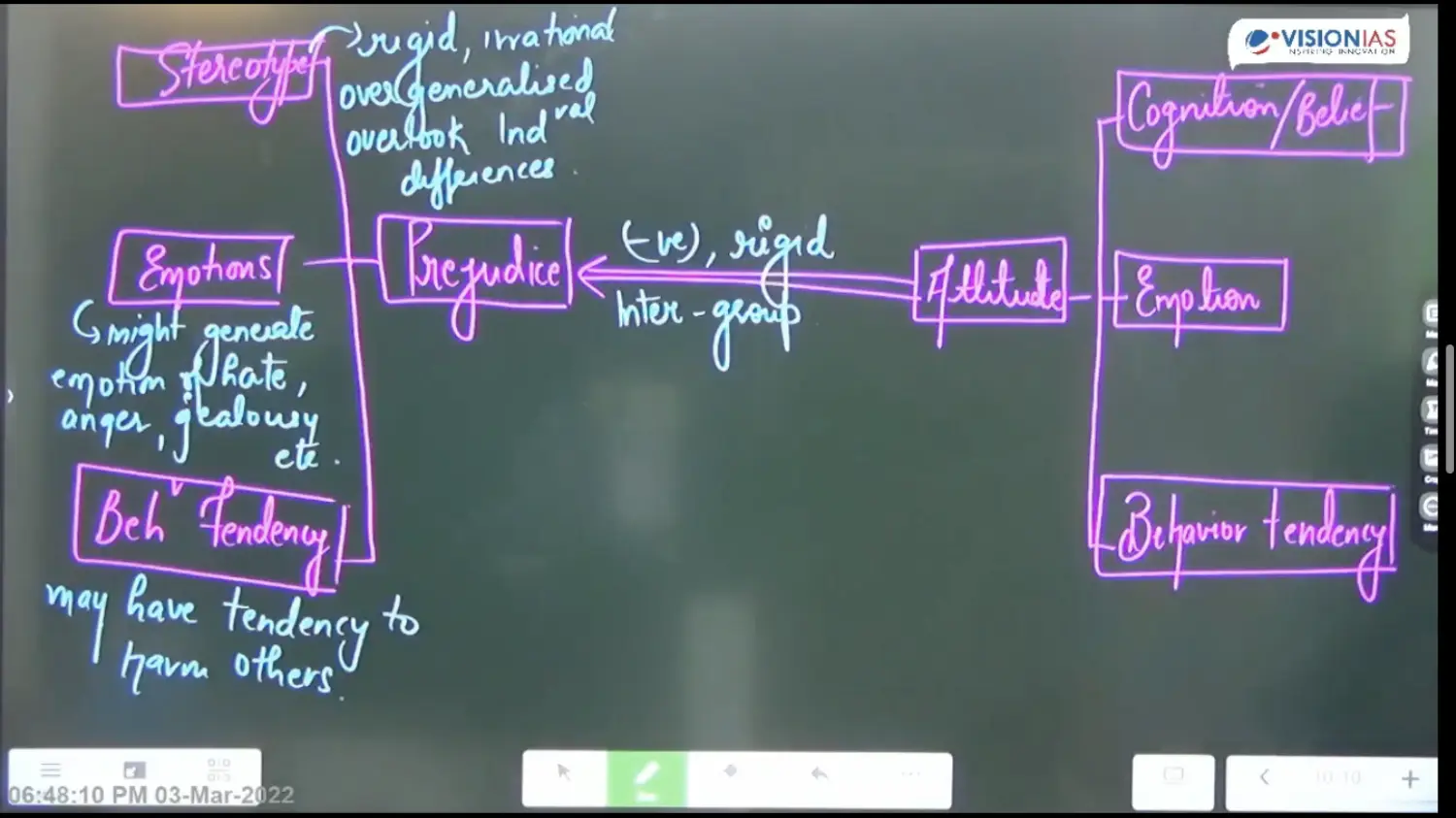
Structure of Attitude
CAB Model / ABC Model / Structure of Attitude
Belief/Cognitive
Ideas and opinion of attitude holder towards an attitude object
Affective/Emotions
Emotions generated in attitude holder towards an attitude object
Behaviour tendency
Range of actions we would like to display with respect to attitude object
It reflects our behavioural readiness
For Example :
India has a rich cultural heritage that has generated the feeling of awe and reverence
However, it does not guarantee that one will act to preserve the cultural heritage
Prejudice - Type of Attitude
Prejudice and Stereotype
Meaning of Stereotype
A stereotype is rigid, irrational, overgeneralised, inter-group, overlook individual differences
Meaning of Prejudice
Prejudices are examples of Negative Attitude towards a particular group. Prejudice is based on stereotypical beliefs about a specific group.
An attitude that is irrational, negative, and inter-group is called prejudice
Prejudices are examples of negative attitudes towards a particular group
It is based on stereotypes about the specific group
The cognitive component of prejudice is frequently accompanied by dislike or hatred (the affective component)
Prejudice may also get translated into discrimination (the behavioural component) whereby people behave in a hostile manner towards a particular target group
History contains numerous examples of discrimination based on race, class, caste, religion, ethnicity, etc
Example 1 : the genocide committed by Nazis in Germany against the Jewish people is an extreme example of prejudice and discrimination
Example 2 : our society has witnessed many instances of prejudices against dalit, tribals, migrants, transgender, old age, minority etc
In many cases, discriminatory behaviour can be curbed by means of laws.
Example 1 :
- Person with Disability Act
- SC/ST Prevention of Atrocity Act
- Transgenders Act
These Laws might be Necessary but not Efficient, hence change in belief system is needed - Gandhi v/s Ambedkar Debate
However, the cognitive and emotional components of prejudice are more difficult to change
Therefore, handling prejudice requires a specific strategy
How to Handle Prejudice
Handle Prejudice
How do we ensure that a Belief System does not convert into a Prejudice
Education and information dissemination for correcting the stereotype related to specific target groups
Increasing intergroup contact which allows for direct communication, removal of mistrust between the groups and even discovery of positive qualities of that group
Highlighting individual identity rather than group identity.
Thus weakening the importance of group (both inside-group & outside-group) as the basis of evaluating the other person
Don’t Let the Prejudice Develop
Minimising the opportunities for learning prejudice
Value-based socialisation or effective socialisation through various agencies
emphasising a narrow social identity based on the in-group, there might be some people
Discouraging the tendency towards negative behaviour among the victims of prejudice which reinforces the prejudices
Organise Community Lunches
Bhaat Khaa Ke Koi Kisi ki Jaat Nahin Poochta
Group Activity like Sports
Nukkad Natak
Culture Exchange Program
Content of Education
Cinema
- Secret Superstar
- Dangal
- Neerja
- Gunjan Saxena
UPSC Question
Many of the Present Social Conflicts Arise due to Prejudices, Illustrate. What can be done to curb discrimination and handle prejudices ? - 10 M
Functions
- Function of Attitude
Introduction
Functional Perspective of Attitude
Attitude Holder’s, Attitude towards the Attitude Object is decided by the function the object serves for an Holder
By Daniel Katz, there are Four Functions:
Utilitarian Function
Also Called
- Needs Satisfaction
- Adaptive Function
- Want Satisfaction
Simply Means, Maximising you rewards and minimising you punishment.
Example
Political Party - Taxes Minimum for Corporate House
Political Party - Providing Employment for Unemployed Youth
Many attitudes are formed as a result of past rewards and punishment for saying and doing things.
we develop a positive or favourable attitude towards the object which aids or rewards us.
Once formed these attitudes continue to help us in maximising our rewards or reaching our goals
For Example :
There is some XYZ Political party and I'm unemployed, so my attitude towards that party is that which party provides the job.
These attitudes are termed as adjusted (Adjusted Function) in the sense that they help us to adjust in the light situation.
It is referred to as utilitarian since it enables us to reach our goals. it can also be referred to as utilitarian.
The day our attitude stops fulfilling our needs we will abandon the attitude and we will replace it with a new one.
Either we change the Need
or
An Alternative Attitude, which can help them serve the existing needs in a better way.
For Example - Two Friend Examples
- Friend A: Environmentalist
- Friend B: Furniture Business
- A wanted to change the attitude of
- Change the Need : Change the Need of Money
- Suggest an Alternative Attitude : Shift to Green Furniture
For Example - Reservation in govt job
- Need is job security → Ensures Income Security
- Change the Need → Security doesn't exist in Govt Jobs but in your skills
- Suggest an Alternative Attitude →
- Agri Develop
- Self Employment Develop
- Manufacturing Industry Better
Knowledge Function
Example:
Engineering college example & Graduation in Mathematics
Had less number of girls students in the classroom.
Knowledge helps you to attach a cause behind a event.
Attitude helps the attitude holders to organise and interpret a diverse set of information.
They provide consistency and clarity in our explanation and understanding of events.
The knowledge function of the attitude does not imply that attitude provides us a factual truthful picture of the world around us.
In fact, it provides us with a picture that is meaningful.
Such attitudes are likely to change in situations where it becomes difficult for the attitude holder to continue with the existing attitude.
In such a situation attitude holder has no option but to change their attitude in order to be more logical.
Hence, with the availability of information and sustain the availability of information will lead to the beginning of the internalisation process.
Example
Example 1
- Girls are not good at Mathematics and Driving
- Counter Information provided on sustainable basis helps in changing attitude
- Only 3 Girls in Class but they topped the Universities
- Only 1 Female Faculty but she is the HOD
Example 2
I believe good things happen to good people, however, there was a person bad thing that happen to him, as result, I assume without even knowing the character of the person, based on my knowledge or perception, I consider that this person is bad.
Example 3
Stereotyping is an example of the knowledge function of attitude.
Using stereotypes to make sense of people is quick and requires minimal mental efforts which is advantageous in a complicated and fast-moving world.
- Ego Defensive Function - Self Esteem Defended
- Example 1
- Lost in a Sport
- You gain a Attitude that you were never interested in this sport
- Example 2
- Got Loss in Investment
- You Gain a Attitude that you didn’t want to invest some ABC XYZ made you invest
- Example 3
- Senior manager and younger employee suggestion.
- The Blame culture means not accepting our defeat rather blaming to person and circumstances.
- Example 4
- I am Smoking
- Ego Attitude : I cant think w/o, No Creativity, I Smoke in Stress
- Example 5
- Lost Election
- Blaming it on EVM
- Example 6
- Not clear the UPSC exam in 6 years.
- Now saying I was never interested in it, you become defensive and it is ego defensice
- Introduction
- I need to defend my ego, hence I need an attitude
- Attitude helps us to enhance our self-esteem and defend us against various arrows of life.
- Prejudiced attitudes are often used as grudge to bolster your self-esteem.
- This attitude is held to justify the action which makes us guilty.
- These defences are often used by those who are insecure and anxious.
- How to Change this Attitude
Very difficult to change this attitude as it is stems from individual personality.
In order to change this attitude, we need to provide an environment to individuals where the person feels valued
(unconditional positive regards)
and therefore shows readiness to lower his defences and show his innermost feelings.
That is providing them empathy and unconditional positive regard.
- Characteristics of Ego Defensive Attitude
- These attitudes are held unconsciously.
- It protects us from acknowledging the basic truth about ourselves.
- Ego Expressive Function - Self Esteem Shown
- Also Called Value Expressive Function
- It helps a person to establish his identity which conveys to himself as well as others the kind person he is
- It helps us in the exercise of image/impression/Perception management.
- They are also very difficult to change because they are deeply entrenched in the individual personality.
- The attitude changes only when the individual values have changed or new attitudes will express the underline value system better.
- It helps us communicating who we are and also makes us feel good because we are able to assert our identity.
Examples 1
Quotation on a t-shirt, status picture, etc.
Example 2
Vouching for Democratic Decentralisation
AB Consistency
- AB Consistency
Mind Map
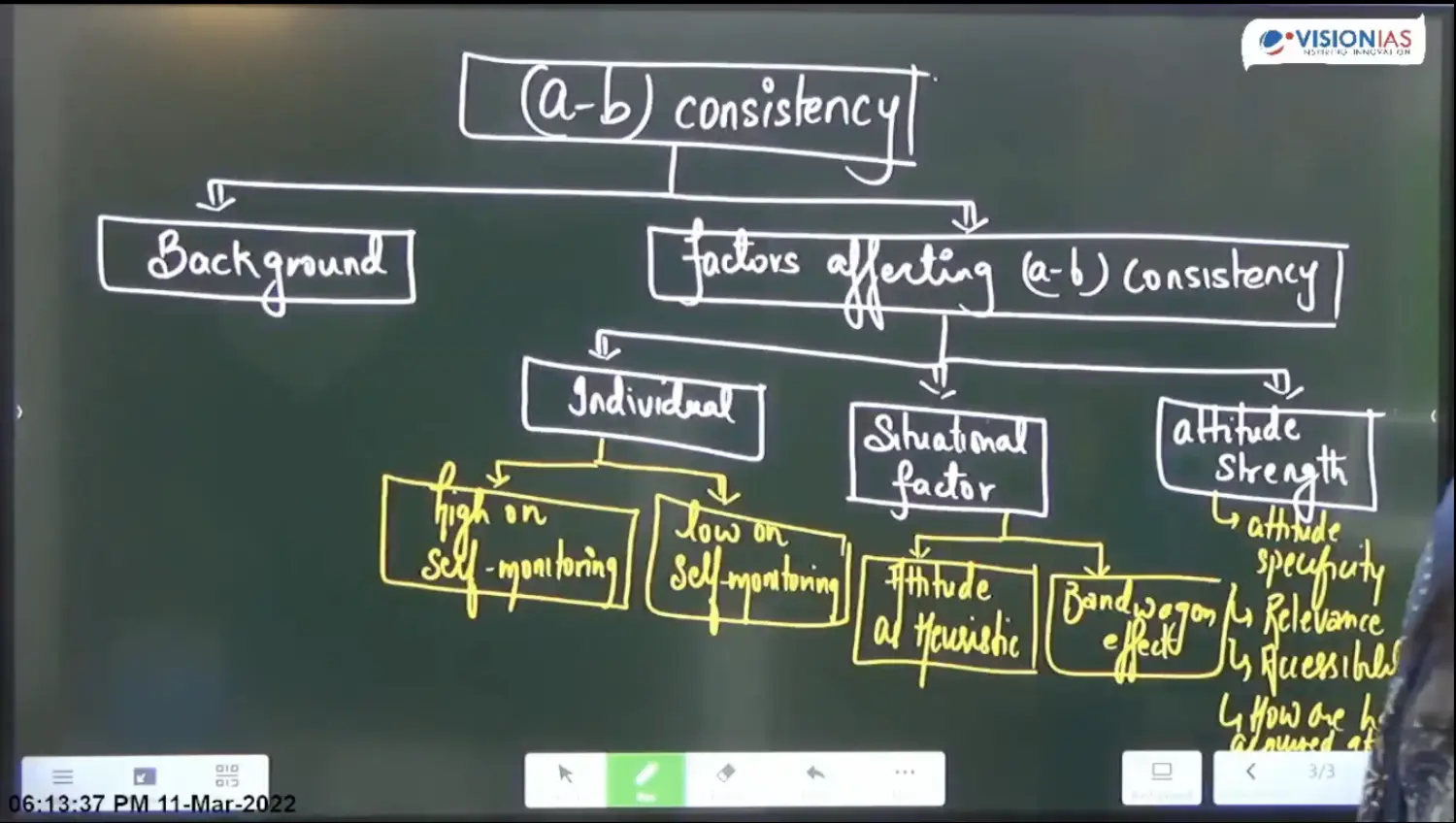
Attitude Behaviour Consistency
Background
Attitude is a specific determinant of technicality hence it is expected to be consistent.
Example 1
- Person A has a prejudice against people of certain communities
- Hence he decided not to rent the accommodation
- Here, Attitude is consistent with the behaviour
Example 2
- You detest Corrupt People
- You Voted for the Most Corrupt Person in election because he belongs to your community
- Attitude is NOT consistent with the behaviour
Example 3
- You are an Environmentalists
- Does not mean you would never drive a car
Case Study by Corey, 1957
- Study based on attitude towards cheating
- Some People who had performed badly lied about their marks
- They didn’t cheat in the exam but lied at the time of telling marks
- Hence, Cheating behaviour doesn’t depend on attitude towards cheating but how poorly one has performed in exams.
Case Study by Lapierre, 1934
In US there was a Racial Attitude towards Chinese People
The study was with respect to racial attitude towards Chinese couples in America and it was observed that their biased attitude was NOT reflected in their Behaviour when for the first time they met the Chinese people
6 Months Later, when he called back the people in America where Chinese couple had stayed, at about 92% people said on call that they didn’t wanna host them
Factors Affecting Attitude Behaviour Consistency
- Individual Factor
None is better than another.
- High on Self-monitoring - Care for “Log Kya Kahenge”
In different situations with different people they act like a different person.
There behaviour results more from pragmatic concern with what is appropriate in different situations
- Low on self-monitoring - No Care for “Log Kya Kahenge”
My behaviour a usually an expression of my true inner feelings, attitudes and beliefs
- Situational Factor
- Attitude at Heuristic
When you have information overload no time to plan or contemplate the behaviour hence whatever attitude you possess you will accordingly act.
Example 1
Person X is a recruiter in an organization there is a set of male and female candidates person.
X has a slightly negative biased towards women candidates
Case 1
If person X has sufficient time for recruitment he will analyse the situation before acting else the patriarchal attitude will be reflected.
Lastly : Women candidate was selected
Case 2
No Time for Selection, Have a Time Crunch
Out of 100 - Remove all Girls
Out of Left - Remove all third tier colleges
Now - Pick up IIT & IIM
Call these 3 for Interview
Example 2
- Free Time - Much time to buy a Pen took 40 min
- Time Crunch - After 5 min i have a exam, give me this brand pen
- Example of Brand Impact
Example 3
- Girl Slapped a Guy
- No Time Crunch - Understand who is at fault, may be girl also
- Time Crunch - Boy must be at fault, because they generally are at fault
Bandwagon Effect
suppose we have X attitude and
other has Y attitude
and we hold those others in high regard
then there is very rare possibility of attitude-behaviour consistency
People behave as they are expected by others to behave. If norms are very strong collectively held then everyone behaves according to the norms irrespective of the attitude.
Example 1
Child Marriage, Dowry
You Believe CM & D is very wrong
But you cant raise your voice against it because of societal pressure
Example 2
You Don’t Like you Job, But you cant show your resent in your attitude
because of pressure of family and society to earn
- Attitude Strength Factor
- Attitude Relevance
Is determined by the vested interest of the individual with respect to the attitude object
Examples:
- I believe in Blood Donation
- Blood donation based on priority
- family - no thinking twice, before leaving the meeting and travelling to Gurugram from Karol Bagh
- unknown person - will think twice before going to Gurgaon from Karol Bagh or you are in a meeting
Attitude Strength
Attitude Strength Depends upon how have you acquired the Attitude
Depends upon if the attitude has been acquired due to direct exposure to the attitude object.
Example
Attitudes towards the Game
When you are a Player - You will reach for playing field
You like a Player - You have never played cricket - You wont go for playing in field
Attitude Accessibility
Attitude Accessibility depends on how quickly attitude comes to your mind once you look at the attitude object
Depends on How Quick the Attitude Strikes your mind
For Example
Nor for Exam : Seeing cockroaches and screaming out
For Exam : Example can be extended to a Racial Group or Ethnic Group or Community or Gender
- Attitude Specificity
Attitude Specificity is more stronger than the general attitude.
Specific Attitude is more stronger than the General Attitude
Example
Are you religious or how often do you visit the religious shrines or temple
Are you peacefully or will you participate in a peace protest.
General Attitude : You are pro for Upliftment of Marginalised Section
Specific Attitude : Not Necessary you are pro reservation. you might be supporter of some other method
UPSC Question
What are the functions of the attitude? Explain with examples. [10marks/150 words]
Social Influence
Mind Map
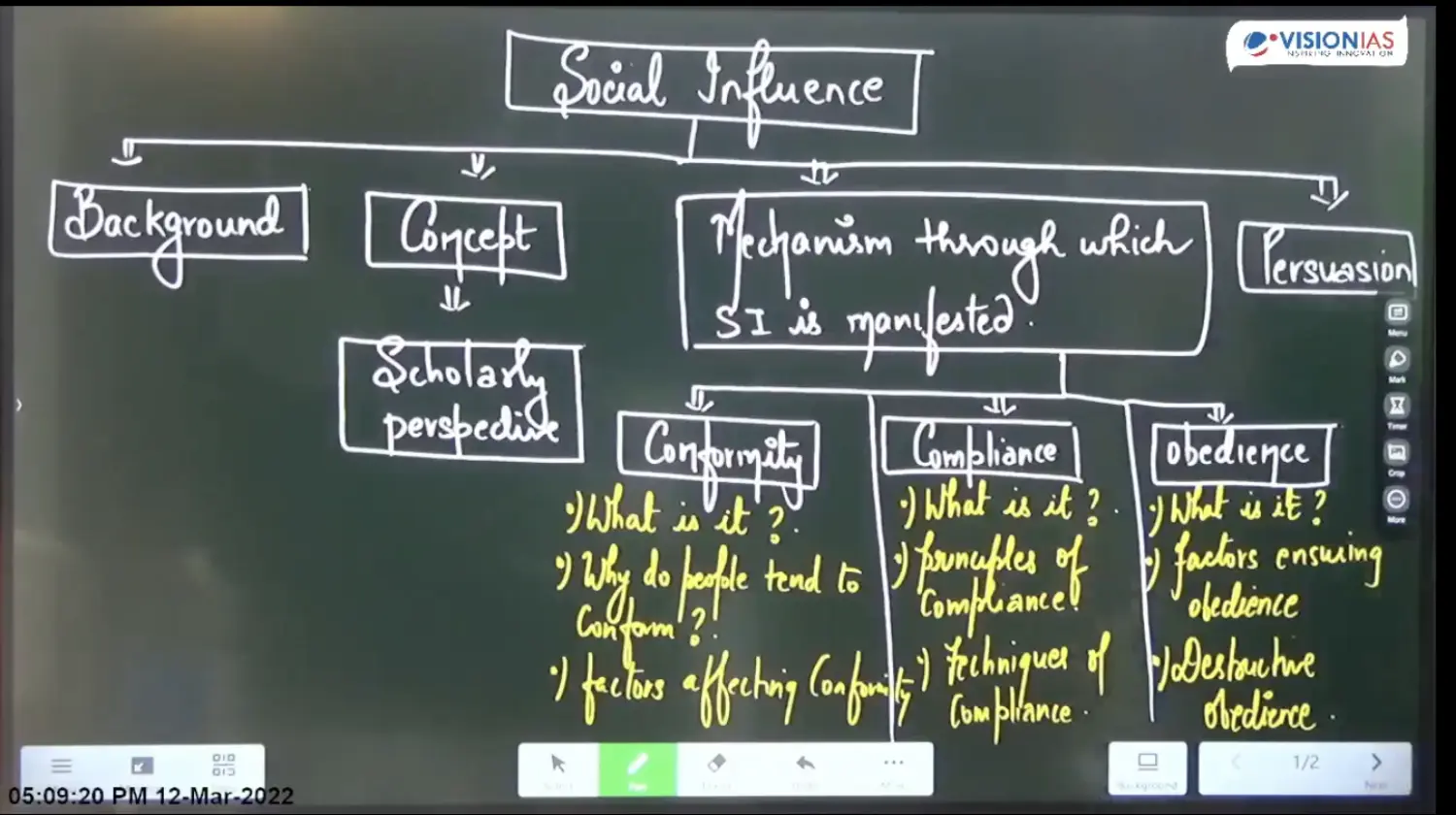
Background
- Carb Hovland was contacted by the US Armed Forces to bolster the morale of US soldiers during WW2 to continue to fight against Japanese forces.
- After WW2 social influence emerged as an important field of study
Example of Social iInfluence
Example 1
People following traffic rules can influence the behaviour of those who violate the rules
Especially at Mid Night
Example 2
People stand up in cinema halls during the national anthem when they see others standing up
Example 3
Political tag lines used during Elections
- Ab Ki Baar Modi Sarkar
- Acche Beete 5 Saal, Lage Reho Kejriwal Sarkar
Example 4
Tag lines of Advertisements
- Dar ke Aage Jeet Hai
Definition of Social Influence
Social influence is described as a change in a person's behaviour, thoughts, feelings and attitude that results from interaction with other individuals in society
Concept - Scholarly Perspective
According to French and Raven social influence is the outcome of the application of social power.
There are 5 Types of Social Power
Reward Power
It is based on the right of some to offer or deny tangible, social, emotional rewards to others for doing what is expected of them
Example 1
providing a reward to a child for good academic performance
Child Given Gift for Earning Better Grades
Example 2
Similarly, a teenager is grounded for a week for misbehaving
Coercive power
Uses the threat or force to gain compliance from another.
Force may be physical, social, economic, political etc.
The main idea behind this concept is that someone is forced to do something which they do not desire.
Example
threatening loss of job for non-performance
Physical Threatening
Legitimate power
comes from an elected, selected or appointed position of authority or
Ex : Police officers legitimacy to make arrest
Ex : IAS & Politicians having power to legitimise orders
It can be underpinned by social norms.
Ex : parents legitimacy to restrict child activities
Referent power
It More often acts like role model powerl that is, it depends on respecting, liking or holding the other individual in high regard
Referent power is also rooted in the affiliation we make with the groups to which we belong
Same Ancestry, Caste, Ethnicity, Religion etc
Example
- Vidya Balan - Swachh Bharat Mission
- Amitabh Bacchan - Do Boond Zindagi Ke
Expert power
It is based on what one knows, experiences, special skills.
Example
doctors, lawyers, engineers, architects etc
Application of Question
How will you use these 5 tool to influence people to
make a village Open Defecation Free
Reward - Cash Incentives
Coercive - Fine of 500
Legitimate - SDM & Asha Worker
Referent Power - by Some Social Influencers
Expert Power - Doctors telling chances of Warm Inspection
reduce instances of Dowry in Society
Mechanism Through which Social Influence is Manifested
Comparison
| Conformity | Compliance | Obedience | | --- | --- | --- | | Attitude and Behaviour Changes | No Guarantee that Attitude will change, Only behaviour will be changed | | | Internalisation takes place | Another Party is Making a Request to change the Behaviour | |
- Conformity
Defintion
Conformity refers to a type of social influence in which a person changes both the attitude and behaviour so as to fall in line with the existing social norms
Norms could be codified or unwritten also
Higher stage of evolution of Norms is Law
Why we tend to confirm ?
Normative
It is the need to be liked by others whose acceptance we desire
The more important the group is for me, the more would be the adherence to the norms
Desire to be accepted by the group
Fear to be rejected by the group
Example
Question of Length of Marker
30 People → 1 People 6 Inch
29 People → 7 Inch
- Informational
The more you are uncertain and lack the expertise the more you tend to go with the group.
Self Categorisation
It is more of a Social and Cultural Aspect where as Ghettoisation is a Geographical Principle (Like Slum, Gated Community)
we have the desire to place ourself in some or the other categories and group membership facilitates this
The more important the group is, the more important the membership of the group is to promote our identity,
the stronger will be our affiliation with the group and the greater would be chance of In-groupism
It is essentially Looking for a Group to source your identity
When we demonstrate the Superiority of my group over others.
Example
When your In Group is your country,
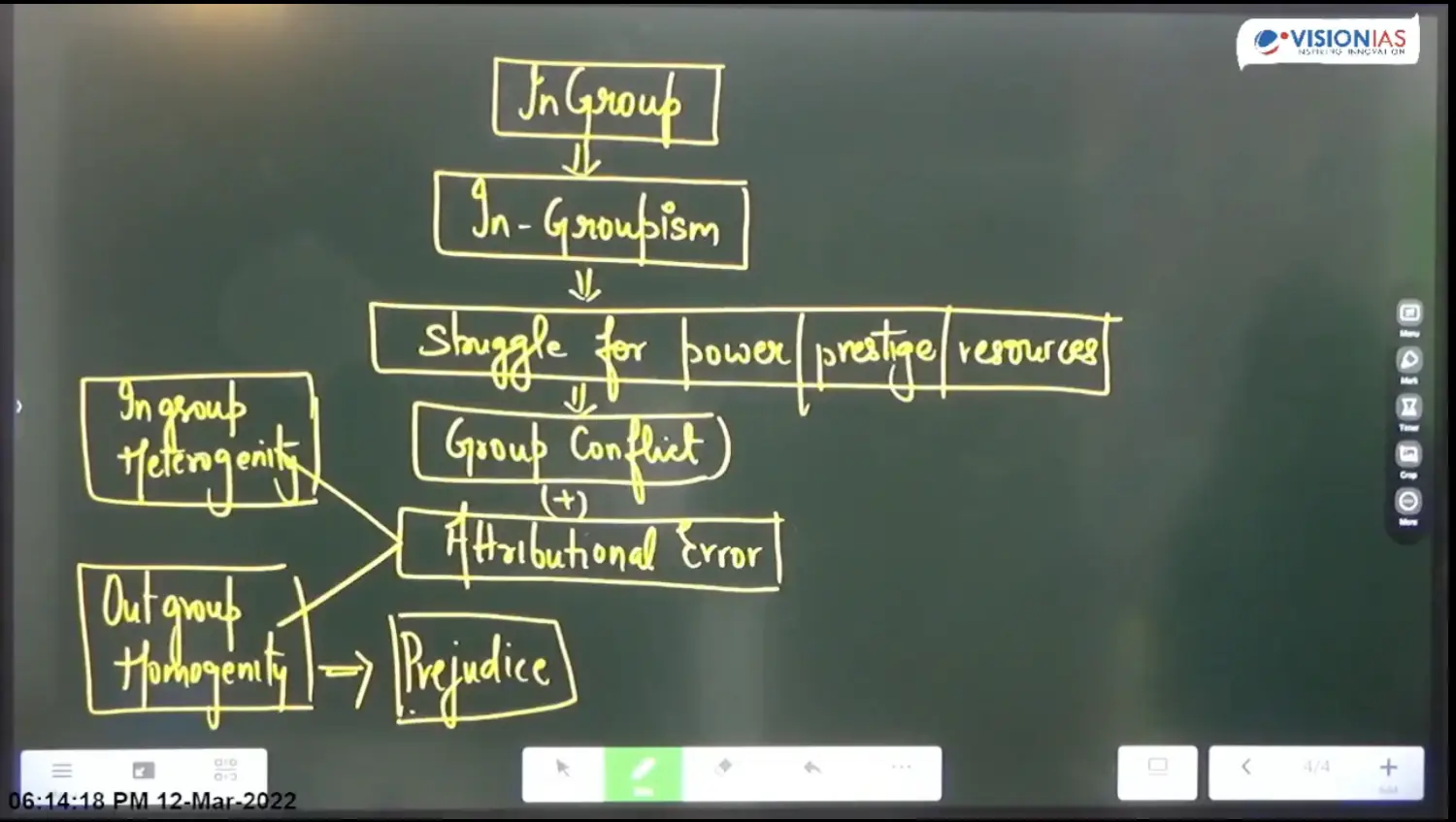
Factors affecting conformity
Size of the Group
Social Status
When Social Status is high, Conformity pressure increases
Unanimity
complete consensus between the members increases the pressure to conform
Immediacy
The closer the individual is to the group, the more is the pressure of conformity.
- Compliance
Definition
It is technically a change in behaviour but in attitude.
The satisfaction derived from compliance is due to the social effect of accepting the influence i.e reward or punishment.
It is a form of social influence involving a direct request from one person to other.
Different Principles of Compliance by Robert Cialdini
Mind Map
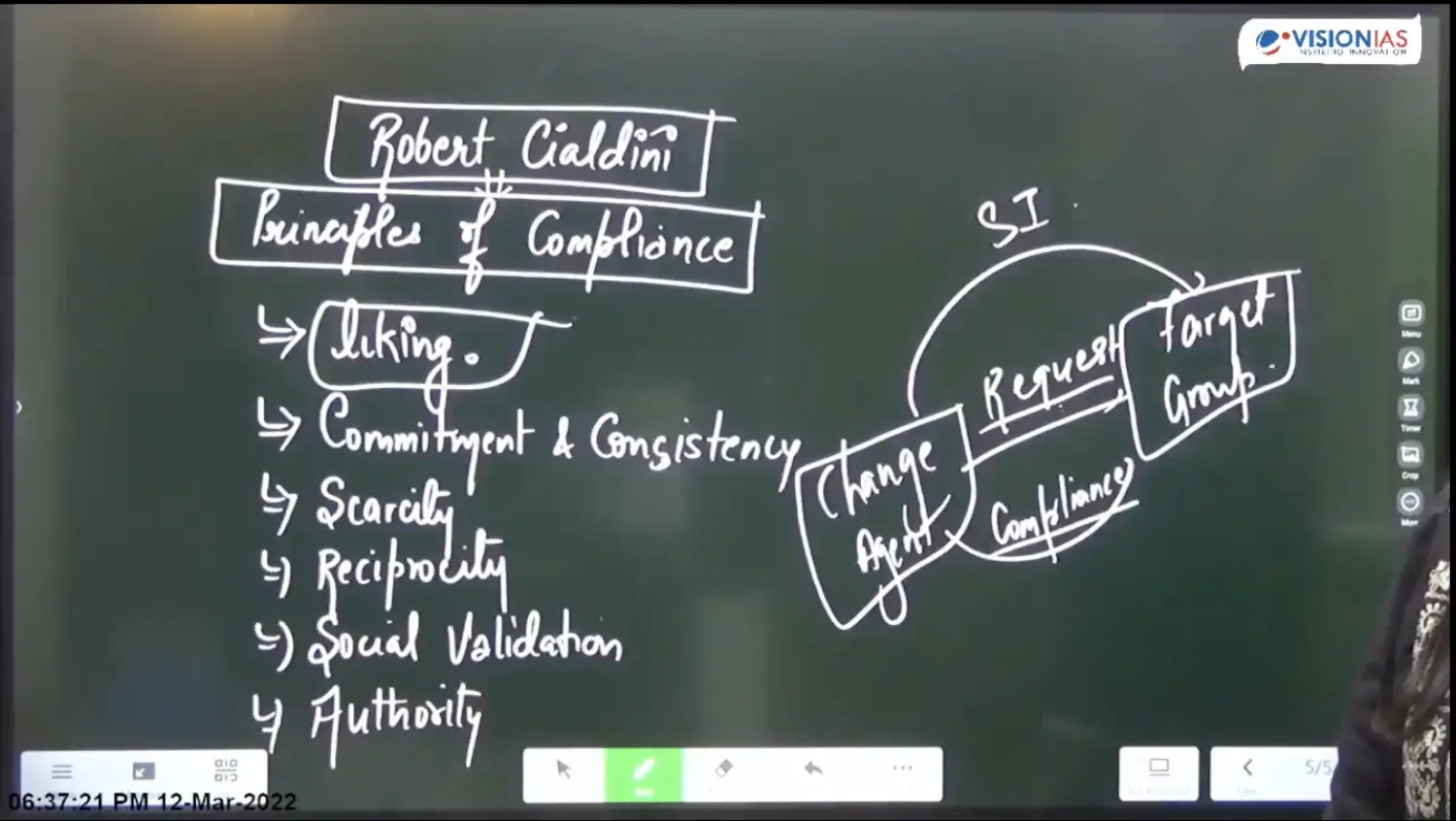
- Liking
We comply with requests from friends or the people whom we like.
Ex : You just like the Person as simple as that
Ex : may be in high regards or someone you love
- Commitment and consistency
once we have committed ourselves to a position or action, we are more willing to comply with requests for behaviour that is consistent with that position.
Ex : Ensure Commitment of Political Leaders in Public for Consistency
- Reciprocity
We complies with the request of someone who has provided us with favour.
Creation of Obligation leads to Compliance Later
Ex : Shopkeeper giving Samosa and Drinks before shopping creates a obligation of buying things from his shop
- Scarcity
We try to secure the opportunities that are scarce.
The less of something there is the more people tend to want it.
Ex : E Commerce : Limited Edition Product Strategy
Ex : Vaccine only for 3 Days, Available on First Come First Serve Basis
- Social validation / Consensus
we comply with requests for action, if this action is consistent with what we believe people similar to ourselves are doing
Ex : You Live in a Community, Everyone is saying ki aapne vaccine lagwa li, then because of the social validation you will also get vaccination
- Authority
Individuals who are authoritative, credible, knowledgeable in their fields are more influential than those who are not
The one who has legitimate authority
Ex : Dentist in Advt related to Toothpaste
Techniques of Compliance
Foot in the Door
It is the procedure of gaining compliance in which we start with a small request and when it is granted we escalate to the larger one.
Example 1
Second Hand Cycle
New Cycle
Second Hand Bike
New Bike
Example 2
You will request the people of an organisation to be punctual and it happened and
Then try to promote the message of effective working for their own personal growth.
Next, you will persuade them to match the quality of work to the quantity of work done.
And lastly, to persuade them to enjoy your weekends with your family you need to make your other days worthwhile.
Hence if you are asked for overtime you would comply.
Door in the face
Requesters begin with the large request but when it is refused
You retreat to a smaller one (which was actually desired)
Ex :
12,000 - Actual Cost
Says 15,000 - so that after bargaining it becomes 12,000
That's not all
Giving additional benefits
Ex :
Original Cost 400 Rs
in Happy Hours - 20% discount in Rs 500
Deadline
Target persons are told they have only limited time advantage of some offers
Playing Hard to Get
Increasing compliance by suggesting that the person or the object is scarce to obtain
- Obedience
Introduction
It is a form of social influence in which one person obeys direct orders from another person to perform some task or action
Obedience is nothing but Giving Orders
The Reasons for why People Obey are
Visible Badges
Beacon Car, Titles, Uniform
Transfer of Responsibility
People view themselves thought as an individual but as an instrument for carrying out the desire of other people and hence no longer perceive themselves as responsible for the action.
- Example : Crowd & Mob Violence
Mind Map
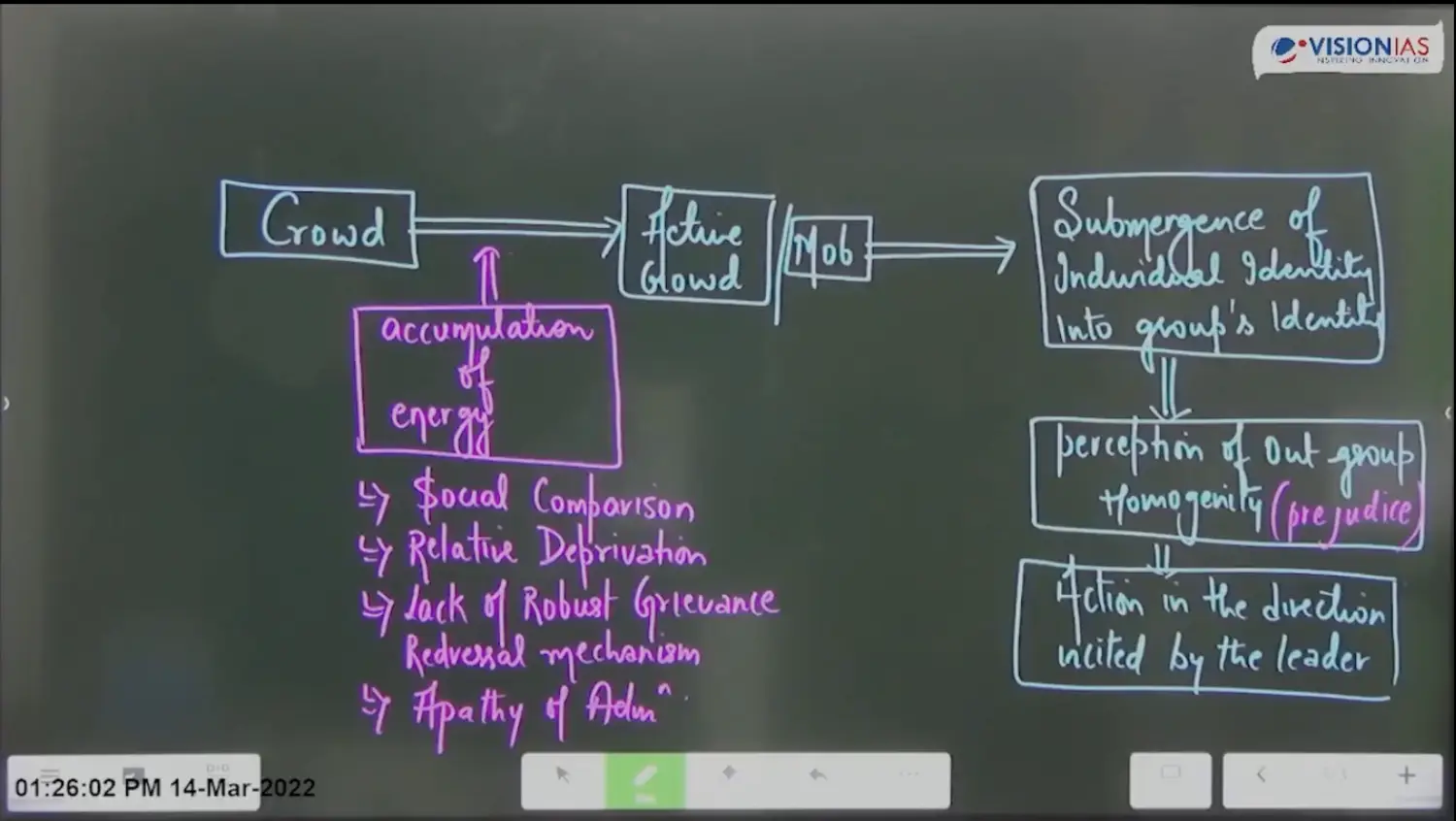
The Process
Crowd -> Active Crowd/ Mob -> Submergence of individual identity into group’s identity. -> Perception of out-group homogeneity. -> Action in the direction incited by the leader.->
Accumulation of Energy
- Social comparison
- Relative Deprivation
- Lack of Robust Grievances redressal mechanism
- Apathy of Administration
Immediate Action that can be taken to curb mob gathering
Individuate the mob, so that they can be held responsible
CCTV cameras, messages with respect to surveillance
Don’t allow the association of large groups
Deployment of police personnel.
Barricading
Use of Charismatic Personality
Use of Distraction
Maintain calm & composure among the crowd
Spark positive emotion among them
- Example : Crowd & Mob Violence
Gradual escalation of the authority figure's order
as in by a lower authority it might not be adhered to but in case of someone up people might
Ex : Wont listen to Patwari but to DM
Proximity to authority figure i.e emotional or physical proximity
Proximity could be Physical, Emotional or Biological
Ex : Teacher in class students are silent, teacher goes out, she says keep silence but students don’t
Destructive Obedience (Stanley Milgram Experiment)
Mind Map
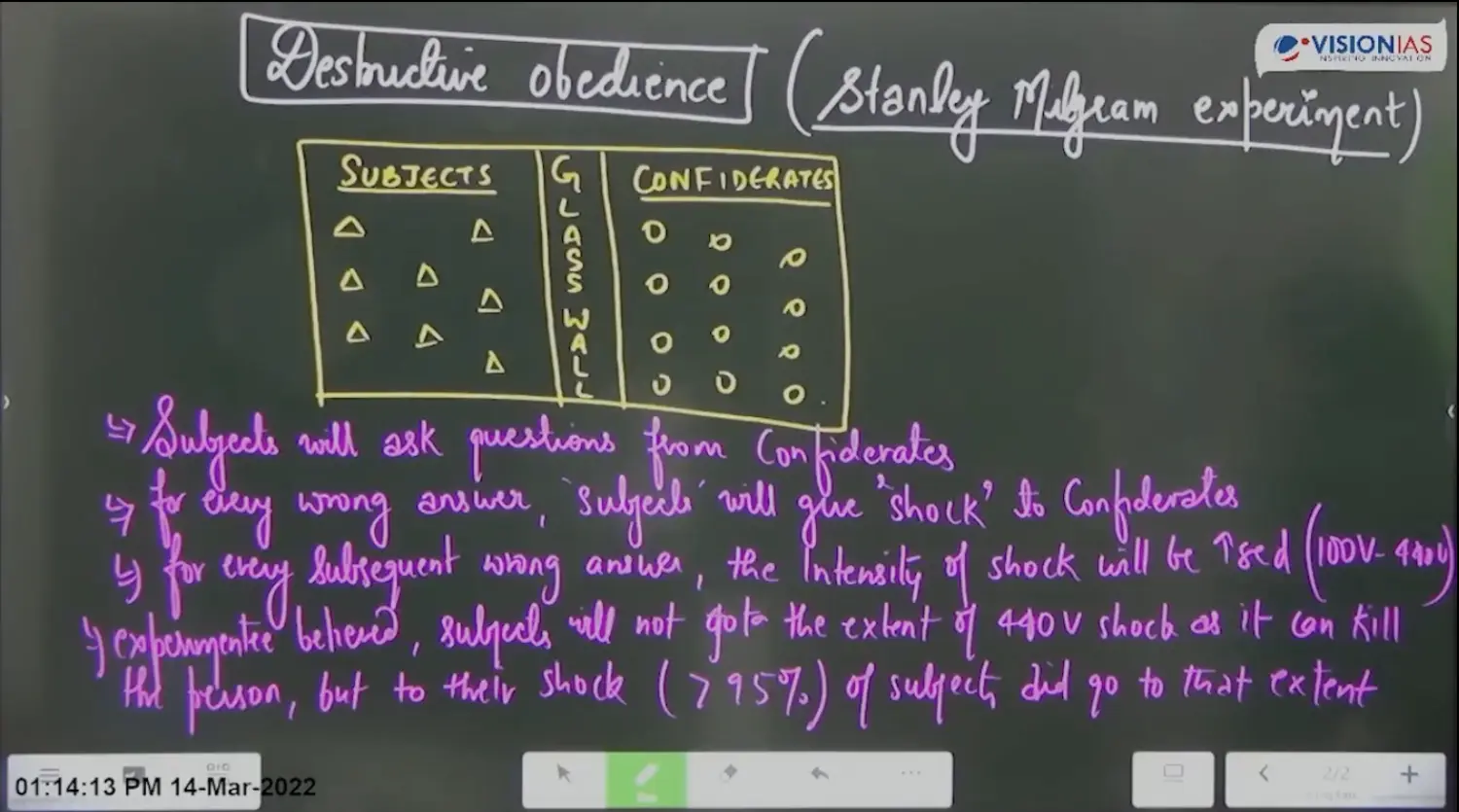
Glass Wall: Subjects and Confederates
Process
- Subjects will ask questions from confederates (who knows)
- Confederates were asked to deliberately asked to give wrong answers
- Subjects thought it was a real shock where as confederates knew it wasn’t
- For every wrong answer, the subject will give a shock to the confederate.
- For every subsequent wrong answer, the intensity of shock will be increased (100v - 440v)
- Experimentee believed, the subject will not go to extent of 440v shock as it can kill the person, but to their shock, more than 95% of subjects did go to that extent.
Outcome
Why did Subjects go to 440V Shock, even if it was Life Threatening
- Order is given by someone in authority
- We are socialised to obey authority
- Transfer of responsibility
UPSC Questions
What do you mean by social influence ? Briefly discuss the mechanisms through which social influence is manifested.
Classic Case of Social Influence is Mob Violence Mechanism
Mind Map
The Process
Crowd -> Active Crowd/ Mob -> Submergence of individual identity into group’s identity. -> Perception of out-group homogeneity. -> Action in the direction incited by the leader.->
Accumulation of Energy
- Social comparison
- Relative Deprivation
- Lack of Robust Grievances redressal mechanism
- Apathy of Administration
Immediate Action that can be taken to curb mob gathering
Individuate the mob, so that they can be held responsible
CCTV cameras, messages with respect to surveillance
Don’t allow the association of large groups
Deployment of police personnel.
Barricading
Use of Charismatic Personality
Use of Distraction
Maintain calm & composure among the crowd
Spark positive emotion among them
Persuasion
Persuasion is a Type of Social Influence, but it is a Large topic in itself and hence has been taken separately
Mind Map
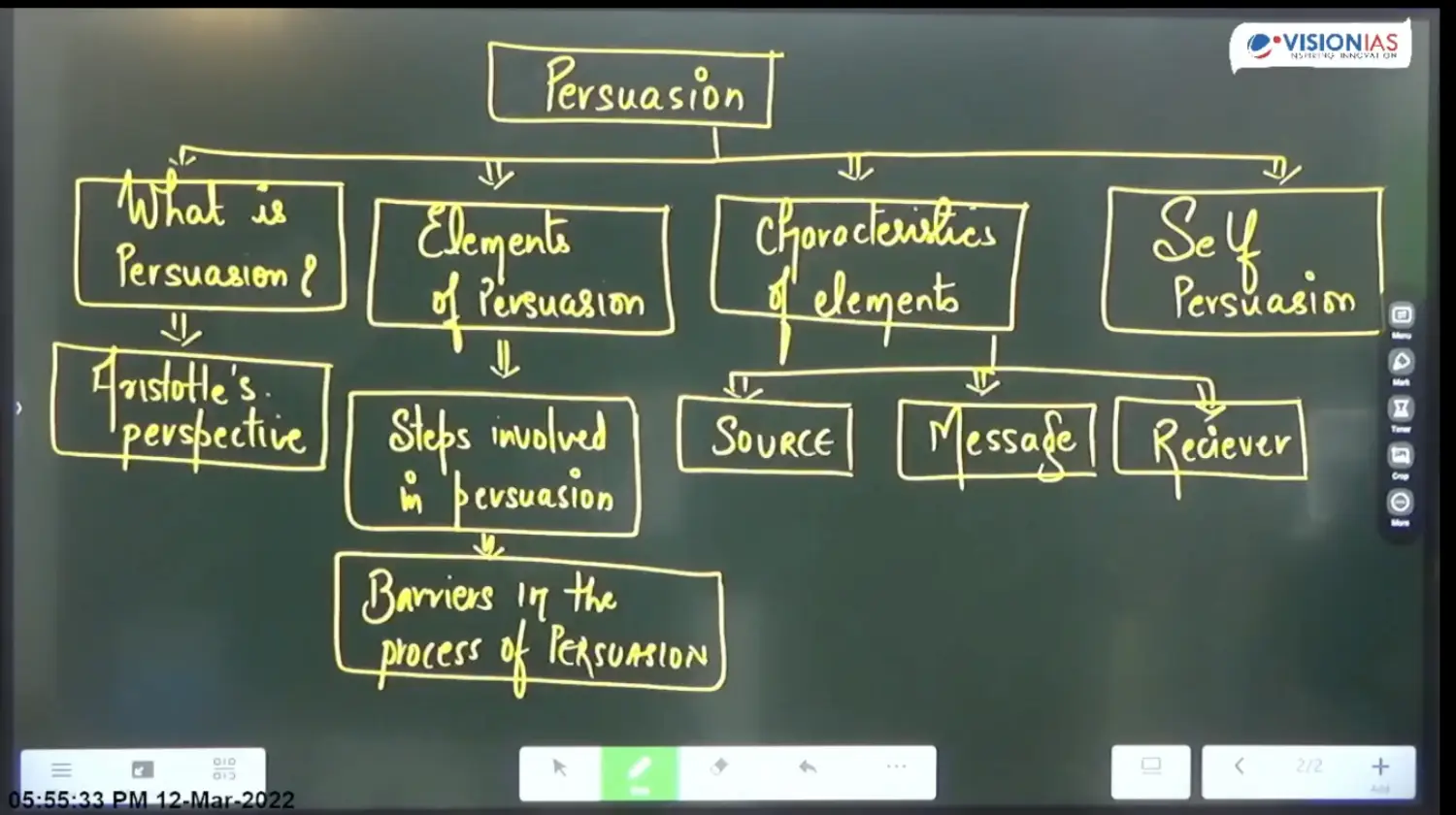
Introduction
It is the process aimed at changing a person or group's attitude or behaviour towards some event idea, object, or other people by using written or spoken words to convey the information, feelings, reasoning.
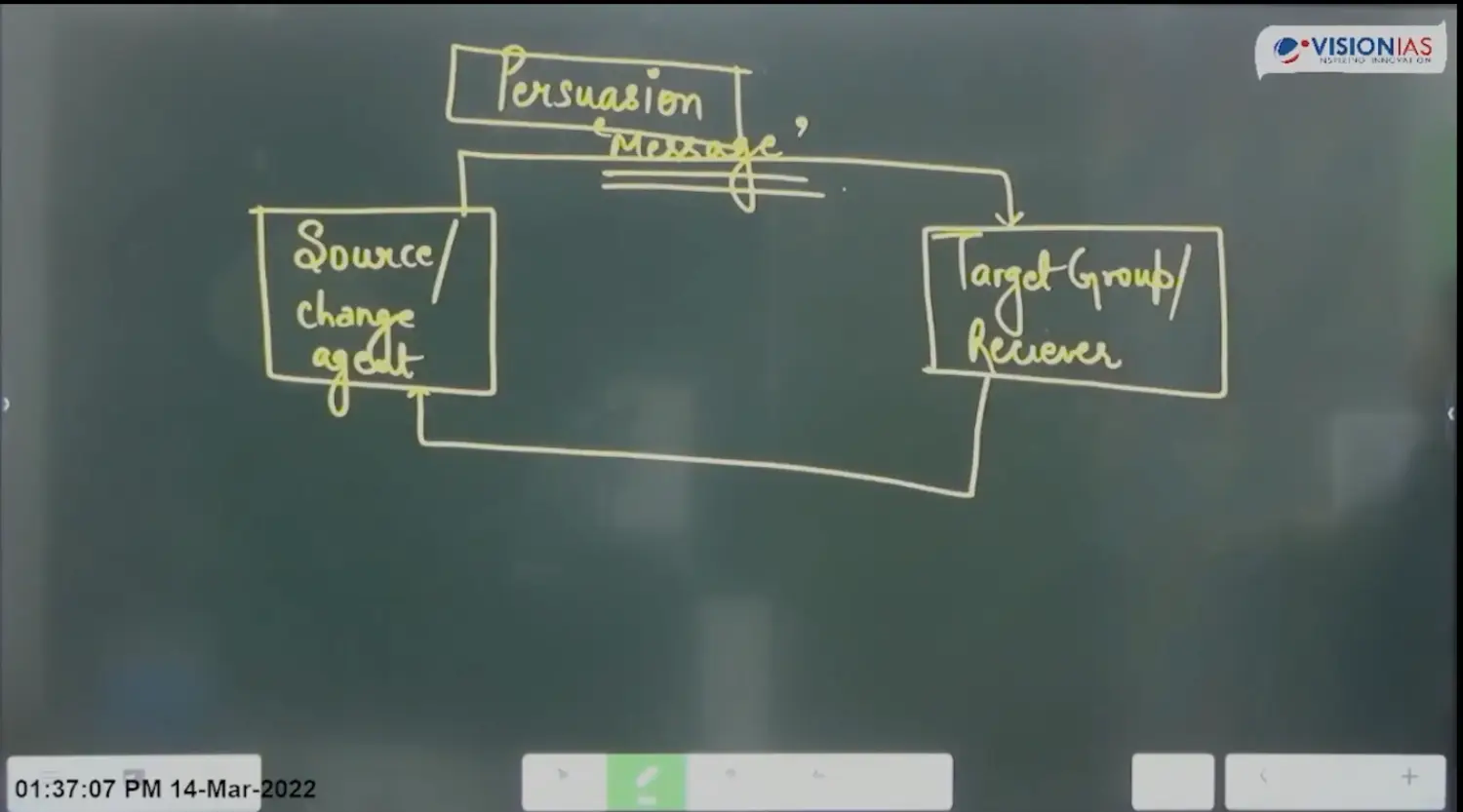
In the process of persuasion, there is a source or change agent and there is a Target group or Receiver and there is a message that the source conveys to Receiver
Aristotle is referred to as the father of Persuasion. He says that the change agents bring about persuasion by three things : → Ethos, Pathos, Logos
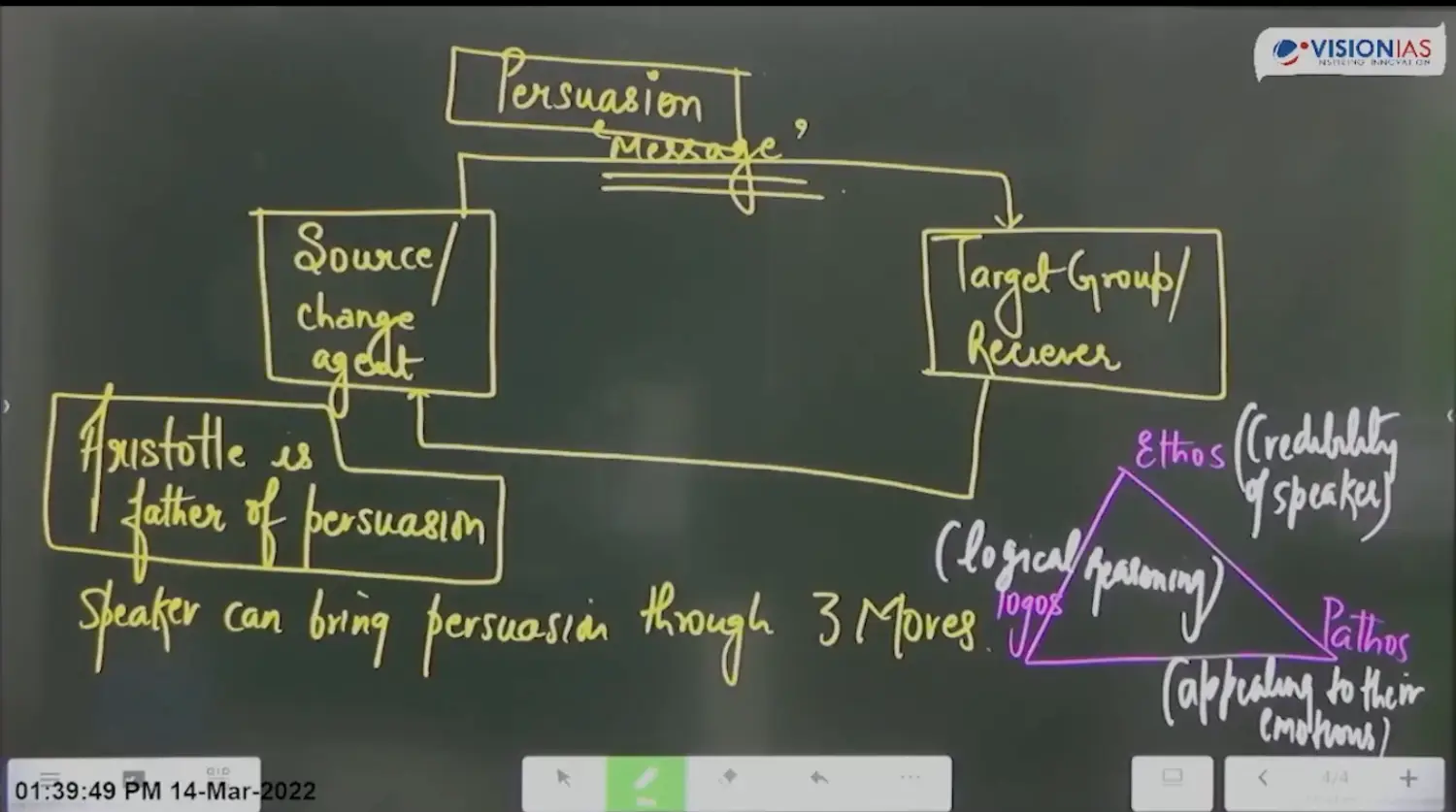
- Ethos refers to the credibility of the speaker
- Logos means logical reasoning
- Pathos means a feeling to their emotion or appealing to their emotion
UPSC Question - Practise Question
How can you use Persuasion for right implementation of Swachh Bharat Mission or UCC or any other govt scheme
Aristotle's Perspective on Persuasion
Ethos
- Ethos is an appeal to ethics and it is a means to convenience someone of character, authority or credibility of the persuader
- It can be done in multiple ways
- For Example:
- being a notable figure in the respective field
- demonstrating mastery over the specialised vocabulary of the field
- Being introduced by someone who is in authority
Logos
- To use logos means to sight facts and statistics
- In fact, the logical appeal can further strengthen the ethos because it makes the speaker knowledgeable and well-informed
- Logos can be developed
- by sighting facts
- by making historical analyses
- by constructing logical arguments
Pathos
- It means to make an appeal to emotion
- It is a way of convincing the audience about the arguments by evoking an emotional response
- Speaker uses pathos to gain sympathy from the audience
- Pathos is very effective if the speaker and the target group or the audience share the same value system
- Pathos can be developed by using
- meaningful language
- emotional tone
- emotion-evoking examples
- making funny illustrations since the span of attention is short
UPSC Question
According to Aristotle Not Only Ethos and Logos but Pathos is also equally important
Elements of Persuasion
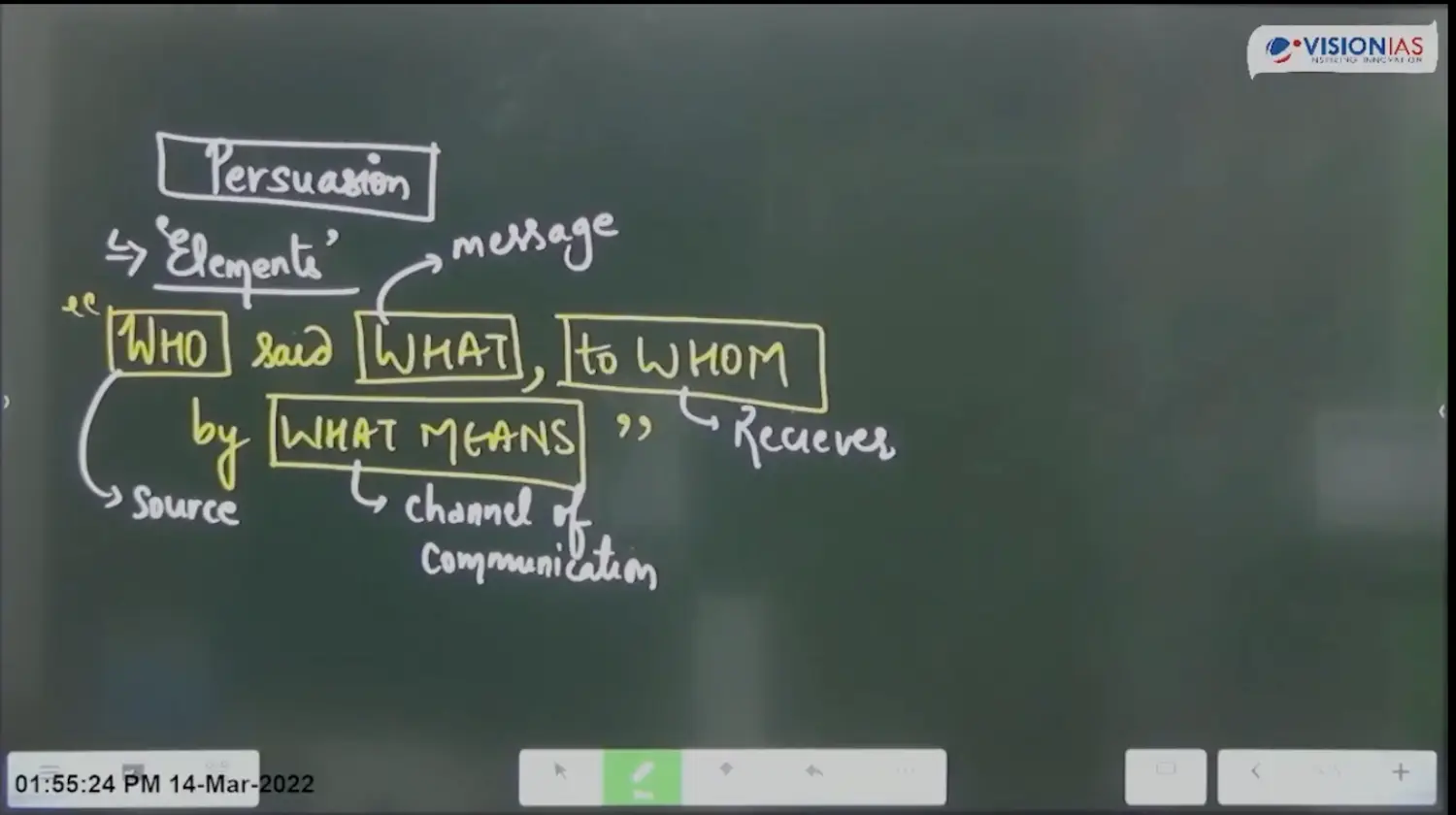
who (source) said what (message), to whom (receiver) by what means (channel of communication)
Source → Message → Receiver → Channel of Communication
Steps involved in the process of Persuasion - ACRA
ACRA Steps of Persuasion
Mind Map
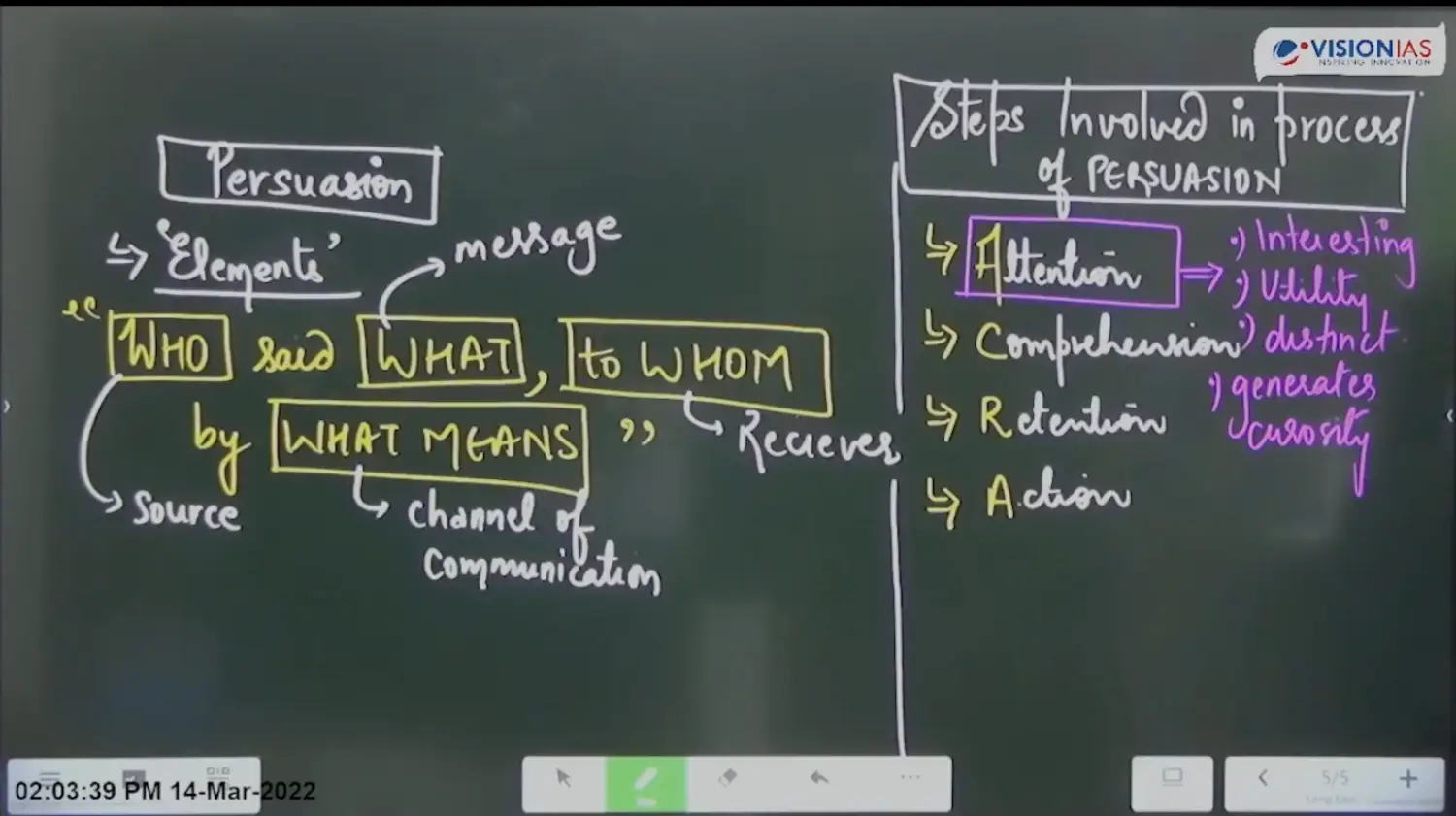
Attention
For the source to catch the attention of the target group the message presented should
- be interesting
- serve some utility
- generate some curiosity
- should be distinct
Comprehension
Refers to the ability of the source to make the target group understand the message.
However, it is possible only, when the message is framed keeping in mind the frame of reference(ex : language of audience) of the target group.
Retention
The target group should be able to retain and retrieve the message whenever required.
for this, the sender tries to present the message repeatedly and also highlights the salient aspect of the message
Action
Persuasion considers successful if the target group not only receives the message but also acts upon it as intended by the source.
Barriers in Persuasion
Mind Map
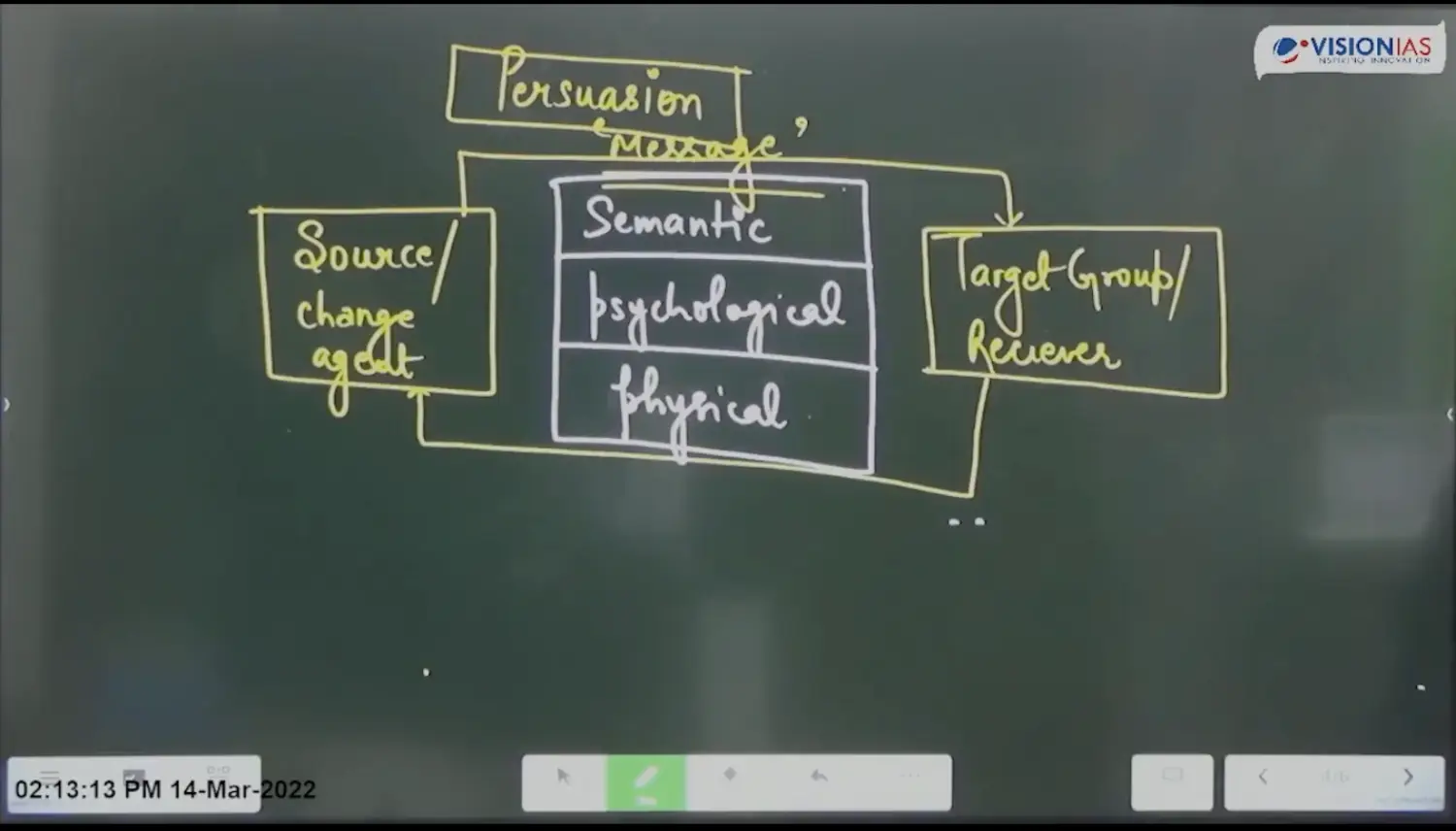
Introduction - SPP Barriers
In this process the person is confronted with some barriers like
- Semantic
- Psychological
- Physical
These barriers need to be overcome in order to ensure successful persuasion.
The source needs to overcome these 3 barriers in order to reach the Target Group
Semantic
- refers to the science of meaning
- The barriers emerge because
- The words and symbols can have more than one meaning
- There are foreign and technical words in the message
- There exist a discrepancy between the verbal and nonverbal aspect of the message.
- These barriers can be overcome
- by the use of symbols that are receiver friendly
- By making the communication idea centric rather than words centric
- Use of illustrations and relevant examples to support the verbal message.
Psychological
- It arises because of incompatibility between the source and the target group
- There exist emotional separateness/Lack of Faith between the two
- Psychological barriers are most challenging to be overcome as they result from the personality inadequacies of both source and receiver
- Hence, to overcome this barrier a climate of trust and understanding needs to be developed which will require non-judgemental acceptance of the target group by the source
Physical Barrier
- It arises because of the disturbance in the environment, which obstructs the flow of communication
- It can be overcome by redesigning the physical environment
Characteristics of Elements of Persuasion
Mind Map
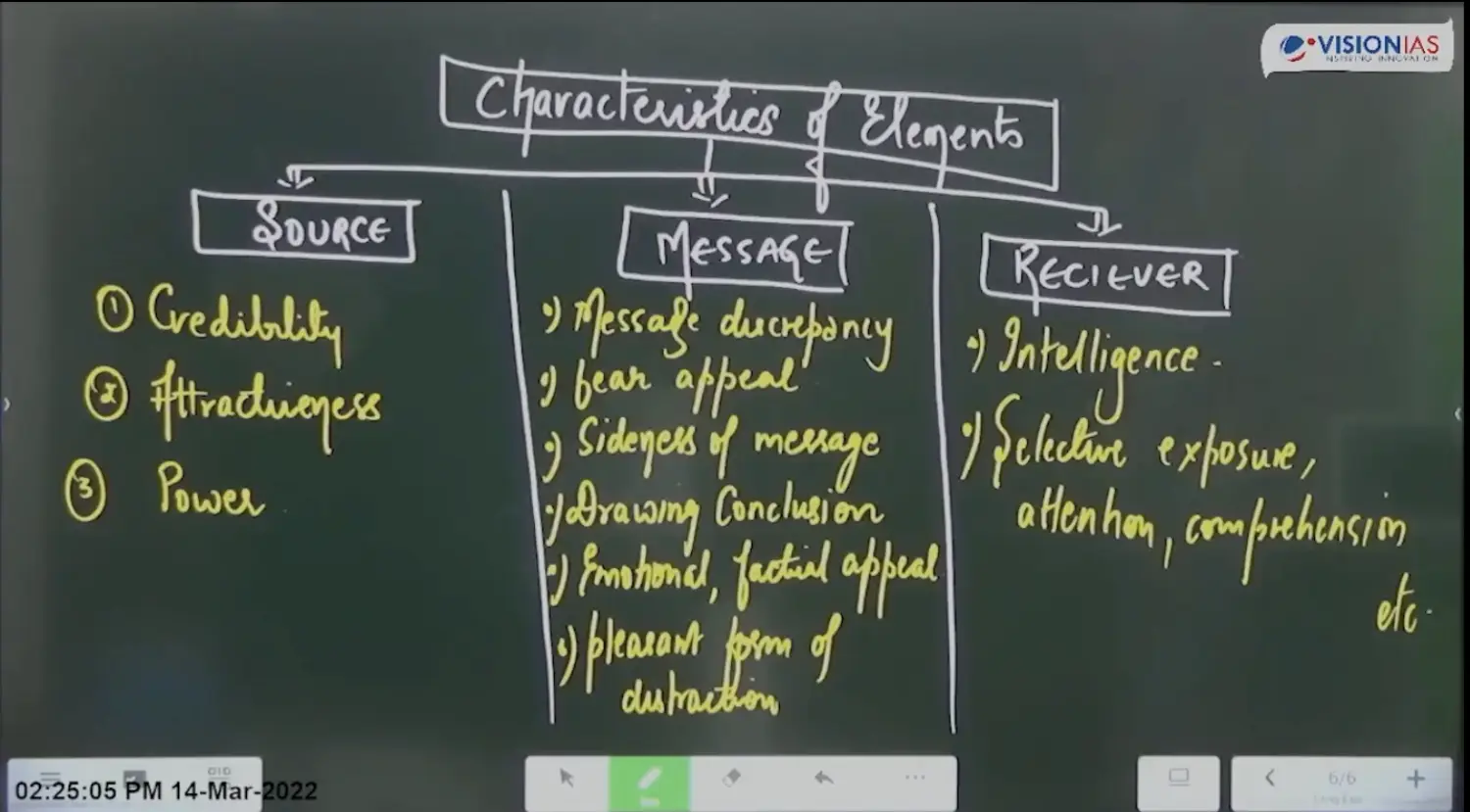
- Source
- Credibility( Internalisation)
Body
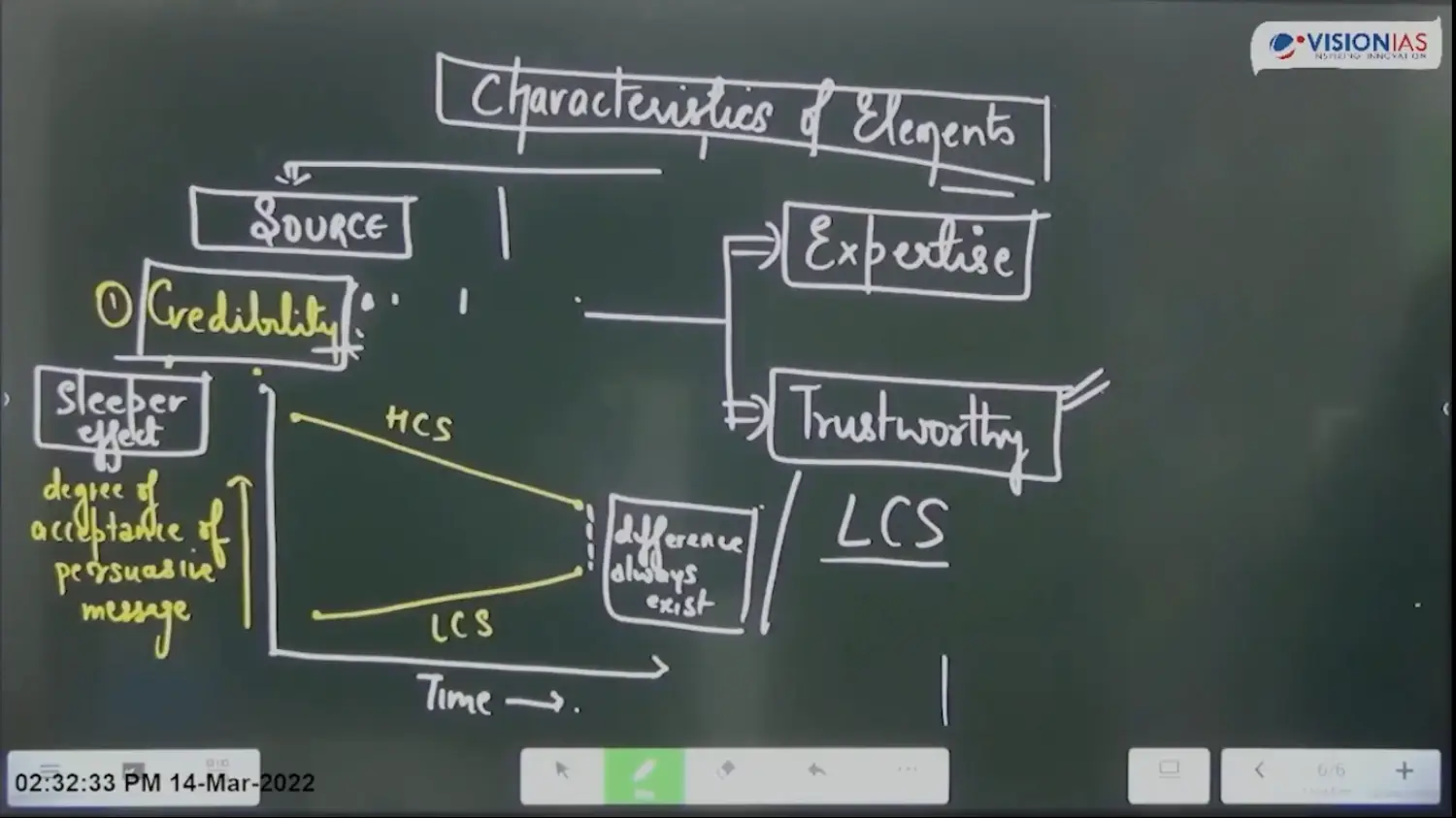
- Credibility refers to the extent or degree to which the target group beliefs in the position advocated by the source
- To assess credibility, it depends upon Expertise and Trustworthiness
- High trustworthiness and Expertise go hand in hand. However, in case of conflict trustworthiness gets the upper hand
- Sometimes a source with Low credibility is more successful in bringing about desired change than a person with high credibility.
- when he is seen arguing against his own fundamental interest.
- Example: A business giant holding industries responsible for environmental pollution will have more credibility on the attitude of the people with respect to environmental protection the day he shutdown his industries over just a theoretical environmentalist
Benefits of High Credibility Source (HCS)
- The target group exposes themselves more towards the message issued by HCS
- They are more attentive to HCS
- They are less likely to question HCS on controversial issues
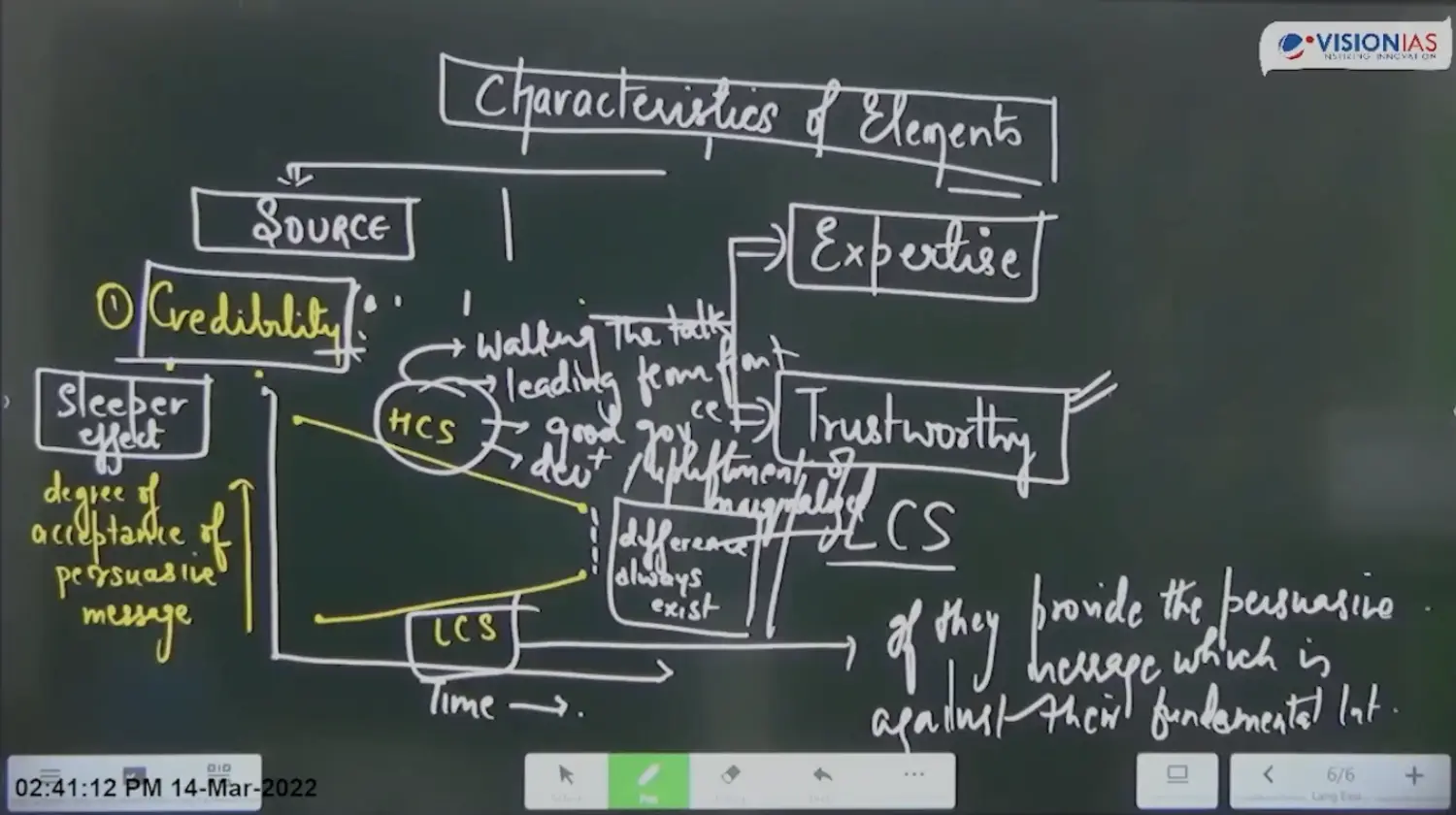
Fig : Sleeper Effect → HCS & LCS differences always exist
- Over a period of time, the influence of HCS declines, and for the same message issued by LCS (Low Credible Source) the receptivity improves
- Although, it never reaches the same level as that of HCS
- Hence, periodically the credibility needs to be enforced by HCS.
- For example:
- walking the talk
- social media
- upliftment of marginalised section
- leading from front
- advertisement
- Attractiveness ( Identification)
- The attractive source is perceived to be more likeable by the target group
- hence they are more receptive to counter attitudinal messages issued by the source
- For Ex :
- Physical Attractiveness
- Communication Skills
- Ideological compatibility/Attitudinal similarity
- Power(Compliance)
- It is the potential to influence the behaviour of the target group in the intended direction.
- greater is the power of the source over the target group more likely the target group will be persuaded by the source
- Message
Mind Maps
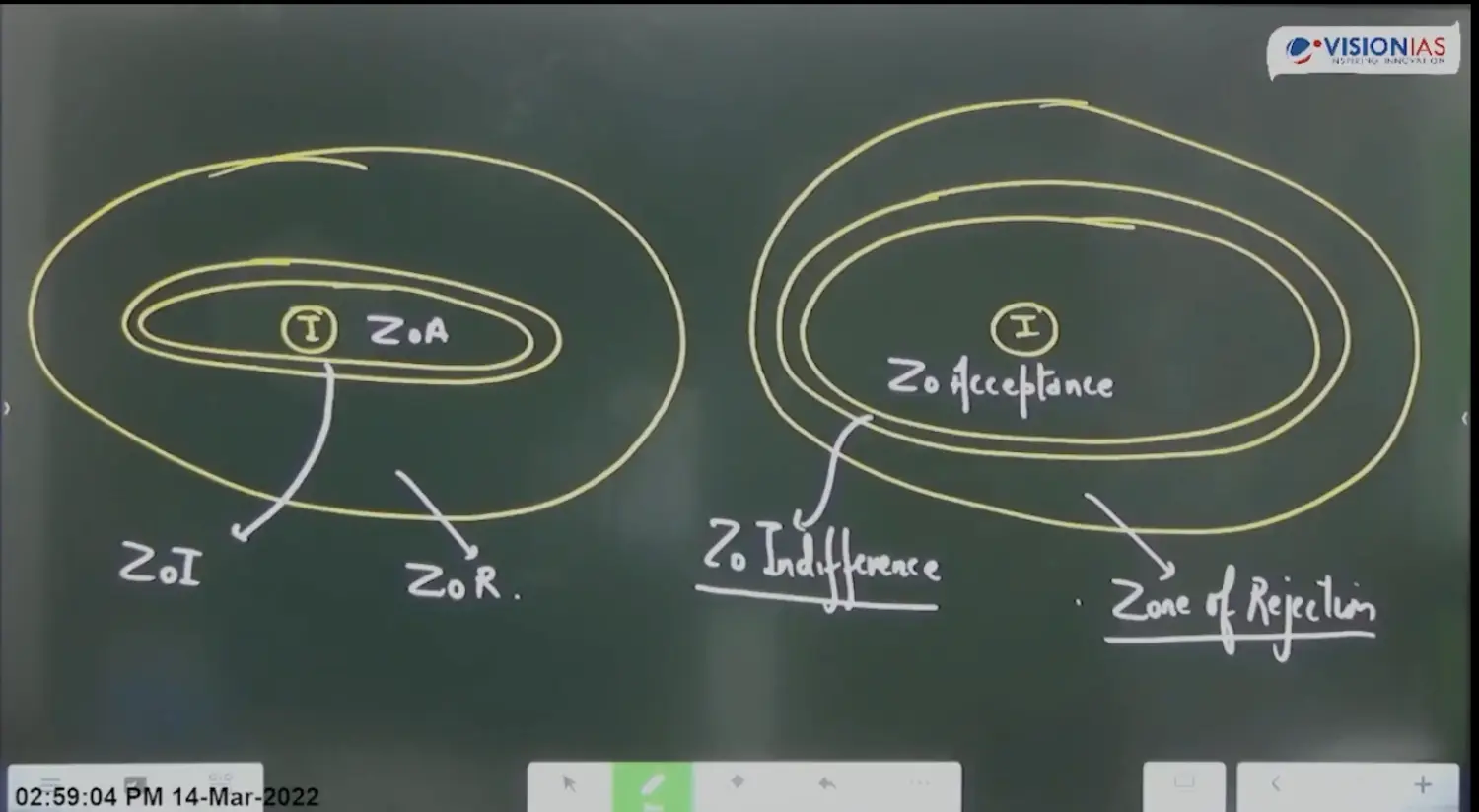
Zones of - Acceptance, Indifference, Rejection
- If the message falls in the Zone of Acceptance the perceived discrepancy in the position advocated by the source and the position held by the target group is underestimated
- Hence, the message is likely to be accepted
- However, If the message falls in the Zone of Rejection the discrepancy is overestimated.
- Hence the message lightly to be rejected.
- However, if the message falls in the Zone of Indifference then we are indecisive
- Hence, People are not interested in the Message
- To ensure successful persuasion we should look for people who have a large zone of acceptance.
- For example People with wide Range of Acceptance:
- Educated
- Rational
- Compassionate
- Empathetic
- Tolerant
- Further, effort should be made to increase the Zone of Acceptance
- For Example :
- the source should be credible, attractive, and powerful
- The message should be presented in a culturally construed manner
- It should be interesting and utilitarian
People of
- Zone of Acceptance - Facilitators
- Zone if Indifference - Fence Sitter
- Zone of Rejection - Resistors
Due to Snow Balling Effect of Facilitators there will be change of zone of acceptance of Fence Sitters & Resistors
Characteristics of Message
- Message discrepancy - Pending to Understand and Add
- Fear Appeal
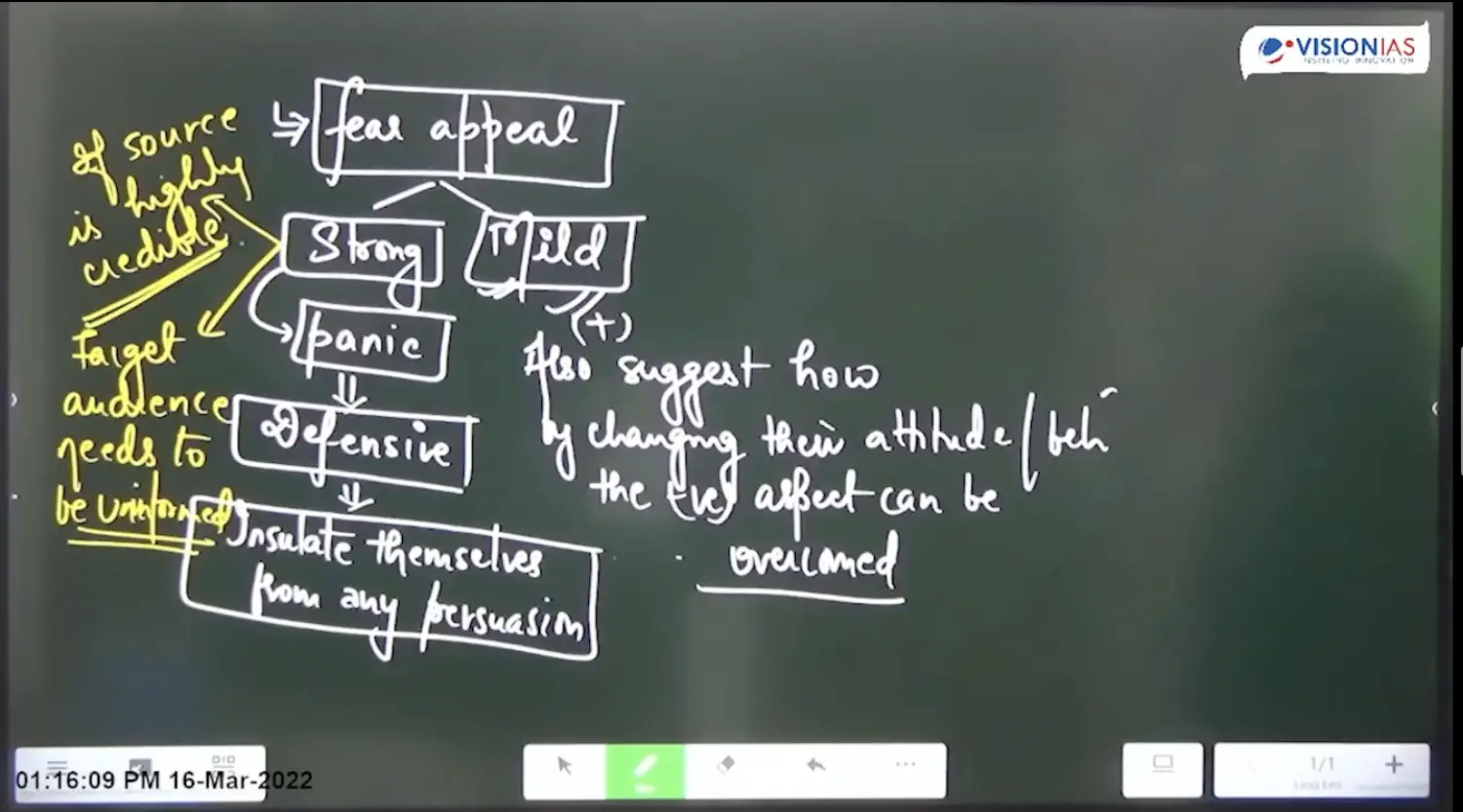
- There are two types of Fear Appeal Strong and Mild
- Mild Fear Appeal is more useful and works Better
- Strong Fear Appeal
- It generates Panic
- Makes people defensive
- which can also Insulate themselves from any persuasion
- Fear Appeal Works Suggest how by changing attitude or behaviour the negative aspect can be overcome
- Strong Fear Appeal It will only work when the people's Source is highly credible or else it will be visualised as a propaganda
- For a Strong Fear Appeal, The target audience needs to be uniform
Drawing Conclusion
Drawing conclusion work when my messages are unstructured
The target audience is uninformed
The message doesn’t relate to their core values.
The target audiences don’t feel that their intellect is getting questioned
No mistrust between source and receiver
Ex :
Not Just the message is been given but also it is bring told ki karna kya hai
Ex :
UPSC Aspirants bring taught UCC, teacher cant draw conclusion for the student, he/she can only present Pros and Cons of the Issue
- Sidedness of Message
Mind Map
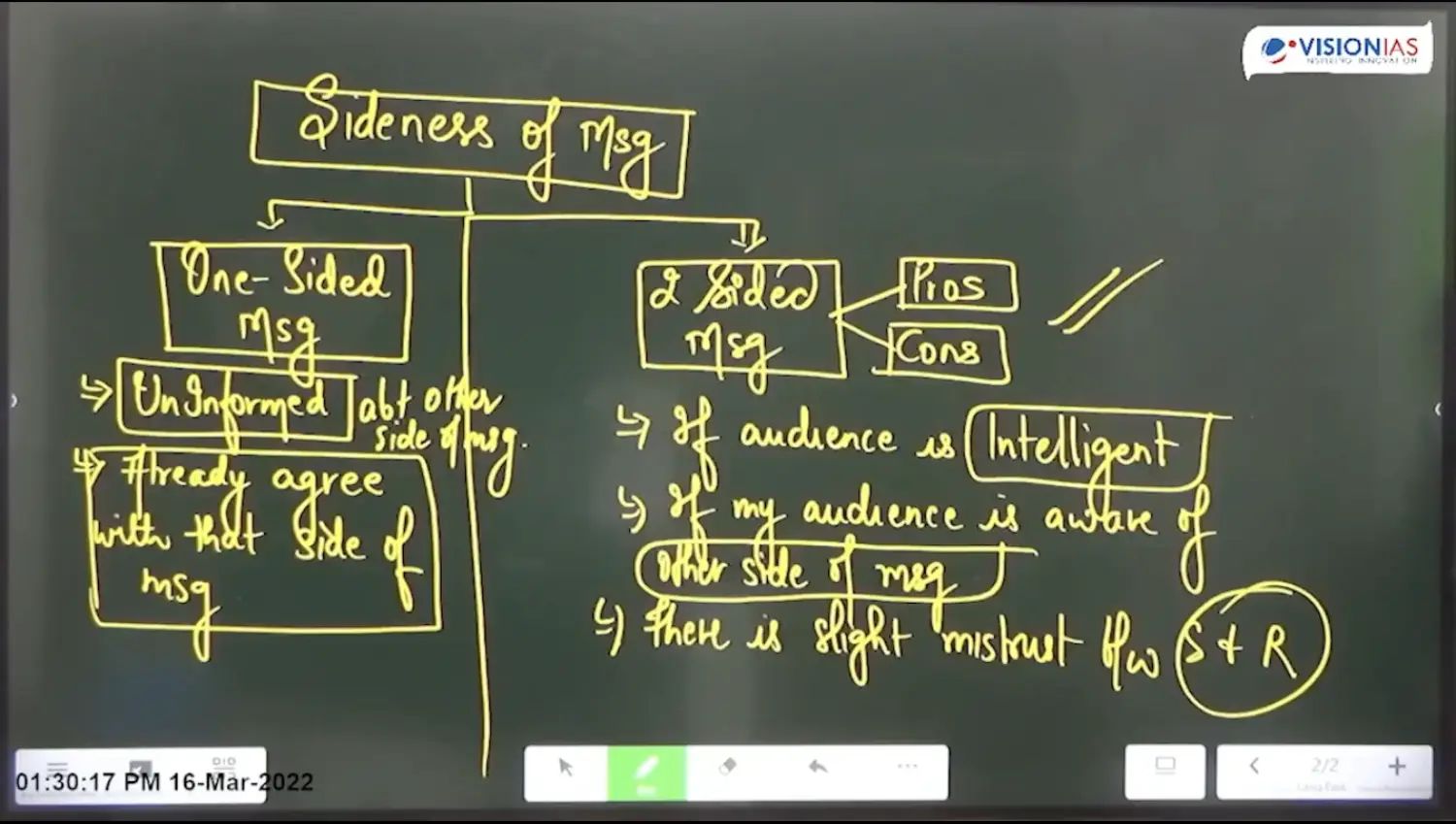
Body
One-Sided Message: The audience is uninformed about another side of the message.
Hence, they Already agree with that side of the message.
Two-Sided Message: Used when the audience is intelligent
If my audience is aware of another side of the message
There is slight mistrust between sources +Reasons
- Pleasant form of Distraction
- Pleasant forms of distraction such as food, humour
- These distraction happened to increase the effectiveness of persuasive appeals
- Channel Factor
Channel is the medium through which information is presented and the channel used must be compatible with not only the message delivered but also the characteristics of the audience to whom the message is delivered.
- Emotional & Factual Appeal
- The best results are obtained when the persuasive message has both Emotional and Factual appeal in it.
- Emotion + Factual >> Emotion >> Factual >> neither emotional nor factual
- Receiver
Mind Maps
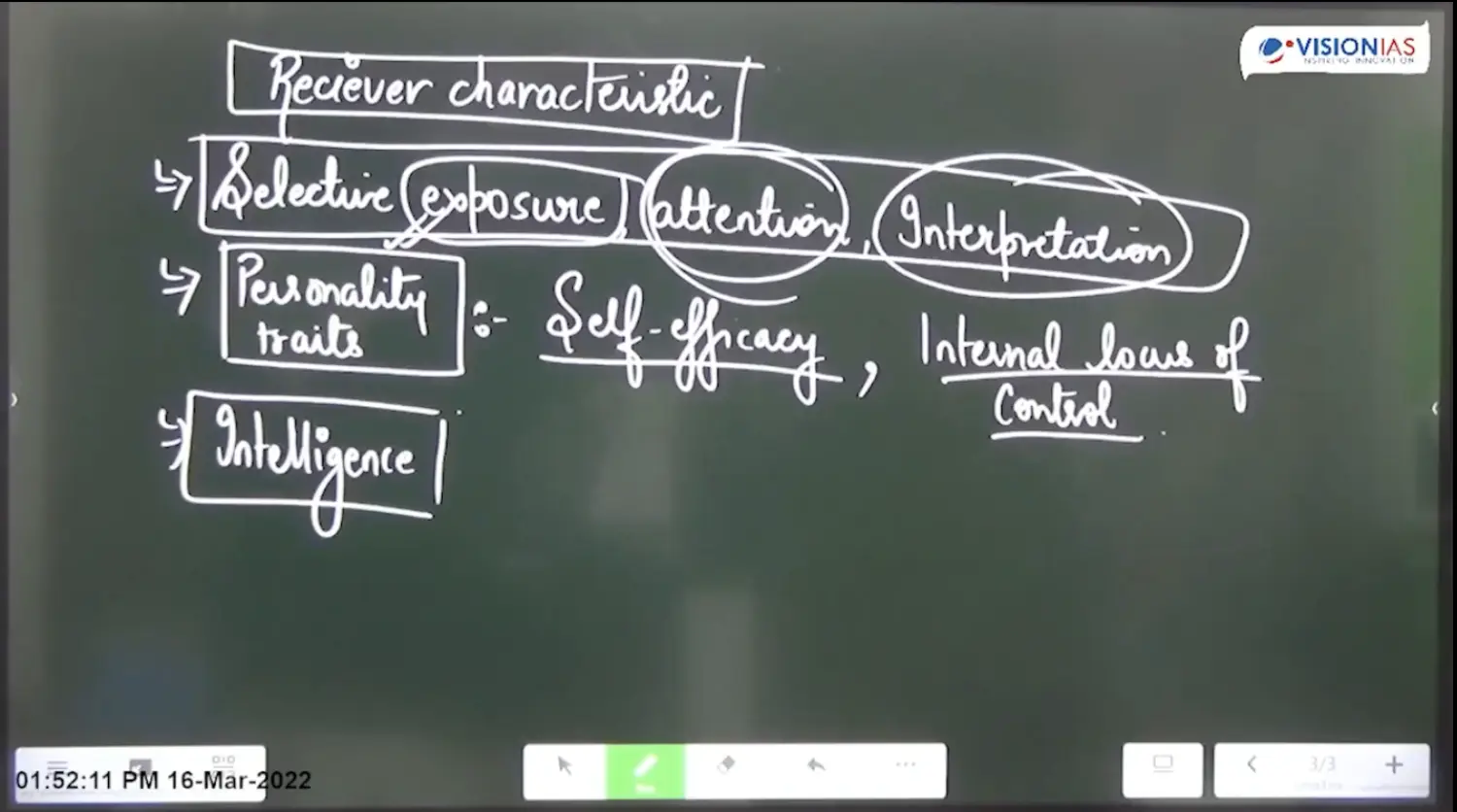
There are three broader characteristics
Selective Exposure
Many times the target group members don’t intentionally avoid information but because of the culture in which they live, they get exposed only to that information that happened to support their existing viewpoint
Attention
Even when the persuader is able to overcome the cultural barrier and reach the target group there is always a possibility of selective attention and interpretation
The problem of selective attention can be addressed by making the message more interesting and useful
Interpretation
The interpretation issue can be addressed if the context and illustration are provided to make the message clearly comprehensible
- Personality Traits
Self-Efficacy
It’s the belief that one can overcome the barriers on the path to achieving the goal.
Internal Laws of Control (ILC)
Internal Locus of control means your beliefs whether the things are in your control or not.
Example: My destiny is in my hand
Convincing People with Self Efficacy & ILC
To begin with, it is difficult to convince people with high self-efficacy and internal locus of control.
However, once convinced they will not be swayed away by any propaganda
- Intelligence
Intelligent people, because of their superior critical thinking ability, are less likely to be influenced by illogical appeals
However, when presented with facts and statistics, they are likely to be convinced
UPSC Question - From Video Discussion
Lecture 8 From Hour 1 to Hour 1.5 Question Answer Explanations
Question:
Differentiate between Persuasion and Social Influence. How can persuasion be made effective in bringing about an attitudinal change?
Give one example where you brought a positive attitudinal change through persuasion.
UPSC Question - With Answer & Explanation
Lecture 8 From Hour 1 to Hour 1.5 Question Answer Explanations
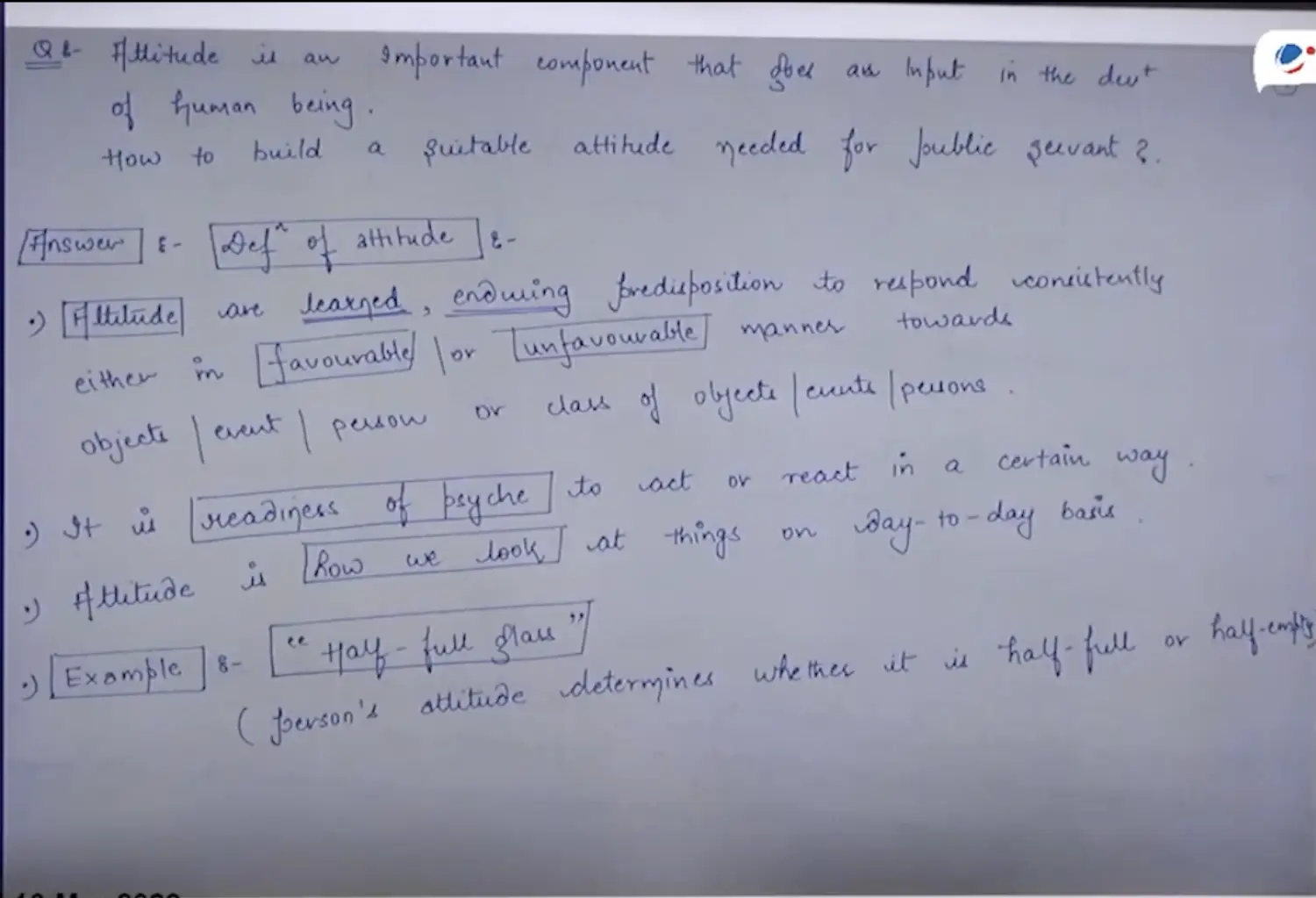
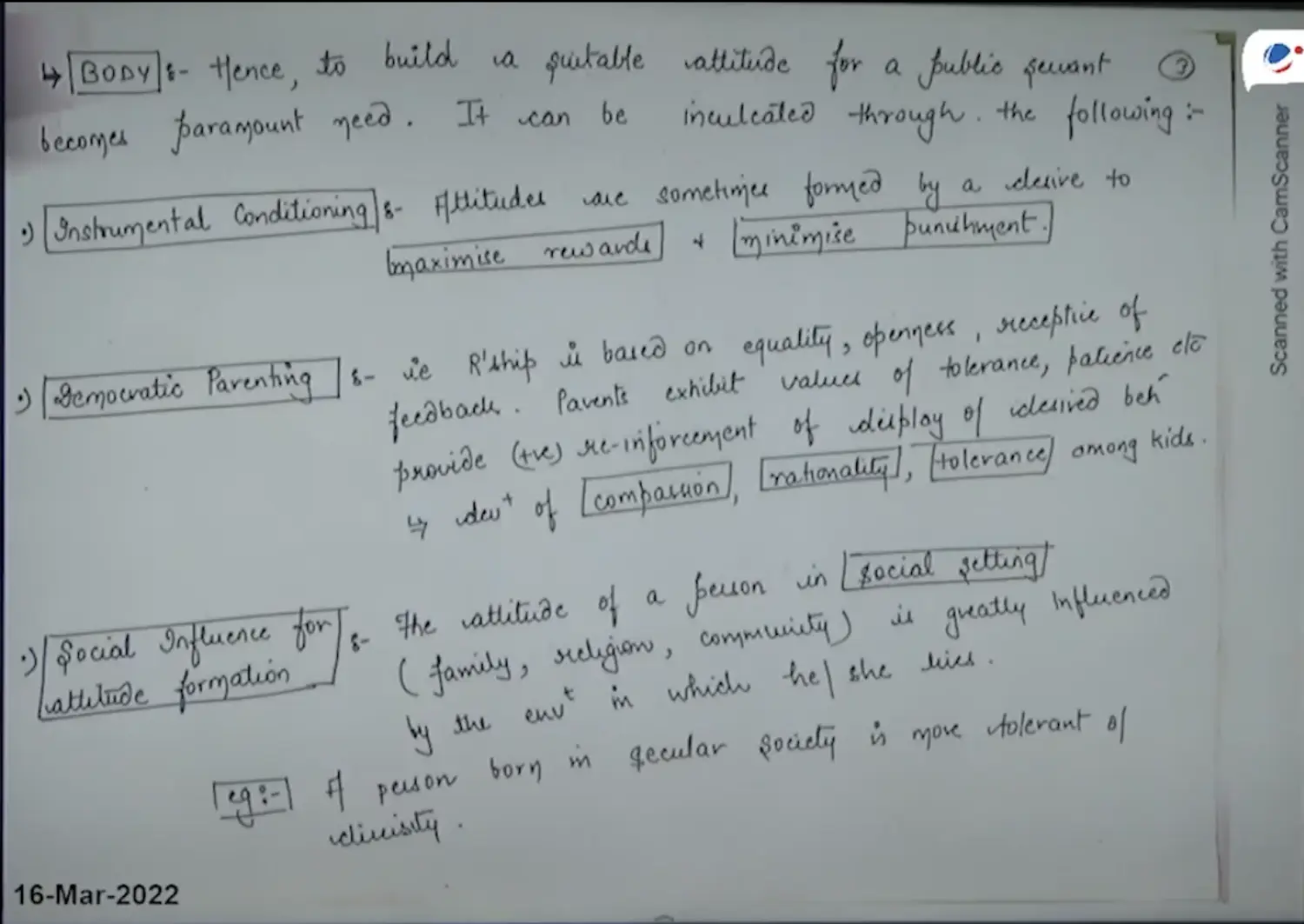
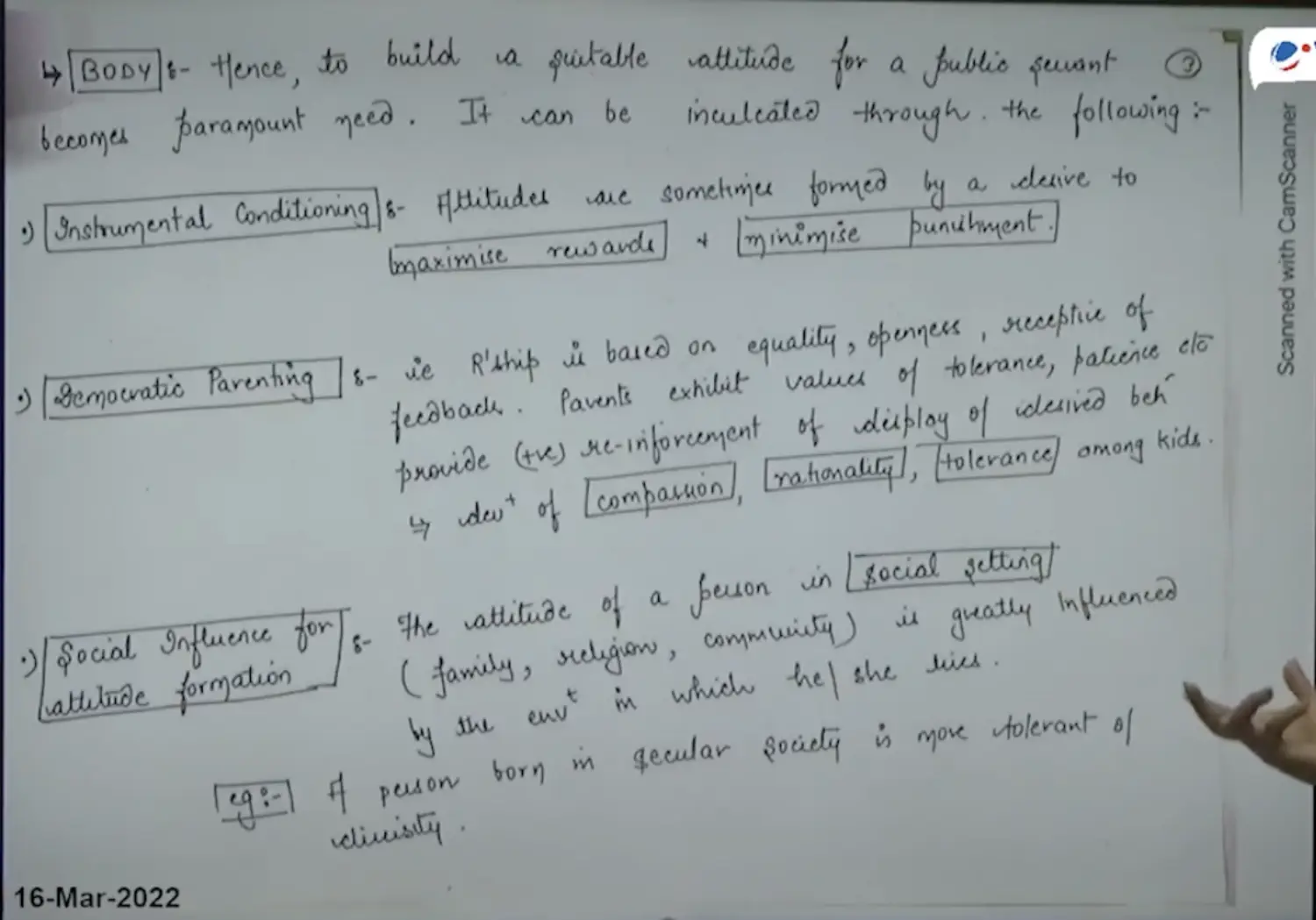
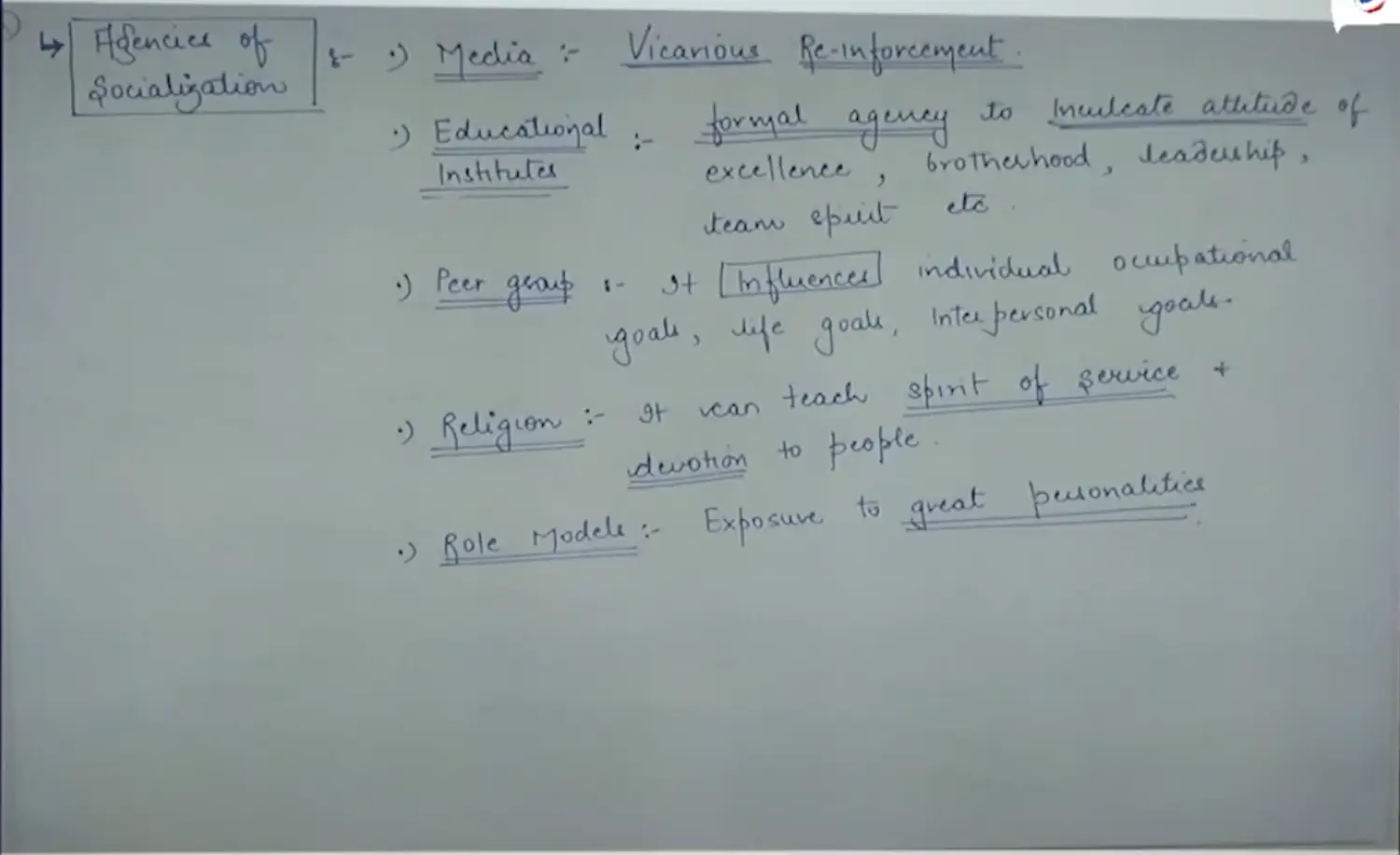
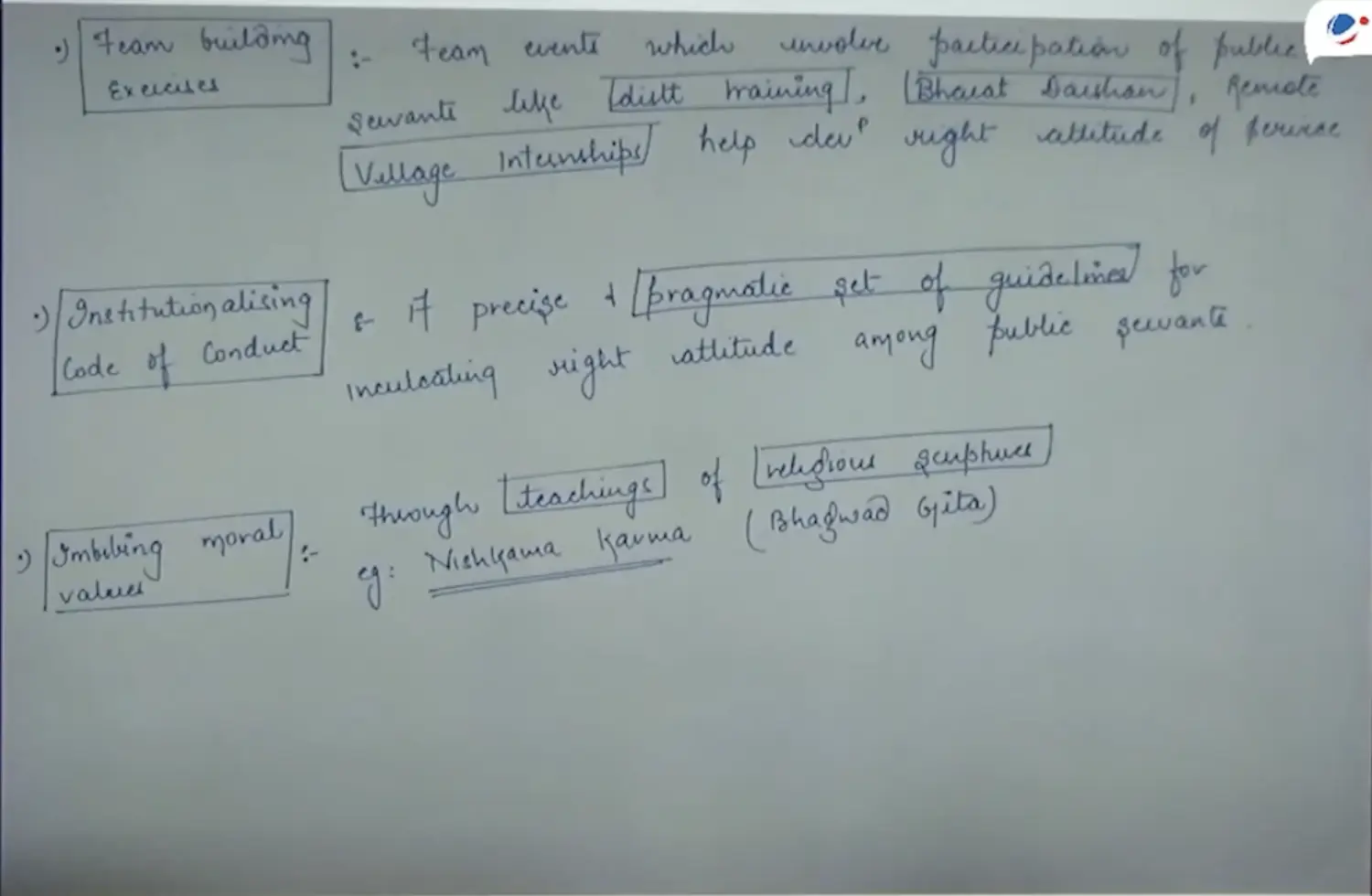
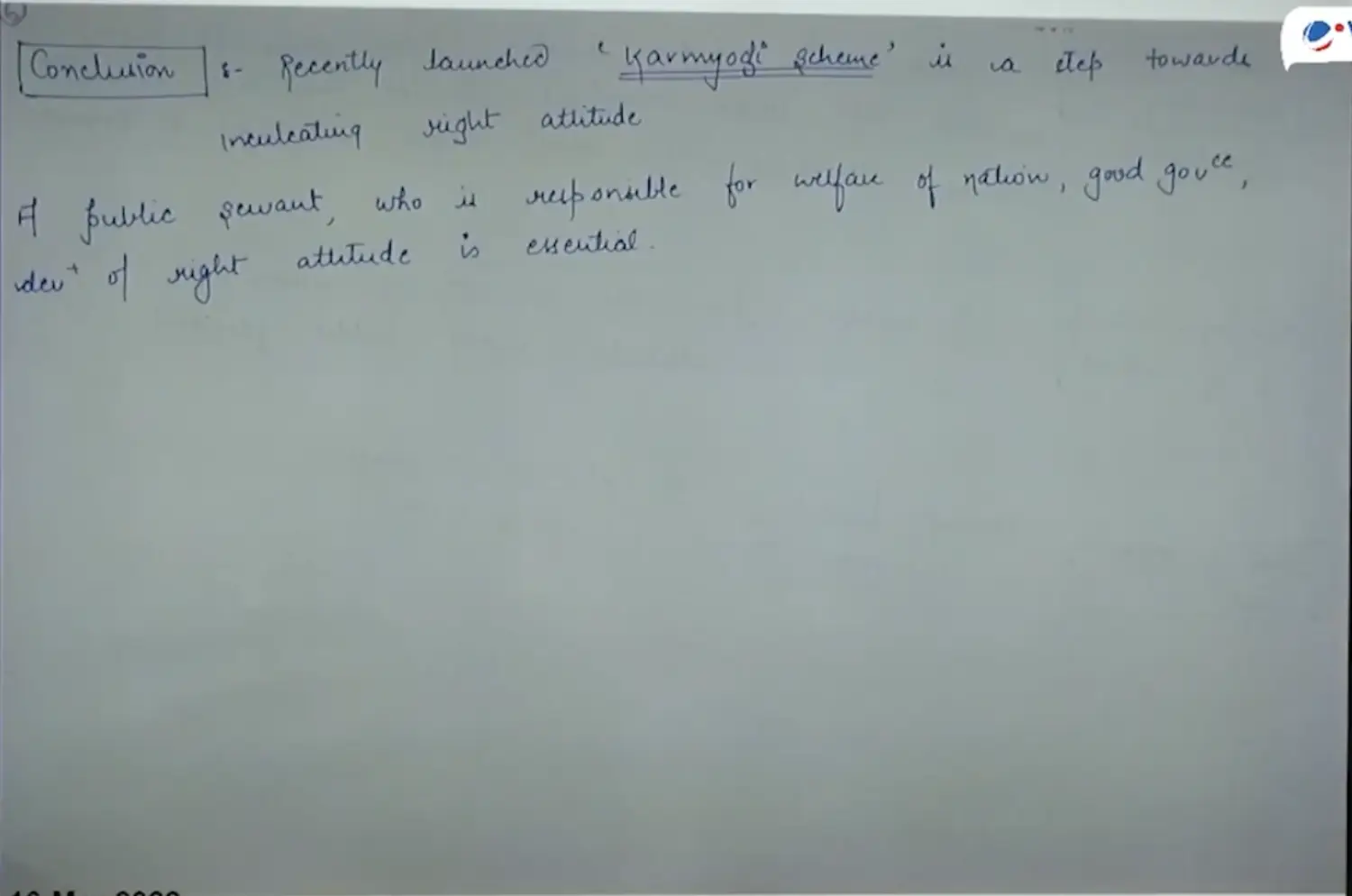
Self-Persuasion + Cognitive Dissonance
- Body
Cognitive Dissonance is the mental discomfort experienced by a person simultaneously holding two or more contradictory beliefs, values, or ideas.
It also refers to a state of having inconsistent thoughts or attitudes, especially with respect to behavioural decisions.
For Example
- you want to become an IAS officer but don’t like studying
- you want to live long but don't want to quit smoking
- You don't want to cheat, but you don't want to cheat your family
- I don’t want to be corrupt, but I also want to live a luxurious life
- There is a peaceful protest, but you have to apply a lathi charge
The dilemma is a Situation, whereas Cognitive Dissonance is in the Mind
It is an attempt by the individual to change his attitude and behaviour in the desired direction through self-suggestion
Whenever a person notices discrepancies between their behaviour and the suggestions they provide to themselves, it is likely to be a state of dissonance
It will compel the person to take a step to reduce this
We take steps to minimise the situation of dissonance.
For Example
Either to change the attitude or behaviour.
Or we trivialize the issue i.e, by Downplaying the Importance of inconsistent attitude by the behaviours
Or by adding information which is supporting existing attitudes and behaviour
Or It can also be reduced by indirect means i.e, the fundamental discrepancy between attitude and behaviour is left intake, but the unpleasant feeling generated by dissonance is removed.
For Example → Self Affirmation → “Chalta Hai“ Culture
For Example → Corruption Chalta hai - There cannot be a wrong way of doing right things by Gandhi
For Example
- Self Affirmation involves restoring positive self-evaluation threatened by dissonance by focusing on a positive self attribute
- UPSC Questions
UPSC Question - Sample Question and Format
Question:
What do you mean by cognitive dissonance? Also, suggest some measures to overcome it [10 Marks]
Answer:
Answer approach: start with identifying facilitators
Body: Attitude towards behavior -> Intention -> Behaviour
Subjective Norms -> Intention -> Behaviour
Perceived Behaviour Control -> Intention -> Behaviour
For Example, Family Planning
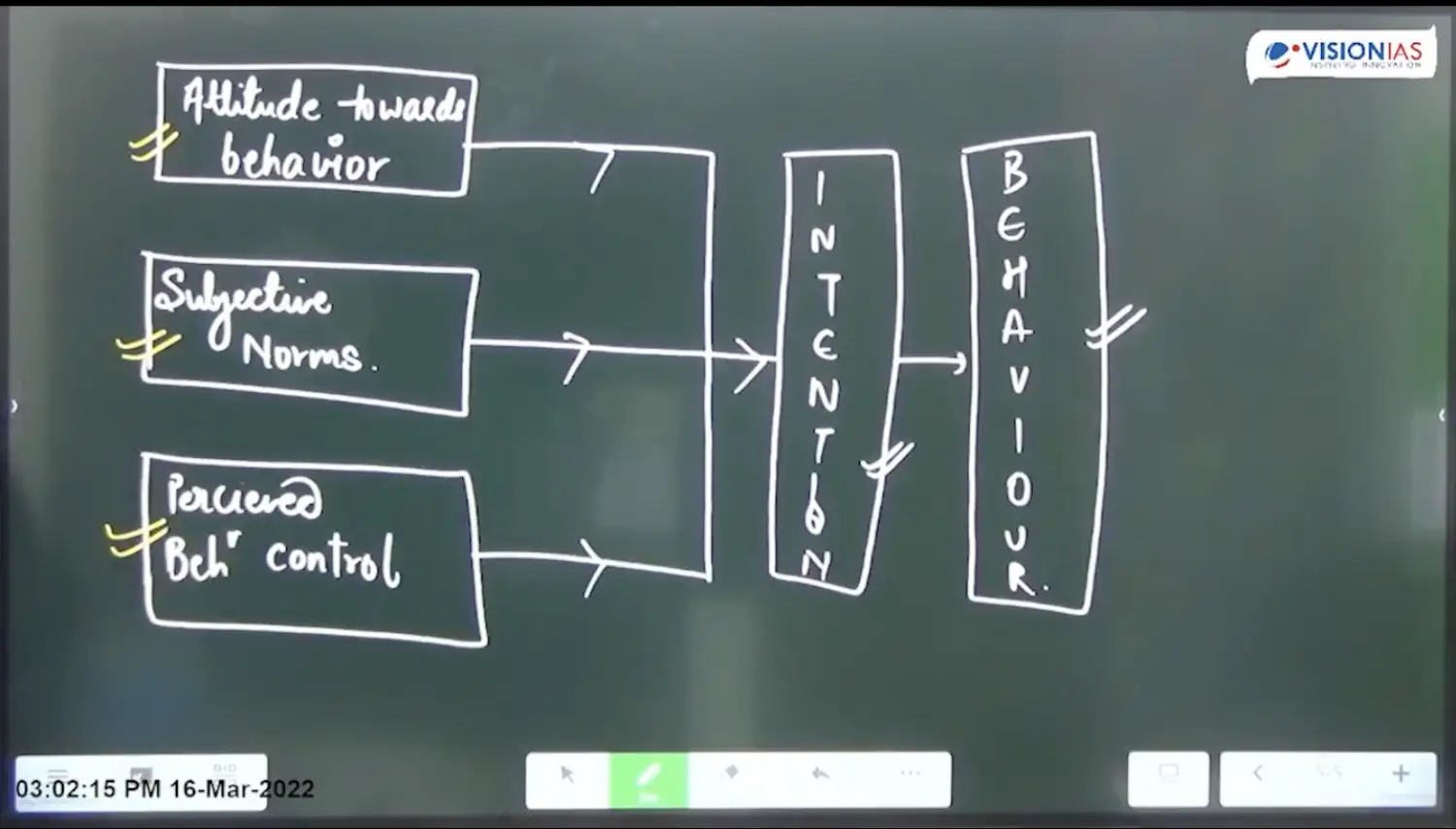
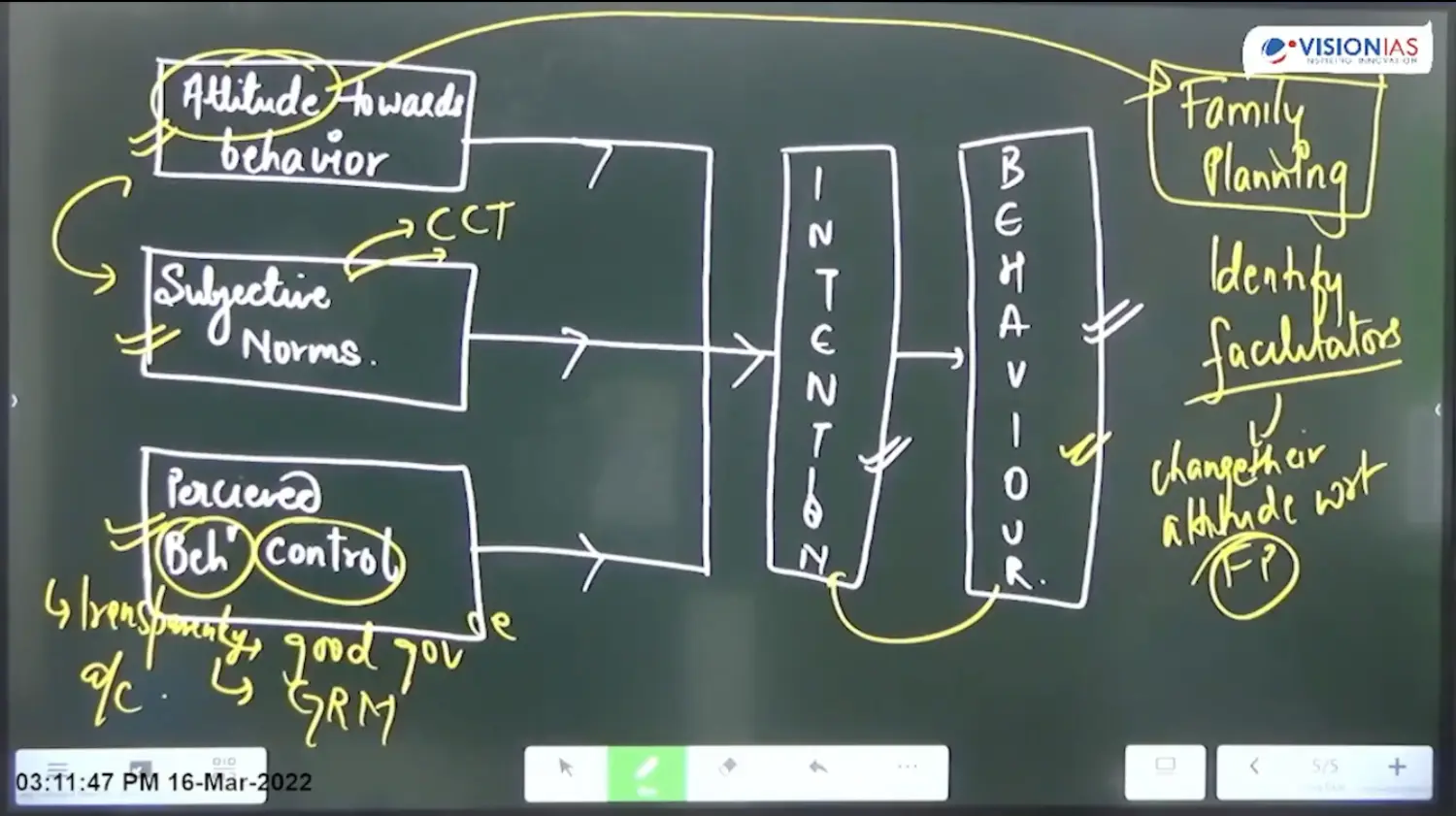
UPSC Question - Similar Question
Question:
How to persuade people with respect to the education of a girl child?
UPSC Question - Similar Question
Question
How to ensure people’s cooperation towards Swacch Bharat Mission?
- Body
Emotional Intelligence
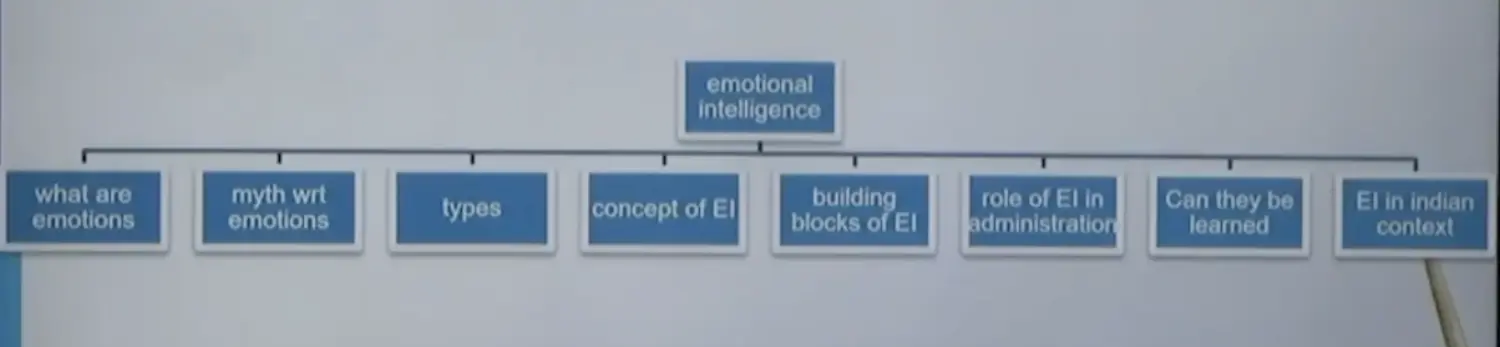
What are Emotions
- Emotions are nothing but bodily arousal which is a reaction to events either internal or external
- Emotions are personal experiences that arise due to a complex interplay between
- physiological behavior
- cognitive behavior
- situational behavior
Myth wrt Emotions
- Earlier it was a myth that emotion makes us
- inefficient
- obstructs reasoning
- interferes with sound judgment
- distracts us
- leads to arbitrary behavior
- undermines planning & management
- obstructs the flow of objective data
- However, researchers in recent times researchers have proved beyond doubts emotion helps us
- to build trust
- to facilitate creative expression
- to motivate us
- make us effective
- It’s a sign of strength, not weakness
- helps us arrive at a sound judgment
- activates our ethical values
- enhance our reasoning
- Use Emotions with Reasons & Have Reasons for Emotions
- Earlier it was a myth that emotion makes us
Types of Emotions
There are different types of Emotions, Categorised on the basis of
Primary and Secondary Emotions
Primary Emotions
Direct emotional response to a situation.
Example :
you’re sad because you’re friend said some hurtful things
Secondary Emotions The emotional response to primary emotion is called Secondary
Example:
because of the sadness, you experienced, you also behave angry
Positive and Negative
Positive Emotions
Certain emotions are pleasant and rewarding they are known as positive emotions.
Examples: Joy, Love, Happiness
Negative Emotions
However, there are certain feelings that make us miserable, create self-doubts and reduce our confidence and self-esteem they are known as Negative Emotions.
Examples: hate anger jealousy etc.
Some times negative emotions also aid in our survival.
Example: Persistent stress may motivate a person to
seek help
mend a relationship
Concept of EI
💡 EI = Emotional Intelligence EQ = Emotional Quotient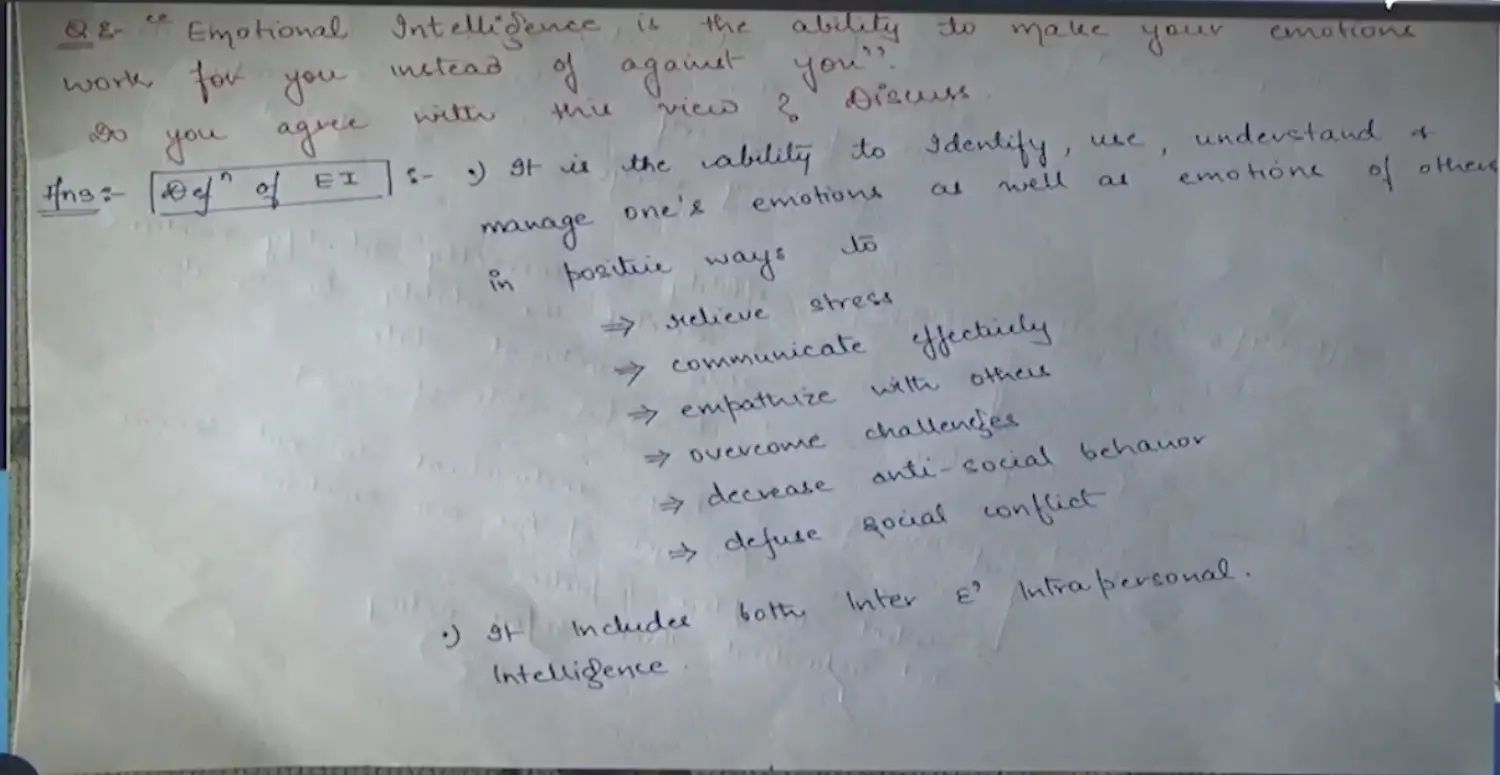
Emotional Intelligence refers to the ability of an individual to reason with emotions
It is the ability to
- identify
- understand
- use
- manage
your own emotions, as well as the emotions of others
in a positive manner to
- relieve stress
- communicate effectively
- empathize with others
- overcome challenges
- decrease anti-social behavior
- defuse social conflict
According to Daniel Goleman(Father of EI):
80% of success at work is due to the emotional quotient (EQ)
20% of success at work is due to the Intelligent quotient(IQ)
IQ determines the person's intelligence level based on
- knowledge of the world
- memory
- reasoning etc
Whereas EQ is the measure of
Person's levels of emotional intelligence.
For Example:
IQ can help public servants understand a technical subject, such as economic policy in civil services.
however EQ can help the public servant to generate consensus and convenience different stakeholders with respect to that economic policy
Building Blocks of EI / Scholarly Perspective on EI
Branch Model of Mayer and Salovey
Mind Map - PerAss UndeMana
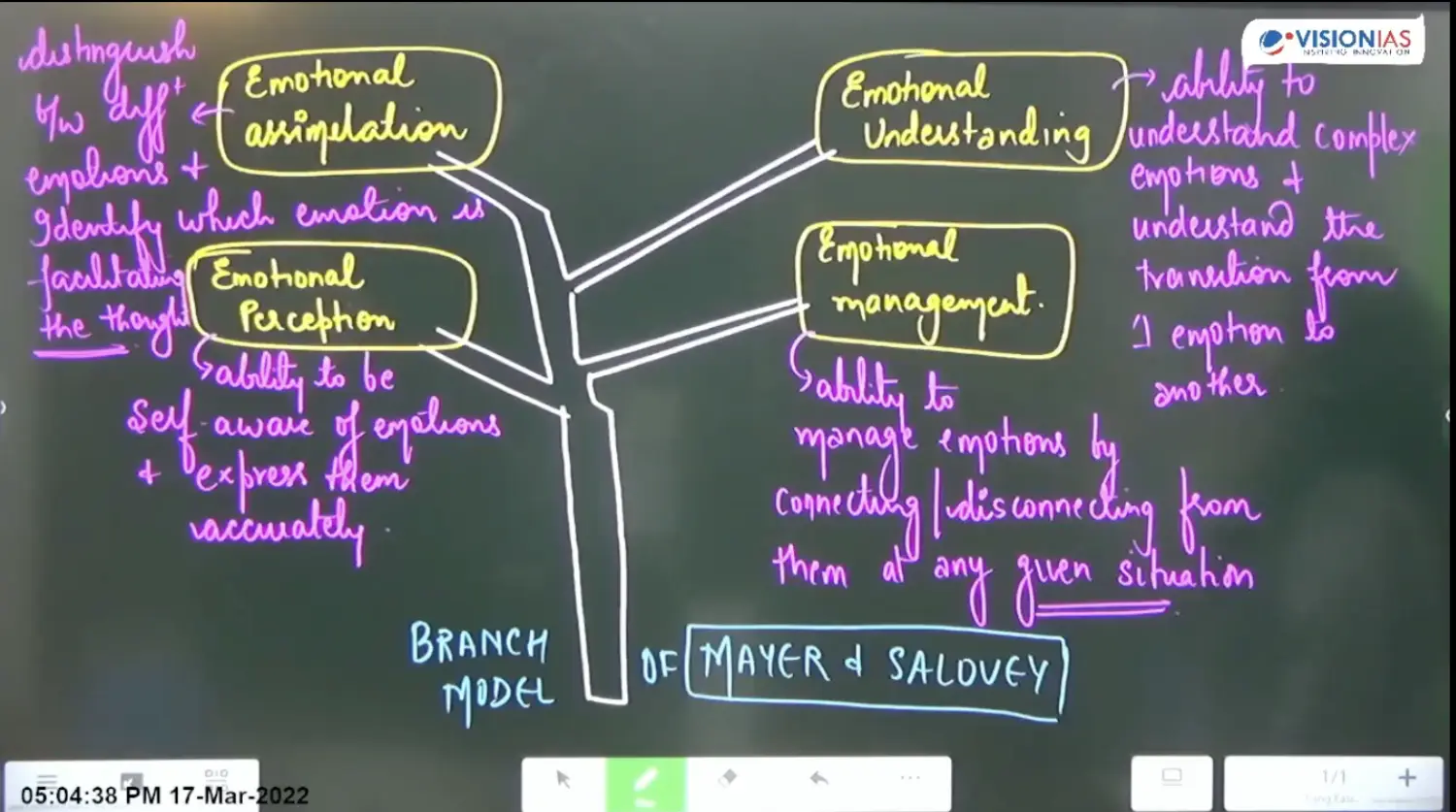
Emotional Perception
ability to be
self-aware of emotions and
express them accurately
Emotional Assimilation
distinguishing between different emotions and identifying which feeling facilitation the thought
Emotional Understanding
ability to understand complex emotions and understand the transition from one emotion to another
Emotional Management
ability to manage emotions with
by connecting or disconnecting
from them in any given situation
Daniel Goleman's Perspective
The 5 Building Blocks
| Variable | Definition | Features | | --- | --- | --- | | Self - Awareness | Ability to recognise and understand one's own emotions and drives of their effect on others | 1. Self-confidence 2. Realistic self-assessment 3. self-deprecating sense of humour - Khud ka mazak banana | | Self- Regulation | 1. Ability to control impulsive feelings and behaviours 2. Manage emotions 3. Propensity to hold judgment - Not being Judgemental 4. Thinking before acting | 1. Trustworthiness 2. Integrity 3. Open to change because they can regulate themselves | | Motivation | 1. Passion to work 2. Energetic and persistent in pursuing goals 3. Have never to die attitude | 1. Achievement-Driven 2. organisational commitment 3. Optimism 4. Likely to thrive under Adversity 5. Take Personal Responsibility for their failure | | Empathy | 1. Ability to understand the emotional profile of others 2. Skilled in treating people according to their emotional reactions | 1. Service Orientation 2. Cross-Cultural Sensitivity | | Social Skill | 1. Proficiency in managing relationships and building network Example 1**.** tactfulness 2. social memory 3. sense of humour 4. tolerance 5. patience 6. effective listening | 1. Inspirational leadership 2. Teamwork 3. Persuasiveness 4. Building Bonds | | | | |
The Image
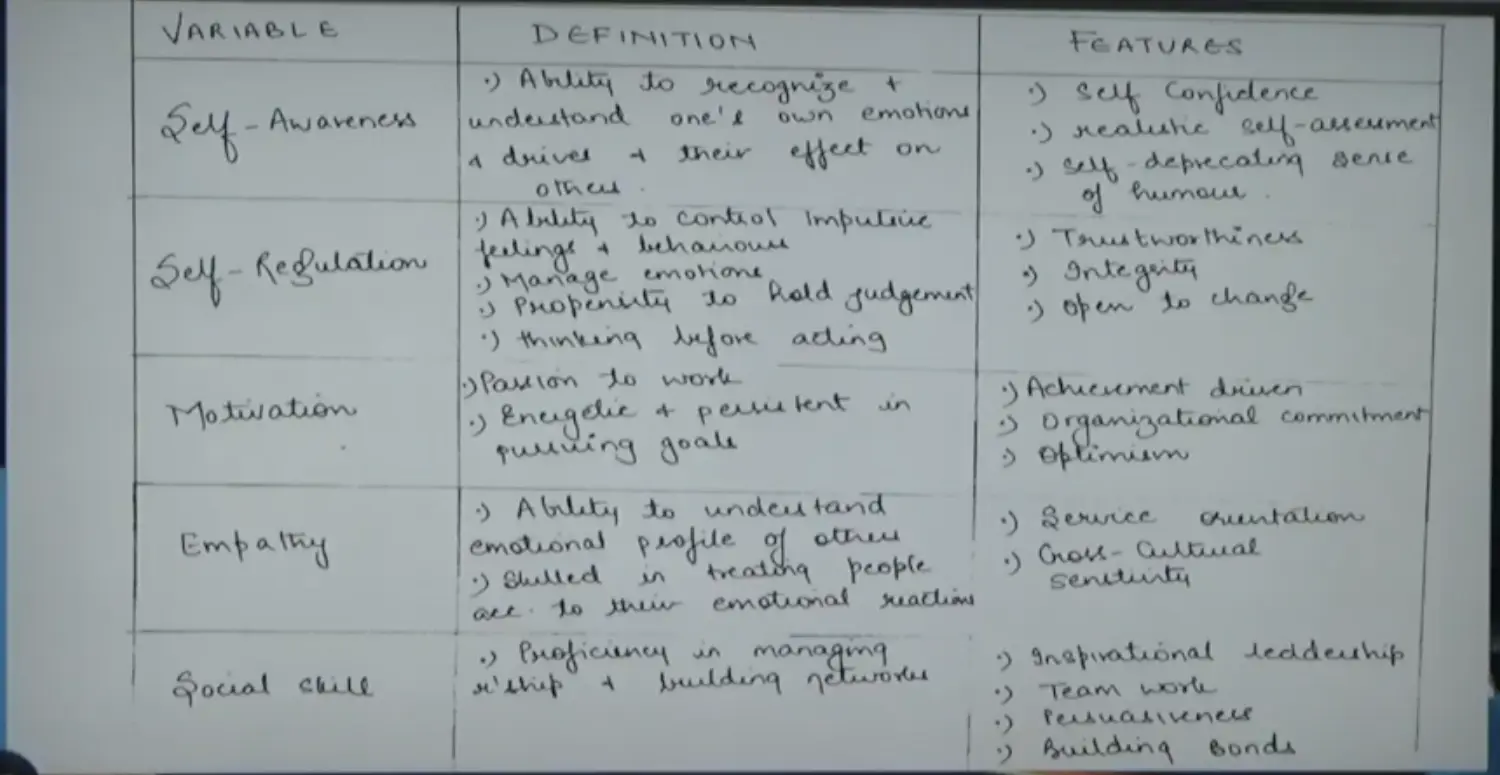
The 5 Components of Emotional Intelligence are :
- Self Awareness
Mind Map of Self Awareness
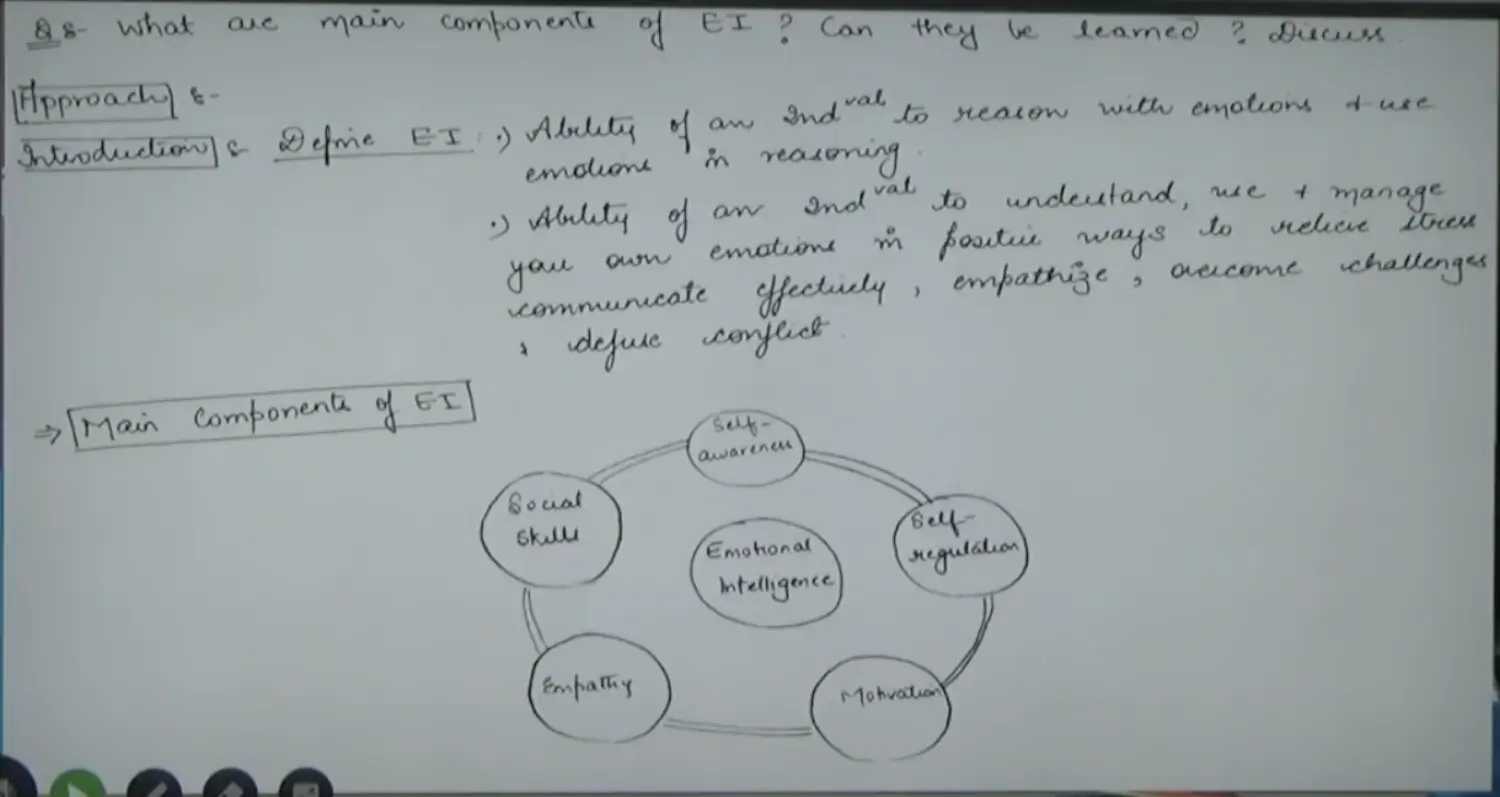
Introduction to Self Awareness
Aristotle says self-awareness is the beginning of all wisdom.
You should be aware of one's emotions
The core of High EI is self-awareness
That is the ability to accurately perceive and express
your emotions, strengths, weakness, and motivation
which will lead to realistic goal setting
Realistic goal setting leads to frequent goal achievement
Example of Self Awareness
- Long Day at Work
- Stuck in Traffic for 2 Hours
- In-Home, Frustration was getting reflected in your behaviour
- Hence you will make a deliberate effort to control and overpower
Benefits of Self-awareness
It helps in self-evaluation and accepting constructive feedback
Understanding one's motivation and values helps the person to enjoy what they do and
keeps them focused in case of a setback
Since they are aware of their limitation it refrains them from any unrealistic goal setting
It also helps them in dealing with external factors which cannot be controlled and behave appropriately in adverse situations
Ability to relate and empathise with those in a similar situation which creates a sensitivity in the individual towards any issue.
Example: 1
- Being stuck in traffic after a long day at work can make a person angry and agitated. This may negatively affect one's interaction at home
- However, if the person is self-aware then at least the person has the option to change the way he reacts.
Example: 2
- For instance, an administrator may not be aware of their motivation for delivering public services
- As a result, while serving the district he/she might indulge in corruption for personal gains which not only will tarnish their image but also impact the well-being of others.
- Motivation
- Self Regulation
- Empathy
- Social Skills
UPSC Question
Question
EI is an important parameter as one aspires to move up the ladder in a competitive environment. Discuss?
EI is an important parameter in the workplace, administration and governance
Role of EI in Administration & Governance
Summary
Max Weber and Fredrick Winslow Taylor
According to them, in an organisation in order to ensure efficiency one has to identify the best way of doing the task.
And a person can only be motivated through salary and a person is a mere cog in the wheel
According to Weber - emotions impact rational decision-making and hence argued for dehumanising decision-making
They had a very dehumanising approach
Elton Mayo
Father of Human Relation School of Thought
It is the
- Interpersonal Relationship of Organisation
- Work Culture
Goleman, Mayer, & Salovey
- It was further
- He emphasised the importance of EI in the Administration
Explanation
“All governance is people governance, all service is people service”
Relationships are the DNA of governance
if public administrators failed to develop trustworthy relationships with others there can be no governance
In the initial period thinkers like Max weber and Taylor emphasised impersonality and dehumanisation
With respect to the theory of bureaucracy, it has been assumed that effectiveness and efficiency would be harmed if human emotions influence rational actions
Similarly, wrt the Scientific Management Theory of Taylor, they were concerned with maximising output and efficiency. whereas workers’ emotional issues such as boredom and frustration were dismissed as negligible concerns.
They treated Man as just the Cog in the wheel
However, it was Elton Mayo, who for the first time recognised that the most significant factor affecting organisational productivity is the interpersonal relationships developed in the organisation
It is the attitude of the supervisor, colleagues, subordinate, norms and values of informal groups which influences efficiency.
Hence man is more than a Machine.
Mayo's work was followed by the research of Goleman, Mayer, & Salovey
Their efforts resulted in the development of an understanding that governance encompasses
- a set of relationships between the government and citizens
- developing trusting relationships calls for the display of social and interpersonal skills
Therefore the concept of EI has become very valid
In fact, administrative success and failure are not based on technical proficiency alone. It depends more on HOW effectively can the public functionary displays their EI skills to manage interaction with people around them
Instances of EI being helpful in Administration
- Emotionally Intelligent have risk-taking ability
- Emotionally Intelligent can challenge the status quo and bring about changes
- Emotionally Intelligent can maintain work life balance
- Emotionally Intelligent Rational Pragmatic Distance
- Emotionally Intelligent can walk the talk and act as a Role Model
- Emotionally Intelligent can influence others to act
- Emotionally Intelligent can insure an amicable work environment
- Emotionally Intelligent Prioritise the Work
- Emotionally Intelligent will be able to Multi-Task
- Emotionally Intelligent reduces social conflict
- Emotionally Intelligent will ensure an amicable work environment
- Emotionally Intelligent people ensure Constructive Resolution of Conflict
- Emotionally Intelligent have Self Regulations which prevent the urge of indulging in corruption. Hence ensures integrity and honesty
- Emotionally Intelligent people can bridge the gap of democracy and ensure inclusive administration
- Emotionally Intelligent can induce and implement collaborative approach
UPSC Question
Question: Explaining the concept of EI highlight its role in the administration.
Example Ghatpatila District DM
Ghatpatila District → DM divided boys & girls in time
Boys - Subhash Chandra Bose Team
Girls - Rani Laxmi Bai Team
Ring Whistle when someone openly defecated
Adults felt humiliated
Later that district became ODF District
Example Alex Paul Memon IAS
Bultoo Experiment → Bluetooth Kar Rahe Hain
To convey and generate awareness in their own language
Example Pankaj Jain IAS
Sent his child to Anganwadi himself
Example of Ghanti Bajao Campaign in UP
to prevent domestic violence
Example of DM Gopalganj
Eating Mid Day meal with Lower Caste Students
Can EI be Learned?
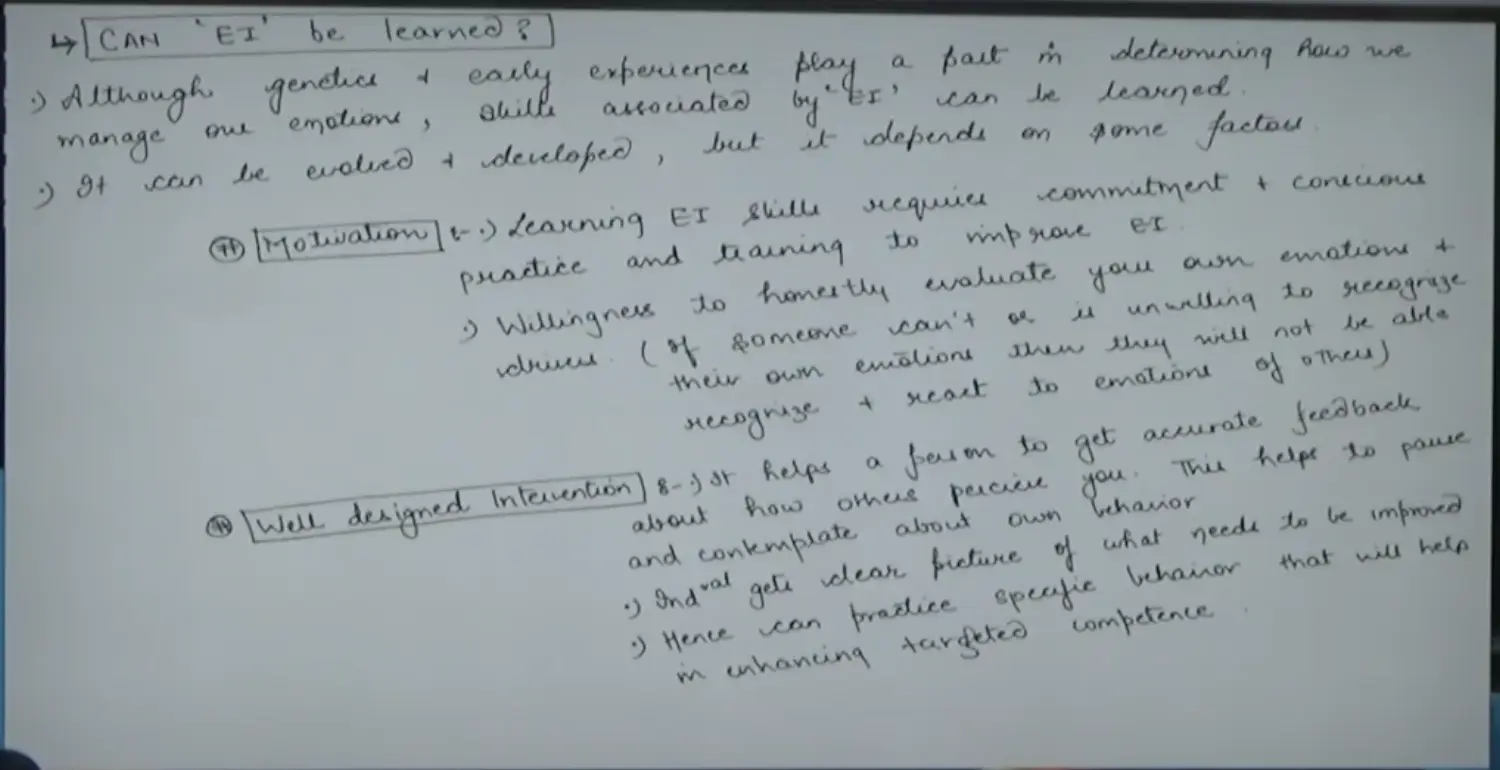
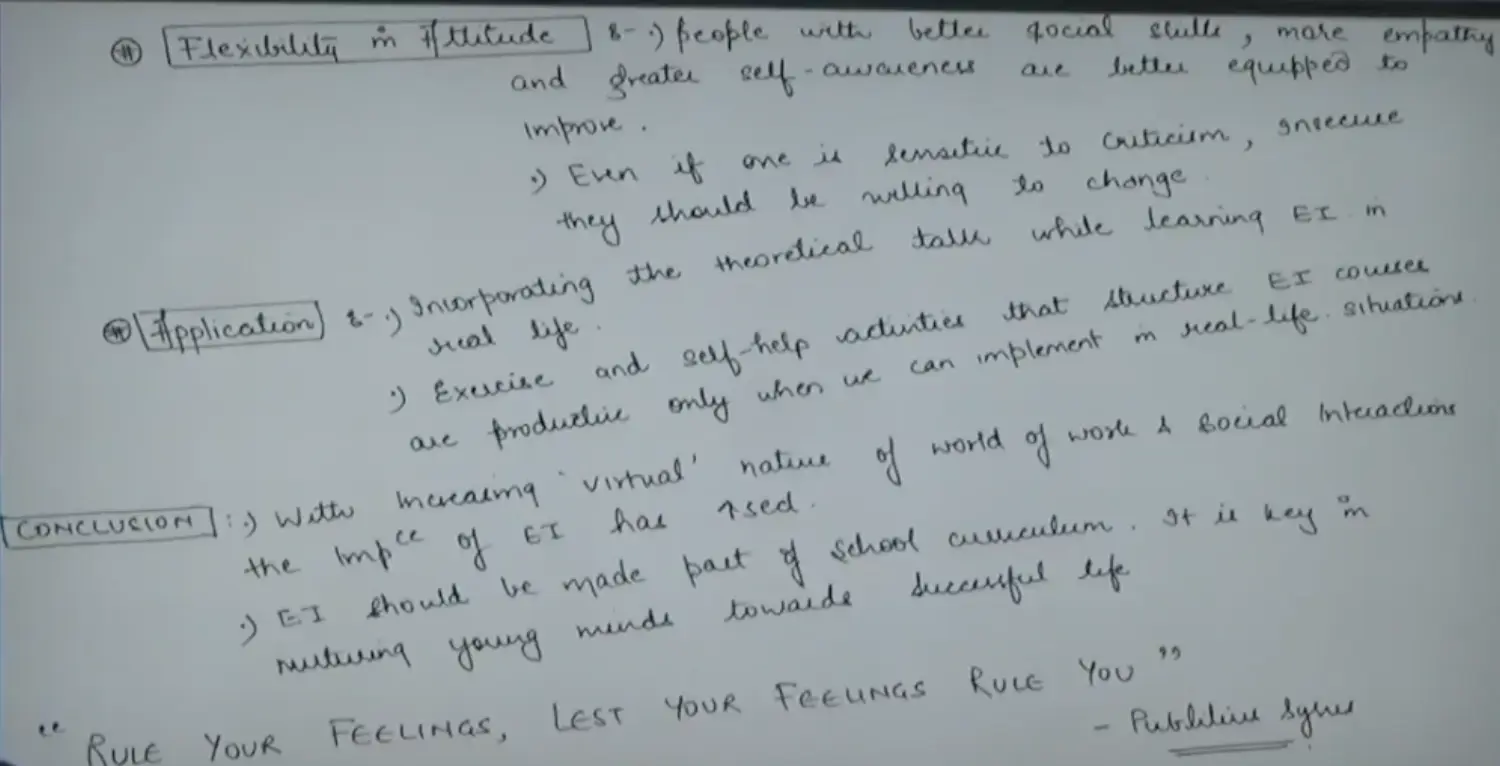
- Although genetics and daily experiences play a part in determining how we manage our emotions, skills associated with EI can be learned.
- It can be evolved, developed but it depends on a few factors -eg Motivation, Well designed intervention, Flexibility in attitude, Application etc
- EI should be made part of the school curriculum. It is key in nurturing young minds
🔥 "Rule your feelings, Lest your feelings Rule you " Publilius SyrusUPSC Question on Application of EI
The COVID-19 pandemic has brought with it an environment of fear. In this light discuss the significance of EI in dealing with the situation. [10 Marks]
EI in the Indian Context
Mind Map
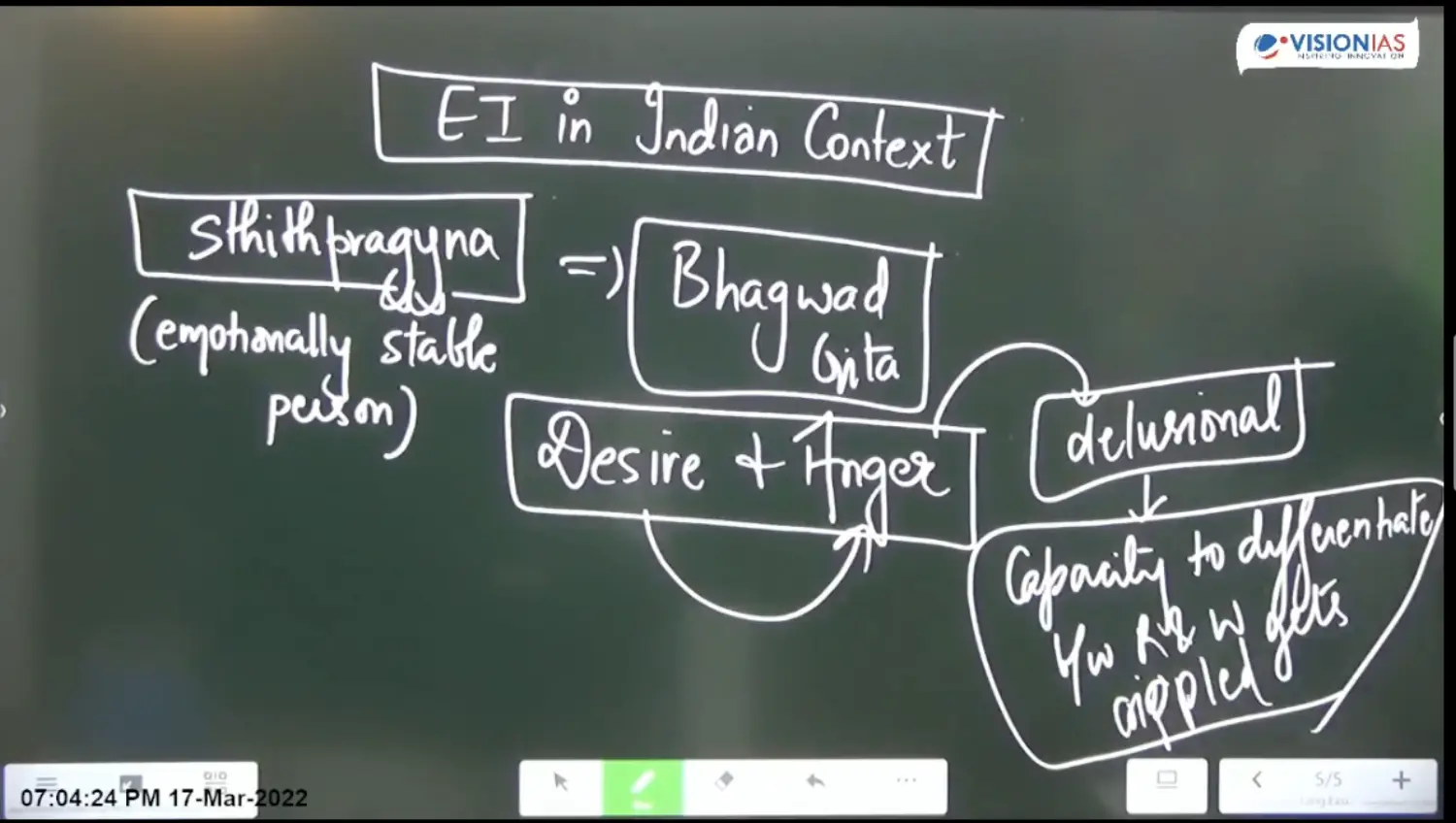
The Concept
The concept of Sthithpragyna mentioned under Bhagwat Geeta also defines what qualities are in an emotionally stable person.
According to Lord Krishna one who remained unperturbed in the face of calamity takes goods or evil with equanimity, he is neither too happy when something good happens nor very affected when things go against him.
However, this doesn't mean he lacks sensitivity
In fact, it depicts his ability to keep his emotions in check and the skill of withdrawing his feelings away from the object of pleasure or pain.
Lord Krishna also showed the path to achieve emotional ability i.e the path of Nishkam Karma
- EI is mentioned in Bhagwat Geeta under the concept of Sthithapragyna (Emotionally Stable Person) defines what qualities are needed in a person
- Lord Krishna mentions that desire and anger are the cause of all emotional problems
- Anger causes delusion and it harms our ability to differentiate between right and wrong
Example
Ravana’s desire overpowered his wisdom and knowledge
Example
Rashmi Rathi
Jab Naash Manushy Pe Chata Hai, toh Pehle Vivek Mar Jaata Hai
Example
Vinashkale Vipreet Buddhi
UPSC Question
Question: In the case of a “Crisis of conscience”, Does EI help to overcome the same without compromising the ethical or moral stand that you are likely to follow? Critically Evaluate
Answer:
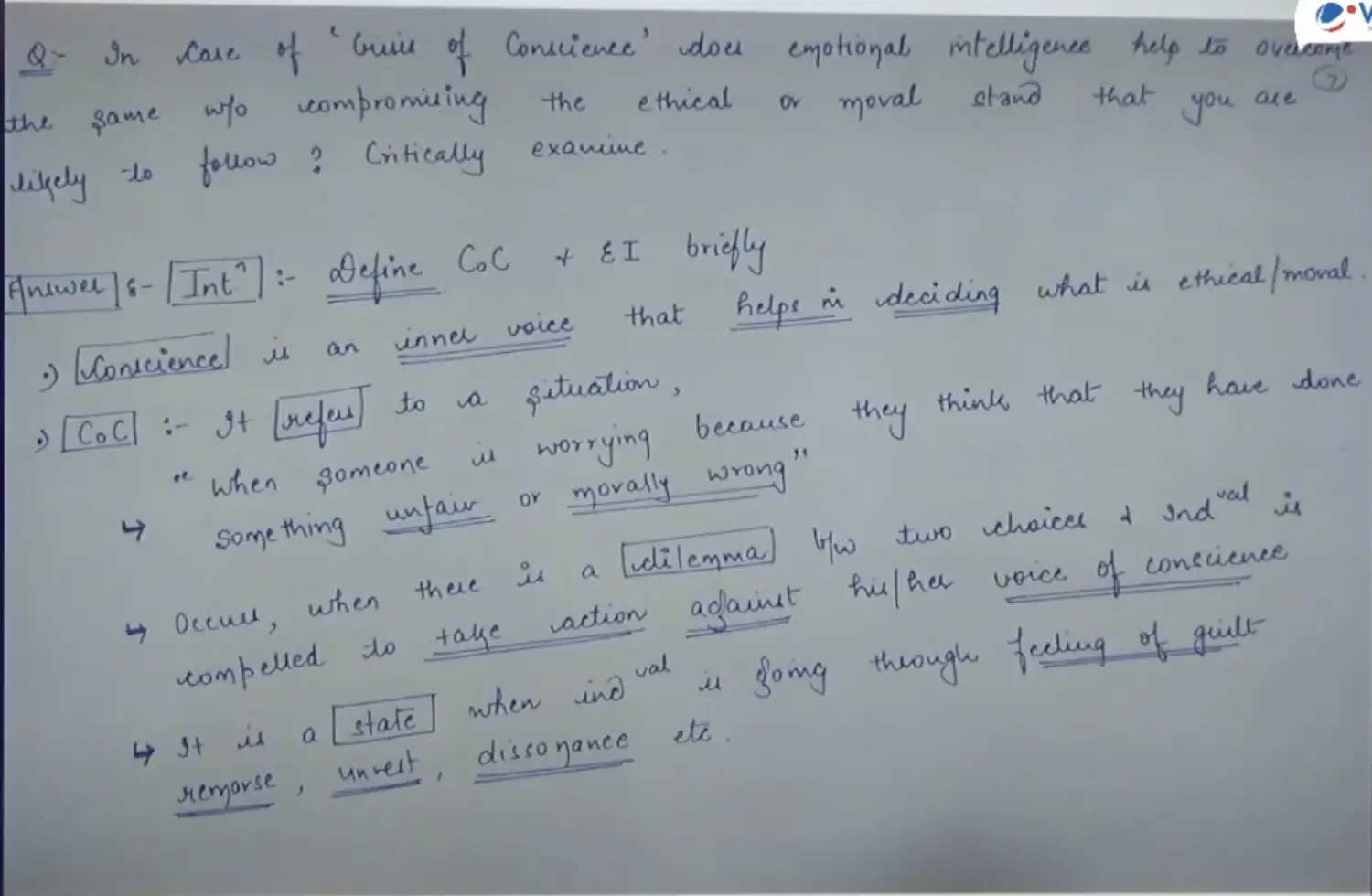
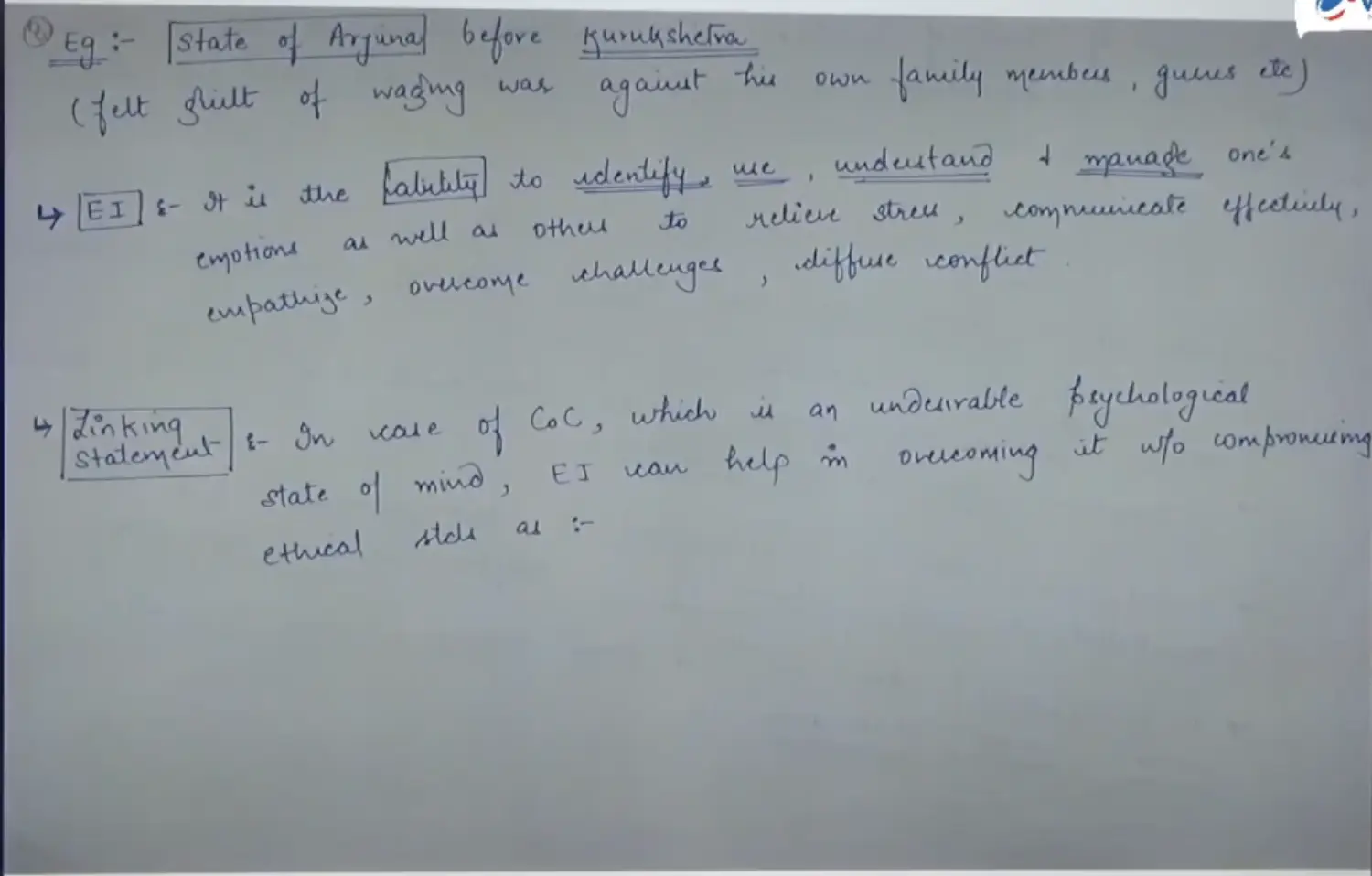
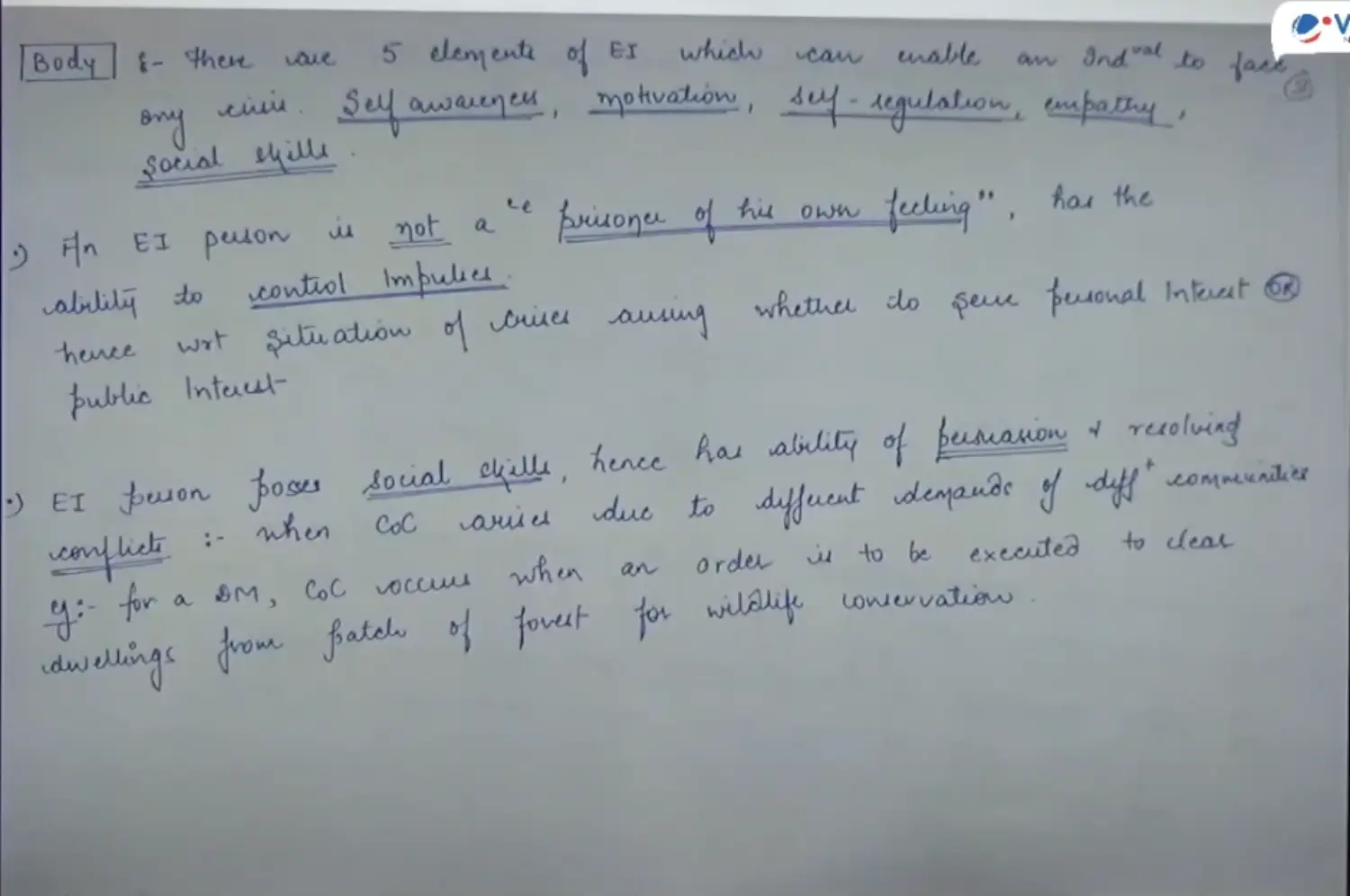
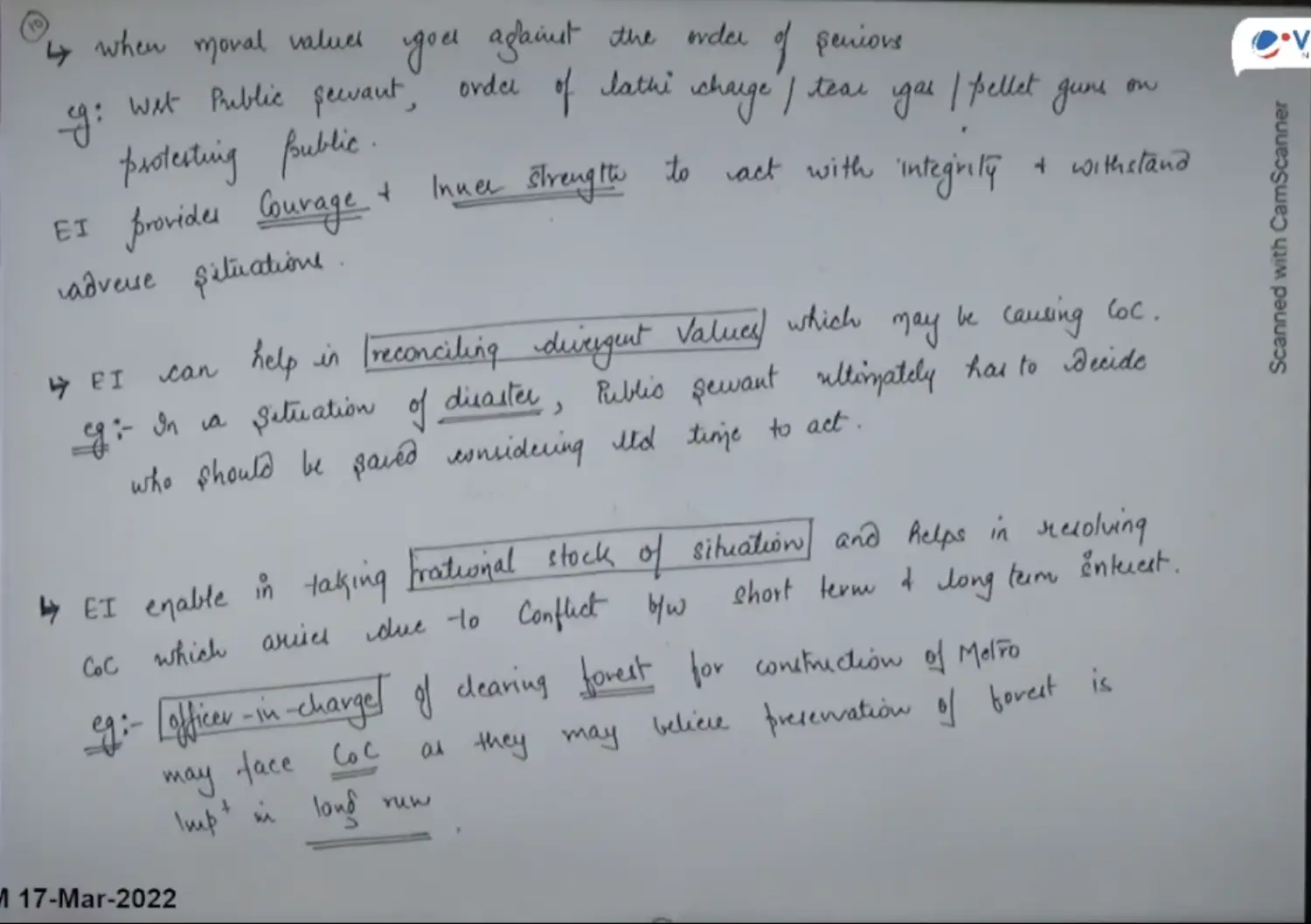
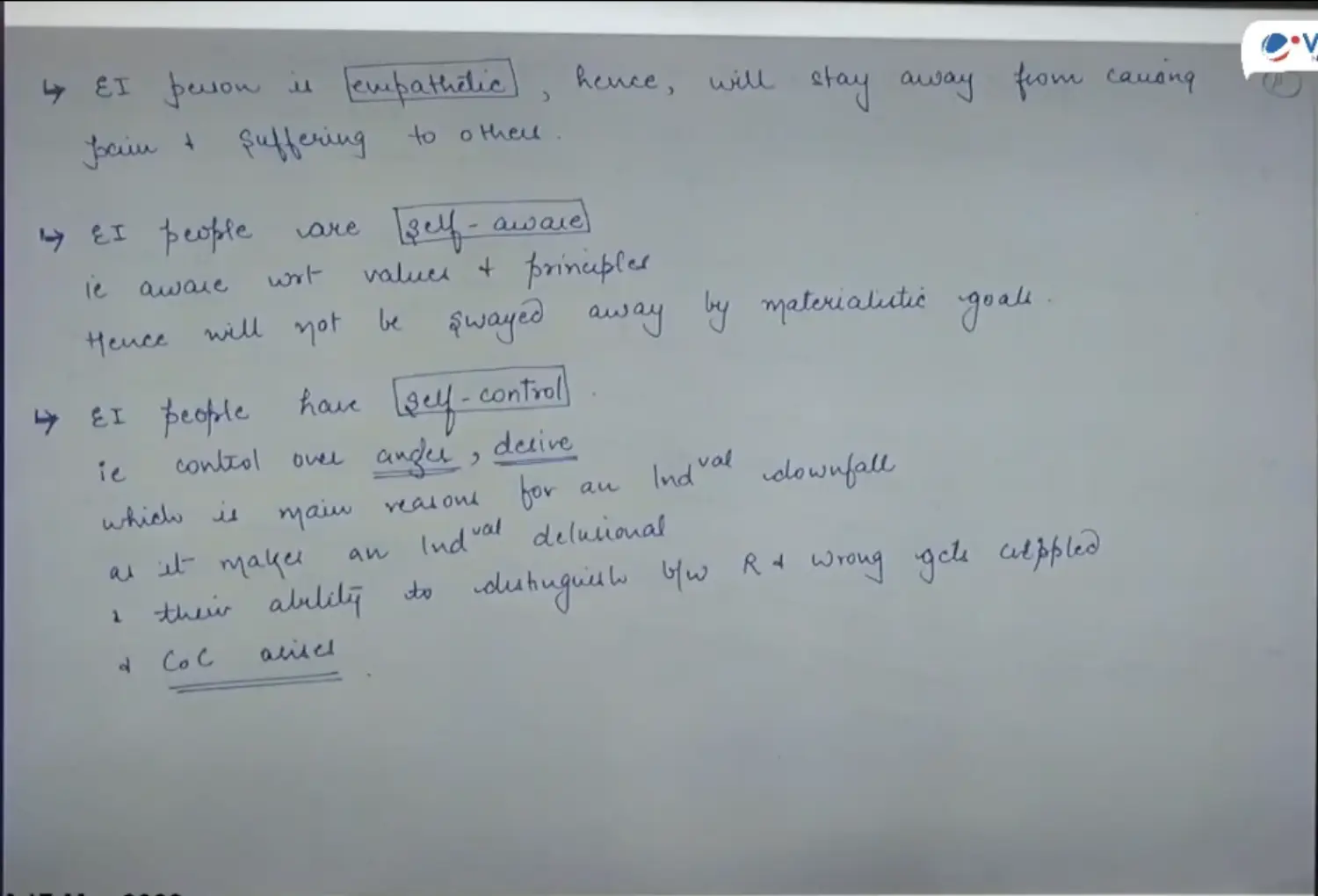
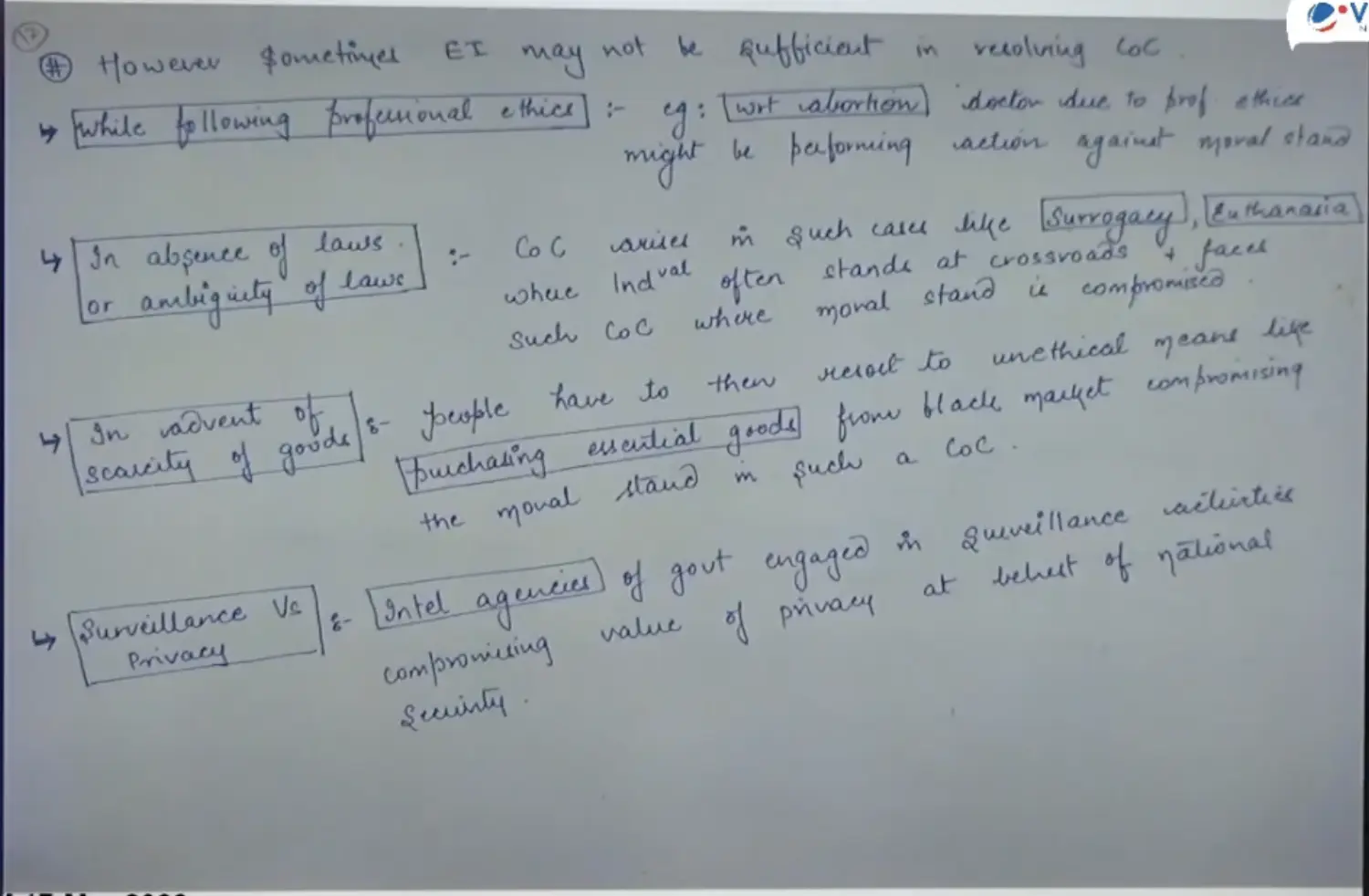
Ethics and Human Interface
The Essence of Ethics
- Every human being is capable of making informed and intelligent decisions
- These Decisions have implications for both the individual as well as collective
- Hence, Individual should take moral responsibility for their action
- Thus, Ethics helps us in making better decisions and informed choices
- It helps in establishing virtuous societies
- Indispensable quality of Essence of Ethics is that it is the Most Important Quality which Determines its Characters
Determinants of Ethics
- Introduction
- There is no objective way of determining what is right or wrong for all time to come
- It is neither absolute nor universal and is specific to the context ie ethics is contextual
- It operates at different levels - individual, organisational, socio-cultural, political, etc
- Ethics are maintained and sustained by a sense of responsibility rather than mere accountability to the external agency
- Ethics can transcend the narrow stipulations of laws, it has to be more of a internalised process by a feeling of responsibility
- There is no one determinant of ethics, there are multiple determinants
- Determinants
God and Religion
It advocates universal and ideal ethical standards.
Religious scriptures deal with the questions of how an individual should behave and how society should be
Religion-based ethics trace the source to God,
which says something is good because God says so
However, religion is not the only source of ethics, otherwise, it would not be applicable wrt atheist
- Human Conscience & Intuition
For Some Things, there is no Source Needed, It has to be done because it is the Right thing to do.
A - We should not harm animals for fun
B - Why?
A - Because it causes them pain and we should not cause pain to others
B - Why
A- We should treat others as we want them to be treated
B - Why
A - Because it is the right thing to do → This is Conscience
- Culture
- The ethical principles of individuals are also influenced by the culture which they belong
- For Example : in the context of west - consumerism, individualism
- For Example : in the context of India - collectivism, familial obedience, cooperation, strong religious orientation, delayed gratification
- Society
- Although society is an important source of ethics, one should not equate ethics to whatever society accepts. as a society can deviate from what is ethical
- For Example : patriarchy, the practice of dowry, caste-based discrimination, child marriage, etc
- Family/Teachers
They shape the value system of an individual. However, one can break away from these existing norms due to their own life experiences
- Law
- It incorporates ethical standards to which most citizens subscribe
- In long run, it helps in reframing, moulding or reshaping the ethics of society
- Sometimes, Laws might unethical too. This is an exception
- For Example : Slavery Laws in the US
- Philosophies
The ethical values of individuals also depend on the philosophy to which he/she was closer
- Leadership
- It also helps in determining the conduct of their followers
- For Example : tolerance, non-violence, liberty, equality, brotherhood
- However, sometimes the leaders are also prone to unethical practices and hence it depends upon the virtues of the leaders
- Constitution
- It is a way to establish the moral disposition of the society
- Primacy of Constitutional Morality Helps to being people of diverse background to a common platform
- Introduction
Dimensions of Ethics
Mind Map
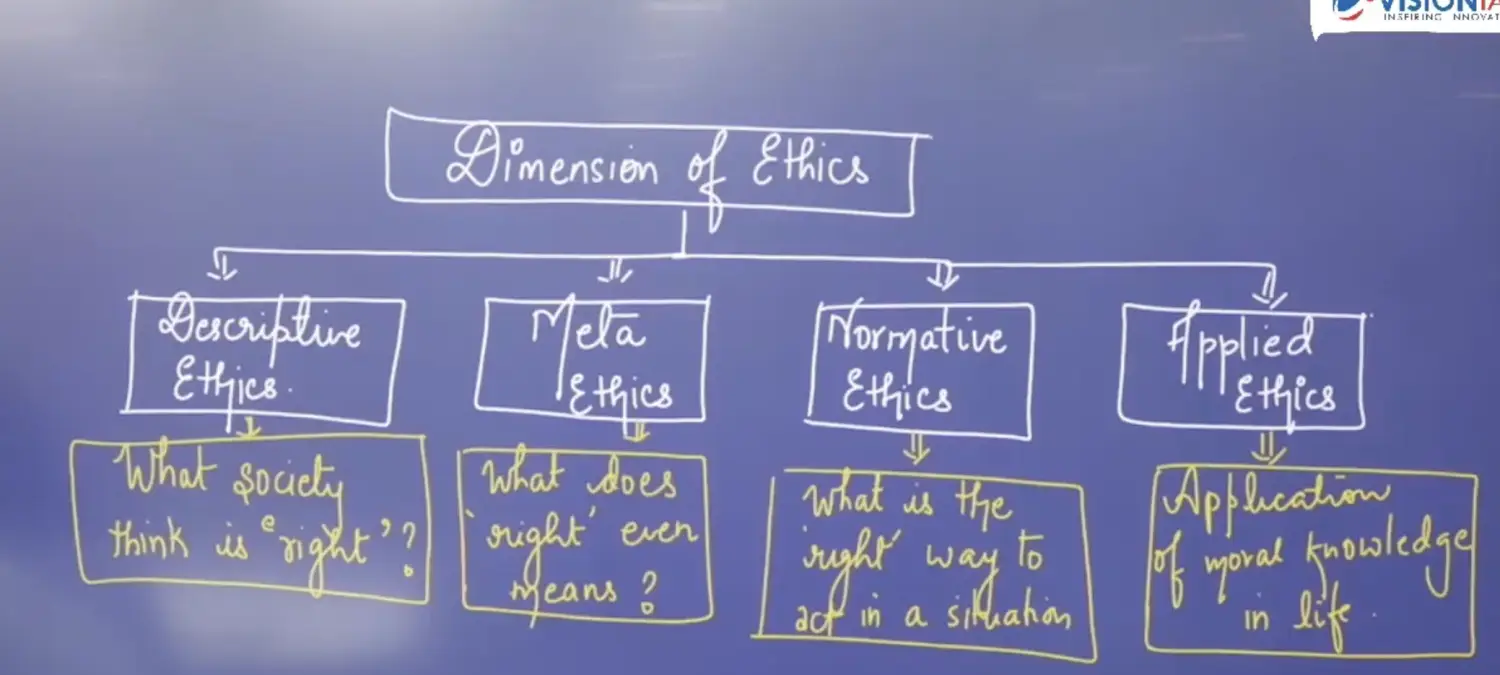
Summary
- Descriptive Ethics - what society thinks is right
- Meta-Ethics - what does right even mean
- Normative Ethics - what is the right way to act in a situation
- Applied Ethics - Application of moral knowledge in life
Definition of Ethic
Ethics is a systematic study of human action from the point of view of rightfulness and wrongfulness
It refers to the use of conduct that society places on itself to guide behaviour, choices and action
In Order of Writing, the Dimensions of Ethics are :
Descriptive Ethics
Lawrence Kohlberg’s Stages of Moral Development is an Example of Descriptive Ethics
- Heinz Dilemma and Lawrence Kohlberg’s Stages of Moral Development
- It is the study of people's beliefs about morality
- It aims to uncover their belief with respect to right or wrong
- It involves empirical/scientific investigation and hence it is value free
- It investigates people's ethical ideals or what actions societies reward or punish
- You don’t Prescribe, You ask people and Describe what people think
- Lawrence Kohlberg's Stages of Moral Development
Mind Map
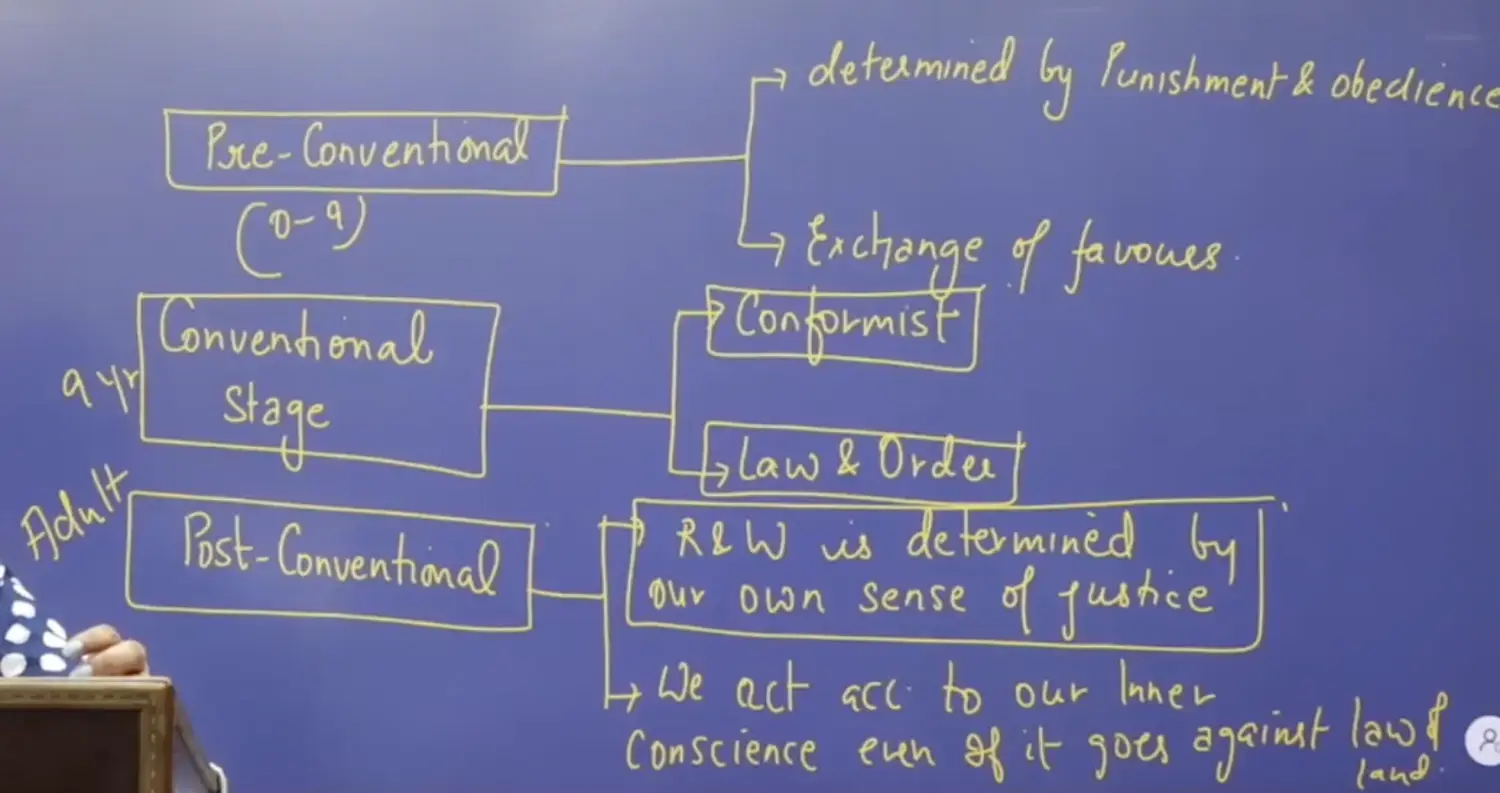
Background
This is an Example of Descriptive Ethics
Based on Heinz's dilemma (to save his wife, he stole medicine), Kohlberg asked a Few Questions
- Should have Stolen the Drug ?
- What if he did not love his wife, would he have stolen ?
- Would have police arrest the chemist if the woman died ?
- If Heinz wouldn’t have stolen the drug, was Heinz really ?
Note
The Biological Age and Age of Moral Development can vary accordingly
Pre-Conventional Stage → 0 to 9 Years of Age
- Ex : When we are Children 0 to 9 Years
- At this Stage, We do not have our own standard of morality
- Children want to minimise punishment & maximise rewards
- It is Determined by
Punishment Obedience
make moral decisions strictly on the basis of self-interest
Exchange of Favours
recognise that others have needs but the satisfaction of own needs have a higher priority
Conventional Stage → > 9 Years of Age
Based on Conformist Attitude
In order to maintain, a good image or interpersonal relations, our decisions are based on what pleases others
Based on Law and Order
We obey laws without questioning and show respect for authority
Post Conventional Stage → Adult
- Right and wrong is determined by our own sense of justice
- We act according to our inner conscience even if goes against law of the land
- Heinz Dilemma and Lawrence Kohlberg’s Stages of Moral Development
Meta-Ethics
- The nature and meaning of ethical concepts is referred to as meta-ethics
- It looks at the origin and meaning of ethical principles
Normative Ethics
Mind Map
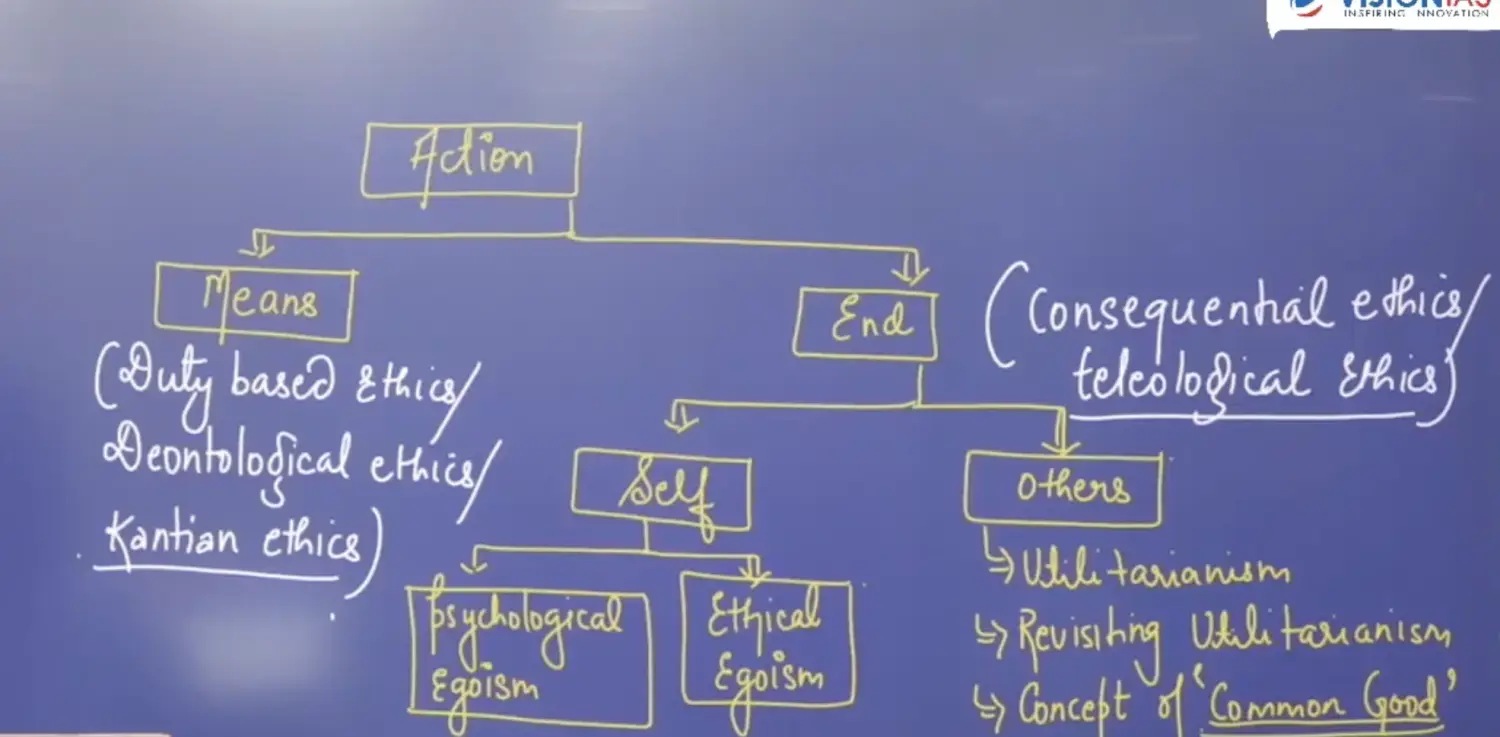
Means
Situation
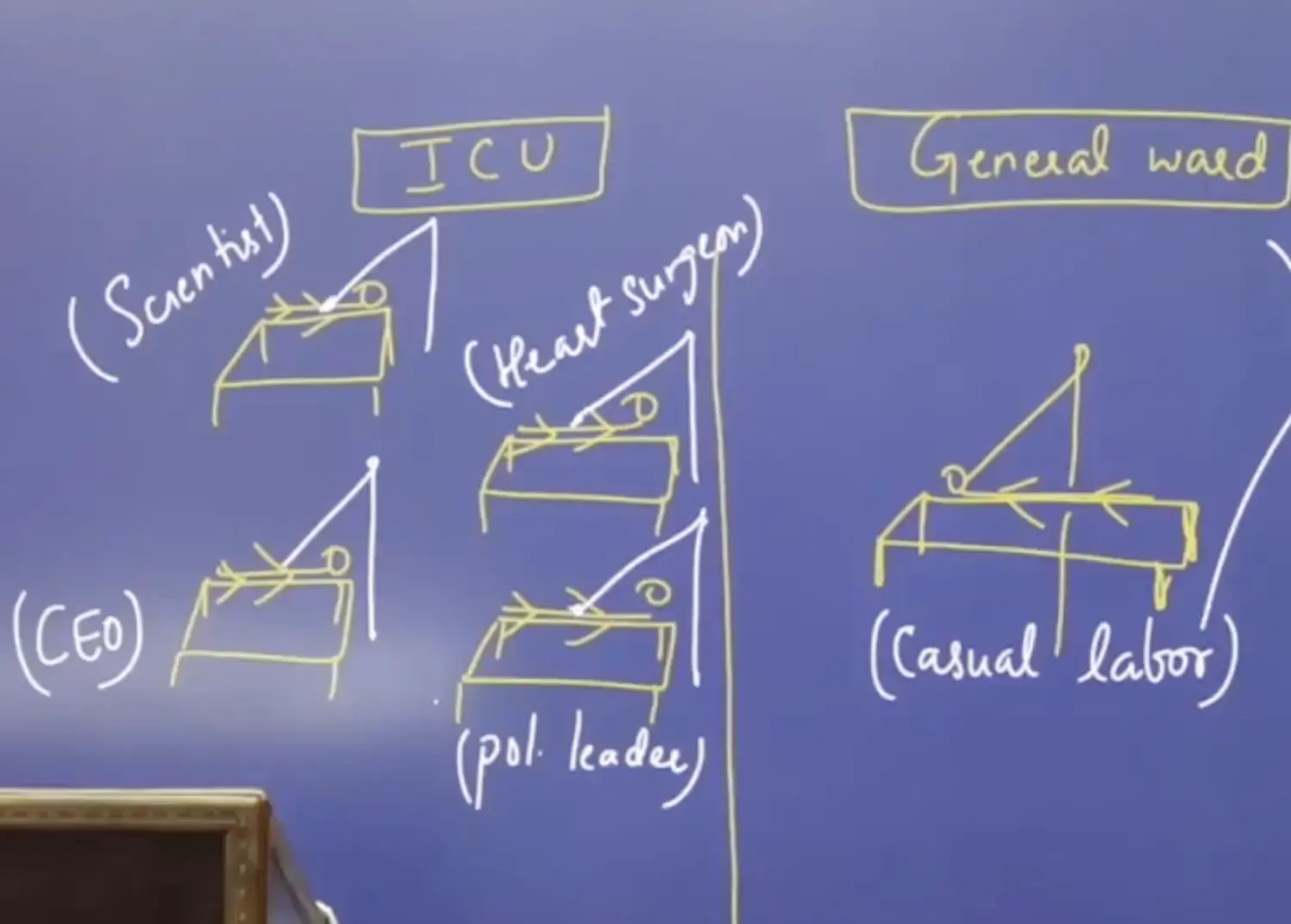
Deontological Ethics
- Also called
- Duty Based Ethics
- Kantian Ethics
- Means based ethics - Here the right path is important and not the result
- Immanuel Kant says one should not compromise on moral principles even if it does not lead to success
- The moral worth of Human action is judged on the basis of the means
- According to Immanuel Kant, the dignity of an individual is a categorical (absolute/non-negotiable) and imperative (need of the hour)
- Quote : Human beings end in themselves and no individual should be treated as means to end
- Ex : Bonded Labour, Surrogacy, Prostitution is wrong, Clinical Trials on Individual
- A similar value system is held by Mahatma Gandhi
- Also called
Virtue Based Ethics
- Here who is performing the action is important rather than what action is performed
- It focuses on building the moral character of the individual
- The character is built to inculcate desirable values and eliminating the vices
- One can link it with the process of socialisation
- According to Socrates Knowledge is the Virtue
- According to Plato, there are 4 cardinal Virtues
- courage
- wisdom
- temperance
- Justice
End
Consequential Ethics / Teleological Ethics
Introduction of Consequential or Teleological Ethics
When the Moral Worth of the action is determined by the consequences, it is referred as teleological ethics
Situation
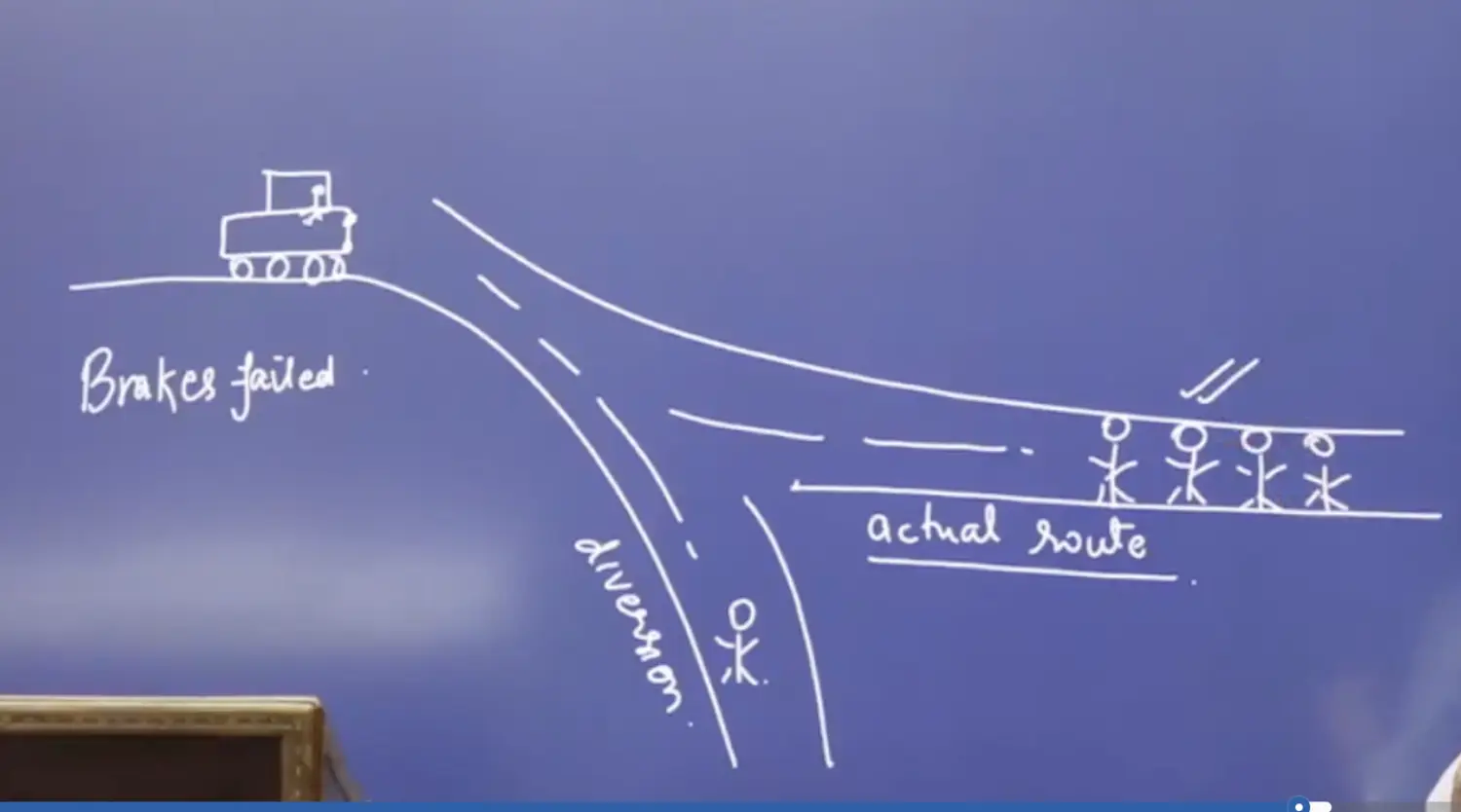
- Acc to Utilitarianism - One Should be Killed to save 4
- Acc to Kantian Ethics - 4 Should be Killed because thats killing by accident and but killing 1 is a murder by choice
Situation
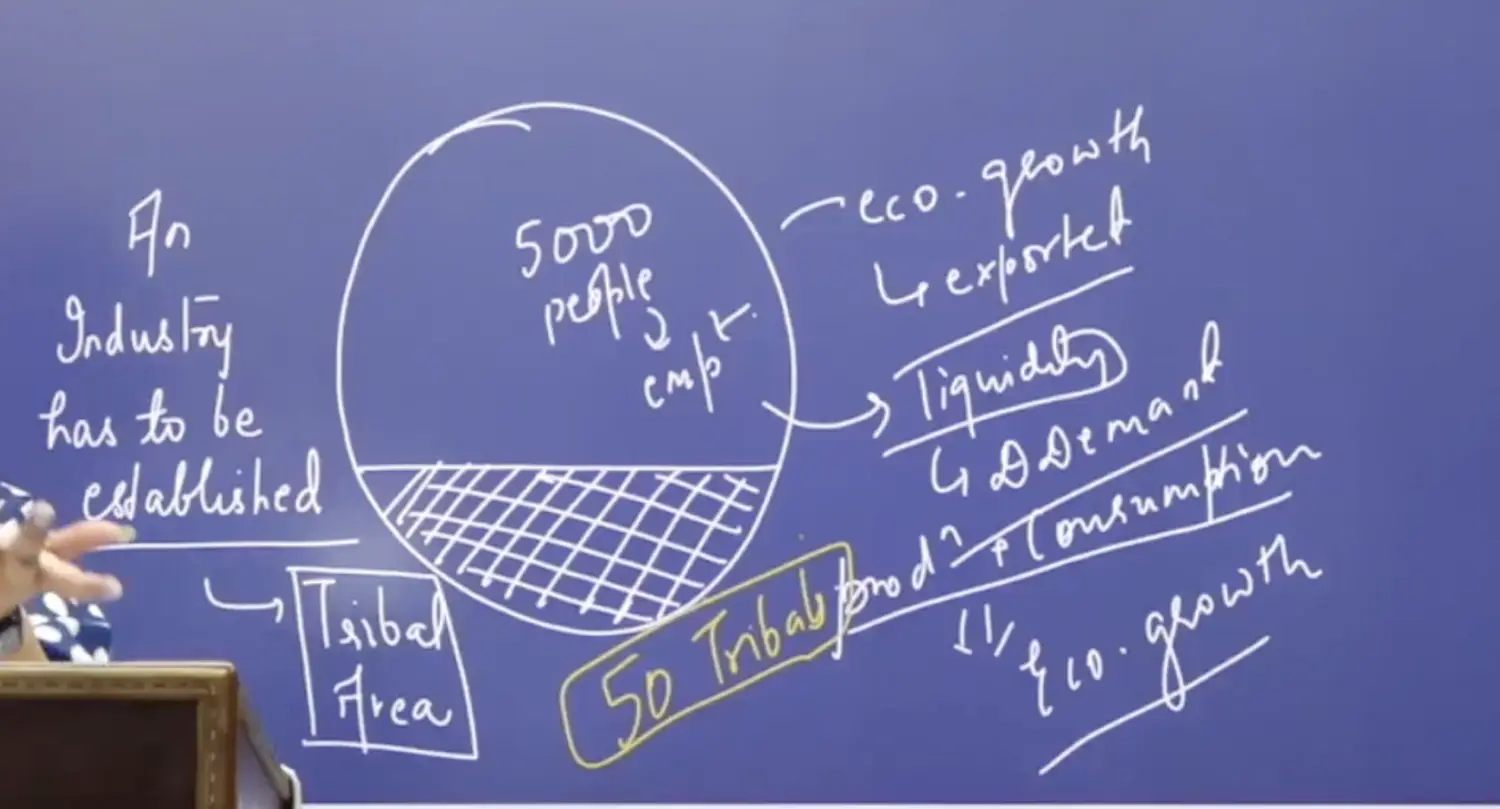
- Acc to Jeremy Bentham - Industry Should be Made
Self Interest
Psychological Egoism - by Hobbes - Descriptive Perspective
It is a descriptive perspective given by Thomas Hobbes who believes
- Self-interest motivates all human actions
- Individuals are incapable of thinking about others
Ethical Egoism - Ayn Rand - Prescriptive Perspective
Ethical Egoism is a prescriptive theory. Ayn Rand is the pioneering personality where all people should be motivated by their self-interest as the pursuit of our own interest produces the best overall result for everyone
It is only ethical egoism that recognises the value of an individual life
Others Interest
- Utilitarianism
- by Jeremy Bentham
- It focuses on the end and within that the benefit of the majority. It focuses on quantity rather than quality
- The moral worth of an action is governed by the dictum "greater happiness for a greater number"
- According to Bentham, anything that reduces pain and increases pleasure has a utility
- Therefore only such things need to be promoted
- According to Bentham, pleasure depends only on the quantity and not on quality
- He defined happiness only from materialistic approach
- Value-based happiness does not appear in his scheme
- Revisiting Utilitarianism
- JS Mill was the defender of utilitarianism. However, he revisited it
- For him, the liberty of individuals is priceless and it cannot be compromised for the promotion of "Greater happiness for a greater number"
- According to him, value-based happiness is equally important as that of the quantity of happiness
- in Tribal and Industry Settlement - Take Consent of Tribals At least
- Famous Saying on JS Mill : He was Peter who denied his master
- He said : It is better to be a Socrates dis-satisfied rather than a fool satisfied
- Utilitarianism and Common Good
Mind Map
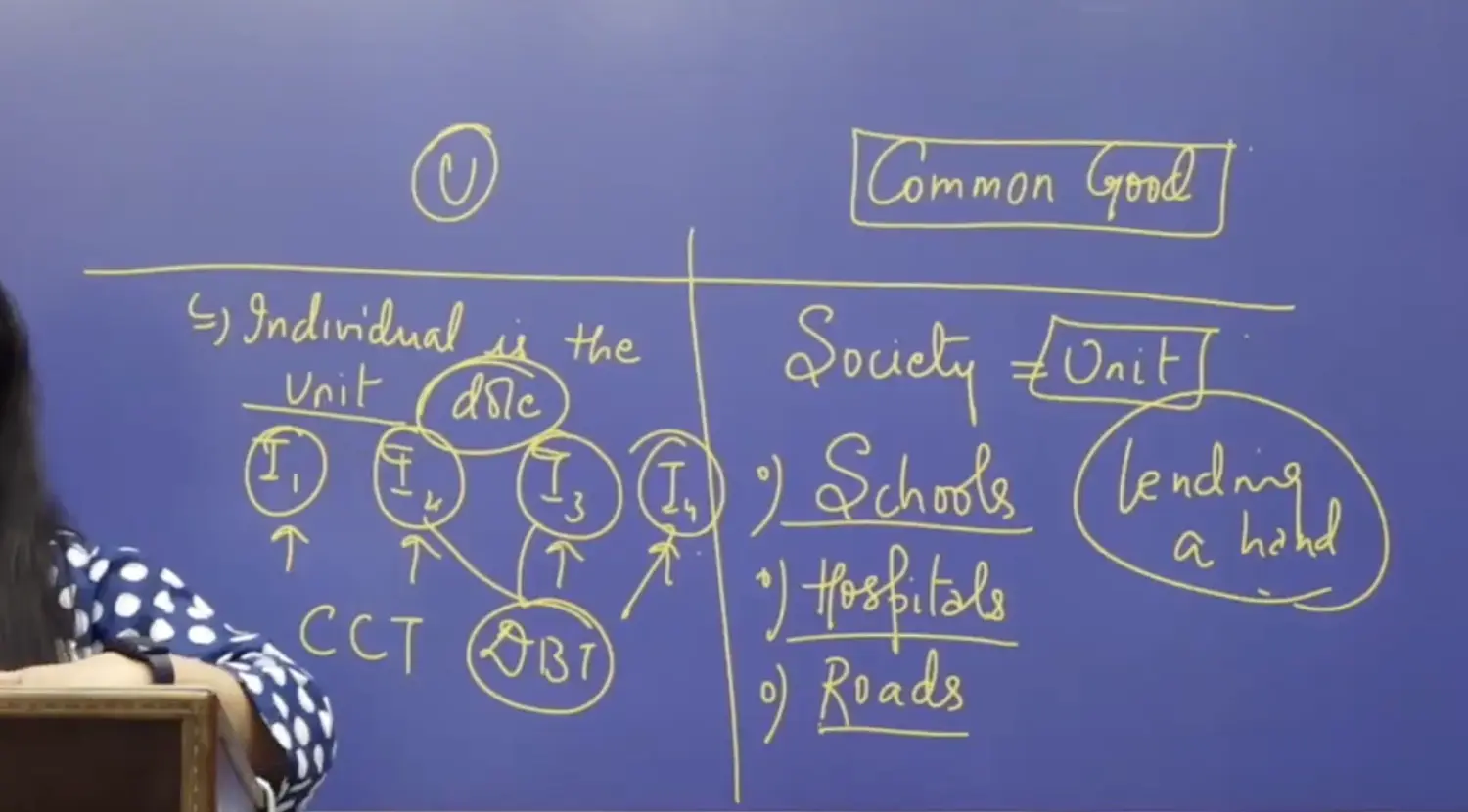
Utilitarianism
- The individual is the unit
- Example :
- conditional cash transfer and DB
- It is like giving a dole
- Here you give them the fish
Common Good
- Here, the entire society is considered to be a unit and focus on holistic happiness ie
- Example :
- creation and establishment of schools, hospitals, roads, etc
- It is like lending the hand
- Here you teach them how to fish
- Utilitarianism
Applied Ethics
- From the Handout of Applied Ethics
- For Each Concept → Study the Rights and Wrongs