Part 1 - Introduction + Methodology + Thinker
Proper Classification in First Month of Class
Introduction to Anthropology
- Unit 1.1 : Introducing Anthropology
Introduction
It is a discipline with infinite curiosity about human beings
A discipline that studies humans in all the possible aspects like typical biological aspect cultural characteristics of various human population in all period of time and all the parts of the world
Anthropologist are not only interested about a particular society or cultural population but are also interested in comparative aspects with other population comparison in terms of both similarities and differences
Definition of Anthropology by Various Personalities
Father of Discipline - Aristotle
It is generally considered that Aristotle come in the term Anthropology and is called the father of discipline
Aristotle define Anthropology as the gossip that revolves around man an anthropologist is the gossip are talking about himself
Kroeber - Mix of Science and Humanity
Emmanuel Kant - Animal Ori+SCA Dev of Man
Immanuel Kant the German philosopher said study which describes and explains the animal Origins social as well as cultural development and progress of man
E B Tylor - Study of Old Remains
Edward Burnett Tyler and English and college asset study of old remains of people and physical features races languages customs and practices of primitive people
Is also accorded to be the founder of cultural anthropology
Restricted Anthropology to historical perspective
He was criticized by Paul broker a French anatomist an anthropologist emphasizing that scope of anthropology extends even to the modern culture also
Paul Broca
Paul broker said that college is not only about payment of society and people but extends to modern societies and cultures as well
The Tripartite - Malinowski, Brown, Boas
Scholars like (Bronislaw Malinowski) (a polish but worked as an anthropologist in England) Radcliffe Brown an English Anthropologist
France Bass (German Austrian Born American Anthropologist) Define Anthropology during beginning of twentieth century as Study of Men At All levels of DevelopmentKluckhohn - Nearest Study of Man
Ruth Benedict - Safer for Differences
Scope of Anthropology
- Details of Other Disciplines
- Economics - Economics System
- Political Science - Political Organisation and System found in Different Parts of the World
- Sociology - Social Relations
- Human Physiology or Anatomy - Deals with Various Body Mechanism & Abnormalities
- Approaches of Anthropology
- Broader in Scope - All aspects such as Social, Political, Economic, Biological, Religious etc
- Historical and Comparative Approach
- Historical
- All Evolution - Biological and Cultural
- Studying Each way of life in Historical Perspective
- Comparative
- To Depict Similarities and Difference amongst people considering them as unique
- Comparitivity free form Ethnocentric Bias
- Historical
- Applied & Action Anthropology Approach
- Holistic and Universalistic Approach
- Studying things in all times in all parts of the world
- Approaches or Methods used in Anthropology
- Holistic
- Historical
- Comparative
- Empirical/Empiricist
- Rational/Rationalist
- Adaptable
- Details of Other Disciplines
Four Founding Fathers of Anthropology
- Names
- Bronisław Malinowski
- Radcliffe Brown
- Franz Boas
- Marcel Mause
- Common Takeaways from Founding Fathers
- Holistic Discipline
- Resisted Ethnocentrism
- Anthro must become a True Science
- Fieldwork Should be done, Interviewing & Documentation must be critically reviews and Systematically applied
- Names
T K Penimans 100 Years of Anthropology (4 Phases )
- Formative Phase ( <1835)
- Herodotus
- Socrates
- Plato
- Aristotle
- Marco Polo, Ibn Khaldun, Vasco Da Gama, Columbus
- Convergent Phase (1835-1859)
- Karl Marx
- Prichard
- Darwin
- Smith
- Constructive Phase (1859-1900)
- E B Tylor
- J Frazer
- Henry Maine
- L H Morgan
- Critical Phase (> 1900)
- Malinowski
- Brown
- Kroeber
- Ruth Benedict
- Formative Phase ( <1835)
Anthro as Natural Sciences or Social Sciences
Rebuttal
Arguments Against Scientific Nature of Subject (OEQG)
- Prob of Objectivity
- Prob of Experimentation
- Prob of Quantification
- Prob of Generalisation
- Unit 1.2 : Relationship with Other Disciplines
- Statistics of the Unit
- Types of Questions asked
- Scope of Anthro - it can be combined with other unit
- Parts of Anthropology v/s A discipline
- Anthropology v/s A discipline
- Total Question asked Since 2011 - 4
- Types of Questions asked
Clearly Defined Other Disciplines (6 Discipline - 11 Sciences)
Factors of Comparison
- Interdependence and Independence
- Scope of Discipline
- Convergence (Similarities) & Divergence (Differences)
- Social Science - Sociology
Similarities
Sociology
Comprises of Society an Social Institutions
Focuses on Institution formed by Humans
Father of Sociology - August Comte
Comte - Sociology of Priesthood of Humanity
Anthropology
Anthropology is most scientific of all disciplines that study Humanity
Socio Cultural Anthropology is offshoot of Sociology
Emile Durkheim (Functionalist)(German Sociologist) INFLUENCED
Bronislaw Malinowski - Functionalist
Radcliffe Brown - Structural Functionalist
Example (2)
Example 1 - MNS
Considered an Indian Sociologist
Socio Cultural Anthropologist
Example 2 - Professor Yoginder Singh
Sociology - Modernisation
Anthropology - Concepts of Social Change
Concluding Line
Both Sociology and Anthropology has considerable overlap of subject matter
which covers both
Origin && Changed Forms of
Marriage, Family, Religion, Kinship Etc
Differences
| Theme | Sociology | Anthropology | | --- | --- | --- | | Approach | Particularistic Approach | Holistic & Universal Approach | | Field Work | Not Present | Present in Anthropology | | Field of Study | Studies only Recent Societies | Studies Societies in All Parts of the world at all times i.e from Origin to Present | | Ethnocentrism | Defines Social Realities in terms of Superiority and Inferiority | Least Ethnocentric Field of Study | | Socio Cultural Anthropology | Sociologist consider SCA to be a part of Sociology | Gopal Sarhana & Dharni Sinha said that SCA is NEiTHER a Branch of Socio NOR Co Terminus to it |
Conclusion of Sociology and Anthropology
Basically they complement each other but had common reasons and sources of origin
- Behavioural Science - Psychology
Psychology is Study of Human Mental Processes and Human Social Behaviour
Similarities
- In Both SP and SCA+CPS (Cultural Personality School) - We Study - How various aspects of Human Behaviour are governed by external factors of Society
- Unacceptable Social Reality is Studied in both SP & SCA
- Example : Suicide, Domestic Violence, Social Restrictions
- Trends & Patterns are taken in Society in both - SP & SCA
- Example : Sexuality, Caste Based Issues, Child Abuse, Violence
Differences
| Theme | Psychology | Anthropology | | --- | --- | --- | | Approach | Limited wrt Anthro | Holistic & Universal | | General Scope | Studies Individual Behaviour in Social Environment | Studies Elements Related to Society where Individual is a part of Society | | Society Scope | Restricted to their or somewhat near by societies | Generally Study other society and all societies of the world | | Mass Observation | Not Present | Present | | Pre Decided Objective | Prominent in Psychology | Study overall Natural Occurrences with some specific objective |
- Life Science - Biology
Similarities
- Both Humans Unique Species in Animal Kingdom
- Both Study Evolution, Physiology, Taxonomy
- Scientific Discipline using Scientific Principles - Both Biology and Particularly Physical Anthropology
- Applied Aspects of Physical Anthropology & Biology is matching
Differences
| Theme | Life Sciences | Anthropology | | --- | --- | --- | | Scope | Not Restricted to Humans | Restricted to Humans | | Approach | Only Physiology & Anatomy | with Physiology & Anatomy, also Holistic Cultural and Social Aspects | | Age of Science | One of the Oldest | One of the Newest | | Reliability & Validity | More | Less | | Type of Study | Purely Scientific | Blend of Scientific and Social Studies | | Methods of Study | Experimentation and Scientific Research | Social Surveys, Interviews, Arm Chair, Fieldwork etc | | Element of Objectivity | Highly Objective | Highly Subjective |
Conclusion
- Medical Science - (Medicine - Anatomy - Physiology)
Introduction of Medical Sciences
Definition of Medicine is :
- Study of Diagnosis
- Treatment of Diseases
- Improvement of Bodily Functions - Nutrition (Balanced Diet)
Relation of Medical Sciences with Anthropology
Social Medicine
Application of Medicine in Anthropology
- Cretinism -
- Rudolf Virchow studied cretinism due to thyroid deficiency found in Specific Population
- Cretinism is Congenital Hypothyroidism, Characterised by Stunted Physical & Less mental growth
- Project Sunrise - Govt Campaign in NE on Anti HIV and Anti Drug
- Cretinism -
Anthropometry
- Measurements of Various aspects of Human Body
- Example :
- Paul Broca Studied Skull Measurements helpful in forensics and study of evolution
Applied Anthropology
- Topics like Growth Studies, Nutrition & Body Types are Subject matter of both Social Medicine and Applied Anthropology
- Applied Anthro and Social Medicine used in
- Psychological Support in Health Care Facilities
- People in Human Trafficking and Sex Trade
- War Affected Areas
- UN, Human Right of UN work with NGO’s like “Doctors w/o Borders” deal in
- Old Age People
- Children
- War Affected People
- Diseases
- Sex Trade
- Psychological Support in Health Care Facilities
Similarities
- Socio Cultural Dimension of Diseases is a prominent study in Community Medicine branch
Differences
Conclusion
- Earth Sciences - (Geology & Geography)
Geography
- Holistic Study of Earth
- Relation
- SIGNIFICANT (Human Geography) - SCA
- PARTIAL - Physical Anthro
Geology
- Particular Study of Earths Crust
- Relation
- SIGNIFICANT - Archaeological Anthro (Dating Methods)
- DEPENDENT - Physical Anthropology
- PARTIAL - SCA
Similarities
- Julian Stewards of NES → Cultural Ecology → Eco & Env of Geography
- Tribes/Races
- their Settlements - Human Geography
- Spatial Variation - Anthropology
- Races & Ethnicity - Studies by Both HG & SCA
- Dating Methods (Combine) Archaeological Anthro + Geology
Differences
| Themes | Geo/Geology | Anthropology | | | --- | --- | --- | --- | | Scope | No Research of Modern Human | Talks about Humans in all times and space | | | Principles | Scientific, Objective | Case Work/Participation, Subjective | | | Reliability and Validity | Highly Reliable | Methods & Interpretation not so reliable | |
Conclusion
- Humanities (3)
- History
Introduction
- Fredrick Maitland - Anthro is History or its Nothing
- Evans Prichard - Considered SCA as historiography to a great extent
- Others - History is Past Anthro & Anthro is Present History
Similarity
Historical Interpretation of Socio Culture Elements
Socio Culture Interpretation of Historical Facts
Both Anthro and History Treat Humans as Stream
Connection of History with all Branches of Anthropology
Anthropology and History cannot be Separated with a Clear Line
Differences
| Theme | History | Anthropology | | --- | --- | --- | | Scope | Societies & Cultures upto 5000 Years Old | Anthro Studies Historical Context since beginning of Humans 3.5 Million Years Ago | | Phenomenon | Conscious Phenomenon, Focuses on Observable Experiences | Conscious and Unconscious Phenomenon, Focuses on Unconscious by Claude Levi Strauss | | Scope | Particularistic, Idiographic & Chronological | Holistic & Universalistic Nomothetic & Random |
Conclusion
- Economics
Introduction
Distribution of Resources and Production of Goods and Services
Similarities
- Close Proximity Between SCA & Economics evident from
- Jajmani (Caste & Class Based System)c of Indian Society
- Barter System of Primitive Society
- Economic Anthro borrows many of its concepts from Economics
- “Economic Life”←→ Interdependent ←→ “Social Life”
- Both Economics & Economic Anthro are concerned with welfare of its people
- Economics Problems can be handled better with pragmatic insights from Socio Cultural Anthro
- Social and Financial Inclusion of Marginalised Section of Society like tribals and other vulnerable groups is a blend of Economics and Economic Anthro
- Close Proximity Between SCA & Economics evident from
Differences
| Theme | Economics | Anthropology | | --- | --- | --- | | Kind of Welfare | Material Welfare | Human Welfare | | Primitive Societies | Doesn't focus on Economics of Primitive Societies | Focuses on Study of Primitive People | | Type of Man | Studies Economic Man | Studies man in Toto | | Scope | Limited in Scope, Studies Complex Societies | Universalistic in Approach, Studies Societies from Primitive to Industrial | | Subject Matter | Only Economics Aspected & Associated Dynamics are Studies | Study is done in all aspects | | Type of Study | Consumption Patter Study - How People Make Max Profit | Consumption Patter Study - How People Value & Respect Social Norms | | Method of Study | Less of Fieldwork Tradition & Participant Observation | Fieldwork Tradition & Participant Observation are deeply Engraved in Discipline |
Conclusion
- Political Science
Introduction
- Evans Pritchard in his Book : African Political System - He Mentioned that even most primitive of Societies has some political systems
Similarities
- Power and Authorities are Studied in both
- Political Science - Recent Societies
- Primitive Societies - Anthropology
- Both are governed by size and composition of Populations
- Present Political Situations like Voting Behaviour and Patterns require background of SCA for implementation in Pol Sci
- Power and Authorities are Studied in both
Differences
| Theme | Political Science | Anthropology | | --- | --- | --- | | Scope | Limited to Political Arena | Very Holistic in Nature | | Method | Basically Guided by Text - Arm Chair Approach | Field Work is Synonymous to Anthropological Methods | | | | |
Conclusion
- Statistics of the Unit
- Unit 1.3 : Branches of Anthropology
Introduction
Franz Boas’s Four Fold Classification of Anthropology
- Physical/Biological Anthropology
- Socio Cultural Anthropology
- Archaeological Anthropology
- Linguistic Anthropology
Physical/Biological Anthropology
- 2 Basic Agenda of Physical Anthropology
- Emergence of Humans and Their Later Evolution
- How and Why Current Human Population Vary Biologically
- Development of Physical Anthropology
- Darwins Theory of Evolution
- Mendels Theory of Genetics
- Paul Broca, Bluemanbach, Alfred Wallace and Darwin
- Fields Needed for → Reconstruction of Evolution
- Birbal Sahni - Palaeontologist
- Jane Goodall - Primatologist
- Washburns Classification of Physical Anthropology (based on approach)
- Classical Physical Anthropology
- New Physical Anthropology
- Conclusion of Physical Anthro
- Application of Physical Anthropology
- Neontology
- Ethology
- Serology
- Eugenics
- Somatology
- Kinanthropometry
- Dermatoglyphics
- 2 Basic Agenda of Physical Anthropology
Socio Cultural Anthropology (SCA)
- Definition
- General
- Charles Winicks
- 4 Aspects of SCA { IDEA }
- Integration
- Description
- Describe
- Analyse
- Social & Cultural - Distinct
- Social Anthropology Studies
- Behaviours
- Interaction
- Cultural Anthropology
- Tradition
- Associated Aspects
- Social Anthropology Studies
- Why the Name “Socio-Culture Anthropology”
- Relation Between Social Behaviour and Social Interaction
- Social Interactions are a part of large cultural tradition i.e social anthropologist is by default a cultural anthropologist
- Various Aspects of SCA
- Key Person
- Father of Socio Cultural Anthropology - B Malinowski
- Father of American Anthropology - Franz Boas
- Ethology
- Ethnology
- Ethnography
- Key Person
- Ethnocentrism in Study of SCA
- Introduction
- Sociological Ethnocentrism
- Cultural Relativism
- Evolution of Socio Anthropologist → Socio Cultural Anthropology
- Conclusion
- Definition
Archaeological Anthropology
- Introduction
- Definiton
PENDING SUB HEADING HERE 🥹
- Branches of Archaeological Anthropology
- Old Archaeological Anthropology
- Contemporary Archaeological Anthropological
- Ethno Archaeology
- Introduction
Linguistic Anthropology
- Emergence
- Developed as Off Shoot of Socio Linguistics
- Earlier it was termed as Anthro Linguistics which was renamed as Linguistic Anthropology
- Thinkers
- E B Tylor
- Del Hyme - Coined the Term Linguistic Anthropology
- Task of Linguistic Anthropology
- Study of Speech and Languages as a Socio Cultural Phenomenon across space & time.
- How Language Influence Socio Cultural Phenomenon and Vice Versa
- Scope of Linguistic Anthropology
- To Study Universal & Variations in Language
- SC Evolution can be helped in its Study
- Psychological Linguistics
- Pidgin & Creole
- Modern or New Linguistics Anthropology
- Branches of Anthropology
- Descriptive/Synchronic/Structural
- Historic/Diachronic/Comparative
- Ethno Linguistics / Socio Linguistics
- Ethno Semantics
- Psycholinguistics
- Emergence
Applied and Action Anthropology
- Action - The Action is taken by a Anthropologist
- Elwin Ghurre Debate
- To Solve Problems of Under Represented Communities
- Applied - The Knowledge of Anthropology is Applied
- Soltax
- Compared → Action Anthro - Clinical Experiments
- Considered Action Anthropology as Offshoot of Applied Anthropology
- Application
Use of Anthropometric Measurements
Application of Genomic Research
- Action - The Action is taken by a Anthropologist
Research Methods
- Unit 8.0 : Research Methodology (RM)
Introduction to Research Methodology
Definition of RM
Research methodology is a science dealing with methods and ways employed for a particular research, point to complexity of human beings and human culture variation in human behaviour certain specialised methods techniques and research methodology need to be adopted and anthropology is a Holistic discipline trying to cover maximum aspects of human a well-planned scientific research becomes inevitable
In words of an apologist Philips Jasmine scientific research method is heart of science which was invented as it was already understood that human errors wish fulfillment in all dishonestly you to preconceived notions would come in with wood commonly distort research findings and hence well-defined research methodology is a prime requirement of any research
Feature used by various studies must be specified in detail so that other researchers can repeat the naxal the application of findings by other researchers at different different locations can be established and errors can be minimised subjectivity of human mind can be avoided
RM according to Philips Salzman
- Definition
- Scientific Requirement
Parts of Research Methodology (8)
- Universe of Study
- Agenda of Study
- Sampling
- Technique of Data Collection
- Data Processing
- Data Analysis
- Data Interpretation
- Outcome of Research
Research Design in RM { Blue Print of Research } (EDE)
- Introduction to Research Design
- To Make Anthropological Research Reliable & Valid
- For Proper Planning and Design in Advance
- Elements of Research Design
- Can Include Choice of Subjects
- Technique of Data Collection
- PAI ( Processing, Analysis, Interpretation) of Collected Data
- Advantage of Research Design
- Types of Research Design
Introduction
Same research is categorised as reliable when same outcome can be repaired it again and again therefore to make anthropological research reliable and valid researchers must have proper planning and design in advance before starting the research it can include choice of subject Universe of research techniques of Data Collection exactra also it can have it about ways in which collected data would be processed analysed and interpreted a proper Research Design not only saves time but also financial resources and manpower based on prior knowledge information of subject matter is available to the researcher
Exploratory
When the culture has little or no information about subject matter of study and Maxima information as to be explodes like a fresh then researcher will prepare an exploratory Research Design where all required information has to be collected without any prior knowledge.
participant observation of malinowski with proper and islanders was based on and explanatory Research Design
Descriptive
When anthropologist already have information about subject matter and based on that knowledge and Research Design is being prepared and further exploration is going to be conducted for example study of social stigma faced by HIV positive people can be studied to descriptive Research Design
Experimental
Condition of information being available or not that is involving both exploratory and descriptive design here group of our community to be studied can be divided into number of subgroups and a study in relation to each other
- Introduction to Research Design
Technique v/s Tools
What is Technique - Summary ?
- Technique - Part of RM - for Data Collection - Using Tools
- Particular Technique → Specific Tools
What is Technique ?
Technique is a part of research method used for data collection using various tools that is a particular technique requires some specific tools
Examples of Technique (ISCG)
- Interview
- Social Survey
- Case Study
- Genealogy
Hypotheses v/s Theory
- Hypotheses -
- Initial/Primitive form of Theory
- No Reliability and Validity, Needs to be tested for it
- Small and Easy to Understand
- Theory -
- Tested Hypotheses & Final Hypothesis
- Is Reliable and Valid
- Supported by Empirical Data
- Example -
- Hypotheses : Society Moved from Simpler to Complex Forms like Biological Beings
- Theory : Theory of Cultural Evolutionism by Tylor Morgan and Frazer
- Hypotheses -
Anthropological Research Approaches (5)
- Textual & Contextual
- Deductive & Inductive
- Diachronic & Synchronic
- EMIC & ETIC
- Positivism, Hermeneutics, Phenomenology
Fieldwork Tradition
- Introduction
- Process of Field Work
- PRA & RRA
- Challenges in Field Work Tradition
- Conclusion of Fieldwork Tradition
- Significance and Benefits of Field Work
Research - Methodology, Methods, Techniques
Diagram
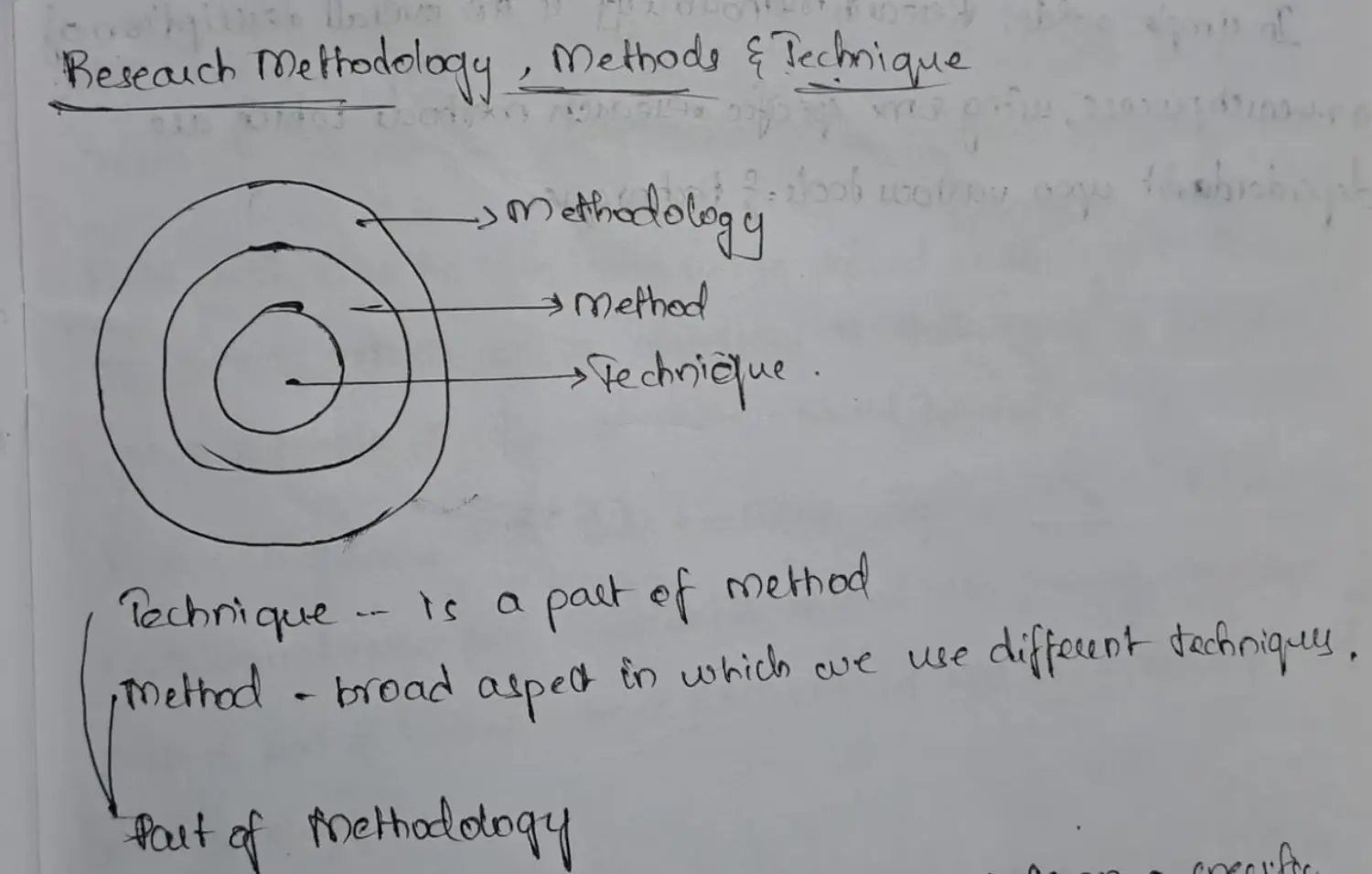
Methodology - Broader Aspect & Also Includes
- Research Design
- Choice of Subject Matter
- Formation of Hypotheses
- Selection of Research Method
Methods -
Technique -
💡 ***Research Methodology*** is an Over All Description of Research Process using some specific ***Research*** *Methods* which are dependent on various ***Tools and Techniques***Tools of Data Collection
- Observation
- Introduction
- Participant Observation
- Introduction
- Example
- Advantages
- Limitations and Challenges
- Conclusion
- Non Participant Observation
- Introduction
- Example
- Limitations and Challenges
- Controlled & UnControlled Observation
- Conclusion
- Interviews
- Definition by Gopal Sarhana
- Introduction
- Types of Interview
- Directive - Structural Interview
- Non Directive - Unstructured Interview
- Example
- Repeated Interviews
- Challenges
- Double Dose of Subjectivity
- Questionnaire & Schedule
- Questionnaire
- Characteristics of Questionnaire
- Interviewer Absent
- Written Form
- Fixed Set of Questions
- Only Possible in Literate Society
- Less people share intricacies on Paper
- Limited Application
- Types of Questionnaire
- Close Ended
- Open Ended
- Advantages of Questionnaire
- Disadvantages of Questionnaire
- Conclusion of Questionnaire
- Characteristics of Questionnaire
- Schedule
- Introduction
- Goode and Halt Definition
- Difference Between Questionnaire and Schedule
- Conclusion
- Questionnaire
- Case Study
- Definition and Introduction
- Example (3)
- MNS - Study of “Coorgs of Mysore”
- Evans Pritchard of “Nuers Tribes of South Sudan”
- Tepoztalan Mexican Villages by (2)
- Robert Redfield → Tepoztlan : A Mexican Village
- Oscar Lewis → Life, History in Mexican Village ; Tepoztlan ReStudies
- Advantages of Case Study
- Limitations of Case Study
- Conclusion
- Genealogy
- Defintion & Inherent Limitation
- Genealogy - Malinowski (User of Genealogy) Example 1
- Genealogy - Morgan (User of Genealogy) Example 2
- Genealogy in view of WHR Rivers (Potential Application)
- Potential Application of Genealogical Approach
- Conclusion of Genealogy
- Life & Oral History
- Life History
- Its Supplementary and Not Primary
- Example Case Study - NISA
- Book Name : “NISA : The Life and Words of Kung Women”
- Explanation : Studies by Majorie Shostak (American Anthropologist)
- Can Actually Show and Evolve over a period of time.
- Oral History
- Oral History can compromise of
- Memories
- Life Experiences
- Story
- Best System for
- Cross Cultural Research
- Interdisciplinary Study
- Example Case Study - Samuan Islands
- Studies by Margret Meat
- Tools for Oral History
- Direct Interpretation of Narrations
- Audio & Video Tape
- Oral History can compromise of
- Conclusion of Life and Oral History
- Life History
- Secondary Source of Information
Introduction
First Used by
Types of Secondary Sources
- Published Data
- Unpublished Data
Example 1 : IPCC
Example 2 : Assessment of Climate Change by MoES
Limitations/Conclusion of SSD
- Lack of Reliability and Validity
- Cant be used as only source of information
- Need for Complementing and Supplementing other sources of data collection
- Participatory Methods
Introduction
Example 1 - Joint Forest Management
PRA - Method / Theory
Participatory Rural Appraisal
Various Dimensions of PRA
RRA - Application of Theory
Rapid Rural Appraisal
- Principle of Optimal Ignorance
Suggestion by Chambers
Conclusion (2)
- Observation
Thinkers
- Unit 6.0 : Anthropological Thought ( Thinkers & Theories )
Summary of Theories (10)
Total No of Schools of Thoughts are ?
There are total 10 schools of thoughts, with Historical Particularism and Diffusionism being in the same group.
Name all the Schools of Thoughts ?
- Classical Cultural Evolutionism
- Diffusionism & Historical Particularism
- Functionalism + Structural Functionalism
- Structuralism
- Culture & Personality School
- Neo Evolutionism
- Cultural Materialism*
- Symbolic/Interpretive*
- Cognitive/New Ethnography*
- Post Modernism
Add Scanned PDF of Summary from Copy Here
Classical Evolution (CCE)
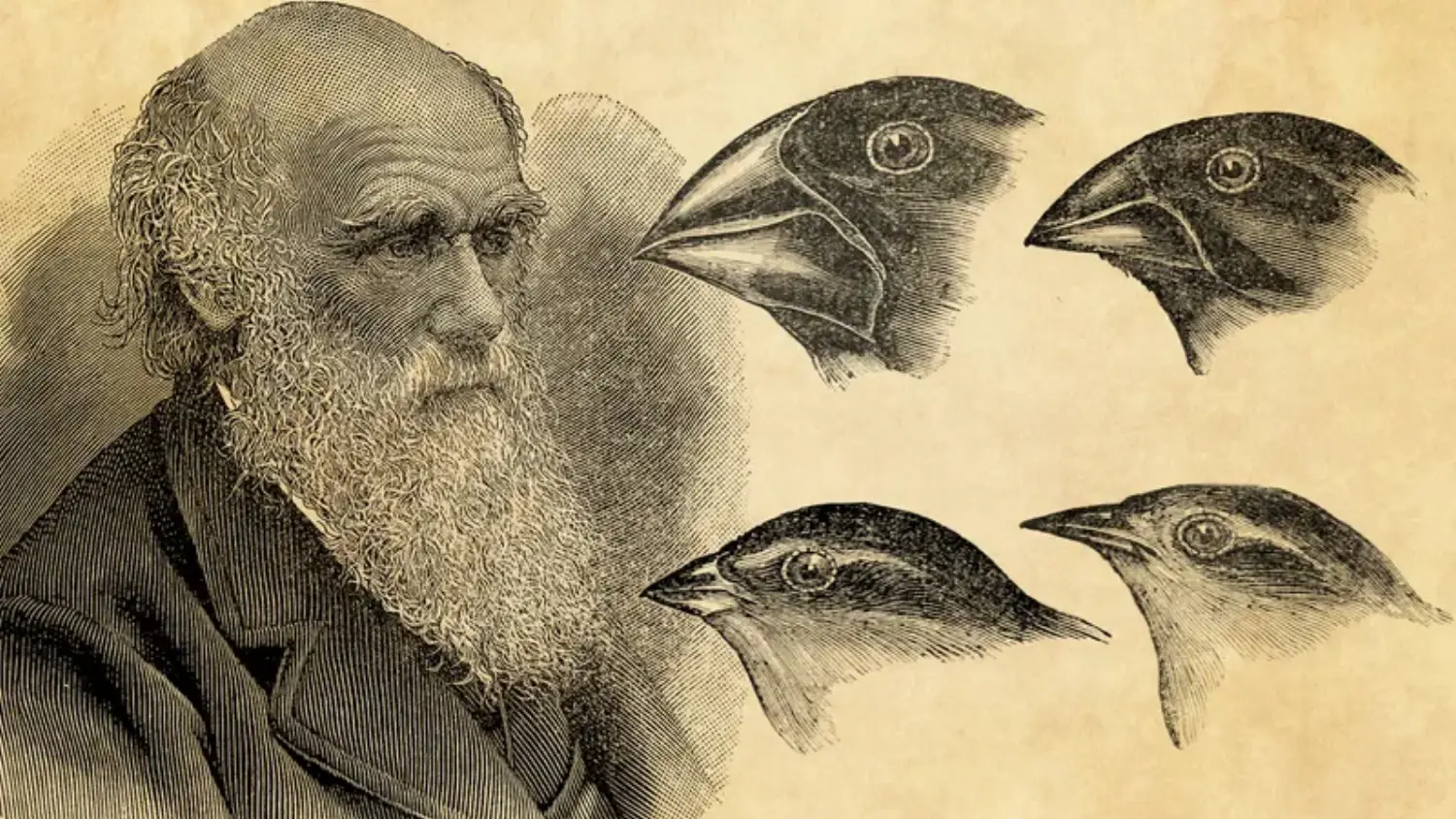
Darwinism - Darwin's Evolutionary Preposition / Theory of Pangenesis
- Rapid Multiplication
- Stability of Population
- Limited Resources
- Competition between Species
Variation By Natural Selection
- Gamatic & Somatic Variation
- Gene Therapy
Classical Cultural Evolutionism (CCE)
- Socio Cultural Evolutionism (S->B->C)
- Basic Postulates
- Unilineal Evolution
- Progressive Cultural Evolution
- Evolutionary Potential
- Cultural Parallels / Cultural Similarities
- Culture Survival
- Skipping of Stages
- Conclusion of Postulates
- Criticism of CCE
- Conclusion of CCE
CCE by E B Tylor
- Intro of E B Tylor
- Scheme of Evolutionism based on “Religion & Cultural Development”
CCE by L H Morgan
- Introduction of L H Morgan
- Scheme of Evolutionism based on “Marriage & Family”
- Example : Different Stages of Marriage ( PC PS PM )
- Kinship Terminologies by Morgan
- Descriptive - Sudanese Style
- Classificatory Type - Hawain Type
- Mixed Approach - Eskimo & Iroquio Type
- Socio Political Organisations by Morgan
- Societus
- Civitus
- Stages of Society By Morgan
Comparison between Tylor and Morgan
- Scheme -
- Simple / Complex
- Focus -
- Religion / Marriage Family Kinship
- Ethnicity -
- Reference Not Given / Reference Given
- Fieldwork -
- No / Yes
- Scheme -
CCE by James Frazer
- Introduction
- Frazers Theme of Evolution
Neo Evolution (20th Century Evolutionism)
Introduction
- Important Thinkers
- Pioneers of Neo Evolutionism
- Gordon Childe (Brit)
- Leslie White (US)
- Julian Stewards (US)
- Students
- Marshal Sahlins (US)
- Elman Service (US)
- Pioneers of Neo Evolutionism
- Why did it Emerge ?
- Rectify Short Comings of CCE
- Against the Criticism “of Diffusionist on CCE” { ED, Uni, Psy}
- Absence of Empirical Data
- Unilneal Evolution NA
- Psychic Unity Rejected
- Important Thinkers
Parabolic Curve by Neo Evolutionist School
- Diagram
- Example of
- Original Form
- Primitive Communism
- Development (2)
- Private Property Ownership
- Building of Trust on Ruling Sector
- Modified Form (S&A, PRI, ULB)
- Owenership by State and Authorites / Panchayati Raj Institutio / Urban Local Body
- Newly Developed Form
- Original Form
Broad Themes of Neo Evolutionist School { Multi, Univ, Techi, G&Speci}
- Multi-Lineal Evolution - Julian Stewards (MLE - JS) (1902-1975)
- Introduction
- Book -
- Theory of Cultural Change 1955
- Theme -
- There is No one line of Evolutionis, There are many lines of Evolutionism
- Blah Blah -
- It is based on Local Environment and Environmental Factors
- Hence Env is a Active Factor rather Passive One
- Existecne of Cultural Parallels
- Book -
- Methodology of Multi-lineal Evolutionism ( ||, XRe, RC)
- Parallelism
- Cross Cultural Research
- Causality (Reciprocal Causality)
- Development of Cultural Ecology to Study MLE
- Example of 5 Complex Civilisation for MLE
- Northern Peru
- Meso America
- Mesopotamia (Origin of Wheat)
- Egypt
- China
- Illustration of MLE
- Conclusion of MLE
- Introduction
- Universal Evolution - Gordon Childe (UE - GC) (1892-1957)
- Introduction
- Books
- Man Makes Himself
- What Happened In History
- Basic Theme
- Evolution of Man Kind is based on Archaeology
- Cultural Dev / Evolutonary Advance →
- Inc in Human Potential →
- Can Extract More Energy & Resources →
- Socio Cultural Development
- Books
- Tech Efficacy and Genetic Efficacy
- Conclusion of UE
- Introduction
- Technological Theory of Evolution / Energy Theory - Leslie White (ET - LW) (1900-1975)
- Introduction
- Books
- Science of Culture 1949
- Evolution of Culture 1989
- Books
- Basic Themes of White’s Theory
- Higher Form of Energy
- Energy & Technology - Universal Standards of Measurement
- Cultural Sub System (3) { Tech, Socio, Ideo}
Technological
- Technical Advancement
- Tools of Production
- Ins/Eqp used for Var Activities
- Materials used for Shelter
Sociological
Marriage, Family, Kinship, Religion, Et Cetera
Ideological
Collection of Ideas and Beliefs
Mythology, Theology
Literature, Philosophy
Common Sensical Knowledge
They Dont Equally Contribute
- $Energy * Technology = Culture$
- Energy -
- Amt of energy hrnessed on per capita bsias in a year
- Technology -
- Efficiency of Technoques ans Tools USED to control & DIRECT Energy
- Culture -
- Degree of Cultural Adavcnement
- Variation in Technology
- (H)E * (H)T = (H)C
- (H)E * (L)T = (L)C
- (L)E * (H)T = (L)C
- Relations E && T == H ~ C(H)
- Example
- Savagery - M
- Muscular Energy
- Barbaric - MFA
💪🔥🐂- Muscular + Fire + Animal Based
- Civilisation -
- Energy of Fuel, Running Water, Tides, Winds and Sun
- Savagery - M
- Conclusion
- Energy -
- Introduction
- General & Specific Evolution - Sahlin’s and Service
Introduction
Dual Character of Evolution
General Evolution
Specific Evolution
Conclusion of Dual Character
Bio Social and Bio Cultural Approach
Method
- General Evolution
- Bio
- Social
- Specific
Bio
Origin of Specific Population
Social
Conclusion of General & Specific Approach
- Multi-Lineal Evolution - Julian Stewards (MLE - JS) (1902-1975)
Criticism of Neo Evolutionary School
- Rift of Ideology
- Environmental Factor - Passive - White Tech Theory
- Environmental Factor - Active - Stewards MLE
- MLE & CE - Confusing & Spurious - Marvin Harris
- MLE - Direction of MLE not specified by Stewards
- CE - Stewards - Neglect of Diffusion - Ignoring Relationship between Socio Cultural Factors
- One Size Fit All Approach of Tech - Criticised by Rapaport
- Rift of Ideology
Comparison between Cultural Evolutionism & Neo Evolutionism
| Theme | Classical Cultural Evolutionism | Neo Cultural Evolutionism | | --- | --- | --- | | Century | 19th | 20th | | Approach | Unilineal | Multi Lineal and Universal | | Psychic Unity | Proposed | Rejected | | Factors of Social Change | Internal | External | | Empirical Data | Not Applicable | Available | | Comparative Data | Yes | No | | Concept of Survival | Proposed as Necessary | Rejected | | Temporal and Spatial | Incorporated All Societies In All Times at All Parts of the World | Talked About Specific Societies in Specific Times of Specific Times |
Diffusionism and Historical Particularism
- Introduction - D & HP
- British School (Pan Egyptian School)
- WHR Rivers
- Smithen Perry
- German School (Kulterkriez School
- Ratzel
- Frabenius
- Graebner
- Schmidt
- American School
- Clark Wissler
- Alfred Kroeber
- Led by Boas (HP)
- British School (Pan Egyptian School)
- In Response to
- CCE → Unilinear Theory
- CCE → Psychic Unity of Mankind
- Definition of
- Diffusionism
- Historical Particularism
- Diffusionism - Theory & Schools (3)
- Conditions and Characteristics of Cultural Diffusion
- Cultural Trait only Adopted by Society when found Meaningful
- Cultural Traits - May Change → Migration, Env & Geo Factors
- Directional ←→ Dev to Under Dev ; Movement UD → Dev → Only Minor Features
- Bottlenecks against Diffusion - Geographical Barriers, Ethnocentrism, Lack of Transport
- “Diffusion & Acceptability” IS DP TO “Distance from Origin of Culture”
- Three Different Concepts used by Diffusionist's
- Cultural Trait
- Simplest & Most Basic
- Specific Entity within a Culture
- Example : Dome Shaped Acrhitecture of Mughals
- Cultural Complex
- Connected Parts → Different Cultural Traits → In a Large Area = Cultural Complex
- Example : Use of
- Red Stone
- Special Adhesive
- Megalith ( Big Stone)
- on Dome Shaped Mughal Architecture
- Cultural Area
- Broader Region → having Multiple Cultural Complexes
- Relatively Similar → Having Matching + Uniform Customs
- Cultural Trait
- British School of Diffusion (Extreme Diffusionist’s)
- Also Called
- Pan Egyptian - Starting Pointing Will Always be Egypt
- Helio Centric - Sun God is Worshipped by Everyone
- Thinkers and Books
- Books By Smith
- Origin of Civilisation
- Diffusion of Culture
- Books By Perry
- The Children of Sun
- Books By Rivers
- History of Melanesian Society
- Books By Smith
- Introduction of British School
Egypt -
Centre of Cultural Development
Cradle of Civilisation
Diffusion -
- From Egypt Cultural Elements Diffused to Other Parts of the World
Advanced Egypt -
- Early development of Sceintific Agriculture
Common Bond -
- All Cultures and Civilisation - Origin is Egypt
- Diffusionism by Smith
- Diffusionism by Perry
- Diffusionism by Rivers
- Conclusion and Criticism of British School
- Also Called
- German School of Diffusion
Thinkers Involved
Proposed By : Graebner and Schmidt
Supported By : Ratzel and Frabenius
Also Called
- Cultural Circle School
- Culture District School
- Kulterkriez School
Theory of Cultural Circle
Criteria of Quality & Quantity
Inference
Criticism of German School
- American School of Diffusion
Thinkers
- Started By : Boas
- Followed By : Wissler and Kroeber
Approaches
- Cultural Area Approach
- Age Area Approach
Wissler - Typology of Diffusion
| Theme | Natural Diffusion | Organised Diffusion | | --- | --- | --- | | | | | | | | |
Kroeber - Cultural Acculturation
- Concept of Cultural Acculturation
- Sanskritisation and Elite Emulation
Conclusion of American School
Criticism of American School
- Conditions and Characteristics of Cultural Diffusion
- Historical Particularism by Franz Boas
Books by Boas
- The Mind of Primitive Man
- The Central Eskimos
Definition of HP
HP Criticised CCE
Concepts
- Uni Linear Evolution
- Evolutionary Survivals
- Cultural Parallels
No Scientific Methodology
No Empirical Data
No Field Work
HP Criticised Parallel Evolutionism
Same Level of Cultural Development → Can be Reached by Diff Trajectories
Boas 3 Factors for Various Cultural Traits and Customs of Society
- Environmental
- Historical Connection (Most Important to Boas)
- Psychological
Criticism of Boas
- Introduction - D & HP
Functionalism & Structural Functionalism
- Functionalism By Brainslow Malinowski
Emerged as Critique To
- CCE and Diffusionism
Emerged with Sociology (Pioneer Functionalist)
- Comparing Human Body with Social Components
- { Societal Structure + Societal Function } +
Various [ Elements & Institutions & Components ] → Working Together → Functional Society
- Herbert Spencer
- Emile Durkheim
Basic Premise/Tenets/Postulates of Functionalism
Written Postulates
- Evolution is an Integrated Whole
- Each Element of Culture has a
- Specific
- Additional Function
- Combining Specific and Additional Function Make a Functional Society
- Problem with any elements in society may affect healthy functioning of society
Diagram
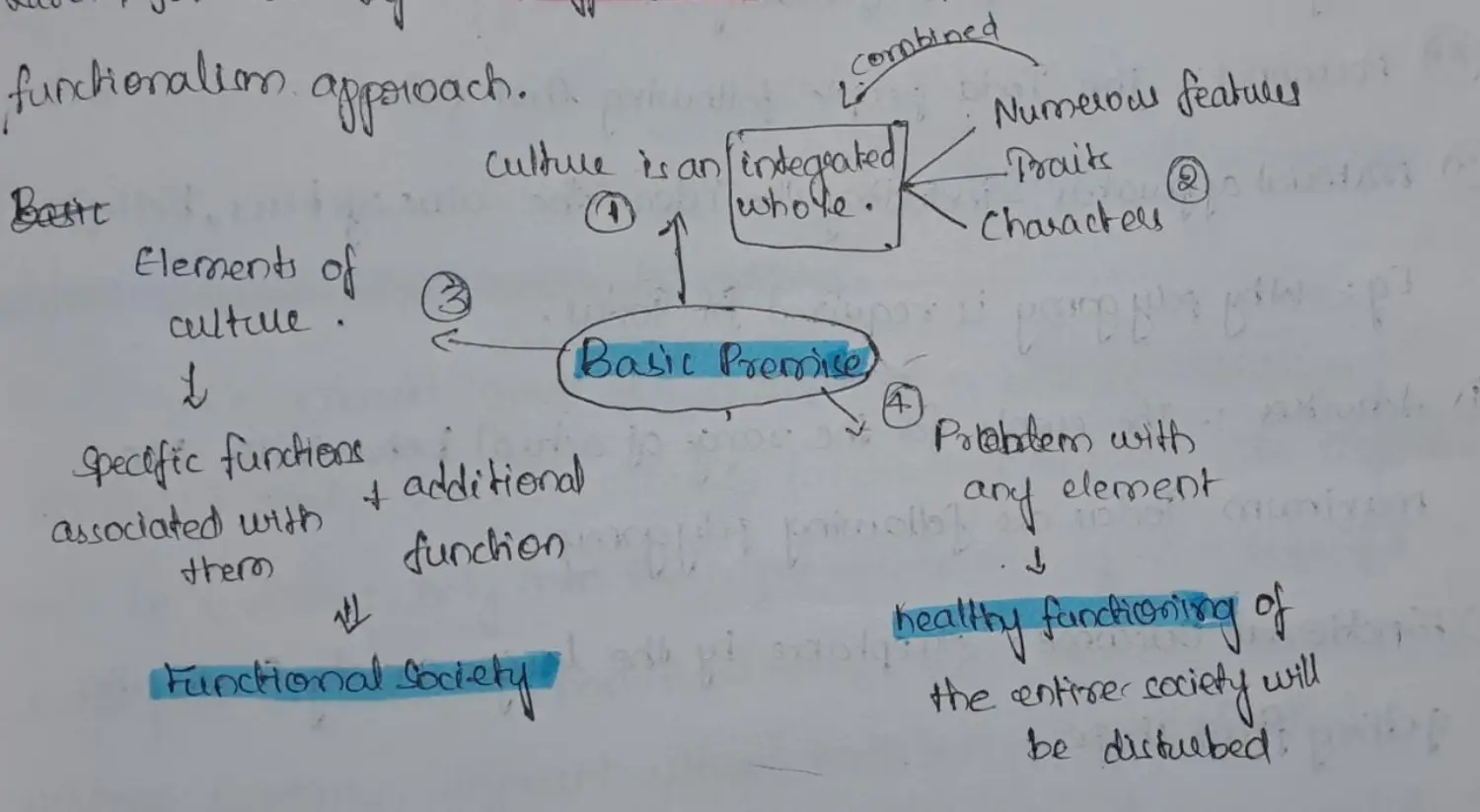
Propositions by Malinowski
Background
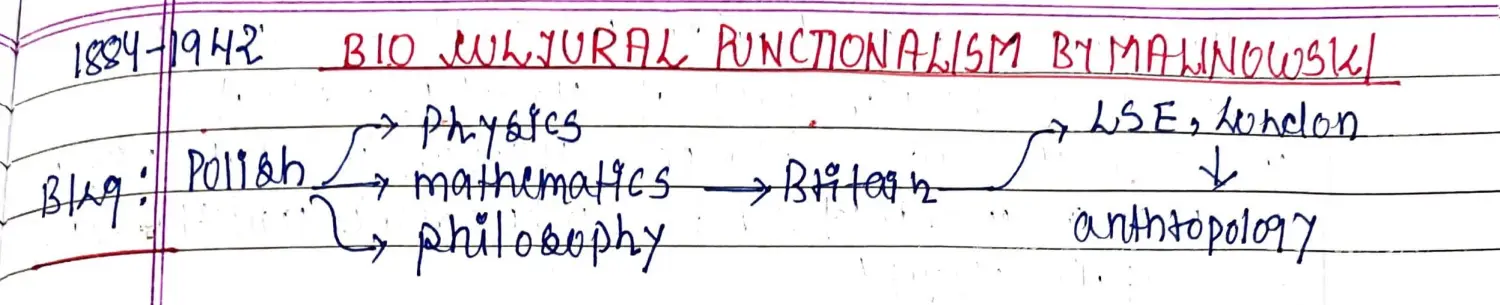
Books by Malinowski
- Argonauts of Western Pacific 1922
- Scientific Theory of Culture & Other Essays
- Dynamics of Cultural Change
Work of Malinowski
- Trobriand Islandus Near Papua New Guiniea Region
Introduction of Functionalism into Anthropology by Malinowski
Structure of Institution by Malinowski
Diagram
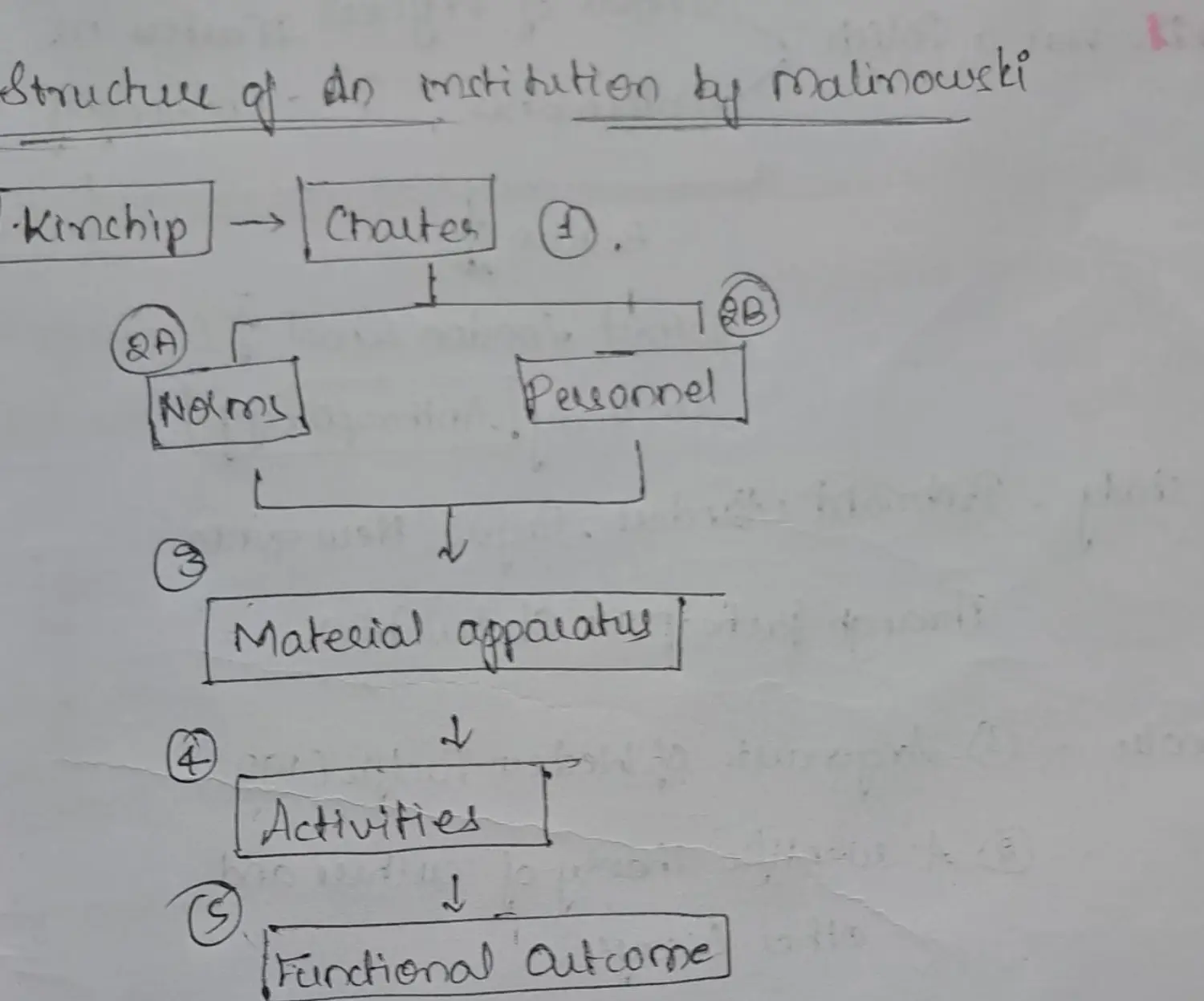
Charter
Norms
Personnel
Material Apparatus
Activities
Functional Outcome
Approach to Bio Cultural Functionalism by Malinowski
Analysis of “Needs by Malinowski”
Intro to Needs by Malinowski
- Categories of Needs
- Primary - Basic
- Secondary - Instrumental
- Economic
- Educational
- Political Organisation
- Social Control
- Integrative - Synthetic
- Categories of Needs
Criticism (with Merits) of Functionalism - Malinowski
- Merits
- De Merits
- Structural Functionalism By Radcliffe Brown
- Books
- Structure and Functions of Primitive Society
- Andaman Islandus (1922)
- Introduction to Brown
- Introduction to Structural Functionalism
- 3 Aspects of Social System by Brown
- Structural
- Ecological
- Enculturation / Socialisation
- Details Social Structure by Brown
- Actual
- General
- Functioning of Social Structure
- Social Morphology
- Physiology
- Evolution
- 3 Important Elements of “Good Anthropological Research”
- Discovery of Laws
- Reliability and Validity
- Cultural Comparison to reach upto scientific laws to better understand direction of change of society
- Criticism of Functionalism - Brown
- Books
- Comparison Between Malinowski and Brown
- Functionalism By Brainslow Malinowski
Structuralism - Borrowed from “Gestalt Psychology” - 1930’s & 1940’s
- Introduction of Structuralism
- Go to underlying cause, Basis for Myth !
- Example :
- Marriage : If this is social fact
- Incest Taboo : This is Pre Social fact
- Example :
- Components of Myth, Mytheme, Bundled Together !
- Like Language Has Grammar, Institutions Like Culture, Kinship and Marriage have their grammar called Elements
- Three Set Approach on Socity and Culture
- Language & Culture are Homologous (Same Function, Different Structure) - Divergent Evolution
- Example : Wings of Bat, Bird Etc
- Language & Culture are Analogous (Same Structure, Different Function) - Convergent Evolution
- Example : Limbs of Human, Limbs of Whale
- Language & Culture are Structural
- Language & Culture are Homologous (Same Function, Different Structure) - Divergent Evolution
- Go to underlying cause, Basis for Myth !
- Thinkers
- Claud Levi Strauss
Introduction of Structuralism by Strauss
Books By Levi Strauss
- Elementary Structure of Kinship
- Structural Anthropology
- The Savage Mind
Three Fold Structure of Structuralism by Strauss
- Social Reality
- Materialistic Things
- Cultural Instincts
Thee Fundamental Characteristics of Human Mind
- Human Follow Rules
- Reciprocity
- Gifts
Binary Opposition by Levi Strauss
Binary Opposition - Male Female, Nature Civilisation, True False
Social Reality - Has Structure - Interpret by Structuralism - Interpret by Binary Opposition
Gave Example of : Totemic Religions
Reality : People worshipping animal, allow not to eat
Background : May be that animal saved them pr gave them food
Incest Taboo
Alliance Theory by Levi Strauss
- Reaction to Kinship Theory (Descent Theory) by Brown
- Descent or Lineage Theory is promoting Social Solidarity
- There was some or the other Taboo related to Incest, Hence Incest is the cornerstone of society
- Incest Taboo Gave Rise to Marriage, Marriage on rise to another things
Concept of Models by Levi Strauss
Explanation of Models
Model Approach of Levi Strauss
- He defined model related to Kinship, Kind of model lifestyles
- Two Models
- Mechanical Model
- Intra Caste & Intra Religion is Mechanical/Common Model of Kinship within India
- Statistical Model
- Inter Caste & Inter Religion is Marriage but Statistical Model of Kinship within India
- Mechanical Model
Types of Models
- Mechanical
- Statistical
Structural Analysis of Myth - An Essay by Levi Strauss
- Structural Analysis of Myth (Mythology) - An Essay by Levi Strauss
- Analysis for a Myth being Myth should be analysed.
- During Analysis of Myth, when diving deep, it will have component called Mythemes
- Took Help of Psycho Analysis by Freud and Oedipus Complex
- Gave Example of Caste System of India
- Superficial : System of Oppression
- Deep Dive : It started as a Occupational Division of Labour in Varna System
- Those myth whose basis/Mytheme/sub component can be found will sustain and the myth whose Mytheme cannot be found will not sustain
- All work were later compiled as a 4 Vol Book called “Myhtologique”
- Structural Analysis of Myth (Mythology) - An Essay by Levi Strauss
Conclusion
- Edmund Leach
- Books by Edmund Leach
- Political System of Highland Burma - The Kachin Study/The Kachin Social Structure
- Introduction of Structuralism by Edmund Leach
- Egalitarian System - Gumlao System
- Hierarchical System - Gums-a
- Edmund Leach and Traffic Signals
- Books by Edmund Leach
- Criticism of Structuralism
- Too much emphasis on Incest Taboo and Marriage as deciding elements for different socio cultural institutions
- Human Thought Process is Static, Structuralism Says its Static
- No Scientific Basis for giving explanation to Myths and its components
- Totally Ignored Technological, Economical and Environmental factors
- Claud Levi Strauss
- Introduction of Structuralism
Cultural Materialism
- Old
- Running Notes
- Thinkers
- Marvin Harris
- Based on Marx > Harris Said
- Base - Infrastructure - Material Realities
- Production - Economic Activity & Modes of Production
- Reproduction - Procreation
- Demographic Parameteres - Sex Ration & Mortality Etc
- Level 1 - Structure - Organisational Aspects
- Law & Order, Marriage, Kinship
- Political, Class and caste System
- Level 2 - Super Structure - Ideological Symbolic Aspect
- Psychological Beliefs
- Arts Sports Paintings Dance Music
- Base - Infrastructure - Material Realities
- Books
- The Rise in Anthropological Theories
- Cows, Pigs, Wars, Witches ; The Riddles of Culture
- Pending
- Technological and Economic Aspect of CM
- Traditional Hindu Society by Marvin Harris
- Cows aren't consumed but worshipped, Reason is Economical and Not Religious
- Agriculture - Manure
- Health - Milk and Dairy Products
- Social Ties - Exchange of Cows
- Hence Doctrine of Ahimsa towards Cows
- Cows aren't consumed but worshipped, Reason is Economical and Not Religious
- Traditional Hindu Society by Marvin Harris
- Techno Environment Determinism Supported by Techno Economic Determinism
- Despite of Techno and Economics, Env will also be a Detrimental Factor
- Because Environment affects the usage of Technology
- Disintegration of USSR by Marvin Harris
- Background
- Effects
- Conclusion
- Based on Marx > Harris Said
- Maxine Margolis
- One Page Para
- Marvin Harris
- Influenced by
- Karl Marx
- Society Can be Divided into three Phases
- Materialistic Base - Modes of Production ( Factory, Labour)
- Super Structure - ( Law Family Religion etc )
- Materialistic Base Shapes and Forms Super Structures
- Marx - Man is Association can Produce more than Man in Isolation
- Society Can be Divided into three Phases
- Cultural Ecology
- Cultural Evolution
- Karl Marx
- Thinkers
- Thinkers
- Marvin Harris
Book
- The Rise in Anthropological Theories
- Cows, Pigs, Wars, Witches ; The Riddles of Culture
Introduction to CM by Harris
CM of Harris is based on 3 Different Schools of Thoughts
- Marxist Materialism
- Cultural Ecology
- Cultural Evolution
3 Level Structure of CM of Harris
- Infra Structure - Material Reality
- Production
- Reproduction
- Demography - Birth, Death, Date Rate
- Structure - Organisational
- Political Caste, Class System, Marriage, Family, Kinship
- Super Structure - Ideological/Symbolic
- Religion, Arts, Sciences, Music Sports
- Infra Structure - Material Reality
Technological and Economic Aspects of CM
Infrastructure → Shaping → Structure & Super Structure
Scared Cow Myth to Justify CM
Techno Environmental & Techno Economical Determinism
Study of Disintegration of USSR according to Marvin Harris
- Background
- Effects
- Conclusion
- Maxine Margolis
- Supported Harris
- Participation of Women in Work Force
- Role of Women in World War 2
- Restriction to Kitchen Kids and Family - Denounced due to Economic Factors
- Action and Active Participation in Modern Work Force
- Leslie White
- Supporter of Ecological Anthropology in Capturing of Energy to define Complexities of culture
- Influenced by : Marxian Economic Theory + Darwins Theory of Evolution
- Criticism of Cultural Materialism
- General Criticism
- Marxist
- Structuralist
- Scope
- Conclusion
- Production (ETIC) Reproduction(ETIC) to Psychology(EMIC)
- Marvin Harris
- Running Notes
- Class Notes
- Marxist Materialism
- Old
Culture Personality School - Biggest School of All Schools
- Running Notes
- Started by Students of
- Franz Boas
- Alfred Kroeber
- Proposed By
- Ruth Benedict
- Margeret Mead
- Further Extended by
- Gardiner
- Linton
- Cora Du Bois
- Wanted to bring 3 Sciences together
- Anthro
- Socio
- Psychology
- Basic Themes
- Culture Shaping Personality - Margret Mead
- Studied Samoan Islands in Papua New Guinea
- Arapesh
- Mundagumur
- Tschamboli
- Book
- Coming of Age in Samoan Island
- Sex and Temperament in Three Primitive Societies
- Coming of Age in in Samoan Island - Study of onset of puberty in both America and samoan Island
- In Samoan Island -
- Pre Martial Sex not a Taboo
- considered as a normal biological process
- Since beginning they are being taught they should be getting up early in the morning and having good friendship
- In America -
- Pre Martial Sex not a Taboo
- Considered as a remarkable change in a girls life
- waking up in morning and having good friendship is left to school to be taught
- In Samoan Island -
- Gender Personality by Mead
- Arapesh
- Male Feamel Roles Equal
- Munduguar
- Male Female Equal
- but prone to attacks
- Tschambuli
- Clear division of Labour
- Females at periphery
- Male costume and make up
- Arapesh
- Study of National Character by M Mead
- Proposed by Edward Sapir, Discussed by Ruth Benedict
- Study : “Keep Your Powder Dry : An Anthropologists Looks at America”
- Conclusion and Criticism
- Studied Samoan Islands in Papua New Guinea
- Personality Shaping Culture - Ruth Benedict
People Studies
- Zunis - Mexico - Good Amount of Resources
- Kwakiutls
- Dobus
Guardian Spirit Concept
Culture Pattern - Pattern Prevalent in Culture
- Cultural Trait - Smallest Element of a feature of Culture/Society
- Varna System (Open) until based on Karma
- Later Varna System became rigid and hence took shape of caste
- Cultural Complex
Conclusion
- Cultural Traits combined to form Cultural Complex
- At Broader level they appear to be cultural patterns
- Cultural Trait - Smallest Element of a feature of Culture/Society
- Both Shaping Each Other
- Summary
- Kardiener
- Segmeudn Freud INfluence of Kardiner
- Culture Shaping Personality - Margret Mead
- CPS - Characteristic Perception Temperament (CPT)
- Started by Students of
- Introduction of CPS
- Started by Students of Boas and Kroeber = Ruth + Mead → Extended by Kardiner, Linton and Cara Du Bois
- Wanted to Connect = Psychology + Sociology + Anthropology
- Basic Theme
- CPS v/s CPT (Characteristics, Personality & Temperament)
- Conclusion - Trying to Demonstrate Inter Relationship btw Culture and Personality
- Three Different Approaches Used by CPS
Personality Builds and Impacts the Culture - Ruth Benedict
Culture Influences Personality Forms - Margret Mead
Both Influence each other and are InSeparable -
- Prominent Thinkers
- Ruth Benedict - Impact of Personality on Culture (Arm Chair)(3)
Introduction
- Book : Pattern of Culture
- Study : Culture Pattern
- Tribes Studied
- Zunis - South West State + Mexico
- Kwakiutals - North West Canada
- Dobus - Melanesia
- Keywords - Culture Pattern, Central Axis/Soul, Guardian Spirit, Umbrella Concept, Culture Pattern(Varna System), Functioning Unit, Cultural Traits, Common Point of Reference, Cultural Complex, Culture Pattern, Integration of Society, Special Genius
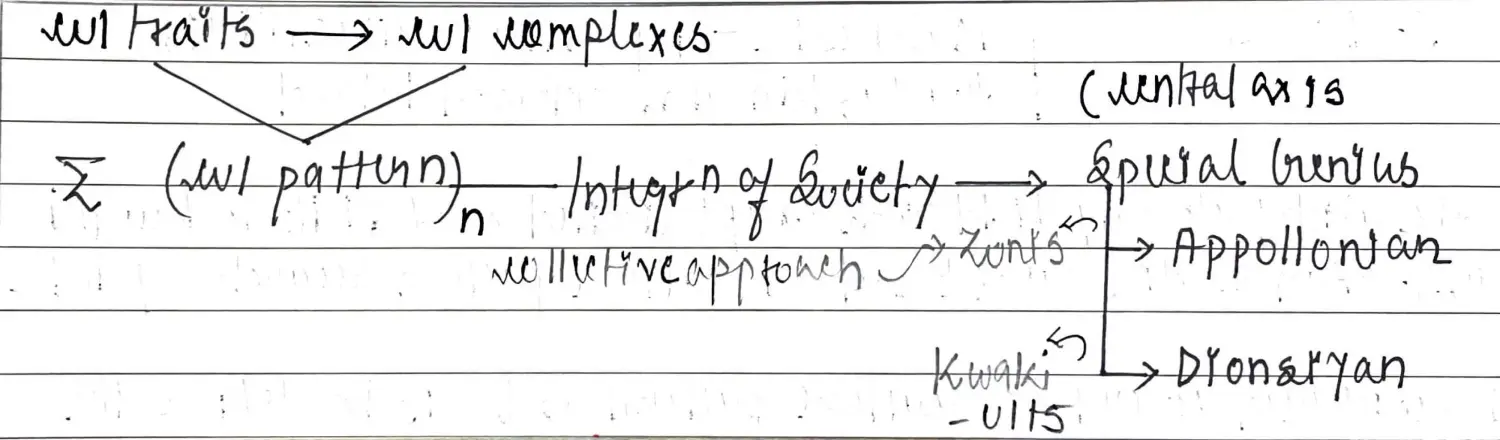
- Special Genius
- Apollonian - Zunis
- Dynosian - Kwakiutals
Conclusion of Ruth Benedict
- Margret Mead - Impact of Culture on Personality (2)
Study - Samoan Islands + Tribes of Papua New Guinea
Tribes
- Arapesh
- Mundugumor
- Tschambuli
Books
- Coming of Age in Samoa
- Sec and Temperament in Three Primitive Socities
Samoan Study - Coming of Age in Samoan Islands
- No Stress Related to Puberty
- Transition from Puberty to Sexual Maturity is Normal
- Pre Marital Sex was considered Normal
Sex and Temperament in Three Primitive Societies and Gender Personality by Mead
| Theme | Arapesh | Mundugomar | Tschambhuli | | --- | --- | --- | --- | | Attack | Free from Attack | Prone to Attack(Outside/Inside) | NA | | Resource | No Resource Crunch | NA | NA | | MF Nature | Gentle to Each Other | Aggressive & Competent | NA | | Family Time | Yes | Wasn't Prominent | NA | | Society / Kids | Co Existence | Disliked & Punished Kids | NA | | Gender Roles | No Division, Equal | No Division, Equal | Clear Division, Male Submissive, Female Angry |
Study of National Character by Mead
- Initially Proposed by Sapir and Later Taken by Ruth Benedict
- Study : “Keep your Powder Dry : an Anthropologist Looks at America”
- Study Parameter - Not to CPT
- National Character of America
- Study of Culture at a Distance
- Conclusion & Criticism of National Character by Mead
- Both Influence each other and are InSeparable
- Abraham Kardiner - Basic Personality Type
- Freuds Influence of Kardiner
- Primary and Secondary Institutions
- Marquenesian of French Polynesia Island-us
- Female Infanticide
- Poly Andry
- Maternal Neglect of Children
- Basic Personality Types / Structures by Kardiner (6)
- Id
- Efo
- Super Ego
- Ideal Constellation
- Security Systems
- Attitude Towards Supernatural Things and Beings
- Conslusion
- Ralph Linton - Total Personality Type
- Three Types of Behaviour
- Real Culture
- Ideal Culture
- Cultural Construct
- Total Personality Type - Extension of BPT
- Stimulus Response Principle
- Conclusion
- Three Types of Behaviour
- Cora Du Bois - Modal Personality Type
Extension BPT to MPT
MPT = Inc Empirical Data + Inc Sceintific Research + Scientific Data Test ( Ink Blot, TAT)
Place of Study - Alore Islands, East Indies of Indonesia
Explanation to Variation in Personality - Extension to BPT
Essay : “The People of Allore : a Social Psychological Study of East Indian Islands”
Inferences from Allore Islands
- Abraham Kardiner - Basic Personality Type
- Conclusion of CPS
- Ruth Benedict - Impact of Personality on Culture (Arm Chair)(3)
- Criticism of CPS
- Derec Freeman
- Kawakiutals and Zunese
- Morris Opler 1 - Narrow in Approach
- Morris Opler 2 - Mid way in Male Female Relationship
- Extra Focus on Infancy
- No Complex Society Studies
- Influence of Secondary on Primary Institutions
- Running Notes
Symbolic & Interpretive School
- Thinkers
- Victor Turner Scottish
- Clifford Geertz American
- D Schneider American
- Basic Theme of Symbolic Anthropology
- Interpretive School of Symbolic Anthropology
- SIA and Social Action
- Summary of SIA School
- Geertzian/Interpretive Anthropology
- Verstehen - Hermeneutics - Symbols
- Operation of Culture
- Historically Transmitted Pattern of Meaning Embodied in Symbols
- Imp Works of Clifford Geertz
- Thick Description
- Javanese Funeral
- Balinese Cockfight “Deep Play : Notes on Balinese Cock Fight”
- Thinkers
Post Modernism
- Unit 1.1 : Introducing Anthropology
✅ Part 1.1 - Unit 1.1 / 1.2 / 1.3 : Introduction to Anthropology
✅ Part 1.2 - Unit 8.0 : Research Methodology
[✅Part 1.3 - Unit 6.0 : Anthropological Thought (Thinkers & Theories)](%E2%9C%85Part%201%20-%20Introduction%20+%20Methodology%20+%20Thinker/%E2%9C%85Part%201%203%20-%20Unit%206%200%20Anthropological%20Thought%20(Thin%203693dc6315c64d659743f913d221a44b.md)